A spellbinding tribute from one multi-faceted artist to another. New York-based artist Aki Onda (b. 1967) conjured a transduction to the Korean multi-media pioneer Nam June Paik (1932-2006). Aki himself describes the project:
“Nam June’s Spirit Was Speaking to Me occurred purely by chance. In 2010, I was spending four days at Nam June Paik Art Center in South Korea for a series of performances and had plenty of free time to wander. The building was packed with Paik’s artwork and related material. I have always felt a close kinship with him as an artist, and so it was a great opportunity to immerse myself in his works and ephemera.
It was that night I made the first contact, via a hand-held radio in a hotel room in Seoul. It was literally out of the blue. Scanning through the stations, I stumbled upon what sounded like a submerged voice and I began to record it in fascination. I concluded this was Paik’s spirit reaching out to me.
The project continued to grow organically as I kept channeling Paik’s spirit over long distance and receiving cryptic broadcasts/messages. The series of séances, conducted in different cities across the globe, began in Seoul in 2010, and continued in Köln, Germany in 2012, Wrocław, Poland in 2013, and Lewisburg, USA in 2014. The original recordings were captured by the same radio which has a tape recorder, with almost no editing, save for some minimal slicing and mastering.
Paik is known for his association with shamanism, a practice that constantly surfaces in his works all through his career. In an interview, he stated “In Korea, diverse forms of shamanism are strongly remained. Even though I have created my work unconsciously, the most inspiring thing in my work came from Korean female shaman Mudang.” Paik himself was a master shaman and vividly used shaman rituals and symbols for staging his performances and installations.
These recordings also became a way for me to explore the mythic form of radio—a medium which is full of mysteries. The transmissions captured may be “secret broadcasts” on anonymous radio stations. There are in fact hundreds of those stations around the world, although the numbers dwindle as clandestine messages can now be sent via encrypted digital channels. Some of these stations were likely for military use or espionage or relics of the Cold War. But many others continue without apparent explanation. These are just some of the questions that remain unanswered.”
Commissioned in 2017 by documenta 14's radio program “Every Time A Ear di Soun,” these recordings were continually broadcast on eight radios stations around the world that year. Nam June’s Spirit is a beautifully formed homage, I cannot think of any other like it. An intimate, flickering language discovered through the air. The LP comes replete with a booklet of photographs of Paik on the set of Michael Snow’s unreleased film Rameau’s Nephew (1974).
Sean McCann, 2020
Aki Onda, 2017
20-page art booklet including rare photographs of Nam June Paik from the set of Michael Snow’s film Rameau’s Nephew (1974), two essays on radio-wave phenomenon (by Onda and Marcus Gammel), and a remembrance of Paik by Yuji Agematsu
Cerca:chance
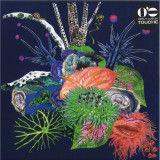
O’o share many of the musical characteristics of their ornithological namesake. The Kaua’i O’O produced the most exquisite birdsong before its extinction in Hawaii in the late 1980s. The beauty and character of its voice was delicate and mysterious, tuneful and surprising. You can experience it with just a cursory websearch, a haunting cri de coeur from the last century. If the poor O’O is consigned to history, then life is just beginning for this French duo, based in Spain, who’ve won plaudits and awards already in their short musical lifespan.
O’o are about to release their sublime debut album Touche. This is not an endling, it’s just the beginning: “I found the name on a website of weird English language words, and I loved the way the letters were arranged like a pair of glasses,” says O’o singer Victoria Suter. “Afterwards, I went onto YouTube and started listening to the last bird of its species, calling for a mate that would never come. I thought: ‘Oh my God, that’s so sad’. Then we talked about the name and we thought it could be a nice thing to honour it and keep it alive in some way.”
Suter met her musical partner Mathieu Daubigné at college in Agen, South West France, when the pair were studying music theory in their teens. Victoria moved to Barcelona in 2010; Mathieu followed six years later. Their debut EP, Spells, appeared in 2018 a beautifully crafted patchwork of vocals and samples that is redolent of the uncanny vocalese of Laurie Anderson. The bird makes an appearance at the beginning of the EP: “Sweet tooth beak. Soft melody peak / Oh O’o, go round and round in circles / Looking for a honeydrop, til you vanish, til you drop”.
That sense of profound longing for something lost is carried over to Touche, as well as the same heightened sensory awareness of the world around them. What has developed in spades is the creative process. O’o have blossomed organically, augmenting their pop sensibilities. Avant-garde techniques have been brought to heel as the pair create off-kilter pop music that warms the heart and nourishes the brain. The catalyst that enabled this bold pop transformation came with the song ‘Touche’ itself, a saucy chanson at the heart of the album. Suter’s wry narrative about a botanical femme fatale is inserted into a lithe and skittish song with reggaeton beats and an inviting, balmy atmosphere.
“The song is about a flower which attracts male insects, producing the very same smell as the female of the species,” explains Victoria. “The poor male is fooled by the sex-appeal of this botanical trap, and gets so excited that he exhausts himself and wastes all his other chances of ulterior mating and having any offspring. The flower entices the insect in in mermaid-like fashion, to come nearer and touch her. It’s the hot track!”
‘Touche’ reaches into hitherto unexplored areas of pop, while the rest of the album is accessible in the way that James Blake, Radiohead or Kate Bush are accessible, and it always challenges, in a way that pop isn’t supposed to. Suter writes playful, poignant, observational songs that tell stories as well as tell us something about ourselves. Songs like ‘Dorica Castra’ are built upon the voice as an instrument, centrifugal and layered from its core.
Complimentary to this method is Daubigné, who brings startling innovation with found sounds, samples and clever vocal manipulations—creating unique, otherworldly sonic flourishes. A guitar whirs like a musical spinning top on ‘Spin’, created in Ableton; an Ondes Martenot appears to make a guest appearance on the title track, though it’s the ingenuity of the Prophet 8 synthesiser. “I’ll often say to Mathieu, ‘what’s that?’” says Suter, He’ll reply, ‘that’s your voice’.”
O’o found their own voice when they won a competition held by the legendary festival organisers Primavera Sound. Victoria entered the band into a competition she saw on Instagram, sending off rough demos on the final day of entry, thinking little more about it other than the fact Mathieu might be annoyed. Soon they would have to build a live set from scratch and figure out how to present their music for the first time. At stake was seventy hours of recording time at Aclam studios, used by Rosalía and Kendrick Lamar, and for the winner a coveted spot at the festival. A pool of 350 acts were whittled down, and then O’o triumphed at a Battle of the Band style face off.
The O’O might be extinct, but O’o the band have learned how to fly. Just watch them go.
- A1: The Gripsweats - Gripsweats Theme
- A2: Kelly Finnigan - I Don't Wanna Wait
- A3: The Flying Stars Of Brooklyn, Ny - My God Has A Telephone
- A4: Aj & The Jiggawatts - It Is What It Is
- A5: Ikebe Shakedown - Supermoon
- B1: Derobert & The Half Truths - Judgement (Part 1)
- B2: Leroi Conroy - Tiger Trot
- B3: Orgone - Big Day
- B4: Jungle Fire - Nusau
- C1: Durand Jones & The Indications - Don't You Know
- C2: The True Loves - Famous Last Words
- C3: The Soul Chance - Give Love A Try
- C4: The Dip - Sure Don't Miss You
- C5: The Sure Fire Soul Ensemble - Aragon
- D1: Black Market Brass - War Room
- D2: Jr Thomas & The Volcanos - What A Shame
- D3: The Harlem Gospel Travelers - He's On Time
- D4: Delvon Lamarr Organ Trio - Concussion
- E1: Wesley Bright & The Honeytones - Happiness
- E2: Thee Sinseers - It Was Only A Dream
- E3: Soul Scratch - America
- E4: Mestizo Beat - Featherbed Lane
- F1: Ben Pirani - Light Of My Life
- F2: The Freedom Affair - Rise Up
- F3: Monophonics - Bang Bang
- F4: Jake Najor & The Moment Of Truth - High Costa Living
- F5: The Rugged Nuggets - Rugged Walk
Repress, note new price. Black vinyl issue of the long sold out RSD compilation. Housed in heavy duty slipcase box. FOR FANS OF… Daptone Records, Big Crown Records, 45s, Soul, Funk, R&B. This is the follow up to our first volume of Soul Slabs, which is a collection of tracks from our 7” release series. For many of them, it's the first time they'll be appearing on an LP. Soul Slabs Vol. 2 is a collection of A-sides from the 7” catalog of Loveland Ohio’s Colemine Records. Specializing in heavy soul, funk, and R&B, Colemine prides itself on authenticity and an old school production style, while still making songs that seem fresh and are moving the genre of soul forward. This 3LP collection of 27 tracks puts their diverse catalog on full display, many of these songs being presented for the first time on an LP. Featuring artists such as Durand Jones & The Indications, Kelly Finnigan, Ben Pirani, Jr. Thomas & The Volcanos, Delvon Lamarr Organ Trio, Monophonics, Ikebe Shakedown, The Dip, The Sure Fire Soul Ensemble, Soul Scratch, and more!
- A1: Sleepwalkers
- A2: Money For All
- A3: Do You Know Me Now?
- A4: Angels
- B1: World Citizen - I Won't Be Disappointed
- B2: Five Lines
- B3: The Day The Earth Stole Heaven
- B4: Modern Interiors
- C1: Exit - Delete
- C2: Pure Genius
- C3: Wonderful World
- C4: Transit
- D1: World Citizen
- D2: The World Is Everything
- D3: Thermal
- D4: Sugarfuel
- D5: Trauma
REMASTERED
Grönland Records announce a revised, remastered reissue of “Sleepwalkers” by DAVID SYLVIAN. Available as a gatefold 2LP with exclusive art print and as a gatefold digipack CD, this new edition also features the previously unreleased track “Modern Interiors”.
in the 00s, DAVID SYLVIAN produced two of his strongest and most solitary statements, BLEMISH and MANAFON. but those records don’t tell the whole story. during that the same period, SYLVIAN created an alternate body of work: a series of collaborations and side projects with leading talents of pop and improv, electronic and contemporary classical music. the best of these recordings are gathered here on SLEEPWALKERS, meticulously sequenced and remixed: the fruits of one-off meetings and lifelong partnerships, they jump from bliss to intrigue, romance to sensuality, as arch experiments lead into the lushest pop.
the single ‘world citizen – i won’t be disappointed,’ written with RYUICHI SAKAMOTO, is a sublime example, with an impeccable melody and lyric warmed by SYLVIAN’S gorgeous tenor. SYLVIAN has worked with SAKAMOTO for close to three decades. by contrast, on ‘pure genius,’ a collaboration with CHRIS VRENNA aka tweaker, he sounds like he’s walked into a heist flick, singing the part of a delusional, dangerous bedroom genius. as sylvian explains, tracks like this ‘give me a chance to write in a way that’s completely non-personal, playful. it’s an exercise of some kind, working within the parameters of a given assignment.’
intrigue of a different kind drives ‘sugarfuel,’ with music by JEAN-PHILIPPE VERDIN, aka READYMADE FC. the lyrics offered ‘an opportunity to grapple with a more overt sexual theme than anything i’d previously attempted, as suggested by a vocal sample in the original track provided, a threateningly insistent ‘i’m on your side.’ so i took that as my point of entry and ran with it. i would love to write more on this subject should i find the right context. you’re always aware of walking a thin line exploring sexuality with language alone. the failings of the great and the good are strewn all around.’
NINE HORSES’ ‘wonderful world’ strolls in on a black tie bassline and the echoing coos of swedish chanteuse STINA NORDENSTAM, whose high chirps brush hands with SYLVIAN’S lead; there’s the blistering ‘money for all’ by FRIEDMAN and SYLVIAN, an oblique response to the fallout of 9/11 and the war on iraq. this is followed by the last known recording of SYLVIAN’S singing voice in over a decade, ‘do you know me now?’, a live studio recording later augmented by JAN BANG, EIVIND AARSET and ERIK HONORÉ. it’s certainly a title that’s become more relevant over time as SYLVIAN, in the latter stages of his career, repeatedly comes face to face with a new generation of admirers fixated on the life and times of the band formed by his younger self. SYLVIAN is one of only a handful of musicians to have successfully moved on from overt pop beginnings into a domain all his own but is consistently plagued by the misguided desires or expectations of some unfamiliar with his evolution to do a u-turn, pick up where he left off in the late 90s. although this compilation, as well as his writing for NINE HORSES, adequately shows SYLVIAN’S traditional love of melody is
intact, that it’s consistently remained part of his output, there’s no denying his focus has shifted, evolved.
the refusal to embrace complacency, the need to cover new ground ‘as older generations of popular musicians have a moral duty to explore despite, or because of, the greater possibility of failure’ will, i believe, lead to a reassessment of his later work that embraces a sightly more complex relationship with what we’re referring to as ‘melodic’, accompanied by an exploration of improvisation without dogma or beholden to any ‘givens’ for which he’s not infrequently been castigated. for SYLVIAN, there are no such boundaries. it’s obvious that different facets of his work co-exist without conflict but not necessarily for the majority of his audience. again, this places SYLVIAN in the odd, rare, unenviable(?) position of moving forwards leaving many in his devoted audience behind as, should he decide to return to music, it’s unlikely he’ll be aiming to placate an audience in love with work that preceded the 00s. in fact we’ve no idea where new work, should it surface, may lead.
SLEEPWALKERS also spotlights the innovators who contributed to MANAFON and BLEMISH. CHRISTIAN FENNESZ hangs a crackling, shimmering curtain behind the vocal on ‘transit,’ matching his signature mass of sui generis sounds to sylvian’s stately performance. and the title track began with an instrumental handed to SYLVIAN by MARTIN BRANDLMAYR of POLWECHSEL, soon after the first recording session for MANAFON. spite crackles in the gaps between the percussion, and onkyo artists TOSHIMARU NAKAMURA and SACHIKO M set the stage for the scathing lyrics in the chorus.
it cuts close to the bone and so do the two spoken word cuts, ‘angel’ and ‘thermal,’ produced by SAMADHISOUND recording artists JAN BANG and ERIK HONORÉ (and featuring ARVE HENRIKSEN on trumpet). SYLVIAN describes the latter work as a ‘love poem’ to his daughter. ‘‘thermal’ reflects on a period when our time in sonoma, ca was coming to an end. we’d stayed in temporary accommodation which had lulled us into a false sense of security. we had pear, apple, lemon, and figs trees growing in the yard. a small but exotic paradise. a cocoon. but the cracks were beginning to show in the relationship between ex-wife INGRID CHAVEZ and i which is where i think this underlying sense of anxiety, which runs throughout the poem, is derived from, coupled with the need to provide physical and spiritual stability to the children, the youngest of whom was just under two at the time. the poem is addressed to her. our world was dissipating, coming apart at the seams, but we were an island unto ourselves.’
‘five lines’ marked the start of a new partnership with acclaimed young composer DAI FUJIKURA, who at the time of recording was also working on remixes of MANAFON for what became DIED IN THE WOOL. the string quartet was performed by the celebrated ICE ENSEMBLE and written for SYLVIAN, who FUJIKURA cites as an early influence. says SYLVIAN, ‘the composition moves through numerous changes in time signature but as i had no knowledge of what these were i just relied on my gut instinct, and responded, as i always do, with what felt right to me, composing an entirely new melody in the process. some months later i was working in a studio in london and dai dropped by. i rather tentatively asked if he’d like to hear a rough mix of the song as it stood, painfully aware that my contribution might make no sense to him at all but, to my relief he loved the result.’
there’s one further new addition to this collection, the first official release of a track composed in response to the tsunami in fukushma, ‘modern interiors’, featuring SYLVIAN once again in collaboration with BANG and AARSET.
like 2000s EVERYTHING AND NOTHING, SLEEPWALKERS is a retrospective of a particular decade when SYLVIAN was free of major label interference and could follow his own instincts without having to explaining himself – but it’s also an eye-opening complement to his solo releases. as SYLVIAN explains, ‘some collaborations seem to be a one-off exchange but you can never be too certain of that fact. others have been long term. in this respect, RYUICHI comes to mind. there’s others with whom you hope to continue working as you feel you’ve barely scratched the surface. other times offers come out of the blue, welcome, inspired. regardless, it’s wonderfully explorative to have so many possibilities to juggle with. each collaboration seems timely. it’s as if there’s a rightness to the exchange at a given moment in time.’
in the meantime, we hope you enjoy the work presented here, personally selected, remixed and sequenced and entirely remastered. these are the orphans, abused, estranged, exotic, migrating from diverse corners of the globe, brought together under one roof which they're learning to share despite their differences.
‘as many of you will already be aware, despite relatively continuous work on solo albums, i’ve maintained strong ties with a number of musicians throughout my life in one context or another. on this new collection, let’s call it SLEEPWALKERS 2.0, a selection of collaborative work produced over the period encompassing blemish through to manafon, i’ve included compositions by nine horses as well as more fleeting flirtations and one-offs. neglected offspring. represented also is long term friend and writing partner, RYUICHI SAKAMOTO, as well as more recent but potentially equally productive partnerships such as CHRISTIAN FENNESZ, ARVE HENRIKSEN and contemporary classical composer DAI FUJIKURA.
i hope you enjoy the work presented here, personally selected, remixed and sequenced and entirely remastered. these are the orphans, abused, estranged, exotic, migrating from diverse corners of the globe, brought together under one roof which they're learning to share despite their differences.
we contain multitudes. we’re nothing if not contradictory.’
DAVID SYLVIAN, 2010
(consistency is contrary to nature, contrary to life: aldous huxley)
After releasing her sophomore album Inner Song in the midst of the pandemic, Kelly Lee Owens was faced with the sudden realisation that her world tour could no longer go ahead. Keen to make use of this untapped creative energy, she made the spontaneous decision to go to Oslo instead. There was no overarching plan, it was simply a change of scenery and a chance for some undisturbed studio time. It just so happened that her flight from London was the last before borders were closed once again. The blank page project was underway. Arriving to snowglobe conditions and sub-zero temperatures, she began spending time in the studio with Lasse Marhaug. An esteemed avant-noise artist, Marhaug envisioned making music that would fall loosely in line with Throbbing Gristle. Kelly, on the other hand, had planned to create something inspired by Enya, an artist who has had an enduring impact on her creative being. They met each other halfway, pairing tough, industrial sounds with ethereal celtic mysticism, and creating music that ebbs and flows between tension and release. One month later, Kelly called her label to tell them she had created something of an outlier, her `eighth album'.
- 1: Material Girl (Feat. Taylor Hanson)
- 2: Beds Are Burning (Feat. Tim Mcilrath Of Rise Against)
- 3: Wind Of Change (Feat. Potugal. The Man & Brandon Boyd)
- 4: Eye In The Sky (Feat. Beck)
- 5: Waiting Room (Feat. Grouplove)
- 6: Take A Chance On Me (Feat. Jewel)
- 7: Maniac (Feat. Conor Mason Of Nothing But Thieves)
- 8: Drive
- 9: Just A Friend (Feat. Hyro The Hero)
- 10: Flagpole Sitta (Feat. Elohim)
- 11: Alone Again (Naturally) (Feat. Midland)
'My Echo, My Shadow, My Covers and Me' is a fiercely collaborative and celebratory project. An eclectic collection of masterfully crafted and carefully curated covers, each track features at least one acclaimed musical artist. It includes epic re-imaginings of classics such as 'Wind Of Change' by Scorpions, 'Take A Chance On Me' by Abba and 'Beds Are Burning' by Midnight Oil. It features collaborations with artists like Portugal the Man, Brandon Boyd of Incubus, Jewel, Beck, Taylor Hanson and more. It will be available on one-of-a kind recycled coloured vinyl, mystery coloured cassette and CD.
- A1: Vanilla - Backwards
- A2: C Y G N - Midnight Pleasure
- A3: Phoniks - Flora
- A4: Samuw, Mendeville & Lazlow - Fantasy Funk
- A5: Flughand - Nuts (Feat Steichi)
- A6: Burrito Eats - Solitary Manhattan At 4Pm
- B1: Emapea - Eastern Wind
- B2: Okvsho - Scho Guet
- B3: Handbook - Vermillion
- B4: Sleepdealer - All Blurry
- B5: Shuko - Mo Better Soul
- B6: Figub Brazlevic - 1922
- C1: Tesk - Moss
- C2: Oksami - Trippy
- C3: Sweatson Klank - Need To Be
- C4: Wun Two - Arapaziada
- C5: Konteks - Sunny Soul
- C6: Tom Doolie - You & Me
- D1: Ozelot - Old Tram
- D2: Dwyer - Artefakt
- D3: Hm Surf - Purple Theory (Feat Kristoffer Eikrem & Dokkemand)
- D4: Saib - Fallen Leaf
- D5: Chief - No One's Awake
- D6: Tohaj - Transfer
- D7: Inky & Summermind - Temperament (Feat Imagiro)
This year we have the chance to have onboard some of our favorite new talent from the scene with the like of Burrito Eats, Emapea, Oksami, Flughand and Wun Two. We also have the chance to have standard bearers like Okvsho, Saib, Handbook, Phonics, SamuW, Shuko and Vanilla.
We want to thank so much all the artists who took part in this project and that were as enthusiastic as we are in its realization. It’s been such a thrill since this venture started and this is just the beginning. Much love to all of you guys listening and supporting wherever you are.
PEACE.
Hip Dozer Fam.
Ian Campbell was born in Nottingham (UK) in 1968.
In 1980 he left UK to join a breakdance group. During a tour of Italy
Ian fell in love with the “bel paese” and decided to stay on and find
a job as a singer or DJ.
His first love was rap, above all Raggamuffin (due to his Jamaican
origins).
In 1989 by chance he met the producer Robyx, who decided to
record a track with him.
In just a few days, the first single "Easy" was ready. Within a few
months it became a success first in Europe, then worldwide.
The project was called "Ice MC" and the songs were sung, written
and played by Robyx, while Ian took care of the rap.
The album “Cinema”, and two further singles, “Cinema” and
“Scream” followed this first success.
The three singles sold a total of two million copies, and the album
around five hundred thousand!
After more than 30 years, DWA is proud to announce the re-print of
this album on vinyl, a special gift to all collectors of ‘80s / ‘90s hits.
Gondwana Records sign LA bassist and composer Seth Ford-Young's Phi-Psonics project and announce a remastered deluxe-edition of The Cradle featuring bonus material
Phi-Psonics is a meditative, immersive instrumental group from Los Angeles, led by bassist Seth Ford-Young and featuring Sylvain Carton on woodwinds, Mitchell Yoshida on electric piano, and Josh Collazo on drums. Their deeply soulfulmusic draws on jazz and classical influences together with Ford-Young's own musical experiences, relationships, and his introduction to spirituality, yoga and philosophy at a young age, to create something uniquely its own. Phi-Psonics' name and ultimate aim is to find 'Phi' – the golden mean – in art, nature and self. Ford-Young explains:
"It's a bit of a cliché, but music saved my life many times and instilled in me a belief in the great power of healing through art. It is my hope and intention that this music provides healing to someone somewhere."
Originally from Washington DC area, Ford-Young moved to California in the early 90s and fell in love with the deep sounds of the upright bass and the music of Charles Mingus, John and Alice Coltrane, and Duke Ellington along with Bach, Chopin, Pärt, and Satie. He immersed himself deeply in music and keen to learn combinedintense personal study with collaborations, tours, and recordings with artists such as Tom Waits, Beats Antique, and John Vanderslice. In 2010 he moved from the San-Francisco Bay area to the Los Angeles hills and continued his explorations. But great music is rarely just about music and Ford-Young's meditative, soulful music draws on more than just the twin wellsprings of jazz and classical music:
"My mother was a yoga teacher from the early 70's until recently and taught me yoga and meditation at an early age, my stepfather is an Aikido instructor and student of the teachings of Gurdjieff. Those were all early areas of study that I came back to many times throughout my life. Phi-Psonics has been a project that unapologetically synthesizes some of these ideas into our music".
It's this mixture of influences, musical and extramusical, that gives the music of Phi-Psonics it's immersive quality and quiet power. Revealingly the music that would becomeThe Cradle, wasn't written specifically for an album, originally Ford-Young was just writing down what was coming through. As time went by and the album began to take shape, the world situation seemed to be getting darker and his compositions aim to offer hope as a response to the negative influences that abound today. Remarkably for such a beautiful sounding record, it was recorded at the composer's home, rather than in a studio, but the relaxed nature of this process gives the music an airy lightness that propels the music to some magical spaces.
Originally self-released on vinyl in a limited run just as the world went into lockdown, The Cradle reached Matthew Halsall (founder of Gondwana Records) when he aws looking for music for his Worldwide FM show and he was blown away, hearing a kindred spirit at work. Halsall explains:
"Phi-Psonics make beautiful, humble and honest music, it's not showy, but it has a deep vibe that will elevate your mind and soul if you let it. When we heard The Cradle we reached out and are really super delighted to welcome Seth and his band to our label". Whereas for Ford Young: "Connecting with Matthew and the Gondwana records family has been a light in the darkness of the last years - to have my music make connections even as we are more isolated."
Ford-Young is currently putting the finishing touches to the second Phi-Psonics record, but aware that only a select few had heard The Cradle, let alone had the chance to buy a copy, and entranced by its deceptive simplicity and elevating energy, Halsall suggested that Gondwana present the album as a remastered 'deluxe edition' with an extended running time featuring extra tracks and new artwork from Daniel Halsall.
The Cradle starts with First Step, perfectly setting the tone for the whole album, it is a beautiful, soulful slice of musical calm gently propelled by Ford-Young's resonant bass and elevated by sublime flute and Wurlitzer electric piano solos. The seductive title track The Cradle was written way back in 2011 during a time of great personal change that led the composer to a feeling of newness and nurture. The magical, winsome Desert Ride is inspired by many rides through the grandly cinematic Mojave Desert. You can experience how incredibly full of life it's harsh landscape is if you slow down to its tempo. The gentle, sublime Mama is a tribute to mothers of all kinds, beautiful and heroic. Drum Talk was largely improvised, Ford-Young and the band agreed on a topic and recorded their conversation. Choosing their notes based on how Josh's drums were tuned. Like Glass is named for the special properties of Glass. Like some music, glass is delicate, yet has structure. The first of the two bonus tracks Still Dancing was written during the early days of 2020 in response to the challenges we all were facing then. It's a reminder that the figurative dance continues and that real dancing is essential. And the second, The Searcher, also written as a response to 2020, is a gently hypnotic song about the introspection and growth that can spring from a difficult situation.
This then is The Cradle, a quiet self-contained masterpiece, life-affirming and elevating in equal measure and the first offering from a wonderful new voice in spiritual jazz and the latest members of the global Gondwana Records family.
12“ TRANSPARENT BLUE VINYL + POSTER + DOWNLOAD
Continuing its tradition of genre bending output, Veyl comes forth with one of its most innovative releases to date. 'Still III' is a collaboration between Supreme Low (Jerome Tcherneyan of Years of Denial) and New York-based MC, Sensational, who has been pushing hip hop’s boundaries for over 30 years. Tcherneyan first saw Sensational in France in 1999 while meeting in New York in 2001. The two quickly connected and kept in touch throughout the years when they finally got the chance to record material together in London in
2016.
With beats created mainly using an SP1200 (a sampler associated with hip hop golden's age and raw Techno), Fuzz/Distortion pedals and dub units like Echoes/Spring Reverb, psychedelic modulations such as Chorus/Flanger/Phaser and a modular synth, Sensational’s rhymes were totally improvised on the spot in a 3 a.m. studio session under heavy influence. The result is a powerful fusion of sound and style that shatters all expectations and delivers an audio vehicle bridging past, present and future.
While not lending itself to categorisation, 'Still III' packs Narcotic beats, llbient, Dub, Noise Rap, Bass terrorist, Freak Style, Raw poetry and more into an 8 track release which is unlike anything out right now.
Joining on the release are Tcherneyan collaborators Broken English Club, who appears on the ominous opener, 'Doomed' as well as Years of Denial co-conspirator Barkosina, who, as always, mystifies with her
vocal presence on 'The World'. Also appearing, Meanad Veyl remixing 'Everybody Ready' and Belgian pioneer hypnsokull finishes off the release in perfect fashion with a remix of 'Raw Shit'.
Vector Music by Suren Seneviratne is a true homage to the Yamaha TG33, a synth that he was hoping to keep forever, or at least a very long time until Covid-19 struck.
During the early months of 2020, Suren, like many other artists, went without work and was forced to sell surplus belongings to help subsidise food, rent and other necessities. Some sneakers and clothes went first but he avoided considering his music gear for as long as possible. As the pandemic continued to cause havoc throughout the year, selling gear was inevitable. The rare Yamaha TG-33 programmable synthesizer module was next.
By bittersweet chance, this was the perfect opportunity to make use of this unsung synthesizer one last time, and to make it count. The synth sold via Twitter and Suren suddenly had a deadline in which to make the most of it in the two days before it would be gone forever and so he decided to record a body of work using only the TG33, to shine a spotlight on its quirks and idiosyncrasies and give it the attention it deserved. This ultimatum proved to be really fruitful and resulted in the recordings that form the eight tracks on this album “Vector Music”; a raw and intimate portrayal of a forgotten digital instrument from the 1990s. The broader collective sentiment of loss, anxiety and seasonal depression during the thick of the pandemic mixed with feelings of uncertainty, distress and fear binded throughout the recording process and became sewn into the very fabric of the music.
The song titles are taken from various stages of sleep: the once instinctive process which, since 2020, was radically altered and experienced a new for millions of people around the globe due to the phenomena known as Pandemic Dreams.
Composed and produced by Suren Seneviratne
Mastered by Luca Sammartin
Original artwork and layout by Marco Ciceri
After moving to California, he was introduced to the Serge Modular Synthesizer through Eliane Radigue and registered for classes in all the colleges of the Bay where there was an Electronic Music Department so that he could use their various electronic instruments. At first, he often plugged in his electric guitar into these monsters rather than use the rather rigid sequencers, but through tape recorders and the delay techniques used by Terry Riley, he was able to quickly combine these “sound producing devices” to create his own music.
He eventually released his first “official” album named simply Music by Xolotl in 1977. Originally issued only in cassette, Wah Wah offers the chance of listening to these works on vinyl format for the first time ever on an LP + bonus 7" edition to fit all the sounds from the cassette.
A strictly limited edition of only 500 and with new artwork featuring one of Xolotl's cosmic paintings and an insert with photos and liner notes.
Generation '22: Chanson mit Seele
Wenn andere Jubiläen begehen, dann schwelgen sie in Erinnerungen. Le Pop ist anders:
Unsere Nummer 10 schaut nach vorn. Sie ist jünger, femininer und souliger als ihre
Vorgänger. Und stellt 16 neue Namen vor, die zuvor auf keiner anderen Ausgabe zu finden
waren. Die neuen Stars heißen Emma Peters, Iliona, UssaR, P.R2B, Ariane Roy und
Clou. Viele dieser Namen stehen am Anfang ihrer Karriere, haben bisher erst eine EP, ein
Album oder ein paar Singles draußen und doch ist spürbar, dass diese neue Generation das
Nouvelle Chanson prägen wird. Nicht alle sind Newcomer, aber Künstlerinnen und Künstler
wie KCIDY, Voyou, Malik Djoudi und Laura Cahen haben in den letzten 4 Jahren (so lange
ist Le Pop 9 schon draußen) eine so fulminante Entwicklung gemacht, dass wir sie diesmal
unbedingt vorstellen wollten. Dazu gesellen sich Schauspielerinnen wie Edwige, Elisa Erka
und Suzanne Lindon, die sich zum ersten Mal als Sängerinnen präsentieren. Ganz
besonders erwähnenswert: Camélia Jordana – einerseits als Musikerin in der Charts-Welt
etabliert, anderseits César-prämierte Schauspielerin, trägt sie in dieser illustren Runde sicher
den glamourösesten Namen.
Doch was macht sie aus, diese neue Generation? Zuerst einmal das Offensichtlichste: Nur
vier der hier vorgestellten Stimmen sind männlich. Das Chanson wird weiblicher und
orientiert sich damit an den Erfahrungen der letzten 20 Jahre. Denn meistens waren es die
Frauen der aktuellen Szene, die sich in der Breite auch im Ausland durchgesetzt haben (man
denke nur an Zaz, Coeur de pirate und Angèle). Le Pop 10 ist nicht nur femininer, die neue
Generation ist auch viel stärker durch die Präsenz von HipHop und R'n'B geprägt. Ein
richtiges Crossover findet zwar nicht statt, dafür merkt man, dass das heutige Chanson
grooviger geworden ist, soul-lastiger auch und punktuell tatsächlich Rap-Anklänge mitliefert.
Besonders deutlich wird das bei P.R2B, die gelegentlich in den Sprechgesang wechselt, bei
Emma Peters, die sogar ein ganzes Album mit Coverversionen von französischen Rap- und
R'n'B-Hits veröffentlichte, bevor sie eigene Songs aufnahm und bei UssaR, der als
Bühnenmusiker auch Rapper wie Kery James und Youssoupha begleitet. Vielleicht nicht
ganz so deutlich, aber wunderschön und subtil binden Iliona aus Belgien (was für eine
Entdeckung!) und Ariane Roy aus Kanada Soul-Elemente in ihre Musik mit ein. Selbst bei
Uptempo-Nummern wie "Le confort" von Voyou ist ein Hauch Motown zu spüren.
Selbstverständlich fehlt auch diesmal nicht der Einfluss von britischem Pop und Americana.
Die Band Palatine etwa ist gitarrenlastig, bringt Folk-Elemente mit und verbindet dies sehr
elegant mit Chanson-Tradition. Bei Laura Cahan finden wir Einflüsse der Cocteau Twins,
Kate Bush aber auch Anklänge an Camille oder Keren Ann. Eine erstaunliche Entwicklung
legte KCIDY hin, die nach einer längeren Phase des Experimentierens mit Elektro und Wave
auf einmal einen mit Vocal-Harmonien, Kraut- und 70ies-Elementen veredelten Gitarrenpop
aus dem Hut zaubert, der nur theoretisch aus der Zeit zu fallen scheint und sich doch ganz
harmonisch in den Gesamtklang der Compilation einfügt.
Und dann ist da auch noch Edwige, eine belgische Schauspielerin, der es nicht mehr
genügte gelegentlich auf Theaterbühnen zu singen. Sie hat ein traumhaftes, in dezenten
Gitarrenarrangements ausgekleidetes Debüt-Album aufgenommen, das im Herbst 2022
erscheinen soll. Ihren Song "Corps & Ame" hat sie uns vorab exklusiv für diese Compilation
überlassen. Den Tipp, uns mit Edwige zu beschäftigen, bekamen wir übrigens von Albin de
la Simone (seit Le Pop 2 immer wieder vorgestellt), der auch schon ein Duett mit ihr
aufgenommen hat.
Mit De La Simone, seit seiner Arbeit für Carla Bruni und das Durchbruch-Album von Pomme
(Le Pop 9) einer der meist gebuchten Produzenten der Szene, sprachen wir anlässlich
seines Konzerts bei der Kölner Reihe "Le Pop La Série" über junge Künstlerinnen wie Iliona,
Clou, Emma Peters und über deren Karrierewege. Dabei machte er uns auch auf Ariane
Roy aufmerksam. Wie sie sind viele der hier vorgestellten Namen Labelmates oder Protegés
etablierter Künstler.
Das sind nicht immer zufällige Beziehungen. In Frankreich erntet das neue Chanson zudem
immer mehr die Früchte des Casting-Show-Booms der letzten 15 Jahre. Hier bekommen
viele Teilnehmer irgendwann die Chance mit renommierten Musikern zusammenzuarbeiten.
Carla de Coignac zum Beispiel flog zwar noch vor dem Finale bei "Nouvelle Star" (2017)
aus dem Wettbewerb, trotzdem nahm Louane (die bei der Konkurrenz-Sendung "L'école des
stars" entdeckt wurde) fünf Songs in ihr Repertoire auf, die die Aussortierte für sie
geschrieben hatte. Teilnehmerin der gleichen Show war auch Camélia Jordana, allerdings
schon 2009. Jordana scheiterte damals im Halbfinale, bekam aber beim Major Sony einen
Vertrag. An ihrem Debüt-Album arbeitete sie mit Jean Felzine (Mustang, auf Le Pop 8
vorgestellt), BabX (Le Pop 8), "L" (Le Pop 7) und Mathieu Boogaerts (seit Le Pop 1 dabei)
zusammen. Inzwischen ist Jordana in der Musik- und Filmwelt etablierter Star und Celebrity.
Wir lernten sie abseits glamouröser Welten bei einer "sièste acoustique" kennen, einem
speziellen Konzertformat in Paris, bei dem das Publikum tatsächlich Siesta hält. Dort trat sie
mit Le Pop-Künstlern wie Armelle Pioline (Holden), BabX und Siesta-Gastgeber Bastien
Lallemant auf. An diesem Beispiel sieht man einmal mehr, wie durchlässig die französische
Szene geworden ist. Jordana ist heute ihre eigene Songwriterin – bei dem hier vorgestellten
Song, dem wunderbar groovenden "Jusqu'au bout des cils" stammen Musik und Text aus
ihrer Feder.
Der Mainstream zeigt sich immer wieder offen für Impulse von Indie-Acts, Kooperationen
zwischen diesen scheinbar gegensätzlichen Szenen sind inzwischen nahezu
selbstverständlich und verschaffen dem Underground zusätzliche Unabhängigkeit.
Le Pop 10 zeigt die Vielfalt dieser Welt auf authentische Weise und formt daraus eine
kohärente Einheit. Wie immer hat auch diese neue Ausgabe keinen Anspruch auf
Vollständigkeit. Wir lassen bewusst Künstler außen vor, die manche Fachleute hier erwarten
würden, die aber nicht "unsere Tasse Tee" sind. Im Vergleich zu ihren Anfängen ist die
Szene heute dynamischer und diverser. In den 50er und 60er Jahren haben Jazz und Brazil
ihre Einflüsse im Chanson der Gegenwart hinterlassen. Zu Beginn der Le-Pop-Reihe waren
es Indie, Electro und Reggae. Heute sind darüber hinaus die Einflüsse von HipHop und R'n'B
zu spüren. Das neue Chanson ist in Bewegung und wird es sicher auch in Zukunft bleiben
- A1: Space Exploration
- A2: Symbiotes Arrive
- A3: First Contact
- A4: Eddie’s Blues
- A5: Run, Eddie, Run
- A6: What’s Wrong With Me
- A7: Panic At The Bistro
- A8: Humans...such Poor Design
- A9: Self Defense
- B1: Pedal To The Metal
- B2: Eyes, Lungs, Pancreas
- B3: You Want Up?
- B4: Venom Rampage
- B5: Annie, I’m Scared
- B6: Parasite
- B7: Unexpected Ally
- B8: Battle On The Launch Pad
- B9: You Belong With Us
Venom is the 2018 superhero film which features the Marvel Comics characters Eddie Brock and Venom. It’s the first film in Sony’s Spider- Man Universe (SSU) and is directed by Ruben Fleisch. Venom follows the story of failed reporter Brock (Tom Hardy) who is bonded to an alien entity, giving him superpowers as long as they share the same body. The being takes a liking to Earth and decides to protect it. The film was a box-office success and in 2021, the sequel Venom: Let There Be Carnage was released.
Its score is composed by Ludwig Göransson, who worked before with Ruben Fleisch on the successful Black Panther, for which he received the Grammy Award for Best Score Soundtrack For Visual Media and the Academy Award for Best Original Score. The Swedish composer has also scored films such as Tenet and the Rocky franchise entries Creed and Creed II. As a record producer, he has received an equal amount of acclaim, having produced for Adele, Chance The Rapper, Travis Scott and Childish Gambino, including Gambino’s iconic hit “This Is America”.
Venom is available as a limited edition of 1500 individually numbered copies on “Black Clouds” coloured (crystal clear & black marbled) vinyl. The album is housed in a deluxe gatefold sleeve with a silver foil finish, includes a printed innersleeve and an exclusive fridge magnet.
Compiled by one of the greatest record diggers and produced by one of the great design publishers, the A-Z of Record Shop Bags brings together over 700 record bags and is a must for anyone interested in records.
With a foreword by Jon Savage (best known for his history of the Sex Pistols and punk, England’s Dreaming), a legendary music writer and fierce record shopper, who can still recall which shops he bought each of his records from.
This incredible and unique new book tells the history of the British record shop through a huge and inspiring collection of original and exceptionally rare record shop bags.
We trace the rise of the record stores through the classic high street electronic retailer and TV rental shop (like Rumbelows!), we reveal the record shop where Dusty worked, where David Bowie cut his musical teeth, where Epstein first met The Beatles and even the Jewish record shop that sold Ska before anyone else. You can see the sad demise of the small high street record shops as the chains moved in, the death of Woolworths (the UKs biggest vinyl retailer) and ultimately the return of new record shops to our towns.
Not only is the book a history of our high street, but also folk art, huge nostalgia, inspiring graphics and more. The chances are you’ll see the bag from the first shop you shopped in, that sadly missed local hang out, even stumble across the four-storey record superstore just off Oxford Street that you never knew existed.
Through these old paper and plastic bags the visceral history of music shopping really does come to life – you can almost smell that weird red plastic bag that Soho Records used to hand out in the 1980s, and remember how thin those old paper bags used to feel.
- 1: White Over
- 2: Time To Drink
- 3: Rites Of Spring
- 4: Interlude
- 5: I Think, I Think
- 6: Litres Into Metres/Susurrus
- 7: Ghost Story (Flexidisc - Bonus)
Repress[24,16 €]
This is the second Haress album, a five piece from Shropshire. They channel the sounds of Fairport Convention, Lungfish, Papa M, Earth, Robert Wyatt, John Fahey, and Talk Talk. Taking influence and making it their own. The first vinyl press comes with a bonus flexi disc telling the story of the week the band spent recording the album, the weirdness, the positively supernatural happenings. On this album the core duo of Elizabeth Still and David Hand are joined by David Smyth (Mind Mountain, Kling Klang) on drums, Chris Summerlin (Hey Colossus, Kogumaza) on guitar, Thomas House (Sweet Williams, Charlottefield) on vocals and Nathan Bell (Lungfish, Human Bell) on trumpet. In early 2020 the group travelled to a disused water mill in North Wales for a week to record with engineer Phil Booth (JT Soar) and his mobile studio. The stories of what occurred are told on the flexi disc that accompanies the LP but the group’s plans for a relaxing break in the country were scuppered by events that were either highly unusual, or positively supernatural (depending on your own beliefs in such things). Well-made plans were abandoned and the recording was forced to develop according to the location it was being made in. Chance and accident were welcomed as a collaborator rather than a saboteur and the group exited the sessions extremely freaked-out but with the makings of an album. Ghosts is an incredible piece of work and posits Haress on their own when it comes to developing new approaches to traditional musical forms. The music contains many moments of immediate joy - the relative pop of House’s vocals on White Over, the wild horns of I Think I Think, the rush of warmth as Time To Drink morphs into focus. But it also stretches the sound Haress have carefully developed almost to breaking point with sections of music that feel like somebody - something - else is steering the ship. The 2 final songs – Litres Into Metres and Sussurus – are joined together by a collage of site-specific sound. It was decided to add the output from a detuned long wave radio to this section on the final night of recording. Static hissed from the device but as soon as the record light illuminated, a rich male baritone voice sang loud and clear from the radio, taking a solo right where it was needed and then disappearing into space forever like the Ghosts of the title.
- A1: Jules Wells - Breathe
- A2: Modelson - Cyprination
- B1: Loloman - Liberation
- B2: G-Prod - Something About You
- C1: Alex Noto - Gravitational Forces
- C2: Laurent Chanal - Another Day
- D1: Xaric - Domingo
- D2: Bene Luxe & Christophe Bailleau - Ereignis Zweihundert
- E1: Arocas - Supernova
- E2: Franck Bouly - Highlighter (Second Coming)
- F1: Traffic Beats - Bom Dia
- F2: Fred H - Chi-Town Flavours
- G1: Mazi & Duriez - This Is Not A Follow-Up (Laurent Maldo Remix)
- G2: Jihell - Chance
- H1: Arno Gonzalez Feat. Desprès - The Nice View (David Duriez's Wonder Emporium Remix)
Cream White Vinyl
It finally took five years and two lineup changes for Handful of Snowdrops to release their debut album, the iconic Land of the Damned. While too many of the songs written during that period never made it to tape, some fortunately did.
This is what we believed is first home recording from the second generation of the band with Jean-Pierre as the lead singer. All tracks were recorded in a single day in a dark and humid basement using a beaten-up TEAC 4-track tape cassette recorder borrowed from a friend. Since the original mix downs are long gone, we had to salvage the music from two old worn out cassette copies.
It would be fair to say that the recordings are very representative of the overwhelming naivety of the early compositions. It’s a unique chance to have another look inside an old photo album you thought you had lost forever.
Ferocious JP / US free jazz bomb. A rare meeting between the NYC free jazz scene and the Japanese free music scene. Old-style Gatefold LP, with rare photographs & liner notes by Alan Cummings.
Following hot on the heels of the first, mid-sixties generation of Japanese free jazz players like Kaoru Abe, Masayuki Takayanagi, Yōsuke Yamashita, Motoharu Yoshizawa, etc., an exciting second wave of younger players began to emerge in the seventies. Two of its leading members were the saxophonist Kazutoki Umezu and multi-instrumentalist Yoriyuki Harada. Both were post-war babies and immigrants to the city, Umezu from Sendai in the north and Harada from Shimane in the west. They first met as students in the clarinet department at the Kunitachi College of Music, a well-known conservatory in western Tokyo. Harada was already securing sideman gigs on bass with professional jazz groups and was active in student politics, making good use of his connections to set up jazz concerts on campus. It was around this time that the two began to play together in an improvised duo, with Umezu on clarinet and bass clarinet and Harada on piano. They also experimented with graphic scores and prepared piano.
These experiments eventually led to the creation of a trio, with a high-school student called Tetsuya Morimura on drums, that they decided to name Seikatsu Kōjyō Iinkai (Lifestyle Improvement Committee) in joking reference to the Marxist discourse of the student radicals of the time. Around 1973, Umezu and Harada decided to call it a day and go their separate ways. Umezu began playing with the Toshinori Kondo Unit and Harada with the Tadashi Yoshida Quintet. In 1974 Harada formed his own trio and began to play at jazz coffeehouses across Japan.
Then, in September 1974 Umezu travelled alone to New York, where he set about building connections with the loft jazz scene in the city. It was a fortuitous moment to arrive in New York. Rents were cheap in the Lower East Side, possibilities for squatting existed, so many musicians and artists had moved to the area. Umezu soon became known on the scene as Kappo and he started to make connections with some of the young musicians like David Murray, Arthur Blythe, and Oliver Lake. He recalls making the rounds of the lofts every evening, checking out the performances, and getting the chance to sit in with many groups including Juma Sultan’s Aboriginal Music Society and trumpeter Ted Daniel’s orchestra.
Things were going so well that Umezu wrote to Harada and invited him to come to New York. He accepted and arrived in the city in July 1975. Harada and Umezu took the opportunity to resume their artistic collaboration. Their first concert together in over two years took place on July 20th at another loft, Sunrise Studios at 122 2nd Avenue. Umezu remembers Sunrise as an unusually sunny loft with the rarest of things, a grand piano. He invited along Ahmed Abdullah, a trumpeter he had got to know while playing with Ted Daniel. Abdullah led his own group and was a long-term Sun Ra sideman. William Parker, one of the key figures in the loft jazz scene of the period, was on bass. Abdullah also brought along Rashid Sinan on drums. Sinan drummed in Abdullah’s units throughout the seventies, but he had also played on Frank Lowe’s immortal Black Beings album and collaborated with Arthur Doyle, playing on Doyle’s Alabama Feeling album. By all accounts the evening was a huge success, with speed and dynamism of Harada’s piano playing gaining him lots of support.
Since they had managed to save some money from their day jobs, Umezu and Harada decided to set up a recording session with the same line-up on August 11 at Studio We, where there was a well-equipped studio on the third floor. Umezu recalls the session as follows, Of course, we recorded our performances in one take, with zero retakes as far as I remember. On all the tracks we recorded, we moved as one unit, sharp and fast. That was the nature of Lifestyle Improvement Committee, New York Branch.
Umezu and Harada would later become known for the elements of parody and entertainment that they brought to their music, a freewheeling blend of pastiche, humour and on-stage performativity that paralleled the approaches of the Art Ensemble, Sun Ra, and Holland’s ICP. But here, on their first recordings, the humour element is not yet present. Instead, there is a febrile sense of joy in creation and connection. On the Umezu-penned “Kim”, for example, Harada opens the piece with a speedy exploration of the full-range of the keyboard, hitting hard on the bass keys to create a rhythmic bed out of which patterns begin to emerge. Umezu enters at a much slower pace, longer held notes that at first float weightlessly over the urgency of the piano before they begin in splinter and accelerate. When Parker and Sinan kick in, it’s a rollicking tempo with Parker plucking deep and hard and the left-handed Sinan skittering hard across the topside of his kit. Abdullah kicks in a glorious solo twelve minutes in, bright and breathy at once. The piece slows and grows more spacious towards the end, giving Parker a chance to showcase some arco work that shades beautifully into the air against Abdullah’s trumpet.
Proprietary rhythm: Vector Rituals sees techno polymath Stefan Goldmann constructing polymetric rites of percussion. Synthesized from the ground up, timbral characteristics, metric properties, dynamic expression and microrhythmic phrasing are shaped by the interactions of layered control voltage functions. The result is an assembly of abstract dances ranging from the intricate to the powerful.
Near-humanoid behaviour emerges from liquid patterns, laid out and brought to life by the freewheeling encounter of modular waveforms and snappy envelopes. Sounds evoke metallic textures
– ringing, scraping – and group into virtual shapes from tiny spikes to vast surfaces.
Some of the parametric relationships employed are as loose as to imply chance drifts. Others lock in with strict regularity as found in the 13 vs. 17 polymeter pattern of opening track 'Nayba'. By contrast,
in the strictly repetitive yet highly asymmetrical sequence of 'Yukagir' each metric step has its own uniquely irregular duration. The center piece of this collection is 'Ayon' with multiple autonomous and
highly agile timelines. Its constituent layers break away in radial fashion and fall back together at widely spaced points of congregation.
All compositions herein present powerful proof of the unlimited capacity of electronic music to yield new principles of organisation and to solidify their expression into clear-cut gestalt.