Continuing the primordial descent that kicked off in earnest with their 2023 debut album, Pulsations From the Black Orb, ASTRIFEROUS return with their second full-length, Atavistic Unraveling. Much like that celebrated debut, the Costa Ricans’ sophomore album is perfectly titled: truly, the sensations one finds spread across this dread landscape are an Atavistic Unraveling. Thankfully, ASTRIFEROUS’ foundation has changed little – the swarming morbidity of early ’90s Finnish death metal fused with classic South American madness – but there are (dread) developments that prove the band are just now hitting their stride.
Despite its title, Atavistic Unraveling shows ASTRIFEROUS at their tightest and sharpest, with chops and execution meeting at a nexus of impossibly horrific proportions. Duly armed, the quartet take their songwriting to strange, skronking lengths, rendering their angularity both an unsettling and utterly attacking thing. Likewise, the slight cleaning-up of production has paid dividends, allowing these malformed ruminations to fully seep into the listener’s psyche – mangling the mind, wracking the body – whilst emerging with just enough linear propulsion to land the record on the right side of art rather than riff salad.
Collectively, these changes have made ASTRIFEROUS even more world-eating than before, further cementing their homeland’s death metal scene as one of the most potent around. Atavistic Unraveling awaits those who dare…
Leo Mas is a true icon, who was there at the start of the Ibiza revolution in the 80s, he is the protagonist and witness of the birth of Ibiza as the World Capital of Clubbing alongside Dj Alfredo Fiorito at Amnesia (Ibiza) during the years of 1985, 1986, 1987, 1988 and 1990, thanks to his unique sound and innovative set he is as one of the Pioneers of House and Techno music and one of the Balearic Beat Originators.
Leo Mas - The Dark Side (Irreverent Mix)
Amnesia was the club that changed the European and later the global club scene in 1987, thanks in part to the support of London DJs Paul Oakenfold, Danny Rampling, Nicky Holloway, Johnny Walker, and Nancy Noise, who came to Amnesia for the first time that year. At the time, Amnesia was still an open-air club, and the group was amazed by the unique, eclectic, and irreverent style of Alfredo and Leo, who played the new House Music imported from the United States along with a genre-blending sound that would later become known as Balearic Beat. When he returned to London, Paul Oakenfold bought all the records that were being played at Amnesia, with the help of Nancy Noise, and together with his friend Ian St. Paul opened the one-night event Future, “The Original and Only Balearic Club.” This later became Spectrum on Mondays, and eventually evolved into Land of Oz, where in the VIP chillout room, the White Room, the DJ was Alex Paterson, later known as The Orb. Danny Rampling and his wife Jenny wanted to recreate their Ibiza experience by opening Shoom, while Nicky Holloway would go on to open The Trip. All of these clubs transformed the London club scene and, in turn, had a worldwide influence. During the second half of the 1980s, Amnesia was also the favorite club of Sven Väth, who was a regular customer there.
This one-hour long recording is an essential snapshot of a pivotal point in dance music history. The records’ selection was, deliberately a mix of Indie Rock, Gothic Synth-Pop, Subversive Electro, Industrial, Belgium New Beat, Techno with Poetry, EBM. A magical moment in time that could never truly be repeated, yet lives on through this tape, now finally available to music lovers everywhere, including those who only ever dreamed of experiencing it firsthand.
The release comes with liner notes by Robert Harris (Dr. Rob), DJ, music writer and author of the well-known book, IBIZA DJ 1976 - 1988, released in 2019, during his collaboration with Paul Byrne (Test Pressing)
Ri-tape & ELSI Berlin produced a very limited run of 50 tapes, be quick!
out of Stock
Last delivered 68 days ago available to reorder, subject to availability
High Roller Records, reissue 2022, black vinyl, ltd 250, lyric sheet, poster, mastered for vinyl by Patrick W. Engel/ Temple of Disharmony
“Urm the Mad” was Protector’s sophomore album, recorded in the summer of 1989 at the Phönix Studio in Bochum, where the four-piece from Wolfsburg had already recorded their killer full-length debut “Golem”. Urm the Mad” was to become the last album before the split in 2003 that features Martin Missy; he should be replaced by Olly Wiebel in December 1989. Protector did not change too much about their style – genre-defining early thrash/death – but one of the most notable things about “Urm the Mad” was the sound: The album is famous for its heavy, noisy, dirty sound, for its raw production that makes the music all the more evil and menacing, with guitars in the front and Martin’s unmistakeable vocals lying on the riffs like poisonous mould. “Urm the Mad” is thrash metal walking the path of death. Protector’s special blend of thrash and death metal has always set them apart from their compatriots and even inspired German metal tabloid Rock Hard to declare Protector to be “Germany’s hardest band” – and this in 1989, the year both Kreator’s “Extreme Aggression” and Sodom’s “Agent Orange” were released! Protector, too, play fast and energetic thrash, but the overall feel of the album is that of creeping, lurking evil – crawling along on frequently slowed down, heavy riffs and Martin Missy’s sick death-like growls which seem to come straight from the charnel house. “Urm the Mad” does not sport that “positive” aggression usually found in 80’s thrash; on the contrary, the album is grim, dark and desperate, but nonetheless brutal and extreme. Back in the days, Protector’s contribution to the then-proliferating Teutonic thrash was mainly recognized within the underground scene, and the metal press played its own part in keeping Protector a bit below the radar: “We got pretty much the same response as we got for ‘Golem’: Good, positive feedback from our fans and ‘ok’-reviews from the bigger metal magazines.” Time to make up for that.
If you have kept a keen eye on what is going on in German thrash these days, you cannot have missed the comeback of Protector, legendary thrash/death outfit from Wolfsburg, Lower Saxony. Formed in 1986, Protector first called it a day in 2003, only to return in 2011 and releasing their “Reanimated Homunculus” on High Roller Records in 2013. Protector are widely regarded as one of the most underrated outfits from the prolific German thrash/death scene of the Eighties. Their debut-EP “Misanthropy” from 1987 is a thorny gem of uncompromising thrash metal, raw and fast, and with a strong feel of evil blackness. This first official release laid the base for Protector's reputation as “Germany’s most brutal band”, as some people called them. Protector? Really? Some band from some far out place in Lower Saxony? It’s true, Protector never rose to the same heights of fame as Kreator, Sodom and the likes, but back in the days, they made a name for themselves by playing not only fierce and sharp thrash metal, but always being extremely harsh, brutal and very very evil. “Misanthropy” is a perfect testimony for this: In its six-tracks-brevity, Protector’s debut-EP is a violent attack on the listener, giving you six razor sharp cuts and leaving you behind, crushed and bleeding. “Misanthropy” was recorded in the summer of 1987 at the White Lines Studio in Braunschweig. While the band's main influences at that time were Slayer’s “Reign in Blood”, Possessed’s “Seven Churches” and Exodus' “Bonded by Blood”, “Misanthropy” actually sounds like none of these albums – but very unique; In part this is due to Martin Missy's extraordinary extreme vocal performance, which always bordered on the verge of death metal growls and thus added a lot to Protector’s very own way of evil. The reactions to “Misanthropy” were mixed: Fans and the underground media celebrated the release, while the bigger magazines were sceptical about Protector's brutal and aggressive style and sound. Anyway: “Misanthropy” made people aware of this four-piece who lived in the shadow of the then still intact German Wall, far away from the Ruhr-Area, the heart of Teutonic thrash. For the High Roller re-release, nothing will be changed about the sound, which makes total sense, given that “Misanthropy” is great just as it is. Instead, “Misanthropy” comes with a very special feature: To make the release as complete as possible, High Roller includes the two songs from the demo from 1986, “Protector of Death” and “Apocalyptic Revolution”, something Martin Missy totally appreciates: “I think this is a great thing to do. That way the fans get an idea about what Protector sounded like before the EP was recorded.” One thing is already clear: Protector never got any more aggressive, sharp and shattering than on „Misanthropy”.
Reissue of the debut album by Laghonia, one of the most important bands of Peruvian rock. Originally released in 1960, "Glue" will be cherished by lovers of Latin American rock, pop and psychedelia as practiced by other similar classic bands such as Traffic Sound, We All Together, Black Sugar and Telegraph Avenue. After four brilliant singles, in 1969 the Peruvian band New Juggler Sound, formed by Saúl Cornejo (guitar), David Levene (lead guitar), Ernesto Samané (bass), Carlos Salom (organ) and Manuel Cornejo (drums), changed their name to Laghonia and released their debut LP "Glue" on the MAG label. The album included those previously released tracks, which were very influenced by the British rock scene of those years, to which they added fiery guitars bursting with fuzz and wah-wah, the ever present and hypnotic Hammond organ sound and Latin American percussion and rhythms. The result was a wonderful mix of mid-60s British beatmelodies, Jimmy Hendrix's intense rock, Cream's heavy blues and Santana's Latin rock. "Glue" is regarded as one of the key albums of Latin American psych and garage rock and is an essential record for any fan of those genres. Deluxe edition: 180g vinyl LP in tip-on jacket and insert with liner notes.
Ever since the late 1950s bossa-nova revolution, Brazil’s influence on French music has been undeniable. Pierre Barouh, Georges Moustaki and a vast array of lesser known artists, all made the Musica Popular Brasileira (MPB) an axis of promotion at the service of a cool and metaphysical, modern and mixed Brazilian lifestyle. Some were seduced by the poetic languors of the bossa, some were looking for fun, and others just loved the American hybridization of jazz-bossa, jazz-samba.
What is bossa nova? One of its creators, Joao Gilberto said: "Its style, cadence, everything is samba. At the very start, we didn't call it bossa nova, we sang a little samba made up of a single note - Samba de uma nota so .... The discussion around the origins of bossa nova is therefore useless”. It is nevertheless useful to remember that these magnificent Brazilian songs, which the guitarist describes as samba, were shifted and balanced around improbable chords. "I like things that lean, the in-betweens that limp with grace," said Pierre Barrouh, quoting Jean Cocteau.
With emotion, arrangements for violin and supple guitar licks, bossa nova rapidly changed. A transformation that can be heard in the Tchic, tchic, French Bossa Nova 1963-1974 compilation, the result of a cultural reappropriation, which traveled through the United States and supplemented itself in France.
A musical revolution that has remained significant, bossa nova was born in Rio. From 1956 to 1961, Brazil lived through its golden years. In five years, the country had invented its modernist style. Elected president in 1956, Juscelino Kubitschek de Oliveira, an elegant man with a broad forehead, brandished a promising slogan: "Fifty years of progress in five years". He quickly got to work. Not worried about increasing debt, he launched the project for a new federal capital, Brasilia, designed by the communist architect Oscar Niemeyer. Volkswagen opened state-of-the-art factories and created the “fusquinha”, the Beetle. In Rio, the Vespa made its first appearance. The Arpoador Surf Club crew run into the “girl” from Ipanema, Helô Pinheiro - the tanned garota ("chick"), between a flower and mermaid, who at 17 walked by the Veloso bar, where the fiery author and composer, Tom Jobim and Vinicius de Moraes, were getting drunk on whiskey. From then on, bossa symbolized cool.
In 1958, Joao Gilberto recorded Chega de Saudade, which the directors of Philips denied, calling it "music for fagots". The marketing director, who believed in it, secretly pressed 3000 78-inch vinyls and distributed them at schools around Rio, creating a tidal wave.
American jazzmen then took over. In particular, trumpeter Dizzy Gillespie and guitarist Charlie Byrd. In November 1962, the Brazilian Ministry of Foreign Affairs funded a "Bossa-Nova" concert at Carnegie Hall in New York, inviting the genre’s pioneers. Unprepared, the show soon turned to disaster. But the troupe was invited to the White House by Jackie Kennedy. The first lady loved "the new beat" and in particular Maria Ninguem, a song by Carlos Lyra, later covered by Brigitte Bardot.
In Brazil, the 1964 military coup quickly ended this euphoria. The destructive atmosphere that ensued pushed many Brazilian musicians to leave, if not to exile. Thus, Tom Jobim, Sergio Mendes and Joao Gilberto arrived to the United States. In New York, Joao Gilberto met saxophonist Stan Getz. At the time, he was married to the Bahianese Astrud Weinert Gilberto, who had a German father. She had never sung before, but she knew how to speak English. Getz therefore asked her to replace her husband on The Girl From Ipanema. The Getz/Gilberto record with Tom Jobim on piano, was released in March 1964. Phil Ramone, the "pope of pop" was in charge of sound.
Bossa nova arrived in Paris through the classic “guitar-voice” channel (Pierre Barouh, Baden Powell, Moustaki…) But France loved jazz and Paris had already welcomed its American contributors. All these good people were to pass through Saint-Germain-des-Prés. The cabaret l'Escale became the Mecca of Latin American sound where one could find Pierre Barrouh and his friends, such as the Camara Trio, samba-jazz aces, whose only record was published by the Saravah label. With a band strangely called Les Masques (a band that included Nicole Croisille and Pierre Vassiliu, among others), the Camara Trio recorded an interesting Brazilian Sound, including the track Il faut tenir which is present on this tasty compilation of rarities.
Other enlightened musicians can also be found on the compilation, such as Jean-Pierre Sabar (songwriter for Hardy, Auffray, Leforestier ...) and the French pop rock organist Balthazar. In 1975, Sabar recorded Aurinkoinen Musiikkimatka on a Finnish label, which featured the crazy Vai, Vai, included on this record. We are now following the footsteps of Brazilian electronic musicians such as Sergio Mendes, Eumir Deodato or Marcos Valle who created funk and disco sounds on their keyboards and synthesizers. A style that influenced Véronique Sanson when she wrote Jusqu’à la Tombée de la nuit in 1969 for Isabelle de Funès, the niece of Louis and a great friend of Michel Berger - Sanson did end up singing this track on her 1992 Sans Regret record.
The pinnacle of exoticism and travel, Sylvia Fels’ Corto Maltese includes bongos, sea mist and ocean sounds. The title was taken from Jacky Chalard’s concept album written in 1974, Je suis vivant, mais j’ai peur (I am alive, but I am scared), based on Gilbert Deflez’s science fiction novel.
However, bossa nova extended the scope of popularity. "In the 1970s, I was a fan of Sergio Mendes, Getz / Gilberto. I fell in love with this music that I knew because I had been an orchestral singer, " explained Isabelle Aubret, who in 1971 delivered a composite record of covers by the very funky Jorge Ben, Orfeu Negro, Tom Jobim, Vinicius de Morais and Jean Ferrat. "I recorded this album for Meys Records in Paris, far from Brazil, with wonderful musicians, François Raubert, Roland Vincent, Alain Goraguer...". The latter wrote the arrangements for Casa Forte, a very percussive title borrowed from Edu Lobo, one of the initiators of the bossa who spent time in California. "Jazz and bossa came together and produced very rhythmic music. I love singing, it allows me to dream, to have fun, to feel a high on stage, and these songs brought me joy, made me swing, my singing felt like a dance.”
The world tours of French singers and their desire for the tropics, often brought them to Rio with its hills, forests, caipirinhas and tanned bodies. There are surprises though, like this Iemenja (Iemenja is the goddess of the sea in the Afro-Brazilian candomblé religion). Not unlike the composer and musician Jean-Pierre Lang, based in Sao Paulo, Claire Chevalier taught Brazil to Brazil. In 1970, the singer and painter published a 45-inch vinyl, Mon mari et mes amants (My husband and my lovers), under the improbable pseudonym of Clarinha (little Claire). She was then living in Rio, with her husband, Joël Leibovitz, who founded a band called Azimuth, and who owned a record label specialized in "sambas enredos" songs for samba school parades.
For its B side, she asked Pierre Perret to come up with lyrics for a song composed by Carlos Imperial: "Oh goddess of the sea, o goddess Iemenja, I bring a white rose to adorn your long hair ..." . "Perret came to see us, and we had fun, remembers Joël Leibovitz. We wrote Lemenja for fun, we recorded it at the Havaí studio, behind the Central do Brasil the central station. Erlon Chaves, the arranger who worked with Elis Regina, joined us" adding his share of Afro-Brazilian percussions and funky brass to the mix.
There is a common misunderstanding in Franco-Brazilian history: that bossa, admittedly hedonistic, is perceived as funny, even though the poets who wrote the texts are often philosophizing on the human condition. Its French interpreters pull it towards a carnival inspired universe, far removed from its fundamental essence. Thus, Jean Constantin covered the famous Samba da minha terra, an ode to the art of samba written by the classic Bahian composer Dorival Caymmi, renaming it with the enticing title of Pas tant de tchi tchi pompon: "On your pier there is no tchi tchi / when you arch your back, you know everything is alright ”(lyrics by Gérard Calvi). This expedited bossa aims for the absurd, but retains a certain elegance.
Indeed, Jean Constantin was not an idiot, the rather large man had a huge mustache and liked fantasy, (Les pantoufles à papa, Le pacha, inspired by cha-cha-cha-cha, salsa and jazz) but he was also the lyricist of Mon manège à moi interpreted by Edith Piaf, the composer of Mon Truc en plume by Zizi Jeanmaire and the soundtrack of François Truffaut’s 400 Blows. Le Poulpe, published in 1970, from which this bossa is extract, was arranged by Jean-Claude Vannier, an accomplice of Serge Gainsbourg’s Melody Nelson. In short: "There is enough of samba / By looking at the parasol / Because my poor cabeza / Is going to die in the sun".
Even the American actress Marpessa Down, who was at the heart of the bossa nova revolution with her role as Euridyce in Marcel Camus’ film Orfeu Negro, winner of the 1959 Cannes Palme d'or, fed the clichée with Je voudrais parler au petit cuica - "Tell me how you manage to always make people want to dance / It's true, I must admit that I cannot resist your magic" - in consequence, once can hear the cuica, a little drum inherited from the Bantu.
But bossa nova had many angles. Societal, of course, pushing actresses who were symbols of women's liberation like Brigitte Bardot, Jeanne Moreau, or Sophia Loren to engage in the exercise of accelerated bossa. In February of 1963, Sophia Loren made a record in French in Rome, Je ne t'aime plus, featuring the song De jour en jour, a bossa written by two Italians, Armando Trovajoli and Tino Fornai, which was released a little later by Barclay. Bossa accompanied the 1960s, a decade of moral liberation. Ann Sorel, who interpreted La Poupée des favellas, caused a sensation with L’amour à plusieurs, a provocative song written by Frédéric Bottom and Jean-Claude Vannier. As for the actress Andrea Parisy, she displayed her bourgeois cheekiness in Marcel Carné's Les Tricheurs before interpreting Les mains qui font du bien. And Magalie Noël, the friend of Boris Vian, who sung Johnny fais-moi mal, was hired to sing Une énorme Samba, composed by Alain Goraguer (arranger to Gainsbourg, Bobby Lapointe and Jean Ferrat) with lyrics by Frédéric Botton.
But in the end, of what wood is bossa nova made of? The answer is given by Christianne Legrand, daughter of Raymond the conductor, and sister to Michel the composer: "With me, with jà" - jà means "immediately" in Portuguese. In 1972, the singer, an expert in vocal jazz and a member of the Double Six, published Le Brésil de Christianne Legrand. Two songs included on the Tchic Tchic compilation that demonstrate how bossa, jazz, funk, rock, etc. work like a swiss army knife: the music is used to denounce broken systems, or miracles, HLM et ciné roman, Cent mille poissons dans ton filet, two songs from the O Cafona soundtrack, a successful telenovela broadcast, at the time in black and white, on TV Globo. The first was adapted in French by the fighter and friend of the Legrand tribe, Agnès Varda. The second is content with a play on words, jostling them into a summer fun.
Véronique Mortaigne
out of Stock
Last delivered 3 months ago available to reorder, subject to availability
"Here Comes That Crow" is the Korean psych-pop band Leenalchi"s first worldwide release (on Luaka Bop). Like much of their music, many of these songs are chopped and screwed pansori tales (a traditional form of storytelling that dates back to Korea"s Joseon Dynasty). But really, it"s just good dance music. "Leenalchi has changed the way I think about music, dancing and Korea. I have never heard anything quite like this". Brian Eno
Alex Caballero, also known as Doctrina Natura (Seville, Spain), is known for his organic, nature-inspired sound, and this remix follows that style closely. It exists alongside my original track, like two versions in different universes with the same purpose.
In his version, the focus is on punchy, tight drums that give a 90s feel. The track starts dark and moody, then gradually builds into a more intense and powerful climax, keeping its natural and immersive vibe throughout.
This is the second time Alex has remixed one of my tracks. The first collaboration dates back to 2019 on Edgar’s Nferee. While my own sound has changed significantly since then, Alex has remained true to his distinctive style, steadily raising the quality of his work.
Rose Tattoo is the debut self-titled album by Australian hard rock band Rose Tattoo and was released in 1978. It was produced by the famous Vanda & Young team who are most known for their work with AC/DC.
After exstensive touring, "Rock n' Roll Outlaw" started to chart in Europe, peaking at No. 2 in France, No. 5 in Germany and No. 60 in UK.
The song "Nice Boys" was covered by Guns N' Roses in 1986 on their Live ?!*@ Like a Suicide EP and it was later re-released on their 1988 EP G N' R Lies. Axl Rose and Izzy Stradlin have both claimed that Rose Tattoo changed their lives and confirmed to them that their own future was in rock 'n' roll. "Nice Boys" was also covered by punk band Nashville Pussy.
Rose Tattoo is available as a limited numbered edition of 1500 copies on black/white swirl vinyl.
Contains new specially prepared liner notes by Penguin Guide to Jazz 's writer Brian Morton and by Paris' prestigious Jazz Magazine. The first popular jazz singer to move audiences with the intense, personal feeling of classic blues, Billie Holiday (1915-1959) changed the art of American pop vocals forever. Songs for Distingue Lovers is one of the best albums from her late period and finds her surrounded by important instrumentalists, including Ben Webster and Harry "Sweets" Edison. The album received a four-star rating in Down Beat upon its release. Bonus tracks: 'We'll Be Together Again' and 'April In Paris'
The mighty Channel One Studios,Kingston, Jamaica, has its place set in Reggae's Musical History.Its distinctive sound the studio created on opening its doors in 1972 to its closure in the early 1980's made it the Producers, Singers and Musicians studio of choice during this furtive period. Achieving that vibe and clarity, separated it from the other Kingston establishments.
Run by the Hookim Family's four sons, Jo Jo the eldest followed by Paulie, Ernest and Kenneth. Their father originally came from China and married a Chinese Jamaican lady and settled in the St Andrews district before moving to Kingston Town itself. The family business was built on jukeboxes and one armed bandit machines in and around Kingston. A lucrative venture until the gaming laws changed in 1970, outlawing the gaming machines. So the music side of the business would have to be expanded. So it was decided to open a studio to make the music to supply their already established Jukebox enterprise. The four brothers opened Channel One Recording Studios in 1972 at 29 Maxfield Avenue, Kingston 13. Initially as we stated the purpose of the studio was for the brothers use only, but this would soon change when the various Producers all looking for that Channel One sound came asking for studio time.
The brothers had used the services of Bill Garnet a renowned and well respected technical engineer on setting up the studio. They spent a lot of time laying out the space to get the right acoustics and picking the right quipment. They went with a four track API desk and the best quality microphones such as Neuman, Sony and AKG, vital in obtaining the quality sound and track separation that would prove so worthwhile after the music was recorded to give the best flexibility on the final mix downs. Jo Jo would take over the production duties after the initial hiring of Syd Bucknor a producer who had worked closely with Coxonne Dodds Studio 1 stable. The first release on the Channel One label would be 'Don't Give Up The Fight' by Stranger Cole and Gladstone 'Gladdy' Anderson.The initial two thousand run being swallowed up by their Jukebox interests and so the steady flow of hits would run up to the brake through hit of 1975 'Right Time' by the Mighty Diamonds.
1977 saw Jo Jo extending his stays in New York to a semipermanent status, returning mainly to oversee recording sessions and then taking the results back to America for worldwide distribution. His brother Paulies senseless killing in that year also added to Jo Jo's decision to spend more time with his Hit Bound Manufacturing set up in New York. The Channel One studio would be upgraded in 1979 to sixteen tracks and although Jo Jo and Ernest still covered the mixing and engineering duties Kenneth would now supervise sessions. An often untold part of Channel Ones history is the involvement of Producer Niney The Observer. The mid to late 1970's were heavy times both musically and politically and Maxfield Avenue was in the heart of this crossfire. Some artists and musicians were weary of using the establishment especially when sessions ended late at night and exiting the studio at these times could be somewhat dangerous. But Niney’s fearlessness seen him over running and in many cases running the all night sessions with his trusted set of musicians loosely called The Soul Syndicate. Having the run of the mighty Channel One studio's allowed Niney to build up and work on a stockpile of rhythms that he still has yet to unleash on the world. We have been lucky to select a bunch of material from Niney's vaults for this release. Some great unreleased rhythms and some different cuts to some tracks you might already know. Niney's work with Dennis Brown and his own distinctive heavy roots style productions have been documented and indeed his work on Channel Ones Yellowman releases stand tall also. We hope this fine set of Niney Productions set inside the hollowed walls of Channel One will sit beside them as they so richly deserve.
out of Stock
Last delivered 5 years ago available to reorder, subject to availability
“All I can do is make my art from an honest place with an honest intention.” Earth-o-Naut.
Earth-o-Naut is a songwriter, drummer, musician and producer. He was born in Liverpool and raised in one of its satellite towns, Skelmersdale. He was raised by his mum and uncles on music from every genre, falling in love, amazement and awe with the groove and the craft of songwriting. Nothing has changed to this day. Songwriting has also always been a constant. That quest to create something original and use the songwriting process as some form of catharsis. Learning guitar and piano was the next logical step, to help with the creation of new ideas into new songs. A lot of time was spent playing drumming gigs and then taking his own songs on the road, solo with just an acoustic guitar, learning the ropes and serving his apprenticeship. Great songwriters The Beatles, Curtis Mayfield, Bill Withers, Neil Finn and many others inspire Earth-o-Naut to this day.
Earth-o-naut has worked hard for many years on his studio chops and is the writer, arranger, recording engineer, mix engineer and producer on all of his own material, and he also works with other artists as a producer. Earth-o-Naut's debut album, 'This Is Nowhere. This Is Everywhere.' will be released on Agogo Records in June 2026. The debut album features UK drumming legend, Steve White and also the vocals of Amalia Estradas and Suzanne Maddock. 2026 will also see Earth-o-Naut take his songs on the road and play some live shows.st singular, emotive, and genre-defying releases of its era.
In Lande’s words: “It’s a daydreaming song about wanting a life of excitement and adventure rather than a dull and ordinary life - one where people underestimate you and belittle you. And where you’re forced to buy into capitalism and become a pathetic, losing player in a game that you hate. I’d rather escape and live in a queer space fantasy and be brave.”
Available on limited turquoise vinyl and digipack CD
It is with both pride and excitement that we announce the reissue of ‘House Without A View’, the out-of-print second album by singer-songwriter Lande Hekt – the first of a three-part reissue series on Circuitry, with ‘Going To Hell’ and ‘Gigantic Disappointment’ (first time physically) to follow in the coming months.
With a new album ‘Lucky Now’ released on Tapete in January, supported by an extensive spring UK tour (dates below), Lande’s contemporary twist on the classic C86 indie sound - with a queer feminist punk identity lyrically explicit throughout – is drawing in an ever-growing audience of devotees, such is the consistent quality of her songwriting, and the personality within.
The opening track of the album is ‘Half With You’ which “is about growing into yourself as a queer person, and enjoying who you are after not enjoying it for so long,” says Lande. ‘Cut My Hair’ is about how her relationship with her gender has changed over the last few years, becoming more comfortable in herself and understanding more about what makes her happy. “It’s also about how easy it is to not talk to people when you’re struggling, which is something I did for a long time,” admits Lande.
The title track of ‘House Without a View’ deals with childhood trauma and how events of our formative years “affect us so much into our adult lives and are intrinsic to our personalities and the way we cope (or don’t) with life and relationships,” says Lande. Although there’s darkness and sadness within the record, there’s also some shining beacons of positivity and a light-hearted side, albeit with a side of frustration. ‘Lola’ was written about Lande’s cat shortly after she came to live with her and her girlfriend. “She’s the first pet I’ve ever had and I wasn’t quite ready for how hard it would be to not be able to verbally communicate with her. I worried constantly that she was depressed because all she did was sleep, but my girlfriend assured me that that was regular cat behaviour.”
Fust’s first record "Evil Joy" was a bitter domestic drama obsessed with the kitchen-sink passage of time measured by moments of leaving and returning. With "Genevieve", we find a different kind of leaving: leaving behind, leaving one’s old ways, starting anew, a small life together, in “Family Country.” Thus, Genevieve: an historical name for both the saintly and the ordinary, the peasantry and the family, the community and the wife, extreme devotion and absolute forbearance. While sonically and instrumentally louder than Evil Joy, Genevieve is thematically more quiet about its pains—more settled in its ways. It is a collection of pathetic love stories written in dedication to “small life,” moving from gentle exceptions (“I can take the late hours if you’re with me”) to pitiful admissions (“I’m never going to change when I leave…”). What comes with a quiet life? The highest forms of beauty, but we also find here songs of unspeaking companions, the sublime dread of having children, the balance of humility and humiliation, playing the fool for the greater good, and… budget birthday parties. With these stories of possible growth, "Genevieve" can’t help but also feature tried and true examples of crisis and repression: seeking a bygone lifestyle in an old friend who hasn’t changed much over the years, pissing contests, search parties as the form of community for melancholics with no clue what they’ve lost, old flames you won't let go and dying flames you won’t admit. "Genevieve" was recorded throughout 2021-2022 (mostly) at Drop of Sun studio in Asheville NC by Alex Farrar. The painting by Sasha Popovici is exactly right: a domestic scene yet unfinished. Many friends helped to make it much better than it was without them—Xandy Chelmis, Michael Cormier-O’Leary, Indigo De Souza, MJ Lenderman, Courtney Werner.
On her second album, Sawt El Doumouh (The Sound of Tears), Beirut-based Sandy Chamoun summons flickers of light from sadness. Influences from the Arabic tradition of Tarab – one of the first styles Chamoun learnt to sing – and polyphonic Cantu are reinterpreted and reimagined through her voice and electronics, synths from her SANAM and Ghadr bandmate Anthony Sayhoun, and live percussion from Ali Hout.
Marked by its times, the record isn’t what Chamoun had planned. “I wrote the lyrics between October 2023 and September 2025,” she explains. “The plan was to write about nature, since the album’s concept was inspired by Cantu, a tenor Sardinian ritual that celebrates humanity’s victory over nature. I intended to visit several places and regions in Lebanon and write a track for each, but after the genocide and the war in Lebanon, everything changed.”
“I chose the title because many mornings during this period I woke up crying silently. I remember a dark story from school: a teacher yelled at a small boy while he was crying and told him to cry without making any sound. I feel we are still living in that condition in the region — forced to die or suffer without making any noise.”
Sawt El Doumouh is a gorgeous refusal to be silent. It opens with a booming drum. Over keening autotune Chamoun’s pure voice cuts through, burying the despair to illuminate rays of hope. On “Ward W Shok” a shuffling swing gives way to a righteous organ interlude. The title track sees a choir of Chamoun’s vocals lull and lap. Drums arrive and indignation stirs, what’s mournful begins to stride.
Chamoun’s tracks are as beautiful as they are defiant. Why write songs in the face of horror? Perhaps because music can hold onto something better. By turning to song, Chamoun catches the hopeful glints and sparks that persist and strive outside the terror. In SANAM and Ghadr she often borrows lyrics from Arabic writers through the centuries, listening to what their words say in the present while reminding us the world can and has been different to how it is now. Solo she writes her own words, and the way her songs alternately soar and sigh evokes hopeful pluralities and suggestions of other, kinder realities. Even hearing someone cry is a connection to humanity.
It’s a possibility conveyed in the album’s most jubilant moments. “Shahed” is an incandescent dance of percussion and levitating synths. “I wrote it after I saw a photo of a small boy on a horse on the beach in Gaza,” Chamoun recalls. “I imagined a fantasy where the boy lives in the water and watches the terrifying reality on the shore, trying to bring water to put out the fire. Shahed is the witness who lives far from the shore, enjoying the water and trying to help. You can hear this duality: the percussion is desert-like, while the vocals and synths evoke the feeling of water.”
Although it comes from darkness, in Chamoun’s music we can hear faith in something beyond it.
zzzahara is the solo moniker of Eyedress/Simps/guitarist Zahara Jaime. Zzzahara’s work ethic changed in the making of this album.
“I’m not one of those musicians who can slack off and then make a perfect record in, like, a week,” they say. “I need to be consistently playing, consistently trying to learn new techniques.” To make Tender, they locked themselves in their studio and subsisted on cold brew. This monastic experience gave Zzzahara a sense of total control over the output. “I think that’s what made the record what it is.” While Liminal Spaces was recorded at Stone’s Throw and Zzzahara had access to a range of instruments to make it, Tender thrives on the intimacy created in a home studio
London-based musician, composer, and NTS resident Kit Grill presents his extraordinary new album 'Andøya', inspired by a solo residency on the eponymous Norwegian island, a profoundly dramatic territory situated in the Vesterålen archipelago, inside the Arctic circle.
With evocative, sonorous ambient, drone, minimalism, experimentalism, and modern classical music, Grill captures the environmental essence of a remarkable region; an isolated Nordic landscape of small coastline villages, raw peatlands and sublime mountain ranges, surrounded by wide, open views of the Arctic ocean.
Drawn from his experience on solitary excursions around the island - hiking, exploring, and encountering the locals - 'Andøya' is a beautifully stark, stirring exploration of acoustic phenomena, seclusion in nature, and the expressive power of unique landscapes. For Grill, the trip entailed a surreal day-night cycle, and his experience has had far-reaching, existential implications, both for his practice and his perspective:
"On the 8th January 2025 I travelled to the Norwegian island of Andøya, in the Arctic Circle for a three week solo residency. Surrounded by sea, snow, and mountains, I lived in isolation and travelled around the island each day documenting the landscape. At 10am, the background light of the sun beneath the horizon would light the day and in the 4 hour window of light, I would hike into the mountains and explore the wilderness. It was a profound experience that changed the way I thought about sound, solitude, and what it means to be alone in nature."
"Since returning, I created a body of music informed by that time to try and capture the vastness and unpredictability of the Arctic landscape. The album moves through the sensory extremes: ice cracking, storms forming and fading, the rumble of tectonic plates, waves crashing, harsh winds, trudging through snow, and the sharpness of freezing air. The album aims to reflect both the landscape itself and the shifting emotions that came with living in isolation and the Arctic environment. The music and photography serve as a recorded diary of my time there, documenting the experience."
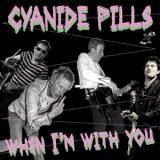
Nur um es uns kompliziert zu machen, wollten die Cyanide Pills zeitgleich mit der Veröffentlichung ihres kompletten Singles-Albums eine neue Single herausbringen. Also, ja, diese limitierte 7"-Single enthält zwei neue Tracks, die NICHT auf ihrer neuen Doppel-LP/CD ,Singled Out" zu finden sind. Cyanide Pills veröffentlichten 2009 ihre erste 7"-Single ,Break It Up", gefolgt von weiteren 14 fantastischen 45ern, zuletzt eine Split-Single mit den Schweizer Nasty Rumours Anfang letzten Jahres. Die meisten dieser Veröffentlichungen enthielten exklusive, nicht auf Alben enthaltene B-Seiten, die Damaged Goods für ,Singled Out" zusammengestellt haben. Schön, sie alle an einem Ort zu haben, oder? Alle Tracks wurden im Billiard Room in Leeds mit Produzent Carl ,Razorblade" Rosamond aufgenommen.
12 Inch Lovers nothing but classix, straight from vinyl! Part 2 of two double vinyl-pack incl. Tensnake, Afro celt Sound System, Midnight Star, Robert Babicz, Gregor Salto, Lovebirds, and Codec & Flexor
After its foundation in 2012, 12 Inch Lovers have become a household name for vinyl lovers in Belgium. Their parties sell out time and time again and focus on an adult audience that loves house and club music from the mid 90s to the present. This in combination with unique locations and DJ's that only play vinyl generates a very dedicated and passionate audience that share one big love: vinyl.
out of Stock
Last delivered 11 days ago available to reorder, subject to availability
Immolation was founded after the demise of Rigor Mortis (NY), a band formed in May 1986 by Andrew Sakowicz (bass guitar, vocals) Dave Wilkinson (drums), and Robert Vigna (guitar) After recording the Decomposed and Warriors of Doom demos, Sakowicz left the band in early 1988 and was replaced by Ross Dolan, and the band's name was changed to "Immolation". The new lineup put out two studio demos, in 1988 and 1989, and gained a worldwide following in the underground death metal scene. Immolation signed a record deal with Roadrunner Records and released their debut album 'Dawn of Possession' in 1991. After leaving Roadrunner, the band released "Stepping on Angels," a compilation of demo releases and live tracks. In 1995 the band was signed by Metal Blade Records and released three albums: 'Here in After' ,'Failures for Gods', and 'Close to a World Below'. After their second album, drummer Craig Smilowski left the band and was replaced by Alex Hernandez. Their next three albums, 'Unholy Cult', 'Harnessing Ruin', and 'Shadows in the Light' were released by Listenable Records.