It's hard to believe it's taken this long for a proper retrospective of legendary Los Angeles collective CVE. "We Represent Billions" is a crucial portrait of one of the West Coast's most low-key influential crews - a hydra-like collective of rappers, producers, designers and engineers who were key members of the Good Life Cafe's open mic scene, going on to inspire artists like Jurassic 5, Kendrick Lamar amongst many other. Initially called Chillin Villain Posse before morphing into Chillin Villain Empire in the late 1980s, they eventually centered around the core trio of Riddlore, NgaFsh and Tray-Loc. The crew were years ahead of their time, self-producing music without samples and pioneering a stream of consciousness lyrics that still sound fresh and innovative. CVE were self-sufficient and motivated from the beginning, named "Chillin Villains" because that's how they were perceived by white America. This social motivation was channeled into their groundbreaking performances at Good Life Cafe, the South Central session that evolved into Project Blowed and later on came to influence LA club night 'Low End Theory'. It was chronicled by Ava Duvernay, herself an MC in short-lived duo Figures of Speech, in her "This is the Life" documentary, where she interviewed CVE alongside Jurassic 5, Freestyle Fellowship, Abstract Rude and Busdriver. On "We Represent Billions", we're treated to a snapshot of the CVE sound from 1993-2003, their most prolific era. The retrospective collects music from the handful of albums the crew released on their own Afterlife Recordz label (mostly as limited edition CD-R's) plus many previously unreleased tracks and highlights their untethered eccentric creativity and sheer breadth of influence. Whether twisting twitchy West Coast electro on 'All Over Da Globe' or free associating over horror synths and foley sounds on 'Made in Chillz Ville' there's a sense that their music was just too future for its time. Assembled from heaving industrial samples and graced by back-and-forth tongue twisting flows, 'Thugs and Clips' is as eerie and hard-hitting as anything 2Pac's "The Don Killuminati: The 7 Day Theory" full-length. Fuzzed-out and unsettling, 'Calistylics' welds an ambient synth loop and bone-rattling percussion to Tricky-esque percussion, while the flickering closer 'Unicycle' is a cross between Dr. Dre's icy G-gunk pressure and Three 6 Mafia's pitch black lo-fi funk. In many ways, 2022 is the perfect time to rediscover this music: an urgent, creative fusion of spine-tingling pre-grime electronic minimalism and mind bending wordplay that still sounds completely idiosyncratic and utterly alien. Tracks: 1 All Over Da Globe 2 Thugs and Clips 3 C.V. Vault 4 Made in Chillz Ville 5 Bring It On 6 Calistylics 7 No Feelins 8 Let's Get It On 9 Today Was A Fucked Up Day 10 Untitled (Freestyle) 11 Unicycle
Cerca:channel 9
It's hard to believe it's taken this long for a proper retrospective of legendary Los Angeles collective CVE. "We Represent Billions" is a crucial portrait of one of the West Coast's most low-key influential crews - a hydra-like collective of rappers, producers, designers and engineers who were key members of the Good Life Cafe's open mic scene, going on to inspire artists like Jurassic 5, Kendrick Lamar amongst many other. Initially called Chillin Villain Posse before morphing into Chillin Villain Empire in the late 1980s, they eventually centered around the core trio of Riddlore, NgaFsh and Tray-Loc. The crew were years ahead of their time, self-producing music without samples and pioneering a stream of consciousness lyrics that still sound fresh and innovative. CVE were self-sufficient and motivated from the beginning, named "Chillin Villains" because that's how they were perceived by white America. This social motivation was channeled into their groundbreaking performances at Good Life Cafe, the South Central session that evolved into Project Blowed and later on came to influence LA club night 'Low End Theory'. It was chronicled by Ava Duvernay, herself an MC in short-lived duo Figures of Speech, in her "This is the Life" documentary, where she interviewed CVE alongside Jurassic 5, Freestyle Fellowship, Abstract Rude and Busdriver. On "We Represent Billions", we're treated to a snapshot of the CVE sound from 1993-2003, their most prolific era. The retrospective collects music from the handful of albums the crew released on their own Afterlife Recordz label (mostly as limited edition CD-R's) plus many previously unreleased tracks and highlights their untethered eccentric creativity and sheer breadth of influence. Whether twisting twitchy West Coast electro on 'All Over Da Globe' or free associating over horror synths and foley sounds on 'Made in Chillz Ville' there's a sense that their music was just too future for its time. Assembled from heaving industrial samples and graced by back-and-forth tongue twisting flows, 'Thugs and Clips' is as eerie and hard-hitting as anything 2Pac's "The Don Killuminati: The 7 Day Theory" full-length. Fuzzed-out and unsettling, 'Calistylics' welds an ambient synth loop and bone-rattling percussion to Tricky-esque percussion, while the flickering closer 'Unicycle' is a cross between Dr. Dre's icy G-gunk pressure and Three 6 Mafia's pitch black lo-fi funk. In many ways, 2022 is the perfect time to rediscover this music: an urgent, creative fusion of spine-tingling pre-grime electronic minimalism and mind bending wordplay that still sounds completely idiosyncratic and utterly alien. Tracks: 1 All Over Da Globe 2 Thugs and Clips 3 C.V. Vault 4 Made in Chillz Ville 5 Bring It On 6 Calistylics 7 No Feelins 8 Let's Get It On 9 Today Was A Fucked Up Day 10 Untitled (Freestyle) 11 Unicycle
It’s been a long way. All seems to blend naturally with ‘A Long Way’, the debut album from Parisian duo Jacques Bon & Drux.
Jacques is a long term friend, who was running the Paris branch of the Smallville record store for 13 years (2006 – 2019). He made himself a name also outside of Paris as a DJ and with music released on Giegling, Kann, Mule Musiq and of course Smallville. Jacques shares his studio in Paris with Vincent Drux, a producer and sound engineer, who recently started his own imprint Cabale Records. Both got together naturally in the studio for hour-long sessions to craft an album together. House music at its most meticulous form.
First, as a short form, in which every track captures another time zone of the dancefloor experience. And then as longform, as a whole album with a narrative that combines futuristic aesthetics, classic ethos and human warmth.
From the rolling percussion and windy-city style bassline of opener ‘Distant Voices’, with its cut yet longing distant voices, through deepy, dubby and raw ‘Celeste’, the haunting synths of ‘Mirage’; The snares that arrive mid through ‘Space Ways’ and launch into another level; ‘Radiance’’s Techy vibe ride; The late night chords and peak time beat programming of ‘Your Wings’; And then final couple stick the landing with enough energy, deepness and beauty - ‘Elevate’, which channels Bon and Drux’s inner Fred P, and ‘Sandstorm’, a mastery percussive tale with a long, repetitive chord that opens and closes, teases until it disappears and remains nothing but a whispery dying effect.
Words by Niv Hadas
All Tracks are written, produced and mixed by Jacques Bon & Vincent Drux
- A1: Upper Astral - Upper Astral Suite
- A2: David Naegele - Temple In The Forest
- A3: Slap & Powell - Sex Drive
- A4: David Storrs - Channel For The Light (Part Ii)
- A5: Steven Cooper - Key West Afternoon Vi
- A6: Robert Slap - Boynton Canyon
- B1: Upper Astral - Celestial Whispers Ii
- B2: Steven Cooper - Crystal Garden I
- B3: Robert Slap - Ufo
- C1: Robert Slap - Search For Utopia Ii
- C2: Gloria Thomas - I Am
- C3: Robert Slap - Sands Of Time
- C4: Celestial Odysseys - Daystar
- D1: Steven Cooper - Key West Afternoon V
- D2: David Storrs - Aerobic Exercise Music (Driving Beat Ii)
- D3: Robert Martin - Great Peace (Guitar)
- D4: David Storrs - Sedona Sunrise
- D5: Robert Slap - East Of West Viii
Libreville Records presents Totāl Cuevas, a seminal compilation album of legendary DJ Guy Cuevas's own music.
Guy Cuevas is a French-Cuban writer, musician, and DJ, pioneer of the art of modern DJing.
A key figure on the Paris night scene, Guy Cuevas gained a cult status as the resident DJ of the mythical nightclub Le Palace, gathering thousands of people every night under his booth, shepherding them with his music towards euphoria. He also collaborated with a great number of Fashion brands, such as Yves Saint Laurent, Kenzo, Dior, Hermès and many more.
In the early 80s, Guy Cuevas released a handful of records, channeling his hedonism and natural grandeur into his sound, creating a unique music of his own.
Totāl Cuevas brings together music from his three singles Ebony Game (1981), Obsession (1982), and Gallo Negro (1984), and includes previously unreleased alternate mixes.
Guy Cuevas’s most iconic output, "Obsession - The Nassau Mix" (mixed by François K) gets a fresh new reboot with "Obsession - The Paris Version".
Remastered from the master tapes.
Samantha Togni makes her TITDM debut with five uncompromising cuts, exploring the darkest corners of techno and channeling her artistic expression in a flurry of controlled yet innovative directions. This compulsion to work without boundaries isn't new to Samantha, having always leaned toward a 'do it your own way' attitude, leading to Samantha founding Boudica in 2017; a collective aiming to give visibility to women and non binary artists through their events, conference, radio show and podcast.
'Trust The Heat' rattles through the speakers with its bone twitching bass, spilling out from its kickdrums and marching forward at an unnerving pace. The accompanying grooves give way to primal movements and an added layer of welcomed spice. There's no sing-songy samples here, just a vocal phrase with the energy of a megaphone edging through a busy club; guiding dancers to keep moving. 'No Pressure to Fit In' follows up with its spiraling basslines opening and closing, providing the movement against a backdrop of percussive power. Togni brings back the vocal snippets. this time to greater hypnotic effect.
'Sensible Social Lies' sounds like the type of techno you'd expect to hear on a planet from Dune; shapeshifting its way through sand with a heavy onslaught of newly discovered sounds. 'Cockroaches' scales back, remaining functional and still packing a serious punch, before the record comes to a pupil dilating close with 'In Vivo' a melodic, left-leaning piece honoring what makes techno so great, while remaining fiercely contemporary and unique to the artist who created it.
A revelatory collection of recordings from Japanese free-sound quintet Gu-N. Formed in 1994 by Fumio Kosakai (Incapacitants, Hijokaidan, C.C.C.C.) and Hidenobu Kaneda (Yuragi), alongside Ikuro Takahashi (Fushitsusha, Kousokuya, LSD March), Ryuichi Nagakubo (C.C.C.C., Yuragi), and Morihide Sawada (Yura Yura Teikoku, Marble Sheep), Gu-N played regularly at Plan-B in Tokyo, but released little during their relatively short time together. Hazy and hypnotic, their laminar improvisations, four of which appear on this untitled album, are compelling, oneiric visions for the ear.
In his liner notes for the album, Michel Henritzi writes that these Gu-N recordings situate the group within a broader trajectory of free improvisation and collective sound within Japan – Taj Mahal Travellers, East Bionic Symphonia, Marginal Consort, each of whom sprung, in many ways, from the radical vision and creativity of Takehisa Kosugi. But there’s a unique spirit here that aligns Gu-N with these predecessors, while also marking out singular territory.
Kosakai’s background in noise, via his participation in Hijokaidan and Incapacitants, can be heard in the unrelenting oscillations and heavyweight drones that purr throughout each of these four tracks. Both Kosakai and Nagakubo were members of C.C.C.C., perhaps the clearest precursors to Gu-N in their psychedelic density, though Gu-N trade in C.C.C.C.’s volcanic energy for a more tempered, sensuous exploration of tone and time.
There’s also a brutish element to Gu-N’s improvisations – see the saturated spectrum, rumbling and phasing throughout the album, and the crushing, almost Amon Düül-esque drum tattoos that Takahashi pounds out on the second track (recorded in 1998), punctuating the music from deep inside its hallucinatory murk. Elsewhere, as on the third track (one of three recorded in 1994), Kosakai’s cello scrapes out armfuls of buzz-tone as Sawada’s bouzouki trills out, elastic and vibrant, across spindrift electronics and lung-spun winds.
What’s most impressive here, though, is the way each player, formidable musicians in their own right, defers to the might of the communal and the collective. The quintet broke up in 1998, leaving behind scant recorded evidence – just one, self-titled CD, on Pataphysique, released in 1995. This LP is a most welcome addition to the small but blissful body of recorded work made public by this mysterious quintet of spirit channelers.
Winston 'Niney' Holmes AKA The Observer, must be one of Reggaes finest Roots Rebel producers. Capable of making some of the heaviest, innovative music, not only in sound but also in the Cultural/Political sense.
Born George Boswell, Montego Bay, Jamaica 1951, and name checked 'Niney' due to losing a thumb in a workshop accident. He began his career in music by organising bands to play at school dances. But his first steps learning the musical ropes came working under the tutelage of producer Bunny Lee around 1967, organising sessions for Bunny's stable of artists. He moved on to work alongside Lee Perry at Joe Gibb's 'Amalgamated' label setup, where on Lee Perry's leaving in 1969 to start his own 'Upsetter' label, Niney became chief engineer.
Inspired by Perry's success it wasn't long before his own 'Destroyer' label was under way. It was 1970, and his first production entitled 'Mr Brown' by DJ's Dennis Alcapone and Lizzy, proved to be a minor hit, but his own 'Blood and Fire' track released in December of that year would become a major hit. After initial problems with it's likeness to Bob Marley's track ' Duppy Conqueror' being ironed out, it's reissue on his now named 'Observer' label, saw it go on to become, Jamaican Record of the Year 1971. Far out selling Bob Marley's track to the tune of 30,000 copies in Jamaica alone. A roots classic...
Niney's reputation for building great roots tracks, was furthered with more success working with singer Max Romeo. Issuing cuts such as 'Beard Man Feast', the great 'Reggae Matic' and 'Aily Ailaloo' and renewing his friendship with Lee Perry on the track 'Rasta Band Wagon', who's production credit read Perry, Niney, Maxie. In 1973, Niney began working with Dennis Brown, who was already an established star from an early age, they found a chemistry that went on to produce some of Dennis' finest work. The 1973 hit 'Westbound Train' was followed in 1974 by 'Cassandra', 'I am the Conqueror' and the timeless 'No More Shall I rOam'. Another important connection around this time was the great King Tubby who Niney would take his tapes along to and even record some of his tracks at Tubby's house, 18 Drummlie Avenue, Kingston, which doubles as his Studio of Dub.
It's these tracks that we are concentrating on here. Tubby would strip the tracks back to the bone and rebuild then sometimes leaving off the hook line. Whether that be the horn line or keyboard line and adding effects over the top that could disguise the cut even more. Even Niney stating that when Tubby had finished with a cut, he found it hard to recognise the track himself. Its these tracks as dub plate specials that Tubby would play on his Hometown HI-FI Sound System and it's these such tracks that we have compiled for this release. Dub Plated that have not seen the light of day since tragically the great Osborne Ruddock AKA King Tubby was gunned won and murdered on the 06th December 1989. For a few dollars and a gold chain, reggae music has lost one of it's most creative, inventive forces.
Niney also cut tracks with many other Reggae giants such as Gregory Issacs, Michael Rose, Junior Delgado, Horace Andy and Delroy Wilson to name but a few. As in house producer at the legendry Channel Studios and supervising sessions at Dynamic and Randy's Studio 17, his magic touched many. DJ, Arranger, Producer, his Roots Rebel music still stands the test of time.
Hope you enjoy the set.....
Number 23 from Continental Drift seems to be all about the journey. These are slowly evolving groovy tracks, never staying totally loopy and often being a bit sly about the direction they're headed.
Perspectives Shift, the rst track and release namesake starts out as a oating tune centering around the Mathew Jonson-style wandering bassline melody; it gradually churns thick with rhythmic action and
counterpoint chords. Deep Summer Techno is trippy acid that plays with time and space, maybe channelling a bit of that CABARET Recordings spirit from Ospovat's time in Japan. Finally, the whole B-side is dedicated to Conoley’s rework of label co-owner and dear friend c_olvrin’s Cryogenic Freezing Of Friends, a more Chicago-house excursion, full of groove and many-textured details.
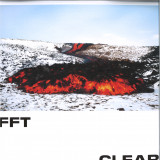
Numbers will release ‘Clear’, the debut album by FFT, on 24th June 2022.The result of three years of focused writing and programming by the London-based producer, ‘Clear’ is deeply psychedelic, defined by a mature sense of melody and structures crafted at a monumental scale.
Though FFT has previously released a handful of tracks under various names, it wasn’t until 2017’s ‘FFT1’ EP on theUncertainty Principle label that his production talents began to fuse into a distinct and personal style, especially evident in FFT’s‘Regional/Loss’ EP on The Trilogy Tapes in 2019, multiple releases on Bruk Records and2021’s ‘Disturb Roqe,’also released on Numbers.Through it all, FFT has mastered a complex sense of mood catalyzed by sound itself: He builds patches and presets from scratch, and feels these synths and software have their own objectives and reactions, creating a kind of compositional feedback loop.The result is an album that brings to mind a collision of electronic pioneers like Delia Derbyshire and Bernard Parmegiani, 2000’s braindance, the Max-imized wares of an OPN or Objekt and the rough rhythmatics of SND or Mika Vainio
The layering of sonic elements and intentions is starkly audible across these nine tracks.They can be seismically concussive and grandiose, but granular and fluid - echoing the Icelandic volcanic eruption that features in the artwork photography byGeorge Cowan. ‘Clear (Eight-Circuit Mix)’sets a euphoric tone immediately accelerated by the jagged sounds and vocal textures of ‘Redeemer’. ‘3 Sided’ channels hyper-urbanity from its almost entirely analogue palette, and by contrast ‘Disturb Roqe 2’is bracingly digital, gyrating in random cycles between clustered percussion, metallic splinters of audio and artificial vocal tics.
Opening side two, ‘You’ve Changed’ adheres to a more abrasive core, while ‘Heal’ and ‘Heal (Alt Mix)’evolved out of linked pieces in FFT’s live sets that grew into complete tracks in the months before Covid-19.The significant intensity of ‘Heal’ in particular was refined during strobe-heavy live performances and is the album at its most turbulent, the claustrophobia interrupted by dazzling arpeggios.The overall impact of 'Clear' is cinematic and precise, marking the arrival of an impressive electronic musician who is not new but has come into his own as a fully developed artist
Recorded at Channel One Recording Studio in Kingston Jamaica
featuring Sly & Robbie, Tommy McCook and Ansel Collins
Arranged by: Trevor Hartley
Produced by: Phil Pratt
First released 1979
Extensive Sleeve Notes
Promotion across social media platforms
Advertising in Riddim, Black Echoes and Record Collector Magazine
Lonefront puts out his first EP on wax with Kajunga Records. Two raw and hypnotic techno tracks channeled from deep.
“Additive spectra” uses the basics masterfully to draw in the mind and body and transport the spirit to ancient spaces. A deep kick and bass drive through the whole track while the high end remains sparse with a subtly shifting pulse and restrained hi hats keeping the tension alive.
On the B side, “South of Forever” is an even more stripped back, slow burner. Nonstop kick and trance inducing percussion anchor the listener in while resonations and reverberations are twisted and mangled to create a strange evolving space out of darkness.
Lonefront is an artist out of MN by way of the bay area. He produces raw explorative techno tracks and performs live using modular hardware. His stripped back productions shift between the speculative future of progress and the drone of decay. Get in tune with carcasses of factories, a chorus of tongues spouting silent mantras, a silent stream of error-riddled program scripts: the flux and snap of trauma incants the noise beyond language that compels movement, and sets you free.
Swedish disruptors SHXCXCHCXSH return to Avian.
Following on from 2018’s SHULULULU EP, the duo are back channeling their sound-design focused experimentalism into a brace of characteristically high energy recordings. Melding contemporary explorations in rhythm and texture with more traditional club tropes, Kongestion places recognizable leitmotif’s from the dance music continuum in the context of the pair’s inimitable production prowess
A1 Kong and follow up Onge offer two takes on a similar template that marry a stepping kick drum pattern with dense, ever-shifting granules of processed white noise. The mentasm sample, that will become a recognizable device across the EP’s course, provides it’s own twisted energy – front and center on the former, and sunk – but no less effective, on the latter. With Nges SHXCXCHCXSH draw on their beatless material for inspiration, inviting a more musical sensibility into the work. What begins life as a staccato, monotonal recording develops slowly and organically into an emotive patchwork piece – drawing on the mentasm, but this time twisting it further and introducing a bassline and shuffling hats. Relentless rhythm track Gest follows – a dense, thorny construction that segues neatly into Esti, another more caustic composition that places it’s focus on intricate, delay-driven sound design with ghostly lead tones that operate just below the surface. As the record approaches it’s close, the duo showcase their range with Stio – a pulsing, meditative ambient cut. Final track Tion wraps up the EP neatly, acting as a fulcrum for the themes explored so far. Bending the mentasms into a hook, the artists create a wall of undulating sound, broken by sporadic kick drum hits and propelled forward with percussive strikes that run through the track before dissolving into soft reverb tails.
‘4-Vesta’ is the brightest asteroid visible from Earth. Measuring around 500km in diameter, it’s one of the four largest objects in the asteroid belt between Jupiter and Mars. Fragments of Vesta have been found on Earth, as meteorites that were ejected into space after two collisions that left huge craters on its surface. These fragments show that Vesta was probably once a planet itself, made of the same material as the four terrestrial planets (Mercury, Venus, Earth and Mars).
It was an encounter with one of these fragments that inspired the name for Azu Tiwaline’s latest EP for I.O.T Records, ‘Vesta’, which features tracks that were written and recorded around the same time as ‘Magnetic Service’, her break-through EP for Livity Sound. Holding a piece of Vesta that had been found in the Saharan Desert - already a place of deep significance for her - she felt a sense of wonder, on a cosmic scale. In her hands, was an object so apparently familiar, of the same age and made of the same fundamental materials as the Earth on which she stood, yet from somewhere else entirely. A perfect name for the four tracks that make up ‘Vesta’. And also the perfect source material for the EP’s cover, an electron microscope image of a razor-thin slice of that same cosmic fragment that Azu held in her hand.
‘Vesta’ is familiar, yet distinct. It’s recognisably Azu Tiwaline from the very start, yet the unexpected always finds a way in. A booming, echoing kick opens ‘Low’, followed by the rattling, shivering sound of a tanbur hand-drum, courtesy of his regular collaborator, Franco-Iranian percussionist and producer Cinna Peyghamy. But then, tentatively at first, a jazzy synth line emerges, and disappears again, only to reappear later. An another colour to add to Azu Tiwaline’s already rich palette?
Azu Tiwaline’s music has always explored the dynamics between space and depth, and the contrasts between light and density. ‘Vesta’ often feels like a high-wire act, an exercise in finding space even as the air fills with drum patterns and synth lines. ‘Medium Time’ builds from a chorus of buzzing insects into a thick percussive track across eight minutes, without ever losing that initial wide-open sound of the dusk. ‘Into The Void’ pays homage to her well-worn collection of Rhythm & Sound and Basic Channel 12-inch singles, all swaying dub echoes and languid kick drums. Then mid-track, it pivots in intensity, each element suddenly expanded and magnified: a psychedelic shift. Those who’ve had the chance to see Azu Tiwaline perform in the past few years might get a few flashbacks - it’s been a key part of her live set.
But it’s the final track ‘Deep Theko’ that best fits the EP’s cosmic title. A shape-shifting ‘ambient’ track that never seems to settle, it drifts restlessly, sporadic percussion and synth washes injecting random bursts of activity. A sonic representation of planetary debris floating through space? Here, as with the airless void of space, emptiness enables a certain perspective. If the distances between the stars weren’t so enormous, we wouldn’t be able to gaze upon them in their entirety, after all.
A spellbinding tribute from one multi-faceted artist to another. New York-based artist Aki Onda (b. 1967) conjured a transduction to the Korean multi-media pioneer Nam June Paik (1932-2006). Aki himself describes the project:
“Nam June’s Spirit Was Speaking to Me occurred purely by chance. In 2010, I was spending four days at Nam June Paik Art Center in South Korea for a series of performances and had plenty of free time to wander. The building was packed with Paik’s artwork and related material. I have always felt a close kinship with him as an artist, and so it was a great opportunity to immerse myself in his works and ephemera.
It was that night I made the first contact, via a hand-held radio in a hotel room in Seoul. It was literally out of the blue. Scanning through the stations, I stumbled upon what sounded like a submerged voice and I began to record it in fascination. I concluded this was Paik’s spirit reaching out to me.
The project continued to grow organically as I kept channeling Paik’s spirit over long distance and receiving cryptic broadcasts/messages. The series of séances, conducted in different cities across the globe, began in Seoul in 2010, and continued in Köln, Germany in 2012, Wrocław, Poland in 2013, and Lewisburg, USA in 2014. The original recordings were captured by the same radio which has a tape recorder, with almost no editing, save for some minimal slicing and mastering.
Paik is known for his association with shamanism, a practice that constantly surfaces in his works all through his career. In an interview, he stated “In Korea, diverse forms of shamanism are strongly remained. Even though I have created my work unconsciously, the most inspiring thing in my work came from Korean female shaman Mudang.” Paik himself was a master shaman and vividly used shaman rituals and symbols for staging his performances and installations.
These recordings also became a way for me to explore the mythic form of radio—a medium which is full of mysteries. The transmissions captured may be “secret broadcasts” on anonymous radio stations. There are in fact hundreds of those stations around the world, although the numbers dwindle as clandestine messages can now be sent via encrypted digital channels. Some of these stations were likely for military use or espionage or relics of the Cold War. But many others continue without apparent explanation. These are just some of the questions that remain unanswered.”
Commissioned in 2017 by documenta 14's radio program “Every Time A Ear di Soun,” these recordings were continually broadcast on eight radios stations around the world that year. Nam June’s Spirit is a beautifully formed homage, I cannot think of any other like it. An intimate, flickering language discovered through the air. The LP comes replete with a booklet of photographs of Paik on the set of Michael Snow’s unreleased film Rameau’s Nephew (1974).
Sean McCann, 2020
Aki Onda, 2017
20-page art booklet including rare photographs of Nam June Paik from the set of Michael Snow’s film Rameau’s Nephew (1974), two essays on radio-wave phenomenon (by Onda and Marcus Gammel), and a remembrance of Paik by Yuji Agematsu
Stefan Schwanders Repeat Orchestra presents “Infamous Lost Tracks”, an album appearing out of the blue, coming from spheres where time, space and Zeitgeist are nothing more than words.
With the Repeat Orchestra Schwander (who of course also is Harmonious Thelonious, A Rocket In Dub, Antonelli and a lot more) found a unique way of channeling deep House Music, a minimalistic setup and an idea of creating enjoyable music into amazing tracks that sound so effortless and natural. From first track "Call And Response" on it’s obvious that the main thing that this album is about is the groove, sometimes euphoric, sometimes quite unobtrusive but always irresistible, build from massive basslines, complex rhythms and the masterfully performed interplay of repetition and modulation. Warm harmonies, multilayered (at times quite unusual ("Nightdubbing")) melodies and subtle arrangements complete these Infamous Lost Tracks and their very own formular between Düsseldorf, Chicago and Lagos. There’s nothing harsh in this music, no aggression, still it’s far from being tame or tranquil: The pumping energy of "A Means To An End" or the sublime liquid shuffle of "Less Sensational" show the swing and kick inside these works that are made for delight but not to please.
And “Monks In A Club” is the most brilliant example of dancefloor understatement that you’ll ever hear in your life. Reduction, elegance and the right kind of mania concentrated into some minutes of pure club heaven. Handclaps, nonchalance & madness. An essential singularity and the swan song to the Repeat Orchestra, there will be no more of it. Get It And Smile.
Swedish duo Thunder Tillman come together again in healing harmony to produce a much needed LP for troubled times. Thunder and his life coach Pony bring their spirits in sync for 40 minutes of improvised soundtracks for mental and physical wellbeing.
Recorded on Stockholm’s Wind Island, the pair have carefully selected specimens from their collection of vintage musical paraphernalia to channel these specific vibrations for maximum healing power.
Side one is a gentle wake up call for the soul, with pipes and chimes that gently give way to mind-expanding synths and feedback echoes that sound like sun glistening off a mountain river. Those sounds lead into an electric piano and life affirming synth figure, before disintegrating into santoor strings and chants with a slight Indian flavor. It’s a cosmic combination that invites relaxation and meditation, and the kind of deep breathing exercises that could turn back the clock on a host of bodily ailments. An electric piano comes back to the foreground with a bass and synth combination that drives forward with healing hands, before parting the frequencies for ear-tickling pads and voices. Rounding out the side is a chiming synth and santoor figure that brings the wandering spirit home and to rest.
Side two starts up with Cosmic Osmosis - a motorik drum machine beat and bass line that briefly brings to mind some of their more krautrock inspired modes across their three previous Eps, but soon collapses back into visceral synth twinkles and relaxing washes of analogue tones. It’s a dynamic that drives the whole record, sounds that excite the soul perhaps even the body on an atomic level, before bringing that energy down to a calming, relaxing home. There’s a craftsmanship to their synthesized tones that goes beyond mere artistry, and the interplay between sounds and frequencies is especially inspired, to the point where the music practically sparkles out of the speakers. Side two closes out with harmonic chimes that could put you on a Himalayan mountain side, and succeeds in raising the spirit, mind and body to higher plains of cosmic consciousness.
The Aural Healing Program is accompanied by a 40 minutes Visual Healing Program that will be unveiled in conjunction with the vinyl release. The first visual healing session featuring side B opener Cosmic Osmosis, is already available for all to partake. So just relax, let go and let the frequencies guide you.
Propulsive tabla percussion and meditative drones collide in deep instrumental conversation on Shruti Dances, the debut collaborative album between UK heavyweights Auntie Flo and Sarathy Korwar, forthcoming on the newly relaunched, Make Music imprint.
Across six exchanges of dynamic electronic production and richly layered Indian classical percussion, Shruti Dances discovers two architects of rhythm and movement on an explorative journey through South Asian tonality and diasporic identity.
One an elemental force on drums, the other on the decks, London-based, Indian-raised drummer/composer, Sarathy Korwar and Scottish-Goan producer/DJ, Auntie Flo first connected back in 2019, unaware both were navigating opposite ends of the beat equilibrium. Where Auntie Flo (aka Brian D’Souza) was new to Korwar’s reimagining of jazz, Indian classical music, electronics and spoken word, Korwar was already a big admirer of Auntie Flo’s intl-facing club output, having first discovered D’Souza’s Rainfall On Red Earth off his Soniferous Garden 12” and 2019 SAY award-winning (Scottish Album of The Year), Radio Highlife. Once properly acquainted, Korwar invited Auntie Flo to remix a track off his landmark 2019 album, More Arriving, described by The Guardian as “a stylistic leap from jazz to hip-hop to spoken word…a protest record encompassing the breadth of immigrant experiences”.
The seeds of an unlikely yet powerful musical bond had been sown and when mutual friend, co-founder of Mixcloud, and Make Music label organiser, Nikhil Shah, asked the duo to inaugurate the label’s new live/electronic direction (previously home to Leon Vynehall, U and George Fitzgerald), Korwar and D’Souza hit the studio. Expanding on early conversations around traditional Indian instrumentation, practicing meditation and improvisation, Shruti Dances (a riff on free dance movement, Ecstatic Dance) was born. Meaning 'that which is heard' in Sanskrit, shruti refers to a note in musical terms, but in this case also references the album’s most prominent influence and instrument, the shruti box.
“The shruti box formed the basis of the sound of the project. It’s a drone instrument, similar to a harmonium, and it makes an amazing sound. I’ve spent the last two years studying sound therapy, and immersing myself in ambient and drone through the Ambient Flo project, and am particularly interested in how they can induce meditative states of consciousness. I was really excited to hear what the Shruti box could do with this EP.” Auntie Flo
Across six tracks, (each named after 6 of the 7 main musical notes in the Indian solfege system), Shruti Dances draws on a celestial mix of traditional percussion and processed digital effects. On opening track Dha, Korwar’s sparse tabla rhythms hop across D’Souza’s scattered, arpeggiated synths, where as on Pa, a Balearic shuffle channels Moroccan Gnawa music and Senegalese sabar meets Mark Ernestus’s Ndagga Rhythm Force. Harmonic speed tabla and roaming drones provide a sense of the ethereal and fourth-worldly on Ma, a track that’s resplendent, curious atmosphere would fit snug into the deep listening-focused programming of Auntie Flo’s Ambient Flo online radio station, a curatorial platform and avenue exploring his interest/promotion of mental health, launched over the UK’s first lockdown. Ni sees Korwar pick up the sticks, thrashing toms in a spirited frenzy, whilst downtempo album closer Sa offers some room for reflection, its slow, swirling chords cloud our focus, leaving us with all but the distant sound of birdsong.
After a parentship hiatus, Richard Zepezauer´s n s y d e imprint is back to push new boundaries and save some souls.
N s y d e proudly presents a next release by Skymark. It's his second full EP on the Berlin based imprint.
His Easy Saturday Night EP includes two excellent deep house jams backed with remixes by Kevin Reynolds and Mike Huckaby. The latter was previously released as a single sided limited edition.Skymark brings a bright and sun tinged house anthem on the Instrumental version of Easy Saturday Night on the A1.
The remix is in our opinion amongst Mike Huckaby's best productions. It touches the classic soulfulness of Larry Heard-style piano chords and blissful vocals combined with clear hints of Basic Channel's eternal electrifying waves. It's a perfect testament to Mike's unparalleled knowledge and wide musical range, Not only those who knew him will feel his presence while listening to this beauty.
On Insomnia, Skymark goes even deeper into deep soul territories. Pure vibes. Reworked by Detroit DJ and producer Kevin Reynolds. Made his frst appearance on nsyde back in 2011 and here he twists the original into N s y d e was founded 2011 by Richard Zepezauer.
N S Y D E will continue to bring back the family by unifying diverse artists from all angles of the electronic music familytree. N S Y D E believes in the political power of art, it brings together people.
N S Y D E does not believe in the power of political marketing of art, it divides people from each other. House Nation still under one Groove.
Early DJ support by : Antal (Rushhour), XDB, Laurent Garnier, Steffi (Ostgut), Electric Indigo, Dan Curtin etc.
International Feel founder and guru of the sunset soundtrack, Mark Barrott returns with a new EP entitled Travelling Music. After spending the last few years writing & producing for other people, Mark is focusing his creative efforts inwards & rediscovering his own musical compass, calling it ‘the best medicine and therapy there is’. It’s this energy he looks forward to sharing via a number of releases over the coming months, including a new La Torre compilation, a series of Bandcamp only releases (Bandcamp Editions), the soundtrack to a new Japanese documentary (??) and this new vinyl release, Travelling Music.
He refers to the title track as Balearic trance. Not in the overblown Dutch sense, but trance as a metaphor/mechanism for an altered state, through hypnotic unraveling synth lines and a dash of wonkiness thrown in for good measure . Elsewhere on the EP, Arcade Scene flexes its melodic Italo dance moves with a slight nod to New Order, but a version of the group that’s beamed in from an alternate reality, where The Haçienda was called Il Tesoro and relocated to Ancona via a Gerd Janson DJ set circa 1991.
Chillin’ 4 work channels Aphex Twin from his easy listening Gentle People remix era, with added Sketches from an Island / Ry Cooder-esque guitars and the reprise of Travelling Music already feels like a La Torre sunset classic, bouncing with sequenced polyrhythmic arpeggios, before gently evaporating into a Vangelis-meets-Edgar Froese heat haze.
As with most of his work, Barrott calls this folk music…the telling of stories from everyday life and being Ibizan in origin, there are always a lot of varied & crazy stories to tell, but this chapter in particular feels like a deep burnt therapeutic transmission straight from the heart.