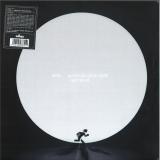
Für NEMO ist Musik machen ein kreativer Spielplatz, auf dem man sich mit spektakulären Performances
und vielschichtigen Kompositionen ausdrücken kann und gleichzeitig eine wichtige Plattform für Themen,
die mehr Rampenlicht verdienen. „Ich schreibe über Dinge, die mir wichtig sind. Als Mensch der sich nonbinär identifiziert, nährt sich mein Antrieb auch daraus, mich für die Rechte der Community einzusetzen
und Gender Identity, Diversität und Selbstakzeptanz normal werden zu lassen.“
Nachdem der Schweizer Act 2024 die ESC-Herzen erobert hat, ging Siegertrack „The Code“ durch die
Decke und meldete Edelmetall und Streams im dreistelligen Millionenbereich. Seitdem feiern Fans und
Clubgänger Folgebanger wie „Eurostar“ und „Casanova“ aber auch fragilere Songs wie „Unexplainable“,
mit dem NEMO beim Finale des ESC 2025 zu sehen war.
Es ist ein sinnlicher Mix aus Charme, Mut, Energie und Anspruch, der NEMO in die erste Liga der aufregendsten Popacts des Kontinents katapultiert hat und das Aufsehen um das Debütalbum ARTHOUSE
erklärt. ARTHOUSE erscheint am 10.10.2025 als Marbled Vinyl LP und CD.
Cerca:char
- A1: W.r.u
- A2: T. & T
- B1: C. & D
- B2: R.p.d.d
Remastered using pure analogue components only, from the master tapes through to the cutting head.
Ornette Coleman, who died in June 2015 from cardiac arrest, must be counted as one of the most influential musicians in the jazz genre. His importance does not only lie in his ground-breaking recordings in the late Fifties and early Sixties, but lies more significantly in the educational effect of his work – in the fact that he always went beyond himself to the very end.
Just a little more than a month after his ground-breaking release "Free Jazz", Coleman recorded the present album, in which he perhaps distanced himself somewhat from the conceptual idea, but still guided his quartet to ever more richness of detail and creativity. "Ornette!" was the first recording with bass-player Scott LaFaro and Coleman, and the difference in approach between LaFaro and Charlie Haden is noticeable from the very first note of "W.R.U.". His playing is more direct and agile, and one can hear how he drives Coleman and Don Cherry actively onwards and more aggressively than Haden’s warm, languid phrasing.
The tracks, with titles that are taken from the works of Sigmund Freud, are all gems and serve as a wonderful starting point for the musicians’ improvisations. By now, Coleman felt himself comfortable in lengthy pieces, and neither he nor his fellow musicians had trouble in filling out time, never once lacking for new ideas. Ed Blackwell deserves a special mention – he shows himself here at his very best. "Ornette!" is a superb release and an absolute must for all fans of Coleman and creative, improvised music in general.
Pioneering, uncompromising, yet frequent chart-stormer, sound designer/producer/performer Enrico Sangiuliano releases a remix EP of his seminal, startling ‘The Techno Code’. The techno manifesto dropped in April, also on his countdown imprint NINETOZERO, as part of VA EP ‘Discipline’, since when it’s won multiple plays and plaudits on dancefloors, radio and streaming platforms.
Remixes accompanying the original on the new digital EP are by Kevin de Vries & SLVR; Charlotte de Witte; Avalon & Tristan, plus a bonus DJ tool edit.
The Techno Code (Original Mix) is at once a spoken ‘how to’ of techno and a celebration of the genre, in portentous US tones reminiscent of 50s Atom bomb warning films and of Faithless’ ‘This is my church…’ as Sangiuliano builds the track according to ‘my rules – the Techno Code’ – the hi-hats, the main theme, the touch of acid…as the Voice narrates their effect on listener and raver.
‘The Techno Code (Kevin de Vries & SLVR Remix)’: starts slower, looser and stealthier, until fleshed out with ‘plucked string’ melody overlay, while a siren-like ultra-high note joins in. They’ve also darkened the bass elements while chopping, but maintaining the centrality and clarity of the spoken words.
‘The Techno Code (Charlotte de Witte’s Acid Code)’: adds hoover swoops, spacey stabs, and a brain-invading beeping backbeat. As per de Witte’s remix title, the ‘little acid’ of the original becomes a fizzing main theme. Reordering/cutting the words gives more emphasis to the ‘journey’ motif and builds on the ‘tension/anticipation’.
‘The Techno Code (Avalon & Tristan Remix)’ (Digital Exclusive): the spoken word is stripped back to a powerful intro and brief interjections, all processed with echo, robotic effects, distortion... and all about the anticipation - what you are about to hear, here it comes… The acid is raised to sulphuric levels by a pulsing tooth-tingling synth in a fast psy-trance ride.
Experience the ultimate OneRepublic compilation with The Collection - a selection of their biggest hits! Featuring global chart-toppers like “Counting Stars,” “Apologize,” and “I Ain’t Worried,” to anthems like “I Lived,” “Run,” and “Good Life.” Available on 1LP black vinyl, OneRepublic: The Collection is a must-have.
- Aufgrund der großen Nachfrage: Das erfolgreiche ORDEN OGAN Debütalbum nun erneut auf Vinyl erhältlich
- Erstmals als Picturevinyl erhältlich,sowie Shopexklusiv als Splatter und als Clear Red Vinyl
- Coverartwork von Andreas Marschall (Blind Guardian, Kreator, In Flames)
- ORDEN OGAN gehören mittlerweile zu den erfolgreichsten Metal-Bands Deutschlands; ihr aktuelles Album "Final Days" erreichte Platz 3 der Media Control-Charts
A Tekko Kagi is characterized by four iron blades like bear claws attached to a metal ring covering the userÕs knuckles. Worn over the hands, the claws can be used as an offensive weapon for slashing, striking and scraping the opponent and also for defensive purposes as the wielder can disarm or sunder swords or other slender-bladed weapons with natural hand motions.
Unknown Waveforms is the forthcoming album from Belgian trio KAU, set for release on October 10, 2025. Marking an evolution since their 2023 release The Cycle Repeats, this new record captures a more personal, immediate, and unfiltered version of the band's sound. In an increasingly digital world, KAU takes a different route, with an album rooted in human connection, live energy, and creative spontaneity. Here, the trio reflect their take on instrumental music, drawing heavily fromjazz, hip hop, and electronic influences.
At the heart of Unknown Waveforms lies the starting point of three musicians in a room, writing and composing music on the spot. For KAU, this idea mirrors their working method: long jam sessions, free-flowing experimentation, and shared moments of inspiration. Songs often take shape slowly, unfolding over hours or days, but always built collaboratively as a trio.
The album's title reflects the mystery behind how music comes together, but is also both literal and symbolic. Unknown waveforms are the sounds that arise when machines and people interact in unpredictable ways. Whether you're an experienced musician or just starting out, the creative process often feels elusive and hard to fully understand. But there are also certain moments: creative sparks that can't be planned or programmed. It ends up being more than notes, gear, or structure, it's about the process, the tension and energy that builds when people connect and create in the same room.
The title track, Unknown Waveforms, captures that exact process. It opens with a quote from synth pioneer Wendy Carlos: "I'm just trying to show you how we get some of these sounds", inviting listeners directly into the creative space. The track focuses less on a polished outcome and more on the moment before a song is "finished": it's a portrait of experimentation, feeling, and raw expression.
This commitment to honesty permeates the entire album. KAU kept overdubs to a minimum, avoided excessive editing, and prioritized spontaneous choices over calculated ones. In a time when the future of live, improvised music feels uncertain, they double down on the physical, the real, and the immediate. The album resists the pristine polish of modern production, favoring the warmth and imperfection of analog synthesis. The band embraces the character of their instruments, particularly vintage gear, where subtle flaws add beauty, depth, and personality.
One standout track, cr_eye, is driven by the Moog Subphatty-a key instrument in the band's toolkit for its analog warmth and powerful sub-bass. The track centers around the conversation between bass and drums, allowing the keyboards to recede and create space. It draws emotional threads from earlier KAU tracks like Kampala and Kautokeino, bridging past and present with a shared atmosphere and rhythmic interplay.
Another highlight, Stratford, finds inspiration in London's transport system and the UK jazz scene that has long influenced KAU. A field recording snippet of the London Underground kicks off the track, connecting it to the rhythm of everyday commutes. Built around a hypnotic sequencer line from the Roland JX-3P, the track evokes the motion of a metro journey. Artists like Nubya Garcia, Yussef Dayes, and Alfa Mist, giants of the scenethat the band has admired for years, resonate subtly throughout.
Above all, Unknown Waveforms is a statement of intent from KAU: a celebration of imperfection, creative honesty and an insight in the process.
The American gothic rock/post-punk band She Wants Revenge was founded in 2004 by Adam Bravin and Justin Warfield. Their self-titled debut studio album, released in 2006, featured the singles "These Things" and "Tear You Apart." Upon its release, the album reached #38 on the Billboard 200, #3 on Billboard's Top Dance/Electronic Albums chart, and #9 on the Top Rock Albums chart in the U.S._x000d__x000a_She Wants Revenge is available as a 2LP, and is packed in a gatefold sleeve.
Jackie Mittoo’s ‘Reggae Magic’ is a new collection from the great Jackie Mittoo. The album features a mixture of classic tunes and rarities from the period 1967-74, when Mittoo was at the height of his musical powers. Mittoo’s solo career began after the end of The Skatalites in 1965. He began pushing new musical boundaries, creating a uniquely identifiable organ-led funky reggae sound that owed as much to Booker T and The MGs, Jimmy Smith, Stax and Motown as to the post-ska and emergent rocksteady island rhythms of Kingston, Jamaica. His solo work at the legendary Studio One spanned seven albums and hundreds of singles.
Aside from producer and founder Clement ‘Sir Coxsone’ Dodd, it’s hard to think of anyone more central to the sound and success of Studio One than Mittoo; keyboard player extraordinaire, songwriter, arranger, musician, truly the Keyboard King at Studio One. Jackie Mittoo had been the youngest founding member of The Skatalites (at age 16), probably the most important group in Jamaican music. After they split, he became leader of the three pivotal groups at Studio One – The Soul Brothers, The Soul Vendors and Sound Dimension. He also became musical director for Studio One, helping create countless hits for singers Ken Boothe, Bob Andy, The Wailers, John Holt, Delroy Wilson and more – unforgettable tunes like Alton Ellis’ ‘I’m Still in Love with You’, Marcia Griffiths’ ‘Feel Like Jumping’, The Heptones’ ‘Baby Why’ and others. Between 1965 and 1968, many of the tunes created at Studio One can be attributed to Mittoo – timeless instrumental tracks, recorded either under his own name or those of The Soul Brothers, Soul Vendors and Sound Dimension, that have become the basis for literally 1000s and 1000s of Jamaican songs over many decades, giving the music an unsurpassed longevity.
The endurance of his music was as a direct result of significant developments in Jamaican music in the 1970s, namely the creation of three important new styles: Dub, Deejay and Dancehall. In the early 1970s Mittoo’s instrumental tracks were used as the musical source for a series of classic Studio One dub albums. At the same time Deejays at Studio One, including Dillinger, Prince Jazzbo and Dennis Alcapone, began toasting over these same popular rhythms to create their own new songs. In the mid-70s, a new generation of Studio One singers and deejays, including Sugar Minott, Freddie McGregor, Johnny Osbourne, Michigan & Smiley and others, began once again creating new melodies over these original instrumentals, signalling the birth of a new Jamaican style that became known as ‘dancehall’.
As dancehall swept across the island, rival producers copied these now classic rhythms. These original Jackie Mittoo-driven tunes spread like a virus throughout Jamaican music; be they the instrumental cuts to tunes such as Alton Ellis’ ‘Mad Mad’ , ‘I’m Just A Guy’, Larry Marshall’s ‘Mean Girl’, Slim Smith’s ‘Rougher Yet’, and instrumentals such as Mittoo’s classic ‘Hot Milk’ or ‘One Step Beyond’, The Sound Dimension’s ‘Real Rock’, ‘Heavy Rock’, ‘Full Up’, ‘Drum Song’, ‘Rockfort Rock’ … and the list goes on. These tracks became a constant soundtrack to the island, emitting from the ever-present sound of speaker boxes strung up around dancehalls. This recycling travelled even farther afield; The Sound Dimension’s instrumental ‘Real Rock’, updated by Willie Williams on his classic ‘Armageddon Time’ was in turn covered by The Clash. Lily Allen sampled Mittoo’s debut solo single ‘Free Soul’ for number one hit ‘Smile’; Dawn Penn’s ‘You Don’t Love Me (No, No, No)’, accompanied by The Soul Vendors, was revived by Penn and producers Steely & Cleevie in 1994, since covered by Rihanna, Ghostface Killah, Stephen Marley, Damian Marley and Beyonce. And so it goes; an endless time-leaping, continent-hopping diasporic musical map of the world with all roads essentially leading back to one man – Jackie Mittoo.
Filippo Diana's “The Haunted Palace” is the second album of unreleased tracks published by Musica Per Immagini, or a sort of soundtrack for an imaginary horror film set in a bloody past, ispired by the book “The Case of Charles Dexter Ward” by Howard Phillips Lovecraft. The artist formerly known as Joe Drive used analog and digital synthesizers, as well as microphones and computers, to describe in notes the ancestral practices of resurrection of the dead accomplished by a shy and unsuspected character, who slowly transforms into an alien, inspiring both fright and terror.
Gong's Gang , a one-off project for the unique family of true musicians: Giuseppe, Lino, and Rossana Nicolosi; brothers and sisters who knew ''something'' about the Italo-boogie-funk of the early '80s, uncontaminated by the increasingly invasive electronic sound of a yet unappreciated Italo-Disco. Gimme Your Love is a gem, with Rosanna Nicolosi leading the way on vocals and cascading synths and bass blending into an intoxicating mix that should make any funk detective froth with approval. And investigating how it sounds, one discovers a certain similarity to a Charades track; strings sound a bit like Gimme The Funk (written and produced by poet Lotti Golden and Richard Sher both with Chuck Wansley and Kathrine Joyce on Warp 9), mixed in 1982 by John "Jellybean" Benitez, a very close friend of Tony Carrasco, who in 1983 produced, arranged, and mixed 'Gimme Your Love'. The two always kept an eye on each other, even from a distance, staying in touch. However, these assumptions do not detract from this stellar song: whether you prefer the vocal hit or the subtly voiced instrumental, that you can dance at any nighttime party and that absolutely deserves a second chance in the spotlight.
The Keith Tippett Group's Dedicated to You, But You Weren't Listening is a landmark in cutting edge fusion/avant-jazz. A vital and profoundly adventurous Jazz-Rock record that still swings very hard, it was first released on Vertigo in 1971.
Original copies are now very tricky to score and, as most of you really should know, it’s aged ridiculously well.
A legendary work, this Be With re-issue has been newly remastered from the original Vertigo master tapes, demonstrating just why this deserves to be back in press. The stunning gatefold jacket fully restores Roger and Martyn Dean's original, arresting album artwork to complete this must-have reissue.
Alive and bursting with a joyful energy that has to be heard to be believed, Dedicated to You, But You Weren't Listening flirts with perfection. It's truly magical and forever essential.
A brilliant jazz pianist, composer, arranger and bandleader "who could make the outlands of modern music feel like the most hospitable of places" (The Guardian), Keith Tippett's second album is oft-regarded as his Canterbury album.
Indeed, not only does he draw heavily on Soft Machine members past, present and future but the album title itself archly references a Soft Machine composition. Ray Babbington handles bass alongside Neville Whitehead and the drums are shared between Brian Spring (Nucleus), Robert Wyatt(!) and Phil Howard (who would go on to replace Wyatt in Soft Machine). Gary Boyle (Isotope) is on guitar whilst the great percussionist Tony Uter is enlisted for his conga and cow bell expertise. Elton Dean on Alto Saxello, cornetist Marc Charig and Nick Evans on trombone round out this quite stunning ensemble.
Dedicated to You, But You Weren't Listening presents a collective of superhuman musicians really, *really* enjoying themselves in the studio. The sheer exuberance of the performance is totally infectious. It's wild, energetic, atmospheric and, bluntly, bordering on chaotic at points. In a word, it's beautiful.
Robert Wyatt's drumming opens the record with a bang on the majestic Be With favourite "This Is What Happens". Some have described his work here as "easily the most inspired of his career on record." It's an ultra-funky conga-driven groove that truly sparks via the duelling interplay between the three horn players. In the background, Keith's insistent piano, in conversation with those unignorable drums, is the anchor that keeps this piece rollicking away. Breathtaking.
The epic, energetic "Thoughts to Geoff" is a 10-minute jammer that tends towards the dissonant and improvisational but becomes more fluid, laconic and melodic as it unravels. The interplay between soloists and ensembles is particularly dazzling here - blazing solos by Evans, Charig and Tippett himself in a flourish of angular arpeggios interspersed with chordal elocution. Phew.
Up next, the no less-urgent Mingus-referencing "Green and Orange Night Park" is a soaring example of ambitious jazz mixed with rock aggression, with Dean strutting his stuff by launching into a scorching solo. An absolutely jaw-dropping piece. Arguably the highlight of this album of huge highlights!
Though much of the album tends to fall on the raucous side ("Gridal Suite" approaches free-jazz at its most chaotic and, dare we say it, "difficult"), there are a few more sedate, at times spacey numbers, such as the deeply impressionistic "Five After Dawn". The rhythmically complex "Black Horse" is the most accessible track here, a sort of swinging Big Band number with tight grooves, soaring horn & reed melodies, a sizzling Boyle guitar solo and tasty electric piano riffs from Tippett. An hypnotic climax to a staggering record.
This Be With edition of Dedicated to You, But You Weren't Listening has been re-mastered from the original Vertigo master tapes, Simon Francis’ mastering working together with Cicely Balston's cut at Abbey Road Studios to weave their usual magic with these wonderful recordings. The stunning gatefold sleeve has been restored in all its brainchild glory so you know you're dealing with the definitive reissue, here. Now, are you listening?
Im Jahr 2025 veröffentlicht Richard Galliano sein legendäres Album „Viaggio“ bei BMG neu, das ursprünglich 1993 bei Dreyfus Jazz erschien. Eine zeitlose musikalische Reise voller Poesie und Emotionen,
die einen Wendepunkt in der Karriere dieses international bekannten Künstlers markierte.
BMG freut sich, dieses remasterte Juwel präsentieren zu dürfen, angereichert mit bisher unveröffentlichten
Bonusmaterial, das Fans und Neueinsteiger gleichermaßen begeistern wird. „Neues Viaggio“ oder „neue
Reise“: Diese Worte klingen wie ein fernes Echo, eine Einladung, in die Vergangenheit zu reisen und erneut
in die einzigartige Atmosphäre dieses mythischen Albums einzutauchen. Wer hat nicht schon einmal von
Zeitreisen geträumt, davon, kostbare Momente noch einmal zu erleben? Mit der Neuauflage von „Viaggio“
wird dieser Traum Wirklichkeit.
„Als ich die Aufnahmen der Studiosessions wiederentdeckte, empfand ich eine tiefe Emotion, eine Mischung
aus Freude und Nostalgie. Die Präsenz von Pierre Michelot und Charles Bellonzi, diesen außergewöhnlichen Musikern, die uns verlassen haben, ist spürbar. Pierre, Miles Davis’ Kontrabassist (Ascenseur pour
l’échafaud), und Charles, „Lolo“, Nougaros Schlagzeuger (Tu verras), bildeten mit ihrer umwerfenden Sensibilität eine Rhythmusgruppe von seltener Eleganz. Und last but not least war Biréli Lagrène, virtuoser
Gitarrist und langjähriger Freund, immer bei uns und verlieh dem Ensemble eine atemberaubende Magie.
Ich freue mich sehr, diese neue Version von
- A1: It's All Up Now
- A2: Prince Of Darkness
- A3: Jaunting Car
- A4: Annie Austere
- B1: Knowing You
- B2: Crystal Brook
- B3: Seaward Sunset
- B4: The Perfect Wish
The North Irish progressive rock band Fruupp released their third album The Prince of Heaven's Eyes in 1974. Fruupp produced the concept album themselves. It is a beautifully presented, well-balanced and stunningly original story. Inspired by the Genesis sound they created an melodic and structured piece of music, combining rock with folk and classical influences. The album centered around the impressive keyboard work by Stephen Houston. Their own unique characteristics are presented by combining all the elements in their complete sound.
Fruupp was assembled by guitarist Vincent McCusker in 1971. During their five year existence they recorded four progressive rock albums.
Like sneaking an extra scoop (or two) of ice cream for dessert, what do you do when you know something’s bad for you, but its vice-like nature makes it all the more irresistible? Vega Records explores this conundrum in its latest release, “Can’t Let You Go” by the late, great Loleatta Holloway.
“Can’t Let You Go” is one of the last unreleased recordings Loleatta completed before her passing in 2011. In the main mix, she addresses a relationship she knows she should end but can’t bring herself to leave because the lovin’ is just too good: “I keep coming back time and time again,” she ruminates with raw emotion. “We got to make things better or we got to do whatever to make it right… oh, let’s make it right, ‘cause I can’t let you go.”
For the unfamiliar, Loleatta Holloway, a.k.a. the “Queen of the Night,” is a bona fide disco and soul icon. The singer behind successful singles such as “Hit and Run” and “Love Sensation,” she is one of the most sampled artists from the disco era.
The posthumous single was written and produced by prolific artist Yvonne Turner, whose resume includes production and remix credits for music greats such as Whitney Houston, Willie Colon, and Jeffrey Osborne; as well as mixes for Lenny Kravitz, Lalah Hathaway, Mica Paris, and more. Providing subtle, smooth background vocals for the track, she allows Loleatta’s belting vocals to be the star of the percussive house groover; while Vega Records boss Louie Vega offers a “Roots” mix and emotion-charged “Soul House” mix. Louie Vega also invited his vocalist friends Tawatha Agee (of seminal R&B and soul group Mtume) and Cindy Mizelle (Louie Vega’s longtime collaborator) to add powerful hooks and new background arrangements, enhancing the track with some call and response to Loleatta's adlibs during the vamp. Gene Perez on Bass, Axel Tosca on Fender Rhodes, and Roberto Quintero on percussion. In all, the record is club-ready catharsis made for dancing all your troubles away.
“Loleatta Holloway was one of the most dynamic vocalists of our time,” says Yvonne Turner. “She was blessed with the gift of song and her energy was electric! Loleatta's passion and artistry is on full display as she masterfully interprets a lyric then delivers her signature adlibs, which never disappoint. To describe her in a few words, Loleatta Holloway was the truth... my friend... extraordinary!”
Adds Louie Vega, “Loleatta Holloway has had a huge impact in my life as a DJ, producer, and clubber. She touched me in many ways through my music-making and even style of DJing; to this day, I still play many of her songs and acapellas. This is just our little way of saying thank you so much for what you've done for so many lives with your beautiful voice, you've affected us all!!!”
The record’s cover artwork is a mural of Loleatta Holloway created by Richard Wilson, a London-based artist who takes inspiration from DJs and producers from the house music and disco scene. Last month, Louie traveled to Liverpool, England for the mural’s unveiling.
- Cut & Rewind
- Under The Sun
- Disco Life
- Chapters
- Possibilities
- Take It All
- She Who Dares
- Shop Boy
- Bandit
- Little Kisses
- Do All Things With Love
- Make It Known
LILIAC VINYL[23,49 €]
NYC punk-chic, discodelic funk band Say She She is back with Cut & Rewind, their politically-charged, dancefloor-crushing third album. Led by the powerhouse vocal trio of Piya Malik, Sabrina Mileo Cunningham, and Nya Gazelle Brown, the group channels progenitors like Minnie Ripperton, Charles Stepney, Liquid Liquid, and Raw Silk to create a groove-forward, psychedelic soundscape of pulsing disco beats, heavenly whistle tones, and soaring three-part harmonies. There's a feeling of righteous rebellion simmering beneath these songs' body-moving exterior, though: "She Who Dares" is a call to fight against a near-future dystopia where women's rights have been decimated globally; "Disco Life" decries the racism and homophobia of Steve Dahl's 1979 "Disco Demolition Night," reclaiming the dancefloor as "a playing field where all are free." Cut & Rewind is protest music dressed up as a sweat-dripping, hip-shaking, mind-expanding good time.
- A1: The Velvet Note Lounge (Skit)
- A2: Hollow Tips
- A3: Cut Throat Game
- A4: Playas Need Love (Feat. Rocci)
- A5: True Playas
- A6: I'm Not Yo Daddy
- A7: Boulevard Nights (Feat. Jason Joshua & Rocci)
- A8: Playing The Fool (Skit)
- A9: Money Don't Stop For You (Feat. Rocci)
- B1: Shake Junt Hoes
- B2: Pushin On Some Paper
- B3: Chain Swangin (Feat. Mikey The Magician)
- B4: Scrapin Tha Corner
- B5: Never Listen
- B6: Don't Lose Hope
- B7: Cadillac Burnin (Feat. Rocci)
- B8: Goodbye & Goodnight (Skit)
Vinyl[24,33 €]
Ramirez returns with THA PLAYA$ MANUAL II, the long-awaited sequel to his cult classic that helped solidify his place as one of underground rap’s most distinctive voices. Steeped in Southern-fried funk, Bay Area swagger, and Memphis-style menace, this new chapter finds Ramirez sharper, smoother, and more seasoned—delivering game like a streetwise sage with a gold grill grin.
Where the original Playa$ Manual was gritty and raw, THA PLAYA$ MANUAL II sounds like a player who's leveled up. The beats knock harder, the flows glide slicker, and the game is deeper. Ramirez weaves tales of betrayal, come-ups, late-night drives, and cold-hearted reality with the same charismatic cool that made him a standout in the $uicideboy$-adjacent G59 movement—but this time with a more refined, cinematic approach.
From trunk-rattling bangers to syrupy smooth cuts that soundtrack late-night escapades, THA PLAYA$ MANUAL II feels like a ride through Ramirez’s world with tinted windows up and the bass on max. It’s a record for the hustlers, the heartbreakers, the loners, and the legends in the making.
This is more than a sequel—it’s a statement: the playa’s still active, and the manual’s been updated.
- Calm Before The Storm
- Underworld
- Right Track
- Hell Yeah
- In The Bubble
- Feed The Fire
- Hit The Ground Runnin
- Fantasy
- Twitch
- Mine
- Donkey Hotel
- Undivided
Mit ihrem achten Studioalbum ,Feed The Fire" schlagen Pigeons Playing Ping Pong ein triumphales neues Kapitel auf. Aufbauend auf ihrer charakteristischen Mischung aus Funk, Rock und Jam treibt die Band mit einfallsreichen Arrangements, einzigartigen Taktarten und einer sich ständig erweiternden Klangpalette ihren Stil weiter voran. Die 12 Tracks von PPPP wagen sich in unbekanntes Terrain vor, bleiben dabei aber dem improvisatorischen Geist und den funkigen Wurzeln treu, die ihren Sound seit über 15 Jahren prägen. ,Feed The Fire ist die perfekte Metapher für unser unerschütterliches Bekenntnis, uns weiterzuentwickeln", sagt Frontmann Greg Ormont. ,Wir treiben uns ständig dazu an, als Musiker, Songwriter und als Band zu wachsen. Musik zu machen fühlt sich an wie etwas, wozu wir geboren wurden, und deshalb bleiben wir entschlossen, diese kreative Flamme auf jedem Schritt des Weges zu schüren. Dieses Album fängt diese inspirierende Reise ein, auf der wir sowohl auf als auch abseits der Bühne unser Bestes geben."
"I stood on top of the mountain and looked out over the landscape. It was so beautiful that my chest hurt. The light vibrated, time stood still, and the contours dissolved for a moment. Everything had changed; I felt it then. I took their little hands so as not to lose contact with the ground. Then we ran down the mountain, scraping our knees. Still, we didn't make it. You had already put away all the nautical charts, loosened the moorings and steered out among the skerries. Mum stood waving from the jetty. You were alone, you wanted it that way. It was to be just you in the boat this time. I called out to you. I think you heard me and felt less lonely. We couldn't carry each other anymore, no matter how hard we tried. We washed our wounds on the shore and scattered tears and rose petals in the bay. The children laughed and searched for treasures under water. We called to them that it was time to come up. They were cold, and we hugged them to warmth. One ran ahead, the other up on our shoulders. Up the mountain, our mountain."
In 2020 Anna Högberg put her widely celebrated band Anna Högberg Attack on hold, retraining as a nurse whilst continuing a solo practice and playing in other groups. With Ensamseglaren she makes a spectacular return with her own ensemble — this time a double sextet — performing an album length suite of new music written in dedication to her late father — the titular ‘ensamseglaren’ pictured on the LP cover as a young boy.
(ensam in Swedish can mean both alone and lonely, seglaren = the sailor).
Shot through with renewed energy and a brutally affective emotional punch, Högberg’s formal experimentation opens up vibrant possibilities for the assembled musicians to let loose with some of their wildest and most ecstatic playing on record.
Högberg’s contention with grief leans into collective joy as method of mourning — the big band as extended family; where bonds are made through a shared experience of being together. Where everyone gets to be themselves without expectations of who they should be or what they can do. It’s a radical commitment to care — of her self and others — that animates and unifies this suite of music’s radical dynamics and variations in colour: from whisper-quiet textural intensity to harrowing distortion and double drum chaos; raucous and solemn song.
"Throughout history, humans have had different images of the transition between life and death. Imagine standing on the seashore on a summer evening and seeing a beautiful vessel being prepared for departure. The sails are hoisted. The evening breeze comes, the sails fill and the boat glides out onto the open sea. You follow it with your eyes as it heads towards the sunset. It gets smaller and smaller, until it finally disappears as a tiny dot on the horizon. Then you hear someone next to you say, ‘Now they have left us.’ Left us for what? The fact that they got smaller and smaller and finally disappeared is only how we see it. In reality, they are just as big and beautiful as when they were here, lying on the beach by our side. Just as you hear that voice say ‘Now they have left us’, there may be someone on another beach who sees them appear on the horizon, someone waiting to welcome them when they reaches their new port."