Titled “Vernacular", the debut album by Blake Reyes is set to release on Axis Records on Friday, October 27, 2023, in vinyl and digital formats. The album is personally overseen by Jeff Mills, and is part of the "Axis Jazz" collection.
This confirms the eclecticism and versatility of both Axis and Blake Reyes, through harmony and rhythm, cultural influences, and the right touch of fusion: characteristics that have always defined jazz.
The album was recorded in three different cities (Bologna, Milan, and Rome), with Jeff Mills present during all recording and mixing sessions. Particularly in Milan, work was done at the Officine Meccaniche studios, where Duke Ellington, Quincy Jones, and many others have recorded.
?Vernacular" is an album that draws from jazz, Detroit techno and funk. It evokes operatic work due to its aspiration to create strong emotional intensity. The album features a blend of acoustic instruments such as acoustic bass, acoustic and electronic guitars, and the Steinway & Sons Grand Piano - the same Duke Ellington played in 1963 when he recorded ?The Symphonic Ellington" album - alongside electronic instruments including drum machines and Roland synths.
?I titled the album ?Vernacular' because I focused solely on production and sound quality, drawing inspiration from vernacular art, as a self-taught and artisanal approach in the noblest sense of the term", Blake Reyes explains. ?The musical references can primarily be found in Jeff Mills and his Millsart project, and more broadly in the works of composers like Bruno Nicolai, Piero Umiliani, Piero Piccioni, Brian Bennett, John Cameron, and even Raymond Scott. For the lyrics of the track ?At Night,' the visual reference that inspired the lyrics can be traced back to certain paintings by Henri Rousseau, particularly ?The Dream,' ?The Snake Charmer,' and ?Sleeping Gypsy.' All of this was done in post-production, working alongside Jeff Mills: a wonderful experience, a continuous flow and exchange of ideas."
Producer, DJ, and sound designer Blake Reyes (born Luca Vertulli) divides his time between Milan and Ibiza. His productions consistently focus on the sounds and emotions derived from tapes, samplers, drum machines, and analog synthesizers. His mixes are broadcasted on stations such as Ibiza Global Radio, Ibiza Sonica, Radio Raheem, and Olà Radio. His DJ sets are distinguished by their elegance and quality, always bringing the dancefloor to the right temperature. He boasts releases on Trax Records and Rebirth Records, and in 2019, he founded Triton Records, his own record label.
Musicians: Dario Lutrino: piano, Stefano Brandoni: guitar, Niccolò "Bolla" Bonavita: bass, Anna Bassy: singer, Blake Reyes: drum machines and synthesizers.
Music composed, produced and directed by Blake Reyes. Lyrics written by Blake Reyes. Studio Engineer: Taketo Gohara, Mastering Engineer: Giovanni Versari, Producer: Jeff Mills.
Studios: Officine Meccaniche, Milan / Fonoprint, Bologna / Forum Studios, Rome
quête:character
Dead Fader is the alter ego of John Cohen - former Brighton resident, now based in Berlin - who has worked relentlessly since 2007 to realise his vision of electronic music. His tracks are characterised by pioneering sound explorations, which on one hand oscillate between sonic extremities and on the other hand carefully craft cinemascope sound worlds. The album became a very personal exploration for Cohen, as the themes are inquiring emotional states, and the writing process was predominantly influenced by falling in love whilst making the album. Furthermore, the film Interstellar visually influenced the album, mapped as an image for Cohen's tracks to exist in. I have watched his talent, his confidence in his ability and his output just grow and grow beyond what most humans are capable of imagining, never mind making. I think that comes from a place of wonder and exploration, a place where emotion, energy and experience are important, the long and narrow, the deaf arena, the blood forest and the glass cathedrals. Dead Fader rips you backwards through the portal as existence explodes around you, but you don't perish in the fire. It's just a ride.' - Barry Pendergast, former partner in Dead Fader T
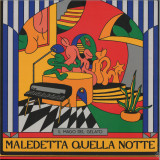
“Maledetta Quella Notte” is the first EP by Il Mago del Gelato, a new band from Milan (IT) with a strong Mediterranean imprint.
This first release runs through funk, afrobeat and jazz, where all the different souls that make up the project converge and blend in a perfect balance.
The EP ranges between more energetic moments, strongly characterized by Afro-beat and Funk influences to introspective atmospheres, where the reminiscence of a warm, sensual jazz rings out loud.
All held together by a full sound, the unique and recognizable mark of the Il Mago del Gelato: vocoder, percussion, 80's synthesizers, roots guitars and a rhythmic section of drum and bass which drags you in a wild and sweaty dance.
Before being a record product, Maledetta Quella Notte is a project human, in which the concept of union, exchange, positive vibes is summarized in six tracks with taste of your favorite ice cream.
Sept duos pour guitar acoustique et piano préparé is the second duo recording from Stephen O'Malley and Anthony Pateras. Their first together, Rêve Noir (2018), took an electro-acoustic scalpel to a 2011 duo concert for electric guitar and piano, using Revox and digital treatments to twist and smear gig documentation into ghostly echoes and fractured drones. Here, in contrast, the music is entirely acoustic and presented as it was performed, without overdubs. Both players’ choices of instruments are notable: this is O'Malley’s most extensive recording on steel string acoustic guitar (playing an instrument whose previous owners include Marissa Nadler and Glenn Jones) and Pateras return to the prepared piano, which he has rarely employed in recent years, after spending much of the first decade of the 21st century exploring its possibilities.
Recorded during O'Malley’s residency at La Becque on Lake Geneva in the summer of 2021, from the first moments of the opening ‘déjà revé’ the music immediately establishes the distinctive landscape of chiming tones and hovering clouds of resonance explored throughout its one-hour running time. Pateras’ preparations create tolling bell-like tones alive with complex overtones, alongside which O'Malley’s open strings and natural harmonics add a sparkling clarity. While Pateras’ music often uses a densely chromatic harmonic language, these duos are remarkable for their modal simplicity. However, the interaction between the pure intervals of O'Malley’s just-intoned strings and the unstable harmonies created by the piano preparations suspends the music in an oneiric state of hazy ambiguity. Without obvious reference to tempo or meter, the music floats in what the composer Ernstalbrecht Stiebler has called a ‘bottomless sound space’, the temporal placement of events determined by bodily rhythms and the performers’ own listening to (and enjoyment of) the sounds being made.
Heard one way, this music can seem striking in its consistency, almost environmental. Attending more carefully, the listener hears the pitch sets and tunings changing throughout the album’s length. Each piece has its own character, subtly distinguished from the others through mood, pacing, and timbre. On ‘déjà voulu’, for instance, O'Malley makes prominent use of slide, the woozy, bending pitches weaving through a series of lush arpeggiated chords from the piano. ‘Déjà senti’, on the other hand, is particularly spare, the gestures spaced out to the extent that they often float in isolation against the background of fading resonance. Much of ‘déjà su’ is built around a slowly pulsing single prepared piano tone, creating an almost ominous tension, whereas the sparkling guitar harmonics and arpeggios of the closing ‘déjà raconté’ have a gently triumphal air. While the music’s calm, rippling surface is immediately entrancing, these seven duos – in the tradition of the best improvised music – also reward close listening, which reveals sonic details and focuses the listener’s attention on how the music unfolds spontaneously from decision to decision, from gesture to gesture.
Recorded during a period when O'Malley and Pateras were grieving the loss of recently departed friends and collaborators, these seven duos possess a reflective, at times almost mournful quality. More importantly, though, they are imbued with other qualities that can arise from personal loss: a clarity that allows one to clear away the inessential, to begin again, to renew one’s faith in friendship and music.
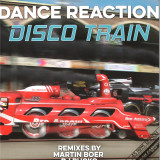
Undoubtedly one of the finest disco songs ever created, “Dance Reaction” emerged as a sensation from Holland, representing a true ‘one-hit wonder.’ The distinguished ‘Siamese’ label in the US and Carrere in Europe both recognized its potential and took it under their wings. This track, clearly inspired by dan Hartman’s “Vertigo”, swiftly climbed the charts across the continent in the spring of 1982.
On the A-Side, listeners are treated to the captivating and sensuous sounds of the Martin Boer version. This interpretation unequivocally showcases Martin’s innate connection with disco, evident in his captivating electro-disco masterpiece. Notably, Martin Boer holds the distinction of being a founding member of “2 Brothers on the 4th Floor,” a Eurodance phenomenon that dominated the 90s, amassing millions of record sales globally. Intriguingly, this release marks his return to remixing records, after a 15-year hiatus; incidentally, Martin embarked on his journey with High Fashion Music in 1990.
Flipping over to the AA-side, Croatian legendary DJ Pucko presents a remix that encapsulates the unique essence of the former Eastern bloc sound. This rendition exudes a raw and forceful energy, characteristic of that regional style. At the behest of High Fashion, the components of his mix were extracted and meticulously reworked and refined through the mastering process. The objective was to preserve the core while polishing the rough edges, culminating in an essential vinyl record that retro and disco DJs alike must acquire to elevate their dance floors.
Banana Club is without doubt one of the top new labels on the Breakbeat scene today. Led by the young and highly prolific Cadiz artist, FM-3, it was set up in 2020 with a strong identity and powerful, effective dancefloor grooves inspired by English bassline and 2step/garage and a touch of funk.
On this first vinyl release by the label, entitled Funky Beats, FM-3 kicks off his musical discourse with One for Me, a track which showcases the characteristic quality and forcefulness of his groove. This is followed by the album eponymous track Funky Beats, a collaboration with the multiple Spanish and World Scratching Champion, Jose Rodriguez, who dazzles with a number of superb passages in which improvisation and funk come to the fore.
The B-side opens with Panorama, featuring Orak. This fascinating, highly-experimental track offers a fusion of breaks and tech house and an elegant acid line which acts as a common thread and brings cohesion to the whole idea. The record closes, as you would expect, with a collaboration with Bowser, another of the label regular artists, entitled Bubbling.
A classic bassline dancefloor filler, it will take you back to the best tracks of the late nineties and early noughties. The classic black 12", mastered and cut by Simon, a veteran sound engineer at the Exchange Vinyl in London, has achieved a sound which is quite simply brutal.
Analog Concept continues its exclusive SCENA ACID series with the highly stimulating Somapolice EP from Low Orbit Satellite.
Crafted for both the mind and body. All four tracks create an expansive journey of deep electro character defined by lush melodies, confident and cool drum rhythms, all married into intelligent atmospheric design, while keeping the Acid Electro essence in mind, as well as a deep lovely vocal appearance from Esmi
- A1: Top Boy Theme
- A2: But Not This Way
- A3: Damp Bones
- A4: Cutting Room I
- A5: Floating On Sleep's Shore
- B1: Beauty And Danger
- B2: Beneath The Sea
- B3: Afraid Of Things
- B4: Waiting In Darkness
- B5: The Fountain King
- B6: Washed Away In Morocco
- C1: Overground
- C2: Watching The Watcher
- C3: Sweet Dark Section
- C4: Sky Blue Alert
- D1: Delirious Circle
- D2: Cutting Room Ii
- D3: Dangerous Landscape
- D4: The Good Fight
Top Boy is the British television crime drama series, created and written by Ronan Bennett. The story follows two seasoned drug dealers return to the gritty streets of London, but their pursuit of money and power is threatened by a young and ruthless hustler. It stars Ashley Walters, Kane Robinson, and the
2020 BAFTA Rising Star Award-winning Michael Ward. The first two seasons aired between 2011 and 2013, but following interest from rapper Drake, Netflix announced in 2017 that it would revive the series. Co-produced by the Hotline Bling-rapper, the third and fourth season of Top Boy launched in 2019 and 2022.
In the captivating Netflix series Top Boy, Brian Eno’s transcendent music serves as a vital companion, molding the narrative’s essence with its ethereal power. With a masterful touch, Eno’s atmospheric compositions effortlessly transport us into the gritty world of crime, friendship, and survival in East London. From delicate ambience to pulsating beats, his sonic tapestry envelops every scene, elevating the storytelling and evoking a range of emotions. Eno’s singular ability to capture the struggle, hope, and inner strength of the characters accentuates the raw authenticity of Top Boy, leaving an indelible mark on its viewers. His haunting melodies and intricately crafted soundscapes symbolize the unyielding resilience amidst chaos, making Brian Eno’s music an integral and unforgettable component of this groundbreaking series.
John Ghost (Ghent, Belgium) is the sextet led by guitarist/composer Jo De Geest. As a group, they draw influences from jazz, rock, and contemporary classical music. Minimalism, electronics, and an overall cinematic quality characterize their instrumental sound. The ensemble's sound can be described as a symbiosis of Hidden Orchestra, Portico Quartet, and James Holden.
After the critically acclaimed “Airships Are Organisms” (4-star reviews in The Guardian and Financial Times, as well as airplay on BBC 6 and Worldwide FM) John Ghost is back with “Thin Air . Mirror Land”, to be released on October 6 via Sdban Ultra, the label of ECHT!, Black Flower, Glass Museum, STUFF. and more.
For this album, they continued their fruitful collaboration with legendary producer Jørgen Træen, known for his work with Jaga Jazzist, Electric Eye, Kaizers Orchestra, and numerous projects on the Hubro Record Label. The result is an album with a slightly more somber tone, focussing on a broader range of instruments and an emphasis on percussive elements."Thin Air . Mirror Land" unfolds as an aesthetic refuge in stormy times. It is a musical urge for introspection in a chaotic reality, and a longing to reconnect with a natural environment.
During the creative process, Jo drew inspiration from the music of artists such as Hans Zimmer, György Ligeti, Magma, The Residents, Disasterpeace, James Holden & The Animal Spirits, Do Make Say Think, William Basinski, and Jóhann Jóhannsson. The album title "Thin Air . Mirror Land" and the song titles are driven by a fascination with the artwork of Edvard Munch. Jo found inspiration in Munch's painting "The Storm" (1893) as a catalyst for the writing process, exploring a dystopian backdrop and the intriguing interplay between comfort and unrest. Heavily inspired by the music, Jaak De Digitale created the gloomy artwork for the album.
Members of the band are Jo De Geest (Endlingr), Rob Banken (Rapidman, HAST), Wim Segers (Compro Oro, PAARD.), Karel Ceulenaere (Black Flower), Lieven Van Pée (Echoes of Zoo, De Beren Gieren) and Elias Devoldere (Nordmann, Elias) who went through a thoughtful studio process, with the result being a conceptual and slightly dystopian atmosphere.
Kenn-Eerik is an Estonian versatile sound artist and musician working in Tallinn. His passion for music began in early childhood when he witnessed accordion playing as a six-year-old boy. Encouraged by this musical experience, he learned various instruments over the years, engaged in choir singing, and participated in the activities of several bands. Even today, he is part of a band called Käsi which was created with friends from teenage times.
Kenn-Eerik became interested in electronic music during high school when he composed the first songs – inspired by dubstep and dub. Wanting to cultivate his technical music skills, he went to study sound technology at the Viljandi Academy of Culture. Along with his studies in Viljandi, he acquired his first drum machines and synthesizers, which, in addition to his personal creative activities, were also used to compose music for dance performances.
While his first DJ sets consisted mainly of dubstep, with minor detours into the areas of techno and house, by now this relationship has become the opposite – techno and house beats have become more concrete and present, but the influences of dub and dubstep are still there.
Over the years, Kenn-Eerik has played in several Tallinn clubs such as Ulme, Ups, Asum, Uni, Hall, etc. His live debut took place at the festival Kuru Plirr (2015). In addition to DJ and live sets, cooperation with several theaters operating in Estonia has deepened over time, where he has composed soundscapes based on original music.
Kenn-Eerik’s music can be characterized as a search for a certain state. His sound language is centered on organically flowing synth lines and minimalistic rhythms, which combine the deeper areas of techno, house, ambient and experimental music. Kenn-Eerik does not directly set genre restrictions for himself, nor does he limit himself in the choice of choosing instruments – anything that inspires and drives will be used, starting from analog synthesizers and ending with recorded sewer pipe sounds.
- A1: Dj Efx (Beta Test) - Star Trax
- A2: Wechselspannung - 220V (Extract)
- A3: Jupiter 6 - A8
- B1: The Ultraviolet Catastrophe - The Trip (Trip Harder)
- B2: Electroliners - Loose Caboose
- C1: High Lonesome Soundsystem - Champion Sound
- C2: Single Cell Orchestra - I Hear The Dj’s Here
- C3: Jim Hopkins - C’mon Now
- D1: Central Fire - Kamba (The Lost Mix)
- D2: Dj Emma - The Duster (Fuck Off And Dance Mix)
Vol.003[28,53 €]
In the late 1980s, Disco was taking a backseat to the burgeoning psychedelic scene in San Francisco, marking a pivotal shift in musical culture. A dynamic transformation was underway as the younger generation sought a fresh auditory adventure, all while the devastating AIDS epidemic cast a somber pall over the city's nightlife. Amidst this evolving backdrop, a subtle yet distinct sonic movement quietly emerged within the confines of San Francisco’s vibrant club scene, often referred to as "The Beat." Although Hip-Hop, New Wave, Gothic, Punk, and the burgeoning Modern Rock genre held considerable sway, the pre-RAVE clubs in SF witnessed the fusion of these genres into a unique amalgam of sound that insiders dubbed “The Beat.” This musical tapestry encompassed everything from Hip-Hop and Freestyle to Industrial, New Wave, Boogie, Miami Bass, and Techno – the unifying thread being the distinctive vibe that characterised this eclectic mix.
As House, Techno, and Raving gradually gained prominence along the West Coast, a distinctive interpretation of these evolving sounds took root. Drawing inspiration from influential hubs like New York, Chicago, Detroit, Europe, and notably the UK, which saw a wave of talented young DJs migrate to California, San Francisco became the backdrop for its own version of the second Summer of Love. While the exact chronology might spark debate – some recalling '92, while others leaning towards '93 – what remains indisputable is the era spanning from 1990 to 1994, an unparalleled epoch of exuberant dancefloor revelry on the western shores.
In the face of limited backing from major labels or established independent dance music entities of the time, a grassroots movement of labels and producers emerged organically, ardently championing this distinct sound and catapulting it onto the global stage. This sonic identity was deeply influenced by “the Beat,” acting as a creative wellspring that informed the musical landscape. While the tracks compiled in these volumes might not encompass the entirety of this transformative musical epoch, they offer a vivid snapshot of the melodious tapestry that coloured San Francisco and the broader West Coast during that era. Each track featured stands as a 100% Sure Shot that was played heavily by DJ Spun back in those very heady days.
The second installment of this remarkable journey into the underground scene maintains the same profound level of depth and significance as its precursor. Showcasing tracks from Electroliners, High Lonesome Soundsystem, Single Cell Orchestra, DJ Emma, and Spun's own Central Fire project, all harmoniously enclosed within the captivating and arresting artwork by Villain Standard, this release stands shoulder to shoulder with its forerunner. Beyond a mere compilation, it's an indispensable extension of the narrative that has indelibly shaped the culture of underground American dance music within the region, embodying the era and the individuals involved. This is the authentic underground sound that reverberated across San Francisco and its surrounding environs, a truly distinctive and exceptional moment in time and space.
Pellegrino & Zodyaco, with their new single 'Malìa', continue the aesthetic and sonic journey of the project led by the Neapolitan producer, with a mixture of Neapolitan disco-funk and fusion steeped in Latin flavour that already explored the innermost corners of the soul with 'Quimere'. This new work captures the frenzy and vibrant character of Naples, with its rarefied atmospheres and infectious groove that evoke the beating heart of the city and take us on a journey through the wonder of life in search of the Mediterranean essence.
The 'Malìa' is enchanting, it’s that mysterious force that hides deep inside, transforming itself into a vortex of emotions through the fusion of involving rhythms and reflections on inner battles, on the importance of finding the 'light' to overcome conflicts and difficulties that hinder the ability to choose, a dreamlike mirage that opens a window on human vulnerability, a hymn to authenticity, to self-acceptance.
The celebration of dance in the Caribbean Escapade version is also an exhortation to escape from everyday life; it takes us into a sonic imagery that plays with the Neapolitan musical tradition and the freshness of Caribbean and Latin sounds. This summer single becomes an ode to the vital energy of dance music: there is no more time for hesitation, one must let oneself be carried away by the enthralling embrace of 'Malìa', like a call to awareness and the search for authenticity in life. Malìa becomes the guiding thread, the mystery that urges us to go beyond the confines of everyday life, to explore and celebrate the complexity of existence.
Making their debut appearance on Steel City Dance Discs, Clouds, an irrefutable powerhouse of sound consisting of Liam Robertson and Calum Macleod, exercise their intensely unapologetic musical personality with their latest venture with Mass Hysteria, for SCDD040.
The Scottish duo have become recognised for their heavenly balance of euphoric soundscapes, ladened with break-neck percussion, ecstasy-induced melodies and rupturing drum patterns. All of these highly characteristic elements are found in Mass Hysteria; an EP that highlights the hard-edged nature of Clouds’ ever-evolving style.
Mass Hysteria is a five-piece project that is nothing short of atomic. Typically energy-fuelled, the duo coordinate a masterful blend of hard-hitting, four-to-the-floor basslines: a seemingly perfect marriage for an EP that sets the listener deep into a cosmic whirlwind of electronic emotions.
Italian producer NND returns after release on Exarde with different vibes:
A1 elegance track produced during the pandemic has nostalgic vibes, a touch of acid, and techno beats. A2 influenced by the 80s of the italo disco mixed with house rhythms, a journey to be enjoyed from start to finish. Side B is the most dancefloor part of the record characterized by darker sounds, techno and electro sounds mark the time of this side.
Surfaced Trax returns for its second chapter with a solid V.A. compilation. "Sub Sonics Vol. 1" offers four dancefloor-ready tracks full of character.
The 'Sub Sonics Vol. 1' features tracks produced by Parallax Deep, Weirdvin aka Edvin Wikner and Kasvo, showcasing their unique character and talent. Parallax Deep does the honours of closing and opening the compilation with style - 'Submerged' (A1) and 'Sediment' (B2) are two exquisitely groovy, deep excursions full of emotive pads, sub-basses and detailed syncopated rhythms and creative sampling, showcasing their very personal definition of deep techno. Weirdvin's 'Morphing' (A2) is a bleepy minimal techno groover aimed at dancefloor hypnotism - swirling melodies, freaky vocal sampling, odd sonic textures - a recipe for a perfectly wacky dancefloor moment. Kasvo's 'Karura' is a finely creative, dub-infused stroll in a deep, dark forest, where nature's very own sounds are sampled as the perfect rhythm and atmosphere tools, relying on a thumping kick and bassline for total immersion.
After Jamuse Records favourable outcome, the Swiss label is delighted and honored to unveil its latest vinyl release featuring the talented Romanian artist Lumieux.
Titled "Gemini Road," this EP consists of three tracks. The title track presents a captivatingly glitchy and rhythmic style, adorned with warm sub-bass and distinctive vocal elements. The offbeat rhythm adds a unique touch that sets the track apart.The offbeat rhythm adds a unique touch that sets the track apart. "Fuzzy Formats" skilfully blends human and robotic voices with beats, accompanied by inviting warm bass and crisp treble notes.Bringing the EP to a captivating conclusion, "Lemesleep" takes listeners on a hypnotic adventure enriched by evocative pads and skillfull glitches.
In its entirety, "Gemini Road" guides your auditory senses on a mesmerizing journey through the realms of magical minimal house music. This sonic voyage is not solely characterized by its warm sub-bass and glitchy elements but also by its diverse and eclectic textures. Lumieux's inspirational touch is the driving force behind this EP, elevating it to a gem within its genre.
twelve.to.zero is back with its second release, signed by Crihan. "While You Sleep EP" finds Alin shaping three slow-burning and hypnotic pieces of minimal dance music brimming with detail deeply rooted in the early years of organic micro-house.
A-side's 'The Visitor' (A1) opens the EP emersed in engrossing, cinematic textures and heavy doses of syncopated acoustic drum samples. Elements ebb and flow on top of a highly minimalistic 4/4 structure, creating a contemplative locomotive composition reminiscent of the a-rpia-r school.
Flip-side's 'Lust' (B1) feels like a continuation of the previous track - driving, mysterious, mesmerizing - bubbling with vocal samples, orchestral textures, and a distinctly subtle micro-house swing. 'The Chase' (B2) closes the EP with a fresh rhythmic flavour: odd drum arrangements and melodic sequences take centre stage, flowing on top of rolling basslines of deeply enigmatic character. Introspective piano chords razor through its swingy rhythmic patterns, folding the sonic space with elegance, proving Alin's innate talent for avant-guard minimal music.
The album opener, “Fainted Fog,” reintroduces this fuller, panoramic version of Helios. Woozy synths give way to a propulsive drum pattern as the track’s characteristics populate in the haze. A piano plays between the beat, and another synth solos overtop, ascending towards the peak with an exhale of live kicks and looping guitar. For every bold moment on Espera, there are more muted, counter-balancing stretches; “Intertwine” offers one of the most meditative. Strums mingle with keys in the front half before the beat returns to deliver a hypnotic nod.
Kenniff sees each song as integral to the whole — “if you took one out, it would be like tearing a page from a book,” he says — but still functional independently, like a series of self-contained epics. “All The While” best represents this intention; a song in three equal parts constructed on a resonant drum sequence. Shimmering synth notes surface first, then pastoral guitar and piano flutters, converging at the end to evaporate into the ether.
Nomada Records proudly welcomes Detroit's legendary House and Techno producer Gari Romalis with "Detroit Hustle EP"; a four track release where we can enjoy the distrinctive and slinky Deep House and Techno energy that characterizes Gari Romalis' sound.
The A-side starts with "I'm Wonder Luc" a heavy weight opener where Gari catches us with punchy drums, warm pads, infectious sub basslines, catchy vocal samples and deep piano stabs. The following track is called "Floor Anthem (Ghost Mix)"; a nostalgic deep house beauty with Lush chords, chunky beats and catchy melodies.
On the flip Gari goes more deeper and techy with "Float On"; the hypnotic arp and chrod progression, the strong bassline and punchy drums make the perfect track to destroy dancegloors this summer. The B-side closses with the sey deep house sampled track called "Detroit After Dark".
As it celebrates its 50th anniversary, Bill Withers' Still Bill remains true to its title – and stands as the greatest male-fronted soul album not made by a singer named Marvin, Al, Sam, James, or Ray. Though the saying "keeping it real" did not exist in popular parlance when Withers released his sophomore effort on Sussex Records, no words better capture the music's approach, mindset, and value. Every facet of Still Bill radiates honesty, truth, and emotion.
These characteristics – along with Withers' strong singing, hybrid arrangements, and deceptively simple songwriting – have allowed the album to endure to the point where it sounds as fresh today as in 1972.
After rising into the Top 5 of the Billboard Album charts and attaining gold status within a year of release, Still Bill has long been evaluated not by sales – but according to its merit, spirit, and agelessness. Included by The Guardian on its "1,000 Albums to Hear Before You Die" list (2007) as well as in Tom Moon's 1,000 Recordings to Hear Before You Die book (2008), its contemporary standing as one of history's most venerated soul efforts eclipses the positive reception it enjoyed in the early ‘70s.
Still Bill walks the same hallowed ground as What's Going On, Call Me, Night Beat, and Genius + Soul = Jazz. Like those landmarks, Still Bill plays with a mix of consistency, effortlessness, and complexity that rewards repeat listening and transcends categorization.
In combining four of the era's predominant styles – Philly soul, sweaty funk, Southern-reared blues, acoustic-based folk – and melding them with standout production borrowed from both minimalist affairs and sophisticated singer-songwriter albums, Still Bill occupies a distinct universe.
Its rhythmic fare is equally laidback and invigorating; relaxing and rollicking; eloquent and muscular; soft and tough. Withers' calm, self-assured voice hovers above it all, doubling as a warm blanket that adds comfort and grace to lyrics steeped in maturity, perspective, and compassion.
Withers' balanced outlook on human desires, needs, and situations stem from his own existence as a former blue-collar employee who believed his time as a musician would soon end. That grounding forever separates Withers from other contemporary soul greats – and stamps Still Bill with a conversational nature and egoless approachability.
"I mean look, I'm really a factory worker," said Withers in 1972. "That's a real job." There's that word again: real. The songs on Still Bill are tethered to modesty and actuality, wedded to a belief in simplicity, and connected to universal truths that link us all – independent of our economic or social standing. No track better exemplifies those principles than "Lean on Me," a feel-good paean to brotherhood and community that hit No. 1 on the pop and R&B charts en route to becoming a mainstream staple.
Withers approaches the plainspoken insight on "Lonely Town, Lonely Street" and heartbreaking vulnerability of "I Don't Want You on My Mind" with similar sincerity and straightforwardness. His proclivity for authenticity extends to the record's other big hit: the sexual, funk-laden "Use Me," which reached No. 2 and reflects the singer's everyman persona. It's an identity couched in keeping it real, the very inclination that ultimately led Withers to retire in the mid-'80s rather than bend to industry pressures or risk credibility.
That commitment to truthfulness and realism helps make Still Bill feel as unaffected as the air we breathe. Looking back on "Lean on Me" years later, Withers said it seemed like "something that was there before I got here" – the kind of song that could be 100 or 10 years old, or one we encounter anew 10 years into the future. The same can be said for every note on Still Bill.