Dana Kelley, aka DKMA, is a much revered writer, producer, remixer, performer and creative force whose releases have become timeless classics and Holy Grails amongst DJs, music heads and collectors alike. A true artist and innovator, his productions possess the unique ability to engage, transport, challenge and enthral as only next level musicians can.
Grounded in the deep, soulful US House sound of the mid '90's, his earliest releases can be found on Strictly Rhythm, before moving on to produce under his DKMA alias as well as releasing music as Callisto on Guidance. Although Dana sadly passed away in 2013, he left us with a remarkable body of work that has remained both exciting and relevant throughout the last 2 decades and beyond.
Boston Boy Vol.2 is the 2nd in a series of compilations that focuses on Dana's visionary work as DKMA, during his most compelling and creative phase between 1997 and 2002. The compilations themselves are collated from an incredible & far reaching archive of over 20 of Dana's original DATs that have been generously shared with us by the Kelley Family. In the archive, some of Dana's most sought after & cherished works were uncovered, restored and meticulously assembled alongside previously unheard archival material.
The tracks themselves are bold, clever and inventive, characterised by a need for innovation. Passages of deep soulful house underpin more forward thinking electronics without ever losing dance floor appeal. Jazz solos sit imaginatively on top of gritty swinging rhythms, deep infectious b-lines, eerie textures and chord sequences are warm and effortlessly soulful yet with a sound design, sonic range, dynamism and a technical prowess that most could only dream of.
These compilations celebrate the life, vision and art of one of house music's most hallowed producers. Unique and essential, these collections pull together DKMA's most coveted works. Respectfully sourced, restored and compiled from all audio sources courtesy of the Kelley family and Above Board Projects.
Mastered by Frank Merritt at The Carvery, London, with special artwork by Atelier Surplus featuring a special unseen image of Dana from his family's photo albums.
Suche:character
- A1: Tricky Feat. Tirzah - Sun Down
- A2: Tricky Feat. Mykki Blanco & Francesca Belmonte - Lonnie Listen
- A3: Tricky Feat. Francesca Belmonte - Something In The Way
- B1: Tricky Feat. Nneka - Keep Me In Your Shake
- B2: A.j. - The Unloved (Skit)
- B3: Tricky Feat. Francesca Belmonte - Nicotine Love
- C1: Tricky Feat. Bella Gotti - Gangster Chronicle
- C2: Tricky Feat. Francesca Belmonte - I Had A Dream
- C3: Tricky Feat. Blue Daisy - My Palestine Girl
- D1: Tricky Feat. Bella Gotti - Why Don't You
- D2: Tricky Feat. Tirzah - Silly Games
- D3: Tricky Feat. Oh Land - Right Here
Repress !
One of music's most unpredictable characters Tricky is back with his new album Adrian Thaws, released in conjunction with !K7 Records and his imprint False Idols.
'Calling it Adrian Thaws is saying you don't really know me,' says Tricky, explaining the title of his 11th album. 'So many times people have tried to put a finger on me and every album I
go to a different place.'It's typical of one of music's most unpredictable characters that the first album to bear his
birth name is one of his least introspective. Adrian Thaws is a vivid, attention-grabbing set of songs which roamfrom hip hop to house, jazz to blues, rock to reggae. It was recorded in
Tricky's home studio in London, where he's living again after almost two decades in New York, Los Angeles and Paris, and features an international crew of collaborators: Francesca
Belmonte, Nneka, Mykki Blanco, Bella Gotti, Tirzah, Blue Daisy and Oh Land. It's designed to be played loud.
'I suppose this is my club/hip hop album,' he says. 'I've only heard my music a few times in a club but I grew up in clubs from when I was 14: blues parties, hip hop clubs, a few raves. I'm
not known for doing club music but this album has some club tracks on it — well, what I would consider club music.'
Tricky makes complicated music because Adrian Thaws has had a complicated life. Born in 1968, he grew up in an extended family that was both black and white, urban and rural, containing strong women and volatile men. His choice of cover versions is revealing. Janet Kaye's 1979 lovers rock classic Silly Games reminds him of his childhood in Bristol's Knowle West district. London Posse's 1990 track Gangster Chronicle harks back to his musical apprenticeship with the Wild Bunch and Massive Attack under the name Tricky Kid before he launched his solo career with 1995's startling Maxinquaye. Tricky has always used music to explore the different, sometimes contradictory facets of his
background and personality. 'I can be anything I want when I do an album,' he says. 'I could be a woman, I could bea man. It's great to be able to be all these different things.'
- A1: Ringa Ringa (The Old Pandemic Folk Song) (Feat. The Mediaeval Baebes)
- A2: Day One (Feat. Dina Ipavic)
- A3: Are You Alive? (Feat. Penelope Isles)
- B1: You Are The Frequency (Feat. The Little Pest)
- B2: The New Abnormal
- C1: Home (Feat. Anna B Savage)
- C2: Dirty Rat
- C3: Requiem For The Pre-Apocalypse
- D1: What A Surprise (Feat. The Little Pest)
- D2: Moon Princess (Feat. Coppe)
White Vinyl[33,24 €]
DOUBLE BLACK LP : 2 x 140 G Black Vinyl , Sleeve & 2 x Heavy Weight Printed Inner with UV Gloss Finish
Legendary electronic music duo Orbital return Early 2023 with new album “Optical Delusion”, the Hartnoll brothers first studio album since 2018’s Monster’s Exist. Recorded in Orbital’s Brighton studio, “Optical Delusion” includes contributions from Sleaford Mods, Penelope Isles, Anna B Savage, The Little Pest, Dina Ipavic, Coppe, and perhaps most surprisingly, The Medieval Baebes.
Earlier this year, Orbital celebrated their storied history with “30 Something” which, unlike other Best Of’s, contains reworks, remakes, remixes and re-imaginings of landmark Orbital tracks including “Chime”, “Belfast”, “Halcyon”, “Satan”, and “The Box”
SHORT BIOG:
“A human being experiences himself, his thoughts and feelings as something separate from the rest of humanity – a kind of optical delusion of his consciousness. This delusion is a kind of prison for us, restricting us to our personal desires and to affection for a few persons nearest to us. Our task must be to free ourselves from this prison…”
You many have seen this quote attributed to Albert Einstein on social media, the archetypal Smartest Guy Ever apparently having an out-of-character religious epiphany. It certainly leapt out at Paul Hartnoll of Orbital who spotted it in Michael Pollan’s 2018 book How to Change Your Mind: What the New Science of Psychedelics Teaches Us About Consciousness, Dying, Addiction, Depression and Transcendence.
“As soon as I saw ‘optical delusion’ I thought Oh hey, that’s the album title,” says Paul. “It just seemed to say so much about how people construct their own realities, how we see patterns that aren’t there, how we see what we want to see.
“But it’s actually a misquote. He never quite said that. In the German original what he’s really saying is that human experience is as relative as physics. Wouldn’t it be good if we could accept that, and find a kind of universal theory of everything for the human race? Then you look at everything from history to art to your Twitter feed and you think yeah, that’s what we’re all trying to do all of the time…”
Hence ‘Optical Delusion’, the tenth original Orbital album and the latest in a burst of renewed post-pandemic creativity for two brothers who’ve stayed at the top of their game longer than anyone from the post-1988 Class of Acid House.
Now with ‘Optical Delusion’ the Hartnolls dig deeper into the unquiet psyche of our increasingly surreal and disordered world. Sketched out partly during lockdown but fully recorded in the uncertain After Times, the album summons up conflicting emotions and sometimes beguiling images from years when the science fiction doomsdays that the Hartnolls watched on TV as kids finally came true. There are mesmeric tracks with names like ‘The New Abnormal’ and ‘Requiem For The Pre-Apocalypse’ and ‘Day One’. But there are also straight-up bangers and ethereal cosmic dreams, abstract sound wars and deeply human songs of separation and loss.
And it all starts with a bang. Lead single ‘Dirty Rat’, an outright Fall-meets-Front-242 class rant with vocals by Sleaford Mods mob orator Jason Williamson, harks right back to the Hartnolls’ days of politicised anarcho-squatpunk. It began as a remix swap (Orbital did the Sleafords’ ‘I Don’t Rate You’) and morphed into a comic, brutal, bass-driven harangue not so much against our rulers but at the petty, mean-spirited, frightened, Mail-reading voters who put them there: the people who are “blaming everyone in hospital/blaming everyone at the bottom of the English Channel/blaming everyone who doesn’t look like a fried animal.”
Also key to the album is opening track ‘Ringa Ringa (The Old Pandemic Folk Song)’ which returns to an Orbital truism, that time always becomes a loop. This chugging, cyclical Orbital groove gives way to an unnerving past-meets-present timeslip fit for ‘Sapphire And Steel’ as goth maenads The Mediaeval Baebes materialise to sing ‘Ring O’Roses’ – the innocent nursery rhyme whose roots are in the Black Death.
“I’ve always liked folk music and mediaeval sounds,” says Paul, himself an occasional Morris dancer. “I had the basis of that track and I wanted to spin it off somehow.” Trawling his archives he stumbled on The Mediaeval Baebes’ version of ‘Ring O’Roses’ “and my hackles just went up. I was like, my God, this is the original pandemic folk song.”
?his being Orbital, there are collaborations galore on the album, the roles once played by Alison Goldfrapp, Lady Leshurr or David Gray now filled by new talents. London singer-songwriter Anna B Savage contributes a compellingly fragile, Anohni-like vocal to ‘Home’, in which nature reclaims the scorched and vacant mega-cities. ‘Day One’ is a pulsing techno track featuring the singer Dina Ipavic. Paul got in touch with her after working on a score for a sculpture show of giant robotic installations by his friend Giles Walker during the pandemic. First Paul cut up his own score and Ipavic’s vocals on the track The Crane, which appears on the deluxe version of the album. Then he thought, Why not work with her for real? The result is school of ‘Belfast’, a bassy dreamscape with vocalised clouds billowing above.
The pensive ‘Are You ?live?’ adds to the Orbital product range of existential questions (‘Are We Here?’, ‘Where Is It Going?’) in collaboration Bella Union signings Penelope Isles, AKA brother and sister act Lily and Jack Wolter. “They’re our studio mates, they work upstairs!” says Paul happily. “And they’ve both got amazing voices.”
But Orbital are Orbital and never far from the dancefloor. “Eventually the more abrasive bits came back into the fold…” ‘You Are The Frequency’, first of two tracks to feature mysterious vocalist The Little Pest, surrounds the listener with warped voices ordering you to the dancefloor (Phil: “we wanted the idea that the music is kind of absorbing you”). And the second, the sinister ‘What A Surprise’, traps you in a paranoid electronic hall of mirrors.
In another nod to Orbital’s resurgent past the cover artwork once again comes from fine art painter John Greenwood, creator of fantastical grotesques for the covers of ‘Snivilisation’, ‘In Sides’ and Orbital’s most recent album, 2018’s ‘Monsters Exist’. Orbital had just had a slick Mark Farrow cover for ‘30 Something’ – this is a return to the overripe and bulbous techno-organic constructions that somehow express Orbital’s own uncontrollably fertile sound.
There are gaps in the future that Orbital are desperate to fill too; there will be tours and festivals and rooms and fields full of people. Those long paralysed months when we had little to look forward to but a Zoom DJ set made Paul and Phil appreciate the things that make life worth living.
- A1: Ringa Ringa (The Old Pandemic Folk Song) (Feat. The Mediaeval Baebes)
- A2: Day One (Feat. Dina Ipavic)
- A3: Are You Alive? (Feat. Penelope Isles)
- B1: You Are The Frequency (Feat. The Little Pest)
- B2: The New Abnormal
- C1: Home (Feat. Anna B Savage)
- C2: Dirty Rat
- C3: Requiem For The Pre-Apocalypse
- D1: What A Surprise (Feat. The Little Pest)
- D2: Moon Princess (Feat. Coppe)
Black Vinyl[31,05 €]
2 x Solid White LP, 5mm spine Sleeve UV Gloss Finish, 2x Heavy Weight Printed Inner Sleeve UV Gloss finish, marketing sticker.
Legendary electronic music duo Orbital return Early 2023 with new album “Optical Delusion”, the Hartnoll brothers first studio album since 2018’s Monster’s Exist. Recorded in Orbital’s Brighton studio, “Optical Delusion” includes contributions from Sleaford Mods, Penelope Isles, Anna B Savage, The Little Pest, Dina Ipavic, Coppe, and perhaps most surprisingly, The Medieval Baebes.
Earlier this year, Orbital celebrated their storied history with “30 Something” which, unlike other Best Of’s, contains reworks, remakes, remixes and re-imaginings of landmark Orbital tracks including “Chime”, “Belfast”, “Halcyon”, “Satan”, and “The Box”
SHORT BIOG:
“A human being experiences himself, his thoughts and feelings as something separate from the rest of humanity – a kind of optical delusion of his consciousness. This delusion is a kind of prison for us, restricting us to our personal desires and to affection for a few persons nearest to us. Our task must be to free ourselves from this prison…”
You many have seen this quote attributed to Albert Einstein on social media, the archetypal Smartest Guy Ever apparently having an out-of-character religious epiphany. It certainly leapt out at Paul Hartnoll of Orbital who spotted it in Michael Pollan’s 2018 book How to Change Your Mind: What the New Science of Psychedelics Teaches Us About Consciousness, Dying, Addiction, Depression and Transcendence.
“As soon as I saw ‘optical delusion’ I thought Oh hey, that’s the album title,” says Paul. “It just seemed to say so much about how people construct their own realities, how we see patterns that aren’t there, how we see what we want to see.
“But it’s actually a misquote. He never quite said that. In the German original what he’s really saying is that human experience is as relative as physics. Wouldn’t it be good if we could accept that, and find a kind of universal theory of everything for the human race? Then you look at everything from history to art to your Twitter feed and you think yeah, that’s what we’re all trying to do all of the time…”
Hence ‘Optical Delusion’, the tenth original Orbital album and the latest in a burst of renewed post-pandemic creativity for two brothers who’ve stayed at the top of their game longer than anyone from the post-1988 Class of Acid House.
Now with ‘Optical Delusion’ the Hartnolls dig deeper into the unquiet psyche of our increasingly surreal and disordered world. Sketched out partly during lockdown but fully recorded in the uncertain After Times, the album summons up conflicting emotions and sometimes beguiling images from years when the science fiction doomsdays that the Hartnolls watched on TV as kids finally came true. There are mesmeric tracks with names like ‘The New Abnormal’ and ‘Requiem For The Pre-Apocalypse’ and ‘Day One’. But there are also straight-up bangers and ethereal cosmic dreams, abstract sound wars and deeply human songs of separation and loss.
And it all starts with a bang. Lead single ‘Dirty Rat’, an outright Fall-meets-Front-242 class rant with vocals by Sleaford Mods mob orator Jason Williamson, harks right back to the Hartnolls’ days of politicised anarcho-squatpunk. It began as a remix swap (Orbital did the Sleafords’ ‘I Don’t Rate You’) and morphed into a comic, brutal, bass-driven harangue not so much against our rulers but at the petty, mean-spirited, frightened, Mail-reading voters who put them there: the people who are “blaming everyone in hospital/blaming everyone at the bottom of the English Channel/blaming everyone who doesn’t look like a fried animal.”
Also key to the album is opening track ‘Ringa Ringa (The Old Pandemic Folk Song)’ which returns to an Orbital truism, that time always becomes a loop. This chugging, cyclical Orbital groove gives way to an unnerving past-meets-present timeslip fit for ‘Sapphire And Steel’ as goth maenads The Mediaeval Baebes materialise to sing ‘Ring O’Roses’ – the innocent nursery rhyme whose roots are in the Black Death.
“I’ve always liked folk music and mediaeval sounds,” says Paul, himself an occasional Morris dancer. “I had the basis of that track and I wanted to spin it off somehow.” Trawling his archives he stumbled on The Mediaeval Baebes’ version of ‘Ring O’Roses’ “and my hackles just went up. I was like, my God, this is the original pandemic folk song.”
?his being Orbital, there are collaborations galore on the album, the roles once played by Alison Goldfrapp, Lady Leshurr or David Gray now filled by new talents. London singer-songwriter Anna B Savage contributes a compellingly fragile, Anohni-like vocal to ‘Home’, in which nature reclaims the scorched and vacant mega-cities. ‘Day One’ is a pulsing techno track featuring the singer Dina Ipavic. Paul got in touch with her after working on a score for a sculpture show of giant robotic installations by his friend Giles Walker during the pandemic. First Paul cut up his own score and Ipavic’s vocals on the track The Crane, which appears on the deluxe version of the album. Then he thought, Why not work with her for real? The result is school of ‘Belfast’, a bassy dreamscape with vocalised clouds billowing above.
The pensive ‘Are You ?live?’ adds to the Orbital product range of existential questions (‘Are We Here?’, ‘Where Is It Going?’) in collaboration Bella Union signings Penelope Isles, AKA brother and sister act Lily and Jack Wolter. “They’re our studio mates, they work upstairs!” says Paul happily. “And they’ve both got amazing voices.”
But Orbital are Orbital and never far from the dancefloor. “Eventually the more abrasive bits came back into the fold…” ‘You Are The Frequency’, first of two tracks to feature mysterious vocalist The Little Pest, surrounds the listener with warped voices ordering you to the dancefloor (Phil: “we wanted the idea that the music is kind of absorbing you”). And the second, the sinister ‘What A Surprise’, traps you in a paranoid electronic hall of mirrors.
In another nod to Orbital’s resurgent past the cover artwork once again comes from fine art painter John Greenwood, creator of fantastical grotesques for the covers of ‘Snivilisation’, ‘In Sides’ and Orbital’s most recent album, 2018’s ‘Monsters Exist’. Orbital had just had a slick Mark Farrow cover for ‘30 Something’ – this is a return to the overripe and bulbous techno-organic constructions that somehow express Orbital’s own uncontrollably fertile sound.
There are gaps in the future that Orbital are desperate to fill too; there will be tours and festivals and rooms and fields full of people. Those long paralysed months when we had little to look forward to but a Zoom DJ set made Paul and Phil appreciate the things that make life worth living.
Is Cory Okay? Opening on pads that sounds like a warm LA sunrise and bubbling with the characteristic dorky, oddball mawkishness that is Tungz 101, ‘Is Cory Okay?’ blossoms into a sugar-glass 80s pop ballad for the masculine mental health crisis. Quincy Jones guitars chip away at the soft underbelly of synth, shaping and modelling until sleek lines are established and the entire track becomes effortlessly aerodynamic. The lyric explores male anxiety disorder from the point of view of friends looking to alleviate the psychological distress of a protagonist who outwardly rejects the value of the support but internally begs for it to continue as he can see the light at the end of the tunnel. It’s yet another example of Tungz multi-dimensional approach to song writing, asserting theirs as an essential voice in 2023. Album: Dripping with licks so richly sophisticated they ought to have their own Beverly Hills postcode, Tungz debut album ‘A Good Dream’ mixes the emotional downer of chillwave with the rhapsody of disco and hits perfection. Across 11 tracks, Tungz access a dancefloor utopia, where a French house aesthetic lives out an opulent psych-pop fantasy; beautifully simple yet sneakily complex. Brimming with confidence, the collection not only fulfils the promise of Tungz early EPs, but asserts their multidimensional approach to song writing, confirming them as an idiosyncratic prospect within alternative music.
- A1: Bright & Shiny Things
- A2: Ulidhani Minajali Manze
- A3: Blink Twice For Yes
- A4: Mama Cuishe
- B1: Cherry Red Paint Job
- B2: Go On
- B3: Every Pool Of Stagnant Water
- B4: Stand Back Little Timmy
- C1: All Sprawled Out In The City
- C2: Flickers On The Fourth Floor
- C3: The Infamous Gatwick Meltdown Of 2016
- C4: I Belong Elsewhere
- D1: Sundown Sundown
- D2: Fetch The Poison
- D3: Blood Red Cheese Wire
Alt-rap dissident Jam Baxter announces his newest solo venture, Fetch the Poison. Conceived during a state-wide alcohol ban in Mexico, the album is Baxter’s first to be composed in complete sobriety — though his hallucinatory style of storytelling and cast of monstrous characters make a welcome return. Lyrics on Fetch the Poison meld Baxter’s Latin American experience with visions of a grisly alternate dimension: sun, sea and glittering vistas are sullied by hollow-eyed addicts, shady bar tenders and duplicitous lovers. Amongst deft bars, the rapper includes a number of spoken word pieces that echo the prose in his now sold out book Off-Piste. The album also features Blah Records' Nah Eeto & Black Josh, as well as DJ Sammy B-Side and Jehst, alongside Brazil’s NOG, Black Alien and Xamã. Baxter reunites with frequent collaborator Chemo on production — now under the moniker Forest DLG — for much of the album, with appearances from Jack Danz, Dr Zygote, Wundrop (CMPMD) and Midlands' electronic stalwart Lenkemz. Despite its diverse credits, tracks are connected by icy, spaced-out electronics with beats twisted through tape distortion and anchored by chest- rattling bass. Baxter began writing the album in Mexico just before the pandemic began while holed up in the city of San Cristobal De Las Casas, Chiapas, as the world shut down. “All the streets were eerily empty and it was amazing. I had the city to myself,” he says. “Then suddenly there was a state- wide alcohol ban and I could no longer casually sip tequila as I went about my business. I didn’t really have a choice but to write” With no alcohol to fuel him, and San Cristobal largely silent, the rapper says he was surprised to find himself in a deeply creative — and prolific – state. “I took to it amazingly well, and I wrote this whole album in three months of clear-headed bliss in the same apartment. I would sit and write all day, and occasionally walk up a mountain when I got stuck ... or go and feed the stray dogs at the church on top of the hill. It was weirdly the most fun I’d had in years.” Fetch the Poison is Baxter’s seventh solo album.
Infinite Machine is proving again it's a label that refuses to sonically sit still. Having released everything from code-based compositions to bass-heavy techno in 2022, the imprint is readying the release of the black metal-tinged Ehkta by BOLT RUIN later this month. A musician whose work has been described as 'apocalyptic' more than once, on this new mini-album, the Belgian producer blends field recordings, twisted samples and rave signifiers with an eerie tonality born out of his nocturnal production sessions and time spent absorbing the silence of his studio garden.
Bridging the gap from his previous record to this one, 'Sktone' is a cinematic opener that unfolds like a bad dream in slow motion. Warped samples of Bulgarian choirs glide over synths wired in closed-circuit loops which feed back on themselves, degrading for infinity. Texture and space is added via field recordings of waves crashing over the ruins of Brighton West Pier. This track exemplifies the unexpected influence BOLT RUIN took from the wildlife he witnessed in the garden of his urban studio when working on Ehkta. Adapting to the material at their disposal, weasels and blackbirds create nests from organic waste and human trash - an astute metaphor for the Belgian producer's compositional approach.
Next up, BOLT RUIN drives up the tempo with the rave-ready 'Nehng', where a frenzy of trance arpeggios and frantic drum programming builds and intensifies over its 5-minute duration. Inspired by Yves Klein's 'Leap Into a Void', 'Nehng' definitely evokes that bodily rush of freefalling into the unknown. 'Nehng''s driving rhythm is switched out for the brooding 'Tzarhk' - an ode to the soundtracks of B-movies composed on a vintage Roland SH-2 (a prominent character of the Stranger Things soundtrack). BOLT RUIN runs thick, syrupy synth slabs and punishing drum patterns through a rain-soaked limiter the producer found lying on the street by chance.
Another master-class in self-destructive arrangements comes in the form of 'Rfohmdrá' as delicate pianos and synth tones atrophy through daisy chained pedals which erode the signal. Valgeir Sigurðsson's mastering skills shines through here, taking BOLT RUIN's sci-fi-meets-metal sonics and amping them up to a scale on par with the Björk or Ben Frost records he's previously worked on.
Conceived of as the mirror reflection of the LP's opener, 'Maevr' pushes the approach of 'Sktone' to an even more nightmarish extreme. Embracing chance, the clattering layers of beats are sampled of a knocked mic on a window as BOLT RUIN attempted to capture a recording of rain from his studio. A happy and very effective accident for the foreboding mood of the track!
BOLT RUIN rounds off Ehkta with 'Ekztamnh'; an ode to that specific sensation of entering through a corridor to a rave and hearing the rumble of a soundsystem from afar. Snarling melodies are run through a reverse granular delay effect which fragments the signal, reverses it and plays them back in irregular order; much like the shattered memories of a late night in a warehouse.
A musical magpie who finds inspiration in the most unlikely of sources, Ehkta is a restless exploration of salvage-punk aesthetics where doom-laden black metal melodies, amen breaks and an experimental approach to sound design sit in an irregular and uneven musical apocalypse. For fans of Blanck Mass or Caterina Barbieri - this is a must-listen material from a fresh producer establishing himself with a singular musical voice.
Following a hugely successful inaugural release, Sangiuliano’s forthcoming “Sound Of Space” EP was quickly circulated across the festival scene, with the title track becoming one of the most hotly-tipped Track IDs of the summer. Continuing the label’s strong undercurrent of evanescence, Sangiuliano’s second chapter explores the effects of space and physical surroundings on our experience of music. Space is a concept we continuously interact with in music, whether we live it subconsciously or not. It’s a vital component in our perception; altering the expression of the music to the listener’s surroundings and functioning as an interactive field. Before the development of recording equipment & technology, music’s environmental characteristics were defined by the space in which it was performed, and as such, Enrico’s latest offering aims to revive this practice in music. To wholly pervade the senses and demonstrating this concept first hand, the 2-tracker will be also available in spatial audio, giving listeners a 360-degree infiltration of sound
Originally released in May 2006 through the German label Karaoke Kalk, »Osaka Bridge« was an album that captured the joyful amateurism of Tori Kudo's free-spirited Japanese collective Maher Shalal Hash Baz and Bill Wells’ rich, wistful and easy sense of melody. Approaching brass band and jazz music with a knack for making playing imperfectly feel perfectly right, »Osaka Bridge« became nothing short of groundbreaking when it was released to critical acclaim, becoming an instant classic among musicians and fans alike. Coinciding with the release of the second LP of Wells’ on-going collaboration with Danielle Price on tuba, »The Sensory Illusions«, Karaoke Kalk makes this highly sought-after record available again on vinyl for the first time in 16 years.
The pairing of the prolific Scottish pianist and composer and the fluctuating collective active since the mid-1980s was an easy, natural one—a union particularly apt and complementary. But this is not to say that the 15 recordings which made up »Osaka Bridge« were in any way seamless. The horns played by these self-taught musicians strain and struggle with Wells’ luscious arrangements; each note is given all the stiff emphasis that you’d expect of a high school brass band at its first rehearsal. Songs fall in and out of rhythm, and a track like »Poxy« misses its intended swing feel by a country mile. Of course, this is all part of the magic. Maher Shalal Hash Baz take Wells’ melodies and strip them back to their emotional core, disallowing all artifice and revealing a stark, serene beauty.
Particularly affecting are »On The Beach Boys Bus«—described by colleague Jens Lekman as the »the most beautiful melody I’ve ever heard«—and »Time Takes Me So Back«, the two tracks sung by Kudo’s wife Reiko. Inspiration for both pieces came to Wells in dreams. The former was sung by a group of tanned Californians on the way to a Beach Boys convention, the latter by his grandmother shortly before she passed away. Reiko’s voice gives each song a haunting fragility that enhances their phantasmagoric character. »Cowtail Calypso«, on the other hand, was born when Wells asked Tori Kudo to sing Roger Miller’s »King Of The Road« over a syncopated, propulsive melody. Kudo’s ambiguous response (»maybe,« which according to Wells usually translated to »forget it«) resulted in a brief, idiosyncratic track that nevertheless exceeded all of Wells’ expectations.
Of the instrumental tracks, »Liquorice Tics« stands out for its rolling rhythms and circular melody, while »Family Sighs« creates a brooding atmosphere which perfectly encapsulates the conflicting feelings many people have for their immediate family. For the most part, the instrumentals are concise—a melody stated once and then dispensed with—but their brevity only heightens the impact. Even (or especially) 16 years later, »Osaka Bridge« continues to be an almost accidentally timeless document that captured fleeting moments and personal revelations at their most spontaneous and unaffected. As someone put it so aptly in a Discogs comment a few years back, »this is the album which is able to make aliens understand what humankind is about.« You better turn up the volume so that everyone can hear it everywhere.
Returning to Phantasy for a triumphant fourth single, ahead of a debut album to be released later in 2023, Josh Caffe dons ‘Meine Lederjeans’ for a gloriously tight squeeze of electro-funk, accompanied by an unapologetically gritty, stroboscopic remix from Caffe’s frequent collaborators, Paranoid London.
Dialing the tempo down from the frenetic club play of previous releases ‘According To Jacqueline’ and ‘Do You Want To Take Me Home?’, ‘Meine Lederjeans’ finds the British-Ugandan DJ and performer melting into a hedonistic slow jam of Prince-indebted grooves driven by drum machines oozing Chicago spirit with additional playing from Alex White of cult groups Fat White Family and Saint Leonard. Celebrating and subverting queer tropes in double measures, ‘Meine Lederjeans’ is an exquisite blend of soul and sexuality.
Paranoid London, the duo of Gerardo Delgagdo and Quinn Whalley (Caffe’s principal studio partner, and producer of ‘Meine Lederjeans’) deliver a characteristically merciless remix of Caffe’s original, looping their vocalist into an acid-soaked stupor. Throbbing, insistent, maximal yet minimal, this is PL in particularly raw form.
Levon Vincent continues unabashed to combine the Streetwise and the Elegant on his newest release, The Medium is the Message II - A reference to Marshall McLuhan's theory that the message signifies content and character, and the 'content' of any medium blinds us to the character of said medium. Levon doubles-down with Novel Sound #40, promoting his love for vinyl all these pleasurable years.
Mastered by the inimitable Josh Bonati in Brooklyn, NY.
Hollie Kenniff's second LP for Western Vinyl, We All Have Places That We Miss, is a gallery of cloudlike synths, seraphic strings, and humming guitars, all coaxed into cohesion by Hollie's own wordless singing. The album's 2021 precursor, The Quiet Drift, landed on Bandcamp's Best Ambient list alongside the description "Drawing on the deep tones of drone, dream pop harmonies, and new age's bright tranquility, Kenniff evokes the forests, lakes and rivers of her past and present surroundings with a zen patience." Here on Places_ she strides even further into reminiscence, seeking and commemorating the fondly tragic ache of half-remembered locales lost to time: A grandparent's dim living room from an ambiguous decade; a lonely clearing beside a trail we can't remember if we walked or just dreamt; the calming light of a movie that aired years before we were born though our feelings insist we were there with the characters. We All Have Places That We Miss transmutes such glimmers into a palpable sonic kingdom that can be revisited at will, recalling the pedal-board ambience of Windy & Carl, Adam Wiltzie, and Liz Harris.
Black Vinyl[23,49 €]
Andy Shauf"s songs unfold like short fiction: they"re densely layered with colorful characters and a rich emotional depth. On his new studio album Norm, Andy Shauf"s songwriting veers decidedly more oblique, hinting at sinister happenings and dark motivations. The result: an intoxicating collection of mellifluous melodies and beguiling lyrics. Levitating, synth-laden atmospherics drive Shauf"s storytelling on "Norm," mixed by Neal Pogue (Tyler, the Creator). In 2016, The Party catapulted Andy Shauf to indie notoriety, followed by 2020"s The Neon Skyline which landed Andy Shauf performances on Jimmy Kimmel Live! and CBS This Morning: Saturday, a Polaris Prize nomination, and mentions on several best-of lists - among them, a track on Barack Obama"s playlist and praise from Pitchfork, Mojo Magazine, France Inter, Rolling Stone Germany, Q Magazine, and more.
Coloured Vinyl[27,61 €]
Andy Shauf"s songs unfold like short fiction: they"re densely layered with colorful characters and a rich emotional depth. On his new studio album Norm, Andy Shauf"s songwriting veers decidedly more oblique, hinting at sinister happenings and dark motivations. The result: an intoxicating collection of mellifluous melodies and beguiling lyrics. Levitating, synth-laden atmospherics drive Shauf"s storytelling on "Norm," mixed by Neal Pogue (Tyler, the Creator). In 2016, The Party catapulted Andy Shauf to indie notoriety, followed by 2020"s The Neon Skyline which landed Andy Shauf performances on Jimmy Kimmel Live! and CBS This Morning: Saturday, a Polaris Prize nomination, and mentions on several best-of lists - among them, a track on Barack Obama"s playlist and praise from Pitchfork, Mojo Magazine, France Inter, Rolling Stone Germany, Q Magazine, and more.
Bones for Time signifie1s a watershed moment in Tongue Depressor's artistic evolution. Over the course of four expansive tracks, Henry Birdsey and Zach Rowden expound upon the formal and technical characteristics that have defined Tongue Depressor's oeuvre up to this point. Oscillating microtonal drones and spectral smears of pedal steel guitar are now augmented by the disembodied presence of tattered tape loops. The days narrow, dragged forth into a voidal expanse. Sometimes, the void looks back.(Adam Buffington)
Guiding weary travelers through an enchanting interdimensional odyssey, Work The Peripheral’s debut long player ‘Like Lava’ finds a treasured home on Companion. Building on the foundation of four exceptional self-released EPs, WTP continues his exploration into the world of ambient trance. ‘Like Lava’ unfolds across nine tracks that expand and contract through imagined astral landscapes, showcasing WTP’s deft ability to create deep and absorbing techno trips. Hypnotic in manifold ways, ‘Like Lava’ is a release made for getting lost in. Each track referencing the next, this hour-long journey glides through blissful realms of trance, ambient techno and house - deep basslines, muted breaks and spacious subdued percussion are unified by WTP’s characteristic ubiquitous and sparkling atmospheres.
This is an expert expression of the Companion ethos. By drawing inspiration from the likes of Robert Leiner, Speedy J and Index ID, WTP wields the language of tripped out 90s electronica to allow spellbound listeners the time to contemplate, space to travel and a place to dream.
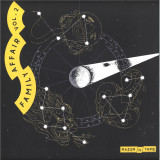
RNT brings the heat for their 2nd outing in their Family Affair compilation series, representing both their ever-expanding RNT ménage, as well as their tight knit musical nuclear fam.
Side A welcomes two seasoned producers to the catalog for the first time: Red Axes with their flip of fellow Israeli Nenor’s banger 'Do You Remember', and Chicago legend Boo Williams comes correct with 'Besty Smith', characteristically bumping and soulful.
OG RNT artist Frank Booker delivers his classic sampley deep sound with 'Time Won’t Tell', and Underground System’s Peter Matson takes JKriv’s 'Something Else' in a synthy and modern electro disco direction to round out the B side. Aural hugs all around in this fam jam!
Originally released in 2012, the second album by the São Paulo-born composer Rodrigo Campos marks a turning point in both lyrical and aesthetic inspiration. “Bahia Fantástica” is the result of the absorption of a then recent influence of soul music (especially Curtis Mayfield) and is in the middle of this path marked by an unlikely geography in the lyrical part (São Mateus, Bahia, Japan) and by an expansion of sound ( from samba to the indefinable, with a passage through black American music).
The album turns ten years old in 2022 and exudes vitality. The soul reference takes on a different aroma when it passes through the filter of the composer and his band – formed by Kiko Dinucci on guitar, Marcelo Cabral on bass, Maurício Fleury on keyboards, Maurício Takara on drums and Thiago França on sax: it has Brazilian sauce, hints of afrobeat and a very particular seasoning. The lyrics bear the artist's mark: they project scenes in the listener's imagination and design the characters and environments with their own style of subjective chronicle. Bahia is both imaginary and intimate in Rodrigo Campos’s music.
2023 Repress
2x12"
'They hit the limit. The limit hit back!'
Vision Recordings presents 'Dead Limit' starring Noisia & The Upbeats
'Jones' depth of character is mouth-watering 9/10 RuPaul LeSnack, Variety
'Great stunt sequences hampered by a terrible soundtrack' 2/10 Mario van Peebles 2015 Shark Documentary Festival Awards Honorary Mention
'Depicts gravely the ongoing struggle between man and wild insects' 7/10 National Geographic
2023 Repress
Marc Acardipane's Pitch-Hiker, originally released under Marc's Pilldriver alias, is without doubt one of the foundation tracks of European hardcore. From the moment it was released in 1995 it caused shockwaves with its stripped down, kick drum focused approach. Gone were the hoovers, sirens, breakbeats and vocal samples of that era's hardcore and instead a stark new minimalism emerged, focusing equally on the kick drum itself and the negative space and air around it.
Like all groundbreaking records it was soon followed by an endless stream of unofficial rip-offs, re-edits and remixes, none of which got close to the perfection of Marc's original. Now for the first time Pitch-Hiker gets officially remixed showing the level of trust Marc has in Perc Trax and Perc's own affection for PitchHiker and for Marc's enduring legacy as an electronic music innovator.
First up is Marc himself with his own take on his classic. Keeping the distinctive reverb soaked kick hits of his 1995 original mix he adds dive-bombing synths and scything hi-hats to increase the energy of the original mix without losing any of its dark charm.
Next label boss Perc adds more weight to the original's unmistakable kick drums, slowly building up the tension until his remix drops into the kind of noise assault not heard on Perc Trax since Tymon's devastating remix of Perc's own 'Hyperlink'. Kick drum specialists Ghost In The Machine step up next and work the original mixes' warping kick drums to the max. Updating and strengthening the track perfectly whilst keeping the sense of space that gave the original mix so much character.
Finally Sissel Wincent and Peder Mannerfelt team up for their Perc Trax debut following on from Perc's remix of 'Sissel & Bass' back in 2019. Flipping the script completely Sissel & Peder add multiple vocal hooks and fuse the original mix's 4/4 kick with half-speed broken beat rhythms to serve up a very different, but still successful interpretation of the original mix.