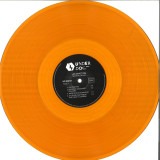
Belgian junk jazz trio schroothoop (which translates as 'junk yard') bring together multi-instrumentalists Rik Staelens (wind & string instruments), Timo Vantyghem (bass & thumb piano) and Margo Maex (percussion). Their new album called 'MACADAM' will be out April 7 via Sdban Records, home of many strongholds in the lively contemporary Belgian jazz and groove scene.
In 2020, schroothoop first emerged with their much-acclaimed and infectious debut album Klein Gevaarlijk Afval (Small Hazardous Waste). "Music on homemade instruments with a surprisingly good result" (De Standaard). "Schroothoop show that material limitation can be liberating and that sometimes the source of new sounds is just old junk."(Written in music). "We assure you that this "scrap heap" is worth gold!" (Le Grigri).
On their second album, to be released on April 7, schroothoop explore the vast sounds of discarded objects found on the macadam streets of Brussels. Wooden crates turn into guitars and lyres. Scrap metal becomes a thumb piano, a cimbalom, or percussion bells. Their compelling collection of semi-improvised songs is born out of several fruitful residencies and live performances during which Margo Maex, Rik Staelens and Timo Vantyghem dive deeper into the possibilities and unique timbres of their DIY instruments.
The junk jazz trio find inspiration in traditional Afro-Cuban and North-African rhythms, New Orleans second line grooves, and Arabic Hijaz scales. On Macadam, the band also explore the realms of electronic music, not shunning hints of drum and bass, dub riddims and ambient soundscapes, using pitch shifting delays or gauzy reverbs. The album delivers a mesmerizing trip through the most diverse capital of Europe, mixed and post-produced by none other than sound wizard Dijf Sanders.
The trio originally met in the Brussels street orchestra scene. One night they found themselves jamming on trash cans, buckets and other illegally dumped materials. Soon after, they started building their own DIY instruments from street trash. Imagine flutes made out of pvc pipes, a scrap metal drum kit, thumb pianos made out of old kitchen knives, a tin can violin, worn-out cutting discs as gongs, and a washtub bass. Delivering their own brand of "junk jazz", Schroothoop literally gives junk a second life by immortalizing a whole range of lost and found objects through music. The Brussels-based group effortlessly incorporates jazz, Northern African music, and Afro-Cuban rhythms, resulting in a danceable and hypnotic trip through the city's melting pot.

Поиск:cheval
Все
- 1: Jean-Jacques Perrey - E.v.a
- 1: 2 Janko Nilovic - Drug Song
- 1: 3 Vladimir Cosma - Exkalibur (O.s.t. "Sam Et Sally")
- 1: 4 Michel Magne & David Gilmour - I Must Tell You Why (O.s
- 1: 5 Syntaxe - L'anthropofemme (Chanson)
- 1: 6 Philippe Sarde - L'appartement (O.s.t. "Deux Hommes Dan
- 1: 7 Paul Martin & Jean-Pierre Castaldi - Le Troublant Témoi
- 1: 8 Bernard Lloret - Digen
- 1: 9 Jacques Arconte - Movie Town
- 1: 0 Cliff Cardwin - Work City
- 1: Janko Nilovic - Soul Impressions
- 1: 2 Jean-Claude Pierric - Move Man
- 2: 1 Edition Spéciale - Monsieur Business
- 2: Jean-Claude Petit - Skyway
- 2: 3 Christian Chevalier - Tecumseh
- 2: 4 Francis Lai - Somewhere In The Night (O.s.t. "Madly")
- 2: 5 Eden Rose - Reinyet Number
- 2: 6 Karl-Heinz Schäfer - Kidnapping (O.s.t. "Les Gants Blan
- 2: 7 Bruno Leys - Dans La Galaxie
- 2: 8 Francis Lai - Young Freedom
- 2: 9 Daniel Janin & Jean Luc Ferré - Dig Yourself Up
- 2: 10 Le Patchwork - Patchwork
- 2: 11 Roger Renaud - Turn Me On
Rare Groove Collection Explore the fusion of world music with soul, funk and disco through the Rare Groove Collection. With this new volume, discover unique groove tracks straight from Jamaica! Fully remastered original versions French RARE GROOVE This "French Rare Groove" volume offers us a oneâÇ`way ticket to France from the late 60"s to the early 80"s. From confidential releases to forgotten movie soundtracks, discover the grooviest tracks from the french scene. Have a good trip!
Before Mahjun (of which Souffle Continu reissued, in 2016, the two albums released on Saravah), there was... Maajun. Five musicians (Jean-Pierre Arnoux, Cyril and Jean-Louis Lefebvre, Alain Roux and Roger Scaglia) and three times as many instruments at the service of an electric-poetic guerrilla group moulded from folk and blues. The group’s unique album, “Vivre la Mort du Vieux Monde” evokes an (imaginary) association of Frank Zappa and Jacques Higelin, of Sonny Sharrock and the Art Ensemble Of Chicago. Under these conditions, Long Live Death!
“The most French of all the French groups, determined to take Maurice Chevalier’s place in American hearts.” This was how Rock&Folk presented Mahjun in 1977. So be it. But when “Vivre la Mort du Vieux Monde”, was issued, it was 1971, and the name, though the same group, was still spelled Maajun. So, let’s look back at the story.
At the end of the sixties, five blues fans decided to form a French group ready to break down the barriers: Jean-Pierre Arnoux (drums, vibraphone, saxophone), Cyril Lefebvre (guitar, organ), Jean-Louis Lefebvre (bass, violin, guitar, vocals), Alain Roux (saxophone, flute, harmonica, vocals) and Roger Scaglia (guitar, vocals). This was Maajun, and Vivre la mort du vieux monde would be their only album, but which would (nevertheless) be followed by those of Mahjun created later by Lefebvre (Jean-Louis) and Arnoux.
Recorded for the Vogue label, “Vivre la Mort du Vieux Monde” would disturb a number of people. This is mostly due to the lyrics, many of which were written by Gérald Escot-Bocanegra, who, while summoning the spirit of Lautréamont and Rimbaud, turned the Maajun musicians on to rock and free jazz. Add a bit of politics into the mix, and the release of the album was delayed for several months. But then, wasn’t it worth waiting for?
Because “Vivre la Mort du Vieux Monde”, a real concept-album, is an important and iconoclastic statement made directly in the face of (francophone) dreamers of all countries. Over heavy guitar riffs, psychedelic interludes or fantasy-fuelled digressions, Maajun built mazes on the advice of alchemists known only to themselves before heading off on a long march on the “cracking walls”. It was an ambitious project, but Maajun could handle it, going so far as to proclaim: “Tomorrow will be a huge party!” But as we can see “tomorrow”, is now!
"Renaud Capucon ist eine der brillantesten
Musikerpersönlichkeiten Frankreichs", schrieb der
Kultursender Arte über den facettenreichen Violinisten. Mit
der Geige in der Hand leitet er sein Orchestre de
Chambre de Lausanne - so auch für das gemeinsame
Album Vivaldi Les 4 Saisons . Hier verbindet Capucon
das wohl berühmteste Werk Vivaldis, Die vier
Jahreszeiten, mit zwei Violinkonzerten des heute fast
vergessenen Komponisten Joseph Bologne Chevalier de
Saint-Georges.
1745 in Guadeloupe geboren als Sohn eines
Plantagenbesitzers und einer Sklavin aus dem Senegal,
sorgte Chevalier de Saint-Georges als Musiker in Paris
für Furore - als Komponist, Violinist und Leiter eines der
damals führenden Orchester der französischen
Hauptstadt. Scherzhaft wurde der Liebling der Pariser
Gesellschaft auch "schwarzer Mozart" genannt, weil seine
Werke im Stil an den zehn Jahre jüngeren genialen
Kollegen erinnern (vermutlich aber ließ der junge Mozart
sich von den Werken des Älteren inspirieren). Den
Violinkonzerten Saint-Georges' lässt Renaud Capucon die
einfallsreiche und effektvolle Programmmusik Vivaldis
vorausgehen. In Die vier Jahreszeiten verleiht der
Barockkomponist Naturphänomenen musikalisch Gestalt,
vom Vogelgezwitscher über Gewitter bis hin zu Schnee
und Eis. Eine willkommene Gelegenheit für den
Star-Violinisten, einmal mehr seine brillante Technik und
Ausdruckskraft unter Beweis zu stellen.
- A1: Revue Noire
- A2: Swinging In The Rain
- A3: La Pegre
- A4: The End Of A Love Affair (Billy In The Sky) (Billy In The Sky)
- A5: Drum Rain
- A6: Les Annees Folles
- A7: Swing Swing
- B1: The Drummer
- B10: Soul Computer
- B2: Black Musette
- B3: Tambours Battants
- B4: Negro Digital
- B5: La Nuit Mene Une Existence Obscure
- B6: Be Bop Vaudoo
- B7: The Dancer
- B8: Harlem Jungle
- B9: Tant Qu'il Y Aura Des Etoiles
For the first time Nicolas Repac's album Swing-Swing, originally out in 2004, is released on vinyl LP!
He has a reputation as a musician's musician, a talented Jack-of-all-Trades as much at ease playing the guitar alongside his old accomplice, French songwriter Arthur H, as he is when tinkering with all kinds of machines by instinct, and creating made-to-measure contexts for instrumentalists like Michel Portal. Everyone knew he had a secret garden, the song' world of a composer and performer who was difficult to categorize, a world not only lyrical but also dark and full of tender melancholy, not to mention easily surrealist (his first record of songs, La vile', which was released on the Indigo label in 1997, has a sequel in preparation in the form of a new opus, Lovni'.) But, once again,
Nicolas Repac had a surprise in store, because he has turned up where no one was expecting him: Swing Swing is a record as magnificent as it is difficult to place, with electro ramblings around jazz (its subjects and virtues, its spirit and memory), wanderings that are playful, light, fluid in gesture and crammed with ideas, discoveries and intuition, they are at once naive and instinctive (Repac is an erudite amateur, the Ferdinand Cheval of the already-established world of electronic music), and extremely elaborate in their crushed samples, hallucinatory, rhythmic whirls and sensual, dreamlike atmospheres.
A holy grail of French classic new wave! Thierry Müller, who initiated the French RUTH project, is not at his first try when the album POLAROID/ROMAN/PHOTO including the eponymous title track is released in 1985, but already a known name in underground experimental/electronic music with ARCANE, ILITCH (albums "Periodmindtrouble", "10 Suicides") as well as the more punky RUTH M.ELLIYERI (cult track "Mescalito"). Together with Philippe Doray, quite a big name of French experimental music at the times, Müller started RUTH. As early as 1982, a first instrumental version of the track Polaroïd/Roman/Photo is out under the name of the project RUTH. "I wanted to write a piece to make the girls dance and make fun of the boys. I plugged a small handmade clock on my Farfisa organ as a sequencer. I had a small Roland synth-guitar, I put the organ in it and that's how it started." Next came Frédérique Lapierre, who contributed original vocals on the track in 1984 as well as wrote lyrics and sung two more album tracks. Thierry asks some friends to write texts for the album and then recording tracks with Phillipe as well as Frédérique. But when the sessions are over, both musicians are not too happy with the results of the Polaroïd/Roman/Photo version: according to them, it lacks "flamboyance". They decide then to record a new female voice with a professional singer (Frédérique Cambon), sound engineer Patrick Chevalot offers to mix the track "so that it blows out". The whole album was finally released in 1985 with Paris Album, a small independant label, barely selling 50 copies in 1985, despite its eponymous title as a potential success. A first limited CD version was issued in 2001 via Fractal, but In 2004, DJs Marc Colin and Ivan Smagghe discover the track Polaroïd/Roman/Photo and decide to exhume it from oblvion. They released it on a compilation called So Young but so cold (Tigersushi) and then with Born Bad records on the BIPPP compilation in 2008. Thanks to them, the track (remixed and released via Aufnahme & Wiedergabe) and the album (reissued in 2008 (CD) via Infrastition and 2010 (LP) via Angular) started a new life, now back in print via BORN BAD RECORDS! + 12 pages booklet (Iiner notes UK + french) + Download code RIYL: Cold, Minimal & New Wave, Dark Dance, Elektro
Gwendoline, is a duo-antihero of the Rennes indie scene. Sensitive loosers and jaded start-up nation greats, Micka and Pierre shape their own style, a dark shlag wave in a percussive and poetic spoken-word style, with counter discussions as their primary source of inspiration, looking at those around them. Between fatalistic lyrics, self-deprecation, sarcasm and bitterness of the world's mediocrity, their sincere cold-wave is the symbol of a disenchanted youth and the perfect soundtrack to protest.
In 2017, they recorded their first album by locking themselves up for a fortnight to compose everything in one go, feeding off their daily environment in Rennes, numerous evenings spent at the bar and the anxieties of our time. At first self-produced on Bandcamp, this album "Après c'est Gobelet!" is pressed in confidence on vinyl in June 2020 on the Spanish indie label Dead Wax Records, whose stocks run out before the end of the year and which is now unavailable in France.
At the end of 2020, Gwendoline has also seen the doors of the Trans Musicales open to her, a favourite of Jean-Louis Brossard, for a live show at the Ubu, captured by FIP & Culturebox and accompanied by Maëlan and Romain, their stage accomplices.
Written without pretension and ambition, the duo is surprised by the interest shown in the project, between their programming at the Transmusicales, and the feedback from the press including major international media (KEXP, France TV, Les Inrocks, Post Punk Magazine...).
A video clip was released in April 2021 to illustrate one of their flagship tracks, the heady and heady "Chevalier Ricard", which was also a favourite of Franck Vergeade, music editor of Les Inrockuptibles (January 2021).
Gwendoline is the project from Micka (a.k.a. Mikoune) and Pierre (a.k.a. Daniel).
Based in Rennes, musically influenced by the classic cold wave which originated in their country, precarious and aimless, they shape Gwendoline to their own image.
Pure DIY ethics, quick recordings at their home studio.
Dark lyrics, self-mockery, criticism, sarcasm derived from the world’s mediocrity.
After Janko Nilovic and Harlem Pop Trotters, Underdog Records has now reissued Martial Solal - Locomotion in a colored vinyl edition. This grooviest French jazz-funk and avant-garde album features Henri Texier and Bernard Lubat, and was originally released in 1974 on the PSI label. A masterpiece!
- A1: Structurotron
- A2: Snakes & Scorpions
- A3: Morgan’s Thrill
- A4: Post-Teenage State
- A5: Telecabine
- A6: Safari Deluxe
- A7: Labrado
- B1: Formes Flottantes
- B2: Kraken
- B3: Pandor
- B4: Facteur Cheval
- B5: Thalassa
- B6: Alvéole
- B7: Léviathan
- C1: Nicholson
- C2: Golem
- C3: Hazel
- C4: Sauvabelin
- D1: La Maison
- D2: Minibiche
- D3: Les Impôts
- D4: Easy Rider
Die Karriere des Schweizer Post-Rock Trios Honey For Petzi ist von einer Reihe herausragender Platten geprägt. Die hier vorliegende Wiederveröffentlichung vereint die beiden Album-Klassiker 'Heal All Monsters' (2001) und 'Nicholson' (2003) auf einer Doppel-Vinyl!
Winter Family is a duo made up of Ruth Rosenthal and Xavier Klaine, who met in Jaffa in 2004. Their dark, saturated and dense music is described as "Death Swing", "Weird Wave" or "Funeral Pop".
They recorded new parts of this new album in St Martin church of Maxéville, France. Xavier: "I recorded the pipe organ there, inspired by the Alsatian philanthropist organist Albert Schweitzer whose slow, bombastic performances, limited by faulty technique have always touched me deeply. In 2006, my aunt Loulou agrees to lend me the keys to the church. Ten years later, Loulou passes away, I play on this same pipe organ during her funeral. During the fall of 2018, in her room with old floral wallpapers, so cold, that I empty, surrounded by her missals and huge crucifixes I remix this pipe organs and the voice of Ruth. Through this late remixing, we wanted to deliver this woman from her agony, her eyes turned to the milkish Lotharingia sky and beyond, trying to illustrate this Catholic France of yesterday, as vain and terrifying as a month of November in this cold and humid garden, within reach of the incessant song of the A31 highway."
- 1: Cat Scratch
- 2: Psychic Horizon
- 3: Saturn's Child
- 4: Aguirre
- 5: More Alive
- 6: Mystery Of Mars
- 7: Love In A Way
- 8: Journeys
KingUnderground releases Other Mirror’s debut record. The album is mixed by legendary engineer ‘No Sleep’ Nigel, who has worked with a plethora of the UK Hip-Hop scene since the late ‘80s.
Other Mirror are James Tilley, Amelie Chevalier and Jonny Cuba. The 3 formed the band in 2018. They had talked for many years about starting a project together and after several years of pursuing their own creative endeavors, the school friends found themselves reunited and finally creating music with one another. Although the Self Titled LP is Other Mirror’s band debut, they’re far from newcomers. Jonny Cuba has been an active musician since the late 90s, with other collaborative highlights including The Herbaliser, Mike James Kirkland, and production for legendary British Library labels KPM, Bruton, and Cavendish. Tilley has had multiple releases with his first band, Fabric, from the early, to late 90s, and has collaborations with DJ Food, and recording sessions with John Peel. Chevalier is an accomplished vocal coach, dancer, and choreographer with various session work, including live shows at Glastonbury Festival, and Bestival. Rounding out the trio with her mystical vocal delivery and groovy bass lines.
The results of the band’s initial collaborations feel reminiscent of a Quintin Taratino movie, cinematic and groovy in nature. Other Mirror are particularly drawn to the power of music within film and TV. It’s ability to support and affect the narrative is similar to how the band taps into direct emotions.
“The music can be partially improvised with unexpected sections. Like films are made in the edit, we follow a similar approach when we are composing.” - Amelie Chevalier
The Other Mirror debut reflects the bands long standing rapport together. It often feels like there is a conversation happening within the music between the old friends. Their unconventional approach to composing adds a familiar flavor in each track on their self-titled LP.
“Maestro melodist Christophe Petchanatz (aka Klimperei) and all around music fanatic David Fenech engage remotely in a repetitive exchange of recordings and overdubs on their debut album titled ‘Rainbow de Nuit’, sporadically spanning over the last decade. Evocations of experimental and improvised jazz, chansonesque songs, bluesy folk, and outsider music undulate harmoniously across the record. From music boxes and walkie-talkies down to plastic straws, plucking various stringed instruments such as the charrango and banjo, kazoos and snake-charmer ocarina and flutes, all the way through the sweet accordion and melodica, found and traditional tuned percussion - there is far from a shortage of sound sources on this freakishly inviting record. What germinates as an imaginative and emotional chord progression played by Klimperei, evolves with Fenech layering additional recordings, which would then find their way back home to Klimperei yet again, and so on, and so forth. This recursive compositional and improvisational loop, combined with Fenech’s musique-concrete-like mixing and editing techniques, transforms the acoustic recordings by way of compression, saturation, and reverberation or simple pitch changes - resulting in the duo’s recordings seemingly sound like they may very well be an octet in real time. While the majority of the recordings have been ping-ponged remotely, David and Christophe unite under one roof to record the closing track of the album.
The pieces presented on ‘Rainbow de Nuit’ treat the ears to a carousel ride waltzing through a multiverse made up of surrealist puppet theaters, dramatic film noir act changes, and a mosaic of polyphonic instruments and toys alike. In other words, a score to a fable brought to life with haunting yet charming melodies and occasional hallucinatory voices reminiscent of laughter and infantile epiphanies which we hear on Tarzan en Tasmanie and Madrigal for Lola. This is taken a step further by Fenech, to a brief libretto of incomprehensible tongues on Pocarina. Amid the mysterious and dark (Septième Ciel and Rugit Le Coeur) also lies tender and simple compositions (Rainbow de Nuit and Chevalier Gambette), murky suspenseful melancholy (Levy Attend and Eno Ennio), and casually slipping into pensive psychedelic backdrops (Un Cercueil à Deux Places) - forming a colorful blend of sounds. A world of echoes. A tale of tales. One persistent earworm that you’ll likely be whistling and humming along to on a first listen.”
Gwendoline is the project from Micka (a.k.a. Mikoune) and Pierre (a.k.a. Daniel). Based in Rennes, musically influenced by the classic cold wave which originated in their country, precarious and aimless, they shape Gwendoline to their own image. Pure DIY ethics, quick recordings at their home studio. Dark lyrics, self- mockery, criticism, sarcasm derived from the world’s mediocrity.
“Après c’est gobelet!” is their first album. Melodic but dark, ironic but direct, sophisticated but absolutely minimalistic. A testimony of today’s world viewed under a grey prism of sarcasm and wrapped around beautiful melodies and rhythms.
We are really happy to present you this very special record on a limited, hand numbered edition of 140 copies, housed in a matt finish sleeve and including a download code. The digital download includes two bonus tracks.
Apparel Music is the platform, Chevals the protagonist, vinyl the material, end of March 2020 is the period of time decided for the landing of the Frenchman’s first solo body of work for the “lovers dogs” label. “Be Yourself” is the title of the four tracks EP by the artist which, by the headline itself, sounds like a declaration of intentions, an acknowledgement of his qualities as a producer, shaping up four different aspects of his creative attitude in a remarkable musical effort. The EP takes off with the title track which is a perfect display of Cheval’s capabilities when it comes to the art of developing intersecting harmonies and melodies, setting up the perfect ground for a smooth vocal line that keeps on repeating the concept in a hypnotic loop: “just be yourself”! With “Keep On” the Bpm increases to design a beat driven track that winks to northern European rhythmics in an apotheosis of upbeat acid lines, a vibey overlapping of loops we advise against light-sleepers! Side B starts with a more rhythmically classic composition called “Good Good” which is also the last of the three original tracks; here the strings section mashes up with the vocals, as usual expertly crafted by Chevals and again some hints of acid bass line to form a proper dance floor hit. B2 is dedicated to Madcat’s remix of “Good Good”, where the French producer explains his point of view with a more funky oriented version of the track but keeping the essential parts intact. Impossible not to be excited by this EP by the Parisian producer who finally slams his fist on the table in what is his best musical statement so far. Bare with us until the end of March to listen to this pearl.
Nord Noir spins a tale as much as it paints a sonic landscape. Its progenitor Toh Imago took the time to sharpen his artistic chops under a few different guises, resisting the 21st-century affliction that is instant gratification at all costs, ultimately spending over 18 months to develop the narrative arc underlying his first opus. Using the historical context of the north of France's proletariat past, he created a dense, hypnotic, haunted album that will sit comfortable alongside the works of Daniel Avery, Efdemin and Blawan.
Tropical Disco Records return with another sizzling four-tracker, tackling deeper, more soulfully sustained tracks which still cipher the same party-centric impact consistent across every release.
Moodeena’s ‘The Chase’ is a fireball of an opener, showcasing a tantalizing flurry of teasing brass and uninhibited guitar strokes, cooly climaxing, sending shocks of piloerections to every corner of your body.
Next up label co-founder Sartorial on a slightly slowed, yet typical love flex with ‘Addicted To You’. It oozes high romantic interfusings of heady beats and a fantastically reinvented vocal. It’s an ode to that golden moment in mood music paired with midsummer sun, certainly one of his best works to date.
Tropical Disco debutant Chevals offers up a delectable deep house symphony with ‘Saturn’, a lush suite of hazy chords, boogie vamps and shuffling percussion.
Gledd & The Funk District’s ‘Late At Midnight’ closes of the record in fine style, looped swells and vintage stabs, laying a dexterous foundation for the full-frontal, fanatical vocal to follow. It appears the label are showing off using this tyrannic tool as the EPs send off, making you nostalgic about a night never experienced and stomping another firm footprint in contemporary disco’s orbit.
Editorial venture to France for ED025 with four expertly edited, blissful gems from Parisian producer, Chevals.
The A side hits with two hazy cuts of sun drenched disco house. 'Left Behind' swells with filtered tales of lost love radiating a bittersweet warmth. Rich bass melodies and clipped funk guitars shine through as thoughts drift away across glistening seas. 'Eye Of Love' is served up next, equally as impassioned with buzzing synths, basking Spanish guitars and joy-filled chords and congas give a sense of desert islands where day-to-day life is only a figment of the imagination.
Flip it over and 'The Line' hits with a pumped up, soulful bassline that solos and sidewinds with brazen hats as its accomplice. Squelching keys and deft Rhodes touches add luscious harmonies to leave listeners lulled by its masterful flow.
Last up, 'Time' takes a pensive, eyes closed trip - delicate vocals, summery synth lines and glimmering samples washing away the worries as they wander over the airwaves.
Masterworks Music Rolls Into Town Once Again, This Time With France's Very Own Chevals Firmly In The Saddle. Four Peak Time Disco Edits Of Tried And Tested Dancefloor Anthems, Ready And Raring To Be Unleashed.
First Out Of The Blocks, 'my Feet Keep Changin', Drenched In Uplifting, Gospel Leaning Vocals That Will Have Hands Reaching For The Heavens. Couple That With Dazzling Piano Melodies, A Pulsating Bass And Staccato Strings, Alongside A Spiritual Breakdown That Will Bring About Full-on, Holy Disco Enlightenment. Next Up, A Filtered Disco House Gem In The Form Of 'this Time Is Dedicated To Love'. Shimmering Vocals, Synth Trills And Guitars That Radiate Warmth Combine With Fresh Percussive Samples And Lush Female Harmonies.
Take To The B Side And You're Hit With 'never Will I Leave You Baby'. Sun-kissed, Beachside, Wind In The Hair Vibes - Bringing Back Memories Of Those Warmer Months, Where Everything Just Seemed That Little Bit More Blissful. '80s Synths, Fuzzy Hats, Filtered Phrases And Sweet Chord Progressions In Abundance. Closing Out The Ep Chevals Goes Heavy On The Modulated, Wobbly Synthwork And Rich Bass Tones On 'love Somebody' Before Those Deep, Soulful Keys Take Centre Stage.
Disco Edits Done Properly!
A new chapter of the very well received MINIMAL SIGNALS V.A. compilation series is here. Again, MINIMAL SIGNALS aims to capture what's hot on the international minimal dark and post-pyunk scene. On this occasion, the american solo project DANCING PLAGUE, the Berlin based MARTA RAYA, the german HOLYGRAM remixed by the french chevalier of synths COLD COLORS and the french SYDNEY VALETTE remixed by his compatriots THEREMYNTH makes of MINIMAL SIGNALS VOLUME 4 a must have for the autumn 2018. It the It arrives on 12 Maxi-Single EP format and produced in a ONE-OFF truly limited edition of 300 copies lacquered pressed on 180 gr. high quality solid WHITE vinyl. All tracks have been specially remastered for LONG CUT vinyl by Eric Van Wonterghem