CATCHING FLIES ANNOUNCES BEATS & PIECES II - A Bold, Dancefloor-Driven Follow-Up to Acclaimed Mixtape
The Limited Edition Orange Vinyl releases a month before the digital release, and contains exclusive Vinyl versions of some of the tracks, which will not be available anywhere else. Following a run of celebrated releases on Cercle Records and Anjunadeep, alongside a widely praised BBC Radio 1 Essential Mix, London-based producer Catching Flies returns with Beats & Pieces II — a dynamic, dancefloor-focused counterpart to his previous mixtape, Beats & Pieces. Described as its "uptempo sister," the new project signals a confident shift in energy while preserving the organic textures and emotive detail that define his distinctive sound. Beats & Pieces II has already notched up a series of notable milestones.
• The track "Iajo" has been featured on the EA Sports FC 26 soundtrack (FIFA).• Catching Flies will deliver a BBC Radio 1 Chill Mix during the album's release week.• He has been named the cover artist for Spotify's Altar playlist.• Tracks from Beats & Pieces II have received support and praise from artists including Bonobo, Diplo, Solomun, and MJ Cole.• This summer, Catching Flies will perform live at festivals across Europe.• He will join melodic house artist Monolink on a North American tour coinciding with the album's release.• Catching Flies will perform at Anjunadeep's London Open Air event at the iconic Naval College in Greenwich this summer.
quête:chi
- Scarecrow- Condemned To Be Doomed (Part 1)
- Scarecrow - In The Beginning
- Scarecrow - I Owe You
- Scarecrow - Nuclear Radiation
- Scarecrow - Condemned To Be Doomed (Part 1)
- Scarecrow - In The Beginning
- Scarecrow - I Owe You
- Scarecrow - Nuclear Radiation
- Raging Violence - Born In The Streets
- Raging Violence - Demons Evil Forces
- Raging Violence - Call Of The Gods
- Raging Violence - Fear The War Within
- Possuido Pelo Cao - A Marcha Do Cao (The March Of The D.o.g.)
- Possuido Pelo Cao - Ugly On The Inside Too
- Possuido Pelo Cao - Air Mail Surgery
- Possuido Pelo Cao - Catholic Beast
- Excess - Grinding Raid
- Excess - Evil Child
- Excess - Homicide
- Excess - Death Creation
- Excess - Baby Blood
Nach dem Hoch Ende der Achtziger wurde es still um das Genre THRASH METAL, welches einst von Bands wie Metallica, Exodus oder Legacy (Testament) in den USA, dann auch von Sodom, Kreator oder Destruction
in Deutschland gestartet wurde. Erst in den Zweitausendern zeigten sich wieder Bands, die sich diesem Stil, der grob ausgedrückt zwischen Speed Metal und Death Metal liegt, wieder annahmen. Heute dürfte Thrash aufgrund vieler noch aktiver Acts aus den Achtzigern und jungem Nachwuchs so groß sein wie nie zuvor.
Diese Vinylbox enthält vier Alben, die zwar unterschiedlich sind, aber alle zum Genre gehören. Allen voran RAGING VIOLENCE aus den USA. Dabei handelt es sich um die Originalbesetzung von HIRAX, allerdings mit Sänger
Rob Perkins. Neue Songs und Neueinspielungen (unter Anderem der rare Demotrack „Born In The Streets“) konnten Fans und Kritiker begeistern. EXCESS aus Deutschland war eine Death-Thrash-Band, die es nie zu einem Alben gebracht hat. Nach drei Demos schwärmte man aber auch in erfolgreiche Richtungen aus: Crematory, Mystic Circle und Blood. Für
EXCESS war keine Zeit mehr… Die Demoaufnahmen wurden restauriert und remastert und erschienen bei Golden Core/ZYX erstmals als LP und CD. Auf dem Tape „Crucifixion“ hört man Drummer Neudi (Manilla Road,
Trance, Savage Grace, etc.).
SCARECROW haben mit „Condemned To Be Doomed“ 1988 eine heute rare Eigenpressung veröffentlicht, die zu den wohl ungewöhnlichsten deutschen Thrash Alben gehört. Hier trifft Punkattitüde auf progressive Elemente,
während die Basis lupenreiner Thrash ist. Kein anderes Album klingt wie dieses außergewöhnliche Werk der deutschen Band. Aus Brasilien kommen oder kamen (mal sind sie aktiv, dann wieder nicht…) POSSUIDO PELO
CAO, die von D.R.I. und Suicidal Tendencies beeinflussten CrossoverThrash bieten. Bei den schnellen, kurzen Tracks bleibt kein Auge trocken…
und kein Genick verschont. Das deftige Werk von 2008 erschien damals nur als CD
- Open Fields
- Memory
- Opioid
- Reset
- Always You
- Seeker
- Warnung
- Gabriel
- Kind
- God Is Lonelier
- Warum
- Neuzeit
Mute welcomes German synthesizer and producer duo Felsmann + Tiley to the roster with the release of their new album Protomensch. Out February 13, 2026 on limited edition black vinyl packaged in a special gatefold sleeve featuring a mirror foil lamination on the inner panel revealing a ‘self-portrait of the protomensch.’
On Protomensch (German for “proto-human”), Felsmann + Tiley blend shimmering synthwave, pounding trance, and introspective IDM with synth-pop-infused tracks featuring guest vocalists including London’s Pet Deaths and Australian artists The Kite String Tangle, Woodes, and Laius.
This juxtaposition between sentient beings and machines permeates the whole album – right from the duo’s manifesto introducing us the highly intelligent yet irrevocably shortsighted and downright tragic character of Protomensch – the cover artwork featuring turtleneck wearing chimpanzee, futuristic music videos, and stark social media aesthetics to seated, next-level live-shows involving collaboration with dozens of visual artists.
Despite their online ubiquity, sparked in part by their viral reinterpretation of label-mate M83’s “Solitude,” which has been used over 1 million times on TikTok and high-profile syncs on shows including Young Royals (season two), the BAFTA-winning crime thriller Top Boy (season three), and Amazon’s The Better Sister, Felsmann + Tiley have lingered largely on the periphery, their origins cloaked in quiet anonymity, until now. With the release of Protomensch, Felsmann + Tiley present their fully realized artistic vision and step into the spotlight.
- Fanjiry
- Alohotsy
- Sikilony
- Kalavabitiky
- Zongoya
- Zipo Tralala
- Tsapatsapao
- Roro Soa
- Alakarabo
After decades spent shaping the sound of southern Madagascar and becoming one of the defining voices of tsapiky, Damily returns with Fanjiry, his most intimate and focused record to date. Known for electrifying village ceremonies and carrying the fever of Toliara across continents, he takes a sharp turn - not away from trance, but deeper into its core. Recorded in just three days at Studio Black Box with analog wizard Peter Deimel, Fanjiry strips the tsapiky band down to a single guitar and a single heartbeat. Damily plays alone, yet fills the space completely - bass, rhythm, melody, pulse, and breath merging into a dense and vibrating sound. Every riff is architecture, every harmonic a door opening onto memory, childhood landscapes, and nights where music heals, binds, and exhausts the dark. There is no nostalgia here, no museum of tradition. Fanjiry is a new frontier for tsapiky: raw, precise, suspended between earth and sky, born from craft and necessity. The title - the last star before dawn - captures its essence: a quiet moment before the world awakens, where a single guitar can hold an entire history and still point forward.
Black Vinyl[26,01 €]
On a Sunday in the early 70s in South LA one could asily find themselves experiencing the Pan Afrikan Peoples Arkestra doing what they do for the community, performing incredible music. "Live at Widney High December 26th, 1971" is a previously unreleased PAPA recording. It finds director Horace Tapscott conducting the band at Widney Career Preparatory & Transition Center, a special-education magnet high school in Los Angeles. The band played shows here between 1970 and "72, often sharing the bill with contemporaries John Carter and Bobby Bradford"s group, and at one point the Sun-Ra Arkestra. These weekend shows were free and meant for the surrounding Black community. On this date the PAPA performed a range of compositions from the Ark"s expansive songbook, including arrangements of tunes by Pharoah Sanders and John Coltrane.
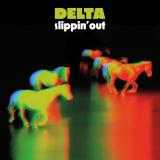
“From Birmingham and centred around the extraordinary songwriting talent of James and Patrick Roberts – initially as The Sea Urchins and since 1993 as Delta – they’ve only just got round to releasing their debut album, Slippin’ Out. It is a work of some beauty”. 9/10 NME ALBUM OF THE MONTH, 2000
“It’s classicist for sure, shot through with the influence of The Beatles, Byrds and Buffalo Springfield. In James’ downright beautiful closing ballad ‘I Want You’ one can also discern the school of ambitious English balladry that peaked in about 1968: The Casuals, Love Affair, Barry Ryan. The impression of accomplished old-schoolery is only furthered by the dizzying string arrangements penned by Louis Clark Jnr, son and namesake of the one-time orchestral chief of Electric Light Orchestra” – Mojo lead review, 2000
Having ended the 90s with the spirited ‘Laughing Mostly’ compilation of singles and demos (Guardian Album Of The Week) Delta finally released their debut studio album of twelve songs in the summer of 2000 on the Dishy Recordings label. Accepting that this might be their sole studio album the band threw everything at these recordings allowing it to exist in its own sphere, unbothered by their contemporary generation and disregarding the idea of even releasing a single.
Recorded at DEP International there was a notable difference to the scruffier, looser charm of their 1990s recordings, a tighter focus developed by having the experienced Lenny Franchi mixing the LP with them. Lenny had been working with a number of Island artists including My Bloody Valentine and Tricky so knew his way around a desk. There was also the question of budget (a few months passed between recording and mixing whilst funds were raised) so every day counted. Ultimately though you can hear the joy in the recordings, even amongst the melancholy and angst. As James recently recalled in an interview in Shindig! Magazine: “It was such a big deal for us. It’s one of my fondest memories doing that record. Everyone was happy. If there’s anything that I’d stand by, I think it would be that”
Louis Clark Jr joined the band towards the end of the ‘90s and brought a classically-trained element to the recordings particularly with his string arrangements. For ‘Cuckoo’, ‘I Want You’ and the prophetic ‘We Come Back’ Louis brought in eight players from the Birmingham Conservatoire; the baroque style is partly why the record often receives comparisons to Love’s ‘Forever Changes’.
On release ‘Slippin’ Out’ was a big favourite with writers at the NME, Mojo and The Guardian again and before long the band were signed to Mercury/Universal for their second studio album ‘Hard Light’, a far more expensive and expansive love affair. It was a temporary palatial home where things quietly fell apart again, but that’s another chapter.
“If long-term memory is nothing more than selective editing and only pop’s most weighty visceral works are built to last then it’s quite possible that in 50 years the Britpop era will be best recollected for the two bands it ostracised. Earlier this year we met Shack and thought their story of mercurial brilliance indicated the biggest music biz oversight of the 90s. We were wrong because we hadn’t met Delta yet. This is richer and more engrossing than anything by Shack”
- A1: The Letter
- A2: L'intrigue
- A3: Drinking At A Stream
- A4: Oakwood Green
- A5: Children Of Clay
- A6: Sur La Plage
- A7: Her Masters Voice
- B1: The Draw In Room
- B2: The Slides
- B3: Fleur's Dolls
- B4: Mortuary
- B5: The City Sleeps
- B6: Birds
- B7: Silence & Wisdom
- B8: Festival
- C1: Our English Friends
- C2: Piroette
- C7: Albert The Mud Fish
- C8: Who Art In Heaven
- C9: Shackleford Breeze
- C10: 2 Blind 2 See
- C11: Zazinthos
- C3: The Third Movement
- C4: Play Room
- D1: Little Brown Jig
- D2: Tounges
- D3: Shalama
- D4: The Sun On The Sea
- D5: Interlude
- D6: The Snow Falls & The Village Is Overflowing With Children
- D7: Double Happiness
- C5: Starboard She Said
- C6: Los Estrellas
The short, mysterious career of the female French duo Deux Filles is bookended by tragedy. Gemini Forque and Claudine Coule met as teenagers at a holiday pilgrimage to Lourdes, during which Coule's mother died of an incurable lung disease and Forque's mother was killed and her father paralyzed in an auto accident. The two teens bonded over their shared grief and worked through their bereavement with music. However, after recording two critically acclaimed albums and playing throughout Europe and North America, Forque and Coule disappeared without a trace in North Africa in 1984 during a trip to visit Algiers. The short and terribly unhappy lives of Forque and Coule are at the root of the small but fervent cult following the mysterious duo have gained since their disappearance, not least because the placid, largely instrumental music on the duo's albums betrays no hint of the sorrow that framed their personal lives.
This would be a terribly sad story if a word of it were true. In reality, Deux Filles were Simon Fisher Turner, former child star/teen idol and future soundtrack composer, and his mate Colin Lloyd Tucker. Turner and Tucker left an early incarnation of The The in 1981 to pursue another musical direction. Turner claims that the idea of Deux Filles came to him in a dream, and he and Tucker strictly maintained the fiction throughout the duo's career. Not only did they pose in drag for the album covers, the duo once even played live without the audience realizing that the tragic French girls on-stage were actually a pair of blokes from south London. Deux Filles released two albums through Turner and Tucker's Papier Mache label, 1982's Silence & Wisdom' and 1983's Double Happiness'. Both albums are included here and blend watery piano, occasionally ghostly vocals, sheets of synthesizers, heavily processed guitars and the barest minimum of percussion. Drifting and wistful, they're a pair of lost ambient gems from a time when the genre had yet to mature, an excellent example of post-Eno, pre-Orb ambient music.
All songs have been remastered for vinyl by George Horn at Fantasy Studios in Berkeley. The vinyl comes housed in gatefold sleeve with original front covers of both albums, and a centerfold of archive images and the original liner notes. Each LP includes a sticker of the Lino cuts by Adrian Gill that was included with the original pressing.
"Like an early French film soundtrack with melodramatic overtones, the sound is jagged and disjointed but never harsh. Lilting guitars and ample use of echo smack of Vini Reilly, relying on the hypnotic qualities of the sound rather than abrasive noise" (Sounds, 03/1983)
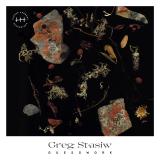
Experimental musician Greg Stasiw presents his debut album of radiant, free-flowing electronics ‘Guesswork’. Music for psychoactive exploration made over a four year period, incorporating ambient, minimalism, intricate sound design & Japanese environmental music. An exceptional listening experience of wonder, tranquility, melancholy & discovery, contemplating the relationship between sound & space.
Greg Stasiw is an experimental musician, visual artist and writer from New England, Northeastern USA. An itinerant polymath, Stasiw has spent time living, working and traveling in New York, Tokyo, Toronto, Paris, Boston, and Bratislava. As well as studying anthropology, animation and illustration, Stasiw has always had a close connection with music.
His earliest musical involvements started with ambient music on Sunday drives, microcassettes, the Windows 98 Sound Recorder and free play with Casio keyboards. Then came a formative procession of piano lessons, orchestras, choirs, taiko, metal, indie rock, tinnitus, and ultimately; the acquisition of music production software.
With his debut album ‘Guesswork’, the aural and visual inspirations that underpin Stasiw's creative life intersect, in a pure, radiant soundworld of space, depth and immaculate clarity. Futuristic, pellucid soundscapes incorporating ambient, minimalism, intricate sound design, and Japanese environmental music are deftly arranged with evanescent chimes, serene tone float, suspended organ notes and curious sci-fi resonances.
Like stepping into some space age meditation garden, if soundtracked by the likes of Hiroshi Yoshimura, Harold Budd, Norman McLaren, and Pauline Anna Strom, the thirteen tracks of ‘Guesswork’ create an exceptional listening experience of wide-eyed wonder, sleek tranquility, gentle melancholy, and singular discovery.
- The Silver Key
- The Crosshair
- Rooftop
- The Child In You
- Return Of The Reapers
- The Trickster
- I Lit A Light
- The Rifleman's Wedding
- As I Dive
- Beginning Of The End
- Shared Fate
With `The devil's door' And Also The Trees, one true original Post-Punk/New Wave band, presents a quiet storm of an album. At times filmic, poetic and intense with an undercurrent of dark psychedelia. It completes a trilogy of works `The Bone Carver', `Mother-of-pearl Moon' and now `The devil's door' created by the current line-up. Here there are signature `And also the trees' poetic lyrics, orchestral guitar and soundtrack influenced songs inspired by newsreel, oil paintings and folklore. But with this work we have the addition of some surprising instruments that skew the album towards a world where John Barry meets Bela Bartok. And also the trees (AATT) formed during the original post-punk era in rural Worcestershire, an environment that has provided a constant inspiration to a group whose music has often explored the dark underbelly as well as the beauty of the British countryside. They are renowned for their captivating live performances, a unique style of mandolin-like electric guitar, evocative lyrics and dark jazz rhythms - not to mention a creative independence fiercely preserved for over four decades. Back then AATT immediately caught the attention of Robert Smith of The Cure, who invited them to tour with his group on several occasions. Smith was also involved with their early recordings alongside his bandmate Lol Tolhurst, who produced their first records. This longterm friendship and mutual respect was further solidified when AATT were invited to perform at the Robert Smith curated 2018 Meltdown festival in London. This July AATT appear as The Cure's special guests at the Nimes festival. Founded by singer Simon Jones and his guitarist brother Justin, AATT have maintained a continuous presence on the post-punk, and alternative rock scenes worldwide, with a solid fanbase e.g. in Germany.
- 1: Intro
- 2: I Wanna Be With You (Feat. Marina B)
- 3: Sungalz (Feat. Marina B)
- 4: Rest Easy
- 5: Easy, Easy
- 6: Wake Up (Feat. Marina B)
- 7: When Will I See U (Feat. Kim Foxen)
- 8: It's Not Over (Feat. Shoshy)
- 9: Ah Ha
- 10: The Deep
Brooklyn duo The Still Brothers is a musical project of childhood friends Evan Heinze (The Shacks/Big Crown) and Andrew LeCoche (Ula Ruth). Heinze has toured with the likes of Khraungbin, Lee Fields and Cut Chemist, while LeCoche’s old band once opened for Paul Simon and Edie Brickell. A former student of Madlib’s uncle Jon Faddis, LeCoche has scored music for Netflix and Patagonia and sound design for Twitter, Patron, and Marvel. Signing to Lewis Recordings in 2020 the band’s first single ‘The Deep’ was instantly picked up by Steve Lamacq on BBC 6 Music who regularly plays it to this day. ‘Wake Up’ featuring the vocals of Marina B. spent six weeks on the BBC 6 Music playlist gaining support from Lauren Laverne, Gilles Peterson, Mary Anne Hobbs, Craig Charles, Huey Morgan, Cerys Matthews, Don Letts, Tom Ravenscroft and Guy Garvey. Lockdown didn’t slow down the band’s creativity with many tracks on their self-titled debut EP recorded remotely. Two such tracks were the collaborations with London based singer/songwriter Shauna Kelly aka Shoshy. ‘It’s Not Over’ and ‘Crazy’ were released on 7” and both received BBC radio support. Marina B stepped back on the mic with the upbeat hit ‘I Wanna Be With You’, a dancefloor filler mixed by St. Frances Hotel (producer for Michael Kiwanuka). The b-side ‘Sungalz’ is a hazy dream pop number that started life as an instrumental jam
- 13: The Times They Are A' Changin
- 14: If I Had My Way
- 1 50: 0 Miles
- 2: Sorrow
- 3: This Train
- 4: Bamboo
- 5: It's Raining
- 6: One Kind Favor
- 7: If I Had My Way
- 8: Cruel War
- 9: Lemon Tree
- 10: If I Had A Hammer
- 11: Autumn To May
- 12: Where Have All The Flowers Gone?
The most popular acoustic folk music group of the 1960s, Peter, Paul and Mary mixed great songs with political and social activism. They brought folk music to a new prominence in the post-McCarthy era, putting lyrics about politics and morality on the radio amid the syrupy boy-girl love tunes that dominated the airwaves. Presented here is the trio's debut album, originally issued in 1962, the splendid selftitled Peter, Paul and Mary. It features some of their most popular compositions such as 'Early in the Morning' and 'Cruel War', and great renditions of Hedy West's '500 Miles' and Pete Seeger's 'If I Had a Hammer'.
The bonus tracks were recorded live in San Francisco and Long Beach, California, late 1962: 'One Kind Favor', 'The Times They Are A' Changin', and 'If I Had My Way'. "The debut album by Peter, Paul & Mary is still one of the best albums to come out of the 1960s folk music revival. It's a beautifully harmonized collection of the best songs that the group knew, stirring in its sensibilities and its haunting melodies as it crosses between folk, children's songs, and even gospel. Peter, Paul & Mary, which hit the top spot on the album charts as part of a 185-week run, is the purest of the trio's albums, laced with innocent good spirits and an optimism that remains infectious"
f 6 ONE KIND FAVOR [Live version]
[m] 13 THE TIMES THEY ARE A' CHANGIN' [Live version]
[n] 14 IF I HAD MY WAY [Live version]
[f] 6 ONE KIND FAVOR [Live version]
[m] 13 THE TIMES THEY ARE A' CHANGIN' [Live version]
[n] 14 IF I HAD MY WAY [Live version]
- 1: A Quiet Bay
- 2: Arp Interlude
- 3: Not Swimming
- 4: Snow Drift
- 5: Honduras
- 6: Enhancer
- 7: Hills Of Denham
- 8: Clusters
- 9: Everything
- 10: Solina
- 11: There Is Not Enough Time
- A1: 35 Seconds Of Music And More
- A2: Brazilian Like
- B1: Training
- B2: Colors
- C1: Petite Louise
- C2: Chloe´ Meets Gershwin
- D1: Chimes
- D2: Guadeloupe
- D3: On Top Of The Roof
black vinyl
Innerhalb seiner umfangreichen Diskografie präsentiert Both Worlds eine Innovation und rückt das Werk des Pianisten in ein neues Licht. Zum ersten Mal stellt Michel Petrucciani auch eine echte Gruppe zusammen und bildet eine homogene Formation, in der seine Präsenz und Rolle nicht mehr als dominierende Elemente wahrgenommen werden. Während in vielen seiner früheren Aufnahmen das Klavier aus der Rhythmusgruppe herauszustechen schien, um es deutlich hervorzuheben, platziert Both Worlds Petrucciani bewusst innerhalb der Gruppe und macht den Pianisten zu einem integrierten Element des Ensembles, wodurch er der Anführer sein kann, ohne sich wie ein Anführer zu verhalten. Eine weitere Neuerung: Michel Petrucciani setzt die Bläser hier wie nie zuvor ein; sie treten nicht mehr nur als Solisten in Erscheinung, sondern in einem neuen Kontext, als Begleitung und Kontrapunkt. Diese Platte konnte zwar nur dank einer intensiven Zusammenarbeit zwischen Komponist und Arrangeur entstehen, doch auch die unerwartete Produktionsarbeit des Schlagzeugers Steve Gadd trug sicherlich zu ihrer Entstehung bei.
- 1: The Star Of Beshaan
- 2: Pandora’s Box
- 3: Hold High The Flame
- 4: Children Of Tomorrow
- 5: Trial By Fire
- 6: Starflight
- 7: Dead Man’s Gold
- 8: Treachery
- 9: The Son Of Odin
- 10: The Star Of Beshaan
- 11: Pandora’s Box
- 12: Hold High The Flame
- 13: The Son Of Odin
- 14: Winds Of Time
- 15: Treachery
- 16: Playing With Fire
- 17: Dead Man’s Gold
- 18: Born Loser
- 19: Deal With The Devil
- 20: Chariot Of The Gods
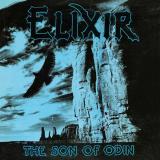
Auch wenn die NWOBHM zum Zeitpunkt der Veröffentlichung von Elixirs »The Son Of Odin«, im Juli 1986, bereits Geschichte war, zählt das Album zu den besten Alben der Bewegung. Mit einer neuen Fassung ihrer hoch gelobten Single ‘Treachery (Ride Like The Wind)’, viele Jahre nach der ursprünglichen 7“, wurde »The Son Of Odin« vom englischen Terrorizer-Magazin als eines der Top 20 Power-Metal-Alben gekürt, während es das Sweden Rock im April 2010 als „Album-Klassiker des Monats“ auswählte. Elixir starteten 1983 in London. Die fünf Musiker nannten seinerzeit das erste Album von MSG sowie »British Steel« von Judas Priest sowie neuere Bands wie Mercyful Fate und Queensryche als ihre Haupteinflüsse. 1985 erschien die Debüt-Single ‘Treachery (Ride Like The Wind)’, die im Kerrang! von keinem Geringeren als Ronnie James Dio in einem Gastbeitrag abgesegnet wurde, was die Band anspornte, ihr erstes Album in Angriff zu nehmen. Das Resultat war »The Son Of Odin«, aufgenommen im Januar 1986 im The Lodge Studio von The Enid und sechs Monate später abgemischt. Nahezu überall folgten überschwängliche Kritiken, nicht zuletzt im Metal Forces, wo Dave Constable zu Protokoll gab: „Eine selbstfinanzierte LP, die so manche Veröffentlichung eines Major-Labels in den Schatten stellt.“ Constable resümierte: „Ich höre mir lieber »The Son Of Odin« an, als die hundertste Version von »Turbo« oder »Somewhere In Time«.“ Die 40th Anniversary Edition dieses unsterblichen NWOBHM-Klassikers beinhalt zusätzlich zum regulären Album die vollständige Session, von der die ‘Treachery (Ride Like The Wind)’-Single stammt, genauso wie das vorangegangene Demo und die BBC Friday Rock Show Session. Zudem erzählen aktuelle Interviews mit Gitarrist Phil Denton und Manager Seymour Mincer erzählen die Geschichte des Albums.
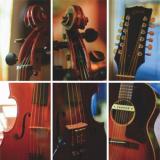
Debut by a new string trio of Pelt and Elkhorn veterans with the wild card contributions of Kaily Schenker, creating a new variant of supremely pleasing acoustic-psychedelic-drone-Americana etc. “Lullaby>Summer Field” is an aptly named gentle rise, with Sheppard’s fingerpicked 12 string snaking through waves of elongated fiddle and cello. “Triode>Freedom” follows a darker minor-key ostinato with Gangloff’s keening melody over the top. “Freedom>Universal Blues” starts as a dirge and builds to a transition into the traditional “The Squirrel is a Pretty Thing,” with Kaily Schenker’s droning harmonium and vocal delivering a riveting, epic version of what’s usually cast as a short “kids”/folk-tale song (e.g. Peggy Seeger’s version). Originally this album was released by the band in an instantly sold-out edition of 100 for sale at their shows. This updated version includes a new insert by Kaily, a new cut by John Golden and a thick pressing from Smashed in Chicago.
Hidden away amidst the bustle of Rio de Janeiro’s Catete neighbourhood is a small alleyway behind a cast iron gate. At its end is Bairro Saavedra, the courtyard surrounded by Neo-colonial houses where Brazilian guitar virtuoso Fabiano do Nascimento spent much of his childhood. Built in 1928, this secluded neighbourhood with its wooden shutters, tiled floors and tranquil benches, provides the inspiration for the title of Do Nascimento’s new album VILA, a collaborative project with a sixteen piece orchestra led by trombonist and arranger Vittor Santos.
Recorded between Rio de Janeiro and Los Angeles, VILA is grand, tender, warm, playful and nostalgic. On this stunningly ambitious work, the delicate compositions led by Nascimento's guitar, which sits central in the mix, are surrounded by Santos’ breathtaking orchestral arrangements which swirl in all directions: complimenting, questioning, responding; in constant conversation.
Like the eclecticism of the architecture Do Nascimento grew up surrounded by, his music straddles many worlds at once. He is known as a Brazilian acoustic guitar master and as such has collaborated with Arthur Verocai, Airto Moreira and Itibere Zwarg. But equally at home in Los Angeles's jazz and experimental music scenes, Do Nascimento is also known for his work with artists like Sam Gendel and Carlos Nino.
Vittor Santos is an arranger and Trombonist who has worked extensively with many of the greats of Brazilian music, including João Donato, Marcos Valle, Toninho Horta, and Elza Soares.
=====================================
Credits:
Fabiano do Nascimento – 6, 7 and soprano guitars.
All orchestral arrangements and production by Vitor Santos.
Recorded at Electro-Sound studio, Los Angeles and Estúdio Fibra, Rio de Janeiro
Engineered by Jason Hiller and Garbiel Lucchini
Mastered by Mike Bozzi
Oboe – Francisco Gonçalves
Contrabaixo – Rodrigo Villa
Drums – Márcio Bahia
Violino - Ricardo Amado
Violino – Thiago Teixeira
Violin – Daniel Albuquerque
Violin – Márcio Sanches
Viola – Ivan Zandonade
Viola – Dhyan Toffolo
Cello - Hugo Pilger
Cello – Janaína Salles
Double Bass – Rômulo Gomes
Clarinet – José Batista
French Horn – Philip Doyle
Trombones - Vittor Santos
Violin – Daniel Guedes
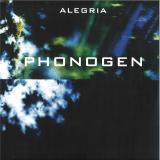
For their fourth release, Slush turns back the clock to a cult classic - Phonogen, the groundbreaking debut album from German DJ and producer, Alegria. First issued in 2002, Phonogen captures the raw emotion of dancefloors around the turn of the millennium, fusing driving basslines with infectious grooves to evoke the era’s radiant energy. Now, over two decades later, it’s reborn for a new generation, newly remastered and complete with a refreshed sleeve design and insert.
In an engrossing lattice of polyrhythmic beat science and deep atmospheric meditation, Samurai Music is thrilled to welcome Marco Shuttle to the fold for the Sumud EP.
Since his early years locked into the 00s London techno scene, Marco Sartorelli has developed as an artist entirely on his own terms. Through the rush of new ideas and cross-pollination that has characterised cutting-edge techno over the past 20-odd years, Sartorelli has travelled as Marco Shuttle from one considered stylistic concept to the next. On his own Eerie label and across expansive releases for respected outposts such as Spazio Disponibile, Incensio and Astral Industries, he's taken an exploratory approach to rhythm and spatial design while always drawing on intentional thematic frameworks, creating distinctive and immersive dance music in the process.
As Samurai Music continues to celebrate the rich seams of inspiration where deep techno and drum & bass intersect, Sartorelli's malleable, mysterious strain of drum work fits right in and sets a captivating tone for the label's operations in 2026. 'Sumud' is a steely drum mantra dealing in fractured patterns with the primal patina of the early Artificial Intelligence era, while 'Las Dunas de Taroa' leans on gently pulsing melancholia undulating at a half-time pace. 'Iso 50' taps into raw, analogue minimalism once more, evoking the sound of Roman Flugel's Ro70 records in their icy, alien formation. Completing the set, we're guided towards the tense electronica of 'Polylayering What I've Got', where uneasy melodic chimes interlock with intricately programmed drum machines.
There's a distinct sense of golden-era, mid-90s electronica coursing through Sumud EP, but Sartorelli shrouds the classic tools at his disposal in his subtle signature atmospherics, pushing towards a plain of expression that transcends time.
Synthpop, minimal wave, post-punk, goth, new romantic - fans and critics alike have dug deeply into their vintage thesauruses to describe the beguiling work of Nation of Language. And if you can't precisely define the band, that's the point. Frontman Ian Richard Devaney has become prodigious in expanding what synthesizer-driven music can evoke, such that his output is as much an extrasensory journey as it is an all-too-human destination. With that experience in mind, he wrote the band's fourth album - the spectral, spacious Dance Called Memory - in the most humble of ways: chipping away at melancholia by sitting around and strumming his guitar. Nation of Language's first two albums, Introduction, Presence (2020), and A Way Forward (2021), came as pandemic godsends: gorgeous, relatable soundtracks to our collective doldrums. But it was their last LP, Strange Disciple (2023), that catapulted the group from cultural standouts to critical darlings, with the album being named Rough Trade's Album of the Year. With that release, Pitchfork wrote that the band "are learning what it means to get bigger and better." This is Devaney's calling: soulfully translating individual despair into a comforting, collective mourning. The single "Now That You're Gone," which radiates and reverberates with a devastating wistfulness, was inspired by witnessing his godfather's tragic death from ALS, and his parents' role as caretakers for this ailing friend. At its heart, the song is a reflection of how friends can be there for each other, and also highlights a theme throughout the record: the pain and lost promise of friendships that fall apart. On Dance Called Memory, the band once again collaborated with friend and Strange Disciple producer Nick Millhiser (LCD Soundsystem, Holy Ghost!). "What's so great about Nick is his ability to make us feel like we don't need to do what might be expected of us," says synth player Aidan Noell, who, along with bassist Alex MacKay, rounds out the Nation of Language lineup. They imbued Dance Called Memory with a shifted palette - sampling chopped-up drum breaks on "I'm Not Ready for the Change" for a touch of Loveless-era My Bloody Valentine or smashing all of the percussion of "In Another Life" through a synthesizer to cast a shade of early-2000s electronic music. Ultimately, the hope was to weave raw vulnerability and humanity into a synth-heavy album. "There is a dichotomy between the Kraftwerk school of thought and the Brian Eno school of thought, each of which I've been drawn to at different points. I've read about how Kraftwerk wanted to remove all the humanity from their music, but Eno often spoke about wanting to make synthesized music that felt distinctly human," Devaney says. "As much as Kraftwerk is a sonically foundational influence, with this record I leaned much more towards the Eno school of thought. In this era quickly being defined by the rise of AI supplanting human creators I'm focusing more on the human condition, and I need the underlying music to support that_ Instead of hopelessness, I want to leave the listener with a feeling of us really seeing one another, that our individual struggles can actually unite us in empathy."