Suche:chich

Styles
Alle
Gio Chamba - Tropidelicos LP
  • 1: ?Chicha Tu Madre!
  • 2: Solecito
  • 3: Psychedelicacy
  • 4: La Danza De Los Mirlos
  • 5: Guayaba Sunset
  • 6: Turbo Cumbia
  • 7: Mezcal Mami
  • 7: Viper

Tropidelicos is the electrifying new album from Houston/Denver powerhouse duo Gio Chamba, a kaleidoscopic fusion of cumbia, psych-funk, and global bass. Fueled by hypnotic percussion and cosmic guitar lines , the record embodies the next wave of Latin futurism — rooted in tradition yet exploding into vibrant, genre-defying sound.
Pressed on limited-edition 1×LP “Mango Viper Swirl” colored vinyl, Tropidelicos captures the radiant heat and joy of Gio Chamba’s live energy—music made for movement, community, and spiritual release. From sweaty dance floors to desert sunsets, every groove invites you deeper into the tropidelic revolution.

vorbestellen24.04.2026

erscheint voraussichtlich am 24.04.2026

31,05
OF TROPIQUE - Looking For My Foot Foot LP
  • A1: Tiempo (Feat. Miramar)
  • A2: Golden Beauty (Feat. Nishioka Diddley)
  • A3: Flux Tide (Feat. Joshua Camp)
  • A4: Sunday Sunny Silver River (Feat. Hiroyuki Nagakubo)
  • A5: Nocky Nock (Feat. Rockin’ Enocky)
  • A6: Joy Joy (Feat. Moe)
  • B1: Theme Of Kitaro Okuwa (Feat. Minori Izumi And Samut Nobe)
  • B2: Fishcake And Fortune (Feat. Koji Yagihashi)
  • B3: Totem
  • B4: Cheech Is Dead (Feat. Wada Mambo)
  • B5: Gerry In The Desert (Feat. Kazuma Koseki)
  • B6: Forever Night Shade Mary

The borderless, tropical band “of Tropique,” whose core sound blends funk and rock-infused exotica, releases a 12-track full-length album on vinyl LP!!
This work maximizes their core lineup as a guitar-less trio, featuring a diverse array of 14 guest musicians to construct a rich sonic landscape.
This landmark release in the history of domestic exotica and tropical music features Mutsumi Kobayashi of the Minyo Crusaders, Rockin' Enocky of Jackie
& The Cedrics, to global talents like Joshua Camp of CHICHA LIBRE and MIRAMAR, the standard-bearer of US new wave Latin bands, and more!
It's a masterpiece that delivers the full thrill, excitement, and pleasure of encountering unknown music.

vorbestellen22.05.2026

erscheint voraussichtlich am 22.05.2026

42,82
Ezéchiel Pailhès - SOL (LP)
  • A1: C’est Loin
  • A2: Là Où Tu Veux (Deixa A Gira Girá)
  • A3: Pas Tant De D'chichi Ponpon
  • A4: Assez
  • A5: Le Soleil En Haut
  • A6: Tout L’or
  • B1: Désillusion
  • B2: Attends-Moi
  • B3: O Sapo
  • B4: Horssaison
  • B5: Presque Rien
  • B6: Vou Festejar
 
1

For his sixth solo album, Ezéchiel Pailhès returns with a new collection of songs infused by a sunny wandering spirit.
Within each of the twelve songs on SOL is a thread of melancholic happiness that has permeated much of Pailhès’ music and songwriting. He addresses love, the passing of time, hope, lost illusions, fleeting moments of grace, the temptation of forgetting, a need to escape, and desire. All this is
insulated by understated orchestrations that blend acoustic and electronic instrumentation with deft confidence.
The Portuguese and Brazilian concept of saudade—a form of melancholic longing and nostalgia— pervades, thanks in part to Pailhès decision to record the album in Rio de Janiero and to reinterpret some of the finest works of Música Popular Brasileira (MPB). In particular, he revisits a handful of
lesser known classics from the mid-century samba and bossa nova era—originally written or performed by talents including Vinícius de Moraes, João Gilberto, Tom Zé, Dorival Caymmi, João Donato, Os Tincoãs, and Ataulfo Alves.
The shift from Brazilian Portuguese to French and the decision to adapt rather than perform a straightforward cover versions, allows Pailhès to invent a form of prosody and euphony (the musicality and harmonious combination of words) that feels vibrant and unlike anything else in today’s French
chanson landscape.
“Some lyrics are simple translations from Portuguese, in what I’d call an expanded version. For others, I started from a single word or a single phrase and embroidered an entirely new text that carried me elsewhere,” explains Pailhès. “I allowed myself great interpretive freedom, while preserving the humanist dimension of the original songs. I’ve always been deeply moved by the way Brazilians transfigure reality through heightened emotion. I love this visceral and spontaneous country, which always seems to live through emotion. And above all, I love its music both popular and unifying,
bringing together all social classes. In that sense, it’s very political music, but even more so utopian, made by the people and for the people.”
On this new album, however, the French artist was keen to avoid cliché. Each song is therefore built around a carefully balanced interplay between Pailhès’ piano and synthesizers, alongside restrained arrangements of percussion, brass, bass, and cavaquinho (a small four-string plucked guitar). These parts were recorded in Rio de Janeiro with two musicians who regularly perform alongside the legendary Caetano Veloso—Kainã Do Jêje and Alberto Continentino—joined by Thomas Harres, Antônio Neves, Eduardo Neves, and Gabriel Loddo.
Since the 1960s, France and Brazil have shared a long-standing cultural and musical relationship. Some Brazilian artists, most famously Gilberto Gil, took refuge in France during the dictatorship years (1964–1985). But above all, French chanson quickly fell in love with the richness and ingenuity of
bossa nova and samba, translating and reinventing them in the language of Molière. Throughout the 1960s and 1970s, albums and hits by Henri Salvador, Georges Moustaki, Pierre Barouh, Pierre Vassiliu, and Claude Nougaro all drew from the MPB repertoire.
Fifty years later, with SOL, Ezéchiel Pailhès reinvents this rich Franco-Brazilian musical legacy, bringing to it a personality and modernity that stand confidently alongside those of his forbears.

vorbestellen12.06.2026

erscheint voraussichtlich am 12.06.2026

21,81
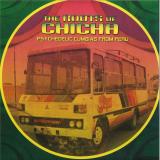
The Roots of Chicha - Psychedelic Cumbias from Peru 2x12"
 
23

The Roots of Chicha, compiled by Barbès Records, was originally released in 2007 and became the first recording to popularize psychedelic cumbia around the world.

From the late 60's through the 80's, Peruvians invented a new popular musical hybrid inspired by music from the Americas. In 1968, Enrique Delgado released his first record on Odeon with his new group, Los Destellos, single-handedly creating Peruvian cumbia. He codified the genre early on by using the electric guitar as the primary melodic instrument, and mixing cumbia rhythms with folkloric huaynos, criollo voicings, Cuban guarachas and guajiras, rock, boogaloo, surf, psychedelia, oriental music, classical music, and bits and pieces from Brazil, France, Chile... All Peruvian cumbia bands for the next thirty years would end up drawing from the exact same sources (Grupo Celeste, Los Mirlos, Juaneco Y Su Combo, Manzanita Y Su Conjunto...).

This new wave of Peruvian cumbia came to be known as chicha. Chicha is originally the name of an alcoholic drink, made of fermented maize, which the Incas were especially fond of. In the past thirty years, however, the word has taken on a pejorative connotation. Peruvian cumbia started being called chicha in the late 70s, around the same time that the music came to be viewed as the expression of the slums – the pueblos jovenes. Little by little, the word became an adjective, and people now talk of chicha culture, chicha press, chicha architecture, even of a chicha president, and none if it – you guessed right – is meant as a compliment. Chicha suggests corruption, shady deals, and cholos – a derogatory term for a person of Andean heritage that, of late, is being reclaimed and worn as a badge of honor by the very cholos it was supposed to demean in the first place.

Auf Lager

Bei uns am Lager und sofort versandfertig

26,01
Imarhan - Essam LP

Imarhan

Essam LP

12inchSLANG50606LP
CITY SLANG
16.01.2026

From the heart of Tamanrasset in South Algeria, Imarhan transcend Tuareg tradition, weaving hypnotic synths into desert blues. The result is a timeless work—deeply respectful of their roots, yet alive with a stirring sense of modernity.

ESSAM is the band’s fourth album, recorded with the same core lineup, but marks a significant shift in their sound and approach. Musically, it marks a departure from the rocky, bluesy, psychedelic Tuareg guitar-driven sound influenced by Tinariwen’s heritage — moving toward something more open, modern, and exploratory.
For the first time, their long-time sound engineer Maxime Kosinetz stepped in as producer. He travelled to Tamanrasset with Emile Papandreou (of the French duo UTO), a multi-instrumentalist who introduced electronic elements by sampling live instruments and reprocessing them in real time with a modular synthesizer — subtly reshaping the band's sonic identity.
The album was recorded mostly live, in one big room at Aboogi Studio — the band’s own rehearsal and recording space in Tamanrasset. The studio, a converted concert hall, has become a kind of cultural hub for the local youth. Friends dropped by during the sessions to contribute handclaps, vocals, and just be part of the energy. It’s a space where people gather, hang out, play dominoes, smoke chicha — a rare communal spot in a city that doesn’t offer many for young people, somewhat like a youth and community center.
This context — the creative shift, the live recording process, the atmosphere around Aboogi — might be interesting threads to explore in the conversation.

Auf Lager

Bei uns am Lager und sofort versandfertig

27,02
Armand Hammer & The Alchemist - Haram

Looking back more than four years later at Haram, it is easier to see the forest for the trees. At the time, much of the attention fell on how this outsider duo would fare under the bright lights- which was fair, Armand Hammer had never done a single producer record before- and here they were working with a living legend. Now, with a little distance, it’s easier to see how Alchemist stepped out of his comfort zone to meet them where they were, and how all three artists then absconded for parts unknown. The flashbulb energy of “Bring The Stars Out”, asymmetric drone of “Chicharrones”, fugue-bounce of “God’s Feet”, and good luck finding analogues for “Peppertree” or “Stonefruit”. Haram doesn’t sound like anything else in the ALC discography, nor in Armand Hammer’s, for that matter. Haram was a one-shot kill that somehow contained some of the most accessible work ELUCID and billy woods had ever done, as well as some of their most experimental, and it all sounded cohesive.
Needless to say, they didn’t do this alone; KAYANA’s golden voice upps the wattage on “Black Sunlight,” while Fielded’s sultry alto gets chopped and screwed on “Aubergine”. Earl Sweatshirt’s cameo on the sun-soaked “Falling Out the Sky” is already a classic. Curly Castro, Amani, and Quelle Chris all turn up the heat when called upon.
But since we are talking about retrospect here, the thing about Haram isn’t that it still sounds as good as it did when it came out. The amazing thing is that it actually sounds even better than it did then. You don’t have to take our word for it either, run it up one time, with the lights low and something on ice, see if it doesn’t take you somewhere new, again.

Auf Lager

Bei uns am Lager und sofort versandfertig

38,87
Dennis Egberth - The Dennis Egberth Dynasty

Respected Swedish drummer and composer Dennis Egberth introduces new sextet in his first album with 577 Records.


"If you love the era in which electronic elements began to enter contemporary jazz, you’ll love what Sweden’s Dennis Egberth has been creating. The esteemed drummer/composer introduces us to his hand-chosen ensemble, The Dennis Egberth Dynasty, in the artist’s first album with 577 Records. The self-titled release highlights his creativity, painting a hypnotic soundscape that soothes the soul.

Experimental wizard Dennis Egberth is known for his distinguished approach to experimental music, free improv, and alternative pop, as well as his fascinating skills in blending cosmic composition and chilled ambient and electronic sounds. He presents floating melodies of irresistible bass lines and long, modal buildups that come alive with exploding lyricism. His new record highlights his compositional roots and was inspired by the evolution of electronics in this genre during the late ‘60s and ‘70s.

Egberth fused his talents with those of Fredrik Ljungkvist on tenor sax and clarinet, Niklas Barnö on trumpet, Alexander Zethson on Wurlitzer, Linus Hillborg on electronics, and double bassist Joe Williamson, forming an unforgettable sextet. Together, they’re more like a thriving ecosystem than anything else. Each member brings critical elements from their dynamic roles in the Swedish and European creative music scene and contributes them to the manifestation of a higher wave of sound unlike any other."

Tenor saxaphone and clarinet by Fredrik Ljungkvist.
Trumpet by Niklas Barnö.
Wurlitzer by Alex Zethson.
Electronics by Linus Hillborg.
Double bass by Joe Williamson.
Drums by Dennis Egberth.

Recorded by Niclas Lindström on December 14, 2023 at Atlantis Studio, Stockholm, Sweden.
Mixed by Anders af Klintberg.
Mastering by Kristofer Göransson.
Cover painting by MiHee Kim Magee.
Graphic design by Mark Smith.
All music by Dennis Egberth.

This record was made with support from the Swedish Arts Council.

Auf Lager

Bei uns am Lager und sofort versandfertig

22,65
Gipsy Power Band - La Quinqui / Llora

'La Quinqui' / 'Llora' is Gipsy Power Band's debut single, where they merge flamenco rumba, rock and funk astonishingly, evoking a unique era of Spanish music.

Formed in Madrid in 2022, Gipsy Power Band was originally conceived to pay live tribute to the music of the Spanish exploitation film genre known as "cine quinqui", performing tracks from those movies and many other foundational songs: hits, some flops and hidden gems released in Spain from the mid-70s to the early 80s. Rock, funk, disco and flamenco rumba productions by Los Chichos, Las Grecas, Los Chunguitos and Los Chorbos, among others.

After two years setting the Madrid stages on fire and making the public dance to this vintage repertoire, the time has come to move to the next level. The band has evolved and now they are releasing their first own songs: a dramatic love story told from two points of view worthy of a period "cine quinqui" movie, the spirit of which inspires the compositions.

Auf Lager

Bei uns am Lager und sofort versandfertig

11,56
La Sonora Mazuren - Magnetismo Anima LP

La Sonora Mazuren is the latest addition to the already rich indie-tropical scene out of Bogotá, Colombia. Deeply rooted in the popular sounds and rhythms of South America, the group draws from cumbia, chicha, guaracha, champeta and other styles mostly from Ecuador, Colombia and Peru.

Far from being folklorists or revivalists, La Sonora Mazuren combines synthesizers and electric guitars with accordion and percussion to create a futuristic style indebted to early pioneers such as Polibio Mayorga or Bogota’s own Eblis Alvarez, of Meridian Brothers fame, who also produced their debut album.

The result is a psychedelic feast reminiscent of the golden years of Tropicalia.

Their first album, Bailando con Extraños, got them many accolades in Europe, in France in particular where the band toured in the fall of 23 and again in the summer of 24.

Their follow up album, Magnetismo Animal, was mostly tracked in rural Normandy, during one of their European tours, and completed in Bogotá. Barbès Records (Roots of Chicha, Chicha Libre, Chico Trujillo) will be releasing it in the fall.

Franz Mesmer and his theory of animal magnetism provide the running theme for their new album. A collection of songs linked by the idea of a shared trance-inducing energy, channeled through rhythms and sound experiments. Musical inspiration for the album come from Colombian gaita, vallenato and cumbia, Peruvian huayno and chicha, Ecuadorian Sanjuanitos - a panoply of Afro-Andean traditions filtered through a futuristic vision of dance music that melds percussion-heavy polyrhythms and psychedelic sounds.

Band members are all active on the new tropical Bogotá scene. Keyboardist and accordionist Ivan Medellin and bassist Nicolas Eckardt are members of cult band Romperayo. Percussionists and singers Giovanna Mogollón and Diana

Sanmiguel are also 2/3 of popular trio LA PERLA.

Auf Lager

Bei uns am Lager und sofort versandfertig

23,49
MARTÍN LOPEZ Y SUS ESTRELLAS - COCINANDO LP

In 1969, singer and police lieutenant Pedro Gregorio López started recording a series of instrumental tracks and songs on the MAG record label in Peru, ranging from guaracha to cumbia, all cooked with musical eclecticism and simmered to appeal to a wide audience. Many of these musical ingredients combined on the 1971 album entitled "Cocinando", in reference to the similarities between Peruvian cooking and tropical music. López began his career as a singer and orchestra conductor many years earlier, when he joined the backing singers for Lucho Macedo's Sonora. After completing his police training, he adopted the stage name Martín López, in order to preserve the anonymity his job required. Between 1969 and 1971 Martín López y sus Estrellas recorded all the tracks comprised on this album, including salsa, guarachas, rumbas, chichas and boleros, proving their knowledge and mastery of the tropical music lexicon. It is not surprising since the orchestra was made up of the most talented label’s session stars: including the double bassist Joe di Roma, singer Pablo Villanueva "Melcochita", percussionists Ñiko Estrada and Coco Lagos, and trumpeter Tito Chicoma. "Cocinando" is an epic historical treasure that captures the explosive impact of the tropical music movement on Peruvian culture.

Auf Lager

Bei uns am Lager und sofort versandfertig

27,69
Hardspace - Hardspace Volume Four LP 2x12”

Arriving on transparent blue vinyl, the fourth installation of Figure’s Hardspace series brings six new re-interpretations of Len Faki’s favorites via his Hardspace alias.

Starting with a true classic, the gem that is Josh Wink’s Sixth Sense picks up on the original’s tight plastic groove and creates some serious low end rumble.
A less obvious choice, Aoki Takamasa’s minimalist dub from Japan, gets a complete makeover in the Hardspace edit, using driving percussion to morph the pensive blueprint into an upbeat peaktime slammer.
One of the most iconic basslines of the last decade, DJ Yoav B’s Energize is a standout on its own but paired with the relentless groove of the high-energy Hardspace remix it unlocks new levels of rave potential.
Huxley’s Weapon 3 was maybe one of the darkest tunes ever released on the otherwise house-centric catalogue of UK label Aus, which Len Faki already played back when it was first released. The Hardspace Mix merges a feeling explosive force with the originals sultry ambiance, catapulting the track back onto today’s dancefloors.
Colourful, dubby synth stabs are what keeps the momentum on peak time roller Funktion by French producer Tuttle, which in its Hardspace version packs even more heat, as Faki employs his signature claps and tunes up the original’s enervating siren sound, squeezing out every last drop of energy.
Originally released in the 90ies, Mike Parker’s Shakuhachi Two is as techno as it gets. Only now sounding even more powerful and dynamic, as the Harspace Mix keeps all of the original goodness while stacking additional propulsive percussion for a sweaty floor workout.

Auf Lager

Bei uns am Lager und sofort versandfertig

25,00
Various - CHV002

Various

CHV002

12inchCHV002
Chichi Music
26.04.2023

Chichi Music is proud and happy to present second wax joining four different styles of music coming across the dancefloor. ChV002

includes (in alphabetical order) tracks from Arturo Gioia, Enzo Leep aka Giralda, Lukea and Miguel Seabra.

This vinyl represents a journey from minimal music through break-beat to finally rominimal!

Auf Lager

Bei uns am Lager und sofort versandfertig

10,71
Various - Tchic Tchic: French Bossa Nova 1963-1974  Colored Edition LP 2x12"
  • A1: Les Masques - Il Faut Tenir (1969)
  • A2: Isabelle Aubret - Casa Forte (1971)
  • A3: Christianne Legrand - Hlm Et Ciné Roman (1972)
  • A4: Jean Constantin - Pas Tant D'chichi Ponpon (1972)
  • A5: Billy Nencioli & Baden Powell - Si Rien Ne Va (1969)
  • B1-: Marpessa Dawn - Le Petit Cuica (1963)
  • B2: Jean-Pierre Sabar - Vai Vai (1974)
  • B3: Sophia Loren - De Jour En Jour (1963)
  • B4: Isabelle - Jusqu’à La Tombée Du Jour (1969)
  • B5: Sylvia Fels - Corto Maltesse (1974)
  • C1: Frank Gérard - Comme Une Samba (1972)
  • C2: Ann Sorel - La Poupée Des Favellas (1971)
  • C3: Charles Level - Un Enfant Café Au Lait (1971)
  • C4: Andrea Parisy - Les Mains Qui Font Du Bien (1970)
  • C5: Audrey Arno - Quand Jean-Paul Rentrera (1969)
  • C6: Aldo Frank - T’as Vu Ce Printemps (1970)
  • D1: Christianne Legrand - Cent Mille Poissons Dans Ton Filet (1972)
  • D2: Clarinha - Lemenja (1970)
  • D3: Hit Parade Des Enfants - Aquarela (1976)
  • D4: Jean-Pierre Lang - Tendresse (1965)
  • D5: Magalie Noël - Une Énorme Samba (1970)
  • D6: Françoise Legrand - La Lune

Ever since the late 1950s bossa-nova revolution, Brazil’s influence on French music has been undeniable. Pierre Barouh, Georges Moustaki and a vast array of lesser known artists, all made the Musica Popular Brasileira (MPB) an axis of promotion at the service of a cool and metaphysical, modern and mixed Brazilian lifestyle. Some were seduced by the poetic languors of the bossa, some were looking for fun, and others just loved the American hybridization of jazz-bossa, jazz-samba.


What is bossa nova? One of its creators, Joao Gilberto said: "Its style, cadence, everything is samba. At the very start, we didn't call it bossa nova, we sang a little samba made up of a single note - Samba de uma nota so .... The discussion around the origins of bossa nova is therefore useless”. It is nevertheless useful to remember that these magnificent Brazilian songs, which the guitarist describes as samba, were shifted and balanced around improbable chords. "I like things that lean, the in-betweens that limp with grace," said Pierre Barrouh, quoting Jean Cocteau.


With emotion, arrangements for violin and supple guitar licks, bossa nova rapidly changed. A transformation that can be heard in the Tchic, tchic, French Bossa Nova 1963-1974 compilation, the result of a cultural reappropriation, which traveled through the United States and supplemented itself in France.

A musical revolution that has remained significant, bossa nova was born in Rio. From 1956 to 1961, Brazil lived through its golden years. In five years, the country had invented its modernist style. Elected president in 1956, Juscelino Kubitschek de Oliveira, an elegant man with a broad forehead, brandished a promising slogan: "Fifty years of progress in five years". He quickly got to work. Not worried about increasing debt, he launched the project for a new federal capital, Brasilia, designed by the communist architect Oscar Niemeyer. Volkswagen opened state-of-the-art factories and created the “fusquinha”, the Beetle. In Rio, the Vespa made its first appearance. The Arpoador Surf Club crew run into the “girl” from Ipanema, Helô Pinheiro - the tanned garota ("chick"), between a flower and mermaid, who at 17 walked by the Veloso bar, where the fiery author and composer, Tom Jobim and Vinicius de Moraes, were getting drunk on whiskey. From then on, bossa symbolized cool.

In 1958, Joao Gilberto recorded Chega de Saudade, which the directors of Philips denied, calling it "music for fagots". The marketing director, who believed in it, secretly pressed 3000 78-inch vinyls and distributed them at schools around Rio, creating a tidal wave.

American jazzmen then took over. In particular, trumpeter Dizzy Gillespie and guitarist Charlie Byrd. In November 1962, the Brazilian Ministry of Foreign Affairs funded a "Bossa-Nova" concert at Carnegie Hall in New York, inviting the genre’s pioneers. Unprepared, the show soon turned to disaster. But the troupe was invited to the White House by Jackie Kennedy. The first lady loved "the new beat" and in particular Maria Ninguem, a song by Carlos Lyra, later covered by Brigitte Bardot.

In Brazil, the 1964 military coup quickly ended this euphoria. The destructive atmosphere that ensued pushed many Brazilian musicians to leave, if not to exile. Thus, Tom Jobim, Sergio Mendes and Joao Gilberto arrived to the United States. In New York, Joao Gilberto met saxophonist Stan Getz. At the time, he was married to the Bahianese Astrud Weinert Gilberto, who had a German father. She had never sung before, but she knew how to speak English. Getz therefore asked her to replace her husband on The Girl From Ipanema. The Getz/Gilberto record with Tom Jobim on piano, was released in March 1964. Phil Ramone, the "pope of pop" was in charge of sound.

Bossa nova arrived in Paris through the classic “guitar-voice” channel (Pierre Barouh, Baden Powell, Moustaki…) But France loved jazz and Paris had already welcomed its American contributors. All these good people were to pass through Saint-Germain-des-Prés. The cabaret l'Escale became the Mecca of Latin American sound where one could find Pierre Barrouh and his friends, such as the Camara Trio, samba-jazz aces, whose only record was published by the Saravah label. With a band strangely called Les Masques (a band that included Nicole Croisille and Pierre Vassiliu, among others), the Camara Trio recorded an interesting Brazilian Sound, including the track Il faut tenir which is present on this tasty compilation of rarities.

Other enlightened musicians can also be found on the compilation, such as Jean-Pierre Sabar (songwriter for Hardy, Auffray, Leforestier ...) and the French pop rock organist Balthazar. In 1975, Sabar recorded Aurinkoinen Musiikkimatka on a Finnish label, which featured the crazy Vai, Vai, included on this record. We are now following the footsteps of Brazilian electronic musicians such as Sergio Mendes, Eumir Deodato or Marcos Valle who created funk and disco sounds on their keyboards and synthesizers. A style that influenced Véronique Sanson when she wrote Jusqu’à la Tombée de la nuit in 1969 for Isabelle de Funès, the niece of Louis and a great friend of Michel Berger - Sanson did end up singing this track on her 1992 Sans Regret record.


The pinnacle of exoticism and travel, Sylvia Fels’ Corto Maltese includes bongos, sea mist and ocean sounds. The title was taken from Jacky Chalard’s concept album written in 1974, Je suis vivant, mais j’ai peur (I am alive, but I am scared), based on Gilbert Deflez’s science fiction novel.


However, bossa nova extended the scope of popularity. "In the 1970s, I was a fan of Sergio Mendes, Getz / Gilberto. I fell in love with this music that I knew because I had been an orchestral singer, " explained Isabelle Aubret, who in 1971 delivered a composite record of covers by the very funky Jorge Ben, Orfeu Negro, Tom Jobim, Vinicius de Morais and Jean Ferrat. "I recorded this album for Meys Records in Paris, far from Brazil, with wonderful musicians, François Raubert, Roland Vincent, Alain Goraguer...". The latter wrote the arrangements for Casa Forte, a very percussive title borrowed from Edu Lobo, one of the initiators of the bossa who spent time in California. "Jazz and bossa came together and produced very rhythmic music. I love singing, it allows me to dream, to have fun, to feel a high on stage, and these songs brought me joy, made me swing, my singing felt like a dance.”


The world tours of French singers and their desire for the tropics, often brought them to Rio with its hills, forests, caipirinhas and tanned bodies. There are surprises though, like this Iemenja (Iemenja is the goddess of the sea in the Afro-Brazilian candomblé religion). Not unlike the composer and musician Jean-Pierre Lang, based in Sao Paulo, Claire Chevalier taught Brazil to Brazil. In 1970, the singer and painter published a 45-inch vinyl, Mon mari et mes amants (My husband and my lovers), under the improbable pseudonym of Clarinha (little Claire). She was then living in Rio, with her husband, Joël Leibovitz, who founded a band called Azimuth, and who owned a record label specialized in "sambas enredos" songs for samba school parades.


For its B side, she asked Pierre Perret to come up with lyrics for a song composed by Carlos Imperial: "Oh goddess of the sea, o goddess Iemenja, I bring a white rose to adorn your long hair ..." . "Perret came to see us, and we had fun, remembers Joël Leibovitz. We wrote Lemenja for fun, we recorded it at the Havaí studio, behind the Central do Brasil the central station. Erlon Chaves, the arranger who worked with Elis Regina, joined us" adding his share of Afro-Brazilian percussions and funky brass to the mix.

There is a common misunderstanding in Franco-Brazilian history: that bossa, admittedly hedonistic, is perceived as funny, even though the poets who wrote the texts are often philosophizing on the human condition. Its French interpreters pull it towards a carnival inspired universe, far removed from its fundamental essence. Thus, Jean Constantin covered the famous Samba da minha terra, an ode to the art of samba written by the classic Bahian composer Dorival Caymmi, renaming it with the enticing title of Pas tant de tchi tchi pompon: "On your pier there is no tchi tchi / when you arch your back, you know everything is alright ”(lyrics by Gérard Calvi). This expedited bossa aims for the absurd, but retains a certain elegance.

Indeed, Jean Constantin was not an idiot, the rather large man had a huge mustache and liked fantasy, (Les pantoufles à papa, Le pacha, inspired by cha-cha-cha-cha, salsa and jazz) but he was also the lyricist of Mon manège à moi interpreted by Edith Piaf, the composer of Mon Truc en plume by Zizi Jeanmaire and the soundtrack of François Truffaut’s 400 Blows. Le Poulpe, published in 1970, from which this bossa is extract, was arranged by Jean-Claude Vannier, an accomplice of Serge Gainsbourg’s Melody Nelson. In short: "There is enough of samba / By looking at the parasol / Because my poor cabeza / Is going to die in the sun".

Even the American actress Marpessa Down, who was at the heart of the bossa nova revolution with her role as Euridyce in Marcel Camus’ film Orfeu Negro, winner of the 1959 Cannes Palme d'or, fed the clichée with Je voudrais parler au petit cuica - "Tell me how you manage to always make people want to dance / It's true, I must admit that I cannot resist your magic" - in consequence, once can hear the cuica, a little drum inherited from the Bantu.


But bossa nova had many angles. Societal, of course, pushing actresses who were symbols of women's liberation like Brigitte Bardot, Jeanne Moreau, or Sophia Loren to engage in the exercise of accelerated bossa. In February of 1963, Sophia Loren made a record in French in Rome, Je ne t'aime plus, featuring the song De jour en jour, a bossa written by two Italians, Armando Trovajoli and Tino Fornai, which was released a little later by Barclay. Bossa accompanied the 1960s, a decade of moral liberation. Ann Sorel, who interpreted La Poupée des favellas, caused a sensation with L’amour à plusieurs, a provocative song written by Frédéric Bottom and Jean-Claude Vannier. As for the actress Andrea Parisy, she displayed her bourgeois cheekiness in Marcel Carné's Les Tricheurs before interpreting Les mains qui font du bien. And Magalie Noël, the friend of Boris Vian, who sung Johnny fais-moi mal, was hired to sing Une énorme Samba, composed by Alain Goraguer (arranger to Gainsbourg, Bobby Lapointe and Jean Ferrat) with lyrics by Frédéric Botton.

But in the end, of what wood is bossa nova made of? The answer is given by Christianne Legrand, daughter of Raymond the conductor, and sister to Michel the composer: "With me, with jà" - jà means "immediately" in Portuguese. In 1972, the singer, an expert in vocal jazz and a member of the Double Six, published Le Brésil de Christianne Legrand. Two songs included on the Tchic Tchic compilation that demonstrate how bossa, jazz, funk, rock, etc. work like a swiss army knife: the music is used to denounce broken systems, or miracles, HLM et ciné roman, Cent mille poissons dans ton filet, two songs from the O Cafona soundtrack, a successful telenovela broadcast, at the time in black and white, on TV Globo. The first was adapted in French by the fighter and friend of the Legrand tribe, Agnès Varda. The second is content with a play on words, jostling them into a summer fun.


Véronique Mortaigne

vorbestellen17.04.2026

erscheint voraussichtlich am 17.04.2026

27,31
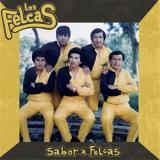
LOS FELCAS - SABOR A FELCAS

LOS FELCAS

SABOR A FELCAS

12inchVAMPI348
Vampisoul
17.04.2026
  • 1: Un Go Go Para Ti
  • 2: Dame Un Besito
  • 3: El Son De Los Ros
  • 4: El Ayayero
  • 5: Tu Bello Cuerpo
  • 6: La Cuzqueñita
  • 7: Santa Rosa De Lima
  • 8: El Leoncito
  • 9: Sabor A Felca
  • 10: La Maconita
  • 11: Duérmete Mi Niña
  • 12: La Chusquita
  • 13: Manzanita Coloradita
  • 14: Mi Per

Los Felcas were one of the best bands to come out of Peru during the golden years of the cumbia and tropical sounds explosion. This compilation brings together their finest recordings, taking from albums and obscure 45s, blending a wide range of influences-from psychedelic vibes to rhythms closer to guaracha and chicha-and now being reissued for the first time. In Lima, founding member, guitarist Florentino "Tino" León, quickly joined the Peruvian cumbia tropical movement led by electric guitarists Enrique Delgado (Los Destellos) and Berardo Hernández "Manzanita". This new style was soon practiced by other groups from Lima, such as Los Ecos, Los Beta 5, Los Diablos Rojos, and, a bit later, by bands from the rest of the country. This movement became a massive phenomenon. Nelson Ferreyra and the multifaceted singer Pablo Villanueva Branda "Melcochita", who had become fans, introduced them to the MAG record label. In mid-1973, they recorded their first 45 RPM singles, with 'Sabor a Felcas' being their most popular release. They recorded several albums during the late 70s and 80s, mostly on MAG: "La Blanquiñosa", "Tu bello cuerpo", "La cusqueñita" y "Manzanita coloradita". In the early 1990s, chicha music became popular in Argentina, especially in the north, where 'Boquita perfumada' by Los Felcas was a hit.

vorbestellen17.04.2026

erscheint voraussichtlich am 17.04.2026

22,27
Los Chicanos - Caballo Salvaje / Cumbia de la Noche
  • A1: Caballo Salvaje
  • B1: Cumbia De La Noche

From the windswept streets of Edinburgh comes a sound that gallops wild through the night — equal parts jungle heat and Highland haze. Los Chichanos, a fiercely multicultural collective formed in 2021 under the spirited direction of guitarist Sandino Borges. Never ones to wait for an invitation, the band have carved out a scene of their own in Edinburgh, a home for tropical rhythm and nocturnal joy amid Scotland’s long dark nights. Their devotion to the electrifying pulse of Peruvian tropical music, cumbia and chicha, intertwined with Afro-Latin rhythms and vintage psychedelia runs deep.
Add the soul Cuban son, the swing of Brazilian grooves and a hint of spaghetti western melodrama, and you begin to hear the distinct voice of Los Chichanos. Caballo Salvaje gallops forward with fuzzed- out guitar, echo-drenched organ, and the untamed spirit of the Andes. Cumbia de la Noche was written during a harsh winter season when daylight became a distant memory.

vorbestellen13.03.2026

erscheint voraussichtlich am 13.03.2026

12,56
ANGEL Y SU CONJUNTO VASQUEZ - LA GUSTADERA
  • Sabalo Caliente
  • Marucha
  • La Gustadera
  • Fiestas Cordobesas
  • Los Sampayos
  • Chicha Sabrosa
  • Chambac
  • Pantaln Caliente
  • El Mosquito
  • El Da Que Te Vi
  • Recuerdo Al Viento
  • Se Atropella El Castellano

First time reissue of this mega rare album by Angel Vásquez, versatile Colombian accordion master of Antillean shades, that comprises a muscular, rhythm-packed ride moving from pachanga to paseaito, passing through charanga, porro, son and cumbia. Here, direct lines are drawn between Colombian coastal folklore and Afro-Antillean sound. A must-have release! Angel Vásquez brought Antillean shades into the accordion tradition of a region overflowing with juglares, as the Colombian northern coast has always been. Vásquez built a monumental songbook where pachanga, charanga, son, cumbia, and even the Puerto Rican countryside, Boricua sound, played leading roles. His few recordings carried a remarkable stylistic range, making it difficult to put him into any single category-a quality that led to a style he himself called vasquesón. In the early seventies, he released through Discos Fuentes a single that would become one of the anthems of the Barranquilla Carnival: 'Pica pica en carnaval', a tropical, electrifying gem with a guarachero flow so unmistakable that it's still a staple in verbenas, neighborhood dances, and picó parties today.

vorbestellen20.02.2026

erscheint voraussichtlich am 20.02.2026

22,27
Imarhan - Essam LP

Imarhan

Essam LP

12inchSLANG50606X
CITY SLANG
13.02.2026

From the heart of Tamanrasset in South Algeria, Imarhan transcend Tuareg tradition, weaving hypnotic synths into desert blues. The result is a timeless work—deeply respectful of their roots, yet alive with a stirring sense of modernity.

ESSAM is the band’s fourth album, recorded with the same core lineup, but marks a significant shift in their sound and approach. Musically, it marks a departure from the rocky, bluesy, psychedelic Tuareg guitar-driven sound influenced by Tinariwen’s heritage — moving toward something more open, modern, and exploratory.
For the first time, their long-time sound engineer Maxime Kosinetz stepped in as producer. He travelled to Tamanrasset with Emile Papandreou (of the French duo UTO), a multi-instrumentalist who introduced electronic elements by sampling live instruments and reprocessing them in real time with a modular synthesizer — subtly reshaping the band's sonic identity.
The album was recorded mostly live, in one big room at Aboogi Studio — the band’s own rehearsal and recording space in Tamanrasset. The studio, a converted concert hall, has become a kind of cultural hub for the local youth. Friends dropped by during the sessions to contribute handclaps, vocals, and just be part of the energy. It’s a space where people gather, hang out, play dominoes, smoke chicha — a rare communal spot in a city that doesn’t offer many for young people, somewhat like a youth and community center.
This context — the creative shift, the live recording process, the atmosphere around Aboogi — might be interesting threads to explore in the conversation.

vorbestellen13.02.2026

erscheint voraussichtlich am 13.02.2026

27,02
Debit - Desaceleradas

Debit

Desaceleradas

12inchLOVE141
Modern Love
26.01.2026

A chopped-and-screwed love letter to the sounds of rebajada – half-speed cumbia, pioneered by Sonido Dueñez in the 1990s, and born from an overheated turntable motor that didn’t make the crowd stop dancing. With Debit’s treatment, rebajada becomes an ethereal, at times intense ambient tapestry that’s also a history lesson.

Spend any amount of time pacing the streets of Monterrey, the bustling city in the north of Mexico where Delia Beatriz, aka Debit, grew up, and you’ll be sure to catch traces of cumbia echoing from Bluetooth speakers, DIY soundsystems, or car stereos. An Afro-Latin dance form and »practica cultural« originating in Colombia in the early 19th century, cumbia evolved rapidly in the early 1900s, as a localised sound played on drums and flutes quickly modernised to integrate European instrumentation like the accordion. When it reached Mexico in the 1940s, the sound shifted again, fusing with mariachi styles and integrating further vallenato folk elements. Eventually, cumbia spread across the entirety of Latin America, splintering into a spectrum of different musical styles such as chicha in Peru, and cumbia villera in Argentina. And over in Monterrey, cumbia inadvertently found its own idiosyncratic groove.

From the 1950s to the 1970s, waves of immigrants from across Mexico and Latin America headed to Monterrey to find work, making a home in Colonia Independencia. Colombian cumbia records, shipped in from Mexico City, Houston, and Miami, became the soundtrack of the neighbourhood, relaying familiar stories to a rural working class adjusting to their new industrial reality. The sound struck a chord with locals, and huge street parties hosted by ramshackle soundsystems known as sonideros unified the diverse community. So when cumbia rebajada materialised serendipitously in the 1990s, it emphasised and highlighted the memory distortions at the heart of the immigrant experience. Local record collector, selector, and sonidero Gabriel Dueñez had been playing cumbia for hours one night when disaster struck: his turntable’s motor overheated and slowed down, turning the music into a warped groan, with half-speed voices echoing over wobbly accordion drones and splashy drums. But the crowd kept dancing, and Sonido Dueñez realised he’d struck gold – cumbia rebajada was born.

Over the next few years, he dubbed a popular series of mixtapes, hawking them at the flea market on the dried-up Santa Catarina riverbed beneath El Puente del Papa, the bridge that links downtown Monterrey with Independencia. These woozy archives became the stuff of legend, poetically but subconsciously shadowing DJ Screw’s series of epochal cassettes that appeared over the border in Houston. Beatriz uses Sonido Dueñez’s first two tapes as the starting point for »Desaceleradas«, entering into a dialogue with time, culture, and geography as she recalls the sonic ecosystem that surrounded her decades ago, long before she emigrated to the USA. If 2022’s acclaimed »The Long Count« was an attempt to recover concealed pre-Columbian history in the face of colonisation, »Desaceleradas« jumps forward, figuring out how memory and shared celebration can resist a more contemporary form of cultural erasure. As AI systems scrape, blend, and decontextualise culture around us, leaving vapid slop, »Desaceleradas« proposes a slower, more careful, and ultimately more human kind of engagement. It’s an archive with a pulse.

nicht am Lager

Bestelle jetzt und wir bestellen den Artikel für dich beim Lieferanten.

28,15

Last In: vor 58 Tagen
MONEY CHICHA - ONDA ESOTERICA

MONEY CHICHA

ONDA ESOTERICA

12inchVAMPILP336
Vampisoul
19.12.2025
  • Ojos Rojos
  • Carnaval De Jujuy
  • Chicha Justice
  • Cherry Jubilee
  • Chingaderas Crudas
  • Toe Jam
  • Cumbia Arabe
  • Pepper

Money Chicha, the Austin-based collective featuring members of the Grammy-winning Latin orchestras Grupo Fantasma and Brownout, unveils their third full-length album, "Onda Esotérica". Recorded at New Orleans' Marigny Studios, the album deepens their signature psychedelic cumbia amazónica sound with exotic textures, vintage organ swells, and inventive reinterpretations of classics such as 'Cumbia Arabe'. As KUTX puts it, "Listening to Money Chicha feels a bit like taking a hit of acid, downing a couple shots of Tequila, and hopping a plane to 1960s Peru_ it's the kind of music that rewires your brain, awakens your spirit animal, and takes you places you've never been." Add in some South Texas swagger and bruising Latin funk, and "Onda Esotérica" emerges as the band's most adventurous and transportive work to date-a kaleidoscopic journey equal parts ritual and revelation.

vorbestellen19.12.2025

erscheint voraussichtlich am 19.12.2025

22,27
Chicha Libre - ¡Sonido Amazonico! LP 2x12"

2024 Repress.

Chicha Libre’s debut album, Sonido Amazonico is finally available on vinyl in Europe. The double album contains all original tracks first published as a CD back in 2008. The vinyl edition is comprised of 3 sides of music, and a fourth side with an etching of iconic Venezuelan saint Jose Gregorio.

Chicha, Peruvian psychedelic cumbia, was first popularized outside of Peru by a compilation released by Chicha Libre's own Olivier Conan and entitled "The Roots of Chicha." The music proved popular around the world, being championed by people such as Elijah Wood, Matt Groening, Alex Kapranos and director Almadovar.

The Brooklyn band Chicha Libre started out as a tribute to Peruvian pioneers but quickly evolved into an original project which MTV has called “one of the world's preeminent Tropical Psychedelic band”. Indeed, while they remain true to their Chicha roots, Chicha Libre's quickly took a more psychedelic turn drawing from its members' alternative background.

Made up of Mexican, Venezuelan, French and American the band used surf guitar, organ sounds and Latin percussion to play a mixture of borrowed and homegrown sounds – but its music remains a freeform reinvention, not an exercise in nostalgic duplication.

The re-release coincides with the release of a new EP “Tequila y Aguardiente”, in collaboration with Son Rompe Pera and La Sonora Mazuren.

nicht am Lager

Bestelle jetzt und wir bestellen den Artikel für dich beim Lieferanten.

29,20

Last In: vor 25 Tagen
Artikel pro Seite:
N/ABPM
Vinyl