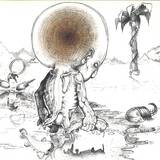
- Latest ambient work from Fred Welton Warmsley III, formely known as Lee Bannon (hip hop producer and collaborator with Joey Bada$$, Souls Of Mischief, Hieroglyphics, and others)
- Former albums on labels such as Hospital Productions, Ninja Tune, NON
- Has received praise from Pitchfork, NPR, Boomkat
- Northern California electronic producer Fred Welton Warmsley III's solo work as Dedekind Cut
(pronounced dead-da-ken cut') has evolved from fractured industrial design into increasingly subdued and sublime ambient meditations across two years of dedicated activity. His second full-length collection, Tahoe—so named after the mountain lake town he now calls home—swells with widescreen grandeur, evoking vistas both inner and outer. There are echoes of his earlier, more tempestuous mode in tracks like MMXIX' and Spiral' but overall the album skews panoramic and pensive, muted synthetic mists contoured with choral melody, field recordings, and radiant drone. His compositional instincts feel alternately classical, contemporary, and conflicted, befitting an artist whose discography spans labels as divergent as Hospital Productions, Ninja Tune, and NON.
- Warmsley characterizes Tahoe as a time peace,' sifting through the past, the present, future, and fantasy.' Recorded primarily in New York, with additional sessions sourced from Berlin, Cambridge, and Placer County, California.
Поиск:chora
Все
- A1: Carlotto - Come With Me
- A2: Cometa Music Hall - Cometa Music Hall
- A3: Music One - Musicone (Part 1)
- A4: Music One - Musicone (Part 7)
- A5: Music One - Musicone (Part 9)
- A6: Music One - Solon (Part 6)
- A7: Carlotto - Come Wirth Me
- B1: The One "O" One's - Radio Cosmo 101
- B2: The One "O" One's - Radio Cosmo 101
- B3: Don Bernini - Whirlwind
- B4: The One "O" One's - Radio Cosmo 101 O
Mondo Groove celebrates Italo-Disco in fine style delighting us with the most important tunes from the legendary Phantom Records; a ride deep into the world of the label that has not only produced renowned music, but has been acknowledged as a serious influence on modern disco sounds. Emerging in the late 70's to early 80s, Italo bridged the gap between disco and house, and was a staple of seminal Chicago DJs like Frankie Knuckles (who pioneered many of the drum machines and synths that are still in use today).
I-Robots, a true connoisseur of the genre, hailing from the Piedmont area of Italy, curated and carefully selected the tracks on this compilation.
This eleven track collection features originals and rarities, officially repressed here for the first time, and 2 tracks re-edited by I-Robots. The LP comes with the original Phantom Records logo on the front, scans of original 7-inch and LPs covers, as well as photos of the era on the back.
The sequence begins with "Come with me" by Carlotto. Roberto Carlotto was a keyboard player and singer who was very active since the 1960s. His solo recording career began in 1971 with a 7-inch release, and was followed by the progressive rock cult album "Dedicato a Giovanna G." signed under the pseudonym Hunka Munka. At the time he was distinguished by its remarkable technique and the high quality of its equipment that included an incredible number of keyboards and even the first examples of electronic measures. "Come with me" is an astounding unique Rock-Disco tune pressed only on 7-inch and highlights all of its instrumental and vocal prowess in a tight rhythm.
Comet Music Hall also came out as a 7-inch as a promotional edition for the homonymous discoteque - a kind of psychedelic-disco still currently produced by Enzo Draghi, a key figure of the Phantom, among others.
Roberto Ferracin is the man behind the Music One project, the name by which he produced only one LP of short electro-disco jingles. Included here are four of the most powerful cuts.
Every Italo Funk-Disco collector knows "Radio Cosmo 101", a soulful jazzy-disco-funk number produced by the homonymous radio station that was based in Alessandria in 1975, and spawned from the mind of Tony De Giglio, his two brothers, and a group of friends. At the end of 1974, Tony saw "American Graffiti", which instilled the desire to create a free radio format which became very popular in Italy. The programming took place at De Giglio's house and the wavelength was, in fact, 101 Mhz. The show immediately became quite popular, with programming that began in the morning at 10am and ended at 11pm. Included in this LP are the vocal and instrumental versions, as well as a long-version edit by I-Robots.
Don Luigi Bernini is a Piedmontese priest who has devoted his life to music. His father played the organ in church, and in those days the electric organ did not exist, therefore the father used little Luigi to push the bellows. The boy soon learned to play it as well. He then entered the seminary but continued to study music and graduated from the Vivaldi Conservatory of Alessandria in piano and choral composition. Later, he became a teacher of music education at the State School. He was introduced into the world of pop music by producers Riccardi & Albertelli and debuted with a single in 1977. Of his discography, his most interesting work is undoubtedly the weird "Telepatia" of 1979 - an experimental album, electronic, psychedelic, with the theme of good and evil always in the foreground. Featured in this collection is 'Whirlwind', which was recorded by Roberto Ferracin (Music One) and Enzo Draghi.
For all Italo maniacs!
- A1: Africa To-Day
- A2: Savana
- A3: Green Dawn
- A4: Rhythmical Stress
- A5: Drums Choral
- A6: Lonely Village
- A7: Mysterious
- B1: Echos
- B2: Sortilège
- B3: African Suspence
- B4: Sadness
- B5: Rite
- B6: Folk-Tune
- B7: Drums Suspence
- C1: Rivoluzionari
- C2: Nel Villaggio
- C3: Nuove Realta
- C4: Antiche Tradizioni
- C5: Nuovi Fermenti
- C6: Sole Percussioni
- C7: Piffero Africano
- C8: Continente Nero
- D1: Riscossa
- D2: Ultimo Stregone
- D3: Continente Nero
- D4: Preparativi
- D5: Oasi
- D6: Tribalismo
- D7: Giorno Di Mercato
- D8: Flauto Africano
limited edition deluxe 2LP bundle
Purveyors of enigmatic dreamscapes and organic, danceable electronica, Leeds-based, electronic-soul quartet Noya Rao are set to release their debut album, Icaros, this November. Founded by producer Tom Henry (Cosima, Yellow Days) Noya Rao was originally conceived as a solo production project with a separate live band representation. Alongside bassist Jim Wiltshire and drummer Matt Davies, whom Tom had met playing in other bands within the Leeds music scene, the project grew to become a collaborative effort mixing Tom's production ideas with the attributes of Jim's unique bass synth lines and Matt's polyrhythmic beats. Their compositions drew on the influences of jazz, hip-hop and electronic music whilst incorporating the sounds of the bass-heavy-dub music synonymous with the Leeds music scene. Their sound really came into focus when they met vocalist Olivia Bhattacharjee who brought her gospel style and complex choral harmony to the band. Developing from raw, psychedelic improvisations, their sound became more defined and minimal, underpinned by live instrumentation and more structured song writing. This co-existing electronic and organic thread gives the band a strong identity and their powerful live show sets them apart from other producer-led bands. Matthew Halsall from Gondwana Records saw the band perform at an intimate show in Manchester in 2016 and blown away, signed the band on the spot.
Icaros takes the listener on a journey through the band's unique sound-world amplified by Tom Henry's bold and inventive production techniques. Sometimes fragile, sometimes raw and visceral the album opens with the ethereal Azimuth. It's contrasting sections and mysterious chords offer echoes of the band's instrumental beginnings whilst the repeated vocal harmony layers at the end demonstrate a signature feature of the new Noya Rao sound. Moments is the first tune they wrote together and reflects upon taking joy in the everyday: the opening womb-like chords are another distinct sound of the band. The gritty Golden Claw describes the effects of a manipulative heartbreaker, it's darker, more driving and has a ruder '80s flavour. Midas demonstrates the band's use of linear structural forms and complex rhythms influenced from around the globe. It tells the story of someone who, led by greed, made some regrettable decisions. The atmospheric Dreaming Part 1 and Part 2 are sumptuous dreamy soundscapes. They were born from the same epic improv-based writing sessions as Fly, which has a trippy disco vibe, offset with wonky chords and crunching vocal harmony. The hook-led I Feel points to future ventures for the band: mixing their electronic textures with a more formal song-writing approach. A sublime slice of dreamy space-jazz, Same Sun Will Rise, finds Olivia contemplating mankind's utter selfishness and a desire for change, "Over borders we've assigned, same sun will rise'. Minimal and spacious, This Time demonstrates the merging of ethereal edginess and delicate songwriting. It is this combined with their electronic and live approach and more than a hint of Leeds attitude that gives Noya Rao their unique sound.
Finnish visual artist and filmmaker Hannu Karjalainen's music draws inspiration from ambient, drone, modern classical and dream pop. His first album Worms In My Piano was released in 2007 on Osaka Records and the second album, Hintergarten in 2009 on Simon Scott's Kesh Recordings. A Handful Of Dust Is A Desert, his third album - and the first under his full given name - arrives after a prolonged break.
Hannu Karjalainen's association with Karaoke Kalk started with his remix of Dakota Suite's The End Of Trying Part III on The Night Just Keeps Coming In in 2009 which also featured remixes by the likes of Hauschka, Deaf Center, Loscil and many more. Now, luckily for all concerned, Hannu is releasing a full length album on the label in the form of the exquisite record A Handful Of Dust Is A Desert.
The album opens with the track Angel which is a truly heavenly composition reminiscent of Boards of Canada's finest work. The Emigrant makes effective use of sinister synth-lines and delicate glockenspiel patterns to invoke a kind of science-fiction soundtrack atmosphere. Throughout the record, our ears are graced with truly sublime sound-scapes and transcendent textures.
The title track is actually the shortest tune on the album, but in no way less evocative. It's looped piano melodies are comparable with Susumo Yokota's later recordings in their minimalism and poise. A Year In a Day continues to walk the fine line between ambient and electronica - which is one of the albums great virtues: it shows how lively and eventful ambient music can be. Certainly ambient music benefits from having a strong pulse as Karjalainen demonstrates in various tracks on the album. The song Love Is A Black Lion features a sample from the afore mentioned Dakota Suite tune The End Of Trying Part III, and therefore somehow closes a circle.
This powerfully contemplative album comes to a controlled landing with the majestic Breaks My Heart She Aria, another in a long line of mesmerizing drifts, with a floating choral voice delicately enveloped in strings and pitched percussion.
A Handful of Dust Is A Desert is instantly captivating and for lovers of ambient music, dream listening. As an artist who trained in photography and is mostly active in the world of visual art, Hannu Karjalainen clearly enjoys a great deal of creative freedom in his music. This is the kind of desert you won't mind getting lost in and even take pleasure in roaming through the expansive sonic landscapes and horizons it embodies.
To know what's up right now, we must understand what went down in history... 'Rave History': Easily one of Catz 'n Dogz most evocative, classically-informed and ferociously euphoric pieces of work to date, this is a celebration of every black wax brick laid in the foundations of dance music culture. Every hand that was ever raised in sweaty exultation. Every stranger whoever got hugged on the dancefloor for no reason but pure love for the moment. Every whistle. Every horn. Every damn time. From its quintessential break to its iconic vocal via its sizzling bass-heavy groove; 'Rave History' is the ultimate finale piece, a show-stopping opener or a wild mid-set excursion. It resonates with everything that's relevant now and everything that's ever been relevant. Loaded with pure positivity, this will complement any style of DJ set, any crowd, any age, any country. This is our DNA. For added euphoric stimuli, the Szczecin boys have also thrown in a kickless hype tool in the form of the feel-heavy Life Mix. Choral pads, cascading FX, dramatic one-strike piano notes, splashing cymbals and that almighty vocal sample that comes with one essential message every single one of us can raise our sweaty hands and hug strangers to: no matter how weird things feel in the world right now, when we're together with like-minded dancing neighbours, everything is going to be ALL RIGHT.

- A1: The Cat's Miaow - Not Like I Was Doing Anything
- A2: The Particles - Driving Me
- A3: The Ampersands - Affected
- A4: Pearly Gatecrashers - In The Summer
- A5: Ya Ya Choral - Waiting Time
- A6: Bart & Friends - There May Come A Time
- B1: Even As We Speak - I Won't Have To Think About You
- B2: Maestros And Dipsos - Dot
- B3: Love Positions - Light Of Day
- B4: Shapiros - Gone By Fall
- B5: Hydroplane - Completed Extract From The Previous 7
- B6: The Cannanes - Lamington Lane
Sublime compilation of long-lost Australian indie-pop, acoustic jangle and beat happenings gathered by Melbourne-based collector and DJ Bayu and label head Moopie. Twelve tracks of singular vision spanning up- and downbeat pop, post-punk and minimal synth rarities recorded between 1982 and now. Australian twee pop royalty the Cat's Miaow shares the stage with the Cannanes and the Particles; Ya Ya Choral with Sarah Records' own Even As We Speak. Included is the previously unreleased 'Dot', by Mutant Sounds cult band Maestros and Dipsos. Full colour reverse-card sleeve with printed insert and lyrics sheet.
Gilles Peterson says: "If a Cuban record had come out on Sleeping Bag Records in 1982, I think it would've sounded a bit like this. It's an eccentric middle ground between Latin-styled pop and disco".
Reissued from the Spanish version of this awesome Cuban records with a unique picture cover. Probably one of the best 70's Areito releases, for sure ahead of his times. The entire record minus two tracks of 10 total are all upbeat with afro-latin breaks, dope choral vocal arrangements and chunky bass and conga lines, but don t sleep, the lower bpm songs are great mellow gems. Gilles Peterson says: "If a Cuban record had come out on Sleeping Bag Records in 1982, I think it would ve sounded a bit like this. It s an eccentric middle ground between Latin-styled pop and disco".
No-one else makes music like this: devilishly complex but warm and intuitive, stirring together a dizzying assembly of outernational and outerspace influences, whilst retaining the subby funk-and-hot-breath pressure of Shackleton's soundboy, club roots.The result is an evolutionary, truly alchemical music — great shifting tides of dub, minimalist composition and choral song (Five Demiurgic Options), ritual spells to ward off the darkness (Before The Dam Broke, The Prophet Sequence), radiophonia and zoned-out guitar improv (Seven Virgins), even the febrile, freeform psychedelia of eighties noise rock (Sferic Ghost Transmits / Fear The Crown). Over the five years since Music For The Quiet Hour, Vengeance's vocal and lyrical range has rolled out across this new terrain. Throughout these six transmissions he's hoarse preacher, sage scholar and ravaged bluesman, blind man marching off to war, and exhausted time-traveller warning of impending socio-ecological catastrophe. Six dialogic accounts of our conflicted times, then, expanding beyond the treacly unease of the duo's early collaborative work into something subtler and more emotionally shattering — its shades of brightness more dazzling, and its darkness even murkier. "We almost didn't hear it when the foundations went."
One for the heads! A rare female vocal double header, starting with Dalila's 1968 gem 'Canto Chorando' originally released on a sort after 'compacto' 45 on Copacabana.
On the flip - a Copacabana 7' release in the form of Neyde Alexandre's 1971 song 'Perplexidade', with a fantastic break intro, horn stabs and lush vocals. One of our favourite Brazil 45's.
* Atheos is a ferocious new collection from Rotkeller, which sees the Swiss electronic duo (Laurent Schmidhäusler and Federico Sutera) double-down on the brooding energy of their previous releases with a renewed intensity—fusing bold electronic experimentalism to dense, maximalist techno.
* Whether on the slow-burn immensity of opener 'SW', the monolithic, doom-laden expanses of 'Malz' or the spellbinding surge of '17. October', Atheos showcases a dark melodic complexity from the duo—in part brought on by the use of both digital and analog recording techniques.
* While the mesmeric, choral melancholia of EP closer 'Godless'—its eerie and beguiling textures echoing all that has preceded it—offers-up ominously open-ended ending; solidifying Atheos as Rotkeller's most atmospheric and cohesive work to-date.
* As if that wasn't enough, EOMAC (Stroboscopic Artefacts, Killekill, Trilogy Tapes, Bedouin) caps Atheos off in style, with a savage edit of '17. October'. The remix that pushing Rotkeller's original track into new rhythmical directions—the glassy rhythms splintering like shards of light across an eternally eclipsed landscape.
Set for release in both physical and digital formats on May 5th, Atheos marks Rotkeller's first EP for Swiss-based record company Thrènes (which takes its name from the Greek word for funeral lament) and are a label dedicated to the release of tenebrous electronica and techno.
- A1: Raffaela Renzulli - Asking Eyes
- A2: Candeias - Managua
- A3: Minas - Calma Mulher
- A4: Quarteto Uai - Marcas
- A5: Ary Lobo - Nêgo São
- B1: Hardkandy - Dunks
- B2: Ed Motta - Daqui Pro Méier
- B3: Piri Reis - Ceu Da Managua
- B4: Lucas Santtana - Dia De Furar Onda No Mar
- B5: Jackson Do Pandeiro & Almira - E So Balanco
- C1: Skymark - Boa Noite Meu Filho (Mental)
- C2: Penha Maria - Você Balança O Meu Coraça~O (Ou Sol Demais)
- C3: Kate Ceberano - Like Now
- C4: Os Originais Do Samba - Canto Chorado
- C5: Deodato - Skyscrapers
- D1: Nathan Haines - U See That
- D2: Azambuja & Cia - Tema Do Azambuja
- D3: Fafá De Belém - Naturalmente
- D4: Jazzanova - Gafiera (Instrumental Trio Version)
˜Acabou Chorare™ is the second album from Novos Baianos, or ˜New Bahians,™ who formed in Bahia, Brazil, in the 1960s. They are considered to be one of the most important and revolutionary groups in Brazilian music. ˜Acabou Chorare™ ž which translates to šNo More Crying› ž was originally released in 1972 by Som Livre after the success of their first LP ˜É Ferro na Boneca™ in 1970. It charted at No. 1 in a Rolling Stone Brazil™s Top 100 Brazilian Albums Ever chart. šPreta, Pretinha› placed 20th in the same publication™s list of the greatest Brazilian songs of all time. The unique sound of this record is a result of the fusion of samba, MPB, rock ™n™ roll and bossa nova, and strong influences from Jo–o Gilberto, who frequently played with the group, and bossa nova legend Gilberto Gil.
- A1: Pastor T. L. Barrett - After The Rain
- A2: Camille Doughty - Elijah Rock
- A3: The Howard Lemon Singers - For The Children
- A4: The Fantastic Family Aires - Tell Me
- A5: Jean Austin & Company - Spirit Free
- B1: The Jordan Singers - Will You Save Me
- B2: The Phillipians - Never Say What You Want
- B3: The Fabulous Luckett Brothers - Help Me To Carry On
- B4: Bright Clouds - I've Got To Make A Change
- C1: The Fantastic Family Aires - Troubled Mind
- C2: The O'neal Twins - Wake Up Everybody
- C3: Rev. T.l. Barrett - Said It Long Time Ago
- C4: The Fantastic Family Aires - The Color Of God
- C5: The Brooklyn All Stars - Blessed Be The Name Of God
- D1: The Original Sunset Travelers - On Jesus' Program
- D2: Reverend Edna Isaac And The Greene Sisters - Christians Catch Hell
- D3: The Fountain Of Life Joy Choir - Thank You
- D4: The Fantastic Family Aires - Glory
Utterly magnificent, sublimely soulful survey of the Gospel Roots label, subsidiary of the mighty TK Records at the height of the Miami Sound. Beautifully presented... the LPs with a 12"-square, full-colour, sixteen-page album of photos and original artwork. Check!!
A&R was co-ordinated by Gospel legends Ira Tucker — from the Dixie Hummingbirds — and Ralph Bass, veteran producer with Savoy, King and Chess. The label was run by Timmy Thomas, who had recently smashed with Why Can't We Live Together, for another TK spin-off, Glades. Operations were overseen by Henry Stone himself, unlikely King of Disco, who had recorded a young Ray Charles, and pushed forward James Brown. They drew in artists from all over the US, from St. Louis, Columbus, Memphis, Brooklyn, Cabrini Green in Chicago: unknowns like Camille Doughty, reluctant to jeopardise her job at GM ('Generous Motors') in Detroit, and huge-sellers like the revered Brooklyn All Stars, who started out on Peacock in 1958.
Choral belters, deep ballads, harmony quartets, epic city-blues, gritty funk, powerhouse female soul... Killer-diller Philly like a scorching version of Harold Melvin & The Blue Notes' Wake Up Everybody, and Jean Austin's raw Spirit Free, co-written by Ronnie Dyson, produced by Jesse James at Future Gold. Chicago Sound like The Fantastic Family Aires — named after the family's furniture store on North Cicero, but reminiscent of the Staple Singers at their best — through to the full-blown glory of The Fountain Of Life Joy Choir, led by Marvin Yancy from The Independents, and featuring Natalie Cole... Singers like Versie Mae Gibson, from the Jordans, by rights up there with Irma, Etta and Ree... Bangers 100%-guaranteed to find their way into Theo Parrish sets, and mortal delirium for the prissiest of soul and gospel purists.
Welcoming the fourth vinyl only instalment from FarFromNormal Features an excellent 3 track EP from the up and coming Julian. After a long process Julian has come up with 3 great original tracks which FarFromNormal where happily to take on board and put together Julian's very first vinyl release. This record grabs your attention from the start with track 1 Resorave. Resorave is a very psychedelic track with dark drums and beautiful slow atmospheres and a tripping vocal. Track 2 Grunge is much more on the groovy side to with fantastic production and pads that take you on a great journey. Track 3 Chorale is the title track and the one track to leave you on a high, with the heavy kicks and bass lines mixing between a tripping vocal and beautifully placed instruments, this is perfect for the peak hours.
- A1: Nils Frahm - 4:33
- A2: The Baka Forest People Of South-East Cameroon - Liquindi 2
- A3: Carl Oesterhelt / Johannes Enders - Divertimento Fur Tenorsaxophon Und Kleins Part 4
- A4: Four Tet - 0181 (Excerpt)
- A5: Boards Of Canada - In A Beautiful Lace Out In The Country
- A6: Bibio - It Was Willow
- B1: Dictaphone - Peaks
- B2: System - Sk20
- B3: Rhythm & Sound - Mango Drive
- C1: Victor Silvester - It's The Talk Of The Town (Nils Frahm's '78' Recording)
- C2: Miles Davis - Générique
- C3: Colin Stetson - The Righteous Wrath Of An Honorable Man
- C4: Penguin Café Orchestra - Cutting Branches For A Temporary Shelter
- C5: Nina Simone - Who Knows Where The Time Goes
- C6: Gene Autry - You're The Only Star (Nils Frahm's '78' Recording)
- D1: Dinu Lipatti - O Herr Bleibet Meine Freunde, Bmv 147
- D2: Nina Jurisch - Cleo The Cat
- D3: Dub Tractor - Cirkel
- D4: The Gentlemen Losers - Honey Bunch
- D5: Nils Frahm - Them (Solo Piano Edit)
- D6: Cillian Murphy - In The Morning (Exclusive Spoken Word)
Composer, musician and producer Nils Frahm steers the new edition of Late Night Tales, set for release on 11th September. A hypnotic voyage through modern and classical composition, experimental electronics, jazz, dub techno, soundtracks and soul; Frahm's Late Night Tales haunts and beguiles. It's not mixing, so much as gently layering, like a particularly fluffy goose-down duvet folding in on itself, the folds part of the attraction, the layers part of the overall picture being painted. Many of the tracks have been edited, effected and re-made. The subtly overdubbed parts on Rhythm & Sound's 'Mango Drive' adding to the haunting hypnosis, while choral interruptions aid Miles Davis' 'Générique' on its journey towards the light. Meanwhile, on Boards Of Canada's 'In A Beautiful Place Out In The Country', the tempo is somewhat sluggish, the organs slurred, as Frahm slows it down to a funereal 33rpm that nevertheless fits perfectly. The purring of his girlfriend's cat Cleo transitions playfully between Nina Simone's definitive version of 'Who Knows Where the Time Goes' and unearthing the gentle electronics of Dub Tractor. Eddy Arnold's 'You're The Only Star', a country tune that sounds like its transmitting from a mid-west diner wireless circa 1947, is straight from the soundtrack to an imaginary David Lynch movie, comforting and dismaying all at once. This crackly reality abounds, as on Finnish band Gentleman Losers' 'Honey Bunch', that adds an unsettling texture, with a sound that is modern but as nostalgic. Frahm's own tracks bookend the mix, opening with an inspired "rework" of the infamous silent John Cage piece '4:33' ("I sat at the piano in silence and worked from
there. I listened and took in the atmosphere and this is what came out of it") and ending with a solo piano version of 'Them', taken from his recently released score of the film 'Victoria'. The traditional Late Night Tales spoken word epilogue is voiced by actor Cillian Murphy (Inception, Batman, 28 Days Later), reading a short story by Edna Walsh (Hunger, Disco Pigs).
As Björk continues to make waves in the electronic scene One Little Indian present exclusive remixes by boundary-pushing artists and DJs personally selected by the Icelandic artist
Imagined as a sharp contrast and complement to Funn City's trashy vintage vibes, Darshan Jesrani's new Cylinder moniker sets out to explore the more streamlined, forward-facing side of Startree's vision, while sacrificing none of the warmth or funk of its classic influences. 'Disco Engine' is a futuristic joyride which draws upon late 80s and early 90s techno vibes as much as it does disco and R&B to produce a groove which is warmly insistent, buoyant, sexy and a little menacing. Ruthless, detuned 808 toms and a punchy, round analog bass synth provide a floor you can push the gas pedal to. A greasy, giddy synth rhythm holds the middle down like a session guitarist when rent is due, and ecstatic choral synth pads and vocals by Chelsea Adewunmi soar just above the horizon. Underground dance music with the top way down. Side B's '4-Stroke Dub' works a more DJ-oriented angle around that 808 and juxtaposes parts which do not play together in the original, creating a track which is subtly driving and every bit as engaging. The gorgeous, understated vocal refrain in the middle is a destination you will have been happy to go the extra distance to reach. Startree is happy to present its second release as a continuing statement of its musical intentions and its simple desire for all to have a really good time.
Fatima Al Qadiri is a multidisciplinary artist and musician from Kuwait. In just a few years, she has quickly built a reputation as a conceptual artist, exploring themes informed both by her own background and global pop culture, through a number of highly acclaimed EPs, multimedia projects and writings. She is also a founding member of the production team Future Brown. Fatima's debut album is called 'Asiatisch', and as the track titles suggest, the record provides a simulated road trip through an imagined China. Musically, the album is an homage to that quietly influential sub-strain of grime, often loosely termed 'sinogrime' due to its preoccupation with Asian motifs and melodies, pioneered by the likes of Wiley and Jammer at the beginning of the 2000s in East London. 'Asiatisch' is a provocation which asks more questions than it answers. The title is the German word for Asian. Unlike its title, however, the music on 'Asiatisch' revolves around the fantasies of East Asia as refracted through pulpy Western pop culture, in particular Hollywood, literary fiction, music, cartoons and advertising. Fatima asks what is meant by the term 'Asian' in a digital age of viral interchange and the hi-speed trading of cultural bytes; the concept of 'shanzhai' proves pivotal, a term whose meaning stems from a wild, out of control zone of banditry, but which has come to be used to refer to the Chinese counterfeiting of Western brands and goods. While a number of producers have made takes on 'sinogrime' over the last few years, 'Asiatisch' is really the first record that attempts to articulate this weird complex of sonic interchanges between the West and China. With the exception of the opening track, 'Shanzhai', a haunting cover of 'Nothing Compares to You' with nonsensical Mandarin lyrics, and the shimmering 'Loading Beijing', 'Wudang' and 'Jade Stairs' which sample and distort classical Chinese poetry staging an epic confrontation between China's ancient soul and the onslaught of the industrial factory machine, most of the tracks blend mallets, bells, gongs, flutes, steel drums and choral atmospherics with the searing synth-brass and the skittering drums of grime, playing melodies that are inflected as much by classic R&B as to synthetic versions of traditional Chinese music. On "Dragon Tattoo" for example, stereotypical iconography of imagined China is slotted into a threatening, robotic R&B format. The carefree pirating of Western brands blurs into a soft-synth pirating of Chinese musical signs.'Asiatisch' is wrapped in pristine artwork by Babak Radboy from Shanzhai Biennial, and the music was given a 3D sheen by in demand mixer Lexxx. Proclaiming both its love of both ancient and imagined China, 'Asiatisch' is a rare album that is both icily beautiful and conceptually layered.