Somewhere between revelation and delusion, Euphoria Bound maps a familiar trajectory: the irresistible pull towards dissolution, the gradual erasure of memory, the self rendered irretrievable. It moves between states of consciousness where such distinctions of enlightenment or self-deception are erased.
Across ten tracks, the album constructs a spectrum of sound that is both ambitious and Uncompromising. The approach here is more direct than recent releases, with textures that accumulate and disintegrate with renewed urgency.
Suche:shackleton
- 1
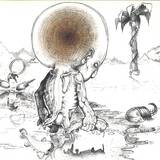
back in 2020, a collaborative project came out with a collection of psychedelic dub tracks that explored acid fields through low-pressure beats and choral vocals. it quickly became a favourite from hivern discs. we're now excited to be sharing a rare set of remixes from Shackleton, reworking three tracks from the original album. expect a dubby flow, faster rhythms and echoing layers. original artwork by juns castella artwork design by arp_rpm mastered by Beau Thomas distributed via Clone
- A1: God Of Bangalore (The Shackleton Version)
- A2: Sunbeam Spirits (The Shackleton Version)
- A3: The Rite Of Rain (The Shackleton Version)
- B1: Northern Wind Brings Redemption (The Shackleton Version)
- B2: Where Is That Blossom (The Shackleton Version)
- B3: Earth, Water And The Holy Groove (The Shackleton Version)
Mit 3 - The Shackleton Versions erscheint eine faszinierende Neuinterpretation des gefeierten Saagara-Albums 3. Der britische Produzent Shackleton verwandelt die Originalstücke in ein düsteres, hypnotisches Paralleluniversum zwischen Dub, Ambient und globaler Rhythmik. Statt klassischer Remixe liefert er ein ganzes "Schattenalbum", das die Klangsprache von 3 aufgreift, erweitert und neu beleuchtet. Waclaw Zimpel, einer der spannendsten Musiker Europas, hat sich in den letzten Jahren vom Jazz-Klarinettisten zum innovativen Elektronik-Produzenten entwickelt. Gemeinsam mit Saagara - einer virtuosen Formation südindischer Perkussionisten - erschafft er Klangräume, die zwischen Tradition und futuristischer Clubästhetik oszillieren. Shackleton greift diese Vision auf und führt sie weiter: Die Tracks wirken wie ein Dialog zwischen zwei musikalischen Welten, voller Respekt, Tiefe und rhythmischer Spannung. Besonders eindrucksvoll: "Northern Wind Brings Redemption" und "Where Is That Blossom" - im Original stark, in Shackletons Version nahezu magisch.
What might appear to be the most unlikely collaboration of 2024 proves also to be one of the most invigorating listens of the year! Shackleton & Six Organs of Admittance are in full aural/metaphysical alignment in their mutual effort to become Jinxed By Being. On first listen, it becomes immediately clear that this fusion of Shackleton"s bass heavy cosmic dread and Six Organs" ritual folksong makes total sense. Longtime listeners know that both Shackleton and Six Organs of Admittance have been unafraid to pursue their muse into any and all encroaching depth of darkness or outer boundary of potential dissonance - in fact, that has always been their default mode, finding more of resonance way out there in the process. They also share that ol" maverick psychedelic ritual transcendental music vibe, don"t they? And a fascination with repetition and cycles. And a mutual inspiration drawn from alternative tunings and literature...all this considered, it"s been basically inevitable that Ben Chasny and Sam Shackleton would work together. It took a while for them to find each other-and once they did, it was almost eerie, how preordained it felt. When the music started coming, though-that"s when it got really eerie. The mood rises from the music like smoke, a sure signal of total integration. Jinxed by Being finds Shackleton & Six Organs of Admittance delighting in their synthesis. Reveling in the unique sonic textures found in the collage, they launch small details that unfold into a massive space and often multiply into lines of dimensional space, crossing the stereo spectrum with enervating motility. Here lies all the proof you need against the danger of categorizing by perceived genre rather than intention-encounters like Shackleton & Six Organs of Admittance might never have found the linear space in which they sit next to each other, beyond alphabets and other institutional organizing principles. Rearrange your libraries-or you might miss getting Jinxed By Being.
Following on from their critically acclaimed debut album, the second album from Shackleton / Zimpel represents the culmination of the ecstatic trance urge that has underlined both artists work since they embarked on their singular yet somehow parallel paths. The duo, consisting of electronic music maverick Sam Shackleton and visionary avant folk virtuoso Waclaw Zimpel, sees them link up with one of Indian Carnatic music"s greatest emerging young vocal talents, Siddhartha Belmannu, to bring an album which is equal parts both a meditative exercise and an urge to transcendence whilst thematising both the acceptance of our mortality and the joyous celebration of living.
Constantly evolving and adapting his sound, Shackleton has releases
spanning labels such as Honest Jon’s, Perlon and his own imprints, Skull Disco (co-founded with Appleblim) and Woe to the Septic Heart!.
Shackleton now finds a home for a brand new project on the Barcelona-based, Modern Obscure Music.
Undoubtedly Shackleton, but taking the meditative aspects of his sound to a new plane, The Purge of Tomorrow, is an alias born to transmit a less dancefloor-orientated experience to whomever is ready to receive it.
‘The Other Side of Devastation’ is an investigation into a novel form of
deepness. Adverse to the reductive label of ‘Ambient’, these tracks are spawned from a live performance context. The essence was to create an immersive encounter where listeners are called on to actively unburden their mind of unnecessary thoughts. Staying true to the trance elements that Shackleton is renowned for, this EP is not dependent on traditional structures or a linear narrative.
‘Time Moving’ presents itself through a journey of disquieted moments and contemplative states. Hypnotic strings provided by Kathy Alberici construct pastoral phrases that mesh with the larger looming drones,
culminating to conjure a daydream-like energy. Following on, ‘Waves’
twists through various forms, awash with cascading vocal splices and
soothing murmurs contrasted with rousing sub pressure.
Reflective and sometimes provocative, as an artist who resents the
pigeon-holes of genre, The Purge of Tomorrow presents an exciting new direction for Shackleton. Bursting-at-the-seams with emotional
complexity as to echo the woes of the human condition, this EP is
steeped in feelings of forgone events doomed to be replicated.
Killer EP. Next-level Shackleton.
Taking off from Beaugars Seck’s foundational sabar drum rhythms — recorded by Sam in Dakar in February 2020 — Shackleton has constructed a trio of intricately layered, luminous, enchanted, epic excursions. The second is more dazzled and meandering, with jellied bass, insectile detail, and discombobulated jabbering; the third is more liquid, fleet of foot, and psychedelic, with a grooving b-line and funky keyboard stabs, scrambled eastern strings and hypnotic vocalese.
The harmonium in The Overwhelming Yes sounds like Nico blowing in chillily from up the desert shore. The overall mood is wondrous, twinkling with light, onwards-and-upwards; an uncanny, dubwise mix of the ancient and the futuristic. Mark Ernestus’ Version is stripped, trepidatious, mystical, and stranger still, with just a snatch of the original melody, extra distortion and delay, and crystal-clear drum sound.
Twenty minutes of startlingly original music, with Shackleton the maestro at the top of his game, and a characteristically evilous dub by Mark Ernestus. Mastered by Rashad Becker; handsomely sleeved.
Sick to the nth. Love 4 Ever.
No-one else makes music like this: devilishly complex but warm and intuitive, stirring together a dizzying assembly of outernational and outerspace influences, whilst retaining the subby funk-and-hot-breath pressure of Shackleton's soundboy, club roots.The result is an evolutionary, truly alchemical music — great shifting tides of dub, minimalist composition and choral song (Five Demiurgic Options), ritual spells to ward off the darkness (Before The Dam Broke, The Prophet Sequence), radiophonia and zoned-out guitar improv (Seven Virgins), even the febrile, freeform psychedelia of eighties noise rock (Sferic Ghost Transmits / Fear The Crown). Over the five years since Music For The Quiet Hour, Vengeance's vocal and lyrical range has rolled out across this new terrain. Throughout these six transmissions he's hoarse preacher, sage scholar and ravaged bluesman, blind man marching off to war, and exhausted time-traveller warning of impending socio-ecological catastrophe. Six dialogic accounts of our conflicted times, then, expanding beyond the treacly unease of the duo's early collaborative work into something subtler and more emotionally shattering — its shades of brightness more dazzling, and its darkness even murkier. "We almost didn't hear it when the foundations went."
- It Comes To An End
- Superimposed
- Hyperlocalize
- Thickness Of Signs
- Every Cell Thought Of Every Thinkable Thing
- Mementoes
- Collide
- Some Unimaginable World
A cocktail of rebellious queer vocal fragments, deceptive percussive granules and swaying hammered vibrations, upsammy and Valentina Magaletti's first collaboration trembles with suspense. The seeds of 'Seismo' were sown following a commission from Amsterdam's Rijksmuseum to soundtrack an exhibition of work from the Museum Boijmans van Beuningen in Rotterdam and the duo didn't want to approach their collaboration flippantly. So, wandering the museum's maze of rooms, they recorded various improvised percussive sounds with their arsenal of microphones, using the space to inform various rhythms and textures that were sculpted later into electroacoustic vignettes. This was just the starting point, though; as Magaletti and upsammy began performing together, the project evolved and 'Seismo' began to take shape. The duo had struck on a salient aesthetic concept, using mostly digital and acoustic mallet instruments to blur the boundary between their roles and create friction between the synthetic and the authentic. And the finished record is a phantasmagoric push-and-pull between its various conflicting elements: harmony and dissonance, randomness and predictability, openness and constraint. 'Seismo' isn't the first time that upsammy has studied her environment in search of revelation. On her acclaimed second album, 2024's 'Germ in a Population of Buildings', the Amsterdam-based DJ, producer and multidisciplinary artist erected her complex, unorthodox rhythms and eerie melodies around a modernist frame of field recordings collected in various cityscapes, countering heavyweight basslines with subtle, microscopic sounds. London-based Italian vanguard Magaletti, meanwhile, has applied her unique logic to innumerable projects at this point, working with everyone from batida icon Nídia and hardcore-dub outfit Moin to French writer Fanny Chiarello and British bass scientist Shackleton. For years she's approached the drums with criticism, attempting to challenge any preconceptions, something that's most visible on 2020's 'A Queer Anthology of Drums'. And both artists' thoughtful perspectives are welded together seamlessly on 'Seismo', a dizzying suite of eight eccentric statements that's fragile but never insecure, gauzy but not indistinct. An unnerving sense of space characterizes 'It Comes to an End' as Magaletti's in situ improvisations herald for upsammy's microscopic glitches and chiming pitch-bent melodies. It's almost unbalancing to witness the track's impossible dimensionality, the interplay between reverberant marimba hits and bone-dry synths, or percussion that's been recorded and processed in consciously different settings. A new architecture emerges in the sound itself that the two artists scan and explore meticulously, testing its boundaries with undulating hybridized rhythms on the invigorating 'Superimposed' and offsetting the powdery drums with liquified smacks and alien voices. The duo's vibrations are knotted with piano flourishes on 'Hyperlocalize', balanced with artificial clanks and clangs that disappear into the track's sonorous atmosphere, replaced by whispers and half-hallucinated insectoid chirps. 'Seismo' is an album that feeds off the energy generated by its juxtapositions: the tension and anticipation that's melted by rapid, hyperactive movement and the finely drawn rhythms disrupted by a layer of indistinct, barely perceptible microsounds. It's a collaboration that sounds like two minds challenging each other but not wrestling, each peering from their own distinct vantage point and imagining a third landscape shaped by optimistic, queer vibrations.
Repress.
Minimoonstar' on the first record, gets a special underwater treatment by ex-Londoner Shackleton (Skull Disco). On the A-side, we find a special 12"edit of the original, to make it fit on wax. The full-lenght version will be supplied with the CD (PERL69CD), expected sometime later this year. This time the remix gets delivered by Amsterdam based San Proper, who is known for his superb releases on Rush Hour.
The Rising Wave marks the debut collaboration between singer-songwriter Marlene Ribeiro (of psychedelic band GNOD) and electronic producer Shackleton under the name Light Space Modulator. The album will be released via AD 93.
Der britische Synth-Zauberer James Holden und der polnische Klarinetten-Guru Waclaw Zimpel (Saagara, Shackleton) setzen ihre fruchtbare Zusammenarbeit mit dem glückseligen Eskapismus ihres grossartigen Albumdebüts fort: "The Universe Will Take Care Of You" ist ein zutiefst emotionales, warmes und flauschiges Vergnügen. Reiche Texturen und eine betörende Klangpalette bewegen sich frei zwischen idyllischen Pastoralen, eindringlichen Arpeggios und schimmernder Euphorie. Die spielerisch-experimentelle Herangehensweise von Krautrock-Vorfahren wie Harmonia, Cluster oder Eno & Fripp wird aufgegriffen, um ihren tiefsten Improvisationsdrang zu erforschen. Das Ergebnis ist die freudige Konvergenz zweier gleichgesinnter Meister ihres Fachs, die Violine, Schlagzeug, Lap-Steel-Gitarre und die indische Doppelrohr-Algoza-Flöte mit gewohnt-modularem Synthesizer und Klarinette verbinden.
180g White Vinyl LP.
Freivogel / Sinclaire with their debut Untitled consisting of three live recordings made using only a concert flute and an Octatrack M1. The recordings are live taken from improvised sessions and have been left unedited.
Shifting between playful and austere, the simple goal for these sessions was honest improvisation; comfortable in both its limits and potentials. Placing classical instrument performance and extended playing techniques alongside heavy sonic processing and cavernous acoustics, they are in some ways uninfluenced by genre, governed only by a drive to find moments of clarity amidst chaos.
Recorded in single takes using a simplified setup of the flute – played into a microphone and wired through an Octatrack – every sound heard in the recordings comes in one way or another from the flute as a single sound source, manipulated and looped on the fly with additional live improvisation over the top.
The result is a timeless capsule of heady drones, offbeat electronics, and mischievous flutes, captured during a time when the world stood still. Scuzzy at times, glistening at others, and ever-optimistic in the pursuit of something new.
Adam Sinclaire is a flautist who has worked with artists such as Billy Bultheel and Ziúr, recorded for labels including PAN and Purple Tape Pedigree, and performed for institutions including KW Institute for Contemporary Art, Schinkel Pavillon, and Martin-Gropius-Bau. His practice focuses on using extended playing techniques to explore the limits of the C flute.
Marco Freivogel is a producer and composer who has released an extensive discography on labels including Mannequin Records and Veyl, and collaborated with artists including dBridge, Mare Nero and Mathew Jonson, remixing artists as diverse as Hercules & Love Affair, Shackleton and Yappa. His Prequel Tapes project sits between utopian and claustrophobic, tracing harsh industrial atmospheres and levitational ambient from a lifelong obsession with sonic extremes. Marco currently works on compositions for film and television, alongside his own releases and collaborations. The EP will be released on 14 February 2025 as limited vinyl and digital via Midnight Shift. Art direction by Mauro Ventura.
All record profits from this release will go to 3ezwa.de, providing financial and legal support to those facing repression for their commitment to the Palestinian cause.
More Than Ten Years Since He First Emerged On Skull Disco, Appleblim Presents His Debut Album. The Label He Co-founded With Shackleton Was The First The World Heard Of His Productions, But Laurie Osborne's Innate Relationship With Electronic Music Culture Reaches Back Much Further Than Those Groundbreaking Early Days Of Dubstep. Early Days Spent Soaking Up Hardcore, Jungle, Techno And Plenty More Besides Were Fundamental Foundations From Which To Spring Into The Then-unknown Realms Of Sub-low Half-step Club Music. At That Time Fwd>> And Dmz Were The Church For This Ritualistic Sound, And Appleblim Was A Regular Fixture At Both.
As Dubstep Matured, Magnified, Mutated And Meandered, So Appleblim Moved Beyond Skull Disco To Explore Different Avenues Of Expression In The New Many- Layered Club Music Landscape. His Own Apple Pips Imprint Was A Natural Vessel On Which To Explore The Emergent Fusions Of Hardcore-derived Sounds And The Us-born House, Techno And Electro, While Labels Such As Aus Music Equally Provided A Home For His Work (often Alongside Komonazmuk). Meanwhile Long-standing Collaborations With Alec Storey (al Tourettes / Second Storey) Finally Manifested In The Hyper-modern Mind-twist Of Also, Captured As An Album On Legendary Rave Label R&s.
More Recently It's Been Possible To Hear Appleblim Delve Into Electro-acoustic And Ambient Production Alongside Bassweight Sounds On Tempa, One Of The Original Bastions Of Dubstep Culture. As The Existing Boundaries Between Genres, Cultures, Eras And Scenes Continue To Dissolve, On His Debut Album Appleblim Offers Up A Fresh Approach That Brings Some Of The Foundational Sound Ethics Of Rave Culture Into A Modern Framework.
Hardcore Breaks Are Still A Regular Sound Source In Contemporary Club Tracks, But On Life In A Laser It's Instantly Apparent That Appleblim Has Moved Beyond Choosing Popular Drum Samples To Truly Tap Into The Elusive Feeling Engendered By The Music Of The Era. It's A Tricky Feat To Manage, But In The Pie-eyed Chords Of ignite', The Subby 808 Tom Basslines On nci' Or The Mr. Fingers Synth Flex On manta Key' The Sonic Finish Sports The Same Understated Grit And Grime That Made Those Early Records So Timeless. There's Still Space For Modernism, Not Least On Snaking 2-step Killer i Think We'll Let The Gas Sort This One Out', But It's Offset By A Layer Of Dust, Not To Mention An Inherent Moodiness That Can't Be Faked.
This Fine Balance Of Rave Romanticism And Future-minded Approaches Binds Together In A Cohesive Conceptual Statement. First And Foremost It's Appleblim's Personal Reflection On The Music That Has Moved Him On Countless Dancefloors Since His First Flirtations With Soundsystem Culture. At The Same Time The Canny Influx Of Modern Ideas Into The Soundworld Of The 90s Genuinely Results In A New Proposition, Making For A Perfect Fit On The Modern-day 'ardcore Fetishists Label Of Choice, Sneaker Social Club. Many May Claim To Draw On Old-skool Influences In Their Modern Trax, But Take One Listen To flows From Within' And You'll Feel The Same Time-slipping Surge Of Future-shock As The Ravers At Lost, Dreamscape, The Dungeons, Clink Street, Blue Note And All Those Other Iconic Spots.
Acclaimed Japan “minyo footwork” duo WaqWaq Kingdom - aka Shigeru Ishihara (DJ Scotch Egg / Seefeel) and Kiki Hitomi (ex-King Midas Sound) - return with feverishly joyous new album Hot Pot Totto, a bubbling hot pot of dance music that responds to ecological anxiety.
“Two words are conjoined: hot pot and ottotto,” vocalist Kiki Hitomi tells us. “Ottotto is the Japanese equivalent of “oops”, or said when someone nearly falls over but manages to get their balance back: “it was dangerous but now we are safe!” Combined with the heady brew of their musical styles (“like a psychedelic Nabe hot pot: melting traditional Japanese Minyo with Jamaican dancehall, footwork, dub, techno, tribal polyrhythms and Super Nintendo soundtracks”), producer Shige Ishihara’s time in East Africa working with local musicians, and the dayglo hallucinogen of the duo’s visual aesthetic, WaqWaq Kingdom’s thumping, thrilling, irresistible third release is a unique ride.
Thematically - despite its ostensibly celebratory impact - Hot Pot Totto addresses the world’s grave ecological state. “Now our earth is on the way to catastrophe, as global warming becomes a serious problem through humanity’s fault. We are on the edge,” Hitomi writes. “We need to get back on the right track.” The ottotto of the album title refers to this experience - the need to get back on track. However, this is not lamenting music: it is fiercely defiant, full of colour and rapture, maintaining an optimism that we can.
Opening single “Hakke Yoi” ties treated voice, a floor-shaking beat, and a dizzying, transforming colour palette to a heart-quickening BPM. The track is named after the traditional cry of a sumo wrestling match, shouted by the referee to maintain tempo, commonly translated as “put some spirit into it!” The lyrics refer to humanity’s sacrifice of our planet for our own material gains. Later, key track “Buri Buri” features Ugandan experimental dance producer Catu Diosis and centres around the lyric “Turn disaster to our advantage / good fortune and happiness will come to those who smile,” offering not regret but encouragement and empowerment with its neon alien sonics and relentless vibrancy.
Kiki Hitomi was formerly a member of Ninja Tune / Hyperdub’s King Midas Sound (along with The Bug and Roger Robinson), and co-founded iconic Japanese dubstep-noise duo Dokkebi Q. She is also a celebrated illustrator and designer, having created artwork for countless record sleeves (including this one) and brands. Shigeru Ishihara - aka DJ Scotch Egg - has been orbiting the dance music galaxy for over a decade, releasing radiantly unpredictable solo records through Lightning Bolt’s Load Records, as a member of Warp Records’ legendary Seefeel, and performing with both projects across the world. He recently undertook a residency at the Nyege Nyege Villa in Uganda, working with Phantom Limb alumnus MC Yallah. More recently, Ishihara has been releasing music under the guise of Scotch Rolex, collaborating with the likes of Shackleton, Swordman Kitala, Lord Spikeheart and more.
Hot Pot Totto is WaqWaq Kingdom’s third release for Phantom Limb, following the rapturously received album Essaka Hoisa in 2019 and follow-up EP Dokkoisho in 2020. The band recently performed at the label’s sold out 5th anniversary event in London, setting an ecstatic venue alight with energy.
f B1 Buri Buri feat. Catu Diosis
Four dazzling, extended engagements with mbalax master-drumming.
The contribution from Holy Tongue is chase-the-devil steppers — thumping, clangorous, reverberating — super-charged with energy and atmosphere. From the off drummer Valentina Magaletti detonates a hard rain of small bombs, rounds of fire, ticking fuses. Musical co-ordinates are somewhere between classic On-U Sound crew like African Head Charge, The Mothmen, and Creation Rebel, and the experimental funk of the Pop Group and 23 Skidoo, at their funkiest. Thrillingly, the two dubs are increasingly deranged.
Adjusting the same wavelengths as her superb Workaround LP, Beatrice Dillon plays spaced-out, abstract synth-work against the bodily physicality of the ancient, shifting mbalax rhythms. The music is poised, mindful, tentative; but also limber, fleet, and magical.
Phantasmagorical and efflorescent, Lamin Fofana’s one-two is simply stunning. Both excursions are wide-open, beautiful, epic, and propulsive — the first mix is banging and headlong, the second more syncopated and serpentine — teeming with freshly sublime, funkdafied updates on Jon Hassell’s Fourth World possible musics.
The two parts of LABOUR’s Etu Keur Gui engage the same sequence of drum patterns (called bakks) from different perspectives. The duo performed portions of this piece at the opening ceremony of the Dakar Biennial in 2022, at the Grand National Theater, with thirty sabar players from the family of Doudou Ndiaye Rose. This Wolof phrase for the inner-court of a home — a meeting-place — doubles here as a metaphor for inner space on a metaphysical level; and Pan Sonic, Muslimgauze, Zoviet France, early Shackleton… all ghost across the threshold.
ft. Cinna Peyghamy & Jay Duncan Remix
Soreab returns to Control Freak for a full length white label release - a masterclass in organic, dubbed-out, dancefloor psychedelia, featuring live recordings by sound artist and modular percussionist Cinna Peyghamy following a recent collaboration with Azu Tiwaline.
As a DJ, producer and co-founder of Baroque Sunburst, Italian-born Soreab has been a mainstay of London’s underground electronic music scene for over 5 years. On ‘Teleportation’, he manipulates and twists Cinna’s deft percussion work into a distinct range of UK styles, ranging from 170bpm euphoria to subby, half-time ex- plorations from the school of FWD>> and Plastic People.
On the B2, Jay Duncan (Phantasy Sound / Intergraded) takes a decidedly minimal tack on her remix of ‘Untitled 1’, with deep, dubby chord stabs and immersive rhythms for late night dancefloor revelations.
For Fans Of: Om Unit, Shackleton, Al Wootton
Limited pressing of just 300 hand-stamped records - don’t miss your chance to grab one
Mastered & cut by Ruy Marine @ D&M, Berlin
(Cargo Collective Title) RIYL: Barker, burger/ink, Andy Stott, Shackleton, Monolake, Jan Jelinek, Perila, Fax. 180gLP in 350gsm jacket + 190gsm inner + DL. CD in custom mini-gatefold paperboard jacket. T. Gowdy has kept up a productive albeit mostly virtual pace since the release of Therapy With Colour (his third full-length album and first for Constellation) which dropped just as things were locking down back in spring 2020: performances at numerous festivals including MUTEK Montréal, Node Festival and NEW NOW; audiovisual pieces exhibited at various European galleries and events; a track and video for Constellation’s Corona Borealis Longplay Singles Series; sound design for the documentary Atalaya by filmmaker Emma Roufs. Gowdy now returns with Miracles, his second full-length for Constellation, which draws on source materials originally performed in 2018 for an unreleased audio/visual project based around surveillance footage—a precursor to video1capped, monitor-based horizons that soon took on new meanings. Re-immersing himself in those recordings, Gowdy disassembles and deploys them as raw source material for new experiments with vactrols, noise gates and analog-to-digital triggering and aliasing, the original recordings juxtaposed anew amidst their successive textural and rhythmic treatments. Gowdy keeps this re-composition process stripped down, elemental and purposive, guided by an ascetic Aufhebung: synthesis as sublation—subjecting a temporal material/theme to analysis and transformation, reintegrating to form a whole that overcomes what it preserves without erasure, reshaping and intrinsically carrying its origins forward. Where Therapy With Colour was strictly and rigorously a set of stereo live performances, Miracles fuses iterative—though still spartan—layers of performance. “Therapy With Colour was about healing through self-hypnosis; Miracles is about forging a future with memory through subjection to trigger mechanisms” notes Gowdy. The result is a captivating collection of minimal IDM and oscillated electronics from the Montréal/Berlin producer, working primarily in a 120-140 BPM zone of tonal percussion and corrugated pulse. Gowdy’s sensibility and sound palette gets deeper and dirtier, summoning new pathways of alluvial flicker and abraded euphoria. As the album progresses, low-pass gate vactrols coalesce into a clear and vital theme, conveying immanence through woody timbres at times reminiscent of the Shinrin-yoku aesthetic (Japanese ‘forest bathing’), though always with a grainy transcendence rather than invoking any clean pure sheen. Gowdy consistently heats and heightens the presence of each component in the mix, balancing different elements in democratic compression/distortion, attaining an unornamental and earnest form of mantric-industrial majesty. Miracles is live, corporeal, activated electronic music of the highest caliber, deployed with monastic and meditative focus. Tracklist: 1 350J 2 Miracles 3 Déneigeuse 4 Transcend I 5 U4A 6 Vidisions 7 Clipse 8 Transcend II
Piezo returns to Facta and K-LONE’s Wisdom Teeth imprint with a 5 track EP of experimental, warping, majestic club music. Since his last outing on the label, the Milanese producer has refined and consolidated his aesthetic considerably: through a spree of crucial releases on his own label, Ansia, and then with the release of his essential debut LP, Perdu (released in 2020 on experimental powerhouse Hundebiss). LSD Superhero sees him bring together the goofy, club-ready aspects of his output on Ansia with the meticulously crafted cybernetic sonics of his debut LP, but with the addition of something new: melody. The title track opens the record with house lights up: glitching percs build around gasseous pads and trembling subs in a drawn out climax that finally collapses into a rolling technoiddembow beat at its midpoint. Next, ‘Unto’ squeezes the producer’s wonky, sub-heavy sonics into a 4x4 template - one of those special 5 am tracks that will appeal equally to dubsteppers and minimal heads. (Remember that time Shackleton appeared on Perlon?). ‘TB2’ - a collaboration with label head K-LONE - balances nectar sweet melodies with bust-up drums and glitching FX hits, while ‘Dijitz’ sees him flex his full melodic knack for an eyes down, half-stepping synth workout. To close, ambient wobbler ‘Xxx^_^x’ refracts bass music sonics into something sprawling and shadowy - like an old Benga track exploded and
The original Soundtrack to Greek-German director Nikias Chrssos’ new feature, ‘A Pure Place’, scored by John Gürtler (Eigenlicht, COUNTER019), with his studio partner Jan Miserre, and featuring a track by chameleonic British artist Shackleton.
The script for A Pure Place had a dizzying effect on John Gürtler & Jan Miserre; their minds reeling with the possibilities.
From Persian sheep bells, Chinese sheng, prepared trombone, quarter-tone piano, a beaten-up cembalo, hand percussion, and a room full of synthesizers, embryonic compositions and experiments came to life early on in the project.
An electro-acoustic extravaganza, the soundtrack for A Pure Place takes a deep bow towards the many magnificent composers and scores from the late 60s and 70s where orchestral arrangements met with tape loops, psychedelia, and instruments from across the globe. Listening to that era of film music, anything seems possible.
The minimalist tones of ‘Ritual Bells’ set the dial to weird in the opening sequence of the movie, whilst ‘The Island’ makes use of ambient vocals recorded through an oil drum, gently introducing one of the score’s main themes with a distant quarter-tone cembalo.
Acclaimed British artist Shackleton’s eerie original version of ‘Fust’s Song’ (also included) was a tonal keystone for the entire soundtrack. Gürtler and Miserre translated his psychedelic electronic blueprint, layering acoustic instruments and bottom-heavy percussion in their ‘Paradox Paradise’ production style. The vocals, written by Chryssos, and sung by the cast on set, capture the sonics of the actual crypt-like space where cult leader Fust addresses with his following.
‘A Glimpse of the Other Side’ speaks of love and death in a 70s-indebted composition reflecting John and Jan’s shared love for melancholic and suspenseful chord progressions. Meanwhile, the sparkling synths of ‘Athens’ - the children discovering neon-lit civilisation after years confined on the island - transplant us to an entirely different era.
Greek artist Maroulita del Kol features heavily throughout - her choir of vocals on ‘Erotica’ were recorded late at night in the studio foyer, capturing its unique tiled reflections and concrete reverb.
On ‘Purification’ Maroulita’s voice guides us alongside a Moog bass drone, building to an ecstatic climax, whilst she also features in the film’s disco-centric ending credits on ‘Gatoula Mou Mikri’.
An unheard production unit entirely geared towards hi-octane live explosiveness and spine-tingling studio hustle-and-bustle, Hysteria Temple Foundation step up with their anticipated debut platter, "Atrahasis EP" - a four-track EP by way of manifesto, due out for release on September 13 / 21.
Elusive and haunting by nature, skirting Shackleton-esque dub meanders, polyrhythmic folk instrumentation and further left-of-centre sonic divagations, the sound of Hysteria Temple Foundation is one that sheds skins when you expect it least. Scanning out a baroque timeline where no-holds-barred floor traction wildly clashes along deeper sound investigations, "Atrahasis" ushers us into a twirly pit of tribal drums and bow echoes.
Summoning the spirits of Muslimgauze and African Headcharge for a hectic ride in a sandstorm-caught bazaar of processed darbukkahs and further steely industrial tropes, "Annunaki" gets the ball rolling in sheer immersive fashion. Cranking the heat up a notch, "Gamesh" rushes us headlong into ruthless rapids of accelerated ritual drums and mind-expanding acid onslaughts breathing in some squelchy spaciousness into its intricately-woven web of sound.
Flip sides and here's the proper grime-steppish number "Ziuziu" taking over your brainwaves with a fierce unloading of harnessed machine rage and dystopian cybernetics turned into some club-optimised weaponry. Back to a dubby kind of vibe, "Chmanze" raises an army of louder-than-loud kicks, FX-laden percs, sizzling spurts and ankle-snapping breaks, all fit to breeze across the bulkiest sound systems with utmost sangfroid and nonpareil trenchancy.
Dublin rising star Sputnik One lands on Facta and K-LONE’s Wisdom Teeth with his most accomplished record yet: a flawless four-tracker of mutant dancefloor gear that draws on broken UK techno, psychedelic tribal, footwork and ravey post-hardcore. Fans of his standout outing on Well Street Recordsearlier this year will have a good idea of what to expect here: uniquely voiced and refreshingly forward-thinking bass-heavy club tracks at a range of tempos, all unified by a distinct sonic palette that pits glossy digital synths against raw organic samples and found sounds. There are echoes of Shackleton and Olof Dreijer in ‘Love From Above’ and ‘Michael Cera’, whilst ‘Microbead’ and ‘Powder’ offer refreshed and refined takes on modern post-dubstep / post-hardcore club styles. Across the record the tempo creeps from 130 to 150, keeping all bases covered as late summer ravers migrate towards darker autumn dancefloors.
Repress
Punctual like a Swiss watch, Driftmachine presents a new album that once again astounds and delights. We know their trademark: solid mechanical percussions, forceful bass and melodies systematically built around circular patterns. "Spume & Recollection" is the sixth Umor Rex album by the Berlin duo, and what better way to celebrate the label's 15th anniversary than with a new record from the masters of labyrinthine cables and patches. Regarding "Nocturnes" (UR 2014), their debut album, we described their sound as precise and symmetrical, identical concrete blocks mounted and articulated in a random order. Their already obsessive style continued to evolve with their third record, "Colliding Contours" (UR 2016), now pushing further into abstract dub, ultra-tense grooves, and even more kinetic loops, moving further away from conventional musical structures. Between these two albums they released the remarkable "Eis Heauton" (UR 2015), a kind of hypnotic experiment informed by shadowy atmospheres, chance, and an intuitive dialogue with their musical machines, a unique situation in which they acted as bemused observers in hunt for epiphanies, resulting in an exquisite amalgamation of lucid dream-logic and mechanical precision. A one-of-a-kind soundtrack for minute and wordless scenes unfolding in pitch-black back alleys and hidden, alchemical basements. A similar map was explored with "Shunter" (UR 2018), a superb secret meeting between avant-garde phantasmagoria and concrete experimentation. "Radiations" (UR 2017) offered B-sides and bonus tracks, in addition to collaborations with Shackleton and The Sight Below, a kind of preamble that united Driftmachine’s different expressions and leanings.
When Andreas Gerth and Florian Zimmer come up with new material, one listens with high expectation. Looking back on their discography, one could safely anticipate a high quality album densely layered with their familiar leitmotifs. And yet, "Spume & Recollection" takes us by surprise and finds a new way to transfix. Fresh methods and ideas are introduced to their dynamics and formula. Yes, of course, you can still expect a healthy dose of kosmische, which is one of the dominant features in Driftmachine’s DNA; but this is now entwined with novel materials, semi-material patterns of alien code stretching over exhilaratingly tense and detailed grooves, clouds of gas shifting on top of deep dub architecture and blocking out the sun for prismatic effect. Even more of a surprise is the immediate, streamlined nature of these tracks, making "Spume & Recollection" their most accessible record and, perhaps, the most addictive (and this without sacrificing the essential mystery and strangeness at the core of Driftmachine’s sound).
We have previously described their work as post-industrial-dub; right now, we might just call it hypno-music for man and machine to dance and dream together. "Spume & Recollection" takes this concept as far as it can go without breaking, and finds some strange new feelings, and weirdly danceable grooves, to shed some light on this dark and dazzling ride.
All songs written & produced by Andreas Gerth & Florian Zimmer in Berlin Mastered by John Tejada Artwork & Photos by Daniel Castrejón
This 4th full-length album by the legendary Congolese collective marks a new milestone in their already rich history, as the band have incorporated their own approach to electronic music into their new compositions. The album was produced by guitarist Mopero Mupemba, who also wrote about half of the songs. Mopero also took care of the often intricate programming, which is perfectly adapted to Kasai Allstars' peculiar rhythmic patterns drawn from traditional trance and ritual music. The album features Kasai Allstars mainstays such as vocalist Muambuyi (whose voice and personality inspired the making of multi-awarded feature film Félicité), vocalist and electric likembe player Kabongo, powerful singer Mi Amor, and instrumentalists Tandjolo and Bayila. Wonderful young vocalist Bijou makes a notable first appearance on several tracks. As is well-known by now, Kasai Allstars was born from the reunion of five bands, all from the Kasai region, but originating from five different ethnic groups whose diverse musical traditions were thought to be incompatible until these musicians decided to pool their resources and work together, an inspiring example of collaboration transcending ethnic and language barriers. Ever since the debut release in 2008, Kasai Allstars' music struck the imagination of music lovers and artists worldwide. They're particularly admired by avant-indie rock, electronic & hip hop musicians and media, who consider it as a kind of "primal rock", an accidental blend of trance and avant-garde. They're admired by artists such as Saul Williams, Questlove and Björk, have engaged in live collaborations with Deerhoof, Juana Molina and Konono Nd1, and have had their tracks remixed by the likes of Animal Collective, Deerhoof, Aksak Maboul, Jolie Holland, Shackleton and more.
After the exceptional first volume of ‘Rakka’, Vladislav Delay is taken by the wanderlust again for a ravishing 2nd album of elemental electronics inspired by the Finnish wilderness. RIYL Shackleton, Rian Treanor...
Where 2020’s ‘Rakka’ represented some of Sasu Ripatti aka Vladislav Delay’s most intensely noisy textures and rhythmic complexity, as inspired by walks in his native Finnish wilderness, his follow-up further draws on and refines that experience in a beautifully brutalist bouquet of brambling distortion and tempestuous pulses that speak to the chaotic power of nature’s ecological interdependence. In the process ‘Rakka II’ fulminates Delay’s reactive sound even closer to the styles of Shapednoise, but still distinguished by his signature,
freehanded style of percussive tumult that reaches beyond techno and club music into an ecstatic, holistic hybrid of power ambient, black metal, avant-dub, free jazz, and extreme dance musicks.
While still breathlessly busy and densely overgrown, ‘Rakka II’ is intended as the romantic answer to the more hostile first volume. Its seven parts balance a sense of febrile passion with hyper-disciplined logic in more explicitly emotive, optimistic gestures that emerge from its atonal murk and convulsive structures.
Boundaries of discord and harmony are smudged almost into the red, but rendered with the spatial definition that become a hallmark of Delay’s best work for over 20 years, but never heard quite so wild and lushly semi-conscious as on cuts such as the soaring and collapsing ‘Raato’, or the craggy might of ‘Raaha’, and the heart-in-mouth headiness of ‘Rapaa.
The new album 'Aesthesis' from Shapednoise aka Sicilian artist Nino Pedone is out in November 2019 on Numbers.
Over the nine tracks and thirty seven minutes, there’s a controlled collision of noise and metal with rave and hardcore. Pedone’s penchant for the peak energies of gritty techno and modern rap/trap bleed through, with earth-shattering blocks of bass and beats conveyed within his practice of sonic sculpture. ‘Aesthesis’ melts these sounds down, evolving them into something new of his own - a complex, hybrid being designed to be played loud. The first listen, CRx Aureal, is one of the most arresting cuts from the record: a nightmarish thrill embracing a sense of constant movement, with intense shards of sound ricocheting and morphing, forged together through a series of metallic refrains. This flirtation with the extremes of sound has engulfed Shapednoise’s entire creative output and lifestyle - from his albums and EPs over the last decade, to his two labels Cosmo Rhythmatic and REPITCH, having recently dropped critically acclaimed releases by King Midas Sound, Shackleton & VTSS. Pedone describes ‘Aesthesis’ as “informed by a set of key elements that intwine all the tracks together, like steps in a long research process. It is intended as a sensory experience where the senses act as an interface, sound as space.” His experimentation with unorthodox rhythmic structures and radical cinematic design reveals actions grounded in direct experience, but “inspired by a kind of speculative realism”. In seeking to master the wild heights of noise and the weight of subsonic frequencies, Shapednoise aims to “generate a sense of unreal-yet-tangible space and time, where the physicality of the music builds up a place that exists between people and objects, rather than the other way around.”
A series of artistic collaborations are heard throughout the album - from the caustic R&B of album opener 'Intriguing (In The End)' which features vocals from multimedia artist E. Jane's alter ego MHYSA (of NON & Halcyon Veil), to Justin K Broadrick (founding member of Godflesh and ZONAL) on 'Blaze', and album closer 'Moby Dick'; a collaboration with Scottish legend Drew McDowall (ex-Coil and Psychic TV member), and Rabit (founder of Halcyon Veil).
Initially a duo formed in Berlin, FITH have since multiplied and expanded to become a revolving collective of musicians and poets spread out across a Paris/Manchester/Berlin axis. The project, currently comprised of members Dice Miller, Enir Da, Rachel Margetts, ChrIs Lmx, & Arnaud Mathé gesture towards notions of the literary salon, expanded cinema happenings, and the ancient traditions of Greek oratory and religious sermons. Driven by the spell of the spoken word, minimal percussive refrains, oneiric textures & deep melodic synths, FITH channel cinematic imagery, enigmatic narratives & spiritual frenzy.
Their self-titled debut 12' album was released via their collectively run imprint Wanda Portal in November 2016, a 'quietly alluring debut of post punk tempered avant-pop songs' (Boomkat) that laid out the project's foreboding mystique and intoxicating dream sequences with a lurking, devastating sense of purpose and (mis)direction. Other outings have included myriad solo collections of poetry, a two-track release of lurid dissonance and elegiac elevation (Signs / Cornerstone, December 2016) and an extraordinary reinterpretation of the soundtrack for cult film & iconic document of modern alienation Wanda (1971, dir. By Barbara Loden)
With Swamp, their sequel to this activity and their first appearance on Outer Reaches, FITH become a refined force, on a record where all their compelling pluralities and attributes are honed and augmented; everything dilated to delirium. The atmosphere here is one of veiled dread and psychic disturbance, a haunting and macabre psychedelia strewn with echo and dub FX, fragmentary fever dream poetics, elemental drum patterns and volatile synthetic interference. Although the collective conserve the raw crux of their earlier material their execution is, in this special instance, heightened by an intent to broaden and prolong their unique strain of intensity.
Emphatically sinister openers like Forest and Pound present sidereal sequences before building to barrelling, corrosively processed percussion, paroxysmal free jazz and a baleful, concrète-inflected score of electronics, while Swamp introduces phasing currents and a vocal evocative of a chorale from some forgotten giallo film. Elsewhere l'au delà (the beyond) presents a stunning, sombre passage to another state entirely, like some desolate new inflection on Coil's Going Up, before Bialystok shifts into a finale of transportive and meditative evaporation. Together these tracks make for an incredibly immersive and congruous conception; an utterly complete and mesmerising document.
In Swamp's various dimensions perhaps there's comparisons to be drawn with the ritualistic krautrock of Conny Plank and Holger Czukay's Les Vampyrettes, with the hallucinatory, tribal rhythm cycles of Shackleton & Anika's Behind The Glass collaboration, with the primeval drone of Jeremie Sauvage, Mathieu Tilly and Yann Gourdon's France project, with the echoic, disquieting chamber intimacies of Tuxedomoon's Pink Narcissus material and with Lucrecia Dalt's eerie free verse abstractions. But really, we've not heard anything like this before.
Discussing their own inspirations and touchstones the collective cites Franz Kafka, Dario Argento, Lucrecia Martel's La Ciénaga (The Swamp - the film the record is named after) and Yiddish ghost theatre as figures, works and artforms that were prominently drawn upon during the making of Swamp. Yet whilst their imprints could be traced by some, they resemble more of a covert presence within a nuanced whole rather than obvious aspects which moor this record to any familiar setting.
Instead, the acutely unsettling yet poignant spoken word of Miller and the mercurial nocturnes and visitations produced by Margetts, Lmx, Mathé and Da make for a record of strange, novel and striking energies. In revealing the remarkable location and period in which Swamp was recorded Margetts and Miller give a vivid indication as to how these energies are so potently invoked:
'The record was mostly recorded in a caretaker's wing of a 17th century castle in Normandy. It was early March 2018, and our first encounter with the Spring. We had no idea how everything would unfold. There was a lot of tension. Some of us felt compelled to get out the attic room where we had set up our makeshift recording studio and just walk and walk down the vast flat meadows and explore the relics of the wartime barracks, others wanted to keep recording. The outside was serene and inviting, and even though we had been cooped up indoors recording for long stretches of time, we could see from the corner of our eyes, the branches of the trees quivering; an impersonal energy blew through us and then things just happened.'
Last Days debut, 'Sea' told the story of one man's journey. Now with his 5th album, 'Seafaring', Graham Richardson returns to the sea to examine a range of vocations and exploits adrift.
Drawing inspiration from shipping routes, to Ernest Shackleton and his crew's ill-fated voyage on the Endurance, to families being disjointed and reunited, Seafaring goes some way to hint at what the oceans present to us. Seafaring reflects on it's subject matter by coherently linking moments that are minimal and still, to those that are compelling and cinematic.
Seafaring will be the first Last Days album pressed on vinyl and will be available in white or clear as well as digipak compact disc
A unique piece of work by another new project, this time by some industry veterans.
Next up is a unique piece of work by another new project, this time by some industry veterans.
Petwo Evans features live drumming accompanying some dinky electronic magic.
Each track differs in pace and style, sharing similar idiosyncratic qualities as Swim-era Caribou, Shackleton and maybe a hint of Border Community in there too Great, in other words..
- 1