Large Music proudly presents the long-awaited reissue of David Brown – “Feel Love”, originally released in 1994 and now making its triumphant return on vinyl for the first time in decades. Cataloged as LAR010, this essential piece of Chicago house history has been lovingly remastered and pressed to wax, reaffirming its legacy as a cornerstone of the genre.
Produced by Sherman Rogers and Darren Brandon of the acclaimed Black Ice Productions, “Feel Love” is a quintessential expression of the raw, soulful energy that defined the Windy City’s deep house scene in the early '90s. Blending hypnotic rhythms, warm synths, and David Brown’s emotive vocal delivery, the track captured the hearts of underground dancefloors from Chicago to the world.
Adding to the release's weight is an all-star lineup of remixers who need no introduction:
• Ralphi Rosario, one of house music’s original architects and a member of the legendary Hot Mix 5, brings his signature peak-hour intensity and timeless groove.
• Derrick Carter & Chris Nazuka, operating under their cult alias Red Nail, deliver a raw, stripped-back interpretation, dripping with analog grit and deep, jacking flavor.
This reissue isn’t just a nod to nostalgia—it’s a powerful reminder of house music’s roots and enduring spirit. Whether rediscovered or experienced for the first time, “Feel Love” stands tall as a classic slice of Chicago house, as relevant on today’s dancefloors as it was over 30 years ago.
quête:chris qu
Limited 180g black vinyl (500 copies worldwide)
“Marcel Wave combine sharp-eyed Northern lyricism with DIY guitar-janglers rooted in a retro C86 aesthetic. Epic finale ‘Linoleum Floor’...is a gloriously bleak rumination on the horrors of enforced late-night hedonism worthy of prime Pulp” UNCUT
Marcel Wave write eulogies for tragic actresses, ancient riverbeds and concrete obscenity. Their inaugural sonic instalment ‘Something Looming’ is part trades club symphony, part itchy serenade, and part wistful lament. As their heady concoction of ‘Meades meets Pat-E-Smith meets Kirklees Borough Council’ gets prepped to be formally baptised on a dank stage near you, Upset the Rhythm and Feel It Records have dutifully stepped in to deliver its songbook to the masses on both sides of the pond.
Formed when Lindsay Corstorphine and Christopher Murphy of Sauna Youth and brethren Oliver and Patrick Fisher of Cold Pumas were summoned by northern ink-slinger Maike Hale-Jones, Marcel Wave’s debut offering is a walk through a smoke-filled pub with yellowing wallpaper and all eyes on you. It’s a chronicle of the death of the docklands, the decline of industry, of the high street, of civic pride, of civilisations, of hopes and dreams. As Hale-Jones delivers the bad news in her low, West Yorkshire brogue, Corstorphine adds the bells and whistles via the frantic pulsations of a wheezing Hohner organ in tandem with Fisher O’s rasping guitar. MW are completed by the throbbing basslines of Murphy and Fisher P’s fervent rhythms.
The title itself sets the tone for the listener. There’s a sense of foreboding in Hale-Jones’ lyrics which sit at the quintet’s core—elegiac, sardonic and piquant in equal measure. A mixture of narrative epilogues and inward paeans, her words weave tales across a broad thematic church. Crooked tales of urban renewal and the voices left behind are probed in ‘Barrow Boys’ and ‘Stop/Continue’ and are at the fore in ‘Where There’s Muck There’s Brass’ with its refrain lamenting ‘Concrete and slate shine in the rain, cities destroyed, nothing to gain’. In these lyrics, tower blocks loom over terraced houses with the same shadows that the Hollywood sign casts over Peg Entwistle before she takes her tragic leap. ‘Peg’ and ‘Elsie’ are both meditations on two different actresses with different fates crushed by the cut-throat trappings of showbusiness: ‘The mad hopes break, fragile as glass. She traded it all, for the cutting room floor.’ A snaking, existential dread also runs through the album, stated more obliquely in the otherwise poppier interludes of the title track ‘Something Looming’ and album opener ‘Bent Out of Shape’, and present too on the comparatively ramshackle ‘Discount Centre’, where Hale-Jones reports ‘On a mini bus on the outskirts of Enfield, I’m losing all of my spark’. On the album closing weeper ‘Linoleum Floor’, it is laid barer still—a keyboard-led reflection on the deflating nights out of our early-twenties.
Marcel Wave invites the listener to dance to society’s decline, and then to later weep into its lukewarm pint.
- Silhouettes
- Every Wave To Ever Rise (Feat Elizabeth Powell)
- Uncomfortably Numb (Feat Hayley Williams)
- Heir Apparent
- Doom In Full Bloom
- I Can’t Feel You (Feat Rachel Goswell)
- Mine To Miss
- Life Support
The quietest voices can be the most durable.
American Football’s original triumph, on their 1999 self-titled debut, was to reunite two shy siblings: emo and post-rock. It was a pioneering album where lyrical clarity was obscured and complicated by the stealth musical textures surrounding it.
Like Slint’s Spiderland, or Codeine’s The White Birch, even Talk Talk’s Laughing Stock, American Football asked far more questions than it cared to answer. But there wasn’t a band around anymore to explain it, anyway. The three young men who made the album – Mike Kinsella, Steve Holmes, and Steve Lamos – split up pretty much on its release.
Fifteen years later, American Football reunited (now as a four-piece, with the addition of Nate Kinsella). They played far larger shows than in their original incarnation and recorded their long-anticipated second album, 2016’s American Football (LP2). The release was widely praised, but the band members still felt like their best work was yet to come.
‘I feel like the second album was us figuring it out,’ says Nate. ‘For me, it wasn’t quite done. I knew there was still more.’
Enter American Football (LP3). ‘We put a lot of time and a lot of energy into it,’ says Mike. ‘We were all thoughtful about what we wanted to put out there. Last time, it was figuring out how to use all of our different arms. This time, we were like – Ok we have these arms, let’s use them.’ The band used the same producer, Jason Cupp, and recorded the album at the same studio (Arc Studios in Omaha, Nebraska) as its predecessor – yet they approached it in a markedly different way. There was a determination to let the songs breathe, to trust in ideas finding their own pace. The final result is a definite, and deliberate, stretching of the band.
As a result, LP3 is less obviously tethered to the band’s past than the second album. An immediate contrast between LP3 and its two predecessors is its cover. The two previous albums featured the exterior and interior of a residence in the band’s original hometown of Urbana, Illinois (now attracting fans for pilgrimages and photo opportunities), by the photographer Chris Strong. But American Football knew that LP3 was an outside record. Instead of the familiar house, this time the cover photo (again by Strong) features open, rolling fields on Urbana’s borders. It is a sign of the album’s magnitude in sound, and of the band’s boldness in breaking away from home comforts.
American Football also joked that LP3’s genre was ‘post-house’, because of this very conscious visual break. But, in a strange way, there are links in LP3 with an actual post-house genre: shoegaze. The more exploratory members of the original British shoegaze scene were inspired by the dreamtime and circularity of house music (ambient house in particular), cherishing its sonic possibilities. That spirit drips into LP3, most obviously on ‘I Can’t Feel You’, a collaboration with Rachel Goswell of Slowdive.
The album also features Hayley Williams from Paramore on the album’s catchiest moment, ‘Uncomfortably Numb’, and Elizabeth Powell, of the Québécoise act Land Of Talk. Mike wrote lyrics in French especially for her.
LP3 is contemplative, rich, expressive, yet with a queasy undercurrent. It is heavy with expectancy, revealing its ideas slowly, eliciting the hidden stories people carry around with them. ‘I feel like my lyric writing has changed a lot over the years,’ says Mike. ‘The goal is to be conversational, maybe to state something giant and heavy, but in a very plain way. But, definitely in this record, I keep things a little more vague.’ As on the first album, the lyrics on LP3 may seem confessional and concentrated, but the more you scrutinize them, the further their meaning slinks away. Or, as Mike tellingly sings on ‘I Can’t Feel You”: I’m fluent in subtlety.
‘Somewhere along the way we moved from being a reunion band to just being a band,’ says Steve Holmes. American Football is now a bona fide ongoing focus, and they are making some of the best music of their lives. American Football (LP3) stands with two other rare reunion successes – Slowdive and My Bloody Valentine’s mbv – as a fine example of how a band refinding one another can augment, rather than taint, their legacy.
‘I think that there are those albums, or the music that you heard when you were younger, and they imprint on you,’ says Nate. ‘And no matter where you go, or what you do they’re always there.’ He is talking of Steve Reich – an early and ongoing influence on American Football – but he might as well be reflecting what is said of his own band, and the ardent following they inspire. American Football stands as an enduring symbol of elusive emotional landscapes, where introspection can be as dramatic as confrontation
- A1: The Watson Brothers Band - Justwhistle
- A2: Jim Huxley - Tessa On A Magazine
- A3: Rick Penta - My Story Changes
- A4: Mak - That's Life
- A5: Palm Pizazz! - Silent Letter
- A6: Twice As Nice - Thoughts Of You
- B1: Barracuda - Baby I Love You
- B2: Elderberry Jak - Forrest On The Mountain
- B3: Dennis - Walk With Me
- B4: Jim Ware - Green Eyed Gypsy
- B5: John Lyle - Oh My Wind
- C1: Peter Kraemer - Let The Light Slip
- C2: Brian Freel - Nightrider
- C3: Michael Moore - Holland
- C4: Clete Stallbaumer - John’s Song
- C5: Ronnie White - The Jump
- D1: David Owens - Take Off Your Armour
- D2: The Squad - D L.m.h.i.m.a
- D3: Christoph Spendel Group - Forever
- D4: Awakening - Gotta Do Somethin / Might As Well Cultivate
‘Maybe I’m Dreaming’ is the latest collection selected by Mikey Young (Total Control, EddyCurrent Suppression Ring) and Keith Abrahamsson (Founder and Head of A&R at AnthologyRecordings), the mangled minds behind the beloved ‘Follow the Sun’, ‘Sad About the Times’,and ‘…Still Sad’ compilations. The twenty tracks of ‘Maybe I’m Dreaming’ make a conscious(and unconscious) detour from its predecessors, sourced entirely from private press releases,spanning new decades and production modes within homespun folk, soft rock and otherwise70s and 80s FM radio adjacent music. The magic of ‘Maybe I’m Dreaming’ is the untold story of the artists behind these songs; thosewho missed the big time, but whose song craft and unrequited care hit the right notes, bothhigh and low.
Where ‘Follow the Sun’ and ‘Sad About the Times’ introduced us to the fame chasing, ambitioncrashing crooners who missed their shot in the mainstream, ‘Maybe I’m Dreaming’ delvesdeeper into the isolated wilds - a private world where production quirks, late-night tape hiss andone-man studio dreams were not necessarily a choice but the hand that was dealt.
With the parameters set to ‘private press only’, Young and Abrahamsson follow a circuitous trailof invention and emotion, documenting a spirit that’s more homespun, sometimes lonelier andoften a little weirder. The guitars still strum, but the keyboards’ hum is more prevalent andprecious; wistful harmonies brush up against lo-fi drum machines; a bittersweet fog lingeringover even the brightest melodies.
As with their previous collaborations, Young and Abrahamsson weren’t interested inconstructing a museum or drafting a historical survey. ‘Maybe I’m Dreaming’ is a sentimentalmixtape, assembled late at night when the mind wanders and old memories blur with imaginedfutures, those within reach and those far too mysterious to ever encounter. Songs wereunearthed in personal collections, deep YouTube burrows, dilapidated web archives and thedim corners of Discogs, with many selections tied not only to intuition but to personalconnection. Some tracks arrived via friends - Kelley Stoltz, a frequent guide for Young, tipped him off toboth Peter Kraemer’s lost gem ‘Let the Light Slip’ and Awakening’s revelatory closer - addingan unseen but deeply felt thread of camaraderie to the compilation.
The journey takes in a wide, strange sweep: The Watson Brothers Band’s ‘Just Whistle’ opensthe collection with a sigh and a shrug, a song that feels like it’s been waiting for decades to beheard again. Jim Huxley’s ‘Tessa on a Magazine’, rediscovered after a long and winding searchby Young, shimmers with a distinctly Australian melancholia. The heartbreak of Rick Penta’s‘My Story Changes’ and Twice As Nice’s delicate ‘Thoughts of You’ float easily alongside themore buoyant, radio-dream sheen of Barracuda’s ‘Baby I Love You’ and MAK’s sunshinedappled ‘That’s Life’.
Widening the aperture to the late 1970s and early 1980s allows for a deeper exploration intoevolving production techniques and musical technologies. The Squad’s ‘D.L.M.H.I.M.A.’ andChristoph Spendel Group’s ‘Forever’ crackle with the kind of bedroom synth warmth that couldonly come from the analogue age, while the soulful, yearning undercurrent of Awakening’s‘Gotta Do Somethin / Might As Well Cultivate’ caps the collection with a call for action - ormaybe just acceptance - in an accidental Brian Eno ‘Here Come the Warm Jets’ parroting.
While ‘Maybe I’m Dreaming’ moves away from the ‘sad man with guitar’ archetype that hoveredover its predecessors, it remains tethered to a familiar emotional gravity - a balance of longingand lightness that defines this corner of the musical universe. Each track shuffles gentlybetween resignation and hope, sadness and serenity, as if the artists themselves were chasinga dream just beyond reach, recording not for fame but for the simple act of getting it, thatprimal, creative itch, out into the world.
Available on CD and 2LP, featuring the third eye-opening artwork of Dang Wayne Olsen. Thedouble LP set arrives in an outrageous double-wide spine jacket with printed inners and adream journal entry by Pacific Northwest artifactual authority Josh Lewellen.
- A1: Umbra
- A2: Fallowfield Loops
- A3: Forgive The Damages (Feat. Daudi Matsiko)
- B1: What We Are And What We Are Meant To Be
- B2: Background Hiss Reminds Me Of Rain
- B3: The Turn Within
- C1: Living Bricks In Dead Mortar
- C2: Naga Ghost
- C3: Luminous Giants (Feat. Rakhi Singh And Manchester Collective)
- D1: Float (Loi Krathong, 2003)
- D2: State Of Flux (Feat. Manchester Collective)
- D3: Silence Speaks
Auf »Necessary Fictions« zeigt das Trio GoGo Penguin, das seit seiner Gründung Jazz, klassische Musik und elektronische Einflüsse miteinander verbindet, was es aktuell als seine »wesentlichen, authentischen Qualitäten empfindet«. Das führt zu einem verstärkten Einsatz modularer Synthesizer in seinem Sound.
GoGo Penguin, zu denen seit der Pandemie der Schlagzeuger Jon Scott gehört, luden erstmals einige Gastmusiker für ihr neues Albumprojekt dazu: das achtköpfige Streicherensemble Manchester Collective unter der Leitung der künstlerischen Direktorin und Geigerin Rakhi Singh sowie den Singer-Songwriter Daudi Matsiko.
»Necessary Fictions« wurde so ein Album voller ambitionierter neuer Entwicklungen – von einer Band, die vollkommen im Reinen mit sich selbst ist: selbstbewusst genug, um sich auf Zusammenarbeit einzulassen, gespannt darauf, wohin die Reise als Nächstes geht, und voller Lust, dabei auch Spaß zu haben. »Mir ist sehr bewusst aufgefallen, wie oft ich im Studio beim Aufnehmen gelächelt habe“, sagt Illingworth, „und ich lächle jetzt gerade, wenn ich nur daran denke. Ich hoffe, diese Energie überträgt sich auf die Menschen.«
Für »Necessary Fictions« konnten sie ihr eigenes Studio in Manchester in einen stimmungsvollen Treffpunkt verwandeln – einen angenehmen Ort, an dem man gerne Zeit verbringt, mit Kunstwerken, Fotografien und anderen Bildern an den Wänden, die als Anregung und Inspiration dienten. Illingworth und Blacka waren dort so gut wie jeden Tag über zwölf Monate hinweg im Jahr 2024; dann kam Scott, der in London lebt, nach Manchester, um mit den beiden festen Größen von GGP zu arbeiten, sobald sie bereit für seinen rhythmischen Input waren. Der Titel des Albums stammt aus dem Buch »The Middle Passage - From Misery to Meaning in Midlife« des Psychoanalytikers James Hollis, das, wie Nick sagt, »sehr jungsche Sachen über das Schatten-Ich und verborgene Persona präsentiert. Man fängt an zu denken, ‚Moment mal, da ist ein authentisches Ich, tief drinnen irgendwo!«. »Musikalisch«, ergänzt er, »war es der gleiche Prozess, die gleiche Reise, einige der Dinge abzulegen, an die wir uns gewöhnt hatten und die uns zurückhielten.«
Der gesamte Veränderungsprozess ihrer musikalischen Entwicklung wird von einem Track auf »Necessary Fictions« zusammengefasst, der bezeichnenderweise den Titel »What We Are And What We Are Meant To Be« trägt. »Es ist wirklich einfach, wirklich melodisch«, erklärt Nick. »Es ist kein Showoff, wie ‚Hey, schaut mal, was für Skills wir haben und wie großartig wir sind!‘ Es gibt nicht einmal Improvisation darin. Bassmäßig hat es einfach einen Bass-Synthesizer wie ein Dance-Track. Ein Teil von mir denkt immer noch: ‚Was werden die Leute denken?‘ Dann gibt es einen anderen Teil, der einfach denkt: ‚Was soll‘s, die können denken, was sie wollen! Das ist das, was wir gerade machen wollen, und es fühlt sich authentisch an.‘«
Für Chris Illingworth hingegen bestand ihre Reise darin, weiter in eine Welt vorzudringen, die ihn immer schon angezogen hat, nämlich Synthesizer. »Ich bin früher oft live zu Leuten gegangen, die auftraten, wie Underworld, The Prodigy, Orbital, sogar Nine Inch Nails, und ich habe all ihr Equipment auf der Bühne gesehen, und ein Teil von mir dachte: ‚Verdammt, das sieht nach Spaß aus!‘« Illingworth und Blacka blieben jedoch weiterhin äußerst vorsichtig, was das willkürliche Einfügen von schrillen Sounds betrifft. »Wir wollten nicht, dass es wie ein Gimmick wirkt«, erklärt Chris. »Es musste einen Grund geben – und für uns war das der Wunsch, an bestimmten Stellen den Charakter der Musik zu verändern.«
GoGo Penguin hatte schon immer einen erzählerischen, filmischen Ansatz in ihrer Musik – weit entfernt von simplen Strophe-Refrain-Strukturen, inspiriert von Debussys »Préludes« bis hin zu Underworlds »Pearl’s Girl«. Auf »Necessary Fictions« nimmt diese Klang-Erzählkunst nun deutlich größere Dimensionen an – mit spürbar mehr Raffinesse.
GoGo Penguin graben nun selbstbewusst tief in sich hinein, um ihr bestes Selbst hervorzubringen und andere Talente in ihre harmonische Klangwelt einzubeziehen. Mit »Necessary Fictions« bewegen sich die Drei auf neuen Pfaden – und ja, es ist völlig in Ordnung, dabei zu lächeln.
- A1: Quasimode - High Tech Jazz (Paul Murphy 45 Edit)
- A2: Christian Prommers Drumlesson - Trans Europa Express
- A3: Pamela Wise - Gibraltar
- A4: Jazzbois - Nutville (Live At Ninety One Living Room)
- A5: Antonio Hart - Sticks
- A6: Saimaa - Super Strut
- A7: Clementine - Sandalia Dela
- A8: Barry Adamson - - Miles
- B1: Version City Session - Riot In Lagos (Slowly Version)
- B2: 3Io - Born Slippy Nuxx
- B3: Giacomo Gates - Is That Jazz
- B4: Frank Morgan &Amp; Bud Shank - Quiet Fire
- B5: Blue Mode - Jungle Strut (Feat Chip Wickham)
- B6: Mike Ledonne Groover Quartet Plus Gospel Choir - Bridge Over Troubled Water
Jazz Room Head Honcho Paul Murphy kept hearing all these fab versions of some of his favourite tunes.
He couldn't release them all, a year is just not long enough so it was time to put together the first Jazz Room Records Compilation, entitled JAZZ ROOM PRESENTS: COVERS. Snappy & to the point.
Some exclusives and first time Vinyl releases on this Double Vinyl album, ranging from the Psychedelic Jazz Fusion of Helsinki Collective "Saimaa" with their epic LIVE version of the Deodato Classic "Super Strut" to the Japanese Shibuya Jazz Artistry of Quasimode with a Jazzy take on the Galaxy2Galaxy 90's Techno Floor Filler. Jazz meets Dub in the "Slowly" produced "Riot In Lagos" and some finger snapping Cool New York Vibes on Giacomo Gates Hip To The Trip version of Gil Scott-Heron's "Is That Jazz".
There's even a Gospel meets Soul Jazz tribute to Simon and Garfunkel. Oh yeah. Did we say there's a Chip Wickham exclusive too?
Louie Vega says: "This is an Awesome Compilation!"
d 04: Jazzbois - Nutville (Live At Ninety One Living Room) feat. Dom Beats
2025 Repress
Kim Anh follows up her highly acclaimed After Dark EP with an eclectic remix package.
Kim Anh’s Can U Not Talk Records launched at the beginning of 2022 with the ‘After Dark EP’, its strong statement of intent receiving high accolades across the world and gaining the support of artists such as
Jennifer Cardini, Josh Caffe, Terr & many more. She now recruits a star-studded cast built around her Panorama Bar Family to remix the EP, showcasing community and connection whilst preserving queer
underground music.
Massimiliano Pagliara kicks things off by drenching the title track in acid, its resonant squelches gliding across the original’s infectious bassline. Alinka’s remix of ‘Recovering’ from the original release features next before Kim Anh remixes her own ‘House of Virgo’, incorporating a catchy organ bass to accompany her soulful, emotive vocals. Spotlight party founder Chris Cruse also provides a version of the track, turning it into a driving & hypnotic acid work-out, warming things up before Chrissy’s D&B flip of ‘Giving’ closes out the release with ripping bass and rolling breaks.
- Fighting To Survive
- Working Class
- Whatever Happened
- (Don't Wanna Be) Like You
- More War Stories
- Another Day Another Disaster
- Skindeep
- That Day Will Come
- Heart Full Of Pride
- The Real World
- Everything's Gonna Be Alright (Bonustrack)
GIMP FIST feiern ihr 20jähriges Bestehen und hier ist ihr Geburtstagsgeschenk: seit über 10 Jahren ausverkauft, sind jetzt die Alben #2, #3, und #4 als spezielle Sammler-Editionen wieder erhältlich: "Your Time Has Come", "The Place Where I Belong" & "Marching On And On" enthalten jetzt jeweils einen zusätzlichen, seltenen Bonustrack und kommen als 180gr farbiges Splatter-Vinyl! Jede farbige Ausgabe ist auf nur 233 Exemplare limitiert! Mit Zweitling "Your Time Has Come" (2008) machten sich Gimp Fist schnell einen Namen in der weltweiten Punk- und Skinhead-Szene. Ihr auf den Punkt gebrachtes Songwriting, kombiniert mit energiegeladenen, melodischen Street-Punk-Hymnen, sprach für sich selbst und traf den Nerv der Zeit. Songs wie ,Skindeep", das Clash-eske ,More War Stories" und ,Whatever Happened" gelten zu Recht als Meilensteine des britischen Punkrock im neuen Jahrtausend. Alles Gute zum 20. Geburtstag Jonny, Mike & Chris, Happy Birthday Gimp Fist!!! GIMP FIST celebrating their 20th anniverary and here's their birthday present: sold out for over 10 years here are the first three (official) releases available again as special collector's editions: "Your Time Has Come", "The Place Where I Belong" & "Marching On And On" each include a rare bonus track now, and come as 180gr colorued splatter vinyl! Each coloured edition is limited to only 233 copies! With their 2008 album, "Your Time Has Come," Gimp Fist quickly made a name for themselves in the punk and skinhead scene worldwide. Their to-the-point songwriting combined with energetic, melodic street punk anthems spoke for itself and hit the spot. Songs like "Skindeep," the Clash-esque "More War Stories," and "Whatever Happened" are rightly considered milestones of UK punk rock in the new millennium. Happy 20th birthday Jonny, Mike & Chris, Happy Birthday Gimp Fist!!!
- The Place Where I Belong
- Skinhead Not Bonehead
- Here I Stand
- A Country Fit For Heroes?
- Walk Away
- Forever My Heart And Soul
- No Fun
- Common Ground
- Sign Of The Times
- Think Again
- Outta Control
- Another Victim?
- Betrayed
- Take Me Home
- Never Good Enough (Bonustrack)
GIMP FIST feiern ihr 20jähriges Bestehen und hier ist ihr Geburtstagsgeschenk: seit über 10 Jahren ausverkauft, sind jetzt die Alben #2, #3, und #4 als spezielle Sammler-Editionen wieder erhältlich: "Your Time Has Come", "The Place Where I Belong" & "Marching On And On" enthalten jetzt jeweils einen zusätzlichen, seltenen Bonustrack und kommen als 180gr farbiges Splatter-Vinyl! Jede farbige Ausgabe ist auf nur 233 Exemplare limitiert! Mit Zweitling "Your Time Has Come" (2008) machten sich Gimp Fist schnell einen Namen in der weltweiten Punk- und Skinhead-Szene. Ihr auf den Punkt gebrachtes Songwriting, kombiniert mit energiegeladenen, melodischen Street-Punk-Hymnen, sprach für sich selbst und traf den Nerv der Zeit. Songs wie ,Skindeep", das Clash-eske ,More War Stories" und ,Whatever Happened" gelten zu Recht als Meilensteine des britischen Punkrock im neuen Jahrtausend. Alles Gute zum 20. Geburtstag Jonny, Mike & Chris, Happy Birthday Gimp Fist!!! GIMP FIST celebrating their 20th anniverary and here's their birthday present: sold out for over 10 years here are the first three (official) releases available again as special collector's editions: "Your Time Has Come", "The Place Where I Belong" & "Marching On And On" each include a rare bonus track now, and come as 180gr colorued splatter vinyl! Each coloured edition is limited to only 233 copies! With their 2008 album, "Your Time Has Come," Gimp Fist quickly made a name for themselves in the punk and skinhead scene worldwide. Their to-the-point songwriting combined with energetic, melodic street punk anthems spoke for itself and hit the spot. Songs like "Skindeep," the Clash-esque "More War Stories," and "Whatever Happened" are rightly considered milestones of UK punk rock in the new millennium. Happy 20th birthday Jonny, Mike & Chris, Happy Birthday Gimp Fist!!!
- A1: Morning Of The Magicians
- A2: Absentia
- A3: Communion Phase
- B1: Spectrum Two
- B2: Quiet Storm
- B3: Mynd
- B4: Patron Saint Of Elsewhere
Artist, illustrator and bestselling author Matt Sewell is an avid ornithologist. He also plays the guitar in Sewell and the Gong, a music project with producer Chris Tate.
Their new album is a sonic journey into a whirling world of wild woods, dancing in the mud, late night pastoral adventures and some sort of 21st century hedonism connected to ancient rituals the mark the passing of seasons. It’s a glorious noise to get lost in.
- Shrine
- Baby It's Alright
- Ride 38
- Tiffany's Days Go By
- Christopher Siren
- Sugar Daddy
- Blue
- Soft Purple Sky
- Julia's Eyes
Tough Love brings to vinyl for the first time April Magazine's Sunday Music For An Overpass, a nine track collection originally issued on cassette in vanishingly small number by Paisley Shirt in 2021. The kind of mythical recording you might have once needed to know the band to own. Alas, no longer... Can the universe have two centres? Because if it's not Gothenburg it's San Francisco... It's impossible for me to think about what's going on in that particular part of the west coast right now without immediately being drawn to April Magazine, a comparatively loosely assembled three (sometimes four) piece centred around artist/musician Peter Hurley, who seem to simultaneously operate at both the heart and the margins of the current Bay Area underground. On the one hand they share members with many other bands, their guitarist/singer runs a gallery that functions as some kind of focal point/social space, and Cindy even have a song named after them. On the other hand, their music is resolutely lo-fi and invariably couched in a mysterious haze, the live footage available online seems to suggest that they sound slightly different each time they play, and there are reports they have dozens of songs (possibly albums?) that have not and may never be released, hidden inside their own private universe. On its initial release, Sunday Music For An Overpass was an early attempt to drag the group a little closer into the light, yet inevitably made them feel as endearingly enigmatic as ever. Typically, this vinyl reissue some four years later only goes part way in clearing that alluring fog. April Magazine channel the greats - Spacemen 3, The Pastels, early B&S, Mary Chain, Rainy Day/Opal/Mazzy et al - but submerge their obvious melodic capabilities within seemingly infinite spray can hiss, as if the songs are being pulled backwards through some vortex to the past. Half of these tracks are instrumentals, and it's in those moments that the band are perhaps at their most expressive, suggesting a very inviting melancholy that can't quite be figured out. Though the LP remasters the original recordings and is a little cleaner sounding as a result, no secret is being given away. The appeal is that the more you hear from them, the less you really know, and all the better for it. Maybe, then, it's that April Magazine are here to show there is no centre to the universe, that instead it's always just off to the side...
The discovery of Doris Dennison's score represents a genuine musicological breakthrough—what once would have been "a tree falling in the woods" thirty years ago now holds the potential to render "a thunderous clap in our minds." While researching Anna Halprin's lesser-known collaborators, scholar Tom Welsh uncovered the archives of AA Leath, one of Halprin's principal dancers. Buried within these materials was Dennison's handwritten score for Earth Interval, dated May 1956. Born in Saskatchewan, Canada, in 1908, and raised near Seattle, Dennison (1908-2009) encountered John Cage while teaching Dalcroze eurythmics at the Cornish College of the Arts. She joined Cage's earliest percussion quartet—alongside Margaret Jansen, the composer and his wife Xenia—in the group widely regarded as having performed the first complete concert of percussion music in the United States. This historic December 1938 concert was followed by tours and the landmark May 1941 performance at the California Club, comprising Cage and Lou Harrison's Double Music, the premiere of Cage's Third Construction, and Harrison's 13th Simfony.
As Bradford Bailey observes in his extensive liner notes, Earth Interval demonstrates "an extraordinary balance of elements that imbues the piece with a sense of clarity, directness, and constraint that is both distinct and ahead of its time." The work's most remarkable innovation lies in its approach to extended techniques, particularly Dennison's notation for the central movement: "In 2nd movement, 1st player lowers + raises a gong into a tub of water while beating." This technique, absorbed from Cage's experimental vocabulary, generates what Bailey describes as "fields of acoustic abstraction that bend and warp time through sustained resonances, beat, and space." The temporal sophistication of these manipulations anticipated Karlheinz Stockhausen's Mikrophonie I (1964) and Annea Lockwood's water-based sound investigations by over a decade. After joining Mills College as dance accompanist, Dennison maintained crucial connections to the Bay Area's experimental scene, collaborating with figures like Merce Cunningham and programming Cage's music throughout the 1950s.
Comprising three movements—Land Form, Air Tide, and Earth Play—Earth Interval is scored for recorder, drums, gongs, maracas, muted gongs, and bowl gongs. In total, the piece is just under eight minutes: "a fleeting glimmer of moment in time, a life spent at the cutting edge, and a singular creative vision that packs a powerful punch." When viewed in historical context, placed in contrast to roughly contemporaneous avant-garde percussion works by Cage, Harrison, Louis Thomas Hardin (Moondog), and Harry Partch, or important precursors like Edgard Varèse's Ionisation (1931) and Henry Cowell's Ostinato Pianissimo (1934), it's clear that Dennison was following her own path. Earth Interval is not derivative. It is a precursor to what was yet to come, alluding to developments of avant-garde and experimental music that wouldn't begin to appear on the cultural landscape until the 1970s and '80s, with the emergence of Post-Minimalism and more idiosyncratic artists and ensembles like Midori Takada, Ros Bandt, Peter Giger, Frank Perry, Christopher Tree, Michael Ranta, Gamelan Son of Lion, and Niagara.
This recording by Chicago's Third Coast Percussion, captured in March 2022, represents the first complete documentation of this pioneering work. The ensemble's interpretation reveals the piece's remarkable contemporaneity while maintaining its historical specificity. Where Cage, Harrison, and Partch employed "self-consciously off-kilter polyrhythms," Dennison's rhythmic sensibility anticipates minimalist developments by nearly a decade, yet integrates "forceful rests, as well as sharp shifts in sonic character, tempo, and meter, that break the momentum and breathe a sense of life into the piece's structure." This positions her work closer to Post-Minimalism decades before its emergence. The architectural approach demonstrates Dennison's understanding that "the composer almost entirely disappears" in favor of phenomenological listening experience, creating what might be called an egoless music that places its realities and meaning entirely in the ear of the beholder. The present recording, realized by Chicago's distinguished Third Coast Percussion ensemble, represents a significant achievement in experimental music scholarship and performance practice. As specialists in the Cage tradition and contemporary percussion repertoire, Third Coast Percussion approached Earth Interval with the historical sensitivity and technical precision required to illuminate Dennison's subtle compositional innovations. The March 2022 recording sessions, engineered by Colin Campbell, capture both the work's intimate chamber music qualities and its bold exploration of extended techniques. The ensemble's interpretation reveals the piece's remarkable contemporaneity—its ability to speak directly to current musical concerns while maintaining its historical specificity.
This recording serves multiple scholarly functions: it provides the first complete documentation of Dennison's compositional voice, offers insight into the broader network of experimental music practitioners surrounding Cage and Harrison, and demonstrates the sophisticated level of compositional thinking that was occurring within the Bay Area's dance-music collaborations of the 1950s. The work's emphasis on phenomenological listening—what might be called an "egoless" approach to musical experience—places it within a lineage of American experimental music that prioritizes perceptual process over compositional personality. The work's original obscurity—limited to AA Leath's performances at venues like the 1957 Pacific Coast Arts Festival at Reed College—paradoxically allowed it to remain "entirely on its own terms," free from the constraints of historical categorization. Drawing on Jacques Derrida's Archive Fever, the argument emerges that "the archive can acknowledge, celebrate, and resurrect" overlooked voices, transforming our understanding of experimental music history. The present Blume edition, featuring Third Coast Percussion's authoritative interpretation, includes a lavishly illustrated 16-page booklet designed by Bruno Stucchi / dinamomilano, containing complete scholarly apparatus, historical photographs, and detailed production notes. This recording enables "cross-temporal intersectionality," allowing Dennison to "belong to a newly formed and more dynamic understanding of the present and past," demonstrating how forgotten voices can reshape entire historical narratives when given proper scholarly attention and performance advocacy.
118 pages * no ads * Pure Prince Content! - new High Quality paper version. (Originally printed in 2018)
Wax Poetics Issue 67 contains interviews and write-ups on a slew of Prince's albums, including 1978's For You, 1986's Parade, 1987's Sign "O" the Times, 1988's Lovesexy, 1991's Diamonds and Pearls, and 1995's The Gold Experience—with interviews from engineer Chris Moon, manager Owen Husney, engineer Susan Rogers, producer/engineer David Z, poet Ingrid Chavez, tour manager Alan Leeds, dancer Cat Glover, saxophonist Eric Leeds, guitarist and bandleader Levi Seacer Jr., engineer Michael Koppelman, trombonist Michael B. Nelson, and keyboardist Tommy Barbarella.
Issue 67 also includes standalone interviews with Jill Jones, Andre Cymone, and members of the Revolution: Doctor Fink, Bobby Z., Brown Mark, and Wendy & Lisa.
A1 - Sequence Array
Exquisitely filtered breaks open Sequence Array as Aural Imbalance opens the EP with a glorious intro capped off with a tight 808 bassline solo before the dependable, rapturous crunch of amens thrash their way into the mix. Programmed with dextrous skill allowing the crisp subtleties of the breaks to breathe among the layers upon layers of floral ambience, this one is an amen journey to remember.
A2 - In Formation
A more understated affair takes the stage as In Formation is introduced by airy pads and light DJ-friendly filtered breaks in the backdrop before a punchy yet delicate break pattern - high on the juddering snares and low on the kicks - ushers us along through plinky melodies and mood-elevating synthwork, completing a journey of reflective solitude from the master of ambient atmospherics.
AA1 - Voices From Neptune
Light keys and excitable, shimmering waves of ambience kick off the elegantly composed Voices from Neptune, setting a sumptuous tone before the uniquely constructed breakbeats commence. Kicks and energetic hi hats & snares are soon joined with a light Hot Pants break, crisp and complimentary in the mix as low pass melodies bask in the soothing swathes of exquisite synthwork.
AA2 - Decoded Message
Closing out the EP, Aural Imbalance sets free his Decoded Message, opening with a quietly suspense-fuelled intro flecked with light hi hats before a yearning, mournful melody intersects with a tapestry of ambient pads and effects. Swirling with an array of subtle jangling melodies to form a kaleidoscope of spine-tingling mood music, the compositions capped-off with old-school breakbeats riddled with analogue charm and earthy bass.
Words by Chris Hayes (Spatial / Red Mist)
- Gulch
- Evergreen
- Indelible
- Specific Resonance
- Cascading Crescent
- Pining For Ever
- Flickering Stillness
- Wantering Mind
Pelican has always been a band that's not just from Chicago, but distinctly of Chicago. Formed in 2000 by guitarists Trevor Shelley de Brauw and Laurent Schroeder-Lebec alongside brothers Bryan and Larry Herweg on bass and drums respectively, Pelican's foundation was built upon the rule-free, genre-agnostic scene synonymous with the Fireside Bowl. "The `90s in Chicago was a free-for-all. Everyone was just coming from a place of pure creativity," says Shelley de Brauw. With Schroeder-Lebec returning to the band following Dallas Thomas' departure in 2022, this reunified version of Pelican allowed the band to tap back into the spirit of their formative era and build something distinctly new with Flickering Resonance. While longtime Pelican fans will recognize the album as an update to the band's ethos_one that's been constantly evolving since their very first EP_their new partnership with Run For Cover Records emphasizes something that's always been implicit to the Pelican formula. These songs take as much inspiration from titanic `90s post-hardcore, space-rock, and emo as they do traditional metal, showing that though Godflesh and Goatsnake records occupied the shelves of Pelican's songwriters, so too did Quicksand, Christie Front Drive, and Hum. "A lot of people didn't hear it at first," says Schroeder-Lebec. "I was like, well, I guess the metal world is where we fit. But now, we're more willing to acknowledge all the suits we're wearing."On Flickering Resonance, Pelican doesn't attempt to reinvent itself as much as emphasize the elements that were so often overlooked. Though Pelican's thick sonic backbone remains intact, the songs on Flickering Resonance show a more humanistic side of the band. Tracks like "Evergreen" and "Indelible" tease Pelican's doom-metal roots, but these songs feel equally, ebullient and truthful, playing like Texas Is The Reason songs transmuted into a post-rock landscape. Recorded with longtime musical compatriot Sanford Parker, who recorded their first EP, Pelican begins this new chapter of their career with an album that's neither full reinvention nor back-to-roots revivalism. After so much time apart, and with so much life having been lived between the original Pelican lineup's last recording sessions together, the band approached it with renewed vigor and a more communal spirit."There was more room for openness and critique with the understanding that we're all trying to craft the best song possible and that every suggestion is valid until it's proven invalid," says Shelley de Brauw. That process allowed everyone to embrace the material with a shared vision. "We didn't move forward unless we all wanted to move forward, and that felt like real community building," says Schroeder-Lebec of this unified approach. "I went from seeing it as my art and my craft to our craft that we were shaping together."In doing so, Pelican allowed themselves to look at their music less as a means of hard-earned catharsis and more as an appreciation for the glimmers of joy that occur even in the bleakest landscapes. Songs like "Cascading Crescent" and "Indelible" don't languish in what's been lost, these tracks see the band embracing what remains in their hands instead of lamenting what's slipped through their fingers. It's a concept that's mirrored in the artwork of Christian Degn that graces the cover of Flickering Resonance. It's a piece built off the concept of flame meditation, and how the smallest flames can often bring about the biggest transformations. A song like "Flickering Stillness" exemplifies this feeling through its sonic expanse, putting the band's sonic density and hyper-focused clarity on display, but with an emphasis on the profound human connections that have kept Pelican going all these years. "When Laurent left and we were able to carry it through, there became a real sense of gratitude for the fact we still have this artistic outlet and a community of people who want to be a part of it" That feeling of deep, grounded appreciation isn't just one that's within the band members, it's expressed in every track on Flickering Resonance. Because at the very core of Pelican, are four individuals who have grown both separately and together, and always will.Like a distant light faintly glowing in the darkest night, Flickering Resonance is a reminder of all that has passed us by, but also all that is still to come.
- A1: Why Not Nothing?
- A2: Music Is Power
- A3: Break The Night With Colour
- A4: Words Just Get In The Way
- A5: Keys To The World
- A6: Sweet Brother Malcolm
- A7: Cry Til The Morning
- A8: Why Do Lovers?
- A9: Simple Song
- A10: World Keeps Turning
- B1: Keys To The World (Epk Footage)
- B2: Break The Night With Colour (Live)
- B3: Why Not Nothing? (Live)
- B4: Words Just Get In The Way (Live)
- B5: Break The Night With Colour (Video)
Keys To The World, Richard Ashcroft's third solo album, landed in January 2006 and quickly crept like a mile-a-minute vine to number two, whereto it clung for some time. Produced by long-time collaborator Chris Potter, it marks the former Verve frontman's last solo full-length for ten years, before its later supersession by 2016's These People. The LP leans heavy on orchestration, its string arrangements by Julian Kershaw performed by the London Met Orchestra, and electric viola parts from Bruce White sallying over its songwritten entirety. Sonically, Ashcroft dialled down the bombasticity of earlier outings for an analgesic, string-swept sound, dividing the lauds: praised by some for its melodic clarity maturer songwriting, others found it all too safe, though that didn't stop it going Platinum in the UK.
In 1974, Tangerine Dream--then composed of Edgar Froese, Peter Baumann & Christopher Franke--performed a now legendary concert set against the awe-inspiring backdrop of Coventry Cathedral. Nearly fifty years later, the current incarnation of the band--Thorsten Quaeschning, Hoshiko Yamane & Paul Frick--returned to that same sacred space in 2022 to perform a monumental 'From Virgin To Quantum Years' set, bridging eras in a performance that reflects the band's extraordinary & ceaseless evolution.
- Samaritan
- Auld Ashok
- Bygg En Menneskekropp
- Shape Of Ash
For 15 years, female-fronted quintet LEONOV have been honing their captivating brand of celestial doom metal. Named after Aleksej Leonov, the first human to take a walk in space, the Norwegians combine the melancholic slow burn of King Woman with the ethereal heaviness of Subrosa and an incredible voice that undeniably reminds of Julie Christmas. Shape of Ash showcases the refined sound of a band that has been around for quite a while_ a band whose career has been a similar slow burn as their music, yet a band that has managed to stay together and create music throughout all these years, despite the odds of families and the real world. Like staring into a purgatory bonfire, listening to `Shape of Ash' is a powerfully entrancing experience. Dealing with themes of helplessness, uncertainty, conflict and resolution, these four songs touch upon the many adversities of life. On Shape of Ash, LEONOV create moments of primordial heaviness on which Tåran's unique voice floats atop, blends in effortlessly in some moments and takes reserved distance in others. With the 4 songs that make up this stunning EP, the band sets the bar incredibly high for their upcoming full length album. We can't wait for it! FOR FANS OF GGGOLDDD, King Woman, Marriages, Subrosa, Cult of Luna, Julie Christmas, Chelsea Wolfe, True Widow, Spurv
- A1: Antonio Soler: Sonata In D Minor, R. 24
- A2: Antonio Soler: Sonata In F Major, R. 89
- A3: Enrique Granados: El Pelele, Ieg. 22
- A4: Carlos Suriñach: Canciones Y Danzas, No. 3
- A5: Enrique Granados: El Fandango De Candil, "Goyescas" Op. 11, No. 3
- A6: Enrique Granados: Quejas O La Maja Y El Ruiseñor, "Goyescas" Op. 11, , No. 4
- A7: Enrique Granados: Los Requiebros, "Goyescas" Op. 11, No. 1
- B1: Federico Mompou: Canciones Y Danzas No. 4
- B2: Federico Mompou: Canciones Y Danzas No. 5
- B3: Federico Mompou: Canciones Y Danzas No. 6
- B4: Isaac Albéniz: Corpus Christi En Sevilla, "Iberia", Book I, No. 3
- B5: Isaac Albéniz: Triana, "Iberia", Book Ii, No. 3
- B6: Isaac Albéniz: El Albaicín, "Iberia", Book Iii, No. 1
- B7: Isaac Albéniz: Lavapiés, "Iberia", Book Iii, No. 3
- B8: Francis Poulenc: Toccata
The Spanish Queen (of the Piano)
She had small, square hands. She was 1.52 m tall. As a child, she banged her head on the floor to be allowed to play the piano. She was Catalan. She was a pianist—one of the greatest. Her mission? To spread the Spanish repertoire. Her name was Alicia de Larrocha.
When she passed away in 2009 at age 89, Nelson Freire wrote, "I truly loved her; she was a modest woman, and her playing shone like the sun." Acclaimed worldwide, she stood alongside Victoria de Los Angeles as one of Spain’s finest artists.
Larrocha’s journey began at three, seated at a piano. At four, she studied under Frank Marshall, a student of Granados. By six, she was performing publicly; by eleven, she played Mozart’s Coronation Concerto with Madrid’s Symphony Orchestra, astonishing audiences. Despite her small hands, she developed an airy, precise touch, even daring to record Rachmaninov’s Third Concerto. But beyond technical mastery, her playing held a profound sense of life and imagination.
Though trained in Bach, Mozart, and Chopin, Larrocha fought to bring Spanish composers to global audiences. Albéniz and Granados owe much of their fame to her. Her international breakthrough came in the 1950s when an American impresario heard her Spanish recordings and invited her to the U.S., where she triumphed.
Her performances honored Spain’s musical heritage. From Soler’s sonatas to Granados' Goyescas, she infused each note with nuance. She brought Goya’s paintings to life in El Pelele and mastered the dark contrasts of Surinach’s Canción y Danza. Albéniz’s Iberia demanded both power and delicacy—qualities she commanded effortlessly.
Her final tribute was to her friend Francis Poulenc, performing his Toccata—a soaring farewell.
As one admirer put it in 1982, "She walked toward a piano too big for her, sat, placed her hands on the keys… and became the queen."
Alicia De Larrocha, Piano
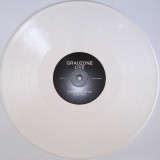
WRWTFWW Records is very happy to release Swiss cult band Grauzone’s recording of their April 12th 1980 live show at Gaskessel in their hometown of Bern. The 9-track album, documenting the very beginnings of the group, is available as a limited edition white vinyl LP in heavy 350gsm sleeve with special artwork by band member Stephan Eicher.
Experience the early Grauzone days, live from Bern, Switzerland, with a concert recorded at legendary local venue Gaskessel, with Martin Eicher on guitar and vocals, Christian G.T. Trüssel on bass, Marco Repetto on drums, Stephan Eicher on synth, and Claudine Chirac on saxophone. The performance is a true time capsule of the early 80s underground, showcasing the punk side of Grauzone with renditions of songs that were never officially released, as well as future fan-favorite “Moskau”. A piece of Swiss music history, This limited release is a must have for all Grauzone fans and DIY archivists.
About Grauzone:
The pioneering band from Bern (Switzerland) had a short-lived but highly-regarded career which birthed a cult discography that still fascinates and resonates today. Consisting of core members Martin Eicher, Stephan Eicher, and Marco Repetto, and on-and-off participants Christian GT Trüssel, Claudine Chirac, and Ingrid Berney, the elusive group broke new grounds in the early 80s, experimenting with punk and industrial music, early techno sounds, minimalism, new wave, pop, and various electronics. With an innovative and polished approach to design, visuals, performance, and all around style and philosophy on top of their superb music, the constantly transforming unit developed a whole experience - the Grauzone experience: wild and unpredictable, yet sophisticated and cohesive, or as Swiss music historian Lurker Grand would call it, "an Art band with a Punk attitude".
Completely rejecting the music industry rules and refusing to play the game of promotion, touring, release schedules, and TV appearances even though they had a multi-platinum international hit with the song "Eisbär", the band quickly disintegrated in full convention-defying glory, leaving behind an inspiring music legacy for the world to discover and discover again, one generation after the other.
Stephan Eicher went on to be, arguably, the most successful Swiss musician ever, with an international career extending from pop chanson to experimental escapades and collaborations with Moondog, artists Sophie Calle and Sylvie Fleury, and author Martin Suter among many other luminaries. Marco Repetto flourished as a techno and ambient producer, releasing multiple projects including releases on Aphex Twin’s Rephlex label.