Instrumental, Neo-classic, ambient, Piano with electronic Recorded at cult CBE Studio (Bernard Estardy) in Paris, The Love Note is a collection of eight startling new instrumental songs played by an experimental quatuor under the auspices of Belgium composer Benjamin Schoos: Ondes Martenot (Christine Ott), Christophe Cerri (Piano), Manuel Hermia (Flute), Jerôme Mardaga (modular synth)
quête:chris qu
New version on Solar Orange Vinyl. RIYL: Slowdive, DIIV, Electric Youth, The Cure, My Bloody Valentine. Solo project of Los Angeles based Matthew Doty (ex-Saxon Shore). For Matthew Doty, Deserta has always been about exploring a sonic universe that allows him to express a kaleidoscope of emotions, without having to say much at all. Through a patchwork of reverb-tinged textures – drone guitars, lingering synths and driving percussion – the Los Angeles-based singer/songwriter and multi-instrumentalist weaves together stories of care, frustration and catharsis that ultimately stretch to a gentle resolve. On new album Every Moment, Everything You Need, Doty chronicles the kind of year we all fear, full of uncertainty, tension and sustained pressure, and transforms it into a celebration of perseverance. It’s an essential reminder that we have the power to shape the stories we tell. The pandemic meant that Doty had to give up his studio and downsize a lot of his gear and instead, carve out a space in his two-bedroom apartment to craft the next chapter of Deserta. Sharing the space with his wife and son, Doty and his partner are also essential healthcare workers, which meant the couple would often have to tag-team childcare, along with 13-hour shifts in PPE and people constantly calling with questions about the ever changing guidelines and protocols. Once the blueprint for Every Moment, Everything You Need was set, Doty reached out to a number of collaborators to stitch together his vision for the sonic landscape. James McAlister (Sufjan Stevens, The National, Taylor Swift) came onboard to perform and record drums, while Caroline Lufkin (Mice Parade) wrote and performed vocals on the ethereal “Where Did You Go.” Elsewhere, the LP was mixed by Dave Fridmann (Tame Impala, Mogwai, Interpol), with Beach House and Slowdive producer Chris Coady engineering and co-producing, making this the first time Fridmann and Coady had worked together on a project. While the vocals are more prominent than Deserta’s previous albums, it’s their amalgamation with the instrumental aspects that secures Every Moment, Everything You Need as Deserta’s most confident and assured release to date. An affecting emotional candor teamed with persistent riffs and tenacious rhythms sees Doty unafraid to dive deeper; an unrestrained approach that ushers in a lustrous purging of agitation and anxiety. Showcasing those dark, exhaustive thoughts through crucial swells and looped, electronic soundscapes, it’s an LP that’s infinitely layered, with something new to discover with each and every enchanting listen.
Who are the spirit fakers? What do they want? These are just two of the many questions posed by The Difference Machine on their 3rd full length album, 'Unmasking the Spirit Fakers'.
Loosely based on an essay by the master magician himself, Harry Houdini, 'Unmasking the Spirit Fakers' finds the Atlanta-based psychedelic hip hop outfit examining the motives and practices of those who attempt to provide cure-alls and treatments for spiritual ills. Are they gurus or snake oil salesmen? Though abstract in their approach, The Difference Machine attempts to pin down these answers for the listener via a vast backdrop rich with dense lyricism and mind-bending production. Songs like 'Repeater' and 'Flat Circles' place them in the role of shaman whereas songs like 'Car Key' and 'It Ain't' venture to ask if they themselves are the spirit fakers in question.
Regardless of what role the ensemble assumes, the album was crafted with the human psyche in mind. Poignant guest appearances from hip hop heavyweights such as Sa-Roc (Rhymesayers), Quelle Chris (Mello Music Group), Homeboy Sandman, Denmark Vessey, Dillon & Sum add more colors to the canvas. The only wish of The Difference Machine is that the listener is both entertained and enlightened by this auditory adventure. They hope whatever conclusion you come to will be through honesty and sincerity.
Perhaps one day we will all be unmasked.
King Tubby and Producer Bunny ‘Striker’ Lee are intertwined in the birth of Dub Music. After discovering a mistake that made a ‘serious joke’ (more of which later...) they went on to release the first pressings of this new musical genre namely ‘Dub Music’. Tubby’s vast knowledge of electronics and Bunny’s vast catalogue of rhythms would lay the foundations of what today is taken as a standard... the Remix / Version cuts to an existing vocal tune.
Osbourne ‘King Tubby’ Ruddock was born in Kingston, Jamaica on 28th January 1941 and grew up in the High Holborn Street area of downtown Kingston. He studied electronics at Kingston’s National Technical College and also on two correspondence courses from the U.S.A... When he had qualified Tubby began repairing radios and other electrical appliances in a shack in the back yard of his mother’s home. His work in the early days included winding transformers and building amplifiers for Kingston’s Sound Systems. Tubby built his first Sound System in 1957 playing jazz and Rhythm & Blues at local weddings and birthday parties. His reputation as a man who knew and understood both electronics and music grew steadily and as the sixties drew to a close. Tubby purchased his own basic two track equipment. He installed this alongside his dub cutting machine, a homemade mixing console and his impressive collection of Jazz albums in the back bedroom of his home at 18 Dromilly Avenue which he christened his music room.
Tubby and Striker were at Treasure Isle Studio’s one day while Ruddy from Spanish Town was working with the engineer Byron Smith....
“Tubby and myself was talking when Ruddy was cutting some dub but Smithy (engineer) made a mistake through we were talking and forgot to put in the voice. It was two track recording in those days. Ruddy said ‘No Man! Make it stay! and so they cut the rhythm. When I went over to Ruddy’s that Saturday night a dance was in progress and when they played the vocal to the tune... then he said we’re going to play ‘Part Two’. They never called it ‘Version’..and then he played the rhythm track. The song was a catchy song and everybody started to sing along and the deejay started to toast so everything went down well. On Monday morning I went up and I said ‘Tubbs the mistake we made was a serious joke. It mash up Spanish Town! The people went wild. So you have to start to do that now ‘cause when the man put on the ‘Part Two’ everyone start singing this song. It played about twenty times. I said you try Tubbs!’...Well the next Saturday night now when Tubby strung up down the farm U Roy said he’s going to play ‘Part Two’ but Tubby did it different now. He started with the voice then dropped it out and let the rhythm run and then he brought in the voice in the middle and from there Tubby started to get really popular.’’
Bunny ‘Striker’ Lee
Dynamic Sounds upgraded to sixteen track recording in 1972 and Tubby purchased, again with the help of a deal brokered by Bunny Lee. The old four track equipment and the MCI console from their Studio B. The four tracks now gave him far wider scope to work with and he began to create a new musical form where the bass and drum parts were brought up while the faders allowed Tubby to ease the vocal and rhythm in and out of the mix. It was only a matter of time before Tubby’s dub plate experiments began to make it on to vinyl and the first ever long-playing King Tubby releases would feature a collection of his mixes to a selection of Strikers rhythms. So please sit back and enjoy this historic set of sounds, mixed by King Tubby and Mr Prince Phillip Smart and another set of scorcher Bunny Lee rhythms.
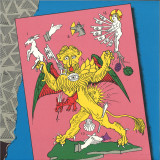
The Idealist is one of the many projects of Joachim Nordwall who has a long history in Swedish experimental music running the quintessential iDEAL Recordings record label since 1998, as a member of the psych-drone duo Alvars Orkester, avant punk rock trio Kid Commando and ritual drone rock group The Skull Defekts and through his many solo recordings and collaborations with people such as John Duncan, Aaron Dilloway, Mika Vainio, Mats Gustafsson, Leif Elggren, Gabi Losoncy, Mark Wastell and Christine Abdelour.
As The Idealist, he has been delving into an amalgam of experimental techno, dub and industrial music since 2006. His new A Lion Is A Lion And Not A Lamb continues this perspective unabatedly, conjuring up six tracks that shimmer with an almost psychotropic intensity, sometimes including acidic touches, dwelling in a confrontational minimalist musical stance where repetition, bursts of gorgeous noise and dubbed out skeletal rhythms make for wayward yet driving grooves at home on the dance floor and a set of headphones alike. The Idealist looks for engagement within rhythm, in its almost purest
form.
Available on vinyl for the first time in 10 years, with new cover design by Tim Rutilli Califone's earliest roots lie in the band Red Red Meat, from whence came Califone's founding members Tim Rutili and Ben Massarella and its longtime producer Brian Deck. The band's first release was a self-titled EP on Flydaddy in 1998, followed later by the full-length debut, Roomsound, in 2001 (later reissued on Thrill Jockey) and eventually the band's Thrill Jockey debut, Quicksand/ Cradlesnakes in 2003. After touring for the release of Roomsound, Califone had little time off to take in the impact of the music they were creating. In three years, they recorded four albums (two instrumental, two song-based including Heron King Blues) and toured heavily in between with Wilco, Modest Mouse, The Sea and Cake and others. After the tour for Heron King Blues in 2004, Califone finally took a breath and came back together in late 2005 to begin recordings. They worked on it in chunks at 4Deuces Studio in Chicago with Brian Deck, in Long Beach and Phoenix with Michael Krassner, and at home in Los Angeles and Chicago until May 2006. The time away and each member's individual work naturally brought new elements into the sound of Califone's music. Both Rutili's and Becker's soundtrack work are more atmospheric, however the challenge of enhancing a scene of film without cluttering it or overwhelming it informed their approach to the new recording. Similarly, the burglary of Califone's equipment during the band's last tour (including guitars, banjo, a 1917 violin, bells and more) altered the sound as they had to find new gear on a tight budget. The instruments are new partners, new sounds that forced them to stretch in new directions. Limitations, obstructions and darkness, and the new possibilities they illuminate; roots and crowns. "In that way", says Rutili, "this album is a conscious and resolved thing. It fully realizes ideas we touched on in the past and where we come from as a band, and takes us into our next phase of life."
Announcing Dion Lunadon's (of A Place To Bury Strangers / The D4) debut solo album, on Agitated Records. The album was recorded over a three-month period in Brooklyn, NY and features Robi Gonzalez (APTBS) on drums and Blaze Bateh from Bambara on select tracks including 'Fire'. "With 'Fire' I wanted wild and heavy guitars with heavy sentiment in the first vocal line to match. Something that grabs you and demands attention. Not background music," Lunadon explains of the track. The album also features mixing by Chris Woodhouse (Mayyors, Ty Segall, The Intelligence, Thee Oh Sees) on select tracks including 'Com/Broke'. From cutting his teeth back home in New Zealand as a member of The D4 to his current role as bassist of Brooklyn-based A Place to Bury Strangers, Dion Lunadon has played in some form of a rock & roll band his entire life. During a short break in touring with APTBS, Lunadon had a rush of inspiration in the form of a Dion Lunadon creative spasm — a neurotic impulse to make a batch of songs and do it right then and right there. What resulted is quite a jump away from his work in APTBS and draws more influence from bands like Toy Love and The Gun Club, as well as New Zealand unknowns such as Gestalt and Supercar. 500 only pressed / black vinyl theres 200 for UK/EU only
Now a two-times Number 1 UK Albums artist, Jack Savoretti’s 2015 album ‘Written In Scars’, a UK Top Ten, is now regarded as his breakthrough. A stunningly confident, almost effortless collection of songs, it contains co-writing and production from the likes of Adele / Sia musical collaborator Samuel Dixon and, on one highlight ‘Tie Me Down’, Matty Benbrook (aka Jake Bugg). Released in very limited quantities on vinyl at the time, and unavailable on the format for some years to the chagrin of Jack’s dedicated fanbase, this new repress of ‘Written In Scars’ comes on limited edition Aztec Gold vinyl, this new repress of ‘Written In Scars’ is looking and sounding better than ever on the format.
The new vinyl repress of Written In Scars represents another step in the celebration of Jack’s phenomenally successful years with BMG. After a successful mini digital campaign around ‘Christmas Morning’ in December 2021, this long-overdue vinyl repress of Jack’s first album with the label, comes courtesy of demand from diehard fans and all the new fans he has won over since its original release in 2015. Both Sleep No More and Singing To Strangers will follow with their own special vinyl editions in time.
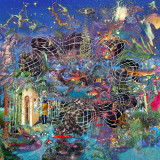
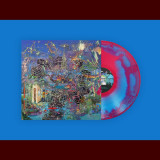
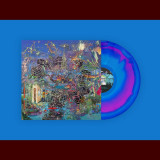
Azure, Vinyl Williams' fifth album was released on French label Requiem
Pour Un Twister in 2020
Azure marks a point of higher equilibrium for songwriter Lionel Williams, using far
more restraint and speed than his earlier releases, as well as a concentration of
unifying paradoxical qualities. Vinyl Williams' Opal (2018) was critically acclaimed
and his earlier releases, Brunei (2016) and Trance Zen Dental Spa (2015) - a
collaboration with Chaz Bear of Toro Y Moi - are fan favorites for their incessant
bliss and driving rhythms. Vinyl Williams' live shows are a spectacle of
pearlescent sights and sounds, with all of Williams' work combined and
synchronized together in rapturous hyper- dimensional moments.For fans of
Morgan Delt, Toro Y Moi, Ariel Pink, Part Time, Maston, Jacco Gardner, Arthur
Verocai, Sunbeam Sound Machine, The Free Design, Curt Boettcher, Chris Cohen,
Dungen.
Azure, Vinyl Williams' fifth album was released on French label Requiem Pour Un Twister in 2020 Azure marks a point of higher equilibrium for songwriter Lionel Williams, using far
more restraint and speed than his earlier releases, as well as a concentration of unifying paradoxical qualities. Vinyl Williams' Opal
(2018) was critically acclaimed
and his earlier releases, Brunei (2016) and Trance Zen Dental Spa
(2015) - a collaboration with Chaz Bear of Toro Y Moi - are fan favorites for their incessant bliss and driving rhythms. Vinyl Williams' live shows are a spectacle of pearlescent sights and sounds, with all of Williams' work combined and synchronized together in rapturous hyper- dimensional moments.
For fans of Morgan Delt, Toro Y Moi, Ariel Pink, Part Time, Maston, Jacco Gardner, Arthur Verocai, Sunbeam Sound Machine, The Free Design, Curt Boettcher, Chris Cohen, Dungen.
Azure, Vinyl Williams' fifth album was released on French label Requiem
Pour Un Twister in 2020
Azure marks a point of higher equilibrium for songwriter Lionel Williams, using far
more restraint and speed than his earlier releases, as well as a concentration of
unifying paradoxical qualities. Vinyl Williams' Opal (2018) was critically acclaimed
and his earlier releases, Brunei (2016) and Trance Zen Dental Spa (2015) - a
collaboration with Chaz Bear of Toro Y Moi - are fan favorites for their incessant
bliss and driving rhythms. Vinyl Williams' live shows are a spectacle of
pearlescent sights and sounds, with all of Williams' work combined and
synchronized together in rapturous hyper- dimensional moments.For fans of
Morgan Delt, Toro Y Moi, Ariel Pink, Part Time, Maston, Jacco Gardner, Arthur
Verocai, Sunbeam Sound Machine, The Free Design, Curt Boettcher, Chris Cohen,
Dungen.
- 1: Connais Tu L'animal Qui Inventa Le Calcul Integral?
- 2: Evariste Aux Fans
- 3: Les Pommes De Lune
- 4: La Chasse Au Boson Intermédiaire
- 5: Dans La Lune
- 6: La Faute À Nanterre
- 7: Ma Mie
- 8: Wo I Nee
- 9: Si J'ai Les Cheveux Longs C'est Pour Pas M'enrhumer, Atchoum!
- 10: La Révolution
- 11: Je Ne Pense Qu'a Ça
- 12: Je Chante Pour Vous Faire Marcher
- 13: Je Ne Suis Pas Simple
- 14: Si Les Étoiles Pouvaient Parler
Évariste is one of the rare specimens of artist-cum-scientists. Among his kind stand others like Pierre Schaeffer, a Polytechnique graduate (an engineer but also the father of musique concrète) and the eccentric Boby Lapointe (graduate of the École centrale and inventor of the Bibi-binaire system, patented in 1968). Évariste's songwriting, joyful and full of energy (albeit extremely critical), shrouds an original tragedy: born in 1943 among résistants, Joël Sternheimer (aka Évariste) grew up without a father, lost to Auschwitz. Although he makes little reference to Jewish culture in his music, his origins leave their mark: in 1974, he sings a Hebrew song on television. In 1966, the young Joël sports Princeton's colourful paraphernalia - that's because he's freshly returning from the US, where he was sent to pursue his research on "particle mass and the interpretation of observed regularities, such as the effects of a wave" (will understand who may). When he gets there the country's in the midst of the Vietnam War. With McNamara keen to find an alternative to the nuclear weapon and calling upon the country's biggest brains to undertake the task, there's a "fund shift" within the university - a diplomatic way to give notice to whoever may not be disposed to follow the government's scheme. Joël, who's under the supervision of a rebellious physician, is dismissed. He regardless keeps following the prestigious seminaries of the Institute for Advanced Study, chaired by Oppenheimer, inventor of the atomic bomb. Likely inspired by the hippie movement and music, Joël buys a guitar and starts playing in Washington Square - after all, Bob Dylan himself started there. He blithely skips Oppenheimer and receives a warm (though surprised) welcome from a crowd thoroughly unfamiliar with French. When the ageing physicist questions him about his decreasing attendance, Joël explains how drawn he is to music, and how he thinks it could help him in self-financing his research. Évariste recalls seeing the sickened man, his face torn by remorse, lighten up to his words and say: "What's keeping you - go for it! If I was still young that's exactly what I'd do." The student takes these words as a testimony from his professor - and it's enough to convince him . And so he takes the leap during the Christmas vacations he spends in Paris. A journalist friend he often sees around the Sorbonne introduces him to the artistic director of Disques AZ. The latter passes the tapes on to the label's boss, Lucien Morisse, also program manager on Europe N°1. Morisse is blown away - and signs him onto the label right away. Michel Colombier, arranger for Serge Gainsbourg and co-author of "Psyché Rock", with Pierre Henry, contributes some of his original ideas to the 7 inch "E=mc2": Évariste's preoccupation with the percussion sound on the track "Le calcul intégral" is that it goes "poom poom" and not "tock tock" - Colombier is aware of the issue and records Évariste's guitar like a percussion in an isolated booth. The organist Eddy Louis, who is to participate, in 1969, to the success of Claude Nougaro's "Paris mai", also appears on the record. It's 1966 and the Antoine phenomenon (signed on Vogue) storms through France. The two singers share similarities: Antoine is an engineer of the École centrale, gifted with a great originality in his song-writing. A godsend for the two labels who turn this resemblance into a commercial strategy, setting them out as rivals. To this day though, Évariste still denies what was little more than slushy tabloïd gossip. Success comes around swiftly and in 1967 Évariste launches into a second 7 inch, "Wo I nee", again arranged by Michel Colombier. Quantum mechanics fans finally get their anthem with "La Chasse Au Boson Intermédiaire" (or the "Intermediary Boson Pursuit"). To sum up what's a boson, say he's a close pal of the meson, photon and other gluons. A few months later, it's May 68 and everything's turned upside down. Évariste writes a series of songs inspired by the events, which he immediately submits to Lucien Morisse. When the man behind "Salut les copains", once married to Dalida, hears the song "La révolution" - a father and son dialogue - he can't take any more: AZ simply cannot release this. But there and then Lucien Morisse makes a gesture which will remain engraved in French music's history: sorry to be unable to officially stand by the singer, he encourages him to self-produce the record, but with his tacit support. He calls the pressing factory and asks they apply the same rate for Évariste as they would for AZ. The singer and his musicians use the same studio as for the previous record, all of them playing for free awaiting a return on investment. Évariste keeps singing at the Sorbonne with "Jussieu's gang" and "the young Renaud" he nicknames "le p'tit gavroche" (or "street urchin"). Renaud volunteers to type the lyrics of the song "La révolution" so that the chorus can be sung and recorded. A boy in the group is related to Wolinski and introduces them. The two get along so well that Wolinski ends up drawing the cover for the record "La révolution", for free. The self-released 7 inch "La révolution / La faute à Nanterre" is sold under the table and door-to-door for half the price of a standard record, on and around the boulevard Saint-Michel; and it runs out fast. In the end, there will be 6 releases of the record, and 25000 copies sold. When the theatre director Claude Confortès decides to adapt Wolinski's drawing series titled "Je ne veux pas mourir idiot" ("I don't want to die a fool"), he asks Évariste to write the original soundtrack. His friend, now cartoonist for Hara-Kiri Hebdo, often promotes him in accordance with a principle dear to him by virtue of which he gives a special place to his friends. Dominique Grange (writer of the song "Nous sommes les nouveaux partisans") soon joins the team. After 150 performances, Évariste leaves his place to Dominique Maurin (brother of Patrick Dewaere). Évariste composes the songs for Claude Confortès' next play, "Je ne pense qu'à ça" ("That's all I think about"), co-wrote with Wolinski in 1969. The comedians of the play record the songs on a 7 inch, with a cover signed, again, by Wolinski. In 1971, French television produces the documentary "Évariste et les 7 dimensions", but doesn't air it. Indeed, the scientific sub-comity of the programming comity (sic) censors the show. The given justification is that "Évariste dangerously mixed science with science-fiction, numerology and other non-scientific disciplines". The underlying motive might have been a will to censor the singer-mathematician's political discourse. In the documentary and among other things, Évariste discusses hierarchy, alienation and revolution. Half a century later the documentary remains invisible, though some excerpts resurfaced in 1992 in the cult show "L'oeil du cyclone", on Canal +. Though flourishing, Évariste's career is nearing its end. 1970 is the beginning of a decade in the course of which he is to make a decisive discovery in the musical and scientific domains. Following this breakthrough, he moves away from self-produced music and gaucho magazines to focus on science. He keeps Oppenheimer's encouraging words in mind, now freely pursuing his research thanks to the sales of his records. Joël realises that when decoding protein sequences, one finds musical sequences recognisable to humans. He names them "proteodies". If, when listening to a proteody, one responds by being so sensitive as to finding it beautiful, then it reveals a deficiency of the related protein - and this peculiar music may be the cure. We could trace back the music history in light of proteins lacking in a given artist, or within a public's majority. You always thought these hysterical groupies who'd throw their underwear with passion and faint in the pit had miraculously appeared because they had never heard anything as wonderful as the Beatles? Make no mistake! For Évariste, it all boils down to an intro's protein content. Indeed, the beginning of their first hit "Love Me Do" corresponds to dopamine, the neurotransmitter linked to compulsive buying. An intro like this could only unleash the fervour of groupies, victims of fashion and biology. Évariste's success is such that the income from his sales gives him the autonomy to which he had aspired when confiding to Oppenheimer. It made it possible for him to pursue his research without any institutional constraints. He now devotes himself to his proteodies, sat in the offices of the European University for Research, just around the corner from the Sorbonne he knew so well. Évariste is no more. Joël regained control of this strange and comical beast.
This LP repress is on black vinyl, includes A3 Theatrical Poster, Booklet + DL Card. Following the huge recent success of ‘King Rocker’, spotlighting The Nightingales as one of the best band’s in Britain, comes the soundtrack. Comedian Stewart Lee and director Michael Cumming (Brass Eye, Toast Of London) investigate a missing piece of punk history. Robert Lloyd, best known for fronting cult Birmingham bands The Prefects and The Nightingales, has survived under the radar for over four decades. But how, if at all, does Robert want to be remembered? The anti-rockumentary ‘King Rocker’ weaves the story of Birmingham’s undervalued underdog autodidact into that of the city’s forgotten public sculpture of King Kong, eschewing the celebrity interview and archive-raid approach for a free-associating bricolage of Indian food, bewildered chefs, vegetable gardening, prescription medicines, pop stardom and pop art. All of the highlights from the film are here, along with rarities which won’t appear on any of the deluxe reissues of the Nightingales’ catalogue, among them 7″ versions of “Use Your Loaf”, the Bob Luman hit “Let’s Think About Living” and “Black Country”, a glam remix of crowd favourite “Thick And Thin” and a version of Christy & Emily’s “Ghost” which rivals the Nightingales’ take on TLC’s “Unpretty” for sheer beauty. The only act with roots in the punk era that have gone on to make records more captivating, cutting and entertaining today than at any point in their past; 2022 will be a busy year for the Nightingales, with months of live dates planned, a limited edition remix 12″, deluxe reissues of both ‘Hysterics’ and ‘In The Good Old Country Way’, and a hardcover book collecting Robert’s lyrics. “An inspiring comeback story that feels profoundly necessary” The Quietus // “Lee tells Lloyd’s story with skill, passion and verve” The Times // Track listing: A1 Use Your Loaf
Back In Stock!
‘Cranes In The Sky,’ was originally written by Beyonce’s baby sister Solange alongside Raphael Saadiq, for her album back in 2016 that was cited by Rolling Stone as one of the most important 500 records of all time. The words exploring a fearless journey inward, pulling up the root of a problem, and the first glimpse of blue sky after the storm has passed.
Fast forward to 2022 - Ross Allen and Andy Thompson’s Foundation Music Productions enlist the expertise of Baltimore club legend, Dj Oji, together with Tracy Hamlin (Pieces Of A Dream), to take Solange’s breakout delivery to the dancefloor. Soulful vocals will heal you, while the mid-tempo moments will mellow the masses, and UK Funky grooves will keep the shuffle moving along way into the early hours. Three remixes come in the form of the ethereal DJ Pope Funkhut Reprise, a signature Joe Goddard groover and the Star One. KDA. Meltdown Dub.
DJ Feedback:
FRANCOIS K
Yes! I played the vocal version the other day again.
KAI ALCE
Dope re-interpretation from Baltimore stalwarts OJI, POPE & Tracy!
GREG WILSON
What's not to like? Love the orig Solange jam!
DANNY KRIVIT
Nice, I like a lot of DJ Oji.
SOUL CLAP/ ELI GOLDSTEIN
Fire right here
DAZ I KUE/ BUGZ IN THE ATTIC
Yea I love this one…cool vibes.
THATMANMONKZ
Oh yeah, love the Solange original, and I’m a big Oji fan! That reprise version might come in very useful for the right set!
TERRY FARLEY/ FAITH
Got to be contender for single of the month with that story x
HOT TODDY
Simply beautiful.
CRAIG SMITH/ 6TH BOROUGH PROJECT
Loved the original of this from Solange a few years back, this is a real nice interpretation of it. Liking the reprise and Dub, handy tools
CHARLES WEBSTER
Nice soulful groover. Like this.
FISH GOO DEEP/ GREG DOWLING
Lovely re imagining of one of my favourite tracks of all time
FRANK BOOKER
Love this package. Reprise mix is the one for me. Very cool!
NICK V/ LA MONA
Thanks a lot I actually prefer the dub version :)
JIMPSTER/ FREERANGE
Killer groove on this and really nice to hear a housed up version of Cranes which is such a stunning song in it’s OG form. Def something I’d like to play out.
FELIX JOY/ SWU.FM
Yes ! I flippin love a good reprise mix and this one is doing it for me. Love the original version by Solange and this is a really great rework!
STEVE PARRY / FOR SASHA
Really Smoove love it.
GROOVE ARMADA/ TOM FINDLAY
THIS IS LOVELY!!
RALPH SESSION/ HALF ASSED RECORDS
Wow the dubstrumental really gives it new life.
QUENTIN HARRIS
I love this package.
GRAME PARK/ THE HACIENDA
This is tremendous
HECTOR ROMERO/ DEF MIX
Good to see this one got picked up. I’ve played this a few times since 2018 but will get it back in rotation. Glad to see this song is getting some traction. I look forward to the unreleased versions.
ANDY BUCHAN
What a sun-dappled slice of beauty! Full support on this, what a gorgeous EP. And those drums are ace, really propulsive.
DANIELLE MOORE/ CRAZY P
Yeah I really like this. I mean I love the original but theres something quite interesting about this. Nice yeah x
MARC MEISNERE/ SOL POWER SOUND
Yes please! Can’t wait to play this one!
STEFANO TUCCI/ HELL YEAH
This is one of the best best vocal of recent times, I love It, the crescendo towards half of the track is nothing but gorgeous!
TREVOR FING/ GRAFITTI KINGS
Love these remixes.
MAX P/ HELL YEAH
Yeah, full pack is what I needed !
HORSE MEAT DISCO/ SEVERINO
Really into this!
SEAN JOHNSTON/ ALFOS
I wouldn't play it, but it's a beautiful piece of work
GRAEME PARK/ THE HACIENDA
I’m gonna enjoy playing this its lovely.
NICK V/ LA MONA
Thanks a lot I actually prefer the dub version :)
TREVOR FUNG/ GRAFITTI KINGS
Love this !!
QUENTIN HARRIS
Being a fan of the Original I love everything about this.
ALAN DIXON/ MIDNIGHT MAGIC
Killer!!!!
DAVE JARVIS/ FAITH
This is amazing! Absolutely love xx
NICK V/ LA MONA
This is a fantastic track!
MAX P/ HELL YEAH
Oh yeaahhhh
RICK GILL/ OUTLAWS YACHT CLUB
Beautiful soulful house. Quality production and top draw vocals.
MICKEY JUKES/ 1BTN
Ooof! Such a strong record to step to but i love this. Classy production, vocals are killer. All round winner!
TOMMY TURBO JAZZ/ JAXX MEDICINE
I was a fan of the OG but I really needed this cut!!
RUSSELL FORMAN/ PIKES/ HARRYS KEBABS
This is great .... I'm writing an article on the Coney Island Boardwalk house parties atm.
JIM LISTER/ 1BTN
Loving the reprise and the dub!I'm a big fan of the Solange original, so it's nice to hear a new angle on it
CHRIS DE BEURRE/ THE EAGLE
Gorgeous vocal! And such a deep production - really like this! Infectious x
DAIRMONT/ ROOM WITH A VIEW
Amazing track. Loving it!
STEVE PARRY/ FOR SASHA
Beautiful super smooth.
LES CROASDAILE/ FREIGHT ISLAND
Tune this, reminds of Southport weekender!
Greek genius Christos Chondropoulos’ stunning debut for The Death of Rave finally lands on vinyl - an incredibly imaginative masterwork rich with quartertone melody and meticulously chiselled production, shaped into a future-folk songbook that deeply expands on his wonders for 12th Isle and The Wormhole. Highly recommended if yr into Paul DeMarinis, Rashad Becker, Ryuichi Sakamoto, Kara-Lis Coverdale's 'Aftertouches', Jonathan Bepler’s soundtracks for Matthew Barney, Black Sabbath or Aphex Twin. Floors us every time!
Continuing Christos’ singular fascination with, and reappraisal of, Ancient Greek modes, ’Relics’ further excavates the deeptime topography of Greek music prior to the ban of “oriental” or 1/4 tone microtonal modes nearly 100 years ago.
Clandestine, euphoric, hyperreal and otherworldly; it takes shape as faintly familiar forms of new age folk, avant-techno and metal musicks, but with an alien appeal that treats the past almost like another planet, never mind a foreign land. Christos studiously raids the past for lost treasure, navigating his tuned instincts as an improvising percussionist, and lover of non-Western composition, to create a uniquely absorbing soundworld that resembles an AI’s dreams after ingesting encyclopaedia entries on thousands of years of Greece prior to 1936. In the process, the album acutely questions his and our relationship to the past, and what has become lost in translation with reliance on prelaid templates and the “wisdom” of elders.
Bursting to life with the iridescent arps and new age AI chorale of ‘First Love Fereter’, and concluding with bone-clacking raverie of ‘Jungle X’, the album offers a stunning advance of the themes and aesthetics in Christos' previous records, from the self-released free jazz of ‘Fingerpainting’ (2013) to 2021’s 12th Isle released ‘Athenian Primitivism.’
Thanks to meticulous detailing, ‘Relics’ allows a finer play of textured light and almost tangible - yet entirely generated - voices into his music: most strikingly on the sublime songcraft of ‘Regret’ and ‘I Dream Of You’, while the likes of ‘Asham’ are bathed in deeply uncanny atmosphere, and his percussive proprioceptions are most heightened in the delirious battery of ‘War Horns’ and ‘Sacrifice’, with ‘Cyber Crust’ calling up demonic, cthonic pagan spirits resembling Black Sabbath undergoing regression therapy.
- A1: Visitors - Visitors
- A2: Sem Studios - Ivresse
- A3: Des Profondeurs Jesus - L'electrocute
- A4: Les Chats - Bizarre
- A5: The Starlights - Mao Mao
- A6: Basile - Itubo Del Anno
- A7: Chico Magnetic Band - Pop Or Not
- A8: Les Maledictus Sound - Kriminal Theme
- A9: Jesus - Songe Mortuaire
- B1: Basile - Engins Bizarres
- B2: Human Egg - Onomatopaeia
- B3: Les Monegasques - Psychose
- B4: Chris Gallbert - Sing Sing
- B5: Hermans Rockets - Space Woman
- B6: Piranhas - La Turbie Pirhanienne
- B7: Human Egg - Egg
- B8: Les Maledictus Sound - Inside My Brain
- B9: After Life - (Le Secret De) La Vieille Dame (Le Secret De)
Eighteen sacred psychedelic suppositories from the laboratory of mad scientist and scalpel-happy pop mutilator Jean-Pierre Massiera. Includes
the rarest and most sought after fuzz funk, spooked surf and
interplanetary prog from ‘The French Joe Meek’ and all his schizoid splitpersonalities and freakish friends - The Maledictus Sound, Chico
Magnetic Band, Visitors, Human Egg, The Pirhana Sound and Jesus
himself.
Let Finders Keepers introduce you to some old friends of theirs - Charlie Mike Sierra, Jean-Pierre Areisam, JPM and Co. Erik, The Horrific Child, Jesus, Les Maledictus Sound, Human Egg... This might sound like they’re flicking through the imaginary LP racks in the record shop from ‘A Clockwork Orange’ or perhaps congratulating the runners up in a
Halloween fancy dress competition but for the previously uninitiated you
have just been ordained into the congregation of the many split
personalities of one Mr. Jean-Pierre Bernard Massiera. Bow down to the
nine-headed monster as he mutates and shape-shifts back through time
to his humble beginnings in a Buenos Aires province ravaging and
pillaging the music of the European people for his own twisted
benediction along the way.
This might, as intended, sound a little bit dramatic but if there is one
single ingredient that gives the eccentric Jean-Pierre Massiera his
distinct flavour it’s a large dollop of drama. Add sprinklings of
schizophrenia, shock, myth and macabre and you are on the way to a Bmovie broth with an acquired taste that has, like all the best cheese,
taken over thirty years to mature to perfection. Like all the best monsters,
his split personality is the key to his infamy and the secret of his blood
sucking success.
This is why Jean-Pierre Massiera is (un)commonly known for two key
periods in his career which, like a worm, can be split down the middle to
thrive and flourish independently. To cut a long story short, Massiera is,
above all, a lover and purveyor of musique fantastique, and is willing and
able to hijack whichever stylistic vehicle that passes him buy in order to
do feed his lust. In the earlier part of his career he honed his sordid craft
amongst psychedelic circles in Nice and Quebec. From late 1972
onwards he moved to Antibes and started a disco revolution and
became an in demand cosmic record producer. For years, prog rock
obsessives and disco aficionados have wondered if there was two
unrelated freak merchants called Jean-Pierre Massiera but, in this rare
instance, exploito-maniacs from both sides of the cosmic coin are united
by the work of this singular, single-handed monstrous music
manufactory.
Remastered and available once again on deluxe black vinyl since the
initial Finders Keepers limited edition 2009 pressing
Petter Eldh's explosive ensemble Koma Saxo continues their adventures with a new album "Koma West", out on We Jazz Records, 18 March 2022. The album sees Koma Saxo expand on their previous sound with the addition of vocalist Sofia Jernberg and a strong cast of featured artists, including cellist Lucy Railton, violinist Maria Reich, pianist Kit Downes and accordionist Kiki Eldh (Petter's mom!). The hard-hitting key quintet remains, including Eldh on bass and assorted instruments, Christian Lillinger on drums, plus saxophonists Otis Sandsjö (of Y-OTIS), Jonas Kullhammar and Mikko Innanen bringing the SAXO to the KOMA operation.
At 14 tracks, "Koma West" is a full menu of monumental compositional ideas that could spawn entire albums. True to his chop & go production style, Eldh relies on continuous movement while presenting another all killer no filler program taking Koma Saxo on a sonic outing not quite like anything that had previously appeared under the band's name. That being said, there's very much the Petter Eldh touch here, one which might be hard to pinpoint and verbalise, but nevertheless a recognisable style of composing, producing and arranging.
Thematically, the album is rooted in the West Coast of Sweden, where Eldh grew up – he's from a tiny town called Lysekil. There's a thread of Swedish folk song tradition that has been part of the Koma Saxo DNA from the get-go and you can hear that here as well, especially on cuts such as "Närhet", beautifully sung by Sofia Jernberg.
Petter Eldh says:
"In a way, it's a concept album and a celebration of the Swedish West Coast. The first single is called 'Koma Kaprifol', and kaprifol is the landscape flower of Bohuslän on the West coast, where I grew up. I'm not too wild about attaching strong narratives to my music but there's no way around it this time. The oysters, a common snack around the coast, are a strong conceptual presence here. Anyway, they seem to pop up here and there quite often already thus far in the Koma Saxo narrative, even though it's not always so obvious. Koma Vocals! Koma Strings! I love the presence of Sofia Jernberg here and I love writing string arrangements, too, although I never thought I would do it for Koma, but of course, Koma should have some strings, why not?. Koma Saxo should and can become anything."
Graeme Martin and Liam Karima made the new pet deaths album to be
both explored and sat with
In age of dull disconnection and constant refreshing, unhappy ending, the London
duo's second full- length effort, was deliberately and acutely considered to be a
journey of its own; nine new songs but one whole immersive piece for the listener
to climb inside, in the quiet of reflection, in the sobering commute to and
from.Following on from the sparkling celestial folk of the band's 2019 debut To
the Top of the Hill, unhappy ending is the next step in pet deaths' somewhat
remarkable journey. Setting out to make their new album, the band had one
question in the forefront of their collective mind: Is life an unhappy ending, or do
we become part of a bigger movement to more positive things?
Across the album's nine tracks, this conundrum is explored in many and
meaningful ways, their subtle take on melancholic folk- pop conjuring a
bewitching atmosphere that hangs over every inch of the album. unhappy ending
thrives within the world it creates for itself, one of distinctive colours and shapes
that feel intimate and familiar but always slightly off- kilter, as if you've
momentarily stepped into someone else's dream. It sings of love and loss and the
unwieldy connection between those two things, in ways that feel quietly radiant
and beguiling, caught in an alluring contrast. Recorded at a residential studio in
Oxfordshire which they used as a retreat from the business of London – fleshedout and toyed with over time with their acclaimed producer Ian Davenport
(Slowdive, Gaz Coombes, Radiohead's Philip Selway) who encouraged the duo to
lean into the wilder parts of their creativity. Inspired, musically, by the spiritual
moments of Alice Coltrane, the freeness of Miles' 'Bitches Brew', with a sprinkling
of Talk Talk's 'Spirit Of Eden' in its colourful unravelling, unhappy ending is an
enveloping experience, touching upon universal themes but all shone through the
lens of Karima's signature perspective.
Tour in May & June in support of the release - dates in Newcastle, London, Bristol,
Manchester & Sheffield.
Pet Deaths previously supported the likes of Elbow and Arab Strap.
Support from So Young Magazine, Chris Hawkins (BBC 6 Music), DIY Mag, Clash,
Huw Stephens (BBC Radio 1)
The dawn of Symphonic Therion glooming at the horizon, yet still drenched in Dark Metal execution! Though it was their fourth full-length, and we had been given a sampling of their symphonic/gothic direction with “Symphony Masses: Ho Drakon Ho Megas”, “Lepaca Kliffoth” might remain the most memorable masterpiece of the band’s career along the follow-up “Theli”. A transitional phase between the band’s Death Metal roots and the hybrid of symphonic, gothic metal which they would carry forward for the rest of their career. This is an extremely dark album. The band retains their fascination with obscure occult magick and prophecies within the lyrics, and the music revolves around killer mid-paced Metal riffs drenched in the vocal libations of Christofer Johnsson. The album starts off strongly with “The Wings of the Hydra”, and from there on the serpent has snaked about your spine. An addictive piece with an obvious Celtic Frost influence, chanting vocals, simple synth tones and arabesque guitar melodies which evoke the mythical age of the song’s namesake. The album’s ‘hit single’, “The Beauty in Black” is glorious and gothic, it uses a pair of operatic vocalists (male and female), a sort of predecessor to the revolving door of guest musicians the band would use on their later albums. Other excellent tracks include the charging “Riders of Theli”, the crushing doom of “Black” which would have fit almost perfectly on “Into the Pandemonium”. The rest of the album is equally dark and enchanting, with other standouts being the title track and “Evocation of Vovin”. Synthesizers, flutes multiple vocalists, and the core of the band are all clear and precise throughout, yet it still carries a very raw and dark, ominous tone to it which trumps the later studio efforts. This may not be quite as symphonic as many Therion fans demand of their material in recent years, but it clearly marks the point where this band transformed from a innovative Death Metal band into the Gods of Gothic Metal. There are very few parallels to something like this, and it belongs in the collection of any fan of quality Occult Metal.