Faitiche welcomes a new artist: Christina Kubisch belongs to the first generation of sound artists. Her practice ranges from performances, concerts, to works with video and visual art, but she is best known for her sound installations and electro-acoustic compositions.
TUNING brings together three pieces by Christina Kubisch from different periods of her oeuvre. What they have in common is the way they transform sound phenomena originally considered “non-music” into compositions.
Jan Jelinek: Gaming in Silence (2024) is the most recent work on this compilation. It’s a collage of electromagnetic waves, voice, and abstract sound textures. How did this combination come about?
Christina Kubisch: Gaming was commissioned as a fixed-media composition for the Sound Dome at ZKM Karlsruhe. Since Resonances: The Electromagnetic Bodies Project (2005), I’ve been making recordings in the old and new server rooms at the ZKM and in their permanent collection of historical computer games. Computer games like Asteroids (Atari, 1979) and Poly-Play (VEB Polytechnik, 1986) have specially generated analogue electromagnetic waves that interest me in particular on account of their density, rhythms and textures. I originally studied painting and to me the work of composition often feels like painting an abstract picture. I alter my source material as little as possible, layering and overlapping until a distinctive sound space emerges. In recent pieces, I sometimes combine magnetic waves with field recordings or live instruments. In Gaming it’s my recording of a Chinese song about silence.
JJ: Two persons walking through a street in Madrid (2004) is a recording from your Electrical Walks series. Here we should give a brief explanation of one of your best known works: participants in an Electrical Walk move through public spaces wearing prepared headphones that allow them to receive electromagnetic waves from their surroundings – for example from security gates, ATMs or neon signs. They discover a situation that normally is inaudible to the human ear and they can actively shape it by choreographing their movements. I really admire this piece, not least because there’s no clear dividing line between participants and artist. What exactly do we hear in Two persons walking through a street in Madrid (2004)?
CK: With this early work, I wanted to understand what is heard by people participating in an Electrical Walk in the same place but moving in different ways. The Spanish composer Miguel Alvarez-Fernàndez and I set off from opposite ends of a major shopping street in Madrid, met briefly in the middle, and then continued to the end. We both recorded our walks and I then layered them over one another. You might call it a work of electromagnetic conceptualism.
JJ: Diapason (2009 version) is an installation that plays a composition based on sounds from fifteen tuning forks. This setting is audible in the recording: there’s no dramatic arc, no beginning or end – instead, it recalls a piece of aleatoric music focussing on the decay phase. How did you come to make this work and could you tell us something about your compositional method?
CK: Diapason is part of a series of three pieces that deal with “non-instruments” or instruments that no longer exist: electrical mine bells used to send signals to the workers underground; a historical glass harmonica originally used for medicinal purposes; and tuning forks that were used by doctors to test people’s hearing. All of these methods are no longer in use. The sound of the tuning forks, audible only if held close to the ear, was recorded at the electronic studio at Berlin’s Technical University in such a way that even their decay remained audible. The frequencies range between 64 and 2048 Hertz and they can be adjusted at micro-intervals using small movable weights. The sequence and the duration of the pauses are dictated by chance and were not defined in advance. The 2009 version was created for an installation in the historic Holy Cross Church (Korskirken) in Bergen. Visitors could enter and leave the space at any time, deciding for themselves where and for how long they wished to listen to the sounds played back over an array of small loudspeakers placed on the floor of the apse.
Credits:
Gaming in Silence: commission of the ZKM/Hertzlab, Karlsruhe 2023
elektronic sound processing: Tom Thiel
sound engineering and mixing: Eckehard Güther
Diapason: produced at Elektronisches Studio of TU Berlin
rearrangement: Eckehard Güther
Christina Kubisch, published by Edition Christina Kubisch / Random Musick Publishing
image front: Transitionen 2021 by C. Kubisch, sonagrams of electronic waves (courtesy: Galerie Mazzoli Berlin)
image back: Diapason Tuning Fork, property of Folkmar Hein, Photo: Archiv Christina Kubisch
design by Tim Tetzner
mastered by Giuseppe Ielasi
Thanks to Miguel Álvarez-Fernández, Folkmar Hein, Dominik Kautz and Mario Mazzoli
Поиск:christina
Все
Composed by Christina Vantzou between 2023 and 2025 after being commissioned by INA GRM, »The Reintegration of the Ear« defines listening as a radical, embodied act of attention: a slower kind of presence rooted in care, intimacy, and reflection. Performed with John Also Bennett, Oliver Coates, Roman Hiele, and Irene Kurka, the work moves through intuition, breath, and resonance, forming an acoustic ecology between perception and expression.
Paired with »Observations, Edits, a Cure for Restlessness«, a companion suite of domestic fragments and temporal drift featuring harp by Sissi Rada, Ben Bertrand's bass clarinet, and others, time here is embodied, a porous medium where sound floats, reforms, and reveals itself as both instrument and witness.
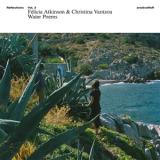
FELICIA ATKINSON & CHRISTINA VANTZOU
REFLECTIONS VOL. 3: WATER POEMS
Auf ,Reflections Vol. 3: Water Poems" bringen Félicia Atkinson und Christina Vantzou ihre Freundschaft und ihre atmosphärische Kunstfertigkeit in einem feierlichen Fokus zusammen. Gesprochene Worte und orchestrale Fantasie fließen wie Nebenflüsse in einen einheitlichen Strom und ergeben eine Sammlung traumhafter Lieder und Klanglandschaften, die im Meer, im Himmel und in den Steinen verankert sind. Mit elektroakustischen Instrumenten, Gesang und Umgebungsgeräuschen lädt Water Poems die Zuhörer in einen unbewussten Raum ein, irgendwo zwischen alltäglicher Intimität und dem Geheimnis des Ozeans, aus dem alles Leben entsteht. Atkinson und Vantzou haben sich 2009 kennengelernt und seitdem immer mal wieder zusammengearbeitet, aber ein Konzert 2019 in der Philharmonie in Paris hat dieses Projekt richtig in Gang gebracht. Da beide jetzt an der Küste leben (Félicia am Ärmelkanal, Christina am Mittelmeer), wurde das Meer natürlich zu ihrer Muse. ,Das Meer wurde nicht als monolithische Postkarte betrachtet", erklärt Atkinson, ,sondern eher als eine Person an sich; eine Energie, ein Geheimnis, ein komplexer Charakter, dem wir als Menschen, die am Meer leben, jeden Tag begegnen." Im Dialog mit dem Land und der Küste nahmen ihre Sprache und ihre Klänge einen sakramentalen Charakter an. ,Ein feierliches Gefühl, ein Gefühl des Dienens, zieht sich tief durch dieses Album", bemerkt Vantzou, ,ich habe das schon einmal gespürt, aber hier, in der Zusammenarbeit mit Félicia, ist es stärker." Stimme, Atem und wässrige Texturen prägen den Ton des maritimen Mysteriums von Water Poems. Neu in Vantzous Praxis und seit langem ein prägendes Merkmal von Atkinsons Werk, gewinnen ihre gesprochenen Worte hier an relationaler Intimität, indem sie sich gegenseitig und die Uferpromenade ansprechen. Die Texte wurden über zwei Jahre hinweg gemeinsam zusammengestellt. Mit radikaler Unschuld lenken sie das Bewusstsein auf die verborgene Auftriebskraft und die unbewussten Strömungen, die durch das Leben fließen: ,Wie kann ein Boot schwimmen? Wie kann ein Flugzeug fliegen? Wie kann ein Körper schwimmen? Wie kann ein Mensch träumen?" Was mit nah aufgenommenen Stimmen und Feldaufnahmen begann, wurde um Synthesizer, Gongs und Metallophone, Klavier, Vibraphon, Rhodes, Gitarren und Mellotron erweitert. Das Gezeitenklavier des Eröffnungstracks ,Film Still / The Sea" zieht uns in die unbewussten Gewässer des Albums. Enthalten sind Feldaufnahmen, die Vantzou in Delphi in der Nähe des legendären Orakels von Pythia aufgenommen hat - ihr griechisches Erbe verleiht diesem Ort der Vorfahren eine zusätzliche Dimension. Dieser Track und ,Water Poems" als Ganzes sind Ausdruck unseres geologischen Erbes und rufen zum Schutz der Küsten und zu einer Vertiefung unserer Beziehung zu unseren Küsten auf. Ein Teil der Einnahmen aus dem Album geht an Arion, ein gemeinnütziges Naturschutzprogramm für das griechische Mittelmeer. Der langjährige Freund und Mitstreiter John Also Bennett hat bei ,Scorpio Purple Skies", dem kosmischen Finale des Albums, mit E-Gitarre, Lap-Steel-Gitarre und Gesang mitgewirkt. Diese üppige Instrumentierung passt super zu den Science-Fiction-Visionen und der feierlichen Atmosphäre des Albums. Water Poems wurde in The Old Carpet Factory, einem Herrenhaus aus dem 18. Jahrhundert auf der griechischen Insel Hydra, in der Villa Medici aus dem 16. Jahrhundert in Rom und in Les Dunes, Atkinsons Heimstudio in der Normandie, aufgenommen. Mehr als das historische Prestige dieser Orte war es die spürbare Geschichte ihrer Landschaft, die die Musik geprägt hat. Atkinson sagt, dass sie sich zu ,Orten mit seltsamer Anziehungskraft" hingezogen fühlten. In der Villa Medici ,haben Steine und Mineralien das gesprochene Wort beeinflusst", bemerkt sie. ,Wir beide legen Wert auf Gefühl, Atmosphäre und Klang", fügt Vantzou hinzu, ,was er hervorruft und was er bewirkt. In unserem Fall konzentrieren wir uns auf die grundlegenden Elemente: Wasser, Luft, Fels, Kosmos - allesamt lebenswichtig.» Von der Insel Kreta aus arbeitete Vantzou den finalen Mix fertig und tauschte dabei Dateien mit Atkinson aus. Immer noch mit der Küste verbunden, verlief der Mixing-Prozess geduldig und wurde von wichtigen Pausen geprägt. Water Poems spiegelt wider, was die Meeresbiologin Rachel Carson uns in Erinnerung ruft: ,Am Rande des Meeres zu stehen bedeutet, Wissen über Dinge zu haben, die so nahezu ewig sind, wie es das irdische Leben nur sein kann." Es zelebriert rituell dieses ozeanische Gefühl als wichtige Quelle der Gelassenheit und Intelligenz. In einer Welt, die von hitzigen Meinungen und ökologischer Vernachlässigung geprägt ist, lenkt Water Poems unsere Aufmerksamkeit auf ,die Quellen der Quellen". Damit schafft es Raum, um uns wieder mit unseren elementaren, animalischen Instinkten zu verbinden und uns auf tiefere Strömungen einzustimmen. Water Poems von Félicia Atkinson und Christina Vantzou ist der dritte Band von Reflections, einer Reihe zeitgenössischer Kollaborationen von RVNG Intl..
- Dark Blue
- Swear
- Take A Ride
- Christina
- Fight Your Love
- Pushes
- Blood Bath
- All Night
- Imagine
- Sober Song
- Zero Fucks
Das französische Duo Lilly Wood & The Prick, bestehend aus Nili Hadida und Benjamin Cotto, prägt seit 2006 die Pop- und Indie-Szene. Bekannt wurden sie zunächst durch ihre Mischung aus Folk, Pop und Elektro, bevor der internationale Durchbruch mit dem Robin-Schulz-Remix von Prayer in C gelang - ein Welthit mit über 1 Milliarde Streams und Diamant-Auszeichnung. Für ihr Debütalbum Invincible Friends erhielten sie den Victoire de la Musique-Preis als "Publikumsentdeckung". Es folgten erfolgreiche Alben (The Fight, Shadows, Most Anything) und weltweite Tourneen, von europäischen Festivals bis nach Australien. Mit CHRISTINA, ihrem fünften Studioalbum, schlagen Lilly Wood & The Prick ein neues Kapitel auf. Produziert von Myd, steht das Album für klare Beats, elegante Hybrid-Sounds und eine kompromisslose Richtung. Der Titeltrack Christina ist mehr als ein Song: Er thematisiert Schönheitswahn und Selbstinszenierung im Social-Media-Zeitalter - verpackt in hypnotischen Electro-Pop. Weitere Highlights wie Swear zeigen die neue Energie des Duos: direkter, moderner und voller popkultureller Wucht.
Das Best Of Album von Christina Stürmer zum ersten Mal auf VINYL, als LIMITED EDITION, 2 LP
mit zwei unterschiedlichen Vinylfarben passend zum Artwork, Gatefold und bedruckten Innensleeves. Auf
”Gestern.Heute. verewigt die charmante Österreicherin ihre Klassiker und persönlichen musikalischen Highlights. Von Radiohits wie ”Ich lebe” oder ”Millionen Lichter” bis hin zu Balladen wie ”Mama Ana Ahabak”
oder ”Mehr als Perfekt” nehmen die Titel den Zuhörer mit auf eine kleine feine Zeitreise.
Cher and Christina Aguilera, together? On the same soundtrack? Who cares that the Burlesque film garnered mixed reviews at best (though a lot of folks now regard the 2010 feature as a camp classic)? The soundtrack had no such difficulties; the album release went Top 20 on the charts, won a Grammy nomination, and Cher’s performance of “You Haven’t Seen the Last of Me” won a Golden Globe Award for Best Original Song. Aguilera’s star turn was something of a coming-out party, too; not only did she enjoy critical acclaim for her first leading role in a film, but her musical contributions—featuring a couple of Etta James songs and a cover of Marlene Dietrich’s “A Guy What Takes His Time’’—were sassy, jazzy, and brassy, not unlike her work on her #1 album from 2006, Back to Basics. In short, this one’s a must for fans of either artist, and for this pressing, we at Real Gone Music have created a bling-y metallic gold vinyl edition housed inside a gatefold cover boasting some sensational production stills!
Christina Kubisch’s Stromsänger finds this legendary sound artist at the top of her game mixing electromagnetic wave recordings with a score for six voices, creating powerful results. Stromsänger is based on a collaboration with the Norwegian vocal ensemble Trondheim Voices and on a special experience while researching and recording electromagnetic waves in the city of Trondheim.
“The general theme of the composition is the idea of sounds which travel. During a tram ride from the city up to the hills with an old tram I discovered not only stunning views of the surrounding landscape but as well a special soundscape. Wearing a custom made induction headphones, I could hear the normally hidden electromagnetic fields of the tram, which were so impressive and musical to me that I immediately decided to base my piece for Trondheim Voices on this discovery.
As a start, a series of pure vocal recordings were produced by Trondheim Voices while listening to a choice of electromagnetic tram sounds and following score instructions. This material was mixed in my Berlin studio and afterward was played back through a multi-loudspeaker setup into the room of the Elisabeth Church in Berlin and was instantaneously recorded. The emerged recording was played back and recorded again. The process of playing back the previous recording was repeated numerous times, generating numerous “re-recordings”, until the voices sounded aethereal and abstract. The last one of these recordings became the very beginning of the Stromsänger piece.
Part A is based on the electromagnetic sounds of the waiting tram and previously recorded voices. The singers come on stage and start to sing together with their recorded part which slowly fades out while the live singing takes over: a kind of choral for electrical tram waves and voices.
Part B is based on the actual tram ride with strong and intense electromagnetic sounds. The single recordings were treated electronically and were divided into six channels. Each singer has chosen one of these files and improvises with the magnetic sounds as a soloist or in duos or trios.
Part C is based on the itinerary of the tram ride to Lian, where a pilgrim's path starts. The names of the single stops, which have very beautiful and poetic names, are performed together as a kind of "sound poetry". The singers walk around on stage and/or can choose special positions for their performance. The recording of the word "Lian", the final stop, was recorded beforehand and played back and re-recorded several times in the open Norwegian landscape near the final tram stop. The voices slowly disappear and fade out.”
Christina Kubisch, 2024
Die Pause hat ein Ende - Pünktlich zum 20-jährigen Jubiläum hat die österreichische Sängerin ein MTV Unplugged aufgezeichnet. Die Aufnahmen des Konzertfilms fanden am 22./23. August 2023 im Volkstheater Wien statt. Erhältlich als 2CD Digipak, als lmitierte Fanbox und als schwarzes Doppelvinyl.
Christina Perri has sold over 350k albums in the UK to date, earning critical applause and an increasingly fervent fan following since her 2011 debut, lovestrong, which featured the hit single ‘Jar of Hearts’.
Perri followed lovestrong with the worldwide hit, Thousand Years’, from the Twilight Saga: Breaking Dawn soundtrack and the accompanying video, now boasts over 1.3 billion views via YouTube.
Perri’s second album head or heart, arrived in 2014, highlighted by the RIAA 2 x platinum certified single, ‘Human’.
In 2019 Perri released songs for carmella: sing-a-longs and lullabies, a collection of songs she sang to her daughter everyday, released on Carmella’s first birthday. Most recently, she released songs for rosie in honour of her daughter, on what would have been her first birthday.
every shade of blue is Christina’s first full studio album in eight years and features the singles ‘evergone’, ‘mothers’ and ‘home’ – now available – at last! – on vinyl, as a limited blue vinyl edition.
Fleeting configurations of piano, wind, strings, synthetics, and field recordings, inspired by the Greek isles.
Previous albums adored by the likes of The Quietus, Exclaim, Drowned In Sound, etc.
For fans of Angelo Badalamenti & David Lynch soundtracks, Bohren & Der Club Of Gore, and Global Communication.
While on the island of Syros in the Aegean Sea for a film festival performance, Christina Vantzou experienced what she characterized as “a moment of focus”—a specific vision for the sprawl of raw recordings she’d been amassing for her fifth album. Upon relocating to the Cycladic island of Ano Koufonisi, she situated herself outside at a patio table with a laptop and headphones, taking brief breaks to swim, and began the “reductive process” of shaving and shaping the source material into uneasy but lyrical movements, alternately austere and adorned with strange inflections: glottal groaning, cavernous water, glittering eddies of modular synth, languorous silences. Mixing the pieces herself without outsourcing to an engineer compounded the intimacy and autobiographical dimension of the music; she refers to No5 as “almost like a first album.”
Drawing on sessions staged in February 2020, Vantzou’s editing instincts emphasize process and isolation, spotlighting resonance and restraint, liquidity and long tails. Fleeting configurations of piano, wind, strings, synthetics, and field recordings, these are spaces as much as compositions, surreal grottos of shifting light, suffused with a sense of invisible divinity. Although seventeen musicians appear on the record, the proceedings feel minimalist and malleable, sculpted from interstitial moments and oblique synchronicities. The definition of a composer as “one who joins things” is here both plumbed and proven; Vantzou describes No5 as “a letting go,” a place of “soft borders,” unfixed and undefinable.
Cult American ambient label Past Inside The Present looks to New York City-based composer Christina Giannone for her new full length Glazed Vision, which is pressed to nice heavy 160 gram transparent clear vinyl. This is her third full length following 202's The Faint and a collaborative work also last year, and it is another development of her dark, heavy, drone fulled ambient landscapes. These are lo-fi, foggy tracks that hang in mid air and make you feel like you're doing the same as only the most subtle of shapeshifting chords brings a sense of motion. It is bleak yet beautiful and never less than hugely absorbing.
Cult American ambient label Past Inside The Present looks to New York City-based composer Christina Giannone for her new full length Glazed Vision, which is pressed to nice heavy 160 gram pink vinyl. This is her third full length following 202's The Faint and a collaborative work also last year, and it is another development of her dark, heavy, drone fulled ambient landscapes. These are lo-fi, foggy tracks that hang in mid air and make you feel like you're doing the same as only the most subtle of shapeshifting chords brings a sense of motion. It is bleak yet beautiful and never less than hugely absorbing.
Multi Natural is a new example of Christina’s organic chamber music. We enter nine composed chambers. Nine rooms to inhabit, constructed out of elements that are slowly fusing. The album is a string of semi constant metamorphosis. A gesture appears, is elaborated upon—or is halted and replaced by a new gesture. Multi Natural has multi focal points, quite dissimilar to Christina’s other works that tend to have a more linear path.
Within this album lives a composer who is not afraid to let the content take over. In this, obviously composed work, there is still a large space for all those sounds to act freely. It is almost like Christina is waiting for the music to compose itself. This technique speaks of respect and trust for the listener, since it gives thelistener freedom to personally connect the lines.
When you put the needle on this record, everything turns to stone. The music flows and nurtures. Sounds that come from various realities—molded into a mutual understanding. With each spin, new events catch the ears. Like looking at alandscape, perceiving new details close and far with every gaze.
When Christina warps both time and space for you, it comes to you as a gift.
The 20th anniversary edition of Christina Aguilera's self titled debut album. Originally released in August 1999, the album spawned 4 hit singles, including the worldwide smash "Genie In A Bottle". A limited pressing picture disc LP.
“Sol LeWitt is an artist whose work I’ve admired since I was a child — my mom took me to several exhibitions growing up and there are a couple LeWitts in the Nelson Art Museum in my hometown of Kansas City, Missouri.
In 2012 I was invited to perform at M-Museum in Leuven, Belgium, and was asked to pick the room where the performance would happen. There was a large Sol LeWitt exhibition up at the time of the performance with around 20 wall drawings. I visited the exhibition, chose a gallery of large black and white stripes and invited 6 cellists to perform in this room.
To prepare for the performance I revisited Sol LeWitt’s artist books, many of which contain the diagrams and lists of instructions that are used to execute the wall drawings. I made a score in photoshop: a tower of black lines, some broken, some continuous, extended across a sheet of A4 paper. I indicated that the lines are in the key of F. The 6 cellists performed this score reading left to right, top to bottom. There was a live audience. The cello ensemble performed the graphic score twice of the course of the evening. These are the 2 pieces on this record.”
– Christina Vantzou
Performed by Nelle Bogaerts, Mauro Sarachian, Anne Van Os, Lieselot Watté, Jasmijn Lootens, Tine Hubrechts. Recorded, edited and mixed by Christina Vantzou - Spatial sound design by John Also Bennett.
Only 2 more pieces to come to conclude this 7 x 7" series.
Belgium-based Composer Christina Vantzou's Fourth Full-length For Kranky Ventures Further Into The Uniquely Elusive And Evocative Mode Of Ambient Classical Minimalism Which Has Become Her Signature: A Fragile Synthesis Of Contemplative Drift, Heady Silences, And Muted Dissonance. In Regards To The New Album She Speaks Of Focusing Particular Attention On The Effects Of The Recordings On The Body, And Of 'directing Sound Perception Into An Inner Space.'
No. 4 Took Shape Across Roughly Two Years, Incorporating A Diverse Array Of Musical And Conceptual Collaborators, Including Fellow Kranky Artists Steve Hauschildt And John Also Bennett (of Forma) As Well As Angel Deradoorian (ex-dirty Projectors), Clarice Jensen, Beatrijs De Klerck, And Members Of Belgium's Echo Collective. During The Creation Process Vantzou Wanted To 'blur Lines Of Hierarchy,' And Thus Allowed All Ensemble Members And Technical Assistants To Add Or Delete Elements. Despite Such A Spectrum Of Input The Eleven Tracks Feel Distinctly Cohesive, Weaving Elegant Textures And Resonant Open Spaces Within A Twilit Landscape Of Eclectic Instrumentation: Piano, Harp, Vibraphone, Voice, Strings, Marimba, Synthesizers, Gong, And Bells.
Vantzou Describes The Recording Process As One Of Prepared Spontaneity: That Is, 'having Plenty Of Ideas Ready To Explore Going Into The Session, But With Enough Time To Depart From Those Ideas And See What Happens.' This Mindset Of Premeditated Exploration Informs The Album's Emotive Textural Intuition, With Hushed Drones And Delicate Gestures Eliding In The Periphery Of The Mix. She Cites Sleep And 'the Loosening Of Time' As Two Formative Practices In Her Private And Professional Life, Which Manifests In The Quietly Hallucinatory Properties Of Vantzou's Music. No. 4 Feels Both Endless And Ephemeral, Immersive And Immaterial. It's A Music Of Horizon Lines And Half-light, Mapped With Feeling And Foresight.
Recorded In New York City And Brussels. Mixed In Berlin.
A Portion Of This Work Was Funded By A Generous Grant From The Flemish Community In Belgium.
San Francisco's Christina Chatfield brings her signature acid sound to god particle with 'The Circle' EP. 'Circadian' reflects and evokes the natural cyclical rhythm of the track as the pitch naturally rises and falls over a steady bassline and consistent tempo. A perfect track to draw the dancer deeper. A2.Black_Hole Steady prominent kick drums keep feet marching through crunchy, distorted sounds and clicking. 'Black Hole' is an otherworldly track that pulls you into the space and won't let you go..B1.Voyage is a visionary guest through alien atmospheres. Chatfield's signature rolling acid lines, panning synths and rapid hi-hats make this one a bottomless groove, perfect for peak energy..B2.Acid_Exhibition. Crisp hi-hats and a kick drum are quickly met by an intrepid acid line. Dreamy synths softly grow throughout 'Acid Exhibition", adding more atmosphere along with steady claps and a vocal sample.