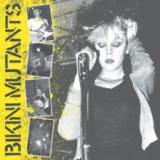
It’s taken Sealed records more than five years to put this release together but finally it’s here. The one and only Bikini Mutants. The Bikini Mutants were from Yeovil, Somerset and part of the All the Madmen world. In their short life as a band they recorded two demos at Monitor Studios, Milborne Port in Somerset in 1982. Let's Mutate collects these two demos on one LP, along with a 20 page booklet featuring photos, lyrics, reviews, interviews and much more. The band played mostly in Yeovil and the West Country along with the Mob and the Review, and even though they were part of the West Country anarcho scene, the sound was a mix of scratchy post punk and indie pop. Members of the band went on to be in My Bloody Valentine and the Chesterfields. The songs are intricate, delicate and engaging with the drums and bass locked in, the fuzzed out guitar weaving on top and Christine Cole’s angelic voice taking each song to pop heaven. Think a mix of Girls at our Best, Au Pairs and the Marine Girls.
Поиск:christine
Все
- Move
- Fangs
- Vete De Aqui
- Complicate
- Sombras
- Cold
- Yo Puedo Vivir Sin Ti
- Beautiful Obsession Killer
- La Musica Oscura
- A1: Robert Pico - Le Chien Fidèle
- A2: Annie Girardot - La Femme Faux Cils
- A3: Spauv Georges - Je Suis L'état
- A4: Zoé - Zoé
- A5: Jacques Da Sylva - Fou
- A6: Valentin - Je Suis Un Vagabond
- A7: Jacques Malia - Histoire De Gitan
- A8: Bernard Jamet - Raison Legale
- B1: Jean-Pierre Lebort - Barbara Au Chapeau Rose
- B2: Les Concentrés - Fils De Dégénérés
- B3: Les Missiles - Publicité
- B4: Hegessipe - Le Credi D'hegessipe
- B5: Marechalement Votre - Ethero Disco
- B6: Mamlouk - Decollez Les
- B7: Mozaique - L'amour Nu
- B8: Jean-Marc Garrigues - Je Dis Non
- B9: Penuel - Astronef 328
The journey through French-speaking pop archives continues with this fifth volume, packed with fuzz, gimmicks, and dissent. Far from the charts, the selected tracks display a great creative freedom, often backed by corrosive humor. Welcome to the surprising, kaleidoscopic, and colorful world of the late sixties and early seventies, Wizzz!
Born in Montauban, Robert Pico stumbled into music by chance when he met René Vaneste, then artistic director at Pathé-Marconi. René brought him to Paris to record his first 45 RPM EP in 1964. A year later, Pierre Perret introduced him to Vogue, where he recorded his second album with Claude Nougaro’s orchestra. Sylvie Vartan then introduced him to RCA, where he recorded four singles, including the astonishing "Chien Fidèle," a track backed by a hair-rising fuzz guitar. Alongside his solo career, he also composed for other artists like Alain Delon (the song was recorded but remains unreleased), Magali Noël, Bourvil, and Georges Guétary. In the Paris of the sixties, he mingled with Mireille Darc, Elsa Martinelli, Marie Laforêt, France Gall, Françoise Hardy, Petula Clark, Régine, Dani, Serge Gainsbourg, Joe Dassin, Franck Fernandel, Charles Level, and Roland Vincent. Despite his efforts and winning a Grand Prix Sacem for his final record, Robert Pico didn’t achieve the expected success in show business and decided to leave Paris and return to the Southwest, where he devoted himself to writing. He is the author of 23 books (including Delon et Compagnie, Jean-Marc Savary Editions 2025, a memoir about his youth and his many encounters). Today, he is relieved to never have become a celebrity and devotes himself to his work with passion.
In 1969, the Franco-Italian movie Erotissimo was released, directed by Gérard Pirès (who later directed Taxi in 1998, written and produced by Luc Besson). This pop comedy features Annie Girardot, Jean Yanne, Francis Blanche, Serge Gainsbourg, Nicole Croisille, Jacques Martin, and Patrick Topaloff. The soundtrack was written by Michel Polnareff and William Sheller, with lyrics by Jean-Lou Dabadie. "La Femme Faux-cils," performed by Annie Girardot. It recounts the feelings of a rich CEO's wife who seeks to develop her sex appeal under the influence of advertisement and magazines. Groovy, sparkling and light, this track, with ITS lush arrangements humorously critiques consumer society and feminine beauty standards.
“Je suis l’Etat” (1967) is the flagship track of the first EP by singer-songwriter Spauv Georges, aka Georges Larriaga, better known as Jim Larriaga (1941-2022). Born into a family of bakers, the young man was initially planning to become a hairdresser when he discovered English-speaking music through Elvis Presley and the Beatles. After this revelation, he decided he would become a songwriter and gave himself five years to succeed. He recorded his first two EP’s independently for RCA under the pseudonym Spauv Georges; meaning “that poor George”, a nickname given to him by the mother of her friend Jean-Pierre Prévotat (future drummer of the Players, Triangle, or Johnny Hallyday). Portraying a depressed and eccentric young man, Spauv Georges created corrosive and amusing songs that didn’t reach a wide audience, despite a TV appearance with Jean-Christophe Averty.
Supported by his loyal friend and fellow songwriter Jean-Max Rivière, Georges Larriaga met the future singer Carlos in the early '70s, then Sylvie Vartan’s assistant. He wrote songs for Carlos, including the popular "La vie est belle," "Y’a des indiens partout," and "La cantine", which went onto become a huge hit in 1972. He also composed for Claude François (“Anne-Marie”, 1971), Charlotte Julian (“Fleur de province”, 1972), helped launch child singer Roméo (who sold 4 million records), and later wrote the hit "Pas besoin d’éducation sexuelle" (1975) for the young Julie Bataille. In 1971, Jim recorded an album for Disc'Az: “L’univers étrange et fou de Jim Larriaga”, which featured pop gems like “La maison de mon père”.
The story of the song "Zoé" began when Pierre Dorsay, artistic director at Vogue Records, asked Swiss singer and musician Pierre Alain to write a song for a new female singer. The inspiration came when he realized that Zoé (the artist's name) was also the name of France's first atomic battery, created in 1948, which consisted of uranium oxide immersed in heavy water! The lyrics reflect a bubbling energy that must be handled with caution, while the instrumentation echoes this atomic theme, notably with the use of a theremin.
Zoé’s career lasted only as long as a single 45 RPM, but it seems Christine Fontane was the vocalist behind this pseudonym, who is known for several EPs, a good "popcorn" album in 1964, and a handful of children’s singles in the '70s. Regardless, the photograph on the cover is of a different girl entirely.
Later, Pierre Alain continued his career, writing songs for himself, Marie Laforêt, Danièle Licari, Alice Dona, Arlette Zola (3rd place in Eurovision 1982), and achieving multiple gold and platinum records in Canada. Also an inventor with several patents, president of the Romande Academy, and head of the French Alliance in Geneva, he now composes atonal music, books, and poetry. Moreover, he is also the host of "Les Mardis de Pierre Alain" at "Le P'tit Music'Hohl" in Geneva.
Filled with oriental choruses and fuzz guitar, "Fou" is from Jacques Da Sylva's only EP released by Vogue in 1967. Despite the quality of this recording, all traces of this singer disappear after this first effort.
Valentin is a baroque pop singer born in Belgium. He is the songwriter and composer of most of the tracks on his three singles released in the late 60s in Canada. A legend says that he reincarnated himself as Jacky Valentin during the 1970s for a rock'n'roll revival career in Belgium, but his older brother sadly debunked this story. Valentin's first two singles were arranged by Claude Rogen, a Parisian session pianist who had come to Canada to promote the song “Mister A Gogo”, a cover of David Bowie’s “Laughing Gnome”, adapted by singer Delphine, his wife at the time. Far from his usual network, Claude Rogen arranged music for Polydor, including the arrangements for “Je suis un vagabond” in 1969, a jerk tune with string arrangements and a furious optimism.
Jacques Malia wrote, composed, and recorded his only 45 EP for Festival in 1966. “Histoire de gitan” is an incredible beat track with bohemian scat that tells the story of a gypsy musician who came to Paris to make it in the Music-Hall, to no avail. The hero of the song and its author probably shared a similar fate, as Jacques Malia faded into anonymity after this remarkable attempt.
Bernard Jamet recorded two EPs for Barclay in the late sixties and co-wrote several songs with Christine Pilzer, Pascal Danel, and prolific songwriters Michel Delancray and Mya Simile. The track “Raison Légale” (1968), his masterpiece, immerses the listener in a courtroom right when a murderer is being judged, with jerk rhythm and free arrangements. A unique, paranoid, judicial, and psychedelic oddity.
Jean-Pierre Lebrot-Millers started his career in show business in 1967 as a singer and songwriter for the Philips label. After three singles, he wrote several songs of a new kind with his friend Pierre Halioche, in the midst of the sexual liberation movement and the democratization of drugs. With provocative lyrics, “Les filles du hasard” and “Barbara au Chapeau Rose” were released on a Philips singles in 1968. The character of Barbara was inspired by a queen of Parisian nightlife during the psychedelic years: model Charlotte Martin, who dated Eric Clapton from 1965 to 1968, then Jimmy Page from 1970 to 1983. Jean-Claude Petit’s arrangements, with a table-filled intro, soul brass, and Hendrixian guitar, emphasize the flamboyance of a hedonistic and sexy character, whose dog is named Junkie because “Junkie est un nom exquis”! The track was recorded live in three takes with a full orchestra.
Upon its release, the record was censored by Europe 1 and RTL due to its references to drug use. Jean-Pierre Lebrot was then banned from the airwaves and later dismissed by his record label. He changed his artist name to Jean-Pierre Millers, while his companion Pierre Halioche became D. Dolby for a new dreamy composition, “Chilla”, which Jean-Pierre produced himself with arrangements by Jean Musy. Once again, the song was immediately censored everywhere. After this setback, he decided to stop singing and started taking on odd jobs to support his Swedish wife and their son until the day he met Jean-Pierre Martin, then production manager at Decca, who had worked with Manu Dibango. Martin offered Jean-Pierre Lebrot-Millers, then employed at Rank Xerox, the position of artistic director at Decca. He accepted and became, a year later, promotion director (radio, press, TV). He worked on Julio Iglesias’s first album for Decca, which became a massive hit and allowed him to meet Claude Carrère. The latter asked him to write new songs and find their performers, much like a “talent scout.” It’s through him that Jean-Pierre discovered Julie Pietri and Corinne Hermès. He composed “Ma Pompadour” for Ringo, Sheila’s husband, and took the microphone again for the syncope hit “Rendez-Vous” in 1982.
That same year, Jean-Pierre Lebrot-Millers tried to release a track for which he had heavily gone into debt: “Si la vie est un cadeau”. Having recorded it in London, he presented it to numerous professionals, all of whom refused to get involved. The same thing happened with Antenne 2 and the Sacem when he proposed the song as France’s entry for Eurovision. He then met Haïm Saban, who was producing cartoon soundtracks and had just launched the Goldorak theme song. Saban, having listened to the song, declared it had the potential to become a hit. He sent Jean-Pierre and Corinne Hermès to meet the CEO of the Luxembourg radio and television network. The latter received them, asked to hear a verse and chorus a cappella in his office, and immediately hired them to represent Luxembourg at Eurovision 1983. They reworked the arrangements and recorded a new version with Haïm Saban as co-producer. The song ended up winning Eurovision 1983, a great comeback for our hero. He continued producing and hung out with the band Nacash in Belgium when a couple came to introduce their daughter for an impromptu audition in a hotel room. The girl sang “Les démons de minuit” while dancing to a radio cassette. Impressed, he had her take singing lessons for a year and composed a song for her (for which he had the melody and title, but no lyrics). This required him to go on the hunt for a lyricist, who ended up being Guy Carlier. They recorded the song, which was initially a ballad, at Bernard Estardy’s CBE studio, and gave the singer a new name: Melody. They showed the song around their industry network without success. Later, Estardy called Jean-Pierre to suggest changing the rhythm and making it pop-rock. Orlando, Dalida’s brother, liked the result and decided to co-produce the track. “Y’a pas que les grands qui rêvent » became a classic hit. The song has since been covered by Juliette Armanet (as a ballad, like the original) and Valentina.
Born into an aristocratic Breton family, Hervé Mettais-Cartier worked as a DJ at Queen Kiss, a nightclub in Poitiers, where he formed the band Les Concentrés with Michel (an actor) and Christian (a radio technician). Together, they created a repertoire of whimsical songs (“Ma bique est morte”, “J’suis un salaud”, “Fils de dégénéré”...) that they performed on stage dressed in white (in homage to “concentrated milk”). They performed at Bliboquet and Olympia in 1968 for the 10th edition of the “Relais de la chanson Française” organized by L’Humanité-Dimanche and Nous les Garçons et les Filles, sponsored by Pepsi Cola. Winners in the author-composer category, alongside Danish singer Dorte, their visibility allowed them to record a 45, and appear on television in Jean-Christophe Averty’s show. The A-side of the disc features Bruno le ravageur, a casatchok dedicated to Bruno Caquatrix, the director of Olympia, nicknamed in the song “Coq Atroce” or “croque-actrices”. The B-side is dedicated to “Fils de dégénéré”, a quirky tribute to Hervé's aristocratic roots, mixing absurdity with sophisticated vocal harmonies.
After Les Concentrés, Hervé Mettais-Cartier formed the duo La Paire et sa Bêtise with his friend Olivier Robert. They performed in Parisian cabarets and toured with Pierre Vassiliu. In the late 1970s, Hervé began a solo career. He recorded two albums for the Motors label in 1978 and 1979, which did not achieve their anticipated success due to lack of promotion. In 1980, he met Bernadette, with whom he started a family and created a “Chansons à voir” (songs to see) show that he performed until his death at the end of 2024.
Publicité comes from the final EP by the Missiles (Ducretet Thomson, 1966), a disc that also includes “La (nouvelle) guerre de cent ans”, featured on Volume 4 of our Wizzz! series. Please refer to the booklet for the story of the band.
“He’s 1.82 meters tall, 28 years old, weighs 135 kg, is black and Belgian”: this is the description of singer Hegesippe on the back of his sole single (Decca, 1967). He appears on the album cover wearing a Greek toga, like a hippie gag – we are at the end of the year 1967. In “Le crédo d’Hegesippe”, this former bodyguard of Antoine and the Charlots plays the delightful card of the thick brute converted to Flower-Power and non-violence, with arrangements by Jean-Daniel Mercier, aka Paul Mille.
“Ethéro-disco” was released on a promotional record for clients of the Maréchal company (Liège, Belgium) for the New Year 1979. Over a funky rhythm, celebrity impersonations (Brigitte Bardot, Jacques Dutronc, Fernandel…) deliver an enigmatic text about pharmaceutical products like ether, bismuth, and aspartate. The track was composed by Dan Sarravah (responsible for Joanna's “Hold-up inusité” featured on Wizzz! Volume 3) and Tony Talado, who was also a singer (one 45 in 1967), songwriter (with over a dozen credits between 1964 and 1985 in various styles from surf music to disco), author (Devenez Végétarien, Dricot Editions, 1985), ad designer, and psychologist.
Décollez-les is on the A-side of Mamlouk's only single, a pseudonym for Marsel Hurten, who is known for his work on several EPs in the late sixties, as well as composing music for Hervé Vilard’s “Capri, c’est fini”, Claude Channes' “La Haine”, Annie Philippe’s “On m’a toujours dit”, and Nancy Holloway’s “Panne de Cœur”.
This strange song, with Afrobeat horns and absurd dialogues between a chef and his kitchen staff, is the result of a collaboration between Marsel Hurten and one of his neighbors, a photographer from Pavillon-sous-Bois (93), where the musician settled after returning from the Algerian War. A music video was shot to promote the record.
Marsel Hurten was born in Tourcoing (59) into a musical family. At a young age, he joined the brass band founded by his grandfather, playing the piston before studying trumpet at the conservatory, as well as teaching himself how to play the guitar. As an orchestra musician, he toured in France, Belgium, Germany, and England. He released a series of solo 45’s between 1965 and 1968 for the DMF and Az labels before stopping recording to focus on working for other artists (Gilles Olivier, Noëlle Cordier…).
“L’amour nu” (Vogue, 1971) is the work of the short-lived Belgian band Mozaïque. The track, written by singer Jacques Albin, closely resembles another of his compositions, “Carré Blanc”, which he recorded in 1969 for Disc’AZ.
Represented by the Lumi Son micro-label based in Marignane (Côte d'Azur), Jean-Marc Garrigues released two 45 RPMs in the late sixties, defending the French jerk sound. The song “Je dis Non” is a short, joyful ode to youth, pop music, and rebellion.
Songwriter and performer Jacques Penuel released three singles. The first one, “Astronef 328” (Fontana, 1969), features a dizzying series of chords punctuated by sound effects, a sci-fi story, and arrangements by Jean-Claude Vannier.
We would like to sincerely thank Pierre Alain, Moon Blaha, Marsel Hurten, Bastien Larriaga, Jean-Pierre Lebrot-Millers, Bernadette Mettais-Cartier, Robert Pico, Olivier Robert, Claude Rogen, Micky Segura.
- 1: Prologue: The Stage Of The Paris Opéra, 905
- 2: Overture
- 3: Think Of Me
- 4: Angel Of Music
- 5: Little Lotte... / The Mirror... (Angel Of Music)
- 6: The Phantom Of The Opera
- 7: The Music Of The Night
- 8: I Remember... / Stranger Than You Dreamt It
- 9: Magical Lasso
- 10: Notes... / Prima Donna
- 11: Poor Fool, He Makes Me Laugh
- 12: Why Have You Brought Me Here... / Raoul, I've Been There
- 13: All I Ask Of You
- 14: All I Ask Of You (Reprise)
- 1: Entr'acte
- 2: Masquerade / Why So Silent
- 3: Notes... / Twisted Every Way
- 4: Wishing You Were Somehow Here Again
- 5: Wandering Child... / Bravo, Monsieur
- 6: The Point Of No Return
- 7: Down Once More... / Track Down This Murderer
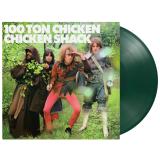
Andrew Lloyd Webber’s The Phantom of the Opera is one of the most celebrated musicals of all time, and this original London cast recording from 1986 remains the definitive recording. Michael Crawford’s Tony Award-winning performance as The Phantom and Sarah Brightman’s portrayal of Christine Daaé helped make this the best-selling cast recording in history. Re-issued for the first time in decades, this classic album brings the unforgettable score to a new generation of listeners. From the title song to “The Music of the Night” and “All I Ask of You,” every track reflects the power and beauty that continue to make The Phantom of the Opera a global phenomenon nearly forty years after its debut. Since its premiere, The Phantom of the Opera has been seen by more than 160 million people in 195 cities and has received over 70 major theatre awards. It holds the record as the longest-running show in Broadway history and was the first British musical to debut at number one on the music charts. The recording has been certified Platinum in six countries.
Victor Le Masne
Ravel Recomposed by Victor Le Masne LP 2x12"
Mit Ravel Recomposed legt Victor le Masne eine Hommage an einen der größten Meister der französischen Musikgeschichte vor. Nach seinem Erfolg als Komponist und Musikalischer Leiter der Olympischen
und Paralympischen Spiele 2024 in Paris widmet sich Le Masne nun der Musik von Ravel, die ihn seit
seiner Kindheit begleitet. Ravel Recomposed schlägt Brücken zwischen Tradition und Gegenwart: Klassik
und Jazz verbinden sich mit dem Puls des French Touch und verschmelzen zu jenem unverwechselbaren
Klang, der den Grammy®-prämierten Komponisten, Produzenten und Multiinstrumentalisten international
bekannt gemacht hat. Das Album erscheint am 21. November 2025. Die Neuinterpretationen von Boléro,
Jeux d’eau, Le jardin féerique sowie Auszügen aus Daphnis et Chloé, L’enfant et les sortilèges und dem Streichquartett, neben weiteren Werken, erscheinen anlässlich des 150. Geburtstags von Ravel. Zu hören sind
Christine and the Queens (Texte, Gesang), Julius Asal (Klavier) und Camille Thomas (Cello). Das Album
mit seinen zwölf Stücken ist der jüngste Beitrag zur wegweisenden Reihe Recomposed von Deutsche Grammophon. Den Auftakt machte vor 20 Jahren Matthias Arfmann mit seinen Bearbeitungen von Aufnahmen
der Berliner Philharmoniker unter Herbert von Karajan. Es folgten unter anderem Peter Gregsons Neuinterpretation von Bachs Cellosuiten sowie Max Richters gefeierte Neufassung von Vivaldis Vier Jahreszeiten
- Christine
- Like Fire
- Missionary Girl
- One Horse Town
- Dubrovnik Girls
- Freezing Rain
- Speedway Girls
- Twist Me Around
- I Had A Dream
- I'd Walk The Plank For You Baby
- Run Baby Run
- Angel Love
"Dubrovnik Blues" on Vinyl: The Australian Super-Band That Changed Everything! Attention all lovers of raw, unfiltered rock'n'roll! Bang! Records proudly presents the vinyl reissue of "Dubrovnik Blues", the celebrated debut LP from The Dubrovniks - the Australian super-group born straight from the beating heart of the country's punk underground. Formed in Sydney in 1986 (originally as The Adorable Ones), The Dubrovniks brought together true icons of the Aussie scene: James Baker, legendary drummer for Beasts of Bourbon, founding member of Hoodoo Gurus, and a driving force in The Scientists; Roddy Radalj, co-founder of Hoodoo Gurus and veteran of The Scientists; and Boris Sujdovic, who also played with both The Scientists and Beasts of Bourbon. Far from being "just another debut," Dubrovnik Blues was an instant statement of intent - a wild blend of garage rock grit, glam swagger, punk attitude and classic rock'n'roll hooks. Think The Troggs and T. Rex colliding with the spirit of the New York Dolls. Originally released in August 1989 on Timberyard Records, the album went on to earn a nomination for Best Independent Release at the ARIA Awards in 1990. Now, Bang! Records brings this cult gem back to life on vinyl - a must-have for collectors, vintage-sound purists, and anyone ready to relive (or discover) the raw, electric energy of late-80s Australian rock at its finest.
Swiss maestro and Vibes and Grooves label head Shaka AKA aka Kurt Spichiger is a long-time soulful house devotee who has been at it since the mid-90s on labels like Nervous, Kolour LTD and Local Talk. Here he lands on Mister Bear with an EP that oozes classy house soul from the off with 'High On You' featuring original vocals written and performed by Eva Christine Flury. 'Smooth Cut' is just that, with its heartfelt pain chords and noodling synth solos, 'Latin Love Affair' brings the heart with a samba-inspired percussive shuffle and big horns to close an essential EP for summer fun.
- 1: I Thought I'd Live Forever
- 2: Happiness
- 3: Causing Trouble Again
- 4: Cello Song
- 5: Keep To The Left
- 6: Doom Monger
- 7: Don't Fight Your Friends
- 8: Nothing Will Ever Change That
- 9: Hey Hey
- 10: Train Platform
Brush Stroke Vinyl[28,15 €]
Legendary artist, Raincoats co-founder, songwriter, filmmaker, and feminist icon Gina Birch has announced her eagerly awaited second solo album, Trouble, arriving via Third Man Records on Friday, July 11. Pre-orders are available now.
Trouble is heralded by today’s premiere of the album’s blistering centerpiece, “Causing Trouble Again,” available for streaming now. An official music video – directed by famed photographer/filmmaker Dean Chalkley and featuring an all-star collective of fellow female artists including Birch’s longtime friend and co-founder of The Raincoats, Ana da Silva, Neo Naturists co-founder Christine Binnie, singer-songwriter Amy Rigby, X-Ray Spex and Essential Logic co-founder Lora Logic, painter Daisy Parris, artist Georgina Starr, writer Jill Westwood, multi-disciplinary artist and activist Bobby Baker, award-winning costume designer Annie Symons, veteran photographer and Raincoats collaborator Shirley O’Loughlin, and many more – is streaming now on YouTube.
“For the ‘Causing Trouble Again’ video, after hearing Bob Dylan sing about a white ladder all covered with water, I became obsessed with white ladders,” Gina Birch says. “ I decided to use five white ladders, three with seven rungs…I realized later that this references Jacob’s Ladder and a connection from Earth to heaven, but I think I was thinking of ladders as a symbol of getting on, getting up. I wanted to have a choreographed movement with four of us with these ladders. How do we move with ladders? Do we move together, do we fight, do we dance? “I also wanted to reference the wind scene from the film, The Colour of Pomegranates, and to include as many artist women from the Women in Revolt exhibition as I could.
New Traditions is a collection of pipe music, electronic music, mouth music and folk music from five emerging and prominent Scottish artists.
It started in Sutherland with a recording of The Waters of Kylesku. “Do you learn any Gaelic at the school?” asks Hamish Henderson of Christine Stewart. “No,” she answers. “That’s a shame,” he responds, “Isn’t it?” she says. Then she sings. Her voice is of the peat itself, grown from the earth as the language was. It soars raptor-like above drenched ground and scoured pink rock.
Next, to Nancy Dorian, a linguistic missionary of sorts, who came from America to watch a language die. She charted the decline of Gaelic in a cluster of Sutherland villages from 1963 to 2020 when the terminal native speaker passed. Gaelic has origins in nature, with each letter of the alphabet named after a tree. It seems significant that the land of the north is now all-but devoid of forest.
Enter Alan Lomax, who travelled the world documenting indigenous music. Material from his archives feature on (fucking) Moby’s platinum selling Play. Despite the record’s worldwide commercial success we know very little of the music he essentially exploited.
Then musician Martyn Bennett, who built tracks around Lomax recordings of Scots and Gaelic voices, and did so with love that shared his blood with the cancer that killed him. His records both popularised and preserved obscure indigenous Scottish music.
This collection of tunes has similar intent: to consolidate ephemeral words in physical grooves - real as the rigs that still scar the earth - but also a desire to interpret. These versions have the greatest reverence for the originals at heart, but like the architecture of a great gallery, serve to protect and elevate.
- In The Mouth Of Madness
- Assault On Precinct 13
- The Fog
- Prince Of Darkness
- Santiago (Vampires)
- Escape From New York
- Halloween
- Porkchop Express (Big Trouble In Little China)
- They Live
- The Thing
- Starman
- Dark Star
- Christine
Sea Blue Vinyl. John Carpenter is a legend. As the director and composer behind dozens of classic movies, Carpenter has established a reputation as one of the greatest filmmakers in the history of modern cinema, as well as one of its most influential musicians. The minimal, synthesizer-driven themes to films like Halloween, Escape From New York, and Assault on Precinct 13 are as indelible as their images, and their timelessness was evident as Carpenter performed them live in a string of internationally sold-out concert dates in 2016. Anthology: Movie Themes 1974-1998 collects 13 classic themes from Carpenter's illustrious career together on one volume for the first time. Each theme has been newly recorded with the same collaborators that Carpenter worked with on his hit Lost Themes studio albums: his son, Cody Carpenter, and godson, Daniel Davies.
With solid training as a classical musician, Sophie Agnel took a close interest in modern jazz before committing in the early 90s to the shifting, deliciously uncertain ground of free improvisation, thanks to her fascination for the powers of expression displayed by a few great keyboard-heretics such as Keith Tippett, Fred Van Hove or Christine Wodrascka. She began reworking the prepared piano techniques imagined by John Cage and transformed her instrument into a sort of extended piano.
Coming from a Punk music background Joke Lanz started in the mid 80s to play Experimental- and Noise music. Best known for his internationally acclaimed project Sudden Infant, Lanz is presenting his work since 30 years all over the world. Born in Switzerland and currently operating out of Berlin, he is one of the most prolific and profound artists working in the border zones where performance and body art meet Improvisation and Noise.
Agnel and Lanz have performed stunning live shows as a duo, now their debut album is coming out on Klanggalerie. Turntables and piano, a unique combination that is a lot of fun!
- 1: Cars & Cars
- 2: Ting
- 3: Soap Bubble Box
- 4: Fire In My Head
- 5: House On The Hill
- 6: Christine's World
- 7: Bus
- 8: River
- 9: Tree Is Falling
- 10: White Night
- 11: All Or Nothing
- 12: Night Fall
- 13: I Try
- 14: Yellow Boat
- 15: St. Louis Avenue
Ting was released in 1992. The band decided to record the songs with mainly piano and percussion accompaniment. Hofstede put his guitar aside, Stips did not touch his extensive library of sounds and samples and Kloet did not played the drum-set, but played orchestral percussion instruments. Guest musicians were invited for most songs (mainly bass and cello) and on some songs 'Klangsteine' (musical stones), works of art by the Swiss sculptor Arthur Schneiter, were used. These stones could be played with mallets, which explains the title of the album. They could also be rubbed by hand to create a buzzing sound. On the album the entire band plays the stones, together with Schneiter and friend Swiss percussionist Fritz Hauser. The music is often quiet and melancholic, but also contains some strong pop songs, including the cheerful "Soap Bubble Box", the lyrics of which were inspired by the artist Joseph Cornell and the Nits classic "Cars And Cars". The lyrics are often introverted and/or abstract, even poetic and much less immediately understandable than on previous albums. Ting is available as a limited edition of 500 copies on silver coloured vinyl and includes an insert with additional pictures provided by the band.
A Floor-Killer Cover by a UK Soul/Jazz Unit Now on 7-Inch!
The legendary mellow break classic Lowrell - "Mellow Mellow Right On" and the female free-soul masterpiece Gloria Scott - "(A Case Of) Too Much Love Makin'" are now available as covers on their first-ever 7-inch release. Formed in 1993, Paprika Soul is a unit led by Alan Barnes and Andrew Spiller, leaving their mark on the UK soul/jazz scene. Side A features a stunning cover of Lowrell's "Mellow Mellow Right On" (1979), with Christine Glen Cousee and Tim Whitnal delivering a smooth rendition titled "Mellow Mellow." Side B brings a soulful cover of the timeless masterpiece Gloria Scott's "(A Case Of) Too Much Love Makin'"(1974) performed passionately by Jacqui Hicks. This 7-inch is a must-have, guaranteed to set the dance floor alight on both sides!
- A1: Blondie - "Call Me" (3 31)
- A2: Madness - "My Girl" (2 47)
- A3: Kate Bush - "Army Dreamers" (2 51)
- A4: Roxy Music - "Oh Yeah!" (4 50)
- A5: Grace Jones - "Private Life" (4 39)
- A6: Siouxsie & The Banshees - "Christine" (3 00)
- A7: Judas Priest - "Breaking The Law" (2 36)
- A8: Motorhead - "Ace Of Spades" (2 49)
- B1: Donna Summer - "On The Radio" (3 53)
- B2: Diana Ross - "I'm Coming Out" (3 57)
- B3: Change - "Searching" (3 12)
- B4: Stephanie Mills - "Never Knew Love Like This Before" (3 24)
- B5: Odyssey - "If You're Lookin' For A Way Out" (3 07)
- B6: The Korgis - "Everybody's Got To Learn Sometime" (3 54)
- B7: Andrew Lloyd Webber & Marti Webb - "Take That Look Off Your Face" (3 08)
- B8: Jona Lewie - "Stop The Cavalry" (2 57)
- C1: Adam & The Ants - "Antmusic" (3 31)
- C2: Toyah - "I Want To Be Free" (2 58)
- C3: Kim Wilde - "Chequered Love" (3 17)
- C4: The Human League - "Open Your Heart" (3 51)
- C5: Visage - "Mind Of A Toy" (3 35)
- C6: Altered Images - "I Could Be Happy" (3 30)
- C7: Fun Boy Three - "The Lunatics (Have Taken Over The Asylum)" (3 04)
- C8: Shakin' Stevens - "Green Door" (3 02)
- D5: Gary Numan - "She's Got Claws" (4 52)
- D6: Freeez - "Southern Freeez" (3 55)
- D7: Kiki Dee - "Star" (3 14)
- D8: Cliff Richard - "Wired For Sound" (3 38)
- E1: Duran Duran - "Hungry Like The Wolf" (3 25)
- E2: Haircut 100 - "Fantastic Day" (3 13)
- E3: Adam Ant - "Friend Or Foe" (3 25)
- E4: Soft Cell - "Torch" (4 08)
- E5: A Flock Of Seagulls - "Wishing (If I Had A Photograph Of You)" (4 06)
- E6: Japan - "Nightporter" (4 52)
- E7: Abc - "All Of My Heart" (4 38)
- F1: The Clash - "Should I Stay Or Should I Go" (3 01)
- F2: The Jam - "Beat Surrender" (3 22)
- F3: Bucks Fizz - "The Land Of Make Believe" (3 49)
- F4: Tight Fit - "Fantasy Island" (3 26)
- F5: Dollar - "Videotheque" (3 32)
- F6: Imagination - "Just An Illusion" (3 57)
- F7: Shalamar - "There It Is" (3 22)
- F8: Daryl Hall & John Oates - "I Can't Go For That (No Can Do)" (3 43)
- G1: Wham! - "Wham Rap! (Enjoy What You Do?)" (3 22)
- G2: Spandau Ballet - "Gold" (3 42)
- G3: Bananarama - "Cruel Summer" (3 30)
- G4: Billy Joel - "Tell Her About It" (3 45)
- G5: Paul Young - "Wherever I Lay My Hat (That's My Home)" (4 02)
- D1: The Police - "Invisible Sun" (3 22)
- G6: Carmel - "Bad Day" (3 37)
- D3: The Teardrop Explodes - "Reward" (2 45)
- G7: Culture Club - "Victims" (4 55)
- H1: Paul Mccartney & Michael Jackson - "Say Say Say" (3 40)
- H2: Kc & The Sunshine Band - "Give It Up" (3 55)
- H3: The Cure - "The Walk" (3 26)
- H4: Tears For Fears - "Change" (3 51)
- H5: Heaven 17 - "Come Live With Me" (3 30)
- H6: Elton John - "I Guess That's Why They Call It The Blues" (4 40)
- H7: Robert Plant - "Big Log" (4 54)
- I1: Queen - "Radio Ga Ga" (5 40)
- I2: Thompson Twins - "Doctor! Doctor!" (4 23)
- I3: Nik Kershaw - "I Won't Let The Sun Go Down On Me" (3 21)
- I4: Howard Jones - "Like To Get To Know You Well" (3 52)
- I5: Sandie Shaw - "Hand In Glove" (2 56)
- I6: Alison Moyet - "All Cried Out" (3 39)
- I7: Tina Turner - "Private Dancer" (4 03)
- J1: Lionel Richie - "Stuck On You" (3 07)
- J2: Rufus & Chaka Khan - "Ain't Nobody" (4 21)
- J3: Billy Ocean - "Caribbean Queen (No More Love On The Run)" (3 57)
- J4: Hazell Dean - "Whatever I Do (Wherever I Go)" (3 42)
- J5: Shakatak - "Down On The Street" (3 17)
- J6: Frankie Goes To Hollywood - "The Power Of Love" (5 31)
- J7: Band Aid - "Do They Know It's Christmas?" (3 45)
- D2: Pretenders - "Message Of Love" (3 25)
- D4: Orchestral Manoeuvres In The Dark - "Joan Of Arc" (3 14)
- A1: Corn Rigs - Magnet & Paul Giovanni
- A2: Morning Way - Trader Horne
- A3: Nottanum Town - Oberon
- A4: Graveyard - Forest
- A5: The Skater – Midwinter
- B1: Winter Winds - Fotheringay
- B2: Lord And Master - Heron
- B3: Fly High - Bridget St John
- B4: Sheep Season - Mellow Candle
- B5: The Bells Of Dunwich - Stone Angel *
- C1: The Seagulls Scream - Christine Quayle
- C2: Forest And The Shore - Keith Christmas
- C3: Rosemary Hill - Fresh Maggots
- C4: Fine Horseman - Anne Briggs
- C5: The Werewolf - Barry Dransfield
- D1: Another Day - Roy Harper
- D2: Window Over The Bay - Vashti Bunyan
- D3: Eleven Willows - C.o.b. (Clive's Original Band)
- D4: The Herald - Comus
Compiled by Bob Stanley to document the acid folk scene, “Gather In The Mushrooms” was first issued in 2004 on Sanctuary as a CD-only release; it proved popular enough for a sequel entitled “Early Morning Hush” two years later.
This new edition of “Gather In The Mushrooms” contains the cream of both long-deleted compilations with a few additions – COB, Roy Harper, Fotheringay – that weren’t available to Sanctuary at the time. Though they aren’t traditional, these songs have an authenticity of their own, an autumnal atmosphere and a naivety which proved influential in the 00s neo-folk boom (Devendra Banhart, Joanna Newsom, Alasdair Roberts, Tuung et al) but impossible to replicate. For many of these acts at the end of the 60s, folk music and the hippy world that surrounded them was a way of life, a way of opting out from the Vietnam war, Angry Brigade and three-day-week early 70s. Anne Briggs lived in a caravan in Suffolk, Shelagh McDonald lived in a tent, Vashti Bunyan eschewed electricity; they weren’t part-timers. Listening to “Gather In The Mushrooms”, we are transported to a time when no one used the term post-modernist.
It may not have resonated with dyed-in-the wool political folkies, but over five decades later this music sounds very evocative of an England of yore – not necessarily one of poachers and pedlars, but one of long-haired youths in tie-dye T-shirts, bikers and hippies, acoustic guitars played in white stone cottages. Groups such as Stone Angel, Midwinter and Oberon made primitive, privately recorded folk albums; today they sound as distant and mystical as the field recordings of Alan Lomax. The sincerity and folk knowledge of a group like Forest becomes irrelevant once you hear something as eerie and evocative as ‘Graveyard’. Home-made, homely, warm as soup or chilling as a hoar frost, this is music of innocence and rare beauty.
- Love In Store
- Can’t Go Back
- That’s Alright
- Book Of Love
- Gypsy
- Only Over You
- Empire State
- Straight Back
- Hold Me
- Oh Diane
- Eyes Of The World
- Wish You Were Here
If every significant artist has an underrated gem in its catalog, then Mirage is that album for Fleetwood Mac. An obvious return to relative simplicity after the dramatic tension of Rumours and experimental ambitions of Tusk, the 1982 album finds the band re-grouping after a brief hiatus and again climbing to the top of the charts. Extremely well-crafted, well-produced, and well-performed, the double-platinum effort distills the group’s hallmark strengths into a filler-free set that never runs short of addictive pop hooks or daft accents.
Sourced from the original analog master tapes, pressed at Fidelity Record Pressing in California, and housed in a Stoughton jacket, Mobile Fidelity’s numbered-edition 180g 45RPM 2LP set presents Mirage in reference sound for the first time. The efforts co-producers/engineers Ken Caillat and Richard Dashut went to capture the splintered albeit formidable band can be heard with stunning accuracy, range, depth, and detail.
Though Rumours understandably gets a permanent spot in the audiophile hall of fame, the smooth, clear, and dynamic sonics on Mirage confirm that the record that stood as Fleetwood Mac’s last effort for five years deserves a place in the same vaunted arena. The presence and imaging of Mick Fleetwood’s percussion alone on this reissue might have you wondering how this slice of soft-rock bliss has gone under-noticed for decades. Other prized aural aspects — separation, definition, impact, tonal balance — are also here in spades.
Like much surrounding Fleetwood Mac in the 1980s, arriving at Mirage was not easy. Caillat searched for studios located outside of Los Angeles on a mission to change up the vibe of the band’s prior recording sessions. Everyone settled on Le Chateau in France, where relations between some members remained icy — and cooperation with the producers strained. Battles with exhaustion, bitterness, and addiction further informed the proceedings at the 18th century complex in the French countryside, where even communal meals were allegedly eaten in silence.
Inevitably, the feelings that co-producer Lindsey Buckingham, Stevie Nicks, Christine McVie, and company harbored — as well as the situations in which they found themselves — drifted into the songwriting. In its rapid ascent to rock-star royalty status, Fleetwood Mac drifted apart, embarked on solo pursuits, and found it was lonely at the top. Emptiness, the illusion of dreams, the longing for love, the want to escape to bygone times of innocence and happiness: Such themes inform a majority of the narratives. Even if the lyrics regularly take a back seat to easygoing arrangements that allow Mirage to come on like a refreshing breeze on a sunny summer afternoon.
Home to three Top 25 singles in the U.S. and having occupied the pole position of the Top 200 album charts for five weeks, Mirage rightfully resonated with the mainstream and attracted listeners on both sides of the pond. And how, via a smart blend of sugary melodies, warm harmonies, interlaced notes, nimble rhythms, taut structures, and passionate vocals. Not to mention the presence of what arguably remains Nicks’ signature song, the biographical “Gypsy,” a meditation on the loss of her close friend Robin Anderson that teems with majesty, mystery, and mysticism — and which gets an assist from Buckingham’s shaded tack piano and richly strummed guitar chords.
Its ranking as an all-time classic aside, that No. 12 hit has plenty of company when it comes to brilliant pop turns on Mirage. On the subject of Nicks, the raspy singer gets a little bit country on “That’s Alright.” Its clip-clopping pace and two-stepping progression complement subtle vocal swells that emerge during the final verse of a tune that is ostensibly about leaving but still conveys forgiveness and grace. And what would a Fleetwood Mac record be without Nicks drawing on the tools of the supernatural — cards, dreams, wolves, and the like — on the twirling “Straight Back.”
Despite the potency of Nicks’ primary contributions, Mirage seemingly unfolds as a tight competition between Buckingham and McVie — and one that ultimately ends in a draw. Buckingham’s salvos include the contagious “Can’t Go Back,” a yearning to time-travel back to the past that’s complete with hall-of-mirrors backing vocals; “Oh Diane,” out-of- left-field ear candy sweetened with hiccupped vocals and salt-and-pepper-shaken grooves; the chiming “Eyes of the World”; and “Empire State,” a delightfully fluttering track whose high-range vocals, lap harp notes, and ringing xylophones hint at the galaxies of sound that would erupt on Tango in the Night.
Then there’s McVie. As elegant, understated, and coolheaded as she’s ever been on record, she pours her heart out on cuts that revolve around her inevitable split with Beach Boy Dennis Wilson. In the process, she punctuates Mirage with a characteristic not always associated with catchy pop music: emotional weight, and the sense of dreaded acceptance in the face of dreams deferred.
“I wish you were here/Holding me tight,” McVie sings over a delicate melody on the album-closing piano ballad “Wish You Were Here.” Though they hoped otherwise, for the members Fleetwood Mac, distance and separation were always close at hand. Believing otherwise, inviting nostalgia, and pretending everything was fine only amounts to a mirage.
BusCrates is a Producer / Synthesist / DJ hailing from the Steel City -Pittsburgh, PA
BusCrates blurs the lines between boogie funk and boom bap hip hop beats
Returning to Bastard Jazz following two well loved albumsBlasting Off(2020) andControl Center(2023)
BusCrates' increasingly popular Twitch channel streams live every Thursday and Friday night to over 13,500 followers
A noteworthy resume production credits including Mac Miller, Wiz Khalifa, Curren$y, and Phonte & Eric Roberson
He's toured throughout the US playing with artists like RJD2, DJ Epik, J Rawls, Tall Black Guy and more
BusCrates counts big names such as Jazzy Jeff, Francois K, Dâm Funk, Rich Medina and Spinna as fans
- A1: Such Luck
- A2: Two Beers In
- A3: Good Job, Champ
- A4: Tongue Tied
- A5: Pallet Town
- A6: An Hour Pissed
- B1: Kim Tastie
- B2: How I Got My Shrunken Head
- B3: Let’s Get Invisible
- B4: What Day Is It, October?
- B5: Hey Ken, Someone Methodically Mushed The Donuts
- C1: Tongue Tied (Re-Recorded) Ft. Pat Miranda
- C2: Kim Tastie (Re-Recorded) Ft. Christine Goodwyne, Pool Kids
- C3: How I Got My Shrunked Head (Re-Recorded) Ft. Yvette Young
- C4: What Day Is It, October? (Re-Recorded) Ft. Nathan Hardy, Microwave
- C5: Hey Ken, Someone Methodically Mushed The Donuts (Re-Recorded) Ft. Tades Sanville, Hot Mulligan
- D1: Such Luck (Live)
- D2: Two Beers (Live)
- D3: Tounge Tied (Live)
- D4: Pallet Town (Live)
- D5: Hey Ken, Someone Methodically Mushed The Donuts (Live)
Reissue des Debütalbums der Emo-Punker Free Throw aus Nashville, "Those Days Are Gone" aus 2014, das bis heute das beliebteste Album bei den Fans ist. Neue Auflage auf Black Cherry Eco Mix Vinyl, bei dem jedes Exemplar ein Unikat ist.
- 1: Pristine Christine
- 2: Get Out Of My Dream
- 3: Truck Train Tractor
- 4: Once More
- 5: Almost Prayed
- 6: If She Doesn’t Smile (It’ll Rain)
- 7: Talulah Gosh
- 8: Crash
- 9: It’s A Good Thing
- 10: Hang-Ten!
- 11: When It All Comes Down
- 12: Kaleidoscope World
- 13: Somewhere In China
- 14: I’ll Still Be There
- 15: Abandon Ship
- Someone Stole My Wheels
- 2: Dying Day
- 3: Hammering Heart
- 4: Why Does The Rain
- 5: Yesterday
- 6: Ten Miles
- 7: Sensitive
- 8: Brighter
- 9: Adam’s Song (Pour Fenella)
- 10: She Looks Right Through Me
- 11: Therese
- 12: Velocity Girl
- 13: Will He Kiss Me Tonight
- 14: Some Candy Talking
- 15: Candydiosis
Needle Mythology, the label founded by music writer, author and broadcaster Pete Paphides, is thrilled to announce the release of SENSITIVE the first ever vinyl anthology to cover the indiepop scene of the 1980s. SENSITIVE features 30 songs in total by artists who defined the indiepop aesthetic, among them The Jesus & Mary Chain, The Sea Urchins, Primal Scream, The Pastels, Talulah Gosh, Orange Juice, The Field Mice, The Primitives, The Wedding Present, Miaow, Razorcuts, Dolly Mixture, The Bodines, Shop Assistants, The Soup Dragons, The Loft, The Chills, That Petrol Emotion and The Railway Children. SENSITIVE takes its name from the single released by The Field Mice, and marks the first time that The Field Mice have allowed one of their songs to be used on a compilation released by any label other than Sarah Records, who released all their records at the time. Also features on SENSITIVE is Dying Day from Orange Juice’s hugely influential debut album You Can’t Hide Your Love Forever – marking the only time that Edwyn Collins and his wife and manager Grace Maxwell have given permission for an Orange Juice song to be featured on an anthology. Many of the records featured on SENSITIVE have become highly sought-after collectors’ items since their original release. The Sea Urchins’ Pristine Christine changes hands for up to £400. Original mint copies of April Showers’ only single Abandon Ship command up to £380. If you were to try and individually buy all the records featuring the songs on SENSITIVE, you can expect to pay something around £1150. SENSITIVE features 10,000 words of extensive track-by-track notes and an essay by Pete Paphides, who was and remains an avid proponent of the indiepop scene that this collection chronicles. All the songs on SENSITIVE have been newly mastered at Abbey Road by Miles Showell. SENSITIVE will be released on double LP and double CD Needle Mythology Records.
- Tout Tremblant De Fièvre (1969, Single "Tout Tremblant De Fièvre")
- Fac,On De Parler (1971, Album "Acte Ii")
- Annie, Christine Ou Patricia (1972, Single "Il Faut Rêver")
- A Bas Tous Les Privilèges (1973, Compilation "La Révolution Française")
- Les Indiens Du Dernier Matin (1974, Album "Acte Iii")
- Mon Premier Hold-Up (1975,Album "N°1 Usa Hits Of The 60'S")
- Disco Circus (François K Edit) (1978, 12" Single)
- Bains Douches (1980, Album "De Sang Froid")
- J't'ai Vu Dans Le Canoe' (1983, Single "Solange")
- Pourquoi Tu M'la^ches Pas? (1985, Single "Trop Sentimental")
As soon as Martin Circus was born in 1969, the band laid foundations for the French "Pop Musique" genre, deliberately turning its back on both French yéyés and rock'n'roll to better embrace psychedelia and the French language. In 1971, they were a pioneering, innovative group moving as fast as a speeding train, building upon everything they found on the way. However, faced with band members changing often, management issues and music evolution, Martin Circus ended up trying to fit in every style: soul, R&B, glam rock, disco, new wave, 80s mainstream music. To follow their journey is to listen to the world shifting along music charts. Behind the scenes, since the very first days of the band, one man had been pulling all the strings. Manager and artistic director Gérard Hugé used to work for both the band and the label - this has never been good news. What he cared about the most was getting records out, no matter who played on them. In the mid-70s, he registered the Martin Circus name, granting himself full power over the band. Deciding that it no longer had either a lyricist or a composer, he made the remaining musicians embark on a series of American 60s hits adaptations. As a result, they made tons of money : "Marylène" was a huge hit and gave them a new impulse. The Martins adopted a new look by wearing shiny Courrèges-style suits and platform boots, and on stage they performed dance moves choreographed by the eccentric Amadeo. They completely fit into the disco craze which was about to take over. Still, their music blended doo-wop and rockabilly with glam rock and funk music. They eventually hit disco with a soundtrack in the mannerof French disco groups such as Space and Voyage. Effortlessly, they released the epic 14- minute "Disco Circus", a track which was to become a real underground gem. DJ and remixer François Kevorkian then released it on the American Prelude label in a self-edited version, shortened to 7 minutes while retaining all the dazzling passages of the original track. It came to be a hit in the clubs of New York and Chicago, making a lasting impression on everyone who heard it. It got sampled on at least 40 tracks over the following decades and featured in dozens of bootlegs and prestigious compilations - by Laurent Garnier, Carl Craig, Juan Atkins, Joey Negro, The Beatnuts, The Rapture, and by Danny Krivit in the DJ culture film Maestro. As the 80s arrived, Martin Circus once again changed the way they looked and their style. Inspired by Devo and their cold dance music, by Buggles' synthpop and Plastic Bertand's postpunk. Throughout their career full of ups and downs, Martin Circus nonetheless managed to keep up with one stable element: contrary to what they seemed, the musicians never took the easy way out. Their playing and arrangements were consistently flawless and polished, they relentlessly dedicated themselves to playing quality music and this can only compel admiration. As Coco Chanel once said, "Fashion goes out of fashion, style never does."
* 180 gram audiophile vinyl
* Gatefold sleeve
This is a re-release of the famous 'red sleeve' Fleetwood Mac Greatest Hits album. This record was a stalwart of every decent album collection in the early 1970s as it represented the first greatest hits package from Fleetwood Mac, covering the period from the band's beginning in 1968 through to 1971.
Fleetwood Mac in their original incarnation were led by guitarist Peter Green and were leaders of the second British Blues boom of the late 1960s. Fleetwood Mac enjoyed several hit singles in the United Kingdom at that time and these are collated here for this album, originally issued on CBS Records only in the U.K.
"Albatross" was a huge chart hit in the UK whilst the single "Black Magic Woman" helped to break Fleetwood Mac in the U.S. via a cover version by Santana, that landed in the Top Five of the Billboard Top 40.
The album gatefold shows a full-size photo of the post-Green line up of the band with Christine McVie (nee Perfect), even though she just plays piano on a couple of tracks and wasn't a full-fledged member until after "Kiln House" was released.
Rahim Redcar (fka Christine and the Queens) presents his new album “Hopecore”. Collector Transparent Blue Vinyl. Includes “DEEP HOLES”.
- Big Love
- Seven Wonders
- Everywhere
- Caroline
- Tango In The Night
- Mystified
- Little Lies
- Family Man
- Welcome To The Room…Sara
- Isn’t It Midnight
- When I See You Again
- You And I, Part Ii
A Universe of Pop: Fleetwood Mac’s Tango in the Night Features Meticulous Production, Includes the Hits “Big Love,” “Everywhere,” “Seven Wonders,” and “Little Lies”
Experience the 1987 Album in Audiophile Sound for the First Time:
Mobile Fidelity’s Numbered-Edition 180g 45RPM 2LP Set Captures the Perfectionist Details
1/2" / 30 IPS analogue master to DSD 256 to analogue console to lathe
The perfectionism involved in crafting Fleetwood Mac’s Tango in the Night reached a level of intensity experienced by few artists before or since. Commercially and creatively, the painstaking efforts paid off. Recorded over the span of 18 months, the triple-platinum album spawned four hit singles and put Fleetwood Mac back at the center of mainstream conversation. Its demands also ultimately forced its primary architect, guitarist-singer Lindsey Buckingham, to leave the group shortly after its completion. Was it all worth it? A thousand times “yes.”
Sourced from the original master tapes, pressed at Fidelity Record Pressing, and housed in a Stoughton jacket, Mobile Fidelity’s numbered-edition 180g 45RPM 2LP set of Tango in the Night presents the 1987 record in audiophile sound for the first time. Everything co-producers Buckingham and Richard Dashut sought to instill in the music — the exacting tones, gauzy textures, plush atmospherics, shifted harmonics, unique pitches, pristine acoustics, biting rhythms — can now be heard with elevated accuracy, range, depth, and detail.
Made under challenging circumstances, Tango in the Night is as much a universe of sound as it is an album. This reissue conveys that sonic spectrum in exhaustive manners that go beyond prior editions by playing with a combination of transparency, imaging, openness, and dynamics that provides uncanny insight into the meticulously layered vocal and instrumental tracks. Equally important, it also amplifies your connection to the elaborate melodies, contagious hooks, and airy highs that account for the album’s ageless pop brilliance.
As for the wondrous array of percussive accents, synthesizer elements, interlaced guitars, and lush choruses — all seemingly occupying the exact right place amid the soundstages and taking on shapes and forms that lend them a living, breathing quality? If your audio system is up to the task, the realism, presence, and warmth of Mobile Fidelity’s collectible edition will have you considering Tango in the Night from a new perspective — one that puts its lavish, gorgeous creations on a par with those from Rumours and Tusk.
Unlike those records, Tango in the Night began from a more individualistic perspective in that it sprang from what originally was intended to become a Buckingham solo effort. Instead, it remains the final album credited to the peak Fleetwood Mac lineup involving Buckingham, Stevie Nicks, Christine McVie, Mick Fleetwood, and John McVie. Though the participation of all the members varies from track to track, the cohesive arrangements and alchemic production on Tango in the Night suggest a unity that remains on a par with the band’s other landmark works.
Largely constructed from laborious methods that involved recording at half speed to achieve the desired sonics and tonal nuances, piecing together verses and choruses to attain seamless synchronicity, and Buckingham using a Fairlight CMI synthesizer/workstation in visionary ways, the songs pair electronic and acoustic elements to radiant effect. Tango in the Night also possesses light dance structures that resulted in several tunes being recast as dance mixes on extended-play singles. Above all, however, this is music that appears to float and cast dreamy spells.
Surrender to the frisky interplay of the opening “Big Love,” big pop punctuated with Buckingham’s back-and-forth “oh-ah” sighs that ping the Top 5 smash with innocuous sensuality and toe-tapping momentum. Delight amid the shimmering lights of “Seven Wonders,” whose shades and shadows shift amid Nicks’ raspy vocals and a large group chorus. Wrap yourself in the warmth of the weightless “Everywhere,” a flawless slice of hummable pop that topped with Adult Contemporary charts for three weeks and towers as an ode to the love everyone desires. Stare into the mysterious landscape of the title track (and dig the synthesized harp) just before it explodes, briefly ceding to a terse riff and locked-in grooves.
Tango in the Night teems with delightful surprises and well-honed specifics, especially when Buckingham and Christine McVie team together. In addition to the aforementioned “Everywhere,” the singer born Christine Anne Perfect plays a major role on four more cuts — all highlights — from the breathy, head-over-heels emotionalism of “Mystified” to the sweet, sweeping escapism of “Little Lies,” a cover-up of romantic despair aided by Nicks’ irreplaceable background vocals.
“If I see you again/Will it be the same,” asks Buckingham on “When I See You Again,” finishing up a song a longing-sounding Nicks had started while voicing words that many likely knew would resonate far beyond the confines of the heartfelt song — a goodbye wearing a faint disguise. Though Fleetwood Mac would never again reach the heights maintained throughout Tango in the Night, and members would go their own way, the album towers as a paean to what’s possible in the fields of pop, rock, and studio wizardry.
- A1: Dear Fool (3.27)
- A2: Igloo (2.42)
- A3: Nothing New (3.10)
- A4: I Won't Get My Feet Wet Again (3.21)
- A5: Who Is India? (3.46)
- A6: Let Me Not Put You Down (4.53)
- B1: Only A Week Away (3.24)
- B2: Playing Is No Song (2.42)
- B3: You're So Right, September (3.34)
- B4: The Weeds In The Yard (2.33)
- B5: Rolling Back (4.16)
- B6: Frog In The Jam (3.35)
Bonus 7”
A. Rincón de Luna (2.55)*
B. Voices (2.34)*
Singer/Songwriter Juliet Lawson’s album, ‘Boo’, was released on the Sovereign label in the UK in 1972. The album was the confident debut of a young British artist and featured twelve of Lawson’s own compositions.
In the same wave of early 1970s English singer-songwriters such as Nick Drake, Vashti Bunyan, Christine McVie and despite being described at the time as ‘Britain’s answer to Joni Mitchell’ ‘Boo’ was to prove her only major label release with limited commercial success.
Over the next 50 years the album’s reputation has slowly grown and is today an expensive and collectible item. ‘Boo’ is presented here in its entirety.
The first pressing of the vinyl edition of the album also come with a bonus 7-inch single featuring two early demo tracks produced by ex-Yardbirds founder Paul Samwell-Smith, who also produced Carly Simon and Cat Stevens. Special Limited-Edition Album with bonus 7” Single + Download Code.
Includes interview with Juliet Lawson and exclusive photography.
Contexture is another classic example of a true friends & family gathering. The Nijmegen based imprint, running for over 12 years was born out of a tight group of friends with the same passion. 12 years later, their strongest releases are still based on this exact same principle, collect and release music from the inner circle. Julien Fuentes, Dorcas label head, starts things easy with his Klaridub ambient mix. It's quickly followed by familiar ESHU faces Jocelyn and Yasin Engwer, classic dub techno beats from the ESHU vaults. There's also room for new faces, the recently launched collaborative project between Vand and Shoal as Voal dropping their 'Eight Ball' as their ESHU label debut. Flawless minimalistic grooves that make a perfect fit for their long awaited contribution. Label head Ivano Tetelepta teams up with Pirat Records own Christine Benz. After sharing the DJ booth together multiple times they also joined forces in the studio recently and crafted this squeeky techno drifter. There's also an additional 10", exclusive to the ESHU Bandcamp, includes two beats from Klaridub, bringing some excellent smoke ready, head steady dub-techno cuts.
From the very first listen to Bingo paradis, the perfect antithesis of Ultra Dramatic Kid, his previous album, the melodic evidence and the catchy choruses jump out at you. As on the unreleased single Athènes/Petit soldat (2021), released between his two albums, Muddy Monk reconnects with his melodic instincts and instantly finds the right tempo on Arpailles, a suave instrumental with an unstoppable spin that immediately gives him the colour of the record still in the making. As usual, the musician accumulates machines and samplers in his home studio to develop a sound palette that is readily organic.
Muddy Monk's impressive career has been built up in his native Switzerland, far from the hustle and bustle of Paris, and he has always collaborated with a wide range of artists (Ichon, Jimmy Whoo, Myth Syzer, Ruby Red). Now, with Italian Giorgio Poi, he has found a new sidekick for a bilingual duet in the form of a summer hit: Tic Tac. And there's no shortage of hits (Chaki Queen, Toujours t'avoir) on this album of cocagne. Accompanied here and there by keyboardist Paul Prier (Christine and the Queens, Charlotte Gainsbourg), Muddy Monk has pulled off a brilliant hat-trick, adding yet another masterpiece to his exemplary discography.
- A1: Yesterdays New Quintet - Sunrays
- A2: Quasimoto - Real Eyes
- A3: Roots Manuva - Witness (1 Hope) (Walworth Road Rockers Dub)
- A4: Slum Village - Jealousy
- A5: Joy Zipper - Christine Bonilla
- B1: The Cinematic Orchestra - Channel 1 Suite
- B2: Jim O’rourke - Ghost Ship In A Storm
- B3: Souls Of Mischief - ‘93 ‘Til Infinity
- B4: Da Lata - Pra Manha
- C1: Serge Gainsbourg And Brigitte Bardot - Bonnie & Clyde (Herbert’s Fred & Ginger Mix)
- C2: Shawn Lee - Happiness (Ashley Beedle’s West Coast Mix)
- C3: Sylvia Striplin - You Can't Turn Me Away
- D1: Don Blackman - Holding You, Loving You
- D2: Leroy Hutson - Cool Out
- D3: Zero 7 - Truth & Rights
- D4: The Stylistics - People Make The World Go Round
Als dieser exzellente Downbeat-Instrumental-Hip-Hop-Sampler 2002 erschien, waren Zero 7 für ihr brillantes Debütalbum "Simple Things" für den Mercury Prize und den Brit Award als bester Newcomer 2002 nominiert, ihr späteres, drittes Album "The Garden" erhielt 2007 gar eine Grammy-Nominierung. Zero 7 haben unglaubliche Musik gemacht, ihre Remixe stets mit Bedacht ausgewählt (so z.B. Terry Calliers "Love Theme From Spartacus") und sich zu einer hervorragenden Tourband entwickelt.
Die ursprüngliche ALN Vinylausgabe ist so begehrt, dass sie heute für teures Geld verkauft wird. Freuen wir uns auf den Soul-Klassiker "People Make The World Go Round" der Stylistics und die rare, von Roy Ayers produzierte Groove-Bombe "You Can’t Turn Me Away" von Sylvia Striplin. Don Blackmans "Holding You, Loving You" ist ebenfalls enthalten, das von Slum Village gesampelt wurde, die hier mit "Jealousy" vertreten sind, ebenso wie Herberts Boompty-Boom-Rub von Gainsbourgs & Bardots "Bonnie & Clyde". All diese Güte wird wieder für einen anständigen Preis erhältlich. Form ist vorübergehend, Klasse ist dauerhaft. Und Zero 7 sind eine Klasse für sich.
- Gepresst auf schwarzem 180g Doppel-Vinyl samt 30 cm großem Art-Print und Download-Codes für die ausgespielten Tracks und den Original-DJ-Mix in den Formaten MP3/FLAC/WAV.
Recorded in the mid-80s, a decade after the first advent of UK lovers rock and tailor-made for bass-heavy sound system playback, Christine Lewin’s cover of Tyrone Davis’s ‘In The Mood’ transformed his sensual after-hours classic into a female-led hit that became a staple on Lovers playlists both then and now. Similarly, Tricia Dean’s cover of Jean Carn’s soul favourite ‘Don’t Let It Go To Your Head’ follows the same formula from producers Kpiaye and Smokey, synth-led rhythms reflecting the times rooted firmly in a local London scene. Marvin James's under the radar vocal cover of The Spinners' 'I'll Be Around' gets a reissue on vinyl for the first time backed up by the sought-after Kpiaye instrumental mix aka 'Dub mix by Surgeon McEdit'.
Third album from North London based indie-punk quartet. High Precision Ghosts is a raw and confident body of work, evoking both angular 80s post-punk and fuzzy 90s indie rock. FFO XTC, Guided by Voices, Weezer, Devo, Speedy Ortiz Random mixed colour vinyl limited to 300 copies. Tracklisting:
The roots of 80s English psychedelic freak band The Tryp lie in a hoax perpetuated by Steve Lines’ indie mag Mardenbeat, based in the town of Calne in the Marden Delta, which reviewed a gig by a non-existent band; former JP Sunshine main man Rod Goodway and partner Christine Cotter then gave flesh to the beast with Lines and Paul Ricketts of Unhinged mag, cutting My Brain Collapsed! as an exploration of mushroom-fuelled mental instability. First issued on cassette label Mardentapes and later by Acid Tapes (just as Lines took over from Alan Duffy), this edition is the first on vinyl-A Must Have FOR ALL Tryppers!
Red Vinyl[26,26 €]
Deluxe edition Tan and Black Marble Vinyl[28,36 €]
Cassette[14,50 €]
It's been a decade since John Carpenter recorded the material that would become Lost Themes, his debut album of non-film music and the opening salvo in one of Hollywood's great second acts. Those vibrant, synth-driven songs, made in collaboration with his son Cody Carpenter and godson Daniel Davies, kickstarted a musical renaissance for the pioneering composer and director. In the years since, Carpenter, Carpenter, and Davies have released close to a dozen musical projects, including a growing library of studio albums and the scores for David Gordon Green's trilogy of Halloween reboots. With Lost Themes IV: Noir, they've struck gold again, this time mining the rich history of the film noir genre for inspiration. Since the first Lost Themes, John has referred to these compositions as "soundtracks for the movies in your mind." On the fourth installment in the series, those movies are noirs. Like the film genre they were influenced by, what makes these songs "noirish" is sometimes slippery and hard to define, and not merely reducible to a collection of tropes. The scores for the great American noir pictures were largely orchestral, while the Carpenters and Davies work off a sturdy synth-and-guitar backbone. The noir quality, then, is something you understand instinctively when you hear it, as in connected in an emotional way. The trio's free-flowing chemistry means Lost Themes IV: Noir runs like a well-oiled machine_the 1951 Jaguar XK120 Roadster from Kiss Me Deadly, perhaps, or the 1958 Plymouth Fury from John's own Christine. It's a chemistry that's helped power one of the most productive stretches of John's creative life, and Noir proves that it's nowhere near done yielding brilliant results.
Black Vinyl[24,79 €]
Deluxe edition Tan and Black Marble Vinyl[28,36 €]
Cassette[14,50 €]
It's been a decade since John Carpenter recorded the material that would become Lost Themes, his debut album of non-film music and the opening salvo in one of Hollywood's great second acts. Those vibrant, synth-driven songs, made in collaboration with his son Cody Carpenter and godson Daniel Davies, kickstarted a musical renaissance for the pioneering composer and director. In the years since, Carpenter, Carpenter, and Davies have released close to a dozen musical projects, including a growing library of studio albums and the scores for David Gordon Green's trilogy of Halloween reboots. With Lost Themes IV: Noir, they've struck gold again, this time mining the rich history of the film noir genre for inspiration. Since the first Lost Themes, John has referred to these compositions as "soundtracks for the movies in your mind." On the fourth installment in the series, those movies are noirs. Like the film genre they were influenced by, what makes these songs "noirish" is sometimes slippery and hard to define, and not merely reducible to a collection of tropes. The scores for the great American noir pictures were largely orchestral, while the Carpenters and Davies work off a sturdy synth-and-guitar backbone. The noir quality, then, is something you understand instinctively when you hear it, as in connected in an emotional way. The trio's free-flowing chemistry means Lost Themes IV: Noir runs like a well-oiled machine_the 1951 Jaguar XK120 Roadster from Kiss Me Deadly, perhaps, or the 1958 Plymouth Fury from John's own Christine. It's a chemistry that's helped power one of the most productive stretches of John's creative life, and Noir proves that it's nowhere near done yielding brilliant results.
- Postcards From Heaven
- Coming For Christine
- One Man
- The Arms Of Morpheus
- Morning Glory
- She Knows It
- Still Recall
- What Am I Looking For
- First Kiss Of Love
- I Want It All
- The Long Road
- Postcards From Heaven
- Coming For Christine
- One Man
- The Arms Of Morpheus
- Morning Glory
- She Knows It
- Still Recall
- What Am I Looking For
- First Kiss Of Love
- I Want It All
- The Long Road
In 1993 American guitarist / producer Charles Normal was traveling in Europe with Guns n' Roses. When they arrived in Norway, Charles arranged a meeting with the Oslo based underground band Sister Rain. There was an immediate kinship between the two bands, and the next day members of both bands went into a recording studio and wrote a song together. The result was the genesis of The Merchants of Venus, a band formed by Normal, Guns' keyboardist Dizzy Reed, and Sister Rain members Aslak Nygren and Rune Annaniassen. Normal stayed in Oslo while Guns n' Roses continued on their tour, and eventually negotiated a contract with Warner Music for a full album release. Recording commenced in Hollywood, California in late '93, but was brought to a sudden halt when the Northridge Earthquake destroyed their studio and master tapes on January 17, 1994. Warner flew the band back to the safer environs of Oslo where the entire album was rebuilt from the ground up. The result became Wish Across the Land. Now 30 years later, the album is remastered and released on vinyl for the first time, and features unreleased bonus material.
ASC returns with a deeply emotive album on Past Inside the Present, showcasing a new chapter in his musical journey. Known for his versatility across electronic and drum & bass genres, James Clements channels introspection and healing in Loss. Quiet bird calls and field recordings intertwine with ASC's expertly crafted synths, creating a therapeutic sonic landscape. Each track evokes a range of emotions, from melancholy to hope, acceptance to sorrow. Loss invites listeners to embark on a poignant journey, where ASC's mastery shines through in every moment. It's a captivating and beautiful testament to the power of music as a form of self-expression and healing.