New out for the Label Mixworks "Dance Tactics" making it's mark on the world A collaboration of artist comes together to unleash there theory of global sound.
The release captures strong elements And a deep dub-tec structure.
out of Stock
Last delivered 3 years ago available to reorder, subject to availability
Mazouni is one of the great voices of Algerian exile music. This compilation retraces his years in France from 1969 to 1983, when he brilliantly blended Algerian popular song, yé-yé, rock and traditional music. A sharp yet affectionate chronicler of immigrant life, he recorded classics such as 20 ans en France, Clichy and Mini-Jupe. An essential body of work, bridging cultures and telling the story of immigration through music, with a modernity that remains strikingly relevant today.
'Everyone' was Recorded in Tokyo, Japan over two days in late September 2025. The album musically chronicles Greg Foat's first tour of Japan. The album was commisioned by Tokyo based clothing Label 'Everyone' and is a fantastic mix of Ambient, Jazz and Electronic music genres
Each track celebrates a special memory of the tour, from the opener 'Shirahama Beach' home to the wonderful FFKT festival to the playful 'Lake Haruna Boat Ride'.
The album also features Tokyo based jazz musicians Kensuke Miyaki on Baritone Saxophone and Bass Clarinet and Yoshihiro Kaneko on Double Bass. Limited to 700 vinyl copies only with obi strip.
High Focus Records are proud to present the latest collaboration from Verb T & Illinformed. ‘Stranded in Foggy Times’ both continues and completes the trilogy that began back in 2015, with ‘The Man with the Foggy Eyes’, before broadening the horizons with last year’s release ‘The Land of the Foggy Skies’. This final chapter returns to the same conceptual landscape as its predecessors, but also sees Verb T & Illinformed returning to a more classic approach to album making. In spite of its concept, the Foggy Trilogy is something of a personal outpouring for Verb T, with the original aim being to vicariously discuss the trials and tribulations that play a part in his life, including his struggles with chronic illness and the feeling of alienation from leaving his hometown, while also reflecting on the state of the world as a whole. Their approach to making the album meant taking it back to the most natural form, where the idea for the track would be outlined, Illinformed would make the beat, Verb T would write to it and then they would tweak and adjust accordingly. The result is 19 of the most finely crafted tracks to emerge from the UK shores this year. As with the previous albums, ‘Stranded in Foggy Times’ finds Illinformed moving away from the more rugged sound that has shrouded the British scene over the last few months, thanks to his collaborations with the likes of Datkid and Wish Master, instead providing Verb T with an arguably more mellow backdrop. From the string and piano driven introduction on ‘Legacy’, to the blissful head-nod vibes of the closing track, ‘Blind Faith’, the union between beats and rhymes sits at the perfect level. The album also boasts one of the most impressive guestlists of the year, one that is very much a product of both players’ worlds. Thanks to Illinformed’s Bristol connection, there are features from the likes of Res One, Datkid, Leaf Dog, Smellington Piff and Chillman, as well as some locally sourced cuts from DJ Rogue. While on Verb T’s side of the fence, we have features from Rye Shabby and Moreone, along with a collaboration that reignites the same creative spark he found in his early days, as King Kashmere steps into the booth on Feeling Strange. All in all, ‘Stranded in Foggy Times’ does exactly what it sets out to do, by drawing the trilogy to a close while also providing insights into Verb T’s personal world and the world at large. The fact that it also happens to be one of the strongest rap albums of the year is the icing on the cake
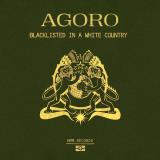
Agoro is a Franco-Ghanaian hip-hop group of four rappers and four musicians. After kicking off in 2023 with a 15-date tour in France, the group’s journey took a turn when a Ghanaian rapper vanished from the airport before boarding his return flight. Their new album chronicles this emotional roller coaster and the challenges of cultural exchange between Europe and Africa, with socially conscious lyrics in French, English, and Twi set to jazzy and electronic boom bap instrumental pieces.
Originally, symptoms started out as a memoir chronicling Devin Daniels' mental health journey by way of the beat tape. "I made these beats in my worst mental health state of all time, like 2018 to 2023. In 2017, I had a experience in Boston and it gave me a schizoaffective reaction. I'm schizophrenic now. I've been hearing voices for the past almost 10 years. A terrible time, just really negative. Making beats is the kind of stuff that would just like cheer me up, you know, it would just make me forget about all that stuff." Devin has also been consistently working in the Los Angeles music scene as a bandleader and session musician, graduating from the Herbie Hancock Institute of Jazz Performance at UCLA, and going on to play in bands with the likes of Herbie Hancock, Joel Ross, Gerald Clayton, Miguel Atwood-Ferguson and more. Although Devin does not have social media, and thus currently might not have the name recognition as others in the wider music world, he is very respected and beloved in many circles of the Los Angeles music scene.
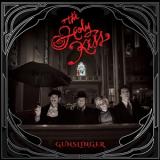
Die Band ,The Holy Kiss" aus San Francisco erhebt sich aus dem Grab, um ihre letzte Aufnahme erstmals auf Vinyl zu veröffentlichen. Aufgenommen im Jahr 2009 von Skot Brown (The Phantom Limbs, Altar de Fey) und zuvor auf 50 handgefertigten CD-Rs veröffentlicht, ist ,Gunslinger" ein raues Meisterwerk aus der Blütezeit von The Holy Kiss mit vier Songs, die feurigen Blues mit Blut, Schweiß und einer kräftigen Prise The Birthday Party vermischen. Der Titeltrack der 12", ,Gunslinger", ist ein Cover eines Bo-Diddley-Songs, den die Band so arrangiert hat, dass er ihrem Hang zur melodischen Kakophonie entspricht. Frontmann Matty Rue Morgue singt mit dunkler Sonnenbrille aus tiefster Seele, während ,Schlagzeuger Nick Ott wie ein Riese über einem elfenhaften Schlagzeug thront und die Felle so fieberhaft bearbeitet, dass er eine Selbstentzündung riskiert" (Tatiana Simonian, L.A. Weekly). Das im Jahr 2000 offiziell gegründete, von schwarzem Humor geprägte, altmodische und gut gekleidete Quartett ,erzeugt einen dunklen und auf süße Weise dissonanten Krach, der an Mordballaden erinnert und perfekt dazu geeignet ist, die im Limbus schwebenden Geister der Betrüger, Verrückten, Säufer und anderer gesellschaftlicher Ausgestoßener heraufzubeschwören, über die die Band gerne in ihren schattenhaften, Dickens'schen Liedchen" (Bill Picture, San Francisco Chronicle). Die Veröffentlichung von The Gunslinger enthält außerdem eine Bonus-7"-Single mit Solo-Aufnahmen, die Matty Rue Morgue 2009 gemacht hat - nur wenige Jahre vor seinem viel zu frühen Tod im Jahr 2015. Darauf sind zwei Songs von Matty und ein Song von The Holy Kiss (,Go Head N Count `Em"), die für Solo-Akustikgitarre neu arrangiert wurden. In seiner Version von ,Go Head N Count `Em", gespielt mit Liebe und tiefem Respekt vor der Blues-Tradition, lässt sich Matty gleichermaßen von Lightnin' Hopkins und Lux Interior inspirieren.
Two figures of quasi-human form whose contours are in the process of dissolving. Like curtains of varying opacity, realities slide close together without ever laying claim to validity. The essence is clouded, nature its imitation. What sounds like the dripping of a viscous acid from porous aluminum casings could also be a sequential noise. The rhythm is an aid, a barb in the flesh. Voices fleeting like gases that have never surrendered to the dictates of gravity. It is the year 2024 of a calendar resembling an Abrahamic apparatus. Angels carry guns.
This record comes with a download code for the digital release!
This edition is limited to 150 hand stamped and numbered records including 150 individual and unique drawings and photographs.
2 x catastrophic cosmic chronic compositions from the 2016 psychic mirrors debut album. re-mastered loud for 7" club play. brought to you by Amnisa & PPU records.
Kid Katana Records teamed up with Dotemu, The Game Kitchen and KOEI TECMO GAMES, to bring you the highly anticipated NINJA GAIDEN: Ragebound OST on vinyl.
The physical edition is a 2LP designed in close relationship with the game's creative team:
- 2 colored vinyls: transparent blue & magenta, matching the cover art & the color-code of the two protagonists
- exclusive poster with extended credits & liner notes giving insights from the game’s creative team and featured artists
This album illustrates the incredible return to the saga's origins, embodied by Ryu Hayabusa's disciple Kenji Mozu and The Black Spider Clan Kunoichi Kumori, both united to repel the sudden onslaught of demons. It takes players back to its roots: a side-scrolling, brutally precise action-platformer set between the events of the first three episodes of the NINJA GAIDEN 8-bit era. The game’s OST blends different genres: rock, retro tunes and action-packed arcade music that respect the IP music legacy while modernizing it.
“The Mire Chronicles,” the latest album by Spammerheads, was born from the difficult experience of the floods that hit Valencia on October 29, 2024. During this time, the duo lost part of their studio and actively participated in the cleanup efforts in their city.
This was an experience filled with a mix of emotions—shock, helplessness, fury, resistance, solidarity, and resilience, among others—that shaped what may be their best work to date. Written as a chronicle, the album explores the personal and collective states of people affected by tragedies or catastrophes. The Valencian duo
(through a carefully produced edition released by Banshees Records) offers six tracks (plus two digital bonus tracks) to remind us that despite the difficulties we may face, we must always fight to get ahead, get back on our feet, and not be swept away by the current.
This album is dedicated to the people and communities who face extreme situations and never give up.
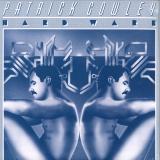
Cybernetic disco maestro Patrick Cowley graces Dark Entries once again with Hard Ware, an LP of far-out funk and synthpop celebrating what would have been Cowley’s 75th birthday. Best known for his chart-topping disco anthems, Cowley left us with an incredible body of work before his tragic death in 1982 due to AIDS-related illness. Since 2009, Dark Entries has been working with Cowley’s friends and family to uncover the singular artist’s lesser-known sides, including his soundtracks for gay pornographic films, which the label chronicled on compilation albums School Daze, Muscle Up, and Afternooners. Hard Ware presents the closing chapter in a trilogy of unreleased Cowley dancefloor bangers that began with 2022’s heavy-hitting Male Box and was continued with the soul and garage-inflected From Behind in 2024. The most expansive release in said trilogy, Hard Ware delivers ten tracks of pure, uncut Cowley: sultry, psychedelic, sarcastic, and just a bit sleazy. Cowley devotees will delight in “Tech-No,” a sparse instrumental demo version of his epically dystopian “Tech-No-Logical World.” You could soundtrack your next aerobics session with cheeky numbers like “Pajama Party Massacre” or “Shake It Up,” both of which feature Cowley himself on vocals. The frenetic “Big Ass in Motion” is built around samples from Rudy Ray Moore and The Madam’s infamous “Sensuous Black Woman,” an X-rated comedy record that would later feature in classic booty house records. Mid-tempo cosmic groovers are well-represented with jams like “Hellfire” and “Megablue,” which perfectly capture Cowley’s bathhouse-in-outerspace sensibilities. No collection of Cowley’s work would be complete without an interstellar floor-filler, and we’ve got quite a few here, like “Jungle Jump,” which pits whirling beats with dub-laced swirls of synth, or “Spellbinding Lover,” a Donna Summer-indebted melancholic boogie masterpiece that features Sylvester backup singer Jeanie Tracy. Hard Ware closes with the chilling synth-hymn ”Ice Age,” in which Loverde vocalist Peggy Gibbons sings of a coming frosty apocalypse. The story told in “Ice Age” mirrors the coming AIDS crisis and feels like a haunting premonition from Cowley. The record comes in a sleeve with a hand-airbrushed circuitboard-inspired design by Gwenaël Rattke, and includes lyrics as well as liner notes by Andrew Ryce and Peggy Gibbons. Hard Ware is another crucial document of a tremendous talent taken too soon.
DJ Quik is a giant of West Coast hip-hop. With 1995’s Safe + Sound, he scaled new levels of musical magnificence with his signature new age P-Funk/laconic G-Funk. A quintessential, sun-scorched LA album, this is pretty much essential. Typical for mid-90s albums the original vinyl copies are now rare so here’s the Be With re-issue, complete with “Tanqueray”, the hidden track from the original CD release.
A preternaturally gifted producer/rapper, DJ Quik has produced scores of LA gangsta rap classics. He’s released platinum and gold records of his own, as well as helped craft them for the likes of Tupac, Snoop Dogg, and Dr Dre. Quik has always been quirkier and more interesting than his gangsta rap peers, both musically and lyrically. An old-school funk producer at heart, he’s also incredibly nice on the mic. His raps often deal in boasts, jokes and good times but also cover his beefs, his trials and his trauma. Partying and pain, all mixed up. DJing and producing hype beat tapes from age 14, Quik’s tracks blended the languid funk and rubbery synths of Zapp and George Clinton with a gangsta aesthetic, creating a more danceable foil to Compton’s more typical nihilistic hedonism. Ultimately, his records sound custom engineered to drift out over sun-soaked barbecues.
By the time of his third album DJ Quik was a household name on the West Coast - California’s premier rapper/producer not named Andre Young. Released on Profile in 1995, Safe + Sound was certified gold. Less reliant on samples and more focused on live instruments, it elevated him from producer to fully-fledged composer. This sound — the quick, winding basslines, tinny high hats, smooth instrumental solos, soulful pipes, and Roger Troutman’s talkbox — defined him. This is an album of full-blown masterpieces. Rich soundscapes and masterfully arranged orchestrations with dense layers of sounds, intricate rhythms, and well-balanced songwriting.
The first track proper, “Get At Me” samples Cameo whilst Quik takes aim at the Judases in his life, the horn-laced chorus providing a triumphant feel. On the horizontal “Diggin’ U Out”, the soulful electric piano of Warryn Campbell lays a relaxed groove for Quik to talk over about one of his favourite topics: sex. Title track “Safe + Sound” chronicles Quik’s formative years over a slick instrumental. The moody bass locks a laidback infectious groove, the hook is catchy and Quik’s delivery is in fine form. On the uber-chilled “Somethin’ 4 Tha Mood”, Quik cooks up a breezy, feel good track of sparkly keyboards, syncopated claps, shuffling hi-hats, woozy synths and a floating two-minute flute solo courtesy of Robert “Fonksta” Bacon. Analysing the highs and lows of an average day in the hood, it echoes Cube’s “It Was a Good Day”.
“It’z Your Fantasy” is a silky smooth soundtrack to Quik’s detailed retelling of a sexcapade with a young lady and whilst “Tha Ho In You” is musically perfect for that midsummer family BBQ, its lyrical content is unsurprisingly decidedly less family-friendly. A real highlight, the infamous “Dollaz + Sense” is one of the most ruthless diss tracks of all time. The brutal lyrics ride a laidback West Coast beat, flipping a sample from Young & Company’s “I Like (What You’re Doing To Me)” as Quik fires lyrical shots at his arch Compton nemesis, MC Eiht. On the loping, hazy “Let You Havit”, Quik is again in gangsta mode, with more bars of barbs aimed at Eiht, rhyming over sun-kissed synthy-rollerskate funk.
Some of the finest tracks on Safe + Sound are those designed to de-stress. The evocative “Summer Breeze” is a classic warm-weather jam, anchored by a twangy funk guitar, breezy string arrangement, and a soulful hook delivered by Dionne Knighton. Quik’s nostalgic lyrics are not far from DJ Jazzy Jeff & The Fresh Prince’s “Summertime”, reminiscing over barbecues at the park, young love, and the brevity of halcyon youth. The relaxed and jazzy “Quik’s Groove III” is another highlight, as bass, guitar, piano and flute combine to create a smooth, soulful instrumental.
The swaggering “Shack Up”-sampling “Sucka Free” features a cameo from Playa Hamm, all funky braggadocio and over much too quikly (pun thoroughly intended). The jazz-flavoured “Keep Tha ‘P’ In It”, again featuring Playa Hamm but this time extending the cameo invitations to Hi-C, 2nd II None and Kam, is pure laidback P-Funk. The deep bass and industrial drums make sure the groove hits hard.
“Tanqueray” was originally a hidden track on the CD version of the album, but it’s too good to hide. This wild party samples Brass Construction’s gigantic “Get Up To Get Down” and soars in its drunk-ebullience. An apt way to close this party-driven set.
This 2022 Be With double LP re-issue has been mastered for vinyl by Simon Francis, cut by Pete Norman and pressed at Record Industry. Unusual for the time, Safe + Sound was originally pressed as a double, so all that was missing was the CD’s hidden bonus track “Tanqueray”, so we’ve fixed that. The original vinyl release never got a picture sleeve, so we’ve recreated the original’s promo-style silver-sticker and plain black jacket. A subtle cover for a wonderfully unsubtle record.
For its landmark 20th anniversary, Apnea Records proudly presents XX, a double 12" compilation that chronicles the label's journey from its inception to its current cutting-edge form. Featuring both original innovators and fresh talents from its recent relaunch, this release is a sonic time capsule and a forward-looking statement. Spanning from deep techno to Detroit-infused house, Jamal Moss's abstract house, electro, and E.R.P.'s signature machine funk, XX dives into the label's broad sonic spectrum. With contributions from Alex Under, Damian Schwartz, Jamal Moss, E.R.P., Dopplereffekt, Thomas Brinkmann, and Kyle Hall & Kero, this collection serves as both a reflection of Apnea's past and a bold vision for the future.
I Want to Die in New Orleans is the debut studio album by American hip hop duo Suicideboys, which was released on September 7, 2018. The album chronicles semi-autobiographical stories of the duo's encounters with depression, drug addiction and suicidal ideation. Released to critical acclaim in the underground rap scene, the album debuted at number 9 on the US Billboard 200 with 49,000 album-equivalent units in its first week sales. The album also reached the top 10 in Australia and Finland.
DRIVETRAIN/The Moonlight
A steamy and impassioned orchestration lead by a captivating vocal mantra, tribal percussions and the soundtrack a late night chronicle.
DRIVETRAIN/Moonlight & You
Driven by drums and bass, the jazzy ambience of voice and melodic chord progression sets the stage for a big crescendo.
G-PROD/Moonlight
A wall of mesmerizing pads float fluently atop the velvety, abduction of the dominating groove provided by the rhythm section.
G-PROD/Moonlight (David Duriez Floating Light Mix)
Adding a different spice to the mesmerization, the remix is an intoxicating acid adventure through the frequency spectrum.
A true masterpiece, full of dashing solos and containing some of Freddie King's finest vocals since his heyday in the late '50s and early '60s. Released by Shelter Records in 1972, Texas Cannonball is similar to his first Shelter outing (Getting Ready), but with
more of a rock feel. It covers tunes by Jimmy Rogers, Howlin' Wolf, and Elmore James, tackles compositions by Leon Russell and, more unexpectedly, Bill Withers, Isaac Hayes-David Porter, and John Fogerty (whose "Lodi" is reworked into "Lowdown in Lodi"). King's own pen remained virtually in retirement, as he wrote only one of the album's tracks. In 2007, the Houston Chronicle listed
Texas Cannonball among the 75 essential Texas blues albums.
Half Grand Records’ second release makes it more clear that their target is squarely between the dancefloor and headphones. This unpredictable playlist spans genres, from Golden Science’s buzzy boom bap to Jon Doppler’s sub shaking hardcore, with layers of analog goodness that seem to glow with the first days of rave. Electronic music veteran Proswell contributes a real viber, replete with growling basslines and bells. Round it out with a sprawling, spastic workout from Sweden’s A Stantz (Peel MD) and you have a chronicle that would fit perfectly in the collection of fans of early Warp Records, Tobacco, and millennium era Merck Records. Check it out!
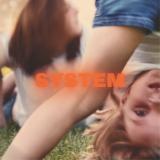
If Izzy Hagerup’s new album, ‘System’, feels immediately uncompromising it’s because it was never really designed for public consumption. Released under her Prewn moniker, Hagerup describes the album as a “private journal made public”. Told across nine arresting new songs, the album chronicles a deeply personal journey through the darkness of depression, but one that’s always undercut by moments of humor, selfishness and self-reflection, a push-and-pull that feels wholly distinctive. Following on 2023’s ‘Through The Window’ LP - a collection of songs that Pitchfork hailed as a “striking example of Hagerup’s ability to sit with ugliness” - ‘System’ finds Hagerup crawling even deeper into the dense folds of the night. Written and recorded solely by Hagerup, mostly in long stretches of bedroom sessions that found her working through the small hours until she began to hear birdsong, the album reckons with a lot of the thoughts that tend to needle in at that time of night; guilt, shame, and self-absorption, as well as the societal pressures that sit at the root of such things. From a bedroom floor in the middle of the night, through a tangle of cables and complex emotions, System grew into a document of disassociation, but it comes undercut with a sense of lightness when compared to what’s come before. It doesn’t surrender to the darkness, it dives into it with a keen and exploring eye and through the gloom it finds constant realizations of the wonder and appreciation of life. That journey holds a special kind of power. There’s bravery in it, a struggle that never asks you to look away but instead to follow it down the rabbit hole. That it leads to a place of fascination is testament to the sheer force these songs hold; songs of hurt and heart, fear and fun.
For fans of Signs of The Swarm, Thy Art is Murder and Lorna Shore The devastating new full length from one of Australia’s household names in the Deathcore genre. ‘The Darkest Side Of Humanity’ is a sprawling, hellish journey into the psyche of mankind, drawing influences from every colour of the heavy spectrum. ANIT have always been a razor sharp prospect, but with this album they seem to have found a powerful amalgamation of everything that made them so fun to listen to. The fat is trimmed, the concept is focused…the songs are HEAVY.
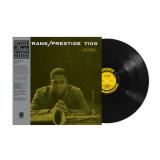
Original Jazz Classics celebrates John Coltrane’s centennial with this release of the mono edition of Coltrane. Originally released on Prestige in 1957 the album features Coltrane alongside Johnnie Splawn, Sahib Shihab, Red Garland, Mal Waldron, Paul Chambers, and Albert “Tootie” Heath. This new edition of the album is released on 180-gram vinyl pressed at RTI with all-analog mastering from the original tapes at Cohearent Audio and a Stoughton Tip-On Jacket.
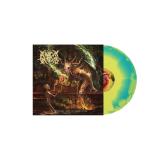
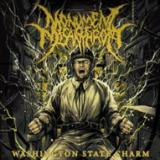
Originally founded as a solo project by singer Georg Wilfinger (ex-Miasma) in 2010 in Austria, In 2012, the project evolved into a studio band with drummer Romain Goulon (ex-Necrophagist) and guitarist Jean-Pierre Battesti, releasing the demo "Bandroom Misanthropy" MONUMENT OF MISANTHROPY have released three studio albums, and an EP Previous full-length album "Vile Postmortem Irrumatio" was released in August 2024 and drew roaring reviews worldwide. The new opus is a wholesome little concept album chronicling the coming- of- age story of a serial killer: the awkward upbringing, the early extracurricular activities, and the grand finale on the electric chair, America's probably most prolific serial killer , Ted Bundy.
This album, recorded in 1988 at Elkar Studios in Lasarte, is a happy accident, like much of La Polla Records' early output, by Jean Phocas (who also worked with other bands of the genre such as Cicatriz) and César Ibarretxe. It was lovingly designed, with a medieval atmosphere for the cover (by Txefo, Joseba Olalde and Txarly) featuring a huge scroll containing five tarot cards, a back cover in the same style with heraldic figures, and a meticulous presentation of the lyrics with separate spellings for each song, on a double sheet with photos of piglets suckling from their mother on one side and various images on the other. With animals as the common thread for the songs, it represents the confirmation that the concept album had arrived on the national punk scene. Perhaps a work of maturity, the band's traditional objectives disappear from the lyrics, and although there is still room for specific protests and chronicles of nights of alcohol and violence (such as those of La Rata), the emphasis is on revelling in the description of all kinds of personal, psychotic and hallucinatory hells. Evaristo confessed to being influenced by Umberto Eco's book The Name of the Rose (1980) in the making of this work. Far from indicating any departure from the foundations laid in previous works, it shows that the spectrum of the anti-establishment struggle the group was committed to was broad. A very complete album.
Ltd. silver vinyl. Migja ta Mohh Mignun ("Journey of a Mad Mind") is a concept prose, chronicling the descent and transformation of a man consumed by insatiable thirst for forbidden knowledge. Abandoning wealth and comfort, he pursues ancient secrets hidden in scrolls, caves, and lost maps, ultimately crossing the boundary between life and death. Along the way, he defies the Inquisition, boasts of powers older than God, and embraces the role of a sorcerer and a possible Antichrist. His journey is filled with occult rites, supernatural encounters, resurrection, and even visions of an underworld queen who grants him unmatched wisdom. In the end, his quest leaves him both cursed and exalted; a figure suspended between madness, immortality, and damnation. This concept is based on a Maltese legend formally penned by Agostino Levanzin, which in turn is rooted in actual events from the 16th century. The music is written to accompany the story and is paced in an average medium-paced but intense wall of sound, along with Sa??ar's particularly unique vocals, all in the exotic and arcane Maltese tongue.
Migja ta Mohh Mignun ("Journey of a Mad Mind") is a concept prose, chronicling the descent and transformation of a man consumed by insatiable thirst for forbidden knowledge. Abandoning wealth and comfort, he pursues ancient secrets hidden in scrolls, caves, and lost maps, ultimately crossing the boundary between life and death. Along the way, he defies the Inquisition, boasts of powers older than God, and embraces the role of a sorcerer and a possible Antichrist. His journey is filled with occult rites, supernatural encounters, resurrection, and even visions of an underworld queen who grants him unmatched wisdom. In the end, his quest leaves him both cursed and exalted; a figure suspended between madness, immortality, and damnation. This concept is based on a Maltese legend formally penned by Agostino Levanzin, which in turn is rooted in actual events from the 16th century. The music is written to accompany the story and is paced in an average medium-paced but intense wall of sound, along with Sa??ar's particularly unique vocals, all in the exotic and arcane Maltese tongue.
"I decided to just let myself go," Zzzahara says of their new record, 'Spiral Your Way Out' "I think I finally came to this acceptance that I don't have to be perfect. I want to be a good role model to my fans and stuff like that, but I also don't want to hide who I am." Zzzahara's music wades into the deep waters of love, lust, and self-discovery in a part of the world where artifice and authenticity co-exist. Emerging from the heart of LA's alternative music scene, their sound is raw in feeling and rebellious by nature.
Their 2022 debut album, Liminal Spaces, chronicles a coming- of- age in Highland Park, following painful childhood memories through to late- night, live- fast coping mechanisms, and the changes the neighbourhood has endured over the same period of time. Their 2023 follow- up, Tender, marked a period of slowing down, looking inward, and embracing a softer side of being. 'Spiral Your Way Out' sees Zzzahara evolve again. Emotionally, its foundations are built on scorched earth.
The album finds Zzzahara in the aftermath of a relationship spent trying to fit someone else's mould, being jerked around by indecision, and then hitting "emotional rock bottom." Made in a three-month burst that let all their pent-up frustrations loose, 'Spiral Your Way Out' is in part a work of self-reclamation, swapping there 2nd album Tender's meditative state for something fiery and more assertive. The new album marks another sonic evolution as much as an emotional one. Zzzahara's songs have always come wrapped in a warm glow that reflects how they were written -namely at home in their bedroom.
That glow remains on 'Spiral Your Way Out', but it also packs an ambitious streak and a gutsy punch. Taking a more collaborative approach than usual, Zzzahara worked with a range of producers including Jorge Elbrecht (Japanese Breakfast, No Joy, Sky Ferreira), Sarah Tudzin (boygenius / Cloud Nothings / The Armed), former Ducktails guitarist Alex Craig (Jelani Aryeh / re6ce) and Halsey tour drummer Franco Reid, who helped harness their intimate style of writing and blow it up into something more panoptic. After a year of upheaval, Zzzahara finally feels "calm." The musical equivalent to going several rounds on a punching bag, 'Spiral Your Way Out' finds solace between extremes. It licks its wounds in a place where pain and love, healing and abandon, sit side-by-side. If it has a message, it's one of standing tall in your own shoes - scuffs and all.
"I decided to just let myself go," Zzzahara says of their new record, 'Spiral Your Way Out' "I think I finally came to this acceptance that I don't have to be perfect. I want to be a good role model to my fans and stuff like that, but I also don't want to hide who I am." Zzzahara's music wades into the deep waters of love, lust, and self-discovery in a part of the world where artifice and authenticity co-exist. Emerging from the heart of LA's alternative music scene, their sound is raw in feeling and rebellious by nature.
Their 2022 debut album, Liminal Spaces, chronicles a coming- of- age in Highland Park, following painful childhood memories through to late- night, live- fast coping mechanisms, and the changes the neighbourhood has endured over the same period of time. Their 2023 follow- up, Tender, marked a period of slowing down, looking inward, and embracing a softer side of being. 'Spiral Your Way Out' sees Zzzahara evolve again. Emotionally, its foundations are built on scorched earth.
The album finds Zzzahara in the aftermath of a relationship spent trying to fit someone else's mould, being jerked around by indecision, and then hitting "emotional rock bottom." Made in a three-month burst that let all their pent-up frustrations loose, 'Spiral Your Way Out' is in part a work of self-reclamation, swapping there 2nd album Tender's meditative state for something fiery and more assertive. The new album marks another sonic evolution as much as an emotional one. Zzzahara's songs have always come wrapped in a warm glow that reflects how they were written -namely at home in their bedroom.
That glow remains on 'Spiral Your Way Out', but it also packs an ambitious streak and a gutsy punch. Taking a more collaborative approach than usual, Zzzahara worked with a range of producers including Jorge Elbrecht (Japanese Breakfast, No Joy, Sky Ferreira), Sarah Tudzin (boygenius / Cloud Nothings / The Armed), former Ducktails guitarist Alex Craig (Jelani Aryeh / re6ce) and Halsey tour drummer Franco Reid, who helped harness their intimate style of writing and blow it up into something more panoptic. After a year of upheaval, Zzzahara finally feels "calm." The musical equivalent to going several rounds on a punching bag, 'Spiral Your Way Out' finds solace between extremes. It licks its wounds in a place where pain and love, healing and abandon, sit side-by-side. If it has a message, it's one of standing tall in your own shoes - scuffs and all.
In the culinary arts, it’s easy to overcomplicate the final product. Theme, presentation, texture…they’re important but should work to complement the raison d'etre of any food. At the end of cooking a dish, it should taste good and feed people. Some dishes, like barbeque or provoleta, resist the tendency towards hollow showmanship. One of their expressions can be more or less aesthetic, but the first purpose is to be simple and tasteful. Argentinian provoleta goes so far as to blur the line between ingredient and dish. It relies on the inherent flavor of provolone being heated at the right speed for the perfect amount of time. You can add garlic or chives or red pepper to the slice, but ultimately they serve to bring out an essence that’s already there.
Los Angeles’ Cousin Feo has developed his rapping acumen in the five years since releasing Provoleta, but returning to the project today shows that he always had the penmanship, grit and delivery that christens an emcee worthy of remembrance. Like the bubbles rising up in the appetizer that is the album’s namesake, Feo showed that true profundity is found in the simple gestures.
Since dropping the project in 2019, Cousin Feo has expanded his vision of a world where hip-hop and football, two proletarian art forms, mingle in creative and compelling ways. He has collaborated across multiple continents, chronicled football histories, aided in canonizing legends, kept the flames high in age-old rivalries and constantly forced his audience to search for the last time they heard bars this hard. In anyone else’s hands it would be too great a task.
The maturity he showed on Provoleta wasn’t nascent, it was an inherent quality forcing itself to the surface. The songs refract his experience as a working class Angeleno through the archetypes of Argentinian football legends. The kernel that unites the two worlds is hustle. When Feo was coming up, missteps had greater consequences than crashing out in the group stage and street deals had the weight of a Boca-River Plate match.
Each track uses slightly different ingredients to let Feo’s underlying talent shine. “Maradona” feels salvific, fitting for a football legend canonized from the Andes to the Alps and a Los Angeles rapper looking to inspire similar hope in the neighborhoods that raised him. On “Di Stefano” Feo massages the instrumental with the same composure of the late forward, until he pierces through the headphones like one of Di Stefano’s arrows. It’s also refreshing to hear a song celebrating Messi before his meme-ification, focusing on the universal truths contained in his footballing talent instead of using number 10 as a stand-in to make a point in a fruitless argument. And he still finds space to show deference to Batistuta, Kempes and other members of the Argentinian pantheon who’ve been erased from the popular imagination by the national team's contemporary success.
Real ones know that true players, true rappers, and true artists will always stand the attacks of time and consensus. In Provoleta’s first verse, Cousin Feo says he moves with the hand of God. Maybe one day he’ll tell the whole truth and let us know how he was able to wrestle the pen away too. Limited edition of 300 hand-numbered copies.
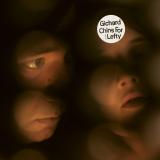
Chins For Lefty is the debut album and first recording by Gichard, a new duo chronicling the absurdities of end-stage capitalism and mouldering social rituals from their vantage point in Glasgow, Scotland. Recorded primarily in the band’s home studio straight to tape, Chins For Lefty combines gorgeous, ramshackle melody, DIY kosmische punk, drum machine + synth and, in vocalist/lyricist Lisa Jones, an absurdist commentator on the human condition as it navigates the anxieties of the modern world. Instrumentalist Chas Lalli’s swirling music accompaniment stitches an evocative mix of musical styles, the ragged wind beneath the lyrics’ wings.
Although the duo first collaborated in their previous group Dragged Up, their disparate musical and artistic backgrounds make for an alluring mix in Gichard. Lalli has spent the last 20 years in the Glasgow underground, most notably in the noise rock group VOM, while Lisa Jones’s practice was in poetry and spoken word. Beginning as co vocalist in her previous band, in Gichard her lyrics are centre stage; the vision concocted alongside Lalli amounts to a total world-build.
Chins For Lefty scans almost like a novel, with each track elucidating a skewed universe that bears only some resemblance to the one you and I partake in. Like all works of fiction Gichard’s songs are rooted in reality and the lived experiences of its authors, but here characters are exaggerated, social mores and habits are pulled apart to reveal their inherent alienness. Universal emotions are laid bare, the bright light of anxious examination searching out every hairline fracture in our relationships. Distorted and cracked, the mirror that Gichard hold up to our world is also pretty damn funny.
Opener Cholesterol Test launches an expansive, cosmic guitar and synth intro that belies the Tascam-tape recorder it was recorded onto, like a Chromatics cut substituting anxiety for overt sexuality. Here Jones intones an apology to a non-responsive recipient, in the medium of a long voice note forensically deconstructing an interaction from the night before. Over punk guitars and shuffling, lo-fi drum machine splutters, the narrator in Asking The Apes “prefers things to people” before being taken hostage in the city zoo to confess an obsession which consumes the protagonist, ending with the immortal two liner “I sleep in a cocoon of old newspapers at the end of your street / And I think I have been fired from my job,” On album standout Posthumous Hologram, the narrator is faced with a human simulacra, in this case an undead pop star; the face of the encroaching technological singularity. Yes, it does requests, it can do My Way in 200 different language options. But what are the implications? While you’re left pondering, the alternating deadpan verse delivery and undeniably catchy chorus keep you company.
By the time Break Up With Johnny Dogbirth rattles into view, the band are satirising a suburban inanity blown up to cartoon proportions, soundtracked with a drawled musicality that recalls Rowland S. Howard’s post-Birthday Party balladeering. This approach is furthered on Human Resources: over an angular guitar+bass track, Jones’s short story recalls Dry Cleaning’s erudite lyrical post punk. On Soft Face, Lalli’s guitar and drum machine are swathed in echo and delay, as Jones dissects dating rituals with a west of Scotland drollness. Hamming It Up brings a porcine perspective in a short story that begins with the line “I was breastfeeding discreetly in the service station. She didn’t mind.” What follows is a passage punctured with canned laughter and a narrative involving tribute acts, modern farming techniques.
Brilliant first single Your Private Hell closes the album, the closest the group get to earnest perhaps, filtered through a surreal central Scottishness. While Your Private Hell might seem like a sardonic take down of romance, perhaps it’s the very distillation of love in all its awkwardness, selflessness and weirdness. Here there’s a distinctive Glasgow-ness to this doomed romance: the protagonist falls for an outsider, offers them cheap jarred hot dogs and carbolic soap (the infamous, excoriating soap dished out in schools and government buildings throughout Scotland), offers to cover up a murder, stalks them in the all-night Spar. It’s a short story of intrigue, murder and the irresistible pull of self-sacrifice to share in someone else’s suffering. If that’s not love, what is it? You can see this vision mapped out in black and white on their video for 'Your Private Hell'.
The studio album from 2002, remastered from original source files in 2024. Includes One More Nightmare, From the Fire, Fallen and Darkcell AD. Absent from vinyl for 10 years until the 2025 sold-out RSD release. Includes a bonus LP "Live in Roskilde 2000" not on vinyl before. New sleeve notes by gothic chronicler journalist Mick Mercer in a gatefold sleeve. Limited edition in transparent red vinyl.
Water Sign is the debut EP from producer and instrumentalist John Silas: a five-track suite that moves fluidly between peak-time dance and inward reflection. Deeply aligned with the open-eared ethos of NYC’s Love Injection Records, the release channels house and jazz into an emotive personal chronicle shaped by movement, memory, and community.
At its thematic center is “Boundaries,” a dynamically arranged dance-floor meditation that begins with piano, 4/4 kick and restless hi-hats before blooming into radiant synth work reminiscent of classic disco auteur Patrick Adams. Midway, the track shifts—electric piano, whistles and percussion reframing the groove into what Silas calls “hues of vulnerability.” The result mirrors the arc of love, release and renewal.“Cyber Dreams” leans into lush escapism, buoyed by surging keys and impassioned flute from Domenica Fossati, while a remix from Detroit mainstay Patrice Scott (Sistrum Records) adds unmistakable Motor City weight. “Foster Child” nods to Silas’ hero, the late Paul Johnson with exuberant Chicago spirit, and “Nasty” delivers a concise workout featuring Marquinn Mason’s robust saxophone.
Water Sign reflects Silas’s trajectory—from a childhood steeped in Soul Train, coming of age with hip hop, to MPC craftsmanship, his Detroit musical family and present-day Brooklyn—into a deeply personal record equally suited to discerning DJs and deep listeners.
out of Stock
Last delivered 34 days ago available to reorder, subject to availability
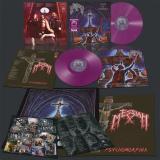
With bands such as Hellhammer/Celtic Frost and Coroner, but also more obscure formations such as Fear Of God, Excruciation, and Infected, Switzerland has always been a fertile breeding ground for extreme metal. Messiah, originally formed in 1984, also played a major role in the development of thrash and death metal in Switzerland. They released two groundbreaking albums on Chainsaw Murder Records: “Hymn To Abramelin” in 1986 and “Extreme Cold Weather” a year later. In the early nineties, Messiah signed a contract with Karl Walterbach's label Noise Records, on which three more albums were released: “Choir Of Horrors” (1991), “Rotten Perish” (1992), and “Underground” (1994). The classic lineup of Messiah during the Noise era consisted of vocalist Andy Kaina, who passed away far too early in 2022, Steve Karrer on drums, Patrick Hersche on bass, and band founder Brögi on guitar. Many consider “Choir Of Horrors” from 1991, produced by Sven Conquest at Sky Trak Studios in Berlin, to be the pinnacle of Messiah's work. Messiah Infernal Thrashing Records (MITR) is now releasing the 35th anniversary edition of this classic on vinyl
Talulah’s Tape is the debut offering from magnetic Midwest-jangle collective Good Flying Birds. Across a patchwork mixtape of stripped-down home recordings that span the independent-guitar spectrum, the band delivers colorful, intricate pop songs perched between the immediacy of DIY punk and the intimate sweetness of twee. Breakbeats, memes, and noise glue everything together, making the album feel as chronically online as it is timeless.
Originally released on cassette in January 2025 by Midwest-punk legend Martin Meyers’s Rotten Apple label, the tape sold more than 300 copies in under a month and quickly became an out-of-print and coveted item. Meyers called it “certified catnip for popheads.” Now, with a refined track list and a fresh master from Greg Obis, Talulah’s Tape returns on LP and CD via Carpark and Smoking Room in October 2025.
While production and approach vary, a through-line of sensitive self-contemplation rests on bright, scrappy guitars and hyperactive melodic bass. Opener “Down on Me” rides a buoyant bass line while jangling guitars frame reflections on overcoming trauma: “I see you in the mirror every time I cry / I hear your voice every time I try.” Next, the guitars trade twinkling counter-melodies on “I Care for You,” pairing sugary, lovestruck lyrics with effervescent strums: “You catch me when I fall / You build me up so tall.”
The rosy grin occasionally twists into a wicked smirk. “Dynamic” warns, “You used to paint the face, but now you’re just the clown,” while “Glass” asks, “Is it lonely at the top when everyone follows the trend, and you hold the pen?” Both tracks brim with sparkling guitar interplay. By the closing, nearly five-minute “Last Straw,” Good Flying Birds stand far beyond conventional indie-pop or 4-track punk, unveiling a roller-coaster of unpredictable changes, vocal harmonies, and instrumental cross-talk.
Altogether, Talulah’s Tape is a pastel-yellow, candy-coated shell filled with thoughtful juxtapositions and melodic experiments. Standing on the same ground as idiosyncratic songwriters like Connie Converse and Daniel Johnston, Good Flying Birds find sweetness in sadness, tear stains on a colorful flower-print couch. Simultaneously, it’s packed with the scratchy guitars and vibrant rhythms of Scottish guitar groups like The Pastels, Orange Juice, and Josef K. It’s a tremendous opening statement from a band just getting started.
Greyscale Records is proud to announce Make Them Suffer's debut album Neverbloom, pressed for the first time on vinyl. Over ten years after it's release, the album still stands up as one of the most respected deathcore releases ever, with songs like Widower and the title track still being fan favourites in the band's set.
Pianist and singer songwriter Tilda Gebhardt creates a curious and immersive world on her debut "Come the Afternoon", a tender portrait of her upbringing in the bleak yet beautiful north west English countryside.
Telling tales that take us back to a 1936 premier of Swing Time, or inside a telescope where a man named Ernest lives, via the vast plains of the Australian desert - Gebhardt's unusual combination of playfulness, storytelling and profound reflection is carried along by her crystalline voice, and acrobatic piano.
Inspired in turn by the magic of moving images and nature, "Come the Afternoon" is like a collection of miniature films, chronicling Tilda's adventures on the fells of the langdales, hiding in the heather on the Trough of Bowland, and exploring the fields and valleys that surround her home in Lancaster.
Sounds like: Joni Mitchell, Liza Minelli and Joanna Newsom picking cockles in Morecambe Bay.
Recommended if you like: Keith Jarret, Emahoy Tsege Mariam Gebru, Issa Kobayashi, John Berger.
Green Vinyl. Twenty-five years after their first recording, Panzerpappa - perhaps Norway's most cordial avant-prog ensemble - felt the time had finally come to release their first-ever concept album. In 2025 the band will launch Landsbysladder, their eighth studio release. Landsbysladder is Norwegian for "village gossip" and the album comprises seven instrumental pieces centred on the themes of rumours, tales, and gossip in a small village - a musical chronicle of minor and major dramas unfolding in a tight-knit community where everyone knows everyone - or at least thinks they do. Landsbysladder tells a vivid story without uttering a single word. The music shifts between open, melodic passages and sudden bursts of intensity, drive, and complexity. Tempo changes, rhythmic twists, and harmonic detours mirror the unpredictable way gossip can spread, grow, and shift the mood in an instant. The album features several distinguished guest musicians: renowned folk artist Rannveig Djonne on diatonic accordion, seasoned performer Silje Hveem Lofthus on flute, internationally acclaimed soloist and professor Håkon Stene on tuned percussion, Håkon Borve on the rarely heard contra-alto clarinet, and last but not least, jazz luminary Ståle Storlokken - known from Elephant9, Terje Rypdal, Motorpsycho, and Supersilent - on synthesizer.
Nach einer Tourpause zogen Black Pumas 2024 los, um ihr gefeiertes zweites Album 'Chronicles of a Diamond' live vorzustellen. 'Live From Brooklyn Paramount' fängt das 'Electric Church'-Live-Erlebnis ein, für das Eric Burton, Adrian Quesada und ihre sechsköpfige Band sich einen Namen gemacht haben. Das 2xLP-Set enthält Songs sowohl von Chronicles als auch von ihrem millionenfach verkauften Debüt, darunter die Grammy-nominierten Songs 'Colors', 'Black Moon Rising', 'More Than A Love Song' und ihre Version von Tracy Chapmans 'Fast Car'.
Season of The Dead is a visceral, cinematic extreme metal project born from the twisted minds of Titta Tani (former drummer of Necrophagia and Goblin), Giacomo Anselmi (former Goblin guitarist and current member of Goblin Legacy), and Enrico Giannone, founder and owner of Time To Kill Records, acting as producer and visionary behind the entire concept. The idea is as brutal as it is clear: to resurrect the blood-soaked legacy of horror-infused death metal, channeling the rotten spirit of bands like Necrophagia, Mortician, and Fulci, while paying tribute to the grotesque imagery and raw energy of cult underground horror films. Influences range from Killjoy to City of the Living Dead, The Beyond, and Cannibal Holocaust, creating a soundscape that feels like a soundtrack to a lost VHS splatter nightmare.