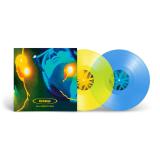
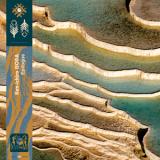
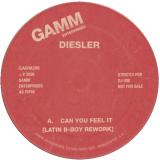
Since launching a decade ago, the label has increasingly focused
it's attention away from generic club sounds and last year's releases include Sigha's IDM-tinged alias Faugust, as well as left-of-centre
EP's from Portrait and AVL.
Joining them for the label's first release of 2020 is innovative Japanese producer 'Masaki Uchida' who displays his prowess as a sound designer and multi-instrumentalist across six tracks. Uchida rips apart a variety of contemporary and classic electronic styles, reassembling them into a uniquely beautiful new whole.
Often walking the line between extremes, the release features both moments of chaos and times of complete silence, exemplary of not only Uchida's bold approach to the song writing process but also
his unquestionable talent as a sound designer and engineer.
Suche:circula
Our Circular Sound's resurgence continues with Portrait's 'Energy Band'; a six track ep that fuses wide screen sound design and club sonics. Drawing on his background in both London and Berlin's electronic scenes, Portrait's palate is at once wide reaching and focused, filtering techno, electro and drum n bass tropes through a futurist lens, Energy Band is an ep for forward thinking dance floors.
Sigha brings his OCS imprint out of hiatus after four years and resurrects his Faugust alias for 'Parallel Rave Fantasies'.
Across five tracks the ep pulls together a clutch of his formative influences, leaning heavily on his early experiences with electronic music and placing them in with in the context of his contemporary production and sound design work.
Often doing away with traditional structures in favour of a more organic approach, the result is a set of tracks that both take in the dynamic of the dance floor and step away from it.
2022 REPRINT 10 years anniversary reprint of the amazing record of Piotr Kurek! As a composer and multi-instrumentalist with a penchant for vintage sound equipment, as well as the practical sense to know where their limitations are, his musical compositions –part melodic narrative, part sound collage –distil a sense of nostalgia into a romance for the present. Using a Moebius comic he had never seen (Le Monde d’Edena) and an instrument he would never have (a Mellotron) as a conceptual starting point, the Warsaw-based, Polish artist presents Edena.a hypnotic, circular motion pervades all of Edena; a cyclic life force that gives the impression of forward motion, while really folding back on itself, reflected by the infinity symbol of the cassette cover.
High-quality FERRO cassette tapes, printed on 160g premium paper.
Release info
New SEQMENTS release includes an amazing remix by Dante Archipiélago, also known as Mwamwa. As the first remix to arrive, it immediately set the tone for the series. Based in Mexico, Dante is a very talented producer with releases on labels such as Secuencias Temporal, Circular Limited, and Sygnth. His sound is very modern, with playful breakbeats and rich rhythmic tribal elements, carefully crafted into one beautiful cohesive whole.
Incl. Remixes by Red Axes, Roman Flügel & Abe Duque
What does it mean to exist in sound?
It does not begin with a beat, but with a choice. With the moment when someone decides not merely to inhabit the space, but to shape it – and in doing so, makes themselves visible.
Roman Flügel stands as a constant in the background. Not as an authority, but as a collective consciousness. Since the 1990s, he has moved through club music like a seeker, never content with the first answer. House, techno, experimentation – these are not genres, but states of being. His remix thinks, hesitates, opens, strikes like a surging acid wave, warping reality and demanding true presence.
New York taught him that club music is never neutral. It is body, friction, attitude. Abe Duque’s remix carries a strangely enchanting relentlessness, a resistance to smoothness – as if the dancefloor were a place where freedom is not claimed, but fought for.
Red Axes do not enter this space; they conjure it. Their sound is raw, repetitive, circular, as if deliberately refusing linearity. House, dub, and acid elements become material for a movement that is more trance than structure. Their remix does not ask where it is going; it asks why one should ever stand still.
And then there is Tim Paris. Not at the center, but as a narrator. As someone who knows that the voice is an attitude. “That Boy” is not a pose, but a mirror, ironic, direct, vulnerable. Paris moves between new wave house and club, always aware that identity is never fixed, but formed in the moment.
This remix record is not a gathering of names. It is a situation, four perspectives on the same question:
What does it mean to exist in sound?
Yet sound alone does not tell the full story: like music, the visual is a space to be shaped, felt, and deciphered. The cover of Tim Paris feat. Foremost Poets – That Boy, created by Konstantin Fürchtegott Kipfmüller, a visual artist at the Hochschule für Gestaltung in Offenbach under Heiner Blum, embodies this principle. Drawing inspiration from the urban environment, Kipfmüller transforms traces of decay, weather, and time into abstract narratives that, like the music of Tim Paris, Roman Flügel, Abe Duque and Red Axes, unfold meaning layer by layer. The result is no mere adornment, but a mirror of the sonic landscape: every line, every surface an echo of the question of what it means to exist – fully, in the moment, in sound.
Every journey has it's final beat.
This vinyl marks the last NTFO release - a record made to move bodies
and stay in collections long after the needle lifts.
No reissues! No repress!
- B1: Ore-Se-Rere (Nigerian Juju Hilife)
- B2: The Gathering
- B3: Spiritual Blessing
- A1: Elevation
- A2: Greeting To Saud (Brother Mccoy Tyner)
Elevation, released in 1974 on Impulse! Records, finds saxophonist Pharoah Sanders expanding his spiritual jazz vision on an album that balances ecstatic expression with focused ensemble interplay. Produced by Ed Michel and recorded in 1973 across two live performances and a studio session, Elevation features a dynamic ensemble including Joe Bonner on piano, Calvin Hill on bass, and Michael Carvin on drums.
The album’s open forms, modal grooves, and spiritual themes underscore Sanders’s ongoing search for transcendence and cultural affirmation through sound. With chant-like melodies, circular motifs, and immersive rhythmic textures, pieces like “The Gathering” and the title track reflect a more meditative and exploratory side of Sanders’s aesthetic. Elevation comes towards the end of Sanders’ tenure on Impulse!— a cohesive and spiritually resonant statement that bridges the raw fire of earlier albums with a deeper, more spacious sound.
The album’s open forms, modal grooves, and spiritual themes underscore Sanders’ ongoing search for transcendence and cultural affirmation through sound. With chant-like melodies, circular motifs, and immersive rhythmic textures, pieces like “The Gathering” and the title track reflect a more meditative and exploratory side of Sanders’s aesthetic. Elevation marks the culmination of his Impulse! discography — a cohesive and spiritually resonant final studio statement that bridges the raw fire of earlier albums with a deeper, more spacious sound.
The Verve Vault series is always mastered from analog tapes and pressed on 180g vinyl at Optimal.
a A1. Elevation 18:26
b A2. Greeting To Saud (Brother McCoy Tyner) 4:15
[c] B1. Ore-Se-Rere (Nigerian Juju HiLife) [6:20]
[d] B2. The Gathering [14:09]
[e] B3. Spiritual Blessing [6:20]
[a] A1. Elevation [18:26]
[b] A2. Greeting To Saud (Brother McCoy Tyner) [4:15]
[c] B1. Ore-Se-Rere (Nigerian Juju HiLife) [6:20]
[d] B2. The Gathering [14:09]
[e] B3. Spiritual Blessing [6:20]
[a] A1. Elevation [18:26]
[b] A2. Greeting To Saud (Brother McCoy Tyner) [4:15]
[c] B1. Ore-Se-Rere (Nigerian Juju HiLife) [6:20]
[d] B2. The Gathering [14:09]
[e] B3. Spiritual Blessing [6:20]
[a] A1. Elevation [18:26]
[b] A2. Greeting To Saud (Brother McCoy Tyner) [4:15]
[c] B1. Ore-Se-Rere (Nigerian Juju HiLife) [6:20]
[d] B2. The Gathering [14:09]
[e] B3. Spiritual Blessing [6:20]
[a] A1 | Elevation [18 26]
[b] A2 | Greeting To Saud (Brother McCoy Tyner) [4 15]
[c] B1 | Ore-Se-Rere (Nigerian Juju HiLife) [6 20]
[d] B2 | The Gathering [14 09]
[e] B3 | Spiritual Blessing [6 20]
Gatefold Sleeve
M’Bamina – African Roll (1975)
The story of an album born between Africa, Italy, and the nightclub culture of the 1970s
In the heart of 1970s Italy — a country undergoing profound social change and a music scene just beginning to open itself to distant sounds and cultures — an extraordinary, almost improbable story took shape. It is the story of a group of young African musicians who found their way to Europe, of a Turin nightclub that became a crossroads for communities and experimenters, and of an album which, released in small numbers and largely unnoticed at the time, is now considered a rare jewel of Afro-fusion.
The band called themselves M’Bamina — an ensemble of musicians from Congo, Cameroon, and Benin, who arrived in Italy in the early Seventies. Settling between northern Italy and the Pavia area, they began performing in small clubs and community events, bringing with them a vibrant rhythmic heritage: African polyrhythms, call-and-response vocals, funk-infused bass lines, and Caribbean or Afro-Latin colours absorbed along their musical journeys. Their raw, contagious energy on stage quickly drew attention.
Meanwhile, in Turin, another story was unfolding. There was a venue becoming almost legendary: Voom Voom, one of the city’s liveliest nightclubs, run by Ivo Lunardi. The club attracted an eclectic crowd — students, artists, foreigners, night owls — and Lunardi quickly understood that the dancefloor wasn’t just a place for music, but a melting pot for a new kind of cultural energy. Out of this vibrant atmosphere came his idea: to turn the club’s name into a small independent record label, Voom Voom Music, capable of capturing the spirit of those years and giving voice to unconventional projects.
When Lunardi heard M’Bamina, he immediately sensed that this was the sound he had been searching for: fresh, different from anything circulating in Italy at the time, and capable of blending African tradition with funk and European sensibility. He brought them into the studio.
Production was handled by Lunardi along with Christian Carbaza Michel, while the engineering was entrusted to Danilo Pennone, a young sound technician with a sharp, intuitive ear.
The recording sessions — held in Turin in 1975 — produced a remarkably warm and direct sound. The music feels almost live: grooves rooted in African tradition, but open to funk-rock structures and modern arrangements. It is a natural fusion, never forced. Tracks move between tribal rhythms, funk basslines, light electric guitars, congas and Afro-Latin percussion, with call-and-response vocals and melodies that echo both Congolese tradition and the lineage of Latin jazz. Not by chance, one of the album’s most striking tracks, Watchiwara, reinterprets a Latin standard through M’Bamina’s own rhythmic language.
The album was titled African Roll — a name that was already a statement of intention. It is African music that “rolls,” that moves, adapts, transforms within a new geographic and cultural setting. It is not strictly Afrobeat, nor Congolese rumba, nor Western funk: it is a spontaneous, hybrid blend, shaped more by lived experience than by any calculated aesthetic program.
When African Roll was released, the world around it barely noticed. Distribution was limited, and 1970s Italy had yet to develop a cultural framework for receiving such music. The national music press rarely paid attention to African or “world” productions. The album slipped into silence — though the band’s own story did not.
M’Bamina continued performing across Europe and Africa, even sharing a stage in Cameroon with none other than Manu Dibango. By the late Seventies, they moved to Paris, signed with Fiesta/Decca, and recorded a second LP, Experimental (1978). Meanwhile, the peculiar record they had made in Turin began to resurface quietly among vinyl collectors, Afro-funk enthusiasts, and DJs hunting for forgotten grooves.
That is when the album’s fate began to shift.
Over the decades, African Roll emerged as an almost unique document: a snapshot of an intercultural Italy before the word “intercultural” even existed, a fragment of migrant history, a spontaneous experiment in musical fusion born far from major industry circuits but rich in authenticity. Original copies began commanding high prices on the collector’s market, and the album became recognized as one of the hidden classics of European Afro-fusion from the 1970s.
Today, more than fifty years later, this reissue finally restores visibility and dignity to a project that deserves to be heard, studied, and celebrated. It is not simply an album: it is the testimony of a rare cultural encounter, born in an Italy unaware of how fertile such exchanges would one day become.
It is the story of a visionary producer, an extraordinary band, and a fleeting moment in which music, migration, and nightlife came together to create something genuinely new.
African Roll is — now more than ever — the sound of a bridge: between continents, between eras, between cultures. A record that, after rolling far and wide, has finally come home.
A mythical deep house white label from Detroit, originally pressed in 1995 and long considered a grail among collectors.Two extended reworks of a Sade classic, blending hypnotic grooves and lush atmospheres in pure mid-90s US deep house style. Originally circulated only as obscure stamped or hand-written white labels, this elusive gem resurfaces after years in the shadows.
2026 Repress
Houseworx is back with VOL.9 of the"Lost Housetracks" mini compilation series.
This time we present tracks from long time fellows Amaury Trevino on A1 with a peaktime summer house anthem and Franco Strato feat. Ale Castro on A2 with a perfect matching house tool for club entertainment.
On B side we welcome 2 new faces to the Label: Lucia Scholtus originally from Argentina now based in Hamburg / Berlin with a funky oldskool flavoured tune and Sebastian Habben from the cologne collective and Label I'm in Love with a deep house mover called "Neighbors" that perfectly rounds up the ep.
House music all night long!
Gems return with another superb signing from the 90’s the mighty Eagles Prey. The release reworks a 1992 underground classic, originally produced by John Kennedy (Apple Records) alongside Lee Grainge (Fat Cat Records) and Paul Coleman (Rocket Science , Rehab/Offshoot , Zoom Records) — a lineage deeply rooted in UK electronic history.
On remix duties, the Circulation Mix delves deep and hypnotic already receiving heavyweight support from Laurent Garnier and John Digweed, underlining its club and tastemaker appeal.
Jim Rivers, a proven serial producer and DJ, adds his signature depth and precision, balancing modern floor functionality with timeless underground sensibility.
Rounding out the package Ranj Kaler continues his standout run, currently omnipresent across production, remixes, and DJ sets, delivering contemporary drive while respecting the original’s DNA.
A release that bridges heritage and forward momentum, built for discerning DJs, specialist radio, and late-night systems.
The blueprint for a night of futuristic dancing in 1985; It resides not in the stars, but in the crystalline echo of Geometry’s synthesizers.
K!pz enters the grid with Geometry, a 12-inch Maxi Single that strips the Italo sound down to its most essential, pulsating core: Pure Shapes and Catchy hooks, filled with musicality.
A1 – Circular: Hypnotic and fluid: a rounded bass sequence and celestial arpeggios that draw you straight to the center of the floor. Tight, gated drums and bright leads deliver the unmistakable Hi-NRG feel.
A2 – Triangular: Sharp and dynamic: angular lead lines guide a bed of arpeggiated bass, punchy synth stabs, and impactful breaks. A precise, energy-building melodic core.
B – Square: Solid and deep: a driving, grounded bassline supported by a slapping Drumulator groove. Dub-like reverbs and a classic lead synths carve out a strong, steady, and foremost euphoric atmosphere.
GEOMETRY imagines the future as envisioned in 1985—a vibrant collision of abstract design and intoxicating pulse.
2026 Repress
Welcome to the brilliant Herbie Hancock with the always in-demand slinky groover Stars In Your Eyes on the much coveted 11.21 "special disco remix".
This is quite simply one of the smoothest Disco rides you will ever take with a production made in heaven and a vocalist supreme with Gavin Christopher taking it to another level. Find an original U.S. promo of this if you can.
There's lookalikes about which are inferior quality! As if that wasn't enough, we've only gone and paired it with the hugely rare U.S. promo-only 12" "special disco remix" of the scintillating Saturday Night.
This is as rare as hens teeth and you'd be lucky to find a mint one for less than £50. Featuring an extended percussion break from the fantastic Sheila E, this a very different mix to the original album version and was never widely circulated at the time.
So another nice rare gem. As double-siders go, this really takes some beating. Order with confidence because this will still be selling for years to come.
The rare and deeply funky LP "Yoga – Be An Enlightened Soul – Stay Young And Pure With Yoga"
by Osunfisan Brothers & Sisters is set to return to vinyl in an official reissue, marking the first
authorized repress of one of Nigeria’s most elusive spiritual records.
Originally released in limited circulation, Yoga occupies a unique place in many collectors grail list.
According to Mr Femi Osunfisan, the album was conceived by his senior brother and bandleader, "We
chose yoga to as a concept to channel our music, but it was not intended to practise yoga with the
music". Neither pop record nor conventional boogie LP, the album is highly sought-after for the amazing
production by the Sound master Odion Iruoje and for the heavy afro-disco workouts.
At a time when Nigerian music was dominated by Afrobeat, highlife, and disco, Osunfisan Brothers &
Sisters charted a more introspective path—using rhythm, voice, and repetition as tools for enlightenment
and personal grounding.
Splatter Vinyl[20,97 €]
Fifteen years after it first surfaced on the short-lived Lithuanian netlabel Dumblys, Sraunus – Out Of The City returns remastered, recontextualized, and ready for a new wave of deep listeners. What once felt like a hidden gem now reads as a quiet cornerstone, a record whose significance only grew clearer with time.
Behind Sraunus is Paulius Markutis, one of Lithuanias earliest deep-dub explorers. His moniker translates to “flowing” or “fluid,” and that spirit runs through the entire album: the music breathes, circulates, and drifts with calm inevitability, revealing fresh details on every pass. Rooted in the classic Berlin-born dub tradition yet unmistakably shaped by Markutis own sense of space, mood, and narrative, the result feels beautifully suspended in time, warm in its chords, patient in its arrangements, and guided by a subtle emotional current. This is dub techno at its most enduring: fluid, deep, and endlessly replayable.
The reissue, part of Greyscales Archive Series, arrives on superbly pressed double vinyl, with artwork chosen with intent: Marija Marcelionytė-Paliukės “High Tide and Low Tide,” an image of perpetual motion that perfectly mirrors the albums flowing spirit.
From Wisdom Teeth’s recent compilation nagoyaka na kaze / 和やかな風 (quiet wind)—which cast a spotlight on the Japanese city of Nagoya—emerges “2++”, a new label launched by abentis, who curated the compilation alongside Facta and K-LONE as a central figure in the scene. Conceived as a series introducing facets of Nagoya’s underground electronic music to the world on vinyl, its inaugural release is abentis’ debut album, Dim Grow.
Across the album, intricately designed electronic mallet sounds—created using Ableton Live’s physical-modeling synthesizer—take center stage. Fresh and percussive like marimba or kalimba, yet simultaneously carrying an otherworldly, unreal quality, these tones form the core of the record’s sonic identity. In moments of near-silence, a crystalline resonance poised between glass and metal shimmers with subtle shifts in temperature, giving the album its distinctive texture.
While resonating with the sonic sensibilities of fellow Wisdom Teeth affiliates such as K-LONE, Tristan Arp, and Salamanda, abentis’ uniquely strange palette can be traced back to one of his strongest influences: Haruomi Hosono. In particular, Hosono’s mid-’70s tropical-infused solo albums — Tropical Dandy (1975), Bon Voyage Co. (1976), and Paraiso (1978) — serve as a key reference point. Symbolically reflected in Hosono’s marimba and vocal performance at a 1976 live show in Yokohama Chinatown, the marimba functioned as a central instrument for constructing imagined exotic landscapes inspired by Martin Denny and Hawaiian music.
For abentis—who worked at a local jazz bar before becoming active as a hip-hop beatmaker—the language of “tension chords,” a harmonic vocabulary rooted in jazz and R&B that hovers ambiguously between brightness and darkness, forms a consistent grammar throughout Dim Grow.
Behind the album’s core theme of “mallets + tension chords” lies a broad musical lineage: the harmonic sensibility of Claude Debussy, who anticipated the tensions of jazz; the proto-minimalist spirit of Erik Satie; the marimba-centered structures of Steve Reich; their continuation in Japan through Mkwaju Ensemble (with Midori Takada and production by Joe Hisaishi); and the subsequent branches into post-rock, electronica, and ambient music.
Growing up in Nagoya—an industrial city where creative independence is deeply valued—and being rooted in punk and hip-hop counterculture scenes naturally fostered abentis’ affinity with these predecessors. His practice between genres, combined with an encounter with the highly cross-pollinated musical perspective cultivated around Wisdom Teeth, provided the framework through which his own musical language crystallized. Dim Grow stands as the natural culmination of that journey.
With Dispersion, Loom & Thread return to the volatile architecture of the expanded piano trio - and quietly fracture it from within.
Daniel Klein (drums), Tobias Fröhlich (double bass) and Tom Schneider (keys, sampler) remain the sole agents on stage and in the final recording. The triangle holds. And yet, the field has expanded. For their second studio album, the trio fed their improvisations with the timbral signatures of guest saxophone and vibraphone players - not just as additional voices to be featured, but also as material to be absorbed, atomized and redistributed. The result is not augmentation but thorough refraction.
Where the debut album explored the recursive labyrinth of Schneider's live sampling of his own piano, Dispersion introduces an external grain into the feedback system. Breath and metal. Reed turbulence and struck resonance. The trio sampled extended improvisations by saxophone and vibes players: Victor Fox, Asger Nissen, Volker Heuken, and L&T's own Daniel Klein; dissected their attacks, overtones and decay curves, and integrated these fragments into the trio's internal circuitry. What emerges is a play of presences without bodies - instrumental ghosts circulating through the dense weave of rhythm and keys.
At first, one might hear the familiar relational tension: Klein's polyrhythmic elasticity interlocking with Fröhlich's tensile double bass figurations, Schneider poised at the hinge between tonal field and percussive impulse. But soon, the surface splinters - again. A vibraphone shimmer appears, yet no mallets are visible. A reed multiphonic surges through the texture, bending space between bass and drums. These events are neither quotations nor overlays; they are redistributed energies, dispersed across the trio's grammar. A digital multidimensional interplay ensues.
If the first album unfolded as a two-tiered game - live phrase and sampled reflection - Dispersion adds a further axis. The sampled materials from other improvisers are stripped of their erstwhile two-way interaction and reconstituted as malleable particles. Signifier detached from origin, resonance detached from gesture. The trio navigates a constantly shifting topology in which acoustic memory and electronic manipulation are indistinguishable.
Crucially, the album never abandons the physical urgency of three musicians reacting in real time. The additional timbral layers do not thicken the texture into opacity; rather, they introduce stark points and arrows of diffraction. Density opens into prismatic clarity. Lines splinter and regroup. What seems like a quartet or quintet collapses back into three bodies negotiating an expanded field.
Dispersion is not about addition but about distribution - of agency, of timbre, of temporal perspective. It is an album in which the trio setting becomes a site of multiplicity without surrendering its immediacy. A dissolution not only of the divide between present experience and memory, but between inside and outside, self and other.
Three musicians. Countless vectors. A music that fractures in order to cohere.
CREDITS:
Tom Schneider: piano & sampler
Tobi Fröhlich: double bass
Daniel Klein: drums & percussion
sample sources:
Victor Fox: tenor saxophone
Asger Nissen: alto saxophone
Volker Heuken: vibes
Daniel Klein: vibes
Recorded by Martin Dressler at Bauer Studios, Ludwigsburg.
Mixed & mastered by Martin Ruch.
Artwork by Viet Hoa Le.
The prolific Benin-based Afrobeat legends Orchestre Poly-Rythmo de Cotonou return with a spectacular compilation alongside the enigmatic Antoine Dougbe, the self-styled 'Devil's Prime Minister.' This 12-track collection is the sound of the influential band at their peak and merging circular guitars, hypnotic synths, Afro-Cuban grooves and Cavacha rhythms into an unstoppable whirlwind of energy. Dougbe is an inventive songwriter and supplied compositions that the Poly-Rythmo arranged and performed here so they could lay down music that is fierce, mystical and rhythmically complex, as they always do. Few records convey the power of Benin's late 70s scene like this.
LP Red Vinyl in Picture Sleeve
A criminally overlooked P-Funk treasure from 1981, Tighten It Up captures Chicago’s funk underground at its raw, electric best — with none other than Frankie Knuckles contributing as mixing consultant, giving the record an unmistakable dance-floor edge ahead of the house era. Long out of print and increasingly hard to find, this beautifully remastered RSD edition brings the Gold Coast classic back into circulation, this time on a Transparent red vinyl with restored artwork. An essential 2026 pick that shines a light on a missing link between P-Funk, disco, and early Chicago club culture — exactly the kind of deep, collector-grade rediscovery Record Store Day was made for. 1xLP, Picture Sleeve, Remastered, Transparent Red Vinyl.
- 1: Chlorine Fumes
- 2: Twisted Charm Honey
- 3: Caravelle
- 4: Flor En La Sombra
- 5: Marching Clocks
- 6: Circular Rites
- 7: Oruga Encantada
- 8: Sur La Lune
- 9: Brücke
- 10: Photochromic Gaze
- 11: A Rising Year
For if their first album ALLOMBON could be seen as the opening of a secret passage, this second record, FLOWERS TOO, is something else entirely: no longer the discovery of a world, but its methodical exploration, its feverish mapping, its deepening down to the underground layers. At a time when contemporary psychedelia seems at a standstill, when ecstasy has lost its effect, when the vast territories of the imagination have been parceled out, signposted, monetized they keep digging. And deeper still. Esoteric pop the noblest, the most dangerous kind is no longer practiced on the surface. It has abandoned the grand avenues to retreat into hidden laboratories, mental back rooms, basements more deeply buried than those of garage, punk, or black metal. It is there that the secret society Dorian Pimpernel has been working for years, with a stubbornness that feels less like a career than a calling.
- 1: Boustan El Achar
- 2: Fatma
- 3: Samraa
- 4: Telephone
- 5: Messager Aala Ettayper
- 6: Biqalbi N'thab
- 7: Ma Ahla Lilat Samar
- 8: Bouaamrane
This compilation brings together eight tracks by Yassine Nana and his group, recorded between 1984 and 1989, during a key moment in Mauritania"s musical history. A central figure of one of the country"s most respected musical families, Yassine stands at the crossroads of a long-standing tradition and a period of deep transformation in form, sound and production. Recorded in Mauritania as well as during stays in Paris and Rabat, these songs integrate drum machines, synthesizers and electric guitars into Saharan musical structures. Influenced by reggae, soul and new wave, the group develops a sound that reflects the circulation of music and technology in the 1980s, while remaining firmly rooted in Mauritanian languages, themes and melodic systems. Love, travel, exile and music itself run through lyrics sung in Hassaniya and classical Arabic.
Sinitsin is back on Abstract Rhythm, this time with a full EP of six strong and versatile Electro tracks, called “A Temporal Paradox”. A Temporal Paradox is a hypothetical contradiction of cause-and-effect within a timeline. The tracks contain everything from deep and subby to higher frequency driving basslines, subtle to distorted acid sequences, warm pads and melodies to harsh percussion sounds, from smooth floating grooves to energetic, dancefloor ready gems, while overall having the ability to make you travel through time and space, bringing you closer to the Temporal Paradox.
- 1: Oedipus Rex
- 2: Da Reaper
- 3: Protein
- 4: Moonlight
- 5: Lucid Slowed
- 6: Paragraph Of My Life
- 7: Gold Figaro
- 8: Emu (Neck Mix)
- 9: D.s.l.s
- 10: Clusterfuck
- 11: Cloud 9,999 (Phone Mix)
- 12: Bathory Motives
- 13: Da Reaper Alt
- 14: Protein Alt
- 15: Lucid Unslowed
- 16: Floss Thru Ya Town
- 17: Gilbert’s Grape
- 18: Intangibles
- 19: Unknown Trick Dice Track
- 20: Nickf2 Beat.mp3
Unreleased tracks not available until release date.
Trick Dice is the 2015 collaborative album from Richmond, Virginia rapper Nickelus F and producer Shawn Kemp AKA Lil Ugly Mane, widely regarded as one of the most enduring and understated releases of its era. The album captured a specific moment in underground hip-hop—unpolished, regional, and uncompromising—earning long-term respect from listeners, artists, and tastemakers alike. Over the last decade, Trick Dice has continued to circulate through word of mouth, remaining a reference point for fans of stripped-down, writer-focused rap.
This 10-year anniversary reissue presents Trick Dice in its most complete form to date. The standard edition is expanded into a double LP vinyl release and includes eight previously unreleased tracks recorded during the original sessions. The project has been newly prepared for vinyl to ensure fidelity and balance across the expanded track list.
- Nickelus F is a respected underground hip-hop artist with a decade-plus catalog and long-term credibility among tastemakers and peers
- Trick Dice is a collaborative album with producer Shawn Kemp AKA Lil Ugly Mane, marking a milestone project. It is a cult-favorite release with sustained organic demand.
- Expanded 2×LP vinyl edition including 8 previously unreleased tracks from the original recording era
- Bonus tracks curated and finalized specifically for this reissue
- Strong appeal to collectors and underground hip-hop audiences
* Vintage nuggets from the vaults of The Rootsman and Third Eye Studio
* `Pass The Chalice’ incorporates that heavy UK dub sound of the 1990's while `Tribal Dervish’ employs that middle eastern flavour of which The Rootsman's work became associated with.
* Dating from 1996, three of the tracks have been out of circulation on vinyl for some time while `Tribal Dervish – Dubplate Mix’ appears on vinyl for the very first time.
'Cuéntame cosas tuyas' is perfect pop with flawless arrangements; it's crossed over into the international soul scene, made its way into playlists by DJs like Gilles Peterson, and was even covered in the early 2000s by La Costa Brava-proof of its appeal among an ever-broader audience. On the B-side you'll find the superb '¡Yeah!', packed with soul and funk flair. Two irresistible tracks that, after years out of print, we're putting back into circulation with the reissue of this essential record-one that's practically impossible to find in its original pressing. Few late-'60s Spanish pop songs have reached the status that 'Cuéntame cosas tuyas' has earned decades after its original 1969 release. The single, put out by Barcelona label Belter, has become one of the most coveted gems for collectors of '60s sounds. 'Cuéntame cosas tuyas' is perfect pop with flawless arrangements-a sure-fire dance-floor killer, right up there with Elia y Elizabeth's 'Alegría' in any imaginary ranking of Spanish-language pop anthems. Although originally from Valencia, Los Ros (formerly Los 4 Ros) built their career in Palma de Mallorca and released nearly twenty singles on Belter. Between 1968 and 1970, their friendly, commercial pop started weaving in bolder elements drawn from soul, funk, and even psychedelia-something you can also hear on the B-side of this very single, featuring the superb '¡Yeah!'
* Solid digital roots reggae classic from Rick Wayne, originally released on the Pathway To Freedom label in 1997, backed with a minimalist dub version with emphasis on the juggernaut rhythm,
* `Almighty Father’ has gained popularity in recent times due to its inclusion on shared recordings of late-1990 Jah Shaka sessions that have been circulated.
For Metro Beirut’s latest release, Cem Mo steps forward with his debut vinyl EP, a record that bridges the roots of Chicago and Detroit house with his own deep and textured approach to groove.
Born in Ankara and having taken piano lessons at an early age, Cem drifted from classical into jazz, re-teaching himself harmony and improvisation before finding his way into production. After moving to Amsterdam in 2016, the city’s community and music scene expanded his horizon, shaping a sound that treats producing like improvising, with curiosity for grain, color, and repetition, where subtle shifts make all the difference. Along the way, Cem has released on Handy Records and Rhythm Section, while his project Nowhere People has appeared on Artisjok Records.
This EP brings together a tight circle of artists who deepen its character. Saxophonist Moritz Schuster, known for his work across electronic music and past work with Cem and Malik Kassim, formerly known as Retromigration, delivers a striking, free-flowing performance charged with raw intensity. On “The Hard Way”, Franco Corica joins Cem for a deep, soulful, jazz-leaning moment that feels both reflective and quietly defiant. Finally, longtime friend Malik pulls up with a dancefloor remix that preserves Cem’s melodic sensibility while adding his own loose, resulting in a circular dialogue between two artists who’ve grown side by side.
Artwork: Shahd Issa
Frits Wentink’s Bobby Donny returns for the sixth various artist 12” vinyl release in the Ace Series. This all killer no filler release kicks off with two heavyweight cuts from Frits and Malin Genie before Wim Waldo closes out the A side. On the flip we welcome two new artists, up first Quinn Davis followed by two tracks by Fabian Feld. Six heavy heaters for house fans of the deeper persuasion. Another essential release from Bobby Donny!
A warehouse find of 100 copies, 747's Paleo gets a second chance at the hands it deserves. One of Aquaregia's most essential records, with lost copies finally back in circulation. Originally released in 2018, the Canadian producer's first long-player spans eight tracks of diverse acid on a time-travelling trip through geological history, spanning prehistoric landscapes, roiling subaquatic vulcanism and the deep pull of ancient seas. A vinyl-exclusive D side closes out the journey.
Mannequin Records presents Electronic Corporation 1998–2006, a compilation bringing together rare and long unavailable recordings by the German electronic projects H.E.I.M. Elektronik and MAS 2008.
Active around the turn of the millennium, both projects share the involvement of producer Ive Müller while developing distinct collaborations and approaches to electronic music. H.E.I.M. Elektronik was founded in 1996 by Holger Erlenwein and Ive Müller (after the two artists split in 1999, Müller continued using the name), while MAS 2008 is the project of Ive Müller together with René Kirchner. Though separate entities, the two projects explored a similar sonic territory: stripped-down electro, minimal electronics and machine-driven body music shaped by analog hardware and a raw DIY production ethos.
The roots of Müller’s work go back to the final years of the DDR. As a teenager he worked as a licensed DJ — officially known as a “Schallplattenunterhalter” — operating a travelling disco across Saxony. With limited access to official Western releases, music circulated through cassette recordings taped from West German radio stations such as RIAS Berlin, NDR2 and Bayern3. Together with friends he travelled between youth clubs and discos around Leipzig with a “rolling discotheque”: a Russian Wolga pulling a trailer loaded with Electro-Voice sound systems sourced through the black market.
At the turn of the 2000s this background in underground electronic culture resurfaced in a series of recordings rooted in electro, EBM and minimal machine music. The tracks collected on Electronic Corporation 2000–2002 capture this moment: cold sequences, driving rhythms and stark synthetic textures produced with a direct and uncompromising approach.
Compiled and remastered by Rude 66 from the original sources, Electronic Corporation 2000–2002 documents a small but fascinating chapter of German underground electronics from the early digital era.
Celestial Echo returns with a proper UK soul classic — The Cool-Notes “I Forgot How To Love You”, back on 12” and cut loud for the dancefloor.
Hailing from South London, The Cool-Notes were one of the UK’s most consistent soul outfits through the late ’70s and ’80s. While many know them for their chart successes later in the decade, this early period shows the band in a formative state — warm basslines, tight rhythm section, rich harmonies and that unmistakable Britfunk feel.
“I Forgot How To Love You” is one of those records that’s quietly done the rounds for years. A favourite of Frederika’s back in the day, it’s about time it has it’s first ever reissue.
Presented on 12” in a clean company sleeve, this edition gives the record a new lease of life.
Celestial Echo is here to put proper soul records back into circulation — Buy or Cry
- A1: Hurts And Noises
- A2: Wake Up
- A3: I Don't Wanna Be A Rich
- A4: Terrorist Bad Heart
- A5: Provocate
- A6: Lucifer Sam (Pink Floyd)
- B1: Happy!?
- B2: So Lazy
- B3: I Feel Down
- B4: Stupido
- B5: Guilty
- B6: Caroline Says (Loo Reed)
UILTY RAZORS, BONA FIDE PUNKS.
Writings on the topic that go off in all directions, mind-numbing lectures given by academics, and testimonies, most of them heavily doctored, from those who “lived through that era”: so many people today fantasize about the early days of punk in our country… This blessed moment when no one had yet thought of flaunting a ridiculous green mohawk, taking Sid Vicious as a hero, or – even worse – making the so-called alternative scene both festive and boorish. There was no such thing in 1976 or 1977, when it wasn’t easy to get hold of the first 45s by the Pistols or the Clash. Few people were aware of what was happening on the fringes of the fringes at the time. Malcolm McLaren was virtually unknown, and having short hair made you seem strange. Who knew then that rock music, which had taken a very bad turn since the early 1970s, would once again become an essential element of liberation? That, thanks to short and fast songs, it would once again rediscover that primitive, social side that was so hated by older generations? Who knew that, besides a few loners who read the music press (it was even better if they read it in English) and frequented the right record stores? Many of these formed bands, because it was impossible to do otherwise. We quickly went from listening to the Velvet Underground to trying to play the Stooges’ intros. It’s a somewhat collective story, even though there weren’t many people to start it.
The Guilty Razors were among those who took part in this initial upheaval in Paris. They were far from being the worst. They had something special and even released a single that was well above the national average. They also had enough songs to fill an album, the one you’re holding. In everyone’s opinion, they were definitely not among the punk impostors that followed in their wake. They were, at least, genuine and credible.
Guilty Razors, Parisian punk band (1975-1978). To understand something about their somewhat linear but very energetic sound, we might need to talk about the context in which it was born and, more broadly, recall the boredom (a theme that would become capital in punk songs) coupled with the desire to blow everything off, which were the basis for the formation of bands playing a rejuvenated rock music ; about the passion for a few records by the Kinks or the early Who, by the Stooges, by the Velvet mostly, which set you apart from the crowd.
And of course, we should remember this new wave, which was promoted by a few articles in the specialized press and some cutting-edge record stores, coming from New York or London, whose small but powerful influence could be felt in Paris and in a handful of isolated places in the provinces, lulled to sleep by so many appalling things, from Tangerine Dream to President Giscard d’Estaing...
In 1975-76, French music was, as almost always, in a sorry state ; it was still dominated by Johnny Hallyday and Sylvie Vartan. Local rock music was also rather bleak, apart from Bijou and Little Bob who tried to revive this small scene with poorly sound-engineered gigs played to almost no one.
In the working class suburbs at the time, it was mainly hard rock music played to 11 that helped people forget about their gruelling shifts at the factory. Here and there, on the outskirts of major cities, you still could find a few rockers with sideburns wearing black armbands since the death of Gene Vincent, but it wasn’t a proper mass movement, just a source of real danger to anyone they came across who wasn't like them. In August 1976, a festival unlike any other took place in Mont-de-Marsan – the First European Punk Festival as the poster said – with almost as many people on stage as in the audience. Yet, on that day, a quasi historical event happened, when, under the blazing afternoon sun, a band of unknowns called The Damned made an unprecedented noise in the arena, reminiscent of the chaotic Stooges in their early adolescence. They were the first genuine punk band to perform in our country: from then on, anything was possible, almost anything seemed permissible.
It makes sense that the four+1 members of Guilty Razors, who initially amplified acoustic guitars with crappy tape recorder microphones, would adopt punk music (pronounced paink in French) naturally and instinctively, since it combines liberating noise with speed of execution and – crucially – a very healthy sense of rebellion (the protesters of May 1968 proclaimed, and it was even a slogan, that they weren’t against old people, but against what had made them grow old. In the mid-1970s, it seemed normal and obvious that old people should now ALSO be targeted!!!).
At the time, the desire to fight back, and break down authority and apathy, was either red or black, often taking the form of leafleting, tumultuous general assemblies in the schoolyard, and massive or shabby demonstrations, most of the time overflowing with an exciting vitality that sometimes turned into fights with the riot police. Indeed, soon after the end of the Vietnam War and following Pinochet’s coup in Chile, all over France, Trotskyist and anarcho-libertarian fervour was firmly entrenched among parts of the educated youth population, who were equally rebellious and troublemakers whenever they had the chance. It should also be noted that when the single "Anarchy in the UK" was first heard, even though not many of us had access to it, both the title and its explosive sound immediately resonated with some of those troublemakers crying out for ANARCHY!!! Meanwhile, the left-wing majority still equated punks with reckless young neo-Nazis. Of course, the widely circulated photos in the mainstream press of Siouxsie Sioux with her swastikas didn’t necessarily help to win over the theorists of the Great Revolution. It took Joe Strummer to introduce The Clash as an anti-racist, anti-fascist and anti-ignorance band for the rejection of old-school revolutionaries to fade a little.
The Lycée Jean-Baptiste Say at Porte d’Auteuil, despite being located in the very posh and very exclusive 16th arrondissement of Paris, didn’t escape these "committed" upheavals, which doubled as the perfect outlet for the less timid members of this generation.
“Back then, politics were fun,” says Tristam Nada, who studied there and went on to become Guilty Razors’ frontman. “Jean-Baptiste was the leftist high-school in the neighbourhood. When the far right guys from the GUD came down there, the Communist League guys from elsewhere helped us fight them off.”
Anything that could challenge authority was fair game and of course, strikes for just about any reason would lead to increasingly frequent truancy (with a definitive farewell to education that would soon follow). Tristam Nada spent his 10th and 11th unfinished grades with José Perez, who had come from Spain, where his father, a janitor, had been sentenced to death by Franco. “José steered my tastes towards solid acts such as The Who. Like most teenagers, I had previously absorbed just about everything that came my way, from Yes to Led Zeppelin to Genesis. I was exploring… And then one day, he told me that he and his brother Carlos wanted to start a rock band.” The Perez brothers already played guitar. “Of course, they were Spanish!”, jokes their singer. “Then, somewhat reluctantly, José took up the bass and we were soon joined by Jano – who called himself Jano Homicid – who took up the rhythm guitar.” Several drummers would later join this core of not easily intimidated young guys who didn’t let adversity get the better of them.
The first rehearsals of the newly named Guilty Razors took place in the bedroom of a Perez aunt. There, the three rookies tried to cover a few standards, songs that often were an integral part of their lives. During a first, short gig, in front of a bewildered audience of tough old-school rockers, they launched into a clunky version of the Velvet Underground's “Heroin”. Challenge or recklessness? A bit of both, probably… And then, step by step, their limited repertoire expanded as they decided to write their own songs, sung in a not always very accurate or academic English, but who cared about proper grammar or the right vocabulary, since what truly mattered was to make the words sound as good as possible while playing very, very fast music? And spitting out those words in a language that left no doubt as to what it conveyed mattered as well.
Trying their hand a the kind of rock music disliked by most of the neighbourhood, making noise, being fiercely provocative: they still belonged to a tiny clique who, at this very moment, had chosen to impose this difference. And there were very few places in France or elsewhere, where one could witness the first stirrings of something that wasn’t a trend yet, let alone a movement.
In the provinces, in late 1976 or early 1977, there couldn’t be more than thirty record stores that were a bit more discerning than average, where you could hear this new kind of short-haired rock music called “punk”. The old clientele, who previously had no problem coming in to buy the latest McCartney or Aerosmith LP, now felt a little less comfortable there…
In Paris, these enlightened places were quite rare and often located nex to what would become the Forum des Halles, a big shopping mall. Between three aging sex workers, a couple of second-hand clothes shops, sellers of hippie paraphernalia and small fashion designers, the good word was loudly spread in two pioneering places – propagators of what was still only a new underground movement. Historically, the first one was the Open Market, a kind of poorly, but tastefully stocked cave. Speakers blasted out the sound of sixties garage bands from the Nuggets compilation (a crucial reference for José Perez) or the badly dressed English kids of Eddie and the Hot Rods. This black-painted den was opened a few years earlier by Marc Zermati, a character who wasn’t always in a sunny disposition, but always quite radical in his (good) choices and his opinions. He founded the independent label Skydog and was one of the promoters of the Mont-de-Marsan punk festivals. Not far from there was Harry Cover, another store more in tune with the new New York scene, which was amply covered in the house fanzine, Rock News (even though it was in it that the photos of the Sex Pistols were first published in France).
It was a favorite hang-out of the Perez brothers and Tristam Nada, as the latter explained. “It’s at Harry Cover’s that we first heard the Pistols and Clash’s 45s, and after that, we decided to start writing our first songs. If they could do it, so could we!”
The sonic shocks that were “Anarchy in the UK”, “White Riot” or the Buzzcocks’s EP, “Spiral Scratch” – which Guilty Razors' sound is reminiscent of – were soon to be amplified by an unparalleled visual shock. In April 1977, right after the release of their first LP, The Clash performed at the Palais des Glaces in Paris, during a punk night organised by Marc Zermati. For many who were there, it was the gig of a lifetime…
Of course, Guilty Razors and Tristam were in the audience: “That concert was fabulous… We Parisian punks were almost all dressed in black and white, with white shirts, skinny leather ties, bikers jackets or light jackets, etc. The Clash, on the other hand, wore colourful clothes. Well, the next day, at the Gibus, you’d spot everyone who had been at this concert, but they weren’t wearing anything black, they were all wearing colours.”
It makes sense to mention the Gibus club, as Guilty Razors often played there (sometimes in front of a hostile audience). It was also the only place in Paris that regularly scheduled new Parisian or Anglo-Saxon acts, such as Generation X, Siouxsie and the Banshees, the Slits, and Johnny Thunders who would become a kind of messed-up mascot for the venue. A little later, in 1978, the Rose Bonbon – formerly the Nashville – also attracted nightly owls in search of electric thrills… In 1977, the iconic but not necessarily excellent Asphalt Jungle often played at the Gibus, sometimes sharing the bill with Metal Urbain, the only band whose aura would later transcend the French borders (“I saw them as the French Sex Pistols,” said Geoff Travis, head of their British label Rough Trade). Already established in this small scene, Metal Urbain helped the young and restless Guilty Razors who had just arrived. Guitarist for Metal Urbain Hermann Schwartz remembers it: “They were younger than us, we were a bit like their mentors even if it’s too strong a word… At least they were credible. We thought they were good, and they had good songs which reminded of the Buzzcocks that I liked a lot. But at some point, they started hanging out with the Hells Angels. That’s when we stopped following them.”
The break-up was mutual, since, Guilty Razors, for their part, were shocked when they saw a fringe element of the audience at Metal Urbain concerts who repeatedly shouted “Sieg Heil” and gave Nazi salutes. These provocations, even still minor (the bulk of the skinhead crowd would later make their presence felt during concerts), weren’t really to the liking of the Perez brothers, whose anti-fascist convictions were firmly rooted. Some things are non-negotiable.
A few months earlier (in July 1978), Guilty Razors had nevertheless opened very successfully for Metal Urbain at the Bus Palladium, a more traditonally old-school rock night-club. But, as was sometimes the case back then, the night turned into a mass brawl when suburban rockers came to “beat up punks”.
Back then, Parisian nights weren’t always sweet and serene.
So, after opening as best as they could for The Jam (their sound having been ruined by the PA system), our local heroes were – once again – met outside by a horde of greasers out to get them. “Thankfully,” says Tristam, “we were with our roadies, motorless bikers who acted as a protective barrier. We were chased in the neighbouring streets and the whole thing ended in front of a bar, with the owner coming out with a rifle…”
Although Tristam and the Perez brothers narrowly escaped various, potentially bloody, incidents, they weren’t completely innocent of wrongdoing either. They still find amusing their mugging of two strangers in the street for example (“We were broke and we simply wanted to buy tickets for the Heartbreakers concert that night,” says Tristam). It so happened that their victims were two key figures in the rock business at the time: radio presenter Alain Manneval and music publisher Philippe Constantin. They filed a complaint and sought monetary compensation, but somehow the band’s manager, the skilful but very controversial Alexis, managed to get the complaint withdrawn and Guilty Razors ended up signing with Constantin with a substantial advance.
They also signed with Polydor and the label released in 1978 their only three-track 45, featuring “I Don't Wanna be A Rich”, “Hurts and Noises” and “Provocate” (songs that exuded perpetual rebellion and an unquenchable desire for “class” confrontation). It was a very good record, but due to a lack of promotion (radio stations didn’t play French artists singing in English), it didn’t sell very well. Only 800 copies were allegedly sold and the rest of the stock was pulped… Initially, the three tracks were to be included on a LP that never came to be, since they were dropped by Polydor (“Let’s say we sometimes caused a ruckus in their offices!” laughs Tristam.) In order to perfect the long-awaited LP, the band recorded demos of other tracks. There was a cover of Pink Floyd's “Lucifer Sam” from the Syd Barrett era – proof of an enduring love for the sixties’ greats –, “Wake Up” a hangover tale and “Bad Heart” about the Baader-Meinhof gang, whose actions had a profound impact on the era and on a generation seeking extreme dissent... On the album you’re now discovering, you can also hear five previously unreleased tracks recorded a bit later during an extended and freezing stay in Madrid, in a makeshift studio with the invaluable help of a drummer also acting as sound engineer. He was both an enthusiastic old hippie and a proper whizz at sound engineering. Here too, certain influences from the fifties and sixties (Link Wray, the Troggs) are more than obvious in the band’s music.
Shortly after a final stormy and rather barbaric (on the audience’s side) “Punk night” at the Olympia in June 1978, Tristam left the band ; his bandmates continued without him for a short while.
But like most pioneering punk bands of the era, Guilty Razors eventually split up for good after three years (besides once in Spain, they’d only played in Paris). The reason for ceasing business activities were more or less the same for everyone: there were no venues outside one’s small circuit to play this kind of rock music, which was still frightening, unknown, or of little interest to most people. The chances of recording an LP were virtually null, since major labels were only signing unoriginal but reassuring sub-Téléphone clones, and the smaller ones were only interested in progressive rock or French chanson for youth clubs. And what about self-production? No one in our small safety-pinned world had thought about it yet. There wasn’t enough money to embark on that sort of venture anyway.
So yes, the early days of punk in France were truly No Future!
On the 2024 Altered Circuits release Tropicana Tracks Rotterdam-based artist Betonkust paid tribute to the former subtropical pool (now a circular entrepreneurship hub) Tropicana of his hometown. ALT025 is the follow-up: the fallen-from-grace swimming paradise again fuels a club-oriented selection, inspired by, in the artist's words, "the electronic music from 1988 up until now", more specifically "the Benelux-sound". Tropicana Tracks Two kicks off in full gear with the zero swing drums and lately bass rhythms of Don't Think I'll Be Here Too Long setting the stage for intense synth stabs. Its counterpart comes by way of Realxing, which nonetheless uses similar patches. If the A1 is the thrill of the slides, this one feels like blissfully floating in the geothermally heated waters afterwards. Will Support on the reverse side takes on Detroit techno. Minimal in its composition, it is carried by tough, loopy minor fifth synth sections and prominently mixed rides. TV For Lonely People features more big bass catchiness and melancholic, silky melodies, glued together by vintage flanger treatment and chlorine-damp reverb. The production revels in what feels like the quintessential Betonkust sound. Innershades then joins for the encore, and, characteristically, the mood turns a bit darker. Letting Go Of The Dream is an emotional New Beat update, fully equipped with thudding drum works, haunting lo-fi vocals and pivotal 303 programming - a fitting reaffirmation of the long-standing ties between two of Low Countries Electronics's finest ambassadors.
Mala, returns on DEEP MEDi MUSIK with "the pidgin rap don" Magugu with a release that has been circulating as a mystery dub in different spaces around the world, for at least a year: whether Mala himself at Houghton, Skream in Ibiza, Sir Spyro shelling down club spaces or Four Tet laying bass weight on 80,000 ravers at HARD Fest in Hollywood.
Ploughing a different furrow, Alone in a World of Wounds is an album of sweeping gothic tinged Americana, tripped out drones, beautiful world weary vocal melodies and slowly unfurling cello arrangements. Initially inspired by the harmonic resonance of piano and synths and his long standing love of ambient music, Alone in a World of Wounds follows 2021’s No Wilderness Deep Enough in reflective ambience. Opening up his voice in ways he has never done before, the album's genesis came via intuitive improvisations.
The search for deeper connection, living with the sorrow of our separation from the natural world, and relying on gut level intuition to get closer to the primal creative state are all key to Von Till’s creative process.
Recorded mostly at his barn studio at home in Idaho and mixed at Circular Ruin in Brooklyn, NY, with storied producer Randall Dunn (Jóhann Jóhannsson, Sunn O))), Earth, Jim Jarmusch), Alone in a World of Wounds also boasts cover artwork from Spokane, WA based alternative process photographer Brian Deemy - who works with colloidal wet plate ‘tintype’ aesthetics, which compliment Von Till’s uniquely ancient yet grounded aesthetic, and one that perfectly matches his desire to reimagine the connection between the human and the more than human world.
Originally released in the height of the underground disco revival, The Sounds Of Revolution EP has since become a sought-after modern classic. After years out of circulation — and with original copies now trading hands for €80-100 on the second-hand market — this long-requested EP finally returns to vinyl.
Italian producer Giovanni Damico (aka G-Machine / Ron Juan) delivers four timeless boogie cuts that perfectly bridge vintage Italo, cosmic disco and modern club energy. From the euphoric synth hooks of the title track to the robotic funk of “Italians In A Line”, this EP captures everything that made Damico a staple in DJ bags across Europe.
Carefully reissued for a new generation of selectors, this release is equal parts heritage and dancefloor weapon — essential for fans of Italo, nu-disco, boogie and anyone building a serious disco collection. Expected shipping: End of May/begin of June 26.
The futuristic proto junglism of Coral continues. With work that's been in the pipes for quite some time, Coral finally delivers an impressive 5 track EP made up of lush pads and deep bass, accompanied by vicious stabs and heavy breaks. An EP aimed at both dance floor and living room. To compliment this jam-packed release, the Dutch hardcore master Tommy De Roos, also known as FFF, has taken one of the tracks a step further down the rabbit hole with even deeper bass and a massive (!) mantra to make all heads turn. Shout out to Dj Flight, Tim Reaper, Mantra and all for the support.
Lunfardo presents “Aurora" introducing the fourth conceptual album that deep dives into Uruguayan culture and misticism once again.
On March 3, 1976, Ángel María Tonna, owner of the ¨La Aurora¨ ranch in Paysandú, observed a strange flash of light near his shed. Upon approaching, he found a spaceship suspended 75 meters high, with an intense circular light that caused radiation effects later discovered in the ground. Simultaneously, a blackout occurred in the nearby cities of Paysandú and Salto, and several witnesses of lights crossing the sky were documented in the local press by major newspapers such as El Telegrafo.
Thereafter, Neil Armstrong, the first man to walk on the moon, visited Uruguay and the ranch several times, eight times to be exact. He shared photos of flying objects with Tonna and left a drawing in the house depicting space and "supreme beings." Despite UFO reports throughout Uruguay, ¨La Aurora¨ remains a mystical place. The truth is out there, or as it is sayed beneath there.
“Aurora EP¨ immerses us in two sides divided between Molen and Qasio. Side A invites us to explore the inexplicable in an abduction, a “close encounter” (Encuentro cercano) that transports us directly on a journey through outer space but also immerses us in the mysteries of "Ulimen." Side B offers a profound guide to worlds of "dark matter” (Materia Oscura), disconcerting presences, “orbs”(Orbes), and galaxies above our heads