The second release in January to celebrate the 25th anniversary of Frank de Groodts career as a recording artist is a re-press of his legendary Sonar Bases 4 10 double 12 . Exactly 21 years ago, in January 1997, Frank elevated to electro stardom with this astonishing combination of dark electronica and electro beats.
Frank at the time lived just outside the city of Amersfoort, which is where he was born and lives again these days, some 30 minutes northwest of Utrecht. His first ever release in January 1994 was a techno EP on U-TRAX, as Pieces of a Pensive State of Mind. Later that year, he released his first 12"-es on Djax records as The Optic Crux, and he continued to keep making up artists names in the following 25 years, like Fastgraph and The Operator. He is also one half of the live outfit Random XS (together with DJ Zero One), collaborated with Arno Peeters (a.k.a. Spasms) as Urban Electro and with Detroit's Dennis Richardson as Ultradyne. And that s not even all of his alter egos.
The sound of these eight unique tracks called for a new moniker back in the nineties: Sonar Base (ironically misspelled on the original release as Sonar Bass). All track on this re-press have been remastered for maximum impact. The double vinyl goodness kicks off with Earth Probe, that very subtly creeps towards us, before it kicks in with a rather obese bassdrum. As if Frank wanted to ease his listeners into his then new sound, this track basically is in techno/acid style, but has the slower tempo that characterizes the rest of the electro tracks of this release.
Immediately following, is the unrivaled beauty of Welcome To Sonar Base #4, a track that slowly builds up before it takes us on a deep space journey at two thirds. The 11 minute Sonar Base #5 has been a DJ favorite for 21 years, reaching out to both electro and techno lovers, while Sonar Base #6 is the type of ultra-pure electro that really puts your woofers to the test.
Arrival At Dwell Probe is another one of our favorites, with superfine beats, desolate voice samples and deep and moody synths. Very musical, truly a top piece that will leave you totally unprepared for Blunted. This track has the rolling type of hiphop-style beats that mix well with LL Cool J's Mama Said Knock You Out, but of course has the space-station atmosphere that makes it unmistakably a Sonar Base track.
The fast pace and merciless beats of Intergalactic Anecdote rush us to the finale: Sonar Base #10, a worthy closing track, with deep bassdrum patterns and melancholic strings that also please fans of broken beats. It stops and goes and keeps demanding your attention, making you wanting to go back again to the first track disc and start your Sonar Base trip all over again.
quête:city 2 city
The sixth release on Phoq U Phonogrammen, the sordid and rash U-TRAX sublabel, may be from its least known artist, but it is our personal favorite Phoq U release. The style can perhaps best be described as acid funk. Though the drums and bass lines generally are rather tight, all tracks have these quirky synth lines that give them a rather funky, dark 'cyborg feel'.
Lynx is Reyer Caderius van Veen - and he didn't chose that name himself. Reyer is from Groningen, the mayor city in the most northern region of The Netherlands. It's a vibrant student town, with lots of music going on.
In the 90s, Reyer participated in a techno-foundation, together with Thee J. Johanz (Ballyhoo Records) and Johan Sagel, who released a 12" as Jo-I on U-TRAX in 1995. Together with Johan, Reyer also formed a band called L.A.P. 01 (Live Acid Performance), which released a 12", a 10" and a remix on Jan Liefhebber's Highland Beats and a track on Ballyhoo Records (BALL 100).
Harsh starts off with some terribly hard and high tones, that sound like a nuclear plant is going to melt down. The ferocious bassdrum and grunting acid bass line add to the uncomfortable mood.
What makes us really happy is Sex On Jupiter. It's a rushed track that completely opens up around the 1:20 mark with a desolate, yet funky sawtooth 303 bassline.
On the flipside, Changes brings a nice pumping rhythm combined with a rolling bassline with all sorts of disturbing sounds on top.
The EP closes off with another highlight of darkness: Dark Mission. The track has a lovely flow, but really starts to space you out as soon as a hoarse sounding pulsating synth spreads it wings across the deliciously bubbling 303.
To be short: this is an uncomfortable record, and we love it!
Original release date: August 1996.
- A1: Do You Remember? (Intro)
- A2: Videobox
- A3: Pirates Night Out
- A4: Ravers Dateline
- A5: Walls Of Babylon
- A6: Absolute Class
- A7: Limelight
- A8: Freestyle
- A9: Funky Power
- A10: Functioning Neatly
- A11: Greek Salon
- A12: School Reunion
- A13: Under 18S Disco
- A14: A1 Sound
- A15: Summertime '90
- A16: Back To Back Mixtapes
- A17: Rare Groove Champagne Party
- A18: Savage Affair
- A19: Are You Sure?
- A20: Ladies Sunday Night Affair
- B1: Hello Ladies
- B2: British Flag
- B3: Any Kind Of Function
- B4: Trade Equip
- B7: Yeah Amigo
- B8: Next To Tescos
- B9: City Of Joy
- B10: Amsterdam
- B11: Roller Skating
- B12: Too Radical
- B13: Escape '93
- B14: Corporation Of New Generation
- B15: Jookie Jam
- B16: Revival Showcase
- B17: Until Further Notice
- B18: High Fashion
- B19: Damn Best Night Out
- B20: Lepke Sent You
- B5: I'll Buy You A Beer
- B6: Lex's Birthday
A limited edition clear vinyl pressing for Vol. 1 of DINTE's critically acclaimed collection of pirate radio adverts & idents, taken from recordings of London stations between 1984 & 1993.
Habibi Funk presents a selection of works by Algerian-born, Amazigh artist Majid Soula. Majid’s music blends the best of Arab-disco, highlife and groovy funk into something wholly unique.
Born in Kabylie, Algeria - a place that remains fundamental to his career - Majid Soula is a self-made musician, artist and producer. With no formal music education, Majid’s tenacity has led to a career that is still blossoming. His synths, driving drums, guitar & strong lyrics make a unique sound. A strong proponent for the rights of the Amazigh, he has a band that to this day plays shows, most linked to cultural events of the Amazigh diaspora in France, as well as in Belgium, Russia the UK and Sweden. He was part of a new wave of widely popular and successful Kabyle artists in the 1980s, such as Ait Menguellet, Lounès Matoub, Takfarinas, Idir and many more.
Habibi Funk as a label is dedicated to re-releasing music from “The Arab World”, but this release shows how reductive this term can be, as the countries from North Africa and West Asia being summarized under this term include a vast number of languages and identities. Obviously, headlines sometimes come with limited space, and one can’t avoid using terms that paint a half-finished picture. That being the case, however, we are even more happy that Majid Soula liked our idea to work on a release of a selection of his music with us. The tracks here are incredible and need to be introduced to a new generation of listeners.
For Majid Soula music is more than just entertainment. He considers himself an activist through music, and foremost a “chanteur engagé”, as he says of himself: „I take my inspiration from the daily life of my people and I share all their aspirations, mainly the official recognition of Tamazight as a language, culture and identity.”
He still works on new music in his small home studio in Belleville and occasionally plays concerts for the Amazigh community of the city.
We sincerely hope that for you reading this and listening to Majid’s album, his music will have the same revelatory feeling it had on us, and that this will be part of a momentum that will allow Majid to keep on working, playing, and sharing his message for many years to come.
Four Flies' new record series, ITALIAN LIBRARY SONGBOOK - Masters of Cinematic Music Reimagined into Song, hopes to build a bridge between the modern and the contemporary. Producers and songwriters from today's music scene put their spin on hidden tracks and outtakes from the catalogues of Italian soundtrack maestros, reimagining them into new, previously unheard songs poised between pop and club culture – a sound nestled somewhere in between Balearic, downtempo, and organic grooves.
Volume I focuses on Alessandro Alessandroni, a composer whose trajectory is emblematic with respect to Four Flies' journey as a label and publisher. Despite being best known in his lifetime for his unmistakable whistle in Ennio Morricone's soundtracks for Sergio Leone's spaghetti westerns, Alessandroni was way more than that. He was a refined composer and multi-instrumentalist, and one always ahead of his time. Partly thanks to Four Flies and its contribution to the rediscovery of the Maestro with releases such as the EP "Afro Discoteca" and the compilation album "Lost & Found", this has become unquestionably clear in the past few years, which have seen his name climb to the top of collectors' want lists and gain recognition in the international music industry.
This release goes back to one of Alessandroni's lesser known film scores, Sangue di sbirro (written for Alfonso Brescia's 1976 poliziottesco Cop's Blood), where he created his own version of the soul-infused jazz-funk music typically found in 70s Blaxploitation movies.
More specifically, Neapolitan producer pAd and London singer-songwriter Jessica Duncan reimagine the original "Philadelphia", which appears on Side B and whose title clearly refers to the city that, back in the 70s, saw the birth of (mellow) disco. The result of their collaboration is "Do You Wanna Get Close?" on Side A, a downtempo, jazz-funk and Balearic gem pervaded by warm, sexy and elegant pop-soul vibes that make it a perfect club track to enjoy the night until the early hours of the morning.
To ensure maximum audio quality, the mastering was done by Fabrizio De Carolis at his Reference Mastering studio in Rome's Prati neighborhood (the same neighborhood that was once the epicenter of Roman library music) while the vinyl cut at the The Carvery, the multiple Grammy-nominated London studio behind some of the best organic grooves records of the past decade. The result is a deep, full, rich and three-dimensional sound that enhances the beauty of both tracks.
The series and volume artwork is by graphic designer and calligrapher Luca Barcellona, an artist used to working with analog tools such as ink, brushes and pencils. He drew inspiration from the world of literature, imagining each release as one of the volumes in an elegantly bound classics book series - an analogy that reminds us of the tactile element that makes vinyl records so unique and precious, while also suggesting the cultural value of a music that aims to connect the legacy of the past and the creativity of the present.
Nicfit are a four-piece punk band from Nagoya, Japan. Comprising Hiromi on vocals, Charley on guitar, KenKen on bass and Kuwayama on drums the group are by turns melodic and menacing. Nicfit are a nervous itch, incessant and impossible to predict. They flip between head-down tumbles of hardcore bounce and freaked feedback clamber with glee, sounding as casual as a slap in the face.
Formed in 2009 after Charley relocated from San Diego to explore the Japanese punk underbelly, Nicfit bonded through a mutual appreciation of Essential Logic, Magazine, Black Flag and Wire. They quickly recorded a demo and started opening for groups like DMBQ, Thee Oh Sees, Total Control and Wimps. To date the band have released a debut 7” EP, a split cassette with Pinprick Punishment and most recently shared a 7” with their comrades M.A.Z.E. too. Now they’ve gathered a spiky new batch of hyperactive songs together into their enthralling debut LP entitled ‘Fuse’, which Upset The Rhythm will release this December.
‘Fuse’ is a flexing treat of a debut album, packed with browbeaten stomp, taut breakouts, guitars that sound more akin to warning sirens and an astute railing vocal delivery. ‘Fuse’ was recorded, mixed and mastered at the Geru Studio in Toyota City with the help of Shigeru Matsui at the board. These ten original blasts of song, and one cover of the Urinals (‘Ack, ack, ack’) are as pummelsome as they are keen to race against the clock. Total life-affirming trample, with pointed metallic moments and glammy undercurrents that forever soar out of the sprawl.
- A1: Sagittarius A (Right Ascension) 05 15
- A2: Pleasure Discipline 05 57
- A3: Ertrinken 05 38
- B1: Growth Cycle (Featuring Robert Owens) 05 52
- B2: Zahlensender 08 04
- B3: The Approach 03 27
- C1: Nylon Mood 06 26
- C2: Alphabet City 05 43
- C3: Don't Ask, Don't Tell 06 10
- D1: No Entiendes 06 56
- D2: Kurzstrecke 06 43
- D3: Golden Dawn (Featuring Stefanie Parnow) 07 14
- E1: Interdimensional Interferenc 05 58
- E2: Distant Paradise 08 05
- F1: Be (Featuring Robert Owens) 04 50
- F2: Vampir 06 29
- G1: Downtown | 161 11 38
H- side is etched
The American cable-television industry exploded in the 1980s, pushing broadcasts of diverse programming and emissions of low-laying cultures into homes. Community stations piggybacked on the digital developments of the time, extending their existence through telephony and broadcast a iliates. For those growing up in this time, in locations such as New York City, the localized communications beamed into their homes exposed them to an impressionable array of disparate sounds and visions.
Move into the 1990s and New York was filled to the brim of emergent cultures drawing from this ebullition of communication. From Rammellzee’s shapeshifting to the late Judy Russell and Frank and Karen Mendez’s Nu Groove imprint fusing reggae, poetry and house, nascent ideas emanated from the city walls, from within stores such as Sonic Groove store and on VHS releases such as Stakker’s The Evil Acid Baron Show, a legendary technicolor psychedelic trip along the wildest frontiers of acid house. As scenes expanded and identities developed, such individuals weather the events of the visceral now, expressing themselves right into an unpredictable future.
Function’s long career has seen him uncover a vast range of sonic identities, a mainstay through house, techno and industrial with collaborations with the likes of Regis, Damon Wild alongside his highly influential Infrastructure imprint. With influences deeply tied to pop art, rave and gay scenes, and early memories of block-parties emitting Kraftwerk and Strafe, he found himself seeking out the undercover illegal nights of the 90s on a quest of sexual unearthing, mixing the ever-yearning escapology mission of disco with the influential DJ sets of Jeff Mills.
For his new album Existenz, he marks a clear step away from the corporeal techno of his recent releases. Pivoting around themes of religion, sexuality, trauma and healing, it is a work expansive and celebratory, a clear liberation from a deeply internalized past. Formed from a collection of recordings made in a period from late 2016 to mid 2019, Existenz takes the form of a creative outburst in reaction to a number of traumas - recent, childhood and throughout Function’s life. Life partner Stefanie Parnow assisted the production process in its entirety, providing inspiration, spiritual healing and featuring vocal contributions.
Cosmic synths soar and swoop in ‘Pleasure Discipline’ through towering stacks of rhythm that stutter and creak to a halt before rebooting, a firm robotic response to human intervention. ‘Zahlensender’ reflects a spatial tetris of urban life, as digitalization set within an XYZ matrix confronts the sprawling city. Constant arpeggiated meditations echo synaptic transmissions, e ecting a dissolution of boundaries. ’The Approach’ recalls the unification of the self, a state of delirium non-subjective and smooth, as all connections and functions give way to simple intensities of feeling, crossing the threshold into spirituality. ’Golden Dawn’, featuring Stefanie Parnow, marks a further elevation of dubbed-out euphoria, as once more positive rays emerge. His ode to the effortless short-trip urban navigation 'Kurzstrecke' finds Function in motion, upfront and bold, snapshots of conversation and flickers of light. 'Ertrinken' finds metallic bass jabs swamping snipped synthetic voices, with hidden stores of emotion set as a nod to the history of vocoders as a tool for encrypted military communication. House icon Robert Owens features on 'Growth Cycle' and 'Be', entrenching a celebratory atmosphere over Function's clubwise leanings. Closing track 'Downtown 161' reflects the unmistakeable filtered and squashed interjections of television, and sampled dance vocals - a sound for the curious, dreamers and dancers.
With Existenz, Function reveals an essential body of work, spread over 4LP - thought experiments on the role of identity and spirituality after a lifetime of upheaval and trauma. Leading up until the release date, Function will undertake an album promo tour with select dates - A/V shows at Berlin Atonal and Rural festival in Japan, and three dates as part of his Bassiani residency.
After being out of print for several years, Duval Timothy’s phenomenal ‘Brown Loop’ has finally been reissued. Recorded in New York in the winter months of 2016, this brand-new edition features a slightly adjusted track listing. The release date is 2nd of October 2020, which happens to be the multidisciplinary artist’s birthday. Duval has asked me to write a few words about his record.
I often find myself listening to Duval’s music when travelling. On an aeroplane for example, where the comforting piano pieces are set starkly against the sound of the world passing by, the constant engine humming, air conditioning running. Or when I’m walking through a city I’ve not been to before, the music blending into the continuous noise of cars and motorbikes, anchoring me when I find myself in unknown surroundings. Grounding me, one note at a time, in contrast to a city that does the exact opposite. Duval’s compositions bring a sense of comfort where there is detachment. It’s the soundtrack for an immigrant (such as myself), alienated from wherever he came, but someone who also doesn’t fully belong to the place he set off to.
I heard Duval describe the music of Brown Loop as ascending a mountain, and after you reached the top you come down to the other end. Through rhythmic repetitive patterns, the music builds. Within the pieces, melodies stray away from the theme, into unknown territories, but always find their way back to a comfortable home. Most elaborately this happens on my favourite piece, Hairs. The patterns and melodies on pieces such as Through The Night and (recently added to the vinyl version) G are stripped down to their very essence.
It is not just jazz, it’s pure hip hop, as the hooks are reminiscent of the shards of melancholy legends like Dilla, Pete Rock and Havoc used in their best work. In terms of repetition, the music is also very techno. And like in all good techno, the patterns (perhaps contrary to popular belief) ooze humanity and emotion. But most of all Duval’s Brown Loop is a very personal record. it takes courage to expose your inner self like that in the most minimal of compositions. But once you find the right notes, the right pattern, music is the most beautiful thing in the world.
Rare and highly sought after in its original format, Os Brazoes self-titled album was originally released on RGE Discos in 1969. It is a psychedelic masterpiece that fuses samba, r'n'b and rock 'n' roll influences using fuzz guitars, synths, percussion, lush vocals and effects.
Os Brazoes formed in Rio de Janeiro in the late 1960's. They backed Gal Costa during her Tropicalia period, yet apparently never recorded in the studio with her. Miguel de Deus, the bands front man, recorded the highly sought after 'Black Soul Brothers' LP in 1977, which became an important record in the 'Black Rio' movement. Mr Bongo released the title track from that LP, on the 'Brazilian Beats: Brooklyn' compilation in 2006 and recently as part of their Brazil 45's re-issue series.
'Os Brazoes' features covers of Gilberto Gil's 'Pega a Voga, Cabeludo' and Jorge Ben and Toquinho's 'Carolina, Carol Bela'
The Mr Bongo LP reissue is manufactured in Japan, presented in a super high quality card sleeve with replica original artwork. The CD is presented in a 4-page digi-pack.
Legendary Utrecht DJ and producer P.A. Presents (Peter Aarsman) returns with his first new release since 2000 with this vintage techno stunner, Swirling Gas. This EP also marks the first new music on U-TRAX in more than 21 years, kicking the label s comeback into a higher gear.
Peter ironically is the only artist on U-TRAX that actually is born and bred in the city of Utrecht. Even more irony lies in the fact that he hasn t lived in the city (or stadsie in Utregs, the local dialect) for the past 25 years.
Peter knew he wanted to be a DJ since he was ten years old, in a time when this was still a very unusual career to dream about. Long before house music had landed in Europe, Peter was fiddling around with disco and italo 12 -es and all those years of training is what made him the superior DJ that he still is today. In terms of skills, flair, energy and feel for the dance floor, there are probably not a lot of DJs that can rival with Peter.
While the era of house of techno of the late 80s and the 90s brought him countless DJ gigs, his reputation didn t cross the city borders much, until he bought his first gear and started producing techno music himself. Again, his DJ background proved helpful with producing his tracks, as most of his tracks are dancefloor orientated and usually have an impeccable timing.
Peter debuted with the mini-album Salicylic Acid on U-TRAX in 1993, followed by the Flight Stimulator EP a year later. Both are classics today, but neither brought him as much fame as his 12 Entangled did on Deviate, a record label that was started by a couple of our friends from Utrecht a year prior to U-TRAX. Entangled made it to many charts and compilation albums, including Carl Craig s mix CD as part of !K7 s DJ-Kicks series.
Besides two releases on U-TRAX and three 12 -es on Deviate, Peter recorded a full length album for the latter label. Unfortunately, before the album ever saw the light of day, Deviate closed their doors and the tracks remained on the shelves for the next 17 or so years. These tracks still sound surprisingly fresh and original today and we are super excited to be able to release some of them on this Swirling Gas EP!
The title track Swirling Gas obviously gets its name from the documentary sample that the track kicks off with. The almost heartbeat-like electro rhythms, layered choruses and dreamy synths will give you goose bumps all the way to the soles of your feet.
Raw is quite another thing, but way more complicated and sophisticated than the title suggests. An in-your-face electro bass drum pattern supports layer after layer of additional rhythms, some even touching on salsa, and then big fat layers of pulsating synths take you away into deep space. A unique track that will instantly reward the DJ that has the guts to play it for her/his audience.
Drum Magic on the flipside is exactly that: a magic techno trip built around complicated syncopated drum rhythms, which should serve the adventurous DJ well as a foundation for mixing all sorts of weird stuff on top of. We can t wait to see videos appear with creative mixing ideas.
Final track Freaky is opening with some heavy pounding, yet jumpy beats before it opens up into a bit of a space trip around the 3 minute mark. Though the track has a touch of the Basic Channel sound, its echoing synth tones are very distinct and will light up any venue, no matter how big.
All tracks have been revamped and edited into more current lengths by DJ Zero One, blessed by DJ White Delight and mastered by Thee J Johanz. Label art by Bonk Artwork.
Legendary Utrecht DJ and producer P.A. Presents (Peter Aarsman) returns with his first new release since 2000 with this vintage techno stunner, Swirling Gas. This EP also marks the first new music on U-TRAX in more than 21 years, kicking the label s comeback into a higher gear.
Peter ironically is the only artist on U-TRAX that actually is born and bred in the city of Utrecht. Even more irony lies in the fact that he hasn t lived in the city (or stadsie in Utregs, the local dialect) for the past 25 years.
Peter knew he wanted to be a DJ since he was ten years old, in a time when this was still a very unusual career to dream about. Long before house music had landed in Europe, Peter was fiddling around with disco and italo 12 -es and all those years of training is what made him the superior DJ that he still is today. In terms of skills, flair, energy and feel for the dance floor, there are probably not a lot of DJs that can rival with Peter.
While the era of house of techno of the late 80s and the 90s brought him countless DJ gigs, his reputation didn t cross the city borders much, until he bought his first gear and started producing techno music himself. Again, his DJ background proved helpful with producing his tracks, as most of his tracks are dancefloor orientated and usually have an impeccable timing.
Peter debuted with the mini-album Salicylic Acid on U-TRAX in 1993, followed by the Flight Stimulator EP a year later. Both are classics today, but neither brought him as much fame as his 12 Entangled did on Deviate, a record label that was started by a couple of our friends from Utrecht a year prior to U-TRAX. Entangled made it to many charts and compilation albums, including Carl Craig s mix CD as part of !K7 s DJ-Kicks series.
Besides two releases on U-TRAX and three 12 -es on Deviate, Peter recorded a full length album for the latter label. Unfortunately, before the album ever saw the light of day, Deviate closed their doors and the tracks remained on the shelves for the next 17 or so years. These tracks still sound surprisingly fresh and original today and we are super excited to be able to release some of them on this Swirling Gas EP!
The title track Swirling Gas obviously gets its name from the documentary sample that the track kicks off with. The almost heartbeat-like electro rhythms, layered choruses and dreamy synths will give you goose bumps all the way to the soles of your feet.
Raw is quite another thing, but way more complicated and sophisticated than the title suggests. An in-your-face electro bass drum pattern supports layer after layer of additional rhythms, some even touching on salsa, and then big fat layers of pulsating synths take you away into deep space. A unique track that will instantly reward the DJ that has the guts to play it for her/his audience.
Drum Magic on the flipside is exactly that: a magic techno trip built around complicated syncopated drum rhythms, which should serve the adventurous DJ well as a foundation for mixing all sorts of weird stuff on top of. We can t wait to see videos appear with creative mixing ideas.
Final track Freaky is opening with some heavy pounding, yet jumpy beats before it opens up into a bit of a space trip around the 3 minute mark. Though the track has a touch of the Basic Channel sound, its echoing synth tones are very distinct and will light up any venue, no matter how big.
All tracks have been revamped and edited into more current lengths by DJ Zero One, blessed by DJ White Delight and mastered by Thee J Johanz. Label art by Bonk Artwork.
Utrecht label U-Trax welcomes 90s legend P.A. Presents for an enhanced re-release of his first two releases on this label, namely "Salicylic Acid" and "Flight Simulator".
Ironically P.A. Presents aka Peter Aarsman is the only artist on U-TRAX that actually is born and bred in the city of Utrecht. Even more irony lies in the fact that he hasn't lived in the city for 25 years and has only recently returned home. He was an early player in the hip hop and boogie scenes and long before house landed in Europe he was playing disco and Italo which helped establish him as a truly vital DJ talent. The two reissue EPs presented here marked his production debut back in 1993, both of which are hugely sought after and pricey techno records on second hand markets. In 2019 he returned to the music scene with two new EPs on U-Trax in the the form of Swirling Gas and Sax Madness and new releases are planned for 2020.
The release kicks off with 'Mesopmorph', an effervescent, nostalgic cut with a deeply buried techno rhythm that eventually takes over in tribal style. 'Pop' is a brilliantly tense and dense track wired up with fizzing synths, chattering claps and haunting effects as well as pending drums, then 'Theme' is cosmic industrial, with powerful hits and metallic sounds married to searching laser synths.
'Vera S' is classic 90s techno with mad vocal sounds and frantic synth lines darting about the mix, then things grow deeper and more heady on the stripped back intergalactic journey that is 'Flight Simulator.' The timelessness continues on the dancing analogue drums and hi hats of the classic Detroit styled 'Experiental' and 'A Gasp' before 'Vexillum' brings more warm solar winds and molten techno grooves whist 'Long Metal' closes out with pounding kicks, skewed synths and real sense of space travel.
These are essential early techno tracks that sound as fresh and relevant now as ever and come with remastering and restoration from Thee J Johanz.
Pressed on 2x12" 180 grams grey marbled vinyl.
What is probably the weirdest U-TRAX release ever, is now available again on original heavy weight vinyl and has been remastered for digital download and streaming.
Jo-I is Johan Sagel and nine of the drumtracks he made in the 90s with his quite un-hip Roland R-70 drumcomputer ended up on this heavyweight vinyl EP. Label boss DJ White Delight also abused Johan's R-70 together with DJ Zero One, adding a trancey acid re-interpretation of the Jo-I tracks to the EP.
Back in 1995, Johan was a young advertising professional, originating from the far Northern part of Holland, where only potatoes grow and very few people live. He later moved to the city of Groningen and became very active in the scene there, that included Thee J Johanz, of Bally Hoo fame. Johan teamed up with Reyer Caderius van Veen, who released a 12" as Lynx on the U-TRAX sublabel Phoq U Phonogrammen. Together they performed and recorded as Live Acid Performance (L.A.P.) 01 in the 90s.
Original release date: March 1995.
Available again on original 220 grams vinyl
For Memory Pearl’s »Music for 7 Paintings« Moshe Fisher–Rozenberg traveled to art galleries throughout North America searching for paintings which would enrapture him.
Like the experience of being drawn into the worlds of those paintings, these seven tracks — each one directly referencing a single work by Joan Mitchell, Robert Ryman, Lee Krasner, Helen Frankenthaler, Franz Kline, or Jackson Pollock — are love letters to the sympathetic vibration of one creative mind encountering another. They trace the way art inspires and generates art. Each resonates with the reconstructive energy that comes from translating the visual to the auditory.
One might expect a jagged, alienating angularity, given the modernist and postmodern source material. Instead there is warmth and depth of sentiment, accented by the analogue and digital synth pitch–shifts and cascades. The pieces crackle with the energy of translation: something new is created as the medium changes, mediated across the boundaries of genre. There are associations, asides, tangents as each work is »read« into its new format. There is no alienation, no cold distance: only engagement and warmth. The album’s lead track, Natural Answer, 1976 opens with sounds that feel like the gaze being caught and drawn into an intimate emotional connection with a work. Cupola, 1958–1960 begins with a thickly layered wash of sound as nostalgic as a train ride through the outskirts of a city at night, then expands into a cavernous memory–scene of personal association.
Fisher–Rozenberg brings a vast experience to bear on the paintings that inspire »Music for 7 Paintings«. While this may be his debut full length as a solo artist, he is a consummate collaborator (Alvvays, Fucked Up, U.S. Girls, Youth Lagoon, Man Forever) best known as the drummer and synthesist in Absolutely Free. Also clear is his visual sensibility — his instinct for how to translate the emotive context of visual art into sound, honed in collaborative work on kinetic sculptures, immersive installations and film scores. But what most comes to the fore is perhaps his recent graduate work in music therapy, and the sensitivity learned through his leading of music therapy sessions at Toronto's Centre for Addiction and Mental Health. This direct encounter with music’s power to heal lends the tracks a sacred, therapeutic quality. They are suffused with curative frequencies that connect the isolated individual to a world of contemplative beauty.
»Music For 7 Paintings« catalogues the energy in the gaze of a seasoned musician, translating brushstroke to sound.
* taken from the digital version of bio-rhythm 3 and not included on the vinyl version of the album.
Network’s two groundbreaking bio-rhythm albums in 1990 were each accompanied by much loved 12” preview samplers of tracks from the iconic compilations.
For the third release - a mere 31 years after the first sets - Network have added a fresh twist. The sampler this time around contains 2 tracks from the bio-rhythm 3 vinyl release and 2 that will only be otherwise available on digital format.
It makes the sampler a must have for all electronica vinyl junkies.
Nexus 21 “Silicon”, a mainstay of the duo’s much acclaimed live sets, was recorded in 1991 but not released at the time. Memories are thin as it why such a gem was ignored but the most probable explanation is that the transformation of Nexus 21 into Altern 8 took attention away from the track. After being found in the tape vaults it has been remastered for the bio-rhythm 3 project.
It is joined on side A by the Octave One remix of 10th Planet “Strings Of Life” - which is not on the album vinyl. There is a proper labyrinthe story behind this remake of the Rhythim Is Rhythim classic of classics. Kool Kat, the predecessor to Network, arranged for Rhythim Is Rhythim to play live supporting Inner City at a London Town And Country Club concert in September 1989. The label recorded the show which featured Derrick May and his guest Carl Craig.
Fast forward to 1995 and the tapes were handed over to Ashley Beedle to reconstruct and remix for a release on Network under Ashley’s 10th Plane moniker, . On to 2003 and Network’s Neil Rushton was running the suSU label where an attempt to record a vocal of Strings Of Life with none other than Shara Nelson on vocals was made using the 10th Planet parts. That never came to completion, but at the time Neil was working with Octave One and they conjured up this recreation, which has only ever been previously released as a track on a suSU compilation. FIRST TIME ON VINYL ANYWHERE FOR THIS AMAZING VERSION OF “STRINGS OF LIFE”.
“Neurosilence” - Doggy is previously unreleased recording by Birmingham’s Peter Duggal. His bleep classic “Labyrinthine” would have been totally at home on Kool Kat/Network and in recent months both label and artist have both been shaking their heads as to how it didn’t happen. The release of the stark “Neuroslince” finally sees an 0121 alliance bond together.
The 4th track “In The Presence Of Beauty” is taken from the digital release of bio-rhythm 3 and is a truly beautiful “Reprise” take on the version on the vinyl album.
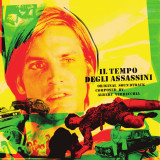
Between the 60s and 80s, Albert Verrecchia played a major role in Italian pop music and on the European disco and Afro-cosmic scene, both under his own name and under the monikers Albert Weyman and Albert Prince. He was the keyboardist of legendary Italian-French r'n'b band I Pyranas, served as a session Hammondist for singer and TV star Raffaella Carrà, and produced the disco trio Belle Epoque as well as the debut album of singer-songwriter Alan Sorrenti. Among his many incarnations, in the early and mid-70s he also composed a few soundtracks for Italian genre cinema, including for movies such as the poliziottesco Roma drogata, la polizia non può intervenire (Hallucinating Trip, 1975, Lucio Marcaccini) and the erotic drama Tecnica di un amore (1972, Brunello Rondi).
The score he wrote in 1975 for Il tempo degli assassini (Season of Assassins, a film about a gang of criminal youths who terrorize the city of Rome in the already violent 70s) is certainly his most accomplished work in the genre. Conceived for a small ensemble, it was written almost entirely on the spot in the recording studio. Verrecchia himself played the Moog, and his dynamic and percussive approach to the instrument resulted in a style midway between funk and proto-disco. A modern rhythmic style - or Ritmico Moderno, which is the title chosen by CAM for the LP containing the soundtrack and released two years later as part of a promotional library music series only distributed to film professionals and radio and TV programmers (CML series, cat. no. 131). One is led to wonder whether it was thanks to that LP that, in 1977, three pieces from the soundtrack found their way into another film about youth gangs, the Spanish Perros callejeros (Street Warriors), written and directed by Jose Antonio de la Loma. On a side but important note, there's the added bonus of popular 70s and 80s entertainer Sammy Barbot singing on Gang Leader alongside female vocal group Baba Yaga. What a pity that Verrecchia's career as a film composer ended here!
The wonderful world of Louis Armstrong All Stars are the cream of the crop of curr
ent New Orleans musicians, paying tribute to the musician who started it all in the Crescent City. The album is comprised of new arrangements and recordings of music assosciated with Louis, featuring a previously unknown Louis Armstrong and the All Stars track, and a touching spoken word private recording made by Louis made near the end of his life. Produced by Wycliffe Jordan, Jackie Harris, and Nicholas Payton, with a rotating cast of key New Orleans players including guest features from Wynton Marsalis, Common, and more. This is the LP release.
Acclaimed L.A. rapper Blu has left an indelible mark on the hip-hop landscape, crafting an impressive catalog instilled with the essence of the vibrant city he calls home. Now, the gifted lyricist is back with the new album "The Color Blu(e)". Among Blu’s most conceptual projects to date, "The Color Blu(e)" is an artistic thesis statement, celebrating and reflecting on a remarkable creative journey. The word “Blue” is featured in every song title, and “Blue” is also weaved into each of the album’s soundscapes. “This album is the ultimate cartoon series about myself,” Blu explains. “The Color Blu(e) is the cool breeze. Another day in the life of being Blu.” While he typically works with a single producer on each project, Blu recruited Sirplus, J57, and longtime collaborator Exile to shape the album’s sonic texture. An unapologetically personal collection with no features, "The Color Blu(e)" is packed with intricate wordplay and dynamic production, reaffirming the unique talent of the artist known as Blu
- A1: Remember (Walkin' In The Sand)
- A2: Leader Of The Pack
- A3: Give Him A Great Big Kiss
- A4: Out In The Streets
- A5: Give Us Your Blessings
- A6: Maybe
- A7: What Is Love
- B2: Never Again
- B1: The Train From Kansas City
- B3: Right Now And Not Later
- B4: The Dum Dum Ditty
- B5: Heaven Only Knows
- B6: What's A Girl Supposed To Do
- C1: I Can Never Go Home Anymore
- C2: Long Live Our Love
- C3: Sophisticated Boom Boom
- C4: He Cried
- C5: Dressed In Black
- C6: Paradise
- D1: Past, Present And Future
- D2: I'll Never Learn
- D3: The Sweet Sounds Of Summer
- D4: Love You More Than Yesterday
- D5: Footsteps On The Roof
- D6: Take The Time