
Search:city 2 city


7
Deluxe LP edition, remastered using transfers from the original
tapes lifted from the Phillips vault by mastering legend Kevin Gray.
Pressed at Pallas on 180g heavyweight vinyl and housed in a thick
reverse-board sleeve with additional insert featuring photographs
and words by bassist on the session Bill Crow.
This session, recorded at New York’s Nola Penthouse Studios in
1963, is a little-known masterwork from the incredible Gerry
Mulligan catalogue.
Baritone saxophonist Gerry Mulligan was a true icon of jazz, being
one of the prominent figures in the West Coast scene through the
1950s until his death in 1996. Voted Number One musician in his
instrument by Downbeat Magazine for 42 years in a row, Mulligan
was one of the key players of his time and a figurehead who
helped shape the sound of jazz to come.
From periods in the ‘Birth Of The Cool’-era Miles Davis line up, as
well as forming a piano-less quartet with Chet Baker, Gerry was
always on the frontline of what was hip and happening in
America’s one true art form.
With its striking Oliver Hardimon designed cover, ‘Night Lights’ is
the very definition of refined cool jazz. Shimmering with a latenight beauty that perfectly evokes a sophisticated New York City in
the early 1960s, Gerry and his Sextet fuse slow burning jazz noir
alongside emerging contemporary Brazilian rhythms, with the
interplay between Mulligan and guitarist Jim Hall a particular
standout throughout.
Title track ‘Night Lights’ is a wonderfully smooth, low light tune,
while the Latin-tinged ‘Morning Of The Carnival’ really finds the
band in their finest and most swinging form. A cover of jazz
standard ‘In The Wee Small Hours Of The Morning’, followed by
Chopin’s ‘Prelude In E Minor’ continues the delightful groove
before we finish out with Mulligan originals ‘Festival Minor’ and
‘Tell Me When’.
For this version of the release, New Land have also included the
1965 version of ‘Night Lights’, which gives an interesting
comparison, performed by his later day Quintet featuring the
Wrecking Crew’s legendary Hal Blaine on drums, amongst others.

12
In November, the new ABBA album, ‘Voyage’, will
be released, after 40 years. Just in time for the
music comeback of the year, and as a tribute to the
Swedish supergroup, a classic is now being
released on vinyl for the first time: ‘Funky ABBA’ by
the Nils Landgren Funk Unit from 2004.
Fans and music magazines count the cover
numbers by Mr. Redhorn and his cult band among
the best in the world, and even today they are
played on the radio and in clubs by DJs. Landgren,
who once played trombone himself on the ABBA
hit ‘Voulez-Vous’, personally asked ABBA
mastermind Benny Andersson for his blessing for
the album: “ABBA was never funky. But if you can
do it, then do it!” replied Andersson. Andersson
was so enthusiastic about the project that he was
also present at the legendary Polar Studio during
the recording sessions and did not miss the
opportunity to record a bonus track for the album
himself as a duo with Viktoria Tolstoy.
The result was celebrated, and ‘Funky ABBA’
became the best-selling Funk Unit album of all
time. “It's hard to believe: ABBA grooves, and
how!” claimed STEREO in their review after the
CD’s release.
For this vinyl edition, the album has been
remastered.
180g vinyl with digital download code.

Born the seventh child and the youngest of Rev. and Mrs. Clougies Young in the city of Lake Charles, La.Raised in the Church of God in Christ in Lake Charles, La. Earl began singing in church as early as six years of age.
He performed in my church choir and high school Gospel Choir in San Francisco under the mentoring of Professor Johnny Land.
Before forming his own group Earl did background vocals for Patti Labelle's song Quiet Time in 1978 after which he formed his small group and recorded this one solitary single in 1983.
Probably one of the finest gospel bangers every cut to vinyl, that's all that needs said.

4
Before relocating to NYC in 2020, Pontchartrain invited colleague Javonntte over to record several songs together at Pontch’s east-side Detroit studio.
The collaboration yielded several songs that blend Pontch’s studio prowess and dramatic sound, with Javonntte’s wide ranging performance skill, and soulful style. “Cirrus”, as the name suggests, is a deeper cloudy synth-heavy house track, previously selected by DJ Holographic for release on Carl Craig’s Detroit Love vol 6 compilation, but get’s an updated mix & master, as well as a seriously heavy remix by fellow motor city deep house honcho, Delano Smith.
“Keep Dancing” features additional vocals by Javonntte in a hard hitting and highly playable “Detroit” version, as well as a completely different version re-mixed and produced in Pontch’s Harlem studio.

4
Deep Groove drop the second of the labels releases from firm favourite Glenn Davis. The Irish producer channels that trademark classic house groove drenched in tantalising synthlines and deep powerful bass via 'Make It Happen' and 'Hold Tight'.
On the B side, Ashley Beedle steps up on remix duties taking the title track in a brilliant boogie direction with choice horns and uplifting vibes for his two North Street West remixes.
DJ Support:
Fish Go Deep, Ashley Beedle, Jimpster, Craig Smith, Getdownedits, Rainer Truby, Lay Far, Southbound

9
What do you get when you blend a reverential take on the diverse canon of popular Caribbean music with an all-star cast of seasoned studio musicians from the heart of Brooklyn? The answer lies in Combo Lulo's much anticipated debut studio long-player, Neotropic Dream. The group takes its influence from the deep musical heritage of New York's cultural pedigree, especially the heyday of the city's Caribbean record distribution industry — a culture of music that still bubbles today in the crevices of the city's independent neighborhoods and record communities.
Despite the general scope of the muse, it's hard to precisely pin down this fantastic re-imagining. In some ways, that's why the title for the band's debut album is Neotropic Dream, a nod to the biogeographic region that encompasses the countries along the Afro-Caribbean diaspora, a region intensely diverse in its climate, fauna and flora. This theme manifests musically as you journey through Combo Lulo's original compositions and cleverly chosen covers. More than anything, it's a dreamy storm of styles and musical moments born anew. And just as weather swiftly travels and transforms the Caribbean, so the varied musical styles carry the listener from the album's start to finish. Not just a talented band's showcase of styles, but rather a sumptuous feast of savory and sweet ingredients on display, together. A musical curry roux, if you will, that fits together so harmoniously, it's no wonder the band engenders automatic appreciation both in their studio recordings and in their uproarious live shows.
Whether it's cumbia gone rock steady, or reggae gone chicha, or vocal vs. version, there's a little something for everybody on here, depending on where you drop the needle. With splendid original compositions and horn arrangements from band leader Mike Sarason and saxophonist Anant Pradhan, respectively, Combo Lulo is quickly proving themselves to be a powerhouse of the highest caliber.

Opera Multi Steel was born during the winter of 1983 in Bourges, a city in the center of France. The band started off as a trio with Franck Lopez (Vocals, Keyboards,Recorder, Guitars), his brother Patrick L. Robin (Vocals, Percussion) and Catherine M. Marie (Keyboards, Vocals). They began to record demos utilizing a Elex Keyboard, Casio VL-Tone, Roland TR-606 drum machine, guitars and bass pedals. Layering organ-like keyboards over drum machine snares and a woodwind recorder, they created a unique style of Medieval or Baroque synth pop.
10
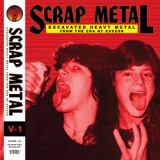
By now you’re probably familiar with our wildly popular Brown Acid series of rare, lost and unreleased proto-metal and stoner rock singles from the 60s-70s. In the endless pursuit of those glorious gems, we often uncover equally brilliant rarities from the late-70s to late-80s Golden Age of Heavy Metal that also just must be heard, but they don’t fit the series’ aesthetic. Scrap Metal, Volume 1 collects some of the greatest unknown and lost Heavy Metal tracks, long buried beneath the avalanche of the era’s classic output.
We all know the old adage that history is told by the winners. But sometimes the losers tell the best stories. And while none of these bands found fame and fortune, this artifact and the volumes to come are testament to the enduring power of heavy music. You can hear the blood, sweat and beers that went into each of these singles. The recordings may be low budget, but the inspiration and talent is immutable. Not only are the amps turned up to 11, the boyish sexual innuendo is cranked to 69. You can hear the convergence of influences — NWOBHM, thrash, glam metal, doom, etc — colliding at once as the era birthed a wellspring of subgenres.
Many of these singles are self-released and were thus limited to a small run of copies. Those that remain are hoarded by collectors and sold for exorbitant amounts. We’ve collected the best of the best for you here. As with Brown Acid, all of these tracks are licensed legitimately and the artists all get paid. Because it’s the right thing to do.
LINER NOTES:
Rapid Tears launch this series with the perfect christening. The Toronto, ON quintet’s 1981 single “Headbang” is such the pinnacle of heavy metal madness that it almost sounds like a spoof. There’s also enough of the rapid-fire sputum that inspired Metallica to bang the head that doesn’t, as such, engage in said practice, to be found on the band’s sole full length Honestly. But “Headbang” is a straightforward glammy anthem for the ages.
Air Raid’s “69 In A 55” may be lyrically so sophomoric that it’s actually pretty clever, but this 1983 Bay Area power metal single is loaded with sleek Judas Priest riffs and interwoven melodies that are downright sublime. The band’s sole release, the 2-song Rock Force 7” features a curious band photo in which 3 band members — dolled up in Crüe makeup and leather — are sexually menacing the lead singer/guitarist tied to a bed. Another low budget highlight is when singer/guitarist Tommy “Thrasher” Merry imitates a delay effect on his vocals as he sings, “tonight!...tonight...night.”
Hades’ “Girls Will Be Girls” has a real demo cassette feel to its vastly uneven mix, but the energy to the performance makes this an undeniable keeper. The long running Paramus, NJ quintet’s 1982 2- song debut 7” titled Deliver Us From Evil features this blistering thrasher dominated by shimmering leads and confident vocals that show why the band went on to near-fame on Metal Blade Records.
Resless don’t need no T to prove that they’ve got “The Power” with this 1984 driving mid-tempo rocker in the vein of Mötley Crüe and Ratt. The River Vale, NJ quartet’s tight crunch wails all over Bon Jovi posers but it’s the band’s unique and subtle deployment of background vocals that gives this rager its staying power.
Pittsburgh, the Steel City, is home to Don Cappa, a band that pays tribute to the burgh, the metal, and the awesomeness of both with “Steel City Metal.” Their lone single, issued in 1987 with only 300 copies released, sounds like the work of some serious steel driving men, with a drummer who might’ve forgotten to wear a hard hat one too many times on the construction site.
The Beast has more of a punk feel to their aggressive “Enemy Ace” track from the 4-song Power Metal EP from 1983 — something like Dr. Know meets D.O.A. But their look, artwork and lyrics all prove that Heavy Metal is where their hearts lie. And this hook filled monster delivers repeated lines like, “I command them all in my lofty realm,” with commendable conviction.
Dead Silence from Denver, Colorado, debuting in 1984 is not to be confused with Dead Silence from Denver, Colorado, who also debuted in 1984. The former a workman’s hard rock bar band, the latter a political peace punk band and neither knowing of the other’s existence throughout their tenure. The pre-internet days were a marvel, indeed.This Dead Silence spits out a slick, Nugent tinged rocker called “Can’t Stop” about life on the road.
The Danger Zone is, by all accounts, not the place to be. And, Hazardous Waste of Boston, MA saw fit to add their two cents on the matter with this 1986 single that combines Van Halen’s flashy musicianship with NWOBHM aggression that sounds so awesome it teeters on itself entering the “Danger Zone.”
Czar’s heavy, doomy “Iron Curtain” single from 1982 hearkens to the sleazy sounds of Saint Vitus and Pentagram with its cranked up DOD Distortion pedal in a Peavey combo amp guitar tone and meaty, barking vocals. The upstate NY quintet only issued this 2-song single, but its driving rhythm, nosedive whammy-bar guitar solos and comparatively mature Cold War subject matter show they had real potential.
Not much is known about Real Steel’s majestic “Viking Queen” from 1987, other than it rocks hard and the 7” 45 sells for upwards of a grand on the collectors market. The Flint, Michigan band recorded at the home studio of local radio personality Bill Lamb, who primarily released Christian Gospel recordings. So, perhaps the band was struck down by a bolt of lightning shortly after this rare single’s release. Whatever the case may be, it’s a must have for fans of classic metal mayhem.

A Deep City Records release (one of five for Helene Smith) that
originally came out in 1965 on the Miami-based label, ‘True Love Don't
Grow On Trees’ is a gorgeous mid-tempo soulful heartbreaker, while the flipside and its wandering guitar line sounds like girl group buried
treasure that would have sounded fantastic covered by Dusty
Springfield. In the hands of Helene Smith, both tracks are nothing short of magnificent. These two tracks only previously appeared as a long-lost single that goes for £300 a pop these days. Acclaimed as the First Lady Of Miami Soul, Helene Smith came back into prominence with the issue of Numero’s 2006 ‘Eccentric Soul’ album of Deep City cuts.

7
Truly adventurous and life enhancing music that invigorates your soul. TIP!
Press Release:
Gordan join traditional Serbian singing with abstraction, energy and minimalism. Their music is marked by radical reduction, seemingly endless ascension and a passion for experiments.
The Serbian singer Svetlana Spajić is an internationally recognized and acclaimed artist. She, like almost no other contemporary singer, is a master of all the complex local stylistic variations of singing from Balkan music. Guido Möbius plays bass and various electronic sound generators. Additionally he uses guitar amps, microphones and effects to provoke feedback which either harmonize or are juxtaposed with the song. It is a dialogue between sound and noise which is accentuated or fragmented by means of Andi Stecher’s expressive drumming. With a rich pool of ideas the percussionist drives the sound forward breathlessly and grounds it. Together the trio form a dynamic body of sound.
Gordan recorded their debut during the first wave of the Covid19 pandemic in Europe in March 2020. Due to the lockdown in Berlin at that time the city didn’t have many distractions to offer, so the trio just concentrated on work. The atmosphere of being isolated in a recording studio had a big impact on the musical results. All three band members came up with ideas for new pieces, which were immediately tested, worked out and recorded. On abstract instrumentals provided by Stecher and Möbius, Svetlana Spajic sometimes reacted with personal interpretations of serbian traditionals, and the other way around. Most of the time it was as if the music just happend to the band; playing together felt natural from the first moment on.
Some of the old serbian traditional songs that Spajic sang are extinct forms with a specific local melodic mode. The skillful improvisation of their lyrics and ornaments was of great importance and very estimated among village singers. The title song Down In The Meadow for instance originally is a love song from the village of Odevce in eastern Kosovo, Serbia. The singing manner is of a great intensity and sonority, with lots of specific local ornaments. It disappeared along with the village communities from the area. Oh, my Rose flowers is from the region of Kopaonik mountain (southwest Serbia) and the mode, scale is known as ”kopaonički glas” (Kopaonik mountain air). Svetlana adopted the style from the late singer Veličko Veličković from the village of Ostraće. It is an old mountain solo chant, rich in fast ornamentation movements and microtonal intervals. Don’t ask how I live is Svetlana’s homage to the new popular folk music movement from the 80ies known as Južni Vetar (Southern Wind) led by a musician and composer Mile Ilić, known as Mile Bas (“Mile the Bass”) which revolutionized popular music introducing tabooed oriental music and original arrangements.
All music by Spajic Stecher Möbius except ‘Don’t Ask How I Live’ by Miodrag M. Ilić, original title Što me pitaš
All lyrics are traditional, except ‘Don’t Ask How I Live’
Svetlana Spajic — vocals
Andi Stecher — drums & percussion
Guido Möbius — bass, feedback, electronics
Recorded by Alberto Lucendo at UFO sound studios Berlin in March 2020 mixed by Morphosis
Mastering by Neel at Enisslab, Rome
Artwork by Lorenzo Mason Studio

clear vinyl / incl. poster
The music of Parallax is part of the foundation of Zodiak Commune Records since 1998. With ZC002 - Sinister Projects EP- and ZC005 - Occult Technology EP, Parallax created timeless underground anthems which are being reflected in the Archive EP. With previously unreleased live recordings, this EP is a well-preserved document of the past whilst being relevant in today's underground techno and acid scene. Parallax his live set was recorded at the legendary "old" Effenaar (Acid City Eindhoven, The Netherlands) while the Zodiak Commune's 10th anniversary was being celebrated. With its massive and no-nonsense acid-techno sound, Parallax transformed the dancefloor into a vortex, fueling up people with positive energy while taking them on his musical journey. A nostalgic journey that will make you crave for more timeless underground bliss! With 2002 Live Pt1 being over 12 minutes long a true story is being told. Enjoy this fine release of the purest acid-techno around!
2003 Live Pt1
A dark entrance, heavy basses that make the roof rattle, the smell of stale beer and sweaty people who all seem to speak another language but listen to the same... Those of seemingly soulless beats, but which ultimately take you closer to one self and each other than most religions have managed to realize...
Enjoy 12:30 minutes of storytelling!
1998
Clashing raw 303's, brutal beats colliding mid-air, ear piercing percussion. The soundtrack of the battle of 1998 is all but merciful, sending shivers down your spine.
2003 Live Pt2
Time seizes to exist. Beats provide the energy needed on a journey so loud there is no choice but to join. Guided by musicians, they who make you walk but not go anywhere but inside. Rebel minds choose to renounce their disobey, for their worries to be taken far, far away.

7
Hungry Shells, the seventeenth entry in RVNG Intl.’s intergenerational collaborations series FRKWYS, brings together vocalist, multi- instrumentalist, and sound artist Ka Baird with avant-garde composer and radical performance art pioneer Pekka Airaksinen. Recorded six months before Pekka’s passing, Hungry Shells alchemizes separate but similar spiritualistic practices, canvassing Baird’s voice and synthesizer rituals and Airaksinen’s lysergic sound explorations into startling, surreal landscapes.
Pekka Airaksinen, who left this realm for another in May 2019, is recognized as a pioneering composer both in and outside his native Finland’s fringe art community. A founding member of the late 60s art and music collective The Sperm, Airaksinen discovered Buddhism in the early 1970s, eventually establishing a number of meditation centers around Finland. Throughout his career Airaksinen embraced a degree of obscurity and anonymity that was inspired by his Buddhist learnings, and afforded him complete creative freedom. As he explained, “The less success you have, the more time there is to develop things.”
Ka Baird, who found her musical footing in Chicago playing in Spires That In The Sunset Rise before moving to New York to pursue her solo career, has developed a practice based in forms of active and engaged embodiment. Inspired by Charlemagne Palestine’s Body Music, Baird’s performances explore physical extremes as a catalyst for charged immediacy and presence. “I’m interested in the
places between precision and something unrestrained,” she told The Wire in 2019. Drawing on minimalism’s ecstatic deployment of duration and endurance, her recordings explore the outer limit sounds of her voice and its synthesis with developing music technology.
Airaksinen and Baird convened in Utrecht in the fall of 2018 to write, rehearse, and record Hungry Shells ahead of a performance at the Dutch festival institution Le Guess Who? Sessions took place between contemplative walks along the city’s medieval canals, and, for Airaksinen, lengthy meditations in his hotel room. Early on in the trip, Pekka shared ODO with Ka, a collection of Buddhist parables that he divinely received while meditating. After translating several of these texts from Finnish to English the duo used them as text for the album, and a sort of psychic foundation.

10
Hearing Dominic Appleton take his voice in quieter, more intimate directions, exploring new textures and strengths, in combination with Matteo Uggeri’s flowing production, makes for a striking experience. Interesting and unexpected." – Ned Raggett (Bandcamp/The Quietus) // "Without exaggeration, Dominic Appleton is by far my favourite living male vocalist. He has such a beautiful, sad voice and comes up with melodies that do the same" – Ivo Watts-Russell (4AD founder). // "This Mortal Coil singer Dominic Appleton's crystalline voice and romantic lyrics set a mood of lonely grandeur” — Mojo (2013)

8
A unique live performance at Issue Project Room gathered the former Sonic Youth member and artist Kim Gordon and the legendary minimal blues master and artist Loren Connors in 2014.
In December 2014, the Issue Project Room venue in New York City offered the first-time duo with the legendary Brooklyn- based guitarist Loren Connors and the rock icon Kim Gordon. From this almost 1 1⁄2 hour set, Kim and Loren decided to archive their favourite movement on a physical record which is a 12” vinyl now available from the french label Alara.
Through this long improvised session, Kim and Loren do dialogue and browse between installations of deep soundscapes at the limit of drone, and distorted, abrasive sonic attacks wrapped in reverberated harmonics. In this unprecedented exchange between two legends, the languages are as borrowed from one to the other: Kim Gordon plays on the land of the first inventions of Loren in rumbling / growling “unaccompanying” strings pinch, when Loren Connors envelops the entire hall of distorted harmonics that Kim would not have denied in her loudest attacks within her solo or group experiences from decades.
Just through the story of each of the protagonists and thanks to the quality of the recording and the mastering that bring the intensity of this meeting to life as if we were physically attending to the show, this album is a unique opportunity to witness the exceptional meeting between two legends of sonic and experimental music.

With the release of Sweet Inspirations At Muon, the first appearance on vinyl of Tori Kudo’s mythical early ‘80s primitive rock gang Sweet Inspirations, another piece of the seemingly endless puzzle of the Japanese underground has fallen into place. Recorded some time in 1982 at Yokohama venue Muon – precise details are sketchy – we’re now given another chance to discover what was going on in Kudo’s mind just before he formed the group he is now best known for, the ragtag gang of pro and amateur musicians that was Maher Shalal Hash Baz.
Sweet Inspirations were one of several groups formed by Kudo around this time. He’d already released the visionary naïve-art album, Tenno, in collaboration with Reiko Omura, in 1980, and a trip to New York the following year led to the recording of Atlantic City, under the name La Consumption 4. Returning to Japan, Kudo first formed Guys’N’Dolls with Jun Yoshiwara (bass) and Kiyoaki Iwamoto (drums); Yoshiwara carried over into Sweet Inspirations, who existed for a few years, their membership, at various times, featuring Asahito Nanjo (High Rise etc.), Jutok Kaneko (Kousokuya), Yoshio Kuge (Les Rallizes Denudes etc.), 3C123 and many more.
The material here was originally released, without permission, by the Cragale label on CD-R in 2000. It was one of a sudden wave of archival CD-Rs that Cragale pumped out that year of material recorded at Muon, which was owned by Kohei Iehara, who co-founded Cragale with Tamotsu Hongo. In the context of the recent unleashing of material from the Kudo archives – the 9CD At Goodman set, the reissue of the first two Maher Shalal Hash Baz cassettes and the Noise LP, and the tantalising glimpses of other historical gems via Tori’s own Bandcamp page – hearing Sweet Inspirations with such clarity fills in a significant piece of the puzzle; here is Kudo, just before Maher, channelling the rough conceptualism of Red Krayola and the glinting, staggered rhythms of Syd Barrett into extended blooms of ragged glory, sketching out future classics like “Manson Girls”; A bonus CD includes a cover of a song by legendary South Korean rock group San Ul Lim.

8
Tape
SectorSept’s ‘954’ is a boldly original record, one which announces the arrival of a singular musical mind. Its creator states that he crafted this EP by trying to make tracks that were ‘a representation of how I believe music would sound in some distant land in the future’. On ‘954’ this vision takes flight in the form of eight multifaceted, genre-defying electronic productions.
To unpack this record one must first understand the myriad influences which feed into SectorSept’s style. The producer grew up between the UK and Florida - indeed, the record’s title references the area code he had while in the USA. His formative years were spent soaking in the dancehall sounds he heard around him in his Jamaican household as well as techno, jazz, Miami bass and the city’s ‘Love 94 Smooth Jazz’ radio station.
All of this and more can be heard in the fabric of ‘954’. The drum programming alone reveals SectorSept to be someone with extremely wide-ranging musical tastes. Cuts such as ‘Get Ready For The Programme’ and ‘Be There’ are powered by deft beats that have Miami bass, Jersey Club, juke and more in their make-up. Drexciya-adjacent machine-funk creeps into the mix in ‘954’s mid-section, ‘Golden Third Eye’ touches on trap, and closing duo ‘Tropic Universe’ and ‘Prize’ bring dancehall dembows to the fore.
The productions of ‘954’ are simultaneously driving and chilled, coasting nicely yet still plumbed with enough bite to do damage on the dancefloor. It’s a feeling which is heightened by SectorSept’s gorgeous textural work. Several of the tracks here soften up collages of vocal clips with wistful, dreamy synths - see the way that club-caller snippets orbit Boards Of Canada-esque keys on ‘Get Ready For The Programme’ or how closing cut ‘Prize’ works both the classic Warp/Planet Mu sound and the pitched-down stylings of DJ Screw. It’s a rich and fully-formed artistic aesthetic, something which is all the more impressive when you consider that ‘954’ is SectorSept’s first official release.
That said, while the overall flavour of ‘954’ is SectorSept’s and SectorSept’s alone, one also finds links to Gobstopper’s previous output here. Those dancehall influences on ‘Tropic Universe’ and ‘Prize’ line the record up with Gobstopper drops like Otik’s ‘Thousand Year Stare’ while the emotive, soulful synth work that has long been a Gobstopper calling card is also in evidence here. Perhaps the thing about ‘954’ which makes it feel most at home on Mr. Mitch’s label is SectorSept’s imaginative futurism. SectorSept is a keen scholar of anime composers Kenji Kawai and Joe Hisaishi, and as such it is no surprise that there is a slightly fantastical quality to ‘954’. This is most boldly expressed on ‘Intuition Segment’, a magic-realist vignette which looks to Oneohtrix Point Never.
Blending ethereal textures with hybrid electronic grooves, SectorSept’s ‘954’ EP uses the sounds, influences and cultural experiences that have shaped its creator in order to build a vibrant vision of the future.

6
Repress!
With Robyn, South London's cktrl shares his most ambitious work yet, collaborating with the likes of Duval Timothy, Coby Sey (Micachu, Tirzah, Dean Blunt) and Purple Ferdinand to create a vital exploration of contemporary-classical from the black perspective; out via Errol and Alex Rita's Touching Bass. Spurred on by the overpowering feelings of heartbreak, Robyn impressively creates emotive and heartfelt clarinet and saxophone-led soundscapes about the all-consuming power of love. On the project, cktrl says: "'Robyn' at its core is heartbreak and is just really sentimental. It's a journey of losing a love but it ends with optimism as you find strength to love again." Born and bred in Lewisham, cktrl aka Bradley Miller is an integral part of London's pioneering musical underground. One of the only remaining original DJs on NTS, cktrl has previously worked with and played alongside the likes of Sampha, Sango, Kelela and Dean Blunt. Throughout his career to date, cktrl has also been recognised and heralded by fashion and film VIPs including Virgil Abloh, Bianca Saunders, Tremaine Emory, Nicholas Daley and Jenn Nkiru who recently secured him a cameo in Beyonce's heralded 'Black Is King'. With a shared ethos of elevating and amplifying leftfield black music, he partners with London based label, Touching Bass, themselves a key cog within the city's bubbling musical underbelly.

4
Philly’s Universal Cave crew have been putting out top notch edits and mixes on their own imprint for nearly a decade, including the beloved Soft Rock for Hard Times series.
For the first time, Universal Cave teams up with another label, Pleasure of Love, for a release of reworks, delivering 4 stitched up dance floor heaters. Variety pack of choice cuts here - reggae proto house, lo-fi 80s digi funk, peak-time piano charged house de salsa, and driving atmospheric italo. All expertly re-rubbed, from the vaults of the Universal Cave.
