Cómeme delivers to you one of the freshest rhythms of 2018, recorded in Johannesburg, the new residency for the renegades of the beat. This is 'Rain' - starring Matias Aguayo and the actress, dj and singer Ayanda Seoka aka Mujaji The Rain. She's resident at the legendary Bar Kitchener's all femme 'Pussy Party', a space for feminist / queer action and dancefloor joy, right in the centre of Joburg.
Cómeme has been since some time in a serious and passionate relationship with that city. Radio Cómeme transmitted shows from there with electronica legend Felix Laband, Mpumelelo Mkatha from BLK JKS, the queer performance duo Faka, Gqom pioneers RudeBoyz and also Kwaito's legacy keeper Spleef McZaul. Matias Aguayo ventured into a beautiful collaboration with DJ Spoko, released two years ago on this label.
'Rain' is a deeply rhythmical track, inspired by the grooves that converged when Cómeme swing crossed the paths with the syncopations people in Joburg were dancing to. It has become quite clear in the recent years that elegantly shuffled triplets are marking a way to the future in dance music, especially in the southern hemisphere, no matter if you're in Durban, Rio or Santiago.
On top of this modern groove we can hear Mujaji the Rain enjoying how she gets wet under a dark and tropical sky. Laughter, joy and ecstasy is what she emanates while hypnotically involving you into this atmosphere of dense drumming and trance. (side note: Cómeme has been consequently evading the description hypnotical in press releases but this time it was unavoidable).
For further jacking fun we generously included a 'Club Mix', including more drum frenzy towards the second half of the track, and a 'Just Drums Mix' for the skilful DJ.
Side B features the jam 'Serious', which comes along with another killer beat, reminiscent of Michael Jackson or Cheri. A late-night track in which Mujaji The Rain turns into a sensual but slightly annoying creature that doesn't want to leave the dancefloor. and for sure doesn't want to go home.
We added an instrumental version to this complexly arranged tracks, which feature pianos, strings, and heavy synth bass stabs.
All tracks on this 12' are written in a 6/8 signature, which some normative DJs might shy away from, but be safe: both tracks are in 120 bpm and carry the seal of official Cómeme dancefloor approval by the label's highly respected DJs.
Suche:city deep records
The journey continues... deeper into the unknown universe, stretching the seams of time and space.
The maiden voyage for this new label out of Birmingham was a success. The second release is a collaborative effort from Nicky B (Simple Elements/HOG) and fellow Brummie, Anthony Ellis - working together as Koheziv Mindz.
The tracks are the result of years of tuning in to the sounds seeping out of the speakers in choice local clubs and buying the latest imports on vinyl from Europe, Chicago and Detroit.
The day-to-day living in Birmingham has certainly etched into their creative consciousness, the hustle, bustle and alien like chorus of a vibrant environment resonates through their work, from a city that never sleeps.
Emotive, incredibly lush and shot through with the kind of romanticism displayed in the work of second generation Detroit pioneers Kenny Larkin and Carl Craig. This is a glimpse through a keyhole, a snapshot of two producers taking steps into a bigger world, a whole galaxy.
There are two remixers on board, hand picked to see how the artists would interpret the originals - Darren Nye (Firescope/polarity) and Mihail P (Verdant Recordings/Distant Worlds)- both artists add weight to their already impressive back catalogue of work and display why they are hot and tipped for the top.
Submerge your mind into the rich celestial tapestry of sound, safe in the knowledge you're among good company.
In the sweltering North-Eastern Brazilian state of Pernambuco lies the coastal city of Recife, where Amaro Freitas is pioneering the new sound of Brazilian jazz. For the prodigious young pianist, the spirit of his hometown runs deep. From the Afro-Brazilian maracatu born on the sugar plantations of slavery, to the high intensity carnival rhythms of frevo and baião, Amaro's heavily percussive approach to jazz is as indebted to these Pernambuco traditions as it is to Coltrane, Parker and Monk.
As with many of the greats before him, Amaro began playing piano in church aged 12, under the instruction of his father, leader of the church band. As his natural talents became obvious, the young prodigy quickly outgrew his father's instruction. He won a place at the prestigious Conservatório Pernambucano de Música but had to drop out as his family could not spare the money for the bus fare. Undeterred, Amaro gigged in bands at weddings and worked in a call centre to fund his tuition. The transformative moment came at age 15 when Amaro stumbled across a DVD of Chick Corea concert, 'he completely blew my mind, I'd never seen anything like it but I knew that's what I wanted to do with a piano'.
Despite not actually owning a piano, Amaro devoted himself to studying day and night - he would practice on imaginary keys in his bedroom, until eventually striking a deal with a local restaurant to practice before opening hours. By the age of 22 Amaro was one of the most sought-after musicians in Recife and resident pianist at the legendary jazz bar Mingus. It was during this time he met and begun collaborating with bassist Jean Elton and the pair went in search of a drummer. 'We kept hearing about this crazy kid who was playing in 7/8 or 6/4, we knew we had to meet him'. Hugo Medeiros joined, and the Amaro Freitas Trio was born.
'I want to show the simplicity of music, to break the stigma that the piano is for a particular social class. Yes, it's a difficult instrument, which many people do not have access to, but with it you can express everything.'
Following his critically acclaimed debut album Sangue Negro (black blood), the title of his sophomore release Rasif is a colloquial spelling of Amaro's home town. A love letter to his native northeast, Amaro explores its traditional rhythms through the jazz idiom, employing complex mathematical patterns reminiscent of some of the most challenging works by fellow Brazilian masters Hermeto Pascoal, Egberto Gismonti and Moacir Santos.
Preferring to see the piano as a though it were a drum with 88 unique tones, Amaro's intelligence and emotion intertwine on every track, from album opener 'Dona Eni': a scorching reconstruction of the baião rhythmic structure, played in seven measures instead of two, to the serene homage to the coastal reef and its ecosystems on the title track 'Rasif'. 'Aurora' is a suite of three parts, representing the sun's journey from the light and soft of the rise, to the aggressive dissonance at its midday zenith and descending chromatic cadences as the sun sets.
Due for an Autumn release on Far Out Recordings, Rasif sees Amaro Freitas take a deserved step onto the world stage. Having already made a name for himself in Brazil, Amaro and his phenomenal band will embark on their first European tour later this year.
Amaro Freitas - Piano
Hugo Medeiros - Drums & Percussion
Jean Elton - Double Bass
Henrique Albino - Baritone Sax, Flutes & Clarinet
All compositions by Amaro Freitas
Produced by Amaro Freitas
Recorded by Bruno Giorgi @ Carranca Studio, Recife, Brazil
Mixed and mastered by Bruno Giorgi @ Quarto Studio, Rio de Janeiro, Brazil
Executive producer and management: Laercio Costa
Batida is to release his new album "Dois" via Soundway Records.
Strands of Afro-House, Kuduro, Benga, Semba, samples from old Angolan movies and Afrobeat tracks, African MCs and musicians from all over the world are all deftly mixed together by Pedro Coquenão.
Inspired by the multicultural hotbed of his home city of Lisbon and trips to Nairobi and Luanda, 'Dois' was predominately produced in his own garage-studio over a two-year period.
In 2012 Batida's explosive self-titled debut came out on Soundway Records. Mixing the syncopated rhythms of Kuduro with elements of 1970s Semba and Congolese-influenced guitar licks, Pedro Coquenão won fans for an album that "demanded movement" (The Line of Best Fit) and "gave a view of the old and new, the West and Africa." (The Guardian)
Much of the remix and sampling spirit from the first record remains but 'Dois' also features live instrumentation along with a host of different guests.
English, Portuguese, Quimbundo and Zulu languages all feature on 'Luxo' with Spoek Mathambo (South Africa) & his crew contributing the lyrics together with Angolan MC Sacerdote and a guitar riff by Duncan Lloyd (Maximo Park). On 'Céu' Coquenão pushes things in a deeper direction, dis-assembling and reforming elements of the Francois & The Atlas Mountains studio sessions of the track 'Les Plus Beaux' .
His widely acclaimed live show, featuring dancers, MC's, visuals and live electronics has seen him perform at Africa Express and on the Ten Cities project, live on the Boiler Room and all across Europe at some of the biggest festivals.
- 1: Folly
- 2: Better In My Day
- 3: Little Lambs
- 4: Old Thorn
- 5: Dieu Et Mon Droit
- 6: Throne
- 7: Mongrel
- 8: Glory
- 9: Tea Rooms
- 10: Jerusalem
- 11: Dance Of The Peddlers
- 12: Hobby Horse
- 13: Sunny Stories
- 14: Over The Hills
Coloured[16,77 €]
'Bound to shake your walls and rattle your windows' Max Reinhardt, BBC RADIO 3 "The first bit of evidence that Elizabeth Bernholz's next album Pastoral - due out in September - could be her best to date". THE QUIETUS "Will likely be one of the year's very best records.' CLASH 'What species is this What century' Forged in a rural idyll in Middle-England, the new album Pastoral, by Gazelle Twin, exhumes England's rotten past, and shines a torch over its ever-darkening present. Told through a troupe of multi-gender voices, in vernaculars old and new; from the shrill echo of folksong to tabloid-tinged jaunts, the artist aka Elizabeth Bernholz, presents the notion that 'there is horror in every idyll, and danger lurking beyond the 'quaint' '. The village square - once host to centuries of public torture - becomes a floral framed postcard, dolled-up for the Summer Fête. A sunny, afternoon walk over the hills unsettles a cloud of angry flies feeding from unidentifiable remains. Bigoted vitriol gently murmurs amidst tearoom chatter, as the neatly framed pastoral picture dissolves into a solemn ennui. Four years in the making, amidst life-changing events, including a move far out of the city, Pastoral will be the first major release by the artist since her widely acclaimed LP UNFLESH (2014, Anti-Ghost Moon Ray) and is seamlessly on-theme, together with Bernholz's J.G. Ballard-inspired A/V show 'Kingdom Come' (soundtrack released November 2017, Anti-Ghost Moon Ray) - a fascism-infused hellscape, this time set in deepest Old England. As its sole creator, Gazelle Twin 'The Composer, Musician and Producer' has crafted an album overflowing with a frenzy of traditional and contemporary musical tropes; from early music instrumentation - the harpsichord and the humble recorder, fed through myriad electronics - to the compelling, ritualistic application of found sample-looping. Beyond Bernholz's signature choral-infusions, here reverberating like a warped Sunday Service, there are even shades of '90s house and the once-thriving rural rave scene, albeit recalled as a watery, second-hand memory. In its consummation it is an album that feels pan-century, even pan-species. Set against a verdant backdrop of hedgerows and steeples, Gazelle Twin 'The Artist and Performer', constructs an eccentric and commanding visual embodiment of all-of-the-above - a costume fit for a court Jester of the 21st Century. The colours of Neo-Nationalism. Coke cans, and DANGER. 'It' (not 'she') hints at folkloric traditions with a footy mascot twist. The 'Ye Olde' and 'The Everyman' of the English cliché. Brandishing a sneer and a hobby horse. A riddle and a recorder. A jeer and a square dance in red, Adidas Gazelle's, and a mad, fixed GRIN - first glimpsed in the single, 'Hobby Horse' (22 June, Anti-Ghost Moon Ray). A deranged, absurd reflection of deranged and absurd times.
- A1: Emad Youssef - Al Bareedo Ana (The One I Love)
- A2: Abdel El Aziz Al Mubarak - Ma Kunta Aarif Yarait (I Wish I Had Known)
- B1: Kamal Tarbas - Min Ozzalna Seebak Seeb (Forget Those That Divide Us)
- B2: Madjzoub Ounsa - Arraid Arraid Ya Ahal (Love, Love Family)
- B3: Khojali Osman - Malo Law Safeetna Inta (What If You Resolve What's Between Us)
- C1: Zaidan Ibrahim - Ma Hammak Azabna (You Don't Care About My Suffering) (Live)
- C2: Saied Khalifa - Igd Allooli (The Pearl Necklace)
- C3: Taj Makki - Ma Aarfeen Nagool Shino! (We Don't Know What To Say!)
- D1: Hanan Bulu Bulu - Alamy Wa Shagiya (My Pain And Suffering) (Live)
- D2: Abdelmoniem Ekhaldi - Droob A Shoag (Paths To Love)
- D3: Samira Dunia - Galbi La Tahwa Tani (My Heart, Don't Fall In Love Again)
- E1: Mohammed Wardi - Al Sourah (The Photo)
- E2: Abdullah Abdelkader - Al Zaman Zamanak (It's Your Time)
- F1: Mustafa Modawi & Ibrahim El Hassan - Al Wilaid Al Daif (The Youth Who Came As A Guest)
- F2: Ibrahim El Kashif - Elhabeeb Wain (Where Is My Sweetheart)
- F3: Mohammed Wardi - Al Mursal (The Messenger)
In Sudan, the political and cultural are inseparable. In 1989, a coup brought a hardline religious government to power. Music was violently condemned. Many musicians and artists were persecuted, tortured, forced to flee into exile — and even murdered, ending one of the most beloved music eras in all of Africa and largely denying Sudan's gifted instrumentalists, singers, and poets, from strutting their creative heritage on the global stage.
What came before in a special era that protected and promoted the arts was one of the richest music scenes anywhere in the world. Although Sudanese styles are endlessly diverse, this compilation celebrates the golden sound of the capital, Khartoum. Each chapter of the cosmopolitan city's tumultuous musical story is covered through 16 tracks: from the hypnotic violin and accordion-driven orchestral music of the 1970s that captured the ears and hearts of Africa and the Arabic-speaking world, to the synthesizer and drum machine music of the 1980s, and the music produced in exile in the 1990s. The deep kicks of tum tum and Nubian rhythms keep the sound infectious.
Sudan of old had music everywhere: roving sound systems and ubiquitous bands and orchestras kept Khartoum's sharply dressed youth on their feet. Live music was integral to cultural life, producing a catalog of concert recordings. In small arenas and large outdoor venues, musical royalty of the day built Khartoum's reputation as ground zero for innovation and technique that inspired a continent.
Musicians in Ethiopia and Somalia frequently point to Sudan's biggest golden era stars as idols. Mention Mohammed Wardi — a legendary Sudanese singer and activist akin to Fela Kuti in stature and impact in his music and politics — and they often look to the heavens. A popular story is of one man from Mali who walked for three months across the Sahel to Sudan because the father of the woman he wanted to marry would only allow it if he got him a signed cassette from Wardi himself. Saied Khalifa is said to be the one of the few singers to make Ethiopian emperor Haile Selassie smile.
Such is the stature of Sudanese singers and the reputation of Sudanese music, particularly in the "Sudanic Belt," a cultural zone that stretches from Djibouti all the way west to Mauritania, covering much of the Sahara and the Sahel, lands where Sudanese artists are household names and Sudanese poems are regularly used as lyrics until today to produce the latest hits. Sudanese cassettes often sold more in Cameroon and Nigeria than at home.
But years of anti-music sentiment have made recordings in Sudan difficult to source. Ostinato's team traveled to Ethiopia, Somalia, Djibouti, and Egypt in search of the timeless cultural artifacts that hold the story of one of Africa's most mesmerizing cultures. That these cassette tape and vinyl recordings were mainly found in Sudan's neighbors is a testament to Sudanese music's widespread appeal.
With our Sudanese partner and co-compiler Tamador Sheikh Eldin Gibreel, a once famous poet and actress in '70s Khartoum, Ostinato's fifth album, following our Grammy-nominated "Sweet As Broken Dates," revives the enchanting harmonies, haunting melodies, and relentless rhythms of Sudan's brightest years, fully restored, remastered and packaged luxuriously in a triple LP gatefold and double CD bookcase to match the regal repute of Sudanese music.
A 20,000-word liner note booklet gives voice to the singers silenced by an oppressive regime.
Take a sail down the Blue and White Nile as they pass through Khartoum, carrying with them an ancient history and a never-ending stream of poems and songs. It takes two Niles to sing a melody.
Brooklyn trio Forma's latest LP continues their mission to 'broaden the idea of what an electronic music ensemble can sound like.' Semblance emerged from exploratory sessions at The Schoolhouse, the Bushwick loft where members Mark Dwinell and John Also Bennett live, then was tracked at Gary's Electric studios, where their previous album Physicalist was also recorded.
Inspired by polyrhythmic composition, the human voice, and conceptual improvisation strategies, the songs are striking in their textural detail and emotional nuance, alternately synthetic and sentient, futuristic and intuitive. Incorporating flute, piano, guitar, saxophone, acoustic drums and cymbals alongside an array of synthesizers, the record persuasively demonstrates the group's unique playing abilities and fluid chemistry - attributes they credit to 'techniques we've developed to trick our electronic machines into mimicking the spontaneous character of live instruments.'
Members George and John Also Bennett also cite as an influence their recent stint in minimalist composer Jon Gibson's ensemble, performing his 1973 proto-ambient masterwork Visitations. The long- form modal piece requires restraint and deep listening to execute, qualities especially apparent in the more muted moments of Semblance, such as 'Rebreather' and 'New City.'
The group states the intent of the new album as 'to be more direct and exacting', which it is. Over half a decade spent writing and recording together has distilled Forma's hybrid electro-acoustic interplay into an attuned and astounding language, capable of articulating impossible symmetries and reflective states.
The stunning visuals of the artwork are by frequent collaborator of the group Peter Burr.
While notorious in the Chicago streets, RP Boo's music had been unfairly confined to a few white labels and self-released mixtapes until his two archival Planet Mu LPs Legacy and Fingers, Bank Pads & Shoe Prints introduced broader audiences to his sonic history, some of it fifteen years after it was first recorded. I'll Tell You What! is the next step in his mission, and the first time he's released an album of contemporary material. The title, a favorite maxim of his, welcomes listeners to sit down and let him narrate in the unforgettable abstract fashion he's known for. He explores familiar motifs such as the cosmos, movement, and opposition, using densely interwoven vocals, unpredictable percussion, and evil humming bass as his tools of choice. RP Boo's music doesn't follow the traditional rules that most compositions do. Layering decades of samples from yesteryear to the present over his commanding vocal cut-ups, he transports the listener to their own realm of the space-time continuum. The main difference between this record and his prior work is now we hear Boo tell new stories about preaching his gospel outside of Chicago, from his experiences frantically touring the globe over the last five years. The words 'things ain't been the same / since I hopped the plane' are repeated on top of engine sounds and rumbling bass on Flight 1235, a glorious paean to his new jet-setting adventures. The spirit of competition runs through RP's veins as much as blood does, something you can't unlearn when you've been making music for Chicago's footwork circuit as long as he has. The local culture has served as a shelter from the violence that has plagued the city, pitting kids against each other with their feet rather than weapons. On At War Boo reminds us 'we are at war in the streets', a double meaning to both the mayhem in this world and the sweetness of rivalry on the dance floor. Another battle-themed track Cloudy Back Yard, one of the spacier moments on this album, is an abstract on the state of footwork's home. Chicago remains the backyard of this artform even though it's left the porch and traveled to new neighborhoods worldwide. Back at home though, competition among the DJs and dancers continues, and as the man himself says, 'with all this hate, there's smoke, and it's cloudy'. I'll Tell You What! throws more than a few curveballs into the mix. Footwork has always borrowed from hip-hop, and many vocal tracks are almost condensed raps, dating back to the street chants pioneered on Dance Mania Records in the ghetto house days. On Bounty, Boo grabs the mic and brazenly lays down a full-on verse of terror over a thick atmosphere of his signature sweltering low-end and erratic Roland R-70 patterns. While he's most famous for his confrontational battle anthems, his melancholy moments are just as powerful. You get the best of both of those worlds on U-Don't No, with soulful samples finishing his own cocky sentences, one of the most elegant tracks RP has made to date. Deep Sole closes the record out, with the words 'It's always beautiful at the end' looping over waves of hypnotic synthesis, confidently looking death straight in the eyes.
- A1: There's A Break In The Road
- A2: 12 Red Roses
- A3: Mean Man
- A4: I'm Gonna Git Ya
- B1: Ride Your Pony
- B2: Show It
- B3: I Don't Wanna Hear It
- B4: Bad Luck
- C1: Hook, Line 'N' Sinker
- C2: Lonely Hearts
- C3: What A Sad Feeling
- C4: What'd I Do Wrong
- D1: Trouble With My Lover
- D2: Sometime
- D3: I'm Evil Tonight
- D4: Nearer To You
- D5: All I Want Is You
Betty Harris' The Lost Queen of New Orleans Soul collects together the steady stream of amazing soul and funk singles issued by Betty Harris from 1964 to 1969, under the musical guidance of legendary composer, musician and producer extraordinaire Allen Toussaint, a collection which truly captures the heart and soul of the city of New Orleans during this era.
Betty Harris's powerful, fiery soulful vocals found a perfect accompaniment with the New Orleans' players that Toussaint put together to back her, which by the time of her funk classic 'There's A Break In The Road' were the legendary super-tight, super-funk New Orleans group The Meters.
With the extraordinary song-writing skills of Allen Toussaint alongside the powerful, soaring, confident and emotive singer and the groove of The Meters, you have an unbeatable combination. That Harris never in fact lived in New Orleans (she flew in from Florida for all her sessions with Toussaint's local in-house players) seems almost an irrelevance, a geographical aside to the defining New Orleans sound captured on the recordings featured here.
All of these singles featured here were released on Allen Toussaint and his business partner Marshal Sehorn's local New Orleans label Sansu, widely distributed in the southern city but in only limited quantities elsewhere. As a consequence, Betty Harris' music failed to achieve the commercial success of other New Orleans artists such as Lee Dorsey (who she recorded with) and The Meters (who backed her). And so at the end of the decade she stopped recording, retired from the music business to raise her family in Florida.
This is no reflection of the stunning musical quality of all these songs which encompass everything from southern soul, heavy funk, deep soul ballads and northern soul. Betty Harris has been a cornerstone of Soul Jazz Records' New Orleans Funk and New Orleans Soul compilations. Always soulful and always funky, Betty Harris' music contains the essence of New Orleans music. She is the Lost Soul Queen of New Orleans.
This collection is released on CD, heavyweight gatefold double LP vinyl (+ download code) and digital and comes complete with full biography, original label artwork.
teppas Records presents 'Osaka Steppas' Vol. 3, the third in a series of releases showcasing the Japanese underground dub movement. This edition features Osaka producers Hiroshi and Roots Masashi in collaboration with Spanish producer Ojah and well-respected UK singer Rudey Lee. The Osaka Steppas' raw and unrelenting sound developed in the subterranean clubs of Osaka, a port city famous for its counterculture night life. Inspired not only by the sounds of Jamaica, but also drawing inspiration from UK and European soundsystem culture with enough bassweight to test even the toughest of soundsystems. Presented in a beautifully designed full colour sleeve inspired by the works of the legendary ukiyo-e woodblock artist, Hokusai. This release is not to be missed.
Side A features an earth rocker riddim from Ojah & Hiroshi, with conscious lyrics sung by the legendary Rudey Lee.
Side B features a much sought after dubplate from Osaka producer Roots Masashi, a deep, dark & mystical steppa.
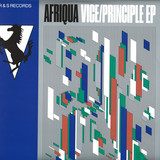
Following his R&S debut, Afriqua (aka Adam Longman Parker) presents Vice/Principle, his second release for the renowned Belgian label.
Recorded in the summer of 2017, Vice/Principle began as one of Afriqua's seasonal music packs, a quarterly offering of original tracks shared privately with a small cohort of friends and collaborators. R&S quickly picked up the collection, which expands on the melodicism and textural depth explored on his previous release for the label, Aleph.
The extended EP sees Parker veering into psychedelic territory, inspired by the cosmic departures of '70s krautrock and jazz. The title, Vice/Principle, more a coy bit of humor than a philosophical statement, reflects a wittiness that Parker often embeds into even the brawniest of his productions. This offbeatness is active in the music as well, which makes use of his voice, and edges past familiar four-on-the-floor patterns with interwoven polyrhythms and modality. Vice/Principle is confident in its curiosity, harnessing a wealth of artistic threads into a tightly knit, futuristic vision.
Parker currently resides in Berlin, Germany, where he works from his home studio in the city's quiet Charlottenburg neighborhood. Born and raised in Hampton, Virginia, Parker developed his craft as a producer while studying classical piano and practicing hip-hop turntablism from a young age.
After several years developing a hefty catalog of releases, Parker has embraced his R&S signing as an opportunity to dive deeper into his signature, yet versatile sound. His successful winter 2017 tour through the U.S. was a career first, and preceded international events at Comunité in Mexico, Concrete in Paris, and The Block in Tel Aviv.
Soul Jazz Records' latest album 'Yoruba! Songs and Rhythms for the Yoruba Gods in Nigeria' is newly recorded in Lagos, Nigeria. The album is co-produced by Soul Jazz Records label head Stuart Baker and Laolu Akins (founding member of the legendary 1970s Nigerian Afro-Funk/Rock group Blo). Yoruba! features an array of local master drummers led by Olatunji Samson Sotimirin and singers (featuring the lead vocals of Janet Olufanmilayo Abe) performing heavyweight Afro-rhythms, with talking drums, Bata and Dundun drums and a mass of percussion in these deep spiritual and sacred songs used to honour and worship the traditional and ancient Yoruba gods in Nigeria, West Africa.
The enormous impact of Yoruba and West African music and culture is worldwide - from the first Afro-centric explorations of African-American jazz musicians in the 1950s such as Art Blakey, Randy Weston and Dizzy Gillespie, the explosion of Nu Yorican Latin music in New York City starting in the 1960s - Mambo, Boogaloo, Latin funk and soul - through to the sacred and powerful Afro-derived music of the religions of Santería in Cuba, Candomblé in Brazil and Voodoo in Haiti, which all came into existence on account of the Atlantic slave trade which began over 400 years ago. On a wider scale West African music remains the primary root of all African-American musical forms - from New Orleans jazz to Bronx rap, gospel, soul and more.
This album features songs honouring the Nigerian gods of the Yoruba traditional religion - Yemoja, Obatala, Ogun, Sango and others - as well as a selection of instrumental cuts focussing on the Bata and Dundun drums. The album comes complete with extensive text and photography included in the 40-page outsize booklet/gatefold double vinyl + inners showing the influence of Yoruba culture throughout the world and the social and historical context for the music contained here.
Watch out for a limited edition remix of the project by Osunlade, also forthcoming on Soul Jazz Records.
Following on from their 'Ususmood' EP in February, Finnish duo Shuffless return to Paris based record store and distribution company Synchrophone this May to deliver the enigmatic 'Puoliaskel'.
Taking inspiration from music, nature and the elements that surround them, Jukka Hänninen and Mika Hanka aka Shuffless have quickly garnered the attention of many within house and techno since making their production debut in 2016. Written at the Vislampi Studio, located in Ruutana City, Finland, using a combination of hardware gear from the likes of Roland, Korg and Arturia, here we see the duo reveal their latest work with four diverse and expansive cuts set for release this Spring as they return to Syncrophone's in-house imprint. Opening up the EP, Hänninen and Hanka fluently introduce 'Chi', a complex and evolving cut that effortlessly fuses deep, rich chords, and delicate, skipping hi-hats, before easing into the flowing groove of 'Lahti' with its jazz-tinged melodies and heady tones guiding the production into lighter territories.
On the flip, 'Nime Ñvailla' introduces a matrix of hazy textures amongst crunchy percussion licks and dubbed out atmospherics as the duo return to deeper, darker realms, before title cut 'Puollaskel' punctuates the package in classy fashion, laying down gritty analog percussion, resounding kicks and subtly programmed nuances to conclude an excellently worked EP.
Detroit native Mark Flash aims to create music that moves - and it does. From New York to Hong Kong, his electropic funk' (yes, electropic') is the lifeblood of the party, with rich and full sounds that seep straight to the partygoers' soul. As one of the few DJ's who masters keyboard and percussion, his excellent musicianship and keen intuition is a sight to see live and an experience to be felt. As a well-respected name in the Detroit techno world and an influential part of Underground Resistance, he is deeply rooted to the city where it all began. From a young age he began spinning at small parties, slowly moving up the ladder through persistence and dedication to his craft. After paying countless dues to get to where he is today, Mark Flash humbly holds true to the music he creates, continuously harnessing the fire and passion that has always driven him. The EP begins with CORKTOWN GROOVE (5:44), a smooth and lively vibe to accompany you on a drive under city lights on a Friday night. Bumping up the energy, ELMWOOD PARK (7:34) hits the crowd with colorful synths and fresh moves. As the definition of high energy, KAIRAD's (7:10) powerful base and dynamic sound is the apex of the night. To finish off the EP, the classic feel of DEQUINDRE CUT (6:25) will leave you feeling good till the next day. This EP is another fresh cut from the man who stands behind his music, handing you an experience once you hit play.
Repress
It is not a secret anymore that Manchester has been a Deephouse capital city since quite a while. The Meandyou. party series is the main spot here with resident DJs Juniper & Arnaldo amongst others spinning alongside their favourite Acts like Lowtec (whose track on Smallville 14 was already a homage called meandyou.dub), Jus-Ed, Dj Qu, Kassem Mosse, Move D and the Smallville Posse. For our catalogue number 30, Juniper & Arnaldo are delivering four house tracks from outta space, that fit perfectly into the smallville vein. The global village of sweet house music is rising..
The amazing Romeo and Jermaine - Big Chiefs from different ends of the city -came together to celebrate their shared devotion to the deep roots of NO's 'Indian' culture. Vocals and percussion only but these guys deliver a fearsome wallop. Ooooh na na.
Distant Images is D.K.'s fourth release on Antinote and we can say quite safely that Dang Khoa Chau fueled a few identifiable obsessions over the years - for those familiar with his work, it probably won't feel like uncharted territory when they'll hear a somehow well-known guitar in the background of the title-track.
.
What time spent collaborating with D.K. also showed us is how much his sound magnified itself and its textures sharpened for the past three years. We now know for sure that his music only seems versatile on the surface as Distant Images confirms that the Paris-based musician has been, in fact, digging deeper in the same direction, each new record working like a diaphragm, always more precisely adjusted to capture his inner vision. It feels, for instance, like D.K.'s music is constantly trying to reach a higher level of evanescence from one record to an other, a process which possibly accelerated after a visit from Suzanne Kraft - who he recorded an album with, earlier this year (coming out on Melody As Truth).
With Distant Images, D.K.'s sound also took a step further into reality - the most attentive ears will hear seagulls on Distant Images while rain is softly falling on Leaving - and slightly departed from the digital universes that his previous records seemed to set in motion. From the most abstract songs - like the Steve Reich-ian Shaker Loops
- to the most evocative ones, the five compositions on Distant Images are like stained glass, gently filtering natural light. It is therefore no coincidence if, of all the senses, the titles of the songs mostly refer to Sight: close your eyes while listening to the cinematographic Days Of Steam and visions of an industrious city might appearbefore you.
The beauty that emanates from Distant Images is of a diaphanous kind and the record a collection of kaleidoscopic moments.
Andre Bratten was born in Oslo and grew up in a suburb of the Norwegian capital, which borders on the deep, dark Scandinavian forest. Like most kids in the late 1990s, he was bitten by the hiphop bug, but he also got turned on by the Led Zeppelin records he picked out from his father's record collection. He's broadminded enough to be into everything from the Norwegian electronica masters Røyksopp to Metro Area, Sigur Rós, Eno, Cluster and Weather Report. Currently dwelling in the heart of the city, his efforts with the synthesizer coincided with a huge boom in Norwegian electronic music, his productions recently came to the attention of Norwegian 'cosmic disco' mogul Prins Thomas and his Full Pupp colony. Andre's tracks share the exploratory vibe of the 80s synth pop pioneers, and misfit electronic pop musicians like John Foxx, who were forced learning to sculpt new sounds with new tools. Yet he updates those sounds to a contemporary rhythm matrix, in parallel with the dayglo analogue dance music of Lindstrøm, Todd Terje and Prins Thomas himself - and he just happens to share the central Oslo studio space used by that glorious trinity. But Andre has always known his own mind and was never going to be content with being just another anonymous insect in the logpile. So his debut album, Be A Man You Ant, is a string individual statement, his 'I am Spartacus!' moment. It computes almost infinite variations on the sounds he could extract from a single modular synthesizer - 'the limitations are inspiring', he says. So you'll find squelchy bugs in the bassbin, weird analogue squeegee smears, bright drum machine splats and the occasional significant pause. The spaces in his music are at least as important as what fills it.
On EP5, legendary German musician Burnt Friedman makes his Dekmantel Records debut with 'Monsun'. The Berlin based artist, who built a reputation for himself through his explorations into obscure, finely-tuned, experimental dub through his label Nonplace, alongside his collaborative relationship with the late Can drummer Jaki Liebezeit, is one of the crucial, sonic manipulators of our time. 'Monsun' finds Friedman crafting flowing, percussive, dub techno that is both esoteric, and progressive. Befitting of a Dekmantel release. Alongside Friedman sits legendary Detroit act Ectomorph, aka. BMG & Erika, also making their Dekmantel inauguration, with a record that surmises' the group's anologue, style of Motor City beats.
.
There would be no Dekmantel celebration without longtime family members, JuJu & Jordash. With three LPs and countless EPs released on the imprint to date, alongside a sleuth of festival, and party appearances, the improvisational duo have become masters of off-kilter, and poly-rhytmic electronic funk, of which 'Neon Swing' -a fast-paced and extremely invigorative cut- is of prime example. And then there's Dekmantel favourite Fatima Yamaha - an artist who has a keen ear for gentle, analogue hooks that have gone to become ample festival fodder. The Dutchman maintains an ear for the serene with the track 'Platforms', a sullen, yet beautiful ambient track, the drives deep into the emotive world of soft, tender, heartfelt music.