The multi-talented musician/producer Bing Ji Ling (Tummy Touch Records/Ubiquity Records/Lovemonk Records/Claremont 56) and DJ Alex from Tokyo are very excited to share with you a brand new, collaborative track Not My Day', that encapsulates their experience in New York, as well as their friendship. It's been a few years in the making, but well worth the wait! Alex and Bing moved to New York around the same time, and met in a bar (filled with Loft heads) after one of David Mancuso's Loft parties. Bing recognized Alex's voice from his weekly Shibuya FM radio show in Tokyo, and went up to introduce himself, being a fan. Turns out, they have many friends in common in New York, Tokyo, and beyond. They were instant friends, family. The track came out of several listening sessions from Bing's basement studio in the East Village, where Alex shared some tracks he'd be digging, across a wide range of genres, eras, tempos, etc.. Everything was very easy, very natural...Back in Tokyo Alex and Isao bring their club vibe and remix the funky and groovy Not My Day' into a magnifique electronic deep house anthem!
On the flip is Bing's version of Lil Louis' club classic Lonely People' Alex has been playing non stop, providing along here his own DJ friendly Tokyo Black Star retouch club version. Bing's version was originally recorded for his covers album called Sunshine For Your Mind' that was first released in Japan on the label Rush Production. This album came about, after years of playing solo/acoustic covers with a looping pedal in Japan. Bing has since performed the song live in New York, London, and at Croatia's Garden Festival with rave reviews!
Bing Ji Ling and Alex now live just minutes from each other in New York City as well as the Catskills, and enjoy frequent meals, music and mountains. We hope you enjoy...Happy Spring!
Поиск:city people
Все
In August 2000, Damon Albarn travelled to Mali for Oxfam's On The Line project (about people living along the Greenwich Meridian), intent on getting together with his favourite musicians there. In the capital Bamako and its surrounding villages, he sat in on club and private jam sessions, playing concerts and streetcorners, bars and boats.
Back home in London, more than forty hours of tapes were opened to other influences - reggae, dance, rock - and then the work in progress was returned to Mali, for further contributions from the musicians there: immersive and open, back and forth.
Dark Entries and Honey Soundsystem Records have teamed up again to release another volume of gay porn soundtracks by San Francisco-based musician and producer, Patrick Cowley. Perhaps one of the most revolutionary and influential people in the canon of disco music, Cowley created his own brand of Hi-NRG dance music, ''The San Francisco Sound.'' Born in Buffalo, NY on October 19, 1950, Patrick moved to San Francisco at the age of 21. He studied at the City College of San Francisco where he founded the Electronic Music Lab. During this time, Patrick, along with his classmates Maurice Tani and Art Adcock, would create radio jingles and electronic pieces using the school's equipment: first a Putney, then an E-MU System, and finally a Serge synthesizer. He would make experimental soundtracks by blending various types of music and adapting them to the synthesizer.
Atlanta's TWINS returns with an album of club-ready synthwave for CLEAR. Nothing Left lives on the axis between Wax Trax and WBMX, generating mutant industrial pop for sweaty basement ragers. The record begins with drum machine workout "Can't Go Back", cruises past the electrifying gloom of "Treat Me Like A Freak" and drives straight through to the finale, mechanized torch song "That's What I Never Saw." Matt Weiner, the single entity behind TWINS, is also at the controls of CGI records, a dependable outpost for extraterrestrial club jams. Both solo and as half of Featureless Ghost he's released on Crash Symbols, Night People, Geographic North, Clan Destine, and more. His work has been featured on XLR8R, Pitchfork, Resident Advisor, and Decoder. Forthcoming records from Chicago's CLEAR include two twelves of mind warping techno from locals Mike Broers and Dar Embarks. TWINS may be the first out-of-towner on the imprint but Nothing Left truly echoes the vibe of the city's underground past and present.
Drum Island unveil their tenth release with an extraordinary EP from Norway's Klaus Lunde.
From Norway's oldest city Tonsberg comes the stargazing sounds of Klaus Lunde: an acclaimed and prolific electronic music composer, his array of releases under the Xerxes Music pseudonym explore a unique take on ambience and tonal electronica that's a mesmerising and accomplished body of work to be sure.
This, undoubtedly many people's first introduction to his work, is a perfectly pitched collection that highlights the familiar themes of the Xerxes work, but fits easily into the Drum Island blueprint of music for the midnight sun. On the Exerxes EP, we're treated to pulsating Balearic trance and zero gravity house before gliding into relaxed ambience, soothing New Age and horizontal night music.
We then dive further into the psychedelic ocean hidden below with truly tripped out Kosmiche vignettes of warping and spine-tingling odd-pop.
Guest vocals from fellow viking Marthe Borge-Lunde Pfirrmann (aka Phoenix) making this is a cinematic tour de force!
Limited Edition import vinyl - full picture sleeve - one press only.
- A1: Abayomy - Obatala (Pd)
- A2: Zebrabeat_Zebrabeat Afro - Amazônia Orquestra (Zebrabeat)
- A3: Burro Morto - Lúcifer Colômbia (Daniel Jesi/Burro Morto)
- A4: Ive Seixas - Cervejas Populares (Ive Seixas)
- B1: Iconili - O Rei De Tupanga (Iconili)
- B2: Zulumbi - Zulumbi (Rodrigo Brandão / Lúcio Maia / Pg / Dengue)
- B3: Passo Torto - Faria Lima Pra Cá (Kiko Dinucci / Rodrigo Campos)
- B4: André Sampaio E Os Afromandinga - Ecos De Niafunke (André Sampaio)
- B5: Fabrício - Feito Tamborim, Pará Céu (Fabrício.)
Over the past few decades, there has been a seismic shift in Brazil's musical landscape. A plethora of varying musical undergrounds has developed across the nation. While Rio and São Paulo have been overwhelmed with networks of talented musicians for a long time, creative life is now bursting all over the country. Amplificador exists to document and propagate the wonderfully diverse music currently blossoming from Brazil's vivacious and geographically varied musical undergrounds. Presenting an up-to date insight into Brazilian music, this compilation draws together some of the components of 'Novíssima Música Brasileira' (brand new Brazilian music), ranging from afro-grooves to rock, to modern samba and MPB. The music reaches back across Brazil's incredibly rich musical and cultural traditions, while also taking in influence from other movements around the globe.
Having begun life in 2012 as a Brazilian music blog run by Marcelo Monteiro, Eduardo Rodrigues, Mateus Campos, and Ricardo Calazans, the aim of Amplificador is to document and propel to wider audiences, Brazilian music of the '00s and '10s generation. This is a task made more significant by obvious changes in the way music is consumed. 'People are no longer obliged to listen to what the radio and TV are presenting. There is a whole new generation that wants to listen to new bands and new sounds and we try to connect those bands with other bands, producers, fans and even the mainstream.' These changes in technology and the way music is discovered and shared have developed parallel to the proliferation of these emerging scenes. The ostensible decentralization of the music industry means the promoting and filtering work of journalists and blogs, like Amplificador, have become increasingly important, as people try to keep up with the tsunami of new music and media flooding the country on a daily basis.
Marcelo uses the example of the Mangue Beat movement to explain a trend in contemporary Brazilian music that looks both inwards, to Brazil's own musical traditions and outwards, to movements around the world to create a novel, localised identity: 'The 90's Pernambuco art-social movement was inspired by Coco, Maracatu and Forró all mixed with modern riffs and grooves. The mythical
revolutionary Chico Science, his Nação Zumbi, Mundo Livre, Siba, and many others do this blend perfectly. There are also the references to the older generations and masters - Gil, Caetano, Luiz Gonzaga, João Gilberto, Tim Maia, Jorge Benjor - as a constant inspiration for all bands.' This is very much the case for the Brazilian artists of today.
Music is unquestionably informed by place. Brazil has always been famed for its regional differences in this sense. Indeed there are still pronounced variations between the scenes of Rio, Sao Paulo, Natal, Goiânia, Belo Horizonte and Belém for example, there are also great divergences within cities and while technology has brought changes to the way musical influences are shared, there are cultural differences, rooted in folkloric traditions, that aren't going away. Expressing his appreciation for this fact, while highlighting the potential of Brazil's spread of musical flavours, Marcelo explains that 'what we have now is new ingredients to make an even better mixture.'
This compilation heavily features music from a scene in Brazil's current musical make-up, which draws inspiration from African music, particularly Afro-beat music. Abayomy Afrobeat Orchestra from Rio formed because of their shared love of the music of Fela Kuti, uniting initially in 2009 for a jam session in his honour. But what sets Abayomy apart from other groups of a similar nature, is the fact that their sound also brings with it the songs and rhythms of candomblé. In this sense, Abayomy was the first band of its kind. The thirteen members of the orchestra have a palpable current of Rio's musical heritage - its rhythms and culture - running through them. So while their sound is distinctly African, it is also inherently Brazilian. Similarly, Zebrabeat Afro-Amazônia Orquestra draw upon traditional guitarradas and carimbos from the state of Pará and fuse these with the poly-rhythms of Afrobeat to create another regional hybrid, which stays true to both its Amazonian and African roots, yet which results in a very fresh, Brazilian sound. From Belo Horizonte (capital of Minas Gerais), Iconilli are another key band on Brazil's Afro-groove scene. With influences as varied as funk, jazz and psychedelic rock, congado, mining harmonies, maracatu, coco, ijexá, carimbó, Iconilli somehow manage to balance all of these sounds in such a way that makes it impossible to pin them down. From the Northeastern city of Joao Pessao, Parayba, Burro Morto's pshychadelic afro sound leans more towards rock and funk influences, with hint of regional Brazilian rhythms such as frevo and forro. They add another flavour to the Brazilian afro-groove scene: just one of the many exciting facets of Novíssima Música Brasileira.
While African-inspired music features heavily on the compilation, it is just one of the many styles within. Ive Seixas has a fresh approach to MPB, based on traditional rhythms and instrumentation, punctuated by a pop sensibility, coupled with a powerful female vocal. As an artist she is a product of a 'Do It Yourself' outlook to creativity, taken from her love of rock growing up. In 2013 she embarked on a project of street performance: wandering, like a lonely troubadour with just her guitar. Ive and her project began to gain notoriety and shortly after, her first EP was recorded, featuring some important names of South Rio's underground scene. 'Cervejas Populares' taken from the EP, is a beautiful, sombre piece of modern Brazilian pop, with a traditional samba rhythm. Another artist of the new MPB scene is Fabricio, from the city of Vitoria, who's 'Feito Tamborim' melds rock and funk and is also clearly reminiscent of the old Brazilian masters. It's an appreciation for the national musical heritage, alongside a keen ear for melody and an acceptance of foreign influences that results in these promising new sounds of Brazilian MPB.
Sao Paulo's super group of the underground 'Passo Torto' have been at the helm of an emerging scene in the city: an innovative approach to samba which draws in and experiments with afro grooves, jazz melodies and rock structures. Their sound is naturally very Brazilian, but the nylon twang of Faira Lima Pra Ca, interspersed with ominous strings and light rolling percussion, seems reminiscent of Captain Beefheart or Tom Waits, as the band lament their frustrations with their native city through their music.
The Future of Novíssima Música Brasileira looks very bright. The main challenge (and purpose of this album) is to get the music beyond Brazil's underground and into view of international audiences. In the last 10 years this goal has become somewhat more attainable, as the Brazilian government has begun to see the internationalisation of the nation's culture as a strategic objective, with public projects gaining increased investment and backing. The continuing project of Amplificador is to reinforce this international bridge by writing, filtering and promoting the scene as a whole. There is a wealth of great music currently blooming in Brazil and using new media tools, Marcelo and the team, alongside many others, will passionately continue to get the voices of Brazil's underground heard.
'We Start Over' arrived on the desks at International Feel and it felt perfect for us. Deep electronics, a lovely mood, forward thinking and a gorgeous vocal from Trudie Dawn Smith. Lots to play with from a remix perspective and a great original track in itself. Steve Cobby is a British producer, musician, composer, and DJ, based in Kingston-upon-Hull, Yorkshire. He co-founded Fila Brazillia in 1990 and released 10 critically acclaimed LP's and produced over 70 remixes for artists as diverse as Radiohead, Busta Rhymes, Black Uhuru and A Certain Ratio. Cobby now releases music via his own label Déclassé label. His latest and third solo LP 'Saudade' was released in March 2014 and received considerable critical acclaim.
The first 12" consists of the original version and on the flip a remix by Apiento & Lx (their first track together since the underground classic 'The Orange Place' ). The remix is slow trance in its purest sense, made for lasers and dark nightclubs. It's already receiving club play and has been named by Andrew Weatherall and Sean Johnston's ALFOS as "one of the records of the summer". High praise.
On the second 12" the reins have been handed to Gerd Janson & Phillip Lauer a.k.a Tuff City Kids - two people making some of the finest house at their at the moment with Janson also getting massively known globally for his DJing. Their remixes are made for the clubs. The 'Garage Dub' is classic New York house that is as deep as you like and one of those hooky ones that does everything perfectly. The other, 'Private Acid Mix ' goes heavy on the beats and drops the 303 in a fine style with the vocal looped and twisted.
As you would expect from International Feel this is classy and classic club music covered from all angles from a balearic original, a deep chug remix from Apiento & Lx and the Tuff City Kids bringing the house vibe. Deep deep deep.
Factory Benelux presents a new studio album by cult Manchester postpunk group Crispy Ambulance, issued in a
limited edition of 500 vinyl copies to mark Record Store Day 2015.
In many respects Compulsion is the second album Crispy Ambulance might have recorded in 1982 after the release of
The Plateau Phase, with six of the eight tracks written and performed live at that time. To these are now added Rain
Without Clouds, an outtake from The Plateau Phase newly restored from the original multitrack masters, and WMTP.2
with added synth lines by producer-cum fifth member Graham Massey, of 808 State and Biting Tongues.
Almost uniquely, Crispy Ambulance has retained the same line-up since the group was originally founded in 1978: Alan
Hempsall (vocals, keyboards), Gary Madeley (drums), Robert Davenport (guitars), Keith Darbyshire (bass).
'There's a sense of feeling compelled by irresistible forces,' explains Alan Hempsall. 'Compulsion is an apt way to
describe our constant urge to go back and make music with people we've known since childhood. While the world may
have changed, our music continues to be the product of the same influences - the passing of time, the changing of the
seasons, the content of our sleeping dreams, and the existence of space.'
Cover art by Peter Staessens. The package also features a free digital download of the album.
Praise for The Plateau Phase: "One of the best albums Britain's second city has unleashed" (Q, 03/2006); 'Perfect,
wonderful and with a compelling gravitational pull' (Record Collector, 03/2013); "17 years on The Plateau Phase
sounds like what it probably always was: urgent, postmodernist psychedelia with less debt to Joy Division's music than to
the universal abstract existential tension that comes with being young" (Uncut, 12/1999); "Cold and ferocious, but with
enough inventive melody to lighten the black abyss of the overall mood" (Les Inrockuptibles, 02/2012); "An enthralling
glimpse at a moment in musical history when the DIY ethos of punk gradually gave way to experiments with electronics
and song structures" (NME, 01/2000); "Mixes driving rock, gritty new wave and odd atmospheric stuff" (Option, 1990)
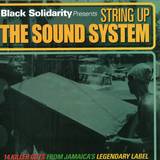
- A1: Bad Boy-Triston Palma
- A2: Never Trouble Trouble-Tony Tuff
- A3: Single Life-Robert Ffrench
- A4: String Up The Sound System-Michael Palmer
- A5: Champion Bubbler-Puddy Roots
- A6: Police Police-Ashanti Waugh
- A7: Fancyness-Triston Palma
- B1: A Little Bit Of Love-Phillip Frazer
- B2: Barrel Mentality-Bill Blast
- B3: Inner City Blues-Cutty Ranks
- B4: Reggae Fever-Michael Forbes
- B5: Ethiopia-Tony Carver
- B6: Strawberry-Eddie Constantine
- B7: The Lord Is My Light-Rod Taylor
In the beginning of the 80's reggae music became increasingly in tune with what was happening in Kingston's dancehalls....probably more so than at any time since the sound system operators had started to make their own shuffle and boogie in the late 50's..
The international audience and the critics were too busy looking for a new Bob Marley to appreciate what was happening downtown and failed to acknowledge that this was a return to the real,raw roots of the music...brash,confidient,young record producers who were totally in tune with the youth audience stepped forward and seized the moment...
Oswald'Ossie'Thomas began his apprenticeship in the music business at the age of fourteen and served his time as a record salesman for Bunny 'Striker 'Lee and Winston 'Niney the Observer' Holness before moving on to Miss Sonia Pottingers Tip Top Records...
'I ended up working in three record stores on Orange Street from 1976 to 1981...Yeah man,Me deh 'pon me bicycle till I buy my motorcycle..Them days records were coming out left right and centre..everyday'
Ossie Thomas...
It was during his time with Miss Pottinger that Ossie began to produce records for himself and in 1979 Ossie and Phillip Morgan began The Black Solidarity label based deep in the Kingston ghetto on Delamere Avenue.
And the man who had made his name in the business selling other people's records now became one of the most important and influential record producers of the era..
New York City-based DJ, producer and The Corner label owner Anthony Parasole makes his debut on Ostgut Ton with three new percussive-heavy Techno tracks on the My Block EP.
"Percussive music, that's my ground, my foundation but I am missing the feeling of tribalism in Techno today. I've been using a lot of different drum techniques over the past years, implementing them to Techno. The record 'Quickstrike', that I've released on my own label The Corner, was an edit record of an old sample-based house release. To me this was a test if people would gravitate to this sound and it was the biggest record on The Corner so far. From there I knew I could do this and two tracks off my new EP on Ostgut Ton work like this: 'Typhoon' features bongos, congas and all kinds of skin percussion, 'My Block' uses a different kind of percussive color.
HipHop in general and the Cut-up technique in particular have also heavily inspired me as a producer. During the 1990s music seemed really profound - a little bit tougher too. I listened to a lot of HipHop when I was writing the music for this new release and applied its methods to my own music. Many producers at that time were very forward-thinking. Wu-Tang Clan's RZA uses a sixteenth note technique that made me realize that I wanted this kind of hypnotizing sound to work in a Techno format. Another big influence were late 1970s Horror movie trailers. I was watching them while I was working on 'Bizarre' in the studio, I was inspired to capture the eerie tones and textures of those short clips in 'Bizarre'.
At the end of the day I work within certain parameters. Everytime I make a sample, I drop it into my personal folder - so all my music has a similarity of up to 50 or 60%. Maybe I'll use the same drumkit or kickdrum. I apply limitations to myself, but doing this also gives me my own voice. When I was learning how to produce, Levon Vincent taught me to make my own drum kit, to make my own synth kit and to work within this. Sample-based music is inspiring, and creating something out of found sound is very interesting to me. I think a sound signature is something that will always refine ones sonic pallet and skill set."
- Anthony Parasole, Berlin, September 2014 -
Kenny Gino and Big Mike a.k.a. the Solid Gold Playaz both started playing records in the late 70's/early 80's. Having family from Chicago, who were DJ's and down with some of the big guys at the time, "heavily influenced our music and production styles" both say. "Living so close to the city, we could go down to all the legendary night spots. The Rainbow and the Warehouse, the Box, the Shelter... places where you could just feel the vibe. And you could hear guys like Farley Funkin' Keith, Ron Hardy, and Jammin' Gerald (the Chicago DJ/producer who is Kenny's cousin) play these incredible records". They both were hooked on the house sound, and would bring it back to their home, a small city named Racine, Wisconsin, located about an hour and half north of Chicago. They continued to develop their DJ and production skills into the 90's, but musically, weren't taking things very seriously until they met Chicago producer Louis Bell. He introduced them to many of the people who were building the mid-90's Chicago sound. "Louis gave us access... access to places we hadn't been before. He took us into the offices of Cajual/Relief Records and Underground Construction, and suddenly we were face to face with guys who were doing what we wanted to do... Cajmere, Paul Johnson, Glenn Underground... showing us that we could do this too. We did a few releases just to get our name out, and soon we had some pretty big named DJ's playing our music. We had DJ's actually looking for our records, and telling us how much they liked our sounds... that just blew us away, especially with very little promotion and in the limited numbers we were pressing... our music just started to build a name for itself."