Hailing from Ancaster, Ontario, Carl Didur has been an enigmatic fixture of Toronto’s underground music community for close to two decades. Originally traversing the Golden Horseshoe with The Battleship, Ethel, a band which sprung from his first outfit CEDRUMATIC, Didur soon moved to Toronto. Throughout the mid-2000’s he could be spotted playing his trademark ace-tone organ as a member of No Dynamics and Rozasia in the city’s crammed rogue venues, such as The Bagel and the infamous and transient Extermination Music Night. During these years The Battleship, Ethel continued to tour, often performing as backup band for Damo Suzuki, while at other shows inviting Dave Byers (Simply Saucer) and Bob Bryden (Spirit Of Christmas) to perform alongside the band. Perhaps the most enduring legacy of "The Battleship, Ethel", which dissolved in 2009, is that it laid the creative foundation for Carl and bandmate Michael McLean's next project, the prolific, studio focused, Zacht Automaat. As Zacht Automaat released music at a frantic pace, Carl continued to collaborate with members of a tight-knit group of Toronto’s downtown scene including touring with U.S. Girls and Slim Twig, performing and recording with Colin Fisher as Fake Humans, guesting on Absolutely Free’s Currency EP and producing New Fries’ most recent album The Idea of Us. Throughout the last decade Didur’s purely solo output has served to document his unimpeachably singular approach to music making. I Cannot See You Too Well (2011), Nothing is the Secret to Anything (2014) and Is It Yesterday? (2020) all released on cassette were followed by a digital album of gentle minimalism called Natural Feelings Vol I (2020). His solo shows consist of multiple tape machines running loops through various analog devices (a Certified Electronics Technician Didur now spends his non-piano playing hours of the day repairing all manner of tape echoes and synthesizers) or solo Wurlitzer electric piano improvisations, his performances gracing both stage and gallery. With his latest release Maybe Next Time, Didur further establishes himself as a singular artist with a unique methodology honed from years of music-making and listening. The album’s compositions swing from lush Axelrod-ish affairs filled with Mellotron strings to the album’s spiritual jazz influenced centerpiece The River Meets The Sea. “I was inspired by Eno's Here Come the Warm Jets, Crazy Horse but only when they are sad, Alice Coltrane, Jessica Pratt, McDonald and Giles, and so many others…” states Didur. Infused with a melancholic tone throughout, tracks such as Close My Eyes and Autumn’s Here invoke cinematic memories with tape echo and reverb applying a softened focus to the proceedings. Carl explains the context for the tone and the setting for the record’s gestation: “Maybe Next Time is a record I made after the world lost a sweet person that many in our community loved. Unlike most of my albums this one never seeks to shock or surprise you. It is about sadness, confusion, dissolution, transformation and ultimately a deeply forgiving sense of love. It is a concept record about being a human being!”
Поиск:city reverb
Все
- A1: Orhythmo - Nagel
- A2: Spinnuts - Zweimal Schlafen Atmosphäre
- A3: Ypy - Ms
- B1: Keihin - Exhale
- B2: Dj Nobu - Yakou Gai
- C1: Gabber Modus Operandi - Kisah
- C2: Coni - Ängelsbäcksstrand
- C3: City - 9K
- D1: Ryo Murakami - Reminiscence
- D2: Sapphire Slows - Hinotori
- D3: Compuma - Flowmotion (In Dub)
- D4: Albino Sound - Celestial Sphere
Versatility does not even come close to describing how the humble Japanese ¥ØU$UK€ ¥UK1MAT$U is considered to be one of the best DJs in the world by many of his peers. From his debut at DJ Nobu’s FUTURE TERROR event to performing 3 years consecutively at Berlin Atonal Festival, Yukimatsu’s sets have to be heard for you to understand.
In this special mix album, Yukimatsu gathers round his producer friends to build vessels of the story structure. Threading the pages together, interweaved by friendship and sine waves, he has crafted a masterful presentation from their individual messages. Pulling and stretching all sonic shapes and shades while exploring the farthest reaches of sound, the result is a frequency soup of twelve outstanding tracks that when sequenced together, become part of a greater, grander story: Midnight is Comin’.
From the sound art experimentations of orhythmo – Nagel and wide yawning strings in Ryo Murakami – Reminiscence to the rhythmic slo-mo haze of Sapphire Slows – Hinotori and the exponentially pulsing colours from DJ Nobu - Yakou Gai. The DMT-like spacious virtual meditation hall of KEIHIN – Exhale follows the uneasy footsteps of YPY – MS to the intermissioning chapter of City – 9K. Fall into the wormhole of COMPUMA –Flowmotion (IN DUB) and be transported to the reverb-drenched, intimate experience of Coni – Ängelsbäcksstrand, the primal invocations of Gabber Modus Operandi – Kisah (which also means story in Bahasa Indonesian) to the transcendent notes of SPINNUTS - Zweimal schlafen atmosphäre. The soaring universe of Albino Sound – Celestial Sphere wraps up the album with crystalline notes.
“Versatile is not even close to describing his music selection and mixing skills as he plays anything without prejudice and is purely music loving. He is extremely humble, can mix anything and make it sound interesting.” – nolens.volens (Bangkok, Thailand)
Dark Entries presents a reissue of Shawn Pittman’s 1989 Dreams, an obscure and highly sought-after private press gem produced and written by Art Forest. An undersung figure in the development of the late 80’s Detroit techno sound, Forest collaborated with, produced, or penned material for many of the key players in the movement, including Inner City, Suburban Knight, and the Belleville Three themselves (on Kreem’s “Triangle of Love”). This reissue gives Forest’s own productions some shine while providing a thrill for both dancers and collectors.
Dreams features two songs, both written and produced by Art Forest and featuring Shawn Pittman on vocals. The A-side contains two mixes of “Dreams”, a smooth R&B/modern soul number driven by Pittman’s vocal. While the song is undeniably radio-friendly, it contains some of the hallmarks of the Detroit techno sound – sparse arrangement, lush reverb, and booming bass. On the B-side, we are treated to two different versions of the clubbier “I’m Losing Control”. The original mix leans towards boogie/freestyle, with syncopated 909 beats and sassy synth vamps, and wouldn’t sound out of place next to Forest’s work with Inner City. The Extended-Bass-ment Club Mix strips things down and dubs them out, leaving us with shards of bass synth, brooding strings, and Pittman’s vocals eerily warped to the edge of recognition; a perfect late-night warehouse anthem.
All songs were remastered by George Horn at Fantasy Studios. The sleeve is a replica of the original cover art. Also included is a 2-sided postcard with lyrics and photos of Art.
28th April 2022 marks the 50th anniversary of the release of David Bowie’s STARMAN, the first single from THE RISE AND FALL OF ZIGGY STARDUST AND THE SPIDERS FROM MARS. To celebrate, Parlophone Records is proud to announce release details to mark the album’s Golden Jubilee.
On 17th June 2022, 50 years and one day after the original U.K. release date, THE RISE AND FALL OF ZIGGY STARDUST AND THE SPIDERS FROM MARS will be issued as a limited edition 50th anniversary picture disc, featuring a half-speed master and a replica promotional poster for the album.
THE RISE AND FALL OF ZIGGY STARDUST AND THE SPIDERS FROM MARS is the breakthrough album that catapulted David Bowie into the international spotlight. Over the past 50 years it has remained a touchstone record, growing in stature with each passing year. It is now ingrained in popular culture, its undeniable influence spanning musicians from Arcade Fire to Lady Gaga, to Harry Styles’s androgynous fashion sense to Noel Fielding’s shirts on The Great British Bake-Off to Ziggy make-up challenges on Tik-Tok.
David Bowie laid to rest the Ziggy Stardust persona in July 1973 at his infamous last show with the Spiders From Mars at London’s Hammersmith Odeon, but Ziggy’s impact reverberates to this day.
During the later stages of 2020, Damien Duque (City of Dawn) and M Cody McPhail (ATOP) decided to begin writing a collaborative album together. Their styles, although different, compliment each other extremely well and it became apparent that this project would end up flowing out of them with ease. They shared wav files and recording parts individually at each other homes over a few months. City of Dawn's smooth reverbed tonal compositions mixed with ATOP's rougher and meandering synth lines gives the Starwind lp its expansive and cosmic qualities.
140g Black vinyl LP – Printed inner sleeve – Sealed plastic sleeve
In Trux We Pux is an editorial project organized by the Porto based label and collective Favela Discos. Focusing on the city’s thriving experimental and improvised music scene, it sets out to portrait in a series of four volumes some of the characteristic sounds and collaborative practices that have been in development in Porto during the last few years.
In Trux We Pux 04 is the last in a series of four records organized by Favela Discos, set out to shine a light on Porto’s thriving experimental and improvised music scene. Throughout the collection the label tries to expose the eclectic sound and collaborative practices that have been in development in the last few years in the city by promoting the collaboration between artists and the creation of new collective improvisation pieces.
As the first album dwelled into the electronic spectre of the scene, this volume veers itself to the physical side of experimental and improvised explorations. Although there is space for outsiders manipulating the sound by electronic means, most of the music in this album is plucked, bowed, percussed or sung. The artists themselves are as varied as the music they played, among the 13 artists that collaborated for the creation of this album are many promising newcomers but also some of the more recognizable and relevant names in the scene, with the presence of the Sonoscopia founder Gustavo Costa, João Pais Filipe one of the most characteristic drummers in Portugal, and the DIY duo and underground staple Calhau!.
As we could suspect, the diverse selection of musicians, while providing us a view on the various kinds of musical languages that populate the city’s scene, also creates a dynamic collection of sounds. Spanning a large gamut of sub-sub-genres, from near-musique concrète to tribal noise, the album is a rollercoaster collage that miraculously achieves logic and cohesion, like a voyeur listener taking us on a journey through an abandoned mall where most of the bands in Porto rehearse, whose halls reverberate with a cacophony of music.
40-plus years since its original release, the pop-punk-new wave inventions of Anthony
Moore’s ‘Flying Doesn’t Help’ are freshly remastered, blasting the sparkling, angular
sounds into today with perfect vitality.
After spending the early years of the 1970s making experimental music first as a solo
artist, then with Slapp Happy and Henry Cow, 1976’s ‘OUT’ sessions had reinvigorated
Anthony’s youthful love of the naive pop melodies of pop radio, the undeniable excitement
of songs. While ‘OUT’ ultimately went unreleased at the time, the iconoclasm clouding the
late ’70s air was addictive and transformative for Anthony. England seemed to be roiled
as violently as it had been in counter-cultural days a decade earlier; the UK pop charts
breathlessly reflected the changing spectrum with equal parts aging hippie and prog
delicacies alongside new ascendant sounds: rough-hewn pub and punk rock, plus dub
reggae and disco and ska and Stiff and Krautrock. This proved to be an ideal environment
for Anthony to make records by exploring, as he puts it, the “deep connection between
minimalism, repetition, working with tape and celluloid and forming the modules of a
three-minute pop song.”
Caught up in a no-holds-barred era, Anthony was more than happy to play the out-of-hishead madman, raving through outrageous exchanges with the press, while ‘Judy Get
Down’ received Single Of The Week honours from the NME (with review penned by Brian
Eno). Represented by Blackhill Enterprises, Anthony did production work throughout
1978-1979, on Kevin Ayers’ ‘Rainbow Takeaway’, Manfred Mann’s Earth Band’s ‘Angel
Station’ and the first This Heat album, meanwhile cutting his own songs on a dead time
deal at Workhouse Studio with engineer / producer Laurie Latham. Through the wee
hours of countless nights, the two pieced together ‘Flying Doesn’t Help’, with a little help
from friends (an inspired bunch, including Bob Shilling, Charles Hayward, Chris Slade,
Robert Vogel, Festus, Matt Irving, Sam Harley, Bernie Clark, Edwin Cross and Martine
Moore on the telephone).
Building upon the axis of pop and experimental impulses that distinguished ‘OUT’, and
informed further by the raw sensibilities exploding everywhere, ‘Flying Doesn’t Help’
blasts out of the speakers with its own unique blend of sophistication and aggression,
Anthony’s keyboard flashes between arpeggiations and outright stabs among the noise of
slicing guitars, funk basslines and the reverbed blare of the drumkit. Opening with
Anthony’s greatest hit, ‘Judy Get Down’, and containing a noise-laden remake of the
Slapp Happy/Henry Cow number, ‘War’, among other delightful sweet-and-salty
confections, ‘Flying Doesn’t Help’ never stops moving, fuelled with raw outrage and dark
satirical intent, churning with the energy of next-gen types like Tubeway Army and DEVO,
while shimmering with the elegance of the still-challenging old guard types, like Cale and
Bowie.
Clearly, ‘Flying Doesn’t Help’ was steeped in the time, and the original release reflected a
deep mistrust of the corporation mindset. Information was a dubious concept, and
connections to any recognizable organization were seen as untrustworthy, so facts like
musician credits were left out of the package, and even Anthony’s name was altered (he
was credited as A. More on the album and Tony More on a single release). The label
name QUANGO was conceptual as well, standing for ‘Quasi Autonomous NonGovernmental Organization’; each record was sealed with red tape that the listener was
required to cut through in order to get to the music. Rather than recreate the conditions of
the original release of ‘Flying Doesn’t Help’, this reissue instead embraces the changed
environment of the current time and place: instead of no credits, now they are complete,
with Anthony’s full name restored and even the artwork subtly ‘relocated’ to reflect a new
set of relationships. All of which brings the forward-looking sounds of ‘Flying Doesn’t Help’
into the more independent-minded 21st Century syntax where it belongs.
Mieko Shimizu is a London based Japanese singer, songwriter, composer and producer. Mieko first erupted onto the UK electronic scene as Apache 61; her searing alter ego, fusing layers of cross-woven breaks and battling shards of sub-bass within stateless melodies drawn from the fringes of the avant-garde. Garnering plays by John Peel she quickly build herself a name across the underground scene. Originally trained in Jazz, she cites the multidisciplinary performance artist Meredith Monk and composer Terry Riley as early influences, but also draws inspiration from many genres.
Phenomena of the mind is a re-mastered EP of selected tracks from the album of the same title released in 2006, the year after the London Terror attacks. Something dispirited and unexplainable lay heavy in the air of this immense city that we lived and breathed. In the title song “ Phenomena of the mind” Mieko’s intense Japanese rap echoed the din of the chaotic streets we walk.‘Visualise’, she says, try to imagine a way to fight our way our way out of this ominous struggle.
In the track “Signal Found”, the theme continues to shattered Dance Hall beats that reverberate to the “Twisted Sound” of “Broken down” “London Town”. “Have you lost a plot? Are you ok?” she asks?
In the track ‘Black Salt” a dark melancholic theme floats over fragmented, glitchy beats compounded by the repetition of the word “black” which hammers the constant bombardment of racism prescient of the call for freedom that “Black Lives Matter.”
Wonderland Magazine has described Mieko’s music as “beautiful poetic verses and stunning musical arrangements and Mark Taylor describes Mieko in Record Collector as “An avant-garden artist pushing boundaries”
• Re-mastered EP of selected tracks from the album of the same title released in 2006
• Premiering the re-release at Twenty One in Southend on 21st April
• Mark Taylor describes Mieko in Record Collector as “An avant-garden artist pushing boundaries”
FFO: Arthur Russell, Stealing Sheep, Neu!, Agar Agar, Galaxians
Holodrum are a new disco-infused synth-pop group, who feature members of Hookworms, Yard Act, Cowtown, Virginia Wing, Drahla and more.
Maybe Holodrum were destined to start at this point. This might be the first time they’ve all officially worked together, but between Emily Garner (vocals), Matthew Benn (synth/bass/production), Jonathan Nash (drums), Jonathan Wilkinson (guitar), Sam Shjipstone (guitar/vocals), Christopher Duffin (sax/synth) and Steve Nuttall (percussion) they’ve shared bands, mixed each other’s records, promoted live shows and made music videos together in and around Leeds. As Holodrum, this is the 7 piece’s debut album, but the interlocking grooves and hot headiness of their repeato-rock-via-CBGBs dopamine hits have in one way or other been fermenting for years.
“When it comes to doing music most bands fall between two extremes of doing it for some goal or as an end to itself” says Shjipstone. “I think Holodrum is about the joy and complexity of living, and I just hope to god everyone gets to have a good time doing it.”
Ultimately the core of the group comes from Shjipstone and his former Hookworms bandmates Benn, Nash and Wilkinson. After their abrupt dissolution in late 2018, the four of them spent six months apart; Benn still had Xam Duo, his ongoing project with Virginia Wing and some-time James Holden & The Animal Spirits live member Duffin, Nash remains vocalist and guitarist of long-running DIY rockers Cowtown and helms his solo project Game_Program; and Shjipstone plays guitar with Yard Act. However, the four of them missed the sixth sense synergy they’d built-up playing together over a decade and soon enough demos were being swapped and new ideas were discussed.
The vision of a large live electronic ensemble formed quickly. Friends were added: Duffin and Nuttall – who was keen to resurrect the double percussion interplay that he and Nash had been exploring as part of motorik trio Nope joined first. Then animator and VIDE0 singer Garner crystallised the line-up by joining on vocals.
“Apart from Emily, all of us had actually played together before in a covers band at a New Year’s Eve party at the Brudenell Social Club a couple of years ago, so we knew we could have fun together” says Benn. “So we set up to be a live party band early on. We wanted lots of people on stage having fun, playing for people that also wanted to have fun. It makes sense we take inspiration from bands like Tom Tom Club and Liquid Liquid; they were trying to help people to party at a point when New York was quite a scary and dangerous place we’re doing the same, albeit in the face of a decaying world and a global pandemic.”
Covid-19 hasn’t given them much opportunity to do that yet, with two fledgling shows in late 2019 to their name before festival appearances at the likes of Bluedot, Sounds From The Other City and Gold Sounds were scuppered last year. However, the 6 tracks on Holodrum crackle with the energy of the dancefloor. Opening cut 'Lemon Chic' described by Garner as her “workout track” starts out sparsely, with tight drum claps and burbling synths holding a teetering suspense before the whole thing’s prised open, allowing beaming saxophone skronk to shine in. Garner’s vocals bob and weave around the syncopations of the track’s building cacophony.
It sets the stall for an album heavy on euphoria, built atop crisp interplaying percussion and acid-flecked grooves. At times Shjipstone provides a raw counterpoint on vocals, while elsewhere - like on the strutting, swirling disco of 'Free Advice' and 'Low Light'’s late night ping pong synths - the pair indulge in playful call and response as the instrumentation builds and contorts around them. 'Stage Echo' provides a respite of sorts halfway through, a swirling, fever dream of a track that peaks with big squelchy frequencies and cavernous reverb, before the album returns to its repetitious exercises in body-moving catharsis underpinned at all times by a relentlessly propulsive rhythm section.
"The core of confusion and upheaval that drove some of the band's most fiery earlier work, however, is replaced by a more stabilized undercurrent, a mentality that's reflected in songs not afraid to try new things and honestly explore uncomfortable feelings. When combined with exciting production and songwriting choices, that mindset helps make Feels So Good // Feels So Bad one of the Shivas' best albums.” - AllMusic "Portland, Oregon-hailing psych-surf band The Shivas accomplish another time-traveling, reverb-ridden sound that refuses to get boring. Jared Molyneux’s guitar work knows when to be bright or bashful at the right times, breaking into guitar solos that possess a late-’60s groove… The Shivas seem to blissfully flourish” - Paste "a consistent treat for the ears” - The Vinyl District "Though the psych-tinged guitar riff that drives 'Feels So Bad' was written while The Shivas were still on the road, its lyrics didn’t fall into place until the band was well into lockdown, unsure of when they’d be able to return to their most imperative true love: Live shows... Accordingly, 'Feels So Bad' permeates with a sense of urgent desperation, building off a chugging prog-rock instrumental.” - Consequence (on “Feels So Bad”) "They hooked the audience with their throwback rock sounds. The guitar strums and rhythmic drum beats were layered atop smooth and hallucinogenic vocals. The eyes can tell the take at times and there was a sparkle there that said that the band members just love doing live performances." - California Rocker "This single layers on the fuzz but keeps it dreamy, with an especially sticky guitar riff sure to lodge itself in your brain with minimal effort." - Portland Monthly (on “If I Could Choose”) “'My Baby Don’t' translates the genuine vibrant joy
of the live experience into the studio, bringing the band’s ‘60s garage rock roots, sharp pop vocal harmonies, and fervent performances along for the ride." - Under The Radar "Perfectly straddling the line between a solid-head bopping track and an introspective deep cut, The Shivas’ 'Undone' is a rock & roll gem. The track sounds straight out of the late 60s and fits seamlessly in the Portland band’s electrifying catalog." - The Luna Collective "The first time I clicked play on this track, I knew it was a yes for me." - Ear To The Ground Music (on “If I Could Choose”) "The harmonies would make the “Happy Together” Turtles blush, but the unsettling guitar doesn’t shy away from the woollier implications of the ’60s." - Willamette Week (on “If I Could Choose”) "'Undone' is just the perfect song for the good days and the bad ones." - GlamGlare "another hit" - Austin Town Hall (on “Undone”) "one of the best forthcoming albums of the year" - Austin Town Hall RADIO: #3 Most Added @ NACC - 50 official adds BIO Every working musician has had their life turned upside down by Covid-19. For The Shivas, who had recently released a new LP and normally keep a rigorous touring schedule, it was a particularly screeching halt. “We were about to go to SXSW, the following weekend was Treefort in Boise, and then we were going to open for our friends’ band on tour in the US before going to Europe,” Jared Molyneux remembers. Then everything just stopped. They were faced with a dilemma. “It forced us to adapt or just quit,” Molyneux says. “The reality is that shows are our job.” In truth, live shows aren’t just The Shivas job: they are the band’s greatest love. Shivas shows are bombastic, explosive and thoroughly communal live rock and roll experiences where barriers between the performers and their audience seem to dissolve into the sweat and sound. The stage—or the basement, or the living room—that’s The Shivas’ true element. It’s their raison d’etre. It’s their religion. The band’s live urgency may have been born in 2006, when the band’s young members—who began booking West Coast tours while still in high school—waited without fanfare on sidewalks or in parking lots, before being rushed onstage for their sets at 21-and-up clubs. Maybe it developed a little later, as The Shivas blasted their way through Portland’s storied and unsanctioned mid-aughts house show scene. Whatever the origin of their famously kinetic live experience, it’s the show that keeps them coming back after over 1,000 performances spread over 25 countries in 15 years. In those 15 years, The Shivas have grown tight-knit as a group. Guitarist/singer Jared Molyneux, bassist Eric Shanafelt and drummer/singer Kristin Leonard have all been with the band since its earliest days; guitarist Jeff City, another high school friend, joined in 2017. Together they’ve learned to thread a seemingly impossible needle: They’ve honed and tightened their performances without sacrificing the element of surprise that makes each show special. And despite touring and recording for most of their lives, they speak about their project with humility, in the DIY vernacular of their Pacific Northwest upbringing. They talk up their own favorite bands, play all-ages shows as much as possible, and bring a sort of blue-collar humanism to the live performances they relish so much. “We just want to make people feel good,” Molyneux says. “We want them to forget they have to work tomorrow.” Kristin Leonard elaborates, “The live show is all about that feeling of catharsis—in ourselves and in everyone who comes out. We’re creating this safe space where we can all let go. Where we can exhale. And it feels really good when we are able to facilitate that.” So when Covid hit, the band knew it was time for transformation. After a settling realization that live music would be grounded for the foreseeable future, The Shivas booked significant studio time with Cameron Spies, who also produced the 2019 Dark Thoughts LP. They also transformed their lives: three of the band’s four members found work with a local nonprofit serving unhoused Portland residents. They became engaged in protests and fundraisers for social justice. They spent a whole summer actually living in Portland, settling into the city they had always called home, but that sometimes felt like a temporary stop between tours. “We got into a more community-minded headspace,” Leonard says. “And that did give us some purpose. It felt cool to see everybody come together to stick up for what they believe in. It feels like an incredibly formative last twelve months.” The album that emerged from this new moment finds The Shivas reborn as a band that seems seasoned and perfectly at home with itself. There is a calm, even a hopefulness, to Feels So Good // Feels So Bad that sounds new. The Shivas didn’t write or record the album with a particular theme in mind, but one seems to have emerged: where Dark Thoughts was about confronting your demons with fearless self-examination, much of Feels So Good // Feels So Bad is about what happens once you find that peace: how being honest with yourself changes your relationships and your priorities. “I do think it’s about acceptance,” Leonard says. “There’s a weird relaxation that comes with being at peace with things you can’t control or have regrets about.” Maybe that’s why the squealing, riff-laden break-up song opener, “Feels So Bad,” is such a shock to the system. But it’s more of an exorcism than a melodrama: more a song about not being able to do the thing you love (in
this case, playing live shows) than splitting with a partner. “It’s like part of you goes to sleep,” Leonard says. As bandmates who are also in a long-term relationship, Molyneux and Leonard know that their songs might be seen as glimpses into their personal lives, but their songwriting is rarely autobiography. Leonard compares their process to something more akin to screenwriting. “There’s bound to be some autobiographical material in there,” she says. “But the common denominator is the exploration of universal feelings: ones that everyone experiences or can relate to.” The goal is to use the music to drill down into something genuine and sincere, beyond genre or stylistic affectation. That’s where The Shivas have arrived. Whatever growth led the band to Feels So Good // Feels So Bad, plenty of their fascinations remain. They’re still turning love songs into psychedelic, transcendent epics. “Tell Me That You Love Me” subverts doo-wop extravagance and dabbles in Flamenco rhythms. “Rock Me Baby” is a bubblegum anthem soaked in so much reverb that we might just be hearing it from the stadium nosebleeds. “Sometimes” is almost impossibly huge, like a witchy outtake from the Brill Building era. Those songs feel like logical expansions from a band that has always excelled at a timeless sort of rock and roll that tinkers with and explodes elements from every era. But on the towering and mournful “You Wanna Be My Man,” a slow-burning six-minute shoegaze prayer for a higher sort of love, there is a level of emotional nuance that feels like something altogether revolutionary. It’s there again in the stripped-down vulnerability of the album-closing elegy “Please Don’t Go.” Yes, Feels So Good // Feels So Bad is an album about acceptance. Sometimes that acceptance feels enlightened and sometimes it feels like the end result of a lot of kicking and screaming. The Shivas have adapted in both of those ways. With new tours scheduled and a new album on the way, they’re still hoping--like all of us--for a new era of vibrant, cathartic live music. The lessons they learned from having their normal upended, though, have only helped them grow

Here’s a split vinyl of quarantine protest jams from two Seattle heavy-hitters: AJ Suede & Specswizard. Both artists were inspired by 2020’s Black Lives Matter protests, mask-wearing, and stay-at-home orders to produce boom-bap tunes that could only exist in the 21st Century. Insomniac magazine praises the pair’s “next level lyricism.” The Seattle Times picked AJ Suede’s brilliant “Long May We Rain” as one of the best albums of 2020. On the flip side of this cross-generational split LP, you’ll find the vinyl-only “Lost Gems” project from Specswizard. He’s a veteran of Seattle’s scene, releasing dozens of self-produced cassettes and EPs since his start way back in 1988. Here, the familiar sound of buzzing amps and tape hiss makes way for major-key soul turned into pensive bangers. Each artist’s low, late-night-in-the-living-room baritone conjures the feeling of recording in a cramped apartment while the neighbors are sleeping. Still, the beats knock like side doors and narratives hover like heavy rain from cumulus clouds of weed smoke. Together, these two records provide a powerhouse portrait of Black life in the American Northwest today. Only 500 individually numbered copies have been pressed.
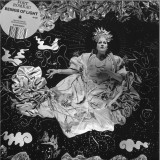
- Followup to 2015's Insides. - RIYL: Jacques Greene, Leon Vynehall, DJ Seinfeld, Project Pablo - Features cover art by Salvador Dalí protégé Steven Arnold. - Silver halide (gray + black marble) vinyl limited to 1,500 copies worldwide - Vinyl is housed in a black dust sleeve inserted in to a matte varnish jacket with metallic silver spot color // After a run of critically-acclaimed singles and EPs, British producer Michael Greene, aka Fort Romeau, returns to the full-length format with Beings of Light, the long-awaited follow-up to 2015's Insides and his second LP on Ghostly International. While a prolific DJ who orients many of his productions for the dancefloor, Greene still sees the album as the ultimate statement of intent, "a space to stretch out, to speak in full paragraphs rather than stunted sentences." He has explored several stylistic fragments in recent years (including the summer 2018 anthem "Pablo," hailed a Best New Track by Pitchfork), but when faced with the extended pause to the dance community in 2020, Greene felt compelled to focus on a larger body of work. Embracing a back-to-basics mentality, he amassed over a dozen hours of sounds, asking himself throughout the sessions: "Does the music move you? Is it honest?" He came out the other end with Beings of Light, an expressive collection traversing rainy day ambient, moonlit disco, and dream-like techno in pursuit of the power found within our subconscious. Album opener "Untitled IV" ushers in a sprinting tempo in its exploration of the human voice, a recurring device in the Fort Romeau project. Greene uses it as a compositional layer, disembodied with its context often opaque or reduced to a single phrase. Here the voice is scattered in percussive twitches, colliding with a kick drum to induce a near state of hypnosis as horns sound off in the distance. Propulsive standout "Spotlights'' is Greene's ode to the romanticised New York City that lives in our hearts, nocturnal and carefree. A vocal snippet repeats the title with a breezy poise, reminiscent of classic house cuts. "Ramona'' honors the beloved Robert Johnson club in Offenbach, Germany. Hazy, spacious, and sustained, Greene designed the beat with their system in mind, "also with a strong nod to the more modern lineage of exceptional minimal house music from Frankfurt," he says. Two ambient pieces surround the track, "(In The) Rain" sets the scene and "Porta Coeli" (a Latin phrase which loosely translates to "heaven's gate") soundtracks the comedown. The album's closer, the title track, is an arc constructed with atmospheric textures, euphoric swings of percussion, and a well-placed piano refrain, "Beings of Light" is adaptive; one could imagine it reverberating from a club, scoring the emotional apex of a film, or radiating through the realm of dreams.
Just wandering along wobbling waves of sound. The night is reverberating. Electronic beats are ping ponging like stars on the dark sky. The subway drives by. Lights are floating. Four new tracks are creating a perfect background sound for a vibrant big city night. Walking, dancing tumbling – “Tongemisch” (English: sound mixture) by MasCon puts all midnight feelings in rousing techno sounds.
After “Lautverschiebung”, it is his second release on Snork Enterprises, which he presents with his energizing and straight yet light-footed sound. Whereas “Passion” fills the hall with a rather bulky, rave hall style, “Sakrament” is more vivid, “Schmaler Grat” quite groovy and “extract” opens up a certain brightness, in which you can almost see the after hour sun.
A unique live performance at Issue Project Room gathered the former Sonic Youth member and artist Kim Gordon and the legendary minimal blues master and artist Loren Connors in 2014.
In December 2014, the Issue Project Room venue in New York City offered the first-time duo with the legendary Brooklyn- based guitarist Loren Connors and the rock icon Kim Gordon. From this almost 1 1⁄2 hour set, Kim and Loren decided to archive their favourite movement on a physical record which is a 12” vinyl now available from the french label Alara.
Through this long improvised session, Kim and Loren do dialogue and browse between installations of deep soundscapes at the limit of drone, and distorted, abrasive sonic attacks wrapped in reverberated harmonics. In this unprecedented exchange between two legends, the languages are as borrowed from one to the other: Kim Gordon plays on the land of the first inventions of Loren in rumbling / growling “unaccompanying” strings pinch, when Loren Connors envelops the entire hall of distorted harmonics that Kim would not have denied in her loudest attacks within her solo or group experiences from decades.
Just through the story of each of the protagonists and thanks to the quality of the recording and the mastering that bring the intensity of this meeting to life as if we were physically attending to the show, this album is a unique opportunity to witness the exceptional meeting between two legends of sonic and experimental music.
- A1: The Day Of The Cobra
- A2: Escape
- A3: Remember
- A4: Downstairs
- A5: Revenge
- A6: Clash
- A7: Flight
- A8: Revenge (Dark Side Of The City)
- A9: Suspicion (Sexy Lady)
- A10: Run To Live (The Cobra Spies)
- B1: Fear
- B2: Suspicion
- B3: Upstairs
- B4: The Day Of The Cobra (2° Vers.)
- B5: Run To Live
- B6: Hanged Up
- B7: Encounter
- B8: Astonishment
- B9: Spy
- B10: Tim
Cinedelic Records is proud to present Paolo Vasile’s score to Enzo Castellari’s 1980 poliziottesco fim, Il Giorno Del Cobra. This record features one of maestro Vasile’s most iconic themes as featured on various polizio compilations. This release will include three bonus tracks and will be pressed in a limited quantity. The cues on this soundtrack feature a wonderful mix of cool keyboards, horns, funky basslines, and driving kick drums — a perfect reverb-fueled accompaniment to Franco Nero’s onscreen antics. (Alfonso Carrillo)
Raven returns to Rekids with ‘Mania’ this September.
Born in Canada and now based in Berlin, having spent time in Los Angeles, Chicago, Barcelona, Toronto, and Mexico City and more in between, Raven is a singular artist distilling influences ranging from Techno, Electro, R&B and more into her own genre-spanning, vocal-driven productions. Following her debut EP ‘Flames’ on Rekids in 2020, which picked up support from the likes of Joy Orbison, Deetron, and many more, as well as an appearance on Amelie Lens’ Exhale imprint earlier this year, Berlin-based DJ/producer Raven returns to Radio Slave’s imprint once again with the fierce ‘Mania’ 12”.
With ‘Flames’ featuring five original tracks, Raven narrows her focus on ‘Mania’, turning in two killer techno cuts backed with alternative mixes of each. Leading the A side is ‘Nobody’, a hypnotic late-night affair peppered with emotive vocal hooks and trippy synth leads, followed by the ‘Sudden Urges’ mix, which sees the track stripped of its pulsing 4/4 and replaced with haunting atmospherics, breakbeats, and additional synth work.
On the flip, ‘Cold Sweat’ returns to the club with a dose of speaker-rattling kicks, mind-bending leads, and siren-esque effects before the ‘Comedown Mix’ brings a subtler approach, with electro-flecked drum patterns, dense ambience, and spacious reverberations rounding out a standout second release from Raven for Matt Edwards’ Rekids.
Formed in San Francisco in 2009 by Wooden Shijps guitarist Ripley Johnson and his partner, Sanae Yamada, Moon Duo’s first two critically acclaimed EPs, Killing Time (2009) and Escape (2010), fused the futuristic pylon hum and transistor reverb of Suicide or Silver Apples with the heat-haze fuzz of American rock ‘n’ roll to create tracks of blistering, 12-cylinder space rock. Now
their debut album Mazes, recorded in San Francisco and mixed in Berlin during 2010 as the band prepared to move to the mountains of Colorado, explores a far broader, lighter, sound.
That’s most clear on the dreamy organ and skipping riff of the title track, which recalls the Velvet Underground, or the handclaps and swinging organ bloops over the potent shredding and guttural riff delivered by Johnson in When You Cut. Throughout, Mazes is the sound of Moon Duo carving out their own identity, looking to the horizon, and moving forward.
- 1: Xenon
- 2: Krypton
- 3: The King Of Drowning
- 4: Peckham Rye
- 5: Burnt Oak
- 6: Argon
- 7: Saturn Dragon And Child
- 8: Mercury Burns And Eats Itself
- 9: The Shape Of Our Container
- 10: Megabear
- 11: The Weapons Of Artemis
- 12: For Transmutation
- 13: Lead
- 14: Hale’s Comet
- 15: Venus
- 16: Peck
- 17: The Party Eating Its Own Tail
- 18: Excavation
- 19: Ursa Major
- 20: Distillate
- 21: Wandle
- 22: Static And Splendour
- 23: Pulled Apart
- 24: Oganesson
- 25: Lapis Lazuli
- 26: Applewhite Iron Sulphide
- 27: Nettles
- 28: God Of Rain
- 29: Silver Iodide
- 30: Crystal Palaces
- 31: Sun Rising Over The City
- 32: Royal Art
- 33: Moon Rising
- 34: Heaven’s Gate 35. Radon
- 36: Jupiter
- 37: Putrefaction
- 38: Ancient Ash
- 39: Weaving Clothes
- 40: Opus
- 41: Tin
- 42: Reclaimed From The Water
- 43: Iron Oxide
- 44: Helium
- 45: Neon
- 46: Iron Sulphide
- 47: Iron Gated
- 48: Sulphur And Mercury
- 49: Split Egg In The Mirror
- 50: Cod Liver Oil And Orange Juice
- 51: Hydrogen
- 52: Aion And Ficus
Having taken a break from music for a few years, South London’s ME REX began life in 2018 in the home of songwriter Myles McCabe experimenting with shouty, electronic bedroom pop. Armed with a slew of “surging gargantuan hooks” and themes of friendship, forgiveness, joy and dinosaurs, McCabe was quickly joined by longtime friends Kathryn Woods (guitar/vocals), Phoebe Cross (drums/vocals) and Rich Mandell (bass/keys/vocals). Now, graduated from producing songs at home to recording at Resident Studios in North London with Mandell behind the mixing desk: ME REX spent the latter half of 2020 bashing down the doors to the indie world with double EP ‘Triceratops/Stegosuarus’. Finding their penchant for constructing delicate threads of vocal layering to convey feelings of calm while building on luscious swathes of reverberated guitar and keys on single ‘Rites’, the band are not afraid to explore different musical concepts: shaping material that strays from traditional album and single structures that results in a sound that could easily find a home on the big screen as they do behind closed doors. Described as “making for both a potent and cathartic listen all round” by DIY magazine — as well as seeing praise from Stereogum, BBC 6Music, Radio X, Amazing Radio, For The Rabbits and Circuit Sweet — ME REX are back with a new and ambitious project ‘Megabear’, an album made up of 52 tracks that has no beginning or end but exists as a cyclical body of work.
Acid Dad is an American alternative-rock band composed of singer-guitarists, Vaughn Hunt and Sean Fahey, and drummer, Trevor Mustoe. Vaughn first started recording the band in his Bushwick, NY basement releasing singles “Brain Body” and their first EP “Let’s Plan a Robbery.” Appearing live in the New York City rock scene in 2016, Acid Dad quickly moved to a world stage with their self-titled debut album, released by Greenway Records in 2018. During 2020, the band spent their time building a new studio space in Queens, NY, while continuing to independently produce all their own music, art and even building their own guitars. With a new space and vision, the band produced their second LP, “Take It From The Dead,” set to be co-released in June 2021 by Brooklyn’s Greenway Records and psych powerhouse LEVITATION’s label, The Reverberation Appreciation Society. “Take It From The Dead” features an array of different influences ranging from 90’s neo-psych, modern post-punk and 70’s rock-n-roll. Acid Dad has crafted a record that sounds new, yet feels nostalgic. In contrast to their earlier work, they make use of slower tempos and expand their sound to include songs that are both more intricate and more hypnotic. To accompany the new record, the band spent the last year collaborating with video artist Webb Hunt, producing psych and glitch art videos that form a visual counterpart to the dreamy distortions of their sound. Take It From The Dead is out June 11th via Greenway Records / The Reverberation Appreciation Society on Deluxe LP & CD.
Director David Lynch once said "I long for a kind of quiet where I can just drift and dream. I always say getting inspiration is like fishing. If you're quiet and sitting there and you have the right bait, you're going to catch a fish eventually. Ideas are sort of like that. You never know when they're going to hit you." Inspired by this quote in both name and spirit, Hollie Kenniff's The Quiet Drift is an ambient gallery of cloudlike synths, seraphic strings, echoing guitars, and other celestial textures guided to cohesion by Hollie's own wordless singing. Though the album certainly creates (and originates from) the kind of space where Lynch's proverbial "fish" can be caught, The Quiet Drift is a fitting title for Hollie's own history, both recent and distant. During the course of the album's creation, Hollie and her family moved cross-country from an island in Washington state, to an island in Maine before ultimately relocating to Canada. "As a child I visited Ontario year-round," she explains in her own words. She continues "More than any other landscape, I think the lake, rivers, and woods there left the most enduring impression on me. The landscape and pace of life of these places will always stay with me." But the reverberant spaces Hollie crafts need no physical headquarters. Instead of conjuring views of nature at the ground level, her sound more readily evokes a top-down perspective, with the distinct features of the land shrinking underfoot as the listener becomes untethered from geography altogether. The Quiet Drift belongs more to the liminal spaces between life and afterlife, memory and fantasy, landscape and dreamscape, than any mappable locale. Describing her formative years, Hollie says "As a dual US/Canadian citizen who spent my childhood in a rural town-- one that I haven't returned to in many years - I have a sense of not entirely belonging anywhere. When I was a teenager my close friends were male musicians, so I was also an outsider to the degree that they were wild and anarchic in a way that I wasn't. I was a quiet book reader and avid music listener who enjoyed being around a creative group. I was also a radio DJ for alternative and punk music throughout high school." In this light, The Quiet Drift attests that creativity is placeless, and calls into question the stereotype of artists as scene-centric city dwellers. Having come of age in the absence of metropolitan sensory overload, Hollie learned to spot the muse in nature, and within herself, instead of the echo chamber of a frenzied peer group. On The Quiet Drift Hollie Kenniff wholly escapes from such pop-culture feedback loops into transcendent, shimmering realms, and she brings the listener along with her. In this age in which we have all been called to reevaluate our relationship to indoor spaces, and seek refuge in the great outdoors, The Quiet Drift provides an apt soundtrack for such rebalancing.