What on earth has happened to gothic rock? This was the thought burning in Joakim Knutsson’s mind, and he felt that something needed to be done to save the much-loved genre from going down the drain. He embarked on this mission with the aim to create something special but also something faithful to the original ideals of the 80’s gothic genre. “I wanted a band that would be an occult mix of The Lords Of The New Church, Adam and the Ants, John Carpenter and Billy Idol”, says Knutsson, “The end result turned out heavier, bloodier and darker than that, but that was probably our destiny anyway.” With a little help from prominent members of the Swedish metal and punk community the idea recently took a solid form. Today the band together sums more than 250 years of knowledge in music and pop culture - knowledge they shamelessly put to use in their own creation. Here they are: die Oberherren. The Gothic rock band the world has been waiting for since the golden age of the 80s. Kept strictly under wraps until now, die Oberherren feature members of the rock and metal royalty in Sweden, with past or current membership in bands such as The Coffinshakers, Ghost, The Mobile Mob Freakshow, Gehennah and many more. The band snatched their ominous-sounding moniker from the intellectual group that operated at the turn of the 20th century, by whom their lyrics are also heavily influenced. “Anarchistic, occult and apocalyptic imagery with prophets of war, armageddon, decadence and love – these themes and ideas are even more actual today than the original ‘overlords’ could ever dream of over a hundred years ago”, comments Knutsson. The debut album Die By My Hand, set for release on January 27th 2023 on Svart Records, is a collection of eight songs that are adorned with infectious hooks and laced with vintage darkness. The apocalyptic celebration will commence this Friday, Sept 7th, with the release of the first single off the album titled The Horned One Stabs.
Cerca:clan s
- 01: Music For Hen Meditation Movement 1
- 02: Music For Hen Meditation Movement 2
- 03: Music For Hen Meditation Movement 3
- 04: Music For Hen Meditation Movement 4
- 05: Music For Hen Meditation Movement 5
- 06: Music For Hen Meditation Movement 6
- 07: Music For Hen Meditation Movement 7
- 08: Music For Hen Meditation Movement 8
- 09: Music For Hen Meditation Movement 9
- 10: Music For Excited Sauces Movement 1
- 11: Music For Excited Sauces Movement 2
- 12: Music For Excited Sauces Movement 3
- 13: Music For Excited Sauces Movement 4
Though severely cut, Red Circle doesn't exactly sweep along. It has a deliberate pace as Kallabris sets up the score of thirteen chance acquaintances who plan and carry out the sacking of our acoustic consciousness... Understatement is the method of these compositions for a small modular synthesizer. If there ever was something like heist music, this here surely is. (Vincent Canby, with a few minor changes and adaptions).
Kallabris is a musical project that was begun in the mid 1980ies out of the scene around Coitra's Clan. Since ist inception Kallabris has persistently neglected any usage of advanced recording technology. Ever since not technical or compositonal innovation is at the core of the group’s work but, the active engagement with the limitations and the objects of every day life. This sound positivism can result in stylistically varied outputs ranging from chanson or country blues to musique concrète – while all musics live by their surfaces. Save the surface and you save all.
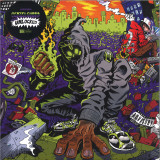
After releasing two critically acclaimed albums in the span of 10 months (TA13OO and ZUU, respectively), Denzel Curry starts off 2020 with a menacing and concise full length produced entirely by Kenny Beats. Unlocked is the product of a manic 3 day studio session following Denzel recording for an episode of Kenny's YouTube show, The Cave. The project finds the two mining sounds outside of what prompted their respective rises in recent years. While Denzel pulls influence from various members of The Wu-Tang Clan, Kenny taps into a sound inspired by the holy trinity of Madlib, Dilla & MF Doom. Despite these classic influences, Unlocked sounds like something completely new and sees Denzel setting the tone for a new decade once again just as he and Raider Klan at the outset of the 2010's.
Berlin’s Pure Hate releases the first record in their new Various Artist series ‘Noise Bleed’ featuring tracks by Ryuji Takeuchi, Gaja, Swarm Intelligence & STRISC. Ryuji Takeuchi: Making a return to Pure Hate after his infamous ‘Essentials EP’ on PH002, Ryuji Takeuchi is renowned for his driving, hypnotic, atmospheric, raw, emotional interpretation of Techno. he has released on some key labels over the years including Inner Surface Music, LK Rec, Arms, Clan Destine Records, Infidel Bodies, Instruments Of Discipline, Depth. Request, his own LSN & Hue Helix imprints and more recently Mord and Dax J’s Monnom Black. Gaja: Once locked into the throes of Berlin’s ceaseless techno throb and now back home in Albenga, Italy, Gaja represents the gnarly, noisy extremity of modern dance music. It’s a desolate, distorted place where blasts of noise spit in the empty footprints once shaped by snares and hi-hats, and the bass bleeds out over everything. Having recently released his debut album ‘Morning Fist’ on his own Ophism imprint, Gaja makes his Pure Hate debut in style with track ‘Hangman’. Swarm Intelligence: From rhythmic noise to the brutal and bleak constitute a distinctive sound that Simon Hayes has been honing for more than a decade under his Swarm Intelligence guise. Having remixed MDD on PH003 The Dublin-born artist has cemented his place in the Techno underground with critically acclaimed LPs and EPs on labels like 47, Instruments of Discipline and Voitax plus standout sets at clubs like Berghain and Basement NY. Simon also recently launched his own self titled vinyl imprint Swarm Intelligence as a platform to explore his own imaginings of futuristic industrial music. STRISC.: Last but not least and rounding the record off in his trademark brutal style, label head STRISC. finally makes his anticipated debut on Pure Hate with track ‘Melt Pit’. VHXX1 is available in stores from 16th January 2023, distributed by Ready Made Distribution, Berlin. Mastered by Joe Farr. Artwork by Slave To Society. Tracklist: A1. Ryuji Takeuchi – Spur A2. Gaja – Hangman B1. Swarm Intelligence – Deviant B2. STRISC. – Melt Pit
In the world of heavy music, few bands embrace dynamics and negative
space like Kowloon Walled City - Since forming 15 years ago, the band
has increasingly refined its deconstructed approach to noise rock, math
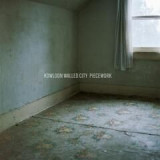
rock, and doom.Now, with Piecework (Neurot Recordings/Gilead Media),
the band's fourth album and first in six years, Kowloon Walled City
reaches new levels of restraint
Songs are bleak and slow, but also shorter and more concise. (Seven songs clock
in at about 30 minutes.) There are stretches of near silence. While the band has
always operated under the MO that less is more, it has doubled down on that
ethos for Piecework. Singer/ guitarist Scott Evans and guitarist Jon Howell, the
main songwriters, self- imposed restrictions to push themselves creatively
"restraining ourselves into oblivion," as Howell put it. Songs are written in more
straightforward time signatures. Evans and Howell also changed their guitar rigs
to sound more "clean and clanky."
With the gristle stripped away, bone and muscle remain: drums decaying in a
room, bass strings rattling, a lonely guitar chord. Sometimes, it's almost
uncomfortably barren. But the negative space also amplifies the ruptures of
heady aggressiveness that anchor Piecework. Angular guitar notes from Howell
skew off the neck, dissolving into space. Ian Miller's bass lines churn in the muck.
Drums and cymbal smashing by Dan Sneddon punctuate dead air. (Sneddon,
formerly of Early Graves, makes his recording debut with the band five years after
joining.) There's sadness and anger in Evans' shouted vocals, but also a desire for
something better.
Through the resignation and regret, Piecework also hints at perseverance and
hope. Pressed on Milky White color vinyl.
+DOWNLOAD Code
Seit 30 Jahren zum ersten Mal wieder auf Vinyl erhältlich: die legendäre 'Artificial Intelligence' Compilation - die erste Veröffentlichung der Warp Artificial Intelligence Serie 1992-1994, die aus 'Artificial Intelligence', 'Surfing On Sine Waves' von Polygon Window, 'Bytes' von Black Dog Productions, 'Electro-Soma' von B12, 'Dimension Intrusion' von F.U.S.E., 'Ginger' von Speedy J, 'Incunabula' von Autechre und 'Artificial Intelligence II' bestand und das Electronic Listening-Genre definierte. Mit frühen Raritäten von Aphex Twin (als The Dice Man), Autechre, Richie Hawtin (als UP!), B12 (als Musicology) und Alex Paterson (The Orb), letzterer als Co-Produktion mit Jimmy Cauty (The KLF). Das Original-Gatefold-Sleeve wurde von The Designers Republic rekonstruiert, während die LP von Beau Thomas bei Ten Eight Seven Mastering auf klassisch-schwarzem Wachs neu geschnitten wurde.
“On Des Demonas’ new seven-track EP Cure For Love
there’s a whalloping drum beat driving everything. But
the throbbing, pumping bass, clanging, slashing guitar and
whirling, swirling Farfisa are no mere passengers in this
vehicle! I’m told by the other band members Paul Vivari,
Joe [Halladay], Mark [Cisneros] and Ryan [Hicks] that
vocalist Jacky Cougar Abok is the loudest drummer
they’ve ever heard.
“But here he sings! In motifs. He sings out a beat, he
sings minimalist melodic hooks. He half speaks/half shouts
his lyrical content in rapid fire that is closer to beat poetry
than rap. His voice is insistent and demanding to be heard!
And it is! By having it slightly submerged, the listener is
forced to strain to hear the words because they won’t wanna
miss something important!
“The sonic fuel of the band is a blend of post-punk,
punk, funk, blues, psych-rock, Afrobeat, even bubblegum—
but the noise you hear is pure Des Demonas!
“Titles like the ‘Ballad Of Ike & Tina’ and ‘Black Orpheus
Blues’ add to the intrigue rather than explain the content.
The listener is both confronted and lured by something
bigger than themselves! Desire, intrigue, fear and exuberance
are the rewards to those unable to resist! But will yout
love be cured?
“You could look to Shakespeare, or simpler, you could
buy this record and find out!” —Kim Salmon
Prolific Japanese producer T5UMUT5UMU has built up a reputation in the last few years for his ability not just to recreate club styles but to flip them into almost unrecognizable dancefloor hybrids. "Asyl" follows a blistering run of Bandcamp releases where T5UMUT5UMU has melted together gqom and techno, deconstructed grime and welded dubstep to traditional music from Japan and India. Here, he's operating completely off the grid, pulling raw materials from across the globe and hammering them into confounding shapes and patterns. On its surface, 'Fireball' sounds like a liquid metal approximation of South African gqom, but move in closer and you can make out dubstep bass squelches, trap hats, and industrial techno jet propulsion filling in the gaps with rubberized mortar. 'Desert' is the EP's most lightheaded cut, a psychedelic percussive spiral that curves micro-tuned mbira clangs around bee sting bass, aerated noise blasts and sub-aqueous kicks. It's a hard track to place, but fits in somewhere between Donato Dozzy, Menzi and 33EMYBW, all shifting rhythms and precision-edited sound design. 'Sea of Trees' retains this momentum, pushing the tempo and interspersing woodblock vibrations with syncopated bass drums and goosebump-inducing synths, while closer 'Bottomless Valley' shifts back into a gqom framework, shuffling the expected pulse with a powerful dembow swing, half step subs and Indian-inspired rattles. "Asyl" is a varied but shockingly coherent statement from an enigmatic producer who refuses to confine himself to a single path, and at a time when "cross-genre" is the norm rather than the exception, it's refreshing to witness a producer who's unafraid to truly make stylistic left-turns, rather than simply mash together top-level aesthetics.
2nd installment in RZA's brandnew 2022 Bobby Digital Trilogy on Electric Blue vinyl! Rza returns with the second of his three record Bobby Digital Trilogy, coming on the heels of his critically acclaimed first installment "Saturday Afternoon Kung Fu Theatre Rza vs Bobby Digital, Produced by DJ Scratch! The album is also the soundtrack and addition to the new Bobby Digital comic of the same name. "Dating back to the 1990's RZA has been using Bobby Digital as a pseudonym for various solo projects. These are not strictly outside of the Wu-Tang Clan diaspora as various members make cameos or co-produce, but they've allowed Diggs to explore musical and lyrical ideas that fight better with his alter ego. Bobby Digital can be considered a comic book superhero, fighting evil in both the physical realm and the virtual world of cyberspace, achieving a "meta" reality long before Facebook thought to trademark the term." - rap revies 2022 2022 release. The founding member of the multimedia supergroup, The Wu-Tang Clan, introduced the world to his alter-ego in his 1998 album Bobby Digital in Stereo. With lush digital orchestral sounds and inventive beats, he was putting the love of comic books on full display through it's concept and execution. Now, exactly 23 years since it's original release, RZA announces a partnership with Z2 Comics to give the character a story in the medium which inspired his creation! Bobby Digital: Pit Full of Snake pairs RZA with White Noise Studios member Ryan O'Sullivan, whose last collaboration with Poppy was widely celebrated by fans and critics alike, with Sound & Fury artist Vasilis Lolos rounding out the team to bring the world of Bobby Digital to life.
Orange Vinyl
Four trax of filthy warehouse techno featuring two fast and furious bombs from Spanish underground whizz-kid Seon - "Fuck The Church" already garnering a cult following with it's cheeky sample. Co-Ax and Pest control go dark and dirty with the clanging "Saturated", whilst Technika funks it up on "It's Alive!".
BODYXVIII delivers his debut release on Southern Lights in the form of the “Fields” EP, straddling the fringes of ambient, experimental and linear techno. The A-side features the pulsating waves of “An Ocean of Signals” and the hypnotic and undulating atmosphere of “Swiss Army Knife in The Wet Grass”. The B-side features “Umbra”, carrying an understated energy and tension and closing with the menacing ambience of “Clearing (Clandestine I)”.
- A1: Rap Is Outta Control Intro Feat Dj Eclipse & Dj Riz (00 39)
- A2: Classic Position Feat Qnc (03 31)
- A3: Wine Spot Feat Empulse (02 48)
- A4: Toil Feat M-Dot (02 49)
- A5: U Can¹T Imagine How It Is Feat Kore (02 45)
- B1: Beastin Feat Wildelux (02 59)
- B2: Real Recognize Real Feat J-Live (03 08)
- B3: Girls Feat Dro Pesci (03 10)
- B4: Rise Feat Wnol & J57 (03 31)
- B5: Checkmate Feat Resolut (02 24)
Boggiedown Base has been a producer and remixer since debuting as part of Die Reimbanditen in 1993. His CV includes productions for Die Coolen Säue/DCS, Albino, Chaoze One, and Die Deutsche Reimachse. In 2005 he met the Backspin-Magazine-DJ DJ 12 Finger Dan and the two formed a production duo. As Soulbrotha, the two produced mainly for and with American artists such as Sadat X from Brand Nubian, DJ Premier from Gangstarr, Large Professor, Big Shug, Blaq Poet, Masta Ace, Beneficience, Cella Dwellas, El Da Sensei, Kev Brown, Edo G and much more. The two came into contact with the producer Roccwell from Munich by chance. Through the common love for soul samples, hard drums, the clanking of the E-MU SP-1200, dope raps and spectacular cuts, the idea of a collabo-album came up.
"In Good Company" is a celebration of the classic boom bap sound and comes up with top-class feature guests. Among others, the New York cult rapper J-Live was won for the song "Real Reconize Real". Q Ball & Curt Cazal aka QnC from the legendary D&D Studios in New York show on "Classic Position" why they are still relevant after more than 20 years in the game and the Boston MC M-Dot proves on "Toil" why there is a hype around his person. But there are also other top artists on the guest list, such as DJ Eclipse, DJ Riz or KORE. "In Good Company" is to be understood as a homage to the many rap classics of the last three decades and sees itself in their tradition, but always remains modern thanks to the contributions of many young and talented artists such as Wildelux, Duo Pesci, Resolute or Empulse.
2022 Repress
The Artist Concurrently Known As Jackmate has been already been indoctrinated into our cult since he signed onto he Pampa bookings roster awhile back. As SoulPhiction he is also co-founder of Philpot, the Stuttgart-based label, home to the majority of his releases over the past 10+ years. Anyway, we get the privilege of stamping the Turkey logo on SoulPhiction's first proper release of 2013, following his remixes for Murat Tepeli and Detroit Swindle. 'When Radio Was Boss' is a tribute to those magical electromagnetic waves that ruled yesteryear. With that prototypical Pampa percussion-rattling and clanking its way into the room-and a warm, round bassline bounce combined with some symphonic froth in the atmosphere, this track definitely demands airplay. On the dancefloor, at least! (And right in the middle of the track, catch the pleasantly jarring shout-out from WBAU, the call sign of the defunct New York radio station that counted members of Public Enemy and hosts of Yo! MTV Raps amongst its staff.) On the flip, the bpm gets cranked down just a bit for 'Maybachswagger"-If the A-side is a tribute to radio, the B has roller-skating on its mind. Starting out spooky with a sampled voice cooing over a slightly detuned bassline, the surprise comes in the final third, when a kawaii disco vibe drops in, seducing you onto the rink for a few laid-back laps.
Repressed! Illmatic, the 1994 studio debut of Nasir "Nas" Jones, was more than just a critical success for the Queensbridge-based rapper. At a time when East Coast hip-hop was increasingly being taken less seriously than their West Coast counterparts, Illmatic's raw jazz and soul-based production, dire atmosphere and lyrics, coupled with Nas' uncompromising flow was integral in restoring interest in the East Coast as a hotbed of hip-hop artistry. Along with key releases from Wu-Tang Clan and Notorious B.I.G.,it shifted attention away from the funky, dayglo synth-based G-funk coming out of California and back to the grimy streets of New York. After such an unprecedented debut record, expectations were understandably high for Nas' follow-up. What came next threw critics and fans for a loop, but was no less influential than Illmatic, and would become the most commercially successful album in the entirety of Nas' discography. The 1996 sophomore follow-up was titled It Was Written, and in contrast to the urban bleakness of his debut, had Nas dipping his toes into the world of mafioso rap. Amidst production from heavy hitters like Trackmasters, Dr. Dre, L.E.S., Havoc of Mobb Deep, and Illmatic-collaborator DJ Premier, among others, Nas weaves evocative narratives of gang warfare, downtrodden neighborhoods, drug deals gone awry, and gangsta triumph, against a backdrop of samples from Sam Cooke, Etta James, the Isley Brothers, and even Chuck Mangione. It Was Written was not hard up for top-tier guests either, featuring major guest turns from Lauryn Hill and Joel "JoJo" Hailey of K-Ci & JoJo. It also introduced the world to The Firm, the brief Nas-led supergroup featuring rappers AZ, Foxy Brown, and Cormega. It even managed to cause some minor controversy in the hip-hop community for its collaboration with West Coast producer Dr. Dre, at a time when the East Coast/West Coast rap feud was reaching a fever pitch, briefly attracting the ire of one Tupac Shakur. Not only was It Was Written received warmly by critics, but became a major commercial success, reaching the top of the Billboard 200 charts, reaching platinum sales status four times, and alongside albums like Raekwon's Only Built 4 Cuban Linx, helped usher in the era of mafioso rap in the mainstream. It rendered chart hits out of singles like the Eurhythmics-mimicking "Street Dreams", and the Grammy-nominated "If I Ruled The World (Imagine That)", and proved to be a major influence on artists like Kendrick Lamar, Lupe Fiasco, and many more.
Tape
Dur-Dur Band emerged in the 1980s, during a time when Somalia's contribution to the creative culture in the Horn of Africa was visible and abundant. Seeking inspiration outside the impressive array of Somali traditional music that was encouraged at the time, everyone from Michael Jackson and Phil Collins to Bob Marley and Santana were fair game. This recording, which was remastered from a cassette copy source, is a document of Dur-Dur Band after establishing itself as one of the most popular bands in Mogadishu. The challenge of locating a complete long-player from this era is evidenced bythe fidelity of this recording. However, the complex, soulful music penetrates the hiss. In a country that has been disrupted by civil war, heated clan divisions and security concerns, music and the arts has suffered from stagnation in recent years. Incidentally, more than ten years after Volume 5 (1987) was recorded at Radio Mogadishu, the state-run broadcaster was the only station in Somalia to resist the ban on music briefly enacted by Al-Shabab. Dur-Dur Band is a powerful and illustrative lens through which to appreciate the incredible sounds in Somalia before the country's stability took a turn.
In 2003, Pisco Crane assembled a six-piece band from motivated and talented like minds in the Kinshasa slums where he grew up. Pisco had been involved with a handful of local rap acts when he was younger, but after meeting legendary instrument builder Bebson De La Rue, he was inspired to follow a new path. He set about building instruments from the discarded trash that surrounded his city: bits of old computers or oil cans were fashioned into bass guitars and drums, and keyboards were bashed together using springs, metal pipes, and offcuts of tubing. If there was a core philosophy that guided Pisco at this stage in his journey, it was that everyone should have access to instruments, no matter where they come from or what their budget might be. And following in the footsteps of Bebson, Pisco locked into a Congolese tradition that touches on the eccentric genius of globally lauded artists like Konono Nº1 and Staff Benda Bilili. Over the years, Fulu Miziki's notoriety grew in the Kinshasa underground - their utopian vision of the future was infectious. Eventually, they were joined by performance artist, sculptor and fashion designer Lady Aisha, who offered the band unique colour and a soulful central focus. Influenced by Kinshasa's street performance scene, Aisha helped the band devise vivid masks and costumes that were as electric and singular as the instruments they played, and the scene was set. In 2020, as the world was plunged into lockdown, footage of Fulu Miziki went viral and their star began to grow exponentially, with a video of the band preforming the track 'Tikanga' racking up millions of views on Facebook. The band used this opportunity to work on documenting their sound, and shored up at the Nyege Nyege studios in Kampala for a year to assemble a definitive album. Recorded by HHY & The Macumbas' Jonathan Saldanha, this record captures the band's furiously innovative mixture of industrial sonics, spiritual jazz, punk, and Congolese soukous pressure. At their best, Fulu Miziki sound almost completely out of time, curving pounding rhythms around microtonal clanks, rousing chants and spiky sonics. On 'Mutangila', there's a hint of disco in the 4/4 stomp, but it's been shifted into a post-punk ritual, adorned with complex bell percussion and overlapping vocals. 'Congo' is even harder to define; electrified buzzes form a bassline, but it's the mindboggling rhythms that shuttle the track into psychedelic realms, led confidently by Lady Aisha's limber rhymes. Fulu positively slither on the sultry, industrial-influenced 'Sebe', while 'Tikanga' reminds of Congo's rumba-derived soukous traditions, materializing the sounds into the future with tight, pounding percussion and head-melting fx. The story of Fulu Miziki is sprawling and complex and constantly evolving, with various offshoots and band iterations. Two members left the band in 2016 to form KOKOKO! with French producer Débruit. Not long after they recorded this magnum opus album, several other original members left to form a similarly named outfit currently based in Europe. This other incarnation recently released an EP of electronic productions without the band founder Pisko Crane and lead vocalist Lady Aicha, on the UK based Moshi Moshi records. Pisco and Lady Aicha currently lead a different outfit in Kinshasa made up of completely new musicians. This full-length is the remaining proof of Fulu Mziki at their most vital and most complete - it won't be repeated - and can never be recreated. It's an essential portrait of one of the Democratic Republic of Congo's most innovative contemporary outfits, and some of the most surprising hybrid music you're likely to hear.
- A1: Love Song
- A2: Young Bastards
- A3: Stop It
- A4: Blind Man
- A5: Skin O Daayba - Complex Habits No.3
- A6: We Are Waiting
- B1: Mantra
- B2: Skin O Daayba - Feedbackless World
- B3: Cupping Glass
- B4: Half Monk Half Herring
- B5: Ukoidm - Fishing (Edit)
- B6: Eric
- B7: In The Garden
- B8: Sequencer
- C1: Who Are We
- C2: Hit
- C3: Yozti 2
- C4: Voices Cricket
- C5: Attempt To Raise Hell
- C6: Anna's Assignment
- D1: In Our Culture (Surname Version)
- D2: Lesson 4 Voices
- D3: Intermission
- D4: Chicken
- D5: Untitled
- D6: Against Soap
- D7: Bereshit
- D8: Caretakers
Black Truffle is pleased to announce Uri Katzenstein’s Audio Works, produced in collaboration with Holon’s Centre for Digital Art. Spanning sculptural installation, performance, video art, and many other media, Katzenstein’s absurdist, poetic, and often hilarious work made extensive use of sound and music. This, however, is the first release dedicated to the artist’s audio work, collecting 28 tracks produced between the early 1980s and 2017. Compiled from dozens of hours of recordings left uncatalogued (and in some instances unheard) at the artist’s death in 2018, these four sides are a treasure trove, offering a captivating glimpse into a uniquely uninhibited creative practice. Predominantly recorded alone, with some contributions from regular collaborators such as Ohad Fishof on the later pieces, many of these tracks stem from Katzenstein’s time living in New York in the 1980s. Feeding on the cross-pollination of post-punk energy, radical art practice, and new media possibilities that characterised the New York scene at this time, many of Katzenstein’s recordings squeeze multilayered vocal experimentation into synth-based miniatures with a distinctively pop twist, their forms ruptured with anarchic bursts of free-form electronics, sounds from self-built instruments, and field-recorded snatches of the outside world. Katzenstein’s electronic production calls up touchstones of skewed 80s art pop like Laurie Anderson, Ambitious Lovers, and Scritti Politti, but imbued with DIY directness and economy of means. The arrangements of synths, percussion, and noise elements are invigoratingly raw and, at times, almost austerely minimal. On ‘Intermission’, thick distorted chords accompany a wandering portamento melody, inhabiting the wayward carnival space of Roedelius’ most unhinged efforts. Many of the tracks centre on Katzenstein’s multi-tracked vocal performances, often moving between multiple languages, (most commonly English, German, French, and Hebrew). A bewildering range of vocal approaches are present on these pieces, from sweet wordless harmonies to hammed-up growls and monastic recitations. On ‘Skin O. Daayba – Complex Habits no. 3’, improvised resonance singing against a backdrop of echoing electronics and radio snatches. ‘Half Monk Half Herring’ layers multi-lingual syllabic fragments, crossing sound poetry techniques with melodic invention in a way rarely heard outside of Caetano Veloso’s Araçá Azul. On ‘Attempt to Raise Hell’, Katzenstein’s distorted voice spits out streams of alliterative nonsense (‘the hemlock of Henry, he was a hermit…purple pumpkin pulsates to pops’), while on the hilarious ‘Eric’, Katzenstein appears to instruct a small boy simultaneously in basic French and German conversation. On ‘Chicken’, vocal harmonies accompany the pecking and clucking of the titular fowl. Moving from bent, outsider synth pop to snatches of Jo Jones-esque automated instrumental clang and absurdist linguistic experiments, these are far more than footnotes to an artist’s gallery works. Accompanied by extensive, beautifully written liner notes by Roee Rosen and the little information that exists on the individual tracks, Katzenstein’s Audio Works inhabits an outer fringe of DIY pop and sonic experiment reminiscent of Pascal Comelade or Die Welttraumforscher, where accessible forms convey radical interrogations of song, word, and sound.
Puckered with ruggedly pointillist swagger and evoking discrete worlds hidden in plain sight, »Traditional Music of South London« is a riveting masterwork by experimental music’s distinctive and cherished modernist, Dale Cornish. It is a concrète grimoire of recent and ancient folklore that binds Dale’s music, lyrics, and background into a strikingly personal synecdoche of South London.
Since emerging as part of London’s shouty electroclash movement in the mid ‘00s, and assuming the role of deconstructed rave pioneer and poet in 2011, Dale Cornish has been (lo)key to new movements in electronic music’s underbelly for the best part of this century. His 12th LP, proper, »Traditional Music of South London« is Dale’s definitive record; a confident testament to artistic maturity that comes with doing your thing against the grain over decades, and a potent expansion on ideas chiselled during his run of releases with the inspirational (now sadly defunct) label, Entr’acte, who helped foster Dale’s explorations of concrète rave and industrial pop tropes during the ‘10s.
On one level the album reads as a deep topography or psychosexual-geography of London’s lost gay club haunts, with the meat-motoring deep house of ‘Great Storm’ recalling DJ Sprinkles taking Loefah to the darkroom in its concrète carved and flesh trembling 8:08 perfection; or more literally in »Foxhole«, with Dale’s deliciously Croydon-toned accent describing urban gay mythologies with pungent lyrics about rotten fox cadavers synced to drily ricocheting hand claps, while the tight swinge of his “requiem for all the dead gay venues” in the gut-level bass of »Hoist Crash Fort«, and the playful evocation of “internecine conflict within the gays - live!” on »Palace Intrigue« just utterly slap like nothing else.
Yet it’s in the LP’s slower, bloozier and folky vocal bits that Dale’s dare- to-differ character comes into its own. The clandestine skulk of ‘My Geography’ portrays him like a modern Jandek traversing London’s brutalist- meets-semi rural meridian, and at its gooier core flashes of folk-classical brilliance such as the groggy ‘Norman Lewis’ give way to the writhing foley orgy of »Crowd Scene«, while the naked, one-take end of szn paean of »SCY BFR HNH« and slurred, Tricky-esque confessional »Shout Outs« consolidate and temper the conflicting aspects of his persona with a deep burning pathos in the LP’s fading phosphorescence.
In an era of overproduction and imitation-not-innovation, Dale’s strikingly original, sensually brutalist industro-folk-dance-pop critically cocks a snook at conventional, careerist music while embracing its heartical truths. An extremely personal record certain to resonate with those who believe art in music still matters.
The Vee-Gees (previously known as the Versatile Gents) were from Greensboro, N.C. The versalite Gents started the Group in 1967 originally as "the African Americans" performed at a talent show at Gillespie Park School, Geensboro, North Carolina. Soon After Virginia Massey a Senior Music Major at A&T joined the group and the name was changed to Gin And The Gents. After one year Massey left the Band and their name was changed to The Versatile Gents. They reformed and called themselves the Vee Gees in the early 70’s. The Members are Robert Evans (Vince Evans of the NFL's brother), Nathaniel Herring, Anthony Quick, CC Stewart, Cecil Young.In their band. Carlton Morales that wrote "Vallotte" and played with Julian Lennon on guitar. Kevan Tynes on drums. Walter Carlton on bass. They recored a beautiful sweet soul side call It’s hard to say so long on Jump in 1973. They came back to the studio in 1974 and cut the incredible Talkin on Jump off records. Vee Gees Talkin is the ultimate crossover tune, Spun by some of the best deejays in the world in the last 3 decades including Arthur Fenn, Keith Money, Andy Burns, Buey, Andy Dawes, Alexander Dimitriades Bentley, Jens Chreisti, Steven Clancy and many others. We’re sure you will be singing all day “Hey brother, brother, just had a talk with the man yesterday.. what did he saaaaaay? “