Nein, neu im Geschäft ist El Michels Affair nicht. El Michels hat hart gearbeitet, in unzähligen mitternächtlichen Studiosessions und auf einer Welttournee für den Wu-Tang Clan. Und eins ist klar: Die Band ist dabei auf eine gute Art gealtert. Nachdem es 2005 wie aus dem Nichts mit dem Instrumentalalbum "Sounding Out The City" aufschlug, hat sich das Studio-konzentrierte Kollektiv, angeführt vom Multiinstrumentalisten und Komponisten Leon Michels, Fans auf allen Kontinenten erspielt. Die Gruppe ist für ihre schwelgerischen Soul-Instrumentals bekannt, aber auch für ihre Wu-Tang-Covers, wie die explosive Reaktion auf ihre zwei Alben "Enter The 37th Chamber" (2009) und "Return To The 37th Chamber" (2019 beweist. Das alles ist aber längst Geschichte, denn das rundeste und reifste Album der Band mit dem passenden Titel "Adult Themes" beweist, welche neuen instrumentalen Höhen sie erklommen hat. Das Album, das Michels als "Soundtrack für einen imaginären Film" beschreibt, ist eine Sammlung von opulenten, abgründigen, komplexen und oft sehr funkigen Stücken, die die Ohren zum Schwingen und die Köpfe zum Nicken bringen.
out of Stock
Last delivered 46 days ago available to reorder, subject to availability
For years, singer-songwriter Riley Downing has collected stories about life’s overlooked moments and underappreciated people. He’s unearthed these tales of castaway truths and once-faded recollections for Landfill Poetry, a sophomore solo album and Oh Boy Records debut.??A native of small-town Missouri who once worked as a backroad trashman before becoming one of music’s weathered journeymen, the husky-voiced Downing may be best known as a member of noisemaking Americana outfit The Deslondes, a New Orleans-born band that he co-founded after a clandestine meeting with likeminded musicians at a folk festival in Oklahoma.??On Landfill Poetry, his six-string worldbuilding takes listeners to the back of the trash truck (“Landfill Poetry”), inside the lonely hours of the graveyard paycheck (“Night Shift”) and to the quiet moments after a hard day of work (“Porch Song”). He sings for the restless ones who stay up way too late (“Hay Hay Hay”) and the grandchildren who admire a hard-working compassion once shared between late loved ones (“Helen & Gene”). With each song, Downing uncovers sketches of life that once might’ve been lost to the landfill but instead?are shared anew.
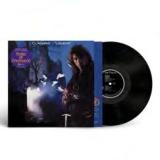
„Legend“ von Clannad ist das mit einem BAFTA-Award ausgezeichnete und ikonische achte Studioalbum
der Band aus dem Jahr 1984, das als Soundtrack für die britische Kultserie „Robin of Sherwood“ diente. Das
Album fängt die mystische und atmosphärische Essenz der Serie auf eindrucksvolle Weise ein und verbindet
dabei traditionellen irischen Folk mit zeitgenössischen Klängen. Clannad sind bekannt für ihren ätherischen
und eindringlichen Musikstil; sie setzen eine Mischung aus akustischen Instrumenten, üppigen Harmonien
und Synthesizern ein, um eine reichhaltige, jenseitige Atmosphäre zu erschaffen. Die Bandmitglieder –
Ciarán Brennan, Máire (Moya) Brennan, Pól Brennan sowie die Geschwister Noel und Pádraig Duggan
– gestalten eine Klanglandschaft, die den Hörer in die sagenumwobene Welt von Robin Hood entführt.
Schlüsselstücke wie „Robin (The Hooded Man)“ und „Together We“ demonstrieren Clannads Fähigkeit,
Erzählung und Melodie nahtlos miteinander zu verweben, und spiegeln dabei den Abenteuergeist und die
Romantik der Robin-Hood-Legende wider. Der Einsatz von Máire Brennans ätherischem Gesang verleiht
der Musik eine bezaubernde zusätzliche Ebene und verstärkt so die mystische Qualität des Albums.
Superhero? Supervillain? Super WHAT? CZARFACE & MF DOOM's newest team-up record Super What? is, much like the Avengers' arch-enemy Thanos...inevitable (and all-powerful!).
The icon MF DOOM unleashes his wizardry and wordplay throughout the record, while CZARFACE (bolstered by the legendary Wu-Tang Clan's Inspectah Deck and Esoteric) slash through each of the Czar-Keys' produced tracks as the team raises the bar on their previous LP, Czarface meets Metalface (2018). Featuring golden-age superhero DMC (of RUN-DMC) and Hieroglyphics' leader Del The Funky Homosapien, with art by longtime CZARFACE co-creator Lamour Supreme, this album will bring all
the thrills of a cosmic summer blockbuster.
Recorded and slated for an early 2020 release, and paused while COVID raged, this collaboration of masked men is finally finding its way to you on all formats.
out of Stock
Last delivered 80 days ago available to reorder, subject to availability
The Drexciyan Compendium Book Two expands the hidden history of Drexciya beyond origin, war, and survival, revealing how an underwater civilization grew into a disciplined empire of science, clans, memory, and cosmic ambition.
From the modern depths of Bubble Metropolis to the forgotten districts of the Pressureworks, from legendary clan founders to the rise of Drexciya’s surface and space programs, this volume follows a people no longer defined only by escape from the surface world. They have built their own order beneath the waves: warriors, scientists, engineers, healers, explorers, and unseen citizens all shaping the future of the empire.
As ancient powers, new technologies, and distant worlds come into view, Drexciya turns its gaze beyond the ocean floor. The deep has become more than refuge. It has become foundation. And from that foundation, the children of the abyss begin to reach for the stars.
Repress of the 10 year anniverssary vinyl reissue of “The Empyrean” By John Frusciante cut for the original analog tapes at Bernie Grundman’s mastering. includes hi res audio download card. THE EMPYREAN is the eighth solo album by JOHN FRUSCIANTE. It was originally released in January of 2009, reaching number 151 on the US Billboard 200, 105 on UK Albums Chart and number 7 on the Top Heatseekers. It contains contributions from RHCP bandmate FLEA and former guitarist of The Smiths Johnny Marr. John Frusciante is an American guitarist, singer, composer, and producer. He is best known as the guitarist of the rock band Red Hot Chili Peppers. He recorded five studio albums with them and was recently inducted into the ROCK & ROLL HALL OF FAME. Frusciante has an active solo career, having released twelve solo albums and five EPs; his recordings include elements ranging from experimental rock and ambient music to new wave and electronica. He has also recorded with numerous other artists, including the Mars Volta, for whom he was a studio guitarist (and occasional live performer) from 2002 until 2008; Josh Klinghoffer and Joe Lally, with whom he released two albums as Ataxia; and various collaborations with both Klinghoffer and Omar Rodríguez-López. He has also produced and/or recorded with Duran Duran, Wu-Tang Clan, Swahili Blonde, Black Knights, The Bicycle Thief, Glenn Hughes, Ziggy Marley, Johnny Cash, George Clinton, Johnny Marr, Dewa Budjana and others.
out of Stock
Last delivered 69 days ago available to reorder, subject to availability
Big Crown Records is proud to present Adult Themes, the latest full length offering from El Michels Affair. This album takes the band's "Cinematic Soul" aesthetic literally and sends the listener on a journey through a whirlwind of moods and energies. With their 2005 debut album Sounding Out The City, EMA spearheaded an instrumental funk / soul movement that inspired a slew of bands and even lead to the creation of a few independent record labels. El Michels has since lent his signature sound to artists from Adele to Dr John, Lana Del Rey to Aloe Blacc, and a who's who list of others. In 2016 he co-founded Big Crown Records and has since produced the lion's share of its output. A short stint as the touring band for Wu Tang Clan in 2007 led to the cult classics Enter The 37th Chamber (2009) and Return To The 37th Chamber (2017). Adult Themes marks the long awaited, highly anticipated return to an album of original compositions from El Michels Affair. In 2017 in between producing, playing, and recording on other artists' records Leon Michels began creating compilations of short interludes intended to be sampled by hip hop producers. Some of these wound up becoming songs by Jay Z & Beyonce, Travis Scott, and Don Toliver. These minute-long snippets were inspired by the dense moody work of `60s composers like David Axelrod, and Francois de Roubaix, as well as Moondog's brand of classical jazz. Michels was having so much fun creating these instrumental / orchestral nuggets that he decided to expand on some of the ideas and create what would become the soundtrack for a movie that has yet to be made, an imaginary film entitled "Adult Themes." The album plays like the colors on an artists pallet. Songs like "Rubix" and "Villa" are densely orchestrated with the hard-hitting drums that El Michels Affair is known for. On "Life of Pablo", Leon's son makes his first appearance on record and intros a song with an epic arrangement and a moving mood. "Hipps" is a drum heavy ballad that could've easily fit on EMA's debut record, Sounding Out the City. Other compositions like "The Difference" and "Kill The Lights" are bare, melodic mood pieces with sparse drums and sophisticated chord movement. All of these tunes come together to make perfect backgrounds for dialogue and action. One of the beautiful things about instrumental music is that the listener can decide what the narrative is. With Adult Themes El Michels Affair has created a "choose your own adventure" in musical form.
ALERT: BIG 90s ITALIAN RAVE COMP - a lot of very in demand tunes on here.
Navigators
Franco Falsini and the Interactive Test Universe
There are musicians who follow their time.
And then there are those who seem to move along a different trajectory—like navigators crossing sonic eras without ever truly belonging to any one of them. The story of Franco Falsini belongs to the latter. It is a story that begins long before raves, before techno, before the word “electronic” had even become a recognizable musical genre. A story that moves across continents, technologies, and sonic visions, eventually arriving at a small creative laboratory born in Italy in the early 1990s: Interactive Test. This compilation is a fragment of that universe. But as often happens with the hidden histories of music, understanding it requires going back. Far back.
The Beginning: Machines, Tape and Space
In the late 1960s Franco Falsini leaves Italy and moves to the United States. It is not merely a geographical journey—it is also a journey into a new idea of music. At the time, synthesizers are only just emerging from research laboratories. Multitrack tape recorders allow musicians to build entire sonic worlds on their own. Technology is still far from standardized: every studio is almost an experimental workshop. In Virginia, Falsini builds one of his own. Among cables, oscillators, electric guitars and reels of magnetic tape, a kind of music begins to take shape that resembles nothing else being made at the time. It is not simply rock, and it is not yet truly electronic. It moves somewhere in the space between the two. Out of these explorations emerges Sensations' Fix, the project through which Falsini releases a series of albums during the 1970s. Records that seem to come from a parallel dimension: cosmic landscapes, electronically treated guitars, synthesizers drifting like satellites. Many years later those albums would be rediscovered as visionary works. But at the time they were simply the result of relentless curiosity. A curiosity that would never fade.
The City That Never Sleeps
In the 1980s Falsini’s trajectory leads him to New York. The city is a sonic organism in constant transformation. In its clubs and recording studios something entirely new is beginning to take shape: music built from drum machines, sequencers, and samplers, created for the body before the living room. It is the dawn of modern dance culture. Falsini works as a sound engineer, producer and experimenter. From close range he observes electronic music transforming into a global language. Machines become more accessible, computers begin entering studios, and rhythm takes on an increasingly central role. Yet even in this phase Falsini does not simply follow what is happening. He absorbs. Observes. Reimagines. When he eventually returns to Italy, he brings back not only technical experience but also a clear vision: the conviction that electronic music is an open space, a territory still waiting to be explored.
Tuscany, Early 1990s
At the beginning of the 1990s something is happening in Italy as well. In clubs, abandoned industrial warehouses and clandestine parties, a new scene is beginning to form. It is rave culture: a spontaneous movement bringing together DJs, producers and listeners in a collective experience driven by rhythm, technology, and creative freedom. It is within this context that Franco Falsini, together with his brother Riccardo, creates Interactive Test.
The name almost sounds like a scientific experiment. In many ways, it is. Interactive Test does not emerge as a traditional record label. It begins as a laboratory—a place where ideas, sounds and musical identities can be tested and explored. Around the Falsini studio in Tuscany a small constellation of artists and DJs begins to gather, helping to shape the sound of Italy’s emerging electronic scene. Among them are Andrea Giuditta, Francesco Farfa, Gabry Fasano, Roby Mastelloni, Roby J and many others. Each brings a different musical sensibility. But they all share the same intuition: electronic music is not a genre. It is a language.
The Laboratory of Identities
One of the most fascinating aspects of the Interactive Test universe is its constant play with identity. Franco Falsini releases music under several different names: Open Space, Youth Wave, Agent Fylfoyt, Man Myth Magic. These are not simply pseudonyms.
They are different sonic perspectives, as if each project were a window opening onto a parallel musical universe. Open Space, for example, explores more atmospheric and visionary territories. Youth Wave moves between electronic groove and club-oriented rhythms. Other projects experiment with digital psychedelia or hypnotic techno textures. Interactive Test becomes something more than a label. it becomes an ecosystem.
Domestic Machines, Infinite Worlds
Looking back today at the technology used in those productions, one might almost smile. Many tracks were created on Amiga computers, MIDI sequencers and analog synthesizers wired together in home studios—tools that appear modest when compared to today’s digital possibilities.
Yet precisely these limitations became a creative force. Every sound had to be built, shaped and reinvented. Sequences developed slowly, almost like living organisms. The tracks did not always follow traditional dance music structures; often they felt like genuine sonic journeys. Music built from space.
A Hidden Constellation
Many of the records released by Interactive Test in the 1990s remained for years almost invisible objects, circulating quietly among DJs, collectors, and devoted listeners. Yet it is precisely this underground existence that helped preserve them. Listening again today, one perceives something rare: the feeling of music that does not fully belong to its own time. Music suspended between different eras. Perhaps because it comes from a vision that both precedes and transcends trends.
Continuing the Journey
Looking at Franco Falsini’s entire path—from the electronic psychedelia of Sensations’ Fix to the rave culture of the 1990s—a surprisingly coherent line emerges.
A line defined by exploration.
Each project, each pseudonym, each record appears as a new route within the same great sonic voyage.
Interactive Test was one of its stations.
A laboratory.
A community.
A creative platform.
This compilation gathers some of its traces.
Not as a simple archive of the past, but as a map of a musical territory that continues to expand even today.
Like all true sonic explorations.
out of Stock
Last delivered 6 days ago available to reorder, subject to availability
"Chance animates the smallest parts of the universe: the scintillation of the stars is its power, a wildflower its incantation."
—Georges Bataille, Le Petit
"Even on my way to the gambling hall, as soon as I hear, two rooms away, the clink of the scattered money I almost go into convulsions." —Fyodor Dostoevsky, The Gambler
Video gambling addicts, academic researchers, and industry professionals alike describe the trancelike state into which problem gamblers suspend themselves with remarkable consistency: they unanimously call it the machine “zone,” a kind of inner experience during which the rhythmic flow of human-machine collusion borders on mysticism. Time is abolished in the act of contemporary video gambling —simulated slot reels roll, virtual poker decks deal, and all worldly concerns are lost—leaving only the aura of total zone immersion in its wake. Sometimes characterized as the crack cocaine of gambling, the intensity of the machine zone is a symptom of casino ergonomics: emotionally manipulative fragrance-saturation, mesmerizing lights, subtly controlling walkways and, as captured here, meticulously engineered sonic environments all play a role in evoking the timeless void of the zone.
Although I was not yet aware of the extent to which casinos tailor their environments for maximum comfort (and, correspondingly, profit), I did know as I crossed the threshold of my first casino floor last year that I would be back for more. Hit by a cornucopia of slot machine tones, triggering aleatorically and coalescing into shimmering masses, I was struck by the need to return and record the sounds that so entranced me. It wouldn't prove to be easy—casino security is intense—and due to the clandestine nature of the operation, my recording techniques were by no means sophisticated. Equipped with nothing but an Olympus LS-11 recorder's internal microphone stashed in a sweaty coat pocket, I allowed the lure of the zone to guide me through a series of ambling recording sessions, the best of which are included here.
I learned a lot about casino sonics in the process: game designers, for example, once tuned all their machines to the key of C major in order to optimize harmonic cohesion (strict adherence to the key is no more but C still dominates the game floor); one team of designers, the story goes, even spent a month perfecting a single 'ding' sound on one machine. In the interest of preserving the true ambient sounds of the casino these recordings are untreated, but lost in the sea of chance I did exert some affirmative control by means of meandering intent and my actual playing of the machines. And by participating in the games myself I got a taste of the financially debilitating consequences that accompany the enchantment of video gambling. The cassette in your hands represents my endeavor to bring you the zone experience without the harsh comedown of its unfortunate reality.
Amid rusted transistors and owner manuals blurred by dust, Rogelio Serrano rescued abandoned vintage synthesizers from Mexico City's flea markets. These devices, revived by a Japanese technician based in the capital, returned to life with electric pulses, becoming accomplices in nearly clandestine recording sessions at a solitary, remote location called "Ojo de Agua" on the city's outskirts. Sound Cartography is a sonic archive of tracks recorded between 2017 and 2019, which could easily be considered demo pieces, unfinished works, or simply orphaned creations.
Rising from the wreckage of a war torn planet, Czarface joins forces with MF DOOM in the epic Czarface Meets Metal Face! Blending DOOM's trademark abstractions and CZARFACE's in-your-face lyrical attack, this album is ripe with cartoon violence, societal observations and pop culture musings. Over banging beats provided by The Czar-Keys, the armored team give you the witty unpredictable treats any hip-hop fan can sink their fangs into. Expect beats, rhymes, and metal as Czarface controlled by WU-TANG CLAN powerhouse Inspectah Deck and 7L & Esoteric team up with everyone's favorite villain, MF DOOM. With track titles like "Nautical Depth","Meddle With Metal", "Astral Traveling" to "Madness of Badness" this album packs a punch with 16 brand new tracks. Add that with features from Open Mike Eagle and Jedi Mind Tricks' Vinnie Paz, we promise you mind-bending metaphors and brain-melting beats as this powerful pairing sounds off in March 2018! Long time rumored full length collaboration album from Czarface and MF DOOM, fan favorite "Ka-Bang" from Czarface's 2015 sophomore LP Every Hero Needs A Villain had fans begging for more. Cover Art by clothing brand Mishka's head designer Lamour Supreme. Album features Vinnie Paz of the legendary Jedi Mind Tricks, and Open Mike Eagle, who's most recent album "Brick Body Kids Still Daydream" was on Rolling Stone & Pitchforks top 50 albums of 2017 list. The albums lead video "Meddle With Metal" done by Animation Firm TFU Studios who have worked with MF DOOM prior on the "All Caps" video as well as with Mayer Hawthorne, Biz Markie, Cut Chemist and more!
out of Stock
Last delivered 7 months ago available to reorder, subject to availability
“One of Berghain’s longest-serving residents, Luke Slater has been defining bleepy, polyrhythmic, industrial-strength techno as Planetary Assault Systems since the mid-nineties. P.A.S albums tend to come together in their own time:
“External signals and signs combine until the recipe feels right, both musically and from being ‘out there’,” Slater adds. “10 years since I released Arc Angel on Ostgut Ton, and it’s a fitting pleasure to combine live show ideas and studio work for the new album, served up with raw energy” That patience runs through his whole Ostgut catalogue; since Temporary Suspension brought its machine-tooled weight and alien feeling to the label in 2009, each P.A.S. release on Ostgut Ton has been its own quest for discovery, from The Messenger’s search for sounds not yet present in club music to Arc Angel’s focus on melody to the deep hypnosis of Plantae.
His new album, Planetary People has the deliberate imagination and depth of a record that took its time, shaped as much by live rooms and crowds as by the studio.
“Into The Night” creates a haunting, dystopic environment of corroded acid saturated in echo, absorbing from the first second. “Labyrinth” breaks into buoyant tribal percussion, modulated chirps trading off over propulsive drums. “Quadrant 10” is clean, delay-drenched techno, buzzing with noise splatters over saturated thuds. “Sermon Of The Light Tides” scrambles metallic bell sequences that distort and evolve throughout, reminiscent of a dial-up modem crossed with a game of Frogger, squelching between percussive bursts and stripped-back kicks. “Brave Cosmo” is tormentingly menacing, eerie synths panning around buried vocal fragments over frantic percussion. “Retina Burn” rolls on fierce, cement-mixer 909 cycles, rave stabs over a ride that locks you in, the whole track stuttering and repeating before stripping back to a bare echoing kick and building itself again. “Thunder Major” barrels on open hats and reverb-drenched claps ricocheting through twisting wreaths of delay, mesmeric and relentless. “Beton Brut” marches juggernaut percussion stamping through hall reverb so vast you can visualise the room, the darkest and most unrelenting track on the record. “No Ninja” crunches in metallic and immediate, a wiry plucked lead threading through glitch with the bass held low and deep, mixed so precisely you can see every layer stacked in your mind’s eye. “Ha Jam” is danceable techno with plenty of funk and a sophisticated looseness, a vocal laugh bouncing off clanging metal blocks and rave stabs. “Lynx” lowpasses its rave stabs and crystalline beeps, chirpy hats ticking, cold metal repeats, old school and mesmeric. “Generation Slip” closes everything out, ominous and churning, skittering percussion and electrical sparks rattling through steel, a freight train barrelling on into oblivion.
out of Stock
Last delivered 4 days ago available to reorder, subject to availability
Baby Huey drew comparisons to Otis Redding, but a fatal heart attack in 1971 prevented him seeing the fruition of a successful career and the actual release of this Curtis Mayfield penned song. An original pressing on Curtom originally sold for over £300. Hard Times' has been sampled over 50 times by artists including A Tribe Called Quest, Lil Wayne, Biz Markie and The Chemical Brothers. Listen To Me' has been sampled by Eric B & Rakim, Wu-Tang Clan. Public Enemy, Grandmaster Flash and many more. This is the first time these tracks have been released in the UK
In an age that demands hyper acceleration, kinetic flashes and byte voracity, Blak Saagan sticks out like a sore thumb with a sprawling body of work that requires attention and unlocks profound symbols and meaning with every passage. After a 5 year gap, the Venetian composer returns with his most personal and openly political statement yet, ‘Un Sequestro Lungo 10.000 Anni’, a staggering 108 minute triple album soundtracking a dystopian city through flashes of futuristic fourth world visions, warehouse 80s rave-ups, meditative trance and dark rumblings. Following his acclaimed ‘Se Ci Fosse La Luce Sarebbe Bellissimo’ was never going to be an easy feat but Samuele Gottardello (Blak Saagan) approached the fresh canvas with a renewed sense of commitment sparking a dense parallel world inhabited by paranoia, control and repression. A world that is relieved by the figure of a woman with the body of a bird emerging from the asphalt and freeing humanity from the “sequestro” (kidnapping) to which it has long been subjected. Dystopia pushed to the limits and sadly close to our current affairs.
“Dance Music That Hurts” — the motto of Work of Intent.
Hurts, because it goes straight to your heart.
There’s no better way to put it.
His productions are rooted in the UK underground,
dripping with both techno and pop sensibilities.
This is “big room” like you’ve never experienced it before—
music you can’t ignore, driven by storytelling and raw emotion.
He’s found a home on labels such as Monkeytown, Turbo, and REKIDS, and continues his relationship with Laurent Garnier’s COD3 QR .
Founder of the clandestine edit factory *Emotional Weaponry*,
he continues to receive support from industry heavyweights.
Former manager of *DAYTIMERS*, the UK-based collective championing
South Asian sounds, stories, and voices,
and a highly sought-after mix engineer for some of the UK’s most exciting prospects.
We’re beyond happy to welcome Roshan Chauhan aka Works Of Intent to the family.
Feels like the beginning of a long, dramatic love story.
Credits:
Written and produced by *Works of Intent*
Distributed by *One Eye Witness*
out of Stock
Last delivered 16 days ago available to reorder, subject to availability
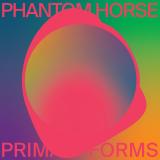
After their last album six years ago, "Primal Forms," the new album by Phantom Horse, finally arrives. The German duo of Ulf Schütte and Niklas Dommaschk have long established a reputation for expertly crafted, hypnotically slow-burning electronic music, and we do not hesitate to say that "Primal Forms" stands among the epitomes of their discography.
The sequencing of "Primal Forms" cannot be underestimated. It is an album in the classic sense. It demands to be listened to in its entirety, which also points to a closer affinity with Krautrock. Likewise, a touch of dub is perceptible, wafting around the songs, which, as usual, bear clandestine titles. It is not unreasonable to see in these compact compositions a clear statement against multitasking.
Phantom Horse are not trumpeters of dystopia. They present themselves resolutely, almost stoically, turned away from the world. This turning away is clearly a statement that can be contemplated in the Mariana Trench as well as in comet belts. In any case, it is best experienced in a space without any human beings. This does not mean that grumpy hermits are tinkering with synths behind closed shutters, armed with wooden walking sticks. This is still open minded music with a connection to current developments. The approach itself is what is audible, and with it, Phantom Horse proves once again that their main connection to time is timelessness.
In an age of all-encompassing distraction on every sensory, thematic, and semantic level, Phantom Horse explores the possibilities of reduction, searching for simplified melodic arcs without resorting to the vocabulary of classical minimalism. The overall impression is more electronic; the slowly shifting, polyrhythmic compositions repeatedly lead to a peculiar danceability. However, these are perhaps the dances of mechanical birds, undeterred by anything.
Written and produced in Hamburg, Nijmegen and Ojén by Niklas Dommaschk & Ulf Schütte
Mastering by Rafael Anton Irisarri at Black Knoll
Artwork by Daniel Castrejón
A cocktail of rebellious queer vocal fragments, deceptive percussive granules and swaying hammered vibrations, upsammy and Valentina Magaletti's first collaboration trembles with suspense. The seeds of 'Seismo' were sown following a commission from Amsterdam's Rijksmuseum to soundtrack an exhibition of work from the Museum Boijmans van Beuningen in Rotterdam and the duo didn't want to approach their collaboration flippantly. So, wandering the museum's maze of rooms, they recorded various improvised percussive sounds with their arsenal of microphones, using the space to inform various rhythms and textures that were sculpted later into electroacoustic vignettes. This was just the starting point, though; as Magaletti and upsammy began performing together, the project evolved and 'Seismo' began to take shape. The duo had struck on a salient aesthetic concept, using mostly digital and acoustic mallet instruments to blur the boundary between their roles and create friction between the synthetic and the authentic. And the finished record is a phantasmagoric push-and-pull between its various conflicting elements: harmony and dissonance, randomness and predictability, openness and constraint. 'Seismo' isn't the first time that upsammy has studied her environment in search of revelation. On her acclaimed second album, 2024's 'Germ in a Population of Buildings', the Amsterdam-based DJ, producer and multidisciplinary artist erected her complex, unorthodox rhythms and eerie melodies around a modernist frame of field recordings collected in various cityscapes, countering heavyweight basslines with subtle, microscopic sounds. London-based Italian vanguard Magaletti, meanwhile, has applied her unique logic to innumerable projects at this point, working with everyone from batida icon Nídia and hardcore-dub outfit Moin to French writer Fanny Chiarello and British bass scientist Shackleton. For years she's approached the drums with criticism, attempting to challenge any preconceptions, something that's most visible on 2020's 'A Queer Anthology of Drums'. And both artists' thoughtful perspectives are welded together seamlessly on 'Seismo', a dizzying suite of eight eccentric statements that's fragile but never insecure, gauzy but not indistinct. An unnerving sense of space characterizes 'It Comes to an End' as Magaletti's in situ improvisations herald for upsammy's microscopic glitches and chiming pitch-bent melodies. It's almost unbalancing to witness the track's impossible dimensionality, the interplay between reverberant marimba hits and bone-dry synths, or percussion that's been recorded and processed in consciously different settings. A new architecture emerges in the sound itself that the two artists scan and explore meticulously, testing its boundaries with undulating hybridized rhythms on the invigorating 'Superimposed' and offsetting the powdery drums with liquified smacks and alien voices. The duo's vibrations are knotted with piano flourishes on 'Hyperlocalize', balanced with artificial clanks and clangs that disappear into the track's sonorous atmosphere, replaced by whispers and half-hallucinated insectoid chirps. 'Seismo' is an album that feeds off the energy generated by its juxtapositions: the tension and anticipation that's melted by rapid, hyperactive movement and the finely drawn rhythms disrupted by a layer of indistinct, barely perceptible microsounds. It's a collaboration that sounds like two minds challenging each other but not wrestling, each peering from their own distinct vantage point and imagining a third landscape shaped by optimistic, queer vibrations.
out of Stock
Last delivered 5 months ago available to reorder, subject to availability
Silicon Scally and Fleck E.S.C. need no introduction at this stage. Both artists are veterans not just of Sheffield's Central Processing Unit label but of modern electro as a whole, with the pair having decades of skin in the game at this point. Their new release, a four-track EP entitledSlipwhere Silicon Scally handles the first half and Fleck E.S.C. the second, carries itself with the adventurous confidence of a record made by masters of their craft.
Slipopener 'Phased Array' is exactly the kind of top quality machine-funk tackle you'd expect from this meeting of minds. The beat programming is deliciously tactile from the off, hissing and clanking like machinery in an old Detroit factory. The feel of 'Phased Array' is altered, though, when the chords come in, a series of alternating floating sounds which give the track an altogether eerier feel. When all of this is coupled with the otherworldly synth blurts that periodically force their way to the front of the track, the overall effect is a piece of real depth assembled by an expert practitioner.
'Phased Array' is followed up by 'Stax', another brilliantly propulsive number. Here we find the drum beat - one which is a little reminiscent of that Kraftwerk tune about the numbers, no less - once more offset by some decidedly more shadowy synth work, all while arpeggiated keyboard licks work against an intricate web of basslines, chords and unidentifiable flying synth tones.
Fleck E.S.C. opens theSlipB-side with 'Good Ride', a number where the nudge-wink title is borne out by a track built around looped snippets of sighing vocals. That said, with a bassline that sounds like a blurting old landline telephone, a ghoulish synth lead and all manner of motion-sick breakdowns, the 'ride' in question could just as well be aWipeout-style whizz through hyperspace as anything more suggestive. 'Good Ride' also sets itself apart from the other joints here by showing off a swaying halftime breakdown.
'Intox Remedy',Slip's closer, wraps the EP in a manner which continues some of the trends of the record's earlier tracks - richly tuneful chords, precision-engineered broken beat drum programming and a wide palette of delightfully unusual synth tones are all present and correct. However, there is also something about the chords here which pares back the eeriness of previous joints for a bit more of a wide-eyed, stargazing feel, and as such 'Intox Remedy' sees the record out by placing the listener firmly back in the cosmos.
Tough enough for the dancefloor and intricate enough for home listening, theSlipEP is a fabulous collaboration from two of the most respected voices in the electro game.
out of Stock
Last delivered 38 days ago available to reorder, subject to availability
Lush in strings and pedal steel, the nine-track 'How I Became A Wave' album features contributions from some of Ireland's most accomplished musicians, headed up by Pat Carey, and featuring string and piano arrangements by Cormac McCarthy (RT Concert Orchestra). 'How I Became A Wave' will be available as a limited edition 12" gatefold vinyl that brings together music and visual art, featuring cover artwork based on the original oil painting 'Towards Pabaigh' by Scottish artist Ellis O'Connor, design by West Cork creative Megan Clancy, insert image by Cork- based artist Leslie Allen Spillane, and handwritten liner notes and lyrics from Pat Carey, who steers How I Became A Wave as a collaborative, multidisciplinary project. Pat Carey says: "At the heart of How I Became A Wave is a sense of collaboration - of connection between artists. Inviting artists of different disciplines into the creative process has been key to the journey. Understanding how other people see, hear and feel my work has been enlightening, affirming and vital, making sure that what we have created is a living body of work that I hope will continue to be expressed in changing ways."
With two deeply cherished compilations already in the bag, Luke Una steps up for the third volume in his É Soul Cultura series on Mr Bongo. A love letter to the dancefloor and its power to unite people from all corners of society amid growing division and extremist politics. Genre-spanning in nature, the 15 tracks travel between cosmic soul, boogie, proto-house, slo-mo technoid grooves, drum machine afro, astral bass-bugging futurism, jazz funk, dance, and disco. Each having the ability to move the body as much as the heart.
From his formative years in Sheffield to co-founding Manchester’s much-fabled Electric Chair with Justin Crawford, through to helming the iconic LGBTQ institutions of Homoelectric / Homobloc, Luke has spent 40 years immersed in dance music. His latest outlet, É Soul Cultura, has grown from a label to a globe-spanning events series with Luke holding residencies and embarking on tours across the world from Japan and Australia to America and Europe.
“For me, the dancefloor was never about a one-dimensional, thudding, 130 BPM beat only. It's a much more dynamic, broader vision than that. I cut my teeth in an era where a 100 BPM record had as much impact, excitement, and energy as a 134 BPM dancefloor jazz funk or techno record”, Luke mentions. É Soul Cultura Volume 3 is the perfect embodiment of that notion: “It’s about four decades in the trenches playing dance music, the late-night afters, the shebeens, the basements, warehouse parties, the eight-hour journeys in East London, through to festival sets at Houghton and We Out Here. It’s music unconstrained by genre or tempo and more about making your body move”.
But this isn’t simply a collection of disparate dance tracks; they carry meaning and soul. “It’s less about escapism, more about reconnection. My experience of post-covid has been the coming together of all the clans in various clubs and gatherings. A reaction to a very toxic world out there, where the aggro rhythms of division have sought to divide us, and people don't meet as often. The coming back together face-to-face in clubs has encouraged a real love in the air, there's a real togetherness and collective spirit”.
Opening up the compilation is a track that channels that very message, the transcendental, soul-rousing Harris & Orr ‘Spread Love’. Joining the dots from there, to the low-slung deep house closer of Fatdog ‘Remember’, you’ll find electronic drum machine Nigerian funk, sitting side by side with dancefloor Cape Verdean brilliance, a post-punk cover of Fela Kuti, rubbing shoulders with cosmic electro, and an Una-championed, 8-minute, kickless DJ Harvey remix. There’s jazz funk in various guises moving from boogie synth to astral travelling, slo-mo acidic raw techno, and a ‘79 soul stepper, alongside swirling percussive Italo disco and tribal-charged house. All infused with an innate ability to bring people together.
As society becomes increasingly fractured, É Soul Cultura Volume 3’s message is more than movement. It’s about dance music’s power to unify people from all walks of life and break down the barriers that divide us.
out of Stock
Last delivered 33 days ago available to reorder, subject to availability
With »News from Planet Zombie«, The Notwist return to view after years of exploration and experiment with an album rich in both melancholy and positivity, sketched across a suite of thrilling, fiercely committed pop songs. It’s an album reflecting a chaotic world, but responding with warmth and generosity, to achieve creative and spiritual consolidation. Recorded in their home base of Munich, it reconnects with the security of the local to explore the troubles of the global: a guiding impulse writ large across this album’s eleven songs. It’s also the first studio album since 1995’s »12« that the entire band recorded together in the studio in its expanded live formation.
A new album by The Notwist is always a curious endeavour; their musical language is as consistent and resilient as the contexts for creativity are unpredictable and ever shifting. For »News from Planet Zombie«, the core trio of Markus and Micha Acher and Cico Beck embraced the plural possibilities of writing together, bringing songs to the collective and then arranging, rehearsing and recording that material live, in the studio.
The result is an album that’s energised, fully in ›the now‹, with spectacular moments where you can hear the magic bubbling up in the dynamic between the Achers, Beck, and fellow members Theresa Loibl, Max Punktezahl, Karl Ivar Refseth, and Andi Haberl. If »Teeth« begins »News from Planet Zombie« quietly and reflectively, by »X-Ray« everyone’s supercharged, blasting out future anthems with the collective energy cranked up high. The chiming keys of »Propeller« skim the instrumental’s surface like stones across burbling water; »The Turning« clangs its way into one of the album’s most heartwarming melodies.
»News from Planet Zombie« was recorded over one week at Import Export, a non-profit space for arts and music. You can tell, too; there are some pleasingly rough edges here, as though The Notwist’s striving for hazy perfection means they’re also confident enough to let the songs breathe and mutate between our ears. That openness to chance also takes in guest turns from friends both local and international, reflective of a cosmopolitan Munich: Enid Valu joins in on vocals, while Haruka Yoshizawa guests on taishōgoto and harmonium, Tianping Christoph Xiao on clarinet, and Mathias Götz on trombone.
The Notwist aren’t best known for cover versions, but »News from Planet Zombie« features two: a gorgeous version of Neil Young’s »Red Sun« (from 2000’s »Silver & Gold«), which the group originally developed for a theatre play directed by Jette Steckel, and a take on Athens, Georgia folk-pop gang Lovers’ »How the Story Ends«. They slot into the album’s narrative perfectly, nestling in like old friends, revealing The Notwist as poetic interpreters. Played well, the cover version is both acknowledgement of fellow travellers and act of generosity, and The Notwist nail both aspects here.
And that narrative, the way the album plays out? »News from Planet Zombie« acknowledges the distress of our current geopolitical impasse, while reminding us there are collective ways forward. Fed through the figure of the zombie, Markus Acher explores our anxieties: »In the title and some lyrics I reference B- and horror-movies, which is a reference to the crazy world at the moment, which seems to be like a really bad and unrealistic B-movie.« But there’s a reminder here not to lose the thread entirely, that these things, too, will pass.
»The river here in Munich I often go to has been there forever and will be there long after us,« Acher reflects, pinpointing an important source of succour for him, »always the same but always changing. Very calming, but also always reminding me that like this river time only flows into one direction and you can’t go back. Every moment is very precious.«
Artwork by Marie Vermont
The Notwist:
Markus Acher: vocals, guitar
Micha Acher: bass, sousaphone, euphonium, trumpet
Cico Beck: electronics, keyboards, guitar, recorder, percussion
Theresa Loibl: bassclarinet, clarinet, piano, harmonium, organ
Max Punktezahl: guitar
Karl Ivar Refseth: marimbaphone, vibraphone, glockenspiel, congas, percussion
Andi Haberl: drums, dulcimer
+
Enid Valu: vocals on 1, 2, 3, 4, 5, 7, 9, 10, 11
Haruka Yoshizawa: taishōgoto on 6, harmonium on 9, 10, 11
Tianping Christoph Xiao: clarinet on 4, 10, 11
Mathias Götz: trombone on 4, 10, 11
With »News from Planet Zombie«, The Notwist return to view after years of exploration and experiment with an album rich in both melancholy and positivity, sketched across a suite of thrilling, fiercely committed pop songs. It’s an album reflecting a chaotic world, but responding with warmth and generosity, to achieve creative and spiritual consolidation. Recorded in their home base of Munich, it reconnects with the security of the local to explore the troubles of the global: a guiding impulse writ large across this album’s eleven songs. It’s also the first studio album since 1995’s »12« that the entire band recorded together in the studio in its expanded live formation.
A new album by The Notwist is always a curious endeavour; their musical language is as consistent and resilient as the contexts for creativity are unpredictable and ever shifting. For »News from Planet Zombie«, the core trio of Markus and Micha Acher and Cico Beck embraced the plural possibilities of writing together, bringing songs to the collective and then arranging, rehearsing and recording that material live, in the studio.
The result is an album that’s energised, fully in ›the now‹, with spectacular moments where you can hear the magic bubbling up in the dynamic between the Achers, Beck, and fellow members Theresa Loibl, Max Punktezahl, Karl Ivar Refseth, and Andi Haberl. If »Teeth« begins »News from Planet Zombie« quietly and reflectively, by »X-Ray« everyone’s supercharged, blasting out future anthems with the collective energy cranked up high. The chiming keys of »Propeller« skim the instrumental’s surface like stones across burbling water; »The Turning« clangs its way into one of the album’s most heartwarming melodies.
»News from Planet Zombie« was recorded over one week at Import Export, a non-profit space for arts and music. You can tell, too; there are some pleasingly rough edges here, as though The Notwist’s striving for hazy perfection means they’re also confident enough to let the songs breathe and mutate between our ears. That openness to chance also takes in guest turns from friends both local and international, reflective of a cosmopolitan Munich: Enid Valu joins in on vocals, while Haruka Yoshizawa guests on taishōgoto and harmonium, Tianping Christoph Xiao on clarinet, and Mathias Götz on trombone.
The Notwist aren’t best known for cover versions, but »News from Planet Zombie« features two: a gorgeous version of Neil Young’s »Red Sun« (from 2000’s »Silver & Gold«), which the group originally developed for a theatre play directed by Jette Steckel, and a take on Athens, Georgia folk-pop gang Lovers’ »How the Story Ends«. They slot into the album’s narrative perfectly, nestling in like old friends, revealing The Notwist as poetic interpreters. Played well, the cover version is both acknowledgement of fellow travellers and act of generosity, and The Notwist nail both aspects here.
And that narrative, the way the album plays out? »News from Planet Zombie« acknowledges the distress of our current geopolitical impasse, while reminding us there are collective ways forward. Fed through the figure of the zombie, Markus Acher explores our anxieties: »In the title and some lyrics I reference B- and horror-movies, which is a reference to the crazy world at the moment, which seems to be like a really bad and unrealistic B-movie.« But there’s a reminder here not to lose the thread entirely, that these things, too, will pass.
»The river here in Munich I often go to has been there forever and will be there long after us,« Acher reflects, pinpointing an important source of succour for him, »always the same but always changing. Very calming, but also always reminding me that like this river time only flows into one direction and you can’t go back. Every moment is very precious.«
Artwork by Marie Vermont
The Notwist:
Markus Acher: vocals, guitar
Micha Acher: bass, sousaphone, euphonium, trumpet
Cico Beck: electronics, keyboards, guitar, recorder, percussion
Theresa Loibl: bassclarinet, clarinet, piano, harmonium, organ
Max Punktezahl: guitar
Karl Ivar Refseth: marimbaphone, vibraphone, glockenspiel, congas, percussion
Andi Haberl: drums, dulcimer
+
Enid Valu: vocals on 1, 2, 3, 4, 5, 7, 9, 10, 11
Haruka Yoshizawa: taishōgoto on 6, harmonium on 9, 10, 11
Tianping Christoph Xiao: clarinet on 4, 10, 11
Mathias Götz: trombone on 4, 10, 11
out of Stock
Last delivered 7 months ago available to reorder, subject to availability
Impatience is thrilled to present Leaving Memory, the latest album-length work by Piper Spray and Lena Tsibizova. Leaving Memory is a searing distillation of the duo’s ouevre - it’s eleven prismatic electronic seances combining for a mind warping wormhole with it’s own internal (il)llogic, where pop, ambient, and industrial music convene beneath a rugged HD of digital processing and brain fog. Equally rosy with nostalgia as it is ominously forward looking, Leaving Memory defies easy categorization and makes for an astounding, confounding listen.
By turns violently abrasive and disarmingly touching, Piper and Lena deploy sounds that fracture and disintegrate, burn up and explode, synthetic supernovas that give the record an unmistakable, inimitable texture. Song structures often abide by their own blueprint - heading in one direction before making an abrupt dive elsewhere. Bursts of vibrant colour lurk below layers of grayscale noise. Unidentifiable voices deliver secret messages from the murk. When rhythm’s emerge they ground the tracks to some unknown terrain and invigorate.
Lame Line veers towards the sweeter end of their spectrum, a hazy plaintive repetition increasingly lashed with friction, before Exit erupts with clanging rhythm and shards of distortion. Diagnosis is an almost sweet alt-pop song, Lena’s vocals yearning beneath a dubby shuffle, while Keeper Of The Void’s possessed incantations open up to a ripping, fried climax. Beryl Grey releases the pressure gauge, a gently lilting drift arpeggiating as the sun sets, and Lost Cars sweats through claustrophobic drones and bird song before the clouds part on a serene scene. Leaving Memory closes with Shin, offering a genuinely sweet resolution and a gentle landing back down to earth of either footsteps or fireworks, swelling synthesized horns and woodwinds, a kiss on the cheek for making it out the other side.
On Leaving Memory, Piper Spray & Lena Tsibizova share their uniquely discordant take on freaky music for unsettled minds, an intensely energized set that offers a deeply evocative, unimaginable otherworld for adventurous ears.
Piper Spray and Lena Tsibizova have been producing music together since 2020. Leaving Memory is the first to be presented in the LP format. Piper has previously released music via Orange Milk, Hausu Mountain and Gost Zvuk, as well as his own Singapore Sling Tapes label. Lena works predominantly as a photographer, and together Piper and Lena have released music via radio.syg.ma and Kartaskvazhin. Both make music as part of Air Krew, who have released music on the Echotourist and Motion Ward labels. They’re both currently based nowhere.
Leaving Memory was written, produced and mixed by Piper Spray and Lena Tsibizova, and mastered by Sergey Podluzhniy. Cover photo by Lena Tsibizova, design and layout by Justin Sloane.
out of Stock
Last delivered 7 months ago available to reorder, subject to availability
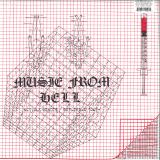
Nervous Gender’s legendary synthpunk LP Music From Hell burbles up from infernal depths to resurface on Dark Entries. Confrontational, unhinged, and unabashedly queer, Music from Hell is an unholy grail for fans of the strangest underbellies of post-punk, minimal synth, and early industrial music, and is presented here newly remastered and on expanded double LP.
Nervous Gender (de)formed in LA in 1978 at the hands of Phranc, Gerardo Velaquez, Edward Stapleton, and Michael Ochoa. Phranc, the androgynous embodiment of the band’s name, left in 1980. Following her departure, a wide cast of LA freaks would find themselves drawn into the band’s orbit, including Alice Bag of the Bags, Paul Roessler of the Screamers, the Germs’ Don Bolles, and an 8-year old drummer named Sven Pfeiffer. In 1980, Nervous Gender appeared on the seminal Live at Target compilation alongside Factrix, uns, and Flipper. With the band’s notoriety cemented, Music from Hell followed in 1981 on Subterranean Records (as no LA label would touch this material).
Side A, dubbed “Martyr Complex”, presents a more punk-forward sound with live drum salvos and slabs of aggressive synth. These twitchy, unsettling shockers ooze with the kind of snotty misanthropy that will endear them to fans of the Screamers or Crass.
Side B, known as “Beelzebub Youth”, is a live performance the band labeled "an electronic bruto-canto dissertation on the banality of spiritual transcendence." Mutant melodies cede way to synthesized clangs, whirs, bleeps, manipulated tapes, and howls of despair.
In addition to all the material from the original LP, we’re treated to a full disc of the band’s demos, the material from the Live at Target compilation, and early live recordings. Included are unrecognizable covers of Carly Simon and Lou Reed, and the Sex Pistols that are so despairingly skewed they fall into the void. This reissue of Music From Hell includes a 36 page lyric booklet, foldout poster, and gatefold sleeve with photos, flyers, and news-clippings designed by Eloise Leigh. Tackling taboo issues like sexual kinks, mental illness, drug use, and childhood molestation, Music From Hell is still surprising – even shocking - over 40 years after the album’s release. Nervous Gender stand as one of the most genuinely anti-establishment outfits in underground music, a colossal fuck you to social norms from religious strictures to gender essentialism.
out of Stock
Last delivered 6 months ago available to reorder, subject to availability
Born to Dominican and Brazilian parents, xavi grew up bouncing from place to place, picking up inspiration wherever he landed. His first love was baile funk, but he was raised on classic hip-hop, eventually notching up production and songwriting credits for Vince Staples, Demi Lovato and Ariana Grande. But the major label life wasn’t giving; sick of the industry, he headed back to São Paulo to soak up the atmosphere and connect with artists on the ground. Before long, he started uploading quickfire bangers to SoundCloud – at this point there are over 350 of them on his feed – an »evolutionary playlist« in his own words, bursting with ideas.
»balança e paixão« is his debut release, proper, a 12-cut snapshot of chaotic, trailblazing, turbulent genius – bending thrashed rhythms into relentless vocal chops from a laundry list of young brazillian MCs. Built on ear-zizzing »tuin« hits and razor’s edge cuts, he creates hypnotic ripples that wedge themselves between São Paulo’s weirdo fringe (artists like JLZ and Iguana) and the percussive, MC-heavy sound of funk ritmado, one of the contemporary scene’s most vital and recognisable strains. Crucially, you can hear a Photek-like approach to space in his productions too, filling the gaps with metallic clangs to lend his rhythms their own unique dimension. The flipside takes it slower, deeper. On »sei q tu gosta« (I know you like it), DJ Leal Original and MC Vuk Vuk’s voices are transformed into ghosted sibilances next to xavi’s sonar pings and woodblock hits with an almost avant-dancehall slant, like some choice Equiknoxx dub, while on »cuidado bandida« (be careful bandit), he deploys bone-rattling trills that bite down on atmospherics that wouldn’t be out of place on Akira Yamaoka’s »Silent Hill« OST.
out of Stock
Last delivered 7 months ago available to reorder, subject to availability
Merzbild Schwet, the second album opus released in 1980, is considered one of Nurse With Wound's major releases, and is part of the famous "Silver Edition" on Rotorelief Records, with a luxurious chrome-plated cover in double Gatefold sleeves, and sumptuous 200g vinyl discs issued in 300 copies on silver and black vinyl, and 700 copies on black vinyl.
The first track, Futurismo, begins with clanking rhythms, record skip clicks, and horn riffs before veering off into a crazed quilt of women singing, laughing, and talking in French. About halfway through, wild screeches of distortion disrupt the piece, and then more bizarre sounds take over before the piece ends with a collage of over modulated electronic hum and rambling piano. The other cut, Dada X, goes further into weirdness with lots of silences, creepy creaking noises, tones that build up and collapse, and scattered spoken word in French and English from Eve Libertine from the political punk band Crass, and the piece certainly lives up to the Dada of its title.
'In 2023, sound artist and composer Weston Olencki toured across the American South. Beginning in their hometown in South Carolina, they snaked a circuitous path from the mountains of West Virginia to the banks of the Mississippi River. As the miles accumulated, so did the initial seeds of new work.
'Instruments and artifacts they acquired hitched a ride in the backseat, while songs and sounds filled their portable recorder: water in its various states, the familiar insectoid buzz of those summer nights, trains cutting through the landscape, the traditional music that lived alongside the communities that kept it. Olencki took it all in, and over time, found ways that these experiences coalesced into a bramble-like perspective of time, where past, present, and future intersect in ways both barbed and beautiful.
'Broadsides, Olencki’s newest solo full-length is the multilayered result of this journey. The album follows their landmark release Old Time Music from 2022, which presented radical interpretations of traditional tunes from Appalachia and throughout the South alongside original compositions that drew significantly on archival recordings. On Broadsides, Olencki rejects delineations between the unmoored avant-garde and the rootedness of one’s cultural heritage, revealing their porous and intertwined nature. “My mother was a quilter. Her mother before that,” they write in the album’s liner notes. “Quilting, like music, is a practice of embedding knowledge and remembrance into the very core of the thing you are making. It’s not just about the materials, but how they’re reassembled, recontextualized, stitched, woven to form new patterns - the minutiae of craft holding significance to those looking to find it. Stories woven from stories, never told the same way twice.”
'Like all great road trips, Broadsides unfolds slowly and continuously, with moments of dramatic reverie punctuating the endless melt of highway in the rearview. We’re immediately confronted by the uncanniness of revisiting old haunts, as Southern storms break through the initial churn of the freight locomotives of Alabama. Olencki’s interpretation of the bluegrass standard “Foggy Mountain Breakdown” captures the euphoria of melancholy in motion. The permutational plucks of banjo are bounced around the frame by a computer, its pitches determined within algorithmic sequences and transcriptions of classic three-finger licks. The tonalities of old-time are smeared and stretched until all that’s audible is the insistence that Heaven might be real.
'In the album’s second half, “Omie Wise,” a murder ballad made famous by Doc Watson, follows an interlude recorded on the river in North Carolina in which the titular character’s body was laid. Ghostly echoes of a dozen other renditions float through the substrata as Tongue Depressor’s Henry Birdsey accompanies them on the pedal steel guitar. The album’s central composition, “all my father’s clocks,” is a profound meditation on entropy and impermanence. The sound of their father’s extensive clock collection ticks away as Olencki pulls a bow across the length of an autoharp sourced from a rural strip mall. The instrument was left as detuned as it was found, the resonance of its deep bass drone and clanging high-end the result of years of neglect and the warping effects of Southern humidity.
'Historically, broadsides were an early form of broadcasting, an often- musicalized telling of current news pasted in the public square. The name was later taken up by Sis Cunningham and Gordon Friesen in the 1960s, whose Broadside magazine published songs and social commentary when American folk music resurfaced as an urgent way of communicating the multifaceted politics of its time.
'Olencki borrows the phrase to recall both this old form of songmaking and that later prominent reexamination of traditional music’s role in modern life, but also to draw attention to the fragmented and machine- mediated way heritage is diffused in this very different, but no less pivotal, moment.
'As a sanitized past is used as justification for current violence and domination, we can turn to these artifacts to better understand the history of ourselves, but only if they are consciously pushed to evolve. Broadsides represents one personal, striking vision of what far-flung futurisms could be respun from = these high, lonesome sounds: a reflection of the unbridled joy and deep sorrow inherent to living together through time, and a desire to push further into the untold and unknown.'
Childish Gambino is (and isn't) Donald Glover, a recording artist, writer, actor, director, producer and comic who was gifted his alias by an online Wu Tang-Clan name-generator. Originally hailing from Stone Mountain, Georgia - his Mum was a daycare provider and his Dad a postal worker, where TV was banned in the house - Glover first entered the spotlight as a member of sketch-troupe Derrick Comedy, via a stint working on The Daily Show and the invitation to join the '30 Rock' writing staff by Tina Fey before he'd even graduated from NYU. A succession of mini-albums and mixtapes surrounded all of this, parallel to acting roles ranging from The Muppets to NBC's cult hit comedy 'Community'. It was 2011's debut album 'Camp' - his first since signing to Glassnote Records - which marked a breakthrough for Childish Gambino, whose music explores everything from identity, race, and technology to hip-hop culture, class, and family. Follow-up 'because the internet' went top 10 on the Billboard chart, was nominated for 2 Grammy Awards and further assimilated Gambino's multiple disciplines (it was accompanied, for instance, by two films and a standalone 72-page screenplay). Around this time - and between roles in HBO's 'Girls' and movies like 'The Martian' - Glover also announced that he was working on his own TV show: a comedy-drama which he would star in, write and direct, 'Atlanta' premiered on FX this autumn to significant critical acclaim (it's already been described as "Twin Peaks with rappers"). The show was launched alongside the third Childish Gambino, 'Awaken, My Love!', this summer at 'Pharos', a series of secretive, audio-visual live performances which took place in a custom-designed dome in the middle of the desert in Joshua Tree. A second series of 'Atlanta' has already been commissioned, whilst Glover has recently been cast in the forthcoming Spider Man movie and has also been confirmed to play the iconic role of Lando Calrissian in the next Star Wars film (a Han Solo spin-off). His most vital artistic statement to date, Childish Gambino is expected to unveil further music from 'Awaken, My Love!' in the coming weeks.
A vinyl soundtrack for GQuuuuuuX (Geku Axe) is now available!
"Mobile Suit Gundam GQuuuuuuX" is a new Gundam series, a collaboration between Studio Khara, the creators of the "Evangelion" series,
and Sunrise, the creators of the Gundam series. The pre-release theatrical version was released in January of this year, becoming a huge hit,
grossing approximately 3.4 billion yen and attracting over 2.06 million viewers.
The TV broadcast began in April, and it became one of the most talked-about anime titles of the spring.
A vinyl record featuring a selection of the soundtrack from "Mobile Suit Gundam GQuuuuuuX," including the music used in the pre-release theatrical
version, is now available. The music was co-produced by Junsei Terui, known as a member of the bands "Haisui no Nasa" and "siraph" and
Masayuki Hasuo, also a member of "siraph," and composer of the anime "Jujutsu Kaisen" series and the live-action film "Showtime Seven"
The music, which includes pop, electronica, and minimal music that fits the worldview of the work, will allow you to experience a new "Gundam"
sound. The LP label side is colored vinyl (splatter disc) and it is a set of two discs!
Gagaku is the oldest of the Japanese performing arts, with a history more than a thousand years old. The term refers to Japanese classical music and dance, traditionally performed by families of musicians linked to the ancient Imperial court, and later passed down in Buddhist temple ceremonies and Shinto shrines. Shiba Sukeyasu, founder and director of the Reigakusha ensemble, descends from the Koma clan, whose origins date back to the end of the 10th century. The recordings partly reflect repertoires borrowed from Chinese music between the 5th and 9th centuries. The incredible variety of timbres of the instruments greatly amplifies our exotic imagination: the eternal breath of the flutes (ryuteki and hichiriki) creates a sort of suspension of time, together with the hypnotic and hallucinatory atmosphere of the mouth organs (shō). The meditative tone of the string instruments (bika and koto) that punctuate the voids and silences is impressive, as is the enigmatic percussion section, with the tolling of the gong (shōko) and the calibrated beats of the drums (taiko and kakko).
Our Autumn/Winter ‘25/’26 issue includes huge deep dive cover features on 90s legends The KLF, Belgium’s most famous rock/rave DJ/producer duo/band SOULWAX and the relentlessly creative HAAi.
Plus 1-800 GIRLS, WAH WAH 45s, Ghost Assembly, Electroclash, Daniel Vangarde, Happy Mondays, Japanese Ambient/Environmental Music, Wu-Tang Clan, Saint Etienne, Carl Craig, Colleen Murphy, Basement Jaxx, Crooked Man and Luke Una, Jesus Loves The Acid, Shanti Celeste, Arthur Baker and much more.
204 pages (yes we’ve increased the pagination again) of quality music journalism by the world’s best music writers plus beautiful photography and design in a glossy print magazine.
SHDW & Obscure Shape welcome Alarico back to Mutual Rytm as the Italian delivers a medley of diverse techno cuts across his latest EP, 'Boya'.
Arriving fresh from an impressive twelve months with releases via the likes of Token Records alongside his notable self-production only mixes, Italian DJ and producer Alarico continues to grow as a talent on the rise within techno. Combining nuances from across the genre to shape his own fast-paced and raw yet soulful sound, the Milan based talent hasn't slowed down since launching the alias in 2019. Having featured on the label's VA 'Federation Of Rythm I' earlier this year, he now returns to SHDW and Obscure Shape's blossoming Mutual Rytm imprint for his first EP on the label - delivering eight cuts across both digital and vinyl for 'Boya'.
Kicking things off with the rugged and loopy 'AE86', Alarico quickly gets to work fusing driving grooves with slick vocal interjections, while title cut 'Boya' veers into slightly more raw and metallic territories guided by snappy claps and resounding kicks. 'Killa Cut' brings the funk on the B-side as soulful vocals ebb and glow amongst the mix, with 'Lost In Time' offering up pulsing bass beneath ethereal vocals, sweeping melodies and lively hats. The vinyl package is wrapped up by 'The Ballad of Lisa', with the infectious bleeping topline leading off-kilter clangs, slightly offsetting the track's tight core groove.
out of Stock
Last delivered 60 days ago available to reorder, subject to availability
Japanese detective drama theme song by Yuji Ohno, who composed music for "Lupin the Third" and others, is reissued on 7"!
Composer Yuji Ohno has composed music for many TV series and films, including the "Lupin the Third" series and "Inugamike no Ichizoku" (The Inugami Clan). The theme song for the 1978 TV drama "The Great Chase," for which he was also in charge of music, is being reissued in analog form for the first time in 47 years since its original release.
Miraculously rare and seriously obscure killer dubs..., one of the very few hard core seventies dub albums mixed by Errol Brown.
A selection of solid dubs originally recorded by BB Seaton at Duke Reid's legendary Treasure Isle studio and mixed in-house by the Duke's nephew Errol Brown. A radical departure for all concerned this bold dub album was never officially released although a few clandestine copies reputedly did the New York rounds at the time
A founding member of the legendary Wu-Tang Clan, Ghostface Killah is Hip Hop’s masked poet — known for his cinematic storytelling, gritty slang, and razor-sharp delivery. With classic albums like Supreme Clientele and Fishscale, Ghostface carved his name into rap history as one of the most original and consistent voices in the game. The Wait is Over. Supreme Clientele 2 is FINALLY here. The highly anticipated album is a vivid- late-night noir where every bar brought Ghost’s inner thoughts to life. From Staten Island to sold out stages worldwide.