For his next Token EP, Kr!z delivers squelchy synth sequences over robust kicks, reinforcing his no-nonsense approach to club music. Classic in its conception yet psychotic in effect, Ipso Facto is a record built for powerful sound systems during thenight's most delirious moments.
First impressions are important; the Belgian producer has never been one to waste time, and this record is no exception. What you hear is what you get-an anxiously slithering synth line makes his intentions clear in Defeat the Purpose, driving people to the dancefloor. Dry drum machine work thunders throughout, locking in the Token style with precision. Moving into the next track, 'Chrome Dust' focuses more on the tonal side of things and its irresistible groovemakes it an instant ear catcher. Playful rides and snares shape the progression, with Kr!z swapping percussion elements to keep the movement lively.
The title track is a true hip swinger on the B1 as he reaches in the low end of the synth sequence to establish a very compelling rhythm. Everything in its right place, and not a hair more, the percussion transitions are reminiscent of his 4 channel DJ sets, the energy always being on the move. Equilibrium closes the EP with high energy, opening up filters over a reliably bouncy rhythm. Years of experience behind the decks can be very instructive for a perceptive producer, and Kr!z proves us just that in this track and in the whole EP.
Buscar:classic channel
- A1: Cosmic Trigger
- A2: Lowered Shelf
- A3: A Pale Horse In Roswell 1947
- A4: Weathered Underground
- A5: Vallee
- A6: Saxxas
- B1: Amalgamated
- B2: Black Triangles
- B3: Lying On The Ground
- B4: Solar Consiousness
- C1: I'm So Tired (Four Songs Ep / Fugazi Covers)
- C2: Long Division (Four Songs Ep / Fugazi Covers)
- D1: Version (Four Songs Ep / Fugazi Covers)
- D2: Cashout (Four Songs Ep / Fugazi Covers)
Ltd Classic Black Vinyl with bonus 7inch, DL card. Monde UFO, LA-based duo of Ray Monde and Kris Chau, are a monochromatic sunset for the senses. A sonic journey through psychedelia, space rock and jazz. A cosmic space where Spacemen 3 meets Vanishing Twin, by way of Sun Ra. 7171 perfectly embodies the framework of lo and hi-fi sounds which have helped define the band. Included in this expanded package is Four Songs, Monde UFO's radical interpretation of Fugazi's music, housed for the first time on LTD 7" with new artwork. In a downtown Los Angeles warehouse, on 7th Street, Ray Monde began writing songs on an old Yamaha church organ for a project that eventually became Monde UFO. Utilizing the organ as a bass, alongside keyboards and a drum machine, he began making demos on a four-track cassette recorder. Heavily influenced by the musician Sandy Bull, sonically landing in a similar no-man's land of Worldly Jazz and Psych Folk. Monde experimented with the themes mostly of meditation and UFO lore. In time Ray moved in with the artist Kris Chau. With little crossover in musical tastes, they exclusively started listening to jazz, ambient and new age music in the house. Increased interest in sound baths and experimental music led to seeing music in a different light. Envisioning something that would sound like Don Cherry making a record with Yo La Tengo. '7171' is an amalgam of influences, interpretations and otherworldly sounds channeled through genre bending experimentation. This expanded edition of '7171' includes the sought after 'Four Songs' EP, a reimagining Fugazi's early classics, songs that take on a life of their own, lost amongst the haze and sugar sweet psych. Ray Monde explains, "Long Division was one of my favorite tracks off 'Steady Diet of Nothing' the first Fugazi record I ever owned; more than ever, it also feels truly poignant in the times we live in.Version 2 is our interpretation of Version from 'Red Medicine', my favorite Fugazi Record." "A slice of low-key bedroom pop-psychedelia in the vein of Syd Barrett." Aquarium Drunkard "Monde UFO wander through a humid mist of exotic samba shuffles, shamanic whispers, and reverberating laser beam synthesizers." New Commute
- 1: Autumn
- 2: Bougainvillea
- 3: Horses I
- 4: Time
- 5: Way To Get Out
- 6: Fruit From The Vine
- 7: Buffalo
- 8: Horses Ii
- 9: Colorado
- 10: Blue Deja Vu
- 11: Mr. Wine
- 12: Horses Iii
Tobacco City is a Chicago-based band that blends cosmic country with a mix of psychedelic rock and honky-tonk soul. Their sound captures the essence of small-town nostalgia while embracing modern-day themes, exploring heartache, longing, and the bittersweet nature of life. With their uplifting energy and authentic songwriting, Tobacco City continues to carve out a unique space in the countrytinged Americana scene. On Horses, the highly anticipated follow-up to their critically acclaimed debut, Tobacco City, USA, the band takes listeners on a nostalgic journey through the haze of youth, where time feels suspended and plans are nonexistent. The album’s lyrics conjure vivid images of small-town life—smoking schwag behind the grocery store, drinking cream from a gas station with your first love—capturing that carefree, uncertain time when the future felt distant. The music channels the spirit of ’70s country with influences from legends like Gram Parsons and Emmylou Harris, bringing a timeless, uplifting energy to each track. At the same time, the lyrics intersect with modern-day themes, blending the beauty and innocence of youth with the harsh realities of life. Horses feels like a contemporary take on classic country, merging a nostalgic past with the complex world of today, all while remaining undeniably authentic and heartfelt. This follow-up to Tobacco City, USA—which received high praise from NPR and Rolling Stone— cements the band’s place at the forefront of a new wave of countrytinged Americana. “...Like the Chicago band’s namesake, a slow smoke hangs in the air, heavy with heartbreak and feather-blue eyeshadow, but puts a brave face on. Lexi Goddard sings with a far-away look over a pedal-steel cry, a melody that sways to country songs on jukeboxes of yore...” —NPR “Chicago’s Tobacco City do more with less... spacious grooves as pedal steel wafts through like a gentle breeze. Vocalist Lexi Goddard and Chris Coleslaw sounds simultaneously wistful and playful throughout...” —Rolling Stone
Ear World, out February 24th on Brooklyn-based record label 29 Speedway, is a collection of sound collage works by experimental cellist Dorothy Carlos. Her debut album ranges from song-like to abstract, incorporating site-specific sound installation work originally premiered in both 16-channel and quadraphonic formats. Voice and cello are reconstructed through glitch techniques to take on a digital form that is flirtatious and fleeting. Carlos is an experimental cellist active in Chicago and New York. Her work utilizes extended techniques and digital manipulation, merging free improvisation and computer music. She is interested in digital techniques as an opportunity to construct imaginary realities and capture a sense of intimacy.
Solo performances have been presented internationally by Experimental Sound Studio Chicago, Big Ears Festival, default, Center for New Music and Associated Technologies (CNMAT) at UC Berkeley, Chicago Jazz String Summit, and Bemis Center. Her work has been featured in The Wire, New York Times, and The Quietus and released digitally with D.O.T. Audio Arts and American Dreams. Dorothy holds a Bachelor’s degree from NYU where she studied classical cello and anthropology and an MFA in sound from the School of the Art Institute of Chicago.
Tracks 2-4 “My Ideal is Windy” quadraphonic installation commissioned by Experimental Sound Studio and the Chicago Park District.
Track 8 “Alter, alter” 16-channel installation premiered at the Chicago Laboratory for Electro-Acoustic Theater (CLEAT).
- 01: 9Th Wonder
- 02: Crown Ones
Amsterdam-based keyboardist, producer, arranger and DJ Soul Supreme reached out to NYC drummer Jay Mumford in 2021 to lay the down groove on his re-imagining of Q-Tip and J-Dilla's "Let's Ride". That paved the way for future collaborations: a cover of A Tribe Called Quest's "Award Tour (We Gettin' Down)" and two tunes on Soul Supreme's Poetic Justice LP. But when the pair began doing brief covers of their favorite funk, jazz and hip-hop tunes on Instagram just for fun, followers of both musicians - and often, the covered artists themselves - began to take note. Two of those 20+ covers were particularly well-received, and the duo decided to answer the peoples' call for a 7" release with the songs pushed to their full potential. Similar to "Award Tour" and "Let's Ride", a hip-hop classic and a fan favorite are pushed to their full potential here. This installment goes coast to coast and explores Digable Planets' "9th Wonder" (the "East" side) and People Under the Stairs' (PUTS) "Crown Ones" (the "West" side).
The iconic synth intro of "9th Wonder" makes way for Jay's thunderous ode to a slowed down Clyde Stubblefield groove. Sure to be a favorite with DJs, Jay eventually detours into a syncopated New Orleans funk break, before getting back to the groove for Soul Supreme's funky wah wah clavinet work. Throughout, the arrangement expands beyond both that of the original and all of its DNA. The addition of cascading horns (featuring a trumpet solo by Lourens van der Zwaag) and a second, more aggressive break from Jay bring it back full circle, completing a modern update of a classic that manages to pay homage to '70s jazz-funk, breakbeats and '90s hip-hop - all while staying both modern and raw.
Diehard PUTS fans will recognize Soul Supreme's catchy Rhodes line as soon as the needle drops, but Jay's heavy funk groove quickly separates it from the original and takes it from hip-hop cover to heavy funk tune. Soul Supreme's Rhodes solo pushes it far beyond the confines of instrumental funk as the groove intensifies, while his chops as an arranger are on full display: his horn parts - featuring van der Zwaag, trombonist Olav Schloorlemmer and Job Chajes' Contra-Alto Clarinet that channels The Headhunters - counter his synth melodies in a discussion that completes the record as a heavy slice of uncut jazz-funk.
Celebrating 50 years of Kahil El'Zabar's Ethnic Heritage Ensemble's legacy and unwavering contribution to Great Black Music. 'Open Me, A Higher Consciousness of Sound and Spirit' is a new Ethnic Heritage Ensemble sound, constantly shifting gears and tempos in a jazz-blues continuum, in perpetual spontaneity, combining their meaningful music history with an innovative approach to arrangements, performance and improvisation. This is Ancient / Future Music for the Now and Beyond.
Open Me is a joyous honoring of portent new directions of the Ethnic Heritage Ensemble; it's a visionary journey into deep roots and future routes, channeling traditions old and new. It mixes El'Zabar's original compositions with timeless classics by Miles Davis, McCoy Tyner, and Eugene McDaniels. Thus, the Ethnic Heritage Ensemble continues affirming their indelible, half-century presence within the continuum of Great Black Music.
For Open Me, El'Zabar has chosen to push the sound of the EHE in a new direction by adding string instruments --the addition of strings opens new textural resonances and timbral dimensions in the Ensemble's sound, linking the work to the tradition of improvising violin and cello from Ray Nance to Billy Bang, Leroy Jenkins, and Abdul Wadud.
Open Me contains a mixture of originals, including some El'Zabar evergreens such as "Barundi," "Hang Tuff," "Ornette," and "Great Black Music" (often attributed to the Art Ensemble of Chicago but is, in fact, an El'Zabar composition).
As a milestone anniversary celebration and a statement of future intent, Open Me effortlessly carries El'Zabar's healing vision of Higher Consciousness of Sound and Spirit.
Reissue!
WRWTFWW Records is honored to reissue revered UK electronic duo Ultramarine’s best kept secret from their discography, the superb A User’s Guide album, available as a limited double LP housed in a beautiful heavyweight sleeve with inside out printing.
On the rare occasions that Ultramarine’s story is told, the duo’s fifth album, 1998’s A User’s Guide, tends to get omitted from the narrative. Radically different to anything the duo released before or since, it has remained a slept-on, timeless and inherently futurist classic ever since.
Unavailable on vinyl since the year it was released – in part because the label it originally came out on, New Electronica, folded shortly afterwards – A User’s Guide was the result of a conscious decision by Ultramarine members Paul Hammond and Ian Cooper to change their working methods and the “sound palette” that underpinned their work.
Out went the partially improvised hybrid electronic/acoustic sounds and the collaborations with guest musicians they’d become famous for. They were replaced by painstakingly created electronic sounds and textures, metallic motifs, spaced-out chords, rhythms rooted in contemporary techno and drum & bass culture, and nods aplenty to pioneering music of the period, from the post-rock atmospherics of Tortoise, and the hazy dub techno of Basic Channel, to the tech-jazz of Detroit, the minimalism of Berlin, and the musically expansive warmth of Chicago deep house.
It may have taken a year to create – part of which was spent developing this head-spinning new sound – but the results were undeniably unearthly and effortlessly forward-thinking. Over a quarter of a century may have passed since it first appeared in record stores, but A User’s Guide still sounds fresh and modern – a remarkable achievement given the relatively sparse and basic equipment used in the making of the album.
As this first vinyl reissue conclusively proves, the material showcased on A User’s Guide has lost none of its sparkle in the 26 years that have passed since its release. For proof, check the head-nodding IDM bubbliness of opener ‘All of a Sudden’, the queasy, lopsided tech-jazz of ‘Sucker For You’, the locked-in beats and mind-mangling motifs of ‘Zombie’, the ghostly, out-there electro of ‘Ambush’, the Autechreesque ‘Ghost Routine’ and the triumphant closing cut ‘What Machines Want’, a classic of minimalistic, jazz-flecked techno futurism.
Fully remastered from the original DATs by Jason G at Transition Studios, the 2024 vinyl edition of A User’s Guide thrusts Ultramarine’s most overlooked album back into the spotlight. This WRWTFWW edition also features brand new contextualizing sleeve notes, complete with new quotes on the production process from Ultramarine, by dance music historian Matt Anniss (author of Join The Future: Bleep Techno and the Birth of British Bass Music, and founder of online electronic music platform Jointhefuture).
Points of interests For fans of electronic, leftfield, postrock, tech-jazz, IDM, minimalism, futurist electronica, dub techno, house, experimental, Autechre, Tortoise, Basic Channel, forgotten gems from superb discographies, very good music, and very very very very good music.
Official vinyl reissue of legendary UK electronic’s duo Ultramarine’s timeless and radical album A User’s Guide.
DJ Support: Carlita, Dar Disku, Disco Arabesquo & Moving Still
Melbourne-based producer Rami Imam unveils Safara, the latest release on his own label, Ponda Records, which he founded in 2020 as a platform for his cross-cultural sound explorations. Drawing from the rich traditions of the Middle East, North Africa, and the Mediterranean, Safara is a six-track odyssey of energetic and euphoric house and disco house, deeply rooted in both nostalgia and innovation. Safara is the culmination of Imam's immersion into the golden eras of global music, channelling the soulful rhythms and melodies of Afro-Funk, West African Highlife, Arab Disco, Bollywood, Afro-Cuban Jazz, Libyan Reggae, and Algerian Rai. By blending these timeless influences with a modern, dancefloor-oriented focus, Imam creates a sound that is both steeped in history and refreshingly new.
With a sonic palette that includes iconic synths such as the Juno 106, Super 6, SH 101, Moog Model D, and the 303, Imam weaves the analog warmth of these instruments into lush, modern productions. Piano and strings—his favourite classical instruments—add an organic layer of emotional depth, connecting the pulse of the dancefloor with the timeless elegance of traditional composition.
Safara is more than a collection of tracks; it is a journey across continents and eras, where the pulse of the past meets the driving force of the present. Recorded in Melbourne but influenced by sounds from around the world, Safara invites listeners to traverse vast musical landscapes—from the hypnotic grooves of North African rhythms to the sun-drenched melodies of Mediterranean shores—culminating in a transportive experience that lingers long after the final beat fades.
By balancing the ancient with the futuristic, Imam has crafted a record that feels both comfortingly familiar and daringly innovative. Safara is a testament to the endless possibilities of blending cultures, genres, and eras into something that is not just heard but felt—music for the soul as much as for the dancefloor.
Mike Parker returns to Samurai Music to apply his steely, rigorous approach to another EP navigating the 170BPM zone. As a widely celebrated pioneer of ice-cold wormhole techno, Parker finds profound depth in alien textures and ruthless repetition which he ably twists to the drum & bass template.
The A side of Envenomations leaps forward with urgent jump-up grooves as the driver for lean, rolling workouts. With his minimalist tendencies, 'Voc-1 Robot' and 'Ee-Yo' strike a cool and deadly mood similar to classic mid-90s Krust, swapping jazzy samples for atonal synthesis.
Parker was last spotted experimenting with this techno-D&B crossover on 2023's Sabre-Tooth, but the keen-eared may have already detected his interest in half-time on the Stinging Insects / Stages Of Metal digital single he dropped on his own Geophone label back in 2020. Both tracks make a welcome arrival on wax to form the B side of this release, channelling Parker's signature palette into more spacious surroundings.
Backed up by an additional pair of digital-only tracks, Envenomations is another standout exercise in the fertile synergy between techno and drum & bass, delivered by a true auteur with an unmistakable sound.
Dienne creates hazy pieces of music full of the melancholy of remembrance and loss combining analogue instruments with reverb-drenched vocals and shimmers of processed electronic sources. Her new album "Conducturis" emerges as a sensory exploration of the human spirit and the boundless horizons of artificial intelligence.
"Abundant in beauty and rich in disturbances" serves as the guiding principle for Belgian composer, Dienne, as she builds songs and soundscapes that portray the images and stories that play behind her eyes.
Combining analogue instruments like the oboe, the piano, and the flute with reverb-drenched vocals and shimmers of processed electronic sources, she creates hazy pieces of music full of the melancholy of remembrance and loss.
Her debut album Addio (2022) was released on Nicolás Jaar's Other People imprint. Addio is a 32-minute study on loss and mourning. Following the death of her grandmother due to Covid-19, and unable to say a proper goodbye due to travel restrictions, Dienne set out to give her "Addio" through musical form. The result is a deeply intimate work that channels classical instrumentation through foggy electronic experimentation.
Memories, biographies, and family histories merge in this simultaneously somber and optimistic work which plays out like a universal and comforting ode to lost loved ones. Her second album, Conducturis, accompanies an immersive film installation delving into speculative fiction, conceptualized by Mira Sanders and Cédric Noël. Conducturis will be released on Cortizona at the end of January 2025.
Conducturis is an immersive film installation project that delves into the realms of speculative fiction, employing the cinematic language of the road movie to envision the ramifications of constructing an artificial brain within the Swiss landscape.
Following their encounters with key figures in the Human Brain Project during an art research expedition in Geneva from 2019 to 2020, conceptualized by Cédric Noël & Mira Sanders, they stumbled upon a remarkable discovery: a hidden fiber-optic cable linking Geneva to Lugano.
Anchored at both ends by the Human Brain Project in Geneva and the CSCS (Centre Suisse de Calcul Scientifique) in Lugano, this conduit facilitated the transmission of intricate brain simulations from the imposing computational hub in Lugano to Geneva via a 'superconductor' cable.
While the nuances of this fiber network eluded the naked eye, Sanders & Noël meticulously pored over maps, gathered endless data, and traversed the terrain. In crafting "Conducturis", they chose to portray an immersive journey along this IT infrastructure connecting Geneva and Lugano, exploring the curious allure of dreaming about artificial landscapes.
The accompanying originalscore by Dienne invites audiences to delve into the intersection of human creativity and machine intelligence. Guided by the principle of being "abundant in beauty and rich in disturbances", Dienne embarks on a sonic exploration of the Swiss landscape, translating its ethereal beauty and technological wonders into evocative musical compositions.
"How can a human sound like a machine?"
This intriguing question lies at the heart of Dienne's artistic endeavor. For her, the soundtrack of "Conducturis'' transcends mere musical notes; it embodies a profound philosophical exploration into the essence of human creativity amidst the rise of artificial intelligence.
Similarly, "How can a human being compose like a machine?" serves as a pivotal inquiry guiding Dienne's creative journey. As she navigates the delicate boundary between human expression and machine cognition, she skillfully intertwines the pulsating rhythms of data transmission with the haunting melodies inspired by artificial landscapes.
Drawing inspiration from the cinematic aesthetics of the road movie genre, as envisioned by Sanders & Noël in their speculation on the construction of an artificial brain, Dienne weaves a sonic tapestry that transports listeners on a contemplative journey through mountains, lakes, and cities.
Each track for "Conducturis" becomes a testament to the fusion of brain and landscape, inviting audiences to ponder the limitless potential of human imagination.
As audiences immerse themselves in the evocative world of "Conducturis", Dienne's soundtrack serves as a guiding force and perfect companion, leading them through a transcendental experience where reality and imagination merge, and the symphony of human and machine harmonizes seamlessly.
"Conducturis" emerges as a sensory exploration of the human spirit and the boundless horizons of artificial intelligence. With Dienne's soundtrack as its heartbeat, this project invites audiences to embark on a voyage of discovery, where the echoes of human creativity reverberate across the digital frontier.
- A1: Satans Rötter
- A2: Metamorfos
- A3: Urgravens Grepp Är Hårt Och Kallt
- B1: Hem
- B2: Vindar Från Förr
- B3: Den Sanna Modern Talar
"From the remote reaches of Haparanda, Sweden, Häxkapell presents a black metal masterpiece that resonates with the eternal rhythms of nature and the cyclical dance of life and death.
“Om jordens blod och urgravens grepp” (‘Of earth’s blood and the grave’s grasp’) is a powerful blend of black metal, folk, and atmospheric darkness, interwoven with classical and progressive influences. Traditional instruments such as the violin, viola, willow flute, and hand drum infuse the music with ancient, primal energy. The lyrics, crafted through subconscious writing, serve as a conduit to the mystical and otherworldly.
The album was engineered, produced, and mixed by Oraklet. Drums were recorded at Nordvis Ljudstudio, with the remaining tracks laid down at Studio HMH. Mastering was handled by Tore Stjerna at Necromorbus Studio.
Founded in 2015 in the northernmost part of Scandinavia, Häxkapell is the creation of Oraklet, who embarked on an inward journey to explore the philosophical, spiritual, and mystical aspects of existence. Following the 2016 demo “Om sanningen,” Häxkapell released their debut album, “Eldhymner”, in 2021.
On “Om jordens blod och urgravens grepp”, Häxkapell’s music evolves much like the earth itself: slowly, imperceptibly, yet ever-changing. It reflects the cycle of birth and bereavement, with death and life beginning anew as earthen folk melodies murmur ancient slumbers into dawn. Oraklet channels these profound truths into lyrics and music."
On the Mixbone EP, two tracks from Eric Copeland’s 2017 record Goofballs get reworked by five of leftfield electronic music’s heaviest hitters. The Goofballs LP finds the Black Dice founding member conducting hectic, dancefloor-oriented experiments; The Vinyl Factory called it a “mangled, spangled journey into the fringes of industrial disco and hallucinatory club tackle.” Mixbone capitalizes on this direction with remixes that recontextualize and reshape the propulsive energy of the original songs into wholly different forms.
New York techno powerhouse and Allergy Season boss Physical Therapy contributes two aptly named takes on “Mixer Shredder” – the “Tegel Mix” churns with industrial EBM low-end, and the breakbeat and wubby bassline make the “Gatwick Mix” unmistakably English. NHK yx Koyxen remixes Eric for the second time, with a jittery and woozy electro interpretation of “Neckbone.” Cooper Saver, best known for his Far Away parties in Los Angeles, turns in one of the most unexpected remixes, keeping it 4/4 and creating what sounds like Shep Pettibone making acid house.
Coming off of her 2017 EP on Technicolour/Ninja Tune, Machine Woman decided to remix both tracks. With “Neckbone,” she adds a barely-discernible robotic narrative vocal, allegedly about Ryan Gosling. “Mixer Shredder,” on the other hand, travels from hissy lo-fi techno into something quite tranquil and beautiful. And with previous releases on 1080p, Freakout Cult, and Wania, Vancouver’s LNS channels the melodic electro tones of classic Bleep-era Warp, like a lost track from LFO or Drexciya.
“Danceable” might not be the first word one thinks of when describing Eric Copeland’s solo releases. But in a manner not dissimilar to the way Black Dice shaped the parameters of experimental music, the remixes here expand the limits of what the club can and should look like.
Russian vinyl botherer and producer DJ Vadim has pulled in some serious reggae talent on his 11th album.
It all kicks off with a double whammy of Demolition Man’s classic pipes on the rootsy Fussin N Fighting and the dubby Sometimes, featuring Inja shouting out to the people struggling to rise from dark situations. The mariachi trumpet, married to the smooth chorus vocals, provide a subtle counterpoint to the rapper’s imploring flow. Sultry dancehall’s the order of the day for Call On Me, with Eva Lazarus pushing out a proper earworm of a chorus that plays beautifully off the Jamaican-accented Brummie spit of Serocee. Three tracks in, and Vadim’s already traversed several decades of musical development whilst keeping the narrative pleasingly consistent.
Murder Murder channels the spirit of Damian Marley for a politically-charged reggae hip hop rampage, then the unmistakable voice of Max Romeo pops up on Judgement, a fire and brimstone cut in the great tradition of such offerings. It also showcases one of the main themes of this release: the bringing together of cultures and musicians. Abstract Rude and YT provide rap responses to the veteran, with the production lightly upgrading the familiar sonics with a few echo-electro flourishes here and there.
Sourcing rare records to reissue can involve meticulous research and years of digging, but then occasionally, Lady Luck smiles upon you. We probably would have never heard of the Medium Wave Band if Gary from Mr Bongo hadn't known Wolverhampton-based record dealer, Steve Ward. Whilst offering Gary some records for sale, he remembered he had a spare copy of an old 7" single that he thought Gary might like. Steve didn't know much about the release, and it had never sold on Discogs. Looking at the record itself, it was minimalist in appearance and information, there wasn't much to go on other than that it was from the Birmingham area. The mystery drew us in…
The A-side, 'So Tender’, is a late-night, jazzy slow-jam, with beautifully sultry, soulful female vocals which sounded vaguely familiar. On listening to the B side, 'Games (Instrumental)’, you are rewarded with a superb example of Britfunk / independent UK jazz-funk. The pulsating, bass-led dancefloor groove and sensibility is a sound reminiscent of productions usually found on labels such as Elite, but the 7” was not released on a label, it was a private press by the band themselves. So who are the enigmatic The Medium Wave Band?
After some fruitful internet digging and correspondence, we got the answers. The band lineup featured Elliot Browne on guitar (lead & rhythm), Ron Lyseight on guitar (rhythm), Andrew Proverbs on keyboards, Tony Peart on drums, Paul Snook on bass, Linton Levy on saxophone, and surprisingly, the beautiful vocals we had been enjoying were those of Jackie Graham, aka the hugely successful UK vocalist, Jaki Graham. Maybe best known for her pop hit with David Grant, 'Could It Be I'm Falling In Love', but also featuring on the cult classic track 'Fire In My Heart' by Escape From New York.
Influenced by artists and bands including George Benson, Ronnie Laws, Weather Report, George Duke, Azimuth and Chick Corea to name a few, the guys booked into a studio near the Botanical Gardens in Birmingham and recorded the two tracks that make up this 7”. Only 200 copies of the original 7" were ever pressed and were sold mostly in Birmingham at Summit Records by the band’s friend DJ Frenchi, as well as at live shows. Despite its limited distribution channels, the record received solid support from fans and those in the music industry, including Morgan Khan of the influential record label, Street Sounds. DJ and journalist, Lindsay Wesker, reviewed the release and this led to the band travelling to London for several radio interviews. They played live shows across the country, including at the prestigious Ronnie Scott's in London, and supported both Shakatak and Weapon of Peace in Birmingham.
Thanks to all those involved bringing this release into fruition and for solving the mystery behind a wonderful Britfunk and UK soul record that could have otherwise been lost in the mists of time.
When Acid Jazz was in its mid-1990s pomp, it released a lot of great records. Sometimes they flew past at such a pace, we had moved on to something else before we realised how good they truly were. ‘Lovesick’ by the Night Trains is one such record.
A phenomenal mixture of a distinctive sample turned into a un-ignorable groove, an unforgettable melody (and the soulful vocal from Marcia Johnson), weaved around a Miles-like trumpet. It should have been a hit. But it wasn’t. Instead, it is a cult classic, which we are being fully indulgent in releasing on a 7-inch single.
Night Trains were the brain child of Hugh Brooker, and they released the first ever acid jazz single in 'Open Channel D’, appearing on early groundbreaking Acid Jazz compilations. It resurfaced on the label in 1993 with the ‘Sleazeball’ album, from which Lovesick was the lead single. Hugh has in many forms kept the group going until the present day. A testament to persistence and good taste, in the face of industry indifference. Hugh is one of the originals and we are proud to still work with him to this day.
This is the first time that ‘Lovesick’ has appeared on a 7", and it is flipped with the previously-unreleased on vinyl ‘Only Know About Love' on the B-side.
Emilia Sisco's debut album on Timmion Records, "Introducing Emilia Sisco", takes you on a smooth ride in the world of vintage soul, featuring 10 beautifully crafted original songs written by Sisco in collaboration with the renowned Cold Diamond & Mink band. The album showcases this young talent's unique ability to blend classic soul influences with contemporary flair, building mesmerizing harmonies by layering her voice, and through these channeling a sound that is both timeless and fresh. From the opening track "Say Yes" - grooving like an independent gospel soul jam that somebody discovered in dank Midwest cellar - to the closing "Secretly," each song is a testament to Sisco's deep connection to the emotional core of soul music. As one of the album's highlights, "Don't Let Nobody," stands out as a sweet anthem of love and encouragement for your fellow human. With its heartfelt lyrics and Sisco's gently floating vocal performance, the song displays the essence of the album_soulful, sincere, and deeply moving. The Cold Diamond & Mink band provides lush, downtempo arrangements throughout the record, perfectly complementing Sisco's voice and bringing her compositions to life with a rich, organic sound. In "Introducing Emilia Sisco" the singer's signature style of downtempo soul shines brightly, offering listeners a blend of introspective ballads and uplifting grooves. After her string of exquisite and well-received singles on Timmion, this album documents the impressive progress of a formidable new voice, one that is sure to resonate with fans of classic and contemporary soul alike.
In the fall of 2022, celebrated UK chill-out institution Seahawks landed in Los Angeles for the first time in their 15-year history, with plans to record a sweeping new age downtempo "exploration of visionary California."
Instead, they immediately fell ill with flu (Fowler collapsed next to a taco truck; 911 was called), and were bedridden for the better part of a week. Upon recovering, they resituated at the synthesizer sanctuary of Brian Foote (Peak Oil, Kranky, Leech), channeling their post-sickness psychedelia into one of the band's lushest and most elevated creations to date: Time Enough For Love. Inspired by the "groove and mood" of Harry Nilsson demos, as well as its wider 70's wavelength - Rhodes, Wurlitzer, wood paneling - Seahawks transposed their classic post-rave ambient exotica onto a warm and woozy Golden State palette. Buoyed by the liquid touch of English maestro Kenny Dickenson on keys, the results rank high among the duo's smoothest and most multi-sensory voyages. "Sail Across The Moon" delivers on its title, a simmering, phaser-smeared cruise through the beauty of the night. "Messengers" echoes the cosmic lounge of Air's Moon Safari, shuffling, weightless, and ethereal, while "Falling Deep" reaches for the stars, pure cascading bliss, the ecstatic moment writ large.
The album skews steadily more astral as it progresses, drifting towards jazzy, galactic outer reaches. "Like A Grain Of Sand" opens with a spoken sample by the celebrated late American poet Rachel Sherwood ("The children watch, breathless / with the birds / They feel an emanation / from this shuddering place"), before taking flight on a Balearic trip through island house, PM Dawn gold dust, upright bass meditation, and kaleidoscopic light. A remix of the title track by Chicago trio Purelink closes the record in a suitably subdued and skittery state of mind. Time Enough For Love radiates color, complexity, and positivity, infused by the "life enhancing" nature of the band's time in Los Angeles - sunsets, sound systems, and sativa, framed by coastlines and cloudbanks, the city's mystic sprawl glittering beneath purple dusk.
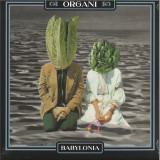
Well-versed in vintage vernaculars, Oakland-based producer/musician Mike Walti is about to return with his sophomore offering under the Organi moniker – as new album “Babylonia” follows 2020’s “Parlez-vous Français?,” a landmark in vibe acquisition ever since.
Wyldwood Studios is a portal. It’s a secret gateway to analog spheres. Cross the threshold and you’ll feel the difference: you can pick any ol’ time, any place, any tongue or vibe, in fact. Hit the dancefloor in 1967, feel that plushy loveseat in the early 70s. It’s a welcoming place where better, saner vibes are still within reach. Fueled, at least in part, by those long-classic 12”s on the walls – just imagine the sepia-tinted countenance of Melody Nelson alongside actual Birkin sans wig, right next to Shadow’s immortal crate diggers, forever blurred –, and channeled through ancient time travel devices such as the MCI 416B only to arrive on classic 2-inch tape (MM1000 aka Ol’ Bessy), it’s a haven for all things organic, for all things imbued with that warm élan. Built and run by Oakland’s own Mike Walti, countless artists from many different genres have felt that flair, creating sonic spheres and moving back and forth along the malleable axis that is space-time. Capturing magic.
Emerging from this unique portal back in 2020, Walti’s aka Organi’s first studio album was a stunning answer to its titular question – “Parlez-vous Français?” It was a soothing, somewhat psychedelic trip so magnétique and alluring that it immediately brought back those bits of Franglais you never knew you remembered. Whereas the debut LP indeed felt like a spontané voyage to the French Riviera ca. 1968, its follow-up “Babylonia” is so much more than linguistic confusion and ancient Akkadian Rhythms. Using that hidden portal near Alameda’s finest port to access all kinds of remote regions and sonic spheres, it’s super tight and feels, well, decent, even though, just like the ol’ Babylon, it’s full of surprising tongues and dreams, schemes and melodies.
“Where do we go from here?,” someone asks in opening “Organii-“ – all majestically cinematic boom bap, buoyant bass, sick strings. A fittingly massive opener that feels like cracking open a cold one after long weeks at work (that ecstatic “ahhhh”), it perfectly sets the tone for another half hour of pure time traveling, globe-spanning bliss. Whereas that certain prédilection pour all things French makes “La Rockette” so tempting and tantalizing (think MalMalNonBien), the sophomore album’s Berlin-based guest singer Nana Lacrima soon takes us elsewhere: title track “Babylonia” spins ever so softly, like a magic lantern, with images of dreamier Stones Throw funksters or Savath y Savalas looming over the steady flow of an arrangement that washes you clean like an ancient, unpolluted River Euphrates or Brazil’s actual Amazon. A sexy Portuguese-flavored anthem, occasional guest singer Alix Koliha also enters the scene to add yet another layer of French chic to this Brazilian landscape. Next, we’re back at the Riviera, but the “Italiano” version of it, splendido sunsets and bell towers in the distance, the ragazze laughing and shaking it up, perhaps even some Portofino Gin so you can really feel that “me ne batto il belin,” as your fingers align form some half-serious “ma che vuoi?”
Tim Maia-penned “Padre Cicero” (1970) deals with the stunning transformation of the titular hero – “De reverendo a lutador,” and what a soaring, sensual hook –, and Organi’s take on Elephant Memory’s “Old Man Willow” (now an “Old Man Waltz”) perfectly underlines what Walti’s Wyldwood endeavor is all about: Easy-Going Experimental Dream Pop, fueled by Gainsbourg, Broadcast, Stereolab, etc.
Later on, even though something seems to be tres complique in “Remembering Anna,” it all sounds carefree like a spontaneous Friday afternoon with a bottle of fine wine. Right before the outro, key album guest Yea-Ming Chen (of Yea-Ming & The Rumors) returns to the mic, adding her dark and dusky trademark timbre to melancholy anthem “Pictures Of Your Face”. Reminiscent of Nico and Trish (rip & rip), it’s a track that’s both dark and strangely propelling, hypnotic and hip-shaking.
A third generation Bay Area native, Mike Walti aka Organi has been running Wyldwood Studios in Oakland CA for some 15+ years (recording artists like Tommy Guerrero, Spelling, Why?, Latyrx, Del, Dan The Automator, and Big Freedia, to name but a few). A multi-instrumentalist who’s obviously in love with the 60s/70s, he loves to work with analog equipment (“We just love us some analog!” “Just listen to those relays purr…”). Recorded and mixed by Mike Walti at Wyldwood, “Babylonia” will be released on vinyl/digital by Alien Transistor.
It’s abundantly clear from the first bars of their 5th studio album Through Other Reflection, that this is, and could only ever be, The Soundcarriers. From the enchanting vocal duets of folk-bidden Chanteuses Leonore Wheatley and Dorian Conway; to the precise bass lines of Paul Isherwood and the limber, jazz-cool, Hal Blaine-esque drums of his his co-songwriter Adam Cann; from the fairy-like flutes, 60s-garage guitars and organ sounds pilfered from the archives of exotica - listening to the Soundcarriers resembles a rediscovery of all the most prized, esoteric corners of the 1960s, all bundled up, warped and refracted through the quartet’s astutely modern cultural lens. Channelling Tropicalia, Middle Eastern psychedelic Jazz/Funk, The French Library sounds of Nino Nardini, and a whole host of lavish obscurites beside, Through Other Reflection delivers another sonic adventure from one of the most unique and distinctive voices of British Psychedelia. After an 8 year wait for their album 4 - 2022’s Wilds - it thankfully didn’t take so long for the follow-up this time round. In many ways, this feels like a companion to Wilds; recording again at their Nottingham warehouse studio, Through Other Reflection retains that same organic glow, all the passions and imperfections of a tightly clipped unit jamming out these living, breathing pop-art nuggets as if straight onto the acetate.”We wanted to keep an air of spontaneity with this album and not get too bogged with the recording process”, explains Cann, “It was more a case of getting the songs as tightly written and arranged as possible first so we could get them down quickly in the studio. It always takes longer than you think” Less packed with strident pop hooks as its predecessor however, the music of Through… has been given extra licence to breathe, stretch out, and wander more uncharted terrains. While gleaming psych-pop of tracks like ‘The City Was’, or ‘Already Over’ confidently carry on from where they left off, from the album’s 2nd track ‘Always’, the trip becomes a little less predictable. Starting out as a smoky Procol Harum-meets-French-Psych organ ballad, the music drifts, as if of its own accord into an eerie, garage trance that lingers, cycles, and hypnotises, growing ever stranger, reaching ever-further away from its point of conception. And almost every track on Through Other Reflections holds that outer-body moment, where the band fix themselves on a limber, lysergic groove, lose all grip on time and reality, and melt themselves away into a liquid state of blind euphoria. There are sequences on this record that feel more like rituals than songs, built upon a single hypnotic rhythm which, like the centre of a vortex, pulling everything under its beatific command. Take the finale to ‘What We Found’ for instance, sounding like a ghostly march across the psychedelic moors, or ‘Feel The Way’, where a single athletic drum-loop rises and rises, growing ever more urgent and suspenseful underneath its frantic harpsichords and rasping flutes. Full of such rich stylisms as these, The Soundcarriers showcase themselves as abstract storytellers par excellence by virtue of their textures and arrangements alone. Resembling Romantic composer Maurice Ravel, but if he had just a four-piece rock band at his disposal, Through Other Reflects is rich with detail; there’s shakers, rattles, clarinets, booming drums; there’s synthesiser swarms, chiming xylophones, vintage organs and experimental Cluster & Eno-esque ambiences. Within all this nuance the music flows like some undisclosed narrative swathed in a magnetic secrecy. “It almost comes across like a story in some ways”, says Cann of the album, “the music is quite sectional with elements of exotica and cinematic type layers, it's a good balance of grooves, tunes and weirdness”. No more is this “epic cinematic feel” heard more proudly than on short instrumental ‘Sonya’s Lament” - its innate, hauntological atmospheres befitting a Peter Strickland soundtrack, or the classics of Lex Baxter, the so-called ‘Founder of Exotica’ himself. On the other hand, providing a greasier undercurrent to all these bucolic sounds is a leaning towards a more “direct” lyricism referencing more “external concerns. Laying down the first tracks for the album in the wintry gloom of pre-lockdown 2020, and drawing inspiration from time spent in Berlin, Through Other Reflections returns to some of the post-apocalyptic futurism explored in 2014’s Entropicalia - a loose concept album inspired by J.G Ballard’s The Drowned World. “The songs explore a disillusionment with the way things are going particularly after 40 years of neoliberalism”, says Cann, “They follow that folk-song tradition of wanting to escape to an imagined time, but here it’s more urban than pastoral. The first couple of ideas I came up with when doing some music in Berlin and had some time to wander aimlessly. And think the atmosphere seeped in, particularly on The City Was and Already Over. He continues, “One aspect of the title, ‘Through Other Reflections’ is about synthesis and layers of influence. How things can be filtered through other things and change the perspective. This is something you get in cities as well.” Though, as with everything The Soundcarriers make, “It can mean anything. It also just sounds kind of cool.”
"Austin-based funk/prog/rock 10-piece collective GRANDMASTER present their self-titled 15 song debut. produced by fellow Austinite Nolan Potter, the record channels the sounds of inspirators Earth Wind & Fire, Stevie Wonder, John Williams, Parliament Funkadelic, The Bee Gees, & Potter’s own Nightmare Band, while also blending in elements of jazz, prog., and classic Nintendo scores.
The record has already garnered praise and heavy airplay from Austin tastemaker station KUTX, who named them Artist Of The Month back in summer."