Search:classic garage

Styles
All
Romeo Louisa - Challenges

The Plastik People label kicks off its new year with a trio of top garage jams from Romeo Louisa. 'Challenges' is a perfect feel-good sound with silky smooth chords and nice dusty drums and hi-hats all topped off with a classic vocal packed with emotion. The irresistibly catchy vibes continue with 'Lost Bottle' which is another timeless US house sound of the sort the Dope Jams crew became so well associated with. Last but not least is 'Keep Me Deep', another perfect blend of US garage and house with horns, deep kicks and lush chords.

out of Stock

Order now and we will order the item for you at our supplier.

14,08

Last In: 88 days ago
Various - Q1#1EP

Various

Q1#1EP

12inchQ1E2012
Q1E2 RECORDINGS
04.04.2025

Electronic music at its best offers a tantalising glimpse of the future, capturing the moment of conception where new worlds and genres are brought into being. Amsterdam-via-Berlin label Q1E2 (standing for “quality first, ego second”) embodies this expansive promise on their new various-artists compilation, a thrilling speed-run through the cosmic outer-reaches of contemporary club sounds that highlights the work of essential emerging producers from around the globe.

Milan producer Jack Bags opens the proceedings with “Natural Thing”, an astral deep-dance immersion with zero-gravity synthesizer pads and skeletal dub percussion that echo out through the void, sensuous vocal samples arriving like scattered transmissions from the stereo of some long-lost spacecraft. datSIM’s “Influx” races through kaleidoscopic sci-fi spacescapes, presenting a futuristic reimagining of UK bass sounds with dextrous organ melodics and widescreen atmospherics. Mike Riviera and Marco Ohboy bring us back down for a more earthly kind of ecstatic experience, cranking up the humidity and coaxing out the endorphins with the appropriately-titled “Euphoria” - a rugged, rave-adjacent heater that cleverly rearranges elements of classic house and garage into a decidedly modern club workout.

Elsewhere there’s a distinctive undercurrent of jazz flowing through the compilation, mapping out thrilling new evolutions of the music on and off the dancefloor. Dr Sud’s mesmeric rhythm excursion “Zaffiro” unfurls like the coils of a cosmic serpent, tessellating percussion and slinking subs tracing intricate beat geometries. A Soft Mist Production’s “Upside Down Rainbows” settles in for the afters with smoked-out soulful atmospherics, syrupy vocals curling and turning in the air like smoke vapors from the last vestiges of a still-lit cigarette. The Rabbit Hole’s “Tail Groove” closes out the proceedings with a surprising bait-and-switch - opening on lustrous lounge piano that could have been comped straight from a Bill Evans record, the track quickly gives way to interstellar bass ‘n’ breaks. The producer’s canny use of cello licks adds a grounded, organic feel, jazz futurism that recalls Photek or LTJ Bukem’s sampling experiments.

Taken together, the label’s new compilation provides a snapshot of a scene in constant evolution, taking the temperature of the modern electronic scene and finding it to be in rude health.

Written by Matthew Fidler

out of Stock

Order now and we will order the item for you at our supplier.

12,56

Last In: 12 months ago
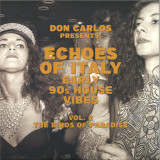
Various - ECHOES OF ITALY – THE BIRDS OF PARADISE – EARLY 90S HOUSE VIBES VOL.2 (2x12")

Googling “paradise house”, the first results to pop up are an endless list of European b&b’s with whitewashed lime façades, all of them promising “…an unmatched travel experience a few steps from the sea”. Next, a little further down, are the institutional websites of a few select semi-luxury retirement homes (no photos shown, but lots of stock images of smiling nurses with reassuring looks). To find the “paradise house” we’re after, we have to scroll even further down. Much further down.

It feels like yesterday, and at the same time it seems like a million years ago. The Eighties had just ended, and it was still unclear what to expect from the Nineties. Mobile phones that were not the size of a briefcase and did not cost as much as a car? A frightening economic crisis? The guitar-rock revival?! Certainly, the best place to observe that moment of transition was the dancefloor. Truly epochal transformations were happening there. From America, within a short distance one from the other, two revolutionary new musical styles had arrived: the first one sounded a bit like an “on a budget” version of the best Seventies disco-music – Philly sound made with a set of piano-bar keyboards! – the other was even more sparse, futuristic and extraterrestrial. It was a music with a quite distinct “physical” component, which at the same time, to be fully grasped, seemed to call for the knotty theories of certain French post-modern philosophers: Gilles Deleuze, Félix Guattari, Paul Virilio... Both those genres – we would learn shortly after – were born in the black communities of Chicago and Detroit, although listening to those vinyl 12” (often wrapped in generic white covers, and with little indication in the label) you could not easily guess whether behind them there was a black boy from somewhere in the Usa, or a girl from Berlin, or a pale kid from a Cornish coastal town.

Quickly, similar sounds began to show up from all corners of Europe. A thousand variations of the same intuition: leaner, less lean, happier, slightly less intoxicated, more broken, slower, faster, much faster... Boom! From the dancefloors – the London ones at least, whose chronicles we eagerly read every month in the pages of The Face and i-D – came tales of a new generation of clubbers who had completely stopped “dressing up” to go dancing; of hot tempered hooligans bursting into tears and hugging everyone under the strobe lights as the notes of Strings of Life rose up through the fumes of dry ice (certain “smiling” pills were also involved, sure). At this point, however, we must move on to Switzerland.

In Switzerland, in the quiet and diligent town of Lugano, between the 1980s and 1990s there was a club called “Morandi”. Its hot night was on Wednesdays, when the audience also came from Milan, Como, Varese and Zurich. Legend goes that, one night, none less than Prince and Sheila E were spotted hiding among the sofas, on a day-off of the Italian dates of the Nude Tour… The Wednesday resident and superstar was an Italian dj with an exotic name: Don Carlos. The soundtrack he devised was a mixture of Chicago, Detroit, the most progressive R&B and certain forgotten classics of old disco music: practically, what the Paradise Garage in New York might have sounded like had it not closed in 1987. In between, Don Carlos also managed to squeeze in some tracks he had worked on in his studio on Lago Maggiore. One in particular: a track that was rather slow compared to the BPM in fashion at the time, but which was a perfect bridge between house and R&B. The title was Alone: Don Carlos would explain years later that it had to be intended both in the English meaning of “by itself” and like the Italian word meaning “halo”. That wasn’t the only double entendre about the song, anyway. Its own very deep nature was, indeed, double. On the one hand, Alone was built around an angelic keyboard pattern and a romantic piano riff that took you straight to heaven; on the other, it showcased enough electronic squelches (plus a sax part that sounded like it had been dissolved by acid rain) to pigeonhole the tune into the “junk modernity” section, aka the hallmark of all the most innovative sounds of the time: music that sounded like it was hand-crafted from the scraps of glittering overground pop.

No one knows who was the first to call it “paradise house”, nor when it happened. Alternative definitions on the same topic one happened to hear included “ambient house”, “dream house”, “Mediterranean progressive”… but of course none were as good (and alluring) as “paradise house”. What is certain is that such inclination for sounds that were in equal measure angelic and neurotic, romantic and unaffective, quickly became the trademark of the second generation of Italian house. Music that seemed shyly equidistant from all the rhythmic and electronic revolutions that had happened up to that moment (“Music perfectly adept at going nowhere slowly” as noted by English journalist Craig McLean in a legendary field report for Blah Blah Blah magazine). Music that to a inattentive ear might have sounded as anonymous as a snapshot of a random group of passers-by at 10AM in the centre of any major city, but perfectly described the (slow) awakening in the real world after the universal love binge of the so-called Second Summer of Love.

For a brief but unforgettable season, in Italy “paradise house” was the official soundtrack of interminable weekends spent inside the car, darting from one club to another, cutting the peninsula from North to centre, from East to West coast in pursuit of the latest after-hours disco, trading kilometres per hour with beats per minute: practically, a new New Year’s Eve every Friday and Saturday night. This too was no small transformation, as well as a shock for an adult Italy that was encountering for the first time – thanks to its sons and daughters – the wild side of industrial modernity. The clubbers of the so-called “fuoriorario” scene were the balls gone mad in the pinball machine most feared by newspapers, magazines and TV pundits. What they did each and every weekend, apart from going crazy to the sound of the current white labels, was linking distant geographical points and non-places (thank you Marc Augé!) – old dance halls, farmhouses and business centres – transformed for one night into house music heaven. As Marco D’Eramo wrote in his 1995 essay on Chicago, Il maiale e il grattacielo: “Four-wheeled capitalism distorts our age-old image of the city, it allows the suburbs to be connected to each other, whereas before they were connected only by the centre (…) It makes possible a metropolitan area without a metropolis, without a city centre, without downtown. The periphery is no longer a periphery of any centre, but is self-centred”.

“Paradise house” perfectly understood all of this and turned it into a sort of cyber-blues that didn’t even need words, and unexpectedly brought back a drop of melancholic (post?)-humanity within a world that by then – as we would wholly realise in the decades to come – was fully inhuman and heartless. A world where we were all alone, and surrounded by a sinister yellowish halo, like a neon at the end of its life cycle. But, for one night at least, happy."

stock from06.05.2026

28,99

Last In: 6 months ago
As One - Destination Other Ep

Repress! Limited to 100 copies

Part 2 Of The As One Series, This Time With One Of Electro's Most Respected Producers, E.r.p. Aka Convextion, Reinterpreting Another 90s Classic By The Veteran Uk Producer. "mihara" And "shambala" Were Originally Included In The As One's First Album "reflections", Released On 1994 On New Electronica. "destination Other" Was Featured In His Lp "the Art Of Prophecy", Released On Shield Records In 1997. Our Goal With These Two As One Releases Was, Not To Make Another Reissue, But To Recompile Tracks From His Discography Into Something New, Also Providing The Reinterpretation By Two Legendary Artists Like Juan Atkins And E.r.p..
We Hope You Enjoyed The Ride.

out of Stock

Order now and we will order the item for you at our supplier.

11,56

Last In: 12 months ago
Yuching Huang - The Crystal Hum

The Crystal Hum is the debut vinyl release by Taiwan-based artist Yuching Huang and her first release for Night School.
A beguiling dreamscape of crackles, spluttering, love-struck Casios presided over by the the spectral vocal and guitar work of Huang, Yuching sings love songs at the end of this world and the beginning of the next. Recorded during a hiatus from her group Aemong (a duo with artist Henrique Uba) in Berlin, these songs elevate Huang’s unique vocal style and grasp of atmospherics. The Crystal Hum deconstructs balladry, Garage, guitar music and reforms it into a
unified ghostly otherworld version of these languages.

The Crystal Hum thrums with buried desire, trails of nocturnal reverb seeping out of apartment windows, diaristic vocal performances and deeply emotive, evocative Western-style strings. Formulated by Yuching Huang after periods of frustration and experimentation, the album is an exercise in minimalism and paring back, with some tracks like JohnJohn featuring little else than an elastic bass, spring reverb trails, an interjecting vocal and swelling, dislocated synths. The effect is spellbinding, the soundtrack to getting lost in the labyrinthine, closed streets of Venice, Taipei, Hong Kong, or mirror versions of them in the imagination.

On opener Fly! Little Black Thing, a subterranean funk bassline roots Huang’s singing, a rudimentary, unreliable beat floundering in whimsy underneath. Demure, dream Dance music, Huang references classic lo fi experimenters Suicide and Arthur Russell as well as Night School label mates The Space Lady and Ela Orleans. In fact, after the release of Aemong’s third album Crimson, Huang credits the direction of The Crystal Hum to being enchanted by The Space Lady’s Greatest Hits,
the landmark lo-fi recording made by Susan Dietrich Schneider in 1990. The new, minimalist approach to her sound world reveals and shrouds in equal measure. On the heart-melter Love, a sultry mid-tempo Casio + bass backing drops into the ether with Huang’s vocal swimming in preternatural void before emerging anew, in awe at the world. Every chord change heralds new perspectives, every guitar flurry swells and drips emotion, nothing is wasted and space billows out from between the grooves.
Huang never reveals more than necessary, making this an in-between love album: the right amount of mystery and darkened mirror shines wanely on The Crystal Hum while remaining fragile and vulnerable in the sweet spots. Turning over in pillowing smoke and night in the dark corners, Huang sings in both Mandarin and English. The songs speak of earthly matters seemingly at the edge of dissipating into nothing. Distorted, beguiling Sambas warble like sweating dancehalls in an imagined Lynchian 60s, as on Thoughts. Closer You, An Illusion warps a classic 60s Girlgroup bassline beloved of the likes of Les Rallizes

Denudes into a slight ballad on the edge of the void, held back by the teary-eyed, wistful and enveloping vocal cooed by Huang. Each song feels like a love song dedicated to the bits between worlds, between beats, the negative space between people where desires, feelings and loss hangs in the air, resolute and unresolved.

out of Stock

Order now and we will order the item for you at our supplier.

21,81

Last In: 2 years ago
Mr K - Giving My Love / Brazil Mr K Edits 7"

Mr. K with two slices of Philadelphia disco, from smooth and slinky on our A-side to all-out floor pounding disco madness on the B.

Janice McClain, rightly adored for her Garage classic “Smack Dab In The Middle” (feat. on MXMRK-2068) but her second single is a real under-the-radar treat. The comfortably laid back groove somewhere between a stepper and simmering midtempo disco, classy and danceable as the finest Philly soul. Originally on a small LA-based label in 1983 (and sounding like it could have come out a good five years earlier), written and produced by McClain’s uncle Milt Tennant and his writing partner Thom Page, the same team responsible for “Smack Dab” — all Philadelphia rooted, so the sound should come as no surprise. Add McClain’s heartfelt and uplifting vocal and we easily have a lost classic. Mr. K’s edit trims the rare 12-inch version down for maximum sonic fidelity for its first appearance in a 7-inch format.

The flip side vibe goes in a completely different direction, although once again has its roots in Philly. The disco remake of the standard “Brazil” was a massive hit for the Ritchie Family in 1975, topping Billboard’s dance charts and getting deep into the Top 20 on the Hot 100. The group itself was a studio concoction led by veteran producer Richie Rome, with legendary trio Sweethearts of Sigma handling vocals — you’ll recognize their trademark harmonies from other huge classics like “Ain’t No Stoppin’ Us Now” and “Love Is The Message", studious listeners will detect a lot of similarities in the vamp section of “Brazil” and “Love Is…” as the MFSB house band launches into their trademark groove. This vamp section is unfortunately truncated on the original 7-inch single, but the always-attentive ear of Mr. K picks this point to begin his edit, starting where the original single faded out and giving us a full four-plus minutes of galloping disco delight.

Two flavors, both as tasty as it gets, all on one compact piece of wax! Another essential addition to your collection.

out of Stock

Order now and we will order the item for you at our supplier.

11,56

Last In: 8 months ago
Various - SPIL CUTS 002

Various

SPIL CUTS 002

12inchSPILCUTS002
SPILCUTS
27.03.2025

SPIL Records follows up its impressive vinyl debut here with a second 12" release featuring fresh tracks from label head Jack Swift and Scott Diaz. Diaz kicks off with 'Like Dis' which is all classic US house drums and bouncy bass, then Timmy P & Lunoize's 'Ouch' is a swirling, vocal-laced party starter. Swift then offers 'Burning' which is a lively garage house cut with throwback diva vocals. Devstar's Feel The Vibe remix shuts down with some more naughty, dark and dirty bassline sounds perfect for pumping up the floor.

out of Stock

Order now and we will order the item for you at our supplier.

14,08

Last In: 12 months ago
Alexander Flood - Artifactual Rhythm

Steeped in classic dancefloor rhythms and sounds, ARTIFACTUAL RHYTHM presents a re-interpretation of club and DJ music through the lens of a live band with a jazz edge. Tapping into sounds of the 90s and 2000’s while keeping his foot very firmly in the now and beyond, Flood’s new body of work is both for the dancefloor and the listener.

Dubbed 'nu-jazz', 'jazztronica' and 'jazz house music', at its core Alex’s sound takes influence from house, UK garage, drum n’ bass, and broken beat. 'Artifactual' can be defined as 'made by human hands', and that’s exactly what Alex explores with this record; taking sounds and styles that are inherently electronic and giving them new life through the rawness of a live band underpinned by jazz and improvisational explorations. Music made by human hands.

Recorded live in a studio in Naarm / Melbourne and engineered, mixed, and co-produced by Lewis Moody (Energy Exchange Records), the album features a list of some of the finest players 'Down Under' including Erica Tucceri (flute), Finn Rees (keyboards), Dylan Paul (bass), as well as guest vocal features from the lyrical legend Cazeaux O.S.L.O on LIFE IS A RHYTHM, Kara Manasala on UK garage cut DON’T WAIT 4 ME, and New York soul queen Vivian Sessoms heating up some classic house energy on CAN’T GET ENOUGH.

Alexander Flood is one of Australia’s commanding beat-masters, possessing a unique and finessed arsenal of groove, power, and expertise on the drums. Leading his own band from the drum chair, Alex’s music pushes a fresh rhythmic and dynamic realm of live dance music leaning on nu-jazz, deep-house, broken beat, DnB, funk, and experimental sounds. The band has recently featured at Wellington Jazz Festival, Melbourne International Jazz Festival, SXSW Sydney, WOMADelaide, JazzMontez Frankfurt and various clubs across Europe and Australia.

Winning Australia’s Best Up and Coming Drummer Competition in 2016 was just the beginning of Flood’s accelerating trajectory in music. After graduating top of his University jazz degree in 2017, Alex signed with US label Stretch Music to release his debut album HEARTBEAT, followed by his sophomore release The Space Between in 2022. Later that year Alex toured Europe with heavyweight 6x GRAMMY nominee Christian Scott aTunde Adjuah’s band. While in Berlin Flood recorded his third album 'Oscillate' with an all-star lineup including Horatio Luna and Abase, releasing via Jakarta Records in May 2023. In 2023 Alexander was also the recipient of the highly prestigious Young Achiever Award at the Ruby Awards, as well as receiving the Robert Stigwood Fellowship (Government of South Australia).

2024 sees Alex join forces with Atjazz Record Company to release new music from his forthcoming album ARTIFACTUAL RHYTHM, as well as touring his band across Australia, New Zealand, Europe and the UK.

Some notable collaborators of Alex’s include Chief Christian Scott aTunde Adjuah, Abase, Horatio Luna, Atjazz, Vivian Sessoms, Cazeaux O.S.L.O, Nelson Dialect, the ASO, WASO, QSO, as well as working with brands including Red Bull Music and Istanbul Cymbals.

out of Stock

Order now and we will order the item for you at our supplier.

22,65

Last In: 6 months ago
Beatrice Melissa - Secret
  • A1: Game Ft. Clara Le Meur
  • A2: Days
  • A3: Fight
  • A4: Emergency Ft Kaba
  • B1: Wrong Turn Ft. Chapelier Fou
  • B2: Future Me Ft. Tioklu
  • B3: Family Tree
  • B4: Be Be
  • B5: Secret

Who is Beatrice? Who is Melissa? Could they be one and the same?

This is the question at the heart of Secret, the duo’s debut album—or at least, that’s what the music seems to suggest. If sound is an extension of ourselves, it can also become a character we shape. The main character of Secret isn’t visible to the human eye, and yet they give off an androgynous and timeless energy, rooted in multiple languages and spaces. As the album unfolds, we sense the fusion of two distinct energies combined into a single, composite being. This constantly shifting, blurred identity comes to life in the album’s profusion of genres: club music, ambient, chanson, trip-hop, UK garage, and tech house. The tracks stretch and contract, following the trajectory of a dual voice.

Behind Secret lies a mélange of perspectives. Beatrice M., a Franco-British artist at the head of the label Bait, curates an innovative blend of syncopated UK club styles (mostly dubstep) and trancy techno grooves. Melissa Weikart, a French-American songwriter trained in classical piano with a deep passion for jazz, makes intimate avant-pop songs that embody her unique, hybrid approach to music-making. The diverse musical collaborations in Secret reinforce a dynamic that is central to both of their artistic journeys from the start, and these collaborations melt seamlessly into the album’s overall aesthetic. Despite a confluence of influences, the implied development of this obscure, extraterrestrial main character grounds us in a refreshing coherence. Secret is rich in variety and style, but above all, it diffuses a calm and serene atmosphere. Even when the BPM speeds up, we are carried along, suspended in Beatrice Melissa’s uncanny world.

pre-order now21.03.2025

expected to be published on 21.03.2025

19,29
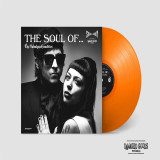
THE COURETTES - THE SOUL OF... THE FABULOUS COURETTES LP

A new pressing of last years, end of year poll favourite album THE COURETTES `The Soul Of_' LP on ORANGE VINYL! "Ultra-catchy. A wicked side of garage soul" - CLASH // "One of their catchiest pieces yet, Sassy, groovy, toe-tapping" - CLASSIC ROCK // "A giddying rush of noise" - MOJO // "The real sound of now busting through my door, new songs that keep kicking the history forward. I can't imagine my turntable without The Courettes" - David Fricke, ROLLING STONE // And features SHINDIG MAGAZINES Single of the year 2024 `Keep Dancin'.

pre-order now14.03.2025

expected to be published on 14.03.2025

19,96
Various - Salsoul Re-edits Series Three: Dimitri From Paris

Following on from his stellar record store day 2017 double-pack, Dimitri is back with another clutch of indispensable Disco edits from his impressive archive for the legendary Salsoul label. Any self-respecting DJ or Disco-lover will be brimming over with excitement upon looking at this impressive selection of tracks, all respectfully and lovingly tweaked by Disco-Dim. Salsoul Orchestra's 'Ooh I Love It (Love Break)' kicks things off, a true blue classic, just gently touched in all the right places and extended in the best possible way. Following up is Skyy's total anthem 'First Time Around', a classic Garage groove and Dimitri's version is near perfect, again, re-touched by someone who truly understands what Disco all about! Essential stuff. On the flipside The Jammers - 'Be Mine Tonight', is another massive Garage smasher, here Dimitri almost edges Shep Pettibone's OG mix into the Boogie stratosphere, just incredible! It makes perfect sense that this amazing double-pack should finish on one of Dimitri's most sought after edits - Love Committee's 'Just As Long As I Got You', an epic slab of soulful, almost dark, Disco. Absolutely huge.

out of Stock

Order now and we will order the item for you at our supplier.

29,37

Last In: 8 months ago
US - UNDERGROUND RENAISSANCE
  • 1: Night Time
  • 1: 2Snowball Season
  • 1: 3Hop On A Cloud
  • 1: 4Paisley Underground
  • 1: 5Just My Situation
  • 1: 6In & Out My Head
  • 1: 7Citroen Blues
  • 1: 8Carry Your Bag
  • 1: 9Don't Call The Cavalry
  • 1: 0While You Danced

The Helsinki-based five-piece rock band Us has been winning over British ja Japanese audiences with their unique blend of garage rock, punk, and rhythm 'n' blues. Their explosive live energy and catchy rock songs have been brilliantly captured on their debut album Underground Renaissance, originally released in the fall of 2024. Underground Renaissance is now being released on vinyl by Playground Music sublabel Lördag. In 2024 the band played nine shows at Glastonbury festival in the UK and six shows at Fuji Rock Festival in Japan. During the same year Us also released their debut album Underground Renaissance. The album has received praise from such magazines as Rolling Stone Japan, Mojo Magazine, Shindig! and Classic Rock Magazine. The songs have also enjoyed numerous plays on BBC 6 radio. In live reviews Us has been compared to early Arctic Monkeys and The Hives with Mojo Magazine describing their "blistering 3 AM show" at Glastonbury as "Dr. Feelgood-style punk-blues with the vigour of peak Ramones". In 2024 alone, Us have performed at Eurosonic and Bigpop festival (the Netherlands), Glastonbury (UK), Fuji Rock (Japan), Sziget Festival (Hungary), and Transmusicales (France), as well as headline a run of UK dates.

pre-order now07.03.2025

expected to be published on 07.03.2025

23,32
SUDAKISTAN - AUTOMATON / QUIERO SER TU PERRO
  • Automaton
  • Quiero Ser Tu Perro

Stockholm, Sweden quintet Sudakistan return with a brand new double A-sided 7" featuring "Automaton" and "Quiero Ser Tu Perro", a Spanish language translation of The Stooges' classic "I Wanna Be Your Dog". The 7" single is released on May 24 with "Quiero Ser Tu Perro" arriving digitally on March 8 ahead of the band's US debut at SXSW 2019. Featuring the band's trademark blend of punk, garage rock, psychedelia and latino rhythms "Quiero Ser Tu Perro" finds bassist Maikel Gonzalez taking on lead vocals.

pre-order now07.03.2025

expected to be published on 07.03.2025

10,04
Andre Zimmer - Wait a Minute

Andre Zimmer

Wait a Minute

12inchSEVEN7002
Seven
28.02.2025

Canada's Andre Zimmer makes his SEVEN debut with his 'Wait a Minute' EP - a stellar collection of faster, chuggy, pacey style of house gems. The EP's title track is the first to slam, with a heavy-handed 909 kick blistering beneath a chugging bassline.

Taking influence from the Berlin house scene, it serves one purpose: to galvanise dance floor energy.
Parisian producer Vitess lands a remix of 'Wait A Minute' with his '90s-focussed sound and penchant for deep, minimal sounds being the pull. Lucious pads and electro synth lines across the hip-hop influenced vocals bolster the track's impact. 'Ice Lolly' came together at a friend's pad in Los Angeles, with a jam session grabbing UKG and speed garage influences and infusing those with a distinct '90s tech house vibe.

For its '90s influences, 'Round Two' finds its muse in a classic rave organ, while other elements that evoke a sense of the heady warehouse parties from that era include sampled vinyl scratches, breakbeats, and chunky bass from his Yamaha DX200 vintage synth.

out of Stock

Order now and we will order the item for you at our supplier.

12,56

Last In: 61 days ago
Fuzzbee Morse - Dolls (Original Soundtrack)

WRWTFWW Records is very excited to announce the first ever release of the highly-sought after original soundtrack from 1987 cult horror movie Dolls by multi-instrumentalist, composer, producer, music man extraordinaire Fuzzbee Morse. The limited-edition LP is a miracle of lostthen-found VHS era film scores and is housed in a heavyweight 350gsm sleeve with a bloody cutout sticker and exclusive composer notes.

Directed by Stuart Gordon (Re-Animator, From Beyond, Robot Jox...) and released by Charles Band’s infamous Empire Pictures (which later morphed into Full Moon Productions), Dolls is 80s campy VHS horror in all its glory, a fan-favorite with all the attributes needed for a frightening popcorn night, including one hell of a soundtrack with a very welcomed heavy dose of menacing synths, thunderous orchestrations, and quirky interludes.

The haunting score comes from master Fuzzbee Morse who composed it in Richard Band’s garage with a Yamaha QX-1 sequencer, an arsenal of vintage synthesizers, and a wide array of instruments. The result is a must-have (and never released before!) soundtrack that blends horror tropes with influences ranging from Igor Stravinsky’s The Rite of Spring to Bernard Herrmann, Frank Zappa, Beethoven, Charles Ives and Eleanor Rigby!

Dolls follows the WRWTFWW release of Fuzzbee Morse’s Ghoulies II (1988) as well as 3 other soundtracks from the Empire Pictures vaults: Richard Band’s Ghoulies (1985), TerrorVision (1986), and Troll (1986). All still available – complete the collection now!

Points of interests

- For fans of soundtracks, horror, cult, synth, ambient, classical, 80s, VHS, Charles Band, Full Moon Productions, Stuart Gordon, John Carpenter, b-movies, sci-fi, Gremlins, toys, evil toys, Toys R Us, the good old days, toys you can play with at 33rpm, Christmas presents.
- First ever release for the soundtrack of cult horror movie Dolls (1987), with cut out sticker and composer notes.

pre-order now21.02.2025

expected to be published on 21.02.2025

23,49
Tesfa Williams - Beyond Today EP

Tesfa Williams celebrates his personal ancestry and the diversity of black electronic music with a name change on his Heist Recordings debut.

First things first. T. Williams is now Tesfa Williams. And although the dot is gone after the T, by taking that away, the artist openend up a whole world of meaning, personal storytelling and recognition of his roots.

“Originally when I started "T.Williams" it felt like my African first name Tesfa wouldn't be welcomed in the scene. Something I've experienced in general from school, college, work etc….. I grew up in a Rastafarian family with Carribean heritage and my parents decided to give me and my siblings African names to connect us to our African ancestry. I now feel like I’m ready to embrace this part of me as an artist and share it with the world.”

Tesfa Williams is an artist with a long history in UK club music. Long before his critically acclaimed debut album in 2024 ‘Raves of future past’, he was knee-deep in the UK grime scene and throughout the years, he has built a strong reputation in UK funky, soulful house and Garage with remixes of Latch for Disclosure and Sam Smith (yes, that track), bumping originals on Strictly Rhythm, Local Action with Julio Bashmore, and much more. On his debut for Heist, we see the artist dig deep into his black roots and deliver an EP that celebrates his eclectic sound with 4 originals full of high notes.

The ’Beyond today’ EP kicks off with ‘Moments Ahead’, a classic filter-house jam with lovely soulful chops and the perfect amount of grit. It’s the type of funky, peak-time house track that will ignite any dancefloor with its irresistible groove. ‘Get it together’ sees the artists layer some classic R&B vocals over an infectious warehouse groove. It’s the kind of track that’ll grab anyone’s attention on a first listen. The breakbeat loop in the background gives the percussion its dry immediacy and the sparse melodic hits and irresistible vocal chops turn this track into an absolute dancefloor monster.

On the flip, the London producer merges his love for soulful house with contemporary electronics on ‘Brighter life’. There’s something deliciously breezy about this song, where the vocals, chord hits, sweeps, and hits deliver a groove that’s laidback and powerful at the same time. The electronic parts of this track are cleverly laid out to contrast the syrupy sweet vocal and underline the class of the artist’s ability to effortlessly blend genres.

The EP closes with ‘Futures’, a bottom-heavy late-night burner much in the style of Dam Swindle’s 2023 Heist outing ‘Soul’s lament’ or the percussive goodness of Alma Negra tracks such as ‘Conversation’. There’s a nice blend of trippy electronics and driving Rhodes hits, which makes this a track perfect for those moments you simply want to go deep, heads-down, and feel the music.

With ‘Beyond Today’, Tesfa Williams has written a piece of music that pays homage to so many of the genres that have influenced him as well as to his black roots. ‘Beyond Today’ is a contemporary club record that oozes positive energy just the way we like it and we can’t wait to play this one out to all of you.

Enjoy the music and get ready to dance!

Lars & Maarten

out of Stock

Order now and we will order the item for you at our supplier.

11,72

Last In: 3 months ago
Various - ECHOES OF ITALY - ARTISTS IN WONDERLAND – EARLY 90S HOUSE VIBES VOL.1 LP 2x12"

Volume 1 of this expertly curated project of 90s Italian House - put together by Don Carlos.

If Paradise was half as nice… by Fabio De Luca.

Googling “paradise house”, the first results to pop up are an endless list of European b&b’s with whitewashed lime façades, all of them promising “…an unmatched travel experience a few steps from the sea”. Next, a little further down, are the institutional websites of a few select semi-luxury retirement homes (no photos shown, but lots of stock images of smiling nurses with reassuring looks). To find the “paradise house” we’re after, we have to scroll even further down. Much further down.

It feels like yesterday, and at the same time it seems like a million years ago. The Eighties had just ended, and it was still unclear what to expect from the Nineties. Mobile phones that were not the size of a briefcase and did not cost as much as a car? A frightening economic crisis? The guitar-rock revival?! Certainly, the best place to observe that moment of transition was the dancefloor. Truly epochal transformations were happening there. From America, within a short distance one from the other, two revolutionary new musical styles had arrived: the first one sounded a bit like an “on a budget” version of the best Seventies disco-music – Philly sound made with a set of piano-bar keyboards! – the other was even more sparse, futuristic and extraterrestrial. It was a music with a quite distinct “physical” component, which at the same time, to be fully grasped, seemed to call for the knotty theories of certain French post-modern philosophers: Gilles Deleuze, Félix Guattari, Paul Virilio... Both those genres – we would learn shortly after – were born in the black communities of Chicago and Detroit, although listening to those vinyl 12” (often wrapped in generic white covers, and with little indication in the label) you could not easily guess whether behind them there was a black boy from somewhere in the Usa, or a girl from Berlin, or a pale kid from a Cornish coastal town.

Quickly, similar sounds began to show up from all corners of Europe. A thousand variations of the same intuition: leaner, less lean, happier, slightly less intoxicated, more broken, slower, faster, much faster... Boom! From the dancefloors – the London ones at least, whose chronicles we eagerly read every month in the pages of The Face and i-D – came tales of a new generation of clubbers who had completely stopped “dressing up” to go dancing; of hot tempered hooligans bursting into tears and hugging everyone under the strobe lights as the notes of Strings of Life rose up through the fumes of dry ice (certain “smiling” pills were also involved, sure). At this point, however, we must move on to Switzerland.

In Switzerland, in the quiet and diligent town of Lugano, between the 1980s and 1990s there was a club called “Morandi”. Its hot night was on Wednesdays, when the audience also came from Milan, Como, Varese and Zurich. Legend goes that, one night, none less than Prince and Sheila E were spotted hiding among the sofas, on a day-off of the Italian dates of the Nude Tour… The Wednesday resident and superstar was an Italian dj with an exotic name: Don Carlos. The soundtrack he devised was a mixture of Chicago, Detroit, the most progressive R&B and certain forgotten classics of old disco music: practically, what the Paradise Garage in New York might have sounded like had it not closed in 1987. In between, Don Carlos also managed to squeeze in some tracks he had worked on in his studio on Lago Maggiore. One in particular: a track that was rather slow compared to the BPM in fashion at the time, but which was a perfect bridge between house and R&B. The title was Alone: Don Carlos would explain years later that it had to be intended both in the English meaning of “by itself” and like the Italian word meaning “halo”. That wasn’t the only double entendre about the song, anyway. Its own very deep nature was, indeed, double. On the one hand, Alone was built around an angelic keyboard pattern and a romantic piano riff that took you straight to heaven; on the other, it showcased enough electronic squelches (plus a sax part that sounded like it had been dissolved by acid rain) to pigeonhole the tune into the “junk modernity” section, aka the hallmark of all the most innovative sounds of the time: music that sounded like it was hand-crafted from the scraps of glittering overground pop.

No one knows who was the first to call it “paradise house”, nor when it happened. Alternative definitions on the same topic one happened to hear included “ambient house”, “dream house”, “Mediterranean progressive”… but of course none were as good (and alluring) as “paradise house”. What is certain is that such inclination for sounds that were in equal measure angelic and neurotic, romantic and unaffective, quickly became the trademark of the second generation of Italian house. Music that seemed shyly equidistant from all the rhythmic and electronic revolutions that had happened up to that moment (“Music perfectly adept at going nowhere slowly” as noted by English journalist Craig McLean in a legendary field report for Blah Blah Blah magazine). Music that to a inattentive ear might have sounded as anonymous as a snapshot of a random group of passers-by at 10AM in the centre of any major city, but perfectly described the (slow) awakening in the real world after the universal love binge of the so-called Second Summer of Love.

For a brief but unforgettable season, in Italy “paradise house” was the official soundtrack of interminable weekends spent inside the car, darting from one club to another, cutting the peninsula from North to centre, from East to West coast in pursuit of the latest after-hours disco, trading kilometres per hour with beats per minute: practically, a new New Year’s Eve every Friday and Saturday night. This too was no small transformation, as well as a shock for an adult Italy that was encountering for the first time – thanks to its sons and daughters – the wild side of industrial modernity. The clubbers of the so-called “fuoriorario” scene were the balls gone mad in the pinball machine most feared by newspapers, magazines and TV pundits. What they did each and every weekend, apart from going crazy to the sound of the current white labels, was linking distant geographical points and non-places (thank you Marc Augé!) – old dance halls, farmhouses and business centres – transformed for one night into house music heaven. As Marco D’Eramo wrote in his 1995 essay on Chicago, Il maiale e il grattacielo: “Four-wheeled capitalism distorts our age-old image of the city, it allows the suburbs to be connected to each other, whereas before they were connected only by the centre (…) It makes possible a metropolitan area without a metropolis, without a city centre, without downtown. The periphery is no longer a periphery of any centre, but is self-centred”.

“Paradise house” perfectly understood all of this and turned it into a sort of cyber-blues that didn’t even need words, and unexpectedly brought back a drop of melancholic (post?)-humanity within a world that by then – as we would wholly realise in the decades to come – was fully inhuman and heartless. A world where we were all alone, and surrounded by a sinister yellowish halo, like a neon at the end of its life cycle. But, for one night at least, happy.

out of Stock

Order now and we will order the item for you at our supplier.

28,99

Last In: 7 months ago
Mr K Edits - Love Money/Smack Dab in the Middle  7"

Mr. K returns to the fertile ground of the Paradise Garage for his latest with two certified floor-fillers closely tied to the legendary club.

TW Funkmasters’ “Love Money” took an unusual path to its eventual elevated status as a dance classic. The brainchild of UK radio reggae jock Tony Williams (the “TW” in the group’s name), it was conceived in response to seminal rap release “Rapper’s Delight,” but with reggae superstar Dennis Brown’s 1978 hit single “Money In My Pocket” as the lyrical inspiration. Indeed, the vocal version of the Funkmasters’ song is considered the UK’s very first homegrown rap tune. But it was the flip side that garnered the most attention in New York however. “The original track was quirky and worked at the Garage,” Danny Krivit says, “but when the dub came out, it really blew up everywhere. After that very few people played the vocal.” Krivit’s edit here takes the influential, futuristic dub and tightens the arrangement up for the 7-inch format. “Love Money” went on to heavily influence the New York City dance underground, with homages coming in the form of subtle tributes (Mateo & Matos’ “Love Style”) to a virtual remake from Larry Levan himself (Man Friday’s “Love Honey, Love Heartache”) to the untold records that have sampled or been influenced by the spacey, heavy groove.

We’re back closer to home and a more traditional source for Garage classics with our flip side, Janice McClain’s “Smack Dab In The Middle.” The Philadelphia born and bred singer burst out of the gate with this very Philly sounding single in 1979. Written and produced by her uncle, the song was recorded when McClain was all of fifteen years old, a fact made more astonishing by a commanding vocal performance that resonated immediately with listeners. Recognizing a good thing when he saw it, disco maven Ray Caviano picked the song up for his newly minted RFC label and enlisted Larry Levan himself to mix it for 12-inch release. It is Levan’s version that provides the jumping off point for Krivit’s edit here — “the original 7-inch version the way it was never seemed worth playing,” Krivit says — and he makes the most of the jazzy Philly disco groove, injecting extra energy in the early minutes of the song with a tasty filtered break unique to this mix.

Pressed and mastered with DJs in mind, this loud and crystal clear single is the perfect combination of bonafide Garage classics and the talents of Mr. K, all on one compact piece of vinyl.

out of Stock

Order now and we will order the item for you at our supplier.

11,98

Last In: 87 days ago
Toribio ft. Sharin - Daylight

Toribioft.Sharin

Daylight

12inchBDA003
BDA Records
27.01.2025

After the worldwide success of Toribio's "Bring Dat Jazz" 12", selling over 1K units worldwide - the mainstay NYC producer returns with another record on his own BDA Imprint (in collaboration with A-Trak and Chromeo's label Juliet) for a special 12" with a Crackzat remix.
"Daylight" is a warm, uplifting deep house jam with skippy beats, warm rhodes, bass and percussion. Vocals come from Toribio's sister Sharin
with an uplifting message referencing classic 90s house lyricism.
Originally released digitally in 2024, the raw humility of that song won the hearts of listeners the world over, with nods from Resident Advisor and Spotify's coveted Pollen playlist.

Coming in next on the 12", the always on Crackazat turns up the musicality even further, with cascading pianos and strings that anchor the emotion of "Daylight", with a sly bassline nod to Speed Garage sounds. Another hit from Bristol's masterful jazz-house expert.
Also included on the 12" is Toribio's stripped down, deep-in the groove Alternate Mix.

out of Stock

Order now and we will order the item for you at our supplier.

15,55

Last In: 13 months ago
Spincycle - Making Faces

Mint Condition - A record label focused on excavating the outer fringes of classic House and Techno. Unreleased mixes, classics, overlooked gems and never heard before material, mined from the last 30+ years of contemporary dance music are the order of the day. From Chicago, Detroit and New York, London, Leeds, Berlin and beyond. Mint Condition have got their digging hats on to bring you exclusive heat and those rarer than rare jams that have been in your wants list for years. Dig in......

Following on from highly successful releases on seminal labels such as Surreal, Low Pressings and their own Geek imprint, Andy Davies & Dave Clements, aka Spincycle, unleashed 'Making Faces' on Bushwacka's legendary Oblong Imprint. Originally released in 2002, this release perfectly showcases the duo's unique take on the tech-house & garage sounds that fuelled the UK underground. Over the next 2 decades this classic would become an in demand rarity, as the eye watering discogs prices will attest, so a reissue has been long overdue.

'Making Faces' opens with infectious bongo led percussion, building with crisp hats and snares, the heavyweight bass is deep and warm, dreamy chords add to the atmosphere, before a soaring lead line that oozes with techy soul, builds and drops in all the right places. Next up, UKG inspired 'Twister' is more raw and uncompromising in its approach. Energetic swinging rhythms underpin a monstrous sub bass line to die for, as if that wasn't enough, the duo manage to add yet another rolling bass line showcasing production and programming skills of the highest order.

This is indeed a killer 12", packed with energy and heat that sounds as fresh and exciting as ever, and what's more your dancefloors will shudder!! 'Making Faces' has been legitimately re-released with the full involvement of Spincycle, lovingly remastered by London's Curve Pusher from the original DATs especially for Mint Condition. 100% legit, licensed and released. Dug, remastered, repackaged and brought to you by the caring folks at your favourite reissue label - Mint Condition!!

out of Stock

Order now and we will order the item for you at our supplier.

14,24

Last In: 40 days ago
Items per Page:
N/ABPM
Vinyl