“Gun The Man Down ” by Dice The boss aka Pama Dice was first released in 1969 on the Trojan sublabel Joe with the track “Thief” by Joe Mansano on the B side. “Thief” is also reissued by us on a separate single dedicated to Joe Mansano.
“Your Boss DJ” was also released in 1969 on the Joe Label with the track “Read The News” by Joe All Stars on the flip.
Both titles are skinhead reggae classics that have never been reissued until now.
About Joe Mansano:
“Gun The Man Down ” and "Your Boss DJ" were both credited to Joe Mansano, real name Joel Mansano, who also produced the songs. Joel was a Trinidadian who moved to London in 1963. He was a record shop seller, song writer and producer and became heavily involved in the early reggae era producing and writing tracks for several Jamaican artists, enough for Trojan to dedicate a label to him: the “Joe” label aimed at the emerging Skinheads market. He also owned a shop the Joe's Record Centre in Brixton and recorded two handfuls of singles under the name Joe The boss…
About Dice The Boss/ Pama Dice:
Not much is known about Dice The Boss. His real name was Hopeton Reid and he was alternatively known as “Pama Dice”. But we know more about Pama Dice thanks to Gaz Mayall!
"Pama Dice was one of Prince Busters ‘no-shoes’ ‘Sunday school gang in west Kingston Jamaica. According to the Prince there wasn’t a car that Pama couldn’t nick. He used to nick the cars uptown with no shoes on & take them to the ghetto to teach the youth to drive. They were called the Sunday school or no-shoes gang as they were so poor that they only had one pair of shoes each & only wore them to church on Sundays. Pama Dice rose in the ranks to become one of Prince Busters main sound system DJs before emigrating to London in the late sixties where he MC’d for Duke Vin & recorded many great records for the UK/Jamaican booming new Reggae market in its infancy on the shoulders of the Bluebeat & Ska & Rock Steady music scene."
Source Gaz Mayall 27/2/2021
Search:classic man
- A1: I Can't Lose
- A2: Walking
- A3: Key To The Highway
- A4: Crippled Clarence
- A5: Pet Cream Man
- B1: Messin' With The Kid
- B2: Don't Quit The Man You Love For Me
- B3: Rolty's Banjo Shuffle
- B4: Strobe Lemming's Lament
- B5: Long Distance Call
- B6: Feel So Bad
After briefly replacing Eric Clapton in John Mayall’s Bluesbreakers, guitarist/bassist Geoff Krivit formed Doctor K’s Blue Band with pianist Richard Kay and singer/harmonica player Mick Hasse, the lineup completed by bassist Harold Vickers, slide guitarist Roger Rolt and future Steve Hillage drummer Eric Peachey. Their self-titled debut had top-notch renditions of blues classics such as ‘I Can’t Lose,’ ‘Key To The Highway’ and ‘Pet Cream Man,’ as well as spirited originals such as ‘Strobe Lemming’s Lament’ and the piano stomp ‘Crippled Clarence,’ but the album failed to break through. Grab a copy of this rarity to be blown away!
- A1: Kemp's Jig
- A2: Sir Gavin Grimbold
- A3: Touch & Go
- A4: Three Jolly Butchers
- A5: Pastime With Good Company
- A6: The Unquiet Grave
- B1: Estampie
- B2: Crossing The Stiles
- B3: The Astrologer
- B4: Tea Wrecks
- B5: Juniper Suite
- B6: The Devil & The Farmer's Wife
Non-standard prog act Gryphon made their mark by incorporating abandoned instruments and ancient classical elements in their work, giving their self-titled 1973 debut outstanding differences to standard rock fare. With co-founder Richard Harvey on recorders, mandolin, harpsichord, and glockenspiel and Brian Gulland, on bassoon, crumhorns, and vocals, backed by guitarist Graeme Taylor and drummer/percussionist Dave Oberlé, Gryphon expertly channelled contemporary English folk through forgotten medieval and Renaissance styles; unlike later rock-oriented work, Gryphon showcases the band’s unadorned beginnings.
Repress!
The neo-soul movement of the late 1990s, which fused classic soul sounds with contemporary elements, heralded the arrival of some of the greatest R&B recordings of the decade. Albums like Lauryn Hill's The Miseducation Of Lauryn Hill, D'Angelo's Brown Sugar, and Maxwell's Urban Hang Suite were all born of this trend, while artists such as Mos Def, The Roots, and Common whole-heartedly embraced the sound, creating some of their most timeless material in the process.
These are some of neo-soul's great successes, but a slew of underground acts were what set the initial blueprint for their more pop-friendly acquaintances to follow. Acts such as R&B duo Groove Theory. The New York pair, consisting of singer/songwriter Amel Larrieux, and producer Bryce Wilson, (A veteran of the legendary 80's electronic group Mantronix) helped set the tone for neo-soul via their lone studio release, the self-titled Groove Theory.
The nearly hour-long record features 14 tracks of Wilson's smooth soul arrangements and atmospherics merged with golden era boom-bap beats, and Larrieux's siren-quality vocals, inspired equally by a combination of Native Tongues, peak Marvin Gaye, Joan Armatrading, Soul II Soul, as well as elements of breakbeat, jazz fusion, and even trip hop. It's a definitive, but often overlooked classic of the 1990s, which helped expand contemporary R&B's sound, render Billboard hits out the tracks "Tell Me", "Keep Tryin'", and "Baby Luv", and even found the time for a Todd Rundgren cover.
On the cusp of Groove Theory's 25th anniversary, Get On Down is proud to bring you this vinyl reissue of an underrated 90s gem. The original record has never been re-released on wax since it's 1995 debut, but is now presented here with fully remastered audio, and bundled in a full-color insert sleeve with complete lyrics and liner notes.
Another Interplanetary STAR CREATURE team up for a Chicago Tokyo expedition across a soundscape ranging from bossa nova lounge to pre-vaporwave exotica; new age city pop to minimal library boogie. JUNE CHIKUMA is best known now for her ground breaking Video Game soundtracks throughout the late 1980s and early 90s, most notably the now cult-classic status Bomberman Hero OST for Nintendo. During this same period she produced many recordings for a wide variety of clients including Japanese Public Transit Commercials, Video Game Arcades and VHS Nature Documentaries. STAR CREATURES combed her archives and selected a nice mix of tracks as entry point into her work. These tracks have been rescued from obscurity, remastered and waxed up for contemporary universal enjoyment. 500 Copies. Pressed in Detroit.
Burning Hell was recorded in 1959 in Detroit, MI, but wasn't released until 1964. Even then, it was only available in the U.K.. This 180-gram vinyl pressing marks the first official single LP worldwide release the album has seen. Pressed at QRP as part of the Bluesville Records / Acoustic Sounds series, the album features Hooker solo as he plays originals and classics. AllMusic states that, on this album, "Hooker shows himself to be an excellent interpreter who could have held his own with Delta bluesmen of any era."
Craft Recordings, in partnership with Acoustic Sounds, is releasing Burning Hell as part of the Bluesville Series. Bluesville is a brand-new hub for all things blues, including vinyl reissues, curated playlists, and more! Inspired by the original label imprint established under Prestige Records in 1959, the Bluesville Series will highlight the many trailblazing musicians who contributed to the rich tradition of the blues, including titles from legendary artists on labels such as Vee-Jay, Riverside, Vanguard, Stax, and Rounder Records.
The albums in the Bluesville Series are pressed on 180-gram vinyl at Quality Record Pressings and feature all-analog (AAA) mastering by Grammy-nominated engineer Matthew Lutthans at The Mastering Lab at Blue Heaven Studios, plus a tip-on jacket and obi strip with notes written by Grammy-winning producer, writer and musician Scott Billington.
Cleveland death metal legends-in-waiting 200 Stab Wounds have returned with Manual Manic Procedures, a superlative sophomore effort that follows 2021’s Slave to the Scalpel, their tour de force debut. The new album is a brutal slab of old school death metal with a contemporary edge. Not for the faint-hearted, Manual Manic Procedures may well be the album that puts classic gore-themed ferocity back into the metal community’s collective consciousness. The band's debut, "Slave to the Scalpel" saw 200 Stab Wounds insinuate themselves into the minds of extreme metal fans, leading to praise from Pitchfork for their “unpretentious brilliance, pitch-black sense of humor” and an “aesthetic that’s built around a chugging, groovy riff that stomps down a path of destruction.” Manual Manic Procedures sees the band upping the ante both musically and lyrically. Ultimately, for 200 Stab Wounds, it’s all about creating art that they enjoy. “I know that if we like it, our fans will like it,” says Buhl. “That's really all that matters to us. And if we keep touring, it's just gonna get bigger and bigger. Then everyone's happy, far as I'm concerned.” The songs on Manual Manic Procedures are not safe for work – perhaps unsafe most anywhere. But that’s its dark charm in a world where even heavy music can play it too safely. 200 Stab Wounds have crafted Manual Manic Procedures for themselves and like-minded brethren: thrill-seekers, carnage cravers, horror fans, and aficionados of the most extreme metal. Above all, 200SW created a future death metal classic.
A true jack-of-all-trades, he has played and recorded virtually every style of music you can think of - Soul, Reggae, Jazz, Spirituals, Blues, African, Electro. Etc... Initially trained on classical piano, his musical career began in Brussels and Paris in the 50s. In the 60s, he flew to the Congo as a member of Joseph Kabasele's African Jazz group, Le Grand Kalle. Next came Cameroon in 1963, where he formed his own group before returning to Paris in 1965. For the Manu 76 album, we are - obviously - in 1976, still in Paris. Four years after his international breakthrough with his hit Soul Makossa, Manu assembled a prestigious cast of musicians including Jo Tongo on bass, Slim Pezin on guitar, Lucien Dobat (from Kassav) on drums, Alex Francfort on piano and 7-year-old Georgia Dibango as guest vocalist.
- Roland Alphonso - Live Desire (Trombone Version)
- The Skatalites - Live Wire
- Lynn Taitt - Ska-Ta-Shot (Take 2)
- Roland Alphonso - Step Down (Low Riff)
- Jackie Mittoo - Warlock
- Roland Alphonso - Determination (Take 2)
- Roland Alphonso - Determination (Take 5)
- Don Drummond - Love In The Afternoon
- Roland Alphonso - El Cid (Take 4)
- Johnny Moore - Red Is Danger (Take 3)
- Roland Alphonso - V.c.10 (Take 3)
- Johnny Moore - Yogi Man (Take 1)
- Roland Alphonso - Tough Talk (Take 1)
- Roland Alphonso - Tough Talk (Take 4)
“On August 5th 1962, after 300 years of British rule, which had soaked the earth of the island in blood, Jamaica was finally independent. The country that the British left behind was certainly a place of widespread poverty and deep inequality, but there seems to have been a real burst of confidence that came with independence. Newsreels of the day show well-dressed crowds reacting with enthusiasm and excitement, and the era found its perfect soundtrack in the boldness and exuberance of ska music, which was erupting all over the island.
This optimistic mood found probably its greatest artistic expression in the music of the Skatalites, who formed in June 1964 as a kind of Jamaican supergroup. Philip “Justin” Yap was a young, upcoming producer who had used members of the Skatalites for his first tunes, recorded either at RJR (Radio Jamaica and Redifussion) or at Federal studios. As Steve Barrow documented in the sleevenotes for Pressure Sounds’ reissue of the classic “Ska-Boo-Da-Ba” album, Justin had also befriended Clement “Coxsone” Dodd, and when Coxsone opened his own Studio One facility in December 1963, Justin immediately switched most of his production work to this new recording room. Studio One opened just in time to catch the formation of the Skatalites, and is where Justin recorded most of his classic Skatalites sides. He also recorded lots of excellent instrumentals with a smaller brass section, still mainly using members of the Skatalites, but crediting instead the composer or arranger of the tune. Combined with Coxsone’s own recordings, these productions for Justin’s Top Deck and Tuneico labels really captured the members of the Skatalites at their magnificent best in the unique atmosphere of Studio One.”
Blue[26,85 €]
First in a series of reissues from Pierre Jaubert’s Parisound studio archive on Strut Record IS Lafayette Afro Rock Band's elusive funk/Afro original album, 'Malik,' originally released in 1974. Transparent blue colored LP
In 1971, an undocumented seven-member Afro-American ensemble known as the Bobby Boyd Congress made a transformative journey from the United States to France. Bandleader Frank Abel recollects, "We sensed that the soul and funk market was saturated back home, and our original plan was a brief 6-month stint in Paris. Surprisingly, we ended up staying for a decade." Upon lead singer Bobby Boyd's return to the U.S., the group rebranded as Ice and crossed paths with independent producer Pierre Jaubert, a seasoned studio professional with credits on groundbreaking recordings alongside Charles Mingus, John Lee Hooker, and Archie Shepp, among others.
Drawing inspiration from Motown's work ethic, Jaubert initiated regular rehearsals with Ice. He recalled, "I didn't want to mimic Berry, but with seven talented musicians collaborating daily, something unique emerged." The band, residing in Paris and immersed in the African-dominated Barbesse district, began infusing African elements into their music frequently performing with Paris-dwelling Camaroonian and legendary composer Manu Dibango.
Under the new moniker Lafayette Afro Rock Band, the group's music transitioned to predominantly instrumental compositions, featuring a denser Afro-funk sound. Their inaugural recording with the new name, 'Soul Makossa,' included a compelling rendition of Dibango's classic and the impactful break in 'Hihache.' The subsequent release a year later, 'Malik,' refined their sound with the percussive Afro party jam 'Conga,' the atmospheric vocoder and piano-led piece 'Djungi,' and the robust funk of 'Darkest Light.' Despite a limited impact upon its initial release, 'Malik' found appreciation as hip-hop culture flourished in the '80s, establishing itself as a rich source of samples and riffs. 'Conga' was featured in the 'Ultimate Breaks And Beats' series, while the opening horn line from 'Darkest Light' became a pivotal hip-hop motif, employed by Jay-Z, Public Enemy, Wreckx 'N' Effect, and many others
Second in a series of reissues from Pierre Jaubert’s Parisound studio archive on Strut Record IS Lafayette Afro Rock Band's elusive funk/Afro original album, 'Soul Makossa' originally released in 1973. Transparent blue colored LP
In 1971, an undocumented seven-member Afro-American ensemble known as the Bobby Boyd Congress made a transformative journey from the United States to France. Bandleader Frank Abel recollects, "We sensed that the soul and funk market was saturated back home, and our original plan was a brief 6-month stint in Paris. Surprisingly, we ended up staying for a decade." Upon lead singer Bobby Boyd's return to the U.S., the group rebranded as Ice and crossed paths with independent producer Pierre Jaubert, a seasoned studio professional with credits on groundbreaking recordings alongside Charles Mingus, John Lee Hooker, and Archie Shepp, among others.
Drawing inspiration from Motown's work ethic, Jaubert initiated regular rehearsals with Ice. He recalled, "I didn't want to mimic Berry, but with seven talented musicians collaborating daily, something unique emerged." The band, residing in Paris and immersed in the African-dominated Barbesse district, began infusing African elements into their music frequently performing with Paris-dwelling Camaroonian and legendary composer Manu Dibango.
Rechristening themselves Lafayette Afro Rock Band, the group's musical direction shifted towards predominantly instrumental compositions, characterized by a weightier, more intricate Afro-funk sound. Their debut recording under this new moniker, 'Soul Makossa,' made a powerful impact with a dynamic rendition of Dibango's classic, coupled with the intense break of 'Hihache' and the contagious 'Nicky.' Initially released by Musidisc in France and later in the U.S. via Editions Makossa, the album omitted the title track due to publishing clearance issues.
Despite modest sales upon its initial release, the album's enduring influence became evident as hip-hop culture surged in the '80s, establishing it as a primary source for samples and riffs. The iconic 'Hihache' break found fame in Biz Markie's 'Nobody Beats The Biz,' and tracks from the album were lifted by LL Cool J, The Beatnuts, Kruder & Dorfmeister, and numerous others.
- A1: The Sound Of Love Feat Hard Ton
- A2: The Sound Of Love (Speechless)
- A3: Et Qua Je Dorme Feat Miriam Sekhon (Andras Remix)
- A4: Your Ghost In Me (Live At The Day When Time Stopped Moving)
- B1: The Sound Of Love (Eden Burns Remix)
- B2: Sergio Leone (Remix V1) (Eden Burns Remix)
- B3: Sergio Leone With Eden Burns (Remix V2)
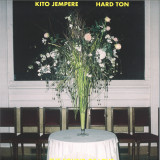
As the summer season approaches, here comes Kito Jempere and Hard Ton with a perfect summer jam! Taken from upcoming fifth Kito Jempere album, ''The Sound of Love'' is a classic early nineties balearic beat ballad - 96 beats per minute of morning bliss, mellow
pads, enigma-esque drums and beautiful vocal drama by one and only Hard Ton.
Besides the title track and a new club driven remix from man-of-the-hour Eden Burns, vinyl is packed with an array of old and new goodies. Much requested Andras remix from 2020 previously available digitally only. Live version of previous Hard Ton collaboration, ''Your
Ghost in Me'', played by 8-piece Kito Jempere Live Band. Plus another two massive and previously ''digital only'' remixes from Eden Burns for all your dance-club needs. And all this comes with a beautiful sleeve from Berlin based photographer Alexey Kiselev.
- A1: Clouds Of Michigan
- A2: Unite & Ignite
- B1: Detroit Techno City Featuring Rbj
- B2: Analog Intelligence Featuring Jon Dixon
- C1: Just The Groove Featuring Mr V
- C2: Wilin' Out Featuring Ob Ignitt
- C3: Great Lakes Homes Featuring Luke Hess
- D1: Nordhouse
- D2: Endless Fantasy Featuring Mesha Monique
- D3: At Port Crescent
- E1: Waxing Gibbous Featuring Taho
- E2: Belle Isle Beach Daze Featuring Milton Jackson
- F1: Red Stop
- F2: Galaxian
- G1: Of The Fire
- G2: 9Th Dimension
- H1: Moments Like This
- H2: Still Here Featuring Walter "Hazmat" Howard
"Timeless Times," the first solo album from Detroit’s Brian Kage, is a masterful blend of classic house rhythms with the distinct edge of Detroit techno. Through this ambitious 19-track collection, Kage weaves a sonic tapestry through emotional landscapes, marked by ambient, and personal nostalgic vignettes that evoke a sense of timeless musical exploration.
Although this is Brian’s first solo album, he was not alone on this adventure. With “Timeless Times,” you will hear some exciting collaborations between Kage and legends like Mr. V, Milton Jackson, Jon Dixon, OB Ignitt, Luke Hess, Taho, Mesha Monique, RBJ, and many more surprises. Set to be released in early May 2024 on Brian's own label, Michigander, "Timeless Times" is not just an album; it's an auditory experience that encapsulates the very spirit of Detroit's electronic music scene along with his rich set of experiences throughout the beautiful state of Michigan.
- A1: Dennis Coffey And The Detroit Guitar Band - Scorpio
- A2: The Jimmy Castor Bunch - It's Just Begun
- A3: B T. Express - Energy Level
- A4: James Brown - Get On The Good Foot
- A5: Afrika Bambaataa & The Soul Sonic Force - Planet Rock
- B1: Manu Dibango - Soul Makossa
- B2: Esther Williams - Last Night Changed It All
- B3: The Mohawks - The Champ
- B4: Herman Kelly & Life - Dance To The Drummer’s Beat
- B5: Spanky Wilson - Sunshine Of Your Love
- C1: James Brown - Give It Up Or Turnit A Loose
- C2: Candido - Soulwanco
- C3: Arthur Baker - Breaker's Revenge
- C4: Manu Dibango - The Panther
- D1: Abaco Dream - Life And Death In G & A
- D2: The Jackson 5 - Dancing Machine
- D3: Mongo Santamaria - Cloud Nine
- D4: Edwin Starr - I Just Wanna Do My Thing
- D5: Badder Than Evil - Hot Wheels
Compiled by legendary producer Arthur Baker, ‘Breakers Revenge’ is a near-definitive collection of original Funk, Soul, Latin, Disco and Electro classic tracks from 1970-1984. These tracks, a combination of classics and obscurities, have all since become legendary to Breakdancers everywhere.
First played at South Bronx block parties, community halls and park jams in the 1970s and 80s, spun endlessly by the first three major hip-hop DJs – Kool Herc, Grandmaster Flash and Afrika Bambaataa – and found in the record crates of any DJ of note ever since. Seminal funk and soul tracks such as Dennis Coffey’s ‘Scorpio’, The Jimmy Castor Bunch’s ‘It’s Just Begun’, James Brown’s ‘Get on the Good Foot’, The Mohawks’ ‘Champ’ sit side-by-side here with the ground-breaking, classic electro of Afrika Bambaataa’s ‘Planet Rock’, and Arthur Baker’s own definitive ‘Breaker’s Revenge.’ Breakdancing has come a long way from its New York roots to its respected position as an art form today where, for the first time ever, it is to be featured in the Olympics held in Paris this August 2024.
The ‘breakbeat’ remains at the very heart of hip-hop, the mercurial funk, soul and disco tracks, always 100% guaranteed to get B-Boys, B-Girls and Breakdancers moving at any block party, with the percussive breakdown of each track the pinnacle soundtrack to any dance/battle between Breakdancers of any note. Similarly these tracks have been sampled many 1000s of times over by every hip-hop artist and producer of note. KRS-ONE, Marley Marl, Kanye West, Jay-Z, Public Enemy, Eric B, The Fugees, Outkast, Mos Def, Main Source, Jungle Brothers, LL Cool J, De La Soul and, well, everyone!
Compiler Arthur Baker played a pivotal role in hip-hop history when in 1982 he produced Afrika Bambaataa’s seminal ‘Planet Rock’ (as featured here), introducing electronic instruments into hip-hop for the first time ever and in the process created electro. After ‘Planet Rock’, Arthur Baker went on to remix or produce every major artist of note – from New Order to the Rolling Stones, Al Green to the Pet Shop Boys
Repress
Cinthie Christl is a powerhouse of a DJ, producer, label manager, record store owner and all-round house music aficionado. Shall Not Fade is excited to announce Cinthie is joining the family to mark the 60th release on the label. Free Fall EP shows off the German polymath's expansive musical knowledge, developed through decades of spinning vinyl.
The 4-tracker kicks off with "Offenbach Anthem" bounces along with a varied post-disco inspired beat and oh-so-deep bassline that strikes against the aerated chords of the melody. Dramatic strings add to the disco flavour, the fluid and glittery opener cruises into the tight, 4-to-the-floor business and stuttering stabs of "13 Steps To Heaven".
Rave energy takes over on "Oh No No No"; organ takes centre stage blending with crooning diva vocalisations - releasing the tension of the last track into an overflow of euphoria. "What You Mean To Me" closes the EP with a slice of the super-smooth classic house that Cinthie is known for; infectious grooves and perfect lulls forming a triumphant end to the record.
Wewantsounds is delighted to announce the reissue of Norio Maeda's cult classic "Rock Communication Yagibushi" released in Japan in 1970. The album has since become a Japanese Jazz Funk cornerstone and is now highly sought-after on the international DJ scene. The album reinterprets 14 traditional Japanese folk songs into jaw-dropping Jazz Funk instrumentals featuring killer arrangements by Maeda that would fit perfectly between David Axelrod and Lalo Schifrin. One of the most prolific Nippon arrangers, Norio Maeda on a par with Yuji Ohno and Kentaro Haneda and this album has long been on many collectors' wantlist. "Rock Communication Yagibushi" is reissued internationally for the first time, with newly remastered audio, original gatefold artwork and new liner notes by Paul Bowler
Thanks to the success of his productions and his remixes, all the works printed on vinyl made by Luca LTJ Xperience Trevisi have been snapped up among his fans and DJs from all over the world.
From his past catalog there was still a complete album released only in Compact Disc and in digital format in 2013: Ain't Nothing But A Groove, left behind not because it had anything less than the others but simply to alternate new releases with catalog ones.
Now it is finally being printed.
The album, strictly in the DJ Friendly version, double vinyl with only two tracks on each side, contains some of his Nu Disco Funk pearls such as: What I Feel, Linear Funk and Get Down. Luca LTJ Trevisi (LTJ Xperience) began his career as a DJ and producer in the 80s.
As resident DJ of two of the most famous Italian clubs, the Kinky in Bologna and the Cap Creus in Imola, he was one of the first Italian DJs to play House Music and to revive that particular selection of Black Music called Rare Groove mixed with Jazz and Latin-Bossa who gave birth to the Acid Jazz movement at the end of the 80s.
His first official release was in 1988 and was titled First Job, paired with Kekkotronics, and was also the first album from Irma Records. The song was included in many compilations and many DJ playlists around the world. In the following years, among his singles we find some song forms that anticipated the Breakbeat genre such as Do n't Stop The Sax and Funky Superfly. He produced Tameka Starr's single Going In Circles, also for Irma Records, which has become a classic of the Downtempo/R&B genre.
In the mid-90s he produced some Italian Acid Jazz groups such as Bossa Nostra and Live Tropical Fish and began to select Rare Grooves compilations that have become classics such as Groovy and Suono Libero. At the same time he also started playing outside Italy, in particular at the Blue Note and the Jazz Café in London, at the
Giant Step in New York and at the Montreaux Jazz Festival in Switzerland. In 1999 he released his first album under the pseudonym LTJ Xperience entitled Moon Beat which featured Ohm Guru in
the production and Taka Boom and Jackson Sloan as vocal guests. Two tracks from the album have become club classics:
the Brazilian House version of Sombre Guitar and the chill out Moon Beat. His second album in 2003 entitled When The Rain Begin To Fall features Joe Bataan in the reinterpretation of his most famous song Ordinary Guy which has become a Gilles Peterson classic.
After some singles including Organ Mind / I Love you (Larry Heard's favorite track) he dedicated himself to the world of the Nu Disco genre, releasing 5 albums in the genre to date. The latest Deepening of A Groove contains Bad Side with the American singer Anduze on vocals, which is one of his most popular hits, adored by Moodyman so much that he included it in the music of Playstation's Gran Theft Auto which sees him as the protagonist with his avatar.
First time out for this wildly raw dubplate, sister-recording to the Pablo master-rhythm, shot through with other-worldly, illusively allusive incantation.
Surely that's Family Man stalking a sunken cavern, and his bro battering all seven shades out of his drum-kit, like Meters on fire, and Chinna on guitar, glazed and violent. The mixing rears up right in your face.
Producer Gussie Clarke says Theophilus 'Easy Snappin' Beckford is playing piano, with the front removed so he can strum the strings (like he finally snapped) — but he credits the work overall to Augustus Pablo.
Transferred from acetate — fuss-pots don't grumble, just be humble — though the flip brings a clutch of criss, unmissable alternates, direct from Gussie's tape-room (where the files are entitled 'Classical Illusion / The Sun').
Heavy, heavy funk. Simplicity People dug in. Stunning.
In a heartfelt tribute to Mike Wells, who tragically passed away in 2022, Viasonde, with the blessing of the Wells family, embarks on a mission to reintroduce Gridlock to the world. The four main Gridlock albums will be reissued on vinyl for the first time, starting with "The Synthetic Form" double LP.
Available on June 7th, this limited edition release will be featured on clear vinyl with black and bone splatter alongside black vinyl. Additionally, 50% of the proceeds from LP sales will be donated to the American Foundation for Suicide Prevention, honoring Wells' memory. Both formats are extremely limited and Non-Returnable.
In the mid-90s, a resurgence in Electro-Industrial was firmly focused on dance-floors. At this pivotal time, two San Francisco metal scene defectors, Mike Wells and Mike Cadoo, connected through a mutual friend. Bonding over their shared appreciation for non-metal influences, Wells, armed with a sampler and a couple of synths, had crafted a few tracks. Cadoo swiftly added vocals to these compositions, and thus, Gridlock was born.
With relentless dedication, the duo embarked on sculpting a grittier, more ominous variant of electro-industrial. Steering clear of the upbeat rhythms typical of the genre, they opted for a dystopian, dirge-like pace. Drawing inspiration from iconic acts like Skinny Puppy, Einsturzende Neubauten, and Fields of the Nephilim, they pieced together the Sickness demo. Eager to share their creation, they distributed the demo to anyone who would lend an ear, including many users on the rec.music.industrial newsgroup. Despite numerous rejections from industrial music labels citing its lack of danceability, Pendragon Records saw potential and took a chance.
Thus commenced the earnest endeavor of crafting their debut album, "The Synthetic Form." Upon its release, it marked a pivotal moment in industrial music, ushering in a fusion of classic, experimental, and dystopian ambient elements. Pendragon Records tantalizingly teased the album as "Unleashing a World of Your Demons," offering a glimpse into its bleak exploration of themes like regret and personal turmoil.
Over the years, Gridlock evolved through three subsequent albums, progressively exploring diverse sonic territories beyond the confines of industrial music. However, their journey met an acrimonious end with the duo parting ways, leaving behind their albums as poignant relics, elusive on digital platforms and sought after by collectors at premium prices... until now.