Cerca:clear path ensemble

Generi
Tutto
  • 1
CLEAR PATH ENSEMBLE - Solar Eclipse LP

As pockets of new jazz scenes emerge around the world, it's apparent that New Zealand's bubbling microcosm in Wellington interprets the genre through a unique lens. Clear Path Ensemble bottles the energy of that burgeoning movement and distils it into moody morsels of differing styles. From electric jazz to ambient, experimental, house and funk - it's a DIY, jam-session attitude towards composition, as the band members freely cherry-pick from a vast orchard of influences. Citing inspiration from 70s ECM catalogue, the ensemble channels the "expansive and astral" elements of electric jazz, with an introspective dynamic. At times it's fused with catchy synth hooks, smooth basslines and shuffling beats, while other tracks morph into moody electronic soundscapes, and even Sun Ra-esque free jazz. Led by percussionist Cory Champion, the band released their debut self-titled album in 2020, followed by a headline performance at the 2021 Wellington Jazz Festival. Champion has played drums alongside some of New Zealand's most revered contemporary musicians (Lord Echo, Lucien Johnson and Mara TK to name a few), and also produces leftfield deep house and techno under the name Borrowed cs, which partly informs the ensemble's electronic production.

pre-ordina ora09.09.2022

dovrebbe essere pubblicato su 09.09.2022

17,86

Last In: 2026 years ago
Various - Digging Central Asia: Musical Archaeology Along the Silk Road LP

Death Is Not The End collaborate with Uzbek label Maqom Soul to deliver an LP counterpart to last year's mixtape of the same title, compiling specially picked & fully licensed individual belters from the ex-soviet studios of Central Asian republics between 1978 and 1989 - incl. Uzbek, Tajik, Kurdish & Uyghur artists pulling traditional folk motifs together with pop & rock and psych elements.

"These recordings do not form a smooth or coherent history. They feel more like a sequence of discoveries made at different moments and in different circumstances. Songs and instrumental pieces that once lived inside specific contexts radio broadcasts, philharmonic programs, touring routes now sit side by side, revealing hidden connections as well as clear fractures between them.

Nasiba Abdullaeva appears here as a voice from the end of an era. Trained within a conservatory system, she worked inside the format of the Soviet pop song while filling it with melodic logic that did not come from Moscow or Leningrad. Her voice is soft and sustained, shaped by Eastern melisma, and it never functions as decoration. Even in tightly structured songs there is a sense of resistance, an effort to preserve a musical language rooted in Uzbek tradition rather than fully adapted to an all Union standard.

The ensemble Sintez, later renamed Navo, represents a different path. Beginning as a student rock group, the band was gradually absorbed into the official VIA system with all its limitations and compromises. Yet it was precisely within those boundaries that Sintez and Navo developed a recognizable sound. Electric guitars and jazz rock harmonies do not overpower the folk material but remain in tension with it. Their recordings feel like negotiations between what the musicians wanted to play and what they were allowed to perform.

The Tajik ensemble Gulshan reflects an institutional approach carried to a high professional level. Formed under television and radio structures, the group treated folk material almost as a written score. Carefully constructed arrangements, close attention to orchestration, and restrained use of pop techniques define their sound. There is less spontaneity here, but a strong sense of discipline and structure, where national melody becomes part of a carefully controlled sonic framework.

Koma Wetan occupies a very different space. Formed in the 1970s, this Kurdish rock group approached poetry and folklore as tools of cultural assertion. Their psychedelic rock never feels like a stylistic borrowing. Instead it functions as a contemporary vessel for language and themes that might otherwise have remained unheard. Even today these recordings sound fragile and stubborn at the same time.

The Uyghur ensemble Yashlik, closely connected to a musical drama theatre, operated somewhere between stage performance and popular music. Their songs are built on folk melodies but shaped for wide audiences. What emerges is a constant attempt to preserve the recognizability of Uyghur musical identity without freezing it in a folkloric frame. Yashlik's music exists in a state of balance between representation and development.

Digging Central Asia does not attempt to establish hierarchies or offer a single wayof listening. Names and dates matter less than the sound itself. Tape noise, abrupt transitions, and unexpected timbres remain part of the material rather than flaws to be corrected. This music existed at the crossroads of multiple routes geographic, cultural, and ideological. Heard today in a new context, it no longer feels peripheral. Instead it stands as a reminder that the history of popular music is far more fragmented, layered, and polyphonic than it is usually allowed to be."

pre-ordina ora27.03.2026

dovrebbe essere pubblicato su 27.03.2026

22,48

Last In: 2026 years ago
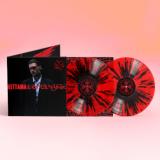
KETTAMA - Archangel LP 2x12"

One of electronic music’s most sought-after names, producer and DJ KETTAMA today announces the release of his long-awaited debut album, Archangel, out 3rd of October. The announcement arrives in tandem with new single “Sort It Out” featuring Clouds, and a landmark moment in his career: his biggest ever London headline show, taking over Brixton Academy on Saturday, October 4th, followed by an expansive tour across Europe, North America, and Australia.


A decade in the making, Archangel is the definitive statement from KETTAMA (Evan Cambell), the Galway-born, London-based artist. The 15-track project is a powerful blend of hard-house energy, trance-inflected euphoria, hip-hop sample-based attitude, and unmistakable emotional depth—sonic signatures that have placed KETTAMA at the cutting edge of contemporary dance music.


The album showcases a curated roster of collaborators who reflect KETTAMA’s reach and relevance across today’s underground and mainstream scenes, including Interplanetary Criminal, Fred again.., Clouds, Prospa, DJ HEARTSTRING, Shady Nasty, SØLV and seantommy. Their contributions amplify the project's scope, offering a multi-sided view into KETTAMA’s musical universe.


Among its early singles, the Interplanetary Criminal collaboration “Yosemite” is a high-velocity anthem marrying speed-garage grit with ecstatic rave melodies, while his track “Air Maxes” with Fred again.. And Shady Nasty blends introspective vocal sampling with wide-eyed club emotion. On “If U Want My Heart” with DJ HEARTSTRING featuring KLP, the ensemble channels high-energy trance, breakbeats, and vocal euphoria into a soaring anthem that fuses emotional intensity with peak-time club energy. Meanwhile, his collaboration with Clouds, released today, “Sort It Out” dives headfirst into industrial-techno territory, conjuring a dark, cathartic energy destined for warehouse euphoria. And reigning as one of the undeniable anthems of the summer so far, “It Get’s Better (Forever Mix)” delivers euphoric waves of uplifting synths and relentless rhythm, bringing an irresistible surge of energy that’s become synonymous with this summer’s club moments.


Archangel has already found a home on the world’s biggest stages and radio airwaves, with early support from key tastemakers including Jack Saunders, Danny Howard, Sarah Story, and Tim Sweeney. Simultaneously, a grassroots groundswell continues to bloom across social platforms—where viral snippets and show footage capture the visceral reaction of a fast-growing, global fanbase.


This year, KETTAMA has elevated his status to a full-blown festival phenomenon, performing at major stages including Coachella, Glastonbury, Creamfields, Portola, Seismic, and ARC Festival, to name a few. In June, he played to 20,000 people in Belfast for a b2b with Chris Stussy—one of the UK’s largest DJ events in recent memory—and is currently mid-way through a 16-week Ibiza residency at Amnesia, playing every Monday night throughout summer. Full list of upcoming live dates can be found below.


Perhaps the clearest signal of his surging popularity is the jaw-dropping response to his upcoming Boiler Room live set, with over 15,000 fans signing up to attend— the set’s release is now highly anticipated as a time capsule moment in a breakout year for the artist.


KETTAMA’s rise to prominence has been anything but conventional. Eschewing the traditional gatekeepers of the industry, KETTAMA cultivated an underground following through the likes of SoundCloud and TikTok, where raw uploads, bootlegs, and viral edits generated a tidal wave of grassroots momentum. Over the years, these platforms became launching pads for a fiercely loyal global community, drawn to his unfiltered energy and boundary-pushing sound. This subversive path to recognition has made him not just a fixture of the scene but a symbol of how new-generation artists can forge success on their own terms.


From his humble roots in the Irish underground to the world stage KETTAMA is now pushing the limits of what a next-gen DJ-producer can achieve. With Archangel, he fuses the sound of his native ‘G-Town’ with a futuristic vision that’s unapologetically global—marking a creative milestone that cements his place among electronic music’s most compelling voices.

pre-ordina ora15.05.2026

dovrebbe essere pubblicato su 15.05.2026

33,19

Last In: 49 days ago
James Tenney - Postal Pieces

Since its founding back in 2014, Blume has carved a unique place in cultural landscape, issuing free-standing works, spanning the historical and contemporary, that represent singular gestures of creativity within the field of experimental sound. Joining their broad efforts in building networks of context and understanding that already includes the works by Werner Durand, Sarah Hennies, Bruce Nauman, John Butcher, Jocy de Oliveira, Mary Jane Leach, Valentina Magaletti, Alvin Curran, Julius Eastman, Alvin Lucier, and others, Blume return with the first ever vinyl release to attend to James Tenney’s legendary “Postal Pieces”, Marking the first ever appearance of five of the suite’s works - “Maximusic, for Max Neuhaus” (1965), “Having Never Written a Note for Percussion, for John Bergamo” (1971), “FFor Percussion Perhaps, or... Night, for Harold Budd” (1971), “Cellogram, for Joel Krosnick” (1971), and “Beast, for Buell Neidlinger” (1971) - on vinyl, drawing upon recordings made in 2003, by the Amsterdam based ensemble, The Barton Workshop, under the direction of James Fulkerson. Among the most important and highly regarded efforts in Tenney’s canon of compositions, as well as within the history of 20th Century music, these five pieces represent a crucial bridge between Fluxus-oriented conceptualism, minimalism, and the microtonal complexities that would emerge in their wakes. Issued in a highly limited vinyl edition of 300 copies, it includes exact replicas of the original postcard graphic scores, and features newly commissioned liner notes by Bradford Bailey, Blume’s brand new edition takes great steps to centring Tenney at the eye the storm during some of experimental music’s most important years.

A student of composition under Carl Ruggles, John Cage, Harry Partch, and Edgard Varèse - remaining close to all of them, and later performing in both Cage and Partch’s ensembles - as well as acoustics, information theory, and tape music composition under Lejaren Hiller, James Tenney carved a wide path within the contexts of experimental and avant-garde music during the second half of the 20th Century. Not only was he a tangible bridge between the generations of composer’s who laid much of the groundwork and the later movements of Fluxus, Minimalism, and the broader practices of experimental music, but Tenney is credited as having contributed one of the earliest applications of gestalt theory and cognitive science to music in 1961, before helping to pioneer the field of computer music at Bell Labs, during the following years.

Over the course of his career, Tenney produced music of such complexity and sophistication - paying little mind to the seductions of taste or dominant tropes of its own moment - that his work and legacy have largely remained under-recognised by the broader publics that have attended to most of his peers. Perhaps more pertinently, the body of work he produced can be perceived as too varied and complex to fit neatly within standard creative histories or critical frameworks, comprising harmonically complex works for acoustic instrumentation, musique concrète, the groundbreaking 1961 “plunderphonic” composition, “Collage No.1 (Blue Suede) (for tape)” - sampling and manipulating a recording of Elvis Presley - as well as algorithmic and computer synthesized music. Even here, within this single decade, a clear image of Tenney’s endeavours remains elusive. In addition to penning important theoretical texts, he collaborated and / or played with Max Neuhaus, La Monte Young, Steve Reich, Philip Glass, Michael Snow, Terry Riley, and numerous others; was an active member of Fluxus; starred in and composed music for Stan Brackage’s films; regularly worked with the Judson Dance Theater; co-founded and played in the ensemble, Tone Roads, with Malcolm Goldstein and Philip Corner; was a vocal advocate of the works of Conlon Nancarrow and Charles Ives, playing a significant part in the revival of both of their legacies; and regularly collaborated as a composer, musician, and actor with his then-partner, the artist Carolee Schneemann, notably co-starring in her film, “Fuses” (1965) and her legendary 1964 performance, “Meat Joy”, as well as creating sound collages for her films “Viet Flakes” (1965) and “Snows” (1970). Curiously, for a relatively absent figure in the historical and critical narratives, Tenney seems to have been the thread that bound multiple generations and disciplines of avant-garde practice in New York during this period.

Tenney was deeply invested in the quality and perception of sound. By 1970, this led him back to composing exclusively for acoustic instrumentation (though sometimes processed with tape delay) - in most cases utilising non-well tempered tuning systems to explore harmonic perception - a practice that he would remain steadfast to for the remainder of his life. This development roughly corresponded with his relocation to California, at the outset of the 1970s, following an invitation to teach at the newly founded music department at California Institute of the Arts (CalArts) in Valencia. Finding himself in regular contact with the harpist Susan Allen and the artist Allison Knowles, as well as at a great distance from many of his friends, in 1971 he completed (with the assistance of Knowles and Marie McRoy) “The Postal Pieces”, a project he had begun in 1965.

A suite of eleven compositions, “The Postal Pieces”, stands among Tenney’s well known and celebrated compositions, and illuminates the dualities embraced by the composer, notably his use of sound to develop consciousness in and of others, and his willingness to draw on elements and observations of everyday life; citing his strong dislike of writing letters as being the primary inspiration for their inception. In lieu, he conceived to send his friends - John Bergamo, Allison Knowles, Pauline Oliveros, La Monte Young, Harold Budd, Philip Corner, Joel Krosnick, Buell Neidlinger, Susan Allen, Max Neuhaus, and Malcolm Goldstein - short scores on the back of postcards. The suite is composed around three themes: Tenney’s concept of swell form (utilizing repetition and progressing through a structurally symmetrical arch), intonation, and the desire to produce “meditative perceptual states”.

A hugely important addition to Blume’s ever expanding efforts in context building and networks of creative practice, James Tenney’s “Post Pieces” is issued in a highly limited vinyl edition of 300 copies, which includes a exact replicas of the original postcard graphic scores, and features newly commissioned liner notes by Bradford Bailey.

In Stock

Disponibile in Stock e pronto per la spedizione

25,42
elsas - APORIAMOR LP

elsas

APORIAMOR LP

12inchLPS43
Lapsus Records
13.02.2026

APORIAMOR noun 1. The death of love’s contradiction.
| “Embody APORIAMOR”

Etymology
aporia-: an irresolvable internal contradiction or logical disjunction in a text, argument, or theory. from Greek aporos ‘impassable’, from a- ‘without’ + poros ‘passage’
-amor: love. Sentimiento intenso del ser humano que, partiendo de su propia insuficiencia, necesita y busca el encuentro y unión con otro ser. Del latín amor.
-mor: latin for death.

APORIAMOR explores the affective ontological and organic processes of love and lust in the turmoil of an urban existence, through the female lens. It expresses the process of strengthening through heartbreak in its various forms.

With her debut EP The Art of the Concrete, elsas knew that by giving that name to a record which was ironically expansive and experimental, she would be calling for a distilled and clearer path further down the line. This is what she’s been incorporating into the sonic world of this new EP, APORIAMOR, signifying the birth of a more matured and distilled version of herself as an artist.

With APORIAMOR (“the death of love’s contradiction”) elsas conveys a personal process of healing in the romantic space. Through different experiences of heartbreak, elsas builds a language - a coping mechanism attached to its subsequent artistic expression – that isn’t founded on hardness or a closing-off, but instead, on a playful but profound reckoning, and learning of self-worth.

APORIAMOR embraces the complexities of being a lover-girl: of moving through life with an open heart. It celebrates the clarity, sweet hindsight, and detachment that come from processing emotion. APORIAMOR is both an affirmation and a release.

elsas makes canonical blends with a forward boundary-bending vision. Her sound in this record is naturally referential of both her Mediterranean heritage and UK alternative music — intrinsic parts of her lived experience. She has had the opportunity to collaborate with artists she deeply admires, each exchange enriching her creative world.

The experience of working hand-in-hand with Sampha for the last 3 years and ongoingly has been a core of her evolution as an artist. She has also collaborated in many forms with artists like Florence + the Machine, Little Simz, Jordan Rakei, Jockstrap, Obongjayar, Black Country New Road, Genevieve Artadi (KNOWER) and Duval Timothy. Additionally, her ongoing work with the Idrîsî Ensemble, of which she is a core member, continues to inform her artistic depth.

The making of this largely self-produced record unfolded over four years — “it’s a well-kneaded dough,” she says. These songs evolved through exposure to multiple environments: from early writing sessions in her childhood home in the Spanish countryside, to stages across the U.S. while on tour supporting Sampha.

Experimentation and modulation are an intrinsic part of elsas’ method, conceiving songs as organisms that respond to their surroundings. Collaborators on this collection of songs include Shrink, Will Lister, Gabriel Gifford, Ethan P. Flynn and more. The record was mixed by David Wrench (a long-time supporter of elsas’) and Nathan Boddy, and mastered by Matt Colton.

With APORIAMOR, elsas creates a visual world from the fabulation of the past, as an act of playful historical revisionism in which she embeds herself as both subject and storyteller. The songs function like an archive of her experiences across various years, each one unearthed and presented as some sort of archaeological artifact. Through this body of work, elsas begins to conceptualize herself as a legacy artist: one who honors the archive of her own becoming while emerging as a distinct and resonant voice in today’s musical landscape.

pre-ordina ora13.02.2026

dovrebbe essere pubblicato su 13.02.2026

22,27

Last In: 2026 years ago
Doris Dennison - Earth Interval

The discovery of Doris Dennison's score represents a genuine musicological breakthrough—what once would have been "a tree falling in the woods" thirty years ago now holds the potential to render "a thunderous clap in our minds." While researching Anna Halprin's lesser-known collaborators, scholar Tom Welsh uncovered the archives of AA Leath, one of Halprin's principal dancers. Buried within these materials was Dennison's handwritten score for Earth Interval, dated May 1956. Born in Saskatchewan, Canada, in 1908, and raised near Seattle, Dennison (1908-2009) encountered John Cage while teaching Dalcroze eurythmics at the Cornish College of the Arts. She joined Cage's earliest percussion quartet—alongside Margaret Jansen, the composer and his wife Xenia—in the group widely regarded as having performed the first complete concert of percussion music in the United States. This historic December 1938 concert was followed by tours and the landmark May 1941 performance at the California Club, comprising Cage and Lou Harrison's Double Music, the premiere of Cage's Third Construction, and Harrison's 13th Simfony.

As Bradford Bailey observes in his extensive liner notes, Earth Interval demonstrates "an extraordinary balance of elements that imbues the piece with a sense of clarity, directness, and constraint that is both distinct and ahead of its time." The work's most remarkable innovation lies in its approach to extended techniques, particularly Dennison's notation for the central movement: "In 2nd movement, 1st player lowers + raises a gong into a tub of water while beating." This technique, absorbed from Cage's experimental vocabulary, generates what Bailey describes as "fields of acoustic abstraction that bend and warp time through sustained resonances, beat, and space." The temporal sophistication of these manipulations anticipated Karlheinz Stockhausen's Mikrophonie I (1964) and Annea Lockwood's water-based sound investigations by over a decade. After joining Mills College as dance accompanist, Dennison maintained crucial connections to the Bay Area's experimental scene, collaborating with figures like Merce Cunningham and programming Cage's music throughout the 1950s.

Comprising three movements—Land Form, Air Tide, and Earth Play—Earth Interval is scored for recorder, drums, gongs, maracas, muted gongs, and bowl gongs. In total, the piece is just under eight minutes: "a fleeting glimmer of moment in time, a life spent at the cutting edge, and a singular creative vision that packs a powerful punch." When viewed in historical context, placed in contrast to roughly contemporaneous avant-garde percussion works by Cage, Harrison, Louis Thomas Hardin (Moondog), and Harry Partch, or important precursors like Edgard Varèse's Ionisation (1931) and Henry Cowell's Ostinato Pianissimo (1934), it's clear that Dennison was following her own path. Earth Interval is not derivative. It is a precursor to what was yet to come, alluding to developments of avant-garde and experimental music that wouldn't begin to appear on the cultural landscape until the 1970s and '80s, with the emergence of Post-Minimalism and more idiosyncratic artists and ensembles like Midori Takada, Ros Bandt, Peter Giger, Frank Perry, Christopher Tree, Michael Ranta, Gamelan Son of Lion, and Niagara.

This recording by Chicago's Third Coast Percussion, captured in March 2022, represents the first complete documentation of this pioneering work. The ensemble's interpretation reveals the piece's remarkable contemporaneity while maintaining its historical specificity. Where Cage, Harrison, and Partch employed "self-consciously off-kilter polyrhythms," Dennison's rhythmic sensibility anticipates minimalist developments by nearly a decade, yet integrates "forceful rests, as well as sharp shifts in sonic character, tempo, and meter, that break the momentum and breathe a sense of life into the piece's structure." This positions her work closer to Post-Minimalism decades before its emergence. The architectural approach demonstrates Dennison's understanding that "the composer almost entirely disappears" in favor of phenomenological listening experience, creating what might be called an egoless music that places its realities and meaning entirely in the ear of the beholder. The present recording, realized by Chicago's distinguished Third Coast Percussion ensemble, represents a significant achievement in experimental music scholarship and performance practice. As specialists in the Cage tradition and contemporary percussion repertoire, Third Coast Percussion approached Earth Interval with the historical sensitivity and technical precision required to illuminate Dennison's subtle compositional innovations. The March 2022 recording sessions, engineered by Colin Campbell, capture both the work's intimate chamber music qualities and its bold exploration of extended techniques. The ensemble's interpretation reveals the piece's remarkable contemporaneity—its ability to speak directly to current musical concerns while maintaining its historical specificity.

This recording serves multiple scholarly functions: it provides the first complete documentation of Dennison's compositional voice, offers insight into the broader network of experimental music practitioners surrounding Cage and Harrison, and demonstrates the sophisticated level of compositional thinking that was occurring within the Bay Area's dance-music collaborations of the 1950s. The work's emphasis on phenomenological listening—what might be called an "egoless" approach to musical experience—places it within a lineage of American experimental music that prioritizes perceptual process over compositional personality. The work's original obscurity—limited to AA Leath's performances at venues like the 1957 Pacific Coast Arts Festival at Reed College—paradoxically allowed it to remain "entirely on its own terms," free from the constraints of historical categorization. Drawing on Jacques Derrida's Archive Fever, the argument emerges that "the archive can acknowledge, celebrate, and resurrect" overlooked voices, transforming our understanding of experimental music history. The present Blume edition, featuring Third Coast Percussion's authoritative interpretation, includes a lavishly illustrated 16-page booklet designed by Bruno Stucchi / dinamomilano, containing complete scholarly apparatus, historical photographs, and detailed production notes. This recording enables "cross-temporal intersectionality," allowing Dennison to "belong to a newly formed and more dynamic understanding of the present and past," demonstrating how forgotten voices can reshape entire historical narratives when given proper scholarly attention and performance advocacy.

pre-ordina ora01.08.2025

dovrebbe essere pubblicato su 01.08.2025

25,42

Last In: 2026 years ago
LAFAYETTE AFRO ROCK BAND - SOUL MAKOSSA LP

Second in a series of reissues from Pierre Jaubert’s Parisound studio archive on Strut Record IS Lafayette Afro Rock Band's elusive funk/Afro original album, 'Soul Makossa' originally released in 1973. Transparent blue colored LP

In 1971, an undocumented seven-member Afro-American ensemble known as the Bobby Boyd Congress made a transformative journey from the United States to France. Bandleader Frank Abel recollects, "We sensed that the soul and funk market was saturated back home, and our original plan was a brief 6-month stint in Paris. Surprisingly, we ended up staying for a decade." Upon lead singer Bobby Boyd's return to the U.S., the group rebranded as Ice and crossed paths with independent producer Pierre Jaubert, a seasoned studio professional with credits on groundbreaking recordings alongside Charles Mingus, John Lee Hooker, and Archie Shepp, among others.

Drawing inspiration from Motown's work ethic, Jaubert initiated regular rehearsals with Ice. He recalled, "I didn't want to mimic Berry, but with seven talented musicians collaborating daily, something unique emerged." The band, residing in Paris and immersed in the African-dominated Barbesse district, began infusing African elements into their music frequently performing with Paris-dwelling Camaroonian and legendary composer Manu Dibango.

Rechristening themselves Lafayette Afro Rock Band, the group's musical direction shifted towards predominantly instrumental compositions, characterized by a weightier, more intricate Afro-funk sound. Their debut recording under this new moniker, 'Soul Makossa,' made a powerful impact with a dynamic rendition of Dibango's classic, coupled with the intense break of 'Hihache' and the contagious 'Nicky.' Initially released by Musidisc in France and later in the U.S. via Editions Makossa, the album omitted the title track due to publishing clearance issues.

Despite modest sales upon its initial release, the album's enduring influence became evident as hip-hop culture surged in the '80s, establishing it as a primary source for samples and riffs. The iconic 'Hihache' break found fame in Biz Markie's 'Nobody Beats The Biz,' and tracks from the album were lifted by LL Cool J, The Beatnuts, Kruder & Dorfmeister, and numerous others.

pre-ordina ora28.06.2024

dovrebbe essere pubblicato su 28.06.2024

22,27

Last In: 2026 years ago
LAFAYETTE AFRO ROCK BAND - SOUL MAKOSSA LP

Second in a series of reissues from Pierre Jaubert’s Parisound studio archive on Strut Record IS Lafayette Afro Rock Band's elusive funk/Afro original album, 'Soul Makossa' originally released in 1973. Transparent blue colored LP

In 1971, an undocumented seven-member Afro-American ensemble known as the Bobby Boyd Congress made a transformative journey from the United States to France. Bandleader Frank Abel recollects, "We sensed that the soul and funk market was saturated back home, and our original plan was a brief 6-month stint in Paris. Surprisingly, we ended up staying for a decade." Upon lead singer Bobby Boyd's return to the U.S., the group rebranded as Ice and crossed paths with independent producer Pierre Jaubert, a seasoned studio professional with credits on groundbreaking recordings alongside Charles Mingus, John Lee Hooker, and Archie Shepp, among others.

Drawing inspiration from Motown's work ethic, Jaubert initiated regular rehearsals with Ice. He recalled, "I didn't want to mimic Berry, but with seven talented musicians collaborating daily, something unique emerged." The band, residing in Paris and immersed in the African-dominated Barbesse district, began infusing African elements into their music frequently performing with Paris-dwelling Camaroonian and legendary composer Manu Dibango.

Rechristening themselves Lafayette Afro Rock Band, the group's musical direction shifted towards predominantly instrumental compositions, characterized by a weightier, more intricate Afro-funk sound. Their debut recording under this new moniker, 'Soul Makossa,' made a powerful impact with a dynamic rendition of Dibango's classic, coupled with the intense break of 'Hihache' and the contagious 'Nicky.' Initially released by Musidisc in France and later in the U.S. via Editions Makossa, the album omitted the title track due to publishing clearance issues.

Despite modest sales upon its initial release, the album's enduring influence became evident as hip-hop culture surged in the '80s, establishing it as a primary source for samples and riffs. The iconic 'Hihache' break found fame in Biz Markie's 'Nobody Beats The Biz,' and tracks from the album were lifted by LL Cool J, The Beatnuts, Kruder & Dorfmeister, and numerous others.

non in magazzino

Ordina ora e ordineremo l'articolo per te presso il nostro fornitore.

26,47

Last In: 22 months ago
Kjetil Mulelid - Agoja LP

Kjetil Mulelid

Agoja LP

12inchODINLP9589
Odin
29.03.2024

Kjetil Mulelid's various projects have received international acclaim, ranging from his duo with Siril Malmedal Hauge, his trio, and the quartet Wako. His first solo album, "Piano" (Rune Grammofon, 2021) received plaudits that placed him in the same company as pianists like Keith Jarret, Brad Mehldau, and Bill Evans. With "Agoja" Mulelid demonstrates what a musician and composer worthy of such acclaim can do with an ensemble cast of musicians of the highest calibre. On "Agoja" three features are immediately apparent. First, that Mulelid's compositions are melodic, yet frequently surprising in their path from their beginning to end; second, that he is a generous band leader, allowing the musicians both to be themselves and to express themselves, often while he merges almost completely into the background; finally, that each composition has its own unique identity, yet bears Mulelid's hallmark clearly and distinctly. Kjetil Mulelid (b.1991, Hurdal, Norway) has distinguished himself as an inventive artist, blending jazz, psalms, and improvised music in both his own playing and compositions. After graduating from the famous "Jazzlinja" in Trondheim back in 2014, he has been heavily touring the world's nooks and crannies with his own music and projects. He has played concerts in large parts of Europe and Japan and released several well-received albums as a solo artists, as well as with his own Kjetil Mulelid Trio, the jazz quartet Wako, with singer Emilie Storaas as the duo Kjemilie, and with singer Siril Malmedal Hauge - both as a band and as a piano / vocal duo.

pre-ordina ora29.03.2024

dovrebbe essere pubblicato su 29.03.2024

26,68

Last In: 2026 years ago
Various - Incurables 001

Various

Incurables 001

12inchINVTRT002
Inveterate
21.02.2024

Inveterate, known for championing transformative sounds, is thrilled to announce the launch of its maiden Various Artist compilation, "Incurables 001".

"Incurables" isn't just a title; it's a testament. It epitomizes the label's and its artists' relentless pursuit to push creativity's boundaries. The term captures the insatiable, 'incurable' passion for genuine music and its inherent message.

The compilation boasts an ensemble of prodigious talents, with contributions from artists such as Cressida, S Ruston, Ôtone, Znzl, Giordano, and Rommek. Together, they've crafted a compilation that is not just a collection of tracks but a synergistic blend of sonic narratives.

Curated by Tapefeed, each track on "Incurables 001" functions as a piece of a larger puzzle, resulting in a cohesive and impactful auditory journey that is sure to captivate listeners.

non in magazzino

Ordina ora e ordineremo l'articolo per te presso il nostro fornitore.

11,72

Last In: 20 months ago
Lindstrøm - Everyone Else Is A Stranger LP

‘Lindstrøm returns with his sixth studio album Everyone Else is a Stranger, and the first since 2019’s On a Clear Day I Can See You Forever. The title of the album was inspired by John Cassavetes’ original title for his 1984 film Love Streams, and contains four tracks of his signature chord-stacking disco epics and freeform cosmic voyages, stretching across nearly 40 minutes. An album that in many ways sums up his career, and gathers his different musical paths into one sound and one album.

Where his previous album had a slower and more mellow feel, 2023’s Everyone Else is a Stranger sees Lindstrøm take on a much more rhythm-oriented and uptempo approach, containing tracks that fit perfect with the artist’s revered live sets. That said, this album also contains the unexpected twists and turns that has become the Norwegian producer’s trademark, including recordings of him playing a cheap Chinese cello and violin for the first time alongside the old Solina String-Ensemble he has used on essentially every track since his debut.

Named «the king of space disco» by The New Yorker, Lindstrøm has always made a virtue of his obsessive work ethic, turning his city center studio into a factory floor for churning out monster tracks. He has collaborated with the likes of Todd Terje, Prins Thomas and Todd Rundgren, has remixed a slew of acts including LCD Soundsystem, Lana del Rey, Haim, Grizzly Bear, Flume, RAC, London Grammar and more.’

non in magazzino

Ordina ora e ordineremo l'articolo per te presso il nostro fornitore.

28,15

Last In: 2 years ago
LINDSTRØM - Everyone Else is a Stranger LP

Lindstrom returns with his sixth studio album Everyone Else is a Stranger, and the first since 2019's On a Clear Day I Can See You Forever. The title of the album was inspired by John Cassavetes' original title for his 1984 film Love Streams, and contains four tracks of his signature chord-stacking disco epics and freeform cosmic voyages, stretching across nearly 40 minutes. An album that in many ways sums up his career, and gathers his different musical paths into one sound and one album. Where his previous album had a slower and more mellow feel, 2023's Everyone Else is a Stranger sees Lindstrom take on a much more rhythm-oriented and uptempo approach, containing tracks that fit perfect with the artist's revered live sets. That said, this album also contains the unexpected twists and turns that has become the Norwegian producer's trademark, including recordings of him playing a cheap Chinese cello and violin for the first time alongside the old Solina String-Ensemble he has used on essentially every track since his debut. Named "the king of space disco" by The New Yorker, Lindstrom has always made a virtue of his obsessive work ethic, turning his city center studio into a factory floor for churning out monster tracks. He has collaborated with the likes of Todd Terje, Prins Thomas and Todd Rundgren, has remixed a slew of acts including LCD Soundsystem, Lana del Rey, Haim, Grizzly Bear, Flume, RAC, London Grammar and more.

non in magazzino

Ordina ora e ordineremo l'articolo per te presso il nostro fornitore.

23,49

Last In: 2 years ago
Petros Klampanis - Tora Collective

BASSIST/COMPOSER PETROS KLAMPANIS LOOKS TO PAST AND FUTURE AS HE TRANSFORMS TRADITIONAL GREEK MUSIC WITH TORA COLLECTIVE

Unique instrumentation bridges Greek folkloric and modern jazz worlds, with Klampanis (bass, artistic direction), Areti Ketime (vocals), Thomas Konstantinou (oud, laouto), Giorgos Kotsinis (clarinet), Kristjan Randalu (piano), Ziv Ravitz (drums, electronics, co-production) and more.

Following up his acclaimed recent outings Rooftop Stories and Irrationalities, bassist and composer Petros Klampanis creates one of his most inventive musical settings to date with Tora Collective, his sixth album as a leader. For Klampanis, who grew up in Athens, Greece
surrounded by the confluence of Mediterranean and Balkan folk cultures, making music has always meant navigating cultural crossroads. With Tora Collective (“Tora”=“Now”) he puts traditional Greek music at the centre, even as he presents it from a bold new angle.

In addition to the two new originals “Disoriented” and “South By Southeast,” Klampanis and his compact hybrid jazz/Greek folk ensemble interpret popular Greek songs such as “Xehorismata,” “Sybethera,” “Hariklaki” and “Menexedes ke Zoumboulia.” These songs, Klampanis asserts, are “not just part of Greek cultural heritage or a fragment of the past, but also as part of the future: they live into the present, breathe into the ‘here and now,’ while constantly evolving in a dynamic state and in dialogue with contemporary music.”

“For me it’s a personal thing,” he says. “I want to reflect on what Greek music and culture offer the world. How can music from the Aegean to Epirus and from the Ionian Islands to Crete, meet and speak to the hearts and minds of musicians and audiences from different parts of the world, different traditions and backgrounds?”

To that end, Tora Collective draws on regional characteristics, as Klampanis explains: “Every region has a strong identity. In Epirus the clarinet is more prominent and the music has this slow, groovy, meditative vibe. The islands are lighter sounding, Macedonia is groovier, faster tempos and energetic dances. Music from Asia Minor or Istanbul is more sophisticated. Greeks often refer to Istanbul as ‘Poli,’ from Constantinopoli, so the songs from there are called ‘Politika.’”

There is magic in the clear and consistent voice of Areti Ketime throughout Tora Collective, as can also be said for the supremely voice-like articulation of Giorgos Kotsinis on clarinet. Ziv Ravitz, on drums and electronics, also plays a pivotal role as coproducer: “He added so much in the orchestration,” says Klampanis. “His knowledge of electronics, all these non-acoustic sounds and keyboards, treatments of the acoustic instruments, it’s all because of Ziv. He brought a new perspective on the whole thing.”

The string element in Tora Collective is also strong: in addition to Klampanis’ bass there is Thomas Konstantinou on oud and the traditional Greek laouto, as well as Kristjan Randalu (the pianist in Klampanis’ Irrationalities trio) providing an anchor and bringing Klampanis’ inventive arrangements into harmonic focus. Additional guests appear: Alexandros Arkadopoulos on clarinet for “Disoriented,” Laura Robles on percussion for “South by Southeast” and trumpeters Sebastian Studnitzky and Andreas Polyzogopoulos on “Milo Mou ke Mandarini” and “Hariklaki,” respectively. (“Milo Mou” is slated as a post-release bonus track.)

Using traditional Greek music to discover a common new voice, the project aims to build dialogue, spark creativity, cultivate respect for the past, pave a path forward, discover a new musical storytelling powerful enough to reach and touch audiences in many countries. This is an experiment that bridges worlds: the east and the west, the traditional and the modern, the nostalgic and the forward-looking, using the power of music and improvisation.

pre-ordina ora24.02.2023

dovrebbe essere pubblicato su 24.02.2023

27,69

Last In: 2026 years ago
Jeff Parker - Mondays At The Enfield Tennis Academy 2x12"

Mondays at The Enfield Tennis Academy, x2 LPs of long-form, lyrical, groove-based free improv by acclaimed guitarist & composer Jeff Parker's ETA IVtet. Recorded live at ETA (referencing David Foster Wallace), a bar in LA’s Highland Park neighborhood with just enough space in the back for Parker, drummer Jay Bellerose, bassist Anna Butterss, & alto saxophonist Josh Johnson to convene in extraordinarily depth-full & exploratory music making. Gleaned for the stoniest side-length cuts from 10+ hours of vivid two-track recordings made between 2019 & 2021 by Bryce Gonzales, Mondays at The Enfield Tennis Academy is a darkly glowing séance of an album, brimming over with the hypnotic, the melodic, & patience & grace in its own beautiful strangeness. Room-tone, electric fields, environment, ceiling echo, live recording, Mondays, Los Angeles. Jeff Parker's first double album & first live album, Mondays at The Enfield Tennis Academy belongs in the lineage of such canonical live double albums recorded on the West Coast as Lee Morgan’s Live at the Lighthouse, Miles Davis' In Person Friday & Saturday Night at the Blackhawk, San Francisco & Black Beauty, & John Coltrane's Live in Seattle.

While the IVtet sometimes plays standards &, including on this recording, original compositions, it is as previously stated largely a free improv group —just not in the genre meaning of the term. The music is more free composition than free improvisation, more blending than discordant. It’s tensile, yet spacious & relaxed. Clearly all four musicians have spent significant time in the planetary system known as jazz, but relationships to other musics, across many scenes & eras —dub & Dilla, primary source psychedelia, ambient & drone— suffuse the proceedings. Listening to playbacks Parker remarked, humorously & not, “we sound like the Byrds” (to certain ears, the Clarence White-era Byrds, who really stretched it).

A fundamental of all great ensembles, whether basketball teams or bands, is the ability of each member to move fluidly & fluently in & out of lead & supportive roles. Building on the communicative pathways they’ve established in Parker’s -The New Breed- project, Parker & Johnson maintain a constant dialogue of lead & support. Their sampled & looped phrases move continuously thru the music, layered & alive, adding depth & texture & pattern, evoking birds in formation, sea creatures drifting below the photic zone. Or, the two musicians simulate those processes by entwining their terse, clear-lined playing in real-time. The stop/start flow of Bellerose, too, simulates the sampler, recalling drum parts in Parker’s beat-driven projects. Mostly Bellerose's animated phraseologies deliver the inimitable instantaneous feel of live creative drumming. The range of tonal colors he conjures from his extremely vintage battery of drums & shakers —as distinctive a sonic signature as we have in contemporary acoustic drumming— bring almost folkloric qualities to the aesthetic currency of the IVtet's language. A wonderful revelation in this band is the playing of Anna Butterss. The strength, judiciousness & humility with which she navigates the bass position both ground & lift upward the egalitarian group sound. As the IVtet's grooves flow & clip, loop & repeat, the ensemble elements reconfigure, a terrarium of musical cultivation growing under controlled variables, a tight experiment of harmony & intuition, deep focus & freedom.

For all its varied sonic personality, Mondays at The Enfield Tennis Academy scans immediately & unmistakably as music coming from Jeff Parker‘s unique sound world. Generous in spirit, trenchant & disciplined in execution, Parker’s music has an earned respect for itself & for its place in history that transmutes through the musical event into the listener. Many moods & shapes of heart & mind will find utility & hope in a music that combines the autonomy & the community we collectively long to see take hold in our world, in substance & in staying power.

On the personal tip, this was always my favorite gig to hit, a lifeline of the eremite records Santa Barbara years. Mondays southbound on the 101, driving away from tasks & screens & illness, an hour later ordering a double tequila neat at the bar with the band three feet away, knowing i was in good hands, knowing it would be back around on another Monday. To encounter life at scales beyond the human body is the collective dance of music & the beholding of its beauty, together. – Michael Ehlers & Zac Brenner

non in magazzino

Ordina ora e ordineremo l'articolo per te presso il nostro fornitore.

28,53

Last In: 7 months ago
Thalia Zedek Band - Perfect Vision

Thalia Zedek is an artist of immutable stature and
unceasing vitality. The legendary songwriter’s fiery voice
and frank lyricism give her songs emotional potency and
stark beauty. Zedek is able to distill complex events into
simple, clear and, at times, monumentally weighty
moments with a singular grace. Through ballads or bluster,
Zedek imbues her music with unguarded honesty. ‘Perfect
Vision’ examines the anxiety and pain of rising divisions
between people both physical and ideological. Zedek
transmutes fervour and resilience into sobering laments,
while her lush arrangements wrap the listener in an often
complex emotional message.
‘Perfect Vision’ follows the 2018 ‘Fighting Season’, created
in the midst of growing tensions across the US. On
‘Fighting Season’ Zedek sought resistance, where on
‘Perfect Vision’ she searches for clarity during a time of
exponential isolation and doubt. Every challenge and
sadness Zedek forces us to see is met in equal measure
by her defiant guitar and dissenting voice, a torch
illuminating a path for the listener to navigate through the
darkness.
Features Winston Braman, Gavin McCarthy (E, Karate)
and guests Brian Carpenter (Beat Circus, Ghost Train
Orchestra), Alison Chesley (Helen Money), David Michael
Curry (Boxhead Ensemble, Dinosaur Annex Music
Ensemble, Willard Grant Conspiracy), Mel Lederman
(Victory at Sea) and Karen Sarkisian.
CD in gatefold packaging with lyrics. LP in full colour jacket
and inner sleeve with lyrics. Vinyl packaged with digital
download card.

pre-ordina ora27.08.2021

dovrebbe essere pubblicato su 27.08.2021

25,17

Last In: 2026 years ago
Various - Peace Chant Vol.4

Various

Peace Chant Vol.4

12inchTRLP90942
Tramp Records
13.11.2020

Tramp Records continues their pilgrimage to the soulful fringes of spiritual jazz and progressive rock and funk with their 3rd and 4th volumes of their "Peace Chant, Raw, Deep and Spiritual Jazz" series, and the world could not be more ready.

As we turn together on this tiny blue ball hanging lonely in space, and as we together face existential threats ranging from climate catastrophe, the rise of brutal authoritarian regimes, the breaking of the industrial storm and the imminent collapse of empire, not to mention the raging covid-19 crisis and the continuing racial and social struggles across the globe, we are thrust into a society-wide grand awakening that has been in the making for a very long time. Of course, our musical teachers have trod this path before us, and have worked out solutions to these problems, the songs of the Peace Chant series ring out loud and clear as our ancestors' proof of concept. They say history repeats herself, maybe it's because we weren't listening the first time. Thanks to Tramp Records, we have been granted another opportunity.

Today, the musical and spiritual truths enshrined within the spiritual jazz diaspora seem to be more and more sought-after, and crucial at a time when we as a society seek higher and farther for those bold truths. With each generation, that truth doesn't change, and the artists featured in the series speak those truths along a continuum that ranges from the late-60s up to the present day.

Volume 4, the second LP opens with a gorgeous and lush Wurlitzer-oriented big band piece that among its many treasures also features the 17-year-old visionary-saxophonist-to-be, Steve Coleman in his alleged first recording! The contributions of Brother Yusuf Salim and Bus Brown, figures who should be very familiar to Tramp Records aficionados, are consecrated here with a live recording of Freedom from one of Brother Yu's last public performances. One of the two European contributions to the comp, Attitude, by Organic Pulse 'onesemble', reads like a double entendre, the word "attitude" meaning simultaneously one's disposition or state of mind, and also one's orientation relative to the horizon. The Peace Chant series continues to touch all the sacred meridians: more devotional music with James Scales & All Stars' Ser-Vi-Tude, trance music of non-dominant traditions with Donn Preston Group's Ghana-Cha!, a modal and blue organ trio offering from Tommy Jones, and closing with a rich and righteous ballad, Quernemoen, from the Wayne Powell Octet.

Peace Chant is the center of the mandala, representing the nucleus of the post-bop, modal jazz, avant-garde, transcendental, spiritual, ethnic, and freedom music universe without necessarily suggesting anything immediately identifiable as any of the above. This is the soundtrack to the raising of human consciousness and the salvation of society's very soul.

We give thanks to Tramp Records for leading our thirsty hearts to this rich fountain.

non in magazzino

Ordina ora e ordineremo l'articolo per te presso il nostro fornitore.

14,75

Last In: 5 years ago
  • 1
Articoli per pagina:
N/ABPM
Vinyl