Shamanic call from the ethereal field where all shapes fluidly come to one. Inspired by the multilevel constant dynamics of slowed down and pushing forward energies of one frequency.
“Diamond Director” with clear edges and smooth surfaces turns slowly glittering like the transparent stone under the sun or the spots in the club.
“Ruby Director” is steady colored going deep into a simpler way of movement without losing its pressure of serious laziness.
“Shayde's remix” means the state of trance after the glitter of the turning diamond occupying the personal view with little sparkles.
“Dan Bay's remix” is the consequence of the deep slowed down original bringing the slow pressure back to faster laziness again.
“Le Rubrique's remix” as a fusion of the two originals shows how different similarity can be and rolls up everything in a new way.
Поиск:clear view
Все
Paperback: 288 pages
Product Dimensions: 12.9 cm x 19.8 cm x 2.3 cm
• A global view of Discovery as a cultural phenomenon, placing the album at the centre of celebrity culture, fan clubs, video, the music business etc., while also examining its profound musical impact.
• An examination of Discovery as a flawed jewel, rather than blatant hagiography, as the album celebrates its 20th anniversary.
• An antidote to the revisionist history about Daft Punk and Discovery, from a journalist who has lived with the idea of Daft Punk for more than 20 years and interviewed the band.
Daft Punk’s Discovery is a record that looked into the future and liked what it saw; an album that predicted the electronic music explosion, YouTube and the end of privacy, while dragging soft rock back into vogue. Discovery was not only one of the best albums of the 2000s, it was one of the most prophetic, the kind of record that makes you wonder: how did they know?
You can draw lines from Discovery to Glass Swords, Kanye West, EDM, Autotune, iTunes, Beyoncé, Guilty Pleasures, social media and more. Discovery's footprints can be found all over the modern world but it also looked back to Daft Punk’s childhood, to Van Halen records, Japanese cartoons and even Johann Sebastian Bach.
Discovery was a record that confounded many fans when it was released in 2001, thanks to its blatant pop hooks and unlikely sonic bricolage. It was a record that was - and still is - widely misunderstood; Discovery’s impact has only become clear with the passing of time, as Daft Punk have been proved right time and time again.
This book is a homage to a fascinating, troubled beast of an album that casts a huge shadow over the 21st Century, as Discovery reaches its 20th anniversary.
“Incredible biography of the most colossal electronic act of our generation, by one of the best music writers of our time. Ben Cardew charts the history of Daft Punk from their humble rock band beginnings, to starting the groundbreaking and genre-defining Roulé records, to achieving stadium status as superhuman robot selectors.” Sinjin Hawke
The Complex Inbetween is a mesmerising journey inspired by the spirit of krautrock early electronic music and experimental rock. JeGong return with their second full- length album which sees them continue their musical journey inspired by the spirit of krautrock, early electronic music and experimental rock. With The Complex Inbetween Dahm Majuri Cipolla (MONO, Watter) and Reto Ma"der (Sum Of R, Ural Umbo) put a dazzling spin on the timeless music of genre innovators like Can, Faust and Neu!, incorporating noisier and more abrasive elements to create a mental odyssey into the uncanny. Born from the collision of the most unreal moments of Ma"der's free-flowing musical associations with Cipolla's stick-wielding hands, these eight compositions form the duo's own mythical realm after the rhythm has been set. As the cradle of electronic music, krautrock is often viewed by outsiders in terms of the mechanical rather than the human, yet Ma"der and Cipolla manage to uncover a human side that has always been present in the music of their forebears. That driving beat which powers album opener «Come To The Center» was never meant to be called `Motorik', as explains its inventor Klaus Dinger of Neu! in one interview. "It is very much a human beat. I like to call it the endless straight. It's a feeling like a picture." With Cipolla behind the kit the machine becomes human, testifying to the power that rhythm can hold over us as a deeply communal obsession. Like their debut, The Complex Inbetween shows the profound knowledge these two musicians have of their source of inspiration as well as their tremendous skill in applying its principles. With the piece «Night Screaming Moves» JeGong expands their sound with atmospheric drone rock elements. A feedback laden guitar motif surrounds the oscillations of mellotron sounds, behind it pounds a slow motion drum beat that is reminiscent of dragging, shuffling footsteps in the dark of night. Evoking feelings of trench coat wearing film-noir or the cloying darkness of cult 70s horror flicks, «Night Screaming Moves» shows that not only are the duo of Ma"der and Cipolla experienced musicians, but cinephiles and soundtrack lovers with a strong sense for moods and emotions. RIYL Neu!, Cluster, Tangerine Dream, Swans, Mogwai, Sonic Youth, John Zorn Ltd Coloured Vinyl!
Fredfades is finally ready with his second album as a solo artist. The producer and DJ and has remained active as a musician ever since his debut single in 2008. Since he released his debut solo album 'Warmth' six years ago he's ben diving into a bunch of different genres and cross-ing musical landscapes such as ambient, hip-hop and house, which has led to releases and productions across labels like his own Mutual Inten-tions imprint, as well as bigger labels like Stones Throw, Fresh Selects and Jakarta Records. This sonic voyage has resulted in ‘Caviar’ - an album that tells the story of a producer who's ready to let go of his youthful love and indulge himself to electronic music.
Fredfades name is more often seen on foreign club posters than back home in Norway. This has colored the musical expression of the Oslo-born multi-artist, and on ‘Caviar’ he is gathering inspiration from every corner of the world where he has traveled. You can clearly hear the inspi-rations from the sounds of Rome, Manchester, South-Africa, Detroit, New York, Berlin, Paris and the Balearic ocean, which are all well repre-sented throughout the album's eight tracks. If you close your eyes and put your ears close to the speakers you will hear loons, running water, African percussion instruments, roaring saxophones, bit-crushed samples, moaning women, TB 303’s, bottom-heavy basslines and recordings of whales communicating at the bottom of the ocean. Everything seamlessly put together for Fredfades’ own sonic world view. The album features a bunch of talented friends of Fred, such as Telephones or the vocalists MoRuf and Kristian Hamilton.
Despite being known as more of a progressive and edgy DJ that haunts down a lot of indie and private press electronic music, Fredfades has cultivated a more elegant and controversial output in his own music. His progressions often consist of dwelling jazz chords from electric pianos or mellow sub-filtered synth patches that creates space where he can unleash rowdy basslines, rhythm sections and leads just as confident and captivating as the man himself. On the jazzy ‘Tenerife 1994’ you can hear a tribute to one of Fred’s greatest heroes in music: Pharoah Sanders, while on ‘My Heart Is On The Edge’ and ‘Summer of Love’ the energy and euphoria is boiling over and directs your mind towards the summer raves which Fredfades is known to throw down in Oslo.
On the LP covers backside Fredfades is posing with a Korg Wavestation in front of the block where he grew up in the suburbs outside Oslo, while the front cover is showing an airbrushed illustration of Caviar from sturgeon - ‘From block to Beluga’. The black vinyl contains magic grooves created by an electronic musical convertite, with the power to transport the listener from a perpetual winter to the 90s warm dance floors and the 'Second Summer of Love’.
- A1: Boat
- A2: Salt Water
- A3: Eyes Closed
- A4: Life Goes On
- A5: Dusty
- A6: End Of Youth
- A7: Colourblind
- B1: Curtains
- B2: Borderline
- B3: Spark
- B4: Vega
- B5: Sycamore
- B6: No Strings
- B7: The Hills Of Aberfeldy
White Vinyl[36,93 €]
Ed Sheeran is set to release his new album ‘-‘ (Subtract) - the last in his decade-spanning mathematical album era - on 5 May 2023 through Asylum/Atlantic on vinyl, cassette and CD. An album that revisits Ed’s singer/songwriter roots, and one that was written against a backdrop of personal grief and hope, ‘-’ (Subtract) presents one of the biggest stars on the planet at his most vulnerable and honest.
In Ed’s own words - “I had been working on Subtract for a decade, trying to sculpt the perfect acoustic album, writing and recording hundreds of songs with a clear vision of what I thought it should be. Then at the start of 2022, a series of events changed my life, my mental health, and ultimately the way I viewed music and art.
Writing songs is my therapy. It helps me make sense of my feelings. I wrote without thought of what the songs would be, I just wrote whatever tumbled out. And in just over a week, I replaced a decade’s worth of work with my deepest darkest thoughts.
Within the space of a month, my pregnant wife got told she had a tumour, with no route to treatment until after the birth. My best friend Jamal, a brother to me, died suddenly and I found myself standing in court defending my integrity and career as a songwriter. I was spiralling through fear, depression and anxiety.
I felt like I was drowning, head below the surface, looking up but not being able to break through for air.
As an artist I didn’t feel like I could credibly put a body of work into the world that didn’t accurately represent where I am and how I need to express myself at this point in my life. This album is purely that. It’s opening the trapdoor into my soul. For the first time I’m not trying to craft an album people will like, I’m merely putting something out that’s honest and true to where I am in my adult life.
This is last February’s diary entry and my way of making sense of it. This is Subtract.”
Since he first learnt ‘Layla’ by Eric Clapton on guitar at the age of 12-years-old, Sheeran’s love of the singer/songwriter began. Growing up with the likes of Damian Rice, Bruce Springsteen and Bob Dylan playing on repeat in his parents’ house – artists that his dad, John, introduced him to – ‘-‘was always on Ed’s horizon. Yet as the songs and writing process took on a whole new meaning and direction after a series of hard-hitting events impacted Ed’s world in 2022, one thing that remained untouched was his strong desire to make a record anchored in his love of singer/songwriter compositions. And now, as he gears-up for the release of his most soul-baring work to date, ‘-‘ serves as a timely reminder for why Sheeran remains one of the most gifted lyricists of his generation; an artist who breaks down his own experiences for fans to seek comfort and belonging.
‘-‘ is the result of Sheeran pushing the boundaries of his songcraft, as he delivers the most profound songwriting of his career. Teaming-up with Aaron Dessner (The National) on writing and production after the pair joined forces following an introduction from mutual friend Taylor Swift, Ed and Aaron began crafting the album in February last year. Writing over 30 songs during their month-long studio stint, the album’s fourteen tracks are seamlessly tied together by exquisite production from paired back, folk-leaning textures to bolder, full-band/orchestral arrangements.
Ed Sheeran burst onto the UK music scene in 2011 with his debut album ‘+’. Rapidly establishing himself as a history-making artist, he followed with ‘x’, ‘÷’, ‘No.6 Collaborations Project’ and ‘=’ - a catalogue that has seen Sheeran become one of the world’s biggest musical success stories of the 21st century.
Ed Sheeran is set to release his new album ‘-‘ (Subtract) - the last in his decade-spanning mathematical album era - on 5 May 2023 through Asylum/Atlantic on vinyl, cassette and CD. An album that revisits Ed’s singer/songwriter roots, and one that was written against a backdrop of personal grief and hope, ‘-’ (Subtract) presents one of the biggest stars on the planet at his most vulnerable and honest.
In Ed’s own words - “I had been working on Subtract for a decade, trying to sculpt the perfect acoustic album, writing and recording hundreds of songs with a clear vision of what I thought it should be. Then at the start of 2022, a series of events changed my life, my mental health, and ultimately the way I viewed music and art.
Writing songs is my therapy. It helps me make sense of my feelings. I wrote without thought of what the songs would be, I just wrote whatever tumbled out. And in just over a week, I replaced a decade’s worth of work with my deepest darkest thoughts.
Within the space of a month, my pregnant wife got told she had a tumour, with no route to treatment until after the birth. My best friend Jamal, a brother to me, died suddenly and I found myself standing in court defending my integrity and career as a songwriter. I was spiralling through fear, depression and anxiety.
I felt like I was drowning, head below the surface, looking up but not being able to break through for air.
As an artist I didn’t feel like I could credibly put a body of work into the world that didn’t accurately represent where I am and how I need to express myself at this point in my life. This album is purely that. It’s opening the trapdoor into my soul. For the first time I’m not trying to craft an album people will like, I’m merely putting something out that’s honest and true to where I am in my adult life.
This is last February’s diary entry and my way of making sense of it. This is Subtract.”
Since he first learnt ‘Layla’ by Eric Clapton on guitar at the age of 12-years-old, Sheeran’s love of the singer/songwriter began. Growing up with the likes of Damian Rice, Bruce Springsteen and Bob Dylan playing on repeat in his parents’ house – artists that his dad, John, introduced him to – ‘-‘was always on Ed’s horizon. Yet as the songs and writing process took on a whole new meaning and direction after a series of hard-hitting events impacted Ed’s world in 2022, one thing that remained untouched was his strong desire to make a record anchored in his love of singer/songwriter compositions. And now, as he gears-up for the release of his most soul-baring work to date, ‘-‘ serves as a timely reminder for why Sheeran remains one of the most gifted lyricists of his generation; an artist who breaks down his own experiences for fans to seek comfort and belonging.
‘-‘ is the result of Sheeran pushing the boundaries of his songcraft, as he delivers the most profound songwriting of his career. Teaming-up with Aaron Dessner (The National) on writing and production after the pair joined forces following an introduction from mutual friend Taylor Swift, Ed and Aaron began crafting the album in February last year. Writing over 30 songs during their month-long studio stint, the album’s fourteen tracks are seamlessly tied together by exquisite production from paired back, folk-leaning textures to bolder, full-band/orchestral arrangements.
Ed Sheeran burst onto the UK music scene in 2011 with his debut album ‘+’. Rapidly establishing himself as a history-making artist, he followed with ‘x’, ‘÷’, ‘No.6 Collaborations Project’ and ‘=’ - a catalogue that has seen Sheeran become one of the world’s biggest musical success stories of the 21st century.
- A1: The Water Seems Changed To Mist And Vapor
- A2: Ropes Sing In The Air
- A3: Waiting And Watching (Version
- A4: Warm Murmur In The Room
- A5: It Moves Swiftly Forward, Throwing Up Great Waves
- B1: On The Quay Now, Waiting And Watching
- B2: Someone Squeezes A Concertina, Sailors Begin To Sing
- B3: Drawn Toward The Whirlpool's Center
- B4: It Moves Swiftly Forward (Version)
- B5: On The Quay (Version)
One of the most notorious hatemongers in movie history is Captain Ahab from John Huston’s 1956 classic Moby Dick. His manic monologues cast a spell on generations of viewers. Berlin based musician and sound artist Jan Jelinek has now turned the voice of Ahab into a musical instrument.
Faitiche presents Jan Jelinek's soundtrack for SEASCAPE – polyptych, an audio-visual software developed in collaboration with Canadian new media artist Clive Holden in 2022.
SEASCAPE – polyptych is based on image and acoustic source material from Moby Dick. While Holden works on manipulating film sequences, the voice of Ahab plays a central role in Jan Jelinek’s soundtrack. The dynamic volume and tone of the captain's speech control a synthesizer system that turns Ahabs voice into ten abstract soundscapes.
In this production the voice gives the impulse and controls things but is not the sound of spoken word itself that we hear. Only occasionally can snippets of speech be heard so that syllables or sounds are recognisable. Instead we hear compositions made of hissing, soundscapes and eruptive sounds. The atmosphere is dark and sinister. Still every piece has a clear sonic structure and follows an understandable dramatic composition. This music is abstract but not overwhelming. Quite the opposite, SEASCAPE – polyptych is an invitation to listeners to let themselves be carried by the stream of sonic events. Although part of a media art work, the soundtrack can be enjoyed without any of this connecting superstructure. It works with no previous knowledge. But what happens when one does know that it’s the sonic waves of a human voice that is controlling a network of synthesizers?
If you want to hear Ahab, you will hear a choir of Ahabs in every piece of sound. The subliminal threatening as well as the conjuring Ahab. Finally the Ahab who whips up his crew and tears them with him into their downfall. The majestic „on the quay now, waiting and watching“, the oppressive “drawn towards the whirlpools center” - they are all music as well as sonic discourse.
The duo WILDES from the south of Germany, consisting of Jana Pantha and Jenny Tulipa, presents a musical mix of electro-synth-pop, post-punk and dark disco influences. After the release of their first EP “RAWWR” in 2021, their debut album entitled “KLISCHEE” will be released on 3 February 2023. Released via the Kommando 84 label, the album features 11 songs and a musical re-interpretation of German-language Neue Deutsche Welle sounds. The songs combine spoken word passages in which the singers combine a certain irony with word-playful rhymes. In addition to world-political, social issues, the songs revolve around the complexity of the new romance in love - between cosmos and stereo. The strong and experimentally avant-garde lyrics accompany the danceable pulse of the drum computer, melodic synth waves and the shimmering solos of the lead guitar.
The album “Klischee” begins with an electro-pop track that combines consistent grooves with atmo- spheric sound arrangements and a lead guitar that accompanies our journey to the moon. With the chorus’ high-pitched words, „Konsum - leg mich auf den Moon“ (“Consumption - put me on the Moon”), WILDES dryly yet humorously allude to a society that couldn’t fly “higher”.
The following cheeky song Leger in Schwarz combines impeccable post punk with influences from the NNDW scene. A short love story led by the electronic beat of the synthesizer makes the hearts of the night beat faster. With casual reduction, a guitar riff leads through the song. The guitar solo finally rounds off the plea about the longing for a good flirt.
Italo disco shimmers and pulsates on the driving song Capri. With lyrics like “Pack the boats - Vai a bordo”, Capri is a homage to the tried and tested Italo feeling with a cappucino on the terrazza, or indeed on the yacht with a view of the rocky walls of the island. An electric charge of sequencers and synth tracks acts here as a lightness of being in contrast to the porosity of the rock.
An electrifying electric guitar solo kicks off the fourth track with a mysterious invitation to Steig ein translated, get in. Hypnotised by the lights of the road, dazzled in the side mirror, a clearly repeating rhythm leads into the chorus and through the coming verses. English spoken-word lyrics add to the stoicism of the German language. The song’s great power ends with the line Lost in the dark, holding open the finale of the “Night Drive” encounter.
Digital and stereo on all channels, the distinctly tight and robust rhythm sounds in the song Apparat. A clear and simple synth melody is heard as a contrast and the electric bass gives the balance of the machine at points. Hiddenly, WILDES points here to the superior power that can control human action beyond all limits. A piece as a laudation to all the science fiction novels that play with the switching of the individual parts.
Side One of the vinyl is finalised by a song called La Grande Bellezza that motivates to dance and sing along. The punky pop craft lives through the recurring beat of the rhythm guitar. Here the focus is on the woman in all her facets. The great beauty, una donna, who can do everything as well as wanting everything and nothing...a strong woman who, however, also staggers and wants to jump off the cliff. Clearly and distinctly, the musical accompaniment of the drum machine and the accompanying synth melody reflect hidden parallel worlds and the ambiguity of character - of life? We get a desire for more and turn the round record.
The B side starts with a powerful guitar riff, complemented by a catchy and strong bassline that runs through the song. In this work, WILDES provocatively describes the West’s lust for the much-cov- eted Schwarzes Gold black gold. The song is reminiscent of the works of the band D.A.F. and thus ties in with the electronic punk sound spate.
The driving guitar riff joins in with the reduced synth bass sequence - the electro-pop song with the title Hitze (Heat) came onto the digital music market as the first single from the LP in the summer of 2022. Pulsatingly, the drum computer lets the beats vibrate to the rhythm of heated air. The duo po- etically describes heat with supercooled voices, a clarity in the sky that makes everything flow, that makes the breath dry. The work ends with a melodic synth solo.
Ich lad dich ein, I invite you - we have all said or heard this sentence before. A chance meeting of two people later leads to the altar in love. A far-reaching question that more or less arises in many love relationships at some point “Do you dare?” positions itself in lyrical contrast to the simple ques- tion in the refrain “Do you need sugar?”. WILDES plays with laconic poetry and, full of irony, makes the listeners think about living together. Krautrock contours are skilfully used in this piece. Reduced to the essentials, the chorus immediately sticks in the ear. A cheerful mix of steel drums and infec- tious solo.
Toccami - touch me! We sit on padded leather chairs - “you’re a rocket! Peng Puff Peng” - this song by the band WILDES joins experimental art-punk-pop, electronically with flowing synth waves we take off immediately. Melodically sung, lyrical layers of lyrics dance loosely light and gracefully in the ears of the viewer. The rhythmic beat visualises the feeling of floating in a spaceship. It’s love in the universe - “I love you, my darling” sounds tipsy in the beat-heavy disco refrain.
Hypnotically, WILDES launches into the final song of the entire LP. The title Zone takes us on a journey through time. Inspired by the film Stalker, we find ourselves in a science fiction setting that couldn’t be more present in today’s European events. The musicality of the electric guitar riffs ac- companied by simple new wave drums drives the listener into unknown realms.
Repetition and electronic synth sounds play a compositional role alongside rocking guitar riffs like their forerunners in the NDW scene. Lyrically, each song varies between pop-romantic and politically critical passages. Listeners start pondering about hedonistic life and its consequences. Sometimes it feels like listening to a Tarantino soundtrack in German, other times it feels like listening to an 80s track by a James Bond. Science fiction fantasies and reality add up in dadaistic theatricality to spir- ited synthpunk of the New German Wave from the South. Discoid beats and driving drums in digital are included.
40th Anniversary Edition - newly remastered from the master tapes, with an additional bonus LP of instrumentals and the previously unreleased "Narration Theme."
Daytime Viewing (1979-80) is an extended narrative song, based on a casual analysis of daytime television drama and the audience phenomena such programming addresses. The piece explores the use of fantasy as a survival mechanism against loneliness, illustrating the human compulsion to inflate the mundane to mythological proportions. A central female character weaves tales, using threads of personal experience and the idea of TV as friend, as mantra, and as transformational window between imagined spectacle and the pedestrian plane.
Originally released as a private cassette edition recorded, 1982; Chez Hum-Boom release, 1983 documenting the collaborative performance piece of the same name by Jacqueline Humbert g David Rosenboom. This heady, thoroughly enjoyable work was first made available on CD and LP in 2013 by Unseen Worlds. Jacqueline Humbert (aka J. Jasmine) is a songwriter of brains and wit on
par with Robert Ashley, with whom she's worked extensively. David Rosenboom's complex, harmonic electronic arrangements are accentuated brilliantly by percussion from William Winant. Daytime Viewing can happily be added.
Australian vocalist-guitarist Daevid Allen was a part of the highly experimental Canterbury scene, alongside the likes of drummers Robert Wyatt and Pip Pyle, before he relocated to Paris in the late ‘60s, formed Gong and made music that had a rare blend of on the fly creativity and off the wall humour. However, Banana Moon was a solo effort by Allen that saw him reunite with the aforementioned British kindred spirits as well as bassist Archie Legget and vocalist Maggie Bell, among others. The nine songs on the record run from interludes of just under a minute to epic suites that exceed ten, making it clear that Allen, as his work with Gong suggested, gave full vent to his imagination whether he was writing songs with a quasi-Beatles pop appeal or engaging in unrestrained sonic flights of fancy. With lyrical curveballs being thrown on every track, none more so than ‘Fred The Fish And The Chip On His Shoulder’, the music has a wry charm to match the performance skills of the band. This re-mastered version of Banana Moon brings Allen’s uncommon musical vision back in to view and serves as a reminder of the feverish and fearless energy that spurred on an artist whose work has lost none of its seductive shock value.
- A1: Garbage Day #3
- A2: Get-U-Now
- A3: What A N*Gga Know?
- B1: Sweet Premium Wine
- B2: Plumskinzz (Loose Hoe, God & Cupid)
- B3: Smokin’ That S*#%
- C1: Contact Blitt
- C2: Gimme
- C3: Black Bastards!
- D1: It Sounded Like A Roc
- D2: Plumskinzz (Oh No I Don’t Believe It!)
- D3: Constipated Monkey
- D4: F*#@ Wit’ Ya Head
- D5: Suspended Animation
Red Coloured Vinyl[41,60 €]
Before MF DOOM donned his mask and became one of the most prolific MC-producers of modern Hip-Hop, he was a member of KMD, an early ‘90s rap group whose work still goes criminally under-appreciated to this day.
Following their 1991 debut album, Mr. Hood, the former trio shed one member leaving only two remaining – Subroc and his brother, Zev Love X (better known today as MF DOOM). Originally scheduled for release in 1994, their sophomore album Black Bastards showed clear progression from their debut. It was a truly amazing record, both sonically and lyrically, full of youthful creativity and tinged with the stresses of growing up as Black men in urban America. Songs like the lead single “What A N*gga Know”, the slippery, bass-driven “Get U Now”, and the album’s title track explore Black consciousness viewed through young-but-experienced eyes. Musically alternating between bouncy and raw – many times both, concurrently – the tracks gave the MC’s the springboard they needed to express themselves clearly.
Sadly, Subroc would face a sudden and untimely death in 1993, just as the duo were finishing the album. Grief-stricken, his brother Zev Love X – now the sole remaining member of the group – was determined to carry the legacy of KMD onward, but Elektra Records unceremoniously shelved the project in the eleventh hour, due to controversy surrounding the album’s provocative cover art. Following the fallout with Elektra, Zev tried for years to release the album on other labels, but he was continually met with dead ends. Struggling through the pain of losing his brother, coupled with the inability to release their final project together, a discouraged Zev Love X quietly withdrew from the scene and began quietly plotting his revenge on an industry that had broken him spiritually. Thus, in order to understand the true origin story of the super-villain, MF DOOM, one must recognize and appreciate the evolution of his former group, KMD, and the backstory of their pivotal album, Black Bastards.
Sometimes, a change of view can transform a person’s world. On ‘Don’t Come Down’, the artist formerly known as Matt Pond PA can be found with his “shoulder on the concrete” of a pavement, scoping out the world anew. This granular realignment of perspective serves as an open door to the debut album from The Natural Lines. At once clearly Pond’s work yet a huge leap forward in its measured songcraft, melodic immediacy, collaborative detail and wryly questioning lyrics, the result is a gorgeous album of intimate reflections from a relocated, renamed, revivified talent.
Recorded with close collaborators and friends over a period that saw Pond make vital adjustments to his life, its stealth emergence reflects his desire to set a fresh pace for himself and come from somewhere new, somewhere more open.
Now based in Kingston, New York, with his partner and wild dog Willa, Matt explains the album’s gestation thus. “It was something different from the start. I wanted to write as purely as I could. Instead of getting stuck in the ‘tour, write an album, release an album, tour’ cycle, which is not a natural way of writing or living, I wanted to write an album and when it was done I wanted to make sure it was done. I didn’t want this feeling of, ‘Oh, we didn’t have time’, or, ‘I don’t know whether I believe in the songs but it’s coming out anyway.’ I used to be always racing to the finish line, but I’m not anymore.”
For Matt, the call to ring the changes came with the recognition of “a certain nihilism or narcissism” involved in making music. “In some ways, you have to get in your own head and I think I went too far with that, with drinking and shutting people out. In something that I believe is collaborative, it’s not helpful.”
“I quit lying,” he adds. “I checked my harsher tones. I cut my drinking down. I went to therapy and figured out how to stop shouting at cars.”
Car troubles inspire ‘No More Tragedies’, the album’s standout second track, where he wryly details his desire to dampen his twinned impulses to take pictures of license plates blocking his parking space or take bricks to said car windshields. Warming melodies and harmonies soothe his rage, a balance maintained elsewhere on the album.
A need for connection underpins the lilting ‘Alex Bell’, where Matt’s lyrics playfully reference the inventor of the telephone over a plaintive cello and bubbling keyboards – evidence of the album’s carefully nurtured arrangements. With nimble sequencing, ‘My Answer’ follows with a question: do artists really need to get messed-up to create? Matt may not have the answer, he admits, but he articulates the question beautifully, channelling the influence of Blue Öyster Cult’s ‘Don’t Fear The Reaper’ into a song of fleet, melodic electric-folk drive.
Featuring 17-year-old MJ Murphy on misty backing vocals, the softly insistent ‘Don’t Come Down’ is an album centrepiece, detailing a need to see things anew. Like The Flaming Lips writing a classicist piano ballad, the twinkling ‘Artificial Moonlight’ finds Matt writing late at night, illuminated by the lights from streetlamps. Finally, ‘Mahwah’ closes the album on a note of arrival. While Matt Pond PA’s albums emerged from the disconnection of touring and living in vans, Pond is now happily – cruel winters aside – ensconced in Kingston. “I have found a place I love. Mercury Rev lives near here. It is a cool place to be, an artistic, mountainous, wild place to live. So – maybe this is it.”
In the case of The Natural Lines, a sense of arrival suggests itself. For Matt, the album follows two decades’ worth of Matt Pond PA records and soundtrack works. In a career he once described as “a series of benign mistakes,” Matt travelled far, moving from his band’s starting point in Philadelphia to Florida, Oakland and beyond while releasing 14 well-received albums. In 2017, he declared his intent to retire the Matt Pond PA name, though it lived on briefly in the reissue of The State Of Gold and EPs such as Free Fall, a tribute to Philadelphia.
Now, the name change honours his collaborators. Among a revolving cast, one constant presence in his work has been Chris Hansen, who plays guitar, bass, keys, saxophone and vocals on The Natural Lines’ debut. Matt’s partner, Anya Marina, contributes vocals. Other band members number Hilary James (cello/vocals), Kyle Kelly-Yahner (drums), Louie Lino (keys), Sarah Hansen (horns), Sean Hansen (drums/bass), Kat Murphy (vocals) and, also on vocals, MJ Murphy, for whom Matt brims with praise: “She can do anything she wants to musically.”
A heartening rebirth for Pond and his friends, the result also pays warming, witty, reflective and infectious testimony to the value of reconfiguring one’s outlook. “Once I took control of my mind, I could see what I wanted to say more clearly,” says Matt. “Instead of random floods of mania and panic, I felt like I was composed and composing. It has become as simple as reading the words of a sentence in the right order. As small as the pause before I hit ‘send’.” A development, you might say, conducted along the most natural of lines.
Brigid O'Neill's new album The Truth & Other Stories, recorded at Skinny Elephant Studios in Nashville with Neilson Hubbard in the producer's chair, cannot help but be influenced by the times which informed it, 'very few people escaped being affected by the pandemic, writers included.
Somehow the experiences of it seeped through onto our work and I feel The Truth and Other Stories is no exception in that regard.'
That said, this is not specifically an album about Covid or the pandemic, 'I was fascinated by the concept of 'truth' and intrigued by the concept of everyone having a different version of their truth....a personal viewpoint, their own narrative, their own story. The title plays a bit with shades of meaning - a 'counter positioning' if you like. The 'other stories' may challenge the truth, but 'the truth'
retains that sense of the absolute. In the songs I hope to present the realities of different characters through short stories. As I moved through the pandemic however, different stories came to light and sometimes the focus would shift.
Ultimately though, I have been living with these stories and these characters for some time now.'
Neilson Hubbard as producer was an obvious choice for O'Neill. A growing relationship with Nashville had seen her writing, playing and developing relationships with the many truly great musicians available across Music City.
"Being in Nashville with a producer like Neilson who has such an intuitive feel for that music, and with access to musicians who simply live and breathe it, seemed like a good idea. I'd met Neilson a few times through our mutual friend and musician Ben Glover, and it was quickly clear we would get along and had a similar attitude to the music production process. When choosing a music
producer, listening to their catalogue of works is crucial, but so too I think is that 'gut feeling' and knowledge that you can connect. When I sent Neilson my music, I knew he 'got it' and I knew I was in safe hands." Recent years have seen Brigid O'Neill gaining a deserved reputation as one of Ireland's finest songwriters. Reviews of her critically acclaimed latest releases
have reaffirmed that the gifted artist is one of the most versatile, unique and fearless storytellers on the island. Her genre-spanning music appeals to multiple generations, effortlessly weaving elements of folk, country and jazz into relatable tales of happiness, heartbreak and the human condition.
clear yellow viny
Long-running acid master Luke Vibert returns on De:tuned with a new 11 track album devoted to the iconic silver box. 'Machine Funk' characterizes Luke's unique perspective on the acid house movement. The LP portrays an idiosyncratic blend of acidic squelch and raw energy with a signature fresh and playful vibe expressed in rhythmic compositions of a particular finesse and elegance. Essential 303 business!
Ian Anderson at The Designers Republic created all the graphic work. Mastered by Matt Colton at Metropolis and pressed on 180 gr vinyl. A separate digital release will also be available at the usual digital shops. Stay tuned!
Bondo is four Los Angeles musicians collaging displaced tempos and fractured melodies. Their sparsely vocalised music conspires to bring into view a practical enlightenment, evoking the sandy contentment of an exhausted marine sunset. The organically mechanical compositions wander with the intention not to be aimless, but to be consumed in Process.
Bondo comes to Quindi Records to release its first full-length album, Print Selections, and it is saturated in the communal consciousness of the band. The songs call for the individuals to dissolve to make way for the music.
The lyrical content of the record tells of a mind made anew, cleared of its data & ego to witness nothing in particular. Bringing the past with them, the band makes clear allusions to their influences - their tones reminiscent of outfits like Duster, Unwound, Acetone & Fugazi, but also has heavy nods to more formless genres like the dub melodies of King Tubby and the jazz of Archie Shepp.
The music feels like the dusty bed of a scanner, plays like the light leaking from underneath its lid.
Valley of Fire is El Ten Eleven’s most thematically committed record, merging personal anecdotes with the larger ecosystem of the sound. While the album was inspired by organic beauty, its seven songs are still rife with El Ten Eleven's trademark technical flair.
This is their 13th record, and it’s clear Valley of Fire and El Ten Eleven has evolved with a similar cadence. The trials of age and experience have ushered in something altogether new.
Paul Wise aka Placid is the driving force behind ‘We’re Going Deep’ – a thriving online community and record label that keeps you coming back for more. Born out of a lifelong affair with the many shades of electronic rhythm and an obsession for collecting records since 1988, Paul is known and respected by many in the realms of underground House and Techno. Renowned for making hips and feet move at parties, clubs and fields across the UK and beyond over the last few decades.
As a label owner, his mission couldn’t be clearer - releasing new music for heads of all persuasions. Fresh cuts aimed squarely at the dance floor, front room or even just your headphones. Rather than staying too hung up on the past, he continues to serve up the freshest in Acid, Electro, Techno, Deep House alongside sweet slices of Electronica.
Sticking to the format of 4 superlative cuts from equally talented producers, the quality remains unquestionably consistent on Volume 8 of his various artist series. Kicking off A1 in style with a family affair from Acid House aficionado Affie Yusef and his daughter Leila, ‘Dublovr’ is a Class A slice of pure late night chug that rides clockwork rhythms to a rolling bassline. As dubbed out synths ring out to lift you skywards – eerie sweeping undertones add another dimension. Tried and tested since the summer season, the added layer of a TB-303 brings everything nicely to a head. Not to be outdone, Bristol based Electro emissary Zobol delivers a pure slice of machinist joy on A2 ‘Sense The Consesus’, showing his ability to finesse and balance uplifting melodies with warm synthesis on this finest of jams.
Over on the flipside, Maltese producer Acidulant takes up the reins with the hushed tones of ‘The View of Her Shade’ on B1 – a thoughtful excursion into electro hinterland that’s a textbook lesson in making more with less. Last but not least, mysterious I Love Acid affiliate Type-303 turns out an exquisite IDM inflected serving of woozy broken Electronica on the mysterious ‘Knowhere’. Steeped in rippling melodies and aquatic
- A1: Logic System - Unit
- A2: Kraftwerk - Computerwelt (2009 Remastered
- B1: Whodini - Magic's Wand
- B2: Rocker's Revenger - Walking On Sunshine (Feat Donnie Calvin
- C1: Klein & Mbo - Dirty Talk (European Connection
- D1: Liaisons Dangereuses - Los Niños Del Parque
- D2: Yello - Bostich
- E1: The The - Giant
- F1: The Residents - Kaw-Liga
- G1: Clan Of Xymox - Stranger
- G2: A Split - Second - Flesh
- H1: Severed Heads - Dead Eyes Opened
- H2: The Weathermen - Poison!
- I1: New Order - Blue Monday
- J1: Anne Clark - Our Darkness
- J2: 16 Bit - Where Are You?
- K1: Phuture - We Are Phuture
- K2: Model 500 - No Ufo's (Vocal
- L1: Frankie Knuckles Feat Jamie Principle - Your Love
- L2: Quest - Mind Games (Street Mix
- M1: Jasper Van't Hof - Pili Pili
- N1: Guem Et Zaka Percussion - Le Serpent
- N2: Hugh Masekela - Don't Go Lose It Baby
- O1: Sly & Robbie - Make 'Em Move
- Q1: The Ecstasy Club - Jesus Loves The Acid
- R1: Foremost Poets - Reason To Be Dismal?
- S1: Lhasa - The Attic
- S2: A Guy Called Gerald - Voodoo Ray
- T1: M/A/R/R/S - Pump Up The Volume - Usa 12" Mix
- T2: Bobby Konders - Nervous Acid
- U1: Meat Beat Manifesto - Helter Skelter
- V1: Raze - Break 4 Love
- W1: Sueño Latino With Manuel Goettsching Performing E2-E4 - Sueño Latino (Paradise Version
- X1: Off - Electrica Salsa
- O2: Brian Eno - David Byrne - Help Me Somebody
- P1: Primal Scream - Loaded (Andy Weatherall Mix
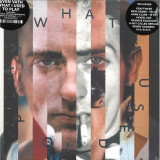
For this uniquely personal retrospective spread over twelve vinyl discs, Sven Väth takes us back to the early days of his DJ career. On What I Used To Play we meet great pioneers of electronic music, gifted percussionists, obscure wave bands, and innovative producers of a bygone 'new electronic' era. Rough beats and irresistible grooves from the identification stage of house, techno, and acid remind us not just how far electronic music has evolved over the past four decades, but how great it was to dance to EBM, techno, and house for the very first time.
If there is one protagonist of the electronic music scene who has remained curious, innovative and at the very cutting edge of music for over four decades, it's Sven Väth. His multi-layered artist albums and Sound of the Season mix compilations have been defining the genre for over two decades, and even today, he is constantly on the lookout for the next top tune to add to the highlights of his next set. At least, that's the case when he's not producing them himself as an artist or remixer. "Actually, it's always been part of my DNA to think ahead," and nothing had been further from his mind than looking back at his past, but when in spring of 2020 the international DJ circuit had to be scaled down to virtually zero, the 'restless traveler' suddenly had time. Time to stop and reflect on "how it actually was back then, at the very beginning of my career..."
"It was a great trip and with every track, beautiful memories came flooding back".
In the London apartment, he had just moved into, Sven has set up a "little music room", where he cocooned himself for several days, "to look way back for the first time and review my musical journey through the eighties, so to speak."
The interim result was six thematically oriented playlists with a grand total of 120 tracks from 'early 80s' to 'Balearic late 80s', together with excursions into afrobeat, European new wave, and EBM sounds and a few epochal techno/house tracks from the USA in between. From these 'Best of Sven Väth's favorites', the project What I Used To Play crystallized. Sven remembers how the Cocoon team reacted to his proposal: "They found the idea of making a compilation out of it MEGA from the beginning and everyone said 'Sven, go for it', but then, of course, the work really started, namely, to clear the rights and to get clean sounding masters of the up to 40-year-old tracks. There was also disappointment, of course. We couldn't clear certain titles because the rights holders in the USA had fallen out with each other or simply disappeared from the scene. In short, it wasn't easy, but now I can safely say we got the most important tracks."
Finally, after two years of research, curation, design, and administrative fine-tuning, the "little retrospective" from 1981 to 1990 is available. The exquisitely packaged, and three-kilo heavy box set is not only physically impressive, WIUTP is also the definitive record of Sven Väth's musical development. On each of the twenty-four sides of vinyl, you can trace track by track, what influenced him during which phase, and how he took off as a DJ from his parents' Queen's Pub straight into the spotlight at Dorian Gray. There and at Vogue (later OMEN), Sven became the style-defining player in the DJ booth that he still is today.
1981 - 1990: Future Sounds of Now
In the early eighties, the crowd in clubs like Vogue and Dorian Gray danced to what nowadays we call 'dance classics' - mainly disco, funk, soul, and chart pop. It was up to a new generation of DJs, including Sven Väth, the youngest protagonist in the Rhine-Main area at the time, to create their own club-ready music mix. Good new tracks and potential floor-fillers were rarities that had to be sought out and found, in order to prove oneself worthy.
Without MP3s, internet streaming, or other digital download possibilities, music didn't just gravitate to the DJ, instead, it had to be tracked down. In well-stocked record stores in Frankfurt and Wiesbaden or even in Amsterdam, London, or New York, Sven and friends sourced the material for countless magical nights. On WIUTP we can follow Sven's very personal journey through this wild, innovative era in which synth-pop, funk, hip-hop, and disco were successively replaced as 'club music' by house, techno, acid, and breakbeat. By the end of the decade, it was clear to see that these once exotic 'fringe' phenomena would soon become 'mass' phenomena.
Early 80s
Dirty Talk by the Italian-American duo Klein & M.B.O. represents the most innovative phase of the Italo-disco genre in the early eighties like no other track. Mario Boncaldo (I) and Tony Carrasco relied entirely on the original synthetic drum and percussion sounds of the Roland TR-808, coupled with the raunchy vocals of Rossana Casale and guitar accents of Davide Piatto. Of course, other tracks from this period were also influential in style, most notably Unit by Logic System, which worked as the perfect soundtrack to the laser lighting system at the legendary Dorian Gray club. With stomping beats and robotic rap interludes, Bostich by Yello also belongs on Sven's eternal playlist - after all, it caught the attention of Afrikaa Bambaataa, who invited the Swiss duo to perform at the Roxy in New York in 1983.
EBM Wave - Mid 80s
From today's point of view, the almost ten-minute-long, downtempo track Giant by Matt Johnson's band project The The, would probably not be considered an obvious club classic. However, a closer (re)listen reveals the rhythmic intricacies of the percussion overdubs by JG Thirlwell (aka Foetus) on Johnson's composition, and it becomes clear why this exceptional piece of music is one of Sven's absolute favorites. Other classics from this phase include Kaw-Liga by the mysterious The Residents, the hypnotic-synthetic Our Darkness by Anne Clark (and David Harrow), and last but not least, the somber, monotonous anthem Where Are You? by 16Bit, one of Sven Väth's projects together with Michael Münzing, Luca Anzilotti from 1986.
US House - Late 80s
You certainly can't talk about Chicago house without mentioning Frankie Knuckles. The resident DJ at the Warehouse not only gave the name to an entire genre, but also produced epochal floor fillers on the Trax label like the timeless Your Love, sung (and moaned) by Jamie Principle. Acid house protagonists Phuture also hail from Chicago, and on We Are Phuture (also released on Trax) we hear the chirping acid sounds of the legendary Roland TB-303 in full effect. Another featured classic is No UFO's by Detroit's Model 500 aka Juan Atkins, who is rightly considered the 'Godfather of Techno' even if the genre-defining track from 1985 still breathes with the spirit of hip-hop and electro from the first breakdance era.
Afrobeat
Le Serpent, by Algerian-born Abdelmadjid Guemguem, is a track that sounds completely different from everything else on WIUTP. Made in 1978, it's a monumental, rousing groove created without bass or synths, just with five congas! Even though Guem sadly passed away in 2021, his immortal, acoustic beats are understood all over the world and will continue to enrich many thousands of DJ sets for years to come. Another classic that not only Sven appreciates beyond measure is Hugh Masekela's Don't Go Lose it, Baby. In addition to being one of the most important jazz pioneers, the trumpeter and freedom fighter from Johannesburg was very experimental, integrating electronic sounds into his music in later years, in a similar vein to Miles Davis and Herbie Hancock. Dutch jazz pianist Jasper van't Hof's afrobeat project Pili Pili has also aged well. The trance-like, almost sixteen-minute-long track of the same name, manages to fill a whole side on the seventh of twelve vinyl discs in the WIUTP box.
UK-US-Euro - Late 80s
Time for a change of scene, in the truest sense of the word, and from a musical perspective, this section is like landing on another planet. First up is Andrew Weatherall's classic remix of Primal Scream's Loaded, featuring the iconic Peter Fonda sample (lifted from the 1966 biker film Wild Angels) that came to personify the mood triggered by the British Second Summer of Love in the late eighties: "We wanna be free to do what we wanna do, and we wanna get loaded...". This period also saw the emergence of M/A/R/R/S whose only single, 1987's Pump Up The Volume, became a club classic with support from DJ legend CJ Mackintosh. In this most eclectic of sections, we also encounter New York house and reggae producer Bobby Konders and his seminal Nervous Acid.
Balearic - Late 80s
Those who know him, know that Sven had already lost his heart to the 'magic island' of Ibiza as a teenager, so with that in mind, the WIUTP project couldn't end without a Balearic chapter. Inspired by Manuel Göttsching's E2-E4, the immortal, eponymously titled Sueño Latino belongs in there without question. Equally popular on the island was, and still is Break 4 Love by Raze, which thinking about it, would also fit perfectly into the house chapter. Last, but not least, there's an overdue reunion with Sven Väth himself, in his role as frontman of the successful Frankfurt trio OFF. Together with Michael Münzing and Luca Anzilotti (later of Snap!) this 'Organization For Fun' created the off-the-wall club hit Electric Salsa in 1986 which incidentally turned into an international chart smash, putting Sven in the enviable position of having to decide between pop stardom and a DJ career. Well, we all know how that decision turned out and the rest, as they say, is history. A not insignificant part of his story is What I Used To Play. Enjoy!
After a year and a half writing and recording rock music, I needed to clear my head. I listened to and made music where things generally happen gradually rather than suddenly. I would set up patches on a Monomachine or Analog Four and listen to them, hearing one sound morph into others, making changes to a patch only after having listened for quite a while, gradually adding elements, and finally manipulating the sounds on the fly. All tracks were recorded live to CD burner, with no overdubs, and executed on one or two machines.
While I was almost exclusively listening to artists such as Chris Watson, Peter Rehberg, Bernard Parmegiani, CM Von Hausswolff, Jana Winderen, Oren Ambarchi, Hazard, Bruce Gilbert, Klara Lewis, Ryoji Ikeda, and so on, I was also inspired by my mental image of John Lennon's tape and mellotron experiments he made at home during his time in the Beatles, as well as events like the first minute of Bowie's Station To Station, ...And The Gods Made Love by Jimi Hendrix, the synths in the song Mass Production by Iggy Pop, and the general idea of Eno's initial concept of Ambient music.
Music being a solitary sculpture in sonic space was the main motivating thought. I was looking at pictures of sculptures and trying to make music that simultaneously conveyed both movement and stillness. I refrained from sudden musical changes, especially avoiding sequences of notes and rhythms. In fact, this music was made from sequences which never exceed a single note, many of these pieces being made on a single pattern. The movement which a good sculptor conveys when the shape of his medium meets the eyes of the viewer who walks around the piece, or the sun changes its position, are the kinds of movement which it was the role of the synth patches to communicate.
I've been listening to music like this since I was 13 or so, but I felt that making it was out of my reach because of the amount of restraint I imagined it required. Once I found myself making this music, it did not feel like a matter of restraint at all. I wanted to build a certain type of building, and hear certain types of movement, and I knew when it was complete. There was no place for sequences of notes and rhythms in my plans.
I also cannot overstate the role that being in my band played. I had previously spent 12 years programming and engineering my own music, and then spent a year and a half making music where my role was basically to write songs and play guitar. When the band's recording phase was completed, I needed to go back to my adopted language. I had done enough with chords, rhythms, notes, defined sections, sharp transitions, etc.. What I needed was to create music from the ground up with nothing but sound, and have that music reflect "being" rather than "doing". It was a therapeutic way of re-balancing myself, before and during my band's mixing process.
This music seeks to just exist, and is not attempting to manipulate or grab the listener in any way. I believe it works well if one listens loud and focuses on it, but also works well at soft volumes and in the background. It can compete with silence on silence's own terms, and it can also happily wipe silence out.
There are two versions of this album. The CD version is pronounced "two" and called : I I . This is the longer version. The vinyl version is pronounced "one", and called . I : This version is shorter, but contains one vinyl-only track. The reason the vinyl is shorter is that some of the tracks have sounds that can not be pressed on vinyl.
John Frusciante
red/clear splatter vinyl
Shake Chain will also be performing at Marina Abramovic’s private view at Modern Art Oxford on September 23rd.
Shake Chain have been busy demolishing audiences and expectations for the best part of three years. Vocalist Kate Mahony sets that standard by starting each live performance by crawling from the back of the room through a disbelieving crowd’s legs in a shiny yellow raincoat. The resulting questions that frantically arise of ‘what’s going on?’, ‘am I hallucinating?’ and ‘is this part of the show?’ are hallmarks of how Shake Chain approach making their unruly, lyric-bespattered rock music.
The four-piece from London are completed by Robert Syres (guitar, synth), Chris Hopkins (bass, synth) and Joe Fergey (drums), all artists hailing from Goldsmiths College, Nottingham Trent and Wimbledon, University of the Arts. A mutual love of thought-provoking performance art and a yearning for disruption have helped Shake Chain lock into their wayward sound. Twitchy guitar lines jolt and jerk, synths burble noisily and tack-sharp drums pin things down for Kate’s reeling vocal to vault and slur. Kate’s singing has drawn comparisons with Yoko Ono, Su Tissue and even a seance with it’s unique embrace of flights of atonal fancy, head-first repetition and ecstatic frenzy. Opinion-dividing arguably, but singular in making Shake Chain dauntingly brilliant.
Shake Chain’s debut album ‘Snake Chain’ was recorded in the New Forest’s Chuckalumba Studios early in 2022. The tranquil setting only slightly skewed by the intense extratropical cyclone occuring outside. When asked to sum up the album the group collectively settled on it sounding like “crying in a Catholic sex dungeon with Eastenders on”, perhaps only half tongue in cheek given the soapy dramatics of opening track ‘Stace’. ‘RU’ is a stompy triumph of ad lib monotony, heavy and wonky, its vocal slowly unwinding into residual sense. Shake Chain’s songs are populated with cowboys, cherry-pickers, content-addicts, private investments, a careless driver called Mike, architects and by much lamentation at the state of our confusing existencies. This last point underlined in luminous marker pen with slow-building vortex ‘Highly Conpeptual’ and whispered closer ‘Duck’.
‘Copy Me’ races along with radiant headbangs of dynamic abandon, one part tumble, two parts pummel, “hold your breath til something changes” commands Kate whilst everything of course is in hammering flux. ‘Second Home’ is similarly coruscating yet bouyant, whilst ‘Arthur’ feels like it could tear inside in two amid sobbing wails and the twining of its disparate parts. Throughout all the unhinged freakouts, found sounds and blasting rhythms though is Kate’s questioning, resilient presence, anchoring everything. On bruising creeper ‘Birthday’ she asks most tellingly “Do we speak language or does language speak us? Is there a mouth in the middle of the desert? Do you ask how cups are designed? Would you say yes when you really mean I don’t know”? Shake Chain are cathartic and absurd, humorous and deadly serious yet always inspired. Its this tightrope walk which makes their album such a thrilling, vital listen.