Since forming in 2008, Falling In Reverse have racked up a fanatical fan base, so much so that the band"s legendary videos have been viewed over 30 million times. The attitude of the 1980"s Sunset Strip, the bravado of battle-ready rap, the take-no-prisoners bottom end of metalcore and the boundless revelry of underground EDM parties have all beautifully converged in this one band and this new album. It"s for everyone on Instagram, on Twitter, or anyone with a brain and two ears. "My dad raised me on metal, but my first serious love was hip-hop," Ronnie explains. "When I heard Dr. Dre"s The Chronic, that"s when I fell in love. I didn"t know what the hell they were talking about, the beats were intertwined, and it came inside of me and took me over. When we added hip-hop elements I was thinking, "Should I do this? This sounds crazy! Are people going to like this?" Now I"ve never been so proud of something. The final product, Fashionably Late, is the best work I"ve ever done." First time pressing on limited edition Clear w/Hot Pink Splatter vinyl to celebrate the album"s 15th anniversary!
Поиск:clear
Все
- Drive In
- Black Network News
- Splish Splash
- Inergy
- Johnny Better Get
- Dingy Bars Suck
- Seen That Movie Before
- High Places
- Blood's Good
- Human Body
- Mom's Wallet
- Positive Change
- Amerika
- New Generation
- Livin' In The '80S
- Stoned To Death
- Stick To Your Guns
- I'm Bored
- Piece Of Me
- Livin' In The 80S Live At Crazy Al's, September 6Th, 1980
- Stick To Your Guns Live At Crazy Al's, September 6Th, 1980
- Commies Live At Crazy Al's, September 6Th, 1980
- I'm Absent Live At Crazy Al's, September 6Th, 1980
LP+7" (Clear Vinyl). When the Ramones lost it, the Zero Boys found it; Adding a slam brigade fist to the Blitzkrieg Beat. The Zero Boys managed to come with one of the best early 80's punk records, or one of the best records ever, period. From 1979 to 1983, the Indianapolis-based Zero Boys were the finest hardcore blitz in the Midwest if not all the lower 48 states. Compiled and released as a post-mortem following the band's breakup, History Of_ is the proof, if more was needed, that their take of American hardcore wasn't all white bread numbers. Yeah, they played shows with Minor Threat, Dead Kennedys, Subhumans, and others but in Terry "Hollywood" Howe's guitar there was harmonious terror and unstoppable cadence. Terry's licks and chops _ a leap beyond two or three chord punk _ offered a zone and measured count for drummer Mark Cutsinger and bassist David "Tufty" Clough, a rhythm unit in par with the Minutemen if not The Meters, to run lines like quicksilver. Meanwhile, frontman, Paul "Z" Mahern provides a constant wash from beginning to end. Originally released in 1984 with a limited-edition reissue in 2009, this 40th anniversary edition includes the original LP of `History Of...' and a 7" featuring four live recordings never previously pressed to vinyl and recorded at iconic hardcore/punk venue Crazy Al's in 1980: "Livin' In The 80's", "Stick To Your Guns", "Commies", and "I'm Absent".
Since surfacing into the Scandinavian synth-pop scene 16 years ago, Nicklas Stenemo and Christian Hutchinson Berg aka KITE have steadily grown from local icons to a global phenomenon, yet until now they've never released a full-length studio album. VII breaks the ice, collecting 14 of the duo's deepest and most dynamic anthems into a stormy saga of immersive, apocalyptic emotion. Sourced from a series of six 7-inch singles released over the past half-decade, the collection persuasively showcases KITE's distinctly cinematic strain of Swedish darkwave in all its glory and desolation. Stenemo and Berg had both logged time in other bands before joining forces in the mid-aughts, although their unique chemistry became apparent immediately. After forming in Malmö, Sweden, they soon relocated to Stockholm, further refining their fusion of brooding synths, booming rhythm, and vocal theatrics over a string of celebrated, numbered EPs (named I through VI). Despite their rising profile, KITE then and now have largely refrained from publicity, allowing their music to speak for itself - which it clearly has, as KITE's live performances have become the stuff of legend, prompting frequent festival invitations, international tours, and limited engagements on prestigious stages (recently at the Royal Swedish Opera, and Dalhalla, the former limestone quarry turned open air amphitheater, to name a few). VII offers a compendium of KITE's potent recent discography, including collaborations with Blanck Mass, Anna von Hausswolff, and Henric de la Cour. From yearning dystopian pop ("Hand Out The Drugs," "Bowie `95"), to widescreen existential balladry ("Tranas Stenslanda," "Glassy Eyes"), and sleek New Romantica ("Remember Me," "Teenage Bliss"), KITE's wavelength is one of soaring heights and abysmal depths, anguish and ecstasy, pouring one's burning, battered heart into the here and now. Their years of visceral commitment and artistic integrity have been hard fought and hard won; it bleeds between the words and melodies in one holy moment after another: "I switch my ways / To seize the day / To face my life / Not fade to gray."
Ambitious, smart, and magnetically retro, The Rise and Fall of American
Kitsch will charm you with dazzlingly quirky storytelling, stellar
performances, and an adventurous Americana soundscape
It's nuanced enough that you'll want to soak it in with front-to-back listens, and
fun enough for a road trip soundtrack. With American Kitsch, Karen Jonas is
clearly on the rise.
Full PR plan in place
UK Tour in October 2024
- A1: Love Trip
- A2: Chinese Restaurant
- A3: Mayonaka No Joke
- A4: Kanashimi Wa Yoru No Mukou
- A5: All Or Nothing
- B1: Nagisa De Dance
- B2: One More Night
- B3: Morning Flight
- B4: Tasogare Wa Ginpakuno…
- B5: What A Broken Heart Can Do
Kazuo Shiina, Hiroyuki Namba, Yoshihiro Naruse, Akira Inoue and other skilled musicians participated in Takako Mamiya's only album released in 1982,
a masterpiece representing 80's city pop, on clear sky blue vinyl. Limited re-release!
Houston, TX Legend & Rap Icon Sauce Walka, unleashes his first full length offering of 2024, Saucefather 2. The album is the follow up to his widely celebrated mixtape, The Saucefather, originally released in 2017. With features from Lil Yachty, BossMan Dlow, Wizz Havinn, Peezy, YTB Fatt & more, Sauce has earned his respect in the rap game, consistently proving "he's a force to be reckoned with lyrically" said HotNewHipHop. With cosigns from heavy hitting rap luminaries such as Jay-Z, Drake, J. Cole, Bun B, Conway the Machine and more, it’s clear Sauce Walka’s trajectory is only headed upward. Filled with odes to DJ Screw, Saucefather 2 pays homage to the unique and innovative Houston Chopped & Screwed Hip-Hop culture.
- Plasma 2050A
- Pigeon Blood Part 1
- Plasma 2050B
- 10-: Muko
- Pigeon Blood Part 2
MARBLED SMOKE VINYL[27,52 €]
Limited Clear w/Black & Clear w/Red Vinyl. Recorded in 2023 Merzbow continues his newer ventures of extreme sonic dynamics. Deluxe spot gloss varnish on textured sleeve with booklet.
To experience Justin R. Cruz Gallego's pulverizing Sub Pop debut is to get burned down to ashes and burst forth, born anew. Grim Iconic...(Sadistic Mantra), the Tacoma-based artist's second album, is driven by opposing forces: noisy abstractions and tightly structured beats, anguish and dissolution at the outside world and empowerment within, apathy and catharsis. Grim Iconic...(Sadistic Mantra) weds scouring electronics to hooky songs and Gallego's powerful drumming in a way that feels visceral and new. It's his most personal statement to date, at once playful and intent, driven and combustible, total fucking chaos mixed into glints of broken-glass beauty. Born in Tucson, Arizona, Gallego experienced culture shock as a child after relocating to the frigid climes of the Pacific Northwest. He found solace in the Seattle punk scene centered around Iron Lung Records and has since remained a fixture in the underground community. "I see this record as first and foremost a musical statement," Gallego says. "I grew up in punk and DIY subcultures, but before that I had Latin music playing in the background through my childhood and every phase of adolescence. It was surprisingly natural to incorporate. I realized I wanted to go deeper into these rhythms. I wanted to make a record that felt as experimental as much as it felt from the perspective of a Latino. When I got a glimmer of that possibility, it felt exciting." Lead single "Dogear" is a face-melting party starter that sounds like someone forced Talking Heads and Rudimentary Peni to share a practice space. "I wanted a song that felt playful in the way it attempted to be dissonant without taking itself too seriously," Gallego says. "Cholla Beat" is even more ambitious, an anthemic mix of WAR and Wire led by unruly synthesizers spiraling down a labyrinth of production. Gallego's influences for the album are vast, ranging from British documentary filmmaker Adam Curtis to electric Miles Davis to audio miscreants like Demdike Stare and Oneohtrix Point Never. But it's Gallego's assured sonic vision that resounds the loudest. And, while J.R.C.G. is a solo project, conceived and executed primarily in Gallego's home studio, he found strength in opening the project to others, starting with Seth Manchester as co-producer. Manchester's penchant for bone-rattling frequencies, as seen in his production work with The Body, Battles, and Mdou Moctar, made him a natural fit for Gallego. Together, they retained the intimacy of Gallego's home recordings while taking advantage of the hi-fi stylings of his Machines With Magnets Studio in Rhode Island. The closing song, "World i," offers a glimpse into the live experience of Grim Iconic...(Sadistic Mantra), with upwards of seven band members blasting off. The album features a fascinating mix of supporting players, many of whom cycle through J.R.C.G.'s live lineup: Morgan Henderson (The Blood Brothers, Fleet Foxes), Jason Clackley (Dreamdecay, The Exquisites), Jon Scheid (Dreamdecay, U Sco), Erica Miller (Casual Hex, Big Bite), Veronica Dye (Terminator) Phil Cleary (U Sco), and Alex Gaziano (Dreamdecay, Kidcrash, Science Amplification). Taken as a whole, G.I.S.M. is a whirlwind of sound, pummeling, and cleansing. It's a sweaty, thrilling aural adventure and, like a great basement show, it'll leave you breathless, exhausted, and wanting to repeat it all over again. As any good mantra should.
Green Splatter Vinyl[23,49 €]
Svart Records proudly present Winter’s most classic, gloomy and crust laden doom EP “Eternal Frost” for the first time as a vinyl version on its own ”Eternal Frost” is an EP by New York’s cult death doom band Winter. Never before released on vinyl as its own release and only included in the deluxe edition of ”Into Darkness” released by Svart Records in 2020, ”Eternal Frost” will finally be available on wax in August 2024. Formed in New York circa 1988, Winter played slow, deep and hard nuclear doom with a crust punk rawness, that came across like Hellhammer jamming with Amebix. Their penchant for mammoth sized and funeral-paced, wasteland droning has become a touchstone reference for bands across the whole spectrum of underground metal. Originally released only on CD by Nuclear Blast in 1994, ”Eternal Frost” is a reissue of the 1989 eponymously titled demo tape with an additional track “Manifestation I”. Winter’s pre-internet infamy led to their demos being tape- traded in hallowed adoration by fans and bands alike, gaining notable fans such as Fenriz from Darkthrone. “Eternal Frost” is available on Svart exclusive white/red/gold/orange marble vinyl, limited clear/green marble vinyl, and classic black vinyl. Release date August 2nd.
Black Vinyl[22,27 €]
Svart Records proudly present Winter’s most classic, gloomy and crust laden doom EP “Eternal Frost” for the first time as a vinyl version on its own ”Eternal Frost” is an EP by New York’s cult death doom band Winter. Never before released on vinyl as its own release and only included in the deluxe edition of ”Into Darkness” released by Svart Records in 2020, ”Eternal Frost” will finally be available on wax in August 2024. Formed in New York circa 1988, Winter played slow, deep and hard nuclear doom with a crust punk rawness, that came across like Hellhammer jamming with Amebix. Their penchant for mammoth sized and funeral-paced, wasteland droning has become a touchstone reference for bands across the whole spectrum of underground metal. Originally released only on CD by Nuclear Blast in 1994, ”Eternal Frost” is a reissue of the 1989 eponymously titled demo tape with an additional track “Manifestation I”. Winter’s pre-internet infamy led to their demos being tape- traded in hallowed adoration by fans and bands alike, gaining notable fans such as Fenriz from Darkthrone. “Eternal Frost” is available on Svart exclusive white/red/gold/orange marble vinyl, limited clear/green marble vinyl, and classic black vinyl. Release date August 2nd.
Waking Season is the third full-length album from Beverly, MA post-rock quintet Caspian. The 10-song set was co-produced by Matt Bayles, former keyboard player from Minus the Bear and producer for such seminal albums as Isis’ Oceanic, Botch’s We Are Romans and Mastodon’s Blood Mountain. Waking Season is the follow-up to Caspian’s 2009 album Tertia. 2LP pressing from Triple Crown Records. Guitarist/keyboardist Philip Jamieson on working with Bayles, “We wanted to shake things up and work in a different type of environment, the kind of environment where it wasn’t just us calling the shots all the time. Working with someone who had the credibility to challenge the way we heard the songs outside of our own bubbles was extremely important to us for this record. Matt has a way of pulling the pieces together to make them sound crystal clear, sharp and balanced without removing any raw energy from a track. Working with him was a humbling and enlightening experience and we feel like it really benefited the album.”
Marking its first decade of activity, Blume returns with the first ever vinyl reissue of the seminal “New Music for Electronic and Recorded Media”, from 1977, the third and final instalment in a suite of releases that includes James Tenney’s “Postal Pieces” and Ben Vida’s “Vocal Trio”. Unquestionably among the most important collections of experimental music to emerge during the 20th Century, “New Music for Electronic and Recorded Media” is the original feminist presentation in its context, releasing the work of Johanna M. Beyer, Annea Lockwood, Pauline Oliveros, Laurie Spiegel, Megan Roberts, Ruth Anderson, and Laurie Anderson under its collective banner. Includes newly commissioned liner notes by Jennifer Lucy Allen and Bradford Bailey.
Since its founding back in 2014, Blume has carved a unique place in cultural landscape, issuing free standing works, spanning the historical and contemporary, that represent singular gestures of creativity within the field of experimental sound. Joining their broad efforts in building networks of context and understanding that already includes the efforts of efforts of Werner Durand, Sarah Hennies, Bruce Nauman, John Butcher, Jocy de Oliveira, Mary Jane Leach, Valentina Magaletti, Alvin Curran, Julius Eastman, Alvin Lucier, and others, Blume delivers their third release in their first suite of releases for 2024, the fist ever vinyl reissue of the seminal “New Music for Electronic and Recorded Media” compilation, originally issued by Thomas Buckner's 1750 Arch Records in 1977. Out of print for decades on vinyl and arguably the most important feminist statement in the history of experimental music, illuminating the work of Johanna M. Beyer, Annea Lockwood, Pauline Oliveros, Laurie Spiegel, Megan Robert, Ruth Anderson, and Laurie Anderson - in a number of cases representing their recording debuts - during a crucial moment in the history of experimental music. Blume’s brand new edition - complete with newly commissioned liner notes by Jennifer Lucy Allen and Bradford Bailey, as well as reproducing Charles Amirkhanian’s original accompanying text - radically shifts perceptions of the past and present day with its truly revolutionary sounds.
Issued by Thomas Buckner's 1750 Arch Records in 1977, and out of print nearly the entire time since, “New Music for Electronic and Recorded Media” can be understood within two simple frameworks. On one hand, it is an astounding document of the landscape of experimental music toward the end of the 1970s. On the other, it is a historically significant feminist statement, being the first collection of experimental music entirely dedicated to female composers, a number of whom were grossly under-celebrated at the time, but have since gone on to be regarded as among the most important composers of their generation.
The eight pieces gathered by “New Music for Electronic and Recorded Media” - Johanna M. Beyer’s “Music of the Spheres”, Annea Lockwood’s “World Rhythms”, Pauline Oliveros’ “Bye Bye Butterfly”, Laurie Spiegel’s “Appalachian Grove I”, Megan Roberts’ “I Could Sit Here All Day”, Ruth Anderson’s “Points”, and Laurie Anderson’s “New York Social Life” and “Time To Go (For Diego)” - might be regarded as the first cohesive vision of alternate proximity or expression of experimental music to what has always been a frustratingly male dominated environment, and to the tropes, temperaments, and sensibilities that have been historically perceived to define it. It is an expanded vision of truth. While the presence of feminine sensibilities and temperaments in experimental music, however they may present themselves, were anything but new in 1977, “New Music for Electronic and Recorded Media” was the first opportunity, beyond the temporal limitations of live performance, to view them collectively, rather than as individualised expressions within a larger body of similar gestures (as was the case of Oliveros’ inclusion in Odyssey’s 1967 “New Sounds In Electronic Music” and “Extended Voices” compilations) where they might be confused for something else; to regard and celebrate a radical notion of feminine sonority for its unique characteristics and through its interrelations.
While its historical significance and groundbreaking nature can not be debated in its totality, nearly half a century on “New Music for Electronic and Recorded Media” remains compelling in both its musicality and the palpable sense of its lasting influence. Every composition across the album’s two sides is not only engrossing and deeply compelling - feeling as fresh and relevant as the day it was laid to tape - but clearly tangible in their lasting influence. Viewed in context, the album’s eight works feel like breath of fresh air when compared to much of what came before, and laid the groundwork for much of what was to come, introducing a new, often more holistic temperament and more sensitive and inclusive sensibility into the landscape of experimental music.
Particularly in the case of Annea Lockwood, Pauline Oliveros, Laurie Spiegel, Ruth Anderson, and Laurie Anderson, it's hard to throw ourselves back in time and imagine a moment when these composers rested in a fairly marginalised corner of the creative landscape. Blume’s brand new edition of “New Music for Electronic and Recorded Media” - complete with newly commissioned liner notes by Jennifer Lucy Allen and Bradford Bailey, as well as reproducing Charles Amirkhanian’s original accompanying text - brings us back to this confounding moment and points us toward a crucial moment of change set forth by these incredible composers and their sounds. Absolutely seminal and not to be missed.
I’ve lost my sense, I’ve lost control, I’ve lost my mind! Yeah, we all know how the song goes, but those words will no doubt end up driving their point home throughout the duration of Bloodstains’ self-titled debut LP. This thoroughly-welcome Euro pressing follows the album’s DIY release earlier in 2024, which is excellent news for UK/mainland fans of early 80s SoCal hardcore who’ve yet to hear it - the whole thing absolutely fkn rips. Feel free to rifle through your Adolescents, Weirdos and (natch) Agent Orange records to see what these guys have been mining, but all you’ll find is a launchpad - Bloodstains inevitably hail from California and they’re clearly au fait with all the above (not to mention a certain compilation), but they manage to inhabit that sound with a personality all of their own. Vocalist Cesar Marin splits his delivery between a sneering bark (like the most withering put-downs you’ve ever heard being delivered via nailgun) and a purposeful, melodic croon… which itself sounds it’s made from sandpaper and vitriol, but there you go. Most importantly, this is a band with SONGS. Eight of ‘em here, to be precise, and you’ll rarely have been so glad to have something turned up so loud it blows holes in your speakers. ‘Stray Bullets’ hangs its mighty chorus on a call-and-response refrain that dares you not to pick a side and bellow along, while instrumental opener ‘The Last Rites’ sets you up perfectly for the seething, volatile bundle of hooks to follow. I’d say the interplay between the band’s string-wielding Espinoza contingent is something to behold as well, but what am I, some kinda nerd? The guitars sound fkn awesome - that’ll do ya. And I don’t wanna spoil the party ahead of time, but just wait til you hear future anthem ‘Public Hanging’. I could go on about this record all day, but ultimately all you need to do is listen to it. Hell, even buy it. And dare I return to a theme, lose your mind.
Comes with insert and download coupon.
Imagine a Latin remake of Back to the Future. The mad scientist is Arsenio Rodriguez (the godfather of salsa) and the young student who travels through time with him is Eblis Alvarez (Meridian Brothers). This album can only be described as the perfect soundtrack for that movie that never was.
After the massive buzz generated by his first solo album, Mentallogenic, Alex Figueira got back in the studio to work in a more collective fashion this time, carefully assembling the second album of his largest project to date, Conjunto Papa Upa; a team of 6 musicians, spanning 3 generations of some of the best talent in the Latin and avant-garde scenes.
In an era where tropical music is dominated by purely electronic and rhythmically uniform sounds, the ten songs encompassed in “Fruta Madura” (“Ripe Fruit”) wander through the most diverse tempos, rhythms, and motifs effortlessly. A real breath of fresh air that gracefully incorporates soul, funk, jazz, psychedelia, and electronics into a solid tropical, irresistibly polyrhythmic foundation, without ever succumbing to the many genre clichés.
The distinctive production and catchy songwriting of Figueira shine in a very distinctive light on this second full-length. Living up to his reputation (Miles Cleret, founder of Soundway Records, called him “one of the scene's truly authentic and eccentric producers”), he takes the opportunity to show he’s not afraid to keep walking his own path.
Taking the band for a wild ride through the traditions of Africa, America, and the Caribbean; contrasting them with a ridiculously wide plethora of vintage, contemporary, and futuristic sounds, and pivoting on the exuberant musicality displayed by his musicians; the result leaves no doubt: this album is destined to be considered a future classic of the exciting tropical psychedelic music of the 21st century.
Addressing the most diverse themes in this new collection of songs, things take on a much more mature tone, as the title clearly suggests.
The opening track “El segundo es más sabroso” (“The second one is tastier”) sets the tone in the most assertive way imaginable, with the band boldly declaring, through multiple metaphorical references (laid upon a crazy mix of Dominican merengue, Detroit techno, classic and free jazz, dub, and electro), that the bar will be set higher with this second album.
The remaining compositions touch upon the most diverse subjects, with a fair dose of humor, sarcasm, and postmodern “magic realism”. “El Algoritmo” (The Algorithm) is a parranda-cumbia hybrid (for lack of a specific term) about the omnipresence of technology in our lives. The sophisticated Latin soul of the titling track “Fruta Madura” makes a case for the beauty of the maturity process. Some key philosophical teachings of Marcus Aurelius (the role of causality, the impositions of “the logos” and the importance of self-control) get a twisted cumbia treatment on “Reos del Deseo” (Prisoners of Desire). “No le pongas Coca-Cola” (“Don’t put Coca Cola in it”) shows us the most satirical side of the band, accusing those who mix Coca Cola with Rum of committing "sacrilege", on a powerful base of Dem Bow (the grandfather of Reggaeton), intertwined with touches of soul, salsa, and Cuban comparsa.
"Háblame Claro" (“Talk to me clearly”) is a story of heartbreak that evokes in its first part the spirit of the erotic salsa of the 80s (a subgenre deeply despised by purists), and after an unexpected samba interlude, leads to the hardest salsa of the 70s (a subgenre adored by purists), to end up in the surprising form of pure Afro-Cuban ceremonial music.
“Tu mamá tenía razón” ("Your Mom Was Right") is an attempt to exalt the spirit of the Latin American soap opera in the key of “acid bachata”, to recount a real-life case, witnessed by the band on countless occasions: the partying woman who arrives at the show accompanied by her bitter husband, who obviously does not like to dance. A very cheeky song to talk about the very serious and pertinent topic of female empowerment.
“La misma vaina” (“The same thing”) with its indescribable blend of bantú, candomblé, and Mozambique rhythms with abstract synthesizers, is an ode to adventure in favor of the aversion to taking risks and seeking predictability.
“Amigas picadas” (“Salty friends”) is another humorous song recounting another real-life case witnessed by the band on countless occasions: a love encounter sabotaged by the girlfriend's friends, who all happen to fancy the same guy. A jazzy take on the ancient Dominican rhythm of pambiche (grandfather of merengue), with generous psychedelic touches, resembling the classy late 60s releases of Guadeloupe's legendary producer / label owner Henri Debs.
“Vinimos a hablar” (“We came to talk”) takes sarcasm to the highest level, to ridicule the absurdity (also experienced by the band firsthand) seen in live music venues where people pay a ticket to go and have conversations that could be carried out much better on any bar, where no band is playing. The music alternates between a delicate melody with loose, sparse percussion and a full-on, pumping Angolan semba, with a techno kick drum included; bringing things to an apotheotic grooving finale, where the peculiar swing of Venezuelan calypso from the Callao region is thrown on top of all the precedent elements; closing the album in the most uplifting, “end of the carnival parade” feel.
The artwork is a delicate and impactful oil painting by Colombian artist Kevin Simón Mancera, who has collaborated many times with the label before (“Maracas, tambourines and other hellish things” tape and the Lola’s Dice LP).
What the experts are saying:
“Alex (Figueira) dove into this work with a brutal cohesion between lyrics and synths. Timbre poetry, sound poetry (you name it). And that, superimposed on his always impeccable percussive base, confirms the title of “avant-garde visionary of our beautiful Latin music”".
EBLIS ALVAREZ (MERIDIAN BROTHERS)
“Papa Upa's infectious quirkiness is a balm against boredom. A mature album, but without an expiration date”.
GLADYS PALMERA
“Here there is a lot of strength, drum, cadence and psychedelia, lost dance rhythms, united in an intercontinental Latin/African/and Caribbean journey, a unique winning combination that we could consider the new “Ritmo Figueira”.
DISCODELIC
Conjunto Papa Upa are:
Alex Figueira - Timbales, percussion, vocals.
Gerardo Rosales - Congas, percussion, vocals.
Ramón Mendeville - Bongos, percussion, vocals.
Randy Winterdal - Bass.
Andrew Moreno - Guitar.
Nico Chientarolli - Organ, piano, synths.
All songs written by Alex Figueira.
Arranged and performed by Conjunto Papa Upa.
Recorded, produced, mixed and mastered by Alex Figueira at Heat Too Hot, Amsterdam.
Repress!
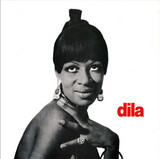
Far Out Recordings proudly presents the first and only album from the mysterious Brazilian vocal sensation Dila (pronounced “Jee-la”). Having reportedly died in a car crash shortly after the album’s release in 1971, there is very little known about the woman behind the voice. But the joyous music Dila left behind, gives us a picture as good as any, of a powerful feminine soul at the top of her game.
The liner notes on the elusive original LP, written by composer Arnoldo Medeiros attest: “Friend, look out! Because when this girl starts to sing, you’re in trouble. Hold the railing so you don’t fall down the stairs, because she’s coming this way and shaking up everything.”
Arranged and produced by Durval Ferreira, alongside his studio band affectionately known as “Os Grillos” (The Crickets), Dila (1971) is a rare glimpse into the authentic soulful Samba sound of Rio’s favelas in the late sixties and early seventies.
A blast of funky, percussive Brazilian breaks, scorching hot brass and swing-laden piano, the music is as iconic as the album’s stark cover, as is clear on opener ‘Inez’, composed by The Crickets’ bassist Romildo. There’s a fantastic interpretation of the Ivan Lins classic ‘Madalena’ (made famous by Elis Regina), a moving version of the Tom Jobim and Vinicius De Moraes classic ‘O Morro Não Tem Vez’, and a number of sunny original compositions by Arnold Madeiros, who’s other writing credits include music for Marcos Valle, Wanderlea, Evinha and Dom Salvador.
With original LPs extremely hard to come by, this rare treasure of Brazilian soul, which fans of Gal Costa, Celia, Evinha and Elis Regina will love, gets a much-deserved official reissue: remastered and pressed to 180g vinyl.
Recorded straight on the heels of Bad Company's 1974 debut — just a matter of three months later; not quite long enough to know how big a success the first LP would be — Straight Shooter is seemingly cut from the same cloth as its predecessor. It is, after all, a tight collection of eight strong, steady, heavy rockers that never, ever proceed in a hurry, but from the moment "Good Lovin' Gone Bad" kicks off the proceedings, it's clear that Bad Company have decided to expand their palette this second time around, writes AllMusic.
The album, released in April 1975, reached No. 3 on both the U.K. Albums Chart and the U.S. Billboard 200. It was certified gold (500,000 units sold) by the Recording Industry Association of America (RIAA) a month after its release.
The jacket for the album was designed by Hipgnosis, who also designed their debut album.
"Good Lovin' Gone Bad," was released in March 1975 and reached No. 36 on the Billboard Hot 100. The album was released in April. The album's final single "Feel like Makin' Love" was released in August and reached No. 10 on the Hot 100.
"Feel Like Makin' Love" and "Shooting Star," became classic rock staples due to this expanded aural vocabulary, and even straight-ahead rockers like "Good Lovin' Gone Bad" and "Deal with the Preacher" benefit from this additional muscle, while they feel comfortable enough to settle into a soulful groove on "Anna" and "Call on Me."
Pressed on 180-gram vinyl at Quality Record Pressings, and housed in a tip-on old style gatefold double pocket jacket by Stoughton Printing, this is the definitive pressing of Straight Shooter and one fans of Bad Company will be proud to own.
- A1: Meat Loaf - I'll Do Anything For Love (But I Won't Do That) (But I Won't Do That)
- A2: D Ream - Things Can Only Get Better
- A3: Wet Wet Wet - Love Is All Around (From "Four Weddings & A Funeral" Soundtrack)
- A4: All-4-One - I Swear
- A5: The Pretenders - I'll Stand By You
- A6: Youssou N'dour - 7 Seconds (Feat Neneh Cherry)
- A7: East 17 - Stay Another Day
- B1: Livin' Joy - Dreamer
- B2: Coolio/L.v. - Gangsta's Paradise
- B3: Radiohead - Street Spirit (Fade Out) (Fade Out)
- B4: Oasis - Don't Look Back In Anger
- B5: Saint Etienne - He's On The Phone
- B6: Mark Morrison - Return Of The Mack
- B7: Spice Girls - Wannabe
- C1: George Michael - Fastlove
- C2: Deep Blue Something - Breakfast At Tiffany's
- C3: The Prodigy - Breathe
- C4: Eternal - I Wanna Be The Only One (Feat Bebe Winans)
- C5: Hanson - Mmmbop
- C6: Chumbawamba - Tubthumping
- C7: All Saints - Never Ever
- D1: Robbie Williams - Angels
- D2: Natalie Imbruglia - Torn
- D3: Aqua - Barbie Girl
- E1: Britney Spears - Baby One More Time
- E2: Steps - Tragedy
- E3: Gabrielle - Rise
- E4: Sonique - It Feels So Good
- E5: Craig David - 7 Days
- E6: Atomic Kitten - Whole Again
- E7: S Club - Don't Stop Movin
- F1: Kylie Minogue - Can't Get You Out Of My Head
- F2: Mary J Blige - Family Affair
- F3: Sophie Ellis-Bextor - Murder On The Dancefloor
- F4: Liberty X - Just A Little
- F5: Las Ketchup - The Ketchup Song (Asereje) (Asereje)
- F6: Girls Aloud - Sound Of The Underground
- F7: Nelly/Kelly Rowland - Dilemna
- D4: The Tamperer - Feel It (Feat Maya)
- D5: Boyzone - No Matter What
- D6: Cher - Believe
- D7: Atb - 9Pm (Till I Come) (Till I Come)
In November 2023 we celebrated NOW’s 40th anniversary with a collection of massive Pop hits – but with 40 years of hits to choose from we had to leave out so many fantastic tracks – so it’s time to continue that celebration with NOW That’s What I Call 40 Years - Part 2 – again honouring the legacy with a stellar selection from the past four decades of NOW. Embark on a musical journey from 1983 right up to the present day. Released on a triple vinyl set pressed on Green, Clear Transparent, and Pink LPs with 43 essential hit tracks. and 100 essential hit tracks across the 5 CD set
Diego Ruiz, aka DFRA, is an Argentine music producer very active in the last five years with several productions in the underground deep house scene. Now he's definitely setting the bar at the highest level with this project. He's introducing a full band of musicians with jazzy roots, and the result is a four-track EP that's a clear fusion of how jazz and electronic music merge in a unique way. It incorporates classic Deep House and House sounds plus the fusion of Modal Jazz, Bebop, and Hard Bop style melodies.
2024 Repress
180 Gram, Tip On Sleeve RSD version of this classic. One of the rarer records of the mythical Strata East albums is finally reissued for the first time on Heavenly Sweetness!
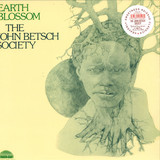
The recording of Earth Blossom, the John Betsch Societys one and only album, seems something of an enigma nowadays. For even though Nashville is clearly one of the towns in the US with the highest number of recording studios, who would have thought that the capital of country music would give birth to one of the forgotten masterpieces of 1970s spiritual jazz. The path leading to the album starts in 1963 when John Betsch, originally from Jacksonville in Florida, arrives in Nashville to study at Frisk University. He is a young drummer and joins Bob Holmes trio. Holmes is one of the towns major jazz organists and pianists; he becomes Betschs mentor and, over the space of two years, John will play alternately with him and with the trumpeter Louis Smiths group. However, in 1965, John leaves town to go to the prestigious Berkeley University in Boston and do a two-year course along with his fellow debutants with names like John Abercrombie, Ernie Watts and Alan Broadbent. Two years later, he is invited by a pianist friend, Billy Chilf, to join the legendary singer/songwriter Tim Hardins group. Just after Woodstock, John Betsch and Tim record a psychedelic album Columbia will never release together with the members of the future group Oregon: Colin Walcott, Glen Moore, Paul McCandles and his friend Billy Chilf. But he soon leaves this group to return to Nashville where he hooks up again with his friend Bob Holmes. Two years later, he is accepted on Archie Shepp and Max Roachs famous course at the University of Massachusetts Amherst (UMASS) and for the next four years he participates in this collective of intellectuals and musicians under the aegis of the two masters.
During this period he returns to Nashville to form his Society whose music is obviously influenced by the Afrocentric ideas of the UMASS student and political movement. However, the album, recorded in one day and in one take, also bears the hallmark of their generations psychedelic experiences, and in the themes and playing of the musicians we can hear a less violent form of music than the radical free jazz of New York or Chicago. Nature and environmental themes are the inspiration behind tracks touched by the spirit of Coltrane but also of Flower Power.
After Amherst, John Betsch joins Marion Browns group in 1976, leaves Tennessee for good and makes his home in New York over the next ten years or so. He plays and records with Dollar Brand, Kalaparusha Maurice McIntyre and many others, before heading off to France. He has lived in Paris for the last twenty years and played in Steve Lacy, Mal Waldron and Archie Shepp bands, as well as forming groups of his own. He now lives in Paris and plays with many musicians/bands.