Wally Badarou is a synth pioneer and musical polymath. But rarely does he sing over his sumptuous tracks. The 6 songs that comprise new record Simple Things finally realise Wally's vision for select backing tracks from his beloved Colors Of Silence.
The tracks were originally developed back in 2001 for the release of the original CD; here, Wally has “simply" added overdubs and vocals to their mastered mixes with some discerning edits. Simply put, Simple Things is another slice of simply stunning Wally Badarou genius.
Simple Things has been decades in the making. Indeed, Wally struggled not only with the idea of singing these wonderful songs himself but singing them in English and writing his own lyrics, while wrestling with the sensational backing tracks, which themselves seemed to have taken on a life of their own.
As Wally explained to us: "In addition to the instrumental artist I have been known as, so far, there has always been a singer who simply was not sure he was, up until now. Even though “Back To Scales Tonight”, my very first album, was, indeed, a song album."
Opener "It Couldn't Be You" embellishes the uptempo groove of soca-funk gem "The Lights Of Kinshasa". As Wally explained to us, it's about “a simple love story somewhere, one rainy night, under the lights of Kinshasa. A woman, a man, online dating, quite usual in our times. Then they meet, almost missing each other." The guide vocal Wally had laid for Colors Of Silence - with an organ sound - seemed striving for words in Linguala, a Congolese language he could not speak. Therefore the decision to do it himself was not an easy one, for it had to be in English to fit his singing. We think it turned out pretty good!
"You Can't Hide Always" vocalises Wally's deep concerns set to the propulsive "Smiles By The Millions": "Populism, ostracism, radicalism, ethics and values all turned upside down worldwide, are they all inevitably exacerbated by our social networks? It could all melt down one day, like a house of cards in the ocean of fake news and false prophecies”. Wally wanted to keep the track as bare as possible but, inevitably, the backing vocals and the synth-brass arrive ultimately to present a welcome 70s flavour, with no snare-drum added.
The bright and breezy "We'll Make It Again" adds vocals to "Where Were We", a tropical, reggae-tinged bounce through the islands. Here's Waly: "Where were we when we last said: "I love you"? Simple words to express something quite common, but never quite simple to deal with. A simple song about the resilience of the broken hearts.” The reggae came from it being conceived when Wally was scoring for “Third World Cop”, a 1999 Jamaican action movie.
"Walk Straight Ahead" provides Wally's gorgeous, contemplative and idiosyncratic vocals to the deep serenity of Colors Of Silence highlight, "Amber Whispers". It's a gliding, divine, mini melodic masterpiece. It'll make you swoon in its extreme beauty. As Wally describes, "it started as just whispers, sweet amber whispers. Then the colour turned darker, as darker skies seemed to fall upon us while the whole world keeps on walking ahead, straight ahead, regardless of the blatant warnings, feeling much too comfortable in conformity. Initially, the verses were to be spoken only. I realised they could be sung all the while, without overshadowing the ethereal atmosphere." Amen.
The serene, celestial "Painting My Life Blue" presents the vocal version of "Days To Wonder". Says Wally, "how does it feel when your second half is gone after decades of riding life together? Past the temporary loss of your bearings, you come to realise you've been blind to the essential, and suddenly you can see...For this most intimate song of mine, I had tried to come up with a melody on top of the existing backing track, long before realising the melody was in the keyboard part already. It just needed to be properly mixed with it."
The profoundly emotional "Just Two Lovers" works up the formerly-too-brief and glorious "Crystal Falls" into a much fuller masterpiece and features acoustic guitar sparkle before fully glistening with some gentle head-nod percussion. Waly explains further: "Dear little green men, please tell me, what is it about us that makes you want to come and visit us so often (contrary to Fermi's assertion)? And here is the reply I believe I heard them sing: "You've got the key you've been searching for: Love”. I reverted to the initial backing track I had made around 1985, which already bore the melody, and which I added acoustic guitars to, before singing it." An astounding closer.
A synth specialist, there can be few artists more under-appreciated given their vast influence than Wally Badarou. His solo work practically defined the sound of the Balearic DJs of the 1980s, and thus the more sophisticated sound of dance culture thereafter. He was one of the Compass Point All Stars (with Sly and Robbie, Barry Reynolds, Mikey Chung and Uziah "Sticky" Thompson), the in-house recording team of Compass Point Studios responsible for a series of albums in the 1980s recorded by Grace Jones, Tom Tom Club, Mick Jagger, Black Uhuru, Gwen Guthrie, Jimmy Cliff and Gregory Isaacs. Badarou's keyboard playing could also be heard on albums by Robert Palmer, Marianne Faithfull, Herbie Hancock, M (Pop Muzik), Talking Heads, Manu Dibango and Miriam Makeba. He also produced Fela Kuti. Phew!
When we asked Wally about the significance of this collection's title, he explained: "These are "Simple things” that everyday’s life seems to build upon. The simplest are the harder to describe, but when satisfactorily described i.e. with simple words, they are the more genuine and authentic to express and share. I’ve immersed myself in other classic song lyrics, something I hardly did before, just to appreciate the genius behind the simple words they were made of, and had a great time studying how powerful they were in expressing complex ideas such as love."
Recording was twofold: first, most of the backing tracks were recorded in 2001, in Wally's studio in Normandy, mostly using hardware synths and Yamaha digital consoles. Then, he fine-tuned the melodies and wrote the lyrics in late 2023, then added some overdubs and sang them all during summer 2024. States Wally, "Digital Performer was and remains the DAW I’ve been using throughout, ever since the 80s."
Wally's sophisticated synth textures and expressive keyboard runs are so full of character, so full of life, that this work of art transcends any easy genre categorisation. Meticulously remastered and cut by both Simon Francis and Cicely Balston respectively, it has been pressed to the highest possibly quality at Record Industry in Holland. Sometimes, the simple things are the most extraordinary.
quête:closer
Side A: “Don’t” hits with deep, funky bass from Doris’ husband Lukas Lindholm, anchored again by Carlsson’s signature drum work. Soulful, strange & somehow still unsampled (for now). Joni Mitchell meets Zeppelin meets crate gold.
Side B: “You Never Come Closer” is the crown jewel—hypnotic organs, big band brass, & Janne Carlsson’s monster drums. A future-sounding track that found new life via Madlib’s flip on Quasimoto’s “Closer” (2005) & earlier by Turntable Terranova in ’96.
2 crate-essential, left-field grooves from a singer who deserves way more shine. File under essential. Doubles? Absolutely.
People of Earth,
They assigned me your heavy, brooding planet. I don’t complain. Because what lies ahead is Contact.
You are still primitive. That’s not an insult — just an observation. You’re tangled in your inner workings. Fascinated by your metaphysical genitals, if we’re being precise. And yet — your spirit scored pretty high on the Interplanetary Index. Which is rare, and promising.
Your Enlightenment is near. And Enlightenment is essential — for Contact.
Many of you have already tasted the Synthetic Harmonies.
They’re signals. Invitations. Crafted by Artists who, knowingly or not, have already opened the gate.
You look up. You name stars.
You build flying machines.
You surf the sky in metal tubes, sipping juice.
You make big sounds with small boxes.
You fly above the clouds — and play with fire, hoping it counts as progress.
It does.
You’re getting closer.
But first, you need to fix one thing.
Learn to float.
In sound.
In light.
In pulse.
Float in the silence between the kicks.
And stop talking on the dancefloor!
Soon, we’ll drift together through the Great Cosmic Pattern.
Soon, your voices will be heard beyond atmosphere —
not shouting, just resonating.
Believe — Contact is closer than you think.
Truly yours,
The Upgrade Cube
The sixth release on Les Enfants Records marks a collaboration between two established names in the house music landscape: Djebali and Miroloja.
The record opens with "Vista", a track built around crisp percussion and a steady, evolving groove. On A2, Voigtmann delivers a remix that reinterprets the original with a tighter, more angular approach, adding a new dimension while respecting its core energy.
On the B-side, "Dance With Me" brings a warm, dynamic flow aimed at the dancefloor, followed by "Leather", a deep, percussive closer with weight and restraint.
A solid addition to the Les Enfants catalogue.
pictured cover sealed in shrink wrap (first time ever on Samosa)
Samosa Records comes back with a real summer bang in the form of the ‘Afro-Ritmo EP’ – a four-track journey into afro soaked vibes courtesy of Anura & Sr. Lobezno and featuring label boss De Gama!
First up on side A is the EP’s title track, the mesmerising ‘Afro Ritmo’. Anura & Sr. Lobezno announce their arrival on Samosa Records with this spicy West African rhythm bomb. Kakaki trumpet fanfares meld with intricate synth stabs and ethereal Oja flute, whilst the solid tribal beats and rolling bass dictate the dance moves. And dance you must…
Track 2 is the deliciously glitchy, conga bonanza ‘Sungu Sa’. Make no mistake, ‘Sunga Sa’ is out to get you from the very first beat – tempting you to go behind the curtain as the haunting guitar lures you ever closer to its secret door. Dark, uplifting and ritualistic, the chant of ‘Sunga Sa’ will live in your head rent free well after the sun has gone down. Don’t say you weren’t warned.
Over on Side B De Gama takes the title track ‘Afro-Ritmo’ and applies his unique sonic rubs, balms and enhancers to create a pulsating after hours jam full to the brim with Afrotropic sparkle and magic dust. Like an unstoppable chugging train steaming through a savanna, De Gama is the conductor supreme as the raspy synth, bluesy guitar riff and uplifting brass fanfares entwine around that pounding beat.
Finally, Track 4 gives us the seriously powerful Javier Morrilas remix of ‘Afro-Ritmo’. The original is stripped right down and given the Big Beat treatment for this insanely good take – a peak time switcheroo of a track that keeps you guessing as to where it’s taking you. As the flutey breakdowns and broken beat madness get you, you will fall in love with this one instantly.
The ‘Afro Ritmo’ EP is a powerful, masterful four tracker from Anura & Sr. Lobezno which is well at home in the Samosa Records cooking pot. Spread the word, buy the vinyl. You won’t be disappointed.
• Reviewed with love by The Black Light Disco
Written, Produced, Arranged and Mixed by Anura & Sr. Lobezno.
Keyboards & Percussions: Anura.
Trumpet: Jimmy Garcia
Sax & Flute: Carlos Ligero
Trombone: Prudencio Valdivieso
*Remix and Additional Productions by Stefano Gamma aka De Gama for De Gama Rec - Rome.
Jazz Guitar & Acoustic Bass by Pietro Nicosia.
** Remix and Additional Productions by Javier Morillas.
All tracks mastered by Francesco Pierguidi at L’n’P Studio – Rome.
Artwork and computer graphics by Nerina Fernandez.
SMS038
- A1: When I Sing, I Slip Into The Microphone. Into That Void, I Bring Comrade "Prayers", Then, Turning To Face The Outside, Together We Explode. Part I
- B1: When I Sing, I Slip Into The Microphone. Into That Void, I Bring Comrade "Prayers", Then, Turning To Face The Outside, Together We Explode. Part Ii
- C1: When I Sing, I Slip Into The Microphone. Into That Void, I Bring Comrade "Prayers", Then, Turning To Face The Outside, Together We Explode. Part Ii (Continued)
- D1: When I Sing, I Slip Into The Microphone. Into That Void, I Bring Comrade "Prayers", Then, Turning To Face The Outside, Together We Explode. Part Ii (Conclusion)
- D2: When I Sing, I Slip Into The Microphone. Into That Void, I Bring Comrade "Prayers", Then, Turning To Face The Outside, Together We Explode. Part Iii
Among the true Keiji Haino devotees, Nijiumu’s Era of Sad Wings (released on P.S.F. in 1993) has always held a special place in the pantheon. Operating for only a few years in the early 90s and apparently only performing a handful of shows, Nijiumu operated at the opposite end of the dynamic spectrum to Haino’s famed power trio Fushitsusha, dwelling in a hushed, meditative realm of mysterious droning sonorities and free-floating melodies that occasionally erupts into violence. Black Truffle is pleased to announce a new double-LP edition of a lesser-known 1994 Nijiumu recording, When I sing, I slip into the microphone. Into that void, I bring comrade “prayers”, then, turning to face the outside, together we explode. Here, Nijiumu is the trio of Haino, Tetuzi Akiyama and the obscure Takashi Matsuoka, the three performing on a wide variety of string, wind and percussion instruments, as well as electric guitar and bass, and Haino’s unmistakeable voice.
Like on the early solo Haino album that shares the group’s name (released on P.S.F. in 1993), the instrumentation swims in reverb (the use of which Akiyama recalls as ‘a kind of point of the band’), often obscuring the instrumental sources. On the short opening piece, a distant reed instrument arcs long buzzing melodies over a bed of cymbals and gongs, like a psychedelic take on Tibetan music. The epic second part, occupying almost 50 minutes, begins as a splayed, near-formless cloud of electric guitar and bass, shadowed by bowed and plucked strings, the three elements working through twisting atonal shapes. At various points in the recording, we hear what seems to be the sounds of musicians moving between instruments, their shuffling and bumps fitting seamlessly into this radically open music. Eventually, what sounds like electric guitar moves closer to the foreground, fixing on a repeated melodic cell around which hover mysterious clouds of long tones and a sporadic shaker. At the half-hour mark, the music begins to build to a violently emotive climax, Haino’s impassioned vocal cries punctuating a lumbering, bass-heavy murk, contrasted at points by what sounds like a tin whistle. Suddenly, the volume drops to a near-whisper, opening the way for the stunning final moments, which touch on the slow-motion balladry of Haino’s classic Affection, here given an eccentric twist by an occasional woodblock hit. The third piece opens with a hazy trio of rumbling bass, bowed strings and abstracted slide guitar, the latter calling to mind some of Akiyama’s later solo work. Eventually joined by Haino’s voice, its fragile, haunted tone might remind the listener of the man in black’s documented love of the madrigals of the murderous Count Gesualdo, before the recording abruptly breaks off mid-note. In this new edition, the Nijiumu trio recording is supplemented by a piece recorded solo by Haino in 1973, a bracing electronic blowout stretching almost half an hour. Using a homemade electronics setup to unleash a barrage of crunching distortion and shuddering harmonic fuzz, it takes its place in the canon of extreme live electronics next to Robert Ashley’s Wolfman and Walter Marchetti’s Osmanthus fragrans, looking forward to extreme noise years before Merzbow. Taken as a whole, these four sides of music are a stunning document of some of the lesser-known waystations of Haino’s singular creative path.
Introducing Small Great Beats – a boutique vinyl series born from the legacy of our flagship release, Small Great Things. The SGT Series offers collectors and music lovers an exclusive dive into curated sounds that blend anthem-worthy melodies, emotive grooves, and floor-focused energy. Each release is strictly limited to 200 hand-numbered vinyl copies, making every edition a true collector’s item. The second chapter SGB002 in the Small Great Beats journey is Luca Olivotto’s spellbinding 4-track EP, Say Who?!, pressed on a stunning light turquoise vinyl. This release showcases Olivotto's diverse sonic range, with the A-side delivering two melodic highlights – the title track Say Who?!, with its anthemic atmosphere, and Work, a groovy cut infused with disco flair, while the B-side shifts the focus to the club, featuring the driving bass of I’ll Show You and the deep, dub-influenced closer, Love Spreader. A must-have for fans of timeless dance music with character and depth, Small Great Beats is where collectibility meets curated quality.
Joaquin Joe Claussell readies the ‘Raw Tones’ LP on Rekids this June.
The first LP since 2008’s ‘Corresponding Echoes’ on his Sacred Rhythm Music, Joaquin Joe Claussell arrives on Radio Slave’s Rekids for ‘Raw Tones’, a nine-track excursion through the sound of his exquisitely soulful house music.
Originally released on uber limited cassettes, the music within ‘Raw Tones’ caught the ear of Radio Slave, aka Matt Edwards, who messaged Claussell, a friend since remixing Edwards’ Machine project in 2012, and convinced the legendary producer that the music needed a wider audience and, so, ‘Raw Tones’ the LP is here.
Introspective opening cut ‘Lock Down’ draws for breathy strings and swirling pads, followed by the hypnotic and low-slung ‘The Blame Game (Table Top Idea)’, which sees jazzy keys float around carefully crafted dubbed-out ambience and subtle, whispered vocals.
‘Break Free’ ups the energy, bringing a wonky bassline under decisive, machine-like drum hits while both spoken and sung vocals interplay throughout. ‘You Mutha Fuka’ brings rock-solid drums and thick bass underneath delayed vocals before the dreamy chords and twinkling keys of ‘Way Back Then’ close out the B-side.
The gorgeous ‘Air We Breathe (Revisited Cassette Demo)’ marries rolling percussion across live bass and softly drawn-out pads, followed by an instrumental version of ‘Break Free’. The final side of vinyl sees the extended trippiness of ‘If It's All In Your Mind Let It Out’ lead into the floaty low tempo closer ‘Hallucinations Ejaculations’.
Joaquin Joe Claussell, co-founder of Body & Soul with Francois Kervorkian and Danny Krivit, continues to run his Sacred Rhythm Music record label and curate the Cosmic Arts community centre in his hometown of Brooklyn, NYC.
Hard Times and DJ Spen go back decades. The Baltimore house veteran has long been a fixture at the label’s parties, on the remixes, and now under his Muthafunkaz alias he cements the bond with a set that’s as much a time capsule as it is a renewal. The Muthafunking Hard Times EP revisits a clutch of Spen’s early-to-mid-2000s jams that, till now, have never been committed to wax. True to form, Spen hasn’t simply dusted them off: he’s remastered, refreshed, and imbued them with a 2025 gleam, bridging past and present in one irresistible sweep.
The A-side opens with the Funkee Kole Cappin’ Mix of 2008’s “(You Make Me Say) Woah!”, a gospel-fired stormer whose call-and-response vocals climb skyward while a cheeky Fab Four nod keeps things buoyant. “Holy Ghost” follows in its Holy Spirit incarnation, wringing church-floor catharsis from tribal percussion and sanctified chants - a blast of kinetic, almost Faya Combo-like fervor.
Flip the record and you’re hit with the swing and strut of 2010’s “Gotta Hold On Me,” Spen’s Vocal Mix turning horns and jazzy drums into a pure adrenaline surge. The closer, “Doin’ The Best I Can,” is a tonal shift: harmonica and guitar sketches circling loose-limbed beats, equal parts after-hours reverie and Sunday-morning balm.
Too vibrant, too joyous, too Spen not to press - The Muthafunking Hard Times EP isn’t just archival housekeeping. It’s an affirmation of what house music does best: uplift, electrify, and remind you that, even decades on, the spirit still moves.
The black and white hoverbike flew out of the fog at breakneck speed and raced through the neon-lit urban jungle of the Havan metropolis. It manoeuvred steadily between the skyscrapers, trying to throw off the tail of the corporal's convoy, which was getting closer by the moment, preventing it from sneaking away with the seemingly easy-to-get Zero-G prototype. This weapon could create an anti-gravity field with a single shot and disable even the largest battle cruiser. That's why an elite squad of cyber-soldiers equipped with modified implants and gadgets was sent in pursuit not to allow them to ease off for a second.
With a sharp steering wheel jerk, Spacelunch turned off the main street and into a narrow alley. "Your turn!" – He shouted insistently over the engine's roar. Cat rose from the back seat, took aim, and deftly fired his blaster. In a pall of sparks and smoke, the pursuer's hoverbike spun out of control and crashed into the building. Gritting their teeth, the friends raced through the winding maze of obstacles and tight turns. All senses were heightened with excitement. They could see a gap ahead and a way out into the slums.
Suddenly, a heavily armed police drone blocked the road, aiming its red gun lights at them. Spacelunch decisively grabbed Cat and jumped into the so-fortunately spotted sewer manhole, barely managing to dodge the gunfire barrage. After landing in a pitch-dark narrow tunnel, they moved on, with every step feeling the growing tension in the air and realizing that they could be found out at any moment. The darkness seemed endless. The only consolation was that they had the prototype in their hands, and now all they had to do was get to the spaceship and get off this freaking planet.
Lontra is the new project from Brazilian born, Colombian based producer, and musician, Guille Katorzi. The inspiration and influences for this particular project were drawn from diverse sources, including disco, house, Nigerian boogie & afrobeat.
The instrumentals were and produced in Bogotá with Guille laying down the guitar & bass parts which the songs were built upon. After sending the demos to vocalist Sir Jean (Voilaaa/Sir Jean & NMB Afrobeat Experience), with an invitation to collaborate, he was thrilled to receive a warm response to the songs from Sir Jean and so travelled to France in 2023 to record vocals in the singers' home town of Lyon. Returning to Bogotá, a selection of top brass musicians contributed their blazing horns to the project.
Opening up the EP, "Money, Money" serves up a lively disco beat with percussive Afrobeat highlights, funky guitar licks & Afrobeat inspired horn parts, backed by an irresistibly groovy bassline, setting the scene for Sir Jean's lyrical warning "money cannot buy your soul".
Dropping some of the Afrobeat accents and staying closer to the centre line, "Life Is Movement" is a dancefloor focused track where Katorzi's guitar hook pairs with a restless bassline over which Sir Jean's vocal delivery shines. The flipside begins with a sensuous overture on "Mysterious". A loose Afro-beat & guitar syncopation provides an inviting space for the horn section's refrains and solos. The arrangement allows plenty of room for the listener to become intoxicated by the groove, before Sir Jean opens his heart with the emotive ode to someone we learn of only as..."Mysterious".
Closing out proceedings is a more driving club track. The Lyon & The Hunter... where Sir Jean sings a warning wrapped in metaphors while Lontra throws down a club focused punch that deftly dances between funk, house and afro flavours while the scorching horns set the lot aflame.
The culmination of different inspirations and intonations imbues the project with a vivacity and richness in colour that reflects the multi-cultural assembly of players. Canopy is delighted to welcome the talent of Lontra to the family and are happy to say that this is the first in a number of exciting projects that this artist is serving up
Gwenan Spearing, known for her perceptive, groove-oriented DJ sets, and more recently as a live performer working with hardware improvisation, launches a new imprint, Phase Space, with Degrees of Freedom, a debut album diving deep into generative electronics, modular systems, and real-time response. Composed and recorded in 2019-2020, the album treats constraint as creative fuel, floating between ambient,
sonic sculpture, and improvisation, mapping Gwenan’s path from rural Wales to Berlin’s outer zones of experimental sound.
Sync opens with a theme on a slow triangle wave, expanding the space as it evolves. Some Pluck explores generative counterpoint using LFOs and Euclidean rhythms. Generator I unfolds in an oscillating time where keyboard and bass circuits cross-modulate. Sleep Pressure is a lullaby for grown-ups, capturing that eerie threshold before sleep, followed by Loper, where time flows fluid and unstable. The closer, Generator II, holds machine heartbeats in delicate equilibrium before unraveling into graceful decay, a soft farewell. (That’s the Universe waving.) Degrees of Freedom is algorithmic music with a pulse: visceral, hand-wired, and built for deep listening.
- A1: Brothers In Rhythm - Such A Good Feeling
- A2: Black Box – Ride On Time
- A3: C+C Music Factory - Gonna Make You Sweat (Everybody Dance Now)
- A4: Inner City - Good Life
- A5: Adventures Of Stevie V - Dirty Cash (Money Talks)
- A6: Grace – Not Over Yet
- A7: Billie Ray Martin – Your Loving Arms
- B1: S'express - Theme From S-Express
- B2: Kenny “Dope” Presents The Bucketheads - The Bomb! (These Sounds Fall Into My Mind)
- B3: Nightcrawlers - Push The Feeling On
- B4: Coldcut And Lisa Stansfield - People Hold On (Single Version)
- B5: Bomb The Bass - Beat Dis
- B6: Tony Di Bart - The Real Thing
- B7: Saint Etienne - He's On The Phone
- B8: D Ream – U R The Best Thing
- C1: Snap! - Rhythm Is A Dancer
- C2: Corona – The Rhythm Of The Night
- C3: Real Mccoy - Another Night
- C4: Dr. Alban - It’s My Life
- C5: Haddaway - What Is Love
- C6: K.w.s. - Please Don’t Go
- C7: Cappella - U Got 2 Let The Music
- C8: Opus Iii – It’s A Fine Day
- D1: Deee-Lite – Groove Is In The Heart
- D4: Urban Cookie Collective - The Key, The Secret
- D5: Oceanic - Insanity - Dream Tripper (Old Skool Radio Edit)
- D6: N-Trance – Set You Free
- D7: Felix - Don't You Want Me
- D8: Utah Saints - Something Good
- E1: Yazz & The Plastic Population - The Only Way Is Up
- E2: 49Ers - Touch Me
- E3: Baby D - Let Me Be Your Fantasy
- E4: Rozalla – Everybody’s Free (To Feel Good)
- E5: Strike - U Sure Do
- E6: Jx – Son Of A Gun
- E7: Blue Pearl - Naked In The Rain
- E8: Adamski & Seal - Killer
- F1: Soul Ii Soul, Caron Wheeler - Back To Life (However Do You Want Me)
- F2: Beats International - Dub Be Good To Me
- F3: Freak Power - Turn On, Tune In, Cop Out
- F4: The Prodigy – Charly
- F5: Guru Josh - Infinity
- F6: 808 State - Pacific - 707
- F7: The Beloved - The Sun Rising
- D2: Livin' Joy - Dreamer
- D3: Cece Peniston - Finally
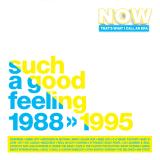
NOW Music proudly presents the next release in our “NOW That’s What I Call An Era” series - Such A Good Feeling: 1988-1995 – a euphoric celebration of a truly transformative time in music.
This stunning 3LP set pressed on blue, white and yellow vinyl showcases 46 essential tracks that soundtracked the dancefloors, charts, and airwaves from the late ’80s through the ’90s — an era when dance culture reshaped the mainstream, soundtracked a generation, and lit up the charts across the UK and beyond
LP1 – Side A opens in style with ‘Such A Good Feeling’ from Brothers In Rhythm, this collection’s inspiring title…followed by Black Box with ‘Ride On Time’ — the best-selling UK single of ’89, and one of dance music’s defining tracks. Massive club classics continue with C+C Music Factory’s ‘Gonna Make You Sweat (Everybody Dance Now)’, house anthems from Inner City with ‘Good Life’, and ‘Dirty Cash (Money Talks)’ from Adventures Of Stevie V, plus dance-pop gems ‘Not Over Yet’ from Grace, and Billie Ray Martin with ‘Your Loving Arms’…Flip the LP over for the pioneering ‘Theme From S-Express’, a chart-topper from 1988, before dancefloor earworms from Kenny “Dope” Presents The Bucketheads with ‘The Bomb! (These Sounds Fall Into My Mind)’, Nightcrawlers with ‘Push The Feeling On’ and ‘People Hold On’ from Coldcut and Lisa Stansfield. The influential ‘Beat Dis’ from Bomb The Bass is up next ahead of Tony Di Bart’s #1 ‘The Real Thing’, Saint Etienne’s sophisticated dance-pop nugget ‘He’s On The Phone’, and LP1’s closer from D:Ream with the Perfecto radio remix of ‘U R The Best Thing’.
LP2 – kicks off with a run of electrifying Eurodance – all massive club anthems. ‘Rhythm Is A Dancer’ from SNAP! leads off; a UK No. 1 and another defining track of the decade – followed by smashes from Corona, Real McCoy, Dr. Alban, Haddaway, KWS and Cappella, before the side closes with the techno-pop of Opus III with ‘It’s A Fine Day’… The party continues on Side B with an irresistible lineup led by Deee-Lite with ‘Groove Is In The Heart’, their brilliant fusion of funk, house and pop that continues to be a massive floor-filler… as is ‘Dreamer’ from Livin’ Joy, a 1995 No. 1 smash, and vocal house classic ‘Finally’ from CeCe Peniston. Urban Cookie Collective scored a huge hit with ‘The Key, The Secret’, which is followed by the rave energy of Oceanic, N-Trance, Felix – and Utah Saints who sign-off LP2 with the epic ‘Something Good’.
Kicking off the final LP, Side A explodes into life with massive feel-good tunes:- Yazz & The Plastic Population’s ‘The Only Way Is Up’ – a 1988 No. 1 and landmark UK house hit ahead of 49ers with ‘Touch Me’ and Baby D with their #1 ‘Let Me Be Your Fantasy’. Another run of floor-fillers from Rozalla with ‘Everybody’s Free (To Feel Good)’, JX with ‘Son Of A Gun’, Blue Pearl’s ‘Naked In The Rain’ and ‘U Sure Do’ from Strike follows and the side closes with the electronic acid house of ‘Killer’ from Adamski that hit the top of the charts and introduced Seal… and over on the final side, the collection moves toward it's close with stunning and enduring tracks of the era – opening with Soul II Soul & Caron Wheeler’s #1 ‘Back To Life (However Do You Want Me)’ blending soul, R&B and club rhythms to perfection, while Beats International’s fusion of dub reggae and house: ‘Dub Be Good To Me’ (another chart-topper) follows with its iconic bassline and leads us into the stylish and smooth ‘Turn On, Tune In, Cop Out’ from Freak Power. The journey through this incredible era is completed with genre pioneers The Prodigy with ‘Charly’, ‘Infinity’ from Guru Josh, and closing with ambient house, ‘Pacific - 707’ from 808 State, and the timeless ‘The Sun Rising’ from The Beloved.
An unforgettable journey through the sounds that defined an era:- NOW That’s What I Call An Era - Such A Good Feeling: 1988-1995 — the definitive celebration of a golden age of dance music.
Austin Ato is back with Vol 2 of his I Love Your Edits series. “Lisa” is a rolling, modern house take on an early 2000s forgotten hip hop banger. “Carnival” is a rework of a jazz-funk classic with whole new layers of live keys and chopped-percussion. Was built to be a DJ set closer. “Human” reworks our Icelandic queen into a swung, deep house tune. “Pop Off” takes French disco, chops it up and lays fat synth basslines over it.
Limited Pressing get in quick!
Book[37,40 €]
In the final month of 2024, Meitei arrived in Beppu, a city long steeped in vapor, myth, and mineral memory. Invited to create onsen ambient music commemorating Beppu’s 100th anniversary, he immersed himself in the city’s geothermal psychogeography, where sound rises from the ground and time clings to mist.
Known for his Lost Japan (Shitsu-nihon) works, which channel forgotten eras into flickering auditory relics, Meitei took residence in the warehouse of Yamada Bessou, a century-old inn perched by the bay. Over two weeks, he listened intently to steam, to stone, to the atmosphere itself. The resulting work, Sen’nyū, traces the inner spirit of onsen culture. Like water finding its path, the music emerged with quiet inevitability, shaped by Meitei’s synesthetic sensibility and deep attunement to place.
Equipped with a microphone, he wandered Beppu’s sacred sites: Takegawara Onsen, Bouzu Jigoku, Hebin-yu, and the private baths of Yamada Bessou. There, he captured the breath of the springs, bubbling mud, hissing vents, wind against bamboo, and the murmurs of daily visitors. These field recordings became the sonic bedrock of Sen’nyū, an act of deep listening that attempts to render even the rising mist and shifting heat into sound.
Unfolding as a single, continuous piece, Sen’nyū drifts like fog through sulfur and stone. It traverses the veiled madness of Bouzu Jigoku, the spectral resonance of Yamada Bessou’s inner bath, and the hushed voices of Takegawara Onsen. It is a gesture of quiet reverence, for water’s patience, the land’s memory, and the hands that have bathed here for generations.
Where Meitei’s earlier works conveyed his personal impression of a fading Japan, Sen’nyū is grounded in tactile presence, music not imagined but encountered. Here, his practice moves closer to the spirit of kankyō ongaku, environmental music born from place, shaped by it, and inseparable from it.
As part of the project, Meitei conceived a two-day public sound installation inside Takegawara Onsen, culminating in a live performance. Bathers soaked in mineral-rich waters while submerged in sound, an embodied ritual of place, body, and listening.
Sen’nyū marks Meitei’s first full-length work centered entirely on onsen and opens a new chapter of his Lost Japan project under the expanded title 失日本百景 (One Hundred Lost Views of Japan), a series exploring extant sites of longing still quietly breathing within contemporary life. The album will be accompanied by Meitei’s first photo book, a visual document of his time in Beppu. A new layer is added to the world he has, until now, built only through sound.
Sen’nyū continues Meitei’s devotion to Japan as subject, while opening new terrain: both ritual and remembrance, an immersion into the mineral soul of Beppu.
Forms in Motion marks the debut release from Earthbound Recordings, a new label founded by producer Mihail P as a home for deep, transportive electronics. Active since 2016 and known for releases on labels such as Seventh Sign Recordings, Verdant, Distant Worlds, Magnonic Signals, Propersound, and Nebulae, Mihail P launches this new chapter with a four-track EP that pays homage to the 90s UK techno and Detroit lineage.
“Millenium” sets the tone with layered pads and cosmic momentum, nodding to 7th Plain. “Echo Drift” fuses crisp electro rhythms with spacious melodic detail, while “Green Route” reflects the melodic introspection of Likemind Records. The closer, “Shape Without Form”, dives into abstract territory with glimmers of early AFX.
“It’s been a dream to form my own label for years,” says Mihail P. “This felt like the right time to create a space for timeless music that doesn’t chase trends.”
Earthbound’s first step—grounded in memory, aimed at the beyond.
New label RUKI launches with a warm and immersive debut from Finn Logue, shaped by a year of experiments with texture, field recordings, and acoustic elements. The four-track EP blends electronic production with live sounds to create something both personal and playful.
The EP opens with the dreamy, layered percussion of “Delinquence”, followed by the earthy and uplifting “Ocean Forest” with saxophone from Dom the Hopeful. Flip the record and the refreshing downtempo of “Dim Light” lays the path for “Confused Apathetic,” an ethereal, ambient closer steeped in nostalgia.
A bright opening statement from a label rooted in nature and built from the ground up.
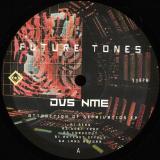
DVS NME is a Colorado-based Electro producer and DJ originally from Southern California. Active since 1999, he crafts stark, machine-driven music rooted in analog hardware and recorded live in single takes. Influenced by Drexciya, AUX88, and Anthony Rother, his sound blends dystopian textures with precise rhythm programming. He’s released music on respected underground labels like Solar One Music, Transient Force, and Ukonx Recordings, and now Future Tones Rcoeds. A key advocate for the genre, he also curates the long-running Dark Science Electro podcast, supporting global Electro since 2010.
1. Beam
A slow-burning opener built around a TR-606 groove, chopped vocal fragments, and delicate string flourishes. At 116 BPM, it's the most restrained cut on the EP—staccato and skeletal, but quietly emotional.
2. Carveout
Driven by a classic four-on-the-floor pulse, "Carveout" rides a surging bassline and tightly layered synths. Functional on the surface, but subtle shifts in tone give it depth beneath the structure.
3. Debt Trap
The most club-oriented track on the record. With a jerky low-end and nimble 606 programming, "Debt Trap" combines dancefloor impact with off-kilter synth work that refuses to settle.
4. Ratchet Effect
A standout cut that channels DVS NME's signature sound—sharp, modular arpeggios, machine-funk rhythms, and intricate modulation. At once clinical and soulful, it’s the EP’s most complex and defining moment.
5. Land Reform
TB-303 acid lines coil around melodic string pads and skittering hi-hats in this mid-tempo closer. "Land Reform" balances raw rhythmic motion with introspective synth textures, ending the record on a reflective note.
- A1: ) | Green Wash
- A2: ) | Green Breaking
- A3: ) | Superstar
- A4: ) | Bleeding Building
- A5: ) | Running Dreams
- A6: ) | It’s 450
- A7: ) | Probe
- A8: ) | Bo
- A9: ) | Head Phone Hospital
- A10: ) | Sensual Dismay
- B1: ) | Aden Murmur
- B2: ) | Captive Bliss
- B3: ) | Vending Machine/ Portal
- B4: ) | Non Specific Interview
- B5: ) | Tangent Cloak1
- B6: ) | Tangent Cloak2
- B7: ) | Exhausted
- B8: ) | Green Blood
- B9: ) | Blue Blood
- B10: ) | Blood
green vinyl[19,96 €]
Originally released in September 2024 we continue the re-release of Clark’s recent catalogue with the chance to get some limited vinyl versions of ‘In Camera’. Since his first composition credit in 2016 with The Last Panthers (Warp) Clark has built a reputation for expanding film and TV scores into intricate, exhilarating soundworlds of their own. Here Clark has expanded his score for Naqqash Khalid’s award-winning debut feature ‘In Camera’ stretching out the film’s surreal ‘modern fairy tale’ atmosphere with reversed vocals and gauzy synthpop-esque chords. Of the recording process Clark says: “Using my vocals but abstracted in a way that totally matched the film was the most unique challenge. I was going to just include the cues but got far too into recording new stuff that fitted the tone and emotion of the film. The record has a very distinct colour/ feel. It’s drenched in muted joy/ dark euphoria”. This includes a gnarly cover of the Carpenters’ ‘Superstar’ that burns closer to the frazzled Sonic Youth version.