The album’s seemingly brief tracklisting belies a work of great beauty and depth, and one which turned into a one-man crusade for singer/guitarist Lars Andersson, intertwining deeply personal stories with his love for the era of Romanticism. “Every time I go to a museum and I’m about to pass through the era of Romanticism I stop in awe,” says Lars of the enduring appeal of the 18th century artistic movement. “Whatever it is – stories, paintings, music – it triggers something deep within me, something profoundly human. It really hits a nerve, and it utterly immerses me to a point where I can’t move.” The album replicates this feeling; a gloriously over-the-top blend of Slowdive and Sigur Rós, mixed with the single-mindedness of Daniel Johnston and the noisiness of Nirvana, it’s as bold and beautiful and every bit as ornate as the art that inspired it. Unlike their acclaimed debut, 2019’s All That Ever Could Have Been, which gradually came into focus with a 15-minute opening track, Picturesque hits home from the very first note of the short and sweet opener, ‘Ballerina’. That’s not to say there aren’t epics here – ‘Metamorphosis’ is essentially a 12-minute suite of three movements; blistering closer ‘The Lot’ is 11 minutes of Swans-inspired heaviness – but everything is much more direct and focused. This isn’t an album to lose yourself in, it’s one to get swept away by. “‘More is more’ was definitely the credo when making this record,” agrees Lars. “A big inspiration were bands like Pond and the way they manage to fill their songs up with stuff to the absolute maximum. While I definitely tried to give the listener some room to breathe at certain points and while, in good old post-rock fashion, it still builds up and breaks down, it relies much more on simple melody and harmony as opposed to noisy experimentation to transport feeling.” Never more so than on the first single, ‘The Golden Age’, which is the album’s centrepiece; a soaring slice of über-shoegaze that is so stunning you can’t take your eyes or ears off it. Like all the songs on the album, it’s based around a fairy-tale from the Romantic era. In this case, it’s Heinrich von Ofterdingen by the German poet, author and philosopher Novalis (other influences are: The Steadfast Tin Soldier by Hans Christian Andersen; The Seven Ravens and Hans in Luck by the Brothers Grimm; Undine by Friedrich de la Motte Fouqué and The Golden Pot by E.T.A. Hoffmann), with Lars drawing parallels between the titular character’s mystical and romantic searchings and his own personal quest. This is apt as the album has been an overriding obsession for Lars for the past two-and-a-half years; as well as writing and recording the songs (bandmate Phillip Dornauer played drums), he also mixed and mastered them at his Alpine Audio studio and Picturesque is very much his Brian Wilson or Kevin Shields moment. MOLLY were in the middle of their European tour when Covid hit in early 2020, forcing Lars to retreat back to his home outside Innsbruck and giving him time and space to think about every detail of the record. “Well, I was on a quest I guess,” he admits. “Like everyone, I was stranded at home and at some point I just said to myself, ‘If not now, then when?’ It was an intense process. I’ve worked on music from other bands and artists before but producing and mixing your own music is an utterly different animal. It was probably the most intense thing I’ve ever done, but it was also incredibly rewarding and the feeling of it all coming together piece by piece is incomparable.” The artwork is just as effective. “I think of Radiohead’s OK Computer – what you hear on the record is what you see on the cover,” explains Lars. “We were inspired by what we call ‘wimmelbilder’ hidden pictures in German, a very specific style in art where there are a lot of little things happening. When you see it from further away, it looks organic like a lost painting from the area of Romanticism, but the closer you look the more digital it gets. It’s a nice analogy.” He’s right, it perfectly sums up the conflict between Romanticism and 21st century life. “Romanticism was basically an answer to the Industrial Revolution as well as the social and political norms of the Age Of Enlightenment,” concludes Lars. “Now, we all live in a much more industrialised, materialistic, individualistic and sterile society than any early Romanticist could have ever possibly imagined. Over 200 years later the Romanticists have lost the battle.” With the divine and downright pulchritudinous Picturesque, MOLLY begin the fightback.1.Ballerina 2.Metamorphosis 3.The Golden Age 4.Sunday Kid 5.So To Speak 6.The Lot
Buscar:closer
"Ambiguity " ist l imitiert auf 1000 wunderschöne
orange-schwarz marmorierte Doppel-LPs im Gatefold.
Erstmals auf Vinyl erhältlich: das dritte Album der Heavy
Metaller BRAINSTORM - als Teil von Atomic Fire
Records neuer "Backfire" Serie. Für Vinylfans von
Vinylfans.
Die deutsche Heavy Metal-Macht BRAINSTORM ist seit
mehr als drei Jahrzehnten in der Szene, und es ist
tatsächlich immer noch schwer, das Genre zu definieren,
das sie spielen. Power-Metal? Heavy Metal? Prog Metal?
All diese Kategorien wären richtig, obwohl BRAINSTORM
noch mehr bieten und man mittlerweile von ihnen sagen
kann, dass sie eine einzigartige Metalmischung
geschaffen haben. Ihr drittes Studioalbum "Ambiguity",
das ursprünglich 2000 veröffentlicht wurde, wird jetzt von
Atomic Fire auf limitiertem (1.000 Exemplare) farbigen
Vinyls neu aufgelegt, damit die neue Generation von
Metal-Fans es in seiner vollen Pracht genießen kan
The increasingly vital Jorkes makes a big step up to the acclaimed Live at Robert Johnson label with her standout Sweet Dreams EP. As with all Jorkes EPs, the artwork features photography shot by Daniel Rajcsanyi.
Jorkes has been making big and bold moves recently. She is the co-founder of the unique Freeride Millenium label which is a hotbed for queer dance music. German-born but Austria based, she has an influential residency at Radio 80000 alongside ParisBöhm and is a resident at Stuttgart's Romantica where she plays a thrilling mix of disco, house, techno and everything in between. She is someone who always serves to highlight the importance of the dance floor as a place of sexual and cultural liberation and this new EP is another innovative statement that comes as she rides a wave of high profile radio, DJ and media support for recent outings on her own label.
Opener 'You Will be Mine' is a song about obsessing after an unattainable stranger on the dance floor who disappears into the night. It's a silky disco house sound with chords that sing and a floating bassline that lifts you off your feet. The melodic motifs bring charm and cosmic energy and the whole track has a lush, musical feel. The equally excellent 'Robot Lover' muses on human detachment in this technological era of internet porn, dating apps and screen obsessions and how a robotic lover might be a better fit than a real life partner. It is another elastic and disco-tinged rhythm, with elegant chords and dancing keys over a suspensory bassline. Intimate vocal whispers bring tenderness to this timeless track.
On the flip side, 'Sweet Dreams' layers up infectious claps and tinny percussion over an irresistible deep house groove. It's a widescreen, symphonic sound that brings very real but subtle joy and closer 'CDEvaLo' is the name of a crossdressing male-to-female and sex-worker friend of Jorkes. She sings the introduction lyrics in Greek and they translate as "It was a very beautiful day, while we were sitting at the park we thought of going out for a coffee and realized we have no money and are absolutely broke. So we discussed about who is gonna put the wig on to "go and make a visit“ Greek slang for sex work so we'll have money again." It is a comment on the number of young people who arrived in Athens over the years to do cross-dressing sex work after being kicked out by their Orthodox Christian homes. The track flips the script with a more playful disco sound, characterful vocoder vocals and glossy synths over a jacked house beat.
This is an expansive EP that shows off the different sides to Jorkes's unique sound.
Light Blue Vinyl[14,08 €]
CUSTARD VINYL PRESSING.
The Beths' Warm Blood is a strong contender for the catchiest record you've never heard. Formed when four jazz students at the University of Auckland bonded over their shared love of the pop-punk sounds of their youth, The Beths bring new energy to the genre. This 5-song debut EP, a deliriously pleasurable statement of purpose, comes crammed with enough blissful hooks to carry through most bands' careers.
Listeners for whom the tag 'New Zealand indie rock' brings to mind the Flying Nun sound of bands like The Clean and The Chills may be surprised to find Warm Blood's five unstoppable tunes landing closer to artists like Slant 6 and The Breeders. The nimble guitar work here moves from heavy riffing reminiscent of Sleater-Kinney to hazily bending lines that would make Stephen Malkmus and Mary Timony beam, while the joyous vocal harmonies from all four members bubble and swell to ecstatic crescendos that channel The Zombies' Odessey and Oracle.
With impeccable production from guitarist Jonathan Pearce and stellar musicianship across the board, Warm Blood is a non-stop delight. Tracks like leadoff track and first single 'Whatever,' the ridiculously addictive standout 'Idea/Intent,' and 'Rush Hour 3,' a playful ode to romance in this era of download-and-chill franchise films, take delight in the challenge of breathing new energy into the limitations of the 3-minute pop song.
The relationship between Bryn Jones’ music as Muslimgauze and the track/abum titles he would provide (sometimes right on the tapes he would send in for release, but often determined later, sometimes even giving two different pieces months apart the same title, accidentally or not) has always been a little mysterious. Jones himself can no longer be asked, and as we continue to investigate the swathes of material he provided, you hit sources like the DAT or DATs that make up the contents of the new double LP »Turn On Arab American Radio«. Nine tracks, the first LP/four tracks titled »Turn On Arabic American Radio,« and the other LP/five tracks labelled only »Arabic American Radio.« None of them sound particularly radio-esque, although given the simultaneous vastness and ornate focus of Jones’ Muslimgauze work that gap between name and sound is far from atypical.
Instead here the de rigeur percussion loops that underpin this particular set of tracks, while occasionally clipping into the fierce distortion that Jones either loved to use or couldn’t get away from, steer away from both the more consistent application of that distortion as well as the Middle Eastern and Asian influences he often used. It’d be a stretch to call anything here basic boom-bap production but they come closer to it than a lot of Muslimgauze production. And while those loops are, as always prominent, they’re not actually the focus; settling into steady vamps as structures for Jones to pursue an extended and often more gentle exploration of the other sample sources he has here. There are stringed instruments, the sound of water, but most prominently or strikingly the human voice. Nothing is in English but tone and the occasional word ('familia', 'passport') still provide guides. There are ululations, snatches of melody; but most often speech, dialogue, often tense and harried sounding. Is this what Jones was thinking of or referring to with his Arabic American Radio?
As with so many other questions about Muslimgauze, we’ll never know the answer to that one. (Most pertinently in this case we might wonder who appears here, and what the context of these recordings is. But Jones never provided that with his submissions.) Here, even though those inexorable loops pound on, indefatigable, that emphasis on some of the people Jones chooses lends a measured gentleness to much of »Turn On Arabic American Radio«, at least within the context of his body of work. The last thing you hear at the end of the second LP is one last question from one of the many speakers on this peculiar Muslimgauze radio, echoed away into infinity. We may never have answers, but those questions continue to resonate.
One of These Nights occupies an important, unique place in the Eagles' discography given it represents the final album the group made before releasing the bajillion-selling Their Greatest Hits (1971-1975) compilation. The timing is telling. A coming-out party for Glenn Frey and Don Henley's songwriting skills, the studio record – the band's fourth, and its first to hit #1 on the charts – signifies the group's ascent to superstar status. Home to three massive singles (the title track, "Lyin' Eyes," and "Take It to the Limit") and nominated for four Grammy Awards, the quadruple-platinum 1975 effort solidified the Eagles' Southern California-reared sound and made the band a household name.
Mastered from the original analog tapes, pressed on MoFi SuperVinyl, and limited to 10,000 copies, Mobile Fidelity's UltraDisc One-Step 180g 45RPM 2LP vinyl box set takes One of These Nights to the limit. And then some. Playing with reference sonics and a practically indiscernible noise floor thanks to MoFi SuperVinyl's special formula, it provides a rich, dynamic, transparent, and three-dimensional view into a release that moved country-rock ahead by leaps and bounds – and paved the way for the Eagles' ascendancy to global superstardom. The opportunity to zero in on the particulars of the Eagles' golden harmonies, distinct vocal timbres, and cohesive interplay has never been better.
Visually, the premium packaging and presentation of the UD1S One of These Nights pressing befit its esteemed status. Housed in a deluxe box, it features beautiful foil-stamped jackets and faithful-to-the-original graphics that illuminate the splendour of the recording. From every angle, this UD1S reissue exists as a curatorial artefact meant to be preserved, touched, and examined. It is made for discerning listeners that prize sound quality and production, and who desire to fully immerse themselves in the art – and everything involved with the album, from the renowned cover art to the meticulous finishes. As much as any Eagles LP, the connection between the imagery and the music and the band on One of These Nights runs deep. No wonder it led to a Grammy Nomination for Best Album Package.
Devised by West Texas artist Boyd Elder, the striking skull-and-feathers themed piece gracing the front of One of These Nights represents where the Eagles have been and where they were headed. Album art director Gary Burden explained: "The cow skull is pure cowboy, folk, the decorations are American Indian-inspired, and the future is represented by the more polished reflective glass beaded surfaces covering the skull." Moreover, Elder had met the group years earlier when Henley and company performed at one of his gallery openings in California. MoFi's UD1S box set allows Elder's vision (and Burden's debossed treatment of the image) to pop and appear as if it was a stand-alone object.
Of course, what's inside the sleeves, and in the grooves, proves equally compelling. Though One of These Nights marks the final appearance of band co-founder Bernie Leadon on an Eagles LP and contains three of his tunes, the record's tremendous success owes to Frey and Henley's timeless contributions. Taking the next step in their maturation and evolution, the pair crafted several songs while living together as roommates in a rented house in which they converted a music room into a recording studio.
The duo's bond and chemistry pulse throughout the record – particularly in the tight arrangements, tasteful instrumental flourishes, and seamless blending of the folk, country, and rock elements. The musical combinations and partnership not only produced the Eagles' first million-selling single (the slow-dancing "Take It to the Limit," co-written with bassist-vocalist Randy Meisner) and the Frey-led cheating classic "Lyin' Eyes," but the famed title track, which nods to the era's nascent disco scene as well as Kenneth Gamble and Leon Huff's Philly soul platters.
Frey named "One of These Nights" as his favorite Eagles composition of all-time; Meisner's high harmonies alone send the track into a galaxy of its own. Speaking of the latter, Leadon's instrumental "Journey of the Sorcerer" ventures into another universe and was soon used by Douglas Adams as the theme to his "The Hitch-hiker's Guide to the Galaxy" radio series. Inspiration and creative experimentation also dragged the Eagles into the blues. Another Frey-Henley gem, the self-probing "After the Thrill Is Gone" serves as a response song to B.B. King's signature track and more evidence the band was turning the lens inward for lyrical narratives. Like everything on One of These Nights, the song confirms the Eagles were breathing rare musical air.
More About Mobile Fidelity UltraDisc One-Step and Why It Is Superior
Instead of utilizing the industry-standard three-step lacquer process, Mobile Fidelity Sound Lab's new UltraDisc One-Step (UD1S) uses only one step, bypassing two processes of generational loss. While three-step processing is designed for optimum yield and efficiency, UD1S is created for the ultimate in sound quality. Just as Mobile Fidelity pioneered the UHQR (Ultra High-Quality Record) with JVC in the 1980s, UD1S again represents another state-of-the-art advance in the record-manufacturing process. MFSL engineers begin with the original master recordings, painstakingly transfer them to DSD 256, and meticulously cut a set of lacquers. These lacquers are used to create a very fragile, pristine UD1S stamper called a "convert." Delicate "converts" are then formed into the actual record stampers, producing a final product that literally and figuratively brings you closer to the music. By skipping the additional steps of pulling another positive and an additional negative, as done in the three-step process used in standard pressings, UD1S produces a final LP with the lowest noise floor possible today. The removal of the additional two steps of generational loss in the plating process reveals tremendous amounts of extra musical detail and dynamics, which are otherwise lost due to the standard copying process. Every conceivable aspect of vinyl production is optimized to produce the most perfect record album available today.
MoFi SuperVinyl
Developed by NEOTECH and RTI, MoFi SuperVinyl is the most exacting-to-specification vinyl compound ever devised. Analogue lovers have never seen (or heard) anything like it. Extraordinarily expensive and extremely painstaking to produce, the special proprietary compound addresses two specific areas of improvement: noise floor reduction and enhanced groove definition. The vinyl composition features a new carbonless dye (hold the disc up to the light and see) and produces the world's quietest surfaces. This high-definition formula also allows for the creation of cleaner grooves that are indistinguishable from the original lacquer. MoFi SuperVinyl provides the closest approximation of what the label's engineers hear in the mastering lab.
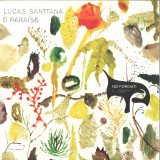
With this new solar album, Brazilian singer-songwriter Lucas Santtana wishes to re-enchant our life on earth. For his ninth album "O Paraíso" (Paradise), the free heir of the Brazilian tropicália intends to redefine our idea of Paradise. "It is in front of us, we must open our eyes and learn to contemplate it in depth," he explains. The Earth is a living organism also called "biosphere", a unique planet in the solar system where all the conditions are gathered to welcome life. Lucas places life at the heart of his songs and celebrates the collective forces that resist to preserve it. His guitar-vocal songs with bossa nova sounds are mixed with organic sounding percussions, enriched with electronic orchestrations and textures. The Brazilian composer gets closer to his French audience by collaborating with Flavia Coelho, Flore Benguigui (from the band L"Impératrice) or the saxophonist Laurent Bardaine, and by even trying his hand at French on one of his tracks. It"s a festive new album, which helps us better understand where we live and with whom we share this heavenly home.
Felicity is an Australian sound artist, composer and educator based in Berlin and her latest effort "Train Tracks Recorded And Edited By Felicity Mangan" will be out world wide on tape and digital December 9.
"Train Tracks Recorded And Edited By Felicity Mangan" composed of field recordings was made during a Green Tour, while traveling only by train and ferry through Denmark, Sweden, Finland and Norway in June 2022.
For this release Felicity utilised raw and sampled field recordings to create a sense of slow travel by train, train networks, train delays and the moments in between waiting for trains or missed train connection in cities and small towns.
Felicity has presented projects in many different settings from galleries, gardens, clubs, festivals and online platforms throughout Europe, including National Gallery Denmark, Technosphärenklänge CTM/HKW, Sonic Acts Academy, RIVERSSSOUNDS.org and recently sound design for 100 Climate Conversations , Powerhouse Museum, Sydney, Australia.
““Stations In Between” establishes a pulse early, recreating the initial excitement that turns to tedium. Four minutes in, the drums disappear, swept away by chimes; no longer stuck, the passenger is moving forward again. The station comes to life: another radio, a street musician, a bicycle, a cough ~ the last sound bearing a reminder of the last two years.”
Richard Allen — A Closer Listen
“the elements of sound are manipulated for effect, and the performance nature of Mangan’ work tends to be an effects driven construction of collated and improvised sounds.”
INNERVERSITYSOUND — Cyclic Defrost
“Throughout the album, it sounds rather as if Mangan had written elaborate electronic music permeated by discreet rhythms and pulsating drones equipped with a whole range of devices. The fact that this is not the case is as impressive as the actual music itself.”
— Fieldnotes Berlin
“On Des Demonas’ new seven-track EP Cure For Love
there’s a whalloping drum beat driving everything. But
the throbbing, pumping bass, clanging, slashing guitar and
whirling, swirling Farfisa are no mere passengers in this
vehicle! I’m told by the other band members Paul Vivari,
Joe [Halladay], Mark [Cisneros] and Ryan [Hicks] that
vocalist Jacky Cougar Abok is the loudest drummer
they’ve ever heard.
“But here he sings! In motifs. He sings out a beat, he
sings minimalist melodic hooks. He half speaks/half shouts
his lyrical content in rapid fire that is closer to beat poetry
than rap. His voice is insistent and demanding to be heard!
And it is! By having it slightly submerged, the listener is
forced to strain to hear the words because they won’t wanna
miss something important!
“The sonic fuel of the band is a blend of post-punk,
punk, funk, blues, psych-rock, Afrobeat, even bubblegum—
but the noise you hear is pure Des Demonas!
“Titles like the ‘Ballad Of Ike & Tina’ and ‘Black Orpheus
Blues’ add to the intrigue rather than explain the content.
The listener is both confronted and lured by something
bigger than themselves! Desire, intrigue, fear and exuberance
are the rewards to those unable to resist! But will yout
love be cured?
“You could look to Shakespeare, or simpler, you could
buy this record and find out!” —Kim Salmon
With its name indicative of the music's boundary-testing diversity and Southwestern inspiration, On the Border finds the Eagles leaving everything on the table and embracing a harder edge that takes the band out of more relaxed territory and establishes it as a group that knows how – and wants – to rock. Glenn Frey, Don Henley, new member Don Felder, and company immediately announce their intent on the defiant album-opening hit "Already Gone" and never look back, crafting a gem of a record that from start to finish is arguably their most consistent and balanced effort.
Limited to 10,000 numbered copies, pressed on dead-quiet MoFi SuperVinyl at RTI, and mastered from the original analogue master tapes, Mobile Fidelity's ultra-hi-fi UltraDisc One-Step 180g 45RPM 2LP collector's edition pays tribute to the record's significance and enhances the experience for generations to come. Playing with reference sonics that elevate an effort revered by audiophiles, it provides a lively, dynamic, transparent, and intimate view of a release whose contemporary importance continues to grow. The opportunity to zero in on the particulars of the Eagles' golden harmonies, distinct vocal timbres, and cohesive interplay has never been better.
Visually, the premium packaging and gorgeous presentation of the UD1S On the Border pressing befit its select status. Housed in a deluxe box, it features special foil-stamped jackets and faithful-to-the-original graphics that illuminate the splendor of the recording. No expense has been spared. From every angle, this UD1S reissue exists as a curatorial artefact meant to be preserved, touched, and examined. It is made for discerning listeners that prize sound quality and production, and who desire to fully immerse themselves in the art – and everything involved with the album, from the iconic Navajo cover painting to the meticulous finishes.
And with On the Border, there's plenty to take in and soak up. Declared by famed critic Robert Christgau as "the Eagles' best album," the 1974 set claims a rich backstory. Initially recorded amid tumultuous sessions with producer Glyn Johns in London shortly after the release of the group's sophomore Desperado set, On the Border took a new turn after the band elected to scrap most of the prior work, return to its native California, and team with producer Bill Szymczyk to give the material less of a smooth, polished sheen and more toughness. Szymczyk also afforded the Eagles more input and freedom in the arrangements, and suggested adding another guitarist to play on "Good Day in Hell." Felder got the call, and so won over the Eagles with his skills, he quickly became the fifth member of the band.
While the late-arriving Felder only plays on one other album cut, "Already Gone," his mates more than prove their muster on the remainder of a double-platinum affair that established the Eagles as a force whose range transcended the calmer country-leaning style it perfected on their first two LPs. Primarily written by Jackson Browne and shelved during the Desperado sessions due to its higher-energy nature, the throttle-twisting "James Dean" ricochets with barbed riffs and rebellious swagger. Listen without limits to how Szymczyk's raw production stamps the song with a leather-and-jeans cool befitting its protagonist. Similarly rugged, the slide-guitar-fueled "Good Day in Hell" boasts its own mean streak. And the funk-laced, boot-stomping title track cautions "don't you tell me 'bout your law and order." Throughout On the Border, the Eagles are in no mood to mess around.
Not that the band skirts sentimental territory. On one of the era's finest covers, the Eagles nail the bittersweet feelings and bring high-definition detail to the vivid scenery of Tom Waits' "Ol' '55," a song the group makes its own. The rustic ballad "My Man" serves as a tribute to the recently deceased Gram Parsons, with singer-guitarist Bernie Leadon taking the lead on the microphone as he pours his heart out to his former Flying Burrito Brothers mate. And when it comes to romance, is it possible to top "Best of My Love"? Graced with Henley's honey-dipped vocals, refined wordless group harmonies, brushed drums, and the gentle strum of acoustic guitars, the Johns-produced cut soared to Number One and set the stage for what would soon be the Eagles' reality: global dominance.
More About Mobile Fidelity UltraDisc One-Step and Why It Is Superior
Instead of utilizing the industry-standard three-step lacquer process, Mobile Fidelity Sound Lab's new UltraDisc One-Step (UD1S) uses only one step, bypassing two processes of generational loss. While three-step processing is designed for optimum yield and efficiency, UD1S is created for the ultimate in sound quality. Just as Mobile Fidelity pioneered the UHQR (Ultra High-Quality Record) with JVC in the 1980s, UD1S again represents another state-of-the-art advance in the record-manufacturing process. MFSL engineers begin with the original master recordings, painstakingly transfer them to DSD 256, and meticulously cut a set of lacquers. These lacquers are used to create a very fragile, pristine UD1S stamper called a "convert." Delicate "converts" are then formed into the actual record stampers, producing a final product that literally and figuratively brings you closer to the music. By skipping the additional steps of pulling another positive and an additional negative, as done in the three-step process used in standard pressings, UD1S produces a final LP with the lowest noise floor possible today. The removal of the additional two steps of generational loss in the plating process reveals tremendous amounts of extra musical detail and dynamics, which are otherwise lost due to the standard copying process. The exclusive nature of these very limited pressings guarantees that every UD1S pressing serves as an immaculate replica of the lacquer sourced directly from the original master recording. Every conceivable aspect of vinyl production is optimized to produce the most perfect record album available today.
Prolific Japanese producer T5UMUT5UMU has built up a reputation in the last few years for his ability not just to recreate club styles but to flip them into almost unrecognizable dancefloor hybrids. "Asyl" follows a blistering run of Bandcamp releases where T5UMUT5UMU has melted together gqom and techno, deconstructed grime and welded dubstep to traditional music from Japan and India. Here, he's operating completely off the grid, pulling raw materials from across the globe and hammering them into confounding shapes and patterns. On its surface, 'Fireball' sounds like a liquid metal approximation of South African gqom, but move in closer and you can make out dubstep bass squelches, trap hats, and industrial techno jet propulsion filling in the gaps with rubberized mortar. 'Desert' is the EP's most lightheaded cut, a psychedelic percussive spiral that curves micro-tuned mbira clangs around bee sting bass, aerated noise blasts and sub-aqueous kicks. It's a hard track to place, but fits in somewhere between Donato Dozzy, Menzi and 33EMYBW, all shifting rhythms and precision-edited sound design. 'Sea of Trees' retains this momentum, pushing the tempo and interspersing woodblock vibrations with syncopated bass drums and goosebump-inducing synths, while closer 'Bottomless Valley' shifts back into a gqom framework, shuffling the expected pulse with a powerful dembow swing, half step subs and Indian-inspired rattles. "Asyl" is a varied but shockingly coherent statement from an enigmatic producer who refuses to confine himself to a single path, and at a time when "cross-genre" is the norm rather than the exception, it's refreshing to witness a producer who's unafraid to truly make stylistic left-turns, rather than simply mash together top-level aesthetics.
- A1: Noonday Yellows
- A2: Rain
- A3: Dusk
- A4: The Jantzen Rag (Raccoons)
- A5: Pleasant, This Garden
- B1: Bedroom Of The Absent Child Lost Creek Suite
- B2: Bedroom Of The Absent Child Lost Creek Suite Into The Groves
- B3: Bedroom Of The Absent Child Lost Creek Suite Warm Pathways
- B4: Bedroom Of The Absent Child Lost Creek Suite Sunny Banks
- B5: Bedroom Of The Absent Child Lost Creek Suite Fragrant Duff
- B6: Bedroom Of The Absent Child Lost Creek Suite Beaver's Pond
- B7: Track 12
Black Vinyl[22,48 €]
Written and recorded between 1972 and 1982 in Western Oregon, Back to the Woodlands is a previously unreleased, and nearly lost, album made by Ernest Hood during the same era as his near mythical album Neighborhoods . A visionary combination of field recordings, zithers, and synthesizers, Back to the Woodlands offers an unprecedented depth of access to this singular artistic mind. Born into a musical family, Ernest Hood began a promising career as a jazz guitarist during the 1940s, touring internationally with his brother Bill Hood and the saxophonist Charlie Barnet , before contracting polio in his late twenties. The disease left Ernest unable to play the guitar and confined him to a wheelchair for the rest of his life. It also forced him to adapt and innovate around his musical practices in the face of adversity; Hood's value of sound matured with a remarkably democratic and nonhierarchical approach and application. Taking up the zither, a less physically-demanding stringed instrument to the guitar, embarking upon the unprecedented process of incorporating field recordings into his work as early as 1956, and eventually discovering the synthesizer, Hood's music became imbued with optimism and subtle cultural critique. This ethos and technique - refined over the coming decades - would lay the groundwork for a sprawling body of radio work, mail order recordings for homebound listeners, and Neighborhoods , self- issued as a small vinyl edition in 1975. Where Neighborhoods , a nostalgic opus, drawing from a well of collective memory of the 1950s, is defined by traces of human activity, Back to the Woodlands leaves the modern world behind, delving into Hood's love for nature. Only recently discovered in his archives, the album dramatically expands his concept of "musical cinematography," imagistically triggering states of sensory memory from within its zither and synthesizer melodies, intertwined with field recordings made during Hood's extensive travels throughout Oregon. If Neighborhoods is a retreat into the gauzy joys of a romanticized past, Back to the Woodlands is an immersion in the timeless sanctuary of the natural world. A fascinating counterpoint to its predecessor, Back to the Woodlands brings us even closer to Hood's belief in the transportive qualities of sound; that field recordings could serve as a vehicle for the imagination and liberation, particularly for those with similar mobile disabilities as his own. Across the album's twelve compositions, the rippling instrumental harmonics - shifting between abstraction and playful melody - fold so seamlessly into the birdsong, bubbling brooks, and other environmental ambiences, that they often give the impression of having been recording within the landscapes toward which they whisper. Falling somewhere between the immersive calm of healing music and New Age, the creative field recording practices of sound ecologists world building for Folkways, and the jazz infected ambiences during Obscure / Editions EG's highest heights, Back to the Woodlands sculpts an singular proximity of music for its moment; a form of ambient sonic realism that draws the consciousness toward its surroundings as much as within. Working closely with his estate to maintain his original vision, Freedom to Spend has restored and remastered this never before released, lost masterpiece by Ernest Hood from the original tapes. Ernest Hood's Back to the Woodlands will be issued on vinyl, as well as on CD in combination with its contemporary Where the Woods Begin , with new liner notes by Michael Klausman . On behalf of Ernest Hood and Freedom To Spend, a portion of the proceeds from this release will benefit Oregon Wild, an organization dedicated to protecting and restoring Oregon's wildlands, wildlife, and waters as an enduring legacy for future generations.
A potentially surprising release on Editions Mego. Another planned prior to the untimely passing of Peter Rehberg in 2021.
Melvin Gibbs is the renowned bass player and producer from Brooklyn who’s vast resume includes playing with Sonny Sharrock, John Zorn, The Rollins Band, Dead Prez, Caetano Veloso and Femi Kuti amongst others. A solid resume, no doubt, but what is Gibbs doing on Editions Mego?
Behind the scenes, those who know Gibbs knew that amongst all this he was also tinkering away at another form of music, one which skirts around the border between music and sound design. The Wave is the first release that reveals this side of Gibbs’ creative output to those outside his inner circle.
The driving force for this output is Gibbs’ multi-decade friendship with acclaimed American video artist and cinematographer Arthur Jafa. Over the course of time Gibbs and Jafa have had many conversations about music and the connection between film and music. Jafa’s desire to make film that worked the way Black (as in Black/African-American/ Afro-diasporic peoples) music worked inspired Gibbs to study the filmmakers Serge Eisenstein and Dziga Vertov and incorporate their philosophies and tactics when recording his own music. The two discussed sound design which directly informed Gibbs’ choice of music making tools and led to him acquiring Symbolic Systems Kyma software and hardware, incorporating this as a composition tool and sound design and component in his work. These conversations bore concrete fruit through Gibbs’ work for TNEG, the film studio Jafa ran with filmmakers Malik Sayeed and Elissa Blount Moorhead. Gibbs created the soundtrack for their very first project, the short film “Deshotten 1.0” (2009 - directed by Jafa and Sayeed) as well as their Martin Luther King-inspired meditation on Black life “Dreams Are Colder Than Death” (2013, directed by Jafa)
The bass-forward music, or ‘sonics’ as Gibbs calls it, emerged from an alternative mode of contemplation, a mode that he sees as closer to the mindset of a rootworker, an African-American herbal doctor who cures psychic ailments using means derived from African spiritual practice, entering a forest to find the right plants for a suffering client than a mediator attempting to invoke mindfulness. Gibbs says this practice yields results that suggest an aural form of creation akin to coagulation, a formal movement that gives the sense that a flow of sounds can emit something bearing resemblance to solidifying objects.
In 2020 Jafa asked Gibbs to work on the soundtrack for a work in progress called “The Wave''. When they got together to work on the soundtrack, Jafa played Gibbs a selection of sounds that included random moments of (probably unwanted) feedback on 70's Miles Davis records, Pop Smoke's Brooklyn drill, the music of Bernard Gunter and Darmstadt-style compositions made with test equipment. Those sounds, filtered through years of conversation with Jafa about Black creativity and the possible evolution of Black music, formed the sonic vocabulary of “The Wave”.
‘Albino Sound concocts textual delights in shades of metal on his forthcoming EP for Turnend Tapes.
The ‘Metallurgy’ EP forthcoming on Turnend Tapes sees Japanese artist Hirotaka Umetani transmit four club orientated tracks through a UK bass lens, delineating from past musical excursions and so marking a turning point of his works.
Indicative of this shift is the vast and varied sources of inspiration Hirotaka has tapped into in creating ‘Metallurgy’. Translating visual into sound through Hirotaka’s own experience, bare witness to granular detail made macro through swathes of sound design kinetically akin to the flurry of mineral-rich hot water springs, seething in chemical harmony.
Entwining impressions of the past with forecasts of the future Hirotaka deftly connects the dots between the sounds stemming from the alchemy of metal and it’s interplay with the natural environment as we proceed ever closer to organic-synthetic assimilation.’
red/clear splatter vinyl
Shake Chain will also be performing at Marina Abramovic’s private view at Modern Art Oxford on September 23rd.
Shake Chain have been busy demolishing audiences and expectations for the best part of three years. Vocalist Kate Mahony sets that standard by starting each live performance by crawling from the back of the room through a disbelieving crowd’s legs in a shiny yellow raincoat. The resulting questions that frantically arise of ‘what’s going on?’, ‘am I hallucinating?’ and ‘is this part of the show?’ are hallmarks of how Shake Chain approach making their unruly, lyric-bespattered rock music.
The four-piece from London are completed by Robert Syres (guitar, synth), Chris Hopkins (bass, synth) and Joe Fergey (drums), all artists hailing from Goldsmiths College, Nottingham Trent and Wimbledon, University of the Arts. A mutual love of thought-provoking performance art and a yearning for disruption have helped Shake Chain lock into their wayward sound. Twitchy guitar lines jolt and jerk, synths burble noisily and tack-sharp drums pin things down for Kate’s reeling vocal to vault and slur. Kate’s singing has drawn comparisons with Yoko Ono, Su Tissue and even a seance with it’s unique embrace of flights of atonal fancy, head-first repetition and ecstatic frenzy. Opinion-dividing arguably, but singular in making Shake Chain dauntingly brilliant.
Shake Chain’s debut album ‘Snake Chain’ was recorded in the New Forest’s Chuckalumba Studios early in 2022. The tranquil setting only slightly skewed by the intense extratropical cyclone occuring outside. When asked to sum up the album the group collectively settled on it sounding like “crying in a Catholic sex dungeon with Eastenders on”, perhaps only half tongue in cheek given the soapy dramatics of opening track ‘Stace’. ‘RU’ is a stompy triumph of ad lib monotony, heavy and wonky, its vocal slowly unwinding into residual sense. Shake Chain’s songs are populated with cowboys, cherry-pickers, content-addicts, private investments, a careless driver called Mike, architects and by much lamentation at the state of our confusing existencies. This last point underlined in luminous marker pen with slow-building vortex ‘Highly Conpeptual’ and whispered closer ‘Duck’.
‘Copy Me’ races along with radiant headbangs of dynamic abandon, one part tumble, two parts pummel, “hold your breath til something changes” commands Kate whilst everything of course is in hammering flux. ‘Second Home’ is similarly coruscating yet bouyant, whilst ‘Arthur’ feels like it could tear inside in two amid sobbing wails and the twining of its disparate parts. Throughout all the unhinged freakouts, found sounds and blasting rhythms though is Kate’s questioning, resilient presence, anchoring everything. On bruising creeper ‘Birthday’ she asks most tellingly “Do we speak language or does language speak us? Is there a mouth in the middle of the desert? Do you ask how cups are designed? Would you say yes when you really mean I don’t know”? Shake Chain are cathartic and absurd, humorous and deadly serious yet always inspired. Its this tightrope walk which makes their album such a thrilling, vital listen.
Die seit langen Jahren als Partner zusammenarbeitenden, mit dem GRAMMY® Award ausgezeichnete, Bassist David Ellefson und der gefeierte Metal-Sänger Jeff Scott Soto haben sich für ein neues Projekt zusammen getan: Ellefson/ Soto- Vacation In The Underworld. Ganz in der Tradition großartiger Duos wie: David Coverdale & Jimmy Page, Tony Iommi & Glenn Hughes, Tommy Shaw & Jack Blades, Michael Sweet & George Lynch, um nur einige Beispiele zu nennen. Das Album enthält elf Tracks und drei Bonusaufnahmen, die zeigen, warum Ellefson-Soto von vielen in der Metal-Welt als Legenden angesehen wird. Von der feurigen Gitarrenführung des Album-Openers "Vacation In The Underworld" bis zur Prog-Metal-Wut des Closers "Rise To Win" haben Ellefson/Soto ein Debüt geschaffen, das Metal-Fans aus der ganzen Welt fesseln wird. Songs wie "Sharpen The Sword", "The Revolution" und "Live To Die Another Day" kombinieren verschiedene Stile und zeigen die verschiedenen Einflüsse, die Ellefson/Soto in ihren vier Jahrzehnten in der Musik gesammelt haben. Jade Etro von der italienischen Power-Metal-Band Frozen Crown hat einen Gastauftritt bei "The Day Before Tomorrow". Steve Conley und Ken Mary von Flotsam & Jetsam performen auf dem Titeltrack "Vacation In The Underworld". Vacation In The Underworld entzündet eine mitreissende aus Thrash-Feuerkraft, Rock-Swagger und hymnischem Arena Donner.
Teno Afrika's 2020 debut Amapiano Selections drew an international wave of support sparked by the producer's deftly minimal take on the emergent style. Amapiano combines the South African predilection for deep house alongside a melange of endemic influences like kwaito, jazz and gqom. The 20-year-old's new crop of songs Where You Are expands on his rhythmic subtlety hooded in warm bass adorned by amapiano's telltale shakers, hi-hats and mid-tempo shuffle. Lutendo Raduvha hails from Pretoria, South Africa, where he produces music incessantly and DJ's parties around Gauteng province. He hangs with a crowd of musical friends, many of whom join him on Where You Are. For his second album Teno Afrika brings more vocalists into the sonic picture, unlocking an emotive and timbral escalation to his rapidly mushrooming catalog of work. Singers Leyla and KayCee feature on the title track and "Fall In Love," respectively. Regular cohort Diego Don joins for two driving, pad-propelled works of significant vibrancy, "SK Love" and "AK Love." The album's dramatic closer "Duma ICU" features another returning collaborator, Stylo MusiQ, who helps bring an icy, almost cinematic conclusion to a slice of the sound Teno Afrika is pushing at the moment. There's a palpable feeling of not knowing where the young producer might go next.
Released on the heels of her breakthrough album Tapestry, Carole King's Music is every bit the equal of its more famous predecessor: a No. 1 smash that features impeccable songwriting, beautiful melodies, and extraordinary piano playing. In short, everything that's made King an institution. After of years of being overshadowed, this 1971 singer-songwriter classic has been given the audiophile treatment it's long deserved.
Sourced from the original master tapes and pressed on dead-quiet vinyl at RTI, Mobile Fidelity's numbered-edition 180g LP of King's second solo masterpiece is rife with intimacy, transparency, soulfulness, and you-are-there sound. Never before remastered, Music seems like a brand-new album as King's familiar voice, intelligent arrangements, and ace support band presented on a deep, three-dimensional soundstage. Your appreciation for and understanding of the depth of King's inspirational lyrics and performances will doubtlessly increase — this reissue brings you that much closer.
Accompanied by percussionist Bobbye Hall, drummer Russ Kinkel, guitarist/vocalist James Taylor, and a multitude of other professional wind musicians, King delves further into R&B and jazz-derived pop. Warm and cohesive, songs echo with simplicity and honesty. And as is typical of much of King's work, several of tunes here were later covered by other artists, including "It's Going To Take Some Time" (the Carpenters). Yet the originals trump the later renditions, and King's rendition of the standard "Some Kind of Wonderful" stands among the best ever recorded.
With Taylor lending more of a hand on Music than he does on Tapestry, King expands her reach on the piano and peppers the songs with graceful touches of saxophone, flute, pedal-steel guitar, and woodwinds. Ballads sway ("Surely"), gospel raises spirits ("Brighter"), and backup vocals float amid pop arrangements like clouds ("Song of Long Ago"). The most irresistible aspect? King's voice, infused with fondness, concern, joy, and a quiet power that parallels the delicacy and deliberate nature that define Music.
Mobile Fidelity's 180g LP is free of the limiting artifacts that have helped keep this record in the dark for the better part of the 80s, 90s, and early 2000s. Acoustic guitars, subtle brass elements, and soft percussion contribute to the enjoyment of the songs, and King's voice —pleasant, assuring, emotional — comes through with incredible clarity and inflection. The brilliance of Lou Adler's original production is restored to its full glory.
Aptly named, this companion to Tapestry is an aural and sonic delight.