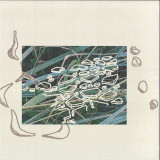
From Pacific City Discs, to you the listener, this summer, a DJ mix of fantasy and splash-energy is coming to you in a small edition of vinyl. Fantasy writer/recording artist, Francesco Cavaliere, while visiting his seaside childhood vacation location, was extended an impromptu invitation, to DJ an 80s swimming club. He had this to say about his experience:
“I was at Shangri-La and a boy and girl from the bathhouse in silver swimsuits and sand-colored streaks waved me over with a drink and asked me if I would like to DJ the next day during my lesson on the beach at Tana del Pirata! I then and there I laughed but then I accepted (I had nothing at home just my mp3 player and a Nokia with music inside) The next day there was a little wind on the beach and the umbrellas swayed to the left. From the heat they could catch fire, white flames, instead the sea was rough and that wind with very long wrists cheered us up, blowing gaseous clouds in our faces. Perfect for the day ahead. After the first few pieces, I began to see that a group of kids jumped into the adjacent pool trying flips bombs and candle dives. Someone at the bar was playing Altered Beast .. so sipping a drink with ice I imagined DJ werewolf repeating catchy pieces while a kite half cobra half skyscraper inflated above us.”
This Impromptu Disc is fresh now, for you to frolic with this summer, while entertaining a daydream in the midst of entering a body of water while witnessing an apparition in the sky.
Selected and compiled by Francisco Cavaliere
Artwork by Spencer Clark
quête:cloud city
Tossing down straight acoustic shots with electric guitar back, Hello, Hi rides through the valley of yer ol' Canyon legends, finding an isolated place to unspool Ty's copious reserves of nervous energy beneath an open sky. Swarms of harmony vocals caper among the clouds, but there's a rider on the horizon behind, with crossbow trained on his very own heart - the engine driving all the relationships of life, whether down Broadway or over the cliffs at night! Whatever doesn't get killed is getting stronger all the time. A lean, mean deal, baked in saltwater and sunlight, compassion pouring out it's beautiful blue eyes.
Nightlands is the solo project of The War on Drugs’ bassist and multi-instrumentalist Dave Hartley. Amid massive global paradigm shifts Dave Hartley (aka Nightlands) became a father twice over and left his native Philadelphia for Asheville, where the pace of daily life is slower and it's easier to maintain a zoomed-out perspective on modern life. From the newfound refuge of a studio he built using the bones of a barn attached to his hundred-something-year-old house in the mountains, Hartley has tailored a collection of well-crafted pop rock, pointedly titled Moonshine. Guided by some of the harmonic sensibilities that have helped make The War on Drugs a force in modern music, Moonshine combines immaculate-yet-dense vocal stacks and billowy clouds of effected keyboards with classic songcraft, revealing previously unseen acreage in the unfurling dreamscape that is Nightlands. The surrealistic album art by Austin-based illustrator Jaime Zuverza depicts an archway opening to the stars over the surface of an idyllic sea flanked by both moon and sun. Similarly, Moonshine reveals portals within portals leading to ever deeper places in Hartley's vocal-centered labyrinth. Throughout the album, there are plenty of buoyant high moods where the pitter-patter of drum machine and humming digital organ hints at Hartley's low-key tropicalia streak, but the lyrics anchor the dreaminess in real-world sorrow and resignation. Nowhere are these sentiments more apparent than on the title track, a nearly acapella recitation of "America the Beautiful" that poignantly hovers over a mirage of soft keyboards before dovetailing into Hartley's own words about the hypocrisy of the American dream. "This was never intended to be an overtly political record" he admits. "I have so many friends who are able to process the frustration of current events gracefully or with wisdom or in a nuanced way, but I often find myself just consumed with anger about it all. I decided to just let that come out, and it manifested itself lyrically." Moonshine's wide-eyed, utopian instrumental backdrops provide sharp contrast to Hartley's lyrics, which sting even harder within the sweetness. Even in light of the album's vocal emphasis, Hartley's history as a bassist brilliantly beams through Moonshine, giving effortless and sprightly movement to songs like "Down Here," which also features an extended section of saxophone lent by his Western Vinyl labelmate, Joseph Shabason. In addition to Shabason, the album hosts a short list of remote collaborators including four of Hartley's bandmates from The War on Drugs, Robbie Bennet, Anthony Lamarca, Eliza Hardy Jones, and Charlie Hall, as well as exotica virtuoso Frank Locrasto (Cass McCombs, Fruit Bats), and producer Adam McDaniel (Avey Tare, Angel Olsen). Hartley was forced to keep the guest list small out of the necessity of pandemic isolation, coupled with his move to a smaller city, all of which challenged him to do most of the album's heavy lifting right down to the mixing duties, resulting in the most independent effort of his career. By that measure, Moonshine is also the clearest image yet of Dave Hartley as a person and creator.
- A1: Deadbone Patrol
- A2: Da' Lone March To Radio City / Cobalt's Theme
- A3: Benny's Marsh Tours
- A4: Poot Steps
- A5: War Lizards
- A6: Nipple Kinky
- A7: Where Da' Hell Is Body Bean 26?
- A8: Belinda Bump's Cosmic Ride
- B1: Clouding
- B2: Jivin' Wiv' Pittsburgh & Kansas City B A
- B3: Here Comes
- B4: Country Jug
- B5: The Dreams Of Franklin Gothic Green
- B6: Van Eyke's After Dark
- B7: Bribing' Da Fuzz
40-plus years since its original release, the pop-punk-new wave inventions of Anthony
Moore’s ‘Flying Doesn’t Help’ are freshly remastered, blasting the sparkling, angular
sounds into today with perfect vitality.
After spending the early years of the 1970s making experimental music first as a solo
artist, then with Slapp Happy and Henry Cow, 1976’s ‘OUT’ sessions had reinvigorated
Anthony’s youthful love of the naive pop melodies of pop radio, the undeniable excitement
of songs. While ‘OUT’ ultimately went unreleased at the time, the iconoclasm clouding the
late ’70s air was addictive and transformative for Anthony. England seemed to be roiled
as violently as it had been in counter-cultural days a decade earlier; the UK pop charts
breathlessly reflected the changing spectrum with equal parts aging hippie and prog
delicacies alongside new ascendant sounds: rough-hewn pub and punk rock, plus dub
reggae and disco and ska and Stiff and Krautrock. This proved to be an ideal environment
for Anthony to make records by exploring, as he puts it, the “deep connection between
minimalism, repetition, working with tape and celluloid and forming the modules of a
three-minute pop song.”
Caught up in a no-holds-barred era, Anthony was more than happy to play the out-of-hishead madman, raving through outrageous exchanges with the press, while ‘Judy Get
Down’ received Single Of The Week honours from the NME (with review penned by Brian
Eno). Represented by Blackhill Enterprises, Anthony did production work throughout
1978-1979, on Kevin Ayers’ ‘Rainbow Takeaway’, Manfred Mann’s Earth Band’s ‘Angel
Station’ and the first This Heat album, meanwhile cutting his own songs on a dead time
deal at Workhouse Studio with engineer / producer Laurie Latham. Through the wee
hours of countless nights, the two pieced together ‘Flying Doesn’t Help’, with a little help
from friends (an inspired bunch, including Bob Shilling, Charles Hayward, Chris Slade,
Robert Vogel, Festus, Matt Irving, Sam Harley, Bernie Clark, Edwin Cross and Martine
Moore on the telephone).
Building upon the axis of pop and experimental impulses that distinguished ‘OUT’, and
informed further by the raw sensibilities exploding everywhere, ‘Flying Doesn’t Help’
blasts out of the speakers with its own unique blend of sophistication and aggression,
Anthony’s keyboard flashes between arpeggiations and outright stabs among the noise of
slicing guitars, funk basslines and the reverbed blare of the drumkit. Opening with
Anthony’s greatest hit, ‘Judy Get Down’, and containing a noise-laden remake of the
Slapp Happy/Henry Cow number, ‘War’, among other delightful sweet-and-salty
confections, ‘Flying Doesn’t Help’ never stops moving, fuelled with raw outrage and dark
satirical intent, churning with the energy of next-gen types like Tubeway Army and DEVO,
while shimmering with the elegance of the still-challenging old guard types, like Cale and
Bowie.
Clearly, ‘Flying Doesn’t Help’ was steeped in the time, and the original release reflected a
deep mistrust of the corporation mindset. Information was a dubious concept, and
connections to any recognizable organization were seen as untrustworthy, so facts like
musician credits were left out of the package, and even Anthony’s name was altered (he
was credited as A. More on the album and Tony More on a single release). The label
name QUANGO was conceptual as well, standing for ‘Quasi Autonomous NonGovernmental Organization’; each record was sealed with red tape that the listener was
required to cut through in order to get to the music. Rather than recreate the conditions of
the original release of ‘Flying Doesn’t Help’, this reissue instead embraces the changed
environment of the current time and place: instead of no credits, now they are complete,
with Anthony’s full name restored and even the artwork subtly ‘relocated’ to reflect a new
set of relationships. All of which brings the forward-looking sounds of ‘Flying Doesn’t Help’
into the more independent-minded 21st Century syntax where it belongs.
Four years in making, Voyeurs In the Dark is Toronto artist Barzin’s fifth studio album. That the album is more cinematic in its scope and conceptual in feel than his previous studio albums can be attributed to the time he spent over the past several years composing the soundtrack for the independent film, Viewfinder. Voyeurs In the Dark retains that cinematic quality, and at the same time infuses the music with elements taken from Jazz, electronica, rock and pop. Having primarily explored the quiet side pop and folk in his previous four albums, Barzin has expanded his musical palate, broadening his sound towards a more an experimental direction, while still retaining his preoccupation with exploring the internal landscape. The uniformity of sound that characterized the previous albums has been abandoned for the expression of differing aspects of the self that at times hold opposing views and desires. This is best represented in the image chosen for the cover of the album, which depicts three figures in one body. The album seems to be the expression of not one unified self, but the various aspects of the self. Voyeurs In the Dark sees the artist plot a seductive, contemplative route through city haze, shuttling between graceful glimmering interludes, with wonderfully atmospheric songs at every stop. From opener Voyeurs In the Dark’s first guitar strums and the fizz of its drum machine, the record envelopes itself in a glorious shadow, as shown in the slow waltz of I Don’t Want To Sober Up, dancing around its own swirling guitar chords. On Watching, Barzin plunges himself deeper into a wash of cyclic bass, guitar and synth riffs, as the gloom grooves into light. It’s Never Too Late To Lose Your Life has a much more affirming and urgent tone, shade turning into shapes and motion, while To Be Missed In the End builds its own smoke in a cloud of saxophone and sparse guitar notes, closing out a record full to the brim with scatterbrain beauty and eclectic dusk. Voyeurs In the Dark will be released worldwide on Monotreme Records on May 6th on CD and limited edition180 g black vinyl LP with printed inner discobag and digital download card. Press highlights so far: Video premiere and feature interview on Rumore.IT. Airplay on BBC 6Music, Amazing Radio (UK and US), Glastonbury FM, Shoreditch Radio, Indie Music Discovery, Listen to Discover, Norfolk Radio. Press coverage in V13, Skope, Whisperin and Hollerin, Fame Magazine, High Violet, Indie Midlands, Beehive Candy, Music Won’t Save you. Feature confirmed for Wonderland Magazine. PUBLICITY - UK and North America press and radio Cannonball PR. Europe Five Roses Press
Precious Metals are excited to announce "Chaos Butterfly", the debut album from the Vietnamese-Canadian electronic music producer, vocalist and filmmaker, x/o. “Chaos Butterfly” is an epic tale of catharsis and self-actualization explored through metamorphosis. It is a free-falling kaleidoscopic journey into a beautiful nightmare, both cataclysmic and tender. Expanding on the themes present in their first EP “Cocoon Egg”, the album builds a parallel world from a different perspective. “Chaos Butterfly” tells a loose narrative about an anti-hero navigating trauma through whirlwinds of grief and anger; a vengeful spirit who finds true strength in inner healing and forgiveness. An allegory for transcending societal concepts of gender, “Chaos Butterfly” is a journey of self-acceptance and reflection of x/o’s own path towards their non-binary identity. Throughout the voyage, x/o pulls apart and collides masculine and feminine tropes both theoretically and musically by utilising contrasts between soft and hard, internal and external, calmness and anger, loud and quiet. This system of symbolism and influences reveal a pattern that is the overarching theme of duality. Colliding disparate but interconnected influences, x/o references Playstation 2’s Final Fantasy X world-building, Fight Club, the half-yoma warriors in the anime Claymore, as well as the real legends of the Vietnamese Trưng Sisters. Musically, “Chaos Butterfly” resists easy categorisation, playfully fusing moments of reversed breakbeat, with elements of solemn ambience, distorted metal, and trip-hop catharsis, with inspiration from artists such as Yoko Kanno, to Bone Thugs-n-Harmony as well as Deftones, Massive Attack, Orbital, and Aaliyah. The album journey begins with opener “Chrysalis Wrath”, a prologue to the story, and emblematic of the metamorphosis of the album. A soft and unassuming exterior to the hard shell and bone that lies beneath. Delicately cascading melodies and disembodied vocals are torn asunder by a brooding, ominous synth, punctuated by blasts of percussion, like dark clouds forming on the horizon, the egg cracks; a foretelling of what is to come and a reference to what has been. This is followed by “Red Alert,” the first single from the release, which blends airy melancholic vocals with a flurry of drum breaks and synths plucks, an ambitious and cinematic exploration of intuition against recurring trauma. Melodies drifting and out of focus under the swirling vocal, like the blur of neon street lights reflecting in a rain-soaked cityscape. It’s a liminal poem about listening to your inner voice to protect you from harm. Duality is never more apparent than on “Promise : Armour” delicate piano melodies drift and settle like snowfall before crushing blows of hardstyle kicks blast through the ether, as their soulful, but anguished vocal harmony is overcome by a demonic refrain “Cross your heart, don’t cross me”. x/o is a founding member of s.M.i.L.e, a trail-blazing collective of like-minded artists in Vancouver pushing the boundaries of club experimentation, showcasing artists such as Actress, Hitmakerchinx, Mechatok, Nídia, and Shygirl. This is an album that reaches dizzying heights, and in 2022 we expect x/o to do the exact same.
- A1: Remo Seeland - Baldachin (With Laya Ensemble)
- A2: A Frei - Peri-Acoustic Feedbacks
- A3: Maria W Horn - Oinones Death (Part 1)
- A4: Amosphere - Withinside
- B1: Fujiiiiiiiiita - Kumo
- B2: Lawrence English - Outside The City Of God (Augustine Wept)
- B3: Samuel Savenberg - The Endless Present
- B4: Siavash Amini - Spuming Silver
- C1: Magda Drozd - Suspended Stream
- C2: Akira Sileas - Excerpt From Piano Study
- C3: Laurin Huber - Puolipilvista (Partly Cloudy)
- C4: Norman Westberg - For Alice
- D1: Miki Yui - Alternatio
- D2: Reinier Van Houdt - Dream Tract
- D3: Valentina Magaletti - The Narrower Frame
- D4: Martina Lussi - Losing Ground
White vinyl, gatefold cover, silver stamped, spotgloss-printed On Epiphanies, the first-ever "concept-compilation" to be released by Hallow Ground, artists such as Maria W Horn, FUJI||||||||||TA, Lawrence English, Siavash Amini and Norman Westberg, who all have previously released music on the Swiss label, were commissioned to pursue a non-rational creative process in approaching the phenomenon of epiphany through sound. In very different ways, all of the compositions on the compilation draw on the unique emotional powers of certain acoustic instruments, obfuscating the borders between physicality and abstraction. The results, whether long-form, short vignettes, profane and concrete sounds or spiritual and abstract pieces, perfectly encapsulate what Hallow Ground as a label has stood for since its inception in the year 2013: challenging not only conventional notions of what music is supposed to sound like but also the listeners' perception through the power of sound. On Epiphanies, Hallow Ground also welcomes artists including Magda Drozd, Akira Sileas and Valentina Magaletti to make their first ever contributions to the label. For those who greet this compilation with open ears and minds, these 81 minutes will deliver on its title.
French artist Trudge returns to Lobster Theremin with his debut LP No More Motivation arriving on March 18th with a genre-bending and original masterstroke; charged as it is cerebral. The album's concept points to the artist's tumultuous relationship with music; plagued by life events and the looming shadow of tragedy. That same relationship however, has led to an album of nuance, a cathartic whirlwind that pushes and pulls from one part of the psyche to the next.
From the laden house sounds found in his earlier work, to the hard-hitting emotive techno we hear today, both Trudges’ personal and artistic evolution runs parallel, drawing between the lines of introspection and dance music’s modern functionality. Bangkok Radio kicks off proceedings with a reminiscent drive through the city's bustling landscape, as space unfolds the further we travel from the hustle and bustle of daily life. No Motivation, Meaningless is a nod to the producer's headspace - burdened by the unpredictability of reality and it’s governing influence on art; echoing throughout the entire album.
Mazzomba explores the duality of light and dark; heavily submerged sounds can be heard melting below the surface, as airy synths create an ethereal glow - acting as our torch through the crud-infested trench. The album's interlude Berserk provides a rest bite, an ambient dreamscape laced with deeply layered textures - casting warm fluorescent light amongst the clouds as balance is restored.
Dead Orange and Gradient demonstrate the artist's knact for intelligent sound-design and world-building soundscapes, while Unghosted and Punishments sees Trudge venture into raw and unwavering compositions created for the dance-floor. Closing the album is Blue Ritual, a thought-provoking piece that has the ability to transport and heal. It’s introspective layers point to the changing winds to come - rounding off an album not binded by genre, but an eclecticism that characterizes an artist true to his craft.
Here’s a split vinyl of quarantine protest jams from two Seattle heavy-hitters: AJ Suede & Specswizard. Both artists were inspired by 2020’s Black Lives Matter protests, mask-wearing, and stay-at-home orders to produce boom-bap tunes that could only exist in the 21st Century. Insomniac magazine praises the pair’s “next level lyricism.” The Seattle Times picked AJ Suede’s brilliant “Long May We Rain” as one of the best albums of 2020. On the flip side of this cross-generational split LP, you’ll find the vinyl-only “Lost Gems” project from Specswizard. He’s a veteran of Seattle’s scene, releasing dozens of self-produced cassettes and EPs since his start way back in 1988. Here, the familiar sound of buzzing amps and tape hiss makes way for major-key soul turned into pensive bangers. Each artist’s low, late-night-in-the-living-room baritone conjures the feeling of recording in a cramped apartment while the neighbors are sleeping. Still, the beats knock like side doors and narratives hover like heavy rain from cumulus clouds of weed smoke. Together, these two records provide a powerhouse portrait of Black life in the American Northwest today. Only 500 individually numbered copies have been pressed.
Originally released in 1986, the debut album by My Dad
Is Dead is remarkable not only for its strong and varied
material, but also how the aesthetic of MDID’s music was
fully formed and instantly recognizable from the git-go.
Here are the open modal guitar tunings, the primitive
drum machine paired with live drums, the complete
rejection of the pentatonic scale and related 1970s guitar
techniques, and the dry, journalistic language that brings a
distanced, subdued pathos to the harrowing characters and
their situations.
Few artists who traffic in the darker realms of the human
condition do so without some degree of melodrama; Mark
Edwards’s penchant for understatement and distance
brings even more gravity and impact to these songs of lost
souls in a dying city. All these qualities would become
hallmarks of the My Dad Is Dead sound for years to come.
Like Edwards’s next few albums, ...And He’s Not Gonna
Take It Anymore was performed and written entirely by
himself, which only deepens the feeling of isolation that
permeates the album.
This 2021 reissue was remastered by John Golden Sr.
and is a huge sonic improvement over the original pressing
and early ’90s European editions. Best of all, it includes
an entire bonus LP of rare 1985 recordings that were only
issued on cassette at the time. These are raw, primitive
4-track recordings that ooze with post-industrial Cleveland
malaise. They include nine previously unnreleased songs,
and early versions of four songs that were re-recorded for
the album. Fans are certain to find some new favorites here.
After being out of print for several years, Duval Timothy’s phenomenal ‘Brown Loop’ has finally been reissued. Recorded in New York in the winter months of 2016, this brand-new edition features a slightly adjusted track listing. The release date is 2nd of October 2020, which happens to be the multidisciplinary artist’s birthday. Duval has asked me to write a few words about his record.
I often find myself listening to Duval’s music when travelling. On an aeroplane for example, where the comforting piano pieces are set starkly against the sound of the world passing by, the constant engine humming, air conditioning running. Or when I’m walking through a city I’ve not been to before, the music blending into the continuous noise of cars and motorbikes, anchoring me when I find myself in unknown surroundings. Grounding me, one note at a time, in contrast to a city that does the exact opposite. Duval’s compositions bring a sense of comfort where there is detachment. It’s the soundtrack for an immigrant (such as myself), alienated from wherever he came, but someone who also doesn’t fully belong to the place he set off to.
I heard Duval describe the music of Brown Loop as ascending a mountain, and after you reached the top you come down to the other end. Through rhythmic repetitive patterns, the music builds. Within the pieces, melodies stray away from the theme, into unknown territories, but always find their way back to a comfortable home. Most elaborately this happens on my favourite piece, Hairs. The patterns and melodies on pieces such as Through The Night and (recently added to the vinyl version) G are stripped down to their very essence.
It is not just jazz, it’s pure hip hop, as the hooks are reminiscent of the shards of melancholy legends like Dilla, Pete Rock and Havoc used in their best work. In terms of repetition, the music is also very techno. And like in all good techno, the patterns (perhaps contrary to popular belief) ooze humanity and emotion. But most of all Duval’s Brown Loop is a very personal record. it takes courage to expose your inner self like that in the most minimal of compositions. But once you find the right notes, the right pattern, music is the most beautiful thing in the world.
HESITATION return with a heartfelt take on the Christmas record. A gift of seven traditional pieces fed through a brandy-oiled machine of analogue synthesizers and robotically assisted singing, festooned with wayward horns and primitive sprigs of guitar recorded in a conservatory in Dorchester.
The emotional hit of the results - from the deconstructed Macca synth and plucked harmonics of 'Good King Wenceslas', to the zero gravity glacial cloud that forms 'Once in Royal David's City' - is undeniable. Think John Fahey and Beefheart pulling an augmented reality wishbone, and you're halfway there.
Recommended if you like CS + Kreme, Zappa, Colleen.
UK label Wisdom Teeth returns with its third long-form offering - Sculpturegardening: a new LP by Mexico City-based artist and producer, Tristan Arp. Incorporating elements of ambient, glitch, microhouse and downtempo, it’s an otherworldly record populated by knotty modular textures, blossoming floral melodies, tight pointillist rhythms and glossy acoustic instrumentation. The record was born from a process of “collaborating with machines”: using modular synthesisers to generate probabilistic melodies and rhythms, with the artist taking on the role of sculptor and curator. Throughout, the boundaries between the organic and digital are playfully blurred: we hear synthesisers played by guitars; emotive and distinctly human melodies generated by modular circuits; digital percussion drummed by hand; and live cello processed with a digital finish. The results sometimes recall Roman Flügel at his most colourful, or Benge’s meandering synth workouts, and even at times echo the dubbed-out cello experiments of Arthur Russell.But really sculpturegardening occupies a sonic world of its own, born from a unique web of happy accidents and incidental arrangements. The record’s bright colours and subtle rhythms make it a fitting follow-up to K-LONE’s 2020 LP Cape Cira and Facta’s 2021 LP Blush, and place it neatly alongside the work of label mates Duckett, Benoit B, Steevio and Iglew.
“With sculpturegardening, my concept was to approach music like gardening. I collaborated with machines inspired by the way a gardener collaborates with the earth. A gardener creates the conditions for the plants to come to life and develop on their own. In a similar way, I created a set of conditions and probabilities for the music to make itself. Who is making the music here? “A sculpture garden to me can be a really beautiful environment of balance between randomness and order––between nature and human interaction. Things that are either extremely organized or completely random tend to not resonate with us. On the other hand, something very interesting happens when a balance between the randomness and organization is struck. I invented this verb sculpturegardening to represent creating with the aim of this balance, and the with the aim of building a world in which each piece is a zone, or a sculpture in a garden.” The record will be twinned with a physical iteration - a sound installation at an exhibition curated by Tristan Arp titled Nada Se Pierde; Todo Se Transforma. The show opens on 9th October in Mexico City at Avant.dev. The physical sculpture garden will be a collaboration with Mexican sculptor Pablo Arellano. The sound installation will centre around a 4-channel audio system that gives voice to different sculptures and allows visitors to create a mix of the sounds depending on their position in the garden.
- A1: Wallpaper For The Soul
- A2: 1,000 Times
- A3: The Other Side
- A4: Separate Ways
- B1: Get Yourself Together
- B2: Happy End
- B3: Fun Fair
- B4: Sould Deep
- B5: Open Book
- C1: The Train
- C2: Don't Look Below
- C3: Memories Of The Past
- C4: Don't Misunderstand
- C5: Silently Walking
- D1: Listen
- D2: Antonelli
- D3: Aftermath
- D4: Strange Thing
- D5: Better Day Will Come
- D6: In My Arms
After the worldwide success of their first album Puzzle (1999), which sold over 200,000 copies and went gold in Japan, Xavier Boyer (vocals, guitars), Pedro Resende (bass), Médéric Gontier (guitars) & Sylvain Marchand (drums) reunited with producer Andy Chase to record the follow-up, Wallpaper for the Soul, in New York City. Starting in November 2001 at Stratosphere Sound, the prolific sessions gave birth to twenty tracks, twelve of which appeared on the original tracklist. The eight outtakes were compiled on the mini albums A Piece of Sunshine (2003) & Extra Pieces of Sunshine (2004). This new vinyl edition will be the first time all these songs appear together.
Almost 20 years on, WFTS is a tour de force of contemporary songwriting with obvious nods to the past somehow revisited in a timeless fashion. Tahiti 80’s second effort can also be seen as an alternative and more sophisticated snapshot of an era often associated with the rebirth of rock (The White Stripes, The Strokes…). This set of songs also established them as stalwarts of the Post French Touch cannon, showcasing both their ability to write catchy songs and their knack for mélanges & experimentation. 1,000 Times or The Train are unique examples of blue-eyed soul augmented with French flair (« Prefab Sprout as produced by Thomas Bangalter » suggested Uncut which listed WFTS in their Top Ten’s albums of 2003). Listen to Don’t Look Below today, and ask yourself who was mixing Destiny’s Child with My Bloody Valentine in 2001? Delicate numbers like Open Book or live favorite Better Days Will Come both demonstrate T80’s songwriting skills and their innate sense of melancholia.
Listening back to WFTS today, one cannot help but think of it as an album recorded in a state-of-the-art fashion. All four members would typically perform together in the same room. Basic takes were printed on a 24-track analog tape machine and then bounced onto a computer for editing. A fine example of this method is the title track itself. Originally written on acoustic guitar, Wallpaper … is the result of three eight minutes synthesizer jams pieced together. The Frenchmen were keen to try out multitude of ideas and had developed a taste for experimentation. The sessions also coincide with a rich outburst of creativity from a band on top of their game after several months of touring around the world.
Another typical WFTS characteristic is Richard Hewson’s orchestration. Veteran string arranger, famous for arranging The Beatles’ The Long And Winding Road or writing RAH Band’s ‘80s classic Clouds Across The Moon Hewson gave the songs a sweeping orchestral touch. Strings, Horns & woodwinds were all performed at the now defunct Olympic Studios in London. Urban Soul Orchestra, a 24-piece ensemble who played on Oasis’ or Spice Girls’ hits can be heard on five songs: the opening trilogy Wallpaper…, 1,000 Times and The Other Side, then on the Northern Soul revival Soul Deep and lastly on the album’s closer Memories Of The Past.
Rouen’s most famous four-piece, now relocated in a house on France’s North West Coast, in the quiet seaside town of Étretat, added more bells & whistles and resumed production on the songs. With one last transatlantic leap during the summer of 2002, the boys flew to Portland, Oregon to attend the mixing sessions held by sound wizard Tony Lash (Elliott Smith, The Dandy Warhols…). Suggested by Sub Pop’s craftsman Eric Matthews, also a guest on trumpet and keyboards, Lash would later become a major collaborator on Tahiti 80’s subsequent albums.
In the meantime, Laurent Fétis, the designer behind Puzzle’s iconic artwork, had started working with artist Elisabeth Arkhipoff on a set of nostalgic photographs transfigured with a soft air-bush technique. Those visuals, like their predecessors, have since become an inseparable companion to Tahiti 80’s music.
Many musical fashions and flavors of the month have come and gone, but twenty years after its release, WFTS still sounds fresh and relevant. And always forward-looking, Tahiti 80 is currently wrapping up the recording of their eighth album, to be released in early 2022.
Before relocating to NYC in 2020, Pontchartrain invited colleague Javonntte over to record several songs together at Pontch’s east-side Detroit studio.
The collaboration yielded several songs that blend Pontch’s studio prowess and dramatic sound, with Javonntte’s wide ranging performance skill, and soulful style. “Cirrus”, as the name suggests, is a deeper cloudy synth-heavy house track, previously selected by DJ Holographic for release on Carl Craig’s Detroit Love vol 6 compilation, but get’s an updated mix & master, as well as a seriously heavy remix by fellow motor city deep house honcho, Delano Smith.
“Keep Dancing” features additional vocals by Javonntte in a hard hitting and highly playable “Detroit” version, as well as a completely different version re-mixed and produced in Pontch’s Harlem studio.
Far View’ is a compilation of tracks from Joel Vandroogenbroeck’s series of library
music releases for the Coloursound label, a uniquely trippy catalogue of music
vignettes long overdue for their day in the library music sun, remastered from the
original analogue reels.
The late Joel Vandroogenbroeck was among the rare breed of musicians who defy
all categorization, using music conventions to explore the far reaches of human and
cosmic consciousness. After passing through the jazz and rock worlds from the
1950s through the ‘70s, Joel found new outlets for his expansive vision in the ‘80s
with the Swiss library music label Coloursound. ‘Far View’ draws tracks from these
releases, which form a unique entry in the genre of library music. For the uninitiated,
this is just one way to begin a brilliant musical trip through Vandroogenbroeck’s
undersung career.
A musical prodigy from youth, Joel arrived at Brussels’ classical Music Conservatory
in the early ‘50s, but his studies were curtailed by the revelation of jazz. Soon, Joel
was touring in groups around Europe and beyond with luminaries like Eje Thelin,
Stan Getz, Bob Brookmeyer and Zoot Sims. As time passed, his musical
consciousness continued to expand: time spent in Africa sparked a deep exploration
of the music of the Middle East. The new rock sounds from England, like The Beatles
and Jimi Hendrix, were mind-blowing. And from Germany came the krautrockers,
with something completely else again.
Vibing on the eclectic energies of the day, Vandroogenbroeck formed Brainticket,
whose approach to composition fused jazz, rock and a mélange of global musical
traditions, combining a Western rhythm section and analogue synthesizers with an
astonishing array of acoustic instruments; ethnic flutes, sitar, harp, kalimba and all
manner of percussion. Steeped in diverse approaches of playing and listening,
Brainticket drew from prog rock and psych, traditional sounds and minimalist music,
all of which passed through their hands like the tributaries that formed the basis of
what would soon be known as New Age music.
In the late 1970s, Vandroogenbroeck began composing for sound libraries, with
recordings to be used as underlay music in films, radio and television. Gunter
Greffenius’ Coloursound Library was formed in 1979 with an inclusive vision of
music, including experimental, progressive rock, and some of the earliest examples
of ambient music - styles not well represented in other libraries. Coloursound gave
Joel the freedom to create music in any style or genre, and over the next decadeplus, he embarked on a musical journey that is unmatched anywhere in the world of
library music. Working under the pseudonyms VDB, his output on Coloursound is
some of his most sublime and otherworldly - ranging from dark electronics to
imagined music of the ancient past to ethereal ambient sounds of the future, which
makes sense, as Joel’s records were always ahead and in and out of their time.
Joel VandroogenbroeckJ passed away in in December 2019, while work was being
done assembling this collection. Curated by David Hollander, whose ‘Unusual
Sounds’ album and book of the same name delightfully explore the library music
world, ‘Far View’ draws from ten of Joel’s Coloursound albums with lovely cohesion.
Featuring brilliantly remastered sound, liner notes from David Hollander, album art
designed by Robert Beatty and reproductions of the Coloursound album jackets, ‘Far
View’ is an entry point to Joel Vandroogenbroek’s mind-bending body of work - sonic
soma to expand your consciousness and vibrate with the cosmos.
Following critically acclaimed releases with Dance Regular and Rhythm Section (releasing under SAUL with Jack Stephenson-Oliver), London-based producer/DJ Footshooter lands on Astral Black with his full-length debut, the 'Southside Hymns' LP.
'Southside Hymns' is a decadent tribute to the community, club nights and culture of London that Barney Whittaker (Footshooter) is intrinsically a part of. This ethos is embodied in the skippy, broken-beat of the MA.MOYO featuring 'Passing Clouds' (a tribute to the community-ran venue of the same name), whilst the piercing synth stabs and horn laden grooves of 'Juno Café' is a nod to the South East London club space it's named after.
Following the Albertina-featuring single 'Twilight', the EP transitions from a dusk drive through the city - taking in the sights and sounds of Whittaker's favourite foliage-flaunting haunts, to parking the listener firmly on the dance floor with the trunk rattling bass of 'Untether' and the Natty Wylah featuring 'Bloom'.
Through enlisting a guest cast including the likes of vocalists MA.MOYO, Natty Wylah & Albertina, guest instrumentalists and long-term collaborators Wilf Petherbridge, Isobel Risk, Ebyan Rezguli & James Mollison, as well as artwork by Illustrator & NTS resident Anu Ambasna - Footshooter has ensured that 'Southside Hymns' at once embodies the contemporary London music community that it is also a dedication to.
'Southside Hymns' drops October 1st on 12" vinyl & digital DL via Astral Black Records.
Nashville’s Caitlin Rose celebrates the 10-year Anniversary of
her debut album ‘Own Side Now’ with a deluxe, fully remastered
version.
Rose released ‘Own Side Now’ in 2011 to instant acclaim from
critics, who praised her crystal-clear vocals and her ingenious
lyricism - equal parts heartbroken and defiant - and compared
her to her musical heroes Stevie Nicks and Linda Rondstadt.
This deluxe Anniversary edition of the incredible ‘Own Side
Now’ is pressed on cloudy clear vinyl with an embossed
gatefold sleeve including a hologram ‘80s style sticker, a lyric
insert featuring an unreleased photo of Caitlin, plus a bonus 7”
with two unreleased tracks.
Caitlin says of 7” bonus track ‘Whatchoo’: “This album came out
of a city that didn’t need people telling it who it was. ‘Whatchoo’
is the lament over a city that seems to have forgotten itself.”
Album track ‘Shanghai Cigarettes’ is a break-up song featuring
Rayland Baxter, about which American songwriter wrote,
“Rose’s vocals are so sweet and the beat is so contagious, you
might be tempted to break up with your beau just to have an
excuse to listen to it on repeat.”