Der Tenorsaxofonist Stanley Turrentine hatte sich in den frühen 1960er Jahren einen Namen als gefühlvoller Soul-Jazzer gemacht. Oft war er auf den Alben dieser Zeit gemeinsam mit seiner damaligen Frau, der
Hammond-Organistin Shirley Scott, zu hören. Mitte der 1960er Jahre öffnete sich Turrentine auf Alben wie
“Easy Walker” progressiveren Jazzklängen, ohne dabei seine Identität zu verlieren. Das abwechslungsreiche
Programm von umfasste hier sowohl hart groovende Nummern als auch sinnliche Balladen.
Search:cm
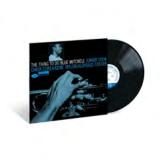
Mit seinem gefühlvollen, swingenden Hard-Bop-Stil verkörperte der Trompeter Blue Mitchell in der zweiten
Hälfte der 1960er Jahre das Blue-Note-Ethos wie nur wenige andere Musiker. “The Thing To Do” war
1965 das erste Album, das Mitchell bei dem Label veröffentlichte (sein eigentliches Debütalbum “Step
Lightly”, das 1963 aufgenommen wurde, erschien trotz Spitzenbesetzung erst 1980). “The Thing To Do”
ist historisch allein schon deshalb bedeutend, weil auf dem Album zwei junge Musiker zu hören sind, die ein
paar Jahre später mit der Jazz-Rock-Band von Miles Davis Weltruhm erlangten: der Pianist Chick Corea
und der Schlagzeuger Al Foster. Das Repertoire des Albums, das bei AllMusic die Höchstwertung von fünf
Sternen erzielte, reicht von Hard Bop über Balladen bis hin zu einem von Calypso beeinflussten Stück.
Nach einem turbulenten Jahrzehnt, in dem er häufiger im Gefängnis als auf der Bühne oder in einem
Aufnahmestudio anzutreffen war, begann Tenorsaxofonist Dexter Gordon mit einem neuen Vertrag bei
Blue Note Records eine erstaunliche Karriere-Renaissance. Mit den im Mai 1961 im Abstand von nur drei
Tagen in Rudy Van Gelders Tonstudio in Englewood Cliffs aufgenommenen Alben “Doin’ Allright” und
“Dexter Calling” untermauerte er seine Rückkehr zu alter Form mit Bravour. Hervorragend unterstützt von
einem fein besetzten Quartett, wechselte der spielfreudige Saxofonist auf “Dexter Calling” mühelos von
energiegeladenem Swing zu atemberaubenden Balladen.
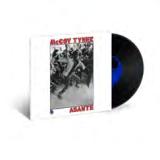
Bei den Aufnahmen, die Pianist McCoy Tyner in den späten 1960er Jahren für Blue Note machte, hatte
er sich in einigen Stücken bereits von afrikanischer Musik inspirieren lassen. Auf dem im September
1970 eingespielten Album “Asante” rückte er diese Einflüsse in vier selbst verfassten Kompositionen mit
einer außergewöhnlichen neuen Band in den Vordergrund. In zwei Stücken ist die Sängerin Songai Sandra Smith mit ihrer ätherischen Stimme als Gast zu hören. Das Album wurde von Blue Note erst 1974
veröffentlicht, nachdem McCoy Tyner bereits eine Reihe sehr erfolgreicher Alben bei seinem neuen Label
Milestone vorgelegt hatte.
Der energetische Tenorsaxofonist Fred Jackson begann seine Karriere Anfang der 1950er Jahre in der
Begleitband von Little Richard. In den frühen 1960er unternahm er einen kurzen Ausflug in die Jazzwelt,
der von Blue Note auf vier Alben dokumentiert wurde. Neben drei Alben, auf denen er sich als Begleiter
der Soul-Jazz-Organisten Baby Face Willette und Big John Patton profilierte, durfte er 1962 “Hootin’ ‘n
Tootin’” aufnehmen - sein einziges Album unter eigenem Namen, auf dem er funkigen Soul-Jazz und Hard
Bop spielte. Anschließend kehrte er zum Rhythm ‘n’ Blues und Soul zurück.
“Mother Ship” war 1969 das sechste und letzte Album des experimentierfreudigen Hammond-Organisten
Larry Young für das Label Blue Note. Zu hören ist er hier mit einem Quartett, aus dem insbesondere
der brillante Trompeter Lee Morgan hervorsticht. Obwohl das Album vor unbändiger kinetischer Energie
strotzte und auch eine paar gefühlvollere groovende Stücke aus der Feder des Organisten bot, wurde es
erst 1980, zwei Jahre nach Youngs Tod, veröffentlicht.
John Scofields Quartett mit Tenorsaxofonist Joe Lovano war eine der führenden modernen Jazzgruppen der
1990er Jahre. Auf seinem zweiten Blue-Note-Album “Meant To Be”, das nun erstmals als Doppel-LP auf
Vinyl erscheint, demonstriert der Gitarrist in elf unverkennbaren Scofield-Originalen die ganze Schlagkraft
und nuancierte Musikalität dieser Band. “Das farbenfrohe und unterhaltsame Programm bietet moderne
Mainstream-Musik der 1990er Jahre, die sich nach vorne orientiert, aber gleichzeitig an den Wurzeln von
Hard Bop, Funk und Fusion festhält.” (Scott Yanow, AllMusic, 4,5 Sterne)
Auf seinem zweiten Blue-Note-Album “Tonic” kehrte das experimentelle Jazz-Fusion-Trio Medeski Martin & Wood zu seinen akustischen Wurzeln zurück. Aufgenommen wurde “Tonic” im März 1999 in dem
gleichnamigen Club in der Lower East Side von Manhattan. Während ihres neuntägigen Engagements spielten John Medeski (Klavier und Melodica), Billy Martin (Schlagzeug und Percussion) sowie Chris Wood
(Bass) neben abenteuerlichen Eigenkompositionen auch Coverversionen von Lee Morgan, Bud Powell, John
Coltrane und Jimi Hendrix. Das Album erscheint nun erstmals als Doppel-LP auf Vinyl.
Das 1965 für Blue Note aufgenommene Album gilt als eines der kühnsten musikalischen Statements des
Pianisten und Komponisten Andrew Hill. Auf ihm versuchte Hill, die Avantgarde durch das Prisma der
Wurzeln des Jazz in den afrikanischen Rhythmen zu betrachten. Entsprechend setzte er sein Klavier in
den vier von ihm komponierten Stücken mehr als perkussives und weniger als melodisches Instrument ein.
Begleitet wurde er von einem bis zu achtköpfigen Ensemble mit zwei Bläsern, zwei Perkussionisten, zwei
Bassisten und einem Schlagzeuger.
Hiesigen Jazzfans dürfte Larance Marable vor allem als Schlagzeuger des legendären Quartet West von
Charlie Haden aus den 80er und 90er Jahren in Erinnerung sein. Als er 1956 als Lawrence Marable sein
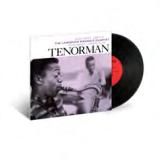
einziges Album als Bandleader aufnahm, galt er als einer der gefragtesten Schlagzeuger der West-CoastJazz-Szene in L.A. Den Titel “Tenorman” gab er dem Album, weil er darauf den damals noch relativ
unbekannten, jungen texanischen Tenorsaxofonisten James Clay vorstellte. Neben vier bekannten Standards ist das Quartett hier mit drei Kompositionen seines Pianisten Sonny Clark zu hören, dem kurze Zeit
später bei Blue Note der große Durchbruch gelingen sollte.
J. J. Johnson gilt als der erste Musiker, dem es gelang, die Sprache des Bebop auf der Posaune zu artikulieren. Nachdem er 1952 an der ersten Blue-Note-Session von Miles Davis mitgewirkt hatte, aus der
das Album “Young Man with a Horn” hervorging, ermöglichte der Produzent Alfred Lion dem Posaunisten,
zwischen 1953 und 1955 mit anderen Größen des Bebop eine Reihe von Aufnahmesessions unter eigenem
Namen zu machen. Diese erschienen 1956 auf den beiden 12-inch-Compilations “The Eminent Jay Jay
Johnson, Vol. 1” und “The Eminent Jay Jay Johnson, Vol. 2”. Letztere enthält laut AllMusic “einige der
besten Bebop-Aufnahmen jener Zeit”
Dem Tenorsaxofonisten Ike Quebec hatte es Thelonious Monk zu verdanken, dass er 1947 Alfred Lion, den
Mitbegründer des Labels Blue Note, kennenlernte. Der Produzent erkannte auf Anhieb die Originalität des
Pianisten und Komponisten und nahm ihn sofort unter Vertrag. In den folgenden fünf Jahren nahm Monk
in verschiedenen Konstellationen für das Label auf und dokumentierte so seine einzigartige Musik. Die
1956 erschienene 12-inch-Compilation “Genius of Modern Music, Vol. 2” enthielt Erstaufnahmen einiger
der heute bekanntesten Monk-Kompositionen und begründete dessen Ruf als originelles musikalisches Genie.
Der Trompeter Lee Morgan war gerade einmal 19 Jahre alt und stand noch ziemlich am Anfang seiner
langjährigen Zusammenarbeit mit Blue Note Records, als er 1957 sein lebhaft swingendes Album “City
Lights” aufnahm. Wie schon auf seinen vorangegangenen Alben präsentiert der junge Trompeter hier vor
allem Stücke seines Mentors Benny Golson, mit dem er zuvor in der Big Band von Dizzy Gillespie zusammengespielt hatte. Morgan selbst sollte sich erst später als Komponist profilieren.
Nach drei Alben für Prestige Records und einem für Decca debütierte Posaunist Bennie Green 1958 mit
dem wunderbaren Album “Back on the Scene” bei Blue Note, auf dem er seine stilistische Vielseitigkeit
unter Beweis stellte. Mit seinem Quintett präsentiert der für seinen warmen, geschmeidigen Ton bekannte
Posaunist hier ein durch und durch unterhaltsames Programm, dessen Bogen sich von flottem Swing über
Latin-Grooves bis hin zu zarten Balladen spannt.
Nur drei Monate nach der Aufnahme seines vielversprechenden Blue-Note-Debüts ”Page One” kehrte der
Tenorsaxofonist Joe Henderson im September 1963 in das Studio von Rudy Van Gelder zurück, um mit
“Our Thing” sein zweites Album für das Label einzuspielen. Darauf stellte er einmal mehr seine tiefe
Verbundenheit mit dem Trompeter Kenny Dorham unter Beweis. Wie auf dem vorangegangenen Album
teilt das Duo, das von einer außergewöhnlichen Rhythmusgruppe begleitet wird, die Kompositionen unter
sich auf und gibt solistisch ganz klar den Ton an.
“Free For All” gilt vielen Kritikern als das beste Album, das Art Blakey mit seinen Jazz Messengers in der
legendären Sextett-Besetzung aufgenommen hat. Die Band spielte bereits seit 1961 in dieser Formation
zusammen, war aber für Blue Note über zwei Jahre lang nicht mehr im Studio gewesen. Die Musik des im
Februar 1964 entstandenen Albums (das ursprünglich den Titel “Free Fall” erhalten sollte) ist deutlich von
der Bürgerrechtsbewegung jener Zeit geprägt und strotzt nur so vor Energie.
Auf seinem Debütalbum stellte sich der aus Newark/New Jersey stammende Tenorsaxofonist Tyrone Washington 1968 als neue, vitale Stimme des Jazz vor. Daraus, dass er vor allem von John Coltrane, aber
auch ein wenig von Albert Ayler und Archie Shepp beeinflusst war, machte der damals 23-Jährige keinen
Hehl. Dabei präsentierte er mit einem exzellenten Sextett überwiegend gleichaltriger Musiker eine durchaus
eigene Mischung aus Post-Bop mit avantgardistischem Einschlag und groove-basiertem Soul-Jazz.
Als Johnny Griffn im April 1957 mit Hank Mobley und John Coltrane sein zweites Album für das Label
Blue Note aufnahm, standen die drei Tenorsax-Giganten allesamt noch am Anfang ihrer Solokarriere. Das
Album, das zunächst den trockenen Titel “Johnny Griffn, Vol. 2” trug, bevor es unter dem treffenderen
Titel “A Blowing Session” neu aufgelegt wurde, ist laut AllMusic “eine der besten Hard-Bop-Jamsessions,
die je aufgenommen wurden”.
Als Rudy Van Gelder noch das kleine Tonstudio nutzte, das er sich im Haus seiner Eltern in Hackensack,
New Jersey, eingerichtet hatte, wich Blue Note für Aufnahmen mit größeren Ensembles eine Zeit lang
in den Ballsaal des Manhattan Towers Hotels in New York aus. Im August 1957 und im Februar 1958
schmiss Hammond-Organist Jimmy Smith dort mit zwei unterschiedlichen All-Star-Bands seine boppigbluesige “House Party”. Bei denselben Sessions entstanden auch die Aufnahmen für das Nachfolgealbum
“The Sermon!”.
Nach einem kurzen Intermezzo bei Art Blakeys Jazz Messengers und einigen gemeinsamen Aufnahmen mit
dem Altsaxofonisten Gigi Gryce gründete Donald Byrd 1958 sein erstes eigenes Quintett, das er gelegentlich
auch zum Sextett erweiterte. In der Bläserfront stand dabei oft der Baritonsaxofonist Pepper Adams an der
Seite des Trompeters. Wie heiß diese Band zu swingen verstand, zeigte sie im November 1960 bei einem
zweistündigen Auftritt im New Yorker Half Note Café, der auf zwei separaten LPs veröffentlicht wurde.
Seine exzeptionellen Fähigkeiten als Schlagzeuger hatte Johnathan Blake dem Blue-Note-Team schon bei
Aufnahmesessions mit dem Hammond-Organisten Dr. Lonnie Smith und dem Pianisten Kenny Barron
bewiesen. Im Jahr 2021 gab Blue-Note-Boss Don Was dem Schlagzeuger dann die Gelegenheit, sich auf
einem eigenen Album auch als Bandleader und Komponist zu präsentieren. Auf “Homeward Bound” stellte
Blake sein neues Quintett Pentad vor, das er mit einigen der aufregendsten Musikern der zeitgenössischen
Jazzszene bildete.
Ella Fitzgerald und Weihnachten sind eine traumhafte Musikkombination. 1967, einige Jahre nach ihrem
fröhlichen “Swinging Christmas”-Album auf Verve, nahm Ella ein weiteres Weihnachtsmeisterwerk in ganz
anderer Stimmung auf: seelenvoll und feierlich, von ihrer faszinierenden, einmaligen Stimme getragen.
Auf „Ella Fitzgerald’s Christmas“ erklingen große Weihnachtsklassiker und Hymnen in Arrangements von
Robert Black und Grace Price, von Ella mit dem von Ralph Carmichael geleiteten Chor und Orchester
erhebend interpretiert. Neu remastert, 180g-LP, Single-Sleeve mit Original-Artwork.
Blue-Note-Produzent Alfred Lion hielt den Pianisten und Komponisten Andrew Hill für ebenso einzigartig
wie Thelonious Monk und dokumentierte seine Musik mit seltener Leidenschaft. Obwohl die Alben, auf
denen Hill ausschließlich eigene Kompositionen präsentierte, damals nicht zu den Bestsellern des Labels
gehörten, ließ Lion ihn zwischen 1963 und 1970 ein rundes Dutzend aufnehmen. “Judgment!” entstand
1964 in einer besonders fruchtbaren Phase, in der der Pianist innerhalb von nur vier Monaten und stets
unterstützt von anderen innovativen Musikern auch die Alben “Black Fire”, “Smoke Stack” und “Point Of
Departure” für Blue Note einspielte.
Inspiriert von Ornette Coleman wagte sich der Altsaxofonist Jackie McLean Anfang der 1960er auf eigene
Faust in die Welt der Avantgarde vor. Dabei gab er dennoch nie seinen feinen Sinn für Swing und musikalische Strukturen auf. Ein Musterbeispiel für diese experimentierfreudige Phase ist sein 1963 erschienenes
Album “One Step Beyond”, das bei AllMusic die Höchstwertung von fünf Sternen erhielt. Darauf schuf
McLean mit einem einzigartigen Quintett einen unverwechselbaren neuen Sound, den er selbst als “InsideOut” bezeichnete.
Als Pianist im legendären Quintett von Charlie Parker, in dem auch Miles Davis mitwirkte, stand Duke
Jordan 1947/48 an vorderster Front der Bebop-Revolution. Sein einziges Album für Blue Note, “Flight To
Jordan”, spielte der aus Brooklyn stammende Pianist 1960 mit einem klassischen Hard-Bop-Quintett ein.
Scott Yanow gab dem Album in seiner AllMusic-Rezension die Höchstwertung von fünf Sternen und stellte
fest: „Die Musik hat viele starke Melodien und ist abwechslungsreich. Dies ist eine von Duke Jordans
besseren Aufnahmen und sehr unterhaltsam.”
Seit der Gründung von Blue Note im Jahr 1939 hatte Alfred Lion es sich zum Grundsatz gemacht, keine
Alben von Jazzsängerinnen auf seinem Label zu veröffentlichen. Eine Ausnahme von dieser Regel machte er
1962, als er “Portrait Of Sheila” produzierte, das Debütalbum der aus Detroit stammenden Sheila Jordan.
Darauf interpretierte die Kultsängerin, die am 11. August 2025 im Alter von 96 Jahren verstarb, in ihrem
unnachahmlichen Stil, nur begleitet von einem Gitarre-Bass-Schlagzeug-Trio, ein Dutzend Jazzstandards,
darunter eine brillante Duo-Version von Bobby Timmons’ Hard-Bop-Klassiker “Dat Dere” mit dem jungen
Steve Swallow am Kontrabass.
Elvin Jones‘ Blue Note-Debüt „Puttin‘ It Together“ aus dem Jahr 1968 markierte den Beginn eines neuen
Kapitels in der Karriere des Meisterschlagzeugers nach seinen sechs Jahren beim bahnbrechenden John
Coltrane Quartet und Coltranes Tod im Jahr 1967. Auf dem schlank besetzten Trio-Album glänzt Jones
im lebhaften Dreierdialog mit Bassist Jimmy Garrison und Multiinstrumentalist Joe Farrell.
Im Juni 1964 nahm Gitarrist Grant Green seine fulminante Post-Bop-Session für „Solid“ auf, ein Album, das
bis 1979 unveröffentlicht blieb, da Blue Note mit den Soul-Jazz-Auftritten des Gitarristen Erfolg hatte. Bei
diesem Auftritt spielte der Gitarrist in einem hochmodernen Sextett mit Joe Henderson, James Spaulding,
McCoy Tyner, Bob Cranshaw und Elvin Jones.
In den 1970er Jahren unternahm der experimentierfreudige Vibrafonist und Marimba-Spieler Bobby Hutcherson bei Blue Note einige Ausflüge in kommerziellere Gefilde. Ein absoluter Höhepunkt dieser Schaffensphase war das 1975 entstandene Album “Montara”. Angetrieben von einer exzellent besetzten Band mit
sechs Perkussionisten bietet Hutcherson darauf eine berauschende Mischung aus Latin Jazz und FusionGrooves, die vor guter Laune nur so überschäumt
Mit seiner Mischung aus swingendem Hard Bop, wunderschönen Balladen, afrikanischen Rhythmen und
Blues hob sich das 1964 aufgenommene Album “In Memory Of” deutlich von den sehr erfolgreichen SoulJazz-Aufnahmen ab, die der Tenorsaxofonist Stanley Turrentine zuvor für das Label Blue Note gemacht
hatte. Das könnte der Grund gewesen sein, weshalb es nicht sofort, sondern erst fünfzehn Jahre später
veröffentlicht wurde. Denn in puncto musikalischer Qualität stand dieses Album, das Turrentine mit einem
großartigen Sextett aufgenommen hatte, in nichts nach.
Dem Pianisten Sonny Clark (1931-1963) wurde gelegentlich nachgesagt, er habe sein Licht zu sehr unter
den Scheffel gestellt und sei auf seinen eigenen Platten zu oft in die Rolle des Begleiters geschlüpft. Für das
1957 entstandene Album ”Sonny’s Crib” gilt das jedoch nicht. Mit einem fantastischen Sextett interpretiert
er hier zunächst drei Standards, bevor er zwei seiner bekanntesten Eigenkompositionen vorstellt. ”Sonny’s
Crib” zählt neben John Coltranes ”Blue Coltrane” zu den Alben, die den aufregenden Hard-Bop-Sound der
späten 1950er Jahre bei Blue Note geprägt haben.
Der aus Harlem/New York stammende Pianist Freddie Redd (1928-2021) wurde 1959 durch die Musik
bekannt, die er für das mit mehreren Preisen ausgezeichnete Off-Broadway-Theaterstück “The Connection” geschrieben hatte. Der Soundtrack des Theaterstücks, in dem es um das Leben heroinabhängiger
Jazzmusiker geht, erschien ein Jahr später bei Blue Note. Noch im selben Jahr spielte der von Charlie
Parker, Thelonious Monk und Bud Powell beeinflusste Pianist mit “Shades Of Redd” sein zweites Album für
das Label ein. Darauf stellte er sein kompositorisches Können mit einem formidablen Hard-Bop-Quintett
noch nachhaltiger unter Beweis.
Ein kammermusikalisches Cool-Jazz-Juwel aus dem Jahr 1955 von einer der letzten bedeutenden Bands
des West Coast Jazz. Auf dem Album stellte der Schlagzeuger und Bandleader Chico Hamilton ein neues
Quintett in der damals ungewöhnlichen Besetzung mit Saxofon, Gitarre, Cello und Bass vor. Mit seinem
einzigartigen Klang und seinen nuancierten, einfallsreichen Arrangements errang das Ensemble, das in der
derselben Konstellation noch zwei weitere Alben einspielte, schnell beträchtliche Popularität.
Der Kornettist Don Cherry erlangte ab 1958 als Mitglied der revolutionären Bands von Ornette Coleman weltweite Bekanntheit in der Free-Jazz-Szene. Als eigenständiger Bandleader präsentierte sich Cherry
jedoch erst 1965 auf seinem Blue-Note-Debütalbum “Complete Communion”. Mit einem aus Free-Jazzerprobten Musikern bestehenden Quartett lotete der Kornettist zwei suitenähnliche Kompositionen aus, die
sich jeweils über eine ganze Plattenseite erstreckten und seinen Mitspielern reichlich Raum gaben, sich
ebenfalls solistisch einzubringen.
Lee Morgans enormer kreativer Output in den Jahren nach dem durchschlagenden Erfolg von “The Sidewinder”
war in jeder Hinsicht atemberaubend - sei es in Bezug auf Qualität oder Quantität. Tatsächlich nahm der
Trompeter zwischen 1964 und 1968 15 Alben für Blue Note auf, von denen viele zunächst im Archiv landeten. So auch “The Procrastinator”. Das Album, das Morgan 1967 mit einer absoluten Traumbesetzung
eingespielt hatte, erschien erst 1978 und gilt rückblickend als eine seiner monumentalen Leistungen der
späten 60er Jahre
Im September 1964 war es Miles Davis endlich gelungen, den Saxofonisten Wayne Shorter von Art Blakeys
Jazz Messengers abzuwerben und mit ihm sein Second Great Quintet zu vervollständigen. Shorters Solokarriere schien darunter nicht nur nicht zu leiden, sondern sogar noch beflügelt zu werden. Und zwar so sehr,
dass Blue Note mit dem Veröffentlichen seiner Soloalben kaum nachkam. Eines der Alben, die zunächst
archiviert wurden, war “The Soothsayer”. Es wurde im März 1965 mit einem Allstar-Sextett aufgenommen,
erschien aus unerklärlichen Gründen aber erst 1979. Denn laut AllMusic gehört es zu Shorters “besten
Werken aus dieser unglaublich fruchtbaren Zeit”.
Horace Silvers erste Japantournee Anfang 1962 hinterließ bei dem Pianisten einen tiefen Eindruck. Kaum
wieder zu Hause, machte er sich daran, eine Reihe von Stücken zu schreiben, in denen er versuchte, “ein
japanisches Gefühl in den Melodien mit einem lateinamerikanischen Gefühl in den Rhythmen” zu verbinden.
Das im Juli desselben Jahres mit seinem Quintett aufgenommene Album “The Tokyo Blues” widmete er
seinen glühenden neuen Fans in Japan.
Das Album “Jacknife” zählt zu den oft übersehenen Juwelen in der umfangreichen Blue-Note-Diskografie
des Altsaxofonisten Jackie McLean. Er nahm es 1965 mit einer Band junger, aber durchweg hochkarätiger
Musiker auf. Als musikalischer Mentor gab McLean seinen Begleitern - darunter der Schlagzeuger Jack
DeJohnette bei seiner ersten Plattensession! - großzügig Gelegenheit, eigene Kompositionen zum Repertoire beizusteuern. Entsprechend frisch und vielseitig geriet das Album, das von Blue Note allerdings erst
zehn Jahre später veröffentlicht wurde.
Der Saxofonist und Flötist begann seine Zusammenarbeit mit dem Blue-Note-Label Mitte der 1960er Jahre
mit zwei bemerkenswerten Alben (”Fuchsia Swing Song” und ”Contours”), auf denen er ausschließlich
eigene Kompositionen präsentierte. Umso überraschter war die Jazzwelt, als der Avantgardist 1966 mit ”A
New Conception” eine Aufnahme folgen ließ, auf der er auf erstaunlich originelle und entspannte Weise nur
Standards interpretierte. Bis zu seinem Tod im Jahr 2011 sollte dies das einzige Album dieser Art bleiben,
was diese Aufnahme um so reizvoller und kostbarer macht.
Nachdem die Karriere des Tenorsaxofonisten Mitte der 1950er Jahre einen Einbruch erlebt hatte, feierte
er Anfang der 1960er Jahre mit seinen Aufnahmen für Blue Note ein rauschendes Comeback. Das Album
”Landslide” stellte der Produzent Michael Cuscuna 1980 aus unveröffentlichten Aufnahmen zusammen,
die bei drei Sessions mit unterschiedlich besetzten Bands in den Jahren 1961-62 entstanden waren. Das
Titelstück ”Landslide” etwa war ein bis dahin unveröffentlichtes ”Überbleibsel” von Gordons gefeiertem
zweitem Blue-Note-Album ”Dexter Calling”.
- A1: Willow Weep For Me
- A2: Chances Are
- A3: Jumpin' Jupiter
- B1: Stop And Listen
- B2: At Last
- B3: Soul Walk
- B4: Worksong
Mit “Stop And Listen” gelang dem Hammond-B3-Organisten Baby Face Willette 1961 ein Album, das in keiner Soul-Jazz-Sammlung fehlen sollte. Zumal es auch Willettes letzte und beste Aufnahme für Blue Note war. Kritiker nennen diesen Klassiker oft in einem Atemzug mit Grant Greens Blue-Note-Debüt “Grant’s First Stand”, das kurz zuvor mit exakt der gleichen Besetzung eingespielt worden war.
- A1: De Bug
- A2: Ahm Miz
- A3: Lujon
- B1: Althea Soon
- B2: More Mileage
- B3: Lion Down
- A Handful Of Stars
- I’ve Got The World On A String
- Susie’s Blues
- The Goof And I
- Stairway To The Stars
- Thanks For The Memory
- All The Things You Are
BLUE NOTE TONE POET EDITION: produziert von Joe Harley, komplett analog von Kevin Gray von den Originalbändern remastert, RTI-Pressung (180g), stabiles Tip-on-Sleeve, wattierte Innenhülle.
Serge Chaloff - Blue Serge
Als einer der ersten Baritonsaxofonisten des Bebop verblüffte Serge Chaloff, (1923-1957) die Jazzwelt mit seiner bemerkenswerten Fingerfertigkeit und seinem zutiefst emotionalen Spiel. Da er jedoch nur sieben Alben unter seinem Namen aufnahm und bereits mit 33 Jahren verrstarb, ist er weitgehend in Vergessenheit geraten. “Blue Serge” von 1956 ist laut Penguin Guide To Jazz sein bestes Album: “Chaloffs Meisterwerk ist kraftvoll und bewegend zugleich, nicht weil man weiß, dass er dem Tod so nahe war, sondern wegen der unsentimentalen Stringenz seines Spiels.
- The Groits
- Le Serpent Qui Danse
- No Doubt
- Black Monday
- Symmetry
- Duplicity
BLUE NOTE TONE POET EDITION: produziert von Joe Harley, komplett analog von Kevin Gray von den Originalbändern remastert, RTI-Pressung (180g), stabiles Tip-on-Sleeve, wattierte Innenhülle.
Andrew Hill - Andrew!!!
Der Pianist und Komponist Andrew Hill stürmte die Jazzszene mit einem Ausbruch an Kreativität. In nur acht Monaten, zwischen November 1963 und Juni 1964, nahm er für Blue Note fünf bemerkenswerte Alben in unterschiedlichen Besetzungen (vom Trio bis zum Sextett) und mit durchweg eigenen Kompositionen auf. Das letzte dieser Alben war “Andrew!!!”, über das AllMusic schrieb: “Die Musik hat oft eine schwebende, hypnotische Qualität, die Hills Dissonanzen, ungewöhnliche Voicings und komplexe Arrangements noch fesselnder macht als sonst.”
Anfang der 1960er Jahre hatte der Tenorsaxofonist Hank Mobley, der sonst oft im Schatten von John Coltrane und Sonny Rollins stand, einen wahren Höhenflug. Scheinbar mühelos schüttelte er ein HardBop-Meisterwerk nach dem anderen aus dem Ärmel. Eines dieser Alben war “Roll Call”, auf dem er seinen Erfindungsreichtum, seinen Spielwitz und seine einzigartige rhythmische Fingerfertigkeit vollendet zur Geltung brachte.
Nachdem er im April 1960 als Sideman auf Jimmy Smiths Soul-Jazz-Zwillingsklassikern “Midnight Special” und “Back At The Chicken Shack” einen starken Eindruck hinterlassen hatte, gab Blue-Note-Chef Alfred Lion Stanley Turrentine im Juni die Chance, sein erstes Album als Leader für das Label aufzunehmen. “Look Out!” verkündete die Ankunft eines zutiefst gefühlvollen neuen Saxofonisten, der sein Herz und seine Seele in jede gespielte Note goss.
Mit seinem ersten Blue-Note-Album ”Blues In Trinty” erweiterte der aus Jamaika stammende und damals in England lebende Trompeter Dizzy Reece seine Fangemeinde um so berühmte Kollegen wie Miles Davis und Sonny Rollins. Und Art Blakey wollte ihn und den britischen Tenorsaxofonisten Tubby Hayes, der hier ebenfalls zu hören ist, sofort für seine Jazz Messengers verpflichten. Das Album, auf dem auch zwei prominente Gäste aus den USA mitwirkten, gilt noch heute als absoluter Bop-Klassiker.
- The Lion’s Roar
- Jumpin’ Leo
- Bad Girl
- Talkin’ The Blues
- Rollin’ With Leo
- Stuffy
- Music Hall Beat
- Mad Lad
- Returns
Leo Parker war einer der ersten Baritonsaxofonisten, die sich auf das glatte Parkett des Bebop wagten. Nachdem seine glanzvolle Karriere Mitte der 1950er Jahre durch exzessiven Drogenkonsum einen Einbruch erlitten hatte, gelang ihm 1961 bei Blue Note ein leider tragisch kurzes Comeback. Auf “Rollin’ With Leo” begeisterte er mit swingenden Eigenkompositionen. Nur vier Monate nach den Aufnahmen starb er im Alter von 36 Jahren an einem Herzinfarkt.
- The Twins
- Gnostic
- Thandiwa
- Nomadic
Nachdem Grachan Moncur III bei Blue-Note-Aufnahmen von Jackie McLean und Herbie Hancock auf sich aufmerksam gemacht hatte, produzierte Alfred Lion für das Label zwei Soloalben des versierten AvantgardePosaunisten. Auf “Some Other Stuff” ist er mit einem besonders abenteuerlustigen Ensemble zu erleben, dem gleich drei Musiker angehörten, die seinerzeit im legendären zweiten Quintett von Miles Davis spielten.
Als Mitglied der Charles Mingus Band und mit dem George Adams/Don Pullen Quartet profilierte sich Don
Pullen in den 1970er und 1980er Jahren als dynamischer Pianist und vielseitiger Musiker, der gleichermaßen
von Avantgarde, Blues, Gospel, R&B und sogar Funk beeinflusst war. Seine Originalität bewies Pullen auch
auf dem aufregenden Trio-Album “New Beginnings”, mit dem er 1988 seine erfolgreiche Zusammenarbeit
mit Blue Note begann.
Mit dem Album “Life Time”, nach dem er wenig später seine bahnbrechende Fusion-Band benannte, startete
Tony Williams 1964 seine Solokarriere bei Blue Note. Der damals 18-Jährige präsentierte sich darauf nicht
nur als enorm druckvoller Schlagzeuger, sondern auch als erstaunlich gewiefter Komponist. Zwanzig Jahre
später kehrte er zu dem Label zurück, um mit einem modernen, akustischen Hardbop-Quintett auf Alben
wie “Civilization” wieder dort anzuknüpfen.
Mit seinem ersten Blue-Note-Album ”Blues In Trinty” erweiterte der aus Jamaika stammende und damals
in England lebende Trompeter Dizzy Reece seine Fangemeinde um so berühmte Kollegen wie Miles Davis
und Sonny Rollins. Und Art Blakey wollte ihn und den britischen Tenorsaxofonisten Tubby Hayes, der
hier ebenfalls zu hören ist, sofort für seine Jazz Messengers verpflichten. Das Album, auf dem auch zwei
prominente Gäste aus den USA mitwirkten, gilt noch heute als absoluter Bop-Klassiker.
- Workout
- Uh Huh
- Smokin
- The Best Things In Life Are Free
- Greasin' Easy
Black[26,85 €]
Workout features a mix of original compositions and jazz standards, highlighting Mobley's ability to blend sophisticated harmonies with rhythmic complexity and received critical acclaim upon release and is regarded as one of Mobley's finest works
The album has been praised for its engaging arrangements and the strong interplay between the musicians, the tracks often feature rhythmic grooves and vibrant solos, which became characteristic of the hard bop movement. Released in 1962, it is considered a classic in the jazz genre, particularly within the hard bop substyle and it's often recommended for both jazz enthusiasts and newcomers to the genre and showcases Hank Mobley's lyrical approach to the saxophone and is frequently included in lists of essential jazz albums. The album continues to influence contemporary jazz musicians celebrated for its artistry and innovation, making it a significant contribution to the jazz landscape of the 1960s. So Workout stands as a significant milestone in jazz history, exemplifying the creativity and musicianship of its time: with its engaging compositions and stellar performances, the album remains a beloved classic, inviting listeners to explore the depth and beauty of hard bop jazz, a treasure that continues to resonate within the jazz community.
1957 brach Clifford Jordan aus der als Windy City bekannten Stadt Chicago auf, um mit seinem Tenorsax
frischen Wind in die New Yorker Jazzszene zu blasen. Noch im selben Jahr spielte er für Blue Note das
Album “Cliff Jordan” ein, auf dem er ein hochklassiges Septett mit einer fulminanten Bläser-Frontline und
einer exzellenten Rhythmusgruppe leitete
Nachdem er zuvor auf wichtigen Blue-Note-Alben von Jackie McLean, Eric Dolphy und Grant Green
geglänzt hatte, konnte der junge Vibraphonist Bobby Hutcherson 1965 mit “Dialogue” sein erstes eigenes
Album bei dem Label vorlegen. Mit der Unterstützung eines abenteuerlustigen Sextetts gelang dem 24-
Jährigen gelang auf Anhieb ein richtungsweisendes Album, das sowohl bei AllMusic als auch im “Penguin
Guide To Jazz” die Höchstwertung erhielt
Art Blakey & The Jazz Messengers - A Night In Tunisia
Dieser Albumklassiker ist ein Paradebeispiel dafür, wie Art Blakey den jungen Talenten in seiner Band eine
Plattform zur eigenen Entfaltung bot. Er lässt sie nicht nur ausführlich in ihren Soli zu Wort kommen,
sondern vertraut auch blind auf ihr Können als Komponisten. Einzige Ausnahme im Repertoire ist der
Bebop-Klassiker von Dizzy Gillespie, der diesem Album aus dem Jahr 1960 seinen Titel verlieh.
Donald Byrd - Royal Flush
Mit dem Album “Off To The Races” hatte Trompeter Donald Byrd 1959 seinen Höhenflug bei Blue Note
begonnen. Noch mehr Fahrt nahm Byrd auf, als er im Jahr darauf einen jungen Pianisten namens Herbie
Hancock unter seine Fittiche nahm und in sein hervorragend besetztes Quintett holte. Auf dem exzellenten Hardbop-Album “Royal Flush” konnte der Trompeter mit diesem Quintett 1962 all seine Trümpfe
ausspielen.
Booker Little - Booker Little 4 & Max Roach
Gerade einmal 20 Jahre alt war Booker Little, als er 1958 für United Artists sein Solodebütalbum “Booker
Little 4 & Max Roach” einspielen konnte. Auf ihm präsentierte sich der Trompeter, den Max Roach nach
dem Unfalltod von Clifford Brown in sein Quintett geholt hatte, als neuer Hoffnungsträger des Hardbop.
Seine Originalität bewies der Youngster, der leider auch schon mit nur 23 Jahren sterben sollte, dabei auch
mit drei Eigenkompositionen.
Wie viele seiner Zeitgenossen, begann der Hardbopper Donald Byrd sich Ende der 1960er Jahre auf seinen
Alben mit dem neuen Genre der Fusion-Musik auseinanderzusetzen. “Kofi” entstand 1969 und 1970 bei
Sessions mit zwei unterschiedlich besetzten, aber gleichermaßen hochkarätigen Ensembles, mit denen sich
Byrd auf rundum überzeugende Weise auf das neue stilistische Terrain vortastete, ohne gleich ganz von
seinen Hardbop-Wurzeln zu lassen.
Die aus Leipzig stammende Pianistin Jutta Hipp schrieb 1956 ein kleines Stückchen Jazzgeschichte, als
Blue Note sie als erste Musikerin aus Europa unter Vertrag nahm. Als erstes wurde für das Label während
eines sechsmonatigen (!) Engagements im Hickory House Club in New York ein kompletter Trio-Auftritt
aufgezeichnet, der auf zwei separaten Alben veröffentlicht wurde. Dabei stellte sie sich als von Horace Silver beeinflusste Pianistin mit einem reinen Standards-Programm zwischen Hardbop und frühem Soul-Jazz
vor.
Mit der Urbesetzung seines populären Trios The Three Sounds hatte Pianist Gene Harris zwischen 1958
und 1965 rund zwanzig Alben mit blueslastigem Hardbop für die Labels Blue Note, Verve, Mercury und
Limelight eingespielt. Ab 1968 fand Harris mit neuen Spielpartnern zunächst zu einem souligeren Sound,
der dann - wie auf diesem Live-Album von 1970 zu hören - immer funkiger und rauer wurde.
BLUE NOTE TONE POET EDITION: Stereo, produziert von Joe Harley, komplett analog von Kevin Gray
von den Originalbändern remastert, RTI-Pressung (180g), stabiles Tip-on-Single Sleeve, wattierte Innenhülle.
Auf seinem Album ”Let Freedom Ring” spiegelt Saxofonist Jackie McLean den Wandel wider, der 1962 in
der Luft lag: die musikalischen Freiheiten der aufkommenden Avantgarde und die sozialen Veränderungen,
die von der Bürgerrechtsbewegung gefordert wurden. Begleitet wird er von Walter Davis Jr. am Klavier,
Herbie Lewis am Bass und Billy Higgins am Schlagzeug.
Unter dem Bandnamen The Modest Jazz Trio spielte Jim Hall Gitarre, Red Mitchell Klavier (normalerweise war er Bassist) und Red Kelly übernahm den Bass. Aufgenommen in den frühen Morgenstunden des
Karfreitags 1960 stellt diese Aufnahme einer improvisierten Session das Debüt von Jim Hall als Bandleader
dar. Es sollte das einzige Album des Trios bleiben und ist ein erhaben swingendes Set, dessen Höhepunkt
das Titelstück darstellt, welches ursprünglich der einzige Track war, den man aufnehmen wollte.
Wayne Shorter - JuJu
Nur knapp vier Monate nachdem er bei Blue Note mit “Night Dreamer” seinen gefeierten Einstand gegeben
hatte, ging Wayne Shorter im August 1964 erneut für das Label ins Studio, um mit derselben Band (minus
Trompeter Lee Morgan) das Nachfolgealbum “JuJu” einzuspielen. Das Ergebnis war ein ausschließlich
aus Shorter-Kompositionen bestehendes Album, das ”nur so vor Ideen sprüht, eine immense Vielzahl von
Einflüssen reflektiert und sie in Form einer Reihe atemberaubender Visionen wieder freigibt” (AllMusic).
Lee Morgan - The Gigolo
Nachdem Lee Morgan 1964 mit “The Sidewinder” und dem als Single ausgekoppelten Titelsong neue
Verkaufsrekorde bei Blue Note aufgestellt hatte, setzte der Trompeter seine musikalische Erfolgssträhne
mit Alben wie “The Gigolo” fort. Zu den Höhepunkten dieser 1965 eingespielten (aber erst 1968 veröffentlichten) schwungvollen Hardbop-Sammlung gehören der groovige Opener “Yes I Can, No You Can’t”
und die swingende Up-Tempo-Nummer “Speedball”.
BLUE NOTE CLASSIC VINYL EDITION: Mono (Thad Jones) bzw. Stereo (Clifford Jordan), von Kevin Gray gemastert, bei Optimal auf 180g-Vinyl gepresst, im Single-Sleeve.
Der 1986 gestorbene Trompeter Thad Jones ist Jazzfans vor allem durch seine großartigen Arbeiten mit dem Count Basie Orchestra (dem er als Solist, Arrangeur und Komponist von 1954 bis 1963 angehörte) und seinem eigenen Thad Jones/Mel Lewis Orchestra in Erinnerung. Doch er konnte sich auch als Leader kleinerer Ensembles immer wieder glänzend in Szene setzen. Und nirgends besser als auf dem 1956 mit einem All-Star-Quintett aufgenommenen Album “The Magnificent Thad Jones”, mit dem sich der Trompeter endgültig als einer der führenden Musiker und Komponisten des modernen Jazz etablierte.
Als Clifford Jordan 1957 nach New York zog, um im Quintett von Max Roach Sonny Rollins zu ersetzen, eilte ihm der Ruf voraus, eines der größten Chicagoer Talente auf dem Tenorsaxofon zu sein. Noch
im Jahr seiner Ankunft erhielt der 25-Jährige die Chance, drei Alben für Blue Note einzuspielen, auf denen er sein Können unter Beweis stellte. Auf “Cliff Craft”, einer wunderbar entspannten Quintett-Aufnahme, präsentierte Jordan neben drei eigenen Kompositionen auch exzellent interpretierte Klassiker von Charlie Parker, Dizzy Gillespie und Duke Ellington.
BLUE NOTE CLASSIC VINYL EDITION: Mono (Thad Jones) bzw. Stereo (Clifford Jordan), von Kevin Gray gemastert, bei Optimal auf 180g-Vinyl gepresst, im Single-Sleeve.
Der 1986 gestorbene Trompeter Thad Jones ist Jazzfans vor allem durch seine großartigen Arbeiten mit dem Count Basie Orchestra (dem er als Solist, Arrangeur und Komponist von 1954 bis 1963 angehörte) und seinem eigenen Thad Jones/Mel Lewis Orchestra in Erinnerung. Doch er konnte sich auch als Leader kleinerer Ensembles immer wieder glänzend in Szene setzen. Und nirgends besser als auf dem 1956 mit einem All-Star-Quintett aufgenommenen Album “The Magnificent Thad Jones”, mit dem sich der Trompeter endgültig als einer der führenden Musiker und Komponisten des modernen Jazz etablierte.
Als Clifford Jordan 1957 nach New York zog, um im Quintett von Max Roach Sonny Rollins zu ersetzen, eilte ihm der Ruf voraus, eines der größten Chicagoer Talente auf dem Tenorsaxofon zu sein. Noch
im Jahr seiner Ankunft erhielt der 25-Jährige die Chance, drei Alben für Blue Note einzuspielen, auf denen er sein Können unter Beweis stellte. Auf “Cliff Craft”, einer wunderbar entspannten Quintett-Aufnahme, präsentierte Jordan neben drei eigenen Kompositionen auch exzellent interpretierte Klassiker von Charlie Parker, Dizzy Gillespie und Duke Ellington.
Im Rahmen der BLUE NOTE CLASSIC VINYL EDITION erscheinen in der neuesten Staffel zwei moderne Klassiker. Beide Alben gab es bisher nicht auf Vinyl und diese Doppel-LPs enthalten nun auch die bislang nur in Japan veröffentlichen Bonustracks . Stereo, von Kevin Gray von den Original-Masterbändern gemastert, bei Optimal auf 180g-Vinyl gepresst, Gatefold-Sleeves. Nachdem er zuvor auf drei Blue-Note-Alben des Trompeters Terence Blanchard auf sich aufmerksam gemacht hatte, erhielt Pianist Aaron Parks 2008 die Chance, mit “Invisible Cinema” sein erstes eigenes Album für das Label einspielen. Zu hören ist er hier mit einem exzellenten Quartett und einem Programm von durchweg eigenen Kompositionen, die allerdings musikalische Einflüsse von Wayne Shorter bis Radiohead verraten. Jetzt erscheint “Invisible Cinema” zum ersten Mal als Doppelalbum auf Vinyl. Mit “Ten”, seinem achten Album für Blue Note, feierte der Pianist Jason Moran 2010 das zehnjährige Jubiläum seines Trios The Bandwagon. Das noch heute in unveränderter Besetzung spielende Trio hat - ähnlich wie z.B. The Bad Plus oder das Robert Glasper Trio - das Image des klassischen Piano-Trios radikal modernisiert. Auf “Ten”, das nun erstmals als Doppelalbum auf Vinyl veröffentlicht wird, bietet The Bandwagon neben Originalen von Moran auch einzigartige Interpretationen von Stücken aus der Feder von Thelonious Monk, Jaki Byard und Conlon Nancarrow.
BLUE NOTE CLASSIC VINYL EDITION: Stereo, komplett analog, von Kevin Gray von den OriginalMasterbändern gemastert, bei Optimal auf 180g-Vinyl gepresst. LPs im Single-Sleeve-Cover. Der Tenorsaxofonist Stanley Turrentine begann seine lange Zusammenarbeit mit Blue Note 1960 mit einem grandiosen Doppelschlag, als er gleich zwei exzellente Alben mit souligem Hardbop für das Label einspielte: “Look Out! und “Blue Hour”. Auf letzterem kam es zu einem besonders fruchtbaren musikalischen Austausch mit dem von dem Pianisten Gene Harris geleiteten Trio The Three Sounds, das sich mit seinen eigenen Aufnahmen für Blue Note bereits als eine der besten Hardbop- und Soul-Jazz-Formationen etabliert hatte. Als den “Mittelgewichts-Champion des Tenorsaxofons” hatte der Kritiker Leonard Feather einst den 1986 verstorbenen Hank Mobley bezeichnet. Das klingt zunächst nicht sonderlich schmeichelhaft, sollte aber nur zum Ausdruck bringen, dass Mobley mit seiner Phrasierung zwischen zwei anderen Tenorsax-Champions rangierte: dem “Schwergewicht” John Coltrane und dem “Leichtgewicht” Stan Getz. Auf “Workout” präsentierte sich Mobley 1961, sekundiert von einem Quintett junger Modernisten, in bestechender Höchstform.
The 1961 album Mosaic marked a pivotal moment in the story of Art Blakey & The Jazz Messengers with the arrival of Freddie Hubbard and Cedar Walton and the band’s expansion to a sextet with the addition of Curtis Fuller joining existing members Wayne Shorter and Jymie Merritt to establish a powerful new line-up on this hard bop classic. This Blue Note Classic Vinyl Edition is stereo, all-analog, mastered by Kevin Gray from the original master tapes, and pressed on 180g vinyl at Optimal.
Der Titel von Wayne Shorters elftem Blue-Note-Album kam nicht von ungefähr. Denn auf “Schizophrenia” begab sich der Saxofonist 1967 mit einem All-Star-Sextett auf eine atemberaubende Gratwandlung. “Diese Musik bewegt sich an der Grenze zwischen Post-Bop und Free-Jazz”, meinte Stephen Thomas Erlewine auf AllMusic, “sie wurzelt im Post-Bop, weiß aber, was auf der anderen Seite der Grenze vor sich geht.
Ein paar Jahre später sollte Shorter diese Grenze überschreiten, aber ‘Schizophrenia’ knistert vor Spannung, weil er und seine Kollegen versuchen, die beiden Extreme auszubalancieren.”
Der aus Kansas City stammende dynamische Hammond-B3-Organist Big John Patton spielte in den 1960er Jahren eine Reihe von exzellenten Soul-Jazz-Alben für Blue Note ein. Meist war er auf ihnen in der Standard-Besetzung mit Orgel, Gitarre und Schlagzeug sowie Verstärkung durch Bläser zu hören. Von diesem Schema wich er erst 1965 auf dem grandiosen Album “Let ‘Em Roll” ab, auf dem er mit Bobby Hutcherson zusammenarbeitete. Der Vibraphonist ergreift hier die Gelegenheit, um Pattons Musik mehr Tiefe und Struktur sowie einen moderneren Dreh zu verleihen.
- A1: Fuchsia Swing Song
- A2: Downstairs Blues Upstairs
- A3: Cyclic Episode
- B1: Luminous Monolith
- B2: Beatrice
- B3: Ellipsis
BLUE NOTE CLASSIC VINYL EDITION: Stereo, komplett analog von Kevin Gray von den Originalbändern gemastert, Optimal-Pressung (180 g), wattierte Innenhülle.
“Empyrean Isles” war 1964 Herbie Hancocks viertes Soloalbum für Blue Note. Obwohl der Pianist mit “Watermelon Man” von seinem Debütalbum “Takin’ Off” bereits einen echten Hit gelandet hatte, etablierte er sich erst mit “Empyrean Isles” endgültig als eigenständiger Künstler. Wie auf den vorangegangenen Alben
stellte Hancock ausschließlich eigene Kompositionen vor, aus denen vor allem der zeitlose Hit “Cantaloupe Island” hervorstach.
Dem Pianisten zur Seite stehen hier mit Bassist Ron Carter und Schlagzeuger Tony Williams zwei Musiker, mit denen er damals parallel auch im zweiten großen Quintett von Miles Davis
zusammenarbeitete. Zu ihnen gesellte sich außerdem der Trompeter Freddie Hubbard.
Der Saxofonist Sam Rivers hatte sich schon sehr früh in seiner Karriere durch bemerkenswerte Originalität ausgezeichnet. Nach einem kurzen Intermezzo im zweiten großen Quintett von Miles Davis, spielte Rivers im Dezember 1964 für Blue Note sein Debütalbum “Fuchsia Swing Song” ein. Das Repertoire bestand aus sechs Kompositionen von Rivers, die zwar fest im Post-Bop und Blues wurzelten, aber die avantgardistischen Tendenzen des Saxofonisten auch nicht leugnen konnten. Das Highlight des Albums ist
die atemberaubende Ballade “Beatrice”, die später sogar von den Tenor-Giganten Joe Henderson und Stan Getz aufgegriffen und interpretiert wurde.
BLUE NOTE CLASSIC VINYL EDITION: Stereo, komplett analog von Kevin Gray von den Originalbändern gemastert, Optimal-Pressung (180 g), wattierte Innenhülle.
“Empyrean Isles” war 1964 Herbie Hancocks viertes Soloalbum für Blue Note. Obwohl der Pianist mit “Watermelon Man” von seinem Debütalbum “Takin’ Off” bereits einen echten Hit gelandet hatte, etablierte er sich erst mit “Empyrean Isles” endgültig als eigenständiger Künstler. Wie auf den vorangegangenen Alben
stellte Hancock ausschließlich eigene Kompositionen vor, aus denen vor allem der zeitlose Hit “Cantaloupe Island” hervorstach.
Dem Pianisten zur Seite stehen hier mit Bassist Ron Carter und Schlagzeuger Tony Williams zwei Musiker, mit denen er damals parallel auch im zweiten großen Quintett von Miles Davis
zusammenarbeitete. Zu ihnen gesellte sich außerdem der Trompeter Freddie Hubbard.
Der Saxofonist Sam Rivers hatte sich schon sehr früh in seiner Karriere durch bemerkenswerte Originalität ausgezeichnet. Nach einem kurzen Intermezzo im zweiten großen Quintett von Miles Davis, spielte Rivers im Dezember 1964 für Blue Note sein Debütalbum “Fuchsia Swing Song” ein. Das Repertoire bestand aus sechs Kompositionen von Rivers, die zwar fest im Post-Bop und Blues wurzelten, aber die avantgardistischen Tendenzen des Saxofonisten auch nicht leugnen konnten. Das Highlight des Albums ist
die atemberaubende Ballade “Beatrice”, die später sogar von den Tenor-Giganten Joe Henderson und Stan Getz aufgegriffen und interpretiert wurde
BLUE NOTE TONE POET EDITION: produziert von Joe Harley, komplett analog von Kevin Gray von den Originalbändern gemastert, RTI-Pressung (180g), stabiles Tip-on-Gatefold, wattierte Innenhülle.
Der Pianist und Komponist Andrew Hill gehörte in den 1960er Jahren zu den visionärsten Musikern im Blue-Note-Stall. Tatsächlich waren einige der 12 Alben, die er zwischen ’63 und ’70 für das Label einspielte, ihrer Zeit so weit voraus, dass sie erst Jahrzehnte später veröffentlicht wurden.
So wie das brillante Album “Dance With Death”, das 1968 entstanden war, aber erst 1980 das Licht der Welt erblickte. Zu hören ist Hill hier mit sechs höchst orginellen Eigenkompositionen zwischen Post-Bop, modalem Jazz und Avantgarde.
Exzellente Unterstützung erhielt er bei der Einspielung von gleichgesinnten Modernisten wie Trompeter Charles Tolliver, Saxophonist Joe Farrell, Bassist Victor Sproles und Drummer Bill Higgins.
24 Jahre jung war der Trompeter Carmell Jones, als er 1960 von seiner Geburtsstadt Kansas City nach Los Angeles ging. Schon kurz nach seiner Ankunft erhielt der vielversprechende Youngster, den manche
mit Clifford Brown verglichen, dort einen Plattenvertrag bei Pacific Jazz.
1961 konnte er für das Label sein phänomenales Debüt “The Remarkable Carmell Jones” aufnehmen. Im Zusammenspiel mit Tenorsaxophonist Harold Land, Pianist Frank Strazzeri, Bassist Gary Peacock und Schlagzeuger Leon Pettis präsentierte er auf dem Album eine hochinteressante Mischung aus Cool Jazz und Hardbop.
BLUE NOTE TONE POET EDITION: produziert von Joe Harley, komplett analog von Kevin Gray von den Originalbändern gemastert, RTI-Pressung (180g), stabiles Tip-on-Gatefold, wattierte Innenhülle.
Der Pianist und Komponist Andrew Hill gehörte in den 1960er Jahren zu den visionärsten Musikern im Blue-Note-Stall. Tatsächlich waren einige der 12 Alben, die er zwischen ’63 und ’70 für das Label einspielte, ihrer Zeit so weit voraus, dass sie erst Jahrzehnte später veröffentlicht wurden.
So wie das brillante Album “Dance With Death”, das 1968 entstanden war, aber erst 1980 das Licht der Welt erblickte. Zu hören ist Hill hier mit sechs höchst orginellen Eigenkompositionen zwischen Post-Bop, modalem Jazz und Avantgarde.
Exzellente Unterstützung erhielt er bei der Einspielung von gleichgesinnten Modernisten wie Trompeter Charles Tolliver, Saxophonist Joe Farrell, Bassist Victor Sproles und Drummer Bill Higgins.
24 Jahre jung war der Trompeter Carmell Jones, als er 1960 von seiner Geburtsstadt Kansas City nach Los Angeles ging. Schon kurz nach seiner Ankunft erhielt der vielversprechende Youngster, den manche
mit Clifford Brown verglichen, dort einen Plattenvertrag bei Pacific Jazz.
1961 konnte er für das Label sein phänomenales Debüt “The Remarkable Carmell Jones” aufnehmen. Im Zusammenspiel mit Tenorsaxophonist Harold Land, Pianist Frank Strazzeri, Bassist Gary Peacock und Schlagzeuger Leon Pettis präsentierte er auf dem Album eine hochinteressante Mischung aus Cool Jazz und Hardbop.
BLUE NOTE TONE POET EDITION: produziert von Joe Harley, komplett analog von Kevin Gray von
den Originalbändern gemastert, RTI-Pressung (180g), stabiles Tip-on-Gatefold, wattierte Innenhülle
Trompeter Donald Byrd war gerade im zweiten Jahr seiner zwei Jahrzehnte andauernden Blue-NoteKarriere, als er sein Quintett im November 1960 in Manhattans Half Note Café versammelte, um dieses
soulige, swingende und äußerst unterhaltsame Hard-Bop-Live-Set mit Pepper Adams am Baritonsaxophon,
Duke Pearson am Klavier, Laymon Jackson am Bass und Lex Humphries am Schlagzeug aufzunehmen.
Höhepunkte des Programms sind Pearsons Uptempo-Nummer „My Girl Shirl“, Byrds Blues „Soulful Kiddy“
und das Bandthema „Pure D. Funk“.
ScoLoHoFo - die Supergruppe bestehend aus Gitarrist John Scofield, Saxophonist Joe Lovano, Bassist
Dave Holland und Schlagzeuger Al Foster - spielte erstmals 1999 als Band zusammen, aber die Verbindungen der Musiker reichten Jahrzehnte zurück. Scofield, Holland und Foster waren alle Mitglieder der MilesDavis-Gruppen und spielten 1993 zusammen auf Joe Hendersons Miles-Tributalbum „So Near, So Far“ auf.
Aufgenommen im Jahr 2002, ist ScoLoHoFos meisterhaftes Album „Oh!“ ein dynamisches 11-Song-Set,
das vor musikalischer Kameradschaft nur so strotzt und ein breites stilistisches Spektrum abdeckt.
Trombone Shorty is back with his first album in 5 years and the eagerly awaited follow-up to his 2017 Blue Note debut Parking Lot Symphony, which the esteemed New Orleans music magazine OffBeat said continued his tradition of “stunningly good musicianship, crowd-pleasing good material, and just plain good fun.” The new album captures the explosive energy of his legendary live shows, and combines classic New Orleans sounds (funk, gospel, street rhythms, Mardi Gras Indian chants, and second lines) with modern lyrics, melody, and beats to create something fresh and unique. The album features special guests including vocalist Lauren Daigle & guitarist Gary Clark Jr.
CM von Hausswolff pays tribute to writer Ira Cohen and musician Angus MacLise in this piece recorded in Kirtipur, Nepal.
Analog ist besser: Vinyl-Wiederveröffentlichung eines Retro-Klassikers von 2008.
Das Album "Music Components" erschien ursprünglich im Oktober 2008, damals aber lediglich als CD.
Mittlerweile ist Vinyl wieder schwer gefragt, und deshalb schiebt ziemlich genau sieben Jahre später das Label !K7 eine Doppel-LP-Edition hinterher. Die ist auf 500 Exemplare limitiert, also schnell zugreifen.
Was hat es mit "Music Components" auf sich Bei der Albumaufnahme galt für Arnaud Rebotini die konzeptionelle Devise: Zurück zu den Wurzeln. Mit Hilfe diverser analoger, elektrohistorischer Klangmaschinen, die auf die Vornamen Roland, Arp, Korg oder E-Mu hörten, stellte Arnaud im Studio ein Dancefloor-Set ohne Laptop oder externen Sequenzer nach, und spielte zehn überwiegend tanzbare, sehr warme, zeitlos-romantische Techno-Tracks live ein. Damit landete er nicht allein bei der Kritik einen Treffer, auch Kollegen wie Laurent Garnier ("I am a big fan"), DJ Hell ("The first two songs are monsters, very hot, super elegant movers") und Dave Clarke ("I really like") wussten "Music Components" zu honorieren.
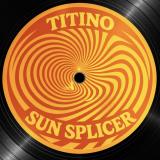
Italy via Atlanta, say hello to Titino and “Sun Splicer”, the latest release on The Comfort. Three separate ideas connect this EP across 4 tracks. It toys with the expectations of its listener — core features morph as tracks progress, stable kick patterns turn to breaks and in reverse, simple stabs progress to melodic junctions. Acid permeates this record, not as a clear motif but a tinged essence. And it’s sincere, both to the setting of these pieces and where they’ll be listened to and what it honors.
“Shblasted” — a back-and-forth groove machine filled with dub sirens and stepped up acid. Clubby introduction meant for sacred dance floors.
“Ouachita” on the A2 is controlled chaos, snares fly around, synth lines seem to want to escape their own confines and it just bursts onto the listener. Then the keys come in, the groove stabilizes, pads become bigger and new life is given.
The B-side is playful. “Sun Splicer” is perhaps most aptly categorized by a now notorious idea of ‘electro house’, and the pure aggressive euphoria this track carries just might be that, but as we all know the Italians do it differently — it’s a heady dark excursion. “Existenz” is all-smiles no matter how menacing its first contact, a hook of a track that reimagines the weirder side of Italian trance — think Interactive Test at its most wonderful. The dusty snares feel like a balancing tool instead of an homage.
- 1: Hurricane Girl
- 2: Just Say No!
- 3: Everybody Talks
- 4: Mountain Sized
- 5: The Great Plains
- 6: English Tea
- 7: Ropeburn
- 8: La
- 9: Daisy Chain Reaction
- 10: Summer Rolls
Im April 2026 bringt Eaves Wilder ihr heiß erwartetes Debütalbum ,Little Miss Sunshine" raus. Die Platte ist ein krasser Entwicklungssprung für die Singer-Songwriterin aus Nord-London, die 2020 mit 16 Jahren mit ihrem selbst aufgenommenen Lockdown-Release ,Won't You Be Happy" zum ersten Mal auf sich aufmerksam gemacht hat. Eaves begann mit der Arbeit an ,Little Miss Sunshine" nach einer Phase des Nachdenkens, in der sie sich fragte, ob sie der Musik in ihrem Kopf letztlich gerecht werden könnte. Wer sich mit dem Album beschäftigt, entdeckt zehn Songs, die sich an den Zyklen der Natur orientieren, um die emotionalen Stimmungen zu erklären und zu feiern, die uns zu Menschen machen. ,Als ich am Boden war", erinnert sich Eaves, die an einer Stelle sogar lacht, als sie sich daran erinnert, wie sie beschloss, die Musik ganz aufzugeben, um in ein Kloster einzutreten: ,Ich wollte einfach nur unmenschlich, gefühllos und unbewegt sein. Wie ein Berg oder ein Baum. Oder der Himmel. Das sind alles Dinge, die einen Zweck haben, aber ich wusste nicht, was mein Zweck war. Und so musste ich es herausfinden, Song für Song." Auf Little Miss Sunshine wird diese Geschichte in spannenden Episoden erzählt, angefangen mit den ersten Sekunden des Albums und der Lead-Single Hurricane Girl, einer sensationellen Synergie aus durchscheinenden Shoegaze-Harmonien und elementaren Rockgitarren, inspiriert durch Dokumentarfilme über Sturmjäger, wobei die Metapher verwendet wird, um ein Licht auf Freunde zu werfen, die gezwungen waren, stürmische Beziehungen zu suchen. ,Ich habe das Gefühl, dass dies mein Pearl-Jam-Song ist", erklärt sie. ,Das erste Mal, als ich Pearl Jam hörte, war ich auf einem riesigen Berg in Wales. In derselben Woche hörte ich auch zum ersten Mal Jagged Little Pill von Alanis Morissette." Von hier aus, bis hin zu seinem schmerzlich bewegenden Requiem an die Kindheit Summer Rolls fungiert jeder Song auf Little Miss Sunshine als leuchtender Koordinatenpunkt in einem Bogen der Selbstfindung. Da ist der hochfliegende Klangrausch Everybody Talks, mit seinem ansteigenden Crescendo aus aufdringlichen Stimmen, der auf beiden Seiten des Atlantiks große Unterstützung im Radio fand. Für Mountain Sized bezog sie sich auf Lily Allens Single The Fear aus dem Jahr 2009 - ,weil da diese eine Frau ist, die ganz beiläufig all die schlimmsten Dinge über sich selbst aufzählt, Dinge, die man sich eigentlich nicht trauen würde zuzugeben". In Eaves' Song wird diese aufkommende Angst jedoch durch einen panoramischen Refrain ausgelöscht, in dem sie die Grenzen ihrer realen Welt durchbricht, um zu verkünden: ,But in my mind/But in my mind/I am taller than the highest mountain sides." In dem schmerzlich melodiösen ,The Great Plains" hinterfragt Eaves ihre frühesten Erinnerungen, in denen sie ihre ältere Schwester Dora vergötterte. ,Sie war so zurückhaltend und wie eine Meerjungfrau", erinnert sich Eaves, ,und ich wurde von meinen Emotionen beherrscht - und je mehr ich versuchte, das nicht zu sein, desto mehr wurde mir klar, dass ich niemals wie sie sein könnte." In dem Song findet Eaves eine Art Selbstakzeptanz, indem sie auf die Natur schaut, um zu erfahren, dass es okay ist, so zu sein, wie sie ist: "As I erupt into a blaze / It's ok the sky will do the same/Let no-one bat an eye when / Every year I'll hibernate till May / Because no-one blames the clouds for rain / So take me as I am, tears down my face." Als die Sessions an Fahrt gewannen, fand Eaves Inspiration in zeitgenössischen Veröffentlichungen. Beispiele dafür waren Wolf Alice (,die einzige Band, die die Balance gefunden hat, die ich immer suche - die Kombination aus schweren Gitarren und hohen, ätherischen Vocals"), Mannequin Pussy (,sie gaben mir etwas von dem, was ich in der Ära von Riot Grrrl vermisst habe, als L7 und Babes In Toyland auf Tour waren") und CMATs ,geradlinig brillantes Songwriting". Weitere Highlights auf einem Album, das von ihnen geprägt ist, sind Daisy Chain Reaction, dessen glitzernder Power-Pop-Glanz einen Text über die Kultur des Wettbewerbs rund um Essstörungen verbirgt, und der unangenehme, mechanisierte Angriff von Just Say No, ein Song, der auf den brutalen Wahrheiten basiert, die Eaves und ihre Freundinnen in ihren Auseinandersetzungen mit missbräuchlichen Männern gesammelt haben. Zwei Jahre lang hat Eaves unermüdlich daran gearbeitet, jeden einzelnen Vers, Refrain, Pre-Chorus und Middle Eight auf Little Miss Sunshine zu verfeinern, bevor sie mit dem Co-Produzenten des Albums, Andy Savours (My Bloody Valentine, The Killers, The Horrors), ins Studio ging. Dies ist ein Album, auf dem jedes einzelne Detail seinen Platz verdient hat und das Zeugnis ablegt von der einzigartigen musikalischen Vision seiner Schöpferin.
- 01: Dancelwerk - Back To Eighties
- 02: Dancelwerk - Breikaut
- 03: Cmos34 - Cem3340
- 04: Cmos34 - Lm13700
- 05: Jorganes - Spirits
- 06: Jorganes - Beds
- 07: Sunday German Flowers - Don’t You Know I’m The Devil (He Said)
- 08: Sunday German Flowers - Amor Sin Gluten
- 09: Nico Hernández - Rdk-Lz 1
- 10: Nico Hernández - Rdk-Lz 2
- 11: Nico Hernández - Rdk-Lz 3
Yearly compilation series RADAR KEROXEN return with its sixth volume of theme-driven releases, continuing to chart the fractured sonic terrain of the Canary Islands’ undergrowth.
After digging through indie, psychedelia, shoegaze, and site-specific drone, Vol. 6 dives headfirst into the after-hours circuitry of the islas afortunadas, assembling a hand-picked selection of underground club mutations from five long-standing operators within the local electronic ecosystem.
If Vol. 5 was shaped by the cavernous resonance of Santa Cruz’s obsolete gasoline tank, Vol. 6 is fuelled by late-night club aesthetics and mid-90s hardware obsession. Opening the record, Dancelwerk — one of the archipelago’s early modular practitioners — delivers tightly wound structures nodding to Warp-era golden agefuturism and southern Tenerife’s rave boom. Cmos34 follow with their first-ever published material, injecting instability into the system through improvised techno rituals built on friction and feedback.
Jorganes drags the narrative deeper into hypnotic territory, stripping club music down to its skeletal pulse and channeling disciplined repetition and late-90s minimalism into austere, trance-inducing momentum. From Gran Canaria, Sunday German Flowers bends the mood toward cinematic dub: heavy low-end pressure, spoken word, and nocturnal atmospheres stitched into slow-burning club noir.
Closing the circle, Nico Hernández pulls the compilation back to volcanic ground with ambient compositions shaped by Lanzarote’s raw geological landscape — basalt echoes, tectonic silence, and island isolation rendered in sound.
As always, the release is housed in a post-tropical collage artwork by Pura Márquez.
Master by Daniel García
Artwork by Pura Marquéz
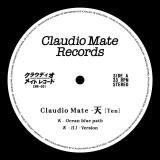
Claudio Mate announces the launch of his new solo imprint, Claudio Mate Records.
As the name suggests, the label serves as a personal platform where Claudio explores his past, present and future works, shaping his sound into a more spiritual and meditative direction.
The imprint will also feature collaborations with friends, artists and creative connections established over the years across the globe, while carrying his typical forward-thinking approach and a distinctive imprint sound trademark.
Over the past two decades, Claudio Mate’s music has received recognition and support within the electronic music scene, from main stage artists while remaining rooted in more underground circles.
Claudio Mate Records marks a new chapter in his artistic journey — a dedicated space where sound becomes introspective, evolving and deeply connected to emotion.
--------------------------------------------------------------------------------------------------------------
天 (Ten) CMR - 001
The Japanese kanji 天 (Ten) means “heaven”, “sky”, and the natural order of the universe — something vast, unseen, and beyond human control.
For the Japanese, 天 is more than a symbol: it embodies the connection between humans and the cosmos, the divine order that guides life, and the higher realms where sacred forces reside. In Japanese Buddhism, it refers to celestial realms and higher states of existence; in Shinto, it evokes the sacred heavens of the kami. But TEN is not about reaching heaven.
It's a deep, dub techno journey through shadow and space — obscure, hypnotic, and timeless. Sound that drifts between worlds, suspended in something greater than the sky itself.
The EP also features Atarashii Hi (“a new day”), a classic deep Detroit techno cut in true Claudio Mate style.
- A1: Save The Children (Prod By Statik Selektah)
- A2: Greenbax Introlude (Prod By Lee Bannon)
- A3: Paper Trail$ (Prod. By Dj Premier)
- A4: Piece Of Mind (Prod By Freddie Joachim)
- B1: Big Dusty (Prod By Kirk Knight)
- B2: Hazeus View (Prod. By Kirk Knight)
- B3: Like Me Feat. Bj The Chicago Kid (Prod. By J Dilla & The Roots)
- B4: Belly Of The Beast Feat. Chronixx (Prod By Hit Boy)
- C1: No. 99 (Prod. By Statik Selektah)
- C2: Christ Conscious (Prod. By Basquiat)
- C3: On And On Feat. Maverick Sabre & Dyemond Lewis (Prod By Freddie Joachim)
- C4: Escape 120 Feat. Raury (Prod. By Chuck Strangers)
- D1: Black Beetles (Prod By Chuck Strangers)
- D2: O.c.b. (Prod. By Sam I Am W/ Instrumentation By The Soul
- D3: Curry Chicken (Prod. By Statik Selektah)
Mit gerade mal 17 Jahren releaste Joey Bada$$ sein erstes Mixtape "1999" welches den Sound der goldenen Hiphop-Ära der 90er Jahre adaptierte, so authentisch und selbstverständlich als sei er mit dabei gewesen.
Die Kritiker überschlugen sich in ihren begeisterten Rezensionen und es folgten Features mit Asap Rocky, Kendrick Lamar, Mac Miller & Action Bronson. Der junge Brooklynite ist schon längst mehr als nur ein Geheimtipp. Die ersten audiovisuellen Kostproben gab es in den vergangenen Monaten in Form von "Big Dusty" und "Christ Conscious". Am 20. Januar erscheint nun sein Debütalbum, das den Titel "B4.DA.A$$" trägt.
- 1: O Nevado (Feat. Alexandre Andrés)
- 2: O Abraço Da Serpente (Feat. Ilessi, Flavia Huarachi, Anders Skibsted)
- 3: A Cor Da Romã (Feat. Moa Edmunds Guevara)
- 4: Vera Cruz (Feat. Mané Fernandes, Albert Karch)
- 5: Misteriosa Buenos Aires
- 6: De Regreso (Feat. Flavia Huarachi)
- 7: O Ouro De Marawa (Feat. Gus Orihuela & André Maria)
- 8: O Garimpeiro E O Curumim (Feat. Ilessi, Flavia Huarachi, Anders Skibsted)
- 9: Entre Ríos (Feat. Luciana Insfran)
- 10: El Pajarillo Y La Mariposa (Feat. Flor Bobadilla, Cecilia Pahl, Alexandre Andrés)
- 11: Patagônia (Feat. Moa Edmunds Guevara, Pancho Rangonese, Albert Karch, Stanislav Zhukovsky)
- 12: Os Muitos Nomes De Salkantay
- 13: A Safira De Igarassu (Feat. João Machala)
- 14: Isla Del Sol (Feat. Júlio Rangel, Albert Karch)
- 15: Sentido De Su Ausencia (Feat. Iamana Mari, Gabriel Milliet)
- 16: Sequóias (Feat. Gustavo Assis Brasil, Albert Karch)
Caçador de Horizontes is the fourth and most ambitious album by Brazilian composer and songwriter Raphael Gimenes. Conceived as an expansive double album, it brings together voice and acoustic guitar with richly arranged strings, brass and a wide palette of percussion, engaging with the tradition of Brazilian songwriting while evoking the harmonic sensibility of artists such as Milton Nascimento, alongside elements of modern classical music.
Inspired by travels across the American continent, the album moves between intimate moments and large-scale instrumental passages, creating a cinematic and emotionally resonant atmosphere. Produced by Lucas Delacroix, Alexandre Andrés and Gimenes himself, it features more than 30 musicians from different countries and was supported by the Danish Arts Foundation (Statens Kunstfond).
Forever Records
Music springs eternal. Recognising the enduring power of timeless albums to guide us through life, Forever Records is a reissue series dedicated to rediscovering lost musical treasures from across the spectrum of head-feeding, heart-rending electronic music.
Established by Rush Hour co-founder Christiaan Macdonald and Delsin founder Marsel van der Wielen, Forever Records places heartfelt faith in a carefully curated sequence of seminal, largely forgotten records from disparate eras, scenes and spaces within electronic music history. Tipped towards the mellow and introspective, these are albums that stop time when the needle hits the groove, stirring only when it's time to flip over before you sink back into the experience. That's what albums were always meant to be about, back then, right now, always and forever.
The Release:
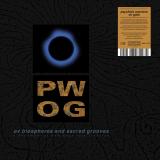
Dancing on the wildest edge of the 90s outsider techno zeitgeist while proudly independent of any so-called scene, Ov Biospheres And Sacred Grooves: A Document Ov New Edge Folk Classics is both of its time and out of time. Rooted in the experiments of electronic music pioneers, industrial culture and ethnic music from around the globe while responding to the house and techno explosion, Robbert Heynen, Reinier Brekelmans, Reinoud van den Broek and Tim Freeman's freewheeling masterpiece takes in lush electronica and murky abstraction on its singular voyage through parts unknown.
Forever Records presents an extensive reissue edition of the first 'fully released' Psychick Warriors Ov Gaia album. Originally released in 1992, this is the first time the full, previously CD-only, version of Ov Biospheres and Sacred Grooves will be pressed on vinyl. The original LP and CD artwork from the various editions released in the early 90s has been combined and designed by the band, and the audio has been remastered with their full approval. As well as a new LP edition of the album, there will also be a uniquely numbered, limited edition available housed in a gatefold sleeve that comes with a bonus 10" featuring two previously unreleased tracks.
Press response to Ov Biospheres and Sacred Grooves - A Document Ov New Edge Folk Classics:
“That’s Magick! The Psychick Warriors Ov Gaia are Holland’s best kept secret.”
Sherman, NME, UK 1992
“PWOG’s debut LP is an organic invocation rite — the soundtrack to a new world coming to life, an odyssey. Cross-cultural rhythms, ambiences and environmental samples segue into one another like a fluid relay, and unlike the majority of dance records, it never settles into a routine. It’s always evolving, always unpredictable, an indefinitely religious experience.”
John Selzer, Melody Maker, UK 1992.
"Grown men, who snorted their first ecstasy to this record, stammered with tears in their eyes about divine experiences and the cosmos, man."
Peter Erik Hillenbach, Marabo Magazine, Germany 1992.
Sacred Grooves’ introduces tribal dance music for the mind, body music leaning on the avant garde. Its ripples of sound drift through tranced out ritualistic beats into ambience and serenity resembling something akin to The Orb meeting Klaus Schulze at a brain tuning session.
Sherman, NME, UK 1992
"There's still dance for a moment, in the opening track "The Challenge," then Psychick Warriors roam the earth, where African drummers, tropical sounds, and science-fiction chords have found their place in a spiralling interplay of rhythms and sounds. A captivating, almost magical ritual." Corné Evers, Oor Magazine, Netherlands 1992.
"It's truly astonishing what these Dutchmen have come up with for their first LP. Their roots might explain the enigma, for Psychick Warriors are more in the tradition of Psychic TV than in the desolate temples of techno-house fetishists, to which they are wrongly relegated. Here, chromosomes dance, not instincts." CMK, Tip, Germany 1992.
"The transcendental essence of this album is spread throughout, with musical gravitations emerging unexpectedly from sonic experiments that are sometimes primitive, sometimes
futuristic in intention… But there is always an aura of cosmic magic that constantly puts all the parts involved in conflict and which, upon closer analysis, ends up being the main reason for the final result." Blitz Magazine, Portugal 1992.
Forever Records
Music springs eternal. Recognising the enduring power of timeless albums to guide us through life, Forever Records is a reissue series dedicated to rediscovering lost musical treasures from across the spectrum of head-feeding, heart-rending electronic music.
Established by Rush Hour co-founder Christiaan Macdonald and Delsin founder Marsel van der Wielen, Forever Records places heartfelt faith in a carefully curated sequence of seminal, largely forgotten records from disparate eras, scenes and spaces within electronic music history. Tipped towards the mellow and introspective, these are albums that stop time when the needle hits the groove, stirring only when it's time to flip over before you sink back into the experience. That's what albums were always meant to be about, back then, right now, always and forever.
The Release:
Dancing on the wildest edge of the 90s outsider techno zeitgeist while proudly independent of any so-called scene, Ov Biospheres And Sacred Grooves: A Document Ov New Edge Folk Classics is both of its time and out of time. Rooted in the experiments of electronic music pioneers, industrial culture and ethnic music from around the globe while responding to the house and techno explosion, Robbert Heynen, Reinier Brekelmans, Reinoud van den Broek and Tim Freeman's freewheeling masterpiece takes in lush electronica and murky abstraction on its singular voyage through parts unknown.
Forever Records presents an extensive reissue edition of the first 'fully released' Psychick Warriors Ov Gaia album. Originally released in 1992, this is the first time the full, previously CD-only, version of Ov Biospheres and Sacred Grooves will be pressed on vinyl. The original LP and CD artwork from the various editions released in the early 90s has been combined and designed by the band, and the audio has been remastered with their full approval. As well as a new LP edition of the album, there will also be a uniquely numbered, limited edition available housed in a gatefold sleeve that comes with a bonus 10" featuring two previously unreleased tracks.
Press response to Ov Biospheres and Sacred Grooves - A Document Ov New Edge Folk Classics:
“That’s Magick! The Psychick Warriors Ov Gaia are Holland’s best kept secret.”
Sherman, NME, UK 1992
“PWOG’s debut LP is an organic invocation rite — the soundtrack to a new world coming to life, an odyssey. Cross-cultural rhythms, ambiences and environmental samples segue into one another like a fluid relay, and unlike the majority of dance records, it never settles into a routine. It’s always evolving, always unpredictable, an indefinitely religious experience.”
John Selzer, Melody Maker, UK 1992.
"Grown men, who snorted their first ecstasy to this record, stammered with tears in their eyes about divine experiences and the cosmos, man."
Peter Erik Hillenbach, Marabo Magazine, Germany 1992.
Sacred Grooves’ introduces tribal dance music for the mind, body music leaning on the avant garde. Its ripples of sound drift through tranced out ritualistic beats into ambience and serenity resembling something akin to The Orb meeting Klaus Schulze at a brain tuning session.
Sherman, NME, UK 1992
"There's still dance for a moment, in the opening track "The Challenge," then Psychick Warriors roam the earth, where African drummers, tropical sounds, and science-fiction chords have found their place in a spiralling interplay of rhythms and sounds. A captivating, almost magical ritual." Corné Evers, Oor Magazine, Netherlands 1992.
"It's truly astonishing what these Dutchmen have come up with for their first LP. Their roots might explain the enigma, for Psychick Warriors are more in the tradition of Psychic TV than in the desolate temples of techno-house fetishists, to which they are wrongly relegated. Here, chromosomes dance, not instincts." CMK, Tip, Germany 1992.
"The transcendental essence of this album is spread throughout, with musical gravitations emerging unexpectedly from sonic experiments that are sometimes primitive, sometimes
futuristic in intention… But there is always an aura of cosmic magic that constantly puts all the parts involved in conflict and which, upon closer analysis, ends up being the main reason for the final result." Blitz Magazine, Portugal 1992.
Pennyroyal – PYRY05
Tearoom Vibes Vol. 2 (Various Artists)
Pennyroyal returns with its fifth vinyl release, PYRY05, presenting Tearoom Vibes Vol. 2. A Various Artists compilation focused on electro, techno and cosmic-leaning club tracks, built for late-night and after-hours settings.
Featuring Mama (Exarde, Griffe), Bruno (22 Recordings), rising Egyptian artist Saharty, Thomas (Rebvs, debut release) and Gianluca Pellerano (CMDRPX). A tight and functional VA with a clear underground attitude.
"Voigt Legacy - Megamix 1" is the promising title of a kind of "Best-Of Bassdrum-Hits" from the far-reaching Voigt universe. It is a compact megamix of seven selected tracks from some very rare live sets which have never been released before or never on vinyl. The mix features all-time classics such as "Fackeln Im Sturm" and "W.I.R.", as well as the long-out-of-print super-smasher "Die Schallplatte" and gems from the Protest, catalogue such as "Du Musst Nichts Sagen" and "Sound & Vision". This multifaceted collection of danceable tracks and looped horses is presented in a deluxe cover with glossy colours.
The art bridge is a natural choice because where there's a loop, there's a way. An abstract loop collage measuring 600 cm x 150 cm was created under the same title, "Voigt Legacy – Megamix 1", corresponding to the music and referencing the graphic symbolism of the titles, logos and cover artwork.
Combo Efectivo was formed in November 2024 in Bogota in a studio in the Teusaquillo district, at the invitation of Jazztropicante. It brings together an all-star cast from Bogota's neotropical movement and three iconic brass players from the current French jazz scene.
The chemistry was immediate and the energy palpable: a sound that was both playful and demanding, exuding groove, rich material rooted in contemporary jazz structures, and breathing the spirit of brass bands and the splendor of popular expression from the Colombian Caribbean.
A two-track EP was produced from this unique studio session, recorded and mixed at Mambo Negro Records, with the expertise of Daniel Michel. Mastered in Paris at Loom, this first 45 rpm single was released in February 2026 with The Pusher, officially marking the birth of the Casa Maguey Records label, which promotes the catalog resulting from Jazztropicante's encounters.
On the French side, three musicians who are making their mark on their generation: Stéphane Montigny on trombone, Antoine Berjeaut on trumpet, and saxophonist Léon Phal, the spearhead of a new generation of jazzmen. The Colombians are a cocktail of musicians from the most exciting groups on the current scene: Karen Nerak on vocals, rap, gaita, and percussion, Ruben Aragon on keyboards, Pelango on bass, and Kike Narvaez on drums.
Combo Efectivo magnifies the alchemy between the finesse of European jazz and the power of Colombian rhythms. A tropical trance fueled by improvisation, where the contemporary jazz scene and neo-tropicality meet in a spirit of openness and exploration.
For the 10th edition of Cmdrpx, we're thrilled to welcome back Yu to the label for a second release. This time, he takes us on a darker, more intense journey a bold contrast to his previous, more colorful EP. Expect hypnotic rhythms, acid driven grooves, and floor shaking energy in every track a truly captivating package designed to ignite any dancefloor. Huge thanks to the amazing DJs already supporting this release. Get ready to experience it loud in clubs around the world. Turn it up and enjoy the ride!
To submit or to surrender? Robert Johnson resident Oskar Offermann doesn’t have the answers, and that’s kind of the point. Things change: one moment you’re touring the globe as a recognizable face of one of the greatest clubs in the world, the next you’ve started a new life as a teacher. How do you handle that shift? On this record, Offermann doesn’t offer solutions so much as trace his own way through it, reflecting the whole process in his music and creative work.
Whatever the story, whatever the case, Oskar Offermann can still produce some of the most emotive, bleepy, strange dance music out there and this 12 inch is the proof. Sonically and conceptually it leans into that precise, melancholic German school: at points drawing from 80s wave and experimental music, then flirting with trancey motifs and closing in divinely crafted breakbeat. In just four tracks it packs in a surprising amount of functional range, exactly what you’d expect from one of RJ’s longest-standing residents. The A- and B-sides mirror each other: they open at full intensity, tempos pushed well past the 130 BPM mark, easy to imagine ripping through a peak-time floor – and still both sides land on something far more personal and reflective.
Even inside a framework of high-intensity club tunes, Oskar’s character shines through loud and proud. Think the slightly disjarring yet melodically captivating winds in the middle of the B1 trance induced number “Accepting”, or the masterfully paced build of opener “Planet Interface”. The same goes for A2 “Televise Improvise” and B2 “Sei mal nur lieb”: on paper they should feel like breathers next to the two behemoths, but they don’t. Offermann crams so much substance and personality into them that they become quietly dangerous. There’s that magical mix of squelchy acid, rough low end and naturalistic melodies on B2, and the relentless emotional drive of A2 “Televise Improvise”. Oskar is really, really good at making dance music irresistible.
Character, skill and honesty in one record, meant for the attentive listener and the brave DJ. A rare combination nowadays, get it fast!
2026 Repress
The ever enigmatic Deepchord makes a most welcome return to Soma with this, the first single to be taken from this latest full length, Ultraviolet Music. Three beautiful slices have been cut from the album to form this truly outstanding single and shows Deepchord return to a straight up mix of heady, cerebral dub techno infused with more solid rhythms.
- A1: Chaos Cosmos (01:25)
- A2: Land Of The Sun (03 56)
- A3: Evolution (02 18)
- A4: Il Canto Della Luce (04 31)
- A5: Chandranandan (10 22)
- B1: Luna Mia Domina (02 48)
- B2: Pizzica Lunatica/Votata Cosmica (04 56)
- B3: The Prophecy (02 52)
- B4: Cosmic Melodies (07 32)
- C1: Cosa Dicono Gli Uccelli? Parte I (10 58)
- D1: Cosa Dicono Gli Uccelli? Parte Ii (12 28)
- D2: Epilogue (03 00)
Color Vinyl[31,51 €]
"The Land of the Sun, the Moon and Cosmic Melodies" is a conceptual Opera of III movements, inspired by a cosmogony that features the planets of the sun and the moon. These two characters guides us on a journey of light and shadow, rising and setting in a cycle of unexplored musical territories.
The Collective Move presents its debut album with a broad palette of sounds, ranging from jazz to opera, from southern Italian folk music to northern Indian classical music, orchestrating a 60-minute "sonic narration" that ends with the fable "What do the birds tell?".
The Collective Move is an international group of young musicians formed in the Amsterdam Conservatory in 2022. The Collective's vision is to unite diverse artistic expressions and musical genres, inviting diverse artists and musicians from diverse cultures and countries to collaborate in flexible and interdisciplinary formations.
Efde's first release on Voyage Direct. Here he gets a chance to showcase his trademark sound on an expansive, four-track E.P for the Amsterdam-based label.
Some may be familiar with Efde's work through his occasional 12' singles for Nordik Netrecords and Soweso, where he distilled a variety of influences - think dreamy, ultra-deep house, the Chicago bump of Chez Damier, and the sci-fi pulse of Detroit - into tracks that had a distinctive vibe all of their own.
My Bleep' is arguably his most stunning production yet: a spine-tingling re-imagining of Detroit futurism built around sparkling, intertwined melody lines, dusty drum machine rhythms, hissing hi-hats and throbbing, analogue bass. While a thing of rare beauty, it also comes blessed with moments of sweaty percussive intensity, with stacked snare hits that increase in energy as the track progresses. The original's inherent beauty is emphasized further on the accompanying Ambient Mix', which recalls the glory days of Pete Namlook's FAX Records in the early 1990s.
There's more far-sighted dancefloor futurism to be found on the flip, where the spacey chord progressions, sprightly synth-bass and restless rhythms of Just Did It' capture the spirit of both the Motor City, and the classic UK techno-funk of Dave Angel and Luke Slater. A fine EP is completed by the ultra-deep shuffle of CMP135', which successfully draws on Efde's love of bumpin' U.S deep house whilst retaining the intergalactic sounds that are such a key part of the Dutchman's club-ready productions.
dungeon acid review 25-09-03 by Joakim Cosmo A acid house style EP by swedish acid techno pioneer on swedens oldest underground label? Making a acid house EP in 2025 that makes a difference is a challenging task but this one just nails it. Here you see a softer and more musical side of Dungeon Acid in the shape of 5 dark yet hopeful Acid House tracks. Despite the classic form and ingredients it somehow avoids feeling retro but I guess this is what happens when you let a true grand master do it combined with a selector and label boss beyond the ordinary. It's like a paralell universe version of what Acid House could have become, and its a beautiful vision. A1-101-303 starts off with a dreamy, moody dubby and slightly romantic track that is just utterly beautiful in all its simplicity. The elegance and easy touch strikes me instantly. Nails the essence of the genre. One more like this and im buying it. The way A2-Unlock rewind builds up gives me goosebumps. So hypnotic and dark and experimental and the way it progresses to the ravey chord-break. The sounds and effects and details feel so alive and on the fly. In the record store this is where id already go "ok, im having this one" B1-Lonely Acid boy is yet another simple yet super atmospheric track. The contrasts between the rough robotic parts and the jazzy live solos ontop just gets to me. The roughness in the mix, that second beat with the hi-hats and extra bass, the fact that its so loud and sudden, is just great. And then we get to B2-Shnukki and all of a sudden, a romantic melodious electro track with a asian touch and acid bassline, that somehow goes well together with the other tracks. This one isnt my favourite or what I would buy the record for, but it would probably be the one I discover years later. Typical Borft Records to think that far ahead. The EP ends with B3-Chiliflex BB come on and this one starts with more late 80's ravey chords but the further you get into the track the more disharmonic, tweaky and punky it becomes. Things dont really fit together yet they do. To sum it up, these tracks are raw, funky, gutsy, streety, visionary, full of contrast and a bit challenging, just like acid house should be, but often isnt. I think Dungeon Acid and Borft Records nails it here. I'd buy doubles of this.
CMDRPX09 - VARIOUS ARTISTS On side A, three Ligurian artists bring their dark style: A1 @gianluca.pellerano Techno/Postpunk/ebm. A2 @francescolazzatifrnk Techno/Industry/ebm and track A3 @f_phonosnds New Wave featuring scratchy synths and '80s sounds. On side B, two guys from @vertigini_events , cmdrpx residents, bring two dancefloor-ready but very mental tracks: B1 @gela__________ with his Techno/Electro style, and @mathi_____v with his square-wave synths.
Pearl River Sound - Selected Works 17-24 is a unique sonic archive of Roberto Semeraro, known as Pearl River Sound, one of the most eclectic experimenters in the Italian electronic scene. This collection compiles years of research and sonic exploration, featuring previously unreleased tracks that have never been pressed on vinyl. Moving fluidly between idm textures, deconstructed techno, glitch, breakbeat rhythms, and ambient incursions, each track represents a moment in Pearl River Sound's artistic journey between 2017 and 2024. This release is part of LOSTINLAYOUT GALLERY's participation in the exhibition at EXP - Palazzo delle Esposizioni in Rome, running from April 26, 2025, as part of the group show "THE ART OF TOMORROW. TODAY #1." The exhibition features works by four urban artists: LUCA FONT, JOYS, STEN & LEX, and V3RBO. Each print is randomly paired with a 10x15 cm postcard insert showcasing an artwork by one of the four visual artists.
- A1: Herbert - Got To Be Movin' (On The Dancefloor)
- A2: Chris Nazuka - Somewhere Between Distance And The Impossible
- B1: Blaze - Lovelee Dae (Beloved Vocal Rmx)
- B2: Gemini - In My Head (Freaks Move This Way Vocal Dubby)
- C1: Seven Davis Jr. - One (Live Edit)
- C2: Red Rack'em - Wonky Bassline Disco Banger
- D1: Eli Escobar - Happiness Pt. 2
- D2: Kenny Hawkes & Louise Carver - Play The Game (Space Children Love Mix)
To mark three decades of Classic, this special edition double vinyl comes housed in a raw reverse board sleeve, calling back to the very first ‘Season’s’ release on the label. The inner sleeves feature stunning orange and pink GMUND card stock, complete with embossed detailing—a tactile nod to Classic’s design-led legacy and attention to craft.
Volume 1 of the 3-part compilation series dives into Classic’s most cherished moments—spanning both foundational tracks from the label’s early years and key highlights from its post-2011 rebirth.
Record One celebrates some of the first outings of Classic's original era.
It opens with Matthew Herbert’s sought-after 1996 cut ‘Got To Be Movin’—a raw, Chicago-inspired groover that captures the sound of Classic’s roots.
Also featured is the monumental ‘Somewhere Between Distance and the Impossible’ by Chris Nazuka (of Rednail Kidz with Derrick Carter), a 1997 masterpiece steeped in atmosphere and widely regarded as one of the label's most transcendental releases.
Flip to Side B for Blaze’s legendary ‘Lovelee Dae’, remixed into a club ready, ethereal dreamscape by Jon Marsh of The Beloved.
To finish we have Gemini’s hypnotic ‘In My Head’, transformed by prolific remixers on Classic - Freaks (Luke Solomon & Justin Harris) into a dubbed-out vocal trip that oozes character.
Record Two picks up the story with Classic’s reawakening in 2011.
Seven Davis Jr’s ‘The One’ (Live Edit) was the track that caught Luke Solomon’s ear, paving the way for his Friends EP and long-standing connection with the label.
Red Rack’em’s infectious and eccentric ‘Wonky Bassline Disco Banger’ found its perfect home on Classic in 2016, quickly becoming one of the most talked-about records of the year.
Then there’s Eli Escobar’s ‘Happiness Pt. 2’—a rich, emotive standout from his Classic album work, showcasing his skill at blending deep grooves with raw soul.
Rounding out the release is the iconic ‘Play the Game’ by Kenny Hawkes & Louise Carver. A pillar of UK house history, this essential track was reissued in 2019 with a powerful remix from his best buddy’s The Space Children (Luke Solomon, Jonny Rock & Leon Oakey), honouring Kenny’s lasting influence.
- A1: Isolée - Beau Mot Plage (Freeform Reform Parts I & Ii)
- A2: Greenskeepers - Bang In Your Face?
- B1: Iz & Diz - Mouth (Brad Pepe Remix For Friends)
- B2: Markus Nikolai - Bushes (The First Re-Creation) (Version 1.2)
- C1: Folamour - Devoted To U
- C2: Crazy P - One True Light
- D1: Girls Of The Internet - When U Go
- D2: Sophie Lloyd Feat. Dames Brown - Calling Out
Following Volume 1, this second instalment of Classic’s 30th Anniversary series dives even deeper into the label’s visionary, genre-bending catalogue—balancing pioneering remixes, cult favourites, and future classics.
Once again, this 2x12” release is beautifully presented in a raw reverse board sleeve, a tactile nod to Classic’s earliest releases. Inside, are deep teal and green GMUND card stock inner sleeves with embossed detailing elevate the package into a collector’s item worthy of the music it holds.
Record One opens with one of the most revered remixes in house history. Isolee’s ‘Beau Mot Plage’ (Freeform Reform Parts 1 & 2), originally licensed from Germany’s Playhouse and lovingly reworked by Freeform Five’s Anu Pillai with a live ensemble. It’s a sprawling, euphoric journey that helped define Classic’s international reach and is still widely regarded as one of the greatest house records ever pressed.
Up next is Greenskeepers’ off-kilter banger ‘Bang in Your Face?’, showcasing the quirky, ‘G-swing’ sound for which James Curd and his crew became known for during their long-standing relationship with the label.
On the flip, Pépé Bradock’s jaw-dropping rework of Iz & Diz’s ‘Mouth’ takes center stage—a remix composed entirely from human sounds, equal parts sensual and surreal. Universally praised, it’s a masterclass in sonic innovation and remains one of the most acclaimed house remixes of all time.
The side closes with Markus Nikolai’s beloved ‘Bushes’, The First Re-Creation (Version 1.2) by Classic co founder Derrick Carter—a distinctive and maximalist edit that draws out the Latin horns, strings, and quirky vocals, turning a cult hit into a distinctly ‘Classic’ anthem.
Record Two captures Classic’s renewed energy in the 2010s.
Folamour’s ‘Devoted To U’ from his Umami LP is a 10-minute odyssey in groove—warm, progressive, and cinematic, with soaring piano lines and narrative richness.
Then comes Crazy P’s ‘One True Light’, shimmering with spacey textures, cosmic energy, and the deep, effortless groove the band has perfected over decades.
On Side D, we have Girls of the Internet’s lush and emotionally rich ‘When U Go’, blending soulful vocals with clean, spacious production that balances melancholy with movement.
Closing out Volume 2 is Sophie Lloyd’s now iconic ‘Calling Out’, featuring the unstoppable vocal force of Dames Brown. A modern gospel-disco-house anthem, the track glows with raw energy, live instrumentation, and spiritual fire—cementing its place as one of Classic’s defining moments of the last decade.
d B2. Markus Nikolai - Bushes (Derrick Carter's First Re-Creation) Version 1.2
CMDRPX presents their first LP. CMDRPX008 LP
Side A features Pahase and Cruz with their style that represents darkwave techno worldwide.
Side B features Alfalfa and Ivan & Stella with their refined melodies and sounds.
Side C and D feature tracks by five Genoa-based artists, residents of Bonfim club and CMDRPX.
A disco-funk venture laced with balearic pop as nostalgic as it is buoyant, Dijon-based outfit FLAUR land their inaugural EP on Cosmocities Records. Comprised of three original songs shifting gears between electrifying grooves and washed-out downtempo, plus three remixes courtesy of Art of Tones, Gaettson and Faze Action, ‘Hold On’ speaks the language of lively waves and sun-streaked coasts. By turns explosive and contemplative, the duo’s vision covers a wide span of influences and styles, fusing Californian P-funk with a touch of Supertramp-esque disco and nuances of alternative pop lined with silky funk in the style of acclaimed Versailles band, Phoenix.
Full with suave Wurlitzer piano chords and ultra-syncopated slap bass, the lead-track ‘Hold On’ is an ode to 70s disco pop with its satiny textures, solar-powered melody and a swing bound to cause ravage on the dance floor. The perfect mix of luxuriant disco, vibrant boogie house and supra-sensual cosmic escapology. Even more elating, the layered funk of ’Now’ takes us into a choppy swirl of unshackled pizzicatos, iridescent envelopes and epic vocal flights. Recorded live at Mastoid Studio in Paris, ‘On My Mind’ trades the hi-velocity disco of the first two cuts for a poignant, introspective movement, revolving around the bewitching voice of Florian, a piano and riffs draped in melancholic reverbs. A sonic journey round the confines of soulful dream pop and further intimate songwriting.
In the hands of another rising Dijon-based artist, Gaettson, ‘On My Mind’ morphs into a dance floor-oriented missile, mixing a highly volatile strain of corrosive IDM, sharp breaks and nervy vocal samples. Remixing ‘Hold On’, South of France producer Art of Tones takes us on a proper cosmic trip, laying further emphasis on the original's funky impact through sun-drenched loops a la Alan Braxe and Fred Falke, and a buildup tailored for extended seaside afters; feet buried deep in the sand, head up in the clouds. UK groove legends Simon and Robin Lee, alias Faze Action, round off the package with a chiselled revamp of ’Now’. Slightly accelerated and built for the club, this remix treats us to a pure moment of dance-ready bliss, packed with sinuous rhythms, dynamic bass and fevered percussions.
2026 Repress
Bogdan Ra is based in the musical hotbed of Lisbon and his excellent What Is A DJ? EP takes its inspiration from the late 80s acid house and Italo, displaying a real mix of vintage charm and contemporary relevance that will strike all the right notes on the dancefloor. From the snappy title cut to the electro rhythms of 'Arroios' via the funky disco rhythms of 'Tonic Glue' and feel good factor of closer 'That's All', this is quality production that will more than stand the test of time
CMDRPX 011 LP We present our second LP with new artwork and cover art.
An LP featuring the best artists on the scene, combining various styles and musical genres.
Enjoy this super release !!!
Australian producer Inkswel is back on the Cosmocities label in France with more of his superbly soulful sounds, this time with none other than Chicago legend Robert Owens. The lush 'Space Love' is a playful deep house jam with the sort of cosmic synths that recall early Fingers Inc and Owens's smoky tones only heighten that feeling. Steve Spacek provides a mix that rides on broken beats with elastic bass but just as much cosmic energy and a Fluterumental gets all loose-limbed and seductive. On the flip side are two Yoruba Soul mixes that bring extra rich soul vibes and shimmering pad work. A classy and timeless EP for sure.
Cosmological returns with the second chapter, 4 tracks for the dancefloor different from each other, with raw drums and acid electro synths that lup and evolve into exuberant but at the same time mysterious melodies, with kicks and bass lines that go from progressive techno to house with a side dish of sharp vocals.
We are very pleased to present you the new cmdrpx project.
CMDRPX INDUSTRY 001 Gianluca Pellerano owner and founder of the label presents his EP.
Rapax Planet EP fully reflects the techno/electro style with dark sounds.
All the tracks were recorded live with MPC One and Alesis SR 18, with the addition of spacey voices.
In the track B3 in collaboration with Equinox with the addition of vocal and dark synth.
Die Außenmaße des UDG Ultimate Digi Trolley To Go entsprechen den aktuellen Vorschriften der Fluggesellschaften für Handgepäck, und aufgrund der Inline Skate Rollen, des zweifach verstellbaren Griffs sowie der soliden Verarbeitung sind auch die langen Fußmärsche durch den Flughafen kein Problem.
Geboten werden ein großes Hauptfach, ein entfernbarer Trenner mit einer Organiser Section für ein Audio Interface und Kopfhörer. Eine gefütterte Laptop-Hülle, passend für ein 15" MacBook Pro, schützt den Computer. Zwei Außentaschen und eine Mesh-Tasche innen bieten Platz für Zubehör und Dokumente.
Spezifikationen
* Gefüttertes Hauptfach mit Platz für 15" Laptop und Midi Controller (z. B. Vestax VCI 100)
* Verstellbarer Trenner mit Organizer Panel für Audio Interface und Kopfhörer
* Zwei Außentaschen und eine Mesh-Innetasche für Zubehör
* Ausziehbarer 2-Stufen-Griff
* Abnehmbare ergonomische Schulterriemen
* Integriertes Kombinations-Schloss
Maße (W x H x T):
Außen
cm: 35,5 x 52 x 29
inch: 14 x 20.5 x 11.4
Innen
cm: 31 x 39 x 19
inch: 12.2 x 15.4 x 7.5
Gewicht:
kg: 3,75
lbs: 8.3
The Comfort’s sixth release comes from the Italian producer Cesare Muraca, aptly titled Calabrian Flow.
Spanning four tracks, the record maintains a fundamental structure and attitude towards the dancefloor: dynamic, immersive, and universally compelling. But as always, the devil is in the details. From the A-side to the B-side, these tracks traverse moods and emotional nuance with elegance, unfolding like a well-told story.
The title track, Calabrian Flow, is a hypnotic interplay of bleeps and enchanting melodies, walking the fine line between dramatic ambiguity and raw force. Cosmic Odyssey, on the other hand, carries a sense of urgency, shrouded in shadowy gloom yet punctuated by flickers of light—a delicate interplay of tension and fleeting luminescence.
On the B-side, the record embraces pure release. The cathartic and expressive energy of Dynamic Dance offers both freedom and propulsion, while Working balances maximalism on a blade’s edge. Cesare utilizes choral chants that reverse and morph, synthesizers that pulse like distant signals, vortex-like low-ends, and an extremely tight rhythm. The result stuns and pulls—lingering long after the kick fades out.
On side A of cmdrpx07 we find 3 of the best artists on the scene with their unique and unmistakable style.
On side B three young Italian artists already known for their productions released on vinyl.
Kommuna is celebrating its 10th year of activity with a special dancefloor-focused record. The name Dysto Disco reflects the essence of the music presented in this EP and the glimmer of hope that music provides during these dystopian times.
Fabricio’s Collateral Effect is a feel-good dancefloor groover with driving basslines and addictive vocals, guaranteed to get the crowd moving. Charleze offers the elegant Rage Power, a track that explores the deeper shades of house—perfect for setting the tone of a set.
The B-side carries a unique French touch, with talented producers Wooka and Mooglee bringing the goods. Wooka’s Tirty Dalk is packed with raw energy and unexpected twists, while Mooglee closes the EP with Things I Love, an ode to positivity and joy. As the vocals suggest, "We’re just representing peace and love, getting together, and let’s all have fun!"
Limited vinyl label. Based in Barcelona, curated by CMYK & pekkuliar.
We, at UDG have further fined-tuned already a great design concept of our flight case into one specially for the most discerning DJ/producer. Constructed from aluminum thus providing an extremely stable structure with lighter weight compared to traditional flight cases. The inner sides are protected with pick & pluck foam that consists of two separate layers, each allowing user to create individualized adapted compartments. The pick & pluck foam allow you to pluck out any desired shape you require for various-sized DJ-controllers and providing the additional option of creating another slot underneath the controller for laptop or cable storage. This pick & pluck foam creating an easy, do-it-yourself customized system of case interiors.
The UDG Ultimate Pick Foam Flight Cases are designed to keep your gear protected from accidental damage when you transport it to and from gigs. They’re compact and lightweight yet tough enough to keep your gear safe.
EAN 8718969212694
Color Black
Weight 4,55 kg / 10.01 lbs
Outer Dimensions (W x H x D) 49 x 42.3 x 21 cm | 19.3 x 16.6 x 8.3 inch
Inner Dimensions (W x H x D) 48 x 41.3 x 20 cm | 18.9 x 16.2 x 7.9 inch
Material Aluminum
Protection Corrosion resistant aluminium profiles with strong rounded corners
Fully-lined with high density foam protective padding & foam on lid
Two side strong butterfly lock & solid metal hinges
Rubber feet at the bottom for support in standing
Extra's Lighter weight than traditional flight cases
Black Diamond finishing surface
Ergonomic & sturdy carry handle
Pick & pluck foam with two separate layers
Replacement pick & pluck foam is available to purchase
Rear cable access hole with cover
Fits Technics SL-1200MK7, SL-1200MK6, SL-1200 MK5, SL-1200 MK4, SL-1200 MK3, SL-1200 MK2, SL-1200GR, SL-1200GAE,
Denon VL12 Prime,
Pioneer PLX-1000, PLX-500
Reloop RP-8000 MK2, RP-8000 Straight, RP-8000, Reloop RP-1000M, RP-1000 MK2, RP-2000 MK2, RP-2000 USB MK2, RP-4000 MK2, RP-7000, RP-7000 MK2, RP-7000 MK2 GLD, RP-7000 MK2 Silver,
Audio Technica LP120-USB, LP120XUSB, LP1240-USBXP, LP1240-USB, LP140XP, LP3, LP5, LP7, LPW40WN,
Stanton STR8-150 M2, ST-150 M2, T.52, T.55 USB, T.62 M2, T.92 M2 USB,
Mixars STA, LTA,
Vestax PDX-3000, PDX-3000Mix, PDX-3000MKII,
or similar size turntable
50th ANNIVERSARY EDITION
Heavyweight Vinyl 45 RPM Cut / Original glued prints on Thick Cardboard 700 gram / 2 Separated parts hand-glued / Glossy lamination / PVC outer / 30x30 cm insert with interview to Steve Kuhn by Tony Higgins printed on 250 gram Favini Lanilla Yellow / 20 Pages 21 x 30 cm "Real Book" with transcripts of the songs in the "Real Book" style, handwritten by The Maestro Carlo Spanò with main theme, chords and lyrics printed on 120 gram Shiro Eco paper, 100 gram Favini Crush Alghe. Carlo also edited an introduction with technical analysis of the session, which solves some of the little mysteries around this music gem.
Personnel:
Steve Kuhn - Vocals, Piano
Airto Moreira - Percussions
Billy Cobham - Drums
Ron Carter - Bass
Gary McFarland - Arranged by
Notes:
The album features the group playing Gary McFarland arrangements of Kuhn's compositions, accompanied by a string section on several tracks, with Kuhn delivering stream of consciousness lyrics in an unplanned and largely improvised fashion in the studio. However, that wasn't the only surprising aspect to the session. Airto Moreira's appearance was more by chance than design, he having just popped by the studio, again, unplanned. The 'Steve Kuhn' album is all the stronger for these extemporaneous and serendipitous elements and showcases a band at the top of their game; tight and funky yet relaxed and flowing like molten gold, with stabs and washes of keyboard from Kuhn. Splashes of free playing enter the session, but the band never stray too far from a melodic and harmonious centre of gravity. Kuhn's deft keyboard skills provide melodic embroidery to the impressive rhythmic textures and tonal colours of Carter, Cobham and Moreira. As if the music wasn't enough, the album is given extra significance by the fact that, within a few months of the recording, McFarland would die after being mysteriously poisoned by methadone in a New York bar. In a sense, it is a valedictory album from McFarland, channeled by Kuhn and the band.
It's among the hardest of Kuhn's albums to find so this reissue is most welcome. Luxuriate in the glow of Kuhn's Fender Rhodes and the pliant funky bass of Ron Carter; immerse yourself in the percussive interplay of Moreira and Cobham, a pairing that has rarely sounded so good. This is such an exquisite album; you will lose yourself in its delicate power and find yourself coming back to it again and again.
360 mcn white-white light cardboard paper / one side only hand plasticization / 2 separated parts prints / hand gluing / PVC outers / original artwork / gatefold sleeve / Bandcamp limited edition 30x60 cm insert with extended liner notes by Tony Higgins and Interview with Babs Robert and Sébastien Gorlé with exclusive pictures and self-portrait by Babs Robert himself printed on GF Smith "Takeo Tant Select" Canvas Paper tip-on left jacket panel / Exclusive never released Memorabilia from Babs Robert's vault.
Personnel:
Babs Robert - alt sax, tenor-sax, electric tenor-sax, Bin Recorder, Acme siren, Chinese-bell, sleigh-bells, maracas, tambourine,hand-rattle,claves)
John Van Rymenant - baritone-sax, fluegelhorn, Bala, tambourine, sleight-bells, cowbell, triangle, claves
Johnny Peret - vibes, bongo's, cowbell, maracas, castanets, rattle-snakes, tambourine, drums, woodclock, trinagle
Johnny Brouwers - piano, prepared-piano, triangle, cowbell, sleigh-bells, maracas, caves,hand-rattle, guiro, woodblock, tambourine
Paul Dubois - bass, triangle, cowbell, claves, rattlesnakes, hand-rattle, woodblock, tambourine
Michel Gobbe - bass,Chinese-bell, claves
Robert Pernet - drum, tambourine, seven-notes M'Bichi, guiro, alarm-siren, home-made metal xylophone, African telephone-drum, triangle, sleigh-bells, Siku
Notes:
Despite its modest role on the world stage, Belgium has produced a number of internationally renowned musicians and composers. There is the iconic gypsy jazz guitar maestro Django Reinhardt, whose position remains unassailable, and guitarist/harmonica player Toots Thielemans, who became an internationally renowned artist performing and recording with Bill Evans, Oscar Peterson, Ella Fitzgerald, Peggy Lee, Shirley Horn and Quincy Jones. The other key Belgian figure is composer/arranger Francy Boland, co-leader with US bebop drumming legend Kenny Clarke of Europe's leading big band of the 60s, the Clarke-Boland Big Band.
The Love Planet performed in the main clubs of Brussels, such as Blue Note, Pol's Jazz Place, and Smog as well as in major musical events throughout Belgium including to big festivals in 1969 - the Avant-Garde Festival in Ghent and the First International Jazz Event in Liege – where the Love Planet shared the bill with Miles Davis - and the Bilzen Jazz Festival in 1970. The contrast between the musical architecture of the themes and sonic freedom in the improvised playing perfectly illustrated the polymorphism – an order within disorder – which the Love Planet aimed for.
The initial original quartet line-up was Babs Robert (sax), Paul Dubois (bass), Johnny Brouwers (piano), and Johnny Peret / Robert Pernet (dru- ms). On the album session, the quartet was augmented with the addition of John Van Rjimenant (saxes) and Michel Gobbe (bass). As well as their main instruments, the band members also played an array of unusual instruments, principally percussion. This is the first official re-release
of the 'Babs Robert and the Love Planet'. Original copies of the album fetch many hundreds of Euros on the collecting circuit and it remains a curious and fascinating window into a moment in time that still resona- tes some fifty years later. Come with us to the Love Planet. (Tony Higgins)
The 7” SlingBag 60 is a small size bag that holds approximately 60 pieces of 7-inch records. It has a small pocket in the front and mesh pocket in the inside for small accessories. Next to this the bag features the special soft fleeced interior provides protection from bumps and knocks. It comes with a handgrip, detachable and adjustable shoulder strap. The 7” SlingBag 60 the one bag a DJ need to carry around 7-inch records. A perfect size bag for a minimalist DJ set!
Color Black
Weight 0,35 kg / 0.77 lbs
Outer Dimensions (W x H x D) cm: 21 x 21 x 16.5 | inch: 8.3 x 8.3 x 6.5
Inner Dimensions (W x H x D) cm: 20.5 x 19 x 15 | inch: 8.1 x 7.5 x 5.9
Material Water resistant Ballistic Nylon 1680D
Protection:
Soft fleeced interior provides protection from bumps and knocks
Extra's:
Inside mesh pocket for USB drives, SD cards and small accessories
Small front pocket for smaller gears
Adjustable shoulder strap
Convenient carry handles
Fits:
Holds up to 60 x 7” records,
USB drives
SD cards
Small accessories
UDG Turntable dust cover made from high quality material with exclusive UDG logo's printed in plastisol ink will be the best choice to protect your gears from dust and liquid drops.
Specification
Specification
Weight 0,12 kg / 0.264 lbs
EAN 8717228276170
Color Black
Outer Dimensions (W x H x D) cm: 49 x 39 x 16 | inch: 19.3 x 15.3 x 6.3
Inner Dimensions (W x H x D) Not Applicable
Material Water Resistant Nylon 210D
Protection Various equipment
Extra's UDG logo printed in plastisol
Fits Turntables
19" mixer
Heavyweight Black Vinyl / Original glued prints on Thick Cardboard 700 gram / 2 Separated parts hand-glued / Glossy lamination / PVC outer sleeve / Insert with 10 pages Booklet 30 x 30 cm printed on Gmund Colro Felt Red Purplea d 90 Gram Favini papers with detailed interview between Tony Higgins and Mustafa's family (his sisters and children are all musicians), as well as an insight into the recording of the album with Gregory Bufford, the drummer for the session, lyrics and exclusive pictures.
Colored Vinyl Details:
Heavyweight "A side - B side solid purple + transparent blue" vinyl / Original glued prints on Thick Cardboard 700 gram / 2 Separated parts hand-glued / Glossy lamination / PVC outer sleeve / Insert with 10 pages Booklet 30 x 30 cm printed on Gmund Colro Felt Red Purplea d 90 Gram Favini papers with detailed interview between Tony Higgins and Mustafa's family (his sisters and children are all musicians), as well as an insight into the recording of the album with Gregory Bufford, the drummer for the session, lyrics and exclusive pictures.
Peronnel:
Mustafa Abdul Rahman - Tenor Saxophone, Percussion, Producer
Ahmed Abdullah - Trumpet
Malachi Thompson - Drums
Gregory Bufford - Bass
Richard Radu Williams - Piano
Rafik Abdur Rahim
Tony Smith - Guitar
Larry Banks - Synthesizer
Khalil Abdullah - Congas
Babafumi Akunyon - Percussions
Odell Grier Backing Vocals – Fred Harley, Hilda "Asia" Richbow , Linda Hall
Notes:
In the course of our deep research, we sometimes discover a hidden thread that unites musicians, songwriters, artists, and poets linked by music. Mustafa's 'Polygamy' is no exception. Apart from the music - the main reason we decided to work on this first ever re-press, a jewel at the crossroads between jazz funk, spiritual jazz and proto rap - are the many other things that make Mustafa an intriguing and fascinating character. For starters, he was a childhood friend of the Ayler brothers with whom he played in different formations. He also played with other beloved figures such as Noah Howard and Charles Tyler, on a still unreleased album recorded for Amiri Baraka's Jihad label, and worked with The Legendary Master Brotherhood and Steve Reid. This and much more will be revealed in a detailed interview between Tony Higgins and Mustafa's family (his sisters and children are all musicians), as well as an insight into the recording of the album with Gregory Bufford, the drummer for the session.
Oversized custom cut LP jackets (13” / 33.02 cm width)
Silkscreened with bespoke iridescent citrus green ink by Mark Rice
Short story by Natalia Zuluaga
Flexi 7”:
steaming mescaline (extended mix by bad lsd trips)
Citrus green metallic foil stamp
Pressed in full stereo
Edition of 150
I.
bad lsd trips is the collaborative duo of makers doris dana and domingo castillo flores. Respectively the two have fostered practices that have sprawled out through various approaches and, whether in the lanes of the musical or the contemporary arts, the phenomenology of the social and inclusive prevails. On ultrafest, this motif continues through the psychedelia of its eight time-defying recordings, welcoming the listener into an open temporal architecture of the stereo field as a signifier of environment. It is worth noting that the group began collaborating in Miami, Florida with longer form improvisations recorded to a stereo cassette deck. In these recordings, the paved geographical sprawl and oceanic view permeated the approach to amassing long swaths of sound material. Listening back on that work at the time of this writing, each track feels as though one is walking into an active space, arriving to an event already in full swing and finding your place inside of it. On ultrafest (this album) something different occurs. The space and events are built around you as you move through the record.
II.
The name of the album is ultrafest, which should effectively provoke your mind's eye the imagery of young people dancing, salivating, grinding, and imbibing chemical compounds to the perversely formalized musical genres of “Electronic Dance Music” and latter-era Dubstep often heard in European Uber rides and energy drink commercials. A far distance from the icy and machinic reverie of Techno’s finest rave eras or the notable historical contributions of Miami’s cerebral producers to IDM’s global output, ultrafest is a libidinal catharsis as festival scaled to a multinational corporation of hedonistic excess. The festival has been a hallmark of Miami cultural industry production and optical enticement for tourism, purportedly bringing in nearly a billion dollars in revenue to the city since 2012. Scores of documentation exist wherein this decadent escapism leaves the concertgoer, usually in some neon garment on a near nude body potentially adorned with fluffy faux fur leg warmers, facing a comedown from the combination of volume, sun, dehydration, and methylenedioxy-methylamphetamine. This MDMA experience characterizes an aspect of the way bad lsd trips employs vocals and pitch on this album. The detached, high octaved longing of a high pitched vocal is decoupled from its typical auditory body of song. High-pass clicks and pops touch the (h)air on the back of the neck, promising goosebumps and teasing towards euphoric rushes of dopamine, yet also exist decoupled from the body of song. As the dopamine depletes and the sun imposes itself, Miami’s downtown of skeleton real estate is your company as you meander towards your parked vehicle to rest your fatigued senses, elevated heart rate, and quench the need for air conditioning on your skin. The immediacy of bombastic social immersion to architectural alienation palpable here.
III...
- Nick Klein
The next release from The Comfort comes from one of Italy’s most enduring dance music producers, the ever-evolving and influential Paolo Alberto Lodde, with this tracks that were produced before he started his career as Dusty Kid.
This is no ordinary record, either. Under his New Ordinament alias, he delivers a tour de force of Italo disco meets electroclash, with a record produced two decades ago that is finally repressed in late 2024.
- A1: Earthtone Intro Ft. Earthtone
- A2: Get Your Thing Together
- A3: No One's Ready
- A4: The Plan Ft. Earthtone
- B1: Don't You Doubt It
- B2: Help Is On The Way Ft. Lowell Pye
- B3: Summa Funk
- B4: Like Dat
- C1: We Stand In Need
- C2: Feel It
- C3: Give Us Your Light Ft. Dames Brown
- D1: Fake & Unholy Ft. Honey Dijon
- D2: What A Friend
- D3: Flashe No Deux
Robert and Lyric Hood deliver their acclaimed fourth studio album The Master’s Plan on vinyl. This one-of-a-kind pressing features gold foiling on the sleeve and contains two transparent, red-coloured records, loaded with the remaining tracks from the LP that have not yet seen wax. Spanning 14 crafted house and techno tracks, Robert and Lyric playfully juxtapose the light and dark of their signature sound, navigating a spectrum of genres and styles on the revered body of work. The father and daughter duo demonstrate their unparalleled outlook on electronic music, operating on a divine level of blood harmony with their generational gap only strengthening their breadth of musical inspiration. From the dreamy house soundscapes of single ‘Feel It’, to features from Detroit artists Dames Brown, Earthtone and Lowell Pye, The Master’s Plan is an album with its sound deeply rooted in Floorplan’s Motor City home. With Classic remaining the duo’s home for some time since their solo debut on the imprint in 2021, it seems only right that label-mate Honey Dijon would also feature, adding her signature allure to ‘Fake & Unholy’. Described by Robert as “an invitation to eternal salvation”, Floorplan’s faith remains at the forefront of what they do, cementing this special vinyl edition of The Master’s Plan as a must-have for house and techno lovers globally.
Belt drive DJ turntable with USB interface and recording software, silver
Built-in USB port and phono preamplifier, for a high-quality and convenient digitization of analog vinyl records
Plug & play: no driver installation required, unit is identified automatically
Sampling rates of 44.1 kHz and 48 kHz in stereo, resolution: 16 bits
Incl. software for recording and editing
2 speeds, pitch control ±10 %
Large start/stop button
Strobe lamp for exact speed adjustment
Adjustable anti-skating
Shock-absorbing feet
Switchable phono/line output
Delivery includes removable acryl dust cover, pick-up system, RCA and USB cable
USB 1.1 support
Suitable for Windows XP, Vista, 7, 8, 10 and Mac OS X
the device can be connected via USB to the PC
Power supply: 115/230 V AC, 50/60 Hz
Power consumption: 8.00 W
Protection class: Protection class II
Power connection: Fixed Power supply cord with Euro plug
Frequency range: 20 - 20000 Hz
Drive type: Belt Drive
Brushless DC motor
Drive: Start time: 1 sec.
Stop time: 1 sec.
Speed change time: <1s 1khz 5cm/sec
Wow and flutter: <0.25 % WRMS
Rumble: 50 dB DIN B
Speed: 33 RPM, 45 RPM
Tonearm: S-shape with Cardan''s suspension
Length: 220
Overhang: 10 mm
stylus pressure: 3-4 g
output level: phono 1.5-3.6 mV/ 1 kHz 5 cm/sec
line 90-216 mV/ 1 kHz 5 cm/sec
Color: Silver
Connections: Output: line/phono via Stereo RCA
Output: via USB B (W) mounting version
Pitchrange: ±10%
USB port: 1 x USB 1.1, Typ B
Material: Plastic
PC connect: via USB
Width: 45 cm
Height: 14.5 cm
Depth: 36 cm
Weight: 3.90 kg
Turntable platter
Material: Plastic
Diameter: 33 cm
Concorde-Version Made by Ortofon, gelb, Baugleich mit Ortofon CC Pro / CC ProS
Sphärischer Diamantschliff
Die Tonar Banana DJ ist eine Ersatz-Nadel für den bekannten Tonar Banana Pickup, basierend auf dem Concord-Design. Die Nadel besitzt eine ausgezeichnete Qualität und bleibt zuverlässig in den Rillen der Platte liegen.
Produkt Informationen
Farbe/Oberfläche Gelb
Set Nein
Nadelschliff spherisch
Ersatzteil Plattenspieler System, stylus
Gewicht und Maße sind inklusive Verpackung
Gewicht (inkl. Verpackung) 10 gr
Maße (inkl. Verpackung) 13,0 x 1,5 x 8,0 cm
Produktdetails
Tonar Banana DJ Nadel
Reserve-Nadel für den Tonar Banana Pickup
Nadeltyp: 0,7 mm sphärisch
Frequenzbereich: 20 – 20.000 Hz
Ausgangsleistung: 5 mV (5 cm/Sek.)
Kanaltrennung: 20 dB (1 KHz)
Kanalbalance: 2 dB oder weniger (1 KHz)
Nadeldruck: 3 – 5 g (4 g empfohlen)
Technics' SL-1200 turntable is back! This beautiful, matte black MK7 version is a direct-drive turntable with a 'coreless' motor that is lighter and more powerful than before. Thanks to its design, not only is it extremely reliable, but cogging issues should now be a thing of past. That means you can concentrate fully on doing what you do best.
SL-1210 MK7: Classic turntable with a modern look
Apart from its colour, the MK7 SL-1210 may look familiar, but it has a few new additions on board. This includes a microchip that comes from Blu-Ray technology and makes the turntable more accurate, also when scratching. It's possible to adjust the power as well as the braking time of the motor and, if you have a stylus that supports it, you can make use of 'reverse platter play'. Another change is the use of removable cables instead of fixed ones.
Die Technics 1200-Serie
Der originale SL-1200 wurde im Jahr 1972 als direktgetriebener Plattenspieler vorgestellt und erfreute sich sehr schnell einer außerordentlichen Beliebtheit. Er wurde weltweit ungefähr 3,5 Millionen Mal verkauft. Charakteristisch waren von Anfang an das hohe Antriebsmoment, die einfache Bedienung und die hohe Langlebigkeit. Er wurde sowohl von Audio-Enthusiasten als auch von DJs hochgeschätzt. Letztere verhalfen dem SL-1210 zum Kultstatus, gerade im Bereich der elektronischen Dance Music. Auch heute noch wird diese Modellreihe von DJs in aller Welt außerordentlich geschätzt.
Höchste Klangqualität getreu den Maßstäben der Technics Philosophie
Eisenkernloser Direktantriebsmotor für eine stabile Rotation und kräftiges Antriebsmoment
In einem direktangetriebenen Plattenspieler wird ein langsam rotierender Motor verwendet, der direkt mit dem Plattenteller verbunden ist und die Bewegung unmittelbar an diesen weitergibt. Das bringt zahlreiche Vorteile mit sich: Das Gerät erreicht eine beeindruckende Umdrehungspräzision, ein extrem kraftvolles Antriebsmoment, eine hohe Zuverlässigkeit über die gesamte Lebensdauer und ist wartungsfrei. Lange Zeit wurden dem Direktantrieb kleine Unregelmäßigkeiten in der Rotation durch das sogenannte Rastmoment nachgesagt. Für den neuen SL-1210MK7 wurde daher ein neuer Direktantriebsmotor entwickelt, der mit einem eisenkernlosen Stator arbeitet und damit die Ursache für das Rastmoment vollständig behebt. Gleichzeitig erreicht die Antriebskraft der Rotormagnete im SL-1210MK7 ihr Optimum. Der Spalt zwischen dem eisenkernlosen Stator und den Rotormagneten wurde so verbessert, dass es dem Drehmoment des früheren Modells SL-1200MK5 ähnelt. Das gleichmäßige Rotationsverhalten und kräftige Antriebsmoment ermöglichen eine präzise und originalgetreue Klangqualität bei allen Schallplatten.
Der empfindliche Tonarm sorgt für eine hochpräzise Abtastung des Schallplattensignals
Der Tonarm, der die in der Schallplattenrille enthaltenen Musikinformation ausliest, ist eine statisch ausbalancierte Konstruktion in S-Form – typisch für Technics Modelle. Das Tonarmrohr besteht aus leichtem, hochfestem Aluminium, während die Lagersektion der kardanischen Aufhängung über ein gefrästes Gehäuse sowie hochpräzise Lagerelemente verfügt. Dies sorgt für einen hervorragenden Abtastvorgang mit einem Minimum an unerwünschten Nadelbewegungen selbst unter rauen Bedingungen, wie z.B. beim Scratching.
Zweischichtiger Plattentelleraufbau mit verbesserter Vibrationsdämpfung
Der Plattenteller des SL-1210MK7 besteht aus einer zweischichtigen Konstruktion. Vibrationsabsorbierender Kautschuk überzieht die gesamte Unterseite des Tellers, der aus einem Aluminium-Spritzguss gefertigt ist. Diese Verbundkonstruktion verhindert unerwünschte Resonanzen und bietet hohe Stabilität bei überragender Vibrationsdämpfung, wodurch die Schallplatte vor schädlichen Vibrationen gestützt wird. Das Ergebnis ist ein ungestörter, authentischer Klang.
Hochstabiles Gehäuse und effektive Dämpfungsfüße für umfassenden Vibrationsschutz
Das Chassis des SL-1210MK7 besteht aus einem sehr stabilen, extrem vibrationsarmen Gehäuse. Das Aluminium-Spritzguss-Chassis ist fest an einer Konstruktion aus ABS(Acrylnitril-Butadien-Styrol-Copolymer)-Kunststoff befestigt, das mit Glasfasern verstärkt ist. Die somit erreichte Zweischichtkonstruktion bietet eine Festigkeit und Vibrationsdämpfung auf höchstem Niveau und garantiert somit eine originalgetreue, dynamische Soundreproduktion.
Für eine optimale Dämpfung sorgen die Dämpfungsfüße aus einer Feder-Gummi-Konstruktion. Der hohen vertikalen Dämpfung steht ein sehr steifes Verhalten in der horizontalen Bewegung gegenüber. Diese Kombination sorgt für eine unkomplizierte Handhabung besonders beim Scratchen und für eine sehr gute Störfestigkeit – auch bei sehr hohen Schallpegeln.
Abnehmbares Netz- und Signalkabel für höhere Flexibilität
Die Netz- und Phonokabel des SL-1210MK7 sind abnehmbar, sodass sie, z.B. im Falle eines Defektes, schnell ausgetauscht werden können. Die vergoldeten Phono-Anschlussbuchsen sichern dabei beste Klangqualität und Kontakteigenschaften.
Hoher Bedienkomfort trifft auf innovative Funktionen
Anpassung des Start-/Abbremsmoments
Der SL-1210MK7 überzeugt mit innovativen Motorregelungstechnologien, die vor allem bei der neuesten Generation von Blu-ray-Spielern eingesetzt und perfektioniert wurden. Durch einen Microcomputer hält der Regler sowohl dem normalen Abspielvorgang als auch anspruchsvolleren DJ-Anwendungen wie z.B. dem Scratching problemlos stand. Zudem kann der Nutzer das Startmoment und die Abbremsgeschwindigkeit an seine individuellen Vorlieben anpassen.
Pitch-Funktion für eine präzise und stabile Feinregulierung der Geschwindigkeit
Die Umdrehungsgeschwindigkeit des SL-1210MK7 kann auf 33-1/3, 45 oder 78 U/min eingestellt werden.* Der Pitch-Einstellbereich liegt bei ±8%/±16%. Dies ermöglicht eine hochpräzise und stabile Feinanpassung der Geschwindigkeit sowie das perfekte Matchen z.B. zweier SL-1210MK7 Einheiten im DJ-Betrieb.
* Die Verwendung von 78 U/min wird über den Haupt-Ein-/Ausschalter aktiviert.
„Reverse Play” für maximale Kreativität
Werden die Geschwindigkeitstaste und die Start-/Stop-Taste gleichzeitig gedrückt, dreht sich der Plattenteller in die Gegenrichtung. Die Reverse Play-Funktion wird über den Haupt-Ein-/Ausschalter aktiviert. Dies eröffnet dem DJ neue, kreative Möglichkeiten. Dafür muss das Tonabnehmersystem allerdings für den Scratch-Betrieb ausgelegt sein.
Traditionelles Design – perfekt für den DJ-Einsatz
Nadelbeleuchtung dank heller, langlebiger LED
Bei der Teleskop-Nadelbeleuchtung kommen ein neuer Druckmechanismus sowie eine helle, langlebige weiße LED zum Einsatz. Zudem wurden der Beleuchtungsbereich sowie die Belichtungsintensität angepasst. Verglichen mit den Vorgängermodellen ist somit eine bessere Sichtbarkeit der Nadel gewährleistet – selbst in sehr dunklen Umgebungen.
Durchgängig schwarzes Design
Die Bedienelemente sowie der Tonarm des SL-1210MK7 sind in Schwarz gehalten. Gleichzeitig wurde die Form der Bedienelemente der früheren Modelle beibehalten. In Kombination mit der matten Textur des schwarzen Gehäuses strahlt der Plattenspieler einen coolen Chic aus. Die LED-Tastenhinterleuchtung kann individuell in blau oder rot angepasst werden.
Technische Daten SL-1210MK7:
Technologie zur Umdrehungskonstanz
Eisenkernloser Direktantriebsmotor
Hochpräzise Motorregelung
Konstruktion zur Vibrationsentkopplung
Vibrationsdämpfender Plattenteller
Steife Gehäusekonstruktion
Dämpfungsfüße mit Feder-Gummi-Verbund
Hochwertige Bauteile
Tonarm hoher Empfindlichkeit
Vergoldete Anschlussbuchsen
Technics Definitive Design
Aus der SL-1200 Serie entwickelt
Plattenlaufwerks-Sektion
Typ: Direktgetriebener Plattenteller
Umdrehungsgeschwindigkeiten: 33 1/3, 45, 78 U/min
Pitchbereich: ±8%, ±16%
Anlauf-Drehmoment: 2.2 kg・cm
Anlaufzeit: 0.7 s. aus dem Stand auf 33 1/3 U/min
Gleichlaufschwankungen: 0.025% W.R.M.S.
Rumpeln: 78dB (IEC 98A-bewertet)
Plattenteller: Aluminium-Druckguss
Durchmesser:332mm
Gewicht:ca. 1,5 kg (inkl. Gummi-Auflagematte)
Tonarm-Sektion
Typ: Universell, statisch ausbalanciert
Effektive Länge: 230mm
Überhang: 15mm
Spurfehlwinkel:
Innerhalb 2° 32' (an der äußeren Rille einer Langspielplatte (30cm/12")
Innerhalb 0° 32' (an der inneren Rille einer Langspielplatte (30cm/12")
Kröpfungswinkel: 22°
Tonarm-Höhenverstellung: 0 - 6mm
Bereich der Auflagekraft: 0 - 4g (Direkte Abtastung)
Gewicht des Headshells: Ca. 7.6g
Tonabnehmer-Gewichtsbereich:
ohne Zusatzgewicht 5.6 - 12.0g (14.3 - 20.7g (einschließlich Headshell))
mit Zusatzgewicht 10.0 - 16.4g (18.7 - 25.1g (einschließlich Headshell))
Bohrungsabstand der Tonabnehmermontage: JIS 12.7mm
Headshell-Kabelanschlüsse: 1.2mmφ 4-Pin
Anschlüsse
PHONO (RCA) x 1, Erdungs-Schraubklemme x 1
Allgemein
Netzspannung: AC230 V, 50 Hz
Leistungsaufnahme: 11 W (Ca. 0.2W Standby)
Abmessungen (B x H x T): 453 x 173 x 372 mm
Gewicht: Ca. 11.2kg
Zubehör:
Plattenteller, Gummi-Auflagematte, Staubschutzhaube, Single-Adapter, Gegengewicht, Hilfsgewicht, Headshell, Überhangschablone, Schraubensatz f. Tonabnehmer-Befestigung, Phono-Anschlusskabel, Erdungskabel, Netzkabel, Bedienungsanleitung
Professional flightcase for one turntable (up to 450 mm width)
Suitable for all turntables without dust cover (up to 450 mm width)
Interior upholstered with foam (black)
High-quality workmanship with plywood multilayered glued, black laminated
Aluminum profile frames (25 mm) with rounded edges
Removable cover
Three-leg, medium-sized steel ball corners
4 steel-enforced rubber feet
2 lockable butterfly locks
Padded carrying handle
Technical specifications
Maximum load: 20 kg
Material: Glued plywood, 7 mm
Color: Black, laminated
Outer dimensions/corners approx.: 60 mm
Dimensions: Width: 53,5 cm
Depth: 45,5 cm
Height: 23 cm
Weight: 6,50 kg
Flightcase für einen Plattenspieler (bis 450 mm Breite)
Für alle Plattenspieler ohne Abdeckung (bis 450 mm Breite) geeignet
Schaumstoffgepolsterter Innenraum (schwarz)
Hochwertige Verarbeitung mit mehrschichtig verleimtem Holz, schwarz laminiert
Aluminiumprofilrahmen (25 mm) mit abgerundeten Ecken
Abnehmbarer Deckel
Dreischenklige, mittelgroße Stahlkugelecken
4 stahlverstärkte Gummifüße
2 abschließbare Butterfly-Schlösser
Gepolsterter Tragegriff
Technische Daten
Maximale Last: 20 kg
Material: Mehrlagiges verleimtes Schichtholz, 7 mm
Farbe: Schwarz, laminiert
Außenmaß der Ecken ca.: 60 mm
Maße: Breite: 53,5 cm
Tiefe: 45,5 cm
Höhe: 23 cm
Gewicht: 6,50 kg
CMDRPX and RPX16035 present the first various artists in collaboration and unite the two souls that were already traveling on the same vibrations, opening the v.a is an iconic figure from the underground world, @francescofarfaofficial who with his "Soul Engineering" drags you into his world hypnotic, a fusion track that combines his unique style that looks to the future with bleep and acid sounds with a non-invasive groove that encompasses everything and makes the track one of a kind.
Also on side A we find @niki_ilb with his "Acid lover" track which focuses on an IDM sound and which opens the doors to a conceptual acid and Deep style.
@gianluca.pellerano opens the B side with "Stanza di musica", a record projected onto the dancefloor with hypnotic voices, sounds and textures that will drag you towards new musical horizons.
The B2 side was entrusted to @giuseppe__angeloro with his track "Mentalism dance" with a raw sound reminiscent of the 90s, an acid texture and present percussions that make the track evolve in a more introspective direction.
Lastly we find the duo @gianluca.pellerano & @caciotechnology with their "Mango bet" the two combine their styles perfectly the track has an Electro base with a texture projected into the future experimentation in this track is the key word.
Happy listening everyone.
CM008 by Mirko Felicioli, Magma Moods a project inspired by a Vulcano. A concept in which we decided to press our first colored record. Mirko decided to title the EP Mons Gibel, one of the many acronyms by which the Etna Volcano has been named over the centuries, but also where Mirko has been living for 30 years. His beloved city of Catania, Sicily. "We all have a visceral connection with this gentle giant; we are all somewhat its children."