Wir sagten Tschüss zu Rendez Vous im Januar 2020 nach einer ausverkauften Show im La Cigale in Paris. Wir sagen Hallo zu RDV im Februar 2024 mit Sheer, der ersten Single aus Downcast, ihrem neuen Album, das Ende August 2024 erscheint. Zurück zum Schreiben in einem Kontext, der noch giftiger ist als der von Superior State, ihrem ersten Album, das 2018 erschien und sie an die Spitze einer gewissen Szene katapultierte, die behauptete, ebenso viel New Wave wie Industrial zu sein. Nach einer Tournee mit über 100 Konzerten in 14 Ländern, darunter Auftritte bei großen europäischen Festivals wie Sziget, Fusion, Dour und Paléo, hat die Band ihre Arbeit an der Transkription der Gewalt in der Welt radikalisiert, indem sie ihre synthetischen Fallen abstreift, um nur einen Anzug von Gitarren auf einem Stahlskelett zu behalten. Befreit von den Codes des Post-Punk, überzogen mit Glitches und digitaler Verzerrung, klingt Sheer wie ein Kampf auf Leben und Tod zwischen Mensch und Maschine, zwischen zwei verfeindeten Brüdern, die sich ebenso gerne umarmen wie erwürgen würden.
Cerca:co fusion
Omar Sosa's 88 Well-Tuned Drums, the soundtrack to the documentary
film of the same name, is the first solo vinyl release for multipleGRAMMY-nominated pianist and composer Omar Sosa - Presented on
limited edition transparent red vinyl, these newly-remastered tracks
highlight Sosa's spectacular range, from soloist to big band leader and
everything in between
A must-have for fans and a perfect introduction for the uninitiated, this careerspanning LP captures a Cuban music icon in some of his best and brightest
recordings. While Sosa's globetrotting sound defies easy genre categorization,
fans of ambient, fusion, Latin jazz, salsa and world music will discover both
freshness and familiarity in Omar Sosa's 88 Well-Tuned Drums.
- A1: Thats How It All Is (Feat Kevin Mark Trail)
- A2: Dumplings For Dinner (Feat Omar)
- A3: Long Road
- B1: No Crime To Try
- B2: Work It Out (Feat Ange Williams)
- C1: Clearer Skies (Feat Kevin Mark Trail)
- C2: Sherwood Ave (Kitchen Party)
- C3: Everything I Have To Give
- D1: That Love (Feat Louis Baker)
- D2: Some Kind Of Blockage
Color Vinyl[35,71 €]
The records is released in two options. Both hvae 180g vinyl records. The first version has two black vinyls and the second limited edition (numbered 100 pieces) has one turquoise vinyl and the other red.
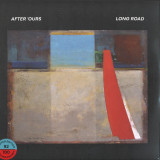
Over the last three decades, Auckland, New Zealand, has given birth to several generations of musicians, DJs, and producers who operated within the interzone between jazz, blues, soul, funk, Latin music, hip-hop, house, boogie, and broken beat. Across two slow-cooked albums that sit at the intersection of machine funk and vivid live instrumentation, Odyssey (2016) and their forthcoming sophomore release Long Road (2024), After 'Ours - the group project of pianist and composer Michal Martyniuk and drummer, guitarist and producer Nick Williams - have comfortably located themselves within this antipodean tradition.
Born and raised in Auckland, Nick Williams grew up surrounded by music from a young age. At home, his mother, Mary Anne, a record collector and DJ with deep, diverse vinyl crates, kept his ear sharp. By the time he was eight years old, he was regularly joining his musician father on stages across Australia in his blues rock band Slippery Sam. In his early twenties, Nick began leading the eleven-piece Auckland Latin-dub-funk fusion big band Tangent, who performed regularly until the late 2000s.
Michal Martyniuk, on the other hand, grew up on the opposite side of the world in Szczecin, Poland. After playing classical music for twelve years and attending jazz school, he relocated to New Zealand with his family in his teens. While studying at Auckland University Jazz school, Michal came into the orbit of the legendary New Zealand saxophonist, composer, producer, and band leader Nathan Haines, who brought him into the same world as future collaborators like Tama Waipara, Batacada Sound Machine, Sola Rosa and Nick.
Inspired by the rich stories of jazz, neo-soul, electronica, and dance music from both sides of the Atlantic Ocean and the open-eared Auckland scene they emerged from, After 'Ours formed in 2011. Born out of a friendship cultivated through playing together at bars and nightclubs around town and home studio sessions. "Nick had family and work, so I had to wait all day," Michal says. "We'd come to the studio at 10 PM and go till 3 AM. That's how we came up with the name.
Session by session, After 'Ours revealed itself to be a creatively fertile meeting of minds. "We both have our angles, but it works well in the end," Nick reflects. "It takes the music to a place we can't get to by ourselves."
Between 2011 and 2016, they wrote and recorded Odyssey with a cast of musical collaborators that included KP, Sharlene Hector & Kevin Mark Trail (UK), Matt Nanai, Nathan Haines, Jakub Skowronski, Nick's partner Ange Williams (nee Saunders) and British producer Mike Patto from the lauded UK future jazz group Reel People. Influenced by the smooth yacht rock of Steely Dan and Donald Fagan, the warm midtempo bounce of A Tribe Called Quest and J Dilla, and the complex jazz/RnB bop of Robert Glasper, Odyssey was a labour of love that emphasised community, warm-hearted hospitality, and care.
Seven years on, they're finally ready to return with Long Road, an album that contains some of their best work yet. As well as reconnecting with past collaborators Kevin Mark Trail and Ange Williams, Long Road sees After 'Ours calling on assistance from Louis Baker, Jakarta-based saxophone player Kuba Skowroński, bassist Dan Antunovich, Los Angeles-based drummer Chris Bailey and the journeyman British soul artist Omar Lyefook.
Across ten songs that plot a stargazed course through their antipodean spin on UK broken beat, jazz, modern soul, and blues rock, Nick and Michal build on everything they learned while writing and recording Odyssey. In the process, they take their joyful musical visions to sublime new heights.
Issued on vinyl for the first time and pressed on 2 x 140g black vinyl, Juno Reactor’s 2004s album, ‘Labyrinth’, their 6th long player. Ben Watkins is an essential innovator of modern electronic music and a pioneer of Trance. Over the course of nearly 30 years, Watkins has created a unique driving fusion of electronica, orchestral and global music executed on an epic & symphonic scale. Juno Reactor was formed as an art project in 1990. Ben Watkins wanted to collaborate with other artists, producing exciting projects that were not commercially driven. He wanted to create experimental music and non-musical soundtracks that would work with installations, art pieces, and film projects. Labyrinth ranges from orchestral, industrial, and techno as well as containing Juno Reactor's trademark tribal sound (possibly as best featured in Conquistador II). The album also features two songs from Watkins' collaboration with The Matrix composer Don Davis on the films The Matrix Reloaded and The Matrix Revolutions, "Mona Lisa Overdrive" (from Reloaded) and "Navras" (from Revolutions). As well as releasing a string of influential albums as Juno Reactor, Watkins’ tracks have been placed in numerous highprofile feature films, television programmes and computer games and Ben Watkins composed large sections of the original score for the films The Matrix Reloaded and The Matrix Revolutions, as well as composing the entire orchestral score for Japanese anime feature film Brave Story.
We are excited to announce the first release of the revamped Italo Deviance Music: "Arredo" (alias of Marcello Giordani). This record includes two outstanding tracks, each with its own unique character. The first track, "Fear Fighter," stands out for its hypnotic Afro/House direction, enriched with synthesizer sounds that capture the imagination and transport the listener to an evocative sonic dimension. The remix of "Fear Fighter" is entrusted to the ren owned Danish artist Kasper Björke, who offers an elegant and refined version, perfectly in line with his distinctive style. The second track, "Blue Spotlight," evokes the classic mid - 80s Dance Library sound, presented in an extended version with Italo nua nces. The remix of this track is curated by Cosmo Dance, transforming it into an extraordinary electronic track inspired by early 80s Italian Disco productions. "Arredo " represents a perfect fusion of nostalgia and modernity, celebrating the past while innovating the present. With sophisticated remixes by Kasper Björke and Cosmo Dance, this release promises to captivate both veterans of the genre and new electronic music enthusiasts. Don't miss the chance to immerse yourself in this unique musical journey.
On ALPHA WAVES, AUX88 ventures into uncharted sonic territories by subtly incorporating 432 Hz alpha wave tones. This forward-thinking approach to sound exploration is a testament to their creativity and commitment to pushing the boundaries of electronic dance music.
It is believed that 432 Hz is the healing frequency of the universe and has the power to improve our bodies' natural healing abilities. Similarly, alpha brain waves are associated with restful, meditative states and are believed to reduce depression, combat anxiety, and increase creativity. By blending these healing frequencies with their classic techno-bass fusion, AUX88 offers listeners a unique auditory experience that is both soothing and energizing, especially powerful during their all-sensory-consuming live performances, where fans can fully immerse themselves in the music and experience its transformative effects.
Introducing Risorsa Elettronica 002, featuring the exceptional talent of Agostino Casillo, a distinguished music producer and our esteemed friend.
This EP showcases a fusion of diverse styles, ranging from techno and electro to progressive and breakbeat. Limited to just 300 copies, each track promises a captivating journey
WRWTFWW Records is wonderfully proud to announce the long anticipated official reissue of Chrysalide (1978), the sole album from French multi-instrumentalist and enigmatic genius Michel Moulinié. The krautrock/ambient/minimalism paragon is available as a limited edition LP with one never-heard bonus track. It is sourced from the original reels and housed in a heavy 350gsm sleeve.
Originally released in 1978 on Ange and Jean-Claude Pognant's mythical prog rock label Crypto,
Chrysalide is a fusion of minimalist meditations, cosmic soundscapes, and ambient with a human warmth, carried by a profoundly beautiful and unique use of twelve-string guitar, bass, and violin.
Ideal for an introspective listening experience, the hypnotic Kosmische Musik of Michel Moulinié belongs to the same psychedelic family as Manuel Göttsching’s Inventions For Electric Guitar, Mike Oldfield’s Tubular Bells, early Tangerine Dream, and Steve Hillage’s innovative guitar mastery. WRWTFWW listeners might also be reminded of the label’s seminal French release, Dominique Guiot's L'Univers de la Mer, which makes a great spiritual pairing with Chrysalide.
Escape into the vast universe inside yourself :
- If You See Me
- Taste Of Love
- I Love You
- Oh Lover
- I'm Under Your Spell
- Waiting For The Moment
- Get It On
- Expense
- Sunshine Lady
- Higher
- It's The Things That You Do
- Ladie
- You're All I Need
- Stone Lover
- Cohesion
- I Do Love My Lady
- Got To Be Something Here
- I Have Love At Home
- I've Got You On My Mind
- Can You Deal With It
- Quick
- If You Love Me
- I've Got My Eyes On You
- Should I Or Should I Not?
- O'neal Do You Dare
- Contagious
- Borrowed Time
- One Life To Live
- Somebody Said
- Do It Baby Do It
- Together
- No One Else Can Do It To Me Baby
Lavender Vinyl. In the late 1970s, a peculiar sound began bubbling up from the land of 10,000 lakes. Buried beneath 50 solid inches of annual snow, Minneapolis made a Sound quite different than what the pop world foresaw. It issued forth as a slick, black, technologically advanced fusion, poised to storm the charts. Never known for sizable African-American populations, the Twin Cities of Minneapolis and St. Paul in fact harbored a tight-knit community of musicians working feverishly through the late '70s and early '80s toward a radical manipulation of American dance music, coating futuristic funk with the glamorous sheen of guitar rock. Synthetic ebony and ivory met electricity, with sexed-up results sent shockingly across the pop heavens like violet lightning.
A late period hard-rock, proto-punk entry in Zambian guitarist and bandleader Paul Ngozi’s extensive catalog. Featuring drummer Chrissy Zebby Tembo. LP includes oversized 8 page booklet detailing Ngozi’s arc, rare photographs, discography and annotations. Released under license from the Estate of Paul Nyirongo. “Zambia's Zamrock movement that exploded in the 1970s ... provided young musicians access to European and American music, and created a unique sound. At its root, Zamrock melded fuzz-toned psychedelia, chugging garage rock and roiling funk with a broad mix of African cadences and beats.... enlivening a scene that included bands like Musi O Tunya, Amanaz and the Ngozi Family.” - The New York Times Zamrock was a bona-fide rock scene, with albums released through independent labels based in Zambia. This music scene was complete, encompassing the genres of rock, acid folk, fusion, Afro-beat, South African jazz and traditional Zambian melodies. It quickly became a uniquely Zambian movement, befitting of its name. WITCH, Paul Ngozi and Amanaz sound nothing like other rock music from the African continent or elsewhere.
Prelusion is the debut album from iconic recording artist Patrice Rushen, originally released on Prestige Records in 1974. The album effortlessly zigzags between Post-Bop and Jazz Fusion, and features contributions from legendary saxophonist Joe Henderson. Reissued on vinyl for the first time in 50 years as part of Jazz Dispensary’s Top Shelf series, the album was cut from the original analog tapes by Kevin Gray, pressed on 180-gram vinyl at RTI, and packaged in a gatefold tip-on jacket.
"Green" is distinguished by its fusion of thrash metal with progressive and technical elements. The band expands its musical horizons by incorporating more complex rhythms and innovative song structures. Sharp and precise guitars are intertwined with intricate solos that demonstrate the musicians' technical skill. Now reissued by Black Sleeves on a limited edition LP Gatefold Picture Disc. The album is a milestone in their discography and a gift for fans looking for a deeper and more nuanced thrash metal experience. With "Green", Forbidden not only defied expectations but also expanded the boundaries of the genre. It's a fantastic LP Gatefold Picture Disc edition limited to 330 copies!
Since first splashing on to the Southern California circuit in the mid-aughts, Geneva Jacuzzi (née Garvin) quickly cemented herself as the queen of the Los Angeles underground. Her immersive and unhinged multimedia performances are the stuff of legend, a psychotropic gallery of masks, costumes, confrontation, and massive art installations. Jacuzzi’s recordings are equally revered, catchy hooks and cryptic moods dusted in 4-track grit. The arrival of her third official full-length, and Dais Records debut, is cause for such celebration. Triple Fire vividly expands and crystallizes Jacuzzi’s signature fusion of midnight melody and mutant aerobics across a 12-track hit parade of wildcard synth-pop and sly post-apocalyptic camp. Her enthusiasm for the album is as bold as her body of work: “Halfway through, we started calling this the record of the prophecy, the record that’s going to save mankind.”
Opener “Laps of Luxury” sets the template – a strobe-lit dreamer’s delight of swaggering synth bass, Haçienda drum machinery, and sultry vocal spellcasting (“Tragic mysteries I’ve known for centuries / I burned all memories and turned to fantasy”). The collection burns through shades of sardonic strut (“Art Is Dangerous,” “Nu2U,” “Keep It Secret”), coldwave kiss off (“Speed Of Light,” co-produced by Andrew Clinco of Drab Majesty), retro-futurist body music (“Dry,” “Scene Ballerina,” “Bow Tie Eater”), and cheeky glitterball pop (“Take It Or Leave It,” “Heart Full Of Poison” co-produced by Roderick Edens and Andrew Briggs). She likens the eclectic spectrum of moods to the continuum of human emotions: “Funny, sexy, sad, scary, witty, hopeful, menacing. Eventually it deconstructs, turns into a party, and then ends sweet and soft.”
Taken as a whole, Triple Fire comes as close as any document yet to capturing Jacuzzi’s kaleidoscopic alchemy of pop sugar and chaos energy, flickering between icy and ironic, chic and surreal, hungry and heartsick. Hers is a muse as rare as it is regenerative, forever reborn at the precipice of the next chorus: “Someone said that Alcatraz had fallen into the sea / Almost sounded like an angel calling me in a dream / I felt an electric shock when I picked up the microphone.”
Renowned New Zealand musician Nathan Haines announces his eleventh studio album and first solo album since 2014. Nathan’s vibrant career has solidified his status as a leading figure in contemporary jazz and electronic music, and throughout his career he has distinguished himself as a masterful saxophonist, flautist, and composer, celebrated for his innovative fusion of jazz with elements of soul, funk, and dance music. Notes maintains the jazz sound he is famed for, whilst also seeing the artist embrace the electronic/house and disco scene.
A labour of love, work on the album started several years ago alongside the now deceased UK producer Phil Asher who had produced Nathan’s two most successful albums Sound Travels and Squire For Hire. Regarded as one of the finest DJ’s and producers to emerge from the UK, playing a pivotal role in bridging the gap between 4/4 and broken beat, this was the first time Nathan and Phil had worked together in over eighteen years. Phil passed away during the recording of the album, but he appears on a number of tracks, and his spirit and influence can be felt throughout the entire release.
The album features a number of guest vocalists, including UK soul-diva Vanessa Freeman (Bugz In The Attic, 4 Hero, Kaidi Tatham, Kyoto Jazz Massive), and exciting young talent Ajuna Oakes, Ruby Cesan, La Coco and EO (NZ). Alongside Nathan’s own musicianship, the album also features bass from Razor-N-Tape label founder Jkriv and electronic jazz pioneer Mark de Clive-Lowe, with both bringing a wealth of collaboration and musicality to the project. Long time collaborator and much respected UK based producer Marc Mac (one half the highly influential and respected duo 4Hero) provides beats for a number alongside Nathan’s father Kevin on acoustic bass.
Highly respected DJ and producer Frank Booker (Razor and Tape) drops his signature beats on three tracks which fits nicely alongside Asher’s drum work. The album’s one cover see’s Nathan teaming up with vocalist Rachel Clarke on their version of Storm by US 80’s vocal group Rare Silk - this track is entirely acoustic and is one of the album’s special moments both artistically and musically.
The past years have seen Haines continuing to establish himself as one of NZ's best DJs and live performers, working on releases and remixes with the likes of Chaos in the CBD, Frank Booker, JKriv, Ray Mang and many others. He has also just released a solo album on Goldie's Metalheadz label under his Sci-clone alias co-produced with DJ A-Sides to excellent reviews and featuring a wealth of talent and musicianship.
This new and heavyweight 12" from Robot84 is a fresh fusion of Italo and house vibes that are defined by lively percussion, lush pianos, 808 drum fills, and an irresistible vocal hook. The original of this has already garnered attention with high praise from Manchester legend Justin Robertson who dropped it at a Hacienda 51 gig for its 30th anniversary. Sean Johnston, Heidi Lawden, Laurent Garnier and more have all also been playing it out recently which tells you all you need to know, really. Flip it over for a dubbed-out headwrecker that is just as good.
Lebanon oud master Rabih Abou-Khalil's stunning 1996 album 'Arabian
Waltz' is appearing here on vinyl for the first time."Arabian Waltz is the
pinnacle of Rabih Abou-Khalil's achievement as a composer and arranger
It is a sublime fusion of jazz, Middle Eastern traditional music, and Western
classical. In addition to Abou-Khalil on oud (the Arabic lute), Michel Godard on the
tuba and the serpent (the tuba's antique kinsman), and Nabil Khaiat on frame
drums, the album also features the Balanescu String Quartet instead of the usual
trumpet or sax. The presence of the Balanescu might seem to pose a dilemma
for the composer: traditional Middle Eastern music uses no harmony but a string
quartet is all about harmony. Abou- Khalil achieves a compromise by generally
writing the string parts in unison (or in octaves), in effect using the quartet as a
single voice, but also letting the quartet split up to play parts in unison with the
other instruments or to provide ornamentation. Without surrendering jazziness at
all, the presence of the strings makes possible a wondrous atmosphere, almost
as if one is listening to the soundtrack of a classy movie set in Beirut or
Damascus during the '40s. This feeling is greatest on "Dreams of a Dying City"
with its brooding tuba and cello motifs and grave, repeated rhythms. "The Pain
After" starts with an impressive tuba solo that turns into a long interlude for tuba
and string quartet; sad, slow music that sounds like one of Beethoven 's late
quartets. Then Abou- Khalil finally enters on oud, bringing a sustained note of
wistfulness. Fortunately, beside the darker numbers lie the propulsive drama of
"Arabian Waltz" and the bobbing and weaving quirkiness of "Ornette Never
Sleeps." Abou- Khalil is known for experimenting with the possibilities his guest
musicians bring to his style. In this case, the guests have inspired the host to
reach a new height and maybe even a new style. This recording suits every fan of
world music, jazz, classical, or just good music." - Kurt Keefner
Black Truffle is thrilled to announce a reissue of Chico Mello and Helinho Brandão’s self-titled release from 1984, the first return to vinyl of this classic of Brazilian experimental music with its original cover art and complete track listing. An under-recognised figure whose work inhabits a singular terrain where radical new music techniques and music theatre meet musica popular brasileira, Mello has lived and worked in Berlin since the late 1980s. A student of Dieter Schnebel, Mello played in the 90s iteration of Arnold Dreyblatt’s Orchestra of Excited Strings alongside compatriot Silvia Ocougne, with whom he produced a radical and hilarious deconstruction of MPB classics on Musica Brasileira De(s)composta (an early and rather atypical release on Edition Wandelweiser).
On this release, his only recording predating his move to Europe, Mello works with the alto saxophonist Helinho Brandão, who appears to be otherwise unknown outside Brazil. The record’s six tracks range from solo saxophone improvisation to densely layered ensemble works bridging minimalism, acoustic sound art and a plaintive melodic sensibility that calls up Edu Lobo or Milton Nascimento. Beginning with a dramatic, dissonant wind and string surge from which emerge ominously pounding piano chords, opener ‘Água’ slowly builds in intensity, a halo of clustered vocal harmonies gradually closing in on Brandão’s squealing sax until the piece opens up to reveal a gorgeous passage of melodic singing. The piano accompaniment reduces to tolling bass notes as the voice begins a repeated incantation, suggesting a ritualistic atmosphere reminiscent of parts of Xenakis’ setting of Oresteia. Dissonant, sawing tremolos on the strings climb to a crescendo before disappearing into the sounds of water being poured and splashed into metal vessels, presented not as a field recording but as a percussive element performed by the ensemble. A child’s voice then appears, singing to piano accompaniment the same melody heard earlier in the piece. After a brief solo alto improvisation from Brandão, working with the guttural pops and fleeting melodic gestures of Braxton or Roscoe Mitchell, the remainder of the first side is dedicated to the leisurely unfolding of ‘Baiando’ over the course of twelve minutes. A trio for Brandão on soprano saxophone, Mello on a very period-appropriate phased nylon string guitar and Edu Dequech on bongos, the performance eases its way hypnotically through subtle variations on a set of rhythmic and melodic patterns, almost derailed at points by Brandão’s wild forays into extended technique but held together by Mello’s droning guitar notes.
The second side opens with another multi-part epic for a larger ensemble, ‘Matraca’, which makes use of strings, electric guitars and a wide range of South American percussion instruments. Rasping violin harmonics hover as drum hits, repeated guitar notes and triangle accompany a slowly descending bass glissando. A sudden change in direction introduces a thrumming, incessantly repeated bowed bass tone, beginning a series of episodes of minimalist phasing and pattern variation, the combinations of electric guitars and orchestral instruments giving the ensemble an ad hoc charm like the early Penguin Café Orchestra but with more percussive drive. Eventually the piece is overrun by a cacophony of the titular matracas (a kind of ratchet/cog rattle). Following a lyrical trio improvisation by Mello, Brandão and Gerson Kornin on bass, the final ‘Danca’ focuses entirely on Mello’s layered acoustic guitars and vocals, using this restricted palette to build up a haunting piece of almost orchestral density, reminiscent of the 70s work of Egberto Gismonti in how it thickens a folkish ambience with harmonic sophistication.
Arriving in a starkly beautiful gatefold sleeve and sounding better than ever in its new remaster, one might call the stunning music contained on Chico Mello/Helinho Brandão ahead of its time. But what (other than some of Mello’s own work) produced in the years since its initial release has really touched the organic fusion of minimalism, free improvisation, radical instrumental technique and popular song achieved here? Forty years after its first release, Chico Mello/Helinho Brandão remains music of the future.
Since surfacing into the Scandinavian synth-pop scene 16 years ago, Nicklas Stenemo and Christian Hutchinson Berg aka KITE have steadily grown from local icons to a global phenomenon, yet until now they've never released a full-length studio album. VII breaks the ice, collecting 14 of the duo's deepest and most dynamic anthems into a stormy saga of immersive, apocalyptic emotion. Sourced from a series of six 7-inch singles released over the past half-decade, the collection persuasively showcases KITE's distinctly cinematic strain of Swedish darkwave in all its glory and desolation. Stenemo and Berg had both logged time in other bands before joining forces in the mid-aughts, although their unique chemistry became apparent immediately. After forming in Malmö, Sweden, they soon relocated to Stockholm, further refining their fusion of brooding synths, booming rhythm, and vocal theatrics over a string of celebrated, numbered EPs (named I through VI). Despite their rising profile, KITE then and now have largely refrained from publicity, allowing their music to speak for itself - which it clearly has, as KITE's live performances have become the stuff of legend, prompting frequent festival invitations, international tours, and limited engagements on prestigious stages (recently at the Royal Swedish Opera, and Dalhalla, the former limestone quarry turned open air amphitheater, to name a few). VII offers a compendium of KITE's potent recent discography, including collaborations with Blanck Mass, Anna von Hausswolff, and Henric de la Cour. From yearning dystopian pop ("Hand Out The Drugs," "Bowie `95"), to widescreen existential balladry ("Tranas Stenslanda," "Glassy Eyes"), and sleek New Romantica ("Remember Me," "Teenage Bliss"), KITE's wavelength is one of soaring heights and abysmal depths, anguish and ecstasy, pouring one's burning, battered heart into the here and now. Their years of visceral commitment and artistic integrity have been hard fought and hard won; it bleeds between the words and melodies in one holy moment after another: "I switch my ways / To seize the day / To face my life / Not fade to gray."
Tokyo Riddim Band continue their journey striding across times and cultures, this time with their colourful keyboardist and frontwoman Mimi Kobayashi breathing new life into a song she originally penned in 1981. ‘Lazy Love’ first featured on Mimi’s highly sought after Coconuts High LP, which she recorded in LA recruiting top session players to play alongside her. It was also included in Time Capsule’s 2024 compilation of Japanese reggae - Tokyo Riddim 1976-1985.
This soulful pop tune turned deep dub cut retains the romantic charm of the original, whilst the tasteful performances of the Tokyo Riddim Band and Ras Tavaris combined with Prince Fatty’s studio magic give the song a newly found depth.
London based Tokyo Riddim Band is a unique fusion of cultures, bringing together the vibrant energy of three generations of Japanese female musicians with the eclectic sounds of London. Their dynamic performances blend reggae drums, funky bass lines, and the smooth City Pop guitar, all magically dubbed-out live on stage. This is not just music; it's a cultural phenomenon, offering a fresh and exciting take on the reggae scene.