
No en stock
Haga su pedido ahora y le encargaremos el artículo en nuestro proveedor.
18,45 €
Ültimo hace: 84 Días
Haga su pedido ahora y le encargaremos el artículo en nuestro proveedor.

Following his acclaimed releases on Violent Cases 006 VC006 and “Arriving In Nebula” VC10.2, as well as the magnificent launch of the sublabel Mysteries with his track “Ether” on Mysteries #1 [MSTR1], Austrian producer Van Der Wiese returns to Violent Cases with a new chapter in his sonic explorations. “Vestiges” unfolds as a deeply atmospheric EP with four tracks that balance melancholic introspection with subtle euphoria.
Each track feels like a fragment of a memory - traces of rhythm and emotion woven together in a delicate balance. Layered sound textures, immersive basslines, and shimmering harmonies create a mood that is both physical and reflective, inviting the listener to float between pulse and perception.
The release is designed - once again very impressively - by Darkam, who was inspired by the track “Haniwa.”
Her illustration captures the mysterious and organic spirit of the EP and offers a visual counterpart to its haunting emotional depth.
With “Vestiges,” Van Der Wiese defines his unique position within the contemporary Tekno scene - precise yet emotional, restrained yet resonant.
A release that lingers long after the last note has faded away.
And above all, this is because Pozek, as mastering engineer, has succeeded in delivering a very balanced EP.
A must-have for all good collections.
Each EP comes with 2 posters, a digital download code, and 2 artwork stickers.
Haga su pedido ahora y le encargaremos el artículo en nuestro proveedor.

Haga su pedido ahora y le encargaremos el artículo en nuestro proveedor.
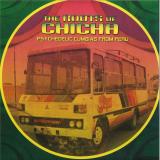
The Roots of Chicha, compiled by Barbès Records, was originally released in 2007 and became the first recording to popularize psychedelic cumbia around the world.
From the late 60's through the 80's, Peruvians invented a new popular musical hybrid inspired by music from the Americas. In 1968, Enrique Delgado released his first record on Odeon with his new group, Los Destellos, single-handedly creating Peruvian cumbia. He codified the genre early on by using the electric guitar as the primary melodic instrument, and mixing cumbia rhythms with folkloric huaynos, criollo voicings, Cuban guarachas and guajiras, rock, boogaloo, surf, psychedelia, oriental music, classical music, and bits and pieces from Brazil, France, Chile... All Peruvian cumbia bands for the next thirty years would end up drawing from the exact same sources (Grupo Celeste, Los Mirlos, Juaneco Y Su Combo, Manzanita Y Su Conjunto...).
This new wave of Peruvian cumbia came to be known as chicha. Chicha is originally the name of an alcoholic drink, made of fermented maize, which the Incas were especially fond of. In the past thirty years, however, the word has taken on a pejorative connotation. Peruvian cumbia started being called chicha in the late 70s, around the same time that the music came to be viewed as the expression of the slums – the pueblos jovenes. Little by little, the word became an adjective, and people now talk of chicha culture, chicha press, chicha architecture, even of a chicha president, and none if it – you guessed right – is meant as a compliment. Chicha suggests corruption, shady deals, and cholos – a derogatory term for a person of Andean heritage that, of late, is being reclaimed and worn as a badge of honor by the very cholos it was supposed to demean in the first place.

Grupo um celebrate 50 years with release of lost dictatorship-era album nineteen seventy seven!
First time release - vinyl comes with printed innersleeves
Brazilian avant-jazz vanguardists Grupo Um celebrate their 50th anniversary, sharing a second previously lost 1970s album from the vaults. Nineteen Seventy Seven (titled after the year it was recorded) is another rip-roaring instrumental fusion treasure from the band which spawned from within Hermeto Pascoal’s famed mid-1970s São Paulo collective.
Like their debut album Starting Point, Grupo Um’s Nineteen Seventy Seven was recorded when Brazil's military dictatorship was at its most repressive. “There were no open doors to those who dreamt to be protagonists in creative instrumental music”, remembers drummer Zé Eduardo Nazario, “even popular composers and singers had to submit their songs to censors and many records were banned and confiscated from the stores.”
Just like Hermeto Pascoal's Viajando Com O Som (1977) and Grupo Um's previous album Starting Point (1975), both of which remained unreleased until the 21st century, Zé Eduardo asserts that the 1977 album was flatly 'without any chance to be released at that time."
Recorded at Rogério Duprat’s Vice-Versa Studios in São Paulo, the group were under both time and space restraints, “we chose the small Studio B,” Lelo Nazario recalls, “which had a Tascam (TE AC) 12x8 console and a 4-channel AMPEX AG 440 machine. Therefore, we had to record without overdubs, everything straight to tape.”
Expanding from a trio to a quintet, original Grupo Um members Lelo Nazario (keys), Zé Eduardo Nazario (drums), and Zeca Assumpção (bass) were joined by saxophonist Roberto Sion and percussionist Carlinhos Gonçalves. Carlinhos, Zé and Zeca had already played together in the group Mandala, while brothers Lelo and Zé had just finished a stint backing Hermeto Pascoal during his years in São Paulo.
Lelo was deeply immersed in modular synthesizer experimentation during this period, working extensively with the ARP2600 and EMS Synthi AKS. These electroacoustic explorations formed the sonic foundation for "Mobile/Stabile," one of his first compositions to merge modular synthesis with Brazilian music, a fusion that would ripple throughout the Brazilian jazz scene. The piece premiered at the first São Paulo International Jazz Festival in 1978, performed by Grupo Um with guest trumpeter Márcio Montarroyos. In a shocking moment, festival organizers interrupted the show mid-performance, sparking fierce backlash from both audience members and journalists who denounced the incident as artistic censorship during Brazil's era of political and cultural repression. The version on Nineteen Seventy Seven is the first recording of the composition.
Nineteen Seventy Seven combines Afro-Brazilian rhythm, modular synthesis and a plethora of whistles, percussion and effects pedals. Album opener “Absurdo Mudo” - so titled for the absurd difficulty it poses to the musicians performing it - starts out in a cloud of mysterious dissonance, before the haze breaks for a glorious keyboard and saxophone interplay atop an uptempo samba groove. “Cortejo dos Reis Negros (Version 2)” (Procession of the Black Kings), based on the maracatu rhythm, inverts the traditional jazz song structure by beginning with improvisations, which are followed by the theme and a final coda. “The studio also had two Parasound electronic reverb units,” Lelo notes, “and the timbre is very audible on the soprano sax and percussion.”
Grupo Um’s daring music represents a manifesto of resistance during the dictatorship years, but it’s one which remains just as relevant today. As Lelo puts it: “For me, the aesthetic issue has always been about combining contemporary avant-garde languages with Brazilian music, independent of categories and commercial interests. The result of this fusion takes music to a new level.”
Recording credits (1977)
Recorded at Vice-Versa B Studio, São Paulo, November 9, 1977
Produced by Lelo Nazario and Zé Eduardo Nazario
Engineered by Ricardo “Franja” Carvalheira
Lelo Nazario – Wurlitzer electric piano, acoustic piano, signal generator, percussion
Zé Eduardo Nazario – drums, percussion
Zeca Assumpção – electric bass
Carlinhos Gonçalves – percussion
Roberto Sion – soprano sax, clarinet
Release credits (2025)
Produced by UTOPIA Studio, São Paulo
Project Coordination in Brazil by Irati Antonio (Utopia Studio)
Tape Restoration and Digital Mastering by Lelo Nazario at Utopia Studio, July 2025
Liner Notes by Lelo Nazario and Zé Eduardo Nazario
Photography by Jorge Las Heras, Lelo Nazario, and artists' personal archives
Photo Restoration by Lelo Nazario
Artwork and Design by Alessandro Renaldin
debe ser publicado en 30.01.2026

Hello Spiral returns to the same North London block, the same triangulated geometry of balconies and courtyard, but with a shift of orientation. His previous record looked outward from the eighth floor, these four new recordings move inside, into the building’s arteries. Joe explores the hallways of the complex where he has lived and listened for years, using the same tool as before, an iPhone and its voice memo app. The recordings were made in situ, each exactly eleven minutes, captured without ceremony.
The hallways feel different. Less private, less scenic, more neutral. They are the connective tissue between hundreds of domestic units, a space of transit rather than rest. The carpet absorbs certain frequencies. The fire doors catch and release pockets of air. The lights hum. Elevators drone in soft cycles of arrival and departure. These are the institutional sounds of shared living, yet once recorded they begin to behave strangely. A kind of internal weather appears.
As with the previous album, Joe remains attentive to what is often overlooked, irrelevant or discarded. The hallways, with their scuffs and signage, their coded access and polite functionalism, provide an unexpectedly rich field. The ambience is not shaped by storms or scaffolding, not by birds or street spill. Instead the material is the building’s own breath, its mechanical rhythms, the low frequency traces of neighbours, the occasional shuffle of footsteps that pass but do not return.
Joe talks about this record as a possible middle chapter in a trilogy. If so, it sits between the exposed openness of the balcony and whatever comes next. A hinge point. These recordings continue Joe’s long practice of defamiliarization, sharpening attention to the unnoticed while withholding narrative. They invite repeated listening, not for revelation, but for the subtle shifts that occur when a familiar space is treated as an instrument.
debe ser publicado en 30.01.2026
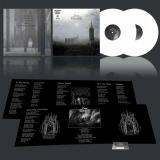
White double vinyl
High Roller Records, weiße Doppel-Vinyl, limitiert auf 200 Stück, 425 g/m² schwerer Kartonumschlag mit 5 mm Rücken, 4-seitiges Insert, Download-Code
Mit ihrem dritten Album „Exequiae“ (lat. „Totenfeier“) setzen Lone Wanderer aus Freiburg im Breisgau ein eindrucksvolles Zeichen in Sachen Funeral Doom. Das High-Roller-Debüt der Band führt die inhaltliche Linie seines Vorgängers „The Faustian Winter“ fort - vom Ende der faustischen Kultur hin zu innerer Trauer und existenzieller Verzweiflung.
Die Stücke - darunter der fast 25-minütige Schlüsselsong ‚To Rest Eternally‘ - verbinden erhabene Langsamkeit, dichte Harmonien und erdrückende Schwere
Das Artwork stammt getreu der Tradition des Quartetts von einem Maler der deutschen Romantik: Ernst Ferdinand Oehme, dessen „Prozession im Nebel“ die Grabesstille des Albums einfängt.
debe ser publicado en 30.01.2026

'In 2023, sound artist and composer Weston Olencki toured across the American South. Beginning in their hometown in South Carolina, they snaked a circuitous path from the mountains of West Virginia to the banks of the Mississippi River. As the miles accumulated, so did the initial seeds of new work.
'Instruments and artifacts they acquired hitched a ride in the backseat, while songs and sounds filled their portable recorder: water in its various states, the familiar insectoid buzz of those summer nights, trains cutting through the landscape, the traditional music that lived alongside the communities that kept it. Olencki took it all in, and over time, found ways that these experiences coalesced into a bramble-like perspective of time, where past, present, and future intersect in ways both barbed and beautiful.
'Broadsides, Olencki’s newest solo full-length is the multilayered result of this journey. The album follows their landmark release Old Time Music from 2022, which presented radical interpretations of traditional tunes from Appalachia and throughout the South alongside original compositions that drew significantly on archival recordings. On Broadsides, Olencki rejects delineations between the unmoored avant-garde and the rootedness of one’s cultural heritage, revealing their porous and intertwined nature. “My mother was a quilter. Her mother before that,” they write in the album’s liner notes. “Quilting, like music, is a practice of embedding knowledge and remembrance into the very core of the thing you are making. It’s not just about the materials, but how they’re reassembled, recontextualized, stitched, woven to form new patterns - the minutiae of craft holding significance to those looking to find it. Stories woven from stories, never told the same way twice.”
'Like all great road trips, Broadsides unfolds slowly and continuously, with moments of dramatic reverie punctuating the endless melt of highway in the rearview. We’re immediately confronted by the uncanniness of revisiting old haunts, as Southern storms break through the initial churn of the freight locomotives of Alabama. Olencki’s interpretation of the bluegrass standard “Foggy Mountain Breakdown” captures the euphoria of melancholy in motion. The permutational plucks of banjo are bounced around the frame by a computer, its pitches determined within algorithmic sequences and transcriptions of classic three-finger licks. The tonalities of old-time are smeared and stretched until all that’s audible is the insistence that Heaven might be real.
'In the album’s second half, “Omie Wise,” a murder ballad made famous by Doc Watson, follows an interlude recorded on the river in North Carolina in which the titular character’s body was laid. Ghostly echoes of a dozen other renditions float through the substrata as Tongue Depressor’s Henry Birdsey accompanies them on the pedal steel guitar. The album’s central composition, “all my father’s clocks,” is a profound meditation on entropy and impermanence. The sound of their father’s extensive clock collection ticks away as Olencki pulls a bow across the length of an autoharp sourced from a rural strip mall. The instrument was left as detuned as it was found, the resonance of its deep bass drone and clanging high-end the result of years of neglect and the warping effects of Southern humidity.
'Historically, broadsides were an early form of broadcasting, an often- musicalized telling of current news pasted in the public square. The name was later taken up by Sis Cunningham and Gordon Friesen in the 1960s, whose Broadside magazine published songs and social commentary when American folk music resurfaced as an urgent way of communicating the multifaceted politics of its time.
'Olencki borrows the phrase to recall both this old form of songmaking and that later prominent reexamination of traditional music’s role in modern life, but also to draw attention to the fragmented and machine- mediated way heritage is diffused in this very different, but no less pivotal, moment.
'As a sanitized past is used as justification for current violence and domination, we can turn to these artifacts to better understand the history of ourselves, but only if they are consciously pushed to evolve. Broadsides represents one personal, striking vision of what far-flung futurisms could be respun from = these high, lonesome sounds: a reflection of the unbridled joy and deep sorrow inherent to living together through time, and a desire to push further into the untold and unknown.'
debe ser publicado en 30.01.2026

*13 ripping songs totalling 33 minutes from the original 20-song 65 minute master reel tapes, recorded in early February 1978 for producers Flo & Eddie, the night before DMZ (the raw-assed pre-Lyres outfit that never made it!) spent 3 days trapped by a blizzard recording their Sire album. **4 page insert with info, pics and Rick Coraccio's ultra-detailed journal on how it all went down! ***LP includes DOWNLOAD CODE Kapital Ink zine: "In the annals of R&R history, as far as local American rock'n'roll scenes go, Boston is hardly ever looked upon in the same shining light as, say, NY, Detroit, San Francisco or even Austin or Seattle. Unlike those other towns, there's never even been a definitive book about the scene. Maybe it's because Boston is a perennial hard-luck place (just witness the Red Sox) with a serious New York inferiority complex hanging over its head. Boston is ignored by the industry at large, despite the fact that the city has spawned countless heavyweights in both a commercial (Aerosmith, Boston, the Cars) and aesthetic (Modern Lovers, Real Kids, Mission Of Burma) (Crypt editor note: and DMZ!! and LYRES!!) sense. Boston was the first US city to directly reflect the influence of the Velvet Underground, as epitomized by the Modern Lovers, who've proven to be almost as influential in their own right. Fast forward to the days of hardcore, and Boston was one of the pre-eminent strongholds of shave-head mania, shoring up its rep as an angry, intolerant New England outpost. Naturally the town has produced more than its share of local legends: Willie Alexander (who actually was in the Velvet Underground, albeit when the band was on its Lou Reed-less last legs); Jonathan Richman (geekus supremus no small thing considering the subsequent indie hordes, to whom he's a savior); and most of all, the great Real Kids, (Crypt editor note: and DMZ!! and LYRES!!) who could've been the equivalent of the MC5, Stooges or Flamin' Groovies in the annals of American rock if it hadn't been for a series of bad breaks but let's not get into that because it'll only reinforce Boston's eternal self-pitying plight. The fact is, the scene in Boston was more or less built by a string of bands who are so organically-interconnected that it seems like an act of God."
debe ser publicado en 30.01.2026

debe ser publicado en 30.01.2026

debe ser publicado en 30.01.2026

Co-produced with Blaine Harrison of Mystery Jets, the album is a bold and moving leap forward, shaped by the wide-open spaces of Grace's adopted California and the intimate venues of his hometown of London. Moving to California at 21, Grace played his first shows in small coffee houses and clubs in Los Angeles and San Francisco. There he was introduced to the music of artists like Bon Iver and Ray Lamontagne who helped shape his early writing and the songs that would later appear on his 2022 debut album 'Alive In America' . Since returning home to London, his music has been championed by the likes of Clash, Under The Radar, Wonderland, Songwriting Magazine, Americana UK, Absolute Radio, BBC Introducing and Mahogany.
debe ser publicado en 23.01.2026

Mit ,A Constant Charade" nimmt der Künstler und Produzent Elujay aus Oakland die Maske von seinem facettenreichen, genreübergreifenden Schaffen ab. ,Einer der talentiertesten Singer-Songwriter der Bay Area" (Hypebeast) gibt sein Solo-Debüt beim kunstorientierten Indie-Label drink sum wtr mit einer risikofreudigen LP, die auf fast ein Jahrzehnt einzigartiger Arbeit in der zeitgenössischen Pop-Landschaft folgt. Er sieht seinen Stil als eine Fusion unerwarteter Einflüsse: R&B gemischt mit Rhythmen aus Yacht Rock, Sophisti-Pop, Dancehall, Al Jeel, Lovers Rock und den Klängen seiner trinidadischen Wurzeln. ,A Constant Charade" ist eine dynamische Sammlung, die von Verletzlichkeit und Ehrgeiz geprägt ist. Die Themen berühren soziale Signale, Verhaltensmuster und die Art und Weise, wie wir uns anderen gegenüber verhalten, ,einfach beobachten, wie ich mich fühle, wenn ich unter Menschen bin", sagt er. "Ob ich nun den Code wechsle oder mich anders verhalte ... wir alle tun das, es ist eine Farce." Mit seinem charakteristischen Gesang und den bisher stärksten Arrangements, zusammen mit einer Reihe von Mitwirkenden und Co-Produzenten, durchbricht Elujay die Spielchen, um echt zu sein. Aufgenommen an verschiedenen Orten über einen Zeitraum von drei Jahren, krönt "A Constant Charade" ein bahnbrechendes Jahr 2025, das mit der zweiten Folge von GEMS IN THE CORNERSTORE von JEMS! begann, seinem von dsw unter Vertrag genommenen Projekt mit J. Robb. Wie GEMS lehnt sich das neue Album stärker an den Einflüssen karibischer Musik und Leftfield-Elektronik an, von Dance bis Ambient und einem Dutzend Stilrichtungen dazwischen. ,Ich denke, es ist wichtig, einfach zu erkennen, dass diese Leute, mit denen man zusammenarbeitet, den neuen Sounds, die man entdeckt, eine gewisse Glaubwürdigkeit verleihen", sagt Elujay. Er schreibt einen Großteil der nostalgischen Qualität von "A Constant Charade" Nicholas Creus zu: ,Er ist Jazzgitarrist und ein großer Fan von The Police und Yacht Rock, er ist einfach überall auf diesem Album zu finden." Ebenso wie den langjährigen Mitstreitern Martin Rodrigues, Jaden Wiggins und Ben Yasemsky, die Elujay seit seiner Kindheit kennt. ,Benji ist einfach ein stiller Killer, ein großartiger Gitarrist, Produzent und Finisher, der immer in letzter Minute alles aufräumt." Wenn es um die Zusammenarbeit mit anderen geht, ,habe ich kein Ego, es geht nur darum, dass die beste Idee gewinnt. Letztendlich geht es um die Menschen, wir wollen einfach nur die bestmögliche Musik machen."
debe ser publicado en 23.01.2026

Limited to 250 copies !
The Deadheads had never had much luck with spaceships. Their first mission had ended in a catastrophic engine failure, leaving them adrift in deep space for weeks. This time, their craft was hardly more reassuring. A hodgepodge of outdated technology and shoddy repairs made it more of a floating death trap than a reliable cruiser. As they began their descent toward the strange planet, the hull creaked and rattled, sending a wave of dread through the crew.
"Hold on," Matt's voice crackled over the intercom, without much conviction, as if he himself doubted they would make it out alive. Outside, a thick, grayish atmosphere swirled ominously, while the planet's gravity became far stronger than anticipated.
“Fuck, we’re gonna burn at the entrance!” M yelled, his hands flailing on the console as sparks flew from the control panel. The ship’s sensors were completely jammed, and the navigation system flickered intermittently, like a dying light. Below, the planet’s surface was a tangle of lava rivers and jagged rock formations, the kind of place no sane person would ever land. But the Deadheads had never pretended to be. They lived in a state of constant emergency.
As the descent intensified, the alarms blared. On the bridge, the screens lit up with red warnings and flashing messages: "SYSTEM ERROR," "UNSTABLE TRAJECTORY," "SUIVITY SYSTEM COMPROMISED." The lines of code scrolled by too quickly to be read, while a mechanical voice repeated relentlessly: "Imminent impact. Structural integrity at twenty percent."
The once pristine shell of the vessel began to disintegrate, with shards of metal breaking away and disappearing into the atmosphere.
With a final, piercing screech, the ship crashed onto the planet's surface, sending up a cloud of dust and debris. The crew was violently thrown from their seats, stunned but barely alive. They struggled to their feet amidst the wreckage, the ship reduced to a charred shell around them.
"Well," M said, wiping the dirt off his suit with a grimace, "at least the air is breathable." Matt scanned the hostile expanse stretching before them and smiled slightly. "Perfect. Let's hope we have better luck with the planet than with our ships."
With that, the Deadheads gathered their equipment and headed into the unknown, while the remains of their ship slowly sank into the unstable soil of the planet.
Haga su pedido ahora y le encargaremos el artículo en nuestro proveedor.

Haga su pedido ahora y le encargaremos el artículo en nuestro proveedor.

Fresh out of Skudge HQ, we witness a return to home base after a few releases on other labels.
Coming back in strong form, SKUDGE 015 opens with "Corrosion", pulsing around at 143 BPM and accompanied by warm synth work.
Steadily pacing on, A2 brings us "Source", which captures a haunting vibe with a funky twist. A tune that echoes memories of the past but framed in the zeitgeist.
Flipping over to "Code", we're instantly thrown into a tension-ridden force, built from compact and steady sonic machinery.
Finally, "Distressed" provides the counterweight, keeping the pace and rhythm steady with sharp sonic directions, revealing itself as a hidden peak-time monster disguised as a closing track.
Haga su pedido ahora y le encargaremos el artículo en nuestro proveedor.

The third instalment of the remixes from J:Kenzo's album 'Taygeta Code' sees four killer producers take on each remix in their own unique style across the 140 bpm spectrum.
BOYLAN (Sentry / Mean Streets) leads the dance with his 140 bpm jungle / breaks flip of 'Like A Hawk' which features vocals by the mighty FLOWDAN. Bringing the heat in heavy and devastating fashion!
MANI FESTO (Rupture / Club Glow) steps up with his electro breaks remix of the modular dance floor heater 'Deadbull', with filtered breaks and a high energy bounce.
Canadian dubstep producer MYTHM (Artikal / Wheel & Deal) delivers his heavyweight remix of album highlight 'Narky'. The Vancouver native flips the groove and levels up the energy bringing additional heat to his version.
The final remix is from UNKEY (Foto Sounds) who takes on the album opener 'Desired State'. Unkey turns the air dark, strips back the vibe and uses sub heavy minimalism to inject a feeling of dread throughout his remix to put a stamp on the finale covering 4 corners of the world of Dubstep and 140 music.
Haga su pedido ahora y le encargaremos el artículo en nuestro proveedor.

Clear Vinyl[27,10 €]
SOEN - the Swedish progressive metal powerhouse spearheaded by Joel Ekelöf (vocals) and Martin Lopez (drums) - continue to find incredible new pathways into the spatial areas between light and dark, loud and calm, heavy and soothing. And with its seamless march across deeply human emotional terrain, their forthcoming 7th studio album Reliance, SOEN continues to explore the human mind, heart, and soul with a visionary duty of care, plus an extra edge of heavy. With Lars Enok Åhlund (keyboards & guitar), Cody Lee Ford (guitar), and Stefan Stenberg (bass) standing shoulder to shoulder with Ekelöf and Lopez, the lush continual evolution of SOEN’s sound soars. Take “Primal”, a barrel-chested roar detailing the existential fight between the human spirit and our current world, Ekelöf’s incredible vocals leading the heavy charge. “Axis” is a resolute and defiant look into where humanity sits, propelled by Lopez’s relentless yet swinging drums, and then there’s the serene elegance of “Indifferent” a beautifully orchestrated modern lament on the loss of love which rides resolutely on the power of strings, piano, and Ekelöf’s marvellous voice. With Reliance, SOEN continue their extraordinarily raw and earnest lifetime exploration of the mental and physical boundaries which challenge humankind as it writhes and wrestles with itself in these challenging times. Thoughtful, provocative, beautiful and brutal, Reliance is a journey you need to take.
debe ser publicado en 16.01.2026

fBlack Vinyl[27,10 €]
SOEN - the Swedish progressive metal powerhouse spearheaded by Joel Ekelöf (vocals) and Martin Lopez (drums) - continue to find incredible new pathways into the spatial areas between light and dark, loud and calm, heavy and soothing. And with its seamless march across deeply human emotional terrain, their forthcoming 7th studio album Reliance, SOEN continues to explore the human mind, heart, and soul with a visionary duty of care, plus an extra edge of heavy. With Lars Enok Åhlund (keyboards & guitar), Cody Lee Ford (guitar), and Stefan Stenberg (bass) standing shoulder to shoulder with Ekelöf and Lopez, the lush continual evolution of SOEN’s sound soars. Take “Primal”, a barrel-chested roar detailing the existential fight between the human spirit and our current world, Ekelöf’s incredible vocals leading the heavy charge. “Axis” is a resolute and defiant look into where humanity sits, propelled by Lopez’s relentless yet swinging drums, and then there’s the serene elegance of “Indifferent” a beautifully orchestrated modern lament on the loss of love which rides resolutely on the power of strings, piano, and Ekelöf’s marvellous voice. With Reliance, SOEN continue their extraordinarily raw and earnest lifetime exploration of the mental and physical boundaries which challenge humankind as it writhes and wrestles with itself in these challenging times. Thoughtful, provocative, beautiful and brutal, Reliance is a journey you need to take.
debe ser publicado en 16.01.2026

Pioneering experimental electronic record receives first-ever complete vinyl pressing, featuring expanded content and exclusive liner notes.
Editions Mego release the highly anticipated vinyl reissue of Get Out, the groundbreaking second album by Peter Rehberg under his influential PITA moniker. Originally released in 1999, this seminal work stands as a landmark achievement in experimental electronic music, praised for its revolutionary fusion of ear-splitting noise and melancholic melodies. Moving beyond the era's trend of pure abstraction, Get Out represents a pivotal moment when experimental electronic music began exploring new territories laying forth a path which many artists would subsequently follow.
This expansive reissue marks a significant milestone for collectors and enthusiasts, presenting all 12 tracks from the 2008 eMego CD version on vinyl for the first time. The inclusion of the rare Detroit live recording (remastered by Jim O’Rourke) provides invaluable insight into PITA's performance practice during the album's original touring cycle, whilst new liner notes from Jim O'Rourke and Chris Clepper provide further personal and anecdotal insight.
Since its original release, Get Out has been recognized as essential listening for understanding the evolution of experimental electronic music in the late 20th century. This authoritative reissue ensures that Rehberg's visionary work remains accessible to new audiences while providing longtime admirers with the definitive version of this crucial album.
The vinyl comes with a DL code which contains a 20 minute live performance in Kyoto, Metro, 25.01.1999.
Haga su pedido ahora y le encargaremos el artículo en nuestro proveedor.
