
Поиск:collate
Стили
Все

10
Straight Outta Caledonia is the first commercially available “Greatest Hits” of the outsider songwriter Jackie Leven, an artist
who has largely remained in obscurity in his native Scotland despite being one of the greatest wordsmiths – and singers – it ever
produced. A well-travelled musician who began making psychedelic, progressive music in the late 60s before emerging as an
epic storyteller full of pathos, humour and humanity in the 90s, Leven lived and wrote like many of the fragile, gregarious
characters of his songs; large, full of life and empathy. Leven passed away in 2011 after recording 30+ albums under different
guises or with his briefly successful New Wave band Doll by Doll. Straight Outta Caledonia is a compilation collated by Night
School Records on its Archival label School Daze that seeks to introduce Leven’s music to new generations.
In an age of isolation, alienation and loss of visceral experience, Jackie Leven’s music can be massive and welcoming. It feels
connected to some universal humanity and vibrates with vitality. His songs are often full of tragedy and comedy simultaneously,
cutting straight to the heart, often plugging directly into the nervous system of the listener. His lyrics are rich, dense with imagery
that can veer from apocalyptic to the comically banal in a sentence, with a songwriting panache that can be heavy handed to
almost bursting point before skewering the song with a clownish, warm punchline. His productions ranged from Bob Dylan’s
Rolling Thunder Revue style rock band orchestrations with strings and organ as on the epic Ancient Misty Morning or they could
be pared down to the purest form of folk song as on Poortoun: Leven on stage alone with an acoustic guitar, albeit played with a
mastery of the instrument that he often only hinted at. Musically his sound can bend traditional structures or stay completely
confined within them yet still forever push towards an ecstatic release, as on the cinematic Snow In Central Park.
The most exciting, jaw-droppingly effective tool at Leven’s disposal was his voice. A multi-octave instrument that, though
damaged during a savage assault in Fife, he used with flair; he had both a brazen disregard for the rules and a deep humility, all
of which is evidenced with every phrasing. A baritone that could flit up through the register – always touched by his gentle
Kirkcaldy accent – it’s the prime delivery method for his songs. Leven’s voice enabled him to inhabit the characters in his songs to
an uncanny degree, a skill that in turn enables the listener to empathise with them and, subsequently, the singer. It’s most evident
in stand out song The Sexual Loneliness Of Jesus Christ, a breathtaking re-telling of the life of its protagonist, not as a pure,
sinless messiah but as a sexually frustrated, solitary man condemned to an existential loneliness no one else will ever feel. In
many ways the track is the archetypal Jackie Leven song. Produced by Pere Ubu’s David Thomas, what strikes the ear first –
after the samples of unemployed workers in Glasgow following the closing of the Clyde shipyards – is the audacious, rhythmic
tremolo effect Leven employs through the verses before the production opens up to allow Leven’s vocal to lift into a soar, a
freeing glide powered both by the force of the singer’s chutzpah and the inherent, doomed destiny of the protagonist. With any
other singer such subject matter could come across as gauche or worse, pretentiously sonorous, but Jackie Leven’s genius was
such that he could be this cinematic and brazen while touching something elemental and true in the beholder. It’s a skill evident in
every song on Straight Outta Caledonia, the trademark of a songwriter who revelled and excelled in intensity with a lightness of
touch.
In his lifetime, Jackie Leven toured, wrote and recorded at a ferocious rate. He recorded under aliases to avoid record contract
restrictions, played house shows in Europe after or instead of official concerts, events which were often spoken word story telling
masterclasses as well as performances of his often bewilderingly dense songbook. His music has traditionally been catalogued
as “folk” music and has been largely banished to a small, dedicated group of international fans and apostles both private and well
known, like author Ian Rankin or Glenn Matlock. Since his passing in 2011 however, there has been a growing recognition
amongst a newer generation, with artists like James Yorkston or Molly Nilsson publicly stating the influence of the unsung
troubadour on their own craft. Jackie Leven’s fairytales for hard men are often forensic deconstructions of masculinity, sad and
ecstatic, light and shadow, always endlessly rich, a resource as bountiful as Leven himself’s human spirit undoubtedly was.

- 1: Hello
- 2: A Love From Outer Space
- 3: Crack Up
- 4: Timewind
- 5: What's All This Then?
- 6: Snow Joke
- 7: Off Into Space
- 8: And I Say
- 9: Yeti
- 10: Conundrum
- 11: Honeysuckleswallow
- 12: Long Body
- 13: In A Circle
- 14: Fast Ka
- 15: Miles Apart
- 16: Pop
- 17: Mars
- 18: Spook
- 19: Sugarwings
- 20: Back Home
- 21: Down
- 22: Supervixens
- 23: Insect Love
- 24: Sorry
- 25: Catch My Drift
- 26: Challenge
26
A.R. Kive collates the three most astonishing works from that most miraculous of duos - A.R. Kane - comprising the ‘Up Home’ EP from 1988 that signified the band’s dawning realisation of their own powers and possibilities, their legendary debut LP ‘sixty nine’ (1988) and its kaleidoscopic, prophetic double-LP follow up ‘i’ (1989).
In founder-member Rudy Tambala’s new remastering, the music on these pivotal transmissions from the birth of dream pop, have been reinvigorated and re-infused with a new power, a new depth and intimacy, a new height and immensity. Vivid, timeless and yet always timely whenever they’re recalled, these records still force any listener to realise that despite the habits of retrospective myth-making and the
safe neutering effects of ‘genre’, thirty years have in no way dimmed how resistant and dissident to critical habits of categorisation A.R. Kane always were. Never quite ‘avant-pop’ or ‘shoegaze’ or ‘post-rock’ or any of those sobriquets designed to file and categorise, A.R. Kive is a reminder that those genres had to be coined, had to be invented precisely to contain the astonishing sound of A.R. Kane, because
previous formulations couldn’t come close to their sui generis sound and suggestiveness. This is music that pointed towards futures which a whole generation of artists and sonic explorers would map out. Now beautifully repackaged, remastered and fleshed out with extensive sleeve notes and accompanying materials, ‘A.R. Kive’ reveals that 35 years on it’s still a struggle to defuse the revolutionary and inspirational possibility of A.R. Kane’s music.
A.R. Kane were formed in 1986 by Rudy Tambala and Alex Ayuli, two second-generation immigrants who grew up together in Stratford, East London. From the off the pair were outsiders in the culturally mixed (cockney/Irish/West Indian/Asian) milieu of the East End, with Alex and Rudy’s folks first generation immigrants from Nigeria and Malawi, respectively. The two of them quickly developed and fostered an innate and near-telepathic mutual understanding forged in musical, literary and artistic exploration. Like a lot of second-generation immigrants, they were ferocious autodidacts in all kinds of areas, especially around music and literature. Diving deep into the music of afro-futurist luminaries such as Sun Ra, Miles Davis, Lee Perry and
Hendrix, as well as devouring the explorations of lysergic noise and feedback from contemporaries like Sonic Youth and Butthole Surfers, they also thoroughly immersed themselves in the alternate literary realities of sci-fi and ancient history (the fascination with the arcane that gave the band their name), all to feed their voracious cultural thirsts and intellectual curiosity.
It was seeing the Cocteau Twins performing on Channel 4 show the Tube that spurred A.R. Kane into being - “They had no drummer. They used tapes and technology and Liz Fraser looked completely otherworldly with those big eyes. And the noise coming out of Robin’s guitar! That was the ‘Fuck! We could do that! We could express ourselves like that!’ moment”, recalls Tambala - and through a mix of
confidence, chutzpah, ad hoc almost-mythical live shows and sheer innocent will the duo debuted with the astonishing ‘When You’re Sad’ single for One Little Indian in 1986. Immediately dubbed a ‘black Jesus & Mary Chain’ by a press unsure of WHERE to put a black band clearly immersed in feedback and noise, what was immediately apparent for listeners was just how much more was going on here - a
tapping of dub’s stealth and guile, a resonant umbilicus back to fusion and jazz, the music less a conjuration of past highs than a re-summoning of lost spirits.
The run of singles and EPs that followed picked up increasingly rapt reviews in the press, but it was the ‘Up Home EP’ released in 1988 on their new home, Rough Trade that really suggested something immense was about to break. Simon Reynolds noted the EP was: Their most concentrated slab of iridescent awesomeness and a true pinnacle of an era that abounded with astounding landmarks of guitar-reinvention, A.R. Kane at their most elixir-like.
If anything, the remastered ‘Up Home’ that forms the first part of ‘A.R. Kive’ is even more dazzling, even more startling than it was when it first emerged, and listening now you again wonder not just about how many bands christened ‘shoegaze’ tried to emulate it, but how all of them fell so far short of its lambent, pellucid wonder. This remains intrinsically experimental music but with none of the frowning orthodoxy those words imply. A.R. Kane, thanks to that second generation auto-didacticism were always supremely aware about the interstices of music and magic, but at the same time gloriously free in the way they explored that connection within their own sound, fascinated always with the creation of ‘perfect mistakes’ and the possibilities inherent in informed play.
‘sixty nine’ the group’s debut LP that emerged in 1988 had
critics and listeners struggling to fit language around A.R. Kane’s sound. As a title it was telling - the year of ‘Bitches Brew’, the year of ‘In A Silent Way’, the erotic möbius between two lovers - and as originally coined by the band themselves, ‘dream pop’ (before it became a free-floating signifier of vague import) was entirely apposite for the music A.R. Kane were making. Crafted in a dark small basement studio in which Tambala recalls the duo had “complete freedom - We wanted to go as far out as we could, and in doing so we discovered the point where it stops being music”. There was an irresistibly dreamy, somnambulant, sensual and almost surreal flow to ‘sixty nine’s sound, but also real darkness/dankness, the ruptures of the primordial and the reverberations of the subconscious, within the grooves of remarkable songs like ‘Dizzy’ and ‘Crazy Blue’. Alex’s plangent vocals floated and surged amidst exquisite peals of refracted feedback but crucially there was BASS here, lugubrious and funky and full of dread, sonic pleasure and sonic disturbance crushed together to make music with a center so deep it felt subcutaneous, music constructed from both the accidental and the deliberate, generous enough to dance with both serendipity and chaos. ‘sixty nine’ remains - especially in this remastered iteration - ravishing, revolutionary.
The final part of this ‘A.R. Kive’ contains 1989’s astonishing double-LP ‘i’ which followed up on ‘sixty nine’s promise and saw the duo fully unleash their experimental pop sensibilities over 26 tracks, plunging the A.R. Kane sound into a dazzlingly kaleidoscopic vision of pop experiment and play. Suffused with new digital technologies and combining searingly sweet and danceable pop with perhaps the duo’s strangest and boundary-pushing compositions, the album did exactly what a great double-set should do - indulge the artists sprawling pursuit of their own imaginations but always with a concision and an ear for those moments where pop both transcends and toys with the listeners expectations. Jason Ankeny has noted that “In retrospect, ‘i’ now seems like a crystal ball prophesying virtually every major musical development of the 1990s; from the shimmering techno of ‘A Love from Outer Space’ to the liquid dub of ‘What’s All This Then?’, from the alien drone-pop of ‘Conundrum’ to the sinister shoegazer miasma of ‘Supervixens’ — it’s all here, an underground road map for countless bands to follow.” Perhaps the most overwhelmingly all-encompassing transmission from A.R. Kane, ‘i’ bookended a three year period in which the duo had made some of the most prophetic and revelatory music of the entire decade.
After ‘i’ the duo’s output became more sporadic with Tambala and Ayuli moving in different directions both geographically and musically, with only 1994’s ‘New Clear Child’ a crystalline re-fraction of future and past echoes of jazz, folk and soul, before the duo went their separate ways. Since then, A.R. Kane’s music has endured, not thanks to the usual sepia’d false memories that seem to maintain interest in so much of the musical past, but because those who hear A.R. Kane music and are changed irrevocably, have to share that universe which A.R. Kane opened up, with anyone else who will listen. Far more than other lauded documents of the late 80s it still sounds astonishingly fresh, astonishingly livid and vivid and necessary and NOW.

- A1: The Last Of Us 00 01:07
- A2: Get Out 00 07:13
- A3: All Gone 00 01:34
- A4: The Quarantine Zone 00 01:45
- A5: Don't Look 00 02:07
- A6: Forsaken 00 00:42
- A7: Breaching The Wall 00 03:44
- A8: Hope 00 00:41
- A9: Haven 00 01:33
- A10: Resolve 00 01:48
- B1: The Swarm 00 02:08
- B2: Long Long Time By Nick Offerman 00 01:12
- B3: It Can't Last (Sunset) 00 01:48
- B4: Raiders 00 01:46
- B5: Longing 00 00:56
- B6: All Gone (Affliction) 00 01:22
- B7: Vanishing Grace 00 01:25
- B8: All Gone (Purpose) 00 01:21
- B9: All Gone (Isolation) 00 00:51
- B10: Warning Signs 00 02:45
- B11: Salvation 00 01:25
- B12: Subterranean 00 02:49
- B13: The Last Of Us (Prevail) 00 00:48
- B14: Bravery 00 01:26
- C5: Left Behind (Together) 00 01:08
- C6: Fleeting 00 00:54
- C7: Vanishing Grace (Devotion) 00 00:51
- C8: Never Let Me Down Again By Depeche Mode 00 04:48
- C9: The Choice 00 01:23
- C10: Left Behind 00 03:11
- D1: All Gone (Embrace) 00 01:30
- D2: Complications 00 02:32
- D3: Collateral 00 01:08
- D4: Resolve (Isolation) 00 01:19
- D5: Unbroken 00 01:28
- D6: All Gone (Elegy) 00 00:44
- D7: Wounds 00 01:23
- D8: The Last Of Us (Vengeance) 00 02:59
- D9: All Gone (In Vain) 00 01:05
- D10: All Gone (Ephemeral) 00 01:48
- D11: The Path 00 01:40
- D12: All Or None By Pearl Jam 00 04:37
- C1: Survive 00 04:32
- C2: A Great Man 00 01:58
- C3: All Gone (Flashbacks) 00 01:10
- C4: Never Let Me Down Again By Jessica Mazin 00 03:29
46
Der Soundtrack zur HBO-Serie "The Last of Us" basiert auf der beliebten Musik und Klangwelt des gleichnamigen Videospiels. Geschrieben wurde der Soundtrack vom mit einem Academy Award ausgezeichneten Komponisten Gustavo Santaolalla und von David Fleming.Die intime, gitarrenbetonte Klanglandschaft spiegelt die Emotionalität der Serie wider und nimmt die Hörer mit auf die ungewisse Reise durch die USA in einer postapokalyptischen Welt, zwanzig Jahre nach der Zerstörung der modernen Zivilisation durch eine, von einem Pilz verursachte Epidemie.
Based on the critically acclaimed video game of the same name developed by Naughty Dog for the PlayStation® platforms, The Last of Us is written and executive produced by co-creators Craig Mazin (Emmy® Award-winning creator of HBO’s “Chernobyl”) and Neil Druckmann (creator and writer of the award-winning “The Last of Us” franchise and Naughty Dog Co-President).
The Last of Us takes place twenty years after modern civilization
has been destroyed by a viral outbreak. Joel, a hardened survivor, is hired to smuggle Ellie, a 14-year-old girl, out of an oppressive quarantine zone. What starts as a small job soon becomes a brutal, heartbreaking journey, as they both must traverse the U.S. and depend on each other for survival.
The vinyl release to the acclaimed series contains soundtrack
highlights from the show. Featured are score tracks by composer Gustavo Santaolalla, with additional music by David Fleming as well as songs by Depeche Mode, Pearl Jam, Jessica Mazin & Nick Offerman.
The package contains 2x vinyl, standard weight at 140g, 1x green and 1x clear, a double-sided poster of the show’s key art, spot gloss and soft touch on the gatefold and an insert featuring liner notes by Neil Druckmann, Craig Mazin, Gustavo Santaolalla & David Fleming and images from the show.

- 1: World’s End Fm
- 2: Telephones 4 Eyes
- 3: Watford’s Burning (Connie Constance Skit)
- 4: Doolally
- 5: Windrush Baby
- 6: Brotherhood
- 7: Luv U Bro (Big Zees Skit)
- 8: Collateral Cause
- 9: Dying To Live
- 10: Bricks In The Wall
- 11: Full On
- 12: Almost Lost London
- 13: The End Of The World
- 14: Babylon Must Fall (Mc Grindah Skit)
- 15: I Don't Know
- 16: Run
16
The debut album from London's finest, Hak Baker - 'Worlds End FM' represents the war in Hak's mind, the culture war on the streets of London and the individual battles of his community - from his mother to his brother to his best friends. In a year that will see Hak perform alongside Pete Doherty at The Royal Albert Hall, Jamie T at Finsbury Park & his own headline UK & Germany tours, the campaign has already garnered support from Rolling Stone, NME, Clara Amfo, Steve Lamacq, Jamz Supernova & partnerships with Dr Martens, Fred Perry, Fender, FIFA & Hugo Boss to name a few. Previous highlights include performing on Later with Jools, Glastonbury 2022 (Other Stage), the first artist ever to play at the BBC's new Eastbank site, selling out two Village Underground shows & been championed by the likes of Clara Amfo, Jack Saunders, Sian Eleri, Tom Ravenscroft, Jo Whiley, Huw Stephens & Charlie Sloth.


Following on from his breakthrough debut EP, ‘Raised by Electro’ Unit Boy has made his first solo release since 2020, in the form of ‘SSV’; a five track collateral via Mutual Pleasure.
Within his sounds, Unit Boy exudes a raucous nature that feels at home on Mutual Pleasure: a perhaps perfect marriage of mischief-laden, high voltage weapons of sound, built for dancefloor deterioration. Unit Boy has steadily begun carving his name into the underground Electro and Techno scene; with a name that, in light of this release, is becoming more deeply engraved.
‘SSV’ features a cataclysm of sounds, as the producer layers pulsating bass lines beneath contagious synths and infectious, manipulated vocals; a combination that has become to define the very DNA of Mutual Pleasure’s uniquely electrifying sound.
Fuelled by an innately raw energy, this EP sets the tone for Unit Boy’s progression as an artist, as his sound continues to grow and evolve in unpredictable ways. A true boundary breaker, Unit Boy’s ‘SSV’ is a staple for himself as a producer, and for Mutual Pleasure, the label that continues to produce some of the most daring sounds within the electronic dance music scene.

- A1: Ana Frango Elétrico – Saudade
- A2: Pedro Fonte – Clichê
- A3: Bala Desejo - Lua Comanche
- A4: Ava Rocha - Boca Do Céu
- A5: Exército De Bebês - Avós Da Experiência
- A6: Thiago Nassif - Soar Estranho (Feat. Arto Lindsay, Vinicius Cantuária & Gabriela Riley)
- B1: Negro Leo – Mulato
- B2: Mari Romano – Amélie
- B3: Rosabege - Sigo Num Site / Mármore
- B4: Dora Morelenbaum - Vento De Beirada
- B5: Cadu Tenório & Juçara Marçal - Candombe - La Cacundê Iauê
- B6: Jonas Sa – Gigol?
- C1: Troá – Bandeide
- C2: Marcelo Callado - Simbora (Feat. Silvia Machete)
- C3: Ovo Ou Bicho – Moços
- C4: Lê Almeida - Apreço Antigo
- C5: Vovô Bebê - Briga De Família (Feat. Ana Frango)
- D1: Joana Queiroz - Dois Litorais
- D2: Raquel Dimantas - Flecha Azul
- D3: António Neves & Thiaguinho Silva - Das Neves
- D4: Letrux - Dorme Com Essa
- D5: Os Ritmistas - Sambolero
22
The popularity of Brazilian music from the 60s, 70s and 80s has experienced quite the renaissance; artists such as Gal Costa, Gilberto Gil, Arthur Verocai, Joyce et al, have become household names to an international audience passionate about global sounds. However, even for die-hard fans and collectors of Brazilian music of the past, discovering contemporary Brazilian artists is not always easy, nor accessible. But, if you know where to look, you will see that there is a resurgence well underway that can be epitomised by an exciting new wave of Brazilian artists beginning to break through and gather momentum overseas. It’s with thanks to Sound and Colours, a website devoted to promoting Latin American music and culture, that we can help shine a light on one particular collective, bursting with creativity and camaraderie.
‘Hidden Waters: Strange and Sublime Sounds of Rio de Janeiro’ is compiled by Joe Osborne (founder of specialist Brazilian music platform Brazilian Wax) and Russ Slater (editor at large of Sounds and Colours). Focusing solely on the 'Rio Scene', rather than taking on the mammoth task of tackling Brazil as a whole, this collection presents 20-plus ground-breaking artists selected from Rio’s resurgent music scene. By presenting a snapshot into the pulse of the city and the vibrant musicians that live in it, ‘Hidden Waters’ collates tracks from a wide spectrum of musical genres from the avant-garde edge to bossa nova, samba, Candomblé, lo-fi rock, jazz and funk.
‘Hidden Waters’ showcases musicians such as iconic Rio mainstays Negro Leo & Ava Rocha, Brazilian jazz upstart Antônio Neves, critically lauded Avant-pop trailblazer Thiago Nassif, breakthrough artists Ana Frango Elétrico and Letrux, lo-fi psych rocker Lê Almeida, plus the Latin Grammy-winning Bala Desejo who are set to explode onto the world stage. The music featured on ‘Hidden Waters’ is unequivocally Brazilian, swelling with samba, bossa nova, funk, and jazz. But it’s within the album's blend; from sunny psychedelia to dusky synth-pop via experimental electronics, that marks the compilation as the sound of modern, multicultural Rio.
This comprehensive compilation comes with album artwork designed by Rio music’s leading album artwork designer, Caio Paiva. It features essays by professor and music critic Bernardo Oliveira and music journalist Leonardo Lichote, plus extensive notes on each track by the artists themselves.

Both broadening and defying the sounds of their first two 7” releases, Delivery continue their claim for the title of hardest and fastest working band in town on their debut full length LP ‘Forever Giving Handshakes’. Collecting songs written over the Melbourne five-piece’s two year lifespan and following on from the band’s bedroom project origins of ‘Yes We Do’ and the expanded one-two punch of ‘Personal Effects/The Topic’, ‘Forever Giving Handshakes’ captures Delivery at full force for the first time, leaning into the fully-realised live sound they’ve been quite actively working on since their first show in March 2021. Here the band collate a 12-track garage-punk opus, their five distinct voices simultaneously pulling songs in different directions while an undeniable chemistry reveals a combined hive mind ascending on a clear group mission… to rock. If you didn’t have the Delivery phenomenon yet, you’re about to. Marking the beginning of a victory lap for Delivery, the album rounds out a sprint of unrelenting live shows, impressive support slots and two stellar 7”s, all within a tidy 18 months. ‘Forever Giving Handshakes’ is a statement from Delivery and one of the strongest Australian punk debut albums of the past decade.

9
Limited colour variant "battlefield aftermath with blood & dirt swirl" Following their 2020 debut, Ruin, FORETOKEN's latest album sees the group expand upon their foundations of meticulously lofty soundscapes, mythological narratives, and elaborate musicianship. Utilizing traditional narratives of myths, legends, and folklore from a wide range of Western and Middle Eastern origins, Triumphs examines the ignored collateral damage of the cost of victory through these established mythos. Taking musical inspiration from melodic and tech death metal, as well as power, folk and black metal, Foretoken's core sound on Triumphs is bolstered by subtle and captivating use of traditionally Scandinavian, Southeast Asian, and Middle Eastern instruments for atmospheric depth. Reunited once again with Hannes Grossmann (Hate Eternal, Alkaloid, Obscura, Necrophagist, Blotted Science, and Triptykon) on drums and boasting a guest guitar appearance by The Black Dahlia Murder's Brandon Ellis, FORETOKEN's technical prowess shines through without overpowering any of the nine songs' rhythmic charge. Triumphs was penned throughout 2021 by both Steve Redmond (guitar and orchestration) and Dan Cooley (vocals), with the pair settling on eight original compositions and a cover of Naglfar's I Am Vengeance. Grossmann then commenced drum tracking at his own studio, Mordor Sounds, with guitars recorded by Redmond himself and vocals captured at Trepan Studios by Tony Petrocelly, before mixing and mastering duties were placed in the accomplished hands of Jacob Hansen (Arch Enemy, Fleshgod Apocalypse, The Black Dahlia Murder, and more) at Hansen Studios. Visually tied together by portrait artist Tomas Honz's detailed cover painting, depicting a protagonist's journey in the aftermath of battle, Triumphs aesthetic component is a symbolic embodiment of the duo's enduring fascination with historial consequence via a folkloric lens. Taking fables and fantasy to extreme sonic heights, FORETOKEN's Triumphs is as lofty in ambition as it is accomplished in its musicianship and songcraft.

Dana Kelley, aka DKMA, is a much revered writer, producer, remixer, performer and creative force whose releases have become timeless classics and Holy Grails amongst DJs, music heads and collectors alike. A true artist and innovator, his productions possess the unique ability to engage, transport, challenge and enthral as only next level musicians can.
Grounded in the deep, soulful US House sound of the mid '90's, his earliest releases can be found on Strictly Rhythm, before moving on to produce under his DKMA alias as well as releasing music as Callisto on Guidance. Although Dana sadly passed away in 2013, he left us with a remarkable body of work that has remained both exciting and relevant throughout the last 2 decades and beyond.
Boston Boy Vol.2 is the 2nd in a series of compilations that focuses on Dana's visionary work as DKMA, during his most compelling and creative phase between 1997 and 2002. The compilations themselves are collated from an incredible & far reaching archive of over 20 of Dana's original DATs that have been generously shared with us by the Kelley Family. In the archive, some of Dana's most sought after & cherished works were uncovered, restored and meticulously assembled alongside previously unheard archival material.
The tracks themselves are bold, clever and inventive, characterised by a need for innovation. Passages of deep soulful house underpin more forward thinking electronics without ever losing dance floor appeal. Jazz solos sit imaginatively on top of gritty swinging rhythms, deep infectious b-lines, eerie textures and chord sequences are warm and effortlessly soulful yet with a sound design, sonic range, dynamism and a technical prowess that most could only dream of.
These compilations celebrate the life, vision and art of one of house music's most hallowed producers. Unique and essential, these collections pull together DKMA's most coveted works. Respectfully sourced, restored and compiled from all audio sources courtesy of the Kelley family and Above Board Projects.
Mastered by Frank Merritt at The Carvery, London, with special artwork by Atelier Surplus featuring a special unseen image of Dana from his family's photo albums.


Felicity is an Australian sound artist, composer and educator based in Berlin and her latest effort "Train Tracks Recorded And Edited By Felicity Mangan" will be out world wide on tape and digital December 9.
"Train Tracks Recorded And Edited By Felicity Mangan" composed of field recordings was made during a Green Tour, while traveling only by train and ferry through Denmark, Sweden, Finland and Norway in June 2022.
For this release Felicity utilised raw and sampled field recordings to create a sense of slow travel by train, train networks, train delays and the moments in between waiting for trains or missed train connection in cities and small towns.
Felicity has presented projects in many different settings from galleries, gardens, clubs, festivals and online platforms throughout Europe, including National Gallery Denmark, Technosphärenklänge CTM/HKW, Sonic Acts Academy, RIVERSSSOUNDS.org and recently sound design for 100 Climate Conversations , Powerhouse Museum, Sydney, Australia.
““Stations In Between” establishes a pulse early, recreating the initial excitement that turns to tedium. Four minutes in, the drums disappear, swept away by chimes; no longer stuck, the passenger is moving forward again. The station comes to life: another radio, a street musician, a bicycle, a cough ~ the last sound bearing a reminder of the last two years.”
Richard Allen — A Closer Listen
“the elements of sound are manipulated for effect, and the performance nature of Mangan’ work tends to be an effects driven construction of collated and improvised sounds.”
INNERVERSITYSOUND — Cyclic Defrost
“Throughout the album, it sounds rather as if Mangan had written elaborate electronic music permeated by discreet rhythms and pulsating drones equipped with a whole range of devices. The fact that this is not the case is as impressive as the actual music itself.”
— Fieldnotes Berlin
8
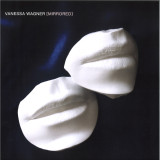
French pianist Vanessa Wagner collects solo piano studies of graceful minimalism and rare finesse for new album Mirrored.
Quickly following March 2022’s Study of the Invisible album, Vanessa Wagner returns with a new collection of work that paints in many colours. The application of shadow in Mirrored evokes haunting poignancy; the care and delicateness of its negative space leaves room for undulating melodic motifs to ebb and flow; its bold splashes of luminescence are striking and rich. And while the album collates re-interpretations of works by composers as varied as Philip Glass, Nico Muhly, Moondog, Leo Ferré and Camille Pepin, the potency and effect of the collection as a whole reflects only Vanessa Wagner and the extraordinary breadth of her abilities.
Performing solo, exposed to timbre, tempo and clarity, many of the pieces here - such as “Sea Horses” by (Vanessa’s one-time mentor) Moondog or Philip Glass’ “Etude 4” - demand virtuosic abilities as a performer and interpreter. But in Vanessa Wagner’s hands, they are not only made her own, but made mesmeric and magical by the sensitivity of her touch.

10
A joint release between Discos Nada & Litoral. Alcides Neves’ unique second LP ‚Des (Trambelhar) Ou Não’ is reissued for the first time on vinyl, alongside his first release ‚Tempo de Fratura‘.
Somewhat of a concept album, this LP was conceived as having a predominantly experimental A-side and a more folky B-side, with songs influenced by Alcides’ native Northeastern Brazil. Alcides chose to release his second record independently as well, owing to the risk-averse nature of the labels at the time. Indeed, rather than adapting to the demands of the labels and making more romantic or commercial music, Alcides went in the opposite direction and released the most experimental record of his career.
The result is an album with distinct identities on each side but with an experimental bent throughout. The LP’s sounds are reflected by its striking cover, which collates some of Alcides’ artistic heroes - Frank Zappa, Gilberto Gil, Jimi Hendrix, Arnold Schönberg, Igor Stravinsky (to whom he also dedicated a song on the LP) among others, above an artwork in the style of Northeastern Brazilian folk art.
By blending traditional regional Northeastern elements with an experimental approach and influences from 20th century classical music, Alcides Neves crafted one of the most unique Brazilian records.
Carefully remastered by Paulo Torres with updated original artwork, the record is reissued in a gatefold sleeve including a promotional image from the time of release. This LP furthermore includes an insert with a text written by the journalist and researcher Bento Araujo, editor of the bimonthly publication ‚Poeira Zine‘ and author of the ‚Lindo Sonho Delirante‘ series of books.

pink vinyl
Sciama's debut 12" for Auxiliary comes after four hugely successful cassette album releases over the past few years. Myriad collates four impressive beat-heavy tracks from Michael, spanning multiple genres and tempos.
Forced Inward starts proceedings by setting an ominous tone, before erupting into bass tones and soft percussive kicks. The beauty is revealed once the melodies take centre stage. Observe takes things on a more schizoid trip, with its anxious percussion and moody synth tones swelling against the frenetic pulsing kicks. The Lost Pleiad sees Sciama back in contemplative nature, while steadily raising the tempo and energy before Indignation seals off the EP with more brooding textural synth and bass-stabs.
Myriad is an EP you will not want to miss, and ticks all the boxes for what Auxiliary is about as a label.

In the late 90’s and early aughts, internet video capabilities like Real Video and Quicktime were expanding, proving the early prophecy that ‘anyone would be able to have their own television channel on the internet’ was indeed coming true. After the critical success of Mulholland Drive, director David Lynch doubled down on the medium, funneling virtually all of his time into personally animating, filming, and scoring content for his own internet destination: davidlynch.cm. It was fertile and limitless ground for a creative like Lynch, allowing him to return to the days of his experimental film roots, where it was actually possible for him to have his hands on every element of the process.
It was out of this newfound digital freedom that the early seeds of Inland Empire were born, evolving and fissuring from an internet-bound experiment itself, into something much more expansive. The film collated a variety of ideas and working methods that the recent web paradigm had nurtured in Lynch, one of which was an increased frequency of his own solo music productions. Having finished constructing his own personal recording studio in 1998, he was no longer tethered to the scheduling and high premiums of rented studio time and was free to accelerate his musical experimentation without constraint. As a direct result of this was a unique shift in Lynch’s musical trajectory; a shift that would eventually bear multiple albums and a short film featuring a lounge-crooning monkey. In the first weeks of 2005, Lynch would record a blues instrumental and instead of getting someone else to sing on the song, he would sing, via a formant and pitch-altering piece of equipment known as the Boss VT-1. It was because of the davidlynch animated series “Dumbland” that the director had discovered the device that would enable him to be ‘any character he needed.’ With “Ghost of Love,” Lynch was experimenting with bringing those ‘characters’ into his own musical compositions. Intrue Lynch fashion, it’s difficult to know which inspired which: did “Ghost of Love” birth a scene in Inland Empire, or did the film’s ideas birth the song? Just as “In Heaven” had served to encapsulate Eraserhead, “Ghost of Love” managed to encapsulate Inland Empire allowing its listener to close their eyes and immediately channel the film’s images and mood onto the screen of the mind.
“Ghost of Love” is backed with “Imaginary Girl,” originally released via CD single in 2006 are now finally seeing their vinyl and digital release for the first time in celebration of Inland Empire’s 2022 theatrical re-release. Both are signature cinematic Lynchian classics that feature Lynch on guitar and vocals, accompanied by his long-time collaborator and Sacred Bones staple Dean Hurley on bass.

11
Limited Edition 100 Only Red Vinyl LP - Hand Signed and Numbered / Quantity: 100 - Beth Blade and The Beautiful Disasters are a melodic Hard Rock band based out of Cardiff, South Wales. The four-piece provide monster riffs, huge choruses and a dose of old school rock and roll attitude. With aggressive muscle and melodic sensitivity, this band is reigniting the flame of British Hard Rock. They have an unmistakable modern presence whilst keeping the spirit of old school rock and roll alive. The band have been a non-stop force to be reckoned with, building a strong pedigree touring with Marco Mendoza and The Electric Boys, and have supported old and new legends such as Kee Marcello, Y and T, Dan Reed and Danny Vaughan, Ricky Warick and Damon Johnson, Massive Wagons, Those Damn Crows, Tyketto and Graham Bonnett. They are no strangers to festivals either having performed at Hard Rock Hell, Planet Rockstock, Monsterfest and most notably with KISS on the globally renowned KISS Kruise in the US. The band's first two albums received glowing reviews across the rock press and resulted in international radio airplay including heavy rotation on major networks in the UK. Beth herself has sung backing vocals on the last two Thunder albums with the latter reaching number 3 in the U.K. Top 40 Album Chart and number 1 in the U.K Rock Chart in March 2021. The band are currently working on album number 3 and have a number of live shows and festivals already booked alongside The Treatment, Mason Hill, Collateral and will be hitting the road again on a UK tour with Swedish Rockers Thunder Mother. The band is fiercely determined and has the grit to surpass their previous accomplishments through intense live performances and a passion for rock and roll that is unrivalled.'

Dana Kelley, aka DKMA, is a much revered writer, producer, remixer, performer and creative force whose releases have become timeless classics and Holy Grails amongst DJs, music heads and collectors alike. A true artist and innovator, his productions possess the unique ability to engage, transport, challenge and enthral as only next level musicians can.
Grounded in the deep, soulful US House sound of the mid '90's, his earliest releases can be found on Strictly Rhythm, before moving on to produce under his DKMA alias as well as releasing music as Callisto on Guidance. Although Dana sadly passed away in 2013, he left us with a remarkable body of work that has remained both exciting and relevant throughout the last 2 decades and beyond.
Boston Boy Vol.2 is the 2nd in a series of compilations that focuses on Dana's visionary work as DKMA, during his most compelling and creative phase between 1997 and 2002. The compilations themselves are collated from an incredible & far reaching archive of over 20 of Dana's original DATs that have been generously shared with us by the Kelley Family. In the archive, some of Dana's most sought after & cherished works were uncovered, restored and meticulously assembled alongside previously unheard archival material.
The tracks themselves are bold, clever and inventive, characterised by a need for innovation. Passages of deep soulful house underpin more forward thinking electronics without ever losing dance floor appeal. Jazz solos sit imaginatively on top of gritty swinging rhythms, deep infectious b-lines, eerie textures and chord sequences are warm and effortlessly soulful yet with a sound design, sonic range, dynamism and a technical prowess that most could only dream of.
These compilations celebrate the life, vision and art of one of house music's most hallowed producers. Unique and essential, these collections pull together DKMA's most coveted works. Respectfully sourced, restored and compiled from all audio sources courtesy of the Kelley family and Above Board Projects.
Mastered by Frank Merritt at The Carvery, London, with special artwork by Atelier Surplus featuring a special unseen image of Dana from his family's photo albums.

9
Hazeen is an anti-racist Muslim death metal band formed by Sydney-based artists, musicians and academics Safdar Ahmed on vocals and guitar, and Can Yalcinkaya on the drums and darbouka. Safdar Ahmed, has been invited to take part in dokumentafifteen with a video installation and a collateral album, to be released on Piranha Records.
