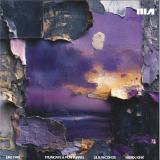
In spring 2025, Abul Mogard and Rafael Anton Irisarri created the source material for their second album, Where Light Pauses in the Silence of the Sun, during a three-day residency at Morphine Raum in Berlin. Functioning as both recording studio and performance venue, the space has no stage, with the audience gathered around the performers. Working within an open framework, the duo reshaped the music each evening while recording the performances live to multitrack. Rotary speakers, modular synthesizers and bowed guitar formed the core of their sonic language, captured through a 1970s mixing console and microphones placed around the room.
Back in Mogard’s studio in Rome, the material was further crafted as motifs were stretched, fragments isolated, and tempos dissolved. Irisarri recorded additional guitar textures and treatments in New York, while passages recorded by Martina Bertoni and Andrea Burelli in Berlin reinforced the harmonic centres and brought breath, refinement and a new sensibility to their compositions. The process continued as Mogard’s layering and subtraction reassembled everyone’s parts into the final arrangement.
The album opens with “In the Eastern Wild,” building from a sparse outline into a monumental formation of low-frequency weight, its internal motion shaped by the rotating Leslie speaker. “Over the Domes” widens into a broader acoustic field, where sustained modular tones meet waves of softly plucked guitar. The music then turns inward with “A Blue Descent,” centred on Bertoni’s cello, whose growling timbre introduces a melancholic depth.
At the album’s centre, “In a Quiet Radiance” unfolds around a slow guitar ostinato, its luminous stillness opening into a more expansive and reflective state. Across its ten-minute span, Burelli’s violin lines and Bertoni’s lower cello phrases gradually surface, weaving through the harmonic field. Mogard brings Burelli’s processed voice to the fore, its emotive, operatic presence becoming one of the record’s pivotal moments. “Of Blessed Ages” suspends the sonic flow, shifting between parallel major and minor chords as lingering, slowly decaying melodies shape the music’s internal drift. The closing “Among Shadows” settles into a darker resonance as layered textures recede.
Mogard and Irisarri’s shared language balances restraint and maximalism. UK magazine Crack describes the music as “a tidal wave held in suspension,” while Dutch newspaper de Volkskrant writes, “What a colossal sound, and how this music strikes at the emotions.” Reflecting on the residency sessions, Irisarri recalls: “At moments I genuinely couldn’t tell if a sound was coming from me or from Abul. It stopped feeling like two people making decisions and began to feel like we were inside a system moving on its own."
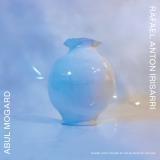
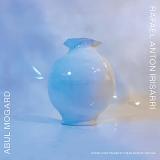
Marja de Sanctis’ cover artwork revisits the vessel sculpture from the duo’s first album, Impossibly Distant, Impossibly Close. There it appeared as raw, unfired clay. Here it has been fired in the kiln and finished with a glaze. Light gathers on its polished surface and spills into the surrounding space. As she explains, “I wanted to convey the idea of continuity within the duo, and the vessel became a kind of container for that idea. However, their music felt different this time, and with the collaboration of Martina and Andrea, I felt it should have a sleeker, softer, more glamorous look, very distant from the first raw appearance.” The transformation of the vessel from raw clay to fired form suggests a passage from immediacy toward permanence, mirroring the music’s gradual expansion.
Buscar:com a
In spring 2025, Abul Mogard and Rafael Anton Irisarri created the source material for their second album, Where Light Pauses in the Silence of the Sun, during a three-day residency at Morphine Raum in Berlin. Functioning as both recording studio and performance venue, the space has no stage, with the audience gathered around the performers. Working within an open framework, the duo reshaped the music each evening while recording the performances live to multitrack. Rotary speakers, modular synthesizers and bowed guitar formed the core of their sonic language, captured through a 1970s mixing console and microphones placed around the room.
Back in Mogard’s studio in Rome, the material was further crafted as motifs were stretched, fragments isolated, and tempos dissolved. Irisarri recorded additional guitar textures and treatments in New York, while passages recorded by Martina Bertoni and Andrea Burelli in Berlin reinforced the harmonic centres and brought breath, refinement and a new sensibility to their compositions. The process continued as Mogard’s layering and subtraction reassembled everyone’s parts into the final arrangement.
The album opens with “In the Eastern Wild,” building from a sparse outline into a monumental formation of low-frequency weight, its internal motion shaped by the rotating Leslie speaker. “Over the Domes” widens into a broader acoustic field, where sustained modular tones meet waves of softly plucked guitar. The music then turns inward with “A Blue Descent,” centred on Bertoni’s cello, whose growling timbre introduces a melancholic depth.
At the album’s centre, “In a Quiet Radiance” unfolds around a slow guitar ostinato, its luminous stillness opening into a more expansive and reflective state. Across its ten-minute span, Burelli’s violin lines and Bertoni’s lower cello phrases gradually surface, weaving through the harmonic field. Mogard brings Burelli’s processed voice to the fore, its emotive, operatic presence becoming one of the record’s pivotal moments. “Of Blessed Ages” suspends the sonic flow, shifting between parallel major and minor chords as lingering, slowly decaying melodies shape the music’s internal drift. The closing “Among Shadows” settles into a darker resonance as layered textures recede.
Mogard and Irisarri’s shared language balances restraint and maximalism. UK magazine Crack describes the music as “a tidal wave held in suspension,” while Dutch newspaper de Volkskrant writes, “What a colossal sound, and how this music strikes at the emotions.” Reflecting on the residency sessions, Irisarri recalls: “At moments I genuinely couldn’t tell if a sound was coming from me or from Abul. It stopped feeling like two people making decisions and began to feel like we were inside a system moving on its own."
Marja de Sanctis’ cover artwork revisits the vessel sculpture from the duo’s first album, Impossibly Distant, Impossibly Close. There it appeared as raw, unfired clay. Here it has been fired in the kiln and finished with a glaze. Light gathers on its polished surface and spills into the surrounding space. As she explains, “I wanted to convey the idea of continuity within the duo, and the vessel became a kind of container for that idea. However, their music felt different this time, and with the collaboration of Martina and Andrea, I felt it should have a sleeker, softer, more glamorous look, very distant from the first raw appearance.” The transformation of the vessel from raw clay to fired form suggests a passage from immediacy toward permanence, mirroring the music’s gradual expansion.
In spring 2025, Abul Mogard and Rafael Anton Irisarri created the source material for their second album, Where Light Pauses in the Silence of the Sun, during a three-day residency at Morphine Raum in Berlin. Functioning as both recording studio and performance venue, the space has no stage, with the audience gathered around the performers. Working within an open framework, the duo reshaped the music each evening while recording the performances live to multitrack. Rotary speakers, modular synthesizers and bowed guitar formed the core of their sonic language, captured through a 1970s mixing console and microphones placed around the room.
Back in Mogard’s studio in Rome, the material was further crafted as motifs were stretched, fragments isolated, and tempos dissolved. Irisarri recorded additional guitar textures and treatments in New York, while passages recorded by Martina Bertoni and Andrea Burelli in Berlin reinforced the harmonic centres and brought breath, refinement and a new sensibility to their compositions. The process continued as Mogard’s layering and subtraction reassembled everyone’s parts into the final arrangement.
The album opens with “In the Eastern Wild,” building from a sparse outline into a monumental formation of low-frequency weight, its internal motion shaped by the rotating Leslie speaker. “Over the Domes” widens into a broader acoustic field, where sustained modular tones meet waves of softly plucked guitar. The music then turns inward with “A Blue Descent,” centred on Bertoni’s cello, whose growling timbre introduces a melancholic depth.
At the album’s centre, “In a Quiet Radiance” unfolds around a slow guitar ostinato, its luminous stillness opening into a more expansive and reflective state. Across its ten-minute span, Burelli’s violin lines and Bertoni’s lower cello phrases gradually surface, weaving through the harmonic field. Mogard brings Burelli’s processed voice to the fore, its emotive, operatic presence becoming one of the record’s pivotal moments. “Of Blessed Ages” suspends the sonic flow, shifting between parallel major and minor chords as lingering, slowly decaying melodies shape the music’s internal drift. The closing “Among Shadows” settles into a darker resonance as layered textures recede.
Mogard and Irisarri’s shared language balances restraint and maximalism. UK magazine Crack describes the music as “a tidal wave held in suspension,” while Dutch newspaper de Volkskrant writes, “What a colossal sound, and how this music strikes at the emotions.” Reflecting on the residency sessions, Irisarri recalls: “At moments I genuinely couldn’t tell if a sound was coming from me or from Abul. It stopped feeling like two people making decisions and began to feel like we were inside a system moving on its own."
Marja de Sanctis’ cover artwork revisits the vessel sculpture from the duo’s first album, Impossibly Distant, Impossibly Close. There it appeared as raw, unfired clay. Here it has been fired in the kiln and finished with a glaze. Light gathers on its polished surface and spills into the surrounding space. As she explains, “I wanted to convey the idea of continuity within the duo, and the vessel became a kind of container for that idea. However, their music felt different this time, and with the collaboration of Martina and Andrea, I felt it should have a sleeker, softer, more glamorous look, very distant from the first raw appearance.” The transformation of the vessel from raw clay to fired form suggests a passage from immediacy toward permanence, mirroring the music’s gradual expansion.

The arrival of REAL, Vol. 1 marks a seismic shift in the global music landscape, uniting two of Nigeria’s most formidable forces for a project that defines the current zenith of Afrobeats. This collaborative effort sees Wizkid, the smooth-talking pioneer of the genre’s international expansion, and Asake, the "Mr. Money" whose neo-Fuji sound redefined the street-pop aesthetic, finding a middle ground between luxury and grit. The project serves as a sonic bridge between eras, blending the minimalist, high-fashion sensibilities of Wizkid’s recent output with the high-octane, choir-backed energy that has made Asake a household name. It is less of a competition and more of a conversation between two masters of their craft, exploring themes of spiritual gratitude, the weight of superstardom, and the unyielding pulse of Lagos.
With soundscapes both cinematic and deeply rhythmic, the production moves beyond standard club formulas, opting instead for a sophisticated fusion of traditional Yoruba percussion, shimmering synths, and the heavy, resonant log drums of Amapiano. Wizkid provides the effortless, melodic swagger that acts as the project's anchor, while Asake injects a spiritual intensity through his signature layered chanting and rapid-fire flows.
Ultimately, REAL, Vol. 1 is a celebration of authenticity in an era of global crossover. By stripping away the pressure of conforming to Western pop standards, Wizkid and Asake have created a body of work that is unapologetically Nigerian yet universally resonant. It captures the spirit of a city that never sleeps and the ambition of two artists who have conquered the world without losing their souls. This is more than just a collection of hits; it is a blueprint for the future of African music, proving that when Wizkid and Asake occupy the same frequency, the result is nothing short of legendary.
- Pray To The Sun Feat. Declan De Barra & The Hu
- Am I Enough (Tony Tony Chopper) Feat. Au/Ra
- Whisky Peak Saloon Feat. Leo P
- Miss All Sunday
- Dr. Kureha
- Cherry Blossom Miracle
- Welcome Aboard Doctor
- Dorry & Brogy
- Smoker
- Igaram's Sacrifice
- In Elbaf We Have A Ritual
- Miss Wednesday
- Drum Kingdom
- What's An Army Of Monsters To The Hero Of Little Garden
- My Sails Are Set (Loguetown Opera Version)
- Tony Tony Chopper (Instrumental Suite)
- Humans Are Not The Only Ones Who Can Be Cruel
- Pirate Is Someone Who Has Adventures And Dreams
- Potion To Cure All Diseases Of The Heart
- Peace Offering
- Hoist This Flag And Fight Like A Pirate
- Doctor Hiriluk Won't Be Back
- When Does A Man Die? When He Is Forgotten
- Reverse Mountain
- Who Wants To Make A Snowman
- The Sedative Is Losing Its Effectiveness
- Zoro - 1 Vs 100 Part Iii
- In Alabasta We Ride Ducks
- Miss Goldenweek
- Drum Kingdom Is Saved
Capturing the full scope of the Straw Hat Crew’s journey into the Grand Line, this collection brings together the massive, high energy score by award winning composers Sonya Belousova and Giona Ostinelli. From the shores of Loguetown to the snowy peaks of Drum Island, every moment of the voyage is brought to life through soaring orchestral arrangements and unforgettable pirate anthems.
2LP Audiophile Black Vinyl: Two 12 inch records pressed on high quality black vinyl for a classic look and superior sound fidelity, delivering every orchestral swell with crystal clear precision.
Double CD Set: Two discs featuring the complete original score and songs, presented in a premium compact format.
Premium Packaging: A double gatefold jacket for the vinyl edition and a three fold digipack for the CD, both showcasing vibrant cinematic artwork of Luffy and the Straw Hat Crew.
Complete Soundtrack: Over 40 tracks spanning the entire second season, including character themes, emotional moments and epic battle motifs.
Whether at home or on your own journey, this release is the perfect way to keep the spirit of adventure alive, immersing you fully in the world of One Piece.
Netflix’s epic high seas pirate adventure, ONE PIECE, returns for Season 2, unleashing fiercer adversaries and the most perilous quests yet. Luffy and the Straw Hats set sail for the extraordinary Grand Line, a legendary stretch of sea where danger and wonder await at every turn. As they journey through this unpredictable realm in search of the world’s greatest treasure, they will encounter bizarre islands and a host of formidable new enemies
WRWTFWW Records unleashes the first ever release of legendary post-disco, funk, soul and electronic UK trio Imagination's cult album Night Dubbing in (well deserved) double LP format. The limited edition full-length comes with pristine audiophile treatment and luxurious packaging : a 45rpm and Half Speed Mastered DLP housed in heavyweight silver cardboard sleeve.
Imagination's singular 1983 album Night Dubbing is a refined deconstruction of black British soul and club pop, filtered through the deep studio and mixing techniques of dub music. Elegant, restrained, and, in its very own subtle way, radical, the record reshapes choice selections from the group's stellar catalogue into an immersive and out-of-this-world listening experience.
The special mixes on Night Dubbing are built on time and space. Basslines elongate and dissolve. Vocals appear, vanish, and reappear like ghosts. Drums fall away into vast silences, while echoes, tape edits, and precise engineering manoeuvres smoothly slide across the stereo field, revealing themselves like magic over repeated listens. Far from simple extensions or 12" versions, Night Dubbing treats the studio itself as an instrument, opening new dimensions of sound.
Often cited as a foundational record in the genesis of the house genre, the album also features the historic Larry Levan remix of "Changes", a Paradise Garage anthem that helped shape the direction of club music for decades to come.
More than 40 years on, Night Dubbing remains a seminal work. Its influence continues to echo through contemporary dance music, offering a blueprint for how pop could be transformed into something darker, stranger, more physical - a timeless sound that drifts effortlessly from the dancefloor into space.
Important note : it sounds amazing played on 33rpm too !
Alistair Colling vs. Tortured Soul featuring Sabina
When You Find Your Love…Hold On 25th Anniversary Mixes
25 years ago, at the turn of the millennium, downtown NYC was spoiled with record stores. In this pre-digital age, vinyl was king for club DJs, and shops such as Downtown 161, Dance Tracks, and Vinyl Mania peppered lower Manhattan, thriving businesses that supported an expanding scene of local and international DJs. Perhaps the largest and most established of these was Satellite Records, an institution of club sounds that also spawned multiple record labels, including the deep-house imprint Central Park Recordings.
At this time, Central Park Recordings and Satellite Records owner Scott Richmond signed a demo in need of a vocal from young British producer Alistair Colling, and enlisted John-Christian Urich to write it, who had just had a massive hit with “I Might Do Something Wrong” the debut Tortured Soul single on Central Park. He in turn brought in Sabina Sciubba of then newly-formed band Brazilian Girls to record the vocal, and with Jon Cutler on remix duties the record was complete. Tortured Soul went on to release numerous deep house classics like “Fall In Love,” “How’s Your Life” and have continued to tour as a groundbreaking live-house act to this day (of which RNT co-founder JKriv was bassist and collaborator for 10 years).
For the 25th anniversary of this turning point release, Razor-N-Tape has rebooted and remastered the original and classic Jon Cutler mixes, which have never been reissued in any format since the original release. RNT also commissioned two new exemplary remixes from DJ Spinna and musclecars, connecting the dots between the deep-house lineage of the past and present. Presented in a gorgeous jacket that calls back to the graphical style of the original Central Park Recordings aesthetic, this 12” is an absolute essential for any lover of soulful club sounds or purveyor of NYC dance music history.
2026 Repress
WOW. Released on Valentine's Day 2025, we're deeply honoured to present the first time reissue of the first *ever* heart-shaped red vinyl 45. Extremely limited!
The smooth titan of blue-eyed soul, Bobby Caldwell transcended genre tags with consummate ease; he was a musical icon of real class and versatility, cherished the world over.
Here we present two timeless masterpieces of sophisticated jazzy soul brilliance that are strictly canonical.
The originals of these red heart-shaped vinyl records go for stupid money - if you can find one in good condition. Here's your chance to snag a real collectors item for fans of Bobby and, well, LOVE, the world over.
The eternal "What You Won't Do for Love" became a national anthem. It remains that way - perhaps even more so in the past year or two. It perfectly captured Bobby's ability to infuse a contagious groove with introspective and relatable lyrics. With its instantly recognisable horn riff and Caldwell's soulful delivery, this timeless, chiller anthem continues to captivate audiences and define his musical legacy.
A perennial favourite, it has been heavily sampled, such is its unique allure; Aaliyah sang over snatches of it on "Age Ain’t Nothing But A Number" and you can hear Caldwell’s vocal sample used for the hook on Tupac’s posthumously released “Do For Love”.
Bobby's dynamite "Open Your Eyes" was immortalised by the eternal J Dilla in the hip-hop canon with his production of Common’s epochal “The Light,” which heavily samples the magical “Open Your Eyes.” On a post paying tribute to Bobby in March 2023,
Minor Notes continues to explore and open up the world of Russia's underground electronic scene. The new vinyl release is a collection of original works by the highly experienced Kaluga-based music producer Chivee Gres. The record perfectly showcases the sound of Deep House and Jackin, showcasing Nikita's subtle sampling, masterful arrangement, and deep knowledge of production techniques. This music is made for the dancefloor: Side A is the perfect companion to any warmap, while Side B will brighten up primetime with its bouncy sound.
2026 Represss
An artist who needs no introduction, Mike Dunn returns to the legendary NYC label Nu Groove with a four-track vinyl release that brings together disparate influences from the master’s encyclopaedic knowledge of genre and style.
What results are productions that are at once timeless, a quality that can only be achieved through the lived experiences of a four-decade career. Title track ‘Git’cha House On, Baby’ is a late 80s freestyle throwback, with hard synth lines running the show, while ‘Don’t Pay Me No Mind’ is a metropolitan anthem led by a solid piano groove.
Additionally, the vinyl features two tracks from Dunn’s ‘Rock Ya Body (Deepa)’; the lead, an effortlessly cool deliverance of pure, unadulterated house, and ‘Let’cha Love Fall Down On Me’ which swells and flows with addictive ease. Elevating all four compositions are the producer’s signature vocals, immediately arresting and suitable for all genres. Dunn’s status as an innovator was earned through creating and influencing the scenes we know and love today, and this new delivery of originals further cements his status as a 100% house master.
Elfenberg nurtures four meticulously crafted progressions, a digital pet project draped in velvet grooves. Evolving with the patience of luxury craftsmanship and the addictive glow of a pixelated companion, feeding hypnotic cycles into transcendent dancefloor rituals. This is where underground devotion meets haute couture electronics. Press play, watch it grow, never let it fade, let it consume you.
Die legendäre Trance-Hymne „Traumwelten“ kehrt zurück – kraftvoll neu interpretiert von Talla 2XLC und Das Licht (aka DJ Dean). Diese farbige Maxi-Vinyl liefert zwei kompromisslose Club-Versionen eines absoluten Kulttracks.
Side A – Traumwelten (Recreate Mix): Mit einem pulsierenden Tempo von 140 BPM entfacht der Recreate Mix ein wahres Feuerwerk aus tiefen Basslines, treibenden Drums und schimmernden Melodien. Die gewagten Breakdowns steigern die Spannung und treiben die Energie bis zum Höhepunkt. Eine hypnotische, gesprochene weibliche Stimme sorgt für mystische Vibes, bevor er in einen euphorischen Rausch aus aufsteigenden, mitreißenden Melodien übergeht.
Side B – Traumwelten (RRAW! Mix): Dunkler, härter, kompromisslos: Der RRAW! Mix startet als druckvolle TechnoTrance-Fusion, die mit massiven Basslines und satten Techno-Kicks beginnt. Dunkle, deutschsprachige Vocals und atmosphärische Effekte fügen dem Track eine immersive, mystische Tiefe hinzu. Der zweite Drop überrascht mit einer euphorischen Melodie, die von technoiden Rhythmen in ekstatische Trance-Elemente übergeht. Dieser Mix glänzt durchseine Vielseitigkeit und eignet sich sowohl für Techno-DJs als auch für Trance-Crowds.
Ein starkes Comeback eines Klassikers – zeitgemäß, druckvoll und ein Must-Have für alle Vinyl-Liebhaber.
Tilaye Gebre is one of Ethiopia’s most soulful saxophone giants, with a musical legacy that’s hard to surpass. A founding member of the Equators, later renamed the Dahlak Band, he was a key figure in Ethiopia’s vibrant hotel music scene and a sought-after musician and arranger for artists like Aster Aweke, Mahmoud Ahmed, Tilahun Gessesse, and Muluken Melesse.
Tilaye — still going strong — was at the epicenter of the Ethiopian music scene during one of the most turbulent periods in the country’s history. Tilaye’s musical trajectory, regardless of the forms it has taken over the decades, is simply ceaseless. The road to a musical career spanning six decades started out winding, and the first steps came almost as a fluke.
With the Dahlak Band, Tilaye had managed to secure a musical residency at the legendary Ghion Hotel, where they honed their skills and developed their musical expression to unparalleled levels. From the late sixties onwards, Dahlak Band lit up Addis Ababa with a mixture of James Brown and Wilson Pickett tunes, rhythm and blues, soul, funk, and the sound of the disco era — mixed with modern Ethiopian styles — serving up majestic concoctions with full-range instrumentation, featuring trumpet, keyboard, saxophone, bass, drums, and guitar. Through their hotel sessions, Tilaye developed further as an arranger, arranging fellow band member Muluken Melesse’s first solo album, Muluken Melesse with the Dahlak Band (Kaifa Records – LPKF 39), recorded during the turbulent years of 1975–1976, following the fall of Haile Selassie. Everything was in flux in this transitional period, but a constant was how Tilaye stood in the spotlight. On that record, there’s a loose vibe to the soundscape that lets Tilaye’s skills shine, while all the other musical contributions coalesce into a slowly cooking atmosphere where the groove at times fluctuates into psychedelic territory, making the music stand out from most contemporaries.
Most of their recorded output came from one-take live cassette recordings at the Ghion, or from music shops at that time — one microphone at the front, hit record: no EQ, no reverb, just some delay. Some of the Dahlak Band’s releases featured Tilaye as frontman, such as Tilaye’s Saxophone with the Dahlak Band from the late 1970s — typical of a rare groove on the Ethiopian scene — with excursions into reggae territory, including the band’s characteristic sound featuring Tilaye Gebre (tenor and alto saxophone), Dawit Yifru (organ), David Kassa (electric guitar), Shimelis Beyene (trumpet), Moges Habte (tenor saxophone), Abera Feyissa (bass guitar), Tesfaye Tessema (drums), and Muluken Melesse (cowbell). The Dahlak Band’s output was so prodigious that they simply couldn’t be pigeonholed.
No saxophonist in Ethiopia influenced the sound of popular music more than Tilaye in the 1970s, yet his recordings have been hard to come by for ages, which has meant that newcomers to the scene have gems to uncover in retrospect. Arguably, Tilaye shifted gears when he relocated to the U.S. to such an extent that his musicianship became even more renowned, accompanying the greatest of his contemporaries internationally. Tilaye is one of Ethiopia’s all-time greats, with a musical legacy — both as musician and arranger — that’s hard to surpass. It’s a wonder to be able to enjoy a recording like this half a century later.
Lovski, alias Igor Sekulović, is redefining the Balkan musical landscape. A master guitarist and erstwhile “Projekt Rakjia” band member, he forges an uncanny blend of traditional folk melodies with dance, electronic and rock energy.
His debut solo album, Discoteka Jugoslavija—produced in collaboration with Napoli’s producer Raffaele “Whodamanny” Arcella—ventures through Italo-disco pulses, reggae grooves and psychedelic swirls, all anchored by the call-and-response warmth of Balkan traditional instruments. Each track feels like a borderless road trip: hypnotic rhythm sections give way to soaring guitar solos that nod to ancestral folk tunes, while propulsive synth arpeggios push listeners into tomorrow’s club.
Lovski’s signature lies in his seamless genre alchemy. He honors regional roots without succumbing to nostalgia, instead reframing folk elements as raw material for global dancefloors. As a performer, his live shows pulse with communal ecstasy—drawing dancing crowds around campfires of light, smoke and bass.
In a scene ripe for innovation, Lovski stands out as both torchbearer and trailblazer—proof that the Balkans still have surprises to offer, and that the old and new can coexist in brilliant harmony.
Launching its first compilation, Fastgroove Klub gathers astrong lineup of artists who share the same vision of high-energy, uncompromising techno.
This debut VariousArtists release highlights the essence of the label: rawintensity, fast-paced grooves, and a forward-thinkingapproach deeply rooted in the spirit of the '90s.
Featuring contributions from Felicie, Lars Huismann, Steve Redhead, Kabay, Fhase 87, and Vrov, the VAexplores a wide spectrum of styles while keeping thedancefloor at its center. Each track carries the distinctsignature of its creator, yet together they form a unifiedstatement that reflects the label's ethos: relentlessrhythms for unstoppable momentum.
With this first collective effort, Fastgroove Klub sets thetone for what lies ahead - a space where energy, passion,and uncompromising techno collide.
FUSE11 - Rosati - Divina Nostalgia
For Fuse Imprint's eleventh release and the first of 2026, Rosati unveils 'Divina Nostalgia', an ode to vibrancy in dance music through four truly euphoric tracks. The Italian artist focuses on the enduring power of vintage production with a much-needed spotlight on techno's optimistic underbelly, resulting in a sound that is both charismatic and electrifying.
'Division' sets the tone of the EP with playful percussion and bright synth work that unravels as the track progresses. Rosati utilizes the full character of the 909 for the flair that drives the record: rides, claps, and open hi-hats thunder through the arrangement in celebration of each transition. The artist then zeros in on 'Echoes', tightening the energy with an unflinchingly analog bassline and lush pads that round out the harsher edges of the percussion. This serves as a more linear approach for immediate effect; where the track favors minimalism, it provides maximum impact.
Gradually turning up the energy, 'Orbital' jumps through toms and filtered chord stabs to emphasize the record's extroverted nature. The synths dazzle along the rolling drums for a track that possesses house's temperament but techno's insistence. Finally, the title track 'Divina Nostalgia' concludes the EP in a moment of pure release. If you wondered where jazz comes into the picture, just ask Rosati. Organs, Rhodes, swing, and sustained tension slice through to a victorious finish line that highlights dance music's command of the present moment.
Clusters of Noise LPR-V006, kicks off 2026 for Loopaina Records with a powerful vinyl release crafted by two standout names in the international techno scene: Oliver Rosemann and Carmelo Ponente. Photo taken in Mundukalogue between both artists, each delivering their own raw, focused vision of contemporary techno.
The A-side features one original track from each artist, clearly defining their individual styles.
On the B-side, they switch roles to offer remixes of each other's work-expanding the sonic palette of the release while maintaining a cohesive and impactful sound.
Clusters of Noise is a bold statement for the new year at Loopaina Records: quality sound, committed artists, and a strong devotion to the vinyl format while embracing digital as well. A solid, high-impact release that perfectly captures the spirit of the label.
All music written and produced by Oliver Rosemann & Carmelo Ponente
This release represents the musical union of two friends who, despite the distance, have always found in music the place where they stay close. This EP is the proof that when the connection is real, sound becomes common ground - a space to share moments, ideas, and energy beyond geography.
Both artists have been devoted to physical formats from the very beginning, especially vinyl. They have always been record collectors, and that passion shapes the intention behind this project: a work conceived with the depth, respect, and materiality that only vinyl can convey. This EP is more than music; it is a cultural object that preserves a way of understanding techno.
Creatively, Truncate and Pushmann set out to merge their sonic identities. The result is an EP charged with strength, built for the dancefloor, and defined by a clear aesthetic: raw energy, firm rhythm, and a contemporary reading of hardgroove and jackin. These are intense, direct tracks - the kind that emerge when two visions complement each other effortlessly.
In a scene often driven by speed and overstimulation, this release stands out for its authenticity. It is fast, funky techno, yes, but crafted with soul, intention, and emotional depth. It does not chase trends; it delivers groove, substance, and a recognisable sonic character from the first bar.
Inspired by rave culture and the pure roots of hardgroove, this EP offers a journey that blends functionality, sensitivity, and force. A project that reinforces LILA's philosophy: preserving the essence of techno and supporting those who create it with passion.
- A1: Be Your Husband (Live)
- A2: Lover, You Should've Come Over (Live)
- A3: Mojo Pin (Live)
- A4: Monologue - Duane Eddy, Songs For Lovers (Live)
- B1: Grace (Live)
- B2: Monologue - Reverb, The Doors (Live)
- B3: Strange Fruit (Live)
- B4: Night Flight (Live)
- C1: If You Knew (Live)
- C2: Monologue - Fabulous Time For A Guinness (Live)
- C3: Unforgiven (Last Goodbye) (Live)
- C4: Twelfth Of Never (Live)
- C5: Monologue - Café Days (Live)
- D1: Monologue - Eternal Life (Live)
- D2: Eternal Life (Live)
- D3: Just Like A Woman (Live)
- D4: Monologue - False Start, Apology, Miles Davis (Live)
- D5: Calling You (Live)
- E1: Monologue - Nusrat, He's My Elvis (Live)
- E2: Yeh Jo Halka Saroor Hai (Live)
- E3: Monologue - I'm A Ridiculous Person (Live)
- E4: If You See Her, Say Hello (Live)
- F1: Monologue - Matt Dillon, Hollies, Classic Rock Radio (Live)
- F2: Dink's Song (Live)
- F5: Monologue - The Suckiest Water (Live)
- G1: The Way Young Lovers Do (Live)
- G2: Monologue - Walk Through Walls (Live)
- G3: Je N'en Connais Pas La Fin (Live)
- G4: I Shall Be Released (Live)
- H1: Sweet Thing (Live)
- H2: Monologue - Good Night Bill (Live)
- H3: Hallelujah (Live)
- F3: Monologue - Musical Chairs (Live)
- F4: Drown In My Own Tears (Live)
A rising artist of the French electronic scene, Naajet asserts her identity with The Night Starts Now, a four-track EP that celebrates the freedom and intensity of the night. Co-founder of the Bande de Filles collective and known for her explosive universe blending House, Hardgroove and Breaks, as well as for the unique energy inherited from her dance background, Naajet delivers here a sonic manifesto conceived as an ode to club culture and to the present moment.
“I imagined this EP as an anthem to the world of the night. The night offers us unparalleled freedom, an outlet that allows us to be ourselves, to create, to love. The Night Starts Now captures this celebration of the present moment and this declaration of independence.” Naajet Opening the EP, “Ready To Shine” unfolds radiant House nourished by Pop and 90’s sounds. With a clear and ascending rhythm, the track combines euphoria and introspection. “I composed this track as a joyful and introspective journey that prepares us to embrace the night. For me, it is a call to accept our wounds, to transform them into light and strength, so that we may shine brighter when we enter the club,” explains Naajet. Between ethereal vocal lines and shimmering pads, the track acts as a ritual of entering the night, inviting us to turn wounds into strength and to shine on the dancefloor. The second track of the EP, “Sugar”, embodies the effervescence of the club. Carried by a hypnotic voice and an effervescent rhythm, the track celebrates the communion of bodies and the liberating energy of dance. “It is an ode to dance and to bodies coming together. This track speaks of those moments when, on the dancefloor, boundaries fall: we sweat together, we free ourselves together, and energy flows from one body to another,” says Naajet. A true concentrate of intensity, “Sugar” captures the moment when sweat, rhythm and abandon merge into a collective movement towards freedom.
With “I Can Be Anything”, Naajet changes register and flirts with deeper, even techno textures. Built on a throbbing pulse and sharp synths, this track is meant as a manifesto of identity. “I really wanted to propose a track that claims our right to free and plural expression and sexuality. I Can Be Anything is about our multiple identities, our ability to reinvent ourselves and to refuse any form of formatting,” she says. Between club intensity and political resonance, “I Can Be Anything” questions our multiple facets and embodies the assertion of an elusive and free self. Closing the EP on an euphoric note, “May It Never End” stands out with its broken rhythms and powerful synths. The track conveys the transcendent energy of the end of the night, when dawn arrives but we refuse to leave the collective trance. “I wanted to put into music this feeling of infinite energy, when time is suspended and the party seems to never have to stop. It is this euphoric vertigo that connects us all in the same breath, this utopia of a night that would never end,” says Naajet. A true apotheosis, this track embodies the utopia of an eternal night.
DJ, producer and co-founder of the Bande de Filles collective, Naajet has established herself with a singular universe where House, Hardgroove and Breaks blend, nourished by her background as a dancer and an instinctive sense of groove. For the past three years, she has performed on French and European stages – from Berlin to Amsterdam, via Geneva and Oslo – and has made her mark in clubs such as Rex Club, Le Sucre and Badaboum, as well as festivals like Nuits Sonores and Kolorz. On the production side, she has released several acclaimed EPs on renowned labels such as Shall Not Fade and Monki & Friends. In 2025, she takes a new step with the launch of her label SWEAT Records and a residency at Le Sacré in Paris, affirming her role as an ambassador of a free and intense club culture. She also collaborates with the waacking company MADOKI, for which she composes and mixes projects at the crossroads of dance and music. With The Night Starts Now, Naajet confirms her status as an essential artist of the new electronic generation1