Harold McNair was a Jamaican born saxophonist and flautist who settle in London in 1960. He played regularly at Ronnie Scott's club and with contemporary UK Jazz musicians like John Cameron and was a member of Donovan's band in the mid to late 60s. His most famous recording 'The Hipster' comes from his second UK album and was issued on RCA as a 45 in 1968, which is now very in demand and sells for approx £300.
The track has become one of the most iconic 60s British Jazz dance tracks and was featured on Gilles Peterson Impressed Vol 2 compilation.
It's influence can be heard on recent UK Jazz recordings by Chip Wickham and others .
We are delighted to release this great track on 45 for the first time since its original issue 55 years ago, it still sounds remarkable ‘Hip’. It has been remastered from the original tapes with a look a like 4 prong centre image label. The single is likely to be met with significant demand.
Search:com sin
- A1: Begrüßung Und Buntspecht
- A2: Afraid Of Seeing Stars? (Heimische Gefilde Edit)
- A3: Uhu
- A4: Adler (Heimische Gefilde Edit)
- A5: Rote Waldameise
- A6: Klangteppichverleger Wolle (Heimische Gefilde Edit)
- B1: Goldammer
- B2: Die Alpenstrandläufer Von Spiekeroog
- B3: Feldgrille
- B4: Björn Borkenkäfer (Heimische Gefilde Edit)
- B5: Eistaucher
- B6: Der Hecht Im Karpfenteich (Heimische Gefilde Edit)
- C1: Gelbbauchunke
- C2: Die Rotbauchunken Vom Tegernsee (Heimische Gefilde Edit)
- C3: Nachtigall
- C4: Gasthof "Zum Satten Bass" (Heimische Gefilde Edit)
- C5: Rauhhautfledermaus Und Großer Abendsegler
- C6: Der Buchdrucker (Heimische Gefilde Edit)
- D1: Waldkauz
- D2: Harzer Roller (Heimische Gefilde Edit)
- D3: Ein Stelldichein Des Westerwälder Vogelchores
2026 Repress
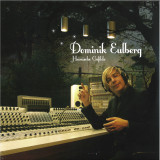
Originally released in 2007 on CD and now re-released on double vinyl. "Heimische Gefilde" was the second full-length release on Traum at that time from Westerwald based DJ, producer and park ranger, Dominik Eulberg. Dominik has since then expended his activities enormously now appearing as a book author with best selling books in the German official bestseller list. He ist he ambassador of the most popular Conservation Union in Germany NABU, he has created a bird quartet and a hand made insect hotel and appears on national German TV regularly next playing in clubs world wide and producing stunning music. "Heimische Gefilde" includes spoken words by the man himself and the release won the price of the German critic awards for music. It is the only compilation that comprises a selection of Dominik Eulberg’s best early works and it is for the first time available on vinyl now.
As Dominik Eulberg says in his own words: „After more than 16 years, "Heimische Gefilde" is finally released on vinyl. At that time it was still a daring experiment to combine music with lustful science communication. Quickly one was thrown into the pot of the "weird eco-techno sound owl". Today, we are increasingly finding that we cannot stop the impending ecocide in a cognitive way. For more than 60 years we have known about the concrete threats to humanity from global warming and species extinction; yet nothing changes. Many alarmist efforts fail miserably, red lists grow longer and longer each year, and global temperatures continue to rise unchecked. It is becoming clearer and clearer that we have to reach out to our fellow human beings in a positive emotional way in order to make a difference, because we only protect what we love. Then sentimental minorities become majorities that change something. Art and culture are low-threshold vectors to make things majority-friendly. They are a fertile and valuable breeding ground to sensitize people outside the eco-bubble and to let their environment become a co-environment again. Today my transdisipilnary work is inseparable. I write books, develop games, lecture, make film, and am a visiting scholar at museums. "Heimische Gefilde" was a valuable cornerstone for my creative work, a very intrinsic work to go my very own way.“
We would also like quote here the description of Forced Exposure done at the time when the album was originally recorded and released to keep the authentic feel: „The influence of nature (bird twitters, owl hoots, flowing water, crunching leaves) and other domestic sounds has made his music easy to identify with. „Heimische Gefilde" means "native habitat," and this release takes the concept of his debut a step further and at the same time is a retrospective of his major hits. Tracks like "Die Rotbauchunken vom Tegernsee" and "Björn Borkenkäfer" are included here in unreleased edits that are even stronger than the originals, and as a bonus, previously vinyl-only
- A1: Everything I Own
- A2: Silver Words
- A3: I Wish It Could Be Peaceful Again
- A4: Artibella
- A5: Lady With The Starlight
- A6: Walk Away From Love
- A7: Why Baby Why
- B1: Is It Because I'm Black?
- B2: Freedom Street
- B3: Live Good
- B4: Let Go
- B5: Can't Fight Me Down
- B6: Your Feeling & Mine
- B7: You're No Good
- C1: Crying Over You
- C2: It's Gonna Take A Miracle
- C3: Who Gets Your Love
- C4: Say You
- C5: (That's The Way) Nature Planned It (That's The Way)
- C6: Now I Know
- C7: I'm Not For Sale
- D1: Freedom Day Aka Freedom Time
- D2: Love & Unity
- D3: Somewhere
- D6: Got To Get Away
- D7: Love Don't Love Nobody
- D4: Rasta Never Fails (Feat Lloyd Charmers)
- D5: Satta Massagana
Ken Boothe, der wohl begabteste jamaikanische Musiker seiner Generation, gilt heute als lebende Legende, dieüber einen Zeitraum von rund 60 Jahren unzählige Ska-, Rock-Steady- und Reggae-Klassiker aufgenommen hat.
Nach seinem Aufnahmedebüt im Jahr 1962 erlebte Ken Boothe eine äußerst erfolgreiche Karriere in Jamaika, bevor er 1974 mit seiner Interpretation von "Everything I Own" und dem Top-10-Nachfolger "Crying Over You" internationalen Ruhm erlangte.
Diese beiden äußerst beliebten Titel sind auf dieser Sammlung enthalten, die Teil der neuen "Essential Artist"-Serie von Trojan Record ist und die beliebtesten Aufnahmen einiger der größten
Musiktalente Jamaikas präsentiert.
Erhältlich als 28-Track-Doppel-Vinyl-LP und als umfassende 2CD-Compilation, zeigen beide Veröffentlichungen das außergewöhnliche Gesangstalent eines der besten und gefühlvollsten Interpreten, die der modernen Popmusikszene seit den Sechzigern ihren Stempel aufgedrückt haben.
We're thrilled to release two exciting electro tracks by Art P, as well as the classic minimal synthwave tune 'Der böse Osten' by related band project Die Synthetische Republik on this limited split 12".
The single kicks off with 'Genscher Pull and Push', an incredible and previously unreleased electro/wave/proto-techno tune from the P.A.P. archives, recorded in October 1982 with a political background. The song was only available on a demo cassette for a radio show and had been forgotten since then. Genscher was a long-time Federal Minister for Foreign Affairs and Vice Chancellor of Germany, who played a key role in a coalition change in September/October 1982, leading his party, the FDP, to leave the Helmut Schmidt cabinet with the SPD and continue with the opposition, the CDU/CSU. As a result, the German lyrics of the song shout 'bitte geh nach links / bitte geh nach rechts' ('please go to the left' - meaning the left-leaning SPD, and 'please go to the right' - meaning the right-leaning CDU), and so on.
Unfortunately, this track was never released, as the topic of the coalition change quickly became uninteresting and outdated. If it had been issued on vinyl in late 1982, it would probably be considered one of the first proto-techno tracks ever. With its driving and heavily-punching 808 rhythms, and the bending synth bass leads played on the Jupiter 4 synthesizer, it gives you a groove that owes as much to Kraftwerk's 'Computerwelt' album as it may rhythmically pre-date the sound of Detroit's Juan Atkins. The energetic German vocals are giving the track a unique Neue Deutsche Welle touch. They are heavily left/right panned to fit the political topic.
Next up on the Art P side is a remix of 'Polaroid', originally found on the No Message LP that we re-released last year. The track was recorded in 1985, and at that time, the duo of Frank Grotelüschen and Jens-Markus Wegener had become bored with the sound of the Roland 808 drum machine, so they made the track with a DrumTraks by Sequential Circuits. However, for this remix, DJ Scientist, the curator of this 12", wanted to recreate the typical electro-funk sound of the era and added 808 bass drums and claps. The track was also shortened to a more DJ-friendly arrangement. The result is a dancefloor delight for all lovers of classic electro and SVC-350 vocoder sounds!
Die Synthetische Republik was a project by Wegener of Art P and Olav Neander. The track 'Der böse Osten' can originally be found on the cassette album 'Faktor D', recorded in just two weeks on a Tascam Portastudio 245. The original recording sessions were pure fun but also rushed. Hence, none of the tracks was perfectly mixed. With digital technologies, we remastered 'Der böse Osten' to achieve the best possible result and are pleased to release this serious synth wave gem on a loud 12" for the first time as an exclusive extended mix.
The split 12" is released in a picture sleeve with a unique artwork on each side. It is limited to 500 copies.
the EP FACE I is an evolution from the previously released album JAHRE. it fits into the narrative of urban life and our own personal development. both chronology and emotions are explored here and adapted with lyricism and atmospheric digital and analog sound.
it starts with 1984, beginning of our emotional journey and also literary (GEORGE ORWELL) fixpoint of the electronic adaptation. we feel a kind of lightness in our society, upswing and freedom determine everyday life for a large part of germany. we are free, everything seems possible! almost we move through an utopia. new prosperity and contentment let us blossom, no digital friends and in-between worlds alienate our seemingly naive and peaceful being.
in TMV a first individual emotional world comes to the fore, the mood is mixed and seems fragile. euphoria and melancholy mix to an undefined state of emotional and musical confusion. LYRIK gets a first big space here and carries from the part of confusion into a part of detachment. despite the ambivalence of the first moment, the scene ends in a transcendental, positively driving state of letting go and rest ...
the next part takes us away from the familiar and seemingly peaceful MOMENTS. we jump into the year 2184! 200 years later we are sitting here now, society has turned into an emotional desert like in ORWELLS fiction. a lonely CYBORG sits in the ruins of our once joyful cathedrals and sings about his tearing apart. he can't be without, but also can't be with his own anymore. like a cursed of two worlds he sits stranded in space and time.
the conclusion is made by TMVA, here we get into a very intimate emotional farewell to a lost and unfulfilled love. the calm tempo lets everything flow out that has confused and driven us for years. who or what do we want to become emotionally? are we even capable of letting ourselves fall after decades of searching and disruption? are we already dying? in the end only art and the love of it remains to save us.
ALL LOVE
AMAS_DHE / AMAS_PHI
During the summer youth program of 1970 and '71 at St Paul's Catholic church a young Tunnie Smith was singled out by Father George Artist for his outstanding singing abilities. He was soon introduced to Joe Delpit and Reginal Brown to sing along with their show and dance band "The 13Th Amendments. It didn't take long before Tunnie was a full member of the band and became a featured singer performing throughout Louisiana. After a year and a half of performing at nightclubs, military bases and universities Tunnie landed a record deal with Rick Hall's Fame/UA record label. His first single from 1973 was a wonderful mid-tempo number entitled "Finders Aren't Always Keepers" flipped with "Do That To Me"It gained National distribution and had some good success. Tunnie left Fame records and was introduced to Stax record executives Al Bell and John Smith. After signing with Stax, Tunnie met legendary writer and performer David Porter where they recorded an album which was scheduled for release around 73/74.Unfortunately Staxs association with CBS came to a halt and the project got shelved. From those session arose the wonderful "U And Me Together", leading on from the well produced "Finders Keepers" cut the song builds up with an epic 1:30 string and drum arrangement that really sets the picture for Tunnie to arrive with vocals way above his young age would suggest. A story of a boy and girl determined to make it and be the great combination that their love affair deserves. We can’t believe a gem like this has been waiting to come out and should have catapulted Tunnie to the next level or artist rosters. Alas, Tunnie went home and carried on performing around the Louisiana area with his new band Sweet Music Orchestra Fast forward to 1983 Tunnie whilst recording some vocals at River City Recording met Chicago producer and arranger George "Paco" Patterson. George was musical director and had worked with The Isley Brothers Wilson Pickett and many other well known artists. During this period Tunnie along with George formed a great partnership and along with some top session musicians record some incredibly lush, well produced and atmospheric songs The A Side "Join Together " is from the same session as "Dancing On Da Clouds" and could have easily be picked for his first single on Pass The Baton records. It oozes the same heavy production with opening piano cords and layered scatting then bosh, in comes the drums and Vox taking you on a mesmerising space like 2 step extravaganza. So, there you have it, once again two amazing slices of soul on one single from Tunnie Smith. Let’s hope this artist finally reaches his potential from that young man who started recording in 1973.
In the words of Bill Brewster - DJ History
‘At the turn of the 1990s, there were few more successful New York house producers than Victor Simonelli. Under a dizzying array of aliases – Solution, NY’s Finest, Groove Committee, Critical Rhythm and Cloud 9 being amongst the better-known – the Brooklyn-born DJ/producer delivered a string of underground club hits during the city’s early ’90s house boom.’
BTG presents “Victor Simonelli: The Early Years Vol 1” a collectors edition double Vinyl release - 2 X 12’s in each Vol
Launching the first Behind The Groove collectors edition vinyl series is New York’s finest Victor Simonelli with ‘The Early Years Vol 1 & 2’ double Vinyl releases. Featuring seminal house tracks such as Cloud 9’s ‘Do You Want Me’, Solution’s ‘Feel So Right’, Instant Exposure’s ‘Wanna Be With You’ and rare mixes of Raiana Page and EZ-AL, this collection brings together classic and rare Victor Simonelli cuts that reflect the early raw energy and buzz of the New York House scene. With ‘Vol 2” scheduled to follow shortly after, this is the most comprehensive collection of rare Simonelli cuts that firmly establishes his esteemed role in 90s House Music as well as introducing new fans to his inimitable sound.
Victor Simonelli is one of the early kings of NYC sampling In house music. The real deal - Victor danced at the legendary David Mancuso’s Loft sessions and developed a serious appreciation for good music. He interned for Arthur Baker at his renown Shakedown Studios (where Arthur worked with the iconic Afrika Bambatta on the seminal dance floor ’Planet Rock’ track) and went on to release hugely influential releases on seminal NYC labels 4th Floor and Nu Groove. Victor’s music was championed by the hugely celebrated iconic House Music DJ pioneers, Larry Levan and Tony Humphries at Paradise Garage & Zanzibar/WBLS/Kiss FM respectively.
Revered as a New York house heavyweight and prolific producer since the turn of the 1990s, Victor Simonelli grew up in Brooklyn, NYC, nurtured by a music loving family, with an avid record collecting father who also worked as a local party DJ. He took music lessons in piano, drums, guitar and bass, before discovering his first love, tuning into NY’s Radio Mix Shows on WBLS, WKTU and WRKS,98.7 Kiss FM) where he discovered the art of mixing and in his own words, ’I just simply got lost in the music’.
Graduating from NYC’s Centre For Media Arts, Victor got an internship in the legendary producer, Arthur Baker’s Shakedown Studios. Soon graduating to editing, mixing and then producing he worked for artists David Bowie, Quincy Jones, Debbie Harry, Sinead O’Connor and Talking Heads. Teaming up with fellow NYC producer Lenny Dee to become the Brooklyn Funk Essentials, they released records ‘Critical Rhythm’ and ‘Subliminal Aurra’ on 4th Floor before Victor went solo as Groove Committee releasing the classic ‘I Want You To Know’ on the legendary Nu Groove Records. Paradise Garage legend, Larry Levan broke ‘I Want You To Know’ rocking 2 copies on his last tour of Japan whilst King of NY House Music,Tony Humphries broke Victor’s new ‘Feels So Right’ across New York on his WBLS/Kiss FM Mastermix show and at his legendary Zanzibar club sessions. It was only a matter of time before Victor’s name became synonymous with quality House music ensuring a worldwide platform for his productions.
In the early 90s alongside his own productions, Victor Simonelli worked on high profile projects, including James Brown’s album, “Love Overdue” BeBe and CeCe Winans single featuring Mavis Staples “I’ll Take You There” and Quincy Jones’ “I’ll Be Good To You” featuring Chaka Khan and the legendary Ray Charles. Never straying too far from his clubland roots, Victor worked with Danny Tenaglia on his classic “The Harmonica Track”.
DJ gigs across the world started flooding in and Victor found himself recording for a dizzying array of labels including Tribal America, Sub-Urban, Bassline, King Street Sounds and Vibe, under a wide range of aliases. He also produced, wrote and remixed for artists such Nile Rodgers (Chic), Afrika Baambata, Hall & Oates, Frankie Knuckles, Kerri Chandler, Madonna and Michael Jackson. Famed for his own productions “It’s So Good” by Creative Force, “I Know A Place” as Sound Of One - the first release on Roger Sanchez One Records -, “Dirty Games” as well as the “Street Players Vol 1 EP”, Victor went on to set up Suburban Records with Tommy Musto and Bassline Records with two other partners. Notable releases on this label include “Do You Feel Me”, Connie Harvey’s gospel inspired, “Thank You Lord”, Urban Blues Project’s “Deliver Me”, Colonel Abrams “Not Gonna Let”, and Mone’s “Better Way”. Never ceasing to produce, DJ, run his own label and host radio shows like Groove Lift, Victor has worked with virtually every NYC producer and has nurtured a next generation talents including Angel Moraes, Jazz ‘N’ Groove, Urban Blues Project, Harlem Hustlers, Jay Jay and Julius Papp. Victor’s releases have also been used on M&S’s “Salsoul Nuggett” hit and Eddie Amador’s underground smash ‘House Music’.
In the late 90’s Victor launched his new Westside Productions, notable for the “Latin Impressions 1 & 2” releases, opened up a studio in Italy as he found himself increasingly working in Europe and now divides his time between New York and Italy. Suffice to say his unique sound of uplifting and spiritual music has kept him at the forefront of House Music and he is credited as one of its leading exponents with his string of classic releases and remixes.
Behind the Groove, branches out from its digital platform to embark on a programme of releases from the iconic pioneer producers of House Music. Esteemed for their high quality features and mixes that continue to explore, celebrate and venerate the contributions of highly respected, scene-shaping Labels, Artists, DJs and Special Events, BTG seeks to bring these talents and tales to the attention of the wider community. Unlocking the stories surrounding the pivotal roles they played and continue to play today in shaping the underground music scene we have come to know and love.
BTG presents “Victor Simonelli: The Early Years Vol 1” a collectors edition double Vinyl release, released on May 12th 2023. ‘Vol 2” follows on May 26th 2023 . These releases are the most comprehensive collection of rare Victor Simonelli cuts that firmly establish his esteemed role in 90s House Music and introduces new fans to his carefree sound.
- A1: Help Me Make It Through The Night
- A2: Pledging My Love
- A3: Stealing Stealing
- A4: My Heart Is Gone
- A5: Looking Back
- A6: I'll Be Lonely
- A7: I Wanna Dance
- B1: Ali Baba
- B2: Stick By Me
- B3: Strange Things
- B4: Tonight
- B5: The Further You Look
- B6: Wild Fire (Feat Dennis Brown)
- B7: Sweetie Come Brush Me
- C1: Sister Big Stuff
- C2: My Desire
- C3: I'll Take A Melody
- C4: Time & The River
- C5: Let's Get It While It's Hot
- C6: Ghetto Queen
- C7: Reggae From The Ghetto
- D1: You Baby
- D2: You Will Never Find Another Love Like Mine
- D3: I See Your Face
- D4: The Tide Is High
- D5: Let's Build Our Dreams (Feat Leroy Sibbles)
- D6: Before The Next Teardrop
- D7: Just The Way You Are
Nachdem er in den späten Sechzigern als Frontmann des beliebten jamaikanischen Gesangstrios The Paragons eine Reihe von erfolgreichen Rocksteady-Singles aufgenommen hatte, wurde John Holt zu einem der beliebtesten jamaikanischen Solokünstler, der eine Reihe von Reggae-Hits für viele der führenden Plattenproduzenten der Insel produzierte.
Der internationale Durchbruch gelang ihm 1974 mit dem äußerst populären Album "1000 Volts of Holt", das raue Reggae-Rhythmen mit raffinierten Orchesterarrangements verband.
Der Höhepunkt des Albums war die Bearbeitung von Kris Kristofferssons Country-Hit "Help Me Make It Through The Night", der im darauf folgenden Jahr zu einem weltweiten Hit wurde und als Single Platz 6 der britischen Charts erreichte.
In den folgenden Jahren blieb Holt ein Gigant der Reggae-Szene mit weiteren Bestsellern und zahlreichen ausverkauften Shows auf der ganzen Welt.
Das Beste aus seinem Solowerk wurde auf dieser "Essential Artist"-Compilation zusammengestellt, der neuesten Veröffentlichung in der neu eingeführten Reihe von Trojan Records, die die Arbeit von Jamaikas beliebtesten Foundation-Künstlern vorstellt. Erhältlich als
28-Track-Doppel-Vinyl-LP und als umfassende 2CD-Compilation, veranschaulicht die Sammlung auf hervorragende Weise das Talent, das John Holt zu einem der beliebtesten und beständigsten Sänger der Reggae-Musik gemacht hat.
On Delta Estácio Blues, São-Paulo-based singer, composer and actor, Juçara Marçal delivers an electric, unflinching take on contemporary Brazil where samba, tropicalia and maracatu are reimagined via hip-hop production techniques.
Created under an oppressive political climate as Brazil suffered from the pandemic, pain, anguish, chaos and anger run through Delta Estácio Blues. Co-produced by Marçal with fellow Metá Metá founder Kiko Dinucci the album was partly inspired by Danny Brown’s 2017
leftfield rap masterwork ‘Atrocity Exhibition’.
For fans of: Metá Metá, Moor Mother, Kiko Dinucci, Damon Locks, Neneh Cherry
Als eines der beständigsten Aushängeschilder der Rockund Popgeschichte hat Shaky mehr gesehen und erreicht, als sich die meisten Menschen erträumen können, seit er als Teenager das Publikum zum ersten Mal verzauberte.
Mit "Re-Set" liefert Stevens nun ein weiteres aufregendes Kapitel in dieser einzigartigen Geschichte und freut sich sehr darauf, es mit seinen treuen Fans, aber auch neuen Bewunderern zu teilen. "Im Grunde genommen ist es eine Fortsetzung", sagt er, "aber es ist auch anders.
Die Menschen waren von "Echoes Of Our Times" überrascht, und ich schätze, dass das Gleiche mit "Re-Set" passieren wird."
Wie auch beim Vorgänger "Echoes Of Our Times" erzählen die Songs auf "Re-Set" zutiefst persönliche Geschichten, inspiriert aus der Familienchronik, aber auch auf das Arbeitermilieu anspielend, aus der der junge Michael Barratt heraus seine unglaubliche Karriere startete. Die einzigartige Kombination aus stimmlichem Können und unaufhaltsamer Entschlossenheit half ihm dabei, zu einem Star zu avancieren, der zum meistverkauften britischen Single-Künstler eines
Jahrzehnts wurde. Seine beeindruckende Erfolgsbilanz umfasst 33 Top-40-Hits in Großbritannien, vier Nr. 1-Hits, unzählige Hit-Alben und eine nach wie vor ungebrochene Popularität in ganz Europa und dem Rest der Welt.
Drumcode’s beloved A-Sides compilation makes a welcome return after a two-year absence, with a mammoth 25-track feast covering every shade of the techno spectrum split across seven, 12 inch parts. The project was devised in 2012 as a way of showcasing the wealth of strong material Adam Beyer receives each year, which due to Drumcode’s busy release schedule, might not otherwise find a home on the label. Since then, it’s grown to become an essential fixture on the techno release schedule and a marker for where the genre stands in any given year.
For part three, Tiger Stripes opens the A with an arp-laden, synapse firing bomb dubbed ‘Altar’ before Pig&Dan join forces with Gregor Tresher to produce an updated mix of their immersive trip ‘Granular’.
On the B side, Wehbba’s ‘The Next Stop’ marries emotion with power to a produce an ethereal firecracker as Nicole Moudaber closes out the EP with the sci-fi channelling powerhouse ‘Come to My Beat’ featuring Romina.
From Washington DC group Chuck Brown & The Soul Searchers, the latin belter “Berro e Sombaro” has been sampled and re-edited over the years, but not issued in it's original form on the single side of a 7". It was first released as the closing track on Chuck’s “Bustin Loose” album from 1979 where the go-go- funk title track was centre stage. “Berro e Sombaro” came through on the 80s rare groove scene. The ‘b’ side is an exclusive 7” edit of the Gamble & Huff composed masterpiece “Never Gonna Give You Up”, also from the same album, and never previously on 7” single.
Dan Shake, Kaidi Tatham, Jamie 3:26 on Toy Tonics! Yes. Toy Tonics lead artist Cody Currie released his debut album on the Berlin label last year and now here come the remixes! Pure dancefloor joy is guaranteed with this release. The names speak for themselves. And they really made effective DJ weapons out of Cody's very organic sounding, warm, soul-driven jazzy house songs.
Cody by now doesn't need a big introduction anymore. He is one of the „hot“ names from London’s new house scene (even if he lives in Berlin) and being the only one who has made a collabo with Eliza Rose created a certain buzz not just in UK. (they recorded the tracks Danger, Moves, Night Sky released on Cody's debut album Lucas).
Since the album release Cody is playing worldwide solo shows but also along with DJs such as Honey Dijon, Parcels or Myd from Ed Banger.
This EP will make his album music more accesible for dancefloors. Amazing remixes...
Brains is the first full length by Anton Pieete in 5 years, and the first release under his given name since 2016. A gentle gorgeous journey of an LP on Wake Dream (ran by Orpheu The Wizard). TIP!
Born into a family of sound designers and making his own initial steps into a life of music in the late nineties in trash and hardcore metal bands and via an inherited drumcomputer into techno and minimal in the early 2000’s, Anton switched to the Darling moniker in 2016 with a series of kaleidoscopic retro-futurist releases on Voyage Direct and Safe Trip.
With Brains, Anton Pieete comes full circle and takes the next step, putting a lifetime of musicality, recording experience into a highly musical album, having given himself room for exploration, not being fixed on an end goa. The 11 songs on Brains are filled with emotion, some sweet and hopeful, some gloomy and restless.
Cover illustration by Jorge Velez
“Preparing Singularity” is the debut album by Berlin-based EBM act Transhuman Rebirth, currently a one-man side project of renowned German synth-punk artist Ben Bloodygrave.
Already instantly recognizable on the European synth/wave scene and touring circuit with his high octane aggressive minimal synth, Bloodygrave started this new project over the past few years focusing more on classic, first-wave EBM, moulding the nine tracks on “Preparing Singularity” into a sound that’s recognizable to fans of the starting foundations of the genre. While retaining a sound that’s unique and solely its own, elements of minimal wave and synth-punk are fused in these propulsive tracks, with nods to old idols such as Deutsch Amerikanische Freundschaft, Front 242 and Absolute Body Control.
Transhuman Rebirth is subjectually futuristic to dystopian, interspersed with political statements. The lyrics focus on topics that are current and modern, including science, technology, surveillance and artificial intelligence — all delivered through Bloodygrave’s well-known vocal style with a sound that is much rougher and with compositions and sound designs that are more complex than his main Ben Bloodygrave persona.
- A1: I Will Die With My Head In Flames
- A2: Stained Glass Windows In The Sky
- A3: I Didn't Mean To Hurt You
- A4: Space Blues
- A5: Autumn
- A6: Be Still
- A7: There's No Such Thing As Victory
- A8: Magellan
- A9: The Final Resting Of The Ark
- A10: Sandman's On The Rise Again
- B1: Don't Die On My Doorstep
- B2: Tuesday's Secret
- B3: Book Of Swords
- B4: Female Star
- B5: Fire Circle
- B6: The Darkest Ending
- B7: Bitter End
- B8: Rain Of Crystal Spires
- B9: Voyage To Illumination
- B10: Ballad Of The Band
Pink Vinyl[29,37 €]
Following a run with Cherry Red Records that featured a potential major label jump, guitarist Maurice Deebank quitting and rejoining multiple times, several pop stardom carrots just out of reach, mixing battles with Robin Guthrie, and a shocking entry into the record charts, Lawrence (just “Lawrence”, like “Cher” or “Madonna” thank you very much) knew he would be making a change with his band Felt. He would be seeing out his plan of ten albums and ten singles in ten years alongside a new partner in Creation Records. This compilation beautifully captures those years.
Creation was beginning a rapid ascent at the time, with Alan McGee serving as its hyperactive mouthpiece and focal point. McGee was all in on the band. “Lawrence achieved pop perfection, a breathless rush of sensitivity and intelligence. It was too understated to be commercial, too art to go pop, too pop to go art—in other words it was a perfect combination of all the music I loved at the time.” McGee was thrilled to have what he considered a real star on the label, and Lawrence was equally thrilled to have such an enthusiastic cheerleader. He funneled that enthusiasm into some of the most focused songwriting of his career, as well as some of his wildest experiments, all of which are on display here.
La Monte Young was a primary influence on Minimalism, the Fluxus movement and performance art through his legendary compositions of extended time durations and the development of just intonation and rational number based tuning systems. With wife and collaborator, artist Marian Zazeela, they would formulate the composite sound environments of the Dream House. Seeing reissue for the first time since its initial 1969 release, Young and Zazeela's first full-length album is often referred to as »The Black Record« due to Zazeela's stunning cover design, complete with the composer's liner notes in elegant hand-lettered script.
Flautist Johanna Orellana teams up with Carmen Villain for a collection of horizontal, pastoral field recordings and close mic-ed flute sounds that zero in on the instrument’s unstable resonance and levitational magic. There’s no cringe virtuoso business or fourth world firewalking here - just sonic purity, sublime minimalism and the precise capture of time, place and poetry.
You might have come across Johanna Orellana before if you’ve listened to Carmen Villain’s music (or seen her perform live), and Villain appears here in a producer’s role, using her engineering expertise to impart a level of restraint and sonic fidelity that’s quite startling. There are only really two central elements to the album: environmental recordings and flute. There’s no psychedelic delay, no cavernous reverb; no audible treatments at all - Orellana and Villain instead force us to consider the flute and its musical lineage.
‘El Jardín I’ introduces the instrument as a physical conduit; Orellana allows her breath to distort the sound - the padded pat pat of the keys forms a kind of rhythm, closely recorded so it’s amplified and jarring, linking to primal wind instruments like conch shells, bamboo flutes and wooden whistles. Recalling the way in which Debit interfaced with the ancient world using AI- assisted tech on last year’s ‘The Long Count’, Orellana uses a comparatively modern contemporary transverse flute, an instrument with roots that stretch back through the baroque era, into Medieval Europe, back to the Byzantine era and into Asia. The component that connects the instruments and eras is breath, and its amplification and modification through differently shaped pipes and vessels.
Orellana lets the environment sing: insects, rushing water and zephyr-like winds form a stage that presents her mortal energy, suggesting a harmony between our use of breath and its environmental ubiquitousness. Her technique is steeped in folk history and decouples itself from expectation by rooting itself in nature. It allows her to bridge the gap between equal temperament and less ordered (less commercially-focused) microtonality without overstating the concept. Other sounds waft in from the sidelines; what might be an Indian bansuri, stray notes, a gust of air.
There’s a link to the foundational new age recordings that Joanna Brouk made with Maggi Payne back in 1980, but Orelanna also absorbs the outdoor folk magic of Fonal or Stroom, and the improvisational grist of Bendik Giske or legendary US horn duo Nmperign.
After the successful 7-inch release of Agip, Roman producer and composer Azzurro 80 is back on Four Flies with another triple-single that continues his love affair with dreamy synth-pop and Italian Eighties culture and society.
"Notte Inchiesta", on side A, could be the title music to an imaginary '80s investigative/true-crime program broadcast on late-night television. Clearly reminiscent in mood and texture of the soundtracks of late-70s/early-80s Italian detective-action films, it brings back the jazz-funk, post-prog and fusion overtones that characterized the music of those films. In short: a contemporary-retro sound nestled somewhere between Goblin's funk-oriented recordings, Azymuth's "Jazz Carnival", and electronic disco with a sprinkle of new wave.
Side B opens with "Equilibrio", which could serve as additional, more dynamic music for the same TV program mentioned above. The style is once againelectronic jazz-funk, but here we have abreak built upon a trail of notes chasing each other.
In contrast, "Sambuca", the single's closer, is deliberately nostalgic and melancholy. Perfectly suitable for visual narratives of an Italy that no longer exists, it sounds like one of those great Italian soundtrack themes that are able to convey tension and calm at the same time. The track is titled after the anise-flavoured liqueur that Italians often drink after their espresso, because "making references in my music to things that are part of our national popular culture is really important to me", as the artist has explained.
- A1: Om Mani Padme Hum
- A2: Bohemia After Dark
- A3: Companionship
- A4: Stoned Ghosts
- A5: Jay-Jay
- B1: Dijar
- B2: Con Alma
- B3: Ct & Cb
- B4: The Turk's Bolero
- B5: Talk Some Yak-Ee-Dak
- C1: Calypso Blues
- C2: Balafon
- C5: I'm A Fool To Want You
- C4: Insensatez
- C5: Invitation
- D1: Yah-Yah Blues
- D2: Serenata
- D3: Just Give Me Time
- D4: Birn To Be Blue
- D5: Sconsolato
Jazz music has more than its fair share of overshadowed figures that whilst contributing much to the music have little presence in its collective conscious. One such musician is the talented multi-reedist, Sahib Shihab. Born Edmond Gregory, as he was known before he adopted the Muslim faith in 1946, Sahib Shihab's music background shows a deep and significant evolution, influenced by Thelonious Monk, Dizzie Gillespie (his experience in Dizzie's band marked Sahib's switch to Baritone, the instrument he became most readily associated with), and above all by Charlie Parker's Bop. Had it not been for the post-war migration of many top American jazz musicians to Europe, it is quite likely that the legendary Clarke-Boland Big Band might never come into existence. Sahib, one of this musicians disillusioned with the politics and racism of the United States, accepted to join the band of Quincy Jones for an European tour in 1959. When the tour ended, Shihab he remained in Europe where he joined, in 1961, the Clarke-Boland Big Band. The collection 'Companionship', whose line up consists of seven elements which derives from this original band, spotlights the consummate musicianship and individuality of Sahib Shihab and is testimony to his special musical gifts - not only as a top-rank flautist and baritone saxophone but also as a composer. Furthermore, it provides a welcome reminder of the high quality of the Clarke-Boland Big Band's rhythm section, the lively style of vibraphonist Fats Sadi and the power and personality of two of the C-BBB's horn-playing stalwarts, Benny Bailey and Ake Persson. Here's a real rarity, surely a desert island disc. This double album has it all from frantic banging percussive workouts to modal numbers to beautiful ballads. It's a staggeringly good piece of music and worth every penny of the price tag it commands. Let's have a look to the most significant pieces. Francy Boland's "Om Mani Padme Hum", taken from a Tibetan prayer, shows Shihab in exuberant mood, playing against a vigorous percussion background and making dramatic use of his special technique of combining voice and flute. Boland contributes an incisive, effervescent solo. "Bohemia After Dark", a classic original by bassist Oscar Pettiford which he first recorded back in August 1955, finds Shihab in exultant form on baritone. "Companionship" has a Bossa Nova beat and features Bailey on flugelhorn and Shihab on flute, playing with a limpid, floating sound. Bailey's minor-key original, "Stoned Ghosts" was, he says, inspired by listening to some music written by Bela Bartok before he emigrated to the United States. The piece has an infectious back-beat pulse and showcases the superb walking technique of Jimmy Woode. In "Con Alma" Shihab's mellow flute set against a churning 12/8 beat in this stylish Boland arrangement. Woode's performance of the superb Mei Torme ballad, "Born To Be Blue", reveals his great affection for the song. "lt is the perfect combination," he says, "a beautiful melody married to a great lyric. I really love that tune." It is a song of rueful resignation, putting a brave face on the blues. "Balafon" is an up-tempo Francy Boland original written for the French mime artist, Marcel Marceau. The rhythm section really cooks on this track with Kenny Clarke's cymbal work outstanding. Boland's solo here is notable for its neat, left hand punctuations. "Calypso Blues" has been written by Nat King Cole and Don George. lt tells the wry and wistful tale of a Trinidadian in New York desperately homesick for the land where everything 5 so much cheaper (in New York "a dollar buy, a cup of coffee and a ham on rye") and the girls more natural than the artificial, painted beauties of New York. Woode's composition, "Sconsolato" is a haunting theme in A minor and it brings to a close a truly fascinating album. This is dynamic music played with vigour, verve and vitality - and it is an enormous pleasure to rediscover it. A shadowy fugitive from his home in the land of jazz, Sahib Shihab remains a true unsung figure, worthy of more attention. With his equally expert technique on Baritone, Flute, Alto and Soprano saxophones and his capacity to adapt easily to a variety of musical settings. His warm, individual, singsong sound in improvisation and his unusual and interesting compositions mark him out as a hidden treasure in the dusty corners of jazz archive.