It is limited to 140 sales copies on red vinyl and comes with an insert "Snax for Trax" detailing how to make a tasty snack to eat whilst enjoying the music.
The tracks are from co-label owner Inkipak who kicks off with a big breaks tune which rises and falls, followed by Toytronic label boss Gimmik exploring the outer limits of drum programming and acid. The b-side sees Detroit legend Brian Kage deliver an acid infused house track, and lastly Pop Out & Play (Simon Tappenden and co-label owner Wil Russell) combine talent for a dancefloor friendly techno/house track finally pressed on vinyl, as supported by Grum on his mixmag mix and featured on Air Frances dance radio station. This is limited to this pressing only.
out of Stock
Last delivered 2 years ago available to reorder, subject to availability
Black Truffle is thrilled to announce a reissue of Chico Mello and Helinho Brandão’s self-titled release from 1984, the first return to vinyl of this classic of Brazilian experimental music with its original cover art and complete track listing. An under-recognised figure whose work inhabits a singular terrain where radical new music techniques and music theatre meet musica popular brasileira, Mello has lived and worked in Berlin since the late 1980s. A student of Dieter Schnebel, Mello played in the 90s iteration of Arnold Dreyblatt’s Orchestra of Excited Strings alongside compatriot Silvia Ocougne, with whom he produced a radical and hilarious deconstruction of MPB classics on Musica Brasileira De(s)composta (an early and rather atypical release on Edition Wandelweiser).
On this release, his only recording predating his move to Europe, Mello works with the alto saxophonist Helinho Brandão, who appears to be otherwise unknown outside Brazil. The record’s six tracks range from solo saxophone improvisation to densely layered ensemble works bridging minimalism, acoustic sound art and a plaintive melodic sensibility that calls up Edu Lobo or Milton Nascimento. Beginning with a dramatic, dissonant wind and string surge from which emerge ominously pounding piano chords, opener ‘Água’ slowly builds in intensity, a halo of clustered vocal harmonies gradually closing in on Brandão’s squealing sax until the piece opens up to reveal a gorgeous passage of melodic singing. The piano accompaniment reduces to tolling bass notes as the voice begins a repeated incantation, suggesting a ritualistic atmosphere reminiscent of parts of Xenakis’ setting of Oresteia. Dissonant, sawing tremolos on the strings climb to a crescendo before disappearing into the sounds of water being poured and splashed into metal vessels, presented not as a field recording but as a percussive element performed by the ensemble. A child’s voice then appears, singing to piano accompaniment the same melody heard earlier in the piece. After a brief solo alto improvisation from Brandão, working with the guttural pops and fleeting melodic gestures of Braxton or Roscoe Mitchell, the remainder of the first side is dedicated to the leisurely unfolding of ‘Baiando’ over the course of twelve minutes. A trio for Brandão on soprano saxophone, Mello on a very period-appropriate phased nylon string guitar and Edu Dequech on bongos, the performance eases its way hypnotically through subtle variations on a set of rhythmic and melodic patterns, almost derailed at points by Brandão’s wild forays into extended technique but held together by Mello’s droning guitar notes.
The second side opens with another multi-part epic for a larger ensemble, ‘Matraca’, which makes use of strings, electric guitars and a wide range of South American percussion instruments. Rasping violin harmonics hover as drum hits, repeated guitar notes and triangle accompany a slowly descending bass glissando. A sudden change in direction introduces a thrumming, incessantly repeated bowed bass tone, beginning a series of episodes of minimalist phasing and pattern variation, the combinations of electric guitars and orchestral instruments giving the ensemble an ad hoc charm like the early Penguin Café Orchestra but with more percussive drive. Eventually the piece is overrun by a cacophony of the titular matracas (a kind of ratchet/cog rattle). Following a lyrical trio improvisation by Mello, Brandão and Gerson Kornin on bass, the final ‘Danca’ focuses entirely on Mello’s layered acoustic guitars and vocals, using this restricted palette to build up a haunting piece of almost orchestral density, reminiscent of the 70s work of Egberto Gismonti in how it thickens a folkish ambience with harmonic sophistication.
Arriving in a starkly beautiful gatefold sleeve and sounding better than ever in its new remaster, one might call the stunning music contained on Chico Mello/Helinho Brandão ahead of its time. But what (other than some of Mello’s own work) produced in the years since its initial release has really touched the organic fusion of minimalism, free improvisation, radical instrumental technique and popular song achieved here? Forty years after its first release, Chico Mello/Helinho Brandão remains music of the future.
out of Stock
Last delivered 2 years ago available to reorder, subject to availability
When we were offered the most welcome opportunity of choosing another “virgin” (as in never released on vinyl before) volume from the Dick’s Picks catalog, we did our Dead diligence, combing through the many chat rooms online to see which one the fans really wanted to see come out on LP. It will come as no surprise that opinions were varied and vehement…but a consensus emerged that Dick’s Picks Vol. 12—Providence Civic Center 6/26/74 & Boston Garden 6/28/74 was the one. Which is interesting, because that Pick is a little different, combining the second sets of two different nights instead of offering a single show. But it’s the exception that proves the rule—the playing is so extraordinary, and the repertoire so unusual, that one can understand why Dick Latvala played more curator than archivist here. Side A picks up the second set from Providence three songs in, featuring a short jam that leads into what many have labeled the most extraordinary live version of “China Cat Sunflower” ever recorded, complete with a sublime transition (“Mud Love Buddy Jam” a.k.a. “Mind Left Body Jam”) into “I Know You Rider.” The revelatory moments continue throughout the Providence set, highlighted by a dazzling, 15-minute “Spanish Jam.” But the second set of the Boston show—which appears here complete, after a superb encore performance of “Eyes of the World” from Providence—is the one that has passed into legend among Dead fans (a performance of Phil Lesh and Ned Lagin’s electronic music piece “Seastones” provides an appropriately adventurous interlude). The set boasts one of the most renowned live jams of the band’s career, a flawless, 14-minute “Weather Report Suite: Prelude/Pt. 1/Pt. 2-Let It Grow” leading into a 27-minute “Jam” that is simply one of the most far- ranging, telepathic improvisations ever played by, well, anybody. That this set also includes a separation of the “Sunshine Daydream” section from “Sugar Magnolia” for only the second time ever is just gravy. This is, of course, a “Wall of Sound” concert, so we’re working with something of a special audio source to begin with. So, we enlisted Jeffrey Norman to master the release for vinyl from the original tapes (pictured on the enclosed insert), and enlisted Clint Holley and Dave Polster over at Well Made Music to cut the lacquers. Gotta Groove Records, our manufacturer of choice, has pressed the 6 LPs on to 180-gram black vinyl housed inside a two-piece hardshell box, and we have a little stencil surprise for ya on Side L. Limited edition of 3000 hand- numbered copies!
Specially prepared liner notes by renowned music writer Brian Morton. Ray Conniff (1916-2002) was a powerful arranger and trombonist who created a subtle combination of big band jazz with the most varied genres of pop music. He became successful early in his career and his music is still played and admired. Presented here are twenty of his all-time greatest hits. "Don't make art for other artists or 'intellectuals', make art for people - and if you can touch just one person in a lifetime and make a difference - you have succeeded" -
Ray Conniff
Yogisoul returns with his first album in 8 years, a timeless throwback offering & an instant classic that will leave you wondering if you somehow missed this record reminiscent of 90’s West Coast Rap. It’s that blunt rolling record, with deep G-Funk grooves, skits, and raps provided by US-based rapper Woof. A record inspired by the albums Yogisoul grew up listening to. A combination of his imagination of the West Coast California landscape portrayed by 90’s records on Death Row Records, and the real-life experiences of California-based rapper, Woof.
The first track they worked on - “94 Heavy - wastes no time setting a vibe and transporting you back to 1994. It’s an undeniable head nodder, with smooth horns & deep synth bass that will leave no question about the record's low-end power, and a dope drum swing.
Other notable tracks on the record are “Comin Thru”, which is a braggadocious, G-Funk, banger! It contains all the ingredients to classic West Coast Rap albums. A smooth beat for Woof to weave in and out of, talkbox, scratches in the hook, and samples of legendary Los Angeles voices. A track that will make you feel like you should have a forty and a doobie nearby.
The title track, “Let the Dopeness Begin”, the self-titled track on the album is an homage to the West Coast Classics radio station on GTA: San Andreas. A cruise with the windows down & a jam that slaps!
out of Stock
Last delivered 2 years ago available to reorder, subject to availability
Marking sixty years of Bossa Nova, and twenty years since Marcos Valle’s first release for Far Out Recordings, what better time to bring back this era-defining classic from the Brazilian master composer?
Throughout his astounding six-decade career, infiltrating pop, bossa nova, samba, delicate psychedelia, jazz and funk, Marcos Valle has consistently shown a dogged determination to transcend the traditions and structures of bossa nova, whilst never veering away from the movement’s inherent, fundamental spirit. To some extent, his epithet ‘the original Rio beach boy’ is a handy one: it reflects the origin and character of his often sun-soaked sound, but expounding his importance in the lineage of Brazilian music, he is more discerningly known as ‘the renaissance man of Brazilian pop’. He is indeed one the very greatest and most important composers, arrangers, writers and performers in Brazil.
Up until Nova Bossa Nova, Marcos Valle hadn’t released an album for well over a decade. After 1983, he resented the way the music industry had changed with commercialisation and new demands curtailing his creative freedom. This was until 1994 when Marcos met Far Out boss Joe Davis and they recorded a track for Far Out’s first Friends From Rio album. This new collaborative partnership resulted in a new solo album, which commenced recording in 1996.
Nova Bossa Nova brought Marcos bouncing back into the 90s, slotting nicely in place alongside the acid jazz movement as well as a voracious new demand for Brazilian music on dancefloors from London to Tokyo. It was witnessing the London club scene’s growing appetite for Brazilian music, as well as a lack of new sounds coming out of Brazil at the time, that a young Joe Davis put in a proposal to record a new album with one of his musical idols. Joe wanted to facilitate an album which would combine the latest technologies and production techniques, with live to analogue tape recording: a Marcos Valle album tailor-made for London’s clubs. Always open to modern influences and possibilities, Marcos agreed to the project, and Joe and his production partner Roc Hunter flew to Rio in ‘96. The record wasn’t released until ’98, as the original ½ inch tapes were stolen from Far Out’s London studio, meaning parts of the album had to be re-recorded.
Nova Bossa Nova was unveiled at the peak of the of the Brazilian movement, the record would also prove to be something of a revolution, inspiring a new generation of artists like Bebel Gilberto, Sabrina Malheiros, Da Lata and Bossacucanova, who continued to fuse Brazilian influences with modern electronic sounds.
out of Stock
Last delivered 2 years ago available to reorder, subject to availability
Dauw welcomes Berlin based musician Midori Hirano to the label with her new album Soniscope. Award winning composer Robot Koch provided a rework of the track Patterns under his recently announced new ambient project Foam and Sand.
With releases on acclaimed labels such as Longform Editions, Sonic Pieces and Alien Transistor, Midori Hirano is no stranger within the field of electro-acoustic piano music. While she is more known for her studio-work, it is often forgotten that she also has a long tradition of writing for films and theatre productions. This forms an important part in her work and a constant inspiration for her autonomous work. Soniscope is no exception in that regard. While working on the film Mizuko (Kira Dane, Katelyn Rebelo, 2019), a still of many little Jizo statutes got her attention and came to be the first steps of her new album.
“I was fascinated by the combination of the image and sound which well emphasized the stillness with a slight of emotion.” (Midori Hirano)
With the Jizo statutes on her mind, Midori Hirano wanted to make an album and started envisioning several personal narratives. Soniscope can be considered as the soundtrack of her own personal stories related to these statues of which Mizuko Jizo was the starting point. With Soniscope, Hirano continues in the same vein as her previous albums in which piano and electronic arrangements hold a central place. However, on this record she specifically explored new possibilities in terms of techniques and instruments.
Midori Hirano is a Japanese musician, composer and producer, born in Kyoto and living in Berlin since 2008. She started learning the piano as a child, and this triggered what was to later see her study classical piano at university. Therefore her productions are based on the use of acoustic instruments such as the piano, strings or guitars, but yet experimental and an eclectic mixture of modern digital sounds with subtle electronic processing and field recordings.
Her first two albums were released on noble records, and her second, “klo:yuri”(2008), saw her further develop of her sound, garnering critical acclaim from various media including TIME magazine , BBC radio and FACT Magazine. Over the following years Midori has performed in venues and festivals as diverse as Club Transmediale, Heroines of Sound Festival, Erased Tapes Sound Gallery, L.E.V. Festival, Boiler Room Berlin, and Wonderfruit Festival.
The nine solo albums and numerous single track releases to date include the works of her other moniker MimiCof, in which she explores the realm of experimental music and detailed rhythmic patterns, combined with an idea of drawing melodic shapes and harmonies. Her recent works have been released by labels such as Sonic Pieces, Daisart, Alien Transistor, raster-media, 7k! Music and Longform Editions.
Besides producing her own works, she composes music for films, video installations and dance performances. The films that have commissioned works by Midori have been screened at Berlin International Film Festival, SXSW Film Festival, International Documentary Film Festival Amsterdam and among others.
out of Stock
Last delivered 4 years ago available to reorder, subject to availability
Continuing the Mr Bongo Cuban Classics Series, we shine a light on Los Reyes 73 and their sensational debut LP from 1975. The album had multiple different pressings under various titles and artworks, but the music stayed the same and speaks for itself. The group set the bar high with this fiery Afro-Cuban-funk gem, letting loose a vibrant Latin workout combining psych rock trippiness with a heavy dose of deep funk. Elements that fuse to firmly cement this album as a ‘70s Cuban masterpiece and one of our favourites here at Mr Bongo HQ.
Releasing just two albums and a handful of 7-inch singles, the band were a popular and influential group in Cuba at the time. Since then, they have featured on several compilation albums across the 2000s that have helped raise their profile amongst new audiences worldwide.
Produced by the magical Raúl Gómez, the album featured a list of heavyweight Cuban musicians. Directed by Santiago Reyes and Ovidio Guerra, with orchestration from greats including Ricardo Eddy Martinez who also released the much-loved album 'Expreso Ritmico' in 1978 alongside Ignacio Herrera, Mario Valdes and Gilberto García. The album also features the writing prowess of Los Van Van’s Miguel Ángel Rasalps.
Blending traditional Cuban Son aesthetics with funk influences and psychedelic touches, the music housed within showcases a cosmic fusion that stands up on any modern dancefloor. The scintillating opener ‘Grandes Amigos’, the tripped out ‘Adeoey’ and the grooving ‘Un Lamento Hecho Cancion’ are just a handful of examples that exhibit the sheer musical melting pot of this album.
For this reissue, we have chosen to use the artwork from a Mexican version of the album released on Pentagrama Records that features the beautiful bird illustration cover art. The Cuban edition was released on the state-run Areito.
The re-release series of original Ethiopian classic vinyl continues -- the finest Ethio jazz by Mahmoud Ahmed and his band from 1975 plus two tracks from 1978.The liner notes: 'Melancholy blues, piercingly minimalist country airs, brassy, danceable urban jazz, heart-wrenching, off-key crooners: a rich and stirring patchwork of sounds, crossing Afro-beat, Latino-swing moves and Eastern arabesques (Ana�s Prosa�c).' Such were the first -- informed and enthusiastic -- opinions of the music press when the first strains of modern Ethiopian music sounded on our shores. This was in 1984-1985. Such a positive note, struck about such a country at such a time, created plenty of reverb. The country had been so thoroughly trashed by the media's feeding-frenzy, which spewed out a mix of horror and pious pity, bitter denunciation and humanitarian appeals, wallet-tickling clich�s and refusal of identity. In one brutal swoop, TV-reality transformed Ethiopia into a cursed nation, forsaken by God and by man. In contrast to these tragedies, but in the same hackneyed tones, Mahmoud Ahmed's life resembles an edifying fairy-tale where destiny, talent and achievement combine to triumph over poverty, fate and the evil eye. Biography, history and legend, with the help of God, infallibly weave the lesson of merit rewarded. But who can argue, in spite of the mockery that celebrities invariably draw, when faced with one of the greatest voices in all of Africa? Once upon a time, there was a street urchin in Addis Ababa, who started off as a shoe-shine boy and went on to become one of his country's biggest stars, opening the door to Ethiopian music to Western audiences. --Francis Falceto
out of Stock
Last delivered 5 years ago available to reorder, subject to availability
This new Wackie's 12"s combines three of our favorite tracks from two different past Itopia releases into one killer three track EP. Showing the diversity of style in the Wackie's camp, two tracks have a more uptempo dancefloor feel and the third in a more rootsy mode. These tracks have been some of the most requested for reissue in the last couple years, finally back on the road.
out of Stock
Last delivered 5 years ago available to reorder, subject to availability
Imagine a Latin remake of Back to the Future. The mad scientist is Arsenio Rodriguez (the godfather of salsa) and the young student who travels through time with him is Eblis Alvarez (Meridian Brothers). This album can only be described as the perfect soundtrack for that movie that never was.
After the massive buzz generated by his first solo album, Mentallogenic, Alex Figueira got back in the studio to work in a more collective fashion this time, carefully assembling the second album of his largest project to date, Conjunto Papa Upa; a team of 6 musicians, spanning 3 generations of some of the best talent in the Latin and avant-garde scenes.
In an era where tropical music is dominated by purely electronic and rhythmically uniform sounds, the ten songs encompassed in “Fruta Madura” (“Ripe Fruit”) wander through the most diverse tempos, rhythms, and motifs effortlessly. A real breath of fresh air that gracefully incorporates soul, funk, jazz, psychedelia, and electronics into a solid tropical, irresistibly polyrhythmic foundation, without ever succumbing to the many genre clichés.
The distinctive production and catchy songwriting of Figueira shine in a very distinctive light on this second full-length. Living up to his reputation (Miles Cleret, founder of Soundway Records, called him “one of the scene's truly authentic and eccentric producers”), he takes the opportunity to show he’s not afraid to keep walking his own path.
Taking the band for a wild ride through the traditions of Africa, America, and the Caribbean; contrasting them with a ridiculously wide plethora of vintage, contemporary, and futuristic sounds, and pivoting on the exuberant musicality displayed by his musicians; the result leaves no doubt: this album is destined to be considered a future classic of the exciting tropical psychedelic music of the 21st century.
Addressing the most diverse themes in this new collection of songs, things take on a much more mature tone, as the title clearly suggests.
The opening track “El segundo es más sabroso” (“The second one is tastier”) sets the tone in the most assertive way imaginable, with the band boldly declaring, through multiple metaphorical references (laid upon a crazy mix of Dominican merengue, Detroit techno, classic and free jazz, dub, and electro), that the bar will be set higher with this second album.
The remaining compositions touch upon the most diverse subjects, with a fair dose of humor, sarcasm, and postmodern “magic realism”. “El Algoritmo” (The Algorithm) is a parranda-cumbia hybrid (for lack of a specific term) about the omnipresence of technology in our lives. The sophisticated Latin soul of the titling track “Fruta Madura” makes a case for the beauty of the maturity process. Some key philosophical teachings of Marcus Aurelius (the role of causality, the impositions of “the logos” and the importance of self-control) get a twisted cumbia treatment on “Reos del Deseo” (Prisoners of Desire). “No le pongas Coca-Cola” (“Don’t put Coca Cola in it”) shows us the most satirical side of the band, accusing those who mix Coca Cola with Rum of committing "sacrilege", on a powerful base of Dem Bow (the grandfather of Reggaeton), intertwined with touches of soul, salsa, and Cuban comparsa.
"Háblame Claro" (“Talk to me clearly”) is a story of heartbreak that evokes in its first part the spirit of the erotic salsa of the 80s (a subgenre deeply despised by purists), and after an unexpected samba interlude, leads to the hardest salsa of the 70s (a subgenre adored by purists), to end up in the surprising form of pure Afro-Cuban ceremonial music.
“Tu mamá tenía razón” ("Your Mom Was Right") is an attempt to exalt the spirit of the Latin American soap opera in the key of “acid bachata”, to recount a real-life case, witnessed by the band on countless occasions: the partying woman who arrives at the show accompanied by her bitter husband, who obviously does not like to dance. A very cheeky song to talk about the very serious and pertinent topic of female empowerment.
“La misma vaina” (“The same thing”) with its indescribable blend of bantú, candomblé, and Mozambique rhythms with abstract synthesizers, is an ode to adventure in favor of the aversion to taking risks and seeking predictability.
“Amigas picadas” (“Salty friends”) is another humorous song recounting another real-life case witnessed by the band on countless occasions: a love encounter sabotaged by the girlfriend's friends, who all happen to fancy the same guy. A jazzy take on the ancient Dominican rhythm of pambiche (grandfather of merengue), with generous psychedelic touches, resembling the classy late 60s releases of Guadeloupe's legendary producer / label owner Henri Debs.
“Vinimos a hablar” (“We came to talk”) takes sarcasm to the highest level, to ridicule the absurdity (also experienced by the band firsthand) seen in live music venues where people pay a ticket to go and have conversations that could be carried out much better on any bar, where no band is playing. The music alternates between a delicate melody with loose, sparse percussion and a full-on, pumping Angolan semba, with a techno kick drum included; bringing things to an apotheotic grooving finale, where the peculiar swing of Venezuelan calypso from the Callao region is thrown on top of all the precedent elements; closing the album in the most uplifting, “end of the carnival parade” feel.
The artwork is a delicate and impactful oil painting by Colombian artist Kevin Simón Mancera, who has collaborated many times with the label before (“Maracas, tambourines and other hellish things” tape and the Lola’s Dice LP).
What the experts are saying:
“Alex (Figueira) dove into this work with a brutal cohesion between lyrics and synths. Timbre poetry, sound poetry (you name it). And that, superimposed on his always impeccable percussive base, confirms the title of “avant-garde visionary of our beautiful Latin music”".
EBLIS ALVAREZ (MERIDIAN BROTHERS)
“Papa Upa's infectious quirkiness is a balm against boredom. A mature album, but without an expiration date”.
GLADYS PALMERA
“Here there is a lot of strength, drum, cadence and psychedelia, lost dance rhythms, united in an intercontinental Latin/African/and Caribbean journey, a unique winning combination that we could consider the new “Ritmo Figueira”.
DISCODELIC
All songs written by Alex Figueira.
Arranged and performed by Conjunto Papa Upa.
Recorded, produced, mixed and mastered by Alex Figueira at Heat Too Hot, Amsterdam.
Filipovich is one of a kind. The Belarus-born, Paris-based artist works in a multitude of media - found footage films, painting, silkscreening and performance to name a few. It's her musical output that has caught the attention of late, though, with Filipovich dropping a run of releases in recent years which began with 2021's Magnificat on Time Released Sound. Filipovich takes as much of a novel approach to her music-making as she does with her other artistic endeavours - Magnificat was centred around treated samples of Sergei Rachmaninov's All-Night Vigil, and she's also combined classical composition with contemporary electronic techniques on her subsequent drops.
For Idealized, Filipovich's debut on Sheffield's Central Processing Unit, she maintains the gothic air which characterised her previous releases and applies it to a record of widescreen contemporary techno joints. These tracks represent something of a gear shift for CPU, a label which has long made its name by delivering top-quality electro and machine-funk jams, but such is the quality of Idealized that these superbly-executed techno productions are sure to win over label fans both old and new.
Idealized is very much schooled in the German tradition of minimal/dub techno. Tracks like 'Physical', 'Wave' and 'Dance Minor' all anchor themselves on single, steady drum pulses and delay-drenched single-chord loops. Filipovich generally lets the central idea of these tracks play out across several minutes while introducing increasingly disorientating elements into the rest of the mix - wiccan atmospherics, clashing chords, spiralling delays and so forth. It's an approach at once respectful of Filipovich's predecessors - Basic Channel, Deepchord, Ellen Allien and so on - but also full of idiosyncrasies and individuality.
Many of the club cuts here hardwire us into the moody, murky environs of the darkest Berlin Basements. 'Ultra Red' rides forward on a crisp drum machine snap, a menacing burble of bassline and an eerie single-note synth whistle in the upper end of the mix; 'Dance Minor' shows off a bit of KiNK in the brain-bending modular loop that waxes and wanes at its centre; the second-half run from 'Wave' to closer 'Small Cave' travels ever-further out into deep space - the kick drums remain insistent, yet the textural elements are delivered with an edge and flair that evidences Filipovich's ability to think outside the box.
Filipovich's unusual methods, and the influence of sound art and electroacoustic composition on her music, are drawn out further when Idealized steps away from the dancefloor. 'Hydra' comes off like a more gothic version of Pole - its central pulse draws from dub techno but never quite settles into a danceable groove, and this beat is combined with the kind of unnerving keyboard work that would make John Carpenter proud. Although closer 'Small Cave' eventually locks into another dark-room techno roller, the opening section of the track delivers a weightless soundscape of bright, tinny chords and a scene-setting field recording.
Idealized, the first drop on Central Processing Unit from Paris-based Belarusian Lina Filpovich, broadens the label's horizons with a selection of finely crafted minimal/dub techno joints.
RIYL: Andy Stott, Deepchord, Ellen Allien, Moritz von Oswald
out of Stock
Last delivered 16 months ago available to reorder, subject to availability
Writing music for film and theatre has always been a big part of Hania Rani's musical world. It is also a part of the creative process that can be tantalisingly out of reach for listeners, either the project doesn't come to fruition or the music simply isn't available away from the film or play. From early collaborations with friends, to last year's two scores for full length films (xAbo: Father Boniecki directed by Aleksandra Potoczek and I Never Cry directed by Piotr Domalewski') Rani has been involved in many such projects, each representing an important step in her artistic development and life as a composer and artist:
"Composing for motion picture or theatre is for me a very different kind of work than writing for my own projects. Firstly, I need to collaborate with somebody else who sees the world through the lense of their own art and craft. That's why these kinds of encounters can be so exciting - they are a promise of creating something very new, as a result of creative work of so many people from all walks of life. Secondly, I feel that music in film is an invisible character, a missing emotion that creates a special atmosphere and sensation. It doesn't illustrate, it completes the work of art. I think it is an extremely sensitive matter that rejects banal associations and easy solutions. I feel like composing for film works like an exercise for my imagination."
It is the nature of these collaborations though, that sometimes the composers own preferred compositions don't make the final cut. This is where Music for Film and Theatre comes in as it allows Rani to present a selection of her own personal favourite pieces composed for film and plays. Pieces that made it to the final cut and pieces that were rejected by the director or the producer. Bringing the music together as an album offers a chance for Rani to share her music with her listeners on her own terms and a chance for her fans to hear a different side of her art.
"I put them in one place, as a collection of precious objects that were kept for years in a drawer. Some of them were composed a couple years ago, some are the result of recent research. I am very happy to finally be able to present them as a separate project."
Rani is of course grateful to all of the directors who have entrusted her to create music for their projects, but she professes especially warm feelings for the pieces composed for her first 'real' theatre play, Pradziady, directed by Michał Zdunik. The title comes from 'Dziady' a term in Slavic folklore for the spirits of the ancestors and a collection of pre-Christian rites, rituals and customs that were dedicated to them. The essence of these rituals was the 'communion of the living with the dead', namely, the establishment of relationships with the souls of the ancestors. "I felt this story needed extremely dark and fragile music, and at the same time a sound that could express the mixture of the two worlds - the living and the dead. I decided to compose part of the soundtrack with a string quartet but including two cellos, viola and only one violin. We recorded in a little house, completely built from wood, mostly from Finnish pine. I always felt this space has a very special, warm and natural acoustics - especially when it is combined with string instruments. The track composed for this theatre play is called Ghosts but actually didn't finally make it to the performance, although I like it so much that I thought it would perfectly fit
this compilation". Other highlights include the enchanting Soleil Pâle written for a collaboration with director Neels Castillon, and improvising dancers Alt Take, the beautiful melancholy of In Between (from the film score for xAbo: Father Boniecki) and the magical bliss of The Beach (from I Never Cry) and together they create a beautiful offering from an artist whose every note is worth hearing, but for whom the journey is just beginning:
"I am very happy to see that many artists consider my music as the right soundtrack for their works, because film music was always a huge inspiration for any of my compositions. I find there a lot of life and real emotions, but also a feeling of freedom. Freedom from my own thinking patterns and prejudices. I also believe strongly in collaboration between people, I always feel this is the way to create something really new, based on a mixture of different ways of thinking, feeling, expressing."
This then is Hania Rani, Music for Film and Theatre – enjoy!
out of Stock
Last delivered 2 years ago available to reorder, subject to availability
Combination summer anthem by Japanese reggae DJ BunBun The MC and singer Sister Sheez. Remixes by Akio Nagase (EmotionalEspecial,DarkerThanWax,Chillmountain Rec) and Big Ken-G, previously only released digitally, are now available on vinyl for the first time.
out of Stock
Last delivered 2 years ago available to reorder, subject to availability
YESYESPEAKERSYES is the first vinyl release of the remarkable collaboration between Chicago foot-work founder Kavain Wayne Space (aka RPBoo) and London duo experiment XT (drummer Paul Abbott and saxophonist Seymour Wright). The trio’s synthesis of rhythms, sounds, strategies, technologies and traditions collapse genre, distance, boundaries and preconceptions into a total, and totally unique, brain-body music.
Its two 15-minute vinyl sides are cut from a 60-minute live set at Cafe OTO, London on Friday 8th October, 2021 also available as digital download. This was the fourth meeting of the trio followed, instead of being followed by*, an RPBoo DJ set.
Each time the trio play it pushes further into new technical, emotional and creative space. The collaboration needs ears, instruments, imaginations and bodies to be used in new ways. This need is transformative. Together they – and we – learn. This unique trio combination is rooted in deep conceptual foundations, that push into real and imaginary spaces of innovation and learning in a creative practice of 'interruption' far beyond genres or what is supposed to be. And what emerges each time is a trio technology - a total dance technology for any and all bodies.
Kavain, Paul and Seymour share a fascination with the musical history of Chicago – a source of which is of continual nourishment to their ongoing practice. While Kavain’s pioneering footwork work develops the rhythmic structures of Chicago house and the samples, grooves and melodies of 60’s/70’s Chicago soul, disco and R&B, Seymour and Paul share a fascination with these musics, and bring to this lineage a long-term engagement with Chicago’s jazz traditions, from Baby Dodds to the AACM through their unique prism of club, dance, free-jazz and improvised club structures, technologies and musics.
The LP was expertly mixed by Billy Steiger and mastered by Amir Shoat. Every purchase comes with a bonus download of the full, unedited live set from Cafe OTO.
The album includes artwork by Benedict Drew and text by Edward George.
out of Stock
Last delivered 2 years ago available to reorder, subject to availability
Designed for dedictated 45 vinyl-DJs, the all-new MAGMA 45 SANDWICH offers a remarkably sleek and lightweight innovation for carrying your 7“ records.
Constructed with a fully molded, shock-absorbing EVA shell, this case ensures superior protection and a secure fit for up to 150 7“ records.
The unique 50/50 "Sandwich" style enables the lid to serve as a second storage section, making organizing and flipping through your 45s more convenient. Tailored for seasoned 45 collectors on the move, the 45 SANDWICH seamlessly combines style and functionality, ensuring a solid and efficient travel companion for your musical treasures.
- fits: 120-150 x 7“ records
- Compact and lightweight design
- Crafted from 8 mm thick and rigid Durashock molded EVA foam and water rejecting 1680D Polyester exterior shell
- Molded interior for additional protection
- 50/50 Sandwich style enables the lid to serve as a second storage section
-Sturdy zipper
- Embossed molded feet
- Including shoulder strap (with metal hook)
- Including trolley sling
Outer dimensions (H/B/T):
38 x 22 x 24 cm
Inner dimensions:
33 x 19,5 x 20 cm
Weight:
1,1 kg
Color: black/juicy orange
DE:
Maßgeschneidert für ambitionierte 45-DJs, bietet das brandneue MAGMA 45 SANDWICH eine stylische und innovative Lösung, um deine 7-Inch Singles sicher zum nächsten Gig zu transportieren.
Durch seine robuste, stoßdämpfende Hülle aus geformtem EVA-Hartschaum gewährleistet dieses Case optimalen Schutz und festen Halt für bis zu 150 7“-Singles.
Der praktische 50/50 "Sandwich"-Style erlaubt es, den Deckel als zusätzliches Fach zu nutzen, was das Sortieren und Durchblättern deiner 45s noch komfortabler macht.
Das 45 SANDWICH vereint mühelos Style und Funktionalität, und wird so zu einem robusten und effizienten Reisebegleiter für deine musikalischen Schätze
- fits: 120-150 x 7“ Vinyl-Singles
- 8 mm EVA-Durashock-Hartschaum und wasserabweisendes 1680D D Polyesteraußenmaterial
- EVA-geformtes Innenleben für zusätzlichen Schutz
- Robuster Reißverschluss
- 50/50 Sandwich Style ermöglicht es, den Deckel als zusätzliche Ablage zu nutzen
- Komfortable Trageschlaufen und abnehmbarer Schultergurt (mit Metallverschluss)
- Trolley-Schlaufe
- Including shoulder strap (with metal hook)
- Including trolley sling
For over a decade, COHN has been crafting his unique blend of house music. The DJ and producer, from London, combines crisp beats and rich synth lines to ignite speakers and dancefloors with his disco and Italo-infused creations. Now, he arrives at Bordello with a new EP, “Kafka in the Sheets”, featuring four tracks.
The EP kicks off with “Margiela in the Streets”. Driven by a steady snare and a pulsating arpeggiator, a soaring melody of analogue arcs sails skyward.“Balearic Sun” awakens the listener with birdsong and bongos. A relaxing, revitalising and re-energising experience, guiding hearts and minds through an audio oasis of light wind instruments and soothing samples.
The energy ramps up with the powerful “Uptown and Queens”. A HI-NRG-inspired rhythm is set to a steady march, delivering a workout of wry smiles and bold builds. The EP concludes with “Let’s Groove On,” a track that welcomes the dawn. Classic hi-hats and toms are garnished with a low whistle while juddering vocals push the track forward, making it the perfect last dance before sunrise.
out of Stock
Last delivered 22 months ago available to reorder, subject to availability
“Todavía No”, La Paloma’s debut album, consolidates the young band from Madrid as one of the realities of the current scene. Undoubtedly, it’s definitely a bold step forward in all senses: compositional, interpretative, and artistic. Noise-rock to combat all the noise out there.
In “Una idea, pero es triste”, their celebrated debut EP, La Paloma expounded something very serious, but they explained it only once. Five songs that instantly connected with an audience eager for new references. In “Todavía no” there is more depth; here practically each cut shows a different shade of being La Paloma. “Tiré una piedra al aire” is far from “Algo ha cambiado”, but both are unequivocally La Paloma. Surely, this is something that can be attributed to the baggage acquired during this time lapse, but it certainly speaks very well of the artistic ambition of a band to which now seems to have no ceiling.
We are not, therefore, facing a mere extension of their 2021 EP, although musically they pick it up from where they left off. “Todavía no” is an accessible and contagious work, equal qualities shared with “Una idea, pero es triste”. It’s a work that conveys discontent and liberation, ambition and boredom. In large part, it’s due to the accredited ability of its composers Nico Yubero and Lucas Sierra to observe the world with the right dose of skepticism and disappointment, avoiding tormented gesticulation.
The presentation tour that followed the publication of the EP was extensive and led La Paloma to defend their songs throughout the Spanish geography, as well as visits to Portugal, Mexico and the United States. That state of grace was transferred to the studio, where they tried to reflect their live sound and proposal. With an elegant production and without undue frills, the mission of preserving the sharp fang shown in concert halls was achieved, ensuring, in turn, that the elements, arrangements and the proposal of each instrument were heard crystal clear.
Right from the start, we notice in the sequence many of the virtues that make La Paloma one of the most advantaged groups of the current scene: gushing guitars, the solidity of its rhythm section with Rubén Almonacid on bass and Juan Rojo on drums and the color tone provided by the voices of Nico and Lucas, who share the vocal tasks on alternate tracks.
But there’s more: songs that destroy the most generic canon of noise-rock to take it to little-explored territories, frantic guitar games and a cascade of imaginative arrangements. It combines popular song constructions with unpredictable structures that prevent you from anticipating what twist is to come next, making listening experience exhilarating and addictive.
“Todavía no” is a tightly cohesive album, a remarkable fact considering the two creative inputs from which the band draws from and the artistic ambition with which they faced the building of this work. Because we are talking about a complete work, conceived as such. The first chords of “Sigo aquí” sound and the disorganization of reality… is still disorganized, but somehow it makes sense now.
On their second album, Winter Pageant, The Softies move forward with focused delight. It's the combination of Jen Sbragia (All Girl Summer Fun Band) and Rose Melberg (Tiger Trap, Gaze, Go Sailor) that molds The Softies' panoply: feathers and thorns, fawn and fearless, fable and friction. Originally released in 1997, Winter Pageant is the drama of utter melancholia documenting the broken promises, missed phone calls, conversations stalled, love lost. Colossal tasks recorded two guitars deep, forming a new Iliad, chapters on brave deeds and the power of love on the move. You can live for love, or you could live for the splendid cascade of guitar on guitar, voice over voice: The Softies. Winter Pageant was recorded by Stuart Hallerman (Soundgarden, KARP) at his Avast! recording studio in Seattle, Washington.
Cinderella's album Still Climbing is a testament to the band's enduring legacy in the realm of hard rock. This fourth and last studio album was released in 1994, combined gritty guitars with Tom Keifer's signature raspy vocals making it an authentic rock record. The track ""Hot & Bothered"" first appeared on the soundtrack of 90s comedy film Wayne's World, which starred Mike Meyers and Dana Carvey. Further standout songs from the album are ""Bad Attitude Shuffle"", ""Freewheelin"" and ""Through The Rain"". Still Climbing includes an insert with lyrics.
Seeing the BellRays live is a revelation of what the rock music should be: an aggressive and soulful guitar-driven music that you feel in your guts. The BellRays have been channelling the true spirit of rock and soul since 1990, with this being their fourth blood-letting release. As expected this record oozes a genuine passion, combining the best of a 60s soul review with the fury of garage rock's greatest. Just imagine a young Tina Turner fronting the MC5 and you'll be getting close. But make no mistake, front woman Lisa Kekaula is no mainstream soul singer. Although her warm traditional R&B vocal stylings are big, lush and beautiful, her ferocity is uncompromising. When her rock growl rumbles the floor, you best pay attention, there are no options available. This is a band preaching the continuation of the rock'n'roll tradition in all its purity, anger and visceral power. The BellRays are on a self-professed mission to save rock music from itself and they need a witness.
Seeing the BellRays live is a revelation of what the rock music should be: an aggressive and soulful guitar-driven music that you feel in your guts. The BellRays have been channelling the true spirit of rock and soul since 1990, with this being their fourth blood-letting release. As expected this record oozes a genuine passion, combining the best of a 60s soul review with the fury of garage rock's greatest. Just imagine a young Tina Turner fronting the MC5 and you'll be getting close. But make no mistake, front woman Lisa Kekaula is no mainstream soul singer. Although her warm traditional R&B vocal stylings are big, lush and beautiful, her ferocity is uncompromising. When her rock growl rumbles the floor, you best pay attention, there are no options available. This is a band preaching the continuation of the rock'n'roll tradition in all its purity, anger and visceral power. The BellRays are on a self-professed mission to save rock music from itself and they need a witness.
Released in 1969, The Golden Gate’s “Year One” album is a gem of late 60s psychedelic pop and alternative rock. This album is renowned for its innovative compositions, combining complex harmonies and rich sonic textures. With its poetic lyrics and experimental production, “Year One” captures the spirit of its era while offering a unique perspective. It is considered a cult classic for fans of this revolutionary period in music.
forgive too slow, Avant Garde artist julia-sophie’s deeply personal debut album is testament to her ability to transform adversity into raw beauty, combining her traditional songwriting roots with her own take on experimental electronica. It features her intimate voice backed by warm and precise electronic sounds whose free spirited explorations give body to the carefully written personal songs julia-sophie comes off the drama of her 2010s rock band, Little Fish, which was signed to a major label. The surreal experiences (like being flown to Las Vegas in helicopters with a bag of slot machine money or given limousines for the day to go shopping), along with having to work in environments where she felt unsafe, drove her decision to leave the fame game. She turned down the offer to emigrate to America and engage with the machinations of the system as it did not feel “true or congruent with who I was”. Instead, she focused her attention on her hometown (Oxford, UK). She started recording lo-fi pop in her garage, using an old laptop, wonky microphones and hitting whatever was around for beats. Candy Says grew to be more of a collective than a band, and eventually co-wrote a film score for indie film Burn Burn Burn and recorded a cover of Running Up That Hill for the Netflix film Close (starring Noomi Rapace). Julia-Sophie soon started recording songs with her friend B, who had a studio stacked from wall-to-wall with analogue recording gear, vintage synths and drum machines. She decided to self-release and the music reached audiences beyond her expectations, including support from BBC Radio 6 and a feature in The Quietus. forgive too slow is Julia-Sophie’s debut solo album, and concerns relationships and the struggles we go through when we “forgive too slow” and can’t break out of patterns from the past. The songs narrate her story of self-destruction (“numb”), love (“falling”), and loss (“telephone”). By the end, embers are still burning and there is no telling if Julia-Sophie has found peace, but we do get a sense that she has gotten closer to the core of her being and is finally living authentically.
Ben Reed has worked with Frank Ocean, David Byrne, Sampha and many others, but his own music is unpredictable, passionate and tinged with melancholy and has drawn comparisons to the so-called Canterbury sound of Progressive rock.
‘Bandaged’ is much more in the singer/songwriter vein than Ben's previous releases, albeit tinged with an undeniable British proggy-ness. The richness of melody and harmonic vocabulary remains, and the influence of jazz is still detectable, this time via more concise song forms.
Past review comparisons to the Canterbury sound aren't too far wide of the mark here, especially as Jimmy Hastings (Caravan, Hatfield & the North) is present on two of the songs.
Throughout the album there is a detectable combination of sentimentality and melancholy combined with playfulness and a dark sense of humour making ‘Bandaged’ one of the most interesting and innovative new albums of its genre in 2023.
"A new 2LP set combining two classic Doobie Brothers hit albums in one collection. Features hits spanning their Warner Records years, including ""Listen To The Music, "" Takin' It To The Streets,"" ""China Grove,"" ""What A Fool Believes,"" ""Long Train Runnin', ""Minute By Minute,"" and more.
The Doobie Brothers will actively tour this summer with Tom Johnston, Pat Simmons, John McFee and Michael McDonald on board for their Summer 2024 Tour. They will open for the Eagles in the UK and Netherlands starting in late May"
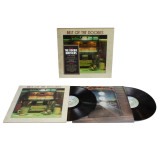
LOS ANGELES—To celebrate the 40th anniversary of the celebrated Talking Heads and Jonathan Demme’s concert film Stop Making Sense, the set will be re-released as a 2LP and 2CD/Blu-ray set this summer.
Released last year, the sold-out Deluxe Edition of the soundtrack will return as a 2-LP black vinyl on Rhino and 2-LP crystal clear vinyl at retail. Both variants feature a 12-page booklet with liner notes from all four band members –Tina Weymouth, David Byrne, Chris Frantz, and Jerry Harrison—and band photos. The 2CD/Blu-ray version includes the entire 28-page booklet from last year’s Deluxe Edition and a Dolby Atmos mix of the complete concert, mixed by Jerry Harrison and E.T. Thorngren, who also mixed the original release. Both will be available on July 26. Pre-order now.
The band appeared together for a sold-out screening and Q&A last night at the Pantages Theater, the same theater at which Stop Making Sense was recorded. They were joined by Blondshell, who performed “Thank You For Sending Me an Angel.” Another special screening with the band will occur in Brooklyn at the King’s Theater on June 13, with the Q&A hosted by Questlove and The Linda Linda’s performing “Found a Job.” The two events cap off a banner year of celebrations for what many consider to be the best concert film of all time.
The inspiration for Stop Making Sense came when director Jonathan Demme saw Talking Heads perform during the band’s 1983 tour for Speaking in Tongues. Afterward, he approached them with the idea of making the show into a concert film. They agreed and worked together over the next few months to finalize the details. Ultimately, Demme filmed three shows at Hollywood’s Pantages Theater in December 1983 to create Stop Making Sense.
The concert film presents a retrospective of the band up to that point, with a performance that weaves together songs from all six of its studio albums. The show progresses methodically, opening with Byrne onstage performing “Psycho Killer” alone with a drum machine. After each song, he’s joined by a new band member until Weymouth, Frantz, and Harrison are all on stage with him. The group continues to grow throughout the concert as members of the stellar touring band are added: keyboardist Bernie Worrell, percussionist Steve Scales, guitarist Alex Weir, and backup singers Lynn Mabry and Ednah Holt.
The band performs 18 songs in Stop Making Sense, including its recent single at the time, “Burning Down The House.” That summer, the song was in heavy rotation on radio and MTV, helping the song become the band’s first top 10 hit in America. It was, however, a different song from Speaking in Tongues that was destined to deliver one of the film’s signature moments. Talking Heads would perform “Girlfriend Is Better” wearing the now iconic, oversized suit inspired by costumes worn in traditional Japanese theater. For good measure, a picture of David Byrne in the suit also graces the album cover.
Stop Making Sense focuses mainly on music by Talking Heads but does include a few songs recorded outside the band: “Genius Of Love” by Tom Tom Club, “What A Day That Was” and “Big Business” from Byrne’s 1981 album, The Catherine Wheel. Limited edition vinyl versions of both of these albums, along with Harrison’s The Red And The Black, were released for this year’s Record Store Day.
When it arrived in September 1984, Stop Making Sense was an artistic and commercial triumph. The film had people dancing in theatre aisles, and the soundtrack sold over two million copies. Just last year, the Library of Congress added Stop Making Sense to the National Film Registry in recognition of its cultural, historical, and aesthetic significance.
Weymouth praises Demme as a collaborator: “…Jonathan was a very enthusiastic, highly adaptive, and imaginative guy who was just as good a listener as he was a talker and collaborator. From the get-go you just got the impression he was as flexible as he was disciplined. Being team players, that boded well for a great relationship and a great film!”
Harrison says the film still holds up today: “To me, Stop Making Sense has remained relevant because the staging and lighting techniques could have been created in a much earlier time period. For example, Vari-Lights, lights with motors to re-aim them, had just come into vogue. Had we used them, there would have been a timestamp on the film, and it eventually would have felt dated...The absence of interviews, combined with the elegant and timeless lighting, created a film that can be watched over and over.”
Byrne says it’s interesting that this album was – for many people – an introduction to Talking Heads. “We had done a live album before this, but coupled with the film, and with the improved mixes and sound quality, this record reached a whole new audience. As often happens, the songs got an added energy when we performed them live and were inspired by having an audience. In many ways, these versions are more exciting than the studio recordings, so maybe that’s why a lot of folks discovered us via this record.”
Frantz recalls the sheer joy surrounding the entire Stop Making Sense experience. “I’m talking about real, conscious, transcendent joy… I’m talking about what the Southern gospel people call ‘getting happy,’ which means ‘to be filled with the Spirit.’ That is what happened to us onstage every night, and from my seat behind the drums, I recognized that this was happening to the audience too. Joy was visible in front of me and all around me every night.”
out of Stock
Last delivered 2 years ago available to reorder, subject to availability
There are certain occasions when you can truly feel the stars align. One of these is when the interstellar voyager of cosmic soul Jimi Tenor finally lands his spaceship at full force on a Timmion recording. In 2024, he will be serving us two spaced out album sessions recorded together with Cold Diamond & Mink. Jimi is no stranger in these space ways as he has operated behind the Timmion scenes for years, furnishing several of the label's artists with his flute and reeds artistry. The first album out is titled "Is There Love In Outer Space?", which begs the question with the force of five extended tracks that are guaranteed to blow your mind to the stratosphere. The pieces are loaded with whooshing and glistening synth noises and span from lofi space funk to cinematic soundscapes. The sweetly floating title track is like some of those galactic ballads that rare soul collectors are spending their pensions on. At the other side of the spectrum, album closer `What Are You Doing?' sounds like Sun Ra sat down at a JBs session, and is straight up meant to get that booty moving. Combined with the raw soul prowess of CD&M, Jimi is able to refine new shades from his already impressive repertoire of talent. Even if you are a friend of his previous work you might not have heard him get down quite like this.
out of Stock
Last delivered 13 months ago available to reorder, subject to availability
"If being the founder and chairman of Third World Press Organisation - the largest independent black-owned publishers - wasn't enough for activist and poet Haki R Madhubuti, he is also credited with a lesser-known yet remarkable music career. As the bandleader of Haki R. Madhubuti and Nation: Afrikan Liberation Arts Ensemble, Madhubuti combined his razor-sharp spoken-word poetry with a band of incredible musicians to create an unforgettable experience of avant-garde and spiritual jazz.
out of Stock
Last delivered 4 years ago available to reorder, subject to availability
The superb Philoxenia Records, which is spearheaded by Luigi Di Venere and Neu Verboten, here unveils a coveted addition to its collection with the the super limited Last Place On Earth EP from Vilnius-based Dovydas Platakis aka Jokios Kulturos. It's a cinematic work that immerses listeners in a dystopian realm that blends avant-garde tones with manga-inspired cyberpunk vibes. Each track serves as a gateway to a world where technological progress intertwines with societal decline, which is of course often the focus of classic cyberpunk literature. Di Venere and Verboten also combine under their Affekt Unit alias to deliver captivating remixes and bring trance and tribal techno elements to the party.
out of Stock
Last delivered 23 months ago available to reorder, subject to availability
We Could Be Flying" is a rare and classic album by KARIN KROG, a world-class jazz singer from Norway, which has been loved since its original release in 1975. The presence of New York pianist Steve Kuhn, who also composes four of the nine tracks, creates a masterpiece that combines a mellow, gentle comfort with a jazz-like groove. The album starts off with the title track "We Could be Flying" with its solidly sounding rhythm and soulful Karin's vocals, followed by "Meaning Of Love," and the album starts off with a sound that is sure to please fans of jazz-rock. The fourth track is a cover of Joni Mitchell's "All I Want," which not only has a pleasant jazz feel, but also a groove that reaches its peak with the interplay of drums and piano and other instruments, making it a must for fans of jazz, rock, and American music. The sixth track, "Raindrops, Raindrops," and "Hold Out Your Hand" also challenge the listener with a danceable samba style, making this an excellent album in its own right!
Sun Reflector is the debut LP collaboration by Heffernan (Ivan The tolerable, All Structures Align, King Champion Sounds, University Challenged) and Pärk (Black Tempel Pyramid, Teeth Of Glass, Kosmonaut). Sun Reflector is steeped in a haze of primitive drum machines, fanned phase and sustained scuzz-rippled guitar chimes, an ambient electronic creation with emphasis on repetitive trance-inducing rhythmic pulsations of electronic sound and subtle counterpoints that slowly unfold as the rhythmic drive marches forth utilizing the Motorik 4/4 beat with the lysergic kosmische sonic textures of Cluster. With Heffernan (bass, guitars and drones) based in the Northeast of England and Pärk (synths, drones and loops) based in Colorado USA on the border with New Mexico - the portal they opened up between these environments creates a travelogue that unites physical and inner space, a series of trance induced states rendered in vivid colour, a delirious portal into the ether. ‘Harmonic Coast’ opens and is a heady downtempo affair, an earthly vibration that slips effortlessly between peyote peaking trekking trips & Balearic sunset vibes. The somnambulistic drift of 'The Sun' sets the stage with a series of shimmering, circular synth pulses where hidden details slowly emerge over multiple listens. Album closer ‘Fever Mirage’ creates a clear-eyed appreciation of the pastoral beauty that surrounds us, it’s a journey that summons up an occult-like dream of glacial arpeggios and whispering synths that pull your attention in to this hypnotizing listening experience. Sun Reflector is a collective sound in which a lot is allowed, and a lot is done. That combined with the compositional ingenuity where the heterogeneous timbres create a time travelled cosmic mysticism that summons up the spirits and visions of Harmonia, Cluster, Eno and Phillip Glass. Shimmering and transcendent we present to you for your listening experience ‘Sun Reflector’
XXX016 consists of two original tracks by Anastasia Zems & Radial Gaze on the A-side and two remixes by Chinaski & S.I.R.S on the flip side.
While the original tracks are infused with dark industrial vibes combined with a sharp kick and throbbing playful basslines, the remix side takes a completely different turn. An (unexpected) almost trance-like remix by Chinaski is best described as a rollercoaster ride that only goes higher and faster. S.I.R.S. delivers us a disco remix with the most groovy bassline that will not go unnoticed on any dancefloor. This altogether makes XXX016 an exploration of different sounds combined on
one EP, exactly how we envision things at XXX. The artwork by Gees Voorhees also perfectly embodies this.
out of Stock
Last delivered 20 months ago available to reorder, subject to availability
Glasgow septet The Joy Hotel are announcing their debut album Ceremony with the release of its lead single, the surging and rapturous 'Jeremiah'. It’s a song that grapples with the idea of approaching unknowns, and how conflicting attitudes illicit different responses to the same situation. More directly, it’s about staring death in the face and choosing how to come to terms with it.
Newly signed to SO Recordings and with a debut album proper in hand, The Joy Hotel have become a word-of-mouth success story in the Scottish DIY scene, and have since taken their live show across the UK and Europe, playing festivals including Hidden Door, Doune the Rabbit Hole, Connect, TRNSMT, Twisterella, Latitude, Sound City and The Great Escape.
The band spent eleven days at Rockfield, the legendary studio in Monmouth, Wales, recording live-to-tape. When they left, they had a sound. It is often contradictory, in that it combines the songwriting sensibilities of pop and country with arrangements reminiscent of the psychedelic scene of the 60s, six-part vocal harmonies with elements of noise rock, beautiful balladry with a sense of humour, and a cinematic quality. The result of those eleven days is debut album Ceremony, a record that searches for the profound in the seemingly routine, and reaches out with arms wide open to wring celebration out of each moment.
Ceremony will be accompanied by a short film documenting the creation of the album called ‘Come The Ringing Bell’.
Land Of Talk emerged from the ethereal landscapes of mid-aughts Canadian indie rock with their 2006 debut Applause Cheer Boo Hiss. Led by Elizabeth Powell, they have spent the last 18 years carving their own path through the music scene, captivating audiences with their emotive soundscapes and raw vulnerability.
The EPs brings 2009's Fun And Laughter and 2021's Calming Night Partner together on vinyl for the first time, combining two distinct chapters in Land of Talk's sonic journey while offering fans a unique perspective on the evolution of their sound.
Fun And Laughter showcases the band's early experimentation with texture and tone. From the shimmering guitars of "May You Never," to the haunting melodies of "A Series Of Small Flames," each track exudes a sense of youthful energy and introspection.
Calming Night Partner is an equally mesmerizing collection of songs that delves into themes of longing and redemption. With tracks like "Leave Life Alone," and "Something Will Be Said," the EP showcases Powell's continuing evolution as a songwriter and lyricist.
This release represents more than just a collection of songs; they are a testament to the band's unwavering commitment to their craft and their unyielding passion for storytelling through music. As they continue to push the boundaries of their sound and forge new paths in the indie rock landscape, one thing remains certain: the echoes of Land of Talk will linger on, resonating in the hearts and minds of listeners for years to come.
A1 - Tensor
Opening with an earworm minimal old school melody which lives long in the mind, Tensor sees JLM Productions kick off his latest Spatial EP in style, flexing his versatility in the genre with an exquisite Hot Pants break pattern in delightfully laid back fashion. Showcasing sublime filtering techniques, a lush 808 bassline and a nominal usage of kicks, Tensor lives long in the memory - and rightfully so.
A2 - Pseudovector
A real treat in store for fans of clean, edited breaks as JLM Productions immediately drops the crispest assortment of drum samples which will delight the ear and the feet in equal measure. Pseudovector is a real treat for the senses with an immense high note melody punctuating the track as the breaks build and build, adding layers of punchy detail which combine beautifully with cymbals, bongos and gentle atmospherics.
AA1 - Helios Drift
A more laid back piece that harks back to a special bygone age of slower atmospherics - as is Spatial's speciality - Helios Drift offers a feast of breakbeats with distinctive tribal maracas jubilantly shaping a unique vibe. Soothing padwork provides an elegant backdrop to the beats with rolled chords and sci fi melodies draped throughout, deconstructing towards a polished outro to this memorable mid-set breather.
AA2 - Wavefunction
Instant rolling 2-step vibes unfold as Wavefunction sees JLM Productions close the EP in style with a track which won't fail to move the discerning dancefloor. Immense 80's synthwave vibes tell a tale of cyber dystopia, highly evocative notes washing harmoniously with the breakbeats while a superb bassline solo in the breakdown invites contemplation from the audience before the beat rolls on to a reflective conclusion.
Words by Chris Hayes (Spatial / Red Mist)
out of Stock
Last delivered 17 months ago available to reorder, subject to availability
Prolific Danish drummer Emil de Waal has come to be known for his unique and personal contributions to a wide variety of musical projects in jazz, pop, rock, and electronica, including Kalaha, Baghdad Dagblad, Maluba Orchestra, and his own quartet to name a few. Well versed in the art of collaboration, his new record is his first solo undertaking, combining his jazz musicianship with his affinity for the offoff-kilter and electronically manipulated. Comprised of seven original compositions, as well as creative reinterpretations of pieces by Charlie Haden, Duke Ellington, and Hans Henrik Ley/Jannik Hastrup, the record is a collection of intimate, interactive duo performances decorated with sounds and textures from the electronic world. The record s title translates to four eyes ", a double double-entendre alluding to the album s duo approach, under four eyes so to speak, as well as to the fact that de Waal wears glasses. Making a conscious effort to collaborate with more female instrumentalists as well as musicians de Waal hadn t played with before, Fire Ojne " features a wide spectrum of organic instrumental timbres on the prepared piano, clarinet, saxo-phone, pedal steel guitar, and bass flute. From sung melodies and winding improvisations to spacious, experimental textural approaches, each piece sees de Waal engage in a private conversation with a musician he s admired. From the bluesy New Orleans feel of Ellingtons Limbo Jazz "", to the glitchy, menacing, avant avant-garde groove of Halvfirs Fems "", to the spacious, twinkling, ethereal Diskurs "", the album showcases the staggering breadth of the drummer"s influences and ideas. Programmed drum beats, vast reverbs, foley recordings of flowing water, and ricocheting delays craft an expansive, surprising and inventive context for improvised music in the 21st Century.
Raffaele Attanasio drops his first EP for two years as he heads to SHDW & Obscure Shape's Mutual Rytm for his 'Quasar' EP.
A product of Naples' rich techno history, Italian DJ, producer and musician Raffaele Attanasio is an artist who represents the city's iconic sound while drawing from influences across the Atlantic and the genre's home of Detroit. Garnering plaudits from artists including Jeff Mills, Len Faki and Ben Sims, while releasing on Mills' Axis alongside Non Series, Third Wave Black, and his own Letter From Jerusalem imprint, Attanasio's eclectic sound now delves into Italian techno of the early 2000s as he makes his label debut on Mutual Rytm - revealing his first EP in over two years and showcasing a new side to his sound with 'Quasar'.
Title track 'Quasar' brings a tunnelling groove beneath floating melodies and zipping synths, before A2 'Asterion' combines dubby stabs and punchy kicks effortlessly. On the flip, 'Blazar' is a squelchy acid-led trip guided by sharp metallic hats, with 'Axial Inclination' utilising jittering drums and slinking bass to keep the energy levels rolling.
'Clara' shapes up the physical package, a skipping, spirited and classy cut fusing hazy textures and crisp percussion, while digital exclusive 'SGR' sees things return to acid territories, with purchasers able to access a darker impactful take on techno.
out of Stock
Last delivered 22 days ago available to reorder, subject to availability
The album "Black Forest" is a captivating sensory experience that embraces the listener's soul and transports them into a world of contrasting emotions. Its fusion of intricate and hypnotic sounds offers a journey through evocative and haunting soundscapes.
The tracks of "Black Forest" unfold like intricate paths winding through the mysterious and magnetic atmosphere of the black forest, with rich and engaging harmonies opening up like spaces of light among the trees, offering moments of reflection and contemplation.
With its combination of pulsating rhythms and evocative melodies, this album offers a unique experience that enchants and fascinates the listener, transporting them on an unforgettable journey through the darkness and beauty of the human mind.
out of Stock
Last delivered 2 years ago available to reorder, subject to availability
"La Misma Fuente" is an album that could have only come from the mind of Yemanjo, and the music here reveals producer/musician Ben Harris in the full bloom of his artistic promise.
Translating as "The Same Source", the staggering variety of genre, sound design and featured artists here all relate to the concept that the world's diversity manifests out of an essential unity.
With guest singers and musicians from Mali, Colombia, Argentina, Hungary and beyond, "La Misma Fuente" pulsates with an irresistible combination of cracking electronic beats, hypnotic synths and bass, traditional acoustic instruments and vocals in many languages.
In the title track, Yemanjo's own harmonized Spanish vocals roil over a relentless dembow groove; elsewhere Malian vocalist Mariam Koné shines in both the mid-tempo house track "Juru Fô" and the Reggae-meets-Desert Blues anthem "Janfa". The instrumentals are no less captivating; "Bululú" is a combustible club banger with shades of kuduro, afrohouse and zouk rhythms, "Suena La Quena" is a bouyant uptempo house track with soaring Andean flute melodies, "Baobab" mesmerizes with interlocking ngoni licks, and "Bridge to Bamako" is a spacious trip-hop groove that finishes the record like a breath of fresh air.
Thematically diverse, melodically complex and rhythmically compelling, "La Misma Fuente" is a testament to the relentless wanderlust of its author, and a fine addition to the already legendary catalogue of Wonderwheel Recordings.
Ben Harris: sound design, arrangement, vocals, charango, trumpet, digital percussion
Mariam Koné: vocals on #2, #6
Fredy Velasquez: vocals on #5
Alex Nero: guitar, charango on #7, charango, quena, zampoña on #9
Onanya: ngoni on #2
Cosmic Nomad: ngoni on #4
Julia Gyulai: lead vocals on #8, back vocals on #5
Endre Molnar: guitar on #8, back vocals on #5
Mixed and mastered by Chris Cox at Veritas Mastering
Additional record engineering by Akos Varnai
out of Stock
Last delivered 2 years ago available to reorder, subject to availability