In der Welt von MX LONELY sind Monster echt vielschichtige Dinger. Das sind die Wesen, die wir uns als Kinder vorgestellt haben und die im Dunkeln lauern; die allzu realen Bösewichte, die ihre Macht missbrauchen oder sich mit dem Leid anderer die Taschen füllen; die Laster und Fehler, mit denen wir unser ganzes Leben lang kämpfen, und das, was wir werden können, wenn wir in ihrem Griff sind. Auf ihrem ersten Album ALL MONSTERS sucht die in Brooklyn ansässige Band in dunklen Ecken, bricht Türen auf und exhumiert diese Monster mit einem schweren, düsteren Alternative-Rock-Sound, der gleichzeitig von Schönheit durchzogen ist. Als ihre erste komplett selbst aufgenommene Veröffentlichung zeigt ALL MONSTERS die Band - Synthesizer/Sänger Rae Haas, Gitarrist Jake Harms, Bassist Gabriel Garman und Schlagzeuger Andy Rapp - wie sie einen lebendigen, unmittelbaren, analogen Sound einfangen, der das Gefühl ihrer Live-Show verkörpert und gleichzeitig ein längeres und nuancierteres Erlebnis schafft als je zuvor. Für die Zukunft wollen sie weiter auf Tour gehen und eine Community aufbauen, die auf gegenseitiger Katharsis basiert. ,Ich denke, das ist sozusagen die Manifestation oder das Gebet darin, dass jeder den Raum und die Werkzeuge hat, um seine eigenen Monster zu bewältigen", sagt Haas. Obwohl sie sich der Selbstreflexion verschrieben haben, wollen MX LONELY letztendlich andere in ihre Welt einbeziehen.
With their upcoming sixth studio album, “What A Time To Be Alive” , The Lone Bellow embarks on a bold new chapter while honoring the deep bonds that have defined their journey. Written collaboratively for the first time with their full touring band—founding members Zach Williams, Brian Elmquist, and Kanene Pipkin joined by drummer Julian Dorio and multi-instrumentalist Tyler Geertsma—the album channels the raw, ecstatic energy of the band’s live show into a dynamic collection of songs that pulse with warmth, honesty, and human connection. Recorded live in Muscle Shoals, AL, after a writing retreat in a converted Kentucky firehouse, the album is both a celebration and a reckoning: of friendship, loss, love, and resilience. From the gritty, Stones-tinged opener “After The Rain” to the soul-stirring closer “What A Time To Be Alive,” the record captures the joy and vulnerability that have long defined The Lone Bellow’s sound—lush harmonies, heartfelt lyrics, and genre-blurring arrangements steeped in folk, rock, and gospel. The album’s creation was marked by setbacks, including the theft of early recordings, but the outpouring of support from their fanbase reaffirmed what the band has always known: their music is a shared experience. That spirit echoes throughout the album, whether in anthems like “Common Folk” and “I’m Here For You,” or in intimate reflections like “You Were Leaving” and “Night Goes Black.” Since their acclaimed 2013 debut, The Lone Bellow has appeared on The Tonight Show, Austin City Limits, and The Late Show, topped Americana charts, and headlined storied venues from Carnegie Hall to the Ryman Auditorium. But with their next album, they reaffirm their commitment not just to making music, but to building community—on stage, in song, and around the table.
The label ORED Recordings was founded in 2013 by Circassian friends and fellow musicians Bulat Khalilov and Timur Kodzoko, in order to start an activity which is dedicated to documenting and preserving the traditional and post-traditional music of the North Caucasus. Khalilov and Kodzoko, were just as excited about this music as it sounded like a force that transcends borders and in which time dissolves and community becomes the only compass.
Through hundreds of field recordings, which have been made at communal gatherings, local festivities or family meetings, the label has captured a wide range of individual voices and their unique acoustic manifestations. All recordings on this album capture the raw expressiveness of the mountainside villages. Music performances being played by people who dedicate their love to music and an additional willingness to share intimate emotions.
Whereas most academic ethnomusicologists travel around the world in order to study foreign cultures, Bulat Khalilov and Timur Kodzoko were fascinated by what they just heard in the familiar regions of their then home town Nalchik. In resolute contrast to Russian academic circles, they soon developed a DIY Punk ethos for their far reaching work, beginning to formulate their own language in the field of ethnomusicology and to push the traditions forward.
However, the label’s work goes far beyond mere preservation. »We started traveling around the North Caucasus and did recordings with people from many different ethnic groups. In the North Caucasus, our work had a political dimension because there used to be (and still are) a lot of conflicts between different ethnic groups. We quickly understood that our work is not just about music and art,« states Bulat Khalilov.
The work of the label aims to reflect not only the great music of the Caucasus and its various communities but also to tell the stories behind it. They are stories of struggle, of independence, of working with historical memory in the present times of the 21st century.
Since Bulat Khalilov and Timur Kodzoko are now based at the University of Göttingen, we were able to meet each other many times and to eventually exchange ideas which resulted in the release of this collection of recordings. The compilation »Music from the Caucasus« provides a first introduction to the comprehensive work of ORED Recordings. For this collaborative release on TAL the recordings are being made accessible for the first time ever on vinyl, CD and various digital formats, all coming with extensive liner notes and yet unpublished photographs.
Bulat Khalilov and Stefan Schneider, November 2025
Progressive rock may rarely grace the mainstream spotlight, but its devoted global community continues to thrive, and few bands embody that spirit better than Airbag. Since their debut EP, Safetree (2007), and first full-length album, Identity (2009), the Norwegian quintet has steadily built a worldwide following with their cinematic soundscapes, soaring melodies, and timeless songwriting. From All Rights Removed to The Century of the Self, each release has cemented Airbag's reputation as one of the most vital acts in modern progressive rock, earning critical acclaim and packing venues across Europe and beyond. Now, 16 years and five studio albums later, Airbag returns with their first official live album, captured during a powerful performance at Poppodium Boerderij in Zoetermeer, The Netherlands in 2024. This double CD / double vinyl release showcases the band at their best, raw, immersive, and sonically stunning. The recordings have been meticulously mixed to preserve the atmosphere and authenticity of the live shows. For collectors, the vinyl edition is a must-have: A deluxe gatefold cover with an exclusive booklet and a limited first pressing on coloured splatter vinyl, a beautiful piece for fans and audiophiles alike. Whether you've followed Airbag from the beginning or discovered them along the way, this live album is a celebration of a band that continues to defy trends, connect deeply with fans, and delivers music that stands the test of time.
The third volume in a survey of the modern jazz & hard-bop scenes that emerged in the new cultural melting pot of post war London, with recordings from the end of the 1940s through to the early 1960s.
Featuring representations from players whose roots lay in the East-End's jewish community alongside a wealth of talent of Caribbean and African descent playing and recording in post war London during this period.
Made in partnership with the Barbican to coincide with the exhibition Postwar Modern: New Art in Britain 1945-1965.credits
out of Stock
Last delivered 10 months ago available to reorder, subject to availability
For his last solo record ‘Through a Room’, Bill Nace shifted his usual saturated guitar sound and added tapes, hurdy gurdy, doughnut pipe, bird calls and the mysterious Japanese taishōgoto. Setting up for the final night of his three day residency at OTO with only the taishōgoto soundchecked, Nace hoped that Parker would arrive with his small soprano as its opposite. “I’ve been interested in state change, you know, playing until there’s a shift in time.” Known for his development of multiphonics to produce a constantly shifting pattern, Evan Parker has evolved an instantly recognizable sound - his work the soprano most distinct. Happily, it was the soprano Evan brought with him and as soon as the two start to play they entwine - taking off in a double helix of keys and reed primed for endless reconfiguration. Space warps under the velocity of playing, the pitch rising unrelentingly. It felt like unending lift off in the room, sheer energy until the last note makes remember your feet have been on the floor the whole time. Total time bending shredding.
–
"They had never played together before. They had never even met each other before this springtime 2024 concert at London’s Café Oto.
Evan Parker, circular breathing maestro of the saxophone, a legend in the universe that is Free Improvisation since the late 1960s and Bill Nace, one of the most intriguing experimental “noise” guitarists of the 1990s/2000s underground scene.
For those of us who have been enamored by the live and documented work of both these gents, this Café Oto duo was a must-hear event. It could have gone anywhere musically and that would have been totally fine. Particularly with Evan having a history of being thrown into a variety of challenging collaborations throughout his career, employing the learned elegance of trust in his own sensitivity to listening, responding, leading, following, sparring, intertwining, dialoguing, creating in the instant and, essentially, dignifying the non-hierarchical grace of chance.
The aesthetics of socialist consideration in Evan Parker’s playing, in his community of expanded and personal technique, for a younger player such as Bill Nace, strikes an exemplary model. This notion of respect would be entirely the reason Nace, when offered a residency at the most critical “new music” room in England, would request to play in duo with Parker.
Bill Nace came to prominence mostly during the apex of experimental music activity in and around Western Massachusetts in the early days of the aughts, with a focus on visual art and free improvisation guitar action. He could be found in the daytime hours, his head hanging down over a notepad, penning fine-tuned illustrations and abstract line drawings, while in the evenings he’d be attending any number of basement noise gigs, many of which he’d be participating in. His guitar style came across as being informed as much as by the physicality of his writing utensils in friction to the page as it was to his hearing and redefining of radical recordings ranging anywhere from the Black Unity Group to Black Flag.
Utilizing various metal files and other small cylindrical objects Bill would allow his guitar and amplifier to be in tandem with the improvisatory movements of his body as the instrument balanced, intentionally and, at times, precariously, upon his lap. The performances came across thrilling and daring and they would be mostly in the context of venues nothing more than a low-ceilinged damp and dank New England basement, a clutch of people hanging onto rusty pipes or sitting up on dilapidated washer/dryer machines, the shards of Bill’s “file guitar” sounds ringing out like the most alive music on Earth.
By the time Bill reached Café Oto in early 2024 he had relocated to Philadelphia all the while releasing a succession of collaborative LPs on his Open Mouth label to present his developing progression of solo and collaborative work. He also would find himself considerably engaged with playing the electric taishōgoto, a keyboard-activated string instrument from Japan which can exist as a one, two, four, five, or six string oblong sound object. Bill’s approach to the taishōgoto would not be too unlike his approach to the traditional electric guitar, though no outboard implements such as files, sticks, and rocks are utilized. The similarity would lie wholly with Bill’s full immersion of high velocity action-playing where, with the taishōgoto, an electric drone beauty occurs. The flurry of sonics and resultant harmonics emanating from the amplifier (which Bill opts to dial into with borderline loud-as fuck volume settings) furthers the meta-mantra properties of the instrument in an astounding display of drone dynamism.
This sound world of Bill’s two-stringed taishōgoto on this Café Oto night worked beautifully with Evan Parker’s improvisatory saxophone conceptions. The duology achieved instant lift off at ground zero only to find it’s eventual finale as if it were organically ordained. Time seemingly morphed from its ancient human construct of control, rendered inconsequential to the torrential transcendence of the room wildly activated by the magic resonance of the multi-directional pan-spatial sonance of the music as if it were some beatific blessing. It was one of those nights where art as a liberating force of spirit gifted the listeners with an offering of exaltation and joy. It was entirely mystical and mind blowing. A night of Total Music."
Old-time and traditional music stay exciting for their contrasts. Exacting instrumentation honed through mentorships and late-night jams at fiddler's conventions tangles with a community-sourced inventiveness that influences variants and new sounds. Joseph Decosimo is a master of this genre for this very reason, blending deep technique with an openness and curiosity that keep his music crackling with life. A "marvelous fiddler" (No Depression) and banjo player who braids "exultation and veneration" (INDY Week) into his music, on his third solo album Fiery Gizzard Decosimo gathers a close-knit ensemble of friends from his musical career to infuse his interpretations of fiddle and banjo pieces with a contagious communal joy. As an artist working with traditional music from the South and Appalachia, Decosimo chooses songs based not only on historical significance and lineage but also his own sensory approach. For Fiery Gizzard, his ear was tuned to otherworldly tones and mystery, sourcing from field recordings such as Virginia fiddler Luther Davis' hypnotic version of "Shady Grove" while amping up the music's psychedelic potential. On the middle Tennessee banjo composition "Flowery Girls," a VHS of bluesman Abner Jay inspired Decosimo to rig up a pickup inside a fretless banjo and play it thr ough a tube amp to capture some of Jay's edge and funkiness. But to round out the sound and keep it kinetic meant galvanizing a genre-eschewing crew to jam out - and not in a "spaced-out drooly" kind of way, he laughs, but as a sort of "responsive conversation." Decosimo has always been a community-minded artist. He began playing as a seventh graderin Tennessee, fostering relationships with older players at jams and in homes, a learning mode natural to his inquisitive nature and desire for musical connection. A folklorist by intuition, he later became one by profession, studying with old-time legend Clyde Davenport, teaching in East Tennessee State University's renowned bluegrass program, and receiving his PhD at the University of North Carolina with a dissertation titled "Catching the `Wild Note': Listening, Learning, and Connoisseurship in Old-Time Music." In North Carolina, Decosimo kicked about in the verdant environment of Durham and Chapel Hill's folk and indie scenes, collaborating with artists including Alice Gerrard, Hiss Golden Messenger, and Jake Xerxes Fussell. This community has influenced his own music, including his "sublime and strangely heartening" (Bandcamp Daily) 2022 release While You Were Slumbering and Beehive Cathedral, Decosimo's 2024 "Appalachian mountain music treasury" (New Commute) trio album with Luke Richardson and Cleek Schrey for Dear Life Records. Continuing on this path, Fiery Gizzard is home base for a loose outfit of mostly Tarheel-based musicians from within and beyond traditional music. Inspired by a tour with fiddler Stephanie Coleman (Nora Brown), guitarist Jay Hammond, and synth builder and multi-instrumentalist Matthew O'Connell, Decosimo assembled studiomates based on close friendships and comfort. Coleman, O'Connell, and Hammond contribute to Fiery Gizzard, along with bassist and producer Andy Stack (Helado Negro, Wye Oak), horn player Kelly Pratt (Beirut, David Byrne), Mipso and Fust's Libby Rodenbough, Joseph O'Connell (Elephant Micah), and trad/experimental artist Cleek Schrey. Decosimo's fiddle and banjo work is virtuosic, intricate and simple simultaneously, a testament to his many years of study. On some tracks, his playing or lovely, plain-hearted singing is the centerpiece, such as on his interpretations of Texan street preacher Washington Phillips' 1929 recording "I Had a Good Father and Mother" or the Eastern Kentucky fiddle barn-burner "Glory in the Meetinghouse," famously played by Luther Strong for Alan Lomax. But there's also a trusting open-door policy, like where Southern Appalachian tune "Ida Red" relaxes into Coleman's sweet, confident fiddling and Hammond's loping guitar. As a bandleader, Decosimo's confidence and enthusiasm for the music reveal the heart of traditional music and how it can come to life through community. Fiery Gizzard is Joseph Decosimo as a powerful champion of traditional music - a sponge who soaks up as much as he squeezes out, a responsive artist who makes his genre accessible, and a magnet who can bring musicians of all sorts into his orbit with his same passion.
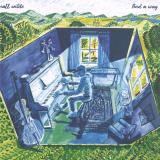
'Find a Way' is the new album from Manchester-based pianist, composer, and producer Matt Wilde, released via his own imprint Hello World Records. The album serves as a reminder that creativity should be accessible and the importance of opening yourself to the unexpected as you 'Find a Way' through all endeavours. Digging into improvisation and jazz harmony on the LP, he crafts a sound that bridges jazz, hip hop, and electronic music, adding: "The creative act is not a matter of waiting for the perfect conditions, but of moving gently, insistently, through the imperfect".
Focus and title track "Find a Way" encapsulates this journey of process. Humans are known for adaptation and response when they face challenges, seeking solutions towards a better world. "Find a Way" leans into our instinctive reaction to improvise and reshape, taking the listener on an unexpected journey. The opening loop could as easily feel at home as part of an electronic soundscape, developing into a clock-like effect from the drums. This keeps time, allowing a duet between keys and trumpet to unfold, symbolising the individual, imperfect and non-linear paths we all carve out day to day.
The album was funded by Arts Council England and created in close collaboration with trumpeter and composer Aaron Wood, with the pair recording in Aaron's rural DIY studio in Huddersfield. Through improvising upright piano, Rhodes and trumpet over intricately programmed beats, the duo captured the spontaneity that makes jazz feel alive, but with the forward-facing touch of Ableton live production. "I actually had live drums recorded for this project and then deleted all of them and instead programmed intricate drums on Ableton live myself to create the kinds of drum sounds I could hear in my head," Matt adds, explaining the onerous process that truly made 'Find a Way' a labour of love.
Matt Wilde discovered jazz through an unconventional journey, and 'Find a Way' is an introspective map of this musical development. Starting out as a self-taught beatmaker, growing up Matt made tracks for friends in the grime scene before falling in love with jazz through the sample-heavy works of Madlib, J Dilla, and Pete Rock. Hints of this influence can be found on "Windup", driven by a deeper bass and a glitchy intensity not commonly associated with jazz. There are also nods to the weekly DJ residencies Matt had in his late teens, establishing a love for club music at iconic Manchester venues like Sankeys. "It's Ok, Feel it" incorporates pitched-up kicks and crisp, papery snares that pay tribute to UK dance culture and the foundation of connection in this world.
Guided by values of accessibility and creativity, Matt has become a key voice in the UK's boundary-pushing jazz and beats scene. His debut album 'Hello World' alongside EPs and single releases, have been championed by the likes of BBC Radio 1, Jamie Cullum and Soweto Kinch (BBC Radio 2), 'Round Midnight (BBC Radio 3), and across BBC 6Music, Jazz FM and Worldwide FM. He has performed headline shows at Band on the Wall (Manchester) and The Lower Third (London) and showcased his music at Brick Lane Jazz Festival and London's iconic Jazz Café.
A proud Mancunian with Polish roots, Matt's values-driven approach reflects his passion for community and empowering others through the arts. Matt founded the UK's first youth-led charity and is a trustee of Manchester music charity Brighter Sound. Driven by these values of equality and inclusion, Hello World Records strives to champion grassroots music with a backbone of fairness built into the business model. The imprint is named after Matt's debut album, released via Band on the Wall Recordings; simultaneously championing the music scene and global musical footprint of Manchester and highlighting the importance of artists reminding people: Hello World, I've made it. I'm still here.
- Martha Cleary, Glow Artists
out of Stock
Last delivered 6 months ago available to reorder, subject to availability
Phylipe Nunes Araújo's songs are as rich and varied as the diverse landscapes they were written in. The hills of Pernambuco, the lagoons of Alagoas, and the beaches of Bahia are all woven into his stripped-back, folk-inspired Brazilian songwriting. As part of a wider movement of musicians originating from Brazil's Northeast, Phylipe sees the process of music-making as the search for beauty itself.
Collaborating with fellow Northeastern artists Bruno Berle, Batata Boy and Nyron Higor among others, Phylipe's debut album represents the latest flowering of this exceptionally talented community's creative search.
The Northeast holds an almost sacred importance in Brazil's collective cultural imagination. The region bore witness to the brutal histories of Portuguese colonization and the African slave trade, while simultaneously amalgamating the diverse cultures, religions and traditions of those who have called it home. Countless Brazilian music greats - Gilberto Gil, Caetano Veloso, Hermeto Pascoal, Djavan and Luiz Gonzaga - have emerged from this vast cultural melting pot.
Born in Caruaru, Pernambuco state, and raised in the city of Santa Cruz do Capibaribe (famed for its textiles industry), Phylipe describes his music simply as "Brazilian music from the Agreste of Pernambuco". His masterful compositions thread together regional rhythm, folk poetry and sophisticated harmony.
Phylipe's musical foundations were laid in youth, listening to the local elders rehearsing their forrós, attending São João street parties in front of his house and watching the Junina Quadrilhas dance through his neighborhood. At street fairs he would read the Literatura de Cordel (handcrafted pamphlets of Brazilian folk literature), and watch the rhyme battles between cantadores, violeiros, and repentistas, who improvise verses on daily life, social commentary and philosophy. This tradition of Northeastern folk poetry proved particularly formative for Phylipe as a lyricist. "I always try to write things as simply as possible. I believe that beauty must be easily understood. If I can facilitate the path to the message, there's no reason not to. It's something I learned from the traditional poetry here: it's more beautiful if everyone understands."
At the age of 11, Phylipe first got access to the internet. As he explains: "Still in adolescence I was also able to discover things like The Beatles and Nick Drake - I started to get to know music from the rest of the world and later to correlate that with my local musical experiences." Rich with extended chords and artful dissonances, it's clear from his compositions that jazz and bossa nova also took hold, but he's quick to eschew stereotypes. "Inevitably, people associate a Brazilian musician playing a nylon-string guitar with bossa nova..." "But the foundation is another story," he asserts, "It's the Northeast."
On the guitar Phylipe experiments with the binary rhythms inherent in traditional Northeastern music. Coco, frevo, maracatu and baião are recontextualised, placed alongside Brazilian popular music (MPB), gentle lullabies and stunning ballads. "In these 10 songs, I am experimenting with making pop music on a nylon-string guitar with my foundation in the Northeastern songbook."
The contemporary musical community which Phylipe belongs to developed initially in Pernambuco's neighbouring state Alagoas. Phylipe lived in its capital Maceió for three years, where he built friendships and musical bonds with Bruno Berle and Batata Boy who together produced his album. Bruno also sings in unison with Phylipe on the duet "Valise", a song Phylipe wrote aged just 15.
In recent years, Phylipe, Bruno and Batata have migrated south to São Paulo, where the majority of the album was recorded. Other collaborators on the album include Alici, who provides vocals for the ebb and flow of "Temperim", Nyron Higor who plays drums on lead single "Asa" and the sweet indie moment "Ziz"", bassist Meno Del Picchia who plays on the mystical baião "Bixin" and the propulsive "Subindo a Ladeira", and Raphael Coelho who joins Bruno and Batata on percussion for "Santa Cruz", Phylipe's hypnotically powerful portrait of his hometown.
out of Stock
Last delivered 11 months ago available to reorder, subject to availability
Cassette
Earth Sounds Now is a collective made up of community activist and musician Stefan Christoff,
drummer, composer, scholar, and bandleader Asher Gamedze, music producer Nicolás Jaar, pianist
and composer Büsra Kayikçi, and novelist, poet, and sound performer Kaie Kellough.
Over 13 months, they met online to share sounds, readings, writings, and drawings, resulting in
Convergence—a project reflecting their collaborative process. Each member submitted different
works, including paintings, poetry, field recordings, and musical experiments, taking turns responding
to each other's contributions.
Member Stefan Christoff highlights the importance of listening in these sessions:
"Sometimes we would listen all together, so there was also silence on the online call as we all listened
on headphones to the sounds from our respective places. I am underlining listening here, which the
world needs much more of."
These submissions were organized into a sound library and finally mixed into record format by Jaar,
capturing the essence of their exchanges across global soundscapes.
out of Stock
Last delivered 12 months ago available to reorder, subject to availability
Fabio Nobile is a drummer and multi-instrumentalist who has been active on the music scene for over 25 years. Today, his musical
exploration draws from the deep roots of Afro traditions and the expressive freedom of jazz—two musical cultures that are an integral
part of his identity.
Sankofa Soul is a musical project born from the encounter between jazz, African traditions, and the search for a profound connection
between past and present. The term “Sankofa” comes from the Akan language (spoken in Ghana) and means “to go back and fetch what
is good” —an invitation to look to the past to better understand the future.
In an era where music is evolving at a rapid pace, Sankofa Soul looks to a rich and multifaceted cultural heritage, while also embracing a
modern voice—a universal call to reconnect with our European origins through the lens of African legacy.
Each track on Sankofa Soul reflects Fabio Nobile’s experiences, studies, and roots, forming a dialogue between past and present, the
sacred and the profane, individuality and community.
Sankofa Soul is a heartfelt tribute to West Africa, with a special focus on Nigeria.
Zuma Rock leads us into the rich and ever-changing soundscape of West Africa—a space where tradition meets innovation, and rhythm
tells stories older than words. Here, the legacy of Fela Kuti’s Afrobeat pulses through every beat, anchoring the music in political fire and
deep ancestral roots. At the same time, the unmistakable horn section weaves a vibrant fusion of Afro-Funk and Jazz. In Zuma Rock, we
enter a dialogue between past and present—a musical return to the source.
And then appears Kalakuta Republic, a heartfelt homage to the self-declared commune that was home to the legendary Fela Kuti—a
reminder not to forget the rebellious spirit of the Kalakuta Republic. This track gives voice to the very essence of Afro-jazz, wrapped in a
hypnotic 12/8 rhythm that echoes ancient African traditions. Its immersive pulse blends seamlessly with jazz’s boundless expressive
freedom, creating a vibrant, compelling dialogue suspended between ancestral roots and modernity.
Landed in Lagos and I Read the Stars naturally embrace the distinctive sound of Manu Dibango, while Say Your Prayer Now reminds us
how the evolution of Jamaican reggae—and its cultural and musical foundations—remains deeply linked to Mother Africa.
This is Sankofa: the soul’s journey back to the past to move forward.
out of Stock
Last delivered 11 months ago available to reorder, subject to availability
Singer-songwriter and cult anti-folk troubadour Stanley Brinks returns with Happy New Year, a 10-song collection of lo-fi gems recorded in Berlin. Happy New Year is a warm and celebratory record. Over simple rhythms and minimalist arrangements, Brinks delivers lyrics that oscillate between surreal humour, earnest wisdom, and playful melancholy. Happy New Year features contributions from longtime collaborator Clemence Freschard, plus appearances from Jyoti Sekhawat, Monica Kremidi, Rachel Lipson, Irma Ignataviciute, and Elisa Aseva, weaving together voices from across Brinks' musical community. Their harmonies lend the songs a communal intimacy. Stanley Brinks is renowned for his unique anti-folk style: both playful and suggestive, insightful and entertaining. Brinks was born in Paris, France, in 1973. He studied a bit of biology and worked as a nurse for a while. Half Swedish, half Moroccan, strongly inclined to travel the world, he soon began spending most of his life on the road and developed a strong relationship with New York. By the late 90s he'd become a full time singer-songwriter - Andre' Herman Düne - as part of three piece indie-rock band, Herman Düne. Several albums and Peel sessions later and after a decade of touring Europe, mostly with American songwriters such as Jeffrey Lewis, Calvin Johnson and early Arcade Fire he settled in Berlin. The early carnival music of Trinidad became a passion, and in the early 21st century he became the unquestioned master of European calypso, changing his name to Stanley Brinks. Under this moniker he has recorded considerably more than 100 albums, collaborated with the New York Antifolk scene on several occasions, recorded and toured with traditional Norwegian musicians, and played a lot with The Wave Pictures. The vinyl is of silvery color.
Neo funk rising star Buscrates aims high with Blasting Off, his first full-length album. The Pittsburgh-based keyboard cosmonaut has been grabbing ears since his days hooking up beats with the hip hop crew East Liberty Quarters, but after slinging spicy one-offs to a slew of hot labels like Omega Supreme, Voyage Funktastique and Razor N Tape (as well as contributing production to Wiz Khalifa and Curren$y's 2009 project), the time has come for a full-length featuring his growing modern funk repertoire.
"I'm a '90s hip hop dude, but I grew up on that '80s funk stuff," Buscrates acknowledges. DJ gigs provided a working knowledge of the jams that moved a contemporary crowd, and as his collection of keyboards and drum machines grew he began blending the best of both decades with his personal futuristic edge. "I was nice on the MPC but I wanted to have a little more dynamic range with what I was doing," he notes. The self-described "certified synth geek" was soon branching into sounds that recalled '80s legend Kashif crossed with the hip hop bounce of DJ Spinna, and the modern funk community took notice.
For his first full-length, Buscrates has crewed up with an ace team of collaborators, featuring vocalist Sally Green on the bouncy lead single "Lost And Found" and "Eight Nine." Kate Moe Dee takes over mic duties for the second single, "How Ya Gonna Do It," a slinky groove that slides in place alongside groups like the Sunburst Band and Rene & Angela as an exemplar of sophisticated R&B. Adding to those credentials are the sultry vocals of Anda on "Believe," but of course, it wouldn't be a Buscrates set without some stank, neck-snapping instrumentals. "Five Days" and "Sure Shot," both collabos with the drum technician DJ Epik, will rattle speakers and have already been lighting up message boards on recent Buscrates DJ sets. Round things out with some easy gliding, jazzy funk ("Turn It Out" with Brothermartino on flute and "Evergreen" featuring Tony Ozier) and you've got all the ingredients for a high-flying cosmic ride with Buscrates at the controls.
out of Stock
Last delivered 11 months ago available to reorder, subject to availability
For his third long-player under the Phi-Psonics banner, Ford-Young marshalled a series of live recordings at the Healing Force Of The Universe record store in Pasadena, sculpting fourteen tracks, largely composed in the moment with a fluctuating cast of players, which wonderfully transmit his ideals of community and inner peace. Called "Expanding To One", it features exquisitely calming yet searching pieces like "There"s Still Hope", where Seth"s softly undulating bassline underpins beatific explorations from core Phi-Psonics members, Sylvain Carton and Randal Fisher (both on saxophone), and Josh Collazo (drums), alongside guests Zach Tenorio (Wurlitzer piano) and Mathias Künzli (percussion). Equally sublime, "Healing Time" ripples like a mountain stream, with Ford-Young, Carton, Fisher and Tenorio joined by Minta Spencer (harp), Dylan Day (guitar) and, on drums/percussion, Jay Bellerose, a revered LA stickman most recently under the spotlight in Jeff Parker ETA IVtet.
out of Stock
Last delivered 13 months ago available to reorder, subject to availability
Old-time and traditional music stay exciting for their contrasts. Exacting instrumentation honed through mentorships and late-night jams at fiddler's conventions tangles with a community-sourced inventiveness that influences variants and new sounds. Joseph Decosimo is a master of this genre for this very reason, blending deep technique with an openness and curiosity that keep his music crackling with life. A "marvelous fiddler" (No Depression) and banjo player who braids "exultation and veneration" (INDY Week) into his music, on his third solo album Fiery Gizzard Decosimo gathers a close-knit ensemble of friends from his musical career to infuse his interpretations of fiddle and banjo pieces with a contagious communal joy. As an artist working with traditional music from the South and Appalachia, Decosimo chooses songs based not only on historical significance and lineage but also his own sensory approach. For Fiery Gizzard, his ear was tuned to otherworldly tones and mystery, sourcing from field recordings such as Virginia fiddler Luther Davis' hypnotic version of "Shady Grove" while amping up the music's psychedelic potential. On the middle Tennessee banjo composition "Flowery Girls," a VHS of bluesman Abner Jay inspired Decosimo to rig up a pickup inside a fretless banjo and play it thr ough a tube amp to capture some of Jay's edge and funkiness. But to round out the sound and keep it kinetic meant galvanizing a genre-eschewing crew to jam out - and not in a "spaced-out drooly" kind of way, he laughs, but as a sort of "responsive conversation." Decosimo has always been a community-minded artist. He began playing as a seventh graderin Tennessee, fostering relationships with older players at jams and in homes, a learning mode natural to his inquisitive nature and desire for musical connection. A folklorist by intuition, he later became one by profession, studying with old-time legend Clyde Davenport, teaching in East Tennessee State University's renowned bluegrass program, and receiving his PhD at the University of North Carolina with a dissertation titled "Catching the `Wild Note': Listening, Learning, and Connoisseurship in Old-Time Music." In North Carolina, Decosimo kicked about in the verdant environment of Durham and Chapel Hill's folk and indie scenes, collaborating with artists including Alice Gerrard, Hiss Golden Messenger, and Jake Xerxes Fussell. This community has influenced his own music, including his "sublime and strangely heartening" (Bandcamp Daily) 2022 release While You Were Slumbering and Beehive Cathedral, Decosimo's 2024 "Appalachian mountain music treasury" (New Commute) trio album with Luke Richardson and Cleek Schrey for Dear Life Records. Continuing on this path, Fiery Gizzard is home base for a loose outfit of mostly Tarheel-based musicians from within and beyond traditional music. Inspired by a tour with fiddler Stephanie Coleman (Nora Brown), guitarist Jay Hammond, and synth builder and multi-instrumentalist Matthew O'Connell, Decosimo assembled studiomates based on close friendships and comfort. Coleman, O'Connell, and Hammond contribute to Fiery Gizzard, along with bassist and producer Andy Stack (Helado Negro, Wye Oak), horn player Kelly Pratt (Beirut, David Byrne), Mipso and Fust's Libby Rodenbough, Joseph O'Connell (Elephant Micah), andtrad/experimental artist Cleek Schrey. Decosimo's fiddle and banjo work is virtuosic, intricate and simple simultaneously, a testament to his many years of study. On some tracks, his playing or lovely, plain-hearted singing is the centerpiece, such as on his interpretations of Texan street preacher Washington Phillips' 1929 recording "I Had a Good Father and Mother" or the Eastern Kentucky fiddle barn-burner "Glory in the Meetinghouse," famously played by Luther Strong for Alan Lomax. But there's also a trusting open-door policy, like where Southern Appalachian tune "Ida Red" relaxes into Coleman's sweet, confident fiddling and Hammond's loping guitar. As a bandleader, Decosimo's confidence and enthusiasm for the music reveal the heart of traditional music and how it can come to life through community. Fiery Gizzard is Joseph Decosimo as a powerful champion of traditional music - a sponge who soaks up as much as he squeezes out, a responsive artist who makes his genre accessible, and a magnet who can bring musicians of all sorts into his orbit with his same passion.
Wonderwheel recordings is proud to present the first full-length album from
producer Robin Perkins, aka El Buho. Balance represents a meeting of different currents that make up Buho's music: a fascination with the natural world, and its protection, a fascination with the rhythms, traditions and sounds of Latin America and a fascination with modern electronic music and production aesthetics. The album is peppered with Cumbia, Son Jarocho, Andean instrumentation & Afro-Colombian rhythms. Mixed with this, Robin integrates this idea of "nature music" - putting the sound of a misty forest, the songs of birds, of crunching leaves under foot or the rhythmic tapping of rain alongside synthesized sounds, electronic clicks or claps, deep basses. Trying at once to give them their own space but in a new, surprising perspective - it draws electronic music into something more soft, natural, different and appealing.
Balance is also an album that celebrates community and collaboration, showcasing collaborations with ten different artists form Latin America and beyond, both producers, instrumentalists and singers. Including more of a lyrical presence than his previous EPs, Perkins solicited the participation of talented singers like Dina al Wedidi from Cairo, Luzmila Carpio from Bolivia and the incredible decimas of Mexican poet Citlaly Malpica. The album also features the likes of harpist Veronica Valerio, Argentine multi-instrumentalist Rumo Tumba, jarana player Pablo Emiliano from Mexican Son Jarocho group Semilla and members of the Shika Shika family (the global collective he co-run's) Uji, Barrio Lindo, Kaleema, Minük and Jhon Montoya.
El Buho's music has an incredible power to convey feelings, atmospheres, memories or messages. The message that sits behind this music is to value on the one hand the power of community, of collaboration and of our modern, globally, connected world but also the remembrance, protection and celebration of the very earth we depend upon for our existence.
out of Stock
Last delivered 13 months ago available to reorder, subject to availability
Though they may not have intended to do so, Naptown's trinity, also known as 81355 (pronounced BLESS), rang out as revolutionaries with their 2021 debut record This Time I'll be of Use. When Oreo Jones, Sirius Blvck, and Sedcairn come together, genre evaporates into enthralling poeticism and sonic hypnosis. Their sophomore LP Bad Dogs, releasing July 11th on Joyful Noise Recordings, acts as an expansive continuation of 81355's signature sound: an angelic, gritty, enthralling urban hymnal for the disillusioned mind. The history of 81355 stretches far back into the history of Naptown's creative scene. Jones and Blvck struck a match as one of Indy's most influential hip-hop collectives, Ghost Gun Summer, before they brought on Sedcairn (Moose Adamson) in 2020. Before Adamson infused 81355 with his melodic soundscapes, he produced Grampall Jookabox, an underground indie meets jangle pop project. Though they may be known primarily for their musical notoriety, the members of 81355 are steadfast in their commitment to uplifting their community with collective creative expansion. Sean (Oreo Jones), alongside his partner Jane Sun Kim, produces and curates Chreece, the largest Midwestern Hip-Hop festival hosted in the heart of Naptown. Niq (Sirius Blvck) is pivotal in the empowerment and advancement of Indy Hunger Network, a local non profit that addresses food insecurity across Indianapolis. Moose (Sedcairn) is a key contributor to Joyful Noise, an Indy based independent label cutting records for artists of all genres. For the first time, the project's live band is part of the production, with Sharlene Birdsong on bass guitar, Dimitri Morris on guitar, and Pat Okerson on drums. The Bad Dogs listening experience also seeps into visual realms: a short film titled Sleep Study will be released in tandem. Sleep Study_soundtracked, written, and produced by 81355, who also star in the film alongside friends and fellow artists from the community_features afrofuturistic sci-fi undertones that explore the toxifying implications of algorithmic control, postmodern brain rot, and late-stage capitalism. As the texturally emotive punctum of its cover art (painted by Stockholm based artist Julia de Ruvo) conveys, the heart of Bad Dogs draws its perseverance from the wild reservation dogs pulsing through the rust-hued indigenous lands of New Mexico and beyond. They are untethered in their roaming, sacred in their fierce communal belonging, yet undefined by a physical place. A vital essence mirrored by 81355: boundaryless, primal creative cultivation that defies what some may attempt to categorize as hip hop or progressive rap.
Wonderwheel recordings is proud to present the first full-length album from
producer Robin Perkins, aka El Buho. Balance represents a meeting of different currents that make up Buho's music: a fascination with the natural world, and its protection, a fascination with the rhythms, traditions and sounds of Latin America and a fascination with modern electronic music and production aesthetics. The album is peppered with Cumbia, Son Jarocho, Andean instrumentation & Afro-Colombian rhythms. Mixed with this, Robin integrates this idea of "nature music" - putting the sound of a misty forest, the songs of birds, of crunching leaves under foot or the rhythmic tapping of rain alongside synthesized sounds, electronic clicks or claps, deep basses. Trying at once to give them their own space but in a new, surprising perspective - it draws electronic music into something more soft, natural, different and appealing.
Balance is also an album that celebrates community and collaboration, showcasing collaborations with ten different artists form Latin America and beyond, both producers, instrumentalists and singers. Including more of a lyrical presence than his previous EPs, Perkins solicited the participation of talented singers like Dina al Wedidi from Cairo, Luzmila Carpio from Bolivia and the incredible decimas of Mexican poet Citlaly Malpica. The album also features the likes of harpist Veronica Valerio, Argentine multi-instrumentalist Rumo Tumba, jarana player Pablo Emiliano from Mexican Son Jarocho group Semilla and members of the Shika Shika family (the global collective he co-run's) Uji, Barrio Lindo, Kaleema, Minük and Jhon Montoya.
El Buho's music has an incredible power to convey feelings, atmospheres, memories or messages. The message that sits behind this music is to value on the one hand the power of community, of collaboration and of our modern, globally, connected world but also the remembrance, protection and celebration of the very earth we depend upon for our existence.
Far above the skylark sings And beats the air with joyful wings Till all the sky with music rings At high noon of the day With 2022's critically acclaimed album Ghosts, enigmatic Shropshire group HARESS markedout their own place in a growing landscape of artists navigating the world of the traditional and the rural in new ways. Ghosts led to the normally reclusive Haress venturing out from their base in the Shropshire Hills for live performances with the likes of Godspeed You! Black Emperor, Shovel Dance Collective, Big Brave, Steve Von Till and appearances at Supersonic and Krankenhaus Festivals - not to mention making fans of everyone from Kevin Martin to James Holden in the process. Skylarks is perhaps the natural conclusion of these past few years for the group. Whereas previous Haress recordings have embraced something of the unknown in the process of their making, Skylarks sees a well-travelled group of musicians carefully craft long and expressive pieces of music in a powerful and instinctual way. The music here might be long, but it never sprawls out of control. The telepathy present in live performance has been harnessed and used to carefully compose and arrange these four pieces, narrating a journey through landscape and time that is as powerful as it is beautiful. Inspired by found folk songs, the power of nature and the power of community and Ben Myers' brutal tale of resistance The Gallows Pole, Haress have created a genuinely epic soundtrack to a world both past and future, real and imagined. The ambience and atmosphere of the recording (expertly captured by Phil Booth of JT Soar Studio on location in the group's hometown of Bishop's Castle) is entirely natural, the sound of an ensemble playing live in the room around you. The only vocal interjection this time comes from a choir of voices, replicating the communal singing that has been the centrepiece of Haress live performances. When the voices emerge, it feels truly euphoric and heavy. Not heavy as in metal, but heavy as in the Earth itself - a primal, joyful gut punch to the system. "This blissed-out psychedelia is not quite pastoral – there’s nothing twee about these unwinding grooves – yet evokes water and wood, light and shadow, a place of forgotten labour and the absent human form with a beguiling grace" - Luke Turner on Ghosts, The Quietus Albums Of The Year 2022 "That timelessness of the old sounds but with an added tripped out modernity and dissonance hooked into the past by the power of drone is magical and exhilarating stuff – they are truly spellbinding – ancient and modern like British ragas or a damp searching for the soul of England take on the desert blues of a Tinariwen" - Jon Robb reviews Krankenhaus Festival 2023, Louder Than War
The debut recording by The Ancients, the intergenerational coalition of Isaiah Collier, William Hooker, & William Parker formed by parker to play concerts in conjunction with the milford graves mind body deal exhibition at the institute of contemporary art los angeles & now a working group. across x2LPs of side-length long-form improvised sets recorded at 2220 arts & archives in LA & the chapel in San Francisco, The Ancients bring the free jazz trio languages first explored by the Cecil Taylor Unit & Ornette Coleman’s -Golden Circle- band (expanded upon in later eras by Sam Rivers' Trio & Parker’s collective trios with Charles Gayle/Graves & Peter Brötzmann/Hamid Drake) into their own unique & scintillating realms of expression.
As we tumble further into the throes of history’s tides, people of hope & creativity rely on the works of our great artists to lift our spirits & focus our resolve. -ascension- was recorded less than a year after the passage of the civil rights act & four months after the assassination of Malcolm X. -journey in satchidananda- was recorded the month reagan was re-elected governor of California. M’boom made its debut recording weeks after the watergate scandal broke & a couple months after the wounded knee occupation ended. The music of the ancients builds on these great musical legacies. it resounds with the pride of survival & the joys of making & sharing music. It delivers to us hope & balm. something real in you, real in history, & real in the music is shared, right on time.
When Eremite records commenced operations during the 1990s free jazz resurgence, heavyweight freedom-seeking tenor saxophonists such as Fred Anderson, Peter Brötzmann, Charles Gayle, Kidd Jordan, & David S. Ware were at the height of their powers. Isaiah Collier’s tenor playing in the ancients is bracing testimony that the wellspring lives on. to hear the young chicago firebrand blowing freely with veteran improvisers in an entirely open-form group music is a revelatory study of his vast talent, personal voice, & the intensity of his expression —as well as a bold complement to his composition-based albums as a bandleader (including -the almighty-, a new york times' best albums of 2024 selection).
I've admired drummer William hooker since first encountering his music in a hartford ct city park, early ‘90s (on a double bill with Jerry González & Fort Apache Band). From the man himself right off the bandstand i bought his even-then rare 1st recording, the 1976 self-released x2LP opus -is eternal life- (reissued 2019 by superior viaduct). An imposing force on his instrument & an intrepid DIY cat, Hooker’s been exuberantly swinging in&out of free time for 50+ years. informed by the innovations of Sunny Murray & Tony Williams yet entirely himself, there is no other term for it than “pure hooker.” at age 78, with the ancients & everywhere else, THE HOOK is in peak form.
With a discography approaching 600 entries & 50+ years working across the musical maps, including in the history-defining bands of Don Cherry, Cecil Taylor, Bill Dixon, Peter Brötzmann, in his own wondrous ensembles from small group to orchestra to opera, a bastion of compassionate leadership & a poetic champion of his musical community, in tireless service to what he rather egolessly refers to as “the tone world”, multi-instrumentalist, improviser & composer william parker is a living hero of the grassroots & the black mystery musics, not to mention one of the great bassists in the history of jazz. To quote George Clinton, conquering the stumbling blocks comes easier when the conqueror is in tune with the infinite.
Live to 2-track concert recordings by Bryce Gonzales, Highland Dynamics. Mastered by Joe Lizzi, Queens, NY.
out of Stock
Last delivered 7 months ago available to reorder, subject to availability
For his third long-player under the Phi-Psonics banner, Ford-Young marshalled a series of live recordings at the Healing Force Of The Universe record store in Pasadena, sculpting fourteen tracks, largely composed in the moment with a fluctuating cast of players, which wonderfully transmit his ideals of community and inner peace. Called "Expanding To One", it features exquisitely calming yet searching pieces like "There"s Still Hope", where Seth"s softly undulating bassline underpins beatific explorations from core Phi-Psonics members, Sylvain Carton and Randal Fisher (both on saxophone), and Josh Collazo (drums), alongside guests Zach Tenorio (Wurlitzer piano) and Mathias Künzli (percussion). Equally sublime, "Healing Time" ripples like a mountain stream, with Ford-Young, Carton, Fisher and Tenorio joined by Minta Spencer (harp), Dylan Day (guitar) and, on drums/percussion, Jay Bellerose, a revered LA stickman most recently under the spotlight in Jeff Parker ETA IVtet.
out of Stock
Last delivered 16 months ago available to reorder, subject to availability
During a month living with the Wampís in the Amazon Rainforest, Aboutface and the Wampís community collaboratively captured field recordings, music instrumentation and traditional Wampis Nampets – ancient songs sung from the perspective of animals living in their rainforest environment.
These recordings then informed 4 improvised performances to articulate the story of the 4 Nampet songs from within each animal's habitat, to depict nature and culture as inseparable, and to propose that humanity is not exclusive to humans but a multinaturalist characteristic available to all living organisms.
This is the first project of its kind in Wampís history and contains sound recordings of biodiversity that no longer exist due to deforestation.
Indigenous-managed Amazonian rainforests sequester around 340 million tonnes of CO₂ each year—equivalent to the UK’s annual fossil fuel emissions. In stark contrast, non-Indigenous-controlled forests have become sources of carbon emissions, therefore accelerating our global climate crises. Among the vital custodians of these precious ecosystems are the Wampís people, who protect 1.3 m ha of precious rainforest territory currently being decimated by mining for gold. This devastating practice is currently decimating Wampís territory, destroying their river habitats, leaving toxic methylmercury pollution that strips all biodiversity, contaminates the food chain, and causes widespread harm.
100% of all sales revenues from this release will directly go to the Wampís to protect their rainforest territory, to fund Wampís-led eco-initiatives against illegal mining, alongside ways to preserve Wampís cultural heritage– embedded in their songs, art and crafts, central to their conservation of their territory called The Iña Wampisti Nunke: A system of life that encompasses reciprocal relationships between humans, plants, animals, and spirits, central to the harmony of all its multi-dimensional ecology– which they term Tarimat Pujut.
For more project information, a short essay is provided alongside a nonstop-listening version of the album as part of the free Bandcamp download with every LP.
Credits
Nampet songs
Kutir, Wancha and Pinchichi by Elizabeth Huampankit Najamtai.
Manchi by Fernando Ijisam Tsakim.
Acoustic Percussion by Wampís band Guayabita
Fernando Ijisam Tsakim, Edilberto Ijisam Tello, Larry Tello Huampankit, Jose Luis Cahuata Pipa, Tedy Tello Cahuata, Heyner Tello Cahuata, Eli Artista Antonio, Never Tello Huampankit
Violin by Taro.
Peruvian bamboo quena, classical flute, acoustic guitar, electronics, composition and arrangement by Aboutface.
Original portrait painting of Fernando Ijisam Tsakim by Nyran Loomcal.
All other artworks, analogue photography and design by Aboutface.
Rainforest field recordings identified and collected by The Wampís of Guayabal and Aboutface.
Born from a desire to explore her background in film composing to create a music film, Hannah Holland’s upcoming album 'Last Exit On Bethnal’ is set for release via PRAH Recordings on 18th July. Together with director Lydia Garnett, the multi-faceted London producer shaped ideas born out of images the pair weren’t finding in film, inspired by queer icon filmmakers like Kenneth Anger and Derek Jarman. “We wanted to craft something unapologetically for dykes: a poetic, surreal exploration of dyke power and sexuality set in a fantasy underworld,” explains Holland. Once the film was shot, she channelled its stunning imagery and the energy of the cast into making the record. Seductive and bass-driven, its nine tracks merge sleazy guitars with 707 machine drums, beautiful evolving arps, and surreal moments of Lynchian dreaminess and Aphex Twin-inspired atmospherics. "It was a really amazing collaborative experience and coming together of a community to make something totally unique….and hot!” she continues. The first single ‘Biker’ features a filthy synth hook atop Hannah’s signature bass-guitar, perfectly capturing the raw and sexy energy of the album and its visual centrepiece. You can listen to it here. The film will be screened at a one-off club night at London’s ICA on 11th April in association with Culture Divided, Somesuch and Bala Project.
Hannah Holland has played a pivotal role in London’s alternative and queer London club scene since the mid-noughties. Rooted deeply in London’s fertile musical community, musical exploration and the transcendent potential of dancefloor have always been her biggest inspiration. Her recent delve into experimental theatre, film and TV scores has proved a future further artistic voyage to explore her creative vision. Holland first arrived on dancefloors sharing electro-tinged techno, with equal inspiration taken from the sounds of DnB and jungle heard at legendary parties such as Metalheadz, which she had frequented in her early teens. Having already been “borrowing” (and perhaps never since returning) Kraftwerk, Grace Jones and Talking Heads records from her parents, the influence of this metropolitan musical soup ensured that Holland emerged on the decks with a unique musical character and diverse taste, hallmarks of her sound that she has not lost since. This has been reinforced with trusted residencies at iconic parties such as Trailer Trash, Adonis, Glastonbury’s NYC Downlow, or undertaking far-reaching marathon sets at Berlin’s Panorama Bar. In 2006 Hannah started Batty Bass with vocalist Mama. Immediately a roadblock party and then a record label with releases from Josh Caffe and The Carry Nation sitting in its discography, Batty Bass explores the disparate strains of electro, acid, techno and house. Hannah also released her own music on the label including the ever-anthemic Paris’ Acid Ball.
A steady stream of releases have followed on Shall Not Fade, Super Rhythm Trax, Crosstown Rebels, Classic, Nervous, as well as remixes for Blessed Madonna ft. Kylie Minogue, Planningtorock, The Knife and Goldfrapp among others. Hannah also finds the time to play bass in several bands including Black Gold Buffalo whose debut album she also co-wrote. Her much-anticipated debut album, Tectonic, came out on PRAH Recordings in 2021, with a second on the way. Hannah’s latest venture into the world of film scores have included queer icon Bruce LaBruce’s ‘The Visitor,’ Channel 4 series Adult Material and award-winning indie feature Electrician.
Hannah Holland continues to push the boundaries of electronic and live music, telling stories and carving her own path in the deeper frequencies.
After 45 years, Trigger’s never-released second album, Second Round, invites listeners to rediscover the hard rock sound that made the band a standout act of the 1970s. In early 1979, Trigger walked out of Electric Ladyland Studios with a completed second album. Mere months had passed since their self-titled debut came out on Casablanca Records, home to KISS and Parliament. The band had toured with Cheap Trick and The Godz, met Bruce Springsteen and Joni Mitchell, and things were looking bright. But Casablanca unexpectedly went bankrupt, and the label’s artists went into freefall. Trigger unsuccessfully sought interested parties, shelved the recordings and disbanded; a disappointing end for a band who dominated the Jersey Shore club scene on their way up with fiery, kick ass live shows. RIP Trigger: 1973-1979. Jump to 2024. Guitarist Richie House is living in Northern New Jersey with his wife, enjoying a relaxing afternoon at the community pool with neighbors. One of them, Andrew Wexler is shocked to discover his friend had a band in the ’70s. He listens to their recordings, and as an avid record collector, assumes the mission of getting that unheard second album released. He writes to Ba Da Bing, a label with Jersey roots. Much excitement ensues. Second Round’s long-awaited release will now be available. All original members—Derek Remington (vocals/drums), Jimmy Duggan (guitar/vocals), Tom Nigra (bass guitar/backing vocals), and Richie House (lead guitar/vocals)—are present on the recordings. Sadly, Duggan and Nigra have passed away, but Remington and House have overseen this reissue, with songs sourced directly from the analog masters.. The Trigger of today maintains a high level of quality, albeit with a bit less flair, and even less hair. And there’s more going on here than at first listen. While the band carries the earmarks of their era—melodic hard-rock fashioned for Saturday night parties—they override the cliché with incredibly catchy songs. How would a ripping song like “Back Talk” have been received in 1979? It’s a question we’ll never be able to answer, but the raw energy of the track spans generations. “One In A Million,” however, with its full harmonies and forceful chorus, could have easily made the soundtrack for Fast Times. Celebrate the discovery of this lost gem by giving it a listen. You’ll be Trigger happy…
All Demilich demo material plus recordings from 2006 in a snappy double LP package. Compiled together with the band, this is the ultimate Demilich demo compilation. In the late days of the early life of death metal in the early nineties, the death metal "community" had strayed from an appreciation of the majestic possibilities of sound, and were making a mundane product instead. They wanted the most "brutal" sound so the largest crowd could hear it, consider themselves "extreme," and go back to work with a hangover. This made the music escape its tiny audience, but killed off exploration as well. In addition, it was defensive and under-confident, feeling its chops lagged behind the rock, blues and jazz genres. Stagnation struck even as the genre accelerated. Enter the dark horse, Demilich. These inventive Finns reintroduced amazement at the possibilities of music. Where most people look at a forest and see wood for sale, a death metal fan after Demilich sees an intricate organism in itself, with the smallest details corresponding to the broadest concepts. The labyrinthine riffs of Demilich corresponded to a worldview that saw the connection between details as a design, and a design as conferring a purpose to life, cycling between birth and death as it spelled out the cryptic intricacies of ancient mysteries.
All Demilich demo material plus recordings from 2006 in a snappy double LP package. Compiled together with the band, this is the ultimate Demilich demo compilation. In the late days of the early life of death metal in the early nineties, the death metal "community" had strayed from an appreciation of the majestic possibilities of sound, and were making a mundane product instead. They wanted the most "brutal" sound so the largest crowd could hear it, consider themselves "extreme," and go back to work with a hangover. This made the music escape its tiny audience, but killed off exploration as well. In addition, it was defensive and under-confident, feeling its chops lagged behind the rock, blues and jazz genres. Stagnation struck even as the genre accelerated. Enter the dark horse, Demilich. These inventive Finns reintroduced amazement at the possibilities of music. Where most people look at a forest and see wood for sale, a death metal fan after Demilich sees an intricate organism in itself, with the smallest details corresponding to the broadest concepts. The labyrinthine riffs of Demilich corresponded to a worldview that saw the connection between details as a design, and a design as conferring a purpose to life, cycling between birth and death as it spelled out the cryptic intricacies of ancient mysteries.
Angelo Debarre's extraordinary guitar technique has long been the tree that hid the forest of his profound musicality and above all, his talent as a composer. Belonging to the family of Django Reinhardt's heirs, Debarre has become a legend among Gypsy Jazz fans, one of those rare musicians, who can enchant a room and make hearts beat in unison.
The New Dictionary of Jazz (Nouveau Dictionnaire du Jazz) describes Angelo Debarre as supersonic, and indeed, he is with mad virtuosity. His left hand moves up and down the fine neck of his gypsy guitar, with speed but always with musicality. But it would be an understatement to speak only of his dexterity; he has a marvellous ability to play with subtlety, and his improvisational possibilities seem endless; all done with great ease and apparent composure. Solos, counterpoint, he's everywhere.
A child from the gypsy community, Angelo started playing guitar with his family at the age of eight. In 1984, he formed the first "Angelo Jazz Quintet". In 1985, he became one of the pillars of the famous Parisian cabaret, "La Roue Fleurie" and participated in numerous tours and recordings, including the famous Gypsy Guitars, a reference album of the genre.
Very comfortable in several gypsy styles, Debarre can be found alongside fellow guitarist Petro Ivanovitch and singer and balalaika player Raya from the group Arbat. As a guest, DeBarre can be heard with the band Bratsch, in dialogue with the pianist Bojan Z, percussionist Xavier Desandre-Navarre, the violinist Florin Niculescu and other leading figures of the gypsy guitar.
Angelo Debarre: guitar
Serge Camps: guitar
Frank Anastasio: bass
Brand new Manchester imprint, 160 Street Recordings is excited to announce its first vinyl release, Evolutions EP, by the dynamic production duo of Response and Buda. With a reputation for carving out a distinctive uncompromising sound, the pair return with a gritty, dark collection of tracks that channel the deep, raw energy of early 90s Jungle and Jungle Techno.
Drawing influences from the breakbeat-driven sub-bass and atmospheric elements of that era, the Evolutions EP fuses heavy basslines, classic breaks, and dark, rave-inspired energy.
A1. Evolutions
The EP opens with the title track, ‘Evolutions’—a driving, atmospheric tune full of breakbeat intensity and underpinned by weighty sub bass. Kicking off with a memorable rave stab melody, the track builds with powerful percussion and a haunting, evolving soundscape that moves between light and dark.
A2. Fintons Dub
“Break, show ‘em something, but not too much….” ‘Fintons Dub’ brings a laid-back dubbed out groove, with a selection of classic breaks and a deep sub-bass foundation. An atmospheric pad and cinematic Kung Fu movie sample add depth to this cut, the breaks building gradually with delays as the track rolls out..
B1. Fintons Dub (Double 0 Remix)
No introduction is needed for Double 0, co-founder of legendary London club night Rupture and one of the pioneering figures of the original Hardcore Jungle Techno sound. His remix of ‘Fintons Dub’ takes the track back to his Doncaster warehouse roots, unleashing thunderous bass and breakbeat energy, a twisted mentasm and techno infused stabs. A true dancefloor weapon that embodies the true spirit of Jungle Techno.
B2. Acid Vein
Rounding off the e.p. is ‘Acid Vein’ a 303 led breakbeat bomb that infuses rolling breaks with a pounding sub bass and haunting jazz samples. Slower in tempo than the previous tracks and more reminiscent of the more formative years of rave, Acid Vein will also appeal to the wider breakbeat community.
out of Stock
Last delivered 16 months ago available to reorder, subject to availability
Hausu Mountain continues the HausLive series of live show recordings that capture some of the headiest moments in Chicago underground music. On HausLive 4, we rewind the clock approximately one year to May 3rd, 2024 at Constellation, where the all-star Bill Orcutt Guitar Quartet (featuring Wendy Eisenberg, Ava Mendoza, and Shane Parish) made their barn-burning Chicago debut. The series channels the spirit of the informal bootlegging and tape trading of audience recordings as pioneered by the community surrounding the Grateful Dead, honing in on the raw live energy and in-the-moment emotions that can make any show stand out in the stream of time. HausLive 4 catches the Bill Orcutt Guitar Quartet in a sublime state of tour-hardened synergy with one another as they tear through the four-string guitar compositions that Orcutt wrote for his album Music for Four Guitars (Palilalia Records, 2022) with dialed-in fingers-on-fretboard precision, while also letting those songs evolve into flights of improvisation and extend into solo and duo passages led by each of the four guitarists. As Orcutt says on tape during one of the show’s interludes, “that record is thirty minutes; this show is an hour, so we’re improvising.” The resulting free-wheeling moments combine with the rigidity of Orcutt’s meticulous four-guitar compositions to form a program of music that draws power in equal measure from the forces of chance and discipline.
Illusive Bristolian producer Claude Cooper returns with ‘Friendly Sounds Vol 1’; part psychedelic trip, part romping beat tape, part party. The album was inspired by the vinyl discoveries made from Cooper’s months of digging and cataloguing the bulging inventory of Bedminster’s Friendly Records record shop. Cooper fed these myriad captured sounds through the studio and then, blurring the lines between sampling and performance, arranged and embellished them with keyboards, drum machines, bass guitar and more, also co-opting BEAK> bassist Billy Fuller and esteemed composer Ben Salisbury to contribute.
With most of the tracks in and out within 90 seconds, the album is best enjoyed as a continuous course. Play side A, play the B, then flip it back and listen all over again. Stand out moments include tremulous cut ‘n’ paste jam ‘Jackie’, the moody string-laden ‘Rainbow Eternity’, funky sitar workout ‘Nerd Nork’, and atmospheric closer ‘Take Flight’. Sharing a similarly broad and experimental sound palette as the likes The Avalanches, Madlib, The Go Team, and Edan; ‘Friendly Sounds Vol 1’ is the soundtrack to a wild joyride down South Bristol’s North Street, foot on the gas, hand on the horn, LPs spilling from the boot.
Cooper’s irrepressible debut album ‘Myriad Sounds' (Jan ‘22) caught the attention of the UK's press and radio alike. Mojo's four star review described it as “Bristol’s beat scene backdrops late night jams”, Uncut enjoyed the "rugged psych-funk romp" and Louder than War declared "it’s vital and vibrant and exactly what we need to kick start the year”. Bonus round 'More Myriad Sounds' (Apr ‘23) added Brooklyn vocalist Brain Fog to the melange with a bounty of pyretic vocal performances. DJ Mag called it “A fierce, kaleidoscopic trip” while Bandcamp Daily said “This album of cross-genre influences is as likely to get it included in any number of best-of columns, with the theme of serious fun as their common element”. Called a "mysterious Bristol breaks scientist" by Lauren Laverne, BBC radio DJs including Cerys Matthews, Gideon Coe, Huw Stephens, Jamie Cullum, Stuart Maconie, and Tom Ravenscroft have rinsed Cooper’s tracks, with Huey Morgan inviting Cooper to contribute a Block Party Mix for his show.
‘Stay A While’, the first showing of Cooper’s new shop sampling stunners, was released on 7” in January ‘24. Lush string flourishes sliced with 6Ts girl-group vocals and rollicking piano chords resulted in a dreamy, end of night, lights up anthem in-the-making that The Arts Desk called “A horn-fired, beatsy, chop-around that recalls The Avalanches”. Releasing the album is Friendly Records, the best little record shop in Bristol and now a burgeoning record label. Opened by Tom Friend on North Street in 2016, it’s gone on to become a hub of the local musical community. As well as Claude Cooper, the label has released LPs by Alison Cotton, Floating World Pictures, Christian Madden & The Enemy Chorus, Nick Craft, as well as handling the War Child series of 7”s with BEAK>, Idles, J Dilla, PJ Harvey, Portishead, and Sleaford Mods + Hot Chip.
Claude Cooper will DJ at the one-day Friendly Festival on 10th May in aid of War Child, which will feature Sleaford Mods, Katy J Pearson, The 45s, Zalizo and DJ sets by Ishmael Ensemble, Heavenly Jukebox and Friendly Records DJs.
Rhiannon Giddens reunites with her former Carolina Chocolate Drops bandmate Justin Robinson on What Did the Blackbird Say to the Crow, an album of North Carolina fiddle and banjo music. Produced by Giddens and Joseph "joebass" DeJarnette, the album features Giddens on banjo and Robinson on fiddle, with the duo playing eighteen of their favourite North Carolina tunes: a mix of instrumentals and tunes with words.
Many were learned from their late mentor, the legendary North Carolina Piedmont musician Joe Thompson; one is from another musical hero, the late Etta Baker, from whom they also learned by listening to recordings of her playing. Giddens and Robinson recorded the album outdoors and on location at Thompson’s and Baker’s North Carolina homes, as well as the former plantation Mill Prong House. They were accompanied by the sounds of nature, including two different broods of cicadas, which had not emerged simultaneously since 1803, creating a true once-in-a-lifetime soundscape. The duo, along with four other string musicians including the multi-instrumentalist Dirk Powell, will embark on the Rhiannon Giddens & The Old-Time Revue North America tour in April.
“With the assaults on reality going on in the world today, we wanted to offer another kind of record, like walking back onto a gravel or dirt road while a stampede goes the other way,” Giddens says. “With the cicada choir, this record could’ve only happened at a certain time in the last 120 years. We doubled down on place, time, realness, and old-fashioned front porch music. It’s a reminder that another way exists, with music made for your community’s enjoyment and for dancing–not solely for commercial purposes.
“What is the role of music in our society?” she wonders. “How do we de-couple it from unfettered capitalism, where music is a product and musicians are incidental? How do we use the tools and system that we have been bequeathed in a way that reminds us of other ways of being?” Robinson adds, "Recording this album felt like being back in the saddle. Just this time Joe is not here, and his fiddle is under my chin. The album is about home, the cicadas, the storms, the music, and the people who make it feel like home."
Thompson was one of the last musicians of his era and his community to carry on the southern Black string band tradition. He played a crucial role in the lives of Giddens and Robinson, who, along with their Carolina Chocolate Drops bandmate Dom Flemons, spent their formative years learning from Thompson in traditional apprentice/mentor relationships. His influence has guided all of their artistic journeys as well as their mission to keep the legacy of the Black string band tradition alive.
In further tribute to Giddens’ North Carolina roots, What Did the Blackbird Say to the Crow will arrive just a week before Biscuits & Banjos, the inaugural edition of her first festival, which highlights the deep roots and enduring legacy of Black music, art, and culture while fostering community and storytelling. The sold-out festival will feature a much-anticipated Carolina Chocolate Drops reunion, their first performance together in more than a decade.
Kennedy Mann, indie singer-songwriter and lead singer of dream-pop band Highnoon, is a rising artist from the Philly DIY scene, in which she has become memorable for her poignant lyricism, tender vocals, and sharp melodic skill. Combining the analog sounds of dream pop, indie folk, and slowcore, Kennedy Mann's compositions strike you in the heart and linger like a bittersweet memory. Kennedy's journey as a songwriter began with the debut of Highnoon's first album Semi Sweet, a project consisting of self-written pop-rock tunes. As Kennedy continued to write, she quickly gathered a collection of demos that felt too intimate and singular for the traditional rock band format - a world of music she kept to herself like a secret. Kennedy finally launched her solo project in 2023 as a way to bring some of her most personal musical ideas to life. A prolific songwriter and creative force, she began performing her original acoustic demos on TikTok, quickly building a small devoted following around her vocals and songwriting. Through TikTok, Kennedy began to build her own music community, befriending fellow songwriters Kai Warrior, Tofusmell, and Leith Ross along the way. In recent months, Kennedy Mann embarked on the European leg of Leith Ross' first headline tour, allowing her the opportunity to bring her idiosyncratic talents to the world stage. In July of 2023, she released her debut solo single ?Crooked," a charming Kimya Dawson-inspired slowcore track that finds Kennedy pining over her partner's ?ugliest? and most undesirable traits.
An exclusive 7" re-release of this psychedelic funk ballad from Tulsa's "Outback" Band. As featured on Now-Again's 'More Loving On The Flipside' compilation, "Strangers (In Our Homeland)" epitomises the expression of social & political change during an era of psychedlia infused music. In partnership with the two surviving members of Outback, both Symphonical & Now-Again are proud to showcase the voice of independent artists.
----------
The origin of "Outback" dates back to the late 50s, a five-piece blues outfit named "Little Lo and the Rest of Us" included music educator & bass guitarist Edward "Cha-Cha" Cherry, saxophonists Eugene "Buggy" Roach & James "Flab" Farley whom, alongside drummer Roscoe J. Dabney III "Roach", Ronnie Wilson on trumpet, guitarists Roy "Rochester" Walker & Michael Collins, would form The Magnificent Seven, the house band for Tulsa's 'Rose Room'.
Alumni of Booker T. Washington High School, The Magnificent Seven influenced & set the standard for the Tulsa sound, as demonstrated through their only single, recorded in 1966, the two part 'Pluck-A-Pluck'. 'The Sevenettes', the groups' female vocal trio, included the rotation of Lena Luckey Wilson, Gwendolyn French, Rose Brewer Lewis, Jeanetta Williams & Maxayn. The Magnificent Seven, led by "Cha-Cha", toured nationally throughout the 60s with their infectious, raw R&B sound, and were the platform for many of Tulsa's talent including Ronnie & Charlie Wilson who would later create the GAP Band.
Roscoe J. Dabney III, the first Black Panther to establish the Tulsa chapter in 1969 known as the NCCF (National Committee to Combat Fascism), proposed the name change to "Outback" in the early 70s. Their sound & formation was changing from R&B to Psychedelic, from the grit to the phase, epitomised by their unique line-up of having two bassists playing simultaneously, both Reggie Cherry & "Chilly" Willie Lewis, the musical foundation to their only recorded single, "Strangers (In Our Homeland)" & "Reggie's Thang".
Song writer & band affiliate, Maurice Pope, produced the lyrics to "Strangers (In Our Homeland)" and handed over the musical attributes to Willie Lewis & Outback to convey his message, as sung by Lena Luckey Wilson. Dabney recalls the song is based on religious scriptures, whilst highlighting the parallel of Black slavery in the U.S.
"Reggie's Thang", written by Dabney's cousin, bassist Reggie Cherry, provides a psychedelic instrumental, a sound which Lena recalls is what set apart Outback from other Tulsa groups. As well as playing clubs, the seated shows provided an environment for the group to showcase their musicianship to those who wanted to be immersed & listen.
Their single, released on Empathy, was recorded in 1972, and are the only known recordings by Outback. Recorded live onto 8-track at a studio located at on East Pine St in the heart of Tulsa's Black community, an independent & unknown studio located on a strip mall.
The Outback members who recorded are:
Lena Luckey Wilson - Vocals
Roscoe J. Dabney III "Roach" - Drums
"Chilly" Willie Lewis - Bass
Reggie Cherry - Bass
Edward "Cha-Cha" Cherry - Keys
Joyce Daws - Trumpet
Roy Walker "Rochester" - Guitar
Robert Luckey "Uncle Bobby"- Percussion
Fredy Berry "Freddy" - Tenor Sax
Band leader & group manager: Edward "Cha-Cha" Cherry
Booking Agent: Ernie Fields Sr.
In 1973 whilst performing in Ft. Worth, TX, Buck Ram approached Willie Lewis backstage and invited him to join The Platters, Lewis accepted. Supposedly, a recording deal was offered to Outback in exchange, which never happened.
The group continued in various formations after Lewis left, however as an integral member, the feeling never equalled their original form and soon after dissolved.
Leon Russell approached Lena Lucky Wilson in 1974 to go on tour with the GAP Band as their backing singer, upon returning Tulsa Lena moved to Los Angeles to pursue her musical career with Leon & Mary Russell amongst various others.
Dabney continued music and became a TV producer & director in 1976.
The only surviving members of Outback today are Lena Luckey Wilson & Roscoe J. Dabney III.
The Venezuelan composer Oksana Linde presents Travesías, her second album released by Buh Records, featuring pieces created between 1986 and 1994 in her private studio in San Antonio de Los Altos, Venezuela. These works belong to the same creative period as the pieces included in her acclaimed debut album, Aquatic and Other Worlds (Buh, 2022). Born in 1948 in Caracas to Ukrainian immigrant parents, Oksana Linde's journey is an example of resilience and innovation. After abandoning her career as a chemist due to health problems, Linde devoted herself to music, experimenting with synthesizers to create a deeply evocative sonic universe. She produced a vast number of recordings during the 1980s, many of which remained unreleased until the publication of Aquatic and Other Worlds. This new collection of pieces, taken from the extensive archive of cassette tapes preserved by Linde, unveils yet another perspective of her work. The pieces "Mundos Flotantes" (Floating Worlds), "Horizontes Lejanos" (Distant Horizons), and "Arrecifes en el espacio" (Reefs in Space) were specifically composed for the show Travesía Acuastral (Aqua-Astral Journey), presented by Linde in February 1991 at Casa Rómulo Gallegos as part of the 3rd Encounter of New Electronic Music. This event, produced by Maite Galán in collaboration with the Musikautomatika group, was a milestone in shaping an experimental electronic music scene in Venezuela, one of the most active in Latin America at that time. Linde also composed a series of pieces for use in meditation sessions, four of which are included in this compilation: "Luciérnagas en los manglares" (Fireflies in the Mangroves), "Estrellas I" and "II" (Stars I and II), and "Kerepakupai Vena." The latter refers to two words from the Pemón Indigenous community in southeastern Venezuela, meaning Angel Falls, the name of the world's tallest waterfall. Travesías solidifies Oksana Linde's position as an essential figure in electronic music and furthers the effort to bring to light one of the most fascinating archives of electronic music produced in Latin America. This compilation is released through Buh Records in a limited edition of 500 copies. Compilation and liner notes by Luis Alvarado. Mastered by Alberto Cendra at Garden Lab Audio. Cover photo by Elisa Ochoa Linde. Art and design by Gonzalo de Montreuil.
After humble lo-fi beginnings in the Australian Art-Pop Underground, Donny Benet has expanded his cult-like following across the Globe with a resonant Array of danceable Repertoire dealing with Love- and Affection. New album "Mr Experience" marks a new chapter, informed by a wealth of musical- and personal development.
For Mr Experience, Donny envisioned a Soundtrack to a Dinner-Party- Set in the late 1980's. While his earlier Recordings drew Inspiration from DIY Pop Conspirators such as Ariel Pink & John Maus, Donny channelled the Stylings of Bryan Ferry & Hiroshi Yoshimura as the Impetus for new Material, evident on the Intimacy found on ‘Girl Of My Dreams’ and it's lush production- with a soothing whistle-along Chorus for good Measure!
Sincerity has been a key component of Donny Benet’s output since the beginning. His songs deal with genuine Emotion served on a kitsch Platter. An alter-ego manifested in the beginning of the 2010's, Donny has blurred the Lines of Artifice to create a back- Catalogue that can embrace- and challenge, often simultaneously, - the notion of Irony in Art.
"Mr Experience" moves further away from ironic Notions as Donny explores lyrical- and musical themes which embody Observations of Maturation in his audience, his tightknit musical Community- and himself. While ‘mature’ is a term that often rings hollow as an album descriptor, the term couldn’t be more apt for Mr Experience.
Previous album The Don was created with the luxury of time. The phenomenal Response to that Album across Europe- and the United States - fuelled by accompanying Music Videos clocking in Views in the Millions- meant that there were scant Windows of Opportunity to write- and record a follow-up.
With a legacy in Sydney’s music community, working with Sarah Blasko, and tightknik collaborators Jack Ladder & Kirin J Callinan, Donny Benet is accustomed to collaboration on the Stage- and in the Studio, mostnotably on the 2014 full-length release Weekend At Donny’s.
“There is such immense talent evident in every aspect of the Donny Bene experience - the vision of the character, the steadfast adherence his narrative and the musicality of Benet himself all combine to makesomething truly genius.” - Double J, Australin.
“Donny Benet makes feminine music for everybody” - Vice, Netherlands.
“The Don does not sound like amusical copying machine”. - 3voor12 National, Netherlands.
“The set was punctuated with virtuosic solos and exquisite harmonies, and added another layer of genius to the show.
We almost couldn’t handle it... Donny for president!" - Indie Berlin.
“Everyone loves Donny Benet” - Feature in Gonzai, France.
“Phenomenal Australian Showman... Offers Top-Class Dance Music with Virtuose-Bass Guitar- and Keyboard Parts & incredible Sound-Colour feel.” - Podujatie.sk, Slovakia.
Donny has toured Europe five times since the start of 2018 and has played in the UK, Austria, Germany, Slovakia, France, Netherlands, Spain, Portugal, Belgium, Denmark, Switzerland, Czech Republic, Greece and Sweden. The Don will revisit Europe twice in 2020, once for his own headline shows in May then back again in August for festivals!
Crafted from solo recordings of 42 top-notch improviser musicians mostly drawn from Berlin’s multi-layered experimental scene, the monumental Phantom Orchestra project by Raed Yassin is finally getting released on Morphine Records. More than 1000 minutes of source material, recorded at the Morphine Raum during the fall of 2021, is distilled into a cogent work marked by a dazzling display of editing and blending, and packed into a double LP containing 7 “movements” of the Phantom Orchestra composition.
Crafted from solo recordings of 42 top-notch improviser musicians mostly drawn from Berlin’s multi-layered experimental scene, the monumental Phantom Orchestra project by Raed Yassin is finally getting released on Morphine Records. More than 1000 minutes of source material, recorded at the Morphine Raum during the fall of 2021, is distilled into a cogent work marked by a dazzling display of editing and blending, and packed into a double LP containing 7 “movements” of the Phantom Orchestra composition.
The Lebanese composer, musician and visual artist Raed Yassin has built a career straddling artistic mediums and communities, his devotion to improvisation, his connection to experimental electronic music, and his interest in the archive distinguishing a progressive impulse rooted in historic exploration. In 2020 Morphine Records released his wildly ambitious Live in Sharjah, made by a kaleidoscopic expansion of Praed, his duo with clarinetist Paed Conca. He resumes his interest in large-scale projects with Phantom Orchestra, conceived during the pandemic when most European improvisers were forced to redirect their energies into solo work, Each set of the Phantom Orchestra’s solos was cut on a Dubplate, ready to be performed on 12 turntables routed to a six-channel setup, to create a unified and breathtaking composition from the spontaneous material. The resulting material was then edited and prepared to be cut on a Double LP format, marshalling a staggering variety of improvised footage into an air-tight collage that locates abstract consonance, stunning sonic rhymes, and unusual harmonies without shutting out the sort of exhilarating collisions and fraught tensions inherent in collaborative improvisations. With this final stage of the composition, Yassin offers a vibrant testimony to the diversity of Berlin’s community of improvisers, to say nothing of his own refined artistic sensibility in achieving such a remarkable feat of blending so many contrasting voices into a truly unified piece of music. “For me it's about how to learn to be a community again,” he says. “And how to live in a world together again, which is a very difficult question for me.”
“This Album was published with the support of the Arab Fund for Arts and Culture – AFAC”
Mike Montgomery’s lifelong fascination with music began as a solitary endeavor. After secretly mining his dad’s record collection of golden 60s and 70s icons and tumbling headlong into 80s skateboard culture and its thrilling soundtrack, Mike learned guitar and started amassing songs on his Tascam Porta-Studio, chronicling hushed bedroom melodies with each new chord he discovered. Soon, he founded thistle, a wonderfully self-sufficient power trio that served as a rich opportunity to tinker with every stage of the music-making process. Through four LPs and two EPs between 1992-2013 and countless thistle shows criss-crossing North America, Mike discovered how to book a tour, repair equipment, run live sound, manage a label, build a studio, and foster a community of collaborators.
Inspired by R.Ring’s looseness and a growing confidence in spartan songwriting, Montgomery’s latest project - under the Nervous Verbs moniker - further peels back the layers of production and fussiness that might accompany access to a fully appointed studio. Instead of ensconcing himself in Candyland with limitless options, Montgomery treated his latest batch of songs as field recordings, often using phone memos to document melodies and entire performances at their inception, where and whenever they might materialize. He realized “there was something about the idea of noticing I had captured something of myself that I couldn’t recreate on subsequent attempts.” As he collected these home sketches, he shared them with friends (including Kelley Deal, Lori Goldston, Devin Ocampo, Joe Suer, Kate Wakefield, Rick McCarty, Adam Nurre, Matt Hart, Dan Dorff Jr., and Alexis Marsh) who responded with supportive contributions, fostering the initial sparks. “All of the extra tracks people sent me that I dressed the songs up with showed me that these were sturdy enough to hold those layers.”
Imaginary friends Akka & BeepBeep share the third release on their label: Floral Ancestors by Raduns. The 12” offers blooming ambient rooted in dub, lush drone and hand-picked cosmic that’s all grown deep in Detroit.
Spacious sonic arrangements vividly swell yet keep grounded within a sculptural rhythmic core. Raduns sows synth basslines and wispy pads next to harmonious guitars and muted field recordings. Grooving propulsion drives throughout. Rhythms appear, in negative space, like outlines between leaves. Recorded with machines direct to SD card, the compositions represent ephemeral blessings of experience. As if strolling into a verdant conservatory, the layered and diverse sensations blend into one cohesive revelatory experience.
On their first record, Raduns draws an ancestral line in Detroit as inspiration. A time when you could ride a streetcar from Dexter-Linwood to Belle Isle. A time before freeway expansion demolished vibrant Black neighborhoods. A time before the rebellion, motown and white flight. A time when Raduns’ great-grandparents were florists in the city, serving the community in times of celebration and times of grief. This melancholic circle shapes the project in which Raduns summons these Floral Ancestors, stretching upward from the darkness of the earth into the light of the world back down once more.
AKKA’s Side: “Grass Boulevard” exhales a luscious soundscape that develops through wave-crashing synths and circulated guitars to a transplanted acid lead. “Spread” lays out a decoration of blended sample and hold synth with kosmische styled guitar licks. Tracked as a single take in a Detroit community studio, the tune intuitively reseeds the symbiotic sprout between krautrock and Detroit techno.
BEEP’s Side: “Metrograde Bouquet” submerges you into the bulb of a handcrafted vase. Dub techno roots grow out into murky water with energy that is subtle yet profound. “Oldest of Arrangements” textures breaths of misty air cascading ventilating in on itself. The track’s time seems to stretch and disappear within a dark and deep undercurrent. A harmonic and reverberant resonance closes the record in a flowering of beauty and peace.
“You’re a flower child. Put this music out.” - Someone Important in Detroit
Rock & Roll Hall of Fame inductee, two-time Grammy® Award-winning Hip-Hop icon, Kennedy Center Honoree, actor, author, NAACP Image Award winner, entrepreneur, philanthropist, and founder/CEO of Rock The Bells, LL COOL J continues his trailblazing career with upcoming album 'The FORCE'.
LL’s highly anticipated 14th studio album The FORCE (Frequencies of Real Creative Energy) set for release September 6th follows over a decade long hiatus. The record was executive produced by Hip-Hop innovator and Rock & Roll Hall of Fame inductee Q-Tip, of A Tribe Called Quest. With this album, LL will help celebrate the 40th anniversary of the creation of Def Jam Recordings. As LL was the label’s first release, there is no better way to represent the legacy of Def Jam Recordings on its 40th year
Rock & Roll Hall of Fame inductee, two-time Grammy® Award-winning Hip-Hop icon, Kennedy Center Honoree, actor, author, NAACP Image Award winner, entrepreneur, philanthropist, and founder and CEO of Rock The Bells, LL COOL J has created one of the most multifaceted careers and brands in entertainment and continues to display his wide range of talents with every project.
Four decades after he first burst onto the scene, LL COOL J continues his vibrant, trailblazing career. LL COOL J helped elevate the burgeoning rap and Hip-Hop scene of the 80’s, which developed into the musical and cultural phenomenon that is Hip-Hop as we know it today. Of LL’s many contributions to the culture, he also is credited with the creation of the acronym “G.O.A.T.” - short for “Greatest of All Time.”
First introduced to the world in 1984 as a Def Jam Recordings’ flagship artist, LL is the first rap artist to amass ten consecutive platinum-plus selling albums, including his critically-acclaimed debut album, RADIO, and the international, timeless anthem and album of the same name, MAMA SAID KNOCK YOU OUT. LL’s hit singles include “Going Back to Cali,” “Doin’ It,” “Around the Way Girl,” “Loungin’”, “Headsprung,” and Hip-Hop’s first rap ballad “I Need Love.”
Up next, this fall LL is back to make his latest artistic contribution and continue to elevate Hip-Hop culture after over a decade long hiatus with the release of his highly anticipated new album, The FORCE (Frequencies of Real Creative Energy), executive produced by Hip-Hop innovator and Rock & Roll Hall of Fame inductee Q-Tip, of A Tribe Called Quest. With this album, LL will help celebrate the 40th anniversary of the creation of Def Jam Recordings.
In December 2017, LL became the first rapper to earn the prestigious Kennedy Center Honor, which is America’s highest achievement for any performer. In addition, he received his star on the world-renowned Hollywood Walk of Fame on January 21, 2016.
In March 2018, LL launched his own SiriusXM timeless Hip-Hop channel entitled “LL COOL J's Rock The Bells Radio,” garnering millions of daily listeners. The channel features a wide range of innovative and timeless Hip-Hop content, music, interviews, and in-depth retrospectives curated, programmed, and presented by the award-winning artist himself. Since founding the radio station, Rock The Bells has developed into a global platform that has become the preeminent voice for timeless Hip-Hop. Rock The Bells focuses on content, commerce and experiences that honor the CULTURE and the core elements of Hip-Hop – MCs, DJs, Breakers, Graffiti Artists – and more. Rock The Bells hosted its inaugural eponymous music festival in Queens, New York in August 2022, which sold out back-to-back years in 2022 and 2023, where LL headlined both festivals.
LL COOL J was inducted into the Rock & Roll Hall of Fame on October 30, 2021, in Cleveland, Ohio for the 36th annual induction ceremony. Considered by most as the crowning achievement for one’s musical career, the ceremony was a celebration of LL’s lasting impact on Hip-Hop and the music industry.
In Summer 2023, LL COOL J, Rock The Bells, and Live Nation Urban kicked off his first arena tour in 30 years across North America called The F.O.R.C.E. Tour, inspired by the name of LL’s forthcoming album. Living up to the acronym for Frequencies of Real Creative Energy, the lineup for this tour was personally curated by LL COOL J. Building off their amazing performance together on the GRAMMY® Awards earlier that year celebrating the 50th Anniversary of Hip-Hop, all dates featured collaborative live performances with preeminent Award-winning Hip-Hop band The Roots, the legendary DJ Jazzy Jeff, and DJ Z-Trip.
LL hosted the GRAMMY® Awards for an unprecedented five years in a row from 2012-2016, for which he earned rave reviews. In addition, he hosted and produced the GRAMMY® Nominations Concert Live Special for seven years and has also been a presenter at the Emmy®, Golden Globe® and SAG Awards. Most recently, at the end of 2023, LL helped produce CBS’ live concert special A GRAMMY Salute To 50 Years Of Hip-Hop, which celebrated the 50th anniversary of Hip-Hop and was nominated for an NAACP Image Award.
LL has always been an avid philanthropist involved in numerous causes, including literacy for kids as well as music and arts programs in schools. Founded in 2005, LL’s charity “Jump & Ball” – which takes place every August in his hometown of Queens, New York – aims to give back to his local community by offering an athletic and team building program dedicated to bringing wholesome fun to young people.
Between being a musician, actor, philanthropist and entrepreneur, LL COOL J is the ultimate multi-hyphenate whose career continues to expand and where he remains one of the most beloved and innovative brands in entertainment. He currently resides in both New York and Los Angeles.
out of Stock
Last delivered 20 months ago available to reorder, subject to availability
Ocean Blue/Black Vinyl. Limited to 200 copies. Gegründet im Jahr 2014 als Hüter der gestohlenen Riffs in ihrem Bestreben, den Metalcore in der Galaxie wiederherzustellen, erklärten sich ChuggaBoom umgehend zur wichtigsten Metalcore-Band der Welt. Die Band schöpft aus einem breiten Spektrum an Einflüssen, darunter Upon A Burning Body, Devin Townsend, Funeral For A Friend & Attack Attack! und hat sich noch nie gescheut, das aufzunehmen, was sie will. Während die Welt durch die Pandemie im Jahr 2020 zum Stillstand kam, fand die Band die Inspiration, sowohl die "Chugg Wars: The Covid-19 Saga"-EP als auch das 22 Titel umfassende "Christmas Number Ones"-Album aufzunehmen und zu veröffentlichen, das Platz 3 der iTunes U.K. Metal Albums Chart erreichte. Mit der Unterstützung ihrer engagierten Chuggalo-Community haben sie über 10 Millionen Spotify-Streams und über 2,5 Millionen Views auf ihrem YouTube-Kanal erreicht. Werde ein Chuggalo, oder bleibe zurück.