Following on from the psychoacoustic concrète of Outside Ludlow / Desert Disco LP (BT075), Sam Dunscombe returns to Black Truffle with Two Forests / Oceanic. Dunscombe has been active in recent years on multiple fronts, including as a key member of the Berlin community of Just Intonation researchers and practitioners; working with composers like Taku Sugimoto, Mary Jane Leach, and Anthony Pateras; and the release of Horatiu Radulescu - Plasmatic Music vol. 1 (the result of many years performance research into the thought and music of this seminal Romanian spectralist). In parallel with these activities, Dunscombe has been deeply involved in research on the role of music in psychedelic-assisted psychotherapy, prompting these two side long pieces, composed using field recordings and digital synthesis. As Dunscombe explains in the accompanying liner notes, music plays a key role in psychedelic-assisted therapy, yet it is often restricted to stock forms of New Age, ambient and electronica. Taking seriously the potential for spatio-environmental sonic experiences to add to the therapeutic process, these two pieces are intended to suggest how ‘a music-as-environment approach may help to add options to the therapist’s toolbox’. ‘Two Forests’ begins in a central Californian sequoia grove. Bird songs and buzzing insect life are treated with a variety of time-based processing methods (slicing and recombination, primitive granular synthesis, delay, and so on), which strip the field recordings of their linear, documentary character, reframing them in an enchanted web of traces and echoes. Analysing the pitches found in the original recordings, Dunscombe used them to generate a large Just Intonation pitch set. These tones are woven slowly into the field recordings, gradually building in density and complexity until the forest has been transformed into an unreal space of infinite proportions. Emerging from this cosmic expanse in the final minutes of the piece, we find ourselves in the Amazon rainforest outside Manaus, Brazil. As Dunscombe writes, the piece creates ‘a sense of place-gone-strange, of space and time simultaneously expanding and contracting across octaves, miles, and minutes’. On ‘Oceanic’, several recordings of different beaches fade in and out to create a texture both homogenous and constantly shifting in both the rhythm of the waves and each recording's sense of depth and distance. Tones relating in simple ratios to the average rhythm of each beach float over each other, colouring the white noise texture of the field recordings with shifting hues. In both pieces, Dunscombe forgoes the easy consonance that bogs down much contemporary ambient music for a richer harmonic array informed by extended tuning practices and spectralism. The end results suggest a hitherto undreamt-of meeting of Radulescu’s undulating sonic masses and the discreetly processed location recordings of Irv Teibel’s ‘psychologically ultimate’ Environments. Looking beyond the insularity that can afflict experimental music culture, Dunscombe’s work is a moving argument for the healing power of expanded approaches to sound and music. Even outside of a psychedelics-assisted therapy, frequent immersion in Two Forests / Oceanic is almost guaranteed to produce beneficial psychological results.
quête:community recordings
Ruff Stuff teams up with Bress Underground for a long-awaited return to SB... a new collection of Deep House tracks of the highest order from these Italian House Heads. 'Foundations' is a steam roller of a track calling on Ruff Stuff’s love for Mr.G, with some tasty French House accents adding a nice funk factor. 'Sliding Sine' makes us wanna go felt pelt on an Autobahn with its rich bass stabs under late night synth echoes with tough drum programming.
Bress Underground comes aboard to collab on the next two tracks and makes his presence felt. 'The Community' is a punchy gospel House cut with crackling vocal samples and trippy chord patterns. 'Something About It' closes the EP with expertly chopped vocals and jacked out grooves, more catchy chords, and some irresistible rolllllling London style bass.
Reissue
''Early" brought together a series of formative recordings from the late 70s and early 80s, for an America-only vinyl release in 2005. The collection, accompanied by sleeve notes from Green Gartside, included the band"s debut single "Skank Bloc Bologna", along with seminal tracks including The "Sweetest Girl", "27/8/78" and "Lions After Slumber", and offered a stunning chance to enjoy the long-overlooked musical foundations of Scritti Politti again. Emerging from the scene around Leeds Art School, with fellow travellers The Mekons and The Gang Of Four, and recorded while the band were residing in a Camden squat organised along Marxist principles, these post-punk rallying cries which prefigured Green and co"s pop-leaning rebirth several years later, were the songs that grabbed the attention of John Peel, Rough Trade founder Geoff Travis and a generation of music fans who helped bring the indie music scene - and the labels that accompanied it - into existence. A musical community in which Scritti Politti played an influential and formative role.
The band’s true skill, though, lies in how their instruments interlock, the structuring of movements that grow songs from rotted dirges to triumphant war cries, rhythmic tension building until a riff explodes it into something unexpected and completely satisfying. Notably, the band welcomes Andre Sanabria to take over vocal duties, “Andre has been a musical force in all his previous bands. His vocal intensity is compelling,” Howell says. Sanabria screams like he’s trying to tear the songs apart, though he manages to find moments of almost zen-like contemplation. It’s a deft and mesmerising performance, aided by his deeply thoughtful lyrics about, as Howell says, the steady dismembering of the things that bind us.Whilst the album is a depiction of people losing connection with each other, the shows that the band put on see their audiences coming together in catharsis and fighting back against this separation. In this case, hope inspires action - a knock-on effect of community through art.
- A1: Drift On
- A2: Piñata 02 50
- A3: Gunz
- A4: First Among Misfits (Ft The Narrator) 04 28
- B1: La Vacanza (Ft Kidä)
- B2: Sublime
- B3: Exit To Cisco
- B4: Lady (Ft Bbymutha) 03 44
- C1: O Vampiro
- C2: Bonehead Behavior
- C3: Vicious Chambers
- D1: Ultra Scuro
- D2: And There Goes The Challenger
- D3: Less Burners Bigger Hearts (Ft The Narrator, Azekel)
Multidisciplinary artist GAIKA returns with a new track titled “LADY” featuring bbymutha from his forthcoming album, Drift out on September 8th.
Thrashing drums and droned out guitars take immediate effect on “LADY” but it’s the two mavericks' electrifying chemistry that is the driving force of this track. Enlisting KIDÄ (Yves Tumor) on production with additional contributions from Azekel (Gorillaz) and Max Winter, alternative rock and audacious rap come crashing together as GAIKA and bbymutha flex their lyrical prowess, unapologetically expressing their devotion to their lovers on this twisted, feverish affair.
Newly signed to Big Dada Recordings, home to Roots Manuva, Yaya Bey, Kae Tempest, Brian Nasty and more, GAIKA jumps back into music with new invigoration after delving into work as a composer to unveil Drift - his most expansive work to date. The visionary invites listeners on a high-speed journey where love, pain, brutality and beauty collide to produce a vivid and provocative cinematic masterpiece. The sonic universe of Drift is the most stylistically accurate representation of GAIKA’s personal tastes to date, stitching musical influences past and present such as Prince, Wu Tang Clan, Massive Attack, John Coltrane, Pink Siifu and A$AP Rocky to land on a gritty, distorted sound pulsating with an unwavering, formidable energy that’s disruptive yet timeless.
Drift is 14 tracks of nostalgic escapism, a shape-shifting body of work with hip hop and club music cultures at its core, as those simply run through the veins of GAIKA. Analogue and retro in feeling, Drift’s psychedelic feel is formed by incorporating 90s grunge, dark wave, post-punk and alt-rock into its tapestry. It’s a representation of his heritage and environment, featuring calypso steel pans to gospel vocals, reverberating dub to frenetic rap and elements of sound design taken from recordings of the real world. GAIKA’s music transcends borders and his nomadic nature means he simultaneously belongs and doesn’t, his music cannot be confined to just one genre and this unique new record further cements him as one of the most progressive artists of our time, telling the tale of modern day renaissance man driving away from the economic hierarchy he doesn't believe in.
GAIKA endeavoured to create a waking dream by constant participation in communal art making, removing the separation between art and life, his imagination and community and breaking the boundary between real life and any spectacular representation of it. He set up a number of situational arts facilities in the heart of London including shows at ICA, 180 the Strand, Now Gallery and as the world reopened, created pop up galleries, studios, exhibitions and raves with the intention to enhance the experience of real life by dreaming. To achieve this coherently and authentically the process became akin to a form of psychological examination of memories made before music “mattered” to GAIKA - before becoming commodified, individualised and his name capitalised.
Drift became the term used to describe the creative happenings in these spaces and the name for the collective of people who made this record. GAIKA is the central writer and composer working closely with KIDÄ on production and a group of classically trained musicians with contributions from Azekel, Charlie Stacey, Brbko and The Narrator over an extended period of time where they recorded music late into the night, night after night.
Isabel del Bosco is part of a spiritual community based in Cordoba, Argentina. The music on this album is inspired by the hikes in the woods, the late-night conversations, the current readings and the seeking of quietude. We believe that music can be a medium for inner cultivation.
Written, performed, produced and mixed by Isabel del Bosco. Recorded in Buenos Aires, Argentina between Oct 2021 and Sep 2022. Mastered by Rafael Anton Irisarri (Black Knoll Studio, NY, US).
In the 1950s and 60s, the blues was the dominant form of Black vernacular music throughout Texas and the surrounding areas In segregated neighborhoods, community members gathered in saloons, dancehalls, and each other's homes to hear their neighbors sing their stories of sorrow, heartbreak, jubilation, and triumph. Robert "Mack" McCormick, an academically untrained but fanatical devotee of the blues, stepped into this world and became one of its most devout advocates and documentarians. By photographing Black and Latino Texans and their neighborhoods, as well as recording and interviewing musicians, many of whom never stepped foot into a proper recording studio, McCormick endeared and eventually embedded himself into these communities. By the time he died in 2015, McCormick had amassed a collection of 590 reels of sound recordings and 165 boxes of manuscripts, original interviews and research notes, thousands of photographs and negatives, playbills, and posters. Because McCormick never published or released most of these materials, his collection became a thing of legend and intense speculation among scholars, blues aficionados, and musicians alike. 'Playing for the Man at the Door..' is the first compilation of music drawn from this fabled collection, which indelibly documents a pivotal moment in African American history. It features never- before- heard performances not only from musicians who became icons in their own right, including Lightnin' Hopkins and Mance Lipscomb, but also, crucially, performers whose names may be unfamiliar to even the most devoted blues fans and scholars. Newly mastered recordings and accompanying photographs bring to life many of these forgotten figures: offering insight into their lives and illuminating in new, enlightening ways their joys and anguish, deep social connections, distinctive voices, and cultural networks. The collection spans gospel, ragtime, country blues dirges, the unclassifiable music of George "Bongo Joe" Coleman, and more, showing that no community, no matter how tight knit, is monolithic. Accompanying the music is a 128- page book, which contains breathtaking photographs by McCormick and his associates, as well as contextual essays by producers Jeff Place and John Troutman on McCormick's life, and by musicians Mark Puryear and Dom Flemons on some of the marginalized communities throughout "Greater Texas" to which McCormick devoted his life's work.
White Vinyl[30,04 €]
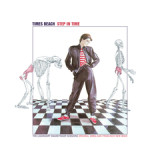
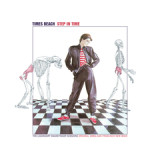
It's been 40 years since these tracks were recorded, but all the original studio and live recordings by Times Beach are finally available on CD & LP Times Beach came together in 1983 with a core of active members from San Francisco's vibrant theatre community. That background propelled the band to a kind of stage glamour that wasn't much seen during the era of post- punk, industrial, and goth music. They were striking to see and hear, with the songs to match. But, like so many excellent bands of the era, they suffered from the "home town curse" since they were not from New York or Los Angeles – but San Francisco. Over the course of two years, Times Beach performed throughout the Bay Area, playing most of the major (and minor) clubs such as The Stone, Baybrick Inn, Cotati Cabaret, Berkeley Square, Sound Of Music, Trocadero Transfer, Ashkenaz, Ruthie's Inn, Sleeping Lady Café, and the beloved Chi Chi Club. They had a legion of dedicated supporters, and many of their shows were real party events. When it came time to record, they accepted an invitation from the illustrious Snakefinger (aka Philip Lithman) and Eric Drew Feldman to produce them at Russian Hill Studio. The first part of their story ends just about there, as they never made enough money to actually produce the album from the recordings. And the various members started drifting off. The final public gig was like their first, at the Mabuhay Gardens, in November 1984. Side One of this LP is comprised of those glorious Snakefinger sessions. Side Two presents just a few of the other great songs they wrote and performed live – never captured in any other form. For fans of Jefferson Airplane, Mutants, Nuns.
Black Vinyl[26,47 €]
It's been 40 years since these tracks were recorded, but all the original studio and live recordings by Times Beach are finally available on CD & LP Times Beach came together in 1983 with a core of active members from San Francisco's vibrant theatre community. That background propelled the band to a kind of stage glamour that wasn't much seen during the era of post- punk, industrial, and goth music. They were striking to see and hear, with the songs to match. But, like so many excellent bands of the era, they suffered from the "home town curse" since they were not from New York or Los Angeles – but San Francisco. Over the course of two years, Times Beach performed throughout the Bay Area, playing most of the major (and minor) clubs such as The Stone, Baybrick Inn, Cotati Cabaret, Berkeley Square, Sound Of Music, Trocadero Transfer, Ashkenaz, Ruthie's Inn, Sleeping Lady Café, and the beloved Chi Chi Club. They had a legion of dedicated supporters, and many of their shows were real party events. When it came time to record, they accepted an invitation from the illustrious Snakefinger (aka Philip Lithman) and Eric Drew Feldman to produce them at Russian Hill Studio. The first part of their story ends just about there, as they never made enough money to actually produce the album from the recordings. And the various members started drifting off. The final public gig was like their first, at the Mabuhay Gardens, in November 1984. Side One of this LP is comprised of those glorious Snakefinger sessions. Side Two presents just a few of the other great songs they wrote and performed live – never captured in any other form. For fans of Jefferson Airplane, Mutants, Nuns.
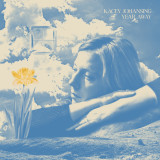
In March of 2020, after learning that a dear friend’s life was coming to an end, Johansing sat down and in one sitting wrote the song “Daffodils”. An elegiac tribute to someone facing death with grace and curiosity, the lyrics confront Johansing’s own mortality by observing the brief lifespan of a Hlower. Only a week later when the world came to an abrupt standstill, she soon found herself processing this recent loss while trying to make sense of a new global reality. Across the ensuing months, Johansing found herself increasingly untethered by a world of isolation and political upheaval.
Having been a frequent touring member of bands like Hand Habits and Fruit Bats, and often being called into the studio to lend her harmonies and multi-instrumental talents to records, Johansing’s phone no longer rang. Living in Los Angeles she feared her musical community was vanishing, as friends and collaborators continually announced they were leaving the city. It was in returning to her piano nightly that she found the greatest solace, feverishly writing the songs that would be collected on her next album. Resulting from this new sense of time and focus was a deepening of her songwriting. As Johansing recalls, “I felt like a metamorphosis happened during that time. There was a lot of personal growth and healing.”
Throughout Year Away Johansing traverses uncharted emotional landscapes brought upon by the changes occurring all around her. The forced self-reflection of the moment is aptly captured by “Old Friend”, featuring an aching melody and swooning production that recalls the best of Harry Nilsson. The epic piano and saxophone-driven “Smile with My Eyes” addresses the loss of community as friends became distant and political divides between family grew. On “Smile” Johansing pushes her vocals further than ever, expanding her range and using her peerless voice as the singular instrument it is. Facing the loss of a family home due to environmental destruction, “Shifting Sands” is marked by soaring Hlutes, Hield recordings and glassy synthesizers that nod to Japanese New Age.
“Daffodils”, the stunning album centerpiece, is built from a pastiche of looping samples, swirling Mellotron and dazzling vibraphone. “Keep your heart open wide, you never know your time / Keep your heart wild, true Hlower child”, Johansing sings as she says goodbye to an elder, while the band reaches a grief-stricken crescendo of woodwinds and chiming bells. On the title track, Johansing takes listeners on an eerily meditative journey of collective experiences. “I wanted to keep the progression simple and repetitive so that musically we could add new elements little by little, while the emotional tone of the lyrics becomes increasingly more strained and expressive”. The song grows to a fever pitch as Johansing sings higher than she thought possible; the tension of the repeating chords Hinally resolving into a hopeful coda as multiple soloists weave around each other.
Amidst heavier themes, Johansing still leaves room for her love of irresistible pop melodies and lush production. The driving “Last Drop” and mid-tempo “Valley Green” are two of her catchiest songs to date. On the former Johansing sings the anthemic chorus, “As if it were the last drop, and nothing ever lasts forever / As if it were the last stop, too far out to come back ever”, longing for a love that she’ll never take for granted, while also admitting that she doesn’t always know how good she has it. “Valley Green” features shimmering layers of 12- string guitars, stacked horns and an impeccable solo by co-producer and multi- instrumentalist Tim Ramsey (Vetiver, Fruit Bats), hinting at a love for bands like NRBQ.
Having been eager to capture the initial spark of songwriting, Johansing booked time at Highland Park’s 64 Sound Studio the week that it reopened. Over the course of three days, she and her band gathered basic tracks for 10 songs, before returning home to Hinish the record with Ramsey. Setting forth to make an album that paid homage to the music that kept them company during the months spent alone together, the duo pulled inspiration from a wide net including Burt Bacharach, John Carroll Kirby & Haruomi Hosono. Ramsey’s newfound love of early digital synthesizers dovetailed effortlessly with Johansing’s fondness for classic 70’s horn and string arrangements, creating a sound that is distinctly modern yet warm and familiar.
Once again Johansing called upon some of the Hinest players of Northeast Los Angeles’ vibrant music community to lend a hand with the record. The 70s R&B-folk of “Watch It Like a Show” features an electric guitar solo from Hand Habits’ Meg Duffy, while album closer “Endless Sound” boasts backing vocals from electronic musician Kaitlyn Aurelia Smith and swooping Indian-inspired violins from Amir Yaghmai (HAIM, The Voidz). The record shines brightly thanks to an ace mix from veteran producer Rob Schnapf (Beck, Elliott Smith, Cat Power), woodwinds from Logan Hone (John Carroll Kirby, Eddie Chacon), and a featured rhythm section of drummer Josh Adams (Jenny Lewis, Bedouine) and bassist Todd Dahlhoff (Feist, Devendra Banhart). Recorded across multiple studios including LA’s famed Sunset Sound, the album remains steadfastly buoyed by the adept engineering of Tyler Karmen (MGMT, Alvvays).
Though born of turbulent times, Year Away is ultimately interested in moving forward. The album ends with “Endless Sound,” where Johansing laments seismic global changes, (“The water is hotter, the mighty thaw / The current’s reversing, the last are lost”) but vows to keep going (“No storm can take me down / Endless light, endless sound”). It’s Year Away’s resilience that shines through despite the darkness. It’s a sound all her own and Johansing’s most cohesive set of songs yet.
Nach längerer Funkstille, Pandemie und Neufindung meldet sich Timber Timbre mit einem neuen Studioalbum zurück, das die elektronischen Elemente des Vorgängers mit einer cineastischen Weite verbindet und Inspiration von Sun Ra, Dorothy Ashby und Alice Coltrane vermuten lässt. Nach Mitarbeit als Produzent für verschiedene Alben, findet sich Kirk Taylor aka Timber Timbre mit Michael Dubue in Quebec wieder. Beide verstehen sich auf Anhieb und es entsteht ein Album mit Songideen der letzten Jahre. Die warme Klanglandschaft, das ironische Augenzwinkern und die cineastische Leichtigkeit verleiten zum Verlorengehen und machen 'Lovage' zu einer Platte, die man immer wieder neu auflegt. Ein Album für die Sammlung.
- 1: Dawn Blessings (Feat. Macie Stewart)
- 2: If I Was You, I'd Be Doing Exactly The Same
- 3: Don't Go Back To Sleep (Feat. Dan Bitney)
- 4: Fruit Smoothie With Peanut Butter
- 5: Pardieu
- 6: Start Before You're Ready
- 7: You Thought You Were Free?
- 8: Joy Is Not Meant To Be A Crumb
- 9: On Falling (Feat. Diego Gaeta)
- 10: Follow Me, I Make You Happy
- 11: This Is The Sound Of One Voice
- 12: When Love Beginss
ORANGE Vinyl[25,00 €]
Berlin-based British composer, percussionist, and instrument maker Bex Burch was invited to spend a month in the US by International Anthem in Summer 2022. Burch immersed herself in the label"s creative community and listened to what it gave her, making field recordings and allowing There Is Only Love and Fear to emerge from the collaborations and environments she encountered. Sessions for the album spanned multiple non-traditional recording spaces including a storefront in Bridgeport, Chicago and a canyon in Griffith Park, Los Angeles, with an eminent cast of creative musicians including Ben LaMar Gay, Macie Stewart, Anna Butterss, Mikel Patrick Avery, and Dan Bitney of Tortoise, all of whom Burch met for the first time in the moments before they played. These moments of instant collaboration were then edited, decomposed, and recontextualized by Burch, resulting in a deeply organic, energetic-yet-patient addition to the canon of modern composition.
- 1: Dawn Blessings (Feat. Macie Stewart)
- 2: If I Was You, I'd Be Doing Exactly The Same
- 3: Don't Go Back To Sleep (Feat. Dan Bitney)
- 4: Fruit Smoothie With Peanut Butter
- 5: Pardieu
- 6: Start Before You're Ready
- 7: You Thought You Were Free?
- 8: Joy Is Not Meant To Be A Crumb
- 9: On Falling (Feat. Diego Gaeta)
- 10: Follow Me, I Make You Happy
- 11: This Is The Sound Of One Voice
- 12: When Love Beginss
Black Vinyl[23,49 €]
Berlin-based British composer, percussionist, and instrument maker Bex Burch was invited to spend a month in the US by International Anthem in Summer 2022. Burch immersed herself in the label"s creative community and listened to what it gave her, making field recordings and allowing There Is Only Love and Fear to emerge from the collaborations and environments she encountered. Sessions for the album spanned multiple non-traditional recording spaces including a storefront in Bridgeport, Chicago and a canyon in Griffith Park, Los Angeles, with an eminent cast of creative musicians including Ben LaMar Gay, Macie Stewart, Anna Butterss, Mikel Patrick Avery, and Dan Bitney of Tortoise, all of whom Burch met for the first time in the moments before they played. These moments of instant collaboration were then edited, decomposed, and recontextualized by Burch, resulting in a deeply organic, energetic-yet-patient addition to the canon of modern composition.
- 1: Dawn Blessings (Feat. Macie Stewart)
- 2: If I Was You, I'd Be Doing Exactly The Same
- 3: Don't Go Back To Sleep (Feat. Dan Bitney)
- 4: Fruit Smoothie With Peanut Butter
- 5: Pardieu
- 6: Start Before You're Ready
- 7: You Thought You Were Free?
- 8: Joy Is Not Meant To Be A Crumb
- 9: On Falling (Feat. Diego Gaeta)
- 10: Follow Me, I Make You Happy
- 11: This Is The Sound Of One Voice
- 12: When Love Begins
Orange Vinyl[28,36 €]
Berlin-based British composer, percussionist, and instrument maker Bex Burch was invited to spend a month in the US by International Anthem in Summer 2022. Burch immersed herself in the label’s creative community and listened to what it gave her, making field recordings and allowing There Is Only Love and Fear to emerge from the collaborations and environments she encountered.
- 1: Dawn Blessings (Feat. Macie Stewart)
- 2: If I Was You, I'd Be Doing Exactly The Same
- 3: Don't Go Back To Sleep (Feat. Dan Bitney)
- 4: Fruit Smoothie With Peanut Butter
- 5: Pardieu
- 6: Start Before You're Ready
- 7: You Thought You Were Free?
- 8: Joy Is Not Meant To Be A Crumb
- 9: On Falling (Feat. Diego Gaeta)
- 10: Follow Me, I Make You Happy
- 11: This Is The Sound Of One Voice
- 12: When Love Begins
Black Vinyl[26,47 €]
Berlin-based British composer, percussionist, and instrument maker Bex Burch was invited to spend a month in the US by International Anthem in Summer 2022. Burch immersed herself in the label’s creative community and listened to what it gave her, making field recordings and allowing There Is Only Love and Fear to emerge from the collaborations and environments she encountered.
“Cinematic electronica embraces intelligent Indian infused beat making”.
Belgian beat collective Up High Collective return with their new album 'Koinonia.' Their second full-length comes five years after their debut album in 2018. For 'Koinonia' they have invited Belgian iconic drummer Lander Gyselinck (STUFF.) and several other guest musicians. The first single 'Koi' is available now, the record is set for release on Wednesday October 11 on vinyl, Bandcamp and via all digital platforms via San Kofa Rhythm Records.
"Going with the cinematic tides of sound: first single 'Koi' features compelling South-Asian sitar, imminent strings, drums by Lander Gyselinck and carefully constructed beat making."
Spearheaded by producer duo Koen De Petter and Renaldo Maria, this record is Up High Collective’s most ambitious music project to date and has been in the works since 2015. The name of the record - Koinonia is Greek for "fellowship" or "community" - refers to the intense and inspiring interplay between the collective and several musicians they invited to contribute.
Raw analog recordings and beats by the producer duo, brimming with imperfections and samples from original Indian music, laid the foundation for live studio sessions by Bert Cornelis, one of the few sitar players in Belgium, drummer Lander Gyselinck (Lander & Adriaan, STUFF.), double bassist Jens Similox (Orchestre Collone) and multi- talented bassist Boris van Overschee (Okon, Delv!s). From their intrinsic penchant for deconstruction, the live elements were cut up by the producers, heavily rearranged and presented as new sounds. After several sessions in their Up High Studio (Leuven), carefully constructed collages gradually started to form with all of its layers filling the deepest corners of the sound space.
The result is a record that balances perfectly between cinematic electronica with complex harmonies to get lost in and solid club oriented beats with crunching textures and off the grid rhythmic patterns.
"All of these songs share an underlying, invisible force bound by the intense interplay and mutual inspiration between us and the live musicians.
The story of the invention of the term, 'deepfunk' is probably only known among fans and practitioners of this niche-genre. In short, it all started in the 1990s when DJs like Keb Darge, Mark 'Snowboy' Cotgrove and others began spinning obscure and feral Funk 45 RPM singles from local American bands, ostensibly generating another sub-category branch off of the mighty Northern Soul tree. The dance-club phenomenon inevitably spilled over to contemporary groups on the funk scene which immediately tried to record their music the way their idols did. The 'rare groove' and 'acid jazz' movements had run their course and there was a concerted effort to reinstate primitive idiomatic styles and techniques into the music, most notably by 90s funk collective The Poets of Rhythm. As more years passed by the number of bands steadily increased (although in tiny numbers, compared to the mainstream market). Almost every country had a representative with the majority of them coming from the United Kingdom. The deepfunk sound was still a niche, however a very few bands made it onto the mainstream charts, most notably Sharon Jones & the Dap Kings.
At the height of the retro-soul movement a questionable development took place. As more bands arrived on the scene, the production became more and more polished and pop-ish. Some of that squeaky-clean tidiness began to creep into the recordings, encouraged in part by the signature sounds of the digital recording technology available at that time. Some bands even tried to jump onto the possibility of promoting their music as 'deepfunk' although they were actually playing slick, funky pop music. This way some people who thought they were listening to raw, energetic funk actually felt quite ambushed when hit with real deepfunk. In fact, a certain percentage of funk music produced within the past 20 years does not deserve to be described as 'deepfunk' at all. Fortunately there were (and are) some pleasant exceptions which did not just imitate but actually rendered amazing funk music just like some of the finest funk combos of the 1960s and 70s.
One of those creative minds is without a doubt Joel Ricci aka Lucky Brown. Originally from Seattle, Washington, USA, he has enriched the deepfunk community since the mid-2000s with his stellar abilities. He is not only an amazing musician playing multiple instruments, but also a brilliant composer, arranger, and producer too. But for us here at Tramp he is much more, a close friend and remarkable human being. Whenever we were struggling, whether with the label or in private life, Joel and his musical work helped us to overcome everything and to keep going our path.
So here we are in 2023. The songs you are listening to right now are the complete Space Dream collection, split into two parts, representing the two living-room recording sessions from which his 2011 Tramp Records debut was compiled. Each fully remastered album contains unreleased material and comes with brand new, beautifully reimagined artwork by Ricci himself, housed in an authentic 1960s tip-on cover. A first class product from a first class musician for the discerning funk enthusiast.
The story of the invention of the term, 'deepfunk' is probably only known among fans and practitioners of this niche-genre. In short, it all started in the 1990s when DJs like Keb Darge, Mark 'Snowboy' Cotgrove and others began spinning obscure and feral Funk 45 RPM singles from local American bands, ostensibly generating another sub-category branch off of the mighty Northern Soul tree. The dance-club phenomenon inevitably spilled over to contemporary groups on the funk scene which immediately tried to record their music the way their idols did. The 'rare groove' and 'acid jazz' movements had run their course and there was a concerted effort to reinstate primitive idiomatic styles and techniques into the music, most notably by 90s funk collective The Poets of Rhythm. As more years passed by the number of bands steadily increased (although in tiny numbers, compared to the mainstream market). Almost every country had a representative with the majority of them coming from the United Kingdom. The deepfunk sound was still a niche, however a very few bands made it onto the mainstream charts, most notably Sharon Jones & the Dap Kings.
At the height of the retro-soul movement a questionable development took place. As more bands arrived on the scene, the production became more and more polished and pop-ish. Some of that squeaky-clean tidiness began to creep into the recordings, encouraged in part by the signature sounds of the digital recording technology available at that time. Some bands even tried to jump onto the possibility of promoting their music as 'deepfunk' although they were actually playing slick, funky pop music. This way some people who thought they were listening to raw, energetic funk actually felt quite ambushed when hit with real deepfunk. In fact, a certain percentage of funk music produced within the past 20 years does not deserve to be described as 'deepfunk' at all. Fortunately there were (and are) some pleasant exceptions which did not just imitate but actually rendered amazing funk music just like some of the finest funk combos of the 1960s and 70s.
One of those creative minds is without a doubt Joel Ricci aka Lucky Brown. Originally from Seattle, Washington, USA, he has enriched the deepfunk community since the mid-2000s with his stellar abilities. He is not only an amazing musician playing multiple instruments, but also a brilliant composer, arranger, and producer too. But for us here at Tramp he is much more, a close friend and remarkable human being. Whenever we were struggling, whether with the label or in private life, Joel and his musical work helped us to overcome everything and to keep going our path.
So here we are in 2023. The songs you are listening to right now are the complete Space Dream collection, split into two parts, representing the two living-room recording sessions from which his 2011 Tramp Records debut was compiled. Each fully remastered album contains unreleased material and comes with brand new, beautifully reimagined artwork by Ricci himself, housed in an authentic 1960s tip-on cover. A first class product from a first class musician for the discerning funk enthusiast.
- Word Games (Live)
- Love The One You’re With (Live)
- Sugar Babe (Live)
- Do For The Other (Live)
- Jesus Gave Love Away For Free (Live)
- 49: Bye-Byes/For What It’s Worth (Live)
- You Don’t Have To Cry (Live)
- The Lee Shore (Live)
- Cherokee (Live)
- Black Queen (Live)
- Know You’ve Got To Run (Live)
- Band Introduction (Live)
- Ecology Song (Live)
- Bluebird Revisited (Live)
- Lean On Me (Live)
Founding member of Buffalo Springfield and folk-rock supergroup Crosby, Stills, Nash & Young, Stills' first solo album, Stephen Stills, earned a gold record, is the only album to feature both Jimi Hendrix and Eric Clapton, and climbed to #3 on the album charts. Stephen Stills’ single "Love the One You're With" became his biggest solo hit, peaking at number 14 on the Billboard Hot 100 and is the first track on this collection. 14 tracks from Stephen Still’s First US Tour, previously unissued and recorded Live at The Berkeley Community Theater in 1971, featuring David Crosby on two songs. In 1971 Stephen Stills embarked on a US tour, opening each show with an intimate acoustic first set, and closing each night with a riveting electric set featuring the Memphis Horns. These historic, previously unreleased recordings took place over two nights at the Berkeley Community Theater, with David Crosby joining him on vocals and guitar for "You Don’t Have To Cry" and "The Lee Shore." These recordings find Stills at peak performance in both vocal delivery and musicianship, effortlessly incorporating alternate instrumentation on his instantly recognizable tracks, including a seamless medley of “49 Bye Byes" and "For What It’s Worth” unexpectedly played on piano. Hand-picked by Stills from his personal archives, this album captures timeless and era defining performances. Fans who were lucky enough to catch his historic debut trek, dubbed “The Memphis Horns Tour,” were treated to the balladeer, the raving troubadour, the acoustic bluesman, the soul driver, and by far the most passionate music maker. Backed by a loyal cast of friends, including his usual steady rhythm section—drummer Dallas Taylor and bassist Calvin “Fuzzy” Samuels—along with keyboardist Paul Harris, guitarist Steve Fromholz, and percussionist Joe Lala, these Northern California shows were one of the most unique and intimate stops on the tour This album, rather than being an artifact from a bygone era, sparkles and stimulates. It cajoles you into thinking, feeling and—most importantly—moving. Stephen Stills Live At Berkeley 1971 is a cornucopia of priceless sound—and all of it bears the distinct and loving fingerprint of Stephen Stills.
Graham Lambkin (of Shadow Ring fame) returns with a long awaited epic double LP, Aphorisms, his first major solo outing since Community (Kye, 2016). Recorded mostly during the early winter months of 2022, in post-pandemic New York and post-Brexit London, Aphorisms assembles the sonic detritus of daily life into hauntingly intimate aural soundscapes. Made between Lambkin's residence in East London and Blank Forms in New York, Aphorisms superimposes the two spaces onto one another creating an imaginary stage where his musical dramas unfold. A transatlantic mediation on the rooms where Lambkin has lived and worked, Aphorisms summons up hallucinatory vistas by way of the composer’s collage technique, layering field recordings, piano, guitar, percussion, vocal fragments, and repurposed elements on top of one another in double, triple, and quadruple exposures. Like the Shadow Ring’s Lindus (Swill Radio, 2001) recorded between Folkestone and Miami Aphorisms ruminates on estrangement and displacement, catching Lambkin as he returns to London after two decades of living in the States, in his words, “leaving home to return home.” Aphorisms continues Lambkin’s synthetic-naturalist approach to sound-making, twisting disparate and unique elements together to create the sensation of a coherent sonic space. At the heart of his practice is the illusion of form, whereby Lambkin combines sonic elements, documenting the moment that they coalesce into music only to disintegrate back into incidental sound. The album is centered around two pianos, one in New York and one in London, sounding together as if through the ether, creating a spectral atmosphere that Lambkin fills with melodic snippets, fragments of songs, spoken-word musings, and guttural barks or “the animal purity of voice,” as he has it. The superimposition of the two spaces is maximized in the album's closing titular track, where, much like on earlier works such as Salmon Run (Kye, 2007) and Softly Softly Copy Copy (Kye, 2009) fragments of familiar melodies float through the mix as though being played from afar. Aphorisms is Lambkin at his best, extending methodologies only hinted at previously and taking his now-idiosyncratic mission statement to a new chapter.