A Milan-born multi-instrumentalist of Venetian heritage, Alberto Baldan Bembo was a gifted vibraphonist, organist, pianist, arranger, and composer whose work bridged jazz, pop, and film music. By the early 1960s, he was performing with Italy’s leading ensembles, including I Menestrelli del Jazz and Bruno De Filippi’s group, and soon became an in-demand session musician. For several years, he toured with the legendary Mina, providing the piano and organ backbone to her live shows—a role that sharpened the cinematic sensibility and refined musicianship that would later define his soundtrack work. In the years to come, he would be celebrated for his scores to films such as L’Amica Di Mia Madre (1975) and Lingua Argento (1976), earning a place alongside Piero Umiliani, Alessandro Alessandroni, Berto Pisano, and other luminaries of Italy’s golden age of soundtrack and library music.
Io E Mara is the soundtrack to a film that was never made. Originally released on the CGD label in 1969, this debut album from the brilliant Maestro Baldan Bembo is a sophisticated concept-album tracing 24 hours in the life of two young lovers. Told entirely through music, the record unfolds as a continuous suite of ten tracks, where cinematic lounge, bossa, and jazz flavors mingle to create a dreamlike atmosphere. Baldan Bembo’s signature piano and organ are masterfully complemented by Mara’s ethereal vocals, while immersive soundscapes of crashing waves, seagulls, and rain showers enhance the feeling of a deeply personal and intimate journey. A cast of exceptional musicians brings this vision to life, including Bruno De Filippi on electric guitar and sitar, Carlo Milano on electric bass, Rolando Ceragioli on drums, and Pasquale Liguori on sound effects. This singular work not only showcases the burgeoning talent of a future soundtrack master but also features the original pop art front cover by Italian cult illustrator Guido Crepax.
Cerca:composer
- Fils D’or
- Lumen
- Mantra
- What You Always Wanted
- Dove
- Treehouse
- Lovers Leap
- Opal
- Sera
- Even After All
“It’s not often you find yourself recording alone in a churchat 3am. I’m not religious, but I experienced somethingunique while playing through the night as the streetsaround me slept. It felt like the music was telling me whatto play and I was the passenger. Lumen grew out of avariety of compositional seeds - from composed songsthat remain true to the score, leaving little room forfreedom, to wide open improvisations recorded in themoment with nothing predetermined.
“It’s in the space between composition and improvisationwhere the magic happens - and where, if the musiciansare willing, the music can lead. I recorded day and nighton a Yamaha grand and an upright felted piano. It felt likesome sort of solo retreat: sitting in a building of faiththrough the night, delving ever deeper into the music.When I finally resurfaced, I felt profoundly that it was themusic that had led me, rather than the other way around. “As a composer, it’s simplicity that I’m searching for - howto say the most with the least. My previous albums wereabout filling the space, both texturally and dynamically. Butsolo performance is different. There’s unlimited freedom,and while that can be liberating, it also comes with addedresponsibility. Beyond the recording, the music takes on anew life. The piano, the room, the acoustic, the mood ofthe audience, even how much sleep I’ve had - all of itinforms how the music evolves. So, each performance iscompletely unique and unrepeatable.
“The recording of Lumen is just the beginning of itsjourney. Where and how it evolves from here is whatkeeps me searching.” - Bill Laurance
Ostinato as resistance: Rafael Anton Irisarri’s landmark work reimagined. Marking the tenth anniversary of the American composer’s critically acclaimed album 'A Fragile Geography', this new edition arrives renewed, both sonically and visually.
First released in 2015 (Room40) during a period of personal upheaval and creative reinvention, it endures as a testament to resilience, transformation, and the connection we hold with the places that shape us.
Written in the aftermath of a devastating theft, A Fragile Geography was born out of loss. Just days before a cross-country move to New York, Irisarri’s entire Seattle-based studio was wiped out. Instruments. Recordings. Archives. Gone without a trace. He arrived on the East Coast to an empty room and the daunting task of starting over.
“This album wasn’t just a record; it was a lifeline,” Irisarri reflects. “It became a way to process the emotional chaos that followed: uprooting, instability, and ultimately, the slow, intuitive rebuilding of a life.”
Composed and recorded in the rural woods of the Hudson Valley, the album took shape in seclusion, surrounded by nature, and through a process guided by improvisation. Embracing limitations, Irisarri wove textural layers of field recordings with half-remembered melodies from his Seattle years, piecing them together like fragments of memory. Tracks like “Displacement,” “Hiatus,” and “Persistence” juxtaposed haunting stillness with restless momentum, mapping an inner terrain of grief, catharsis, and rebirth.
Among its defining sounds is “Empire Systems,” a monumental centerpiece built around a simple four-chord progression, organ textures, and guitar drones. Gradually, the track expands into layers of immersive loops and thick, enveloping distortion that wash over the listener like a rolling wave. Often cited as the album’s most majestic passage, it captures Irisarri at his most sonically ambitious. With a harmonically saturated structure crafted from restraint and repetition, it remains one of his most recognizable compositions: an exercise in the art of maximal minimalism.
From the outset, “Reprisal” received praise from BBC’s Mary Anne Hobbs, who championed the track on her radio show. Her support played a key role in introducing Irisarri’s work to wider audiences and solidifying his place within the lineage of electronic, drone, and experimental sound artists. A slow-burning elegy, the piece emerges from a haze of distortion and sub-bass, with dense, unrelenting drones carrying a sense of mounting tension. Just as it seems to collapse under its own weight, flickers of guitar emerge like distant light through fog. It’s a meditation on dissonance, resolve, and the elusive possibility of release.
The closing track, “Secretly Wishing for Rain,” is steeped in saudade: a longing for Seattle’s dour grey skies, lush green landscapes, and desaturated sunsets. Through it, Irisarri mourns a vanished chapter of life bound to the city, a time documented in scattered mementos and cherished collections, now permanently gone. A reflection on what could never be recovered: an era lost to time. Julia Kent’s looped cello motifs added a melancholic warmth to the track, marking the first collaboration between the two artists and sparking a musical dialogue that would keep growing in the years that followed.
More than a career highlight, A Fragile Geography has laid the foundation for Black Knoll studio, which Irisarri rebuilt from the ground up. The studio has since grown into a creative hub for countless projects, with Irisarri engineering records for iconic music figures like Terry Riley, Ryuichi Sakamoto, William Basinski, MONO, Devendra Banhart, Grouper, Emeralds, Steve Hauschildt, Julianna Barwick, and many others. Carried by its lasting influence, the album has quietly captured the ear of a younger generation, its sound and emotional arc finding new listeners in unexpected corners.
The album’s new visual language was reimagined in collaboration with Mexico City–based designer Daniel Castrejón. Irisarri captured ghostly images at Gaztelugatxeko Doniene, a historic coastal site in Bermeo, Euskal Herria. Castrejón then treated the photographs with distressed textures and spectral overlays. The final artwork channels the rugged, elemental forces that shaped both the music and Irisarri’s aesthetic, renewing his ties to ancestral ground inspired by the Basque homeland of his bloodline.
Mastered by Stephan Mathieu with exceptional attention to detail, this anniversary edition uncovers every nuance in the sound design, enhancing clarity and presence. With each listen, new elements emerge, inviting discovery and reconnection.
“I don’t experience this album as a document of grief anymore,” says Irisarri. “I hear adaptation and I'm reminded that when everything falls apart, something meaningful, maybe even beautiful, can emerge.”
Ostinato as resistance: Rafael Anton Irisarri’s landmark work reimagined. Marking the tenth anniversary of the American composer’s critically acclaimed album 'A Fragile Geography', this new edition arrives renewed, both sonically and visually.
First released in 2015 (Room40) during a period of personal upheaval and creative reinvention, it endures as a testament to resilience, transformation, and the connection we hold with the places that shape us.
Written in the aftermath of a devastating theft, A Fragile Geography was born out of loss. Just days before a cross-country move to New York, Irisarri’s entire Seattle-based studio was wiped out. Instruments. Recordings. Archives. Gone without a trace. He arrived on the East Coast to an empty room and the daunting task of starting over.
“This album wasn’t just a record; it was a lifeline,” Irisarri reflects. “It became a way to process the emotional chaos that followed: uprooting, instability, and ultimately, the slow, intuitive rebuilding of a life.”
Composed and recorded in the rural woods of the Hudson Valley, the album took shape in seclusion, surrounded by nature, and through a process guided by improvisation. Embracing limitations, Irisarri wove textural layers of field recordings with half-remembered melodies from his Seattle years, piecing them together like fragments of memory. Tracks like “Displacement,” “Hiatus,” and “Persistence” juxtaposed haunting stillness with restless momentum, mapping an inner terrain of grief, catharsis, and rebirth.
Among its defining sounds is “Empire Systems,” a monumental centerpiece built around a simple four-chord progression, organ textures, and guitar drones. Gradually, the track expands into layers of immersive loops and thick, enveloping distortion that wash over the listener like a rolling wave. Often cited as the album’s most majestic passage, it captures Irisarri at his most sonically ambitious. With a harmonically saturated structure crafted from restraint and repetition, it remains one of his most recognizable compositions: an exercise in the art of maximal minimalism.
From the outset, “Reprisal” received praise from BBC’s Mary Anne Hobbs, who championed the track on her radio show. Her support played a key role in introducing Irisarri’s work to wider audiences and solidifying his place within the lineage of electronic, drone, and experimental sound artists. A slow-burning elegy, the piece emerges from a haze of distortion and sub-bass, with dense, unrelenting drones carrying a sense of mounting tension. Just as it seems to collapse under its own weight, flickers of guitar emerge like distant light through fog. It’s a meditation on dissonance, resolve, and the elusive possibility of release.
The closing track, “Secretly Wishing for Rain,” is steeped in saudade: a longing for Seattle’s dour grey skies, lush green landscapes, and desaturated sunsets. Through it, Irisarri mourns a vanished chapter of life bound to the city, a time documented in scattered mementos and cherished collections, now permanently gone. A reflection on what could never be recovered: an era lost to time. Julia Kent’s looped cello motifs added a melancholic warmth to the track, marking the first collaboration between the two artists and sparking a musical dialogue that would keep growing in the years that followed.
More than a career highlight, A Fragile Geography has laid the foundation for Black Knoll studio, which Irisarri rebuilt from the ground up. The studio has since grown into a creative hub for countless projects, with Irisarri engineering records for iconic music figures like Terry Riley, Ryuichi Sakamoto, William Basinski, MONO, Devendra Banhart, Grouper, Emeralds, Steve Hauschildt, Julianna Barwick, and many others. Carried by its lasting influence, the album has quietly captured the ear of a younger generation, its sound and emotional arc finding new listeners in unexpected corners.
The album’s new visual language was reimagined in collaboration with Mexico City–based designer Daniel Castrejón. Irisarri captured ghostly images at Gaztelugatxeko Doniene, a historic coastal site in Bermeo, Euskal Herria. Castrejón then treated the photographs with distressed textures and spectral overlays. The final artwork channels the rugged, elemental forces that shaped both the music and Irisarri’s aesthetic, renewing his ties to ancestral ground inspired by the Basque homeland of his bloodline.
Mastered by Stephan Mathieu with exceptional attention to detail, this anniversary edition uncovers every nuance in the sound design, enhancing clarity and presence. With each listen, new elements emerge, inviting discovery and reconnection.
“I don’t experience this album as a document of grief anymore,” says Irisarri. “I hear adaptation and I'm reminded that when everything falls apart, something meaningful, maybe even beautiful, can emerge.”
- 1: Our English Friends
- 2: Piroette
- 3: The Third Movement
- 4: Play Room
- 5: Starboard She Said
- 6: Los Estrellas
- 7: Albert The Mud Fish
- 8: Who Art In Heaven
- 9: Shackleford Breeze
- 102: Blind 2 See
- 11: Zazinthos
- 12: Air Tube
- 13: Little Brown Jig
- 14: Tongues
- 15: Shalama
- 16: The Sun On The Sea
- 17: Interlude
- 18: The Snow Falls And The Village Is Overflowing With Children
- 19: Double Happiness
Deux Filles were Simon Fisher Turner, former child star/teen idol and future soundtrack composer, and songwriter/technician Colin Lloyd Tucker. Turner and Tucker left an early incarnation of The The in 1981 to pursue a different musical direction.
Turner claims that the idea of Deux Filles came to him in a dream, and the novel fiction/roleplay would be strictly maintained throughout the girls' short career. As well as posing in costume for the album covers, the duo even performed live without the audience realizing that the girls on-stage were actually a pair of blokes from south London having a giggle.
Deux Filles released two highly collectable albums: Silence & Wisdom (1982) and Double Happiness (1983)
"Hyperglyph" is the first new album in 11 years from composer/trumpeter/synthesist Rob Mazurek and composer/percussionist Chad Taylor"s long-running Chicago Underground Duo project. Mazurek and Taylor have played music together in a multitude of formations over nearly three decades, including their ongoing partnership in Mazurek"s large-format-skyward-expressionism vehicle Exploding Star Orchestra, in the expanded Chicago Underground Trio, Quartet and Orchestra (all with guitarist Jeff Parker), as well as a plethora of other assemblages. The early albums by the Duo have proven to be embryonic blueprints for the avant-jazz / electronic / indie rock hybridizing of the time, making them majorly important moments in the articulation of the "jazz" dimensionality of the then-burgeoning "post rock" sound. That sound, of course, was being transmitted far and wide due to the success of these groups as well as the Mazurek/Parker project Isotope 217, and the Chicago Underground"s frequently-intersecting collaborators in Tortoise. Just as most of the still-working projects born of that era have evolved, reconfigured, and grown, the Chicago Underground Duo has undergone a number of musical moltings, with the project always in the background of disparate individual aural investigations. The concurrent personal evolutions of Mazurek and Taylor as the Duo project drops off and picks back up makes it a true reflection of their own lives and friendship.
Tauche ein in die magische Klangwelt von Olafur Arnalds: Found Songs kehrt zurück - erstmals als transparente Vinyl-Edition! Ursprünglich 2009 auf schwarzem Vinyl veröffentlicht und lange vergriffen, erscheint dieses intime Meisterwerk nun in einer streng limitierten Neuauflage. Die sieben Stücke entstanden in einem außergewöhnlichen Projekt: ein Song pro Tag, sieben Tage lang - direkt geteilt mit der Welt. Zwischen zarten Klaviermotiven, subtilen Elektronik-Elementen und kammermusikalischer Tiefe entfaltet sich ein eindrucksvolles Porträt eines jungen Komponisten, der die Grenzen zwischen Klassik, Pop und Ambient neu definiert. Found Songs ist ein poetisches Zeitdokument - roh, ehrlich und voller Gefühl. Ein Muss für alle, die Musik als Kunstform erleben. Step into the delicate sound world of Olafur Arnalds: Found Songs returns - for the first time ever on clear vinyl! Originally released in 2009 on black vinyl and long sold out, this intimate masterpiece is now reissued in a strictly limited edition. Born from a unique project - one song per day for seven days, shared instantly with the world - these seven pieces blend fragile piano, subtle electronics, and chamber textures into a deeply personal portrait of a young composer redefining the boundaries between classical, pop, and ambient. Found Songs is a poetic time capsule - raw, honest, and profoundly moving. A must-have for those who experience music as art.
- A1: Hello Music
- A2: Glass C/W Steel
- A3: Ghosts
- A4: Out Of Their Heads (On Locoweed)
- B1: Not Forgotten
- B2: Hollow Music
- B3: Heat C/W Moment
- B4: No Birds
- C1: Dawns
- C2: Outer Order
- C3: Tempus Fugit
- C4: Quicksilver (For Simone)
- C5: Unterwegs (For Roman)
- C6: Phalaropes
- D1: Jack’s Neap Tide
- D2: Schlechte Gewissen
- D3: Move Indigo
- D4: To Do
- D5: The Map Of Dreams
- D6: Locomoting
- D7: Duskds
Guitar Solos is the debut solo album of British guitarist, composer, and improviser Fred Frith. It was recorded while Frith was still a member of the English experimental rock group Henry Cow and was released originally in October 1974. Voted one of the best albums of 1974 by NME critics it also attracted the attention of Brian Eno, resulting in Frith playing guitar on two of Eno‘s albums. Frith‘s never tiring spirit in creating and performing music has made him one of the most notable and creative guitar players and musicians in the scene of improvised and composed music. For the anniversary of this release we have encouraged Frith to arrange a set up similar to what he used 50 years ago to record an album of new compositions which will accompany the original record.
Barcelona born and based young composer Olivia Font's debut album, Invictam explores resilience and adaptation through a unique blend of strings, analog synthesizers, electronics, and experimental percussion. The album's narrative, guided by a transformative female voice, unfolds through long, repetitive melodic patterns that meditate on time, transience, and the passage of seasons.
This unique vision is further enriched by collaborations with British cellist Oliver Coates and actress-singer Ana San Martín, alongside a track from producer Pedro Vian himself. Preorder Invictam today and be part of this remarkable journey. Cover by Adrià Cañameras.
- The Big
- Changing Tides
- All
- Bendico
- Vice Versa
- Martha's Dance
- Dunkelflaute
Trailblazing outlet for forward-thinking Danish Jazz, April Records proudly presents the debut from trumpeter/composer Rolf Thofte; a vivid and personal record that blends lyrical melodies, inventive rhythms, and subtle harmonic exploration. Written while Thofte adjusted to fatherhood - the album captures moments of joy, reflection, and experimentation, brought to life by a handpicked quintet of Denmark"s most exciting young jazz talents. Martha"s Dance is set for release on September 19th, 2025 via April Records. The title track is a tribute to Thofte"s three-year-old daughter - a playful, clapping, goat-hoof-stomping tune in quirky 5/4 that channels the spirit of childhood joy and spontaneity. "It"s just a fun tune to play, and I feel like it really captures Martha"s spirit," says Thofte. "This band came together at a time when I was trying to get a foothold in a new life situation as a father, so it felt perfect to make this the title track." The album moves between moods and textures with elegance: from the rich harmonic language of "Vice Versa" - inspired by Wayne Shorter"s ability to cast simple melodies in shifting harmonic light - to the understated power of "Changing Tides," a piece about imperceptible gradual changes in our lives, nature, and politics. "Bendico," written in 15 minutes as a conservatory assignment, showcases Thofte"s gift for strong melodic statements, while "Dunkelflaute" evokes melancholic Nordic greyness through sparse, emotive phrasing. From the swaggering second-line feel of "The Big 5" to the hypnotic pulse of "All...", the album explores rhythm as both a driving force and a canvas for creative interplay. Throughout, Thofte"s trumpet and flugelhorn lead the ensemble with warmth and clarity. The quintet features some of Copenhagen"s top next-generation players: Andreas Toftemark (tenor saxophone), a powerhouse improviser and composer who brings NYC-honed energy and detail to the group dynamic. Rasmus Sorensen (piano), a rising star of the European scene, known for his sensitive, exploratory playing and fearless interaction. Jakob Roland (bass) and Henrik Holst (drums) - two of Thofte"s oldest musical collaborators - round out the rhythm section with deep swing, taste, and musical empathy.
Sdban Records is proud to announce the first official reissue of Coal Mining, the 1978 debut album by Dutch jazz pianist René van Helsdingen. This album marks a significant milestone-the beginning of van Helsdingen's decades-spanning career as an innovative and independent musician.
Born in 1957 in Jakarta, Indonesia, but holding Dutch nationality, René van Helsdingen began classical piano studies in the Netherlands in the early 1960s. While initially following in his family's footsteps by enrolling in mining engineering at the Technical University of Delft, his passion for music ultimately prevailed. His academic path may have diverged, but it set the stage, both figuratively and literally, for what would become an extraordinary musical career.
Coal Mining was originally released on Munich Records, a respected Dutch jazz and roots label founded by music producer and musician Job Zomer. The album features a blend of jazz influences from giants such as Oscar Peterson, McCoy Tyner, and Bill Evans, and showcases van Helsdingen's distinctive voice as a composer and pianist at the very start of his professional journey.
The record includes contributions from a rich ensemble of musicians, including Wim Essed (bass), Klaus Flenter (guitar), Børge Ring (double bass), Henk Zomer (drums), Martijn Nesenberend (drums), Dick Pluim (bass), and even a student orchestra formed during van Helsdingen's time at Delft University.
Often mistakenly referred to as Piano, a result of the album's back cover design prominentlyfeaturing the word, Coal Mining is both a literal and symbolic title. It alludes not only to van Helsdingen's brief academic past, but to the depth and labor of jazz creation itself: layered, gritty, and forged under pressure.
A year after the album's release, van Helsdingen moved to Los Angeles to continue his jazz studies. While living in Hollywood, he shared a house with future musical collaborators including Kent Brinkley, Essiet Okon Essiet, Brian Batie, John Rigby, Edmond Allmond, David Best and John Butler. Even in the early stages of his career, van Helsdingen displayed the entrepreneurial spirit that would define his path, self-releasing albums and even pioneering an early form of crowdfunding by selling 400 ad spaces on a record sleeve to finance an LP project. After his jazz studies in Los Angeles, he performed extensively in Europe, Canada, the U.S., Australia and Asia, often traveling with his own 'Stage bus', which housedboth a stage and instruments.
In August 2018, van Helsdingen was diagnosed with Parkinson's disease. Despite the physical challenges brought on by the condition, he continues to perform and compose music. His openness about the diagnosis-shared publicly in a 2019 documentary-has helped raise awareness of Parkinson's and the role of creativity and improvisation as tools for resilience.
Now, nearly five decades after its initial release, Coal Mining is finally receiving a well-deserved reissue. Introducing a new generation of listeners to the raw talent and visionary beginnings of a true European jazz original.
WRWTFWW Records is happy to announce the self-titled debut from Throwing Shapes, a new collaborative project featuring harpist Méabh McKenna, percussionist Ross Chaney, and label mainstay composer/producer Gareth Quinn Redmond. The immersive electronic meets traditional album is available on limited-edition LP housed in a heavyweight sleeve and including a beautiful mini-poster designed by artwork creator Stina Sandström. It is also available digitally.
A hypnotic, texturally rich exploration in sound led by the striking timbre of the Irish wire strung harp, Throwing Shapes weaves intricate instrumental tapestries with ambitious electronic synthesis and arrangements. The result is an immersive soundscape that feels rooted yet experiential and through which a unique vocabulary emerges - cinematic harp driven avant electronic conjuring lush sonic worlds that evoke both heritage and futurism.
Gareth Quinn Redmond's previous albums, Laistigh Den Ghleo, a ode to the work of Satoshi Ashikawa, Umcheol, mixing ambient with traditional Irish music instruments, his tape loops wonder Ar Ais Arís, and his collaborative effort with Albert Karch, Warszawa, are still available on WRWTFWW Records - complete the collection…again and again!
Points of interests
- For fans of ambient, minimalism, environmental, experimental, electro-acoustic, traditional Irish instruments, synth, cinematic harptronica, Satoshi Ashikawa, Erik Satie, Midori Takada, Albrt Karch, ambient supergroups, mini posters inside record sleeves, heritage, futurism, and meditative journeys.
- Super limited edition vinyl of Méabh McKenna, Ross Chaney, and Gareth Quinn Redmond collaborative effort Throwing Shapes with an artwork by Stina Sandström.
- If I Had A Heart
- Battle Field
- The Eye Of Odin
- Of Fathers And Sons
- Journey To Kattegat
- Northern Lights / Entry To Kattegat
- The Sunstone
- You Shall Not Enter Valhalla
- Meeting Floki
- Ragnar's Sail
- Ragnar Recruits
- Seduction
- Vikings Set Sail
- North Sea Storm
- Madness Takes Hold
- Vikings Reach Land
- Vikings Attack Village
- Floki's Fire
- Vikings Sail Home
- Vikings In Hexham
- Mano E Mano
- Battle On The Beach
- Athelstan Asks For Freedom
- Ragnar Challenges The Earl
- Ragnar Fights The Earl
- Sending The Earl To Valhalla
- Ragnar Takes The Throne
- The Angel Of Death
- Lagertha Oversees
- Vikings Attack
- Rollo Is Baptised
- Rollo Left Behind
- Ragnar Meets The Naked Woman
- The Ash Tree
- Aslaug Is With Child
- An Uncertain World
- Making A Deal
- Earl Accepts The Challenge
The official soundtrack to the first season of the acclaimed historical drama Vikings is now, for the first time, available on vinyl, offering fans and collectors a rich and immersive listening experience. Composed by Emmy Award-winning composer Trevor Morris (The Tudors, The Borgias, Dragon Age: Inquisition), the score captures the raw intensity, emotional depth, and mythic atmosphere that helped define the tone of the series. From sweeping orchestral moments to brooding ambient textures, the music reflects the harsh beauty of the Viking world and its complex characters. One of the standout tracks is the opening theme, “If I Had A Heart” by Swedish artist Fever Ray, whose haunting vocals and minimalist electronics set the tone for the series. The track became iconic, earning recognition for its unique contribution to the show’s identity. The series itself has received widespread acclaim and multiple awards, both for its storytelling and technical execution, with the music playing a vital role in its success. Vikings (Music From The TV Series) is available for the first time on vinyl as a limited edition of 750 numbered copies on blue coloured vinyl. This 2LP package includes a 4-page booklet with pictures and liner notes by Trevor Morris.
- An Ephemeral Radiant
- Savonarola's Insight
- Ocular Creature
- The Elusive Beings
- Neri
- Afterglow Apprehension
- The Gulf
- Ladder Of Meaning
- Evade The Swirling Mimicry
- Inscape
- Veiled Grammar
- Iron Staircase
- Luminous Seeping Through The Crevices
- A Subdued Longing And Gentle Ache
- In Bethulia
- Deep Sea's Rainbow Part1
- Deep Sea's Rainbow Part2
- Deep Sea's Rainbow Part3
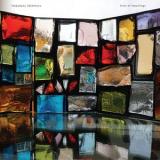
Nobukazu Takemura"s music is singular in its ability to create a musical sense of childlike wonder and curiosity, with gracefully executed yet complex compositions. His pieces embody an innocence and the intricacies of self discovery that every human is faced with as their worlds become more complex. An acclaimed producer and composer, Takemura is known for his idiosyncratic music and video artistry as well as his prolific collaborations including those with Tortoise, Yo La Tengo, DJ Spooky and Steve Reich. knot of meanings, Takemura"s first proper album in a decade, finds the Japanese artist wrestling with the rise of technological influence on art and culture in the modern era, in tandem with his own relationship to religion, and where those struggles meet. Like the colorful, irregularly shaped glasses on the cover, the album is a mosaic of technicolor elements that come together to form a complete picture, a dense portrait of interconnected struggles and triumphs.
'Oh Snap' features twelve very personal songs by Salvant (plus a cover of a verse from the Commodores’ 1977 hit “Brick House), mostly recorded outside of a traditional studio environment, and which showcase her genre-spanning tastes and influences. The MacArthur Fellow and three-time Grammy-winning singer and composer wrote these short, intimate songs as part of a creative quest: to place spontaneity and joy at the centre of her writing process, and originally recorded them alone, at home, never intending for them to be released, using digital tools and effects that she had never played with before, like GarageBand, Logic, AutoTune, Midi plugins, drum loops, vocal effects, reverb, and filters. The songs reflect Salvant’s wide-ranging musical influences from her 1990s childhood in Miami—from boy bands to grunge to classical to folk—and include party tracks with beats, samba grooves, and quiet folk songs. The album features longtime collaborators Sullivan Fortner, Yasushi Nakamura, and Kyle Poole, as well as cameos from singers June McDoom and Kate Davis.
Billy Bultheel's debut solo album is an ambitious distillation of the composer's sprawling litany of influences and his unique approach to site-specific composition. A compilation of pieces created between 2016 and 2023, the album is a forceful testament to Bultheel's expansive performance practice and collaborations with cutting-edge visual artists like Anne Imhof and James Richards.
In 2000 Belgian singer and composer ZIPPORA surprised the international trance-scene with her debut-single LOTUS EATER. In was produced at the time by ILLUSION-DJ DJ Philip and BYTE inhouse-producer EDDY WEYNS. 25 years later it gets a massive remake by none the less than NICO PARISI (known as a resident-DJ in ATMOZ and producer/remixer of Nunca, Aqualords, Nico Parisi of course and the legendary track METRO).
cassette[23,11 €]
Danny Elfman, film composer, classical composer, singer-songwriter, and recording artist, has garnered international recognition for composing over 100 feature film scores, as well as compositions for television, stage productions, and the concert hall. Elfman has been Tim Burton’s composer for more than 35 years, having scored 17 Burton films such as Batman, Pee-wee’s Big Adventure, Beetlejuice, Edward Scissorhands, Charlie and the Chocolate Factory, Big Fish, Alice in Wonderland, and Beetlejuice Beetlejuice, as well as music, lyrics and songs for The Nightmare Before Christmas for which he also sang the part of Jack Skellington. Elfman was also the lead singer and songwriter for the LA rock band Oingo Boingo for 17 years.
Waxwork Records is thrilled to release BULLET TIME Original Animated Picture Soundtrack by Danny Elfmanas a deluxe 7" vinyl EP and also on cassette! Features include 90s inspired splatter colored vinyl, an insert, and artwork by Kostas Firinidis and cassette artwork by Tristan Tait and Kostas Firinidis.
François and Sylvain Rabbath have turned six years of touring into a joint album that patiently and intensely distills a variety of musical flavors gathered from around the world.
Since the early 1960s, François Rabbath's double bass has resonated through enough landmark recordings to fill several shelves in a record collection. As an arranger, composer, and musician, his imprint on music goes far beyond his collaborations with Barbara, Paco Ibáñez, Charles Aznavour, or Édith Piaf. Aspiring double bassists owe him a groundbreaking method for learning the instrument. Born into a lush musical universe that quickly became his own, his son Sylvain first accompanied him on his travels before settling at the piano and sharing stages around the world at his side.
Those years of accumulating visas in their passports were put to good use by father and son. The continents, countries, and cities they passed through became a rich source of inspiration for composing Amall, the album by the Rabbath Electric Orchestra.
Long hours spent in the air or on the road, watching passing landscapes that never stayed the same, were transformed into compositions imbued with the atmospheres of the places they crossed or visited. Inspiration sometimes struck with force, like a green oasis appearing in a desert of stone—unexpectedly, as glowing red rocks suddenly dominated an otherwise open landscape with an endless horizon, while the mind wandered into a state between meditation and introspection.
Born from these travels, the pieces took on their final colors once brought into the studio, refined, and finally arranged to welcome the guitars of Keziah Jones and Matthieu Chedid, the piano of Laurent de Wilde, the bass of Victor Wooten, the saxophone of Raphaël Imbert, and the percussion of Minino Garay. Enhanced by the scale of the jazz-soul orchestrations, by the richness of arrangements bursting from strings, brass, rhythms, or keyboards, the epic breath of vast plains became ingrained. The urban tension of funk, echoing their movements, found its place—alongside more electric expressions or the ambience of a darkened room.
Melancholic and melodious, expressive and edgy, the bowed double bass—played in the high register where few dare to go—emerged as the musical guide. One that draws a path between Seville and Minneapolis, connects François Rabbath's native Syria to France, and bridges South America to Europe. It sets the tone to follow—the emotion that will carry the piece, and if not filled with light, will carry it there nonetheless.
Musical visions packed in luggage, transported in cargo holds, or imprinted in their minds just long enough to cover the distances to the next stop—father and son deepened their bond, beyond family and art. And their hands have never held each other more tightly.
François et Sylvain Rabbath ont fait fructifier six ans de tournées pour un album commun distillant patiemment et intensément la variété de parfums musicaux récoltés autour du monde.
Depuis le début des 60’s, la contrebasse de François Rabbath résonne dans assez de références pour combler plusieurs étagères d’une collection de disques. Arrangeur, compositeur, musicien, l'empreinte laissée dans la musique va bien au-delà de ses collaborations avec Barbara, Paco Ibanez, Charles Aznavour, ou Edith Piaf. C’est à lui que les
apprentis contrebassistes doivent une méthode novatrice pour apprendre l’instrument.
Né dans un univers musical luxuriant qui est vite devenu aussi le sien, c’est d’abord dans ses voyages que son fils Sylvain l’a accompagné, avant de s’installer au piano, et parcourir les scènes du monde à ses côtés. Ces années où les visas se sont entassés sur leurs passeports, père et fils les ont mises à profit. Continents, pays, et villes qui se sont succédés sont devenues un gisement pour composer Amall, l’album du Rabbath Electric Orchestra.
Les longs moments passés dans les airs ou sur la route à contempler un paysage qui défile sans pour autant rester le même, se sont convertis en compositions habitées par les ambiances de ces endroits traversés ou visités. Là où l’inspiration s’est imposée parfois brutalement, sous
la forme d’un oasis de verdure surgissant au milieu d’un désert de pierres. Au hasard d’imposantes roches rougeoyantes s’invitant dans un paysage jusqu’alors dégagé sur un horizon sans fin, quand l’esprit se laisse aller à un mélange de méditation et d'introspection.
Nés de ces pérégrinations, les titres ont pris leurs couleurs définitives une fois ramenés en studio, peaufinés puis, enfin, pensés pour y inviter les guitares de Keziah Jones et de Matthieu Chedid, le piano de Laurent de Wilde, la basse de Victor Wooten, le saxophone de Raphaël Imbert, les percussions de Minino Garay. Sublimé par la dimension des orchestrations jazz-soul, par la richesse des arrangements jaillissant des cordes, des cuivres, des rythmiques ou des claviers, le souffle épique des plaines immenses s’est imprimé.
La nervosité citadine du funk rythmant les déplacements a trouvé sa place, non loin d’une expression plus électrique ou d’une atmosphère de salle obscure.
Mélancolique et mélodieuse, expressive et nerveuse, la contrebasse jouée à l’archet, dans les notes hautes du manche où peu s’aventurent, s’est érigée en guide musical. Celui qui trace le chemin entre Séville et Minneapolis, relie la Syrie natale de François Rabbath à la France,
réduit la distance entre l’Amérique du Sud et l’Europe. Donne la note à suivre, l’émotion qui traversera le morceau qui, s’il n’est pas habité par la lumière, le portera néanmoins jusque là.
Visions musicales mises dans le coffre, transportées en soute ou imprimées dans l’esprit le temps de couvrir les distances qui les mèneront aux prochaines, c’est côte à côte que père et fils ont prolongé leur lien par delà des seules limites familiales et artistiques. Et leurs mains ne se sont jamais serrées aussi fort.
credits
Ostinato as resistance: Rafael Anton Irisarri’s landmark work reimagined. Marking the tenth anniversary of the American composer’s critically acclaimed album 'A Fragile Geography', this new edition arrives renewed, both sonically and visually.
First released in 2015 (Room40) during a period of personal upheaval and creative reinvention, it endures as a testament to resilience, transformation, and the connection we hold with the places that shape us.
Written in the aftermath of a devastating theft, A Fragile Geography was born out of loss. Just days before a cross-country move to New York, Irisarri’s entire Seattle-based studio was wiped out. Instruments. Recordings. Archives. Gone without a trace. He arrived on the East Coast to an empty room and the daunting task of starting over.
“This album wasn’t just a record; it was a lifeline,” Irisarri reflects. “It became a way to process the emotional chaos that followed: uprooting, instability, and ultimately, the slow, intuitive rebuilding of a life.”
Composed and recorded in the rural woods of the Hudson Valley, the album took shape in seclusion, surrounded by nature, and through a process guided by improvisation. Embracing limitations, Irisarri wove textural layers of field recordings with half-remembered melodies from his Seattle years, piecing them together like fragments of memory. Tracks like “Displacement,” “Hiatus,” and “Persistence” juxtaposed haunting stillness with restless momentum, mapping an inner terrain of grief, catharsis, and rebirth.
Among its defining sounds is “Empire Systems,” a monumental centerpiece built around a simple four-chord progression, organ textures, and guitar drones. Gradually, the track expands into layers of immersive loops and thick, enveloping distortion that wash over the listener like a rolling wave. Often cited as the album’s most majestic passage, it captures Irisarri at his most sonically ambitious. With a harmonically saturated structure crafted from restraint and repetition, it remains one of his most recognizable compositions: an exercise in the art of maximal minimalism.
From the outset, “Reprisal” received praise from BBC’s Mary Anne Hobbs, who championed the track on her radio show. Her support played a key role in introducing Irisarri’s work to wider audiences and solidifying his place within the lineage of electronic, drone, and experimental sound artists. A slow-burning elegy, the piece emerges from a haze of distortion and sub-bass, with dense, unrelenting drones carrying a sense of mounting tension. Just as it seems to collapse under its own weight, flickers of guitar emerge like distant light through fog. It’s a meditation on dissonance, resolve, and the elusive possibility of release.
The closing track, “Secretly Wishing for Rain,” is steeped in saudade: a longing for Seattle’s dour grey skies, lush green landscapes, and desaturated sunsets. Through it, Irisarri mourns a vanished chapter of life bound to the city, a time documented in scattered mementos and cherished collections, now permanently gone. A reflection on what could never be recovered: an era lost to time. Julia Kent’s looped cello motifs added a melancholic warmth to the track, marking the first collaboration between the two artists and sparking a musical dialogue that would keep growing in the years that followed.
More than a career highlight, A Fragile Geography has laid the foundation for Black Knoll studio, which Irisarri rebuilt from the ground up. The studio has since grown into a creative hub for countless projects, with Irisarri engineering records for iconic music figures like Terry Riley, Ryuichi Sakamoto, William Basinski, MONO, Devendra Banhart, Grouper, Emeralds, Steve Hauschildt, Julianna Barwick, and many others. Carried by its lasting influence, the album has quietly captured the ear of a younger generation, its sound and emotional arc finding new listeners in unexpected corners.
The album’s new visual language was reimagined in collaboration with Mexico City–based designer Daniel Castrejón. Irisarri captured ghostly images at Gaztelugatxeko Doniene, a historic coastal site in Bermeo, Euskal Herria. Castrejón then treated the photographs with distressed textures and spectral overlays. The final artwork channels the rugged, elemental forces that shaped both the music and Irisarri’s aesthetic, renewing his ties to ancestral ground inspired by the Basque homeland of his bloodline.
Mastered by Stephan Mathieu with exceptional attention to detail, this anniversary edition uncovers every nuance in the sound design, enhancing clarity and presence. With each listen, new elements emerge, inviting discovery and reconnection.
“I don’t experience this album as a document of grief anymore,” says Irisarri. “I hear adaptation and I'm reminded that when everything falls apart, something meaningful, maybe even beautiful, can emerge.”