The long-overdue revival of Bim Sherman’s catalog begins here. These essential recordings will become widely available again for the first time in decades, opening a new chapter in the appreciation of one of Jamaica’s most distinctive voices and representing a major moment for reggae and dub aficionados around the world. This reissue series will not only preserve his legacy but will also offer listeners the chance to experience the depth and timeless resonance of Sherman’s work in its full glory.
Bim Sherman—born Jarret Lloyd Vincent, in Westmoreland, Jamaica—holds a unique place in reggae history. Emerging in the mid 70s, his ethereal, haunting vocal style quickly set him apart from his contemporaries. He was soon collaborating with the top producers and musicians of the era, including Adrian Sherwood and the On-U Sound collective, bridging the gap between roots reggae and experimental dub and laying the groundwork for the fusion of Jamaican sounds with the vibrant underground scene in the UK. His career, from Kingston to London to Mumbai, was marked by an artistic daring and spiritual intensity that has earned him enduring respect across generations.
The centerpiece of this reissue campaign is Ghetto Dub from 1988, a record that distills Sherman’s artistry into its most potent form. Originally released in a limited number, the album embodies the stark yet soulful beauty of dub production. With its reverb-drenched drums, cavernous basslines, and echo-laden atmospherics, Ghetto Dub transforms Sherman’s various tracks into spectral presences that drift in and out of the mix. The arrangement and production—minimal yet profoundly textured—captures both the raw urgency of Jamaican street culture and the forward-looking experimentation of the UK dub scene. Each track unfolds like a meditation, balancing grit with grace, density with space. Ghetto Dub is more than an album; it is an immersive soundscape that reaffirms Bim Sherman as one of reggae’s most otherworldly and visionary figures.
Week-End Records News
- 1
Neue Grafik has steadily built a strong reputation in recent years with releases on esteemed labels such as Rhythm Section, 22a, CoOp Presents, and Wolf Music. His sound is a distinctive fusion of jazz, house, and hip hop, infused with his African heritage, Parisian background, and a deep appreciation for London genres like broken beat and grime.
Neue Grafik first made a lasting impression on the community at Total Refreshment Centre (TRC)—the heart of London’s thriving jazz scene—during a spontaneous after-hours jam. Since then, there has been collaborations with notable artists including Nubya Garcia, Emma-Jean Thackray, Brother Portrait, Lord Apex and Allysha Joy.
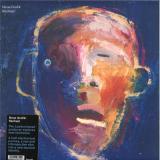
The new album, ”Rachael”, is set for release on January 30th 2026. It stands as Neue Grafik's most ambitious project to date. Developed over the past year, the album explores themes inspired by the character of Rachael from the movie Blade Runner, representing the journey of love in all means, intimate, raw, tough, organic and honest offering a rich, emotional journey that balances lightness with depth—an introspective dive into the artist's evolving musical identity.
As trans-Atlantic alchemists pulling from a shared dialectic that somehow encompassed both postmodern deconstructionist tendencies and a delightfully subversive sense of poptimism, it’s easy to see how David Cunningham and Peter Gordon immediately hit it off upon initially meeting each other back in the late-1970s at the height of their youthful transgressions. Having initially worked together on the second Flying Lizards’ LP fourth wall, with its ingenious fusion of dismantled rhythms and rearranged melodies juxtaposed against the slyly sultry singing of Snatch’s Patti Palladin— with Gordon adding a few sprinkles of mischievous sax in the mix— it’s no wonder the collaboration would lead to further musical adventures.
Which leads us directly to the genesis of The Yellow Box. Embarking on a collaborative exercise in the structural repurposing of music as untethered puzzle pieces in need of rearrangement with no predetermined outcomes, the duo gave birth to a project that would see them move through both time and recording studios across Europe, taking nearly two years from 1981-1983 to complete. Enlisting the great Anton Fier on drums from The Feelies/Lounge Lizards nexus and John Greaves on bass from Henry Cow/Soft Heap lore to round out their dueling creative counterparts, the album would be something of a lost treasure until its eventual release on Cunningham’s Piano imprint in 1996.
Cinematic in scope, and filled with drifting drones, beautiful counter-melodies, eery minimalism, Kraftwerkian synthesizers, looped voices, skronky interludes, and other shifting undercurrents of sound, it was an album that utilized both a diverse array of expressive languages, as well as early sampling techniques and prepared instruments, well before most people were thinking in such expansive, integrated terms at the dawn of the 80’s. But such is life at the vanguard of new music. And one of the reasons that it likely sat on the shelf for so long before finally being released well over a decade later. Like a sparser, less groove-oriented version of My Life in the Bush of Ghosts, or a more radical take on the experimental work of Can’s Holger Czukay, The Yellow Box stands at the crossroads of time and technology, fusing multiple strands of musical thought and compositional techniques into a disjointed whole that somehow still comes off as a conceptually complete record.
Now, here it is again, over 40 years later, with perhaps even more historical resonance than it had before, remade and remodeled just waiting to be rediscovered again.
- A1: Hello Music
- A2: Glass C/W Steel
- A3: Ghosts
- A4: Out Of Their Heads (On Locoweed)
- B1: Not Forgotten
- B2: Hollow Music
- B3: Heat C/W Moment
- B4: No Birds
- C1: Dawns
- C2: Outer Order
- C3: Tempus Fugit
- C4: Quicksilver (For Simone)
- C5: Unterwegs (For Roman)
- C6: Phalaropes
- D1: Jack’s Neap Tide
- D2: Schlechte Gewissen
- D3: Move Indigo
- D4: To Do
- D5: The Map Of Dreams
- D6: Locomoting
- D7: Duskds
Guitar Solos is the debut solo album of British guitarist, composer, and improviser Fred Frith. It was recorded while Frith was still a member of the English experimental rock group Henry Cow and was released originally in October 1974. Voted one of the best albums of 1974 by NME critics it also attracted the attention of Brian Eno, resulting in Frith playing guitar on two of Eno‘s albums. Frith‘s never tiring spirit in creating and performing music has made him one of the most notable and creative guitar players and musicians in the scene of improvised and composed music. For the anniversary of this release we have encouraged Frith to arrange a set up similar to what he used 50 years ago to record an album of new compositions which will accompany the original record.
Keith Hudson’s Nuh Skin Up Dub is a deep, heavyweight dub album that stands as one of the most potent statements in the genre’s history. Released in 1979, this sonic masterpiece showcases Hudson’s signature dark, almost mystical production style, where heavy basslines, echo-drenched drums, and ghostly fragments of vocals swirl together in a hypnotic haze. Unlike the more polished, accessible dub records of the time, Nuh Skin Up Dub is raw, unfiltered, and experimental, pushing the boundaries of rhythm and space. Tracks like "Nuh Skin Up" and "Felt We Felt the Strain" pulse with an eerie, almost menacing energy, while Hudson’s masterful use of reverb and delay creates a soundscape that feels simultaneously expansive and claustrophobic. Often referred to as the “Dark Prince of Reggae,” Hudson had an uncanny ability to craft music that was both deeply meditative and unsettling, and Nuh Skin Up Dub is a prime example of his genius. It's a record that rewards deep listening—every spin reveals new layers of sonic detail, hidden textures, and dub wizardry. For fans of heavy, atmospheric dub, Nuh Skin Up Dub is an essential listen, a landmark recording that solidifies Keith Hudson’s status as one of the most visionary figures in reggae history.
Two days after his 100th birthday, Marshall Allen started recording New Dawn, his debut solo album. A member of Sun Ra’s Arkestra since 1958, Allen assumed leadership of the band in 1995. Throughout his nearly seventy-year career, Allen has never released a solo album under his own name, and yet, instead of capping such a legendary output, New Dawn seems to herald a new beginning. A love letter to spacetime, it channels a century of musical intelligence into seven tracks, showing Allen at his most protean—freely moving from relaxed, transdimensional palettes to bluesy big band and beyond.
The title track “New Dawn” is the centerpiece of this impressive album and the arranger Knoel Scott wrote the lyrics himself. We are thrilled to have the incomparable Neneh Cherry, stepdaughter of legendary jazz musician Don Cherry, lend her unmistakable voice to this song.
“It’s gorgeous! Neneh is a jazz singer now! Sounds like something Nina Simone might have done.” – David Byrne
The 7” single is limited to 300 copies, numbered, and comes in a chic screen-printed cover …
Arthur Russell first visited The Gallery in 1976 with his then boyfriend Louis, who introduced him to Nicky Siano. Arthur became a regular at the space and one night as Siano was playing “Turn the Beat Around”, which had just been released, Arthur waved at him from outside the booth and asked to come in. Nicky opened the door and Arthur suggested they make a record like this together. This ended up being a huge step for Siano as it marked the first ever production by a DJ making a record from scratch.
Arthur had written a song and had an arrangement for it so they assembled a band featuring Wilbur Bascomb who was one of Nicky’s favorite bassists, as well as, Allan Schwartzberg, David Byrne, Miriam Valle, Peter Gordon and Peter Zummo who were all friends of Arthur’s. Russell played the cello and piano – and that was the band. They recorded throughout 1977 and the “Kiss Me Again” 12 inch was finally released in 1978 on Sire Records selling more than 300,000 copies.
Week–End Records is proud to release the first ever reissue by this outstanding disco production. Remastered from the original tapes. With liner notes by David Byrne, Nicky Siano, Peter Gordon and Peter Zummo.
If there's one musician in the last decade that you may hear in wildly diverse musical contexts it is Belgian electric bassist and sound sculptor Farida Amadou. Not only can you enjoy the unerringly skillful command she has over her instrument but also the transformative power to reinterpret and expand her material in spontaneous and unconventional ways.
Amadou is self-taught and radically aware of her idiosyncratic relationship with the bass guitar. She neither emulates the virtuosos of the electric bass, nor does she use the instrument as a pure sound generator that merely emits humming and feedback. She takes a completely independent and unique approach. This freedom enables her to create an overwhelming wall of sound, as well as simple, clear structures that are rhythmically concise yielding a wide associative space that lands somewhere between free jazz and noise.
Her work is often concentrated and circular where motifs are established and developed outward. It is an organic sound in the literal sense of the word, constantly in motion, yet resting in itself. The three solo pieces she has recorded for Week-End Records emphasize her impressive ability to ignite ecstasy from tranquility, to fan out a whole range of moods from a few potent ideas.
These attributes make her a musician who enriches every group she plays in, because she is present with her assured and crystallized sound but refrains from being domineering. However, her strengths are even more apparent when she plays solo: the contrasts between the dark, heavy clouds of sound and the rhythmic passages, and the transitions between movements which always sound "logical" yet surprising.
Her new solo album, "When It Rains It Pours" presents Amadou as an inspired improviser who follows her musical intuition and acumen to create a truly unique soundworld. Rarely has improvised music sounded so succinct and compelling.
Wenn es in den letzten zehn Jahren eine Musikerin gegeben hat, die man in den unterschiedlichsten musikalischen Kontexten immer wieder hören will: nicht weil sie eine passable Mitspielerin wäre, sondern weil sie diese Kontexte jedes Mal bereichert und auf spontane, unkonventionelle Weise erweitert, umdeutet, in neue transformiert, dann ist es die belgische E-Bassistin und Klangskulpteurin Farida Amadou.
Sie ist Autodidaktin - und sie versteht diese Selbstaneignung des Instruments radikal. Weder eifert sie den Virtuosen des E-Basses nach, noch verwendet sie das Instrument als reinen Klangerzeuger, der bloß Brummen und Feedbacks von sich gibt. Sie geht von einem völlig eigenständigen Ansatz aus. Der ermöglicht es ihr, eine überwältigende Wall of Sound zu kreieren genauso wie einfache, klare Strukturen, die rhythmisch prägnant sind und einen weiten Assoziationsraum zwischen Free Jazz und Noise eröffnen.
Ihre Musik ist konzentriert, hat einen langen Atem, kreist um Motive, entwickelt daraus neue Linien, die Amadou im Spiel weiterverfolgt. Es ist ein im Wortsinne organischer Sound, ständig in Bewegung, dabei in sich ruhend. Die Stücke, die sie für Week-End Records aufgenommen hat, unterstreichen ihre beeindruckende Fähigkeit, aus der Ruhe die Ekstase zu entfachen, aus wenigen Ideen eine ganze Palette an Stimmungen aufzufächern.
Das macht sie zu einer Musikerin, die jede Gruppe, in der sie spielt, bereichert, weil sie präsent ist, ohne zu dominieren, weil ihr Sound so prägnant ist, ohne die anderen zu übertönen. Im Solo treten die Stärken ihres Spiels aber noch stärker hervor: die Kontraste zwischen zwischen dunklen, schweren Klangwolken und den rhythmischen Passagen, vor allem die Übergänge, die immer „logisch“ klingen, aber zunächst unerwartet kommen und ihren eigenen Weg einschlagen. Ihr neues Solo-Album, “When It Rains It Pours” zeigt sie als inspirierte Improvisatorin, die sich nie bloß ihren Einfällen hingibt, sondern die Ideen zu Ende denkt, oder besser: spielt. Selten klang improvisierte Musik so kompakt und zwingend.
- A1: Playing It Cool 00 01:59
- A2: Playing It Right Dub 00 01:53
- A3: Trust & Believe 00 03:37
- A4: In I Dub 00 02:53
- A5: California 00 02:59
- A6: By Night Dub 00 02:53
- B1: Not Good For Us 00 02:52
- B2: Formula Dub 00 02:56
- B3: Be What You Want To Be 00 02:39
- B4: Be Good Dub 00 02:25
- B5: I Can't Do Without You 00 01:59
- B6: Still Need You Dub 00 02:01
Keith Hudson was a one-of-a-kind musical innovator with an impeccable track record from the start: his first studio recording involved former Skatalites, and his earliest releases provided solid-gold hits for Ken Boothe (“Old Fashioned Way”, 1967), John Holt, Delroy Wilson, U-Roy and the others.
With Pick A Dub Hudson produced one of the best dub albums ever, and with The Black Breast Has Produced Her Best, Flesh Of My Skin, Blood Of My Blood he released the first concept album in reggae history, bringing his all-around talents to full fruition as early as 1974. Thematically dedicated entirely to Black history, the latter of these two albums is a masterpiece that captivates with an atmosphere that is as dark as it is deeply spiritual, charged by Hudson's eccentric vocals. Like Lloyd Bullwackie Barnes, his splitting from tradition was dynamic and all his own.
As his career moved on, Hudson found himself working outside of Jamaica, more frequently in London and New York studios and for transatlantic audiences, his dark experimentalism becoming increasingly better suited to the LP than the cardinal 7” reggae format.
Playing It Cool & Playing It Right was released in 1981 on the Joint International label, in NYC, with Lloyd Bullwackie Barnes as the executive producer. The Love Joys and Wayne Jarrett, stalwarts of Barnes' record label, Wackies, would also inimitably feature Hudson at the microphone. Like Bullwackie, Hudson was a devotee of Coxsone Dodd’s Studio One and Playing It Cool & Playing It Right follows Dodd’s then strategy of overdubbing his signature rhythms. The Studio One sides were aimed at the dancefloor and Hudson’s reworkings of tracks like “Melody Maker” are more psychological. Here, deep Barrett Brothers rhythms are made deeper with reverb, filters and distortion; everything pitched down and overlaid with new recordings of guitar, percussion, keyboard, and voice, often heavily treated.
Playing It Cool & Playing It Right continues Hudson’s psycho-acoustic journey into the abysses of existence, and overwhelms with the beauty of artistic self-empowerment. "Too much formula," sings Hudson, whose voice is occasionally reminiscent of Sly Stone or even Tom Waits. "Darkest night," answers an echoing background choir elsewhere. Even more fascinating is Hudson's production, which reflects Black history in even the smallest sound detail, the flashing whip of the slave driver still echoes in the sound of the snare drum. Rarely has a roots sound been made so electrifying, so expansive in all directions, so crystal clear, so bass-warm and echophonic as on these 30 minutes of music.
Playing It Cool & Playing It Right is legendary, strange, utterly compelling music that has possibly never been more topical than it is today.
- A1: Joya 00 00:48
- A2: De Frente Pro Crime 00 01:53
- A3: Pesadelo 00 02:55
- A4: Pelo Telefone 00 01:23
- A5: Pede Passagem 00 02:40
- A6: Marcha De Iv Feira De Cinzas 00 02:50
- A7: Opinião 00 01:02
- A8: Chora Doutor 00 01:04
- A9: Quatorze Anos 00 02:34
- B1: A Historia Do Samba 00 01:09
- B2: O Trem Atrasou 00 01:03
- B3: Radiopatrulha 00 00:36
- B4: Acorda Amor 00 02:16
- B5: Mudando De Conversa 00 00:26
- B6: Fado Tropical 00 02:11
- B7: Bodas 00 03:19
- B8: Viola Fora De Moda 00 01:43
- B9: Passarinho 00 01:58
In 1975, Joyce Moreno, who had just wrapped up a tour with legendary Brazilian composer Vinicius de Moraes, found herself in a studio with producer Sergio Bardotti in Rome, Italy. She had been taking a break from writing and she decided to pick up a selection of her favorite compositions from contemporary Brazilian writers who‘s songs were beacons of hope in times of an ongoing intense Military leadership in her home country. Unlike their previous albums, these recordings live from their reductiveness and intimacy. For a long time, Passarinho Urbano was considered a secret masterpiece and was highly sought after by record collectors, now Week–End Records is glad to be making it available internationally on vinyl for the first time ever.
Jards Macalé’s biography is a testament to the electrifying energy of music and the unwavering spirit of artistic rebellion. Macalé has remained true to his vision, unapologetically embracing the unconventional and challenging the status quo. His music, a conduit of emotion and a mirror to society, continues to weave a sonic tapestry that resonates with the souls of listeners.
In 2022, Macalé celebrated the momentous 50th anniversary of his debut solo album, a groundbreaking masterpiece released by Philips in 1972. This iconic record gifted us timeless tracks such as “Vapor Barato”, “Mal Secreto”, “Farinha do Desprezo”, “Revendo Amigos”, and “Hotel das Estrelas”. Its sheer brilliance united the realms of Brazilian music, infusing samba and bossa nova with the fiery essence of rock, classical harmonies, and the improvisational spirit of jazz. As the years passed, a new generation of musicians and fans discovered this gem, fueling its resurgent popularity and inspiring fresh collaborations.
Last year, Jards Macalé assembled a formidable new band, igniting stages across Brazil with a tour that now sets its sights on Europe. Together with Gui Held on guitar, the Paulo Emmery on bass, and Thomas Harres on drums, Macalé conjures an exhilarating homage to his illustrious body of work. This live performance embodies the untamed spirit and boundless musical freedom that define this visionary artist, transporting audiences to a realm where the past intertwines with the present in a breathtaking display of artistic prowess.
In 1972, left-wing intellectual film critic Uwe Nettelbeck suggested to Anthony Moore that he might write some straight songs (relatively speaking), which in turn prompted Moore to invite his old schoolfriend Peter Blegvad over to Hamburg to form the band Slapp Happy.
Dagmar Krause, a young singer from Hamburg and Moore‘s girlfriend, joined them both on their trip to Wümme to record what was to become this album, Sort of, using Faust as their rhythm section. In honour of this album ́s 50th anniversary the album will get a nicely remastered reissue with the newly founded Week–End Records –the fetsival‘s inhouse label who managed to get the band together for a final reunion shows in November of 2016 and Spring of 2017.
CLEAR VINYL. LIMITED TO 300 COPIES!
Suzanne Ciani’s Improvisation On Four Sequences somehow represents the complete histo- ry of electronic music, as the enthusiastic audience at Week-End Fest 2021 were lucky enough to experience. From the awakening of American avant-garde music at the end of the 1960s, right through to the development of the electronic sound of the club scene in L.A. and New York. But above all it is the dialogue between artist and machine, which simply ends when the concert is over, that comes across. Laconicism, precision, sound sensitivity and the weight of a tradition that Ciani was instrumental in founding all come together. It is spectacular precisely because it is so unexciting.
Das hat eine Wucht, es ist unberechenbar, bringt Vertrautes zusammen und löst es wieder auf. Es mischt die Karten neu: Das 1973 geschriebene Stück »Stay on It« von Julius Eastman (1940-1990) stellt die Koordinaten der Avantgarde-Musik auf den Kopf. Es ist Minimal Music, aber es groovt unverschämt; es öffnet sich für Improvisation, räumt den Interpreten alle Freiheit ein, die sie brauchen, aber es ist kein Jazz, es gleitet auch nie ins Unverbindliche. Haben sich die Musiker einmal an die Disziplin gewöhnt, den Groove angenommen, den Eastman von ihnen verlangt, öffnet sich ihnen ein weitverzweigtes Feld neuer Verbindungen, die zu erhabenen klanglichen Vereinigungen führen.
For the exhibition “Flowers in 20th and 21st Century Art“, Eiko Ishibashi and Jim O‘Rourke had created the installation ”Lifetime of a Flower“ in which they set parameters but allowed the process itself to grow uncontrollably. Literally: in the garden of their Japanese house, they planted seeds and filmed the plant growing and thriving throughout the duration of the exhibition. Visitors were able to watch the stream in real time - and they heard a composition in which Ishibashi and O‘Rourke reflected the organic process in sound. The eponymous composition now available on LP, is an enigmatic and sophisticated layering of sounds, melodies and rhythms, noises from everyday life, all of which are repositories of associations, memories and expectations.
- 1