Claremont 56 founder Paul ‘Mudd’ Murphy has been in a rich vein of creative form of late. Having released his first solo album in 18 years in 2024, the effervescent and picture-perfect 'In The Garden of Mindfulness', Murphy is well on his way to finishing solo LP number three – a set you’ll be able to hear in full later in 2025. To get us in the mood, he’s offering up a two-track taster featuring instrumental takes on cuts that will appear as full-vocal songs on the final album. Both were written with, and feature instrumentation by, regular collaborator Michele Chiavarini, an Italian musician, producer, composer, and arranger who has long been part of the Claremont 56 family.
Up first is ‘Mahalo (12" Instrumental Mix)’, a languid and emotion-rich groover built around a smooth, mid-tempo jazz-funk-goes-disco groove – think crispy drums, delay-laden hand percussion and rubbery bass guitar – and all manner of ear-catching musical details. As the track unfolds, you can expect to hear lilting strings, warming electric piano chords, mazy synth solos, heady horn-style blasts and glistening, eyes-closed guitar licks. It’s a genuinely superb slab of musically rich dancefloor warmth. The track that follows, ‘Mata Ne’, is an altogether dreamier and more dub-influenced affair. Featuring some sublime piano playing from Chiavarini, it sees Murphy layer simmering strings, cascading guitar licks, spacey synths and blissed-out melodic motifs atop the kind of chunky, dubby groove that has long been one of his aural trademarks. Offering positivity and melancholia in equal measure, ‘Mata Ne’ is Mudd at his most musically majestic. His forthcoming album will be worth waiting for.
quête:composer
Yowzers is a new album by Chicago composer, improvisor, and musical folklorist Ben LaMar Gay. Yowzers features Gay"s working quartet with Tommaso Moretti (drums, percussion, voice), Matthew Davis (tuba, piano, bells, voice), and Will Faber (guitar, ngoni, bells, voice), as well as guest instrumentalist Rob Frye and a mini-choir. The album recalls the high-minded freedom of Liberation Music Orchestra, the glitched-out electronic webs of Robert Aiki Aubrey Lowe, the unbridled rhythms and sandpaper bellows of Bukka White, and the harmolodic cartoon glory of Arthur Blythe"s Illusions. It"s all there, filtered through an improvisational approach and a lifetime of secrets embodied. For a man who has inhabited and traveled these continents so extensively, it"s safe to call this work true "Americana", despite what that word might mean to the average person in the United States.
One of Romania’s most important composers in the last half-century, Octavian Nemescu (1940-2020) is among the few that were not “part of the system”, managing to survive and compose in a world that felt more and more “empty”, fragile, confused and scarce in prophecies. The mystical approach to his art defines Octavian Nemescu as an essentialist who believed in the power of archetypes in which he found inspiration. His pieces always start from an idea that has spiritual, cosmogonic implications and often involves synthesizers, sounds from nature (buzz of bees) and the “ison” (drone). When defining “meta music” or “imaginary music”, Nemescu was an advocate of looking from above, from the top of the mountain. Silence is very important in his work in order to keep the sound flowing and to reflect on the sound from before, as a space, as a pause for thinking. Nemescu put forward another kind of music: a song that has not yet surfaced through human voice, any musical instrument, orchestra or other electro-acoustic means: an intimate, interior, introverted inner sound that focuses on the individual and the imagination. Imaginary music is a reaction, it comes in contrast to the spectacular, it is anti-show. For him, music had a ritualistic function, it served no cultural purpose.
This 3LP set collects eight pieces for variable ensemble, tape and electronics, composed between 1968 and 2015, selected together with Erica Nemescu, who also mastered the tracks. Most tracks have been previously released on different CD’s but never before on vinyl.
- Lab Discovery
- Take Care Of Your Home
- Annual Home Standards Review
- Job Hunt
- Push The Button, Pull The Crank
- Gum Conspiracy
- Daffy Epiphany
- Gum Monster
- Gum Zombies
- Run!
- Caught Gum Handed
- Flood Gates
- Not To Pop Your Bubble
- Let's Get Looney
- If We Stick Together
- Crash Landing
- Family Picture And End Credits
Enjoy The Ride Records and Enjoy The Toons Records in partnership with WaterTower Music proudly present |The Day the Earth Blew Up: A Looney Tunes Movie (Original Motion Picture Soundtrack) by Emmy-nominated composer Joshua Moshier (Baskets, The Shrink Next Door). Pressed on limited edition colored vinyl, this pressing is limited to 1,000 copies.
That’s not all folks! From Ketchup Entertainment, Warner Bros. Animation, director Pete Browngardt, and the creative team behind the award-winning “Looney Tunes Cartoons” comes The Day the Earth Blew Up: Looney Tunes Movie, a brand-new buddy comedy starring one of the greatest comedic duos in history - Porky Pig and Daffy Duck! This richly crafted, hand-drawn 2D animated adventure marks the first fully animated feature-length film in Looney Tunes history, told on a scope and scale that’s truly out of this world.
Porky Pig and Daffy Duck venture to the big screen as unlikely heroes and Earth’s only hope when their antics at the local bubble gum factory uncover a secret alien mind control plot. Faced with cosmic odds, the two are determined to save their town (and the world!)... that is if they don’t drive each other totally looney in the process. Featuring the voices of acclaimed actors Eric Bauza, Candi Milo, Peter MacNicol, Wayne Knight, and Laraine Newman with the laugh-out-loud gags, vibrant visuals, and beloved characters that make the Looney Tunes so timeless and iconic. The Day the Earth Blew Up: A Looney Tunes Movie arrives in theaters on March 14, 2025.
- A1: Redrum Relics (Intro)
- A2: Murder Backwards Feat. Blaq Poet
- A3: Third Grade Roast Feat. Young Zee & Kool Keith
- A4: The Metaphor Matador Feat. Chino Xl
- A5: $ 1000 Bills (Ghostface Skit)
- B1: Three Times The Treble Feat. A-F-R-O & Greg Nice
- B2: Mike Redman Radio_Pt._1 (With Kid Capri)
- B3: Unchanged Feat. Sadat X & Masta Ace & Menno Gootjes & Dj Optimus
- B4: Bitches Brew Feat. Bless
- B5: Red Men (Redman Skit)
- C1: Lift The Curse Feat. O.c. & El Da Sensei
- C2: Mike Redman Radio Pt._2 (With Bobbito Garcia)
- C3: Airlines Feat. Random & Eni-Less
- C4: Terrorwrist Feat. Chuck D & Dj Lord & Flavor Flav
- C5: Mike Redman Radio Pt._2 (With B-Real)
- D1: No Remorse Feat. Blaq Poet & Sticky Fingaz
- D2: The Dutch Breaks (Kurtis Blow Skit)
- D3: Blow Your Mind Feat. Schoolly D & Git Hyper & Grandmaster Caz
- D4: Anger Management Feat. Turbo B
Red Vinyl[23,95 €]
Hardcore Rap music is still here! Mike Redman is considered a cult legend known for his unorthodox music production in various genres. He's well known as an artist in the Jungle and Hardcore scene, as a renowned movie score composer and made a name for himself as organiser of the infamous 'Redrum Hip-Hop' events since the 90's which hosted international artists from Guru to Cannibal Ox, Public Enemy, Beatnuts and many more. He also set up Redrum Recordz, a pioneering independent record label focusing merely on anything musically unpolished. Even though Mike Redman (which is his name of birth by the way) was often linked to many Hip-Hop success stories and produced records for artists such as Public Enemy and Big Daddy Kane, Mike has just recently, after many years, decided to produce a solo record featuring the Rap artists he admires and form the foundation of his legacy. With great respect towards his mentors, in a non-profit manner, Mike now releases 'Redrum Relics' featuring Rap icons such as Kool Keith, Chuck D, Schoolly D, Sticky Fingaz, Young Zee, Chino XL, O.C. and many more. This album is truly exceptional and is not made with the intention to be commercially successful, but is a love-letter to a period in time where passion was the motivation. 'Redrum Relics' brings Rap music back to the golden era with a contemporary touch and keeps it unpolished and unyielding as ever. People that tend to say that Hip-Hop is dead might want to reconsider.
- August 6, 1999 04:39 Video
- August 9, 1999
- August 13 + 16, 1999 (Feat. Fire-Toolz) 02:55
- November 24, 1999
- April 19, 2000
- October 26, 2001
- July 27, 2007
State Change is the riveting new album from composer and performer Molly Joyce, out July 11, 2025 via FatCat Records’ 130701 imprint. Blending influences ranging from the 20th century modernist lineage to the spectral drones of Andy Stott, Missy Mazzoli, and Nico Muhly, State Change draws unflinchingly from the medical record of a childhood trauma for seven electro-acoustic tone poems — stark and oppressive in its medical aesthetic, yet ultimately cathartic and healing. Joyce crafted the album with Grammy-winning producer William Brittelle largely at Figure 8 Studios with engineer Michael Hammond.
When Joyce was seven years old, she was involved in a car accident that nearly amputated her left hand and required many intensive surgeries; to this day, her hand is still impaired. Joyce pushed through this life change, and over the past eight years, her reputation has swelled as one of her generation’s most daring, conceptually driven composers.
Joyce’s 2020 debut for New Amsterdam Records, Breaking and Entering, ruminated on this seismic shift in pieces for toy organ, voice, and electronic sampling of both sources. The New York Times noted her music’s “serene power”; The Washington Post described her as “one of the most versatile, prolific and intriguing composers working under the vast new-music dome.” Pitchfork lauded her 2022 album Perspective — a sonic portrait of disability built from interview recordings, also released on New Amsterdam — as “a powerful work of love and empathy that underscores the poison of ableism in American culture.”
- 1: Baby's Got The Blues
- 2: Trouble
- 3: Don't Look Down
- 4: On A Morning Like This
- 5: You Don't Know
- 6: Stay With Me Tonight
- 7: Get Together
- 8: Dreams
The Canadian folk singer renowned for her purity of voice and composer of the ever-fresh ’Morning Dew’; once at the heart of the Greenwich Village heyday when she sang at Gerdes Folk City alongside the likes of Paul Simon and Bob Dylan; and the UK’s premier purveyors of Cosmic Americana riding a wave of creativity and acclaim, following two successive classic albums Hollow Heart and On A Golden Shore. The spry octogenarian and the psychedelic cowboys proved a match ripe to be made. Since Bonnie’s reemergence, at Jarvis Cocker’s Meltdown in 2007, she’d been interacting with a host of London musicians, but when the Stars came onto her horizon she sensed she’d found the perfect accompanists for her new compositions. With no concrete plan they worked up a few songs, then went into Sean Read’s Famous Times studio to see what might happen. What might happen is now Dreams, comprising eight songs; six being recent compositions never before studio-recorded while a further two reach into and celebrate her back catalogue, along with the era that initially defined her, and as one of its now few active representatives – it’s her and Dylan and not many more – she stands for.
- Bam Bam (Feat. Takoda)
- Clown Camp
- How To Swing (Feat. Nikiranda)
- Tap Water
- I Don't Like My Telephone(Feat. Salamirose Joe Louis)
- Castle In The Sky
- Kaza Dum
- Circuit City
- Tummy (Feat. Teleporter)
- Velvet Room (Feat.deradoorian)
- Band Practice
- Larry
Los Angeles trio sunking marry hip hop, and electronic influences on their 2nd album I DON"T LIKE MY TELEPHONE. Childhood friends Bobby Granfelt, a jazz drummer and self-proclaimed hip-hop head, Antoine Martel, a synthesist and composer, branched off their mainstay High Pulp to explore their polar opposite tastes and make music as sunking in addition to multi-instrumentalist Victory Nguyen. Their 2022 debut Smug, was more jazz-influenced, while I DON"T LIKE MY TELEPHONE is akin to the early work of beat-driven artists Thundercat, Madlib, and Flying Lotus. They hand selected artists Salami Rose Joe Louis, Niki Randa, Deradoorian, and Takoda to lend vocals and help capture that spirit. I DON"T LIKE MY TELEPHONE as a series of self-contained "micro-compositions," built around Granfelt"s drum loops and Martel"s new gear. In addition to, they were fueled by an increasing love for electronic music artists like Galcher Lustwerk, The Field, and Susumu Yokota, whose 1994 cult classic Acid Mt. Fuji they cite as a particular inspiration. The result is a record as vibrant as a kaleidoscope, and compact as one too, shuffling through more styles and ideas in neat, three-minute chunks of virtuosity.
- Ete
- Kharita
- Baynana
- Mudun
- Haigazian (October 22)
- Burj Al Murr (October 25 To 27)
- Markaz Azraq (December 6)
- Markaz Ahmar (December 6 Suite)
- Al Hisar (December 8)
- Holiday Inn (January To March)
- Holiday Inn (March 21 To 29)
- Al Irth
Mayssa Jallad is a Beirut-based bilingual singer-songwriter, architectural researcher and teacher. Her work deals with the highly personal as well as the political, as with her first solo album "Marjaa: The Battle of the Hotels", which explores the histories of urban battles that occurred before she was born, during the Lebanese Civil War, through a collaborative musical and architectural lens. "(Marjaa) is, as one might expect, a sombre affair largely comprised of Jallad's delicate vocals backed by acoustic guitar and ethereal synthesizer. Elsewhere, co-composer and producer Fadi Tabbal adds the crackle of distant artillery and a ghostly wind between the high-rise blocks." - Daniel Spicer, Songlines, April 2023 "Historical trauma, strings, drones, metallophones and buzuks wrap around powerful stories and gossamer vocals on Lebanese singer's tender, intimate debut. With shades of Nico, Jarboe and Elizabeth Fraser, '80s' 4AD fans will rejoice." - Andy Cowan, MOJO `Marjaa_' (tr. `reference') combined Mayssa Jallad's two main vocations: music and urban research/architectural history. The album was co-written with Fadi Tabbal and based on Mayssa's Historic Preservation master's thesis (`Beirut's Civil War Hotel District: Preserving the World's First High-Rise Urban Battlefield'). The thesis examined a 5-month conflict that took place within Beirut's skyscraper-laden luxury hotel district of Minet El Husn near the start of the Lebanese Civil War. Addressing a post-war generation who have never been taught this difficult history, `Marjaa_' was an attempt to process trauma, and "a call to protest for the renewal, rather than the recycling of the political class that once destroyed the country and holds us, to this day, hostage of its violence". In 2013, Mayssa founded indie-pop band Safar with guitarist Elie Abdelnour, releasing debut album In Transit with Lebanese indie label Ruptured in 2017, and follow-up EP Studies of an Unknown Lover in 2019. Both albums were produced by Lebanese producer Fadi Tabbal at Tunefork Studios in Beirut. Mayssa's most recent multi-genre collaborations include "Madina min Baeed" (2022) with electronic musician/producer Khaled Allaf; "Bi Kheir" and "Fil Aatma" (2022) with indie supergroup Baada Ab (Dani Shukri, Ezra Tenenbaum and Omaya Malaeb), released by Thawra records and Found Sound Nation. Next is the Versions version of Marjaa, which sees Civilistjävel! (aka Swedish producer Tomas Bodén) apply a stripped, dub methodology to Mayssa's original rich stems, refracting the Arabic source through the hazy prism of Northern European electronica. 140gsm vinyl, jacket printed on 20pt board with aqueous gloss coating, with a 3.5mm spine and a black paper inner dust sleeve.
- 2: X4'S
- Every Day
- Strange Mail
- Blank Eyed Devil
- The Electrocutioner
- Horrible Hour
- Selections From “A Fistful Of Dollars”
- The Kids Are In The Mud
- Wally And The Ghost
- San Remo
- Ed Sullivan
- Entoloma
- Electric Chair
- Flames Up Yours
- Outhouse Of The Pryeeeee
- Selections From “Rosemary's Baby”
- Sponge Dilrod
- Shiny Pig
- Who Are Parents
- Broken Bones
- Shiny Pig
- Who Are Parents
- Broken Bones
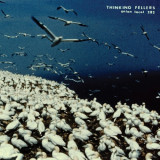
Bulbous Monocle focuses its lens further into the legacy and archives of the Thinking Fellers Union Local 282. These Things Remain Unassigned—a phrase coined by Brian Hageman, one of the band’s musical snake appendages emanating from its Medusa crown—is presented as a double LP (gatefold jacket with a twelve page libretto). It gathers together the band’s singles, compilation tracks, outtakes and never before released gems encompassing the arc of TFUL’s musical corpus. Every track has been surgically remastered by Mark Gergis (Porest / Sublime Frequencies / Mono Pause) with his signature craftsman approach. This collection is an auditory and visual feast. The extensive booklet included features band ephemera, concert flyers, photographs, and commentary about each track from Mark Davies. Beyond the rare singles and unreleased tracks from the TFUL archives, are cover versions from such disparate artists and composers as Ennio Morricone, Krzysztof Komeda, The Residents, The Shaggs, Caroliner Rainbow and Pérez Prado. “…In addition to these compilation one-offs, there were also a few studio recordings that were never quite completed or released. Throw in an alternate mix or two and the handful of singles that came out on various labels over the years, and you end up with what I feel works well as its own body of work, a bunch of adopted oddballs that somehow fit together as a family. I hope youʼll agree with me that these things are now no longer unassigned, but part of a somewhat cohesive whole, stitched together into something mysterious and glistening.” —Mark Davies (2023)
- A1: Delivery 2 18
- A2: Fluctuation 2 26
- A3: Noratan 4 13
- A4: Peanut 2 58
- A5: Quiet Fear 2 57
- A6: Recollection 2 57
- A7: Lurk In The Dark 2 40
- A8: Soul Chosen 2 17
- B1: Reproach 2 26
- B2: Misogi 3 39
- B3: Roar Of God 3 00
- B4: Blind Spot 3 22
- B5: Shadow Dancing 2 29
- B6: Harmony 2 49
- B7: The One 3 29
- B8: Conversation Heart 2 08
By the composer of JoJo’s Bizarre Adventure Part 2, City Hunter: The Movie, Soul Eater, and Black Butler.
Yato dreams of becoming a famous and respected god, but his reality is far from that dream. One day, his fate takes a turn when he saves Hiyori, a high school girl, from a car accident. In return, he asks for her help to achieve his grand ambition. Together, with Yukine, a spirit who serves as his sacred weapon, they navigate the world of humans and deities, where Yato must prove his worth and divine heritage.
This vinyl record features several BGM tracks from the series. Taku Iwasaki, a renowned composer in the anime industry, has created a vast array of background music, blending numerous styles—from traditional music infused with electronic elements to rap, as well as dark and melancholic piano pieces. Through this musical variety, the composer perfectly captures the anime’s atmosphere: comedic and joyful moments, intense action sequences, and much darker themes that reflect the protagonist’s past.
Repress!
In the mid-1970s, a force of nature swept across the continental United States, cutting across all strata of race and class, rooting in our minds, our homes, our culture. It wasn’t The Exorcist, Goodbye Yellow Brick Road, or even bell-bottoms, but instead a book called The Secret Life of Plants. The work of occultist/former OSS agent Peter Tompkins and former CIA agent/dowsing enthusiast Christopher Bird, the books shot up the bestseller charts and spread like kudzu across the landscape, becoming a phenomenon. Seemingly overnight, the indoor plant business was in full bloom and photosynthetic eukaryotes of every genus were hanging off walls, lording over bookshelves, and basking on sunny window ledges. The science behind Secret Life was specious: plants can hear our prayers, they’re lie detectors, they’re telepathic, able to predict natural disasters and receive signals from distant galaxies. But that didn’t stop millions from buying and nurturing their new plants.
Perhaps the craziest claim of the book was that plants also dug music. And whether you purchased a snake plant, asparagus fern, peace lily, or what have you from Mother Earth on Melrose Avenue in Los Angeles (or bought a Simmons mattress from Sears), you also took home Plantasia, an album recorded especially for them. Subtitled “warm earth music for plants…and the people that love them,” it was full of bucolic, charming, stoner-friendly, decidedly unscientific tunes enacted on the new-fangled device called the Moog. Plants date back from the dawn of time, but apparently they loved the Moog, never mind that the synthesizer had been on the market for just a few years. Most of all, the plants loved the ditties made by composer Mort Garson.
Few characters in early electronic music can be both fearless pioneers and cheesy trend-chasers, but Garson embraced both extremes, and has been unheralded as a result. When one writer rhetorically asked: “How was Garson’s music so ubiquitous while the man remained so under the radar?” the answer was simple. Well before Brian Eno did it, Garson was making discreet music, both the man and his music as inconspicuous as a Chlorophytumcomosum. Julliard-educated and active as a session player in the post-war era, Garson wrote lounge hits, scored plush arrangements for Doris Day, and garlanded weeping countrypolitan strings around Glen Campbell’s “By the Time I Get to Phoenix.” He could render the Beatles and Simon & Garfunkel alike into easy listening and also dreamed up his own ditties. “An idear” as Garson himself would drawl it out. “I live with it, I walk it, I sing it.”
But as his daughter Day Darmet recalls: “When my dad found the synthesizer, he realized he didn’t want to do pop music anymore.” Garson encountered Robert Moog and his new device at the Audio Engineering Society’s West Coast convention in 1967 and immediately began tinkering with the device. With the Moog, those idears could be transformed. “He constantly had a song he was humming,” Darmet says. “At the table he was constantly tapping.” Which is to say that Mort pulled his melodies out of thin air, just like any household plant would.
The Plantae kingdom grew to its height by 1976, from DC Comics’ mossy superhero Swamp Thing to Stevie Wonder’s own herbal meditation, Journey Through the Secret Life of Plants. Nefarious manifestations of human-plant interaction also abounded, be it the grotesque pods in Invasion of the Body Snatchers or the pothead paranoia of the US Government spraying Mexican marijuana fields with the herbicide paraquat (which led to the rise in homegrown pot by the 1980s). And then there’s the warm, leafy embrace of Plantasia itself.
“My mom had a lot of plants,” Darmet says. “She didn’t believe in organized religion, she believed the earth was the best thing in the whole world. Whatever created us was incredible.” And she also knew when her husband had a good song, shouting from another room when she heard him humming a good idear. Novel as it might seem, Plantasia is simply full of good tunes.
Garson may have given the album away to new plant and bed owners, but a decade later a new generation could hear his music in another surreptitious way. Millions of kids bought The Legend of Zelda for their Nintendo Entertainment System back in 1986 and one distinct 8-bit tune bears more than a passing resemblance to album highlight “Concerto for Philodendron and Pothos.” Garson was never properly credited for it, but he nevertheless subliminally slipped into a new generations’ head, helping kids and plants alike grow.
Hearing Plantasia in the 21st century, it seems less an ode to our photosynthesizing friends by Garson and more an homage to his wife, the one with the green thumb that made everything flower around him. “My dad would be totally pleased to know that people are really interested in this music that had no popularity at the time,” Darmet says of Plantasia’snew renaissance. “He would be fascinated by the fact that people are finally understanding and appreciating this part of his musical career that he got no admiration for back then.” Garson seems to be everywhere again, even if he’s not really noticed, just like a houseplant.
Enjoy The Ride Records and Enjoy The Toons Records, with WaterTower Music, present the limited edition vinyl release of A Minecraft Movie (Original Motion Picture Soundtrack), featuring original songs and a score by Grammy- and Emmy-winning composer Mark Mothersbaugh. The soundtrack is led by "I Feel Alive," written and produced by Jack Black, Mark Ronson, and Andrew Wyatt, with Black on |ocals and contributions from Danielle Brooks, Dave Grohl, Troy Van Leeuwen, and Roger Manning.
Black also contributes to three additional songs throughout the film. Other featured artists include BENEE performing "Zero to Hero" (written by Bret McKenzie), Dayglow with the indie-pop track "Change Song," and rock band Dirty Honey's "When I'm Gone," which embodies Jason Momoa's character. Mark Mothersbaugh's score blends original compositions with nods to C418's iconic Minecraft game music, balancing quirky character themes with high-energy action sequences. The soundtrack is pressed on 2xLP limited edition colored vinyl across seven variants representing characters and themes from the film, with voxel-inspired center labels, housed in a gatefold jacket with a 12" x 12" double-sided full-color insert.
- A1: Minor Swing
- A2: Main Titles
- A3: The Story Of Grandmere
- A4: Vianne Sets Up Shop
- A5: Three Women
- A6: Vianne Confronts The Comte
- A7: Other Possibilities
- A8: Guillaume’s Confession
- A9: Passage Of Time
- B1: Boycott Immorality
- B2: Party Preparations
- B3: Chocolate Sauce
- B4: Fire
- B5: Vianne Gazes At The River
- B6: Mayan Bowl Breaks
- B7: Taste Of Chocolate
- B8: Ashes To The Wind/Roux Returns
- B9: Caravan
Chocolat is the 2000 British-American romantic comedy-drama film directed by Lasse Hallström (The Cider House Rules) starring Juliette Binoche, Judi Dench and Johnny Depp. The film’s enchanting atmosphere is brought to life by the original score from Academy Award-winning composer Rachel Portman. The soundtrack features “Minor Swing” by Django Reinhardt and Stéphane Grappelli, and “Caravan”, the 1936 jazz standard by Duke Ellington and Juan Tizol. The soundtrack was nominated for an Academy Award, next to the four other Oscar nominations.
Chocolat is available as a 25th anniversary edition of 750 numbered copies on mint chocolate marbled vinyl and includes an insert.
Chicago-based composer/producer Joey Meland makes music under the moniker Cocojoey. Treating genre conventions and ostensible barriers between disparate musical vocabularies like playthings to gleefully smash and reshape at will, Meland channels decades of experience as a polymathic professional musician adept in styles like metal, jazz, synthpop, and experimental sound design into their infinitely combinatory compositions. STARS, their first album on Hausu Mountain, follows the self-released COCOJOEY’S WORLD with a spellbinding burst of heart-on-sleeve self-expression. The album finds Cocojoey indulging their most adventurous impulses in production and technical instrumental performance, launching into a constantly morphing program that contrasts day-glo earworm hooks against cathartic moments of screaming intensity. Cocojoey’s music exudes warmth and finger-wagging mischief as it exhumes the depths of their psyche with the pure-hearted goal of making their audience smile — when those listening find a chance to breathe within the ecstatic overstimulation.
The album’s tightly constructed song cycle blasts the listener with moment after moment of novel juxtaposition, both in terms of genre and emotional energy, that keep us reeling in a state of delirious whiplash. Warp-speed piano solos over bossa nova-inflected chord progressions segue into detonations of death metal that front-load Meland’s ferocious screaming vocals and meticulously programmed double-kick drum patterns. A strain of iridescent prog emerges in the sheer overload of notes and ideas, as drum n’ bass breaks collide with labyrinthine multi-time signature keyboard lines and bright flashes of clean vocals. Despite whatever contrasting styles might hit within any given Cocojoey song, Meland returns again and again to the upheaval and release provided by extreme metal — though that idiom lands with joyful exuberance, an abrasive yet heartwarming flavor whose positive energy carries through even to those who might not encounter screams and hyper-technical drum breakdowns in their typical listening regimen.
Recital presents a new double album of rarely heard Robert Ashley compositions performed by baritone singer Thomas Buckner.
“(Robert Ashley) turned speech into music” - Alvin Lucier.
In the 1960s, Robert Ashley pioneered the American avant garde with the ONCE Group and festivals, before irrefutably changing the face of American opera later in the 20th century. Buckner, in addition to running the fabulous 1750 Arch record label in the 1970s and 80s, is a noted baritone who has collaborated for decades with the likes of Roscoe Mitchell, Annea Lockwood, and the late Noah Creshevsky, amongst countless others.
The title of the album, Spontaneous Musical Invention, refers to Ashley’s method of instructing the singer to do what he called “spontaneous musical invention based on the declamation of the text.” A vocal practice that Thomas Buckner perfected over the 33 years that he collaborated with Ashley. First performing in Ashley’s 1984 opera Atalanta (Acts of God), Buckner continued on as an integral performer in the ensemble until Ashley’s death in 2014.
The album is composed of two halves, the first is a new rendering of Ashley’s second opera Atalanta (Acts of God). Robert Ashley wrote about ten hours of music for the opera Atalanta, divided into three acts: ‘Max', for the surrealist artist Max Ernst; ‘Willard', for the composer’s uncle, Willard Reynolds, a great story teller; and ‘Bud', for Bud Powell, the great jazz pianist and composer. One is invited to construct a version using any material from these ten hours. Over the years they worked together, Thomas Buckner commissioned three reworkings of arias from Atalanta that he could perform in concert: the ‘Odalisque' aria from Max, 'The Mystery of the River' from ‘Willard', & 'The Producer Speaks' from ‘Bud'. So this first section of the album is one of many possible versions of Atalanta, albeit in strikingly different versions from the originals.
The second section of the album is dubbed Occasional Pieces, and holds two unpublished Ashley works. ‘When Famous Last Words Fail You' & 'World War III Just the Highlights' are not from any Ashley opera. However, each is highly dramatic and theatrical. They were written as standalone pieces for Thomas Buckner. Buckner’s distinct vocal cadence projects the sharp wit and wry storytelling of Ashley’s librettos.
A portion of the record was recorded live at Roulette in Brooklyn, NY, at an intimate memorial concert held for Robert Ashley in 2014. Spontaneous Musical Invention, in essence, functions as a tribute to both exceptional artists, and to their decades of collaboration.
Vinyl edition comes with a 24 page 12” x 8.5” booklet of Ashley librettos, scores, & program notes, with an introduction by Alvin Lucier.
Having crested the west coast modular-ambient wave in just a few releases - including 2018's Sharing Waves on the influential LA experimental imprint Leaving Records - Sean Hellfritsch has swapped the mossy analog synth improvisations of his prior output for refined melodic arrangements dressed in sprightly dawn-of-digital textures. Big Earth Energy plumbs the depths of Hellfritsch's multimedia mind and naturalist heart, spinning an impressionistic narrative world off of cultural touchstones like the PC game MYST, and the work of Studio Ghibli composer Joe Hisaishi. Inspired by the aforementioned, and guided by Hellfritsch's experience as an animator and filmmaker, Big Earth Energy is the soundtrack to a hypothetical video game with a pointedly ecological premise, and a twist of psychedelic charm. In Hellfritsch's imagined virtual journey, the player assumes the perspective of a treefrog sixty-five-million years ago, hopping epochs with each new level, forming a comprehensive picture of the massive changes the planet has gone through over the eons. The ultimate goal of the game is not to amass resources, defeat enemies, or gain power, but to fully witness the unfolding of one of the biggest systems of energy imaginable - or as the album's creator puts it - "to explore the incomprehensibly vast energetic expression and mystery that is Earth." Big Earth Energy is steeped in exploratory RPG intrigue, possibility, and contemplation, lovingly overlaid with Miyazaki-an sentiments and aesthetics. The through-composed, organic, meandering synthesis heard on previous Cool Maritime albums has been fully replaced by meticulous polygonal arrangements that recall the computerized sheen of late 80s work by composers like Hiroshi Yoshimura, and Yoichiro Yoshikawa - using true-to-period gear no less. Even given its referentiality, Big Earth Energy comes off as forward-facing where so much reminiscent music remains fixed to a bygone moment in pop culture. Hellfritsch has created a musical world where the endless verdancy of the biosphere finds its parallel in the golden age of early 1990s video games, and late 80s Japanese environmental music, all while pointing to a hopeful planetary and artistic future that vindicates the motives of all of these muses.
"The restorations of The Lost Recordings are worthy of those devoted to master paintings." — Le Journal du Dimanche
"We discovered these previously unpublished tapes in the archives of the RBB — the Berlin radio. This discovery is absolutely major because these two incredible musicians had recorded too little together and because this recording offers us the possibility to listen to them in works that were unpublished so far in their discography — notably an extraordinary sonata by Prokofiev! And what can we say about this Bach sonata, with an Andante that brought tears to the eyes of everyone present in the studio at the time." — Frédéric D'ORIA-NICOLAS, Musical treasure seeker
János Starker, cellist, and György Sebok, pianist, were both born in Hungary early in the 20th century. They were welcomed into the formidable Franz Liszt Academy of Music in Budapest, and emigrated to the USA, where they both held the title of Distinguished Professor at the Indiana University School of Music in Bloomington. Both heavy smokers and sometimes reputed — unjustly — to be harsh, austere and insensitive to trends, they were drawn to music in all its varieties and fascinated by its many colours. They had one aim only, one noble objective: to showcase the works all composers, as evidenced by this recording made in the legendary Studio 3 of Berlin Radio on 24 October 1963.
Starker and Sebok were fully imbued with the aesthetics that Prokofiev proclaimed: "I cultivate melody and strive to introduce feeling and emotion into my works. No matter that some call me a cubist, adding that I systematically avoid any emotional or romantic elements in my quest to reach only objectivity."
Next, and at the opposite end of the spectrum, is the Spanish passion of the two pieces by Granados and De Falla, pieces that nevertheless also convey melancholy. Starker and Sebok launch into the works with enthusiasm and intensity.
The last piece, Bach's Sonata in G Major, BWV 1027 for Viola da Gamba and Keyboard, is one of three he composed, probably in Köthen. Because they may have originally been written for other instruments, they can easily be transcribed for the cello and piano. They reveal the rich influences that pervaded the German region during the first half of the 18th century. The two musicians give us a sublime interpretation of the beauty of the counterpoint in this Sonata.
These recordings attest to the importance that the two superb musicians attached to working in the service of the composers. We wonder if, in that enchanted studio in Berlin in 1963, they knew how much further they went to bewitch us and touch us so profoundly.
- A1: Antonio Soler: Sonata In D Minor, R. 24
- A2: Antonio Soler: Sonata In F Major, R. 89
- A3: Enrique Granados: El Pelele, Ieg. 22
- A4: Carlos Suriñach: Canciones Y Danzas, No. 3
- A5: Enrique Granados: El Fandango De Candil, "Goyescas" Op. 11, No. 3
- A6: Enrique Granados: Quejas O La Maja Y El Ruiseñor, "Goyescas" Op. 11, , No. 4
- A7: Enrique Granados: Los Requiebros, "Goyescas" Op. 11, No. 1
- B1: Federico Mompou: Canciones Y Danzas No. 4
- B2: Federico Mompou: Canciones Y Danzas No. 5
- B3: Federico Mompou: Canciones Y Danzas No. 6
- B4: Isaac Albéniz: Corpus Christi En Sevilla, "Iberia", Book I, No. 3
- B5: Isaac Albéniz: Triana, "Iberia", Book Ii, No. 3
- B6: Isaac Albéniz: El Albaicín, "Iberia", Book Iii, No. 1
- B7: Isaac Albéniz: Lavapiés, "Iberia", Book Iii, No. 3
- B8: Francis Poulenc: Toccata
The Spanish Queen (of the Piano)
She had small, square hands. She was 1.52 m tall. As a child, she banged her head on the floor to be allowed to play the piano. She was Catalan. She was a pianist—one of the greatest. Her mission? To spread the Spanish repertoire. Her name was Alicia de Larrocha.
When she passed away in 2009 at age 89, Nelson Freire wrote, "I truly loved her; she was a modest woman, and her playing shone like the sun." Acclaimed worldwide, she stood alongside Victoria de Los Angeles as one of Spain’s finest artists.
Larrocha’s journey began at three, seated at a piano. At four, she studied under Frank Marshall, a student of Granados. By six, she was performing publicly; by eleven, she played Mozart’s Coronation Concerto with Madrid’s Symphony Orchestra, astonishing audiences. Despite her small hands, she developed an airy, precise touch, even daring to record Rachmaninov’s Third Concerto. But beyond technical mastery, her playing held a profound sense of life and imagination.
Though trained in Bach, Mozart, and Chopin, Larrocha fought to bring Spanish composers to global audiences. Albéniz and Granados owe much of their fame to her. Her international breakthrough came in the 1950s when an American impresario heard her Spanish recordings and invited her to the U.S., where she triumphed.
Her performances honored Spain’s musical heritage. From Soler’s sonatas to Granados' Goyescas, she infused each note with nuance. She brought Goya’s paintings to life in El Pelele and mastered the dark contrasts of Surinach’s Canción y Danza. Albéniz’s Iberia demanded both power and delicacy—qualities she commanded effortlessly.
Her final tribute was to her friend Francis Poulenc, performing his Toccata—a soaring farewell.
As one admirer put it in 1982, "She walked toward a piano too big for her, sat, placed her hands on the keys… and became the queen."
Alicia De Larrocha, Piano
Novoa/Kamaguchi/Cleaver Trio Delivers Electrifying Second Volume
A Bold, Experimental Fusion of Density and Dialogue
"The wait is over. If you’ve been holding your breath since hearing Novoa/Kamaguchi/Cleaver Trio, Vol. 1, it is time to let it out. Vol. 2 is almost here! The group has returned to 577 Records once more, serving a heaping second helping of addictive musical brilliance that comes out in May.
Even The Wire magazine celebrated the trio's first album, calling it “a deep and thoughtful release” – and Vol. 2 is no different. Eva Novoa is the Barcelona-born pianist/composer taking the world by storm with her creativity and talent. And she is back to wow us again on the piano, Fender Rhodes, Chinese gongs, and a little whistling.
To complete the trio, she chose her longtime comrade and collaborator of some fifteen years, bassist Masa Kamaguchi, and Detroit drum wizard Gerald Cleaver. The group has performed live in NYC since 2017. They made their first record (Vol. 1) with 577 Records in 2024. Their highly anticipated Vol. 2 marks Eva's fourth album with the label.
In their upcoming release, Novoa steers the trio through elegant experimentation of its full potential, confidently grasping golden threads from great masters of music to shape her own melodic universe. The multi-instrumentalist says it’s where melodic density meets contrapuntal dialogue, a free interplay of rich textures and riveting, masterly improvisation. This smooth complexity is what gives rise to the group’s uniqueness.
Like Vol. 1, the album cover art features the work of Novoa’s friend and collaborator, popular street photographer Richard Sandler."
Eva Novoa - Piano, Fender Rhodes, Chinese Gongs & Whistling.
Masa Kamaguchi - Bass.
Gerald Cleaver - Drums.
Recorded on January 19, 2020 at Oktaven Audio, Mount Vernon, NY by Jeremy Loucas.
Mixed and mastered by Jeremy Loucas at Sear Sound, New York City.
Photography by Richard Sandler.
Graphic design by Sergio Vezzali.
Graphic support by Mark Smith.