ANTON NEWCOMBE and DOT ALLISON just announcedthat they will be releasing an album together under the moniker All Seeing Dolls. ''Parallel' will be out in February 2025. Upfront they share the single 'That's Amazing Grace' (backed with "Siren's Echo iron Lung") and make available this 2-track 10" as a limited teaser. Anton Newcombe is the founder, the sole constant and the creative mastermind at the centre of one of music's most fascinating bands; Brian Jonestown Massacre. He's a frontman, songwriter, composer, studio owner, multi-instrumentalist, producer, engineer, father and force of nature. There have been 21 BJM albums over the last 30 years, each embarking on their own mind-expanding adventure and exploring the outer realms of rock'n'roll; psychedelic rock, country-blues, snarling rock'n'roll, blissed-out noise-pop and more. Newcombe has established himself as a once-in-a-lifetime talent, a revolutionary force in modern music and an underground hero. Dot Allison released her debut solo album Afterglow in 1999. Over the years she has strived to keep the listener on a journey - and herself too. She revolts against what she has done before, to evolve and not just occupy the same space. That journey has taken her from Afterglow's broad church (trip-hop, Tim Buckley-esque ballads, dance tracks, chilled psychedelia) to the sultry synth-pop of We Are Science (2002), the lush, baroque Exaltation Of Larks (2007) and the eclectic, rootsy drama of Room 7½ (2009). After a hiatus to raise her family she returned with the graceful acoustic folk record Heart-Shaped Scars (2021) and the haunting, barely there beauty of Consciousology (2023). The range of guest stars on Allison's records is equally broad: where else would you find a cast list that includes Kevin Shields, Hal David, Paul Weller, Pete Doherty and Darren Emerson. Likewise, Allison's own guest roles with the likes of Massive Attack, Scott Walker, Slam, Philip Shepard, The Babyshambles & Pete Doherty, underlining the huge respect her peers hold her in.
quête:composer
Following a run of chamber recordings, Samuel Reinhard returns with a suite of electroacoustic collages.
"Movement", the New York–based composer’s latest offering, is built from notes softly held. In his ongoing investigation of musical duration, perception, and attention, Reinhard deemphasizes progress through an embrace of repetition and negative space, inviting listeners to linger in time. Instrumental recordings are arranged according to a predetermined system, iterating fragments of sound in overlapping intervals of various sizes. Delicately layered snippets of decaying piano are joined by cello (Leila Bordreuil), bass flute (John Also Bennett), double bass (Vincent Yuen Ruiz), baritone sax (Michael Biel), and harp (Shelley Burgon). This breadth of instrumentation, arriving as individual notes stretched and overlapped, is treated not as an opportunity for immersive coalescence, but rather a gentle augmentation of texture, free-floating counterpoint. Notes are accompanied by the traces of the bodies and actions that produce them: a hand pressing a key or an arm keeping a bow aloft; breath filling an instrument’s body or glancing off its surface; a string vibrating and then softening to stillness. In sum, we hear resonance in the process of being sustained, as well as in the release that follows.
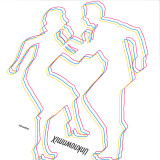
“Django” and “Japanese Funk Machine” are 2 mid80s outstanding avant-garde dance tracks released by UnknownmiX, a Swiss avant-experimental group with unique vocal, punkish/art-pop/minimal wave atmosphere, solid synth and percussions in an anarchic world.
At the center of the project were the very talented vocalist Magda Vogel and the well-known experimental composer Ernst Thoma, who with this radical project sought to push boundaries and explore extremes with sounds that moved between tribal and distorted far ahead of their time.
The remixes were made by cosmic wizard Daniele Baldelli, assisted by the faithful Marco Dionigi, and Delphi (half of Tiger & Woods).
Eaux proudly announces a new collaborative mini-album from label boss Rrose and Polygonia. Containing six tracks and over 40 minutes of music housed in a fully printed sleeve with artwork by Jon-Paul Villegas, the record focuses squarely on the dancefloor while infusing it with the kinds of psychoactive drones, intricate polyrhythms, and relentless modulations that have come to identify both of their approaches to sound. Featured heavily are their shared interests in sonic shapes that resemble natural forms and conjure tactile feelings, in this case related to themes of skin-like surfaces and circulatory systems experienced simultaneously on a micro and macro level. While several of the tracks hover in a flexible tempo range between 125 and 130 bpm, "Stretcher" reaches up to 142, and the closing track "Vena Cava" trades the kick drums for spectrally processed percussion and endlessly diverging high-frequency pulses.
The story behind the release starts in 2022, when Rrose reached out to Polygonia after noticing that her tracks were appearing in their sets more frequently than any other artist. Never before had Rrose proposed a collaboration with someone they hadn't met before, but there was such an obvious connection in their approach to sound that it felt necessary. As it turns out, Polygonia had only become interested in techno after hearing Rrose perform at a festival in 2018. It all made sense, and they began sharing sketches and unfinished ideas with each other, trading them back and forth until they reached completion. Without any announcement of their collaboration, the two artists have since been asked to share the stage together several times. It seems there are other people out there sensing a connection...
Bios:
RROSE
Rrose is an alias of the multi-disciplinary artist Seth Horvitz, born and raised in California, and currently based in London. Active since 2011, the Rrose project explores the intersection of hypnotic techno, experimental composition and psychoacoustic phenomena with a meticulous touch. The first major breakthrough was 2012's "Waterfall" for Sandwell District which followed "Motormouth Variations," a collaborative project with composer, improviser, and activist Bob Ostertag. After the shuttering of Sandwell District, Rrose established Eaux, a home for further solo productions and collaborations. Building on his studies in electronic composition and history at Mills College, Rrose's electronic pieces blur the lines between thrillingly claustrophobic club tracks and destabilizing sound art explorations. In 2015, she released an extended version of James Tenney's postcard composition "Having Never Written a Note For Percussion" for solo gong, and in 2018 collaborated with Charlemagne Palestine on "The Goldennn Meeenn + Sheeenn" for two grand pianos. These works overlapped with the development of Rrose's singular techno: EPs like "Vanishing Pools," "The Ends of Weather" and "Arc Unknown" as well as 2019's debut LP "Hymn to Moisture" and last year's follow up "Please Touch." Rrose is also active as a touring DJ and live performer, equally comfortable commanding sweaty warehouse dancefloors and seated audiences in historic concert halls. Appearances include Unsound, Atonal, Semibreve, Dekmantel, Mutek, Sonic Acts, Nuit Sonore, Mostra, Parallel, Theatre Graslin, Nextones, and Berghain.
-----
POLYGONIA
Polygonia represents a multidisciplinary music and art project conceived by Lindsey Wang from Munich, Germany.
She draws inspiration from her many years of practicing various acoustic instruments and her keen interest for other cultural forms of expression, which she translates into the digital language of electronic music and art.
Her productions' soundscape exudes a mystical, organic quality, featuring intricate and compelling rhythms. Polygonia's sound palette ranges from energetic, groovy Deep Techno, Downtempo, Grey Area to textural and/or harmonic Ambient. Besides, she is not afraid to include influences from the genres House, Drum and Bass, Electro etc.. In addition inspiration from nature play a major role in many of her productions. Exemplary for her style are for instance her 'Otro Mundo' EP (2023) on Bambounou's Bambel Imprint, her 'Bloom' EP (2022) on the American record label Sure Thing, the release 'Deformed Human Nature' (2021) on her own label IO, as well as the album 'Abbilder einer vergessenen Welt' (2021) on the Korean label Huinali.
Her DJ and live sets too reflect her passion for different genres. Depending on the time of day and setting, Polygonia shows a different musical side. What unites all her dance music sets is the hypnotizing effect that invites to completely lose oneself in the world of sounds for a longer period of time. Several voices from the audience also confirm that the musician always tells a complex story within her mixes, allowing for very clear highs and lows. In the same set there can be very harmonic passages, which provide emotional moments and on the other hand extremely texture-heavy dark tracks, which establish a connection with the subconscious and put the listener in a kind of trance.
Polygonia has already visited numerous of prestigious venues. She is now a regular at Tresor or Berghain in Berlin and additionally started her residency in 2023 at Munich-based BLITZ club.
Mighty Vertebrate is the International Anthem debut from Anna Butterss. The Adelaide born bassist / composer has been a first call for LA tour and studio work since relocating there in 2014 – racking up credits with notables across the experimental, jazz, and pop worlds alike – but their most notable contributions to the burgeoning LA scene have been as a member of both Jeff Parker’s ETA IVtet and rising proto-trance supergroup SML, who Pitchfork says “represents the thrilling next phase of a vibrant L.A. community.”
“I had just gotten off of a bunch of touring at the end of 2022 and just wanted to write music,” says Butterss. “The best way for me to do that, I’ve found, is to set myself a discreet and focused task."
I’m going to make a song where the bass doesn’t function in the role of a bass.
I’m going to work on this for an hour and then I’m going to stop.
I’m going to make a song that uses groups of three-bar phrasing.
I want to sample something and make it into a song.
I’m going to start with a drum machine.
The music itself reflects that structure beautifully, with the material being tightly
composed and melodically realized by Butterss well in advance of production concerns. Here they reconvene a group of trusted longtime collaborators to bring their compositions to fruition: Ben Lumsdaine (drums, guitar, production), Josh Johnson (sax), and Gregory Uhlmann (guitar), plus a smoking guest appearance from Jeff Parker. The breadth and scope of the results might have been difficult to achieve otherwise. From the Robbie-Shakespeare-in-groove-mode intro to the album opener “Bishop” to the spacious cinematic doom of “Seeing You”, there is a lot to wrangle into one cohesive concept. On Mighty Vertebrate, Butterss and crew do just that.
"A Seamless Symphony of Harmonious Electronica" - Jazziz
Emerging from over a year of creative hibernation following their debut album, Stavroz's upcoming EP "Kick Up the Dust" jolts them back into action. The EP flows gently, yet the overall mood of the journey isn’t always easy to pinpoint. There’s a certain vagueness to Stavroz’ sound which allows for bizarre experiments to seep through without interrupting the course. “We like to keep it lightly twisted, like a wink with a frown,” says the band.
In the title track however, Stavroz boldly steers towards the heart of the dance floor: efficient, remorseless, powerful, intense and most of all... elegant. Guiding you harmoniously through the club is a delightful duet of trumpet and saxophone, timed perfectly to heal you where it hurts most.
"Her Eyes Were Red" does what it says on the cover. There's melancholy - without sadness. Power - without force. Love - without lust. Stavroz's music possesses a distinct power that feels both natural and organic, never resorting to brute force or aggression. In their own way, the Belgian quartet offers an astonishing journey of saxophone & duduk, supported by broken beats and chopped vocals.
In Dae-El, a track featuring the Brussels-based producer and sound designer Poltrock, ethereal-sounding synths and duduk are combined with ghostly high-pitch distortions. Despite a backbone of muffled beats, the tune has vaporous qualities, reverberations that wobble and tinkle into space – it’s an easy listening experience but in a trippy, spaced-out way. “We’re trying to go for the sweet spot between the couch and the club”.
Adding further depth to their EP, Stavroz collaborates with Brazilian singer and composer Castello Branco in "Valente." Here, intimate Sade-like vocals harmonize with rubbery scratches, acoustic guitar, and horn segments, crafting a lush lounge piece that seamlessly balances both relaxation and empowerment, transparency and provocation. It's a testament to Stavroz's versatility and their knack for creating music that defies easy definition, leaving listeners eagerly anticipating the next twist and turn in their captivating musical journey.
It is summer dawn . . . and you are alone. Here is music for your strange mood. The piano starts the first track, slow tempo beat, a strict beat, a swinging beat. Lillemor—here minor harmonies give the tune a rural, romantic feeling of some place in Spain or France. The tempo changes to medium fast—the flute solos. Light phrasing contrasts beautifully to the earthy, swinging beat of the rhythm section and the repeating piano figures. The trombone adds a new color, a counterpoint of sound and phrasing, backed by the pulsating beat of this wonderful rhythm and the driving piano. Summer dawn . . . This music has more to offer, because it shows the personality of Sahib Shihab at its best. Sahib is a universal musician who reflects musical experiences in jazz since the end of the thirties. He lived through the important periods of modern jazz with his heart and mind wide open toward everything that was good music, regardless of being termed "Mainstream", "Bop", "Cool", "Westcoast", "Eastcoast", "Hard Bop'', et cetera. When you listen closely to his music, you will find traces of all these, but they are immersed in his deep musicianship and his true jazz personality. Sahib Shihab's background reads like the record of a master of advanced studies. Furthermore he played and collaborated with the coolest jazz musician of that period. Above all let's name Budd Johnson, Theolonius Monk, Tadd Dameron, Milt Jackson, Dizzy Gillespie, Illinois Jaquet, Elmer Snowden, Luther Henderson, Larry Noble, Fletcher Henderson, Roy Eldridge. In his early professional years, Sahib was heard mostly on alto sax; later, more often on baritone sax and flute. Today, his name is inseparably connected with these two instruments. The unity of his jazz performances is not alone bound up with the com¬positions and the arrangements of Sahib Shihab, though in their understated simplicity they have a melodic beauty that is seldom found in jazz of today. The rhythmical subtleties add to the overall qualities of being relaxed vehicles for free-blowing, but there is an immediacy that you hear and feel every moment when listening which defies analysis. The playing of the rhythm section helps greatly to promote the sense of flux and contrasting constant renewal that makes listening to this record so invigorating an experience. Well, this is no surprise, with Kenny Clarke as the nucleus of the rhythm group. Kenny 'Klook' Clarke is a major figure and contributor in jazz, one of the founders of modern jazz, and is ranked as one of the all-time great drummers. He influenced a whole generation of musicians with his playing, though living in Paris since the middle of the fifties somewhat dimmed his name to the general American public. Nevertheless, his name alone will assure a connoisseur to expect top class musical experiences. Talking of the rhythm section we have to name Jimmy Woode's bass, which together with Kenny's drumming, is the driving force for the group and the reliable harmonic anchor for the improvisors. By the way, Jimmy has been with the Duke quite a while, and this alone is an award for extraordinary craftsmanship and artistry. The good sounding rhythm with its full-bodied color is also a result of the added bongos of Joe Harris, who manages to stay out of the way of the players—a quality not often found with drummers—but his playing is felt through the set. There are two members of the group not yet mentioned. Two Europeans, pianist-composer-arranger Francy Boland from Belgium, and trombonist Ake Persson from Sweden. Francy Boland this time is a sideman, though normally he is a leader of recording sessions, both as composer-arranger and as musical director of the band. In the fifties he was in the States writing arrangements for different name-bands, such as Basie and Goodman. In Europe, he is famous for his swinging modern big band arrangements; and his inventiveness as a writer is reflected in his piano playing. He has the talent of using the right dynamic approach every moment, thus making his playing helpful to soloists and interesting for listeners as well. Ake Persson has been Scandinavia's out-standing trombone player for about ten years. There are only a few trombonists in Europe who might match his talents at times, but they lack the consistency of his playing. He is impressive, whether playing in a big band, or whether main soloist in his own small groups. American musicians love the sound of his slide trombone and his easily flowing romantic improvisations, so he often joins American name-bands as they travel in Europe. The music speaks alone . . . , we said it before. You have your soul to feel the beauty, to follow lines and structure, and to enjoy the spiritual excitement. Whether you enjoy the flowing, easy sounding theme of "Please Don't Leave Me", or the climaxing piano solo in the same piece—the bass solo in "Waltz For Seth" or the swinging baritone sax—listen to the first bars of this solo and pay attention to Kenny. Whether you listen to "Campi's Idea", (named after Gigi Campi, the well known Cologne jazz enthusiast who organized this recording) with the romantic flute solo of Sahib, the interesting tempo changes, the piano comping, the moving trombone solo; or to the up-tempo "Herr Fixit", with the cooking Kenny and humorous, driving flute solo, you know that these six musicians where in the right mood, in the right stimulating surroundings to feel what we all feel when it's: SUMMER DAWN.
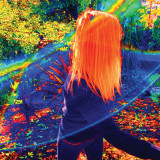
Dawn Richard and Spencer Zahn share a common collaborative ethos, a genuine sense of musical curiosity, and a cosmopolitan eagerness to escape the conventions of genre. That shared vision first brought them together on 2022's Pigments_icy and warm, stripped-down and grand, familiar and otherworldly_and now it has reunited them for Quiet in a World Full of Noise. By turns intimate, soul-baring, spectral, and startling, Quiet in a World Full of Noise blends atmospheric and orchestral soundscapes with mellifluous soul, jazz, and journalistic vocalizing_driving it all home with stark, confessional lyricism. The new album finds Richard at her most raw and exposed. This year, Richard's musician father experienced mini strokes while being diagnosed with cancer; and last year, her cousin Cisco was fatally shot seven times in New Orleans. Richard channels the emotional impact of these traumatic experiences of loss into her lyrics and vocal performances, which are left bare and human here, raw and unprocessed across the album. Quiet expands the definitions of what constitutes progressive, avant-garde R&B by rewriting them altogether. On paper, Richard and Zahn's audacious, impressionistic musical collaborations feel like a surprising match. Richard, a New Orleans-reared visionary, has had an improbable journey from late 2000s reality television and mainstream pop with girl group Danity Kane to become one of the most prolific, experimental, and visible indie R&B singer-songwriters of the last decade and a half, with seven solo albums under her belt. Zahn is an East Coast-raised multi-instrumentalist and composer working at the intersections of jazz, Americana, classical, and ambient pop. His growing solo discography includes People of the Dawn, Sunday Painter, Pale Horizon, and Statues I & II, as well as the duo's first release, Pigments. "Pigments was one of the best projects I've ever made," Richard says, "and the furthest I've ever been pushed as an artist." The album was a critical hit, hailed as Best New Music by Pitchfork and receiving praise from Stereogum as Album of the Week, NPR Music, Bandcamp Daily, The Fader, Bitter Southerner, and Edition, among many other publications. The making of its follow-up, Quiet in a World Full of Noise, began in 2023 in upstate New York. Fresh from a break-up, Zahn sat at his piano and poured himself into writing and recording instrumental compositions. "I wrote all these stream-of-consciousness pieces on piano, and they were eerie, spacious piano tracks," he said. He used a piano that had been unconventionally tuned to the room rather than to standard pitch. These oddly-tuned, eerie instrumental recordings were never intended to be an album. Six months later, he listened to the recordings again and sent them to Richard who immediately recognized their potential and said, "Oh, this is the next album." Richard went into the studio the next day and wrote and recorded melodies and lyrics to Zahn's piano recordings. Zahn brought in gifted musicians like Bryan Senti on strings (violin, viola, and violoncello da spalla) and CJ Camerieri on brass (French horn, flugelhorn, and trumpet). In some cases, like on the track "Life in Numbers," Zahn used only the original first-take piano recording and scratch vocal, resulting in an intimate close-up of both Richard and Zahn.
Clear Vinyl. For the first time ever released on vinyl, this brilliant 2012 LP features an all-star cast of musicians and actors lead by Tim Robbins, Dr. John, Bill Frisell, Ralph Steadman, Annie Ross, John Joyce III and Will Forte. Hunter S. Thompson's classic Gonzo reportage on the 1970 Kentucky Derby is summoned brilliantly to life through spoken word and musical composition. Conceived by executive producer Michael Minzer for his Paris Records label, the project was produced by Hal Willner, who brought Bill Frisell in as composer/arranger/conductor. Bill then asesmbled a stellar group of musicians including Curtis Fowlkes (trombone), Ron Miles (trumpet), Eyvind Kang (viola), Doug Weiselman (woodwinds), Jenny Scheinman (violin), Hank Roberts (cello) and Kenny Wolleson (drums, percussion). Ralph Steadman does double duty portraying himself in the narration and contributing original artwork for the project. In 2021, Kramer re-Mastered the original audio for this historic re-release on limited-edition 'Horse-Shit Brown' vinyl for his Shimmy-Disc label.
Black Vinyl[24,33 €]
Mighty Vertebrate is the International Anthem debut from Anna Butterss. The Adelaide born bassist / composer has been a first call for LA tour and studio work since relocating there in 2014 - racking up credits with notables across the experimental, jazz, and pop worlds alike - but their most notable contributions to the burgeoning LA scene have been as a member of both Jeff Parker"s ETA IVtet and rising proto-trance supergroup SML, who Pitchfork says "represents the thrilling next phase of a vibrant L.A. community."
Behind the deceptive veneer of the demure monotone artwork, something unassuming lies within this long-play waiting to be explored. Intrigued by the ironic title, enticed by the elegant text positioned alone on the beautifully tactile matte canvas, the listener will experience musical wonderment at odds with the presentation and discover that the 1976 album Colours is a powerful yet sophisticated set of electric soul-jazz. An inspired recording that bursts with warmth and texture, the pivotal recording from an exceptional jazz musician. HER name - Judy Bailey.
Over the course of a 70 year career, the pianist and composer established herself as one of the central figures of Australian jazz. Her crowning achievement Colours is a spirited and ambitious recording that captured the maturation and shifting jazz landscape of the mid 1970s Australia. Alongside other notable albums recorded mid decade including the 1975 self titled album by Melbourne's Arena (see Roundtable SIR014)) and Jackie Orszaczky's Beramiada (1975), the album signalled the countries transition from semi-acoustic jazz to electric jazz-funk. Regularly compared to the albums released on Creed Taylor's CTI label, Colours parallel these recordings with their clean production and spacious soul-jazz arrangements. In particular the crisp drums and processed bass heard on Bob James and Joe Farrell albums, the sprightly flute of Hubert Laws or perhaps the more sensual side of Flora Purim's vocals could all be suggested as a source of influence.
Continuing to celebrate and re-document Australia's jazz music legacy, The Roundtable are pleased to offer the first vinyl reissue of this seminal Australian Jazz recording. Presented in a replica gatefold sleeve with new liner notes, the full palette can once again be appreciated including the moody funk of Fall Down Dead, the Iberian Waltz Toledo, the Jazz-Dance anthem Colours Of My Dream and the spacey impressionist piece The Eleven Eight Song.
Carla Boregas is a Brazilian musician, composer and sound artist. By merging synthetic and acoustic instrumentation and techniques, Boregas builds up sonic scenarios driven by an invisible force, where the sensation of presence and discovery lies between density and delicacy. Her work spans composition, improvisation, performance, sound installation and radio art, and aims to transport the listener to different subjective perspectives of time and space, to invoke memories and to reflect about the nature-human relationship.
Carla Boregas writes: "Using a Tascam Portastudio 4-track cassette recorder, I invited three musicians to improvise alone with the sound recording of the sea that I did in Massaguaçu, the place where I used to live in Brasil. The recorder that I used had a defect in one of its tracks, therefore I could only invite two musicians – Vinicius Cajado (double bass) and Réka Csiszér (cello), plus the sea in another track. While listening to the tracks together, I felt a deep sense of absence ("ausência" in Portuguese). Perhaps due to their sonorous answers surrounded by the tape hiss? Because that's one of the symbolic meanings of the ocean? Maybe "saudades do mar, de estar ao seu outro lado"? Who knows – listening can be something very mysterious. Afterwards I played with and interweaved them all: the sonorous sea, Vinicius Cajado, Réka Csiszér and the absence - "Absência Tape" is the final result." – Carla Boregas, Berlin, 8 August 2024.
- Movin' Much Too Fast
- A Groovy Thing Going
- Hey Mr. Skyjacker
- What I Feel
- Take A Ride
- Work Your Show
- Neath The Heat Of The Summer Sun
- Barbara With The Kooky Eyes
- Mojo Shingaling
- Rhythm And Soul
- Lucy's Spanish Harlem
- Love It Up
- Jumpin' Around
- Takin' Over
- Hey, Mama
- We Belong Together
- Come Live With Me
- Got This Happy Feeling
- Do It
- Pamoja Watu (Together People)
- It's Your Thing
- Undress My Mind
- Isco Kid
- Gimme, Take It
Those in the know are well aware of Bobby Marin's work, and the fact that he was behind the scenes for some of the best boogaloo and salsa of the '60s and '70s. Yet, until now, no one has explicitly put Bobby's name in the headline and given him his due on the cover of a properly credited Latin soul compilation. This compilation comprises twenty four essential boogaloo, Latin funk, rock and afro disco gems, each one bearing the mark of quality: "A Bobby Marin Production", including songs by Ricardo Marrero, the Ghetto Brothers, Ocho, Louie Ramírez_ A freshly curated overview of his fascinatingly complex back catalog in these genres. Since the late 1980s there have been numerous Latin soul and boogaloo compilations, and certainly much has been written about the history of the music too and an an excellent documentary (We Like It Like That, by Mathew Ramírez Warren) have brought the music to a broader audience. Generally, when discussing the "first wave" of Latin soul and boogaloo, it's the bands and their leaders, the singers and the songs that get all the recognition. But what of the producers, composers, and arrangers behind the music? Over the years, one of the best old-school New York Latin music producers, Bobby Marin, has occasionally been given some well-deserved credit and popped up sporadically in articles or liner notes (Wax Poetics, Fania, Gladys Palmera). However, to the casual public, he is not a household name, even among some fans of boogaloo. There are even some contemporary Latin soul compilations that contain mostly material licensed, produced and / or written by Bobby (or his brother, Richard), and a tip of the hat must go to Bobby's friend Dean Rudland for all his work in this area, as well as to Rocafort Records for digging up the long-lost Nitty Gritty Sextet album. Yet, until now, no one has explicitly put Bobby's name in the headline and given him his due on the cover of a properly credited Latin soul compilation. This collection aims to change that and give the man his Latin soul "props" for the first time on a freshly curated overview of his fascinatingly complex back catalog in this genre.
- Cristal, Cristal Bass, S.a.d. Et Zagreb
- Crapauds Aux Cordes Étouffées Et Ressorts Sans Cône
- Chandelier, Cristal Et Croix
- Sept Croix Dont Deux Pitchées
- Douze Accords Simples De Sifflants Aux Attaques Coupées, Dont 2 Pitchés
- Croix, Sifflants Sans Attaque Et Ressorts Sans Cône
- Quatre Accords De Cristal Bass
After a triptych released by Un je-ne-sais-quoi, in barely 3 years, under the name Tachycardie, Jean-Baptiste Geoffroy, musician, composer but also visual artist, continues his very singular journey to the heart of sound matter, with an album composed on Baschet sound structures.
From the 1950s, the Baschet brothers created a truly innovative set of instruments which has since fascinated musicians seeking new sound experiences.
Both sculptures of glass, metal and instruments of great acoustic sharpness, these sound structures have made rare but remarkable forays into recordings of contemporary music (Bernard Baschet, Jacques Lasry, Luc Ferrari, Toru Takemitsu, Jonathan Fitoussi…).
The Baschet brothers were also keen to use these instruments for educational purposes in the form of workshops, cultural action projects or simply by inviting the public to try these instruments at the end of concerts. It is in the Ateliers Baschet, a place aimed at preserving and transmitting the work of the brothers (workshops, conferences, residencies) that Tachycardie recorded this new album.
After having combined on his previous albums, analog synthesis, audio-naturalism and percussion in an overwhelming balance, he explored here all the sonic variety of Baschet structures. He then just sculpted this sound material in his studio, using simple effects: editing and pitch.
The result is a new path to explore in Tachycardie’s world, made of subtle percussive crackles, beneficial chaos and restorative oscillations.
Dawn Richard and Spencer Zahn share a common collaborative ethos, a genuine sense of musical curiosity, and a cosmopolitan eagerness to escape the conventions of genre. That shared vision first brought them together on 2022’s Pigments icy and warm, stripped-down and grand, familiar and otherworldly and now it has reunited them for Quiet in a World Full of Noise. By turns intimate, soul-baring, spectral, and startling, Quiet in a World Full of Noise blends atmospheric and orchestral soundscapes with mellifluous soul, jazz, and journalistic vocalizing driving it all home with stark, confessional lyricism. The new album finds Richard at her most raw and exposed. This year, Richard’s musician father experienced mini strokes while being diagnosed with cancer; and last year, her cousin Cisco was fatally shot seven times in New Orleans. Richard channels the emotional impact of these traumatic experiences of loss into her lyrics and vocal performances, which are left bare and human here, raw and unprocessed across the album. Quiet expands the definitions of what constitutes progressive, avant-garde R&B by rewriting them altogether. On paper, Richard and Zahn’s audacious, impressionistic musical collaborations feel like a surprising match. Richard, a New Orleans–reared visionary, has had an improbable journey from late 2000s reality television and mainstream pop with girl group Danity Kane to become one of the most prolific, experimental, and visible indie R&B singer-songwriters of the last decade and a half, with seven solo albums under her belt. Zahn is an East Coast–raised multi-instrumentalist and composer working at the intersections of jazz, Americana, classical, and ambient pop. His growing solo discography includes People of the Dawn, Sunday Painter, Pale Horizon, and Statues I & II, as well as the duo’s first release, Pigments. “Pigments was one of the best projects I’ve ever made,” Richard says, “and the furthest I’ve ever been pushed as an artist.” The album was a critical hit, hailed as Best New Music by Pitchfork and receiving praise from Stereogum as Album of the Week, NPR Music, Bandcamp Daily, The Fader, Bitter Southerner, and Edition, among many other publications. The making of its follow-up, Quiet in a World Full of Noise, began in 2023 in upstate New York. Fresh from a break-up, Zahn sat at his piano and poured himself into writing and recording instrumental compositions. “I wrote all these stream-of-consciousness pieces on piano, and they were eerie, spacious piano tracks,” he said. He used a piano that had been unconventionally tuned to the room rather than to standard pitch. These oddly-tuned, eerie instrumental recordings were never intended to be an album. Six months later, he listened to the recordings again and sent them to Richard who immediately recognized their potential and said, “Oh, this is the next album.” Richard went into the studio the next day and wrote and recorded melodies and lyrics to Zahn’s piano recordings. Zahn brought in gifted musicians like Bryan Senti on strings (violin, viola, and violoncello da spalla) and CJ Camerieri on brass (French horn, flugelhorn, and trumpet). In some cases, like on the track “Life in Numbers,” Zahn used only the original first-take piano recording and scratch vocal, resulting in an intimate close-up of both Richard and Zahn.
- A1: Christian Gaubert & Gilbert Becaud - The Organization
- A2: Christophe - Le Dernier Des Mauvais Jours
- A3: André Popp - Sweet Mary
- A4: Michel Magne - Prophets (Instrumental)
- A5: Jean Schwarz - Final Maison Rouge
- B1: Vladimir Cosma - Menuet Spacial
- B2: Francis Lai - Thème De Simon
- B3: Jacky Chalard - L'agonie
- B4: Maurice Lecoeur - Conte Au Fil De L'eau
- B5: Janko Nilovic - Mouvements Aquatiles
- B6: Alain Goraguer - La Vie Sentimentale
Transversales Disques proudly presents PANORAMA, an excursion through rare French soundtracks & other rarities mostly never reissued or compiled.
11 forgotten nuggets recorded between 1969 and 1980 by famous masters like Francis Lai, Alain Goraguer and Michel Magne alongside underrated composers like Jean Schwarz, Christian Gaubert or Maurice Lecoeur. A cinematic journey overflowing with moody strings arrangements, funky drum breaks, typical French basslines and psyched atmospheres.
Deluxe Tip-On jacket LP including exclusive and extensive liner notes.
Vinyl Only / No Digital
Remastered from the original master tapes
Sonor Music Editions is honored to announce the reissue of the very rare LP Aquarium Sounds by Italian composer Filippo Trecca. Originally released in 1979 as a promo-only item, “Aquarium Sounds” is a hybrid collection of tracks; some were used as the soundtrack to the thriller TV series “Così Per Gioco” (1979), directed by Leonardo Cortese; others from the talk show “Acquario” (1978-1979) hosted by Italian journalist and writer Maurizio Costanzo. The album also includes “Elena Tip” which features playful vocals by a young Ilona Staller (aka Cicciolina).
Aquarium Sounds were composed by Trecca himself, Achille Oliva (bass), Alessandro Alessandroni Jr. (keys), Giancarlo de Matteis (guitars), and Marco Parisi (drums), playing together for the creation of this progressive pop gem sought after by many collectors from around the world.
The album, recorded using simple acoustic elements and early synths, is a treasure buried deep into the ocean of time that Sonor Music Editions is bringing back to the surface; a journey into the depths of our music memory as well into the universe of Italian music heritage.
No one has lived a life quite like Marcos Valle. He became an overnight international sensation, fled a military dictatorship, dodged the Vietnam war draft, had his music sung by Homer Simpson, made enemies with Marlon Brando, and became an unsuspecting fitness guru for multiple generations. But to truly understand the great Brazilian composer, arranger, singer and multi instrumentalist, one must listen to his music.
Lead Single (Life Is What It Is) : Between the release of his first album in 1962 and today, Marcos Valle has released twenty-two studio albums traversing definitive bossa nova, classic samba, iconic disco pop, psychedelic rock, nineties dance and orchestral music. He has also had his songs recorded by some of the all time greats, including Frank Sinatra, Sarah Vaughn, Sergio Mendes, Elis Regina, and (last but not least), Emma Button of the Spice Girls. He has also had his music sampled by Jay-Z, Kanye West, Pusha T and many more.
With his twenty-third studio album Túnel Acustico, Valle set out to bring it all together.
“I believe my music is many things. It goes in different directions. I have many different ways of writing music, sometimes it’s melodies and harmony, sometimes the groove is the focus. But all the music I have made over my sixty year career is unified. It is all natural and it is all sincere. And this is what I wanted to bring to my new album.”
A prominent feature of Valle’s career has been his dual residence between Brazil and the USA. Originally moving over in the mid-sixties on the back of bossa nova’s international proliferation, Valle toured with Sergio Mendes and became hugely in demand as a composer and arranger. But the Vietnam War loomed and the threat of being drafted saw him return to Brazil. He spent the following years in Rio writing music for TV and film, as well as four cult favourite albums in collaboration with some of Brazil’s most groundbreaking musicians including Milton Nascimento, Azymuth, Som Imaginario and O Terco.
By 1975, Brazil's military dictatorship was at its most oppressive, making living and working increasingly difficult. Valle moved back to the US where he would reside in LA, writing songs for, and collaborating with the likes of Eumir Deodato, Airto Moreira, Chicago, Sarah Vaughn and Leon Ware, amongst others.
Túnel Acústico features two songs originally conceived during Valle’s time on the West Coast: “Feels So Good”, a stirring two-step soul triumph written in 1979 with soul icon Leon Ware, and the sublime AOR disco track “Life Is What It Is”, composed around the same time, with percussionist Laudir De Oliveira from the group Chicago.
Built around an unfinished demo Marcos found on a shelf in his house 44 years after it was made, the “Feels So Good” demo was restored with the help of producer Daniel Maunick, who also utilised AI stem-separation to remove the placeholder vocal ad-libs. Valle added Portuguese lyrics to sit alongside Ware’s vocal hook, as well as extra keyboards and percussion.
Also written in late seventies LA, “Life Is What Is It” was co-penned by Laudir De Oliveira from the band Chicago and first released on the bands’ Chicago 13 album with lyrics by Robert Lamb. Another nod to his good times in LA, Valle recorded his own version for Túnel Acústico, upping the tempo and deepening the groove for a blast of irresistible summer soul.
On Túnel Acústico, Valle's core band features two members of the renowned Brazilian jazz-funk group Azymuth: Alex Malheiros on bass and Renato Massa on drums. The rhythm section is completed by percussionist Ian Moreira, with additional contributions from guitarist Paulinho Guitarra and trumpeter Jesse Sadoc.
The contemporarily composed music on Túnel Acústico features an impressive lineup of guest lyricists, including renowned Brazilian artists: Joyce Moreno (Bora Meu Vem), Céu (Nao Sei), and Moreno Veloso (Palavras Tão Gentis) as well as Valle's brother Paulo Sergio Valle (Tem Que Ser Feliz).
The album closes with "Thank You Burt (For Bacharach)", a tribute to the legendary composer who passed away in 2023.
Túnel Acústico will be released on 20th September 2024 via Far Out Recordings. Valle is set to tour Europe and America in support of the album.
Clan Caimán, led by composer Emilio Haro, is a group from Argentina, but their timeless, organic music transcends nationality. “Pica-Pau” (woodpecker), their third album, is their most abstract and minimal to date, but this is not a cold abstraction nor an austere minimalism; the music here, with its focus on rhythm and texture, is warm and hypnotic, seeming to have existed forever despite the fact that it was recorded in 2023-24. As on their previous albums, all with EM Records, the music is driven by the kalimabafon, Haro’s self-made tuned percussion instrument. The kalimbafon’s patterns weave through waves of reverb-drenched lap steel and guitar, as bass undertow and sans-cymbal percussion allow the music to flow music inexorably forward, like a broad, timeless river. The compositions here have a feeling of being immersed in deep night, surrounded by life, away from the enclosed isolation of the urban environment. As with previous albums, the compositions are instrumental, the exception being the final song, a vocal version of the opening track, sung in a language invented by Haro.
Egle Martin enjoyed a long career as a dancer, actress, singer and played an important role in the promotion of Afro roots in Rio de la Plata and in reclaiming Afro-Argentine culture. Her performances were fresh and powerful, showcasing diversity and, later on in her career, her desire to diffuse Afro-Latin American culture. By the time this single was recorded, Egle Martin had already performed in several plays and films; she had already sung with Dizzy Gillespie and the Berlin Symphony Orchestra; she had already released an album with composer and bandoneon player Astor Piazzolla. And she was already beginning to frequent the Casa Suiza, with its gatherings and carnivals in the neighborhoods of San Telmo and San Nicolás in the beautiful Buenos Aires of the 1960s, teeming with happenings and avant-garde galleries. Egle sings in Spanish and her voice dazzles with a very distinctive sound and texture as she performs these rhythms; you can clearly appreciate the freedom and power in her vocals. In 'El Dombe' tenderness permeates the lyrics as she tells the world what this dance and its cadenced rhythm is all about. 'Dombe Bariló' is bolder and more sweeping in scope: the ritual and empowering message is uplifting... Roberto Montiel's arrangements are a prime example of the brilliant fusion of soul, funk and Latin American music, all linked through Afro roots. Originally released in 1970 on Music Hall in Argentina, it has become an elusive and sought-after record over the years, at the top of many collectors wants list due to its amazing dance floor energy. First time 7” reissue. TRACKLIST Side A EL DOMBE Side B DOMBE BARILO