Since 2002, Rebeka Warrior, poet by night, producer by day, and Carla Pallone, composer, baroque violinist turned multi-instrumentalist, have formed Mansfield.TYA. If we knew until now the sensitive world of Mansfield.TYA: meaning of melody, melancholy and minimalism, today the group returns with a poetic ode New Wave. With Monument Ordinaire, Rebeka and Carla are making their fifth album: 45 minutes of life and death, of poetry carved out of rock, imagined as words by Master Dogen on simple and catchy melodies by Jacno. An album of happy melancholy, an escape to celebrate the furious love of life, like so many cries of the heart. Always guided by emotion and constant attention to words, Mansfield.TYA shares 12 songs that make us dance even when we cry.
Search:composer
"Remembering is not the opposite of forgetting," Casey MQ sings at the start of Later that day, the day before, or the day before that, his new LP and Ghostly International debut. It's a phrase fittingly misremembered from something the LA-based, Canadian-born composer came upon as he spiraled into unconscious and subconscious-led writing sessions at the piano. Casey's known for his 2020 breakthrough release babycasey, which gave voice to songs seen through the lens of childhood, various film score work and collaborations with artists such as Oklou (who returns here), Eartheater, and Vagabon. His gifts as a producer and songwriter are rooted in textural world-building and the excavation of personal truth. With Later that day... he questions what is true entirely, understanding our mind's tendency to bend and project onto pictures of the past. Across vivid, baroque pop balladry, Casey MQ reorients his recording project and point of view under the notion that memories are malleable. All the joy, pain, love, and loss housed within remembrance is open to interpretation and deconstruction, which he does deftly, with curiosity and complete artistic freedom. "It's a memory album," Casey puts it simply, winding up for the deeper unpacking, "and it might be a breakup album, too_there are more questions than answers." Engaging his dreams and sitting with sheet music at his newly acquired piano, he looked to new and old inspirations including the works of Claude Debussy, Joni Mitchell, and Joe Hisaishi's beloved Studio Ghibli film scores. "Since I was young, I always wanted to write a piano album." babycasey's studied electronic sound isn't wholly abandoned on Later that day... instead, it comes through like an atmosphere, giving Casey's more spacious, minimal arrangements a distinct luster and sheen. The textures and tones shift from song to song as if mirroring the way our minds constantly recontextualize, remember, and forget. Cathartic opener "Grey Gardens" _ its title derived from a dream abstractly related to the Toronto restaurant, but not the 1975 film, which he cites as another coincidental false memory _ presents the record's plaintive, haunted feeling. "Even if not reading into lyrics, sonically I wanted it to feel like you're being pulled into a universe. Not fantasy or otherworldly per se, something more tangible, of the body and mind," Casey says. "Hearing it back, I realized this track was the key to unlocking it." His tender falsetto hovers above ambient washes and echoed keys, each word falling carefully in the crevices. "Asleep At The Wheel" unfolds on arpeggiated synth before a burst of symphonic color; the synth returns inverted to harmonize with the outro, "I love a car crash, I love a story, I love a memory, I swear it's real..." Casey leans into digital imagination on the warm, introspective "Me I Think I Found It." Subdued, stuttered percussion underscores the singer as he cycles through pixelated imagery _ screenshots, smiles, streetlights _ searching for higher meaning through love. Built on ascendent chord distortions, "Dying Til I'm Born" gives the record one of its boldest pulses of emotion. The back half stretches out; "Is This Only Water" is sparse and foggy, "Baby Voice" is intimate and desperate for something to remain. "Words For Love" grooves on guitar, and "Tennisman9" aches in heartbreak. French musician Marylou Mayniel, aka Oklou, appears as the collection's only guest for the closing duet, "The Make Believe," a bright and buoyant send-off that gives Later that day... both a sense of resolve and cyclical-motion. "We are young, under the sun," they sing together, a parting image brimming with lightness.
When Man Man released its last album, "Dream Hunting in the Valley of the In Between," frontman Honus Honus (née Ryan Kattner) was in a state of unrest, oscillating between hope and cynicism. Perhaps fittingly, the album dropped during the pandemic, a time at which we could all relate. But, much like that bizarre turn of events, the ennui now seems so distant to Man Man. A revived sense of purpose washes through Man Man's new album, Carrot on Strings, radiating a mix of calm and confidence. Kattner always embodied a wild-man pied-piper vibe: his melodic, unhinged art-rock was at once intriguing and angsty. He was so alluringly creative that you went along with it, even if you were never sure where Man Man would take you. Carrot on Strings is no less inventive, but its ethos is radical in context of the band's two-decade career. "When I was younger, I would feed off of chaos. I would, you know, be upset and get drunk and smash chairs," Kattner explains. "Now those chairs are in my head: It's less of an outward projection, more of an interior monologue." The name "Carrot on Strings" came to Kattner while experimenting with the sound of someone munching on the vegetable, which you can hear in the cacophonous, similarly named song. It alludes to how success always seemed to dangle uncertainly before him, often just out of reach. But listen intently and you'll hear a more content Kattner finding an uneasy peace: "Life, as far as I've known it, has always been side hustles. Would it be great if I could go into a studio and record for a year without figuring out how to finance it? Yeah, it would be," he says. "But ultimately, I need to keep making music because art is an extension of my psyche. It's how I have learned to translate the palpitations of my heart. Simply put, I'd go insane without it." Growing up as a multiracial Hapa kid (half Filipino, half white) with a father in the U.S. Air Force, Kattner lived an itinerant childhood that included a few pivotal years in Germany, where he honed in on an appreciation for out there German cinema and art. His film obsessions and screenwriting background were crucial to Carrot on Strings. The album nods to the films of Werner Herzog and Rainer Werner Fassbinder as much as Italo-disco, Randy Newman, goth rock, and avant pop. (Kattner continues to work in the film industry with an acting role in the upcoming horror-comedy movie Destroy All Neighbors, for which he also served as composer; music supervising season 1 & 2 of the Interview With The Vampire AMC TV series; and shopping around, with director Matthew Goodhue, a script he wrote that he describes as a Wim Wenders road movie on acid.) In a bid to not overthink anything - his last album took seven years to make - he recorded the bulk of Carrot On Strings in five days in Mant Sounds studio in Glassell Park, Los Angeles with "very chill" producer Matt Schuessler, who had worked on Man Man's cover of Neu!'s "Super" for the seminal Krautrock band's box set. The resulting album represents a newfound sense of self for Kattner, who finds himself inspired and at peace both personally and artistically in ways that eluded him for most of his first 15 years playing music. When, on Carrot On Strings, you hear Kattner croon humbly, or sing of the tension between his outsize stage persona and the thoughtful, soulful guy he actually is, you're hearing Kattner liberate himself. "I first got into music to escape from myself," he says. "And now, it sounds so corny, but I have zero doubt that music ended up saving my life."
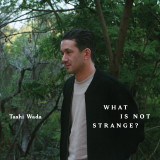
What Is Not Strange? is the first full-length album by Los Angeles-based composer Tashi Wada in over five years, comprising his most far-reaching and impassioned music to date. Written and recorded over a period that encompassed the death of his father and the birth of his daughter, the album sees Wada reflecting inward to explore broad narratives - being alive, mortality, finding one's place in the world - through new modes of ecstatic, song-based expression. While the denser forms, stark contrasts, and overt surreality may carry a different weight than Wada's earlier work, which elicited perceptual effects with minimal means, the heart of What Is Not Strange? is still in experimentation and unforeseen outcomes.
The drone-pop consternations of Ekin Fil emerge through vaporous tone and forlorn, distant song, as if plucked from a dream. These exist on their own accord, moving with their own internal logic of an emotion heaviness that belies any the passing observation of this as mere shoegazing ambience. Her songs, her compositions find themselves adjacent the fragmented etherealization of Elisabeth Fraser's voice from a forgotten scene of a particular David Lynch film, as a ASMR trigger for Proustian recollection. Something profound. Something hidden. Something desolately sad.
The Helen Scarsdale Agency has had the pleasure of witnessing Ekin's continued development, maturation, and growth as a composer, having released now seven of her magnificent, under-the-radar gems. Her slow burning, dejected ballads continue to draw from the deep well of sorrow, with varying frequencies and intensities of bitter light poking through. Loves lost. A world broken. All is not hopeless, but there is a considerable amount of shit to wade through.
Sleepwalkers embraces a familiar set of metaphors in her work, that of narcolepsy and the unsettled state of existence between sleep and being awake. But she stretches herself with a set of compositions that run parallel to the work of Tim Hecker as in the gravitation soft-noise of "Stone Cold" or to a slow motion serialism that punctuates the ambient crawl of her ambitious "Gone Gone." Recommended for fans of Grouper, Rafael Anton Irisarri, A.C. Marias, and Carla dal Forno.
A home, a house, has countless frequencies. Each room, each corner feels different. Swings differently. And as you grow older, you realize which corner is yours. But yeah, it takes time…
It certainly marks the end of an era when the house one called home as a kid no longer exists. This home, it was the starting point of so many journeys. Of one big, ongoing journey. And so it feels good, soothing, reassuring to at least return to a spot nearby – to that (proverbial) hill from where you can see it. Feel the vibe that made you.
Andi Haberl’s debut solo album as Sun is sort of dedicated to that house. It’s a journey leading to that hill overlooking everything that made him. It’s not about nostalgia, not about actually returning to a specific place. Instead, it’s about finding a personal frequency, an overlapping of sounds and samples, an open space that mirrors and extends whatever frequencies felt right at different points in time.
“To me, the results feel like Gold Panda/Four Tet meets Steve Reich meets Krautrock meets film scores. I just really wanted to create moods that touch me – and ideally others, too.”
Talking about his first solo album, Haberl recalls many stages: early compositions that ended up on Alien Ensemble’s albums, early DIY/home studio/multi-instrumentalist inspirations (Le Millipede), new technologies that came and went, even a set of wildly convincing arrangements (done with Cico Beck’s crucial input) that ultimately became stepping stones for yet another round of DIY takes. “It was a long, recurring process, and the songs went through so many different versions,” he says, talking about phases of growth (“I added more and more equipment over time”) and pruning, “cleaning up my music a bit.” Tending towards instruments that open up space, and slowly falling in love with sampling, he certainly didn’t rush things once it was time for interior design decisions ;)
“During this whole process I got to learn so much about my own taste, how I prefer to listen to the pieces, which musical elements really matter to me… and what my own voice is. For example, that acoustic elements are most important to me: the banjo, piano, drums, my voice, glockenspiel, trumpet, melodica. Anything that opens up some space.”
Every journey begins with a search: “Missing” with its plucked chords opens like a sunrise over pastoral plains, gently leading the way towards the intricate, playful explosion that occurs once a certain amount of energy (“Sun”) hits dirt and other surfaces: things grow, clot and curdle into new shapes, like new buds; layers of sound move forward, drenched in Spring’s new light. Relying on samples to ask for precipitation (“Rain On Me”), robotic “Low” goes from barren to bass-heavy after its midway shift in pace, full of loops plucked from the shade.
Towards the album’s midpoint, things are suddenly reversed: “Cluster” has that backwards pull, you can’t tell what’s what, yet everything is perfectly locked in, as the pace increases once again. And before the title song shimmers with densified cheering (to eventually stand tall like early Lymbyc Systym), “Beside Me” swipes you off your feet with its booming bass drum. The beat returns once again (“Daydream”), full of searching voices underneath, and at “Dawnday,” we can finally catch a melancholy view of the house. Voices hum. It’s the score moment of the album. Everything makes sense now. A happy end of sorts?
“I want to take people on a journey. A personal journey, too, because when my parents split up and sold the house I grew up in, I felt a bit like the ground had fallen out from under my feet. But I have dedicated the album title and the accompanying piece to this house… so I can keep it in good memory.”
“I Can See Our House From Here” has been a long time coming. It’s been a long journey. Homeward-bound. Leading to a place that’s really Haberl’s – his sound. His frequencies.
Known as a long-time member of The Notwist and various other bands/projects (Alien Ensemble, AMEO, jersey, Ditty etc.), Berlin-based drummer/composer Andi Haberl has also worked with My Brightest Diamond, Till Brönner, Owen Pallet, and Kurt Rosenwinkel, to name a few. “I Can See Our House From Here” is his first solo offering.
- A1: アヴちゃん (Avu-Chan
- A2: Siiickbrain Feat. Pussy Riot - Power
- A3: Engelbert Humperdinck - I'm Forever Blowing Bubbles
- A4: Alejandro Sanz - La Despedida
- A5: Upsahl - My Time To Shine
- A6: 奥田 民生 (Tamio Okuda) - Kill Me Pretty
- A7: Big Fella - Couple Of Fruits
- B1: カルメン·マキ (Carmen Maki) - Tokiniwa Hahano Naikono Yoni
- B2: Shuggie Otis - Sweet Thang
- B3: Song For Memories - Five Hundred Miles
- B4: 麻倉未稀 (Miki Asakura) - Holding Out For A Hero
- B5: 坂本 九 (Kyu Sakamoto) - Sukiyaki
- B6: Rare Earth - I Just Want To Celebrate
- B7: Dominic Lewis - Momomon
Tangerine[39,45 €]
Bullet Train is the 2022 American action-comedy film by the Deadpool 2-director David Leitch and is based on the 2010 novel Maria Beetle, written by Kōtarō Isaka. In Bullet Train, Brad Pitt stars as Ladybug, an unlucky assassin determined to do his job peacefully after one too many gigs gone off the rails. Fate, however, may have other plans, as Ladybug's latest mission puts him on a collision course with lethal adversaries from around the globe - all with connected, yet conflicting, objectives - on the world's fastest train...and he's got to figure out how to get off.
The film features a number of original tracks. Most notably, the film contains Japanese language covers of "Stayin' Alive" by Bee Gees and "Holding Out for a Hero" by Bonnie Tyler. Composer Dominic Lewis noted that the film's soundtrack represents "all vibe and no technique".
For the first time, the soundtrack for Bullet Train is available on vinyl and comes in different editions, all based on the characters in the movie. All editions include a 4-page booklet, but each edition contains an exclusive Bullet Train boarding pass with corresponding picture of the character. This is the limited edition on Lemon coloured vinyl.
a A1. アヴちゃん (AVU-CHAN QUEEN BEE) - STAYIN' ALIVE
Black Truffle is pleased to announce Resonant Trees, the first vinyl release from French composer-performer Léo Dupleix. An active member of the international community of younger musicians working with just intonation, Dupleix has composed works for solo instrumentalists and ensembles in Europe and Japan, as well as performing extensively on harpsichord, piano and electronics. His music is distinguished by a formal clarity and elegance of surface, gently shaping pure intervals into delicate melodic patterns and shimmering harmonic planes.
Resonant Trees presents two side-long pieces for harpsichord and ensemble, both setting slowly repeating patterns played on harpsichord and guitar within an environment of sustained tones. Dupleix performs on a French double manual harpsichord (tuned to a just intonation scheme of his own devising) and Prophet synthesizer, joined by Juliette Adam (bass clarinet), Johanna Bartz (traverso flute), Cyprien Busolini (viola), Fredrik Rasten (6- and 12-string guitars), and Mara Winter (traverso flute). The harpsichord begins Resonant Tree I alone, slowly sounding out a series of arpeggiated chords that emphasise the unique (and for unaccustomed listeners, sometimes unsettling) harmonic and timbral qualities of justly tuned intervals. Long tones from synthesiser, bass clarinet, viola and Baroque traverso flutes slowly creep into the spaces between the arpeggiated chords, joined after several minutes by delicate patterns of harmonics played by Rasten on acoustic guitars.
On Resonant Tree II, a similar structure and ensemble (without the flutes) are used with quite different results. We again hear only the harpsichord at first, but this time playing a series of flowing melodic lines, each of which is repeated several times. Joined again by long tones from the ensemble, here the viola is particularly prominent and its interplay with the harpsichord creates fascinating acoustic effects. In both pieces, repetition gives the music a static, stable quality while, at the same time, the exact shape of the repeating patterns remains difficult to grasp. As Dupleix writes, these pieces dream of music as ‘space and a sound that one could grasp in one’s hand.’ As the near-static quality of the repetitions and long tones with little incident make these two stretches of musical time feel like spaces for the listener to inhabit, the small variations on a narrow range of related material act like a three-dimensional object whose each facet is examined in turn. At once austere and seductive, Resonant Trees takes its place beside the work of contemporaries like Catherine Lamb, while also calling up the languorous melodic world of Mamoru Fujieda, the dignified melancholy of Satoshi Ashikawa’s classic Still Way and the espaliered chamber atmospherics of the Obscure catalogue.
A product of the not-so-underground, genre-bending melting pot that is Naarm (Melbourne, Australia). producer, composer and multi-instrumentalist Don Glori (AKA Gordon Li) prepares to unleash his forthcoming album ‘Don’t Forget To Have Fun’ via DeepMatter Records.
Following the release of his much-heralded 2022 LP ‘Welcome’, and a relocation to London, Don managed to tap into a potent creative current, by taking himself to a place of discomfort, and taking his creative back to basics for ‘Don’t Forget To Have Fun’. This invigorating approach helped distill the initial album sketches into a compelling and intoxicating listening experience across the record, creating a true work of art, traversing jazz, funk, soul, RnB, samba and beyond. Whilst the record itself is hard to describe, but even harder to forget.
Album opener ‘Pause’ pairs psychedelic influences with a cyclic loping groove and focuses on recognising a safe space that can act as a refuge. Taking inspiration from Steely Dan, Brian Bennett & Azymuth, ‘Emerald’ channels Jazz rock, 70's LA studio energy, with the faster funk sections featuring an unruly amount of mouth percussion, synth lead lines, and vocal melodies that weave in and around the tight horn arrangements. ‘All Seeds’ is a heady blend of samba and Brazilian street soul, with field recordings of Don’s old house in Melbourne providing additional seasoning. ‘First Touch’ is a downtempo 80’s boogie-infused gem, keeping proceedings nice and sleazy. The final three movements move through one fluid composition, charting the disorientating course of a fever dream, through beguiling astral travels, unexplainable occurrences, and transcendent moments.
A product of the not-so-underground, genre-bending melting pot that is Naarm (Melbourne, Australia). producer, composer and multi-instrumentalist Don Glori (AKA Gordon Li) prepares to unleash his forthcoming album ‘Don’t Forget To Have Fun’ via DeepMatter Records.
Following the release of his much-heralded 2022 LP ‘Welcome’, and a relocation to London, Don managed to tap into a potent creative current, by taking himself to a place of discomfort, and taking his creative back to basics for ‘Don’t Forget To Have Fun’. This invigorating approach helped distill the initial album sketches into a compelling and intoxicating listening experience across the record, creating a true work of art, traversing jazz, funk, soul, RnB, samba and beyond. Whilst the record itself is hard to describe, but even harder to forget.
Album opener ‘Pause’ pairs psychedelic influences with a cyclic loping groove and focuses on recognising a safe space that can act as a refuge. Taking inspiration from Steely Dan, Brian Bennett & Azymuth, ‘Emerald’ channels Jazz rock, 70's LA studio energy, with the faster funk sections featuring an unruly amount of mouth percussion, synth lead lines, and vocal melodies that weave in and around the tight horn arrangements. ‘All Seeds’ is a heady blend of samba and Brazilian street soul, with field recordings of Don’s old house in Melbourne providing additional seasoning. ‘First Touch’ is a downtempo 80’s boogie-infused gem, keeping proceedings nice and sleazy. The final three movements move through one fluid composition, charting the disorientating course of a fever dream, through beguiling astral travels, unexplainable occurrences, and transcendent moments.
"Det Foranderlige Instrument" music for 24 Yamaha DX-7 synthesizers by Danish composer, musician and teacher Anders P Jensen. Departing from its iconic 80s pop sound, Anders P Jensen breathes new life into the DX-7, leveraging complex instrument preparations inspired by musical luminaries like Harry Partch and Björk, resulting in mesmerizing electronic symphony across 12 movements, where the instrument evolves autonomously, challenging conventional notions of composition. Besides Anders P Jensen on synthesizers, the album also features Zhang Yu on guzheng. "Study No. 11" is composed by Conlon Nancarrow, here arranged for the DX-7s. "Det Foranderlige Instrument" which translates as "The Ever Changing Instrument" is Anders P Jensen second release on Escho.
- A1: Castle Cats
- A2: Variation
- B1: Suzu No Uta
- B2: Alfie
- B3: Passion
'Monumental work that captures the transformation of Japanese jazz', Variation is a buzzing free jazz juggernaut that effortlessly bridges the gap between chaos and cool. First released in 1969, a year considered as the absolute pinnacle of free jazz in the nation (after which many artists also began to incorporate a national flair into their music), Masahiko Togashi was but one of a few composers to achieve widespread recognition for his craft at the time. This collab with Hiroshi Suzuki hears cuts like 'Suzu No Uta' blissfully enthrall with gossamer tuned percussion and trembling metal shakers, while ordered cacophonies like the closer 'Passion' describe the ups and downs of love through many a scalic decrescendo.
The bleak and foreboding landscape surrounding Keeley's North Yorkshire home seems to inhabit her third LP, 'The Hollow'. The moors, visible from her studio window, impact upon a music that feels made of these places: windswept, rain-soaked and blinking through the low-lit landscape. The album's title derives from discovering a long-abandoned mining shaft whilst out walking - the past lurking within and haunting the present we now occupy. A connection to time that places us within it, facing what is gone and what may come. But also, perhaps that time has no concern as to whether we're here or not.
Keeley's unique elemental voice again sits centrally within this world-building. Her cathartic reflections are exorcisms in song. We hear an artist making sense of her life, willing to expose vulnerability without ever appearing weak. Working again with producer Ross Downes, the LP features Matthew Bourne and Colin Stetson, Forsyth sought to expand both her voice and music. Taking aspects of sacred music, minimalist post-classical, dark ambient, film and theatre soundtracks, she layers her vocals into chamber choirs, applies pitch shifts and other digital processing, moves from clear articulate intention to mumbled numb utterances.
Composer Mihály Vig's score to Bela Tarr’s film 'The Turin Horse' is reimagined as a pressurised outpouring, recasting the everyday within a mythical light of survival and hope. On ‘A Shift’, Mal Finch's protest song ‘We Are Women, We Are Strong ‘, originally sung by wives and daughters in support of the '80s miner’s strikes, is recontextualised in solidarity for an experience of creative labour.
Tangential Music is pleased to present the new album from veteran Spanish DJ and producer, Dj Toner (aka Antonio Herrera). Alongside his co-writer/arranger Daniel Molina and with guests that include the legendary Blue Note Records innovator Erik Truffaz and Grammy winning flautist and saxophonist Jorge Pardo, he has created a 10 track collection of slow-burning instrumentals that straddle the worlds of hip hop, jazz and electronica.
With a personal, precision tooled approach to his craft, the Andalusian has offered up an album of finely modelled downbeat moods.
At first glance, ‘Out Side’ is made up of recognisably superior hip hop instrumentals but if you listen carefully, and with patience, one can hear a craftsman at work. A wooden box is just a box until you look closer. The hidden joints, the perfect lining up of the grain, the years of artisanal graft and laser-focussed attention to detail that go into making something that has nothing present, that doesn’t deserve to be there. This is how Dj Toner operates.
The two singles that preempt the album’s release reveal different sides of his craft. ‘Camina’ struts with tough intentions. Soundtrack-y in an exploitation police drama manner, the get-out-of-my-way drum break and tension-filled chords suggest the bad cop, Erik Truffaz’s piercing lyrical trumpet lines, the good. The Afro-jazz horns led second release ‘Surprise’ is an altogether more playful, sunbaked affair. Sensual and slow-burning, there’s still an edge but it’s too hot to quarrel.
Dj Toner’s minimalist attitude to creation is shared with his co-composer Molina - an individual’s contribution may be cut to the bone, leaving just its aura or tone. The echo of a piano, a single blast of tuneful wind from a flute, a perfectly positioned drum hit.
Since the Wu-Tang Clan’s RZA began applying his beatmaking prowess to movie soundtracks, the hip hop instrumental has been acknowledged as something to listen to, as much as being used as a DJ tool or backing for an MC. Dj Toner’s instrumentals can, therefore, be seen as soundtracks. Soundtracks to his life and craft, vignettes of his environment in both the urban sprawl and the wider and slower spaces of “el campo”.
The sweet-tempered jazz-blues of ‘La Rimosa’ is a gentle welcome to the album. A simple, laid back groove with the most romantic of piano hooks that one could imagine Common dropping rhymes on. You’re kept on your toes with the odd purposeful moment of discordant interruption but the tender heart of the composition is never far away.
‘O’Beat’ hints at John Coltrane with the sparse but full-sounding upright bass before a head-snap break leads into a curious piano groove, a vintage organ swirls into a psychedelic fractal, whilst the bluesy female vocal snippets add the spice, that zing in the Granadan gazpacho.
The flamenco guitar driven ‘Flama’ is an excellent example of intricate sample placement and musicality. Old school (school yard) scratch interludes, sweet piano hooks, a minimalist but knife sharp flute contribution from Jorge Pardo, and the crunchiest of drums taking us for an intriguing walk round the corner.
We’ve mentioned them before but it’s on ‘Sweetband’ that we can feel that Wu-Tang dread hanging off its shoulders. A brooding orchestral number with powerful horns and a cavernous piano hit. The title of the piece is in stark contrast to the dark shadows of the tune.
Erik Truffaz returns in fine form on the super lethargic jazz-funk-hop of ‘The Day’. His instantly identifiable muted trumpet sound paints dazzling colours over the more earthy tones of the filtered down keys as a rubbery upright bass keeps the forward momentum. Dj Toner’s ‘Blessed Are The Weird People’ album, was rated in Jazz Magazine as one of the 20 jazz albums of 2021, so he isn’t some dilettante when it comes to playing with the complex hues of jazz but he does like to strip it to its bare essentials.
‘Fanega’ sees a gorgeous flute contribution from Jorge Pardo. An eerie boom-bap groove with sprinkles of electronic pulses and washed out chords is the canvas on which the award-winning multi-instrumentalist evokes the heat shimmer of the savannah.
‘Esperanza’ translates as ‘hope’ in English and this lovely slow, swinging jazzy groove really does provoke feelings of positivity and belief. Sublime vibraphone and another stunning trumpet offering from Erik Truffaz, take us on a journey of warm days and possibilities, the shuffling drums and sweet chord patterns are nicely finished off by a tranquil horn chorus towards its unhurried end.
‘Under Beat’ ends on a beefy boom-bap groove with a liquid funk bassline, elegant synth strings and old school scratching. Again, there’s that undisputable soundtrack edge, action and motion, the smell of the city.
There you have it, 10 tracks that go beyond the surface, deep into the dedicated craft of Dj Toner. Decades of experience and collaboration purified and refined into beat-heavy emotions, listen closely or crank it up, it’s down to you!
As we embark on this musical journey, we begin with a series of singles by female-led groups that celebrate ancestral traditions through a feminist lens.
Orito Cantora and Jenn del Tambó (Orijenn), an extraordinary musical duo with more than two decades of artistic experience, have left a deep mark on the Colombian music scene as well as in various international festivals.
Orito Cantora is a talented luthier, singer-songwriter, producer, composer and feminist from Barranquilla. Jenn del Tambó, born in Barrancabermeja, is a producer, feminist, and master percussionist specializing in the rhythms and drums of the Colombian Caribbean.
She is the founder, leader and teacher of the First Network of Drummers of Colombia and Switzerland. Their music not only makes people vibrate, but also makes them think and strengthens the cause of gender equality. Their passion for music is powerfully intertwined with their social commitment, creating energetic and passionate sonorities.
2024 repress.
French saxophonist Laurent Bardainne summons the spirit of astral jazz on heavy-grooving album, 'Hymne au Soleil'
A dreamlike, cinematic excursion to the outer reaches of the solar system and the inner workings of the soul, Laurent Bardainne returns to Heavenly Sweetness with his Tigre d'Eau Douce group for a second album of genre- agnostic jazzfunk.Building on critically acclaimed 2020 album 'Love Is Everywhere', 'Hymne au Soleil' sizzles with Arnaud Roulin's Hammond organ licks, in-the-pocket bass work from Sylvain Daniel, and shuffling drum and percussion interplay from Philippe Gleizes and Roger Raspail, pinning Bardainne's soaring saxophone lines to the mast like a flag in the wind.
The 11- track album represents a consolidation of Bardainne's vision as a consummate jazz saxophonist, having made his name collaborating with the likes of Pharrell Williams and Cassius, afrobeat legend Tony Allen and co- founding Tigersushi electro outfit Poni Hoax.
That eclectic experience comes to the fore on 'Hymne au Soleil', which is named after a piece by trailblazing French composer Lili Boulanger. Beginning with the lilting, late-night smoker "Oh Yeah", which recalls the mellow funk of Khruangbin, the album rolls through a rich musical landscape, whether in the Motown-era soul breakdowns of "Adieu My Lord" or the roaring, dance floor- ready "Hymne au Soleil", that draw parallels with the high-octane sound of UK jazz outfit The Comet Is Coming..
Eclectic Beats Music release number 6 comes in the form of a vinyl 7” single with two Latin broken beat cuts!
The A side is a collaborative remix from Born74 and Fradinho, twisting Jorge Ivan Martin’s original track “Yo Tambien Baile La Conga” into a broken beat remix, enhancing the Latin flavours with a dance floor direction, topped up with Frank Santiuste’s trumpet solos.
On the B side, Fradinho digs out one of his earlier unreleased Latin tracks and gives it a broken beat flavour, with a Funk fusion through the bass line and synth solos and brass hits.
Jorge Ivan Martin bio
Cuban musician, composer, arranger and music teacher, Jorge Ivan Martin, spent 13 years teaching Tres in Cuba.
He is now based in Spain and still lectures at some universities in Madrid.
As a musician, Jorge blends Bossa, Reggae, traditional Cuban music with Jazz and Funk and is a Latin Grammy nominated artist with several other nominations and awards.
He has collaborated with a plentitude of Latin artists and also invited the trumpet player Frank Santiuste to add some flare to the Born74 and Fradinho remix on the “Latin Broken Beats” release.
Born74 bio
Andrew Nicholas, known as Born74, delves into the fusion of funk and Nu Jazz.
His music has been released on various labels such as Tru-Thoughts, Acid Jazz, Eclectic Beats Music, Ramrock Records, and Colin Colin presents.
Born74 has collaborated with Arema Arega (Havana Cultura), ONJ (jazz re-freshed, Tru-Thoughts), and Mark Norton (The Fantastics, BBE Records).
Additionally, Born74 is a member of The Earthsouls.
Noteworthy remix credits include Str4ta (Gilles Peterson), Nimbus Sextet (Acid Jazz), and Fradinho (Eclectic Beats).
Born74's tracks have been featured on jazz compilations like Jazz Dance Fusion (Z Records) and Sol Vibrations (MJDC).
Fradinho bio
Fradinho (Rui Fradinho) is Lisbon born Portuguese, having lived in London for 12 years and returning to Portugal in 2020.
Rui's musical base stems from a diverse range of music: rock to pop, house to techno, through jazz, soul, funk, world music, hip hop, drum and bass and from breakbeat to his main passion and current music production focus, broken beat / bruk / nu jazz.
Rui runs his own record label, Eclectic Beats Music, with 6 vinyl releases, and has released remixes for artists like Sentinel793 (Universal Magnetic), Deborah Jordan (Futuristica Music), Str4ta (Colin Curtis Presents), David Borsu (Broadcite) amongst other artists and labels.
Highlights of his DJ career so far (other than his 6-year residency at Sociedade Anonima), are the Bicaense Cafe and Lux club in Lisbon. Earlier in 2017, he did a stint on London’s Back2BackFM, playing at Dalston’s Club Makossa, the BBE Store in East London, closing the Chill Out Gardens stage in Portugal’s Boom Festival 2018, DJ’ed at Gilles Peterson’s first edition of We Out Here festival in 2019, played Lisb-On festival in 2022 and currently guests at Birmingham’s BrukUp broken beat night (having played there 5 times with Adam Rock, Laura Crossley, Bruk Boogie Kru, Marcia Carr & Kwai and Yoofee).
Ethio-jazz composer Dawit Yifru dropped a real classic when he first released his self-titled solo instrumental album. It is strictly a compilation of 11 songs that he wrote and recorded during the 70s and have since been restored and remastered from original cassettes. They helped to make him one of the most notable artists in one of the most important eras in Ethiopia's music history as he mixed up Ethiopian Chickchika music, Twist, Congolese Rumba, and Waltz styles that all represented that time in music in the Horn of Africa country. This collection is the first in a new series from Muzikawi's Archive & Research project which looks to shine a light on some of Ethiopia's most celebrated but not internationally renowned sounds.
Favorite Recordings proudly presents this new official single reissue of “Feel So Good Inside”, by Lamar Thomas. A killer deep-disco and very rare collectable single, fully coordinated for reissue by French respected DJ and Tropical rare-groove specialist, Waxist Selecta.
Lamar Thomas is an American singer, composer and producer who made a short solo career in the 70s, and then formed the duo Thomas & Taylor. He has also penned few songs for Johnny Bristol, Garland Green, Nancy Wilson, Maynard Ferguson, or Johnnie Taylor among others.
In 1980, he recorded this 2 tracks single for MCA Records, who released it on a 7inch left almost unnoticed at that time. 30 years later, this brilliant disco production has become a classic rare-groove title for a few DJs and diggers, with among them, French collector and DJ, Waxist Selecta (aKa Julien Minarro).
Schooled about this rarity by DJ Klas (aKa Josh Goldman), he then made it a real favorite in his various DJ sets. Curious to learn more about this forgotten piece, he also liaised with Lamar through the web, and discovered that all the masters had burned in a California fire at Universal.
As Julien already worked on an upcoming reissue project with Pascal Rioux and Favorite Recordings (more details in 2015), he offered him and Lamar to arrange a proper official reissue and produce a new master from his own vinyl copy. Coming out in a 12inch version built for dancefloors, the package also includes a great extended mix by Waxist.