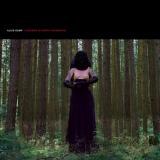
Alice Kemp is a British artist working with noise, performance, fetish objects, installation and many other forms of media. Throughout her work, she articulates a broken and illogical syntax of the subconscious through trance states, dreams, and disturbances. She has performed extensively, occasionally as an associate to the Schimpfluch-Gruppe of Swiss extreme aktionists.
It is a rarified violence that the Kemp invokes on her 9 Dreams In Erotic Mourning. Something disfigured. Something fucked. Something left behind. The subject matter of her investigations are deliberately inscrutable as she grotesquely amplifies a moment of terror, or fear, of sadness through pockets of piano melodies broken by psychoacoustic noise, razor-cut silence, ghastly vocalizations, crushed acts of physical aggression, and buckets of high-pressure suspense. Cryptic and oblique by design Kemp's work reads perhaps as a seance gone awry, certainly as private ritual made public, and as a transfiguration of literary body horror turned into a sonic nightmare that runs parallel to the works of Rudolf Eb.Er, Puce Mary, Sewer Election, and Luc Ferrari.
9 Dreams In Erotic Mourning was originally published as part of the instantly out of print boxset, On Corrosion - a 10 cassette anthology from 2019 that was housed in a handcrafted wooden box and featuring full albums from Kleistwahr, Neutral, Pinkcourtesyphone, Alice Kemp, She Spread Sorrow, G*Park, Relay For Death, Francisco Meirino, Fossil Aerosol Mining Project, and Himukalt. The collection also stood as the 50th release for The Helen Scarsdale Agency.
The Helen Scarsdale Agency News
- 1
Cindytalk has remained a majestic proposition over the decades, one marked by a continued process of disintegration and regeneration. Change has been a constant for Cindytalk, as has been the presence of the Scottish musician Cinder, who has fronted the project since the early '80s. The first Cindytalk albums embraced a dark theatricality of post-punk dissonance and abject rock deconstruction that coupled industrial dirges with Cinder's beatific vocals, these same vocals that were once plied to the earliest This Mortal Coil and Cocteau Twins recordings,forever binding Cinder to the 4AD lore. But even on those albums, Camouflage Heart and In This World, Cinder was pushing the band to embrace the studio as a tool for further abstraction of sodden drones, cobwebbed dark elegance, and decayed textures.
By the early aughts, Cinder had reimagined Cindytalk through the granular processes of digitalia with a handful of equally celebrated works of glitch-born expressionism for Editions Mego. Cinder explains that "those elements were growing roots under our sound and had started to organically change the shape of what we were doing. The fucked-up rock music was in retreat and the electro-acoustic abstractions were becoming apparent. Fast forward to the early part of the 21st Century and my first laptop. It seemed natural where I needed to begin that part of my new sonic journey. To further explore those and new territories. Sunset and Forever is intrinsically connected to what came before."
Sunset and Forever is a labyrinthine opus, one that returns to the themes of the sacred and profane that have rippled through all of Cindytalk's recordings, albeit in various guises. The opening track "Embers of Last Leaves" is a haunted piece of undulated, cyclical tones that entwine into a sorrowful chorale with Cinder's own voice. Thumps of electronic drum kicks and bass drops dot the apocalyptic menace of "Tower of the Sun" but serve not as a rhythmic grid, but as painterly noises that further disrupt and disturb the machined dissonance. A cinematic radioluminescence blooms from the tempered electronics within "For Those Eyes, Shadows Of Flowers." The finale "I See Her in Everywhere" bookends the opening number with a seemingly human chorus build from electronic tones cast in cathedral reverence. Sounds throughout may appear adjacent to those of Fennesz, Holly Herndon, or even Lovesliescrushing from time to time, but Sunset and Forever remains purely Cindytalk.
Cover designed by Chris Bigg, known for his iconic design work for 4AD. Mastered by James Plotkin.
Relay For Death is the noise project of the twin sisters Roxann and Rachal Spikula. Their hermetic works consistently reflect a bleak nihilism, all the while carving an autonomous space for survival as the rest of the existence crumbles. Previous works have been published by Hanson, No Rent, Total Black, and RRRecords.
The twins offered the consideration that "Mutual Consuming comes from a concept in the philosophies that underpin traditional Chinese medicine theory, where the two opposing states (yin and yang) are 2 states on a continuum and their interactions produce an infinite possible number of states of aggregation. Within this interplay, there is a dynamic balance that is maintained by a constant adjustment of their relative levels. So an excess of yin consumes yang and vice versa." We asked if this has anything to do with the concept of the Ouroboros, to which they responded, "we hadn't thought about Ouroboros, but the eternal cycle of things makes sense too. The gorge fest of existence." Does this relate to previous works? The twins concisely respond to that question in a rare interview in Untitled, "No."
Mutual Consuming is a dire piece of isolationist thrum, spectral caterwaul, and heavy gloom through an oblique and abstracted coupling of electronics, noise, and ominous field recordings. As immersive as Thomas Köner’s haunting ambience but fully entrenched in the industrial meditations of MB. Originally published as part of the instantly out of print boxset, On Corrosion - a 10 cassette anthology from 2019 that was housed in a handcrafted wooden box and featuring full albums from Kleistwahr, Neutral, Pinkcourtesyphone, Alice Kemp, She Spread Sorrow, G*Park, Relay For Death, Francisco Meirino, Fossil Aerosol Mining Project, and Himukalt. The collection stood as the 50th release for The Helen Scarsdale Agency.
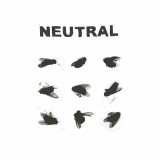
Neutral is the no wave / anti-rock duo of Dan Johansson (Sewer Election, Ättestupa, Amateur Hour, etc.) and Sofie Herner (Leda, Enhet För Fri Musik), both with deep connections to the Swedish noise scene. As Neutral, the two smear voice, guitar, organ, and smoldering noise into narcoleptic songs that rewire the strategies of Dome by way of Gate and Mars. Lågliv translates to ‘lowlife,’ an apt metaphor for neutral’s subterranean murk and shambolic discontent that they languidly manifest as a punk dourness emptied of all rock ’n’ roll theatrics. Desperate, demolished, and dejected.
Lågliv was originally published as part of the instantly out of print boxset, On Corrosion - a 10 cassette anthology from 2019 that was housed in a handcrafted wooden box and featuring full albums from Kleistwahr, Neutral, Pinkcourtesyphone, Alice Kemp, She Spread Sorrow, G*Park, Relay For Death, Francisco Meirino, Fossil Aerosol Mining Project, and Himukalt. The collection also stood as the 50th release for The Helen Scarsdale Agency.
- Ascend
- Drift
- Astray
- Barren
- Nyctophobia
- Wreckage
- Scavenge
- Animal
- Phantasmagoria
- Torment
- Perish
The intrepid composer and field recordist Jacob Kirkegaard is no stranger to perilous and hostile regions of the world. His 4 Rooms invoked the radioactive decay through the amplification of architectural resonance in Chernobyl, Ukraine; and he has ventured to the arctic environments of Greenland on a number of occasions to document that barren, icy territory. His recurrent use of shadow and mystery through his work both as metaphor and as extended sonic technique reflects the complex, existential conditions that cross-contaminate what we consider civilization and what we consider wilderness. Waste disposal, firearms, the decomposition of dead bodies, the eerie stillness of morgues. These have also been the source material in Kirkegaard's formidable work.
With Snowblind, Kirkegaard turns to history, and a poetic, failed attempt for a team of Swedish explorers to reach the North Pole by balloon in the late 19th Century. Perhaps driven by blind adventurism, perhaps consumed by his own delusions, S.A. Andrée launched this ill-fated flight in July 1897, registering only two days in the air before crashing into the ice and ultimately failing to navigate the frigid waters and ice floes. Yet documentation of their expedition - photographic, scientific, and diaristic - survived, to be discovered some thirty years after their deaths.
"I wanted to created a cold and hostile album, where there is no escape, no warmth and no happy ending," as Kirkegaard explains about Snowblind. "Yet, I wanted to leave out any immediate drama. It is the creeping shock, the icy feeling from realizing what has been lost and that there's no escape."
Yes, Snowblind is a very bleak album, but one that eschews the isolationist, long-form drone of conceptually similar works by Thomas Köner, Lustmord, Werkbund, and Lull with interconnected constellations of cryptic tone, thrumming reverberation, arctic bluster, and a plethora of harrowing sonic proclamations.
The drone-pop consternations of Ekin Fil emerge through vaporous tone and forlorn, distant song, as if plucked from a dream. These exist on their own accord, moving with their own internal logic of an emotion heaviness that belies any the passing observation of this as mere shoegazing ambience. Her songs, her compositions find themselves adjacent the fragmented etherealization of Elisabeth Fraser's voice from a forgotten scene of a particular David Lynch film, as a ASMR trigger for Proustian recollection. Something profound. Something hidden. Something desolately sad.
The Helen Scarsdale Agency has had the pleasure of witnessing Ekin's continued development, maturation, and growth as a composer, having released now seven of her magnificent, under-the-radar gems. Her slow burning, dejected ballads continue to draw from the deep well of sorrow, with varying frequencies and intensities of bitter light poking through. Loves lost. A world broken. All is not hopeless, but there is a considerable amount of shit to wade through.
Sleepwalkers embraces a familiar set of metaphors in her work, that of narcolepsy and the unsettled state of existence between sleep and being awake. But she stretches herself with a set of compositions that run parallel to the work of Tim Hecker as in the gravitation soft-noise of "Stone Cold" or to a slow motion serialism that punctuates the ambient crawl of her ambitious "Gone Gone." Recommended for fans of Grouper, Rafael Anton Irisarri, A.C. Marias, and Carla dal Forno.
In a recent interview, the California artist Jim Haynes was asked to name his top five noise albums. In quick fashion, he listed off Kill The King, Send, Desnos, Persona, and Carcinosi. Since then, he's equivocated on which albums to choose, but the artists behind such works remain as the adjacent signposts and landmarks to his own constructions of industrial noise. How those records connect to the output from Haynes is found in their unique combination of smoldering dynamism and psychological inquest. For over twenty five years, Haynes has been an autodidactic clinician into the processes of corrosion, decay, and rust, turning his attention away from visual practices and more to the metaphoric crucible of noise and sound. By now, it seems like a cliche that the pandemic changed everything; but since that viral encroachment, there is a noticeable shift in Haynes' work post 2020. It's more aggressive and yet more controlled: a rarification and telescoping of the research into decay for more potent noise and more potent metaphor.
The tools for Haynes' work remain limited: motors, electronics, shortwave radio, found objects, all applied with considerable pressure. Compositionally, Inauspicious is a very rough moire pattern from overlapping elliptical structures that can negate and obfuscate just as easily as they can compound and aggregate. The album surges and collapses upon the two twenty minute chunks of controlled noise that follow an internal logic that snakes from brooding power drones, spectral radio transmission, and an aktionist demolition cast upon metal, glass, and unfortunate wooden objects. Rupture and release. Purge and pulse.
She Spread Sorrow is the work of Italian industrialist Alice Kundalini. In her sparse and grimly atmospheric applications of noise, tone, and electronic sequencing, She Spread Sorrow expresses a volatile emotional core that speaks to abuse and repression with an unblinking candidness.
Orchid Seeds was originally published as part of the instantly out of print On Corrosion - a 10 cassette anthology from 2019 that was housed in a handcrafted wooden box and featuring full albums from Kleistwahr, Neutral, Pinkcourtesyphone, Alice Kemp, She Spread Sorrow, G*Park, Relay For Death, Francisco Meirino, Fossil Aerosol Mining Project, and Himukalt. The collection also stood as the 50th release for The Helen Scarsdale Agency, an imprint founded in 2003 and dedicated to post-industrial research, recombinant noise, surrealist demolition, existential vacancy and then some.
Kundalini’s signature whispered vocals once again beckons her audience closer on Orchid Seeds. Kundalini states that the album, “is about 5 different women of my family. Each track is about one of them with their difficult story and strengths. My family is totally destroyed now, no relation between anyone, but in the past there was a strong tradition of women with interesting personalities.” This sibilant allegorical history comes into focus amidst a claustrophobic and cinematic pall of dark ambient blight and death industrial torpor.
Murmer is the long-standing project for Estonian field recordist and composer Patrick McGinley, and in Tether, The Helen Scarsdale Agency welcomes Murmer back to our roster, over a decade since he graced us with his last production for the Agency. His field recordings often center upon the amplification and activation of resonance from a particular space, landscape, or object. Such sounds emerge from a condition as begin fleeting, inconsequential, or ephemeral and explode into that which alien, sublime, and profound. Here lies the tremendous prowess of the contact microphone, as wielded by an accomplished musician! The source material cited by McGinley includes cables, fences, wires, and vents.
There is a heft to many of these sounds as heard throughout all of "Taevast" with deep throbbing pulsations from arctic wind generating subharmonic patterns upon thick high-tension wires. Elsewhere the subtle dissonance from a rasping cooling fan blooms into a brooding ambience that is sublimely rich in its metallic timbres and complex reverberations. McGingley has long been an exemplary artist in the field of phonography even as he is less prolific than others. On Tether, he has produced a majestic if occasionally foreboding work on par with the mythic wire recordings of Alan Lamb, Jacob Kirkegaard's haunted resonance from Chernobyl, and much of the Touch catalogue for that matter!
Patrick McGingley on Tether:
In 2006, I made a collection of recordings at a mobile phone mast in Mooste, southeast Estonia. It is a guyed tower, 80 meters tall, affixed to 3 support points with heavy cables. I attached my self-made contact microphones to these cables with poster tack, and spent many hours over several weeks recording the various wind and weather variances (it was summer), and the birds that passed or settled on the tower or cables. This was one of my first visits to estonia, where i now live, and one of the things that marked me about that experience was the access: the tower had no fences or protections around it (I have not been back there recently to answer my own question of whether or not this is still the case); it stands in the middle of a field of tall grass along a dirt road in the countryside, just out of view of the few nearby houses, and during all the hours I spent there I was never disturbed or shooed away.
For more than 16 years, I have been thinking about this location and these recordings, and have made several attempts to work with them. I have used the sounds in installations a handful of times, and uploaded one short edit to the Aporee soundmaps, but have never managed to use them in any composed work. They always seemed too big for any structure I could provide them, whether I left them on their own, or partnered them with other sounds. Finally, in 2019, after putting them down and picking them up again repeatedly over so many years, they seemed to allow me in, although it took me another few years before they were happy with what I could offer. They stand now not quite alone - the majority of the layered sounds in the piece come from various edits of those cable recordings, but I added two other contrasting sounds, related to one another: one is snowflakes landing delicately on a plastic cakebox with microphones inside it, and the other is a frosted field of grass thawing on a lightly warming autumn morning (both these recordings can also be heard on their own on the Aporee maps).
Coming back to those cables brought to mind so many other wind-driven sounds that I had spent time with and recorded, but never returned to, that I began digging through my archives looking for them. I ended up with a pool of sounds from resonant wires, cables, fences, poles, fans, and vents, which became the basis for the 2nd work on this release. One of these sounds is among the first sounds I ever recorded, possibly within a month or so of buying my first microphone and minidisc recorder: the rhythmic fan of a beer cooler in a pub where I worked in North London in 1999. Other sounds in the piece include another phone tower, recorded on the northern coast of France in 2008, a telephone pole recorded in the Beaujolais region in 2010, the drone of ventilator fans at a factory in Tezno, Slovenia in 2012, an electric sheep fence in the Scottish borders in 2013, a hanging wire in a storage space in Rovaniemi, Finland in 2016, and, with no relation to cables or wind at all, calcium deposits being cleaned from the inside of an electric kettle here in Estonia in 2019.
I offer these two new pieces as my first solo publication since 2018, the first release on a physical medium since 2016. No one has ever accused me of working too fast, or being too prolific. I have a need, it seems, to leave a physical space of time around my work, before I can consider it 'finished'. Perhaps it is a simple need to forget how I did something, or that I did something; perhaps I have a need to be able to hear a work as a first-time listener would, before I can consider it ready for such an encounter. In some part of my mind I have to forget it before I can let it go. Well, I've just about forgotten that London beer cooler now, and that walk in the Beaujolais (with my father, who has since passed away), and that sheep fence next to our campsite in the borders, and that kettle that is now leaky. So I guess it's time.
Ekin Fil returns to the guitar on Dora Agora. Her earliest recordings, notably her debut on Root Strata, prominently featured guitar in this urgent expressions of a dreamy dreariness that immediately offered enthusiastic comparisons to Grouper. In her development as composer of ephemeral ghostliness for numerous albums as well as her scores to film soundtracks, that instrument has given way to keyboards, organs, synths, and various mood engineering devices, in her beautifully melancholy pursuits of an emotional emptiness through sound. Yet, the pandemic era gave Ekin pause to reflect on her creative process and she picked that instrument back up to create one of her greatest albums to date.
As direct and urgent as these songs can be, Ekin swaddles her acoustic guitar chords in soft-focus reverb and polyphonous shadow, colored with a judicious amount of shoegazing drone and somber atmosphere that speaks to her continued development as a composer. "Ghost Boy" in particular is a bittersweet, wistful tune whose arrangement harkens to Johnny Marr at his peak of effortless downer simplicity. "Farba" and "Yo Feelings" turn the emotional screws with soul-crush crescendos of vocal melodies that build upon Ekin's lonely guitar chords. Again, Grouper emerges as one of Ekin's closest neighbors, alongside Carla Dal Forno, Slowdive's Pygmallion, and Movietone.
"I really feel like I've gone back to a time when I was recording songs with a guitar and keyboard when I was very young. It's kind of like embracing Ekin from that period with my current ideas & mood. it's an homage, it's a wave, a hug from my present to my past…" (Ekin Fil, August 2022)
Kleistwahr is the solo project of Gary Mundy, the legendary power electronic and noise-rock musician who is a founding member of Ramleh and runs the highly influential Broken Flag label. Solemn drones and elegiac long-form passages gird Kleistwahr’s Winter, which often chimes, glistens, and glows through a unhurried constructs for organ, synth, guitar, and electronics. Yet Mundy pivots throughout with triumphant explosions of shrill noise, redlined overload, and harrowingly anguished vocals from the great unknown. Quintessential Kleistwahr.
Winter was originally published as part of the instantly out of print On Corrosion - a 10 cassette anthology from 2019 that was housed in a handcrafted wooden box and featuring full albums from Kleistwahr, Neutral, Pinkcourtesyphone, Alice Kemp, She Spread Sorrow, G*Park, Relay For Death, Francisco Meirino, Fossil Aerosol Mining Project, and Himukalt. The collection also stood as the 50th release for The Helen Scarsdale Agency, an imprint founded in 2003 and dedicated to post-industrial research, recombinant noise, surrealist demolition, existential vacancy and then some.
With the necessary reissue of Winter, The Helen Scarsdale Agency will embark upon the reissue of much of that material from On Corrosion.
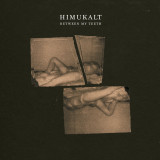
Dark, psychosexual electronics lurk between the teeth of Ester Kärkkäinen, the Las Vegas based artist also known as Himukalt. For the past six years, she has tirelessly pursued an avenue of bleak industrial productions that parallel the extremist works of Genocide Organ and Atrax Morgue. She has built a considerable reputation for uncompromising, full-frontal noise, releasing albums on Total Black, Malignant Records, Found Remains, and Foul Prey, amongst others. Between My Teeth was originally a cassette which came out in 2018 as a tiny edition on the Greek imprint Several Minor Promises and sold out immediately upon release. Himukalt returns to The Helen Scarsdale Agency with the necessary reissue of Between My Teeth as a vinyl edition with expanded artwork.
The album is a maelstrom of ill-tempered noise and blackened frequencies, sutured to a foundation of primitive, raw rhythms. Kärkkäinen cuts up her own voice with the digital equivalent of a rusted razor blade through her proclamations of misery, rage, and desire. The albums' opening track "Cataclysm" a turgid industrial production with Kärkkäinen adopting two distinct voices that, while they remain mostly indecipherable in content, the context presumes an inevitable, catastrophic and emotionally violent collapse in the relationship between two people. A tense rhythm clicks below the full spectrum bursts of harsh noise on "She Went Mad" followed by the smoldering power electronic moves of "I No Longer Belong" and "Not Proper." And the death disco groove of "Mine" is far more hellish than danceable through its scalded distortion and Kärkkäinen's vocal mantras about bodily self-loathing.
Another bold, declarative album in the ever impressive Himukalt discography. Remastered by James Plotkin and features a 12 page booklet of Kärkkäinen's signature collaged xerography.
In 2019, the power-acoustic musician Francisco Meirino presented A New Instability a commission for the venerable Ina-GRM in paris. Of course, this institution is the pre-eminent center for the research and study of electro-acoustic music dating back to founding of Groupe de Recherches Musicales in 1958 by Pierre Schaeffer. To this day, Ina-GRM continues to be at the vangarde of the electro-acoustic composition, and it is quite an accomplishment and very appropriate for Meirino to receive such a commission.
This recording for A New Instability condenses the 32-channel original piece down to a still very active stereo version. here, Meirino continues to amplify and refine his compositions that walk a fine tightrope between raw expressivity of brutalist noise and conceptual rigor of more academic pursuits. Such a work ranks him in with the likes of Zbigniew Karkowski, Dave Phillips, Puce Mary, and Illusion Of Safety.
Field recordings from a kendo dojo in his hometown of Lausanne, Switzerland cast a pugilistic, combative arch to these recordings which snap, burst, explode, and erupt with utterances of men and women engaged in hand-to-hand combat. Searing frequencies build, swarm, and amass out of these episodes rise to psychologically tense crescendo that rupture at their heights, quickly turning attention towards a violence that originates from within. It is as if the objective observations of those martial arts recordings are sublimated within a subjective experience of psychic unease, disquiet, and imbalance.
A New Instability is another magnificent chapter in the ongoing body of work for this accomplished composer of electro-acoustic noise.
In recent years, the Turkish drone-pop composer Ekin Fil (born Ekin Üzeltüzenci) has been refining her talents in the realm of the film score. Since her first recordings that were published by Root Strata and Students of Decay, she has always exhibited a preternatural ability to express the saddest of emotions through sound. Once channeled through the lens of a gauzy shoegazing smear of guitars and voice, she has peeling away layers of her ephemeral songs to reveal their emotional core. That compositional process that works so well for her award winning film scores informs the soft-focus tenebrous pieces of her 2020 album Coda.
It’s true that any number of these pieces on this album could announce the finale to an emotionally draining movie, but Ekin sculpts the entire album as a whole, dissolving one perfectly tempered piano motif, an impressionist ambient plume or a sibilant vocal melody into another. Just at the threshold of perception, she occasionally invokes cascades of distant noise that easily can be interpreted as the ominous premonitions for natural disasters - incoming storms, earthquakes, or tidal waves. This subtle disquiet amidst the introspective melancholy furthers the emotional weightiness of Coda.
Her somber, blissful compositions have considerable gravity of their own in the constellation of Grouper, Felicia Atkinson, and Harold Budd. Mastered by James Plotkin.
The globe-trotting Robert Millis returns to Helen Scarsdale for this beautifully fragile album of dissolved glass rendered as a collage of recontextualized minimalism. To astute listeners, Millis should be a household name due to his work in the unpredictably diverse Climax Golden Twins as well as his impeccable curations for Sublime Frequencies (collections include the Deben Bhattacharya: Men and Music on the Desert Road and Indian Talking Machine books). Hie previous solo work include Relief (released here on The Helen Scarsdale Agency in 2013) and The Lonesome High for the Sun City Girls’ Abduction Records in 2016. His scholarship into the hidden corners of music across the world has also earned him Guggenheim and Fulbright fellowships.
Related Ephemera is an album composed mostly from the hiss, the crackle, the surface noise of 78rpm shellacs and wax cylinders. “Horrifying,” Millis explains “is the concept to record collectors that vinyl degrades and can be easily damaged. however, initially records were considered ephemeral, especially 78rpm records. They were novelties. Fleeting. Entertainment.” Millis intends for the album to be a feedback loop whereby the patina of handling, playing, living with the record will circle back to the original source material. Furthering that metaphor, Millis amplifies and dilates feedback tones generated from his collection of vintage gramophones.
That said, Millis does cite the intrusion of exactly one field recording, a broken toy, and a few notes from a cello. But the construction of these rarified tones, crispy textures, ghostly rattles, and fluid resonance that ripples through all of Related Ephemera has its origins in the tactile nature of the vinyl medium. It’s hardly the stuff of sentimental nostalgia though. Related Ephemera is more an act of time travel, slipping backwards and forwards with the scratch of a needle (Watch out! What pre-recorded needle jump sound is not your turntable going haywire!). The emotional core to the album is that of a resigned melancholy, almost Bergman-esque in its starkness but not without a brief moment of dark humor.
Here is an album that aligns itself aesthetically with Nurse With Wound’s Soliloquy For Lilith, Philip Jeck’s more languid collages, and even some of Harry Bertoia’s sculptural atmospherics.
The vinyl was mastered and cut by Helmut Ehler at D&M Berlin, whose expertise was necessary given that part of the original compositions from Millis’ reworked surface noise were exceedingly problematic to cut. The D&M cut does temper the composition into a mysterious, diaphanous cloud; where the digital-only mastering provides a cascade of insects gnawing within your inner ear. Two facets. One piece of music.
- 1