After his latest ‘Youth EP’ that experimented with spacious vocal chops and whimsical soundscapes, Nocow returns with a relentless flurry of blows on the heavily computerized ‘Magnit EP’ released on npm. Featuring gloriously broken melodies and hard-hitting rhythm, Nocow explores the darker, more formulaic side to his sound. Brooding acid-infused synths shimmer across the four tracks, morphing between moods as the EP progresses. ‘Magnit S’ kicks off the EP with scattered bass hits, driving dark techno arpeggios, and a hint of footwork-esque percussion. The intense atmosphere is a relatively new direction for Nocow, straying from his more meticulous, introverted beats prior. ‘Kali’ incorporates warbled synth with a more subdued rhythm, playing with a modular sound and distant echoes of robotic vocals. This fragmented track is more akin to his 2018 sound of the Voda/Vozduh/Zemlya trilogy as the kinetics of sound play a strongly defined role in the overall sonics. ‘Sputnik’ commences with a blistering arpeggio of bit-crushed synth and chimes. The rocket-propelled pacing creates a frantic, yet ultimately controlled piece, worthy of a place in a club 300 years from now. Yet, after the frenzy comes the calm. The closing track ‘Extasy’ grinds the EP to a kaleidoscopic halt. Vocoder passages drift across the dense soundscape as Nocow transports you to an other-world, filled with spacey percussion. This closer is a well-deserved return to solid ground, following the perpetual trio of dark, yet utterly compelling techno pieces. Once again, Nocow exhibits his multi-faceted approach to electronic music that truly sets him apart.
Buscar:computer club
"What took you so long?" might be a valid question concerning the ten year gap between Zanshin's new album "In Any Case By Any Chance" and his first album "Rain Are In Clouds".
Of course it is a question that the Viennese musician has asked himself quite startled in his usual self-critical manner, just to realize at a closer look that it has not been a lack of creativity or laziness at least. He used the Zanshin moniker on four EP releases and several remixes, plus a game soundtrack. Not to forget all his output as one half of producer duo Ogris Debris (the album "Constant Spring" from 2016 and roughly two dozen singles and remixes) and the many, partly award-winning audiovisual installations and performances with Leonhard Lass as DEPART (depart.at). Furthermore he has also built two sound installations in 2021, "I Gong" at Elevate Festival and "Cymatic Sands" at Ars Electronica. In addition, Zanshin performs with the Max-Brand-Synthesizer from time to time as part of the compositions by Elisabeth Schimana, and together with label mate Dorian Concept he has also composed and performed the piece "Half Chance/Music for Moogtonium" for this unique instrument, built by Bob Moog himself.
Not spared by certain global developments of recent years, but rather invigorated by exploring his own resilience, Zanshin had a talk with Affine Records Operator Jamal in the beginning of 2021, speaking of future ideas and releases. And what was initially a single release spawned into a whole album in seemingly no time. An old skit ("Polar Polychrome") on the Roland MC-505 groove-box that had never really been forgotten, but was rather waiting patiently somewhere in the back of his mind, suddenly proved to be the initial spark for the album.
The term "Zanshin", roughly translated as un-focussed attention, is in fact more than just a pseudonym but rather a directive in the artists life. Zanshin really likes to go in several directions at once, kind of according to Wittgenstein's claim that "The world is everything that is the case.", to find out where his love for music might lead him this time. He also somehow went back to his roots with this album. Not necessarily in the sense of certain musical influences or genres, because then the album would be even more eclectic than it already is. More like a focus on the core values in the fabrication process of the music itself, the freedom to rather follow the structures and sounds than to shape them in a completely predetermined way. Somebody once called it, "to weave what the music demands."
In this regard, Zanshin often feels more like a sculptor and tries not toadhereto strongly to the rules of specific sub-genres of electronic music. Searching for sounds and designing them is one of the energies that fuels his interest the most, thus at the beginning of a lot of tracks there are small skits and ideas that have the freedom to grow in whatever direction.
Hence this album has no elaborate story to tell, there is no extensive "narrative" or big time "storytelling" at work. "In Any Case By Any Chance" is not a novel but rather a collection of short stories (which are certainly dense and have complex plots nonetheless). The result is a long-player where playful electronica, skillful songwriting, extrovert dance music and symphonic film music enter into a symbiotic relationship. Returning to another Wittgenstein quote, "Whereof one cannot speak, thereof one must be silent", the emotional impact of music is the main focus and the results can be quite solemn at times, but around the corner always lurks the next bone-breaking rhythm pattern and gnarly sound design.
The infamous saying, "writing about music is like dancing about architecture", is another brick in the wall of sound in Zanshin's approach to music. He rarely roots himself in traditions or uses them too overtly, he really likes to agglomerate sounds, to challenge the listeners. It seems like he tries to avoid classification on purpose, because he knows that everyone has their own perception anyway. The only thing that this music demands implicitly is a willingness to listen attentively.
Very dense, at times really heavy and massive, then again airy and playful. "Music for clubs that don't exist.", might be another fitting caption to describe this album, which lasts for a little more than an hour.
The opener "Heatseeker" rushes to a sudden head start with its steel pan extravaganza, tropical vibes meet a bass line drenched in electro funk, and electrified synth stabs support the declaration of love in the lyrics. Kind of Jamie XX meets Electro meets Diva House. The monster that is "Bronteroc Brawl" is up next, a serious test for the speakers and a wild ride with metallic, growling sounds. The aggressive sound design reminds of suspense ridden shark chases, vicious dogs and cunning dinosaurs, in any case a track for people who love a proper bass stomper.
A new approach for the "indie discotheque" brings the emotional roller-coaster "In Gloom" with snappy drums and hypnotic synth motives á la Alessandro Cortini, creating an epic atmosphere together with the multi-layered vocals. A psycho-acoustic treat is position 4, the crisp instrumental "Polar Polychrome", you could even go as far as calling this a Zanshin signature track. Like mentioned before, the roots of this track go back to 2002 and you can hear the unmistakable influence of beat wizards like Photek, a piercing bass line is supported by poly-rhythmic drums, while dense pads try to escape the claustrophobic lockdown mood of winter 2020/21.
Another round of intense pathos waits for the listeners in the ensuing track "In Search Of". Moderat say "Hello", a melancholy piano melody is rushed to a climax by a wild bass arpeggio and forceful drums, the desire for a perfect sunrise at the next after-hour to the max. Initially just an appendix to the preceding track, "Time After Thought" swiftly developed from a mere improvisation to an ambient epic with a croaking alien piano, as if Keith Jarrett were on his way to Alpha Centauri.
Up next is the first single "Because Why", a breakbeat driven, synth-heavy track with winged vocals and a popular film quote. The title refers to the movie "Alphaville" by Jean-Luc Godard, a dystopian science fiction film noir, in which an omniscient computer system named Alpha 60 is ruling society and humans can only say "because" but never "why". As if the gears of a galactic mechanism were spinning into motion sounds "Identity Slices". A raspy chord structure finds its counterbalance in a kind of stumbling, wonky beat, and Zanshin would never deny the huge influence that Autechre's sounds and structures always have had on his music. Micro- and macrocosm meet on the same level and this friction is also a metaphor for questions of identity and self-awareness, without using voices or lyrics.
Off we go into the IDM bubble bath of "Enzyme Enigma", the bass drum is stomping and a fizzy acid-line is twisting in all directions behind rolling dub-techno chords. "Corrosion Creak" is a kind of acoustic degradation process, the rave dogs are finally let loose and everything happens at once, funky synths shred, string sounds wail and then there is this bass that sounds like smashing a rusty metal plate in the junk yard with a vengeance.
Towards the end everything slows down a bit, the beat in "Whatever Words" is Warp school cerebral hop at its best and therefore loads of glittery, creaky sounds swarm out until the synapses are overloaded, cumulating in a mighty bass ending. Last but never least, "Rebus Redux" guides us into the limitless night sky, with long indulgent pads dotted by an aimlessly wandering piano, while a compact net of tamed resonances and meandering sub frequencies unfolds in the background, enticing navel-gazing imagination.
Lolina project emerged at a time when CDJs became standard in clubs and artists from many disciplines began exploring their possibilities. In Lolina’s records and performances, they are used as a live sampling tool allowing her to move between composition and improvisation. On “Fast Fashion”, discarded vocal takes and phone recordings made while watching videos online or walking down the street are re-sampled across long-form collages. “Mark Ronson’s TED Talk Intro (Using Computer Remix)”, restyles a lecture about sampling and constructed of samples into a track that can’t be contained by any of its elements. Relaxed beats break down into stuttering, jokes turn into abstract situations, and meaning is altered through repetition. With transitions between different parts defining the listening experience, “Fast Fashion” reveals a process by which one thing can be changed into another. “Fast Fashion” is Lolina’s fifth album and first working with Deathbomb Arc. Digital to be released on Oct 27th with vinyl to follow in early 2022 ~ both on pre-sale now. Lolina previously released music as Inga Copeland and was a member of the band Hype Williams between 2009 — 2013.
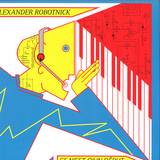
Yet another chapter in the ongoing Alexander Robotnick saga. Electronic wizard Maurizio Dami licensed his second single in 1983 on Materiali Sonori ‘club series’ Fuzz Dance. After the surprising and astonishing success of the debut - Problèmes D'Amour – Robotnick became a sort of cult figure even in the United States and soon was labeled as a forerunner of the electro movement.
When Mani Festo isn't designing the artwork for Club Glow - the collective he forms part of alongside Borai, Denham Audio and LMajor - or running his own imprint "Flightpath", he uses his DJ sets and production to pay homage to the soundsystem-oriented music that made him. A real artist of the moment, the past couple of years have seen Mani Festo get the recognition he deserves, with many citing his prowess in capturing the darkly seductive essence of hardcore's antecedents, creating something at once nostalgic and futuristic.
Those searching for this fine balance will not be disappointed by Pathfinder EP, the next instalment of Basement Trax: a series which focuses on club-fuelled Techno and Electro. "Powertriip" is a full-bodied electro slammer, coloured by the metallic textures of an industrial soundscape. The title track continues with the same high-voltage pressure, this time with hi-hats that give it double-time energy.
The B-side is about computer love: "Big Rooms" is driven by a highly-processed acid melody whilst "Auto Sequence" is a dizzying take on breaks with high-pitched arpeggios and deranged vocal chops that add to the track's eeriness.
Clear Vinyl
Music became an escape for Greta during lockdown, and her new songs tell us about the feelings of love and longing that became an essential part of the pandemic for the German, Copenhagen based singer-songwriter. The songs follow last year’s successful debut album ‘Ardent Spring’ and together they make up her new album ‘Forever We’ll Be Dancing’, which will be released on February 4th 2022
Like so many of us, Greta spent most of last year trapped inside her apartment. While some have been making puzzles or knitting sweaters Greta has been writing songs about love, euphoria and longing; longing for the clubs of Berlin, longing for social contact and trying to find a way out of an emotional darkness.
During the Corona lockdown, Greta found herself in a romantic symbiosis with her husband and though the isolation brought them closer, it was also a challenging time where Greta’s husband struggled with depression.
»Music became my escape and if I needed to take a break and connect with myself, I could disappear into my computer and write a lot of songs. That was a good thing. Difficult, but good. It’s extremely hard to be close to someone who’s in pain when you have to carry them because they’re not able to carry themselves. In that sense, lockdown has been a good thing. My husband needed me and because of the lockdown I didn’t have to worry about missing out on anything. I feel that I’ve reached a deeper understanding of his feelings because we’ve had time to talk about them«, Greta says.
»Zwei Herzen«
The bubble of love and depression became a source of strength and personal growth, but it also caused Greta to miss the world outside and her family in the small German town Husum. Because of this, Greta wanted to fulfill a wish she had kept for a long time – she wanted to write songs in her native tongue, German. This is why multiple of her songs carry titles such as ‘Nicht Allein’, ‘Genug’ and ‘Drei’.
»I’ve been crazy homesick and that has definitely inspired the album. I have not written in German before, so for me this was a way of connecting with my roots. I can listen to German with Danish ears now, because I’ve lived here for so long now, and it allowed me to use the language differently and more rhythmically«.
Gábor Lázár's colourful discography extends from sound art to his more recent dancefloor detonations. From his first release on Lorenzo Senni's Presto! label to his collaborations with Russell Haswell and his popular 'seizure inducing' team-up with Mark Fell entitled 'The Neurobiology of Moral Decision Making' to his last album 'Unfold' on The Death of Rave, where he balanced relentless, snappy rhythms and wonky melodic tones against more measured chords to create a deliciously fruity futurism.Gábor has now signed to Planet Mu for his new album 'Source' which moves forward with the dance music direction he started to formulate with 'Unfold'. Gábor first fell in love with electronic music simultaneously through dance music and it's IDM offspring, and also with harsher, noisier computer music on labels such as Editions Mego. This collection, which develops slowly over 8 tracks, works its way through his own take on these influences, moving across themes and loops as if each track is a different stage in a process. All these tracks sound incredible on a club sound system. The listener can hear nods to hoover bass and 2-step in 'Phase', or trance techno in ‘Excite', the dive-bombing bass of dubstep in 'Effort ' or the frantic techno influence of 'Route', emulated in the minimal forms Gábor has created with a sound artist's precision and a strict adherence to his vacuum-like grids. Gábor bends his sounds, abstracts them and re-contextualises them; basslines fire out of the grid at strange angles and squirm as if they've come alive, shards of melody shoot off at wild angles, attacking with drama and a thrilling sense of energy
ALTER- : A REACTION TO THE ALTERMODERNISM IN SOUND ART
For the Automatisme - Alter- album. I am inspired by how the art historian Nicolas Bourriaud defines the Altermodernism. Bourriaud understands the term "Alter" as a way to mean "other". The altermodernism would be another modernity that is different from the avant-garde modernism and post-modernism. More precisely, this is a new paradigm from the XXIe century with alternative ways to motivate artists to be more radical in art by traveling in the physical and digital world, by cutting the frontiers and by creating other time lines. I apply the "alter" subject to time and to landscape and those, to the rhythmic and the ambient glitch music.
1- THE ALBUM HAS A RHYTHMIC SIDE AND A LANDSCAPE SIDE.
1- a : The rhythmic tracks are named Alter-Rate. That means that I offer other types of rhythms by calculating beats with time rate experimentations. The form of the rhytmic tracks, expresses a course, a wandering, which, in the altermodern life, is not just in a standard 4/4 , or just grid based or non-grid based, but it's in a complex hybrid of all of those.
1- b : The ambient tracks are named Alter-Scape. That means that I offer another type of landScapes by a paused temporality and not by a random time or by the time of the nature. Alter-Scape tracks mimic the saturated globalized soundscapes of the XXIe century.
2- THE GLOBALISED AND SATURATED TIME
For Bourriaud, the artists respond to a new globalised perception. They traverse a cultural landscape saturated with signs and create new pathways between multiple formats of expressions and communications1. The Alter- album tracks have saturated rhythms Rates and static ambient soundScapes. The specific context within which we live is the age of globalisation2. In this album, it means that globalised or always evolving rhythm Rates are in constant movements and are also different every time an Alter-Rate track is exported or performed. On the other hand, a globalised landScape is an ambient track with a motionless temporality. In the era of the altermodern, displacement has become a method of depiction3. The movement of the sound in the Alter- album is two sound spaces. The first is the rhythms that make time movement become apparent and the second is an ambient paused or static time that makes possible to feel and to analyze the movement effect of our surroundings.
3- THE CONSTANT TENSION STATE OF ART
For Gilles Deleuze, art is in a constant state of tension, in as much as it oscillates between the poles of chaos and order4. The Alter- album is a tension between chaos and order in rhythmic beat tracks and ambient soundscapes tracks. It is a deterritorialization of the rhythms and the ambiences of today's natural and digital landscapes and it brings them into the computer glitch music format.
By pushing new softwares to their limits, I push at the extreme the software capacity to calculate and to generate sounds. The Alter-Rate tracks are experimentations with time rates and rhythms with the use of probability and artificial intelligence based sequencers. The partition signal starts from a master sequencer that gets into all instruments on a track. Each instrument receives this signal and modulates it with other sequencers that are each programmed differently for every instrument. Finally, all the instruments signals return to a master output that contains a stutter effect. This master channel is sequencing all other channels into one single rhythm. In short, a single rate merges and expands into a vast archipelago of rates and the transformed signal becomes a new single rate. The Alter-Scape tracks are experimentations with midi triggers that give the sensation of a timelessness. Multiple reverb effects are also routed into each other to create soundscapes of continuity. About the type of sounds created in this album, I do experimentations with deep frequency modulation synthesises (FM) on all Alter-Rate and Alter-Scape tracks.
I put a few layers in the tracks to be able to focus on the time space and perception. The tracks are generative and every parameter uses probabilities to be programmed. This is something that was not possible some years ago. The computers are enough powerful to generate that now. I export many times the tracks and i push the computers to their limits by making hard for them to calculate and to generate the tracks with a deep, a pointillist and an extreme software programming. These techniques do different versions every time that I export or perform a track and in my opinion, that opens a fresh and innovative way to do new experimental club music and ambient music. The computer has its own limits too.
Reviews in The Wire, Gonzo, A Closer Listen, Datacide, African Paper, Silent and Sound, and more
- KF61: Cru-L-T - Baby / Oh Yeah / Baby Breaks
- KF62: Kingsize & Vibena - Got To Have It / Hot Temptation / Now My Selecta
- KF63: Luna-C - I Got This / I Need You / The Light
- KF64: Luna-C, Jimmy J & Cru-L-T, Dj Ham - Piano Progression (Scott Brown Remix) / Ool Lortnoc (Ant To Be Remix) / It Would Be (Luna-C Remix)
- KF65: Dj Force & The Evolution, Future Primitive, The Trip - Fall Down On Me (Bunter & Sanxion Remix) / Ban This (Nicky Allen Remix) / The ‘Erb (Scartat Remix)
- KF66: Alex Jungle - The Need In Me / 5Th Season / I Cant Explain / Elevated
- KF67: Luna-C, Scartat, Gothika Shade - Ammo Bag (Luna-C Remix), Grave Of Fireflies (Luna-C Remix), Piano Possession, Technical Shmecnical
- KF68: 2 Croozin, Dj Poosie, Alk-E-D, Dj Force & The Evolution - Code Red (Fat Controller Remix) / Its Gonna Be (Justin Time Remix) / Shining Bright (Dj Jeph Remix) / High On Life (Saiyan & Cru-L-T Remix)
- KF69: Luna-C, Cru-L-T, Richie Whizz - Free As The Sky (Hyper-On Experience Remix) / Snow In Summer (Alex Jungle Remix) / Song Of Angels (Shadowplay Remix)
- KF70: Sanxion, Nicky Allen, Tno Project, Mannik - Waiting On My Feelings / All The Time / The Orphanage / Sounds From Hell
- KF71: Luna-C - Into Insanity / Back To Cause Mayhem / Black Static / Alice
- KF72: Idealz - Run The Tune / Icebreaker / War On Jungle
- KF73: Mannik - I Need A Man / Dream Logic / Computers Are Taking Over The World / Everything Is Getting Dark
- KF74: Alex Jungle - Dance & Hover / Believe In It / Mutant Effect / What Are You Made Of
- KF75: Future Primitive - Right Now / Double Axle / Safety Catch (Alex Jungle Remix) / Yellow Twinkie No 6 (Luna-C Remix)
- KF76: Shadowplay - Calling Me / I Need Time / Born Again / Angel
- KF77: Sanxion - Gettin It / The Science Of The Clams / Always Waiting / Scopin For Love
- KF78: Dj Ham - Most Impressive / The Chicken Tune
- KF79: Shadowplay, Ant To Be, Luna-C & Saiyan, Paul Bradley - 1234 / Demomorgon / My Kinda Rush / Fat Hands
- KF80: Luna-C & Saiyan - I Need You / No Errors / Old Skool Heaven
The Kniteforce Complete Collection Volume 4 does exactly what it says on the box, giving you the full Kniteforce Vinyl releases of the tracks from KF61-KF80, fully remastered, in both Wav and MP3 format. These tracks have NEVER been released on the digital stores, and until now have never been avaialbel in any digital format. All the tracks here are from the beginning of the new vinyl era, and as such feature some of the names that have made themselves in recent years, such as Mannik, Nicky Allen and Shadowplay, not to mention tracks from old skool masters such as Hyper-On Experience, Billy Bunter and The Fat Controller, right beside Kniteforce’s legendary roster of Dj Ham, Dj Force & The Evolution, Luna-C, Alk-e-d and many more…
Club / DJ Support
Jay Cunning, Ray Keith, Nookie, El Hornet, Billy Bunter, the Fat Controller, Liquid, Hyper On Experience, Glowkid, Slipmatt, Dj Jedi, Dj Luna-C, Dj Brisk, Jimni Cricket, Bustin, Sc@r, Doughboy, Saiyan, Dave Skywalker, Ponder and many others
Dublin’s Woozy label premieres on wax with Radial, the debut EP from newcomer Coe. 3 dubstep-informed club weapons b/w a percussive rework from Or:la.
The title track recalibrates mid-noughties FWD> pressure, suspending us in an E-licked smog before puncturing the rave-lry with thrusting bass stomps and fervorous IDM-adjacent drums for an electro-id crazed stomper. Say (KL Tribute) flexes Coe’s wub mechanics, presenting computerised sound chaos before dropping a half-step hungry wobble fest, mounting the pressure on the ‘floor to a near combustible, skanking peak.
On the flip, 403 slightens the pace for a chugging techno/electro zinger with a faint dembow shell, sounding like the soundtrack to a sinister salsa dance. Or:la’s drum-tastic Radial rework sees us out, conducting an orchestra of percussive pistons akin to a ravey engine room for a mid-tempo grooving killer.
This summer, multidisciplinary producer, designer and 3D artist Raynor de Groot serves up Future Static, his debut full-length on Atomnation as Coloray. More than simply a collection of music, the record will be presented in an all-new virtual space where each track is a portal to a different world.
Dutchman de Groot has proven himself as an accomplished conceptual artist who draws together many different creative fields. He has released everything from lush synth-pop to deep techno, and has real songwriting ability. 2019's 'Can't Stop' in collaboration with Eagles & Butterflies proved that as it crossed over multiple scenes and became one of the year's standout tracks thanks to support from heavy hitters as diverse as Hunee and Four Tet. Âme & Dixon have also regularly supported Coloray's music and asked him to release 'Gazing Eyes' on their Innervisions label.
Two years after his Real Life Cinema EP on Atomnation, Future Static finds de Groot open a new chapter that explores a more conceptual sound. The album "translates the concept of man and computer creating a new reality where logic and emotion seems to be at odds with one another." Its 12 tracks have club-ready grooves, but also exquisite synth designs that are edgy and uptempo. They will be translated to a live show and interactive music experience in VR, on your phone and desktop. In the show, online visitors will be able to get lost inside the mind of an AI and watch and interact with a Coloray performance.
Presented with an artfully designed gatefold sleeve, Future Static is a groundbreaking project from Coloray that pushes creative boundaries while offering an immersive listening experience.
If Shelter swam through the serene side of the Library experience on GBR016, CV Vision blasts off in the opposite direction, riding an explosion of funk breaks and frazzled synths into the event horizon on his retro-futurist opus ‘Insolita’.
As contemporary life accelerates way past peak-weird, CV Vision leans into uncertainty and leaves Earth in the rear-view. Strung out on Simulacron-3, World On A Wire and Omaggio Ad Einstein, the Berlin-based musician imagines his own Brave New World, an alternate eXistenZ in a secret simulation.
Using the space age obsession of the Italian libraries as a launch pad, Dennis Schulze slathers a sonic storyboard with ferocious percussion, psychedelic fuzz and the pastoral electronics of Germany’s Kosmische movement. But this is less Can, more uncanny - and Schulze perfectly renders the cognitive estrangement of a simulated reality through his adventurous production. The monolithic live drums, recorded in a Neukölln garage on a battered Soviet kit are smeared with tape hiss, compressed to death and fired through LFOs, re-materialising on record in impossible scale. Time slips out of joint under the wow and flutter of the reel to reel, drum computers add digital interference to organic rhythms and the unfaltering slew of the 303 lends the hallucinatory thrill of the club sound system to an already psychedelic affair.
As Schulze’s imagination runs free, we’re taken through epic space battles and narrow escapes, moments of reflection and affection and a final resolution, all expressed through a dexterous control of movement and mood. For every explosion of break-fuelled adrenaline, there’s a cruise into cryo-chamber music and holodeck exotica. For each neck-snapping blast of acid funk, there’s a zero gravity lullaby waiting just around the corner.
So put isolation on ice and surrender to the strange, this is a trip you don’t want to end.
With his debut release for Peckham club and label institution Rhythm Section International, Hackney-raised Jerome Thomas is declaring the dawning of a new age for British soul music.
Jerome’s school was a home filled with non-stop music; whether that was bootleg CDs of Rare Groove from East London’s Sunday markets to late 90s R&B on The Box or family favourites; Marvin Gaye, Curtis Mayfield, Al Green, Chico DeBarge, Jill Scott. He learnt his prodigious vocal craft of ad-libs and harmonies by listening to Brandy’s ‘98 LP ‘Never Say Never’ on repeat.
Working with a live 6 piece band of assorted ages and musical backgrounds from rock to classical jazz, Jerome’s sound is a 180 degree turn from the direction of travel of UK R&B which has trended towards producers tracks made inside the computer. Jerome composes the pieces, then allows space for interaction with his long term musical collaborators. The ‘organic decisions’ open up the scope of his music as they jam and record. The result is a sound that could been made in the 70s, the 90s or the 00s. He’s the new blood of the sophisticated British sound that traces back to artists like Mica Paris, Soul II Soul and Omar.
For Jerome, music has literally been a life saving vessel for self expression. Like 1% of the population, he has a stutter, which disrupts the fluent flow of his speech. The stutter disappears when he sings, freeing his voice as it’s transformed into an instrument. As an introverted, intuitive Pisces, the songwriting process lets him explore and express his internal cosmos; “a lot of my songs are like diary entries addressed to people I haven’t been able to talk to or speaking about desires I am too embarrassed to talk about”. Jerome describes his sound using the acronym FOE, standing for “Freedom of Expression” and “Fusion Of Everything”. His music is a space for him to dissolve boundaries and binaries.
“As soul beings we are all a mixture of masculine and feminine; a mixture of our Mum and our Dad”. His fine falsetto explores a register that can read as masculine or feminine. The romantic story that runs across the two vinyl sides of “That Secret Sauce” is told without specifying a gender point of view. As Jerome says “we all experience the same thing with romantic situations, so I didn’t want to pin it to one side”. Like many of the great soul records, a close listen to “That Secret Sauce” reveals its romantic narrative; from first meeting to sexual infatuation to the dissolution of the affair, the breaking up and the moving forward - keeping your energy clear. It’s a tale as old as time, retold.
Drug Store Romeos formed at college in nearby Farnborough when childhood friends Jonny (Gilbert) and Charlie (Henderson) pinned an ad about finding a bassist for their new band to the school’s notice board – Sarah (Downie) replied and quickly proved herself a better vocalist than either of them. The trio spent the subsequent 24 hours discussing their love of Stereolab over messenger and watching Portishead and Mild High Club videos in the college’s computer lab. The band soon cut their teeth playing live at college, at Guildford Boiler Room and Aldershot West End Centre, rather than the familiarly trodden paths in London although they did frequent Brixton Windmill as often as three times a week at one point; carrying all of their equipment back to Fleet by train as none of the band were old enough to drive. The 3am walk home from Fleet station, with amps and flight cases slung over their shoulder, would become a rite of passage; the quiet countryside influencing their hushed atmospheric sound and nocturnal aesthetics as much as their shared affection for Suburban Lawns, Broadcast, and Tom Tom Club. Lyrical abstractness / concrete meaning. Danceability / lyingdownability. Minimalism / fullness. Introspective melancholy / playfulness. Lo fi / hi fi. Drug Store Romeos play with the senses and flip the expectations, finding the sweet spot every time.
Tape
Tekanan is the full-length debut of Melbourne-based Indonesian-Australian drummer and sound artist, Rama Parwata. A thorough exploration of rhythmic capabilities and percussive improvisation under ever-shifting timbral and stylistic environments, Tekanan is Parwata’s examination and documentation of his vast musical influences in electro-acoustic improvisation, Indonesian gamelan music, free jazz, electronic music, R&B, and noise music, whilst still maintaining an entirely unique non-idiomatic musical voice. Tekanan sees Parwata experimenting with not only the drum kit, but additionally implementing no-input mixing boards, musique-concréte sampling techniques, junk percussion, electric guitar, and computer music production to create a relentlessly metamorphosing soundscape that abruptly, yet seamlessly oscillates between ethereal ambiances to turbulent barrages of rhythm and noise through five unique movements.
Aptly named after the Indonesian word for pressure and stress, Tekanan was composed by Parwata with the intent of it being a listening experience which would pressure the listener to have no clear indication of the direction of the music and where it will ultimately settle, leading the listener on a sinuous, yet intriguing aural journey. This title additionally applies to the pressure of the challenging nature of the music, in a performative sense, which pushed Parwata to his physical and mental limits to perform and compose.
“As cliche or banal this might sound, I tried to make a record that was purposely made to be hard to put into a box. I didn’t want to make a “drumming” record or a noise record or anything of the type, but a record that just contained "good” music (or what I constitute as being good). Many aspects of my musical life were injected into this release: gamelan music (the first music I was exposed to), noise, hip-hop, free-improvisation, Xenakis, jazz, electronic music. Ultimately this record is a homage to those musical influences.” - Rama Parwata
-
An active figure in Australia’s experimental music and art scenes, Parwata has worked with the likes of Marco Fusinato, Robin Fox, and Robbie Avenaim, and choreographers Stephanie Lake, Juliet Burnett, and Melanie Lane. He is also a member of seminal long-running Melbourne Doom Metal band, Whitehorse.
As of 2019, Parwata has been a co-curator and committee member of Melbourne’s legendary concert series, Make It Up Club, which has been presenting weekly avant-garde improvised performances since 1998.
Marcus Schmickler's music is designed for multi-channel sound projections and references German electronic music tradition, spectral music, experimentalism as well as 1990s club music. His artistic practice explores avant-garde trajectories in electronic music composition, formal systems, sonification and psychoacoustics. EMEGO 296 features two new major works from this audacious sound explorer.
Sky Dice / Mapping the Studio premiered at Donaueschinger Tage fur Neue Musik 10.20.2018 having being commissioned by SWR and realized at the Experimentalstudio (EXP) in Freiburg. This is a work for ARP 2500, Publison DHM89B, Publison Infernal Machine and Computer. Taking cues from Bruce Nauman's Mapping the Studio I (Fat Chance John Cage) (2001) the piece draws a fragmented acoustic map of the SWR facility itself; the studio serves as a source-model for the sonic display of historical signal flow graphs. Various acoustic and psychoacoustic effects come into play including the Larsen effect, as well as Style Transfer and Topological Sonification. The result is a daring and dizzying display of disorientating audio. Sound moves in most unusual ways, rising and falling simultaneously, appearing and disappearing like apparitions, nothing here behaves in expected ways. To paraphrase Albert Einstein's now famous quote regarding quantum mechanics, this is spooky audio at a distance.
Fortuna Ribbon is a selection of sonic material that emerged from a research based on how DPOAEs (Distortion Product Otoacoustic Emission) can be designed in the context of musical frameworks, augmenting the compositional pallets in regard to spatial hearing. In this manifestation, the materials are presented without context. The resulting emissions from the ear that are excited in varying ways from the 6 examples on display here. Playback in undisturbed acoustic environments is recommended at >82 dB/A.
Schmickler's ongoing investigation of sound matter conjures impossible audio that delight's in the extremity of form and resulting effects on the listener. Schmickler's audio invocations explore the capabilities of contemporary technology resulting in dizzying new worlds of sound.
Thanks to the Experimentalstudio crew, Detlef Heusinger, Björn Gottstein, Julian Rohrhuber and Peter Rehberg.
- A1: Engineering Systems
- A2: The Latent Space
- A3: Speech & Ambulation
- B1: Thousand To One
- B2: Walking & Talking
- B3: Youmachine
- C1: Doublekeyrock
- C2: Machine Rights
- C3: Go Tick
- C4: The Fear Of Machines
- C5: Artificial Authentic
- C6: Machine Perspective
- C7: Cut That Fishernet
- D1: Tools Use Tools
- D2: Loose Tools
- D3: Seven Months
- D4: Paymig
- D5: Borrow Signs
- D6: New Definitions
- D7: New Life Always Announces Itself Through Sound
Mouse on Mars, the Berlin-based duo of Jan St. Werner and Andi Toma, approach electronic music with an inexhaustible curiosity and unparalleled ingenuity. ‘AAI’ (Anarchic Artificial Intelligence) takes their fascination with technology and undogmatic exploration a quantum leap further.
Emerging from a primordial ooze of rolling bass and skittering electronics, hypnotic polyrhythms and pulsing synthesizers propel the listener across the
record’s expanse. Hidden in the duo’s hyper-detailed productions is a kind of meta-narrative.
Working with AI tech collective Birds on Mars and former Soundcloud
programmers Ranny Keddo and Derrek Kindle, the duo collaborated on the creation of bespoke software capable of modelling speech; text and voice from writer and scholar of African Studies Louis Chude-Sokei and DJ/producer Yağmur Uçkunkaya were fed into the software as a model, allowing Toma and Werner to control parameters like speed or mood, thereby creating a kind of speech
instrument they could control and play as they would a synthesizer.
The album’s narrative is quite literally mirrored in the music - the sound of an artificial intelligence growing, learning and speaking. This exploration of artificial intelligence as both a narrative framework and compositional tool, allowing the duo to summon their most explicitly science-fiction work to date. Original artwork by Casey Reas, inventor of the computer graphics language Processing.
Recently, Mouse on Mars received the 2020 Holger Czukay Prize for Pop Music.
Mouse on Mars have been regularly streaming performances throughout 2020, partnering with organizations like Goethe-Institut, Haus der Kulturen der Welt, Conditions of a Necessity and others and will continue these in 2021.
‘AAI’ is available on grey or black double LP packaged in a single sleeve with full colour insert / lyrics. CD comes with 8-panel poster booklet.
“Andi Toma and Jan St. Werner continue to create soundscapes that blur the line between programming and live musicianship, and sometimes between Earth and outer space.” - AV Club
“Enthralling and impossible to categorize.” - Pitchfork
“Sustained and ephemeral electronic sounds conjure unearthly open spaces… It’s not a song; it’s sound as a temporal phenomenon, a few minutes of sculpted attention.” - The New York Times
Repress
Alexander Robotnick (aka Maurizio Dami) is an Italian electronic musician. He made his debut on the Italian music scene as the founding member of Avida, a dance-cabaret band featuring Daniele Trambusti and Stefano Fuochi.In 1983 he attained international popularity with his track Problemes d'amour, published first by the Italian label Materiali Sonori and then by Sire-Wea. Problemes d'amour went on to become a cult track of the disco scene. It became quite an import hit in America's underground club scene, and sparked the mini-LP Ce N'est Qu'un Debut that same year (originally released on Materiali Sonori in 1984 (Italy). It consists of 6 captivating tracks including the hit Problemes d'amour as well as the track Dance boy dance which has appeared on other cult disco compilations.
- Engineering Systems
- The Latent Space
- Speech And Ambulation
- Thousand To One
- Walking And Talking
- Youmachine
- Doublekeyrock
- Machine Rights
- Go Tick
- The Fear Of Machines
- Artificial Authentic
- Machine Perspective
- Cut That Fishernet
- Tools Use Tools
- Loose Tools
- Seven Months
- Paymig
- Borrow Signs
- New Definitions
- New Life Always
- Announces Itself
- Through Sound
Mouse on Mars, the Berlin-based duo of Jan St. Werner and Andi Toma, approach electronic music with an inexhaustible curiosity and unparalleled ingenuity. ‘AAI’ (Anarchic Artificial Intelligence) takes their fascination with technology and undogmatic exploration a quantum leap further.
Emerging from a primordial ooze of rolling bass and skittering electronics, hypnotic polyrhythms and pulsing synthesizers propel the listener across the
record’s expanse. Hidden in the duo’s hyper-detailed productions is a kind of meta-narrative.
Working with AI tech collective Birds on Mars and former Soundcloud
programmers Ranny Keddo and Derrek Kindle, the duo collaborated on the creation of bespoke software capable of modelling speech; text and voice from writer and scholar of African Studies Louis Chude-Sokei and DJ/producer Yağmur Uçkunkaya were fed into the software as a model, allowing Toma and Werner to control parameters like speed or mood, thereby creating a kind of speech
instrument they could control and play as they would a synthesizer.
The album’s narrative is quite literally mirrored in the music - the sound of an artificial intelligence growing, learning and speaking. This exploration of artificial intelligence as both a narrative framework and compositional tool, allowing the duo to summon their most explicitly science-fiction work to date. Original artwork by Casey Reas, inventor of the computer graphics language Processing.
Recently, Mouse on Mars received the 2020 Holger Czukay Prize for Pop Music.
Mouse on Mars have been regularly streaming performances throughout 2020, partnering with organizations like Goethe-Institut, Haus der Kulturen der Welt, Conditions of a Necessity and others and will continue these in 2021.
‘AAI’ is available on grey or black double LP packaged in a single sleeve with full colour insert / lyrics. CD comes with 8-panel poster booklet.
“Andi Toma and Jan St. Werner continue to create soundscapes that blur the line between programming and live musicianship, and sometimes between Earth and outer space.” - AV Club
“Enthralling and impossible to categorize.” - Pitchfork
“Sustained and ephemeral electronic sounds conjure unearthly open spaces… It’s not a song; it’s sound as a temporal phenomenon, a few minutes of sculpted attention.” - The New York Times