Montreal-based producer & DJ Slick Shoota brings us Function, his debut LP and first solo release on the Teklife imprint. A native of Norway known for his renowned Oslo club night Ball Em Up, he's been a member of the elite crew since 2015, contributing tracks to the label's compilations such as On Life Vol. 2 and VIP Trax. Using a unique palate that combines both traditional footwork drums and eclectic otherworld sonics, this album expands on the signature sound he's been brewing during the course of his career, celebrating his longtime love of the Chicago soundscape, with a healthy helping of UK rave, jungle, and vibes from other fast paced club realms. Slick starts the record off with Hovercraft, a big burly mutant rap beat riding a glowing titanic wave of jungle subbass, with vicious hi-hats stabbing through the mix. Desire Path follows with hysterical horns cruising along a stampede of erratic Chicago percussion. A glitchy, malfunctioning computer meets drumline stomps on See Me Flex, resulting in a psychotic, yet psychedelic sci-fi soundscape. Ultra-distorted hardcore kicks open up Jellyneck, dropping straight into a dungeon of ghostly vocals and headlong toms. Warehouse 2K opens up the B-side with R&B chops and lasers floating on a charming cloud of pulsating pads. Mad doppler sirens loop around your head on Delahaze, as distant clangs and crashes fight an impatient, throbbing bassline. Classic rave atmospheres are met with Slick's elegant sound design on MTL Hardcore, his ode to his adoptive city. The album closes off with Special Tek, channeling the signature quirky drum sounds of the late DJ Rashad over a pounding, fast paced house beat, a wonderful nod to the Windy City and its influential sonic culture. Carving out his own sound from the legacies of Chicago, the UK, and other underground club hotspots, Slick Shoota has found his own recognizable voice within these realms of dance music, and this LP serves as documentation of that solidified voice. Years of studying the masters and immersing himself with their work has clearly paid off, and he's respectfully taking these sounds he loves in exciting new directions. Bridging gaps both historical and geographical, Function marks a pivotal point in his career, and is clear evidence that Slick Shoota is vital member of the legendary Teklife family.
Search:computer club
Over two years in the making, and it’s finally here. Amsterdam based, brand new old-school label “Betonska” kicks off with this highly diverse release for the selector, collector, radio host and club DJ.
Crisp instrumentation, tight retro drum computer programming and propulsive danceable bass lines are what you will find here. The Amsterdam based label will be focusing on previously unreleased and tough-to-find material from the 80s and 90s – all re-mastered, officially licensed and in collaboration with the original artist. In addition to the original material an occasional modern twist will be given by contemporary artists who cherish that signature sound.
The first release is an alternative issue of Flo Sullivan’s “Higher” release, originally recorded in 1984 in the world famous Amazon Studios in Liverpool and released in 1985. On the A-side both the 12” and the 7” version of the hard-to-get, firm synth-pop track “Higher” will be pressed on a loud 45rpm vinyl. The 12” version is the (bass-)heavier one, while the 7” version sounds more “organic” with an extended intro and an added horns part. The tracks on the A-side have been pressed before and are made available now again for the wider public, giving those tracks the recognition and attention they deserve.
The B-side focuses on previously unreleased original downtempo material by the same artist but released under her real name: Gayna Rose Madder. This, accompanied by a refreshing club-ready remix of one of those tracks by Vienna’s top-notch selector, producer and Neubau label owner: Heap.
Neither of the two original tracks “Over” and “Element” have ever been released on vinyl before, up until now. “Over” was written and recorded in 1983 in Splash Sound Studios in Liverpool. A beautiful melancholic synth-pop track, which was meant to be released, but unfortunately never saw the light of day. At the time it was recorded Gayna left her band “Shiny Two Shiny” and therefore needed a new deal from a different company for her solo releases. But by the time she found the right one, many newer songs needed release. Much later, in 2005, Gayna decided to self-release “Over” on a compilation CD to sell copies online.
“Element” is a spoken-word poem accompanied by a fire-crackling tribal kind of rhythm. It was written for a musical play and recorded in Sparks Studio Liverpool in 2004 and has never officially been released before. (For a short period it was available on a self-released CD on Gayna’s website; a compilation of the songs written for one of her musicals).
And last but not least, the icing on the cake is Heap’s remix of “Element”. He translated this spoken word poem into a refreshing 90s-style and danceable club-track to complete the diversity of Betonska’s first release. A chugging acid bass, breakbeat rhythms, crisp claps and sharp snares and a screeching lead synth to get you screaming on the dance floor.
Unbegrenzt is the third in an ongoing series of archival records of the unheard music of Swedish composer Catherine Christer Hennix, co-released by Blank Forms Editions and Empty Editions. It follows Selected Early Keyboard Works and Selections from 100 Models of Hegikan Roku (named the #1 archival release of 2019 by The Wire), in addition to a two-volume collection of Hennix’s writing titled Poësy Matters and Other Matters.
Recorded in February of 1974 and featuring Catherine Christer Hennix (recitation, percussion, and electronics) and Hans Isgren (bowed gong), Hennix’s realization of Karlheinz Stockhausen’s “Unbegrenzt” (German for “unlimited”) from Aus den Sieben Tagen is an elaboration both rigorous and radically different from the canonical 1969 recording issued by Shandar. The collection of 15 text pieces written in Paris during May of 1968, Aus den Sieben Tagen, denies its performers notated direction and instead provides poetic cues that hinge upon Stockhausen’s conception of “intuitive music,” a Eurocentric perspective on improvisation antithetical to the vernacular forms Hennix had engaged with as a young drummer performing in Stockholm jazz clubs with musicians like Bill Barron, Cam Brown, Hans Isgren, Lalle Svenson, Allan Vajda, Bo Wärmell, and many others. While both Hennix and Isgren saw the formal prospect of Aus den Sieben Tagen as a productive development of and beyond La Monte Young’s event scores, she here steadfastly counters his rationalization of intuition with the Principle of Sufficient Reason. (Cf. Brouwer’s Lattice.) Eschewing the busy, conservatory-addled lapses into idiomatic citation of Stockhausen’s 1969 recording, Hennix’s alternative realization of the “Unbegrenzt” score’s instructions to “play a sound with the certainty that you have an infinite amount of time and space” is based on her concept of Infinitary Compositions, the trademark of her ensemble The Deontic Miracle which, at one time, considered adding Stockhausen, La Monte Young and Terry Jennings scores to its repertoire. Taking a mature, minimal iteration of Stockhausen’s compositional method of “moment-forming” to heart, her version’s dark, controlled feedback and amplified bowed gong subtly shift through an immanent sequence of formative moments, step by step. Its bubbling computer noise, percussion, and repeated ominous transient sounds of temple blocks over the bowed gong terminate with the integrated recitation of exotic text fragments from Hevajra Tantra which faithfully take Stockhausen’s score into deeper vistas of the unconscious and a more devastating opening to the unlimited time and space of a dreaming mind.
Audio restoration and mastering by Stephan Mathieu, with an essay by Bill Dietz.
Catherine Christer Hennix (b. 1948) started her creative life playing drums with her older brother Peter, growing up in Sweden where she heard jazz luminaries, such as John Coltrane, Eric Dolphy, Dexter Gordon, Archie Shepp, and Cecil Taylor perform from 1960 to 1967. Directly after high school, Hennix went to work at Stockholm’s pioneering Elektronmusikstudion (EMS), where she developed early tape music, incorporating computer generated speech done at the Royal Technological University (KTH), where she was an undergraduate student. After traveling to New York In 1968, she met artists Dick Higgins and Alison Knowles who invited her to stay at the Something Else Press Town House where she had the opportunity to meet, among others, composers John Cage, James Tenney, and Phil Corner. During the following years she developed fruitful collaborative relationships with many composers in the burgeoning American avant-garde, including, most significantly, Henry Flynt and La Monte Young. Young introduced Hennix to Hindustani raga master Pandit Pran Nath and she would later study intensively under him as his first European disciple. While Hennix continued to make music performing alongside Arthur Russell, Marc Johnson, Henry Flynt, and Arthur Rhames, she also served as a professor of Mathematics and Computer Science at SUNY New Paltz and as a visiting Professor of Logic (at Marvin Minsky’s invitation) at MIT’s Artificial Intelligence Laboratory. In recent years Hennix has led the just-intonation ensemble the Chora(s)san Time-Court Mirage, which has featured musicians Amelia Cuni, Amirtha Kidambi, Chiyoku Szlavnics, Hilary Jeffrey, Amir El-Saffar, Benjamin Duboc and Rozemarie Heggen. She currently resides in Istanbul, Turkey pursuing studies in classical Arabic and Turkish makam.
Oops, sorry, Ghost Wavvves broke the Internet: Here is “Internet Club” his debut full-length album. Part of Monster Jinx since 2015, Red Bull Music Academy in 2016, Ghost Wavvves is now revealing all the secrets of clear and deep web in this work. With features from Tokyo Wanderer, Simpig, No Future and Mike El Nite, “Internet Club” comes up with an exclusive and specially prepared vinyl edition.
In fact, this “club” brings together the best and the worst of the Internet: bots, spam, popup ads, soft(ware)gore, and everything you didn’t even know you could find in the depths of the World Wide Web.
Please check your connection. You are now part of the “Internet Club”. And you already know: what goes to the Internet...stays on the Internet
Outfitted with anthemic romps, tongue-in-cheek pastiches, and percussions that pivot from rolling adventures to rain hitting the windowpane, Intimacy's 'Across the Bridge' marks the artist's fifth release on vinyl and first release on Bouquet.
A grab bag of fun, dancefloor-ready tracks written across 2019, the EP delivers his aesthetic of old computers, sci-fi movies, and science class educational videos configured into deep, spacey line-toting bedroom techno and melancholic house.
The title track features a catchy electroclash-esque (!!!) saw wave bassline, complete with emo Roland D50 strings and bells, all laid over a very beefy electro beat. It crossbreeds a Drexciya strain of low-end thump with a chewy, Eurotrash bassline evoking that time you lost your wallet at Tresor in '98. Strings and bells from the Roland D50 introduce the same euphoric high found in most of the products crawling out of Perdue's lab these days.
'Angelo's House' is a full-forced banger built around a well-traveled sample of Angelo Badalamenti's theme from Twin Peaks, recorded from an Intimacy live set early last year.
The flipside leads with the spiritual acid techno masterpiece 'Datalore 66'. Bubbling basslines hit a boiling point when placed in sequence with flutes showing genetic linkage to the Hartnoll family. Highly reactive material.
'Eternal September' opens a portal to the earliest hours of morning via synthesis of swirling pads and snapping drums. Closing the EP in introspective fashion, the track shows just how much emotional range Intimacy can pull out of decades-old disciplines.
ABOUT THE ARTIST
Parks Perdue is a Memphis-born electronic musician. A culmination of internet research and home listening in the club-barren Tennessee city, his style draws from stoned out Dutch West Coast concept albums, video game soundtracks, and old-school midwest house and techno. Perdue made his vinyl debut under the alias Intimacy in 2016 on the short lived UK, DJ Haus-run label Vector Works. Perdue is now based in Los Angeles, California.
- A1: Severed Heads - Lamborghini (Petrol 1982)
- A2: Marco Bernardi - The Light Beside The Hall
- B1: Object Blue - Even In You
- B2: N Y House'n Authroity - Apt. 2B
- C1: Computer Says No - Grab And Reform
- C2: Mount Kimbie - Southgate (Dj-Kicks)
- C3: Aleksi Perälä - Uk74R1512110
- D1: Via App - Chatter
- D2: Taz & Meeks - Obviously
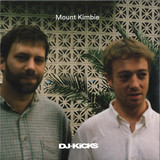
Mount Kimbie take the reigns of the DJ-Kicks series with a 23 track mix that includes one of their own new exclusives. Due for release on 28th Septem- ber, it's a snapshot of exactly what the UK duo sound like in the club right now and is accompanied by a DJ-kicks tour that takes the pair to DJ and live dates all round the world.
Calum Gunn has spent the past few years becoming a key figure in the European electronic avant-garde. As well as releasing his own music through labels like Entr'acte, FLUF and Tsuku Boshi, the Berlin-based Gunn also helms Conditional Records, one of the most forward-thinking computer-music imprints to emerge in recent times.
Gunn's Addenda EP, his debut drop for Central Processing Unit, contains some of his most dynamic work to date. While his commitment to experimentalism remains, these four tracks represent a clear shift in focus for Gunn - namely that, for perhaps the first time in his career, he is making music that is club-friendly. A whole host of dancefloor innovators are recalled when listening to Addenda - particularly Autechre, Analord-era AFX and several of Mark Pritchard's projects as well as Gunn's contemporaries Rian Treanor and Renick Bell.
These tracks never sit still, their rhythms constantly evolving and turning themselves over. Addenda's first two cuts use metronomic hi-hats to keep these ever-changing grooves in check. With its thwacking kicks and snares, opener 'Esephony' enters the fray with the heft of an early Wiley riddim. Atop these drums we find squeaky half-melodies interlocking and breaking apart, meaning that the overall effect is not dissimilar to the tweaking beats that Pritchard came up with as part of Africa Hitech. 'Esephony' is followed by 'Moebu', another track that harks to grime through its fluttering lead synth. The way that this single-note line snakes above a slow, steady drum pulse pitches 'Moebu' halfway between Last Japan and rRoxymore.
Gunn increases the tempo in Addenda's second half. 'Ternenmarz' introduces itself with more blarts of bass, but whereas these were steady on 'Esephony' they now jump around unexpectedly. Gunn holds the erratic kicks in place with twittering hats and snares - indeed, when you factor in its gnarly synth lines, 'Ternenmarz' steers closer than any other cut here to the high-grade electro drops that CPU has made its name with. Closer 'Pins' supercharges the snap of 'Esephony' to 145 bpm before Gunn softens up the track with reverb-drenched synths that nod to the sombre post-grime of Mr. Mitch's Gobstopper Records.
With the Addenda EP, Calum Gunn has achieved something that proves elusive to so many producers - making club tracks that are at once innovative and immediate, their experimental tendencies serving to elevate their dancefloor impact.
RIYL: Rian Treanor, Africa Hitech, Autechre, Renick Bell, Brainwaltzera
A record to be enjoyed to its very last second AM Jazz is set to place this songwriter where he just might, finally, receive the recognition he deserves; from unsung hero to a truly worthy candidate for being called up to join the City of Manchester’s ranks of great musical icons. Whether you prefer to know him as Mr. Roberts or simply call him Al, it’s time to become acquainted with the real Jim Noir.
Tossing his bowler onto the hat stand and sliding on his slippers, AM Jazz sees ‘Jim’ putting his feet up whilst Alan Roberts takes the lead. A creative masterpiece for the record player and the mantlepiece, it’s a multi-layered album that features close friends including those dearly departed, and is his truest record to date, by a songwriter painting his own hypnotic Portrait of the Artist as a Young Man.
“I haven’t 'felt' like Jim Noir for a long time. I’m not sure I ever did; it was a construct of other people’s imaginations,” reveals Al. “AM Jazz is definitely the kind of music I make generally. It harks back to when I started making music years ago and didn’t worry about capturing a particular style. It will be nice to show people more of that.
It's the best album I've written; real hypnotic minimalism, the good stuff!” 15 years since he recorded the first ever 'Jim Noir' EP, AM
Jazz is the record all Noirheads won’t be surprised Al had inside him.
Letting the Beatlesesque stylings of his most recent album Finnish Line be (5 years ago no less), AM Jazz suits the Noir repertoire of his catalogue so far and is another homegrown offering which sees the Daveyhulme composer tinkering in his suburban Manchester studio once more, with the magic of his computer work sorcery, analog and tape recordings.
“For this I went back to the slightly more haphazard way I wrote my first album, Tower Of Love, wherein I’d use things in front of me, or a bit wrong like headphones for a microphone, to make the most Hi-Fi Lo-fi album ever.”
Whilst a brief disappearance of Jim’s online persona may have provoked bleak theories as to his whereabouts, Al had little time for digital distraction. Whilst writing and creating with friends, he has worked on electronic pet project, FAX with former Alfie guitarist, Ian Smith, and the vintage analogue house meets electro sound of his own solo EP Granada Personnel Recovery, as well as producing local band, Shaking Chainsor, and helping long-time musical colleague, Aidan Smith with his long-awaited 'The Planets' project; “I’ve been writing in dribs and drabs when I feel like it,” Al says. “I used to write all day everyday but it’s a lot harder now I’m (feeling) over 100 years old.” Never not sonically exploring or being inspired by the sounds around him, there was even a red-carpet moment when he appeared as a film premier guest after a couple of his songs were selected for the OST of director Jason Wingard’s film Eaten By Lions.
Performing all AM Jazz’s instrumental parts himself but also, at the right moment, bringing in present and past pals along the way, sexy lounge song, ‘Hexagons’ features 'Phil Anderson' and Mark Williamson singing and playing “legendary OTT guitar solo” respectively. Meanwhile the orchestration of ‘Peppergone’ waltzes like a beautifully romantic ode to Beethoven’s Moonlight Sonata – a tribute to dearly departed best friend 'Batfinks' who originally wrote the chords in his song 'Peppercorn.' “I hope he doesn’t think it’s shit,” Al jests. Listen closely and you may even find a few unsuspecting celebrity guest appearances as, perhaps, it could be the very first album to feature soundbites of podcasts sneaking onto the recordings. “I will have a podcast on if I’m recording; Adam Buxton, Athletico Mince, Frank Skinner or Richard Herring… I’m sure some mics will have picked them up, like in the old Tower of Love days,” he says referring to his breakout debut.
Culled from around 50 tunes AM Jazz moves like the time of the day, from dawn to night, stirring from the pop of ‘Good Mood’ and ‘Upside Down’s Beta Band groove. “As the album was playing, I imagined this smoky backstreet with all those neon signs outside clubs at about 4am,” Al says. Mellow ‘TOL Circle’ is like Percy Faith’s Theme From A Summer Place synthesized, capturing the style of TV library music or movie soundtrack obscurity that has always stirred Al’s curiosity, and the album plunges into a vast chasm of instrumental exploration with ‘Mystermoods,’ visiting Japan’s funky synth whiz duo Testpattern and Hakabashi Sakamoto. Darkening and deepening in intensity, ‘Eggshell’ is like an undiscovered gem from Angelo Badalamenti’s cutting room floor, the Panda Bear shimmer of ‘Lander’ is where blissful positivity and sadness meet, about another of his friends who left the world too young. “By the album’s close, its nearly time to let go and enter the ether,” he says of the album’s story. “Like one would do when they take their final sigh on this earth.”
After 10 years of vinyl pressings on Lapsus Records it's now time for our first ever "vocal" release!
Many of our Lapsus Radio (Radio 3) followers may already be aware of our fondness for synth-pop, however as a label we have never dabbled with this often unfairly maligned genre, until now...
From the moment we first heard the material from British artist Circa 2000 something magical transpired. William Wiffen's production blueprint signals a new twist in this forty-year old genre. ‘Thoughts In Vias’ –the album released in 2017 on Computer Club, the sub-label of influential Sheffield label Central Processing Unit– offered the first opportunity for us to witness the work of Circa 2000, the UK producer and composer residing in the costal city of Brighton. After his debut, in 2018 William released the ‘The Sun To The Waxing Moon’ EP on the multifaceted Chilean platform Infinito Audio, in which he delved into his more experimental production side.
Circa 2000 now joins Lapsus Records to present ‘Faith Healer’, his most personal work to date and a palpable tribute to the work of Scottish composer Alex Harvey, during his time leading The Sensational Alex Harvey Band. ‘Faith Healer’ is a seven-track album that revisits the nascent days of new wave and synth. It is an exercise in raw and analogue electronics that transports us back to the golden era of synthetic electronica, in which bands like Deux, Victrola and Monoton redefined minimalism and underground pop.
‘Faith Healer’ will be released in July and available on limited edition vinyl and all digital formats. As always, the Basora studio has once again provided us with stunning artwork for this release.
Rian Treanor will release his anticipated debut album 'ATAXIA' on Planet Mu this March. The striking full-length follows singles for The Death Of Rave and Warp's Arcola imprint as well as live sets at Boilerroom x Genelec, Nyege Nyege festival, tours in India and various high profile EU shows.
The title 'ATAXIA' means 'the loss of full control of bodily movements' and relates to Rian's music which is 'intended to make people's bodies move in unpredictable ways.' He adds 'the angles in the letters, the phonetics seem to mirror the geometry and idiosyncratic patterns in the music.' Rian explains that components of the tracks were made by generating a series of irregular events and re-structuring them, or by destabilising a pattern that is constant.
When asked how the album compares with his previous releases, he says 'My earlier EPs share a similar interest in angular and asymmetrical rhythms that are designed for club sound systems,' adding 'they were more improvised, focusing on sequencing and pattern modulation, using standard drum sounds and synthesiser patches. ATAXIA is more focused and stricter, it's more co-ordinated in terms of the track selection and the rhythmic structures. I spent more time refining the synthesis and sound design, pushing it further than the previous releases.' He expresses an interest in exploring opposites in his music: 'fluidity and syncopation,' 'systematic and unpredictability,' 'reduction and extremity,' 'irregular symmetry,' 'easy listening and brutal'.
There's clear a conceptual backdrop, but the music itself is not overthought. There's an immediate joy to much of the album - check out ATAXIA_D3 with its wonderful cut-ups and modulations of the phrase 'people don't understand people.'
The roots of Rian's playful sound are directly linked to his love of the music he grew up with. Coming from Sheffield, you can hear elements of industrial, synth-pop, bleep, extreme computer music and speed garage at play. From Cabaret Voltaire to Warp and beyond; the sound of his city has been, and is, an integral part of his musical development and is still a direct influence.
Last year, he noted in an interview that "I'm not a computer programmer, I'm not an articulate person in that kind of way. I'm a visual artist." Now he elaborates 'I meant more that I'm a visual thinker.' Drawing and visual art have been a fundamental part of his life 'since I was a child. I got really into graffiti as a teenager and around the same time I got into mixing and these both developed together.' You can sense the mind of a visual artist at work in his music which is also reflected in the artwork he created for this project.
As well as his visual art, installations and multichannel sound works he is involved in numerous collaborations such as with composer Nakul Krishnamurthy exploring the common ground between Indian classical music and electronic music and his work with improv saxophonist Karl D'Silva, plus his time studying with Lupo at Dubplates and Mastering in Berlin (who taught him the 'importance of reduction') have all helped shape and push his sound into other unique and adventurous zones. Treanor is developing on different levels and in different forms all at the same time, re-imagining the intersection of club culture, experimental art and computer music, presenting an insightful and compelling musical world of fractured and interlocking components.
'Best electronic live set i've seen in two years!' CHRIS CUSACK (BOOKER, BLOC GLASGOW)
Fresh and heady slice of cerebral techno and out-there electro flavours.
EXTERIOR is the artist moniker of Edinburgh producer Doug MacDonald. Exterior represents his transition to electronic music and an embrace of the dancefloor. Doug played hardcore and noise-rock for a long time before eventually abandoning collaboration, nostalgia and formulaic rebellion in favour of synthesis. What he gained on the way was an understanding of the power of live drumming and years of finely honed performance-skills, something of an aberration in dance music.
Exterior thus represents a convergence of disparate personal and musical pleasures. Accordingly Exterior draws on rhythmic mavericks as divergent as Fugazi//Battles//Swans as well as DJ Spoko//Clark//Hieroglyphic Being. In addition, there is a deep undercurrent of melody and texture, drawing on the likes of Burial//Miles Davis//Bjork. Eschewing the modern home computer in favour of an exclusively hardware based approach, Exterior espouses a physical relationship to what is at heart an abstract practice, composing electronic dance music.
Perhaps it's unsurprising, then, that one of the things which really sets Exterior apart is his intoxicating live show. He gets the crowd going every single time he performs, so infectious is his energy, as he throws shapes and struts his stuff behind the gear, clearly 100% in the moment and his element.
His debut EP 'Public Transport' was released on London/Barcelona-based Land Recordings earlier in 2018. Having made his international headlining debut in Berlin in September, more continental sorties are currently being arranged (see below).
This record represents a significant move forward in sophistication and club-readiness.
On remix duties, anonymous analogue techno lover DALI returns on the back of four slices of extended club gear released via two Hobbes Music 12"s (2017-18), boasting colour-themed, screen-printed sleeves and an uber-simple design for that evergreen minimal aesthetic with a hint of mystique. These gained excited support/plays from the likes of Ben UFO, Nina Kraviz, Daniel Avery, DJ Deep, Laurent Garnier, Avalon Emerson, Twitch, XDB, Bill Brewster, Bawrut, Tom Findlay (Groove Armada) and many more... Clocking in (again) at just over 9 minutes, her 'Collapsing Star' remix is another marathon-length effort and does exactly what it says on the tin. Setting the beats to classic electro, everything's pushed hard until it all seems ready to fall rapidly apart (and it very nearly does), before dissolving in a fiery sizzle: a more visceral, dance floor accompaniment to Exterior's heady affair.
This triple pronged battle weapon from Cowboy Rhythmbox takes is inspiration from a wealth of disparate elements, the brutal drum machine swagger of early Chicago house, the murky world of 1980's video arcades, the bleeps of Sheffield, arcane home computing documentaries recorded to VHS, public access TV, yes there really is something here for everyone.
Terminal Madness:
A quirky track about the paranoia surrounding artificial intelligence, inspired by early Dance Mania releases and broken pocket calculators amongst other things.
Beware, you'll begin to think that computers have minds of their own!!!
Hands Inside The Car:
Proof that there is joy in repetition, a wonderfully eccentric number with a deadpan vocal hook that wraps itself around a killer combination of sub bass, freestyle beats and deranged reversed elements.
Vodonik:
A stark, glacial rave beast, very much a reaction against Cowboy Rhythmbox's usual maximal approach. This is stripped-down-to-the-bone body music that will work in the most cavernous of rave palaces or the most intimate seedy basement club.
Play It Say It welcome New York artist David Berrie for a first EP on the label and one that offers three dynamite pieces of punchy, high impact and inventive house music.
Raised amongst the diverse culture of NYC's nightlife, Berrie started sneaking into clubs as a youngster and since then has risen through the ranks to have now played iconic rooms like Output NY and DC-10 Ibiza. Fusing his musical history with other genres to create his own, unique style of house and techno, David has taken his passion to the studio and served up essential tunes on Hot Creation and Cuttin' Headz.
Opening the account is 'Revolution', seven superbly programmed minutes of slick and involving house beats and knotted bass. It's a restless, body shaking track to make the floor move with futuristic synths fleshing it out and bringing a vital sense of machine soul.
The equally compelling 'JB Loop' is another dynamic bit of electronic house music. Rubbery drums bobble and bounce about with wild computer sounds and infectious bass all ramping up the energy levels and making for a standout track.
Last but not least, 'Rear End' is a supple, intricately designed track with slippery synths, spinning hi hats and bass surges all wrapping around each other to make for real minimal funk. It's a track that oozes Detroit vibes and cannot fail to sweep up the floor.
These are three characterful and masterfully produced cuts of high-class dancing music.
International Black's 6th release comes from critically acclaimed electro supergroup London Modular Alliance. Operating from a refreshingly simple credo of: 3 men, 0 computers, many patch cables - LMA create their music on the fly using soley modular synthesis. Consisting of Koova (brokn toys), Pip Williams (Central Processing Unit) and Yes Effect, these three experienced producers have blown minds with their ecstatic live performances across the globe. Coming in hot after releases for Kirk Degiorgio's A.R.T. Records and Hypercolour, their release for International Black takes no prisoners. Opening the A side is 'Same Repeated Cycles', an ice cold electro inspired groove featuring LMA's signature modular synthesis. Engineered to perfection and mastered by Matt Colton, this cut delivers a new level of toughness to the International Black catalogue. On the B Side, 'Acid Lab' takes a more gentle approach: slo-mo electro drenched in acid. The lead tb303 riff floats in an abyss of dubbed-out dystopian psychedelia. Closing the record is 'Volatile State' , an otherworldly piece of alien sound design which simmers ominously for over 2 minutes before exploding with an extra-terrestrial electro force which simply can't be ignored. Each listen reveals a new detail of this impossibly intricate yet incredibly effective record. Designed for the club, engineered for the mind.
CYBERSPEAK, Milan multidisciplinary collective appears on the internet as a language of objectivity and truth, as the computer is, challenging the existing order in electronic music.
'V1' is the first physical episode coming from duo TRAIN TO ELTANIN showing their skills with 5 tracks that embody the musical accelerations of the label.
Hi-Speed Electrofunk with some energetic stop and go that makes it a sure killer dancefloor weapon, atmospherical and evocative club sounds, classicism jazzy school driven by computer sequencers, jungle assaults and broken electronics. The message is clear: Keep on Programming!
Formed in 2007 by Jakob Seidensticker, Florian Schirmacher and Henrik Raabe, Wareika was accidentally gathered on stage for the first time at Hamburg's mythical Mojo Club. Since then, the german trio has built a very singular sound signature after a decade of playing together. Revealing the diverse influences and musical educations from all three individuals, the band's discography has been built over a solid live experience. Being academically trained in Jazz and Classical but also self taught through electronic music, Jakob, Florian and Henrik are able to sing, play guitars, drum machines, pianos, synthesizers, bass, percussions and way more. Concocting their stylistic blend with meditative Jazz, hypnotic Dub, meticulous Techno and subtle House, it leaves no surprise as you think about the high level of versatility of Wareika's musical spirit. Calling from King Tubby, Sun Ra or afrobeat master Fela Kuti, they develop a dazzling kaleidoscope of melodies and polyrhythmic patterns over four to the floor beats that is entirely unique in the electronic music scene. When it comes down to live gigs Wareika is putting a stress on quality and delivers an outstanding sound. As a trio of singular performers the band jumps on stage without computers, setting up an improvised dialog based on their original material but always handing over a unique piece taking form in the moment. Jakob Seidensticker on MPC arrangements, drum machine sequencing and mixing, Florian Schirmacher on vocals, synthesizer, percussions and Henrik Raabe on guitar, synthesizer and percussions, the trio holds the mastery of enhancing a crowd with a multitude of tools and elements, sometimes for more than four hours. Also occasionally rendering live versions of their own full-length releases, they always cross borders of their studio work to unfold their creations into a whole new level.
Universalist is the first album by ACT! Baroque, kaleidoscope electronics; material sound for a disembodied world. The energy is optimistic and posi - even naive - a statement of unity in the age of psychic dislocation.
10 Tracks of phosphorus midi and brittle digi textures feel indebted in spirit to the masters of psychic jazz as much as the physical euphoria of the club. Above all, this album belongs to the catalogue of Halocline Trance, yet subtle references connect it to a larger lineage of free sound. The empty, divine heaviness of songs like Ecstatica / On Patrol invokes Yusef Lateef's Little Symphony, while the computerized spontaneity of Lava Valley feels somehow connected to Yasuaki Shimizu's Music for Commercials. Non-musical sounds and evocative melodies sit side-by-side - new psychedelia for love and life in the digital jetstream.
ACT! is a project from Toronto-based musician David Psutka. Building on a diverse body of releases as Egyptrixx, Ceramic TL, Anamai and various other collaborations, ACT! denotes a new chapter of creative output from Psutka and the Halocline Trance label. Universalist follows a prolific string of releases in 2017 with Anamai - What Mountain; Ceramic TL + Ipek Gorgun - Perfect Lung; and Egyptrixx - Pure, Beyond Reproach, and synthesizes recurring themes of materiality and the unifying potential of sound.
- A1: Te Digo Wayno (4:36)
- A2: E-Chango (3:12)
- A3: Algo (Feat La Yegros) (3:13)
- A4: Como Saber (1:24)
- A5: Pachama (Feat Iara Nardi) (4:05)
- B1: Pa Que Yo Te Cure (Feat Balvina Ramos Y Queen Cholas) (4:11)
- B2: Tierra De King Coya (Feat La Walichera) (4:59)
- B3: Dorremi (3:18)
- B4: Icaro Llama Planta (Feat Isabel Pinedo Rengifo) (5:16)
King Coya ist das digitale Alter Ego des argentinischen Musikers, Produzenten und Komponisten Gaby Kerpel. In den Neunzigern entwickelte Kerpel die furiose Theater-Performance "De la Guarda" mit, später setzte er seine Kreativität für das preisgekrönte Showprojekt "Fuerza Bruta" ein. Abgesehen davon ist er bekannt für die innovative Verbindung lateinamerikanischer Folklore mit moderner elektronischer Musik. Seit seinem 2009 veröffentlichten Solodebüt "Cumbias de Villa Donde" fertigte der König Remixe für Acts wie Amadou & Mariam, Brazilian Girls, Julieta Venegas, Luzmila Carpio, Chancha Via Circuito, Tom Tom Club, Petrona Martinez und Magin Díaz an. Weiterhin beteiligte er sich als Mitglied der Band Terraplén an den Aufnahmen zu "Tira Torito" (2010). Mit "Tierra de King Coya" setzt Kerpel den eingeschlagenen Pfad weiter fort. Zur Geltung kommen neben kolumbianischer Cumbia und argentinischem Folk insbesondere traditionell in den Anden gebräuchliche Instrumente wie das Zupfinstrument Ronroco oder die Schnabelflöte Tarka. Natürlich werden alle Sounds vom King so lange am Computer aufbereitet, verfremdet und geschichtet, bis sich explosiv-tanzbare Songs ergeben. Neun Stück sind es auf "Tierra de King Coya" geworden. Bei diesen wird er von La Yegros, Iara Nardi, Isabel Pinedo Rengifo, La Walichera, Balvina Ramos und Queen Colas am Mikrofon begleitet.
Faitiche releases the album Improvisations And Edits, Tokyo 26.09.2001 on vinyl for the first time. For the original 2002 CD on Soup-Disk and Sub Rosa (Audiosphere), Jan Jelinek and the Japanese trio Computer Soup (Satoru Hori - trumpet, Osamu Okubo - toys & electronics, Kei Ikeda - toys & electronics) presented eight tracks all recorded one afternoon in the trio's living room in Tokyo. They are excerpts from a joint group improvisation that subsequently underwent rudimentary editing, on which Jelinek and Computer Soup worked separately.
Jelinek met the three musicians at his first concert in Japan in 2001, at Tokyo's Yellow club, where Computer Soup performed as the support act. Delighted by their free improvisation on pocket-sized electronic toys, trumpet and oscillators, he arranged to meet Hori, Okubo and Ikeda a few days later for a session at their apartment. The resulting three-hour recording, made on their living room floor, formed the basis for Improvisations and Edits. A few days later, Jelinek returned to Berlin. Over the following months, they separately chose passages from the recording that were then edited and assembled into an album.
Formed in Tokyo in 1996 as a quintet (including Shusaku Hariya and Daisuke Oishi), Computer Soup began by performing with acoustic instruments on the streets of Shibuya. Ikeda und Okubo soon switched instruments, and from then on the group's minimalistic but densely woven sound was defined by electronic toys, oscillators and Satoru Hori's trumpet. Their first album was released in 1997 on the Japanese label Soup Disk. Eight further releases followed.
From the reviews of Improvisations and Edits, Tokyo 26.09.2001 in 2003:
"The mind-blowing first track Straight Life is perhaps the best example of what the album has to offer. Jelinek's trademark smears and washes occupy the midrange, like ghosted images of Joe Zawinul's electric piano floating quietly in the wind. DSP jazz modes are set against a walking bassline (possibly computer generated) and a gently tooted trumpet complete with Harmon mute, a dead ringer for Miles Davis' Prestige-era ballads. The effect is something like a three-dimensional film, with different realities on each layer, images of what jazz was manage to interact with a real-time demonstration of all it could be."
pitchfork, 2003
"Improvisations and Edits is a warm and mellow Ambient release with beautiful glitch fragments, static noise bursts and real trumpet intersections. However, there are times where it is the exact opposite, mainly effect-laden, overdriven and bouncy with a lack of melodies and focus, so be aware of these specific tracks."
ambientexotica, 2003
"Often deliciously dreamy and hazy, Improvisations and Edits is like listening to an exceptional instrumental jazz performance while half-conscious or under some sort of chemical influence. Computerised blips and bleeps, loops and treatments and murky sonic skips curl up around desolate horn notes and scattered instrumental noises that culminate in elegant music."
exclaim.ca, 2003
Bergen is the next, and natural step in the expanding career of Dutch producer Tom Trago. The acclaimed producer behind Voyage Direct will release his fourth LP, with the label and crew he's built a close relationship with over the past ten years - Dekmantel. With a new studio and approach to music, Bergen is Trago sounding at his very finest, returning to his roots with a focussed, and dedicated production ethos.
.
'If you change your environment, your music will also change with you,' Trago reflects on the new album. A staple in the Amsterdam club scene, Tom Trago has been a familiar face at the Dekmantel events for over ten years. 'I was even playing Dekmantel parties, before they were even called Dekmantel,' he states. Tom Trago's collaboration with Dekmantel has allowed him the space to grow and finish his most accomplished, and honest album to date. Bergen is an LP that connects his legacy, family, and commitment to dance music in one resplendent package.
Having relocated from Amsterdam, Tom Trago set up his new studio in the coastal town of Bergen, located in the northern Netherlands. Recorded in his family house, with the sea at one side, and the countryside to the other, the resultant record is a craftful piece of art, full of space, and the classic machine-driven, house music aesthetic that has come to represent Trago's sound. Bergen was made with the aim of re-creating a global-music sound, along with the music that has influenced him throughout his life, with a new approach influenced by Trago's immediate natural environment. 'I would take long walks in-between tracks,' explains Tom about the music making process, "and the creative ideas would happen in the forest."
The spacey-passively-paced LP intro 'Bergen' was the first to be picked up by Dekmantel's Casper Tielrooij, who upon hearing the track stated - 'now we are talking album business'. Yet it was the electro- orientated 'Zeeweg' that became the template for the rest of the record. 'The LP was built around this track,' Trago states. The b-boy electro vibe, with its melodramatic synth melody was influenced by the road that leads to his scenic retreat - with slow, steady curves, and a gentle, upward trajectory, Zeeweg and its album namesake, twist and turn in fluid synchronicity. 'The Creation of Lalibela' plays on this world music vibe, with ethereal and fun key patterns, influenced by the work of Mulatu Astatke. 'Always be with you' is one of the LP's standout tracks, epitomising the new album's country settings, and featuring his girlfriend on vocals; it swings at a steady, up-beat pace, rich with harmony, colour and melody. Elsewhere on the album, Trago sticks to his dance floor roots, 'Faith Belongs to Us' is moulded in a Chicago-to- Amsterdam house style, while album closer 'Working Machines' plays with resonance and atmospherics, creating a moody, pulsing yet stylish rhythm.
Having been raised in a musically-driven, and open-spirited household in which the producer grew up learning the piano, it didn't take long for Tom Trago to be indoctrinated into the new school of Amsterdam producers. Studying at a private jazz school while still a teenager, Trago would eventually come to cross paths with the hip-hop loving Dutch duo Rednose Distrikt, who left a permanent imprint on his approach to music. 'They showed me a world of music making using the MPC,' Trago says. 15 years later, the Dutch producer still sticks to this template. Looking to recreate this production approach that influenced him from the very beginning, Trago stripped down his studio to a simple setup with just a few, key 'weapons of choice'. Removing the computer from the setup, the MPC 2000 XL once again became the heart of the music making process. Bergen's analogue tools lend to its organic sound, one honed and crafted by its natural surroundings, and matured approach by one of the Netherland's most accomplished producers.